
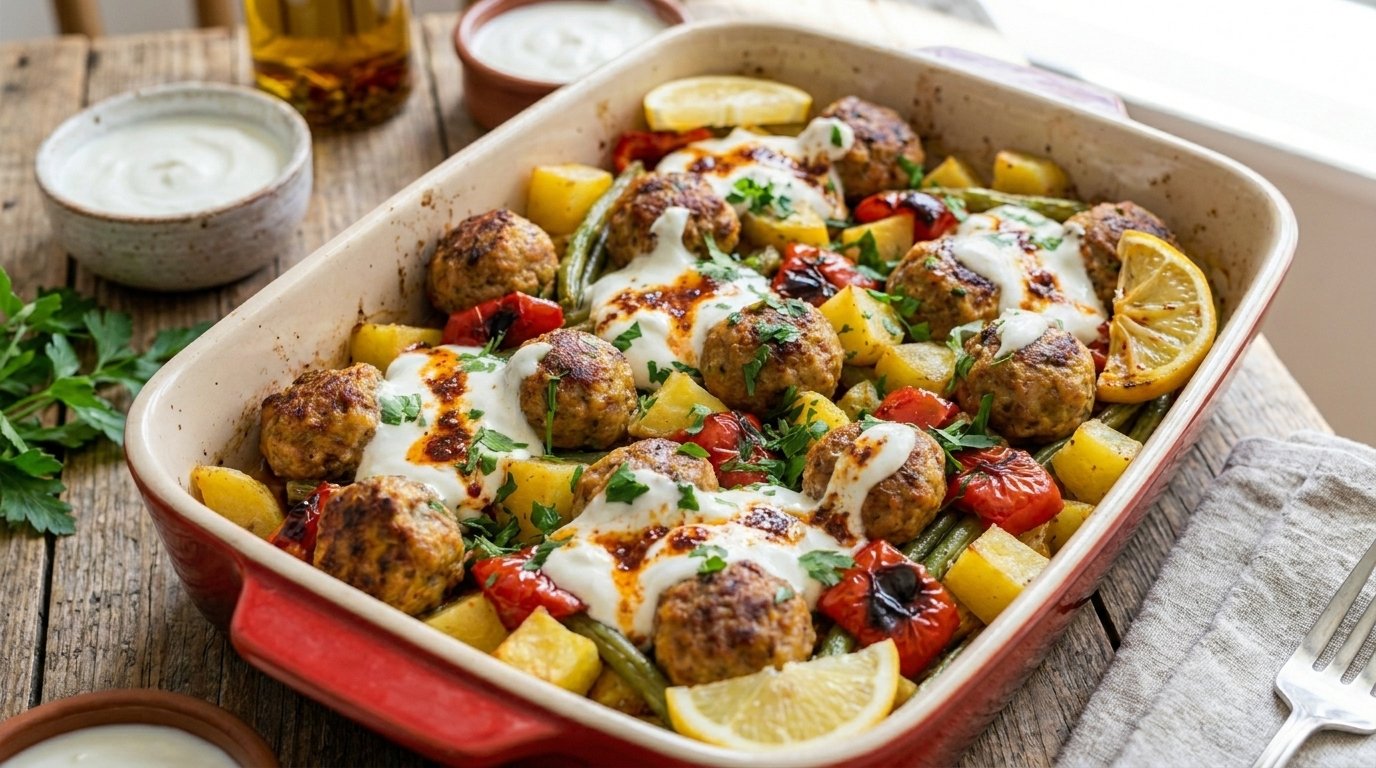
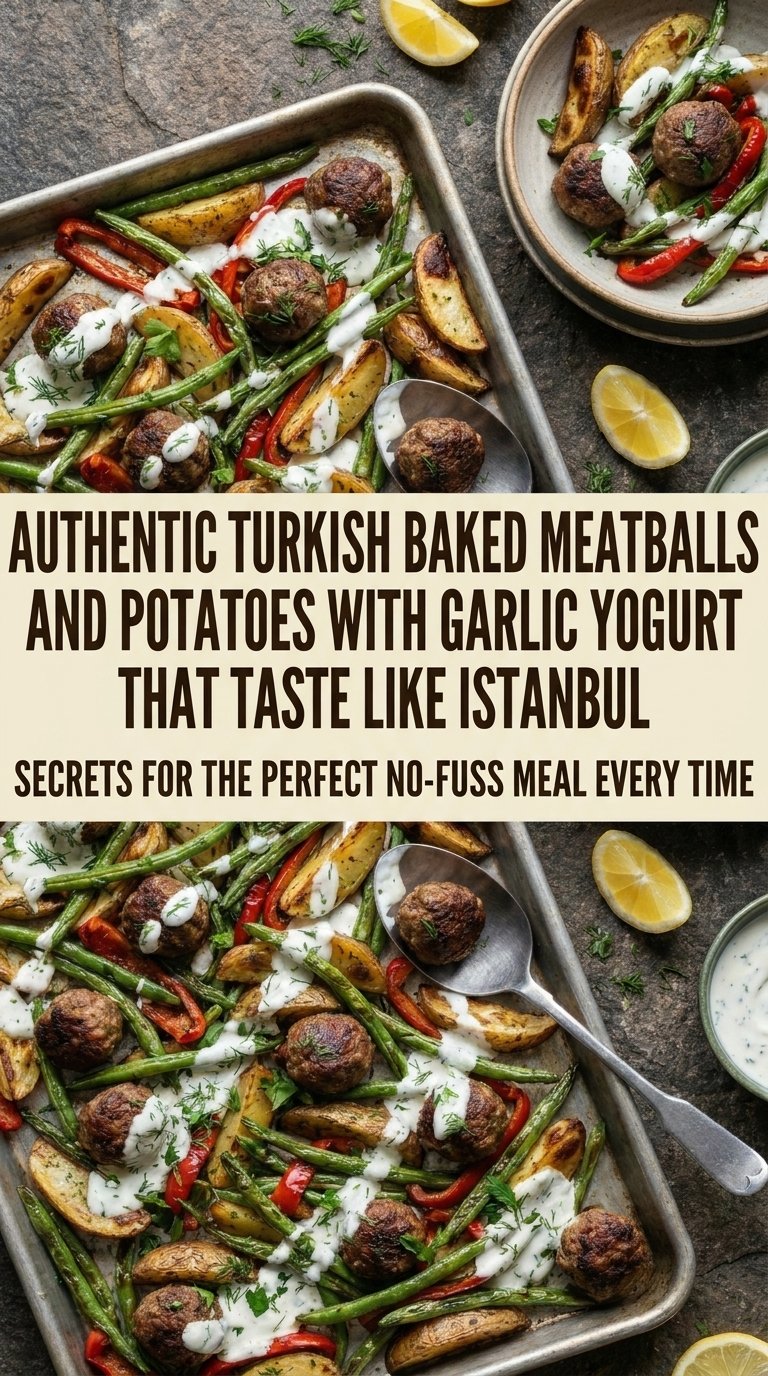
Turkish baked meatballs and potatoes with garlic yogurt is one of the most searched Turkish comfort recipes outside Turkey right now. Searches for İzmir köfte — the classic baked meatball and potato tray bake — have climbed every year since Turkish food found its audience on Pinterest and food blogs. The dish is a staple of Turkish home kitchens and neighborhood lokanta restaurants, built from a short list of ingredients that produce deep, layered flavor with very little effort.
If you have tried to recreate Turkish food at home and found it either too time-consuming or too vague in its instructions, this guide is built for precision. You get the exact spice ratios for the köfte mixture, the correct tomato sauce balance, the two-step brown-then-bake method that gives the dish its depth, and six variations from the creamy garlic yogurt finish to the whole-family sheet pan build. Everything is designed to fit a weeknight schedule without cutting corners on flavor. Check out our related guide on Easy Mediterranean Dinner Recipes for Beginners.
What Is Turkish Köfte?
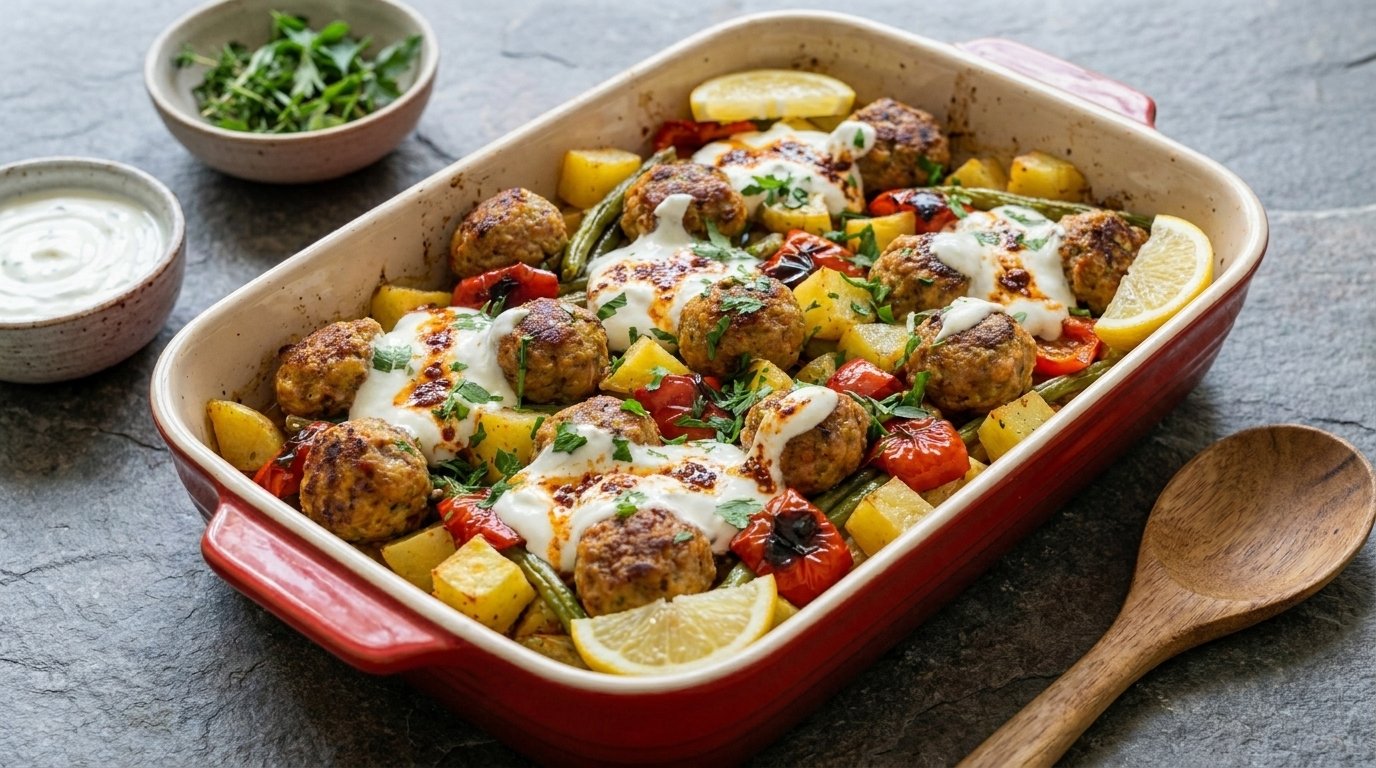
Köfte (pronounced roughly “kuf-teh”) is the Turkish word for meatballs or shaped ground meat. The term covers a wide family of dishes — grilled köfte on skewers, pan-fried köfte in tomato sauce, baked köfte with vegetables, and köfte served over rice or yogurt. They are found at every level of Turkish eating, from street carts to family dinner tables to lokanta restaurants.
The most famous baked version is İzmir köfte, named after the Aegean coastal city of İzmir. It consists of oval beef or lamb meatballs and sliced potatoes baked together in a rich tomato sauce with green peppers. It is a one-pan dish that feeds a crowd with minimal prep. The dish has Greek roots too — a nearly identical preparation called soutzoukakia (Smyrna meatballs) is a classic of Greek cuisine, a legacy of the mixed cultures that shared the Aegean coast for centuries.
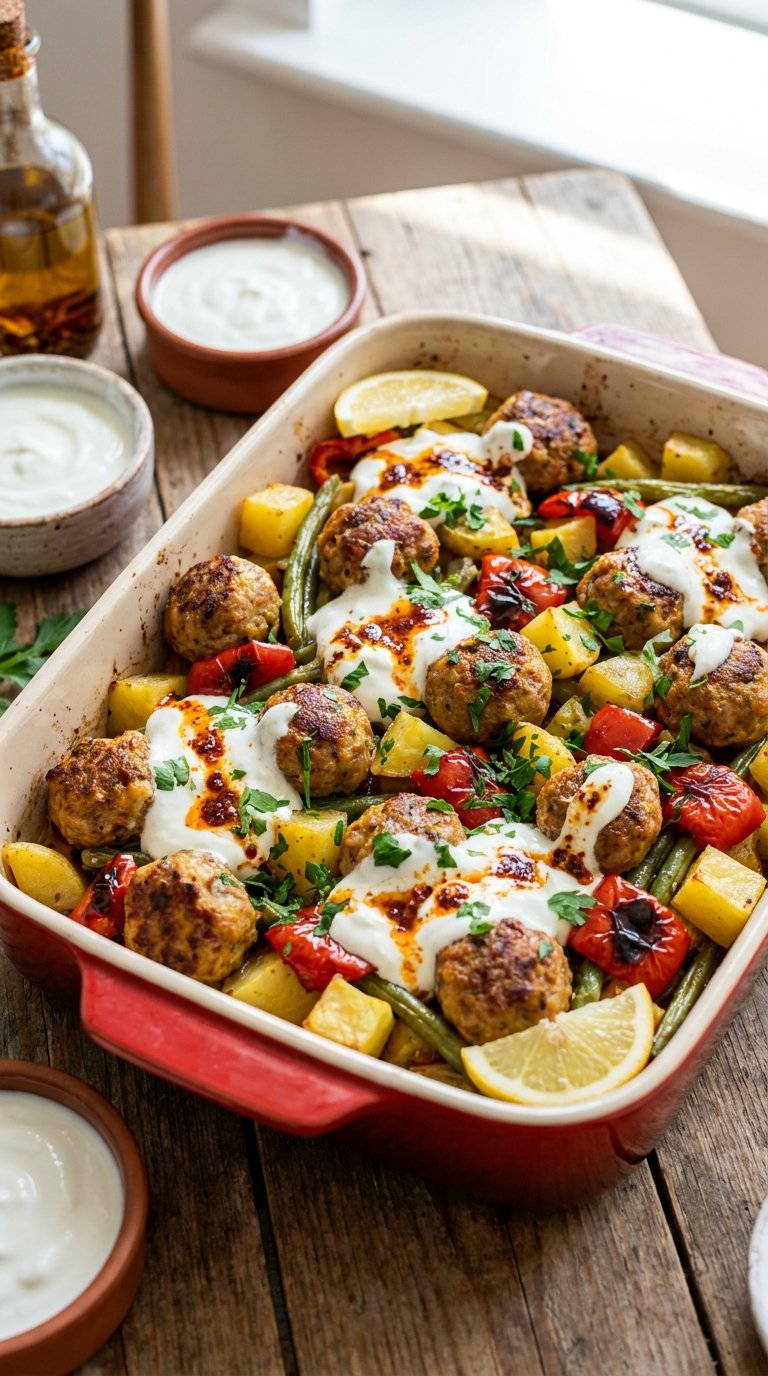
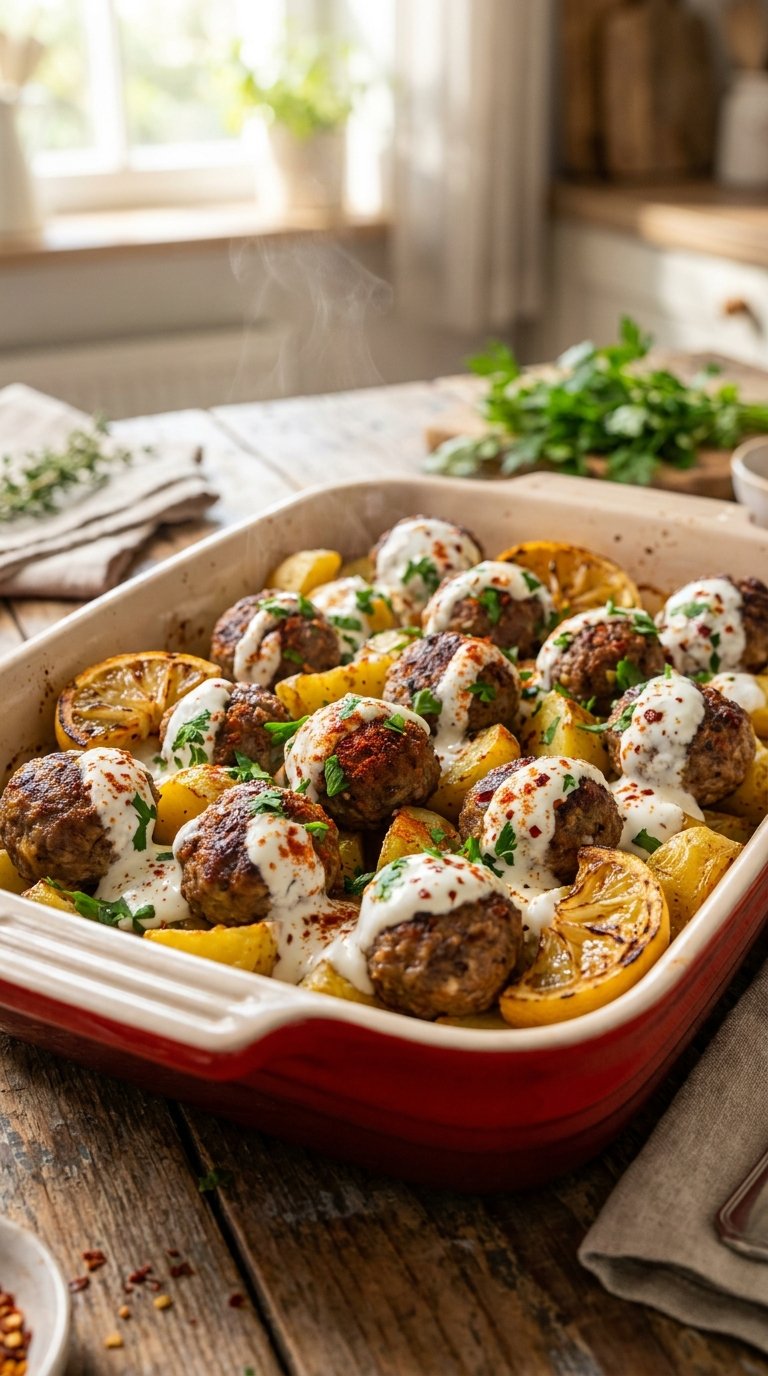
The garlic yogurt component — plain yogurt stirred with crushed garlic, salt, and sometimes olive oil — is served cold alongside the hot köfte and potatoes. The contrast between the warm, tomato-red tray bake and the cool, tangy white yogurt is the defining sensory experience of the dish.
Pro Tip: Buy whole spices and grind them yourself for the köfte mixture whenever possible. Freshly ground cumin and coriander smell entirely different from pre-ground versions and make a detectable difference in the finished meatball.
Turkish Baked Meatballs and Potatoes With Garlic Yogurt Ingredients
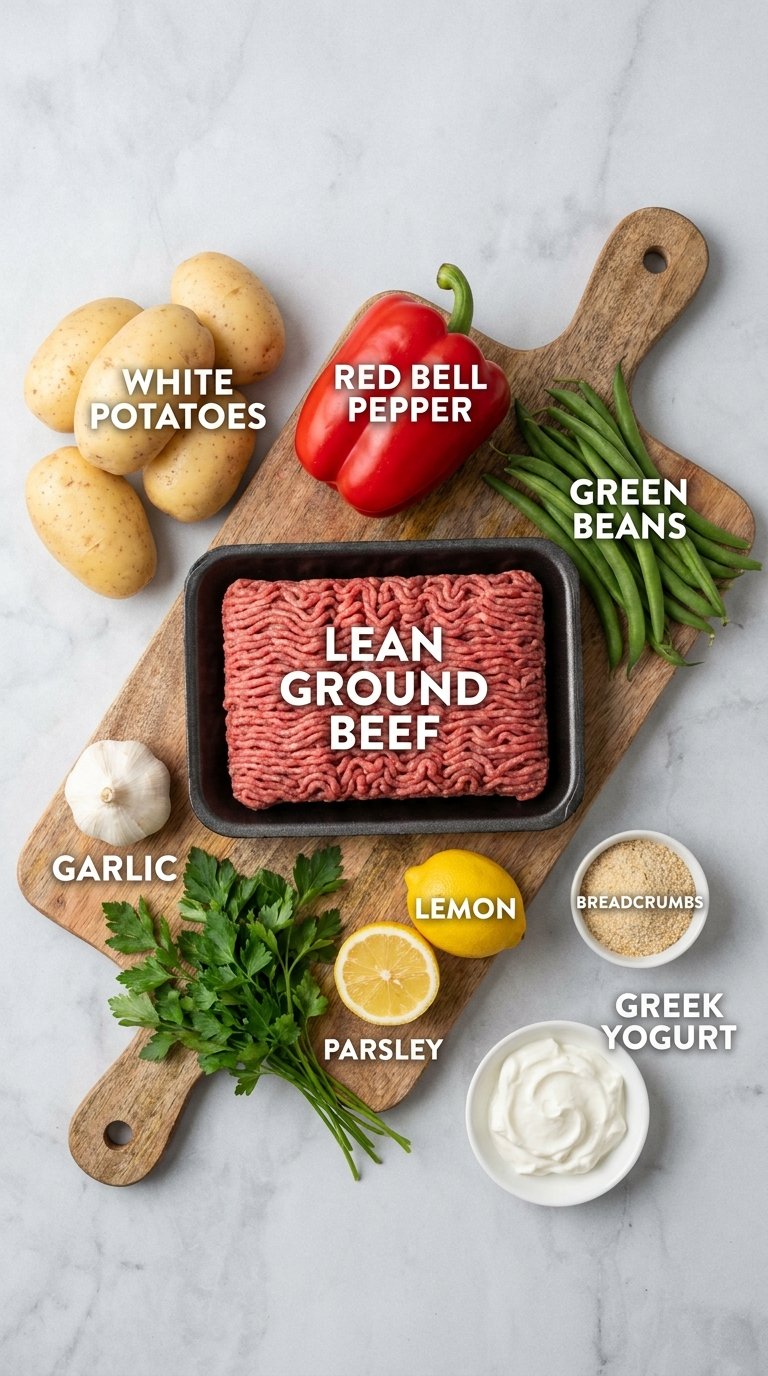
The ingredient list for Turkish baked meatballs and potatoes with garlic yogurt divides into three parts — the köfte mixture, the tomato sauce, and the garlic yogurt.
FOR THE KÖFTE
Ground beef (15 to 20% fat) is the standard base. Higher fat content produces a juicier, more tender meatball. Very lean beef produces a tighter, drier texture that breadcrumbs and egg help compensate for. A 50/50 mix of ground beef and ground lamb adds richness and a faintly gamey depth that is more traditional in many parts of Turkey.
Onion (finely grated, excess moisture squeezed out) adds sweetness and keeps the mixture from drying out. Grating rather than chopping produces fine onion pulp that distributes evenly through the meat without leaving chewy pieces.
Garlic (freshly grated or pressed) adds a warm, sharp background note.
Breadcrumbs (plain, dry) bind the mixture and trap the juices from the meat as it cooks. One or two slices of stale white bread soaked in water and squeezed dry works equally well and produces a softer final texture.
Egg binds the mixture and adds richness.
Flat-leaf parsley (finely chopped) brightens the meatball from the inside and adds color.
Cumin is the primary spice — warm, earthy, and deeply savory.
FOR THE TOMATO SAUCE
Canned crushed tomatoes or grated fresh tomatoes, tomato paste, olive oil, water or stock, salt, and black pepper.
FOR THE GARLIC YOGURT
Full-fat plain yogurt, freshly crushed garlic, salt, and a drizzle of good olive oil.
Pro Tip: Squeeze the grated onion in a clean kitchen towel over the sink before adding it to the meat. Onion releases a large amount of water when grated. Adding all that liquid to the meat makes the mixture too wet to shape cleanly and causes the meatballs to steam rather than brown in the pan.
Save this idea to your Pinterest.
Step-by-Step İzmir Köfte Instructions
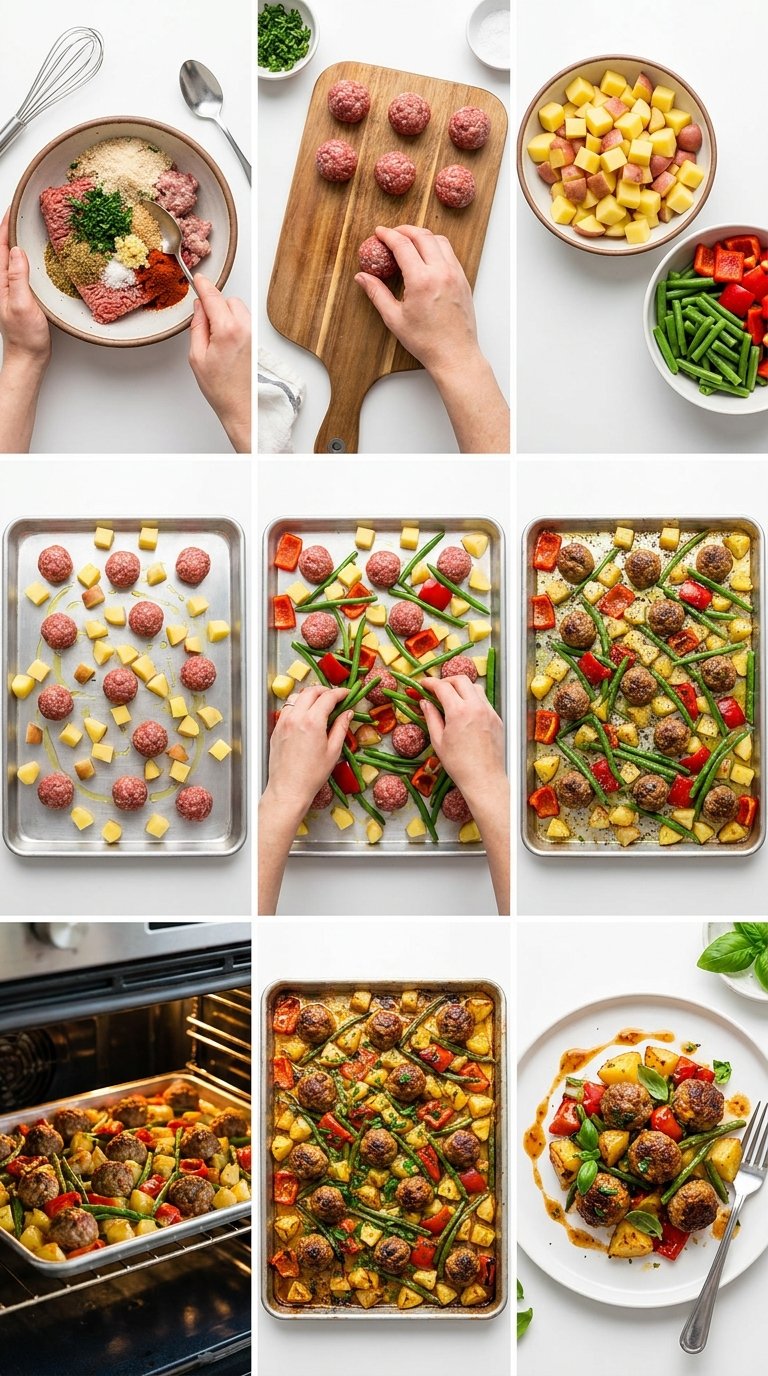
This is the classic method — brown first, then bake. The two-stage cooking process gives the dish its depth.
Make and rest the köfte. Knead the mixture for 5 minutes, shape into ovals, and refrigerate for 15 to 30 minutes.
Parboil or par-fry the potatoes. Peel and slice the potatoes into 1.5 cm thick wedges. Parboil in salted water for 8 to 12 minutes until just beginning to soften — still firm enough to hold their shape. Drain and pat dry. Alternatively, shallow-fry the potato wedges in a centimeter of oil for 2 to 3 minutes per side until lightly golden. Par-frying produces more color and flavor; parboiling is faster and lighter.
Brown the köfte. Heat a thin layer of olive oil in a heavy frying pan over medium-high heat. Brown the meatballs in batches for 2 to 3 minutes per side until deep golden on both sides. Do not crowd the pan — overcrowding drops the temperature and steams the meatballs rather than browning them. Set aside on a plate.
Make the tomato sauce. In the same pan, add a tablespoon of olive oil and fry a tablespoon of tomato paste for 1 minute until it darkens slightly and loses its raw smell. Add one 400g can of crushed tomatoes (or 3 fresh tomatoes, grated), half a cup of water or stock, salt, and pepper. Stir and simmer for 5 minutes.
Assemble and bake. Lay the parboiled or par-fried potatoes in the base of a deep baking dish. Add sliced green peppers around the sides. Place the browned köfte on top. Pour the tomato sauce over everything — it should nearly cover the potatoes and come halfway up the sides of the meatballs.
Bake at 180°C (350°F) uncovered for 40 to 45 minutes until the sauce has reduced and thickened, the potatoes are completely tender, and the tops of the meatballs have a slightly caramelized surface.
Rest for 5 minutes before serving. Bring the cold garlic yogurt to the table alongside.
Pro Tip: Place a layer of sliced fresh tomatoes directly on top of the meatballs before baking. The tomato slices collapse into a soft, sweet topping as they roast and add a fresh, bright layer of flavor that the canned tomato sauce alone cannot provide.
Popular Asked Questions
What is the difference between Turkish köfte and regular meatballs?
Turkish köfte and Western meatballs share the same basic concept — ground meat, binders, and seasonings — but differ in spices, texture, and technique. Köfte typically uses cumin, black pepper, and sometimes allspice or coriander rather than the Italian-influenced oregano, basil, and fennel common in Western meatballs. The mixture is kneaded for 5 minutes rather than simply combined, which develops a slightly firmer, more cohesive texture. The shape is traditionally oval rather than round. The dish is served with yogurt and rice rather than pasta and marinara. The seasoning profile is savory and earthy rather than herbaceous and sweet.
What spices go in Turkish köfte meatballs?
The core spices for Turkish köfte are cumin, black pepper, and salt. These appear in every regional version. Additional spices used in different parts of Turkey include ground allspice, ground coriander, Aleppo pepper (pul biber), a small pinch of cinnamon, and dried mint. Fresh flat-leaf parsley is the standard herb. Grated onion and fresh garlic are not spices but are equally non-negotiable flavor components. The exact combination varies by region — İzmir köfte tends to be simpler and more cumin-forward than köfte from southeastern Turkey, which uses more warming spices.
Why does garlic yogurt separate when cooked?
Plain yogurt separates when heated because the proteins coagulate and the whey expels from the solid. To serve warm garlic yogurt alongside Turkish meatballs without curdling, stir a teaspoon of cornstarch into cold yogurt before heating it gently over low heat while stirring constantly. The cornstarch stabilizes the protein network and prevents separation. Full-fat yogurt separates less readily than low-fat yogurt when heated. Cold garlic yogurt served alongside hot köfte is the traditional Turkish presentation and requires no stabilization at all.
Can you make İzmir köfte without browning the meatballs first?
Yes, and some home versions skip the browning step entirely. The dish still tastes good — the meatballs cook through in the sauce and the potatoes soften around them. The trade-off is that unbrowned meatballs have a pale, soft exterior that absorbs the tomato sauce and can turn slightly mushy. Browning creates a surface crust that stays intact during baking, gives the meatballs a distinct visual presence in the dish, and adds Maillard-reaction flavor that the sauce alone cannot provide. If time is limited, skip the potato par-frying before skipping the meatball browning — the potatoes are more forgiving without their browning step than the meatballs are.
What do you serve with Turkish baked meatballs?
The traditional accompaniments for Turkish baked meatballs and potatoes with garlic yogurt are white rice pilav, bulgur pilav, crusty bread, and a simple salad. A classic Turkish shepherd’s salad (chopped tomato, cucumber, red onion, parsley, olive oil, lemon juice) is the standard green side. Cacık (yogurt with cucumber and garlic, similar to Greek tzatziki) is a common addition alongside the plain garlic yogurt. In restaurants, bean piyaz (a white bean salad with sumac and parsley) is a traditional pairing for İzmir köfte. Flatbread to mop up the tomato sauce is served at almost every Turkish table regardless of the other accompaniments.
Conclusion
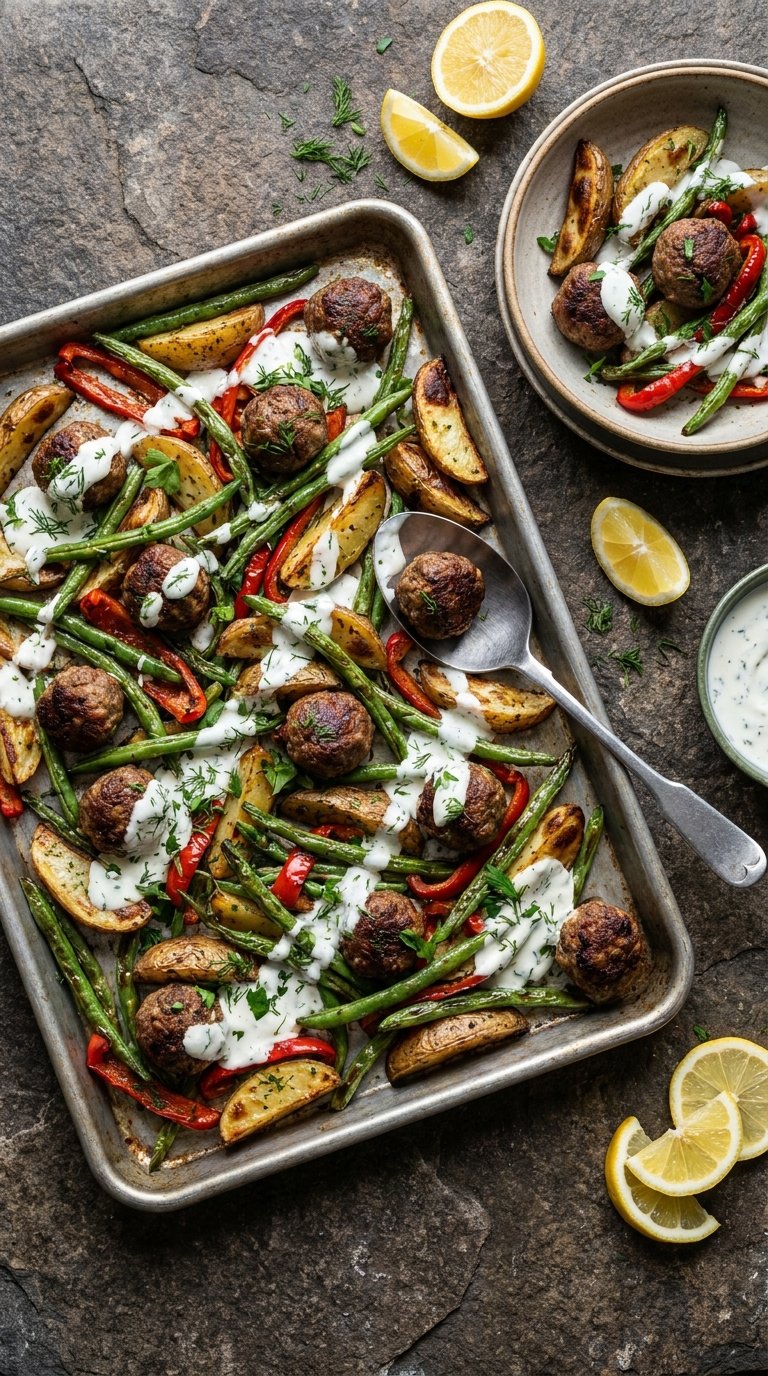
Turkish baked meatballs and potatoes with garlic yogurt is the kind of dish that improves every time you make it — as you adjust the spice level to your taste, find the potato variety that works best in your oven, and develop the timing that fits your kitchen. The core technique is fixed and reliable. The texture of a well-kneaded, properly browned köfte simmered in tomato broth with soft potato wedges and a sharp, cold garlic yogurt alongside is one of the most satisfying combinations in comfort food cooking.
It feeds a crowd from one pan, tastes better the next day, freezes well, and adapts to beef, lamb, chicken, or a combination. The garlic yogurt takes two minutes and transforms the entire plate.
Which variation are you trying first — the classic İzmir style with rice pilav, the restaurant-style Aleppo butter finish, or the make-ahead version for the week? Tell us in the comments.
Follow us on Pinterest for more Turkish baked meatballs inspiration and easy Mediterranean dinner recipes.

Leave a Comment