
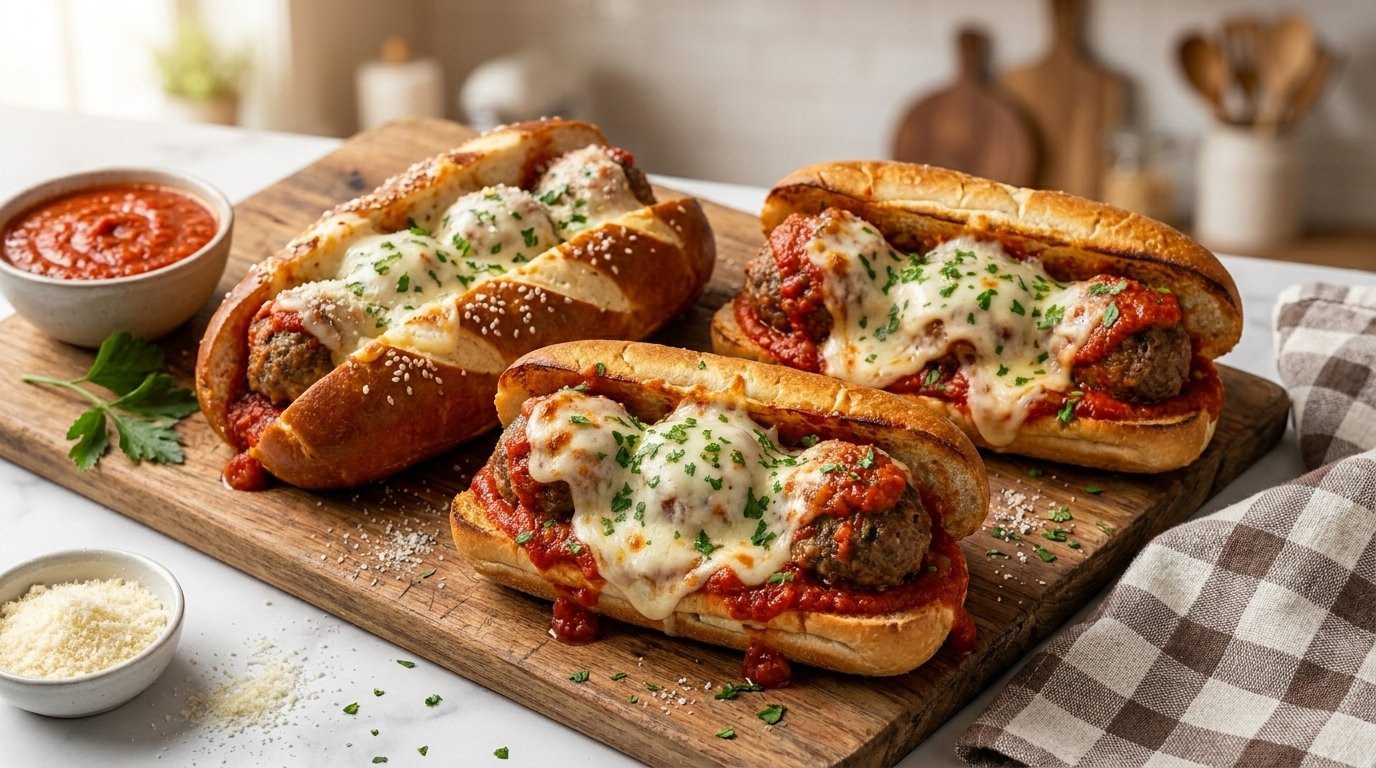
Meatball subs are one of the most-searched comfort food sandwiches every fall and winter — and the gap between a mediocre one and a truly great one comes down to three decisions. The meatball. The sauce. The bread treatment. Get those right and nothing from a chain sub shop comes close.
If your meatball subs always end up soggy in the middle, with meatballs that fall apart the moment you pick up the sandwich, or a sauce that tastes thin against the bread, this guide fixes all three problems directly. You get the classic Italian beef-and-pork meatball with broiled provolone, a slow cooker version for a crowd, a garlic bread build that takes 20 minutes, a ricotta-stuffed variation, a chicken meatball sub, and the exact bread-treatment method that keeps every bite intact from first to last. Check out our related guide on Easy Weeknight Dinner Recipes for the Whole Family.

What Makes a Great Meatball Sub?
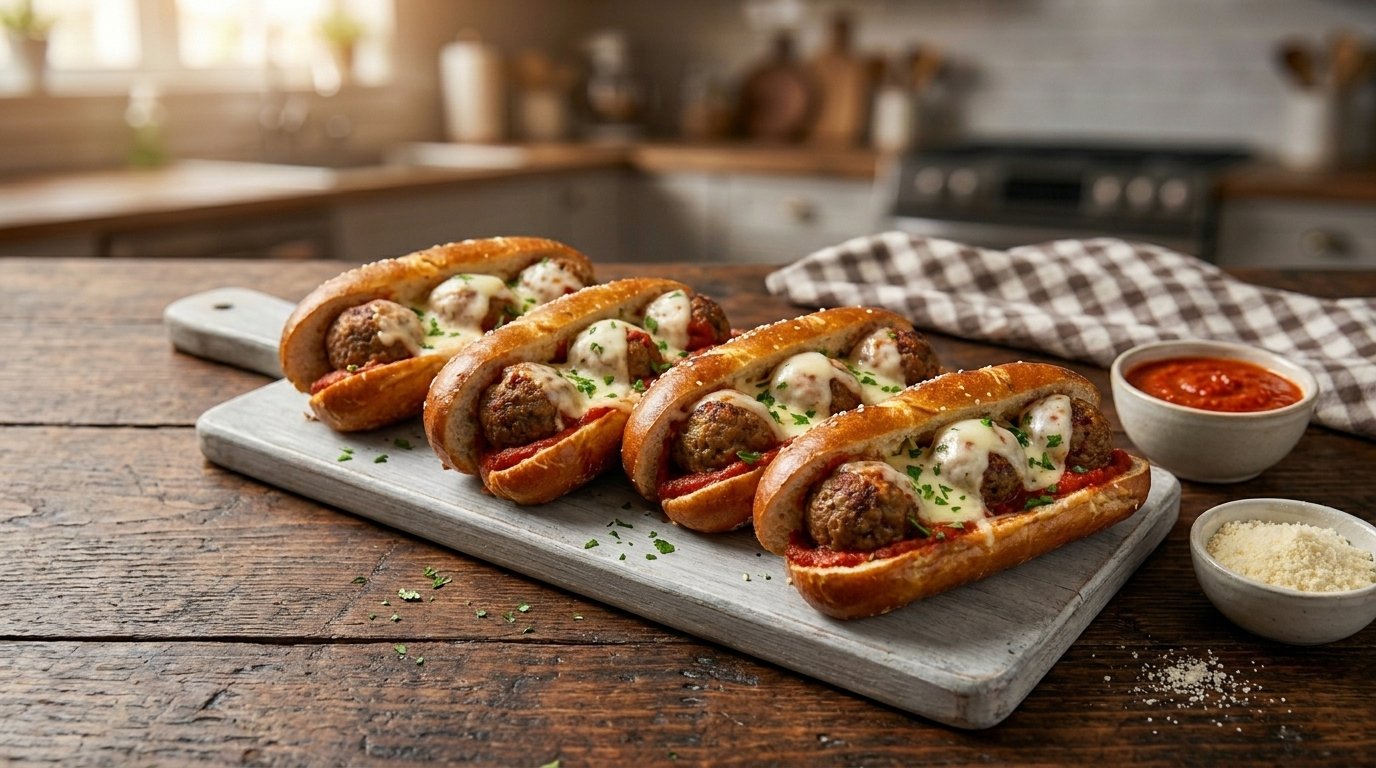
A great meatball sub is built on the tension between soft and structured. The meatball should be tender enough to compress under a bite without bouncing back like a rubber ball. The sauce should be thick enough to cling to the meatball surface rather than pooling at the bottom of the roll. The cheese should be fully melted and slightly blistered at the edges. The bread should be toasted hard enough to hold the weight of everything above it without dissolving.
Most home versions fail at the bread step. An untoasted roll absorbs the sauce moisture within 2 to 3 minutes and turns from a firm, spongy vessel into a wet, structureless collapse. The fix is simple: brush the cut sides of the roll with butter or olive oil and broil them cut-side up for 2 to 3 minutes until golden and lightly crisped. Then add a layer of shredded cheese directly on the bread and broil again for 60 seconds to melt it. The melted cheese seals the bread surface and creates a moisture barrier between the marinara and the crumb.
The result is a sub that stays intact for 15 to 20 minutes at room temperature — long enough to eat without the bread disintegrating in your hands.
Pro Tip: Hollow out the inside of a thick hoagie roll slightly before toasting. Remove a thin channel of the soft crumb from the top piece with your fingers. The hollow holds the meatballs in place as you eat rather than letting them roll forward with every bite.
Meatball Subs Ingredients
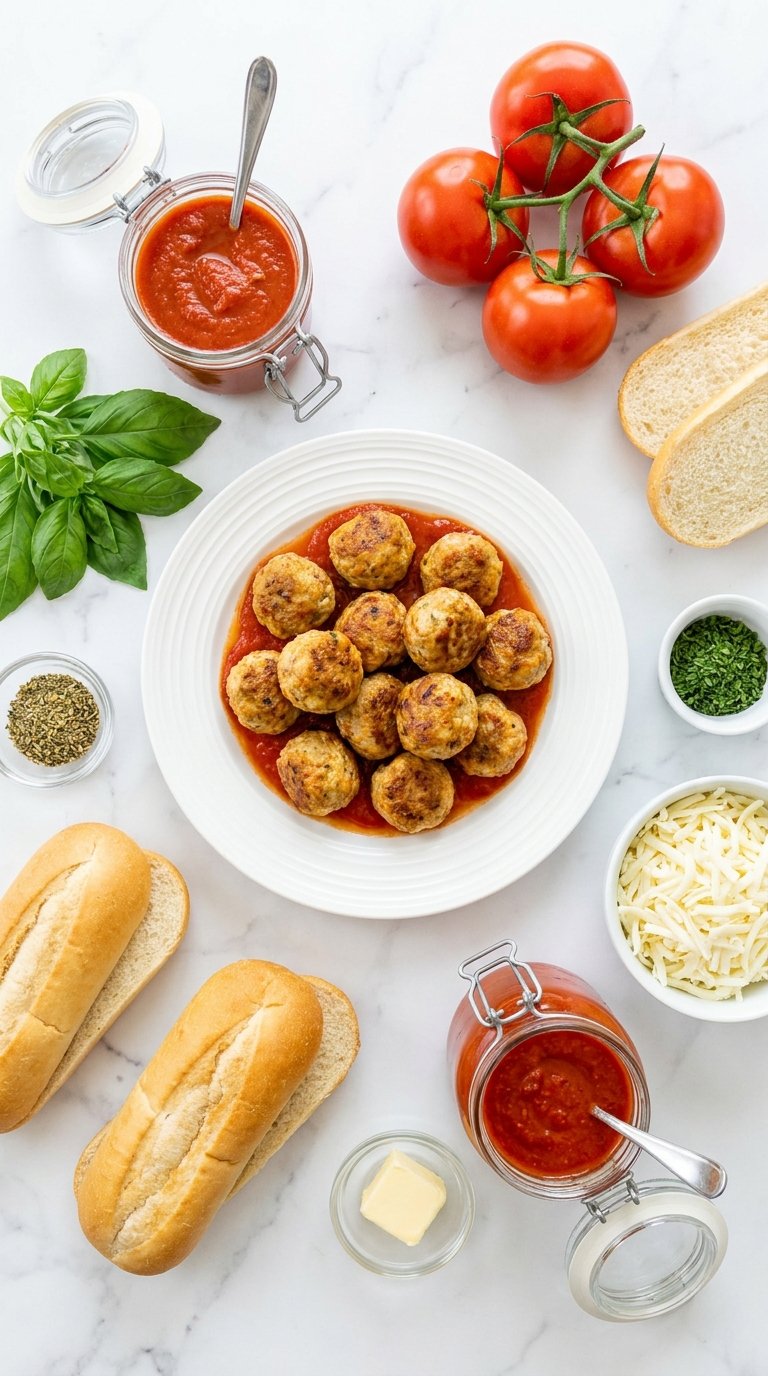
The ingredient list for meatball subs divides into three sections — the meatballs, the marinara sauce, and the assembly components.
FOR THE MEATBALLS
Ground beef (80/20 fat ratio) is the most common base. The fat keeps the meatball from drying out during browning and simmering. Ground pork adds a sweeter, richer flavor and a softer texture — a 50/50 beef-pork blend is the Italian-American standard for the most flavorful meatball.
Panade — one slice of white bread with the crust removed, soaked in a quarter cup of whole milk for 5 minutes and squeezed slightly. The milk-soaked bread breaks down in the meat mixture and keeps the meatball tender from the inside by interrupting the protein network as it firms up during cooking.
Egg binds the mixture. One large egg per 500g of meat is the standard ratio.
Parmesan (freshly grated) adds salt and a nutty, sharp depth. A quarter cup per 500g of meat.
Garlic (minced or pressed), dried oregano, dried basil, flat-leaf parsley, salt, black pepper, and red pepper flakes are the seasoning backbone.
FOR THE SAUCE
Crushed San Marzano tomatoes, olive oil, garlic, dried basil, salt, sugar (a pinch to balance acidity), and black pepper. A jar of Rao’s Homemade marinara is the most reliable store-bought shortcut.
FOR ASSEMBLY
Hoagie rolls or sub rolls, mozzarella (low-moisture, shredded), provolone (sliced), fresh basil, grated Parmesan, and red pepper flakes for finishing.
Pro Tip: Use an ice cream scoop to portion the meatball mixture rather than measuring by hand. A standard ice cream scoop (about 2 tablespoons of mixture) produces consistently sized 1.5-inch meatballs that cook in the same time and fit evenly in the sub roll.
Save this idea to your Pinterest.
How to Make the Marinara Sauce
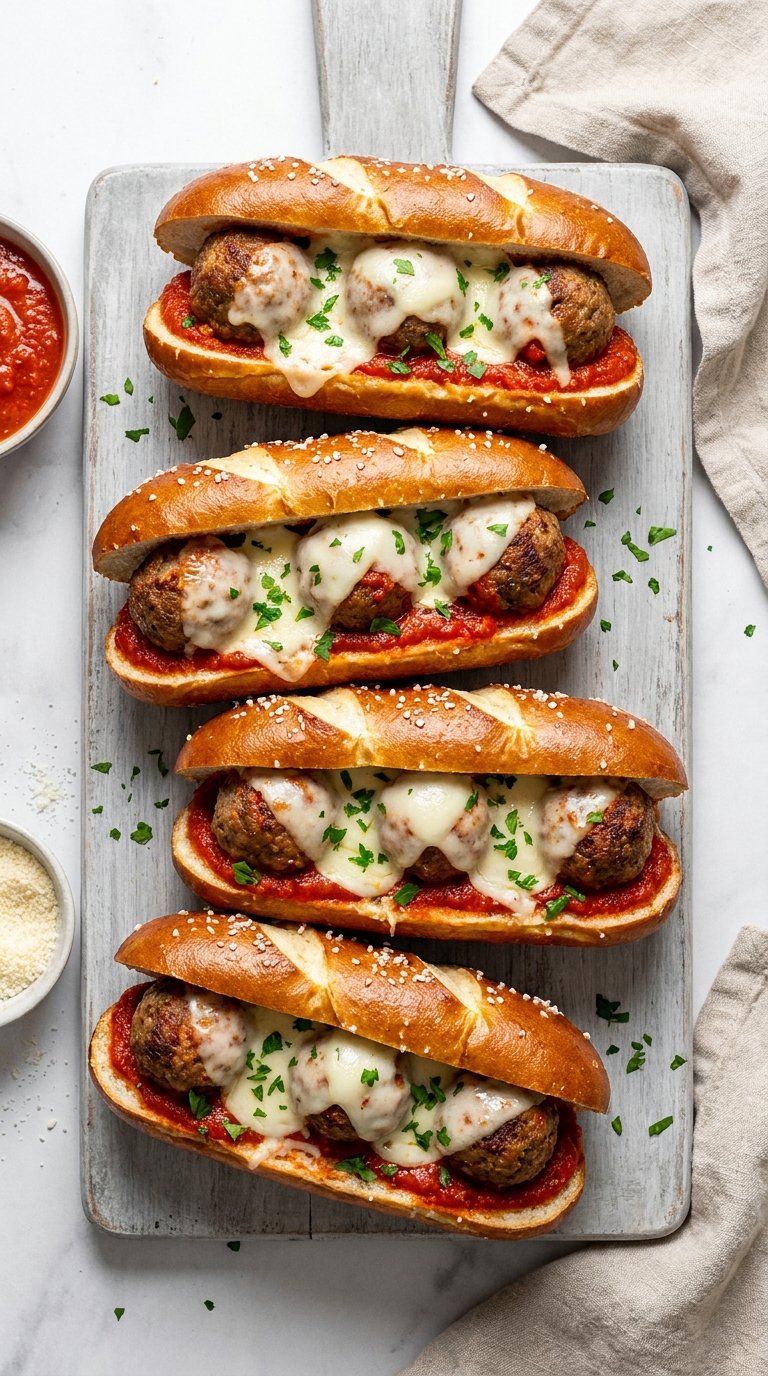
A good marinara sauce for meatball subs needs more body and less water than the sauce you would serve over pasta. It needs to cling to the surface of each meatball and coat the bread without running down the sides of the roll.
Heat 2 tablespoons of olive oil in a wide saucepan over medium heat. Add 3 cloves of minced garlic and cook for 60 seconds until fragrant — not browned. Pour in one 28-oz can of crushed San Marzano tomatoes. Add half a teaspoon each of dried basil and dried oregano, a pinch of sugar, salt, and red pepper flakes.
Bring to a simmer and cook uncovered over medium-low heat for 20 to 25 minutes, stirring occasionally. The sauce should reduce by about one-quarter and thicken enough to coat the back of a spoon without dripping. A too-thin sauce runs straight through the toasted bread regardless of any cheese barrier.
San Marzano tomatoes produce a sweeter, less acidic, more complex sauce than standard canned tomatoes. They are worth the extra cost for a dish where the sauce is one of three primary flavors. If you cannot find them, add an extra pinch of sugar and a tablespoon of tomato paste to balance the sharper acidity of standard crushed tomatoes.
Pro Tip: Add the browned meatballs directly to the simmering sauce and cook them in the sauce for 10 minutes before assembling the subs. The meatballs absorb the sauce and release their fat and flavor into it — the resulting sauce is richer and more complex than a sauce used separately from the meatballs.
Step-by-Step Meatball Subs Instructions
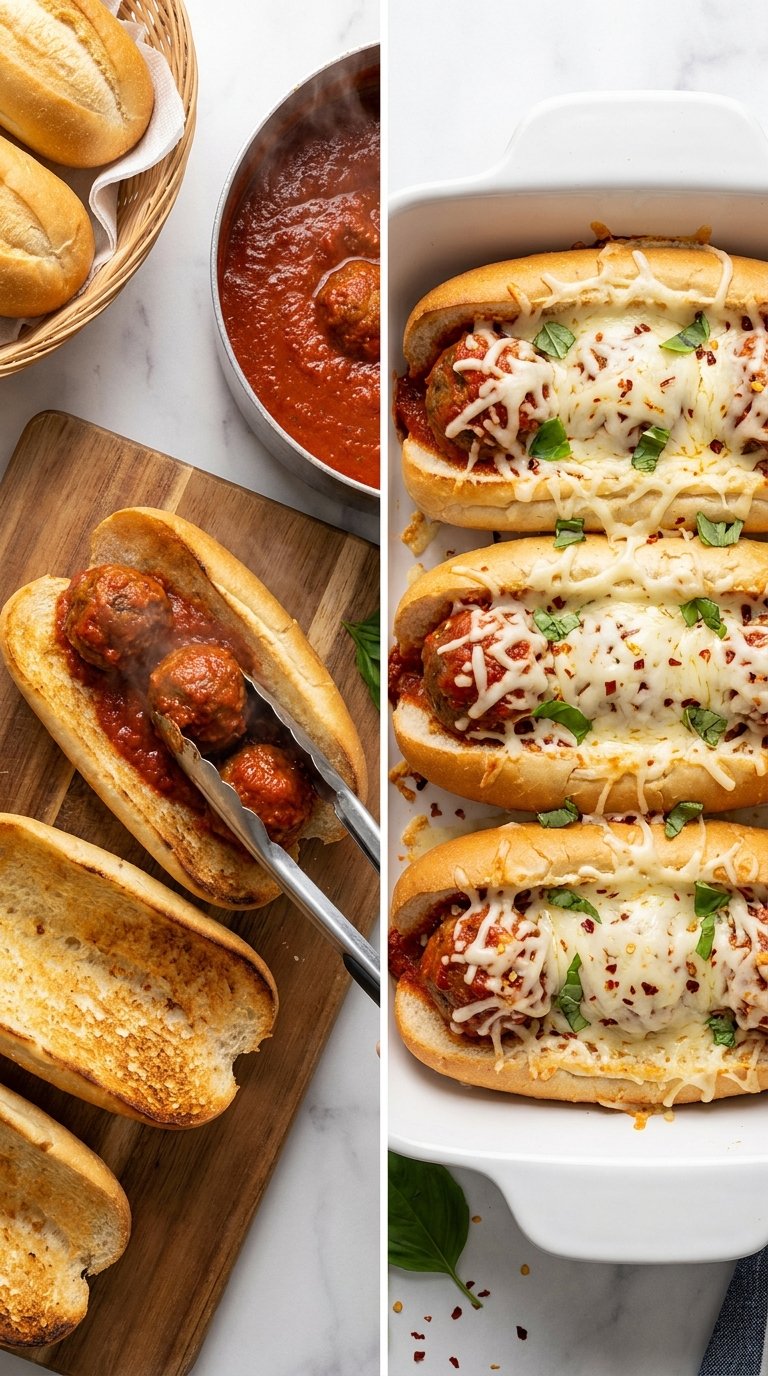
This is the full method from raw ingredients to assembled sub. Follow the sequence and every component finishes at the right time.
Make the panade. Tear one slice of white bread into small pieces, place in a bowl, and pour a quarter cup of whole milk over it. Let it sit for 5 minutes until fully saturated. Squeeze out excess liquid gently — you want the bread wet but not dripping.
Mix the meatball mixture. Combine ground meat, panade, egg, grated Parmesan, minced garlic, herbs, salt, and pepper in a large bowl. Mix with your hands until just combined — do not overwork. Overworked meat mixture tightens the protein network and produces dense, tough meatballs. Mix until everything is just incorporated and stop.
Shape. Wet your hands and roll the mixture into 1.5-inch balls. Place on a parchment-lined baking sheet.
Brown the meatballs. Heat a thin layer of oil in a large heavy skillet over medium-high heat. Brown the meatballs in batches for 2 minutes per side until deep golden on most surfaces. Do not crowd the pan. Set aside — they do not need to be cooked through at this stage.
Make and thicken the sauce. Follow the marinara method above. Add the browned meatballs to the sauce and simmer for 10 minutes.
Prepare the bread. Split sub rolls lengthwise, brush with garlic butter or olive oil, and broil cut-side up for 2 to 3 minutes until golden. Add a layer of shredded mozzarella to both cut sides and return to the broiler for 60 seconds until melted and beginning to bubble.
Assemble. Spoon saucy meatballs onto the bottom piece of the roll — 4 to 6 meatballs per standard sub roll. Ladle extra sauce over the top. Lay sliced provolone over the meatballs and broil the open sub for 2 minutes until the provolone melts and blisters at the edges.
Finish and serve. Top with fresh basil, grated Parmesan, and red pepper flakes. Serve immediately.
Pro Tip: Serve the top piece of the roll alongside the assembled open sub rather than closing it. Closing the sub compresses the meatballs and squeezes the sauce out the sides. Eating it open-faced with a fork and knife avoids this entirely, or the hollow-center method described earlier keeps it contained when you want to eat it as a hand-held sandwich.
Popular Asked Questions
What kind of bread is best for meatball subs?
A hoagie roll from a bakery or deli counter is the best bread for meatball subs — it has a firm crust that holds up to the broiler and the sauce weight, and a soft crumb that picks up the marinara flavor without going fully soft. Italian bread, ciabatta, and bolillo rolls are good alternatives. Avoid soft sandwich rolls or hamburger buns — they compress under the sauce and turn soggy within minutes regardless of toasting. Day-old rolls produce a sturdier base than very fresh rolls.
How do you keep meatball subs from getting soggy?
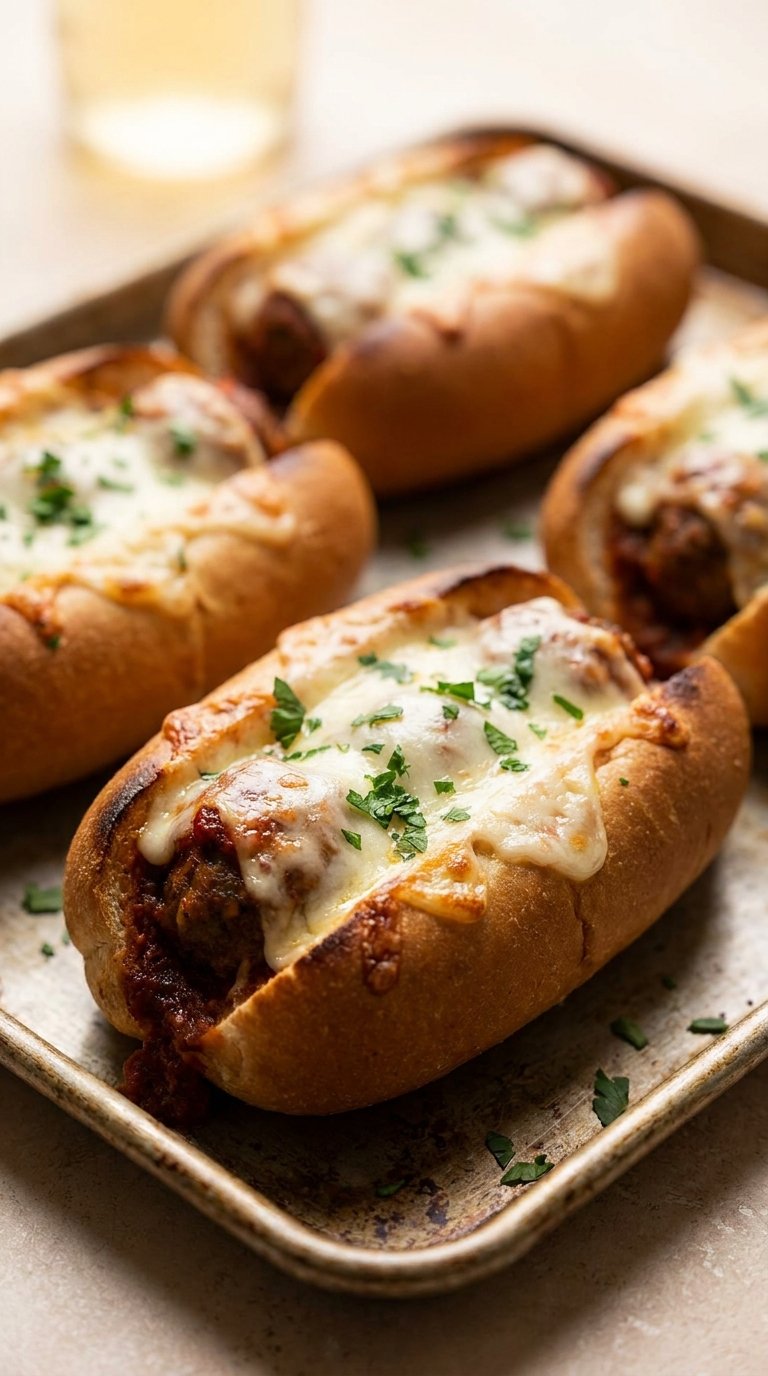
Three steps prevent a soggy meatball sub. First, broil the cut sides of the roll until golden and firm. Second, melt a layer of shredded mozzarella directly onto the toasted bread before adding the meatballs — the melted cheese creates a moisture barrier between the crumb and the sauce. Third, use a thick marinara sauce that clings to the meatball surface rather than a thin sauce that runs through the bread. Assemble and serve immediately — the longer a dressed sub sits, the softer the bread gets.
Can you make meatball subs with store-bought meatballs?
Yes. Store-bought frozen meatballs are a practical and widely used shortcut for meatball subs. Kirkland Signature Italian-style meatballs from Costco are the most commonly recommended option for flavor and texture. Simmer frozen meatballs in the marinara sauce for 15 to 20 minutes until fully heated through and sauce-saturated. The simmering step is what makes store-bought meatballs taste like they belong in the sauce rather than like they were simply thawed. Skip the browning step if using pre-cooked frozen meatballs — they do not need it.
What cheese goes on meatball subs?
The best meatball sub uses two cheeses. Low-moisture mozzarella (shredded) goes directly on the toasted bread before the meatballs — it melts smooth and seals the bread surface. Provolone (sliced thin) goes on top of the assembled meatballs and returns to the broiler until blistered. Freshly grated Parmesan goes on last, after the sub comes out of the oven, as a finishing cheese. Fontina is a richer, creamier alternative to provolone that produces a more luxurious melt.
How many meatballs go in a meatball sub?
A standard 6-inch hoagie roll holds 4 to 5 meatballs that are 1.5 inches in diameter. An 8-inch roll holds 5 to 6 meatballs comfortably. Smaller meatballs (1 inch) need 6 to 8 per roll. The goal is a single layer of meatballs that fills the roll lengthwise without stacking — stacked meatballs make the sub impossible to bite through cleanly and cause the top meatballs to roll off when the sub is picked up. For mini slider-style meatball subs, one meatball per slider is the right ratio.
Conclusion
Meatball subs reward the cooks who pay attention to the three structural decisions — a well-made, properly rested meatball that stays together in the sauce, a thick marinara that clings rather than runs, and a bread treatment that starts with a broil and seals with a cheese layer. Get those right and the result beats any sub shop version on flavor, texture, and satisfaction.
The slow cooker version keeps a crowd fed with zero monitoring. The garlic bread build turns a weeknight dinner into something that feels special. The ricotta-stuffed version impresses at a dinner party with one extra step. The mini sliders disappear from a party table in minutes.
Which version are you making first — the classic Italian beef-and-pork, the slow cooker crowd build, or the ricotta-stuffed version? Tell us in the comments.
Follow us on Pinterest for more meatball subs inspiration and easy comfort food recipes.

Leave a Comment