
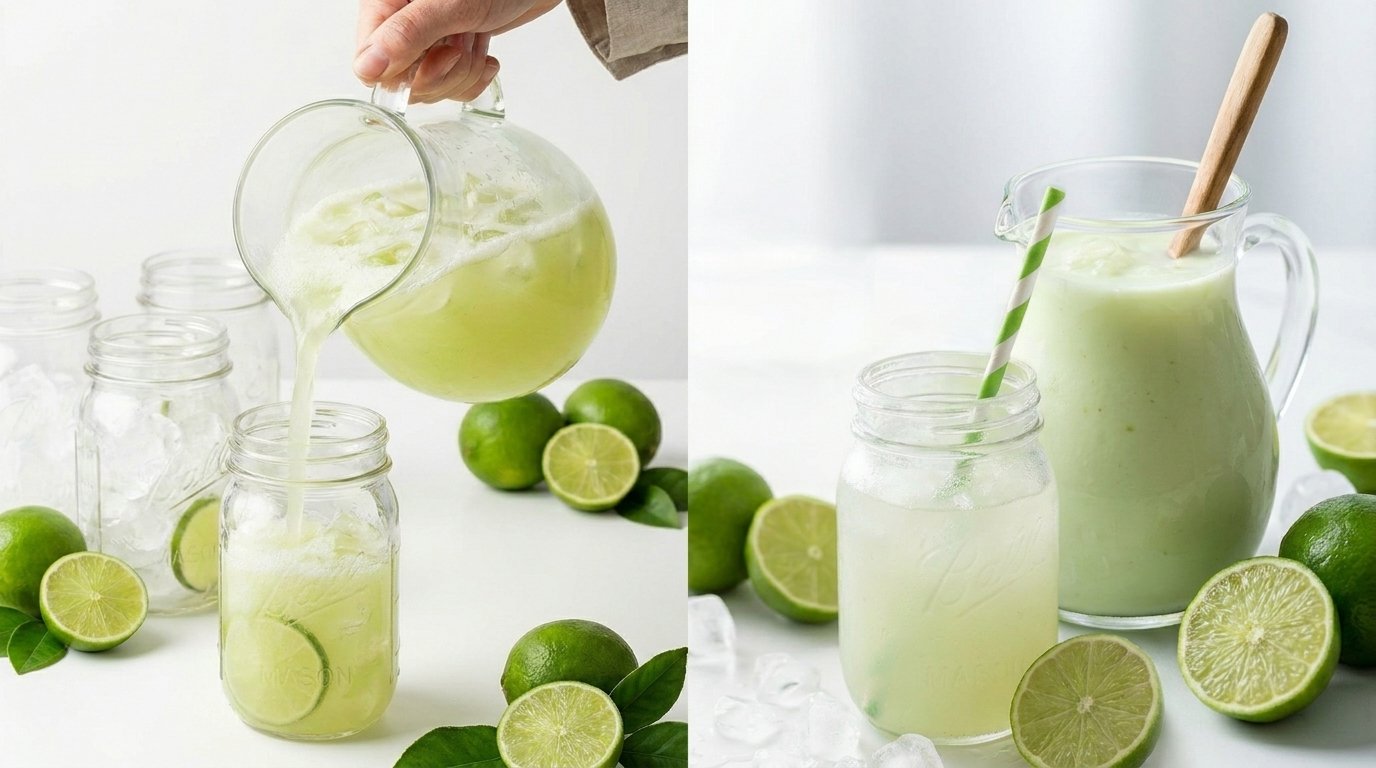
Brazilian lemonade is one of the most searched summer drinks of 2025 — and anyone who has tried it understands why. It is creamy, tart, sweet, and frothy all at once. The whole drink comes together in a blender in under five minutes, needs only four or five ingredients, and tastes like something a beachside bar in Rio spent hours perfecting.
The most common problem with home versions is bitterness. Blending whole limes — peel, pith, and all — for more than 15 seconds releases harsh compounds from the pith that turn the drink sharp and unpleasant. This guide explains exactly how long to blend, whether to keep the peel on, and how the sweetened condensed milk fixes the balance. You get the classic recipe, a coconut version, a frozen slush, a vodka build, a dairy-free swap, a pitcher for a crowd, and more — all with precise timings and ratios. Check out our related guide on Easy Summer Drink Recipes for Entertaining.
What Is Brazilian Lemonade?
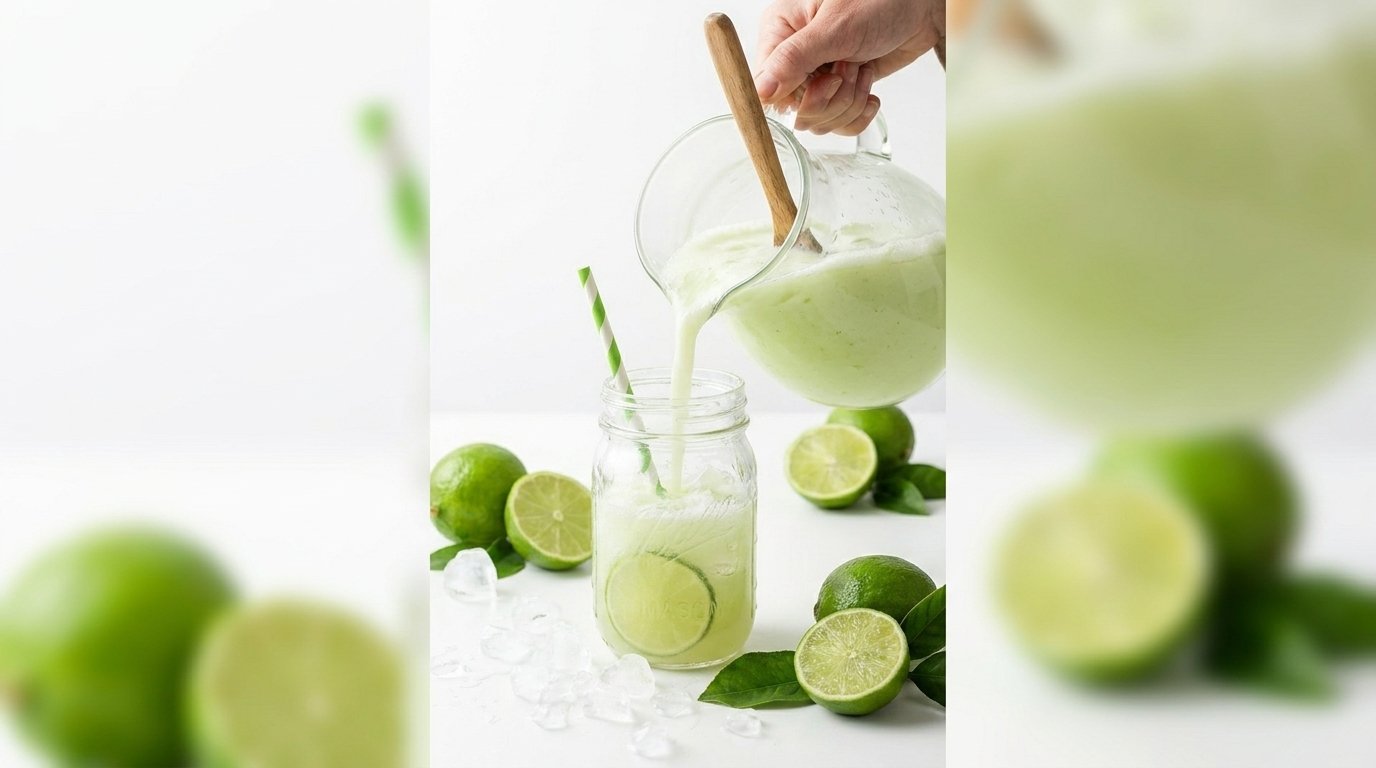
Brazilian lemonade — called limonada suíça (Swiss lemonade) in Brazil — is a creamy, blended lime drink made with whole limes, water, ice, sugar, and sweetened condensed milk. It is one of the most popular non-alcoholic drinks served at Brazilian churrascarias and restaurants, and it has become a TikTok and Pinterest viral phenomenon in recent years for good reason.
The name causes regular confusion. The drink is made with limes, not lemons. In Portuguese, the word limão covers both lemons and limes with no clear distinction — what Americans call a lime, Brazilians call a “Tahitian lemon” (limão taiti). The drink they make from it is a limonada. “Brazilian lemonade” is simply the English translation.
The “Swiss” part of the original name — limonada suíça — comes from the sweetened condensed milk. Nestlé, a Swiss company, introduced shelf-stable sweetened condensed milk to Brazil in the 1920s. Brazilian cooks adopted it enthusiastically and eventually incorporated it into their beloved limonada, at which point the drink became associated with the Swiss brand and took on the new name. Today Nestlé’s Moça brand condensed milk is still the product most commonly associated with this drink in Brazil.
Pro Tip: Serve Brazilian lemonade in a tall, frost-chilled glass with a salted rim for an unexpected savory-sweet contrast. Run a lime wedge around the rim and dip in flaky sea salt. The salt amplifies the lime tartness the same way it does in a margarita.
Brazilian Lemonade Ingredients
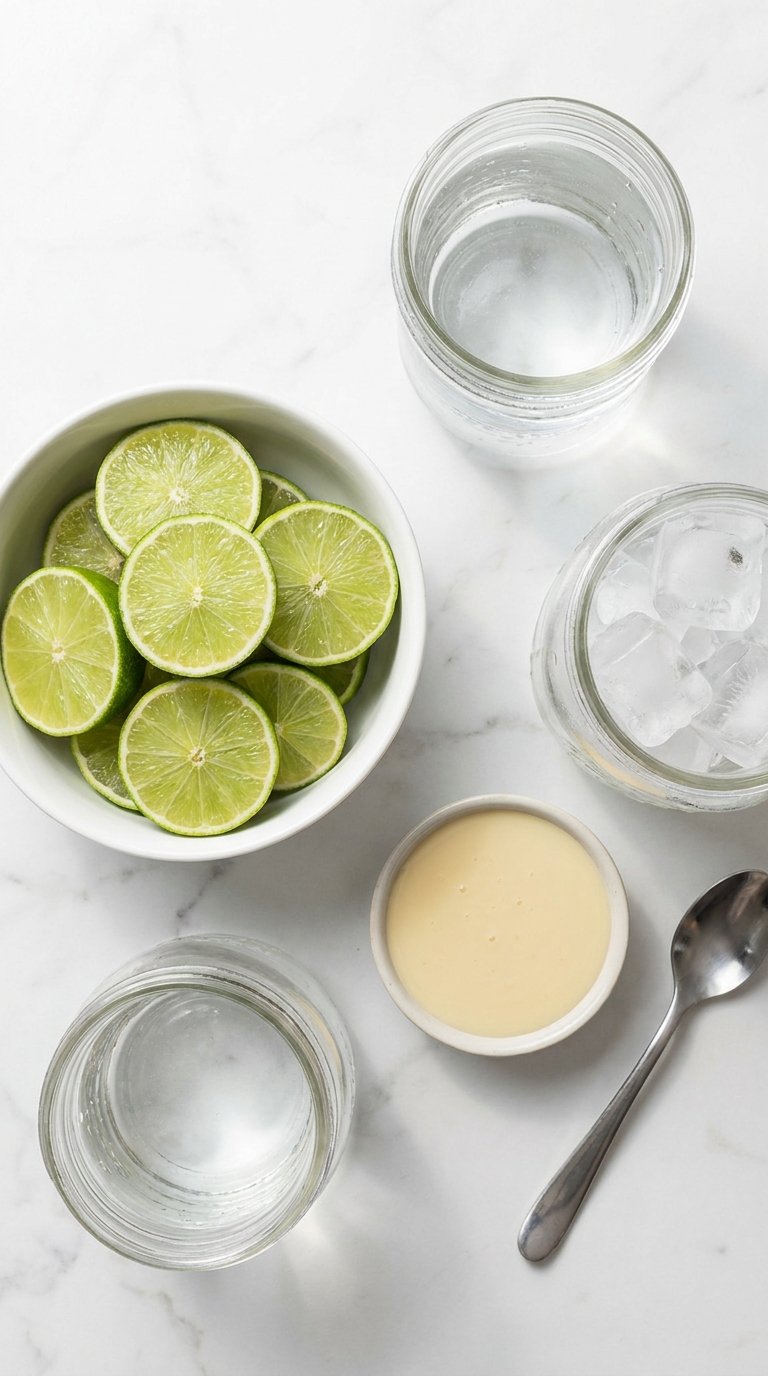
The ingredient list for Brazilian lemonade is one of the shortest in any blended drink. Every item matters and the quality of each directly affects the finished drink.
Limes are the star. Use 4 to 5 small to medium, thin-skinned Persian limes for a standard pitcher serving 4 to 6 people. Thin-skinned limes have less pith — the white layer under the skin — which means less bitterness even if you blend the whole lime. Avoid large, thick-skinned limes and any limes that feel light for their size (they are dry inside and yield little juice).
Sweetened condensed milk is non-negotiable. Use one 14-oz (395g) can per batch. This is the ingredient that makes the drink creamy and frothy, balances the tartness of the lime, and gives the finished drink its distinctive off-white, slightly opaque color. Nestlé’s La Lechera or Moça brands are the most authentic choices.
Granulated sugar adds sweetness beyond what the condensed milk alone provides. Two to three tablespoons per batch is the standard range. Taste the condensed milk before adding sugar — some brands are sweeter than others.
Cold water provides the liquid base. Use very cold water — chilled in the fridge or with a few ice cubes melted into it. Cold water keeps the drink temperature low from the first blend.
Ice adds texture and dilution. Half a cup of ice gives the drink a thicker, slightly slushy body. Omit the ice from the blender and serve over ice in glasses if you want a thinner, cleaner texture.
Pro Tip: Add a teaspoon of good-quality vanilla extract to the blender. The vanilla deepens the flavor of the condensed milk and adds a faint warmth that rounds the drink’s tartness without adding sweetness. Several Brazilian restaurants add this ingredient and never list it — it is the detail that makes their version taste different from a standard home recipe.
Save this idea to your Pinterest.
Step-by-Step Brazilian Lemonade Instructions
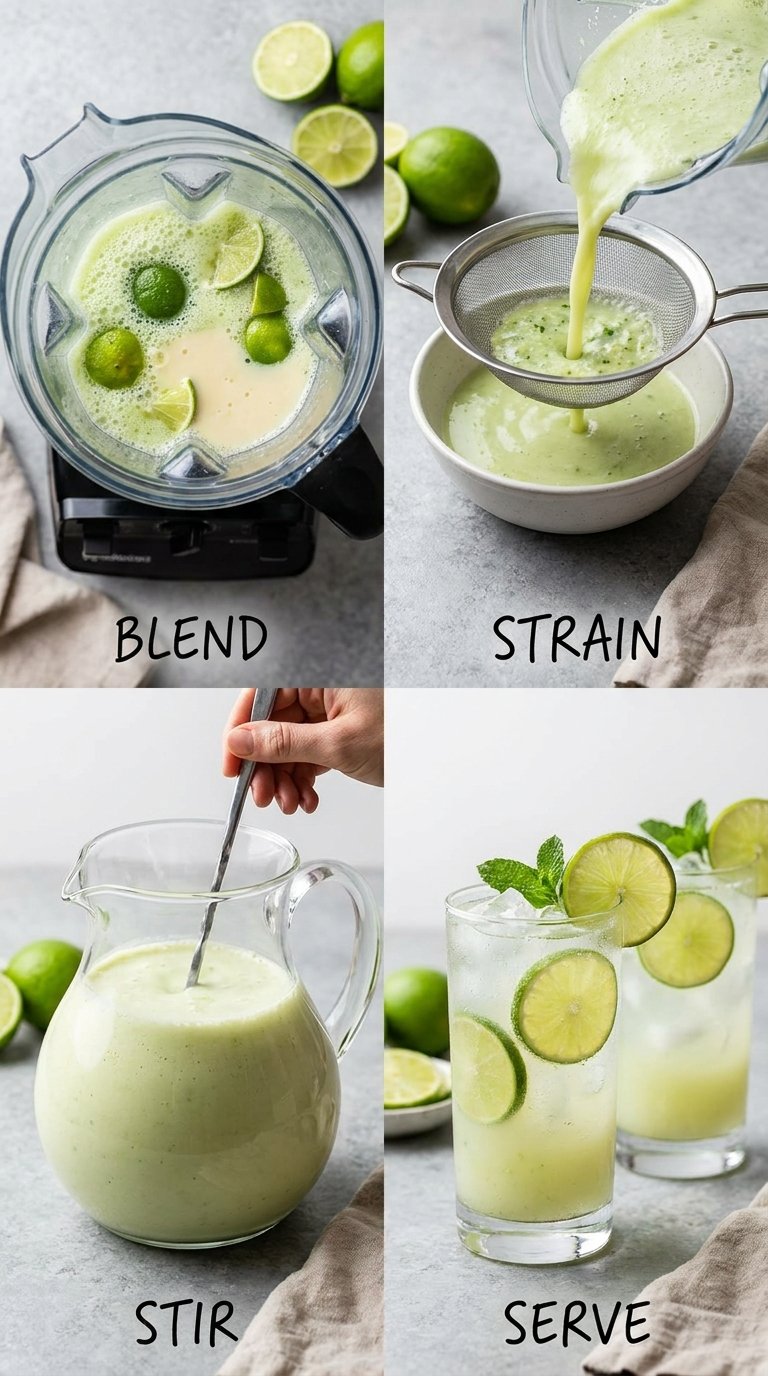
This is the classic blender method — the one used in Brazilian restaurants. Follow these steps exactly and the timing produces a drink that is creamy, tart, and not bitter.
Prepare the limes. Wash them thoroughly under running water, scrubbing the skin to remove any wax or pesticide residue. Cut off both ends of each lime — the flat cut removes the most bitter part of the peel at the tips. Cut each lime into 8 pieces (quarters, then each quarter in half).
Add to the blender in order. Pour 2 cups of cold water into the blender first. Add the lime pieces on top of the water. Add 1 can of sweetened condensed milk (14 oz). Add 2 tablespoons of granulated sugar. Add half a cup of ice.
Blend for exactly 10 to 15 seconds. Use a timer. Start the blender and count. At 10 seconds, the drink is tart and lightly creamy. At 15 seconds, it is slightly more bitter from the pith. Past 15 seconds, the bitterness increases noticeably with every additional second. Stop the blender the moment the count reaches 15.
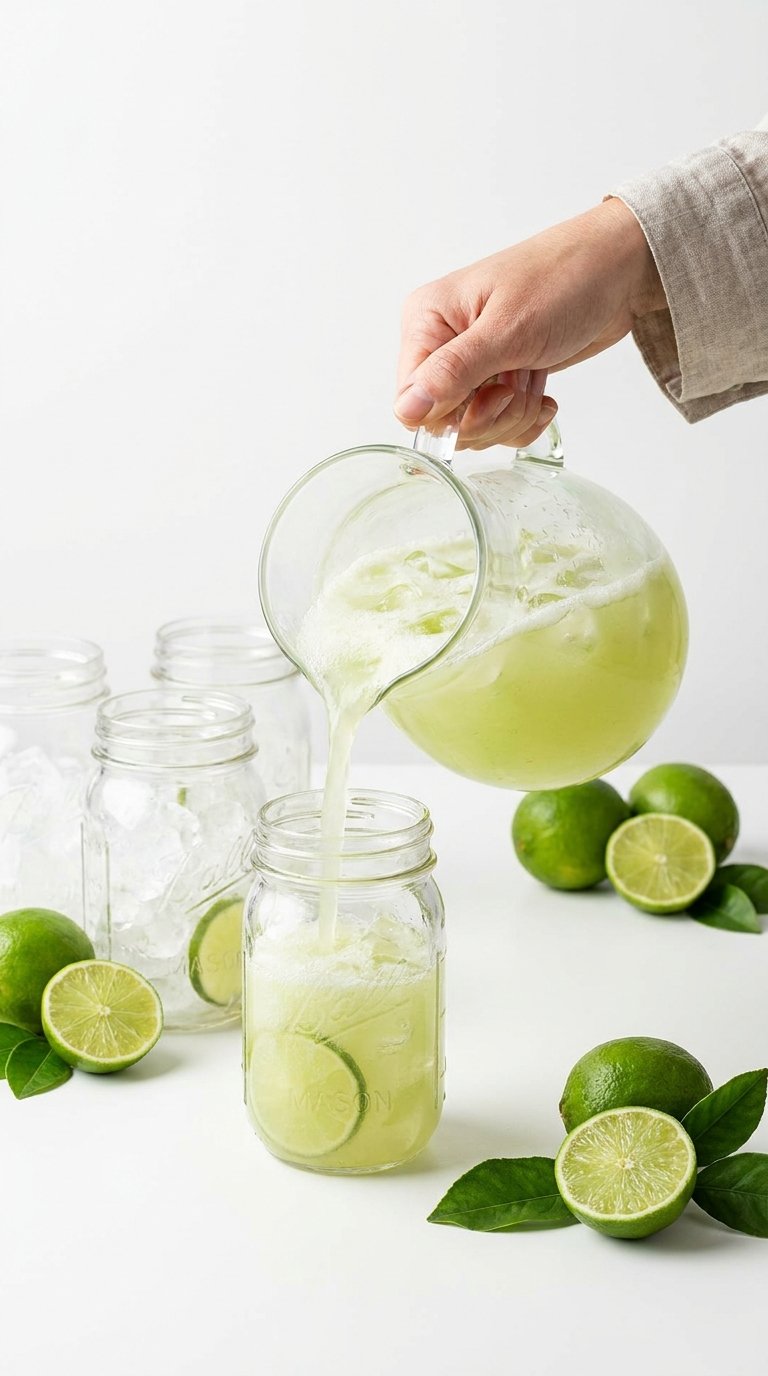
Strain immediately. Pour the blended liquid through a fine mesh strainer into a pitcher. Press the lime pulp lightly with a spoon to extract all the liquid. Discard the solids.
Taste and adjust. Add more sugar one teaspoon at a time if needed. Add a tablespoon of fresh squeezed lime juice if you want more tartness.
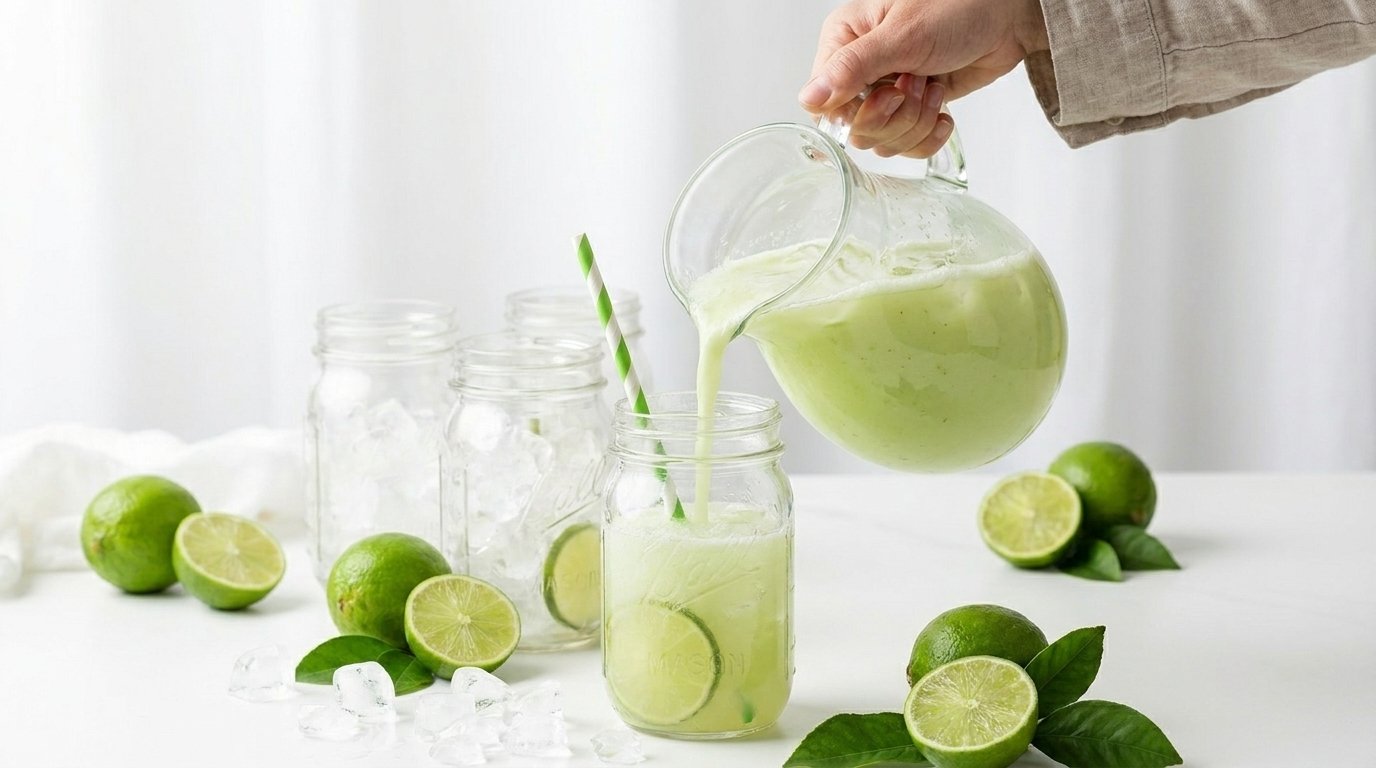
Serve right away over ice in tall glasses. Garnish with a thin lime wheel.
Pro Tip: Chill your pitcher and glasses in the freezer for 5 minutes before making the drink. A cold vessel keeps the drink icy cold for 20 to 30 minutes longer than a room-temperature glass.
Popular Asked Questions
Why is Brazilian lemonade made with limes and not lemons?
Brazilian lemonade uses limes rather than lemons because in Brazil, the Portuguese word limão refers to both limes and lemons without clear distinction. The small green limes most commonly available in Brazil are called “Tahitian lemons” (limão taiti), and the drink made from them is called limonada — which translates to “lemonade” in English. When the recipe spread internationally, the English translation stuck even though the fruit is technically a lime. In most Brazilian states, fresh lemons are scarce, so limes became the default citrus for drinks, desserts, and cooking.
Why does Brazilian lemonade taste bitter?
Bitterness in Brazilian lemonade comes from the white pith under the lime skin. When the whole lime is blended, the blender breaks down the pith and releases bitter compounds (primarily limonin and naringin) into the drink. Blending for more than 15 seconds extracts significantly more of these compounds. To prevent bitterness, set a timer and stop the blender at 15 seconds. Thin-skinned limes produce less bitterness than thick-skinned varieties. The peel-free method (peeling the limes before blending) eliminates bitterness entirely but changes the flavor profile slightly.
What does Brazilian lemonade taste like?
Brazilian lemonade tastes like a creamy, sweet-tart limeade with a frothy, slightly rich texture. The sweetened condensed milk adds sweetness and a faint milky creaminess that rounds the sharpness of the lime. The overall effect is somewhere between a key lime pie filling and a cold blended limeade — sweet enough to feel indulgent, tart enough to feel refreshing. The bitterness from the peel is faint in a well-made version and completely absent in the peel-free or no-blender version.
Can you make Brazilian lemonade without a blender?
Yes. The no-blender method uses fresh-squeezed lime juice whisked into a condensed milk and water base. Juice 6 to 8 limes by hand, strain the juice, and whisk it into one can of sweetened condensed milk mixed with cold water and sugar. The drink turns creamy and slightly opaque from the lime-condensed milk emulsification. The texture is slightly thinner and the flavor is cleaner and brighter than the whole-lime blended version. The key advantage is that the no-blender version stores for up to 24 hours in the fridge without developing bitterness.
How much sweetened condensed milk goes in Brazilian lemonade?
The standard Brazilian lemonade recipe uses one 14-oz (395g) can of sweetened condensed milk per batch serving 4 to 6 people. Some recipes use 3/4 of a can for a less sweet, more tart drink. Recipes in Brazil sometimes use 1.5 cans for a very rich, dessert-style version. The condensed milk is the sweetener and the creaminess source — adjust the amount based on your preference for sweetness and texture. If you reduce it significantly below 3/4 of a can, the drink loses its characteristic creaminess and starts to taste like a standard limeade.
Conclusion
Brazilian lemonade is one of the most rewarding quick drinks you can make at home. The ingredient list is short, the method takes five minutes, and the result tastes nothing like anything you can make with a standard lemon-sugar-water combination.
The 15-second blend rule and the immediate straining step are the two non-negotiables. Get those right and the drink works every time — creamy, tart, cold, and deeply satisfying. From there, the variations are wide open. Coconut water, vodka, frozen slush, sparkling water, dairy-free, or a crowd pitcher for 15 guests — all use the same base technique with small adjustments.
Which version are you making first — the classic original, the coconut tropical twist, or the frozen slush for a summer party? Tell us in the comments.
Follow us on Pinterest for more Brazilian lemonade inspiration and easy summer drink recipes.

Leave a Comment