
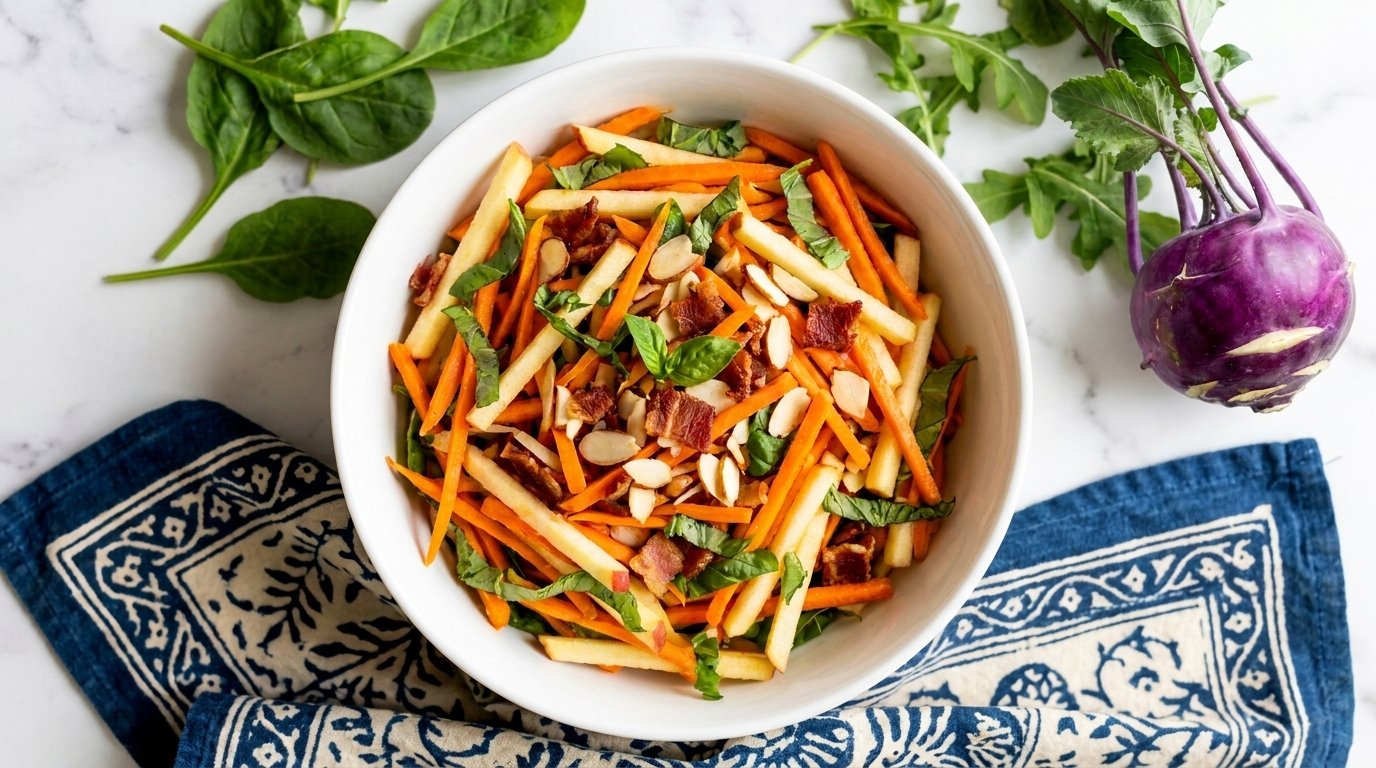
Kohlrabi and apple slaw is showing up on more tables than ever — at farmers market recipe cards, in CSA box guides, and across Pinterest boards dedicated to fresh summer sides. The reason is straightforward. Kohlrabi is crunchy, mild, and stays crisp far longer than cabbage once dressed, and apple adds a clean, sweet-tart contrast that no other slaw ingredient matches.
If you have received a kohlrabi in a farm box and had no idea what to do with it, or you want a side dish that holds up for two days in the fridge without going soggy, this guide covers everything. You get the classic no-mayo vinaigrette version, a creamy tahini build, an Asian sesame dressing variation, a honey mustard fall version, and tips for making it ahead without losing the crunch. Check out our related guide on Easy Fresh Salad Recipes for Every Season.
What Is Kohlrabi?
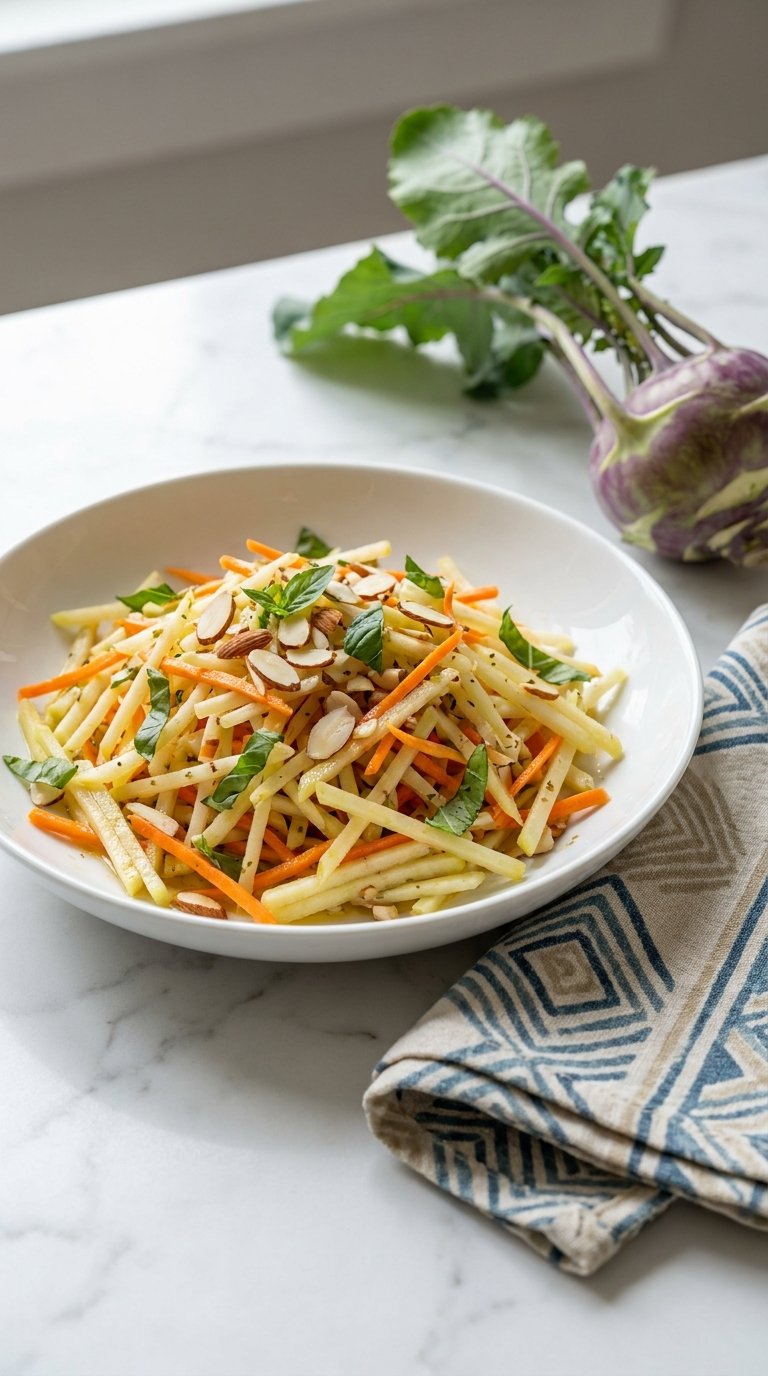
Kohlrabi is a bulbous vegetable in the Brassica family — the same plant group that includes broccoli, cauliflower, and cabbage. Its name comes from the German words for cabbage (kohl) and turnip (rabi), though it is neither. It grows as a round, slightly flattened bulb above the soil, with long stalks and edible leaves extending upward from the surface.
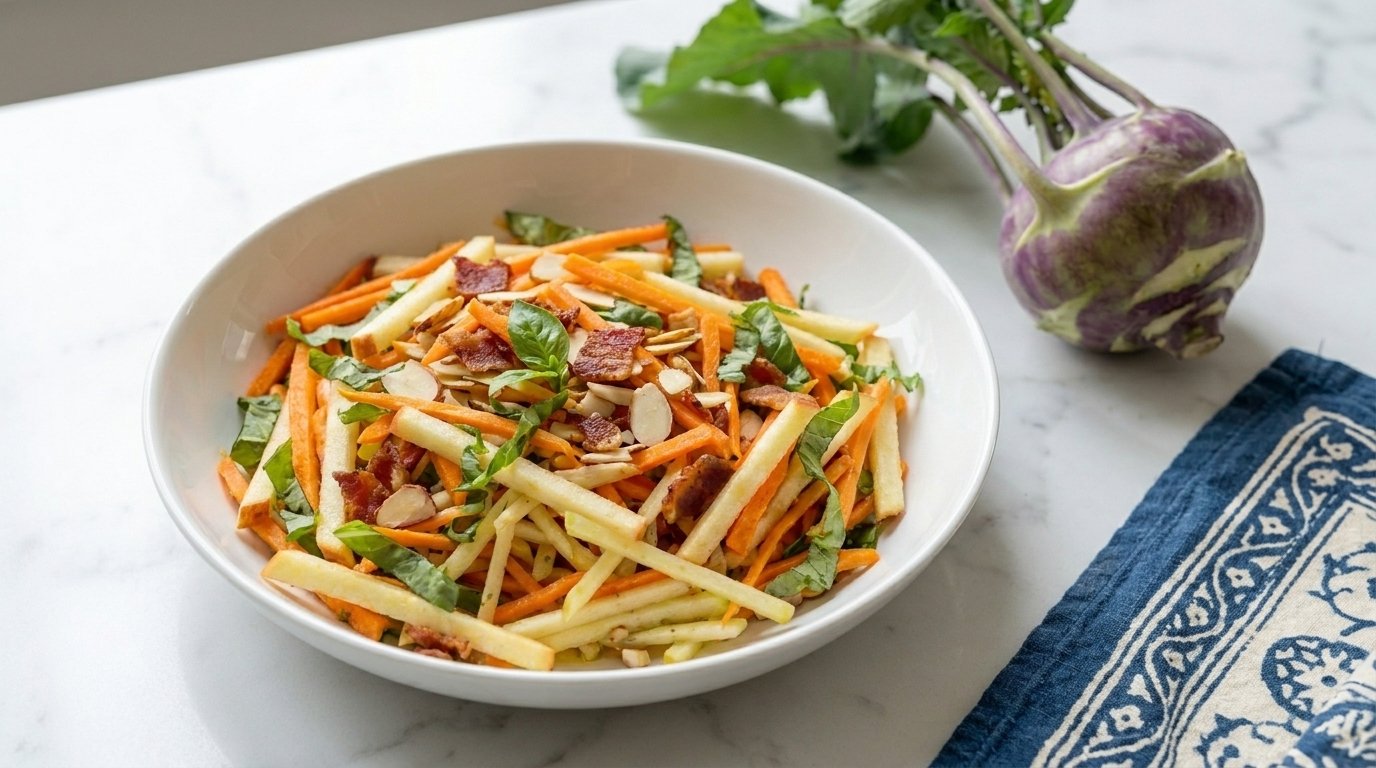
The bulb comes in two varieties — pale green and purple. Both taste identical once peeled. The skin color affects only the appearance of the raw vegetable, not the flavor or texture of the finished dish.
Raw kohlrabi has a crisp, juicy texture and a mild flavor that sits somewhere between a broccoli stem and a jicama — slightly sweet, faintly peppery, never bitter or sharp. That mildness is exactly what makes it such a good slaw base. It absorbs dressing flavor without fighting it, and its density means it stays firm long after cabbage would have wilted.
The flesh, skin, and leaves are all edible. For slaw, only the peeled bulb is used. The leaves can be sautéed like kale or collard greens if you want to use the whole vegetable.
Pro Tip: Choose kohlrabi bulbs smaller than a tennis ball. Larger bulbs tend to be more fibrous and less sweet. Small, firm bulbs with fresh green stems attached indicate the most recently harvested, best-tasting specimens.
Kohlrabi and Apple Slaw Ingredients
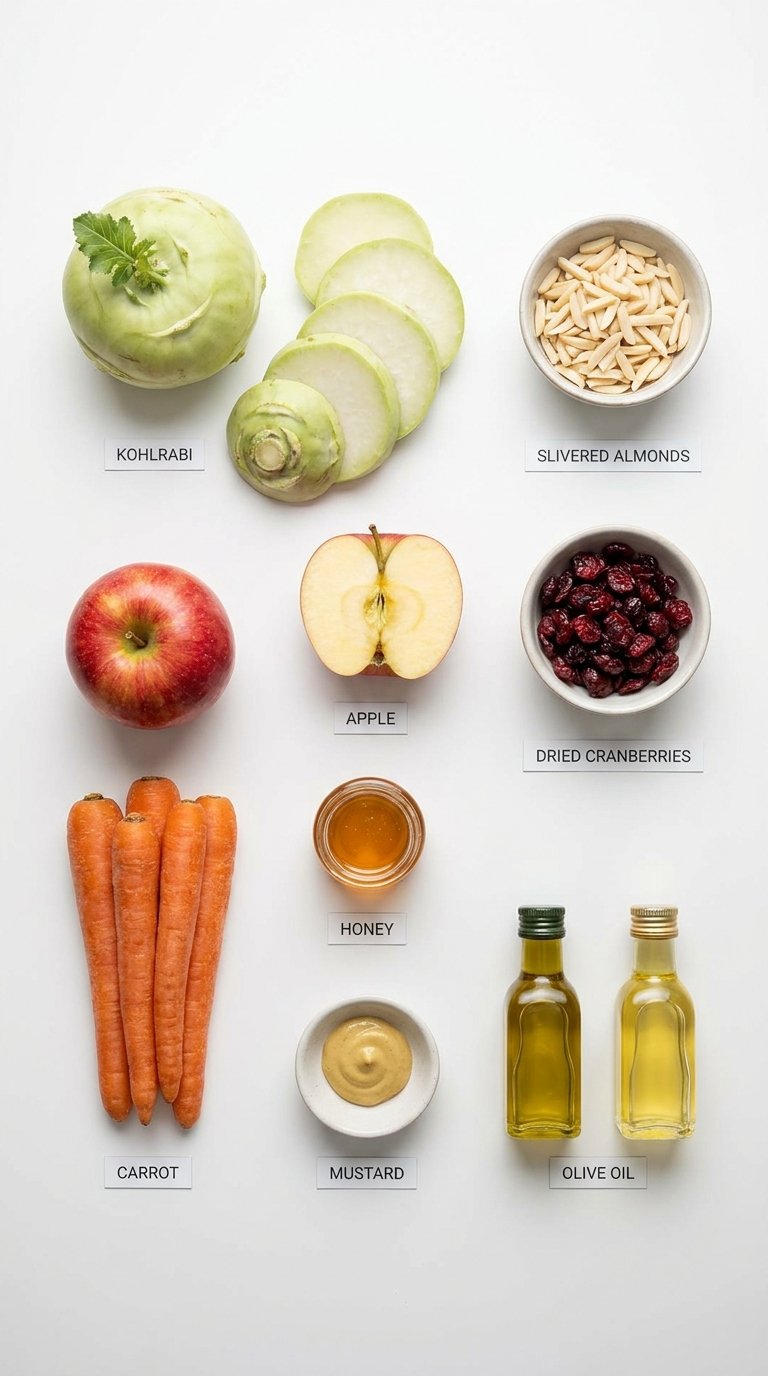
The ingredient list for kohlrabi and apple slaw is short and flexible. The base stays consistent across every variation; the dressing is what shifts the flavor profile.
Kohlrabi is the structural core. One medium bulb (about 300 to 350 grams peeled) produces enough slaw for four side-dish servings. Two bulbs feed six to eight people comfortably.
Apple adds sweetness and a bright, slightly tart flavor note. One large apple per medium kohlrabi is the right ratio. Crisp varieties — Granny Smith, Honeycrisp, Pink Lady — hold their texture far better than soft eating apples.
Carrot adds natural sweetness and a pop of orange color. One medium carrot, peeled and julienned or grated, is enough to add visual contrast without changing the flavor significantly.
Red onion adds a mild sharpness. Slice it as thin as possible. If raw onion is too strong for your taste, soak the sliced onion in cold water for 10 minutes before adding it to the slaw. The cold water pulls the sulfurous compounds out and leaves a milder, slightly sweeter onion bite.
Fresh herbs brighten the finished dish. Flat-leaf parsley is the standard choice. Mint adds a cooling freshness that works especially well in the Asian and tahini versions. Chives add a light onion note without the sharpness of red onion.
Toasted nuts or seeds add crunch and a nutty depth. Hazelnuts, slivered almonds, pumpkin seeds, and sesame seeds are the most common choices.
Pro Tip: Toss the cut apple immediately with one tablespoon of lemon juice after slicing. The acid prevents browning and adds a bright citrus note that sharpens the whole slaw without changing the flavor profile.
Save this idea to your Pinterest.
Step-by-Step Kohlrabi and Apple Slaw Instructions
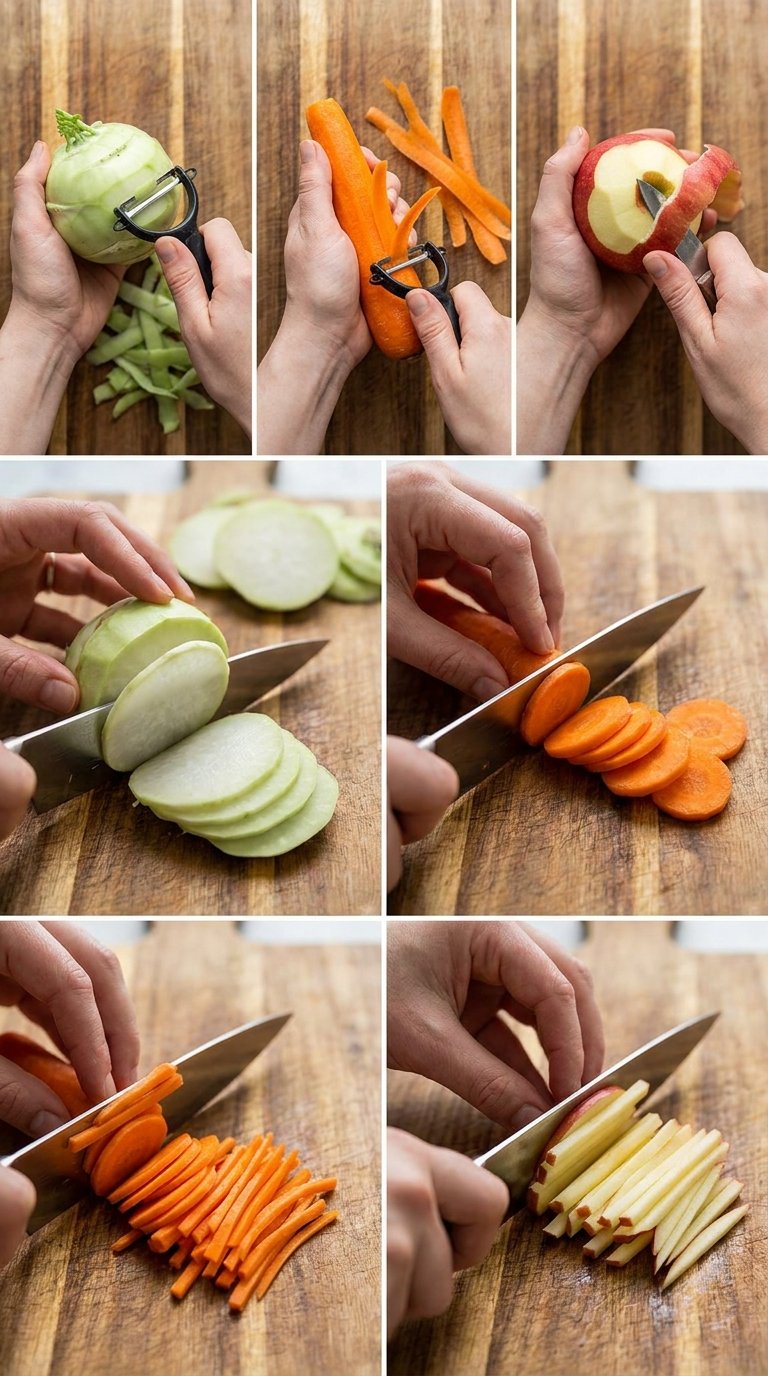
This method covers the classic no-mayo version with an apple cider vinegar dressing. It is the base technique for every variation in this guide.
Prep the kohlrabi. Peel and cut it into matchsticks as described above. Place in a large bowl and sprinkle with a pinch of salt. Toss and let it sit for 5 minutes. The salt draws out a small amount of moisture and seasons the vegetable from the inside out.
Prep the apple. Quarter, core, and cut into matchsticks the same length and width as the kohlrabi. Toss immediately with one tablespoon of fresh lemon juice to prevent browning.
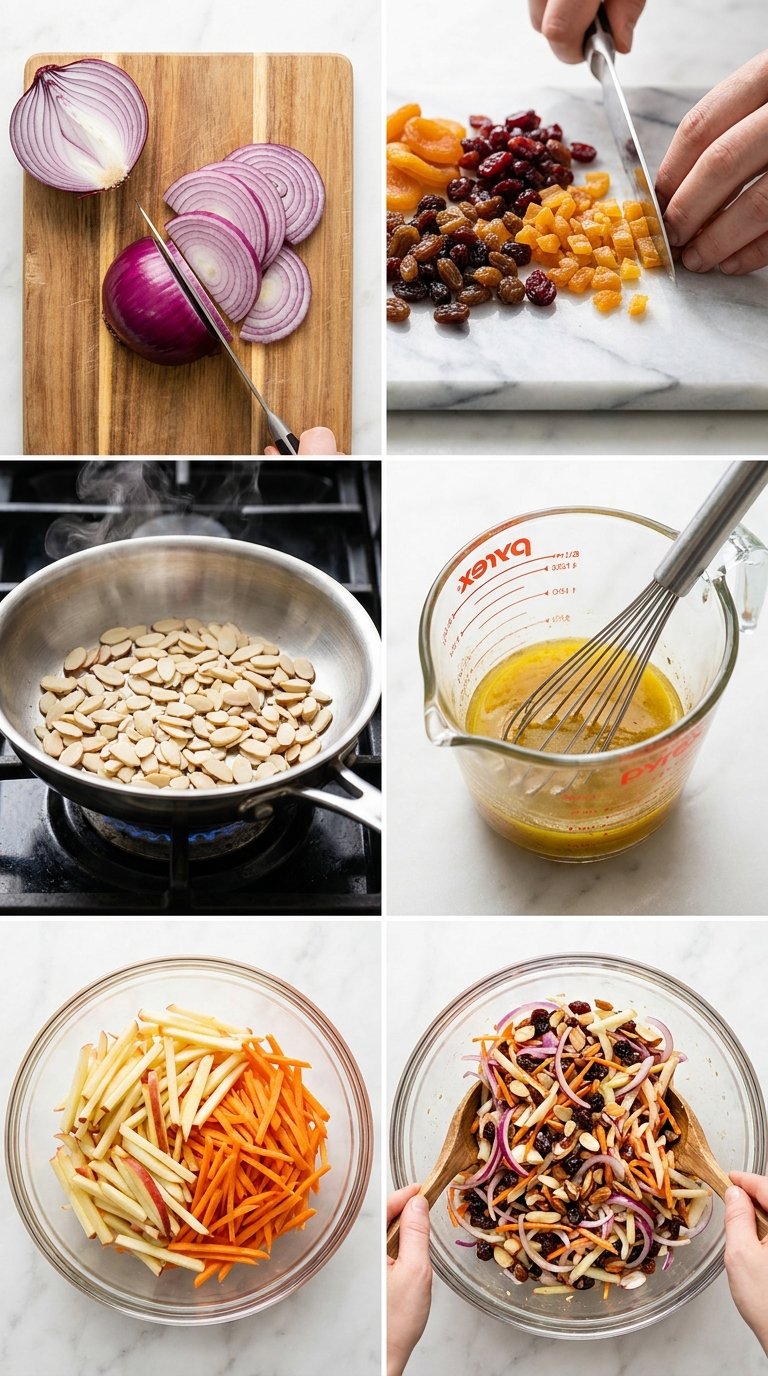
Prep the add-ins. Peel and julienne one medium carrot. Slice a quarter of a red onion as thin as possible. If using toasted nuts, toast them in a dry pan over medium heat for 2 to 3 minutes, shaking often, until fragrant. Set aside.
Make the dressing. Whisk 3 tablespoons of olive oil with 1 tablespoon of apple cider vinegar, 1 teaspoon of Dijon mustard, 1 teaspoon of honey, and a pinch of salt and pepper. Whisk until the dressing is smooth and slightly emulsified.
Combine and toss. Add the kohlrabi, apple, carrot, and red onion to the bowl. Pour the dressing over and toss to coat every piece. Taste and adjust — more vinegar if it needs brightness, more honey if it needs balance.
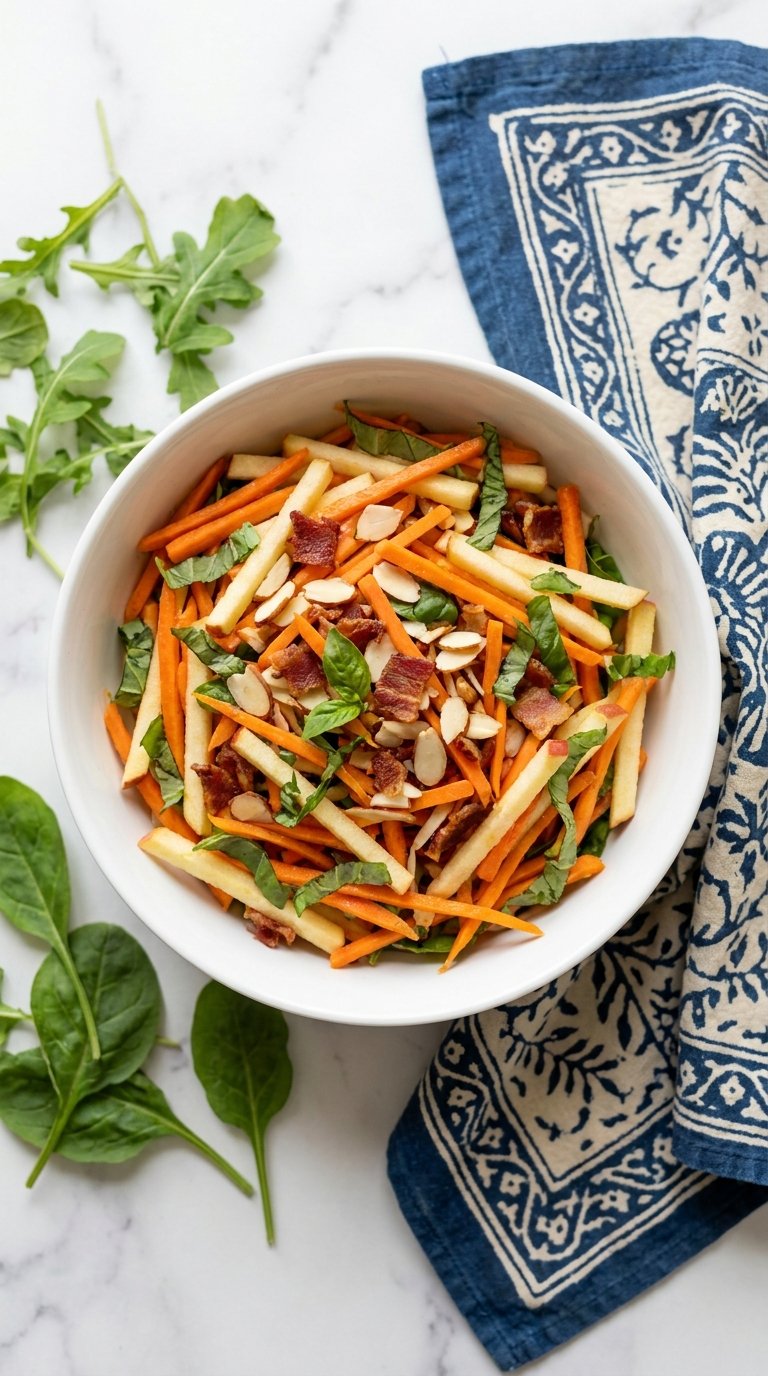
Add the finishing touches. Scatter herbs and toasted nuts over the top right before serving. If making ahead, hold the nuts and herbs separately and add them at serving time.
Pro Tip: Let the dressed slaw rest for 10 to 15 minutes before serving. The resting time allows the dressing to penetrate the kohlrabi and the flavors to settle. The texture stays crisp; only the flavor deepens.
Popular Asked Questions
What does kohlrabi taste like raw?
Raw kohlrabi tastes mild and slightly sweet with a faint peppery note — somewhere between a broccoli stem and jicama. It is not bitter, sharp, or strongly flavored. The texture is firm and very crunchy, similar to a water chestnut or a crisp radish but without the sharp heat. That mild, clean flavor is what makes it work so well in kohlrabi and apple slaw — it provides crunch and body without competing with the dressing or the apple.
How do you peel kohlrabi?
A sharp paring knife works better than a vegetable peeler on kohlrabi because the skin is too thick and fibrous for most standard peelers to handle cleanly. Cut the top and bottom off first to create two flat surfaces. Stand the bulb on one flat end and cut the skin away in strips from top to bottom, following the curve of the bulb. Once the skin is removed, the pale, creamy white flesh beneath is ready to slice or grate for slaw.
Can you make kohlrabi apple slaw ahead of time?
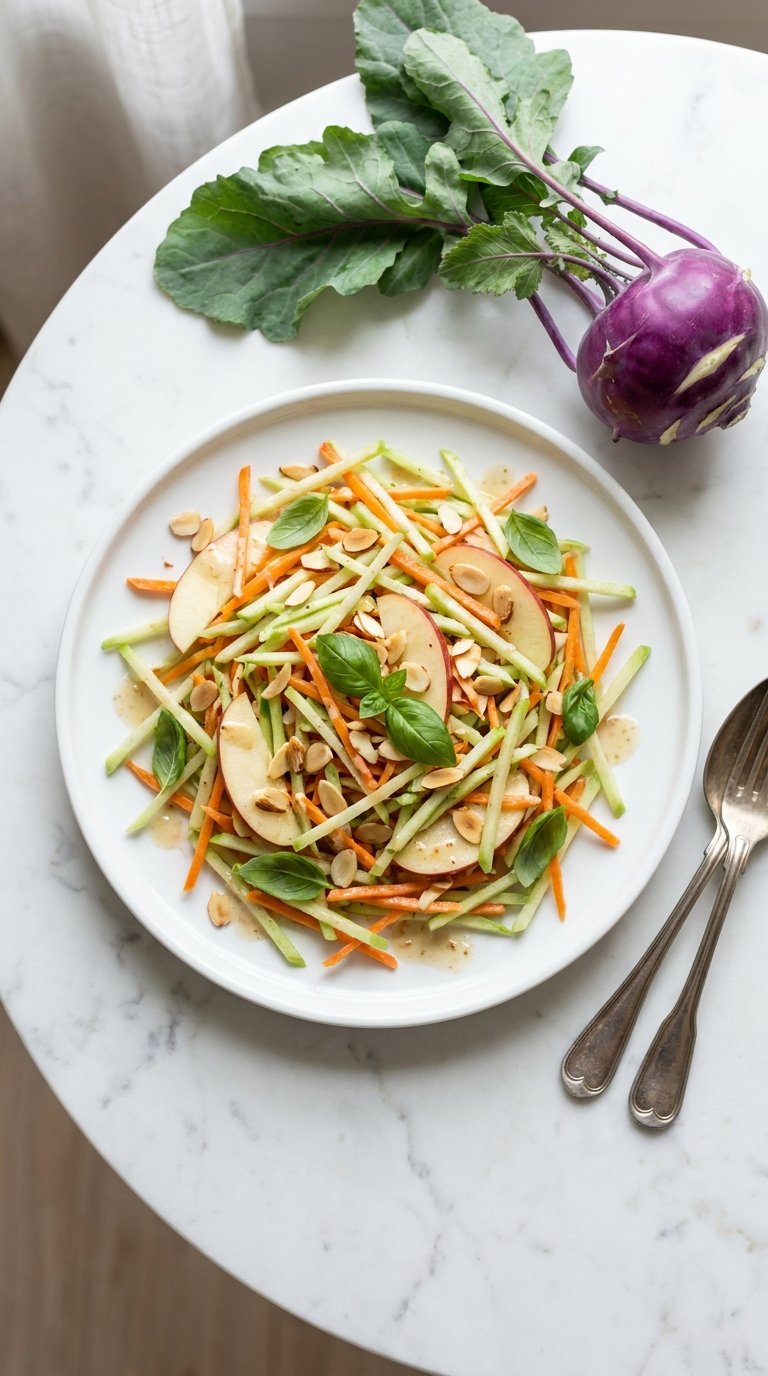
Yes. Kohlrabi apple slaw keeps well for up to two days refrigerated. The key is storing the dressing, apple, and toasted nuts separately from the kohlrabi, carrot, and onion base. Combine everything at serving time. If you dress the full slaw ahead, plan to serve it within 24 hours — the apple softens faster than the kohlrabi, and the nuts absorb moisture from the dressing overnight.
Is kohlrabi healthier than cabbage for slaw?
Both are nutritionally strong. Kohlrabi is rich in vitamin C, potassium, fiber, and B vitamins. It is lower in calories than most slaw vegetables and contains compounds associated with supporting blood pressure and heart health. Compared to green cabbage, kohlrabi has a similar calorie count, slightly more vitamin C, and a comparable fiber content. The practical advantage of kohlrabi over cabbage in slaw is its texture — it stays firmer for longer after dressing, which makes it a better choice for make-ahead preparation.
What are the best apples for kohlrabi slaw?
Granny Smith is the most reliable choice — firm, tart, and resistant to browning. Honeycrisp and Pink Lady are excellent alternatives when you want a slightly sweeter flavor profile. All three hold their texture in a dressing for up to 24 hours without becoming soft. Avoid soft varieties like Red Delicious, McIntosh, or Gala if you plan to make the slaw more than an hour ahead. Always toss cut apple with lemon juice immediately after slicing regardless of the variety you use.
Conclusion
Kohlrabi and apple slaw earns its place on any table that values texture and freshness over richness. The classic vinaigrette version takes 15 minutes and holds its crunch for two days. The tahini, Asian sesame, and honey mustard variations give you a side dish that adapts to any cuisine and any occasion. The fish taco and pulled pork builds make the argument that this slaw is not just a salad — it is an ingredient that makes other dishes better.
The key technical points are simple. Use a paring knife to peel. Cut matchsticks rather than grating. Dress no more than 30 minutes before serving for the crispest result, or dress the night before for deeper flavor. Add the apple, nuts, and herbs last.
Which version are you making first — the classic vinaigrette, the creamy tahini, or the Asian sesame build? Tell us in the comments.
Follow us on Pinterest for more kohlrabi and apple slaw inspiration and easy fresh side dish recipes.

Leave a Comment