
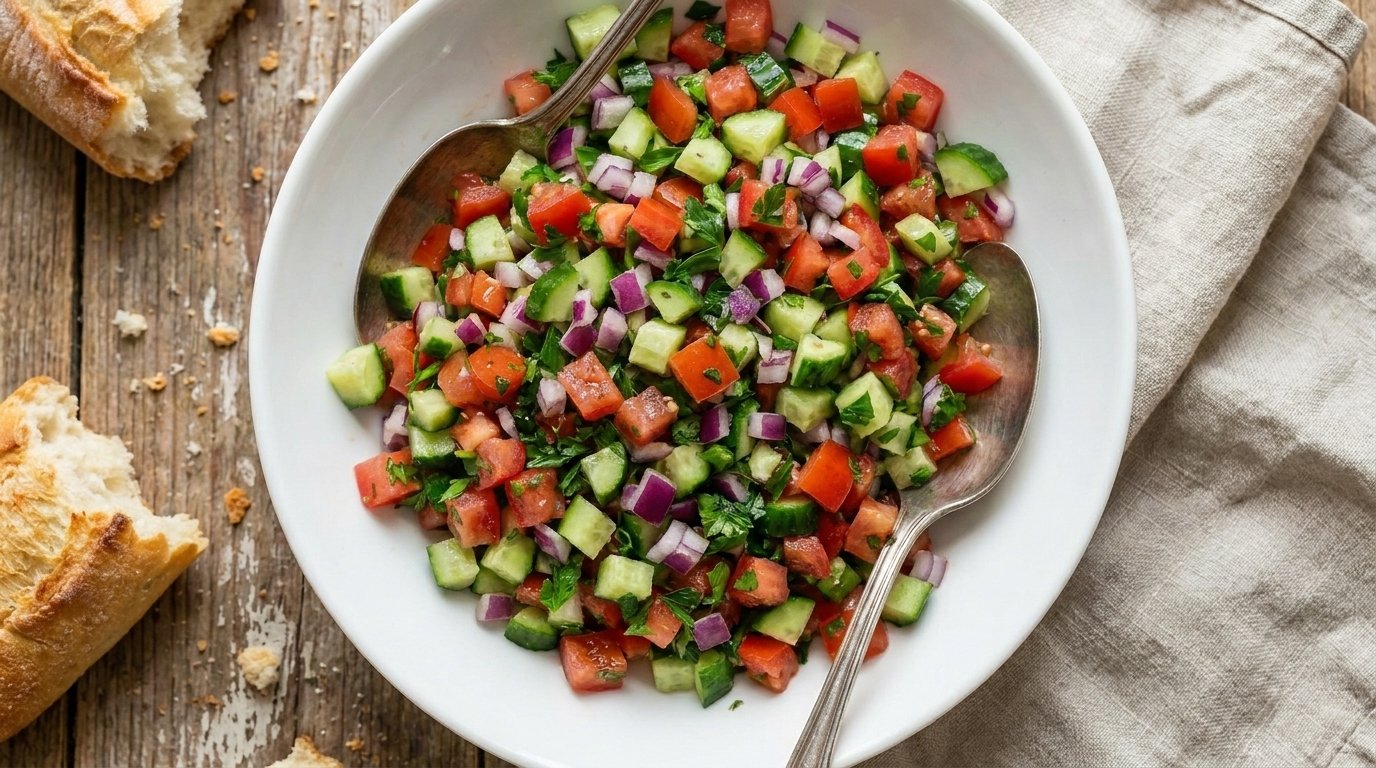
Search interest in Mediterranean salad has climbed steadily every summer since 2022, and the recipe stays at the top of meal prep lists year-round. If you keep reaching for the same dull side dish, this post solves that problem with one recipe and a full set of variations. You will get a crisp, colorful Mediterranean salad built from eight fresh ingredients, a three-minute homemade dressing, and a clear method that works whether you are feeding two or twenty. Every section below covers a different part of the recipe so you can skip to what you need.
Key Takeaways
- A homemade lemon and olive oil vinaigrette takes three minutes and tastes better than any bottled version.
- The salad stays crisp for up to five days when you store the dressing and vegetables separately.
- You can turn this into a full meal by adding grilled chicken, chickpeas, shrimp, or canned tuna.
- The core recipe uses eight ingredients and takes under 20 minutes start to finish.
- Swapping one or two ingredients changes the flavor profile completely, so the recipe never gets boring.
Ingredients
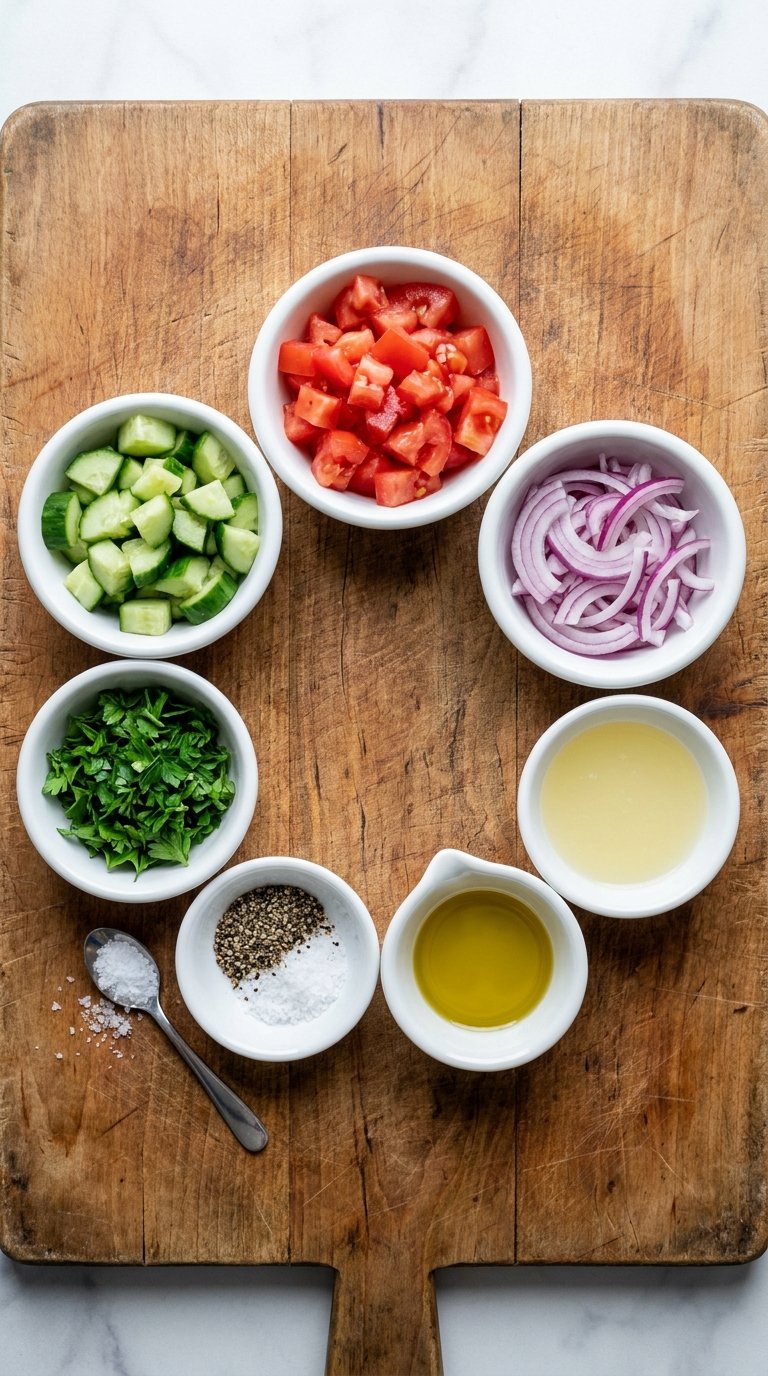
All measured ingredients laid out on a marble surface before assembly]
This recipe serves four as a side dish or two as a main meal. It scales up easily for a crowd.
For the Salad
- 1 English cucumber, quartered and cut into half-inch pieces
- 2 Roma tomatoes, seeded and diced
- 1/2 red onion, thinly sliced (soaked 10 minutes and drained)
- 1/2 cup Kalamata olives, pitted and halved
- 4 oz feta cheese, cut into small cubes or crumbled
- 1 can (15 oz) chickpeas, rinsed and patted dry
- 1/4 cup fresh flat-leaf parsley, roughly chopped
- 3 cups chopped romaine lettuce (optional)
For the Lemon Olive Oil Dressing
- 3 tablespoons extra virgin olive oil
- 2 tablespoons fresh lemon juice (about 1 lemon)
- 1 teaspoon lemon zest
- 1 small garlic clove, finely minced
- 1/2 teaspoon dried oregano
- 1/4 teaspoon sea salt
- Pinch of black pepper
- 1/2 teaspoon Dijon mustard (optional, helps emulsify)
Instructions
Step-by-step grid of the four main prep and assembly stages]
Step 1: Make the dressing.
Add lemon juice, lemon zest, minced garlic, oregano, salt, pepper, and Dijon mustard to a small jar. Close the lid and shake for 15 seconds. Open the jar, add the olive oil, close again and shake for another 15 seconds until the dressing looks uniform and slightly thick. Taste and adjust salt or lemon.
Step 2: Prep the vegetables.
Soak the sliced red onion in cold salted water for 10 minutes, then drain and pat dry. Seed and dice the tomatoes. Quarter and slice the cucumber. Halve the olives. Rinse and dry the chickpeas. Rough-chop the parsley.
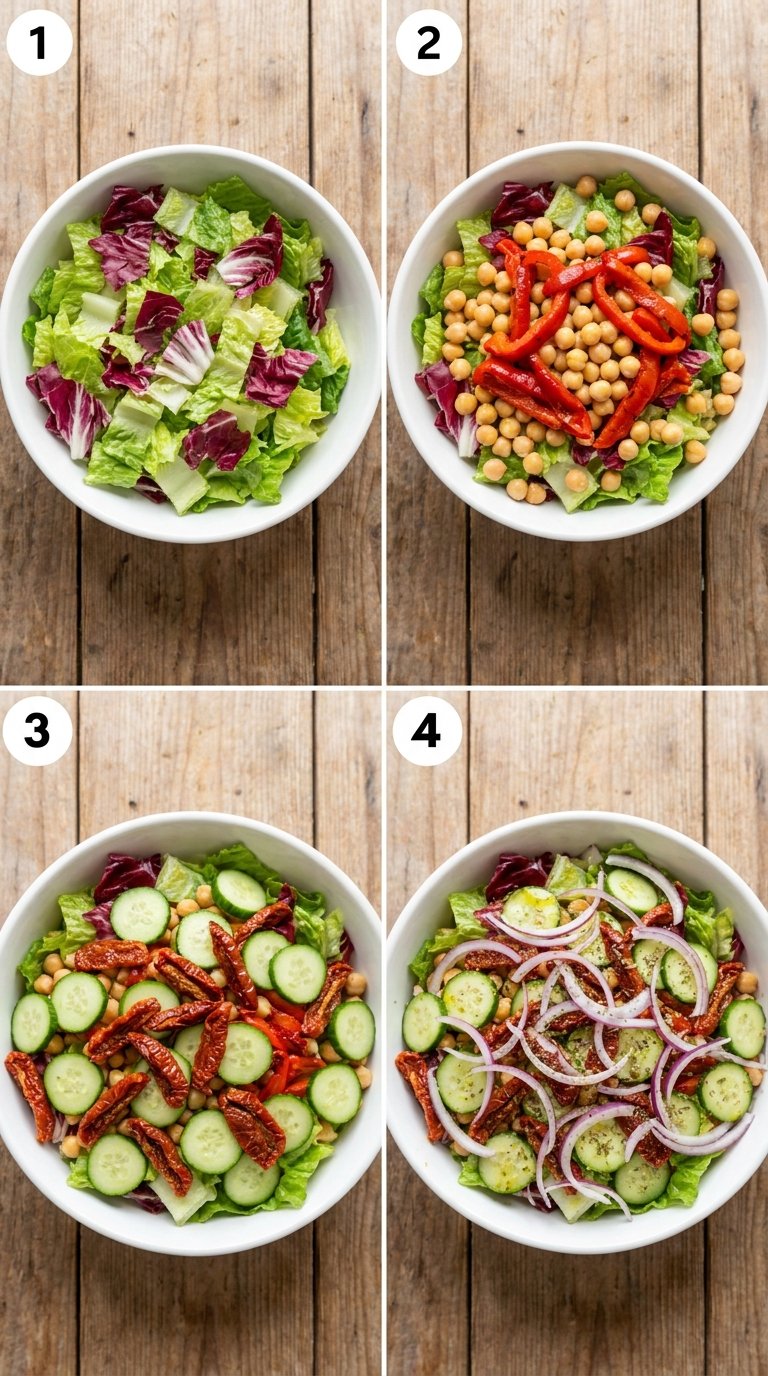
Step 3: Assemble.
Add the romaine (if using) to a large bowl. Add the cucumber, onion, chickpeas, and olives. Toss gently. Add the tomatoes and parsley on top. Scatter the feta over everything.
Step 4: Dress and serve.
Pour the dressing over the salad. Toss gently from the bottom up so the feta does not all sink. Serve immediately for the crispest texture, or rest for up to 20 minutes for the flavors to blend.
Total Time: 20 minutes
Servings: 4 as a side, 2 as a main
Popular Asked Questions
What dressing goes on Mediterranean salad?
The classic dressing for a Mediterranean salad is a simple vinaigrette made with extra virgin olive oil, fresh lemon juice, garlic, dried oregano, salt, and black pepper. Some versions add a small amount of Dijon mustard to hold the oil and acid together and a tiny drizzle of honey to round out sharp acidity. Red wine vinegar can replace or supplement the lemon juice for a deeper, less bright flavor. Avoid cream-based dressings and anything with added sugar if you want an authentic result.
Is Mediterranean salad healthy?
Yes. A standard Mediterranean salad is one of the most nutritionally complete side dishes you can make. It delivers healthy unsaturated fats from olive oil and olives, vitamins C and K from fresh vegetables, plant protein and fiber from chickpeas, and calcium from feta. The meal aligns closely with the Mediterranean diet pattern, which research consistently links to lower rates of heart disease and better long-term health outcomes. The only thing to watch is sodium since feta and olives are both naturally high in salt.
What is the difference between a Greek salad and a Mediterranean salad?
A Greek salad is a specific Mediterranean salad from Greece. It traditionally contains tomato, cucumber, red onion, Kalamata olives, feta, and a simple oil and vinegar dressing, with no lettuce. A Mediterranean salad is broader and can include any combination of ingredients from countries across the Mediterranean coast. Think of Greek salad as one version within a larger category. Mediterranean salad can include chickpeas, lettuce, herbs, roasted vegetables, grains, or different cheeses depending on which regional tradition it draws from.
Can you make Mediterranean salad ahead of time?
Yes, with one rule: store the dressing separately from the vegetables until you are ready to eat. You can chop all the vegetables, drain the chickpeas, and make the dressing up to 24 hours in advance. Keep them in separate airtight containers in the fridge. Combine them 20 to 30 minutes before serving so the flavors blend without the vegetables going soft. Chop tomatoes fresh on the day you serve the salad since they release the most liquid when stored cut.
What protein can I add to Mediterranean salad?
The best proteins for a Mediterranean salad are grilled chicken, canned tuna in olive oil, grilled shrimp, hard-boiled eggs, or grilled halloumi. Each one works at room temperature, matches the lemon and herb flavors in the dressing, and adds meaningful protein without overwhelming the fresh vegetables. Chickpeas are already in the base recipe and count as a plant-based protein. For a fully plant-based high-protein version, double the chickpeas and add toasted pine nuts and pumpkin seeds over the top.
Final Thoughts
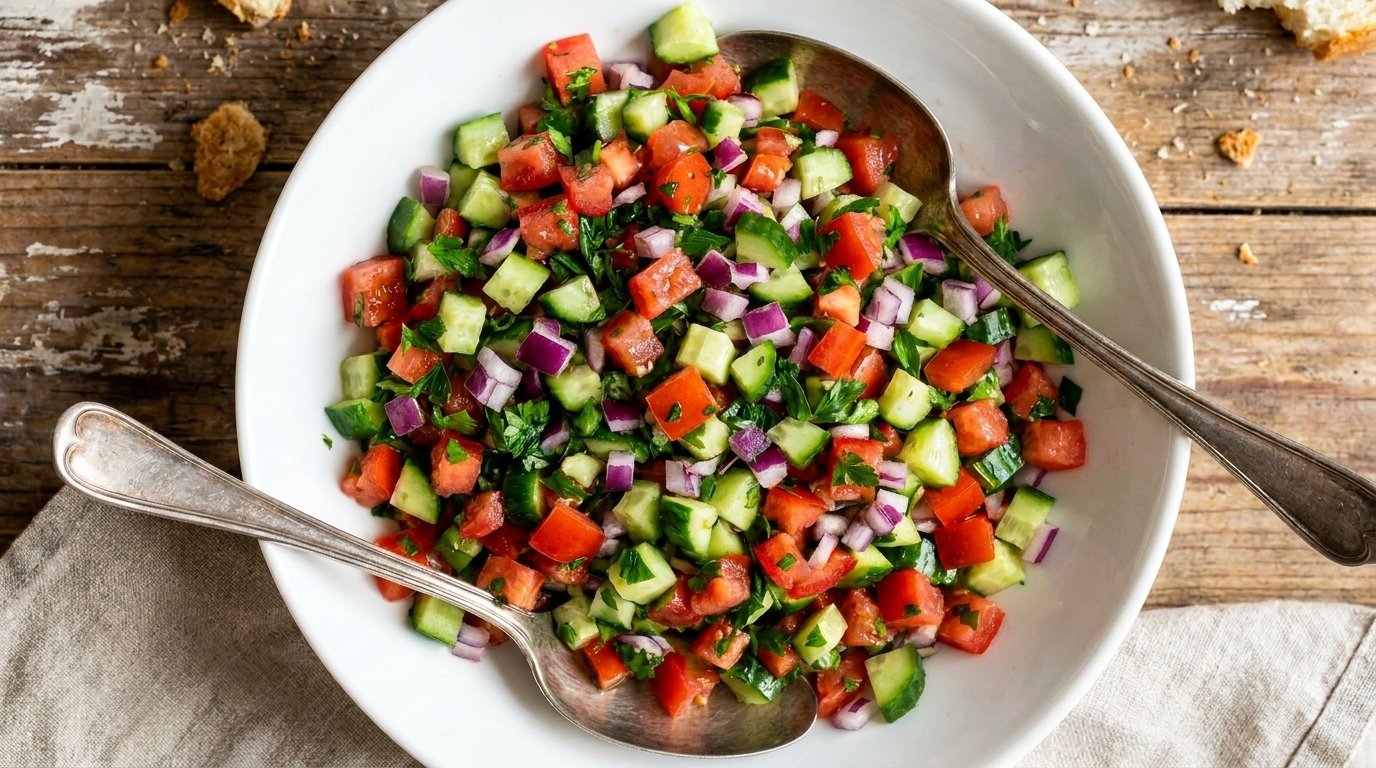
A good Mediterranean salad does not need a long list of techniques or hard-to-find ingredients. Eight fresh components, a three-minute dressing, and the right knife work are all it takes. The recipe works as a side dish on a Tuesday night and as a showpiece at a summer gathering. It scales, it stores, and it changes with the season.
The feta and olive oil do most of the flavor work. The fresh lemon and parsley keep it feeling light. Everything in between is flexible.
What variation are you most likely to try first: the summer watermelon version, the fall roasted squash edition, or the classic base recipe? Tell us in the comments.
Follow us on Pinterest for more Mediterranean salad inspiration and fresh recipe ideas every week.

Leave a Comment