
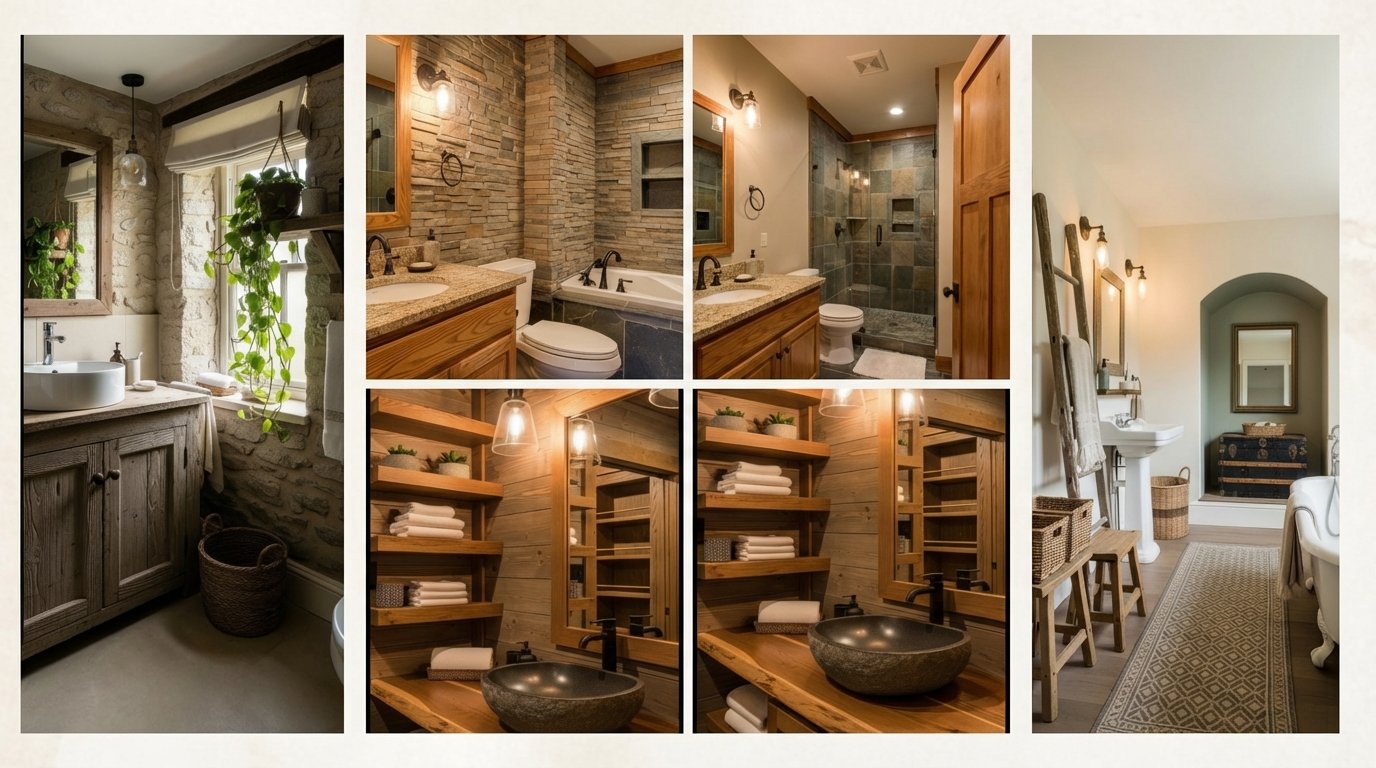
Guest bathrooms often feel like an afterthought. They are frequently sterile, cold, and devoid of personality. You want your guests to feel welcomed and wrapped in comfort, but standard white tiles and chrome fixtures rarely achieve that.
The solution lies in the “Modern Rustic” trend. This design philosophy blends raw, natural materials with clean lines to create a space that feels both high-end and deeply grounding. It is not about turning your home into a log cabin. It is about adding warmth through texture, organic layers, and earthy tones.
In this guide, we break down 10 specific design elements that instantly add rustic charm to your guest bath. We cover everything from wood treatments that withstand humidity to the exact vintage metals that never go out of style.
Key Takeaways
- Texture over Color: Rustic design relies on the interplay of rough wood, smooth stone, and woven fibers rather than bright paint colors.
- Lighting Sets the Mood: A switch from cool white bulbs to warm, layered vintage lighting changes the entire atmosphere immediately.
- Imperfection is Value: Scratched brass, reclaimed wood, and hand-formed tiles add a sense of history that mass-produced items cannot match.
- Storage as Decor: Open shelving with glass jars and woven baskets turns necessary storage into a visual feature.
Contents
- Natural Wood Accents
- Vintage Fixtures
- Earthy Color Palettes
- Exposed Brick Walls
- Farmhouse Sinks
- Wooden Beams and Ceilings
- Natural Stone Features
- Antique Furniture Pieces
- Rustic Accessories
- Mason Jar Storage Solutions
- Popular Asked Questions
- Conclusion
Natural Wood Accents
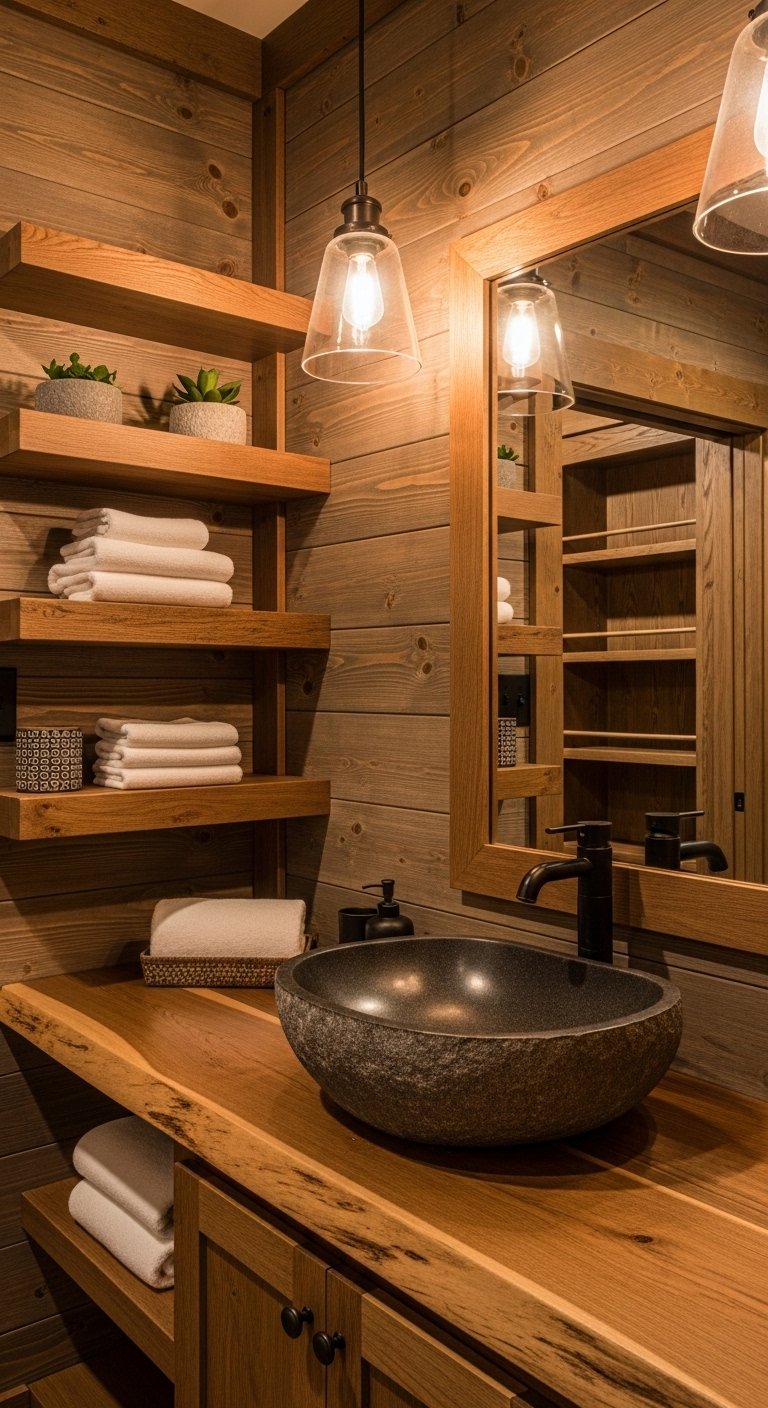
Bringing wood into a bathroom scares many homeowners because of moisture concerns, but it is the single most effective way to warm up a sterile space. The contrast between cold ceramic tiles and the organic grain of wood creates immediate visual interest. You do not need to clad the entire room in timber to get the effect. Focus on high-impact areas like a floating vanity, open shelving above the toilet, or a wooden frame around a builder-grade mirror. The goal is to interrupt the smooth surfaces with something tactile and imperfect.
When selecting wood for a damp environment, the finish matters more than the species. Hardwoods like white oak, teak, or walnut are naturally more resistant to water, but even softer pine can work if properly sealed. Look for marine-grade polyurethane or penetrating oils like Tung oil. These finishes seep into the grain rather than sitting on top, allowing the wood to expand and contract with humidity without peeling. For a guest bathroom that sees less daily traffic than a master bath, these accents will hold up beautifully for years.
Pro Tip: If you use a wooden vanity top, install a vessel sink. This keeps the majority of water contained within the ceramic bowl and away from the wood surface. Wipe down splashes immediately to prevent dark water spots from forming over time.
Save this idea to your Pinterest board for your next remodel.
Vintage Fixtures
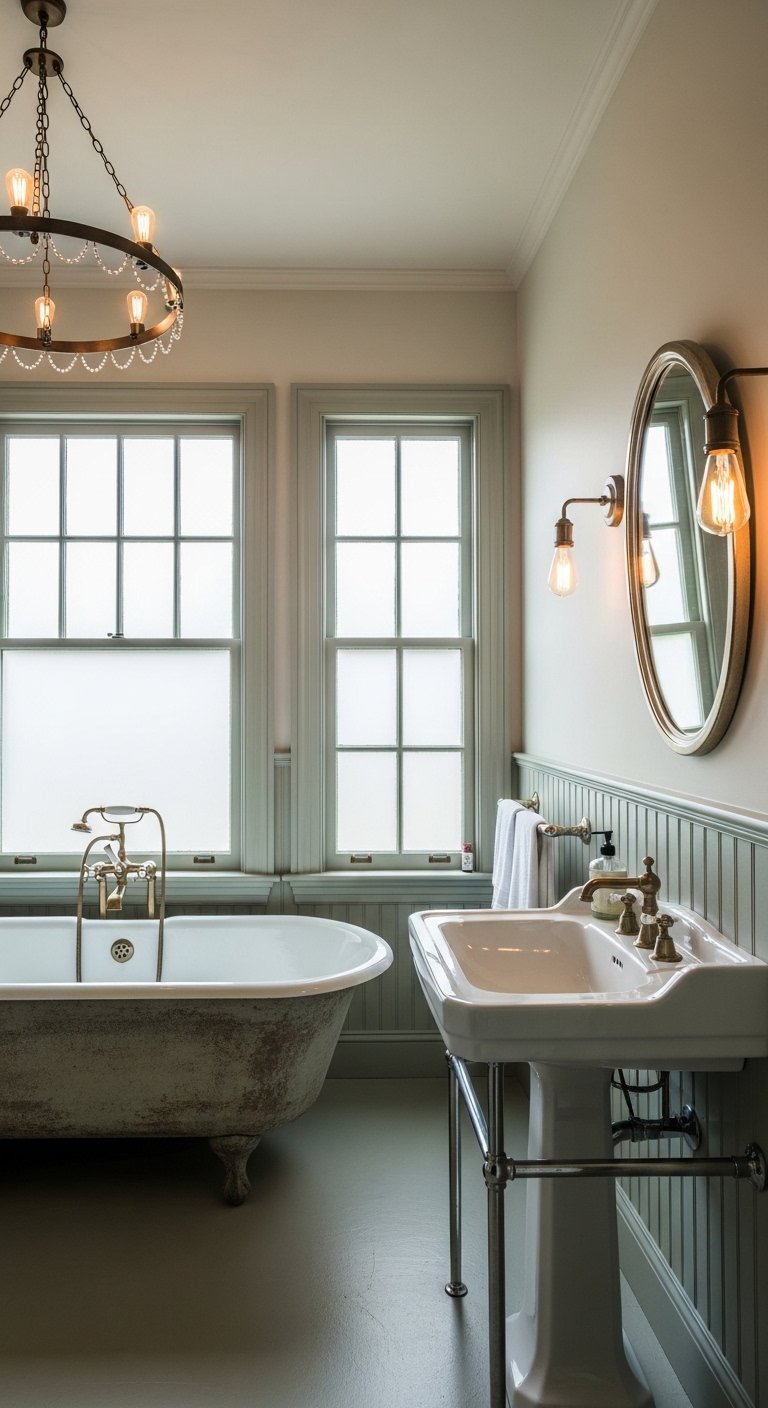
Hardware is the jewelry of the room, and in a rustic bathroom, you want pieces that tell a story. Standard chrome faucets often feel too modern and chilly for this aesthetic. Instead, look for “living finishes” like unlacquered brass, oil-rubbed bronze, or brushed nickel. Unlacquered brass is particularly powerful because it develops a natural patina over time. It darkens and changes color where it is touched most often, giving the room a sense of permanence and age that feels incredibly high-end.
You do not have to hunt through salvage yards to find these unless you want to. Many modern manufacturers now produce vintage-style faucets with cross handles or porcelain indices (the little “Hot” and “Cold” buttons). The trick is to keep the style consistent. If you choose an antique brass faucet, try to match your towel bars, toilet paper holder, and cabinet pulls to that same warm metal family. Mixing metals can work, but keeping them uniform is a safer bet for a cohesive rustic look in a small space.
Pro Tip: Clean living finishes with mild soap and water only. Avoid harsh chemical cleaners or abrasive sponges, as these will strip away the beautiful patina you are trying to cultivate.
Earthy Color Palettes
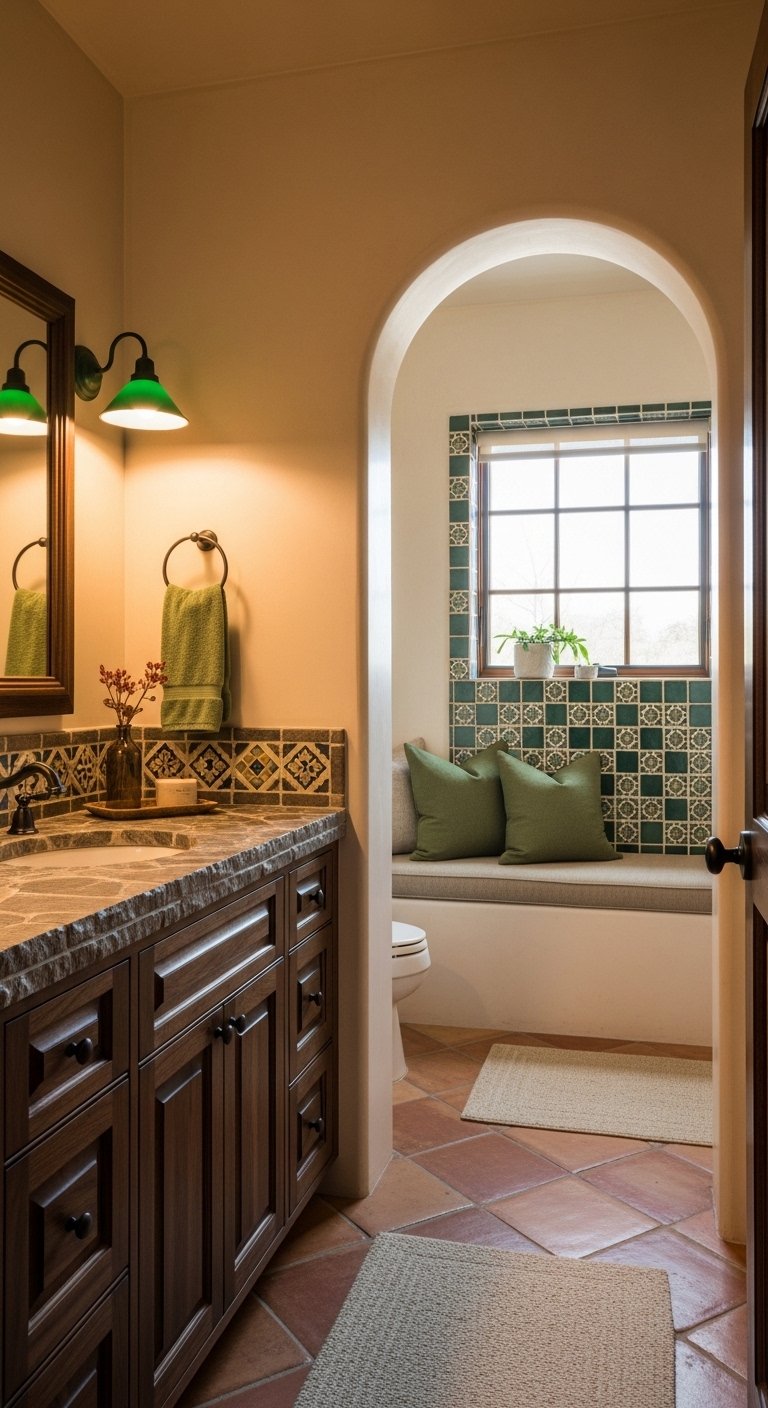
A rustic palette draws directly from nature. This does not mean your bathroom has to be brown. The trending colors for 2025 and 2026 focus on “moody” earth tones that make a small guest bath feel like a boutique hotel. Deep moss greens, warm terracottas, slate grays, and creamy off-whites are your best friends. These colors absorb light rather than reflecting it harshly, creating a cozy, cocoon-like effect. If you have a small room, painting the walls and the ceiling the same dark color can actually blur the boundaries of the room, making it feel expansive rather than cramped.
Texture plays a huge role in how these colors are perceived. A flat beige wall can look boring, but a lime wash or Roman clay finish in the same beige color looks luxurious and velvety. These textured paints add depth and shadow that standard latex paint lacks. If you prefer a lighter look, stick to warm whites (with yellow or red undertones) rather than cool whites (with blue undertones). Warm whites pair naturally with wood and stone, while cool whites can make rustic materials look dirty or out of place.
Pro Tip: Test your paint colors with your specific light bulbs. Warm 2700K LED bulbs will make sage green look rich and cozy, while cool 5000K daylight bulbs might turn it a harsh, clinical grey.
Exposed Brick Walls
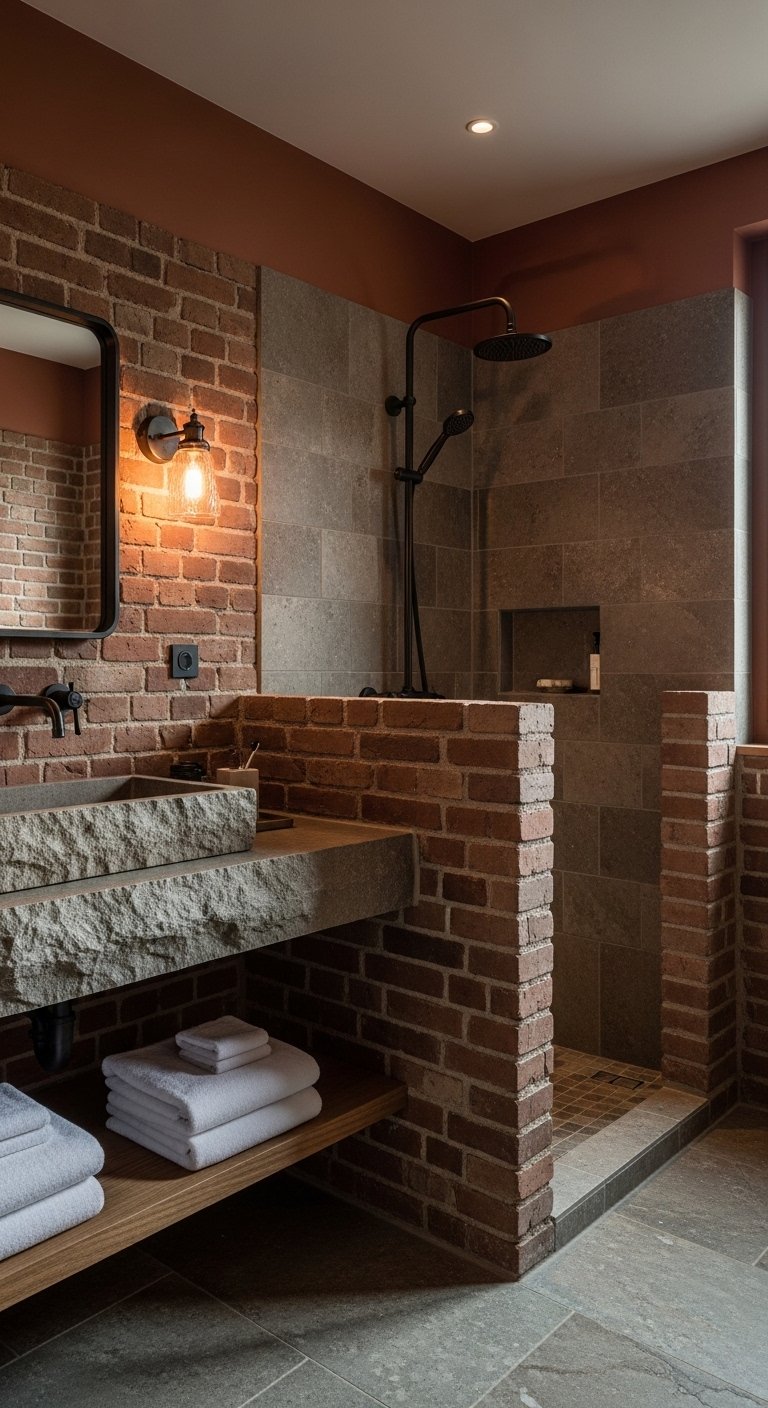
Nothing screams “authentic rustic” quite like exposed brick. It brings an industrial edge that prevents the “farmhouse” look from becoming too cutesy. The rough texture of brick creates a stunning backdrop for a sleek mirror or a white porcelain sink. If you are lucky enough to have original brick behind your drywall, exposing it can be a messy but rewarding weekend project. The natural variation in red, brown, and tan bricks provides a built-in color palette for the rest of the room.
If you do not have structural brick, high-quality brick veneers or “thin brick” tiles are excellent alternatives. These are real clay bricks cut thin, so they install just like tile but look and feel exactly like a solid wall. You can choose to leave the brick raw for a loft vibe, or “whitewash” it (German Smear technique) to soften the red tones. Whitewashing is particularly effective in small bathrooms because it keeps the texture but brightens the space, bouncing more light around the room.
Pro Tip: Brick is porous and will absorb hairspray, moisture, and dust. You must apply a matte masonry sealer to exposed brick in a bathroom. This creates an invisible barrier that allows you to wipe the wall clean without darkening the brick with water.
Farmhouse Sinks
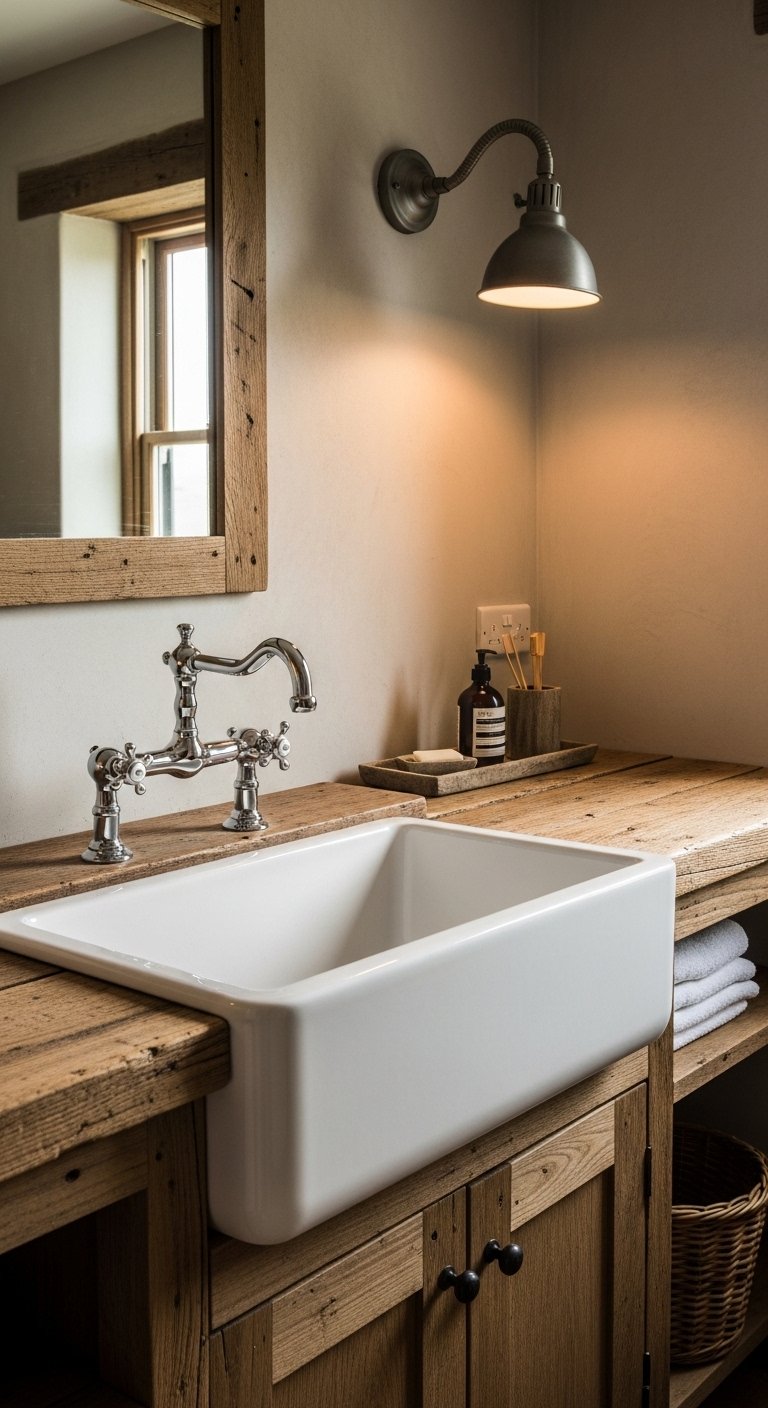
The farmhouse sink, also known as an apron-front sink, is a centerpiece fixture. Traditionally reserved for kitchens, smaller versions are now a massive trend for guest bathrooms. Their deep basins are practical for guests who might need to hand-wash delicates or wash their face without splashing water everywhere. The exposed front panel breaks up the cabinetry, adding a heavy, substantial block of white ceramic or stone that anchors the design.
While fireclay is the classic material, you can also find rustic sinks in hammered copper or natural stone. A copper apron-front sink is a showstopper that pairs perfectly with dark wood cabinets and warm lighting. Keep in mind that these sinks usually require a custom vanity cabinet because the front panel sits lower than a standard countertop edge. If you are retrofitting an existing vanity, look for “vessel” style farmhouse sinks that sit on top of the counter, which simplifies installation significantly.
Pro Tip: If you choose a white fireclay sink, buy a bottom grid immediately. This metal rack sits inside the sink and prevents pots, pans (or in a bathroom context, heavy glass jars or tools) from scratching the bottom surface.
Love this look? Save it to your “Dream Home” board on Pinterest.
Comparison: Sink Materials for Rustic Baths
| Material | Aesthetic Vibe | Durability | Maintenance Level |
|---|---|---|---|
| Fireclay (White) | Classic Farmhouse | High (Chip resistant) | Low (Easy clean) |
| Hammered Copper | Warm, Antique | High (Self-healing) | Medium (Avoid acids) |
| River Stone | Organic, Spa-like | High (Very hard) | High (Requires sealing) |
| Concrete | Industrial Rustic | Medium (Prone to hairline cracks) | High (Waxing needed) |
Wooden Beams and Ceilings
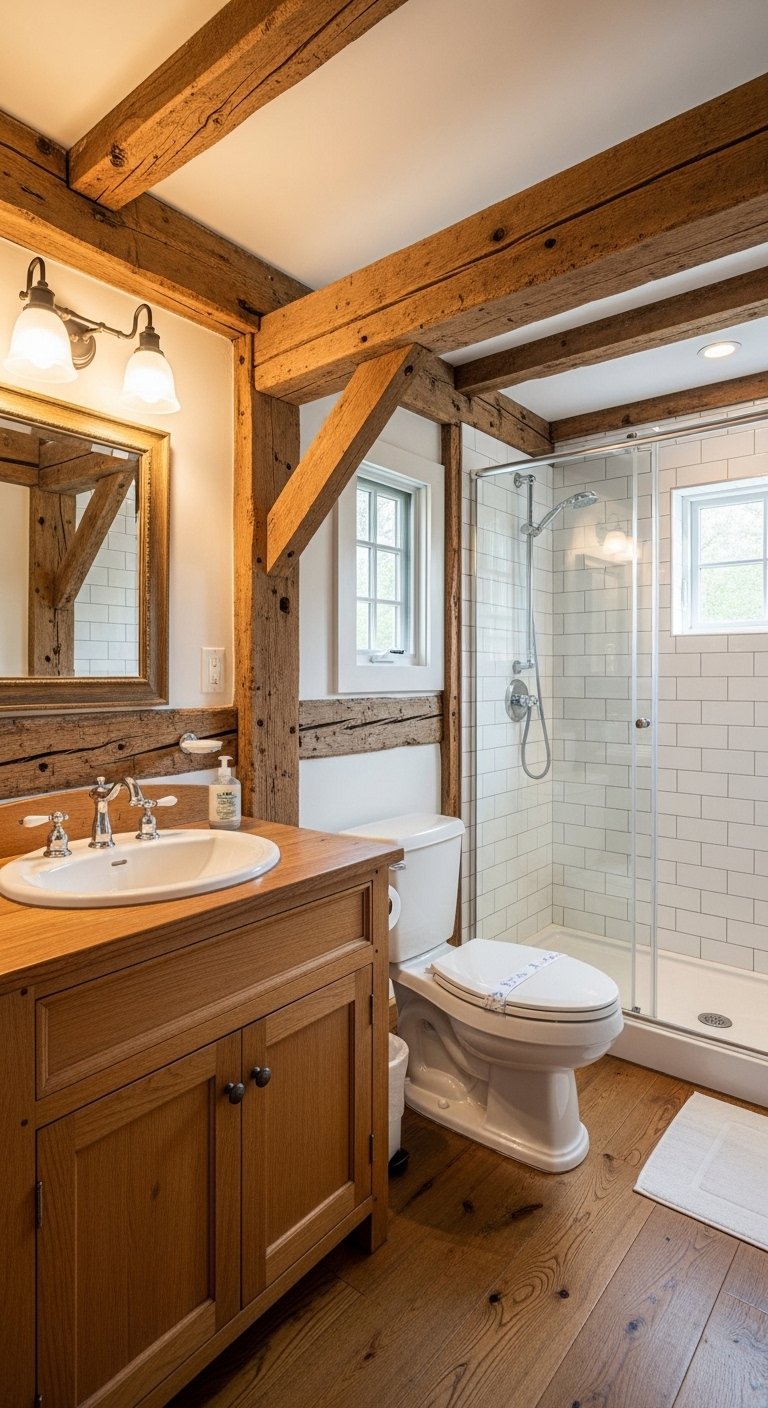
The “fifth wall”—your ceiling—is the most underutilized space in bathroom design. Adding wooden beams draws the eye upward and makes the room feel taller and grander. In a rustic bathroom, beams evoke the feeling of an old barn or a European cottage. You do not need structural timber to achieve this. Faux wood beams made from high-density polyurethane are lightweight, rot-proof, and indistinguishable from real wood once installed on the ceiling. They can be glued or screwed into place without reinforcing your roof joists.
For a more comprehensive look, consider a tongue-and-groove wooden ceiling. Cladding the ceiling in cedar or pine planks adds instant coziness. If you have a small bathroom with high ceilings, this can bring the visual scale down to a more comfortable, human level. You can stain the wood dark for a moody cabin feel or whitewash it for a breezy, coastal rustic vibe. This treatment also hides uneven drywall or popcorn ceilings perfectly, making it a smart renovation hack for older homes.
Pro Tip: Run the beams or ceiling planks perpendicular to the longest wall in the room. This visual trick pushes the walls out, making a narrow guest bathroom feel significantly wider.
Natural Stone Features
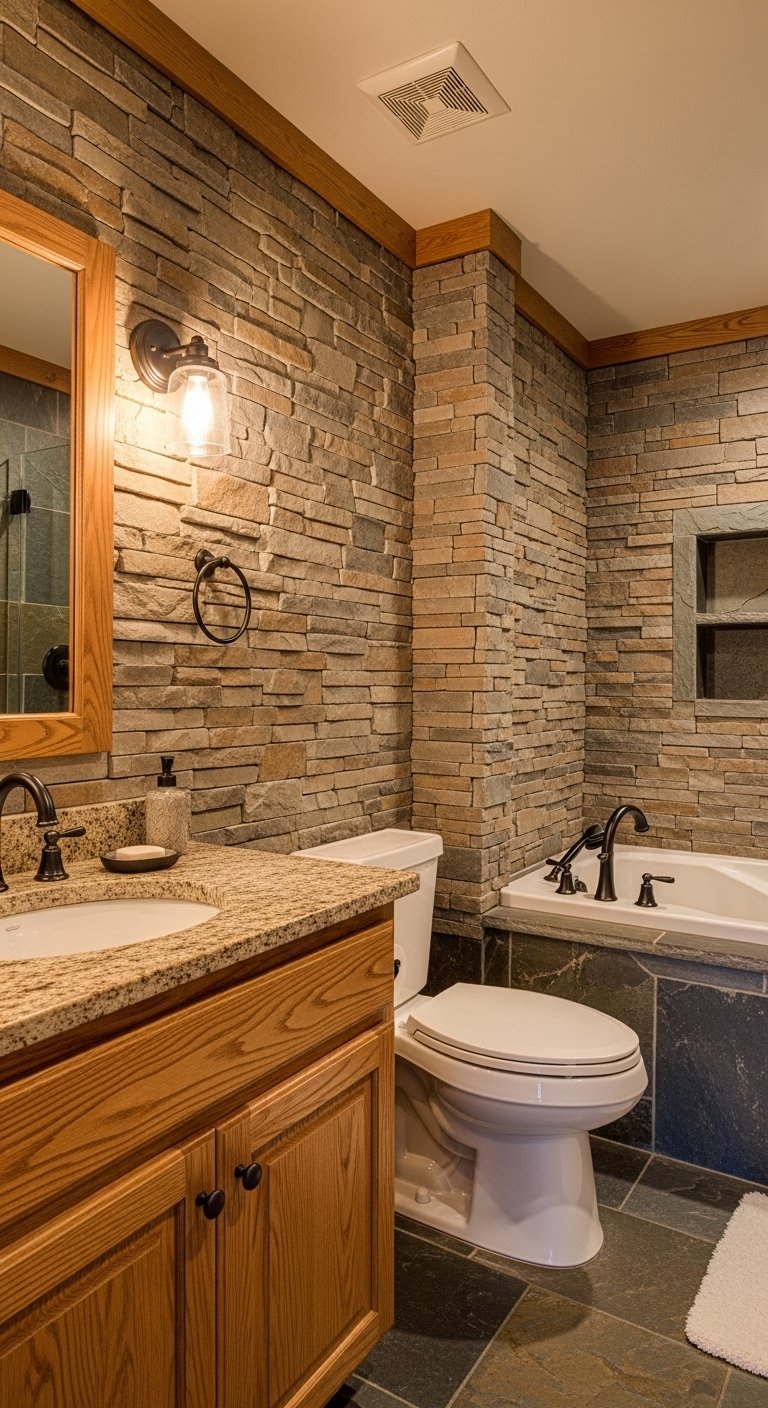
Synthetic materials like quartz and cultured marble are practical, but they lack the soul of natural stone. For a rustic bathroom, you want stone that looks like it was just pulled from the earth. Slate, travertine, and soapstone are top choices. Slate floors, with their natural cleft and variation in grey and charcoal tones, hide dirt exceptionally well and provide a non-slip surface for wet feet. Soapstone is another incredible material for countertops; it has a soft, matte feel and turns a deep, rich black when oiled.
Do not limit stone to just the floor or counter. A pebble tile shower floor gives your guests a foot massage while they shower and enhances the spa-like experience. You can also use stacked stone ledger panels to create a feature wall behind the toilet or vanity. The key with natural stone is to embrace the variation. No two tiles will look the same, and that is exactly the point. The irregularity adds the organic chaos that makes rustic design feel relaxed rather than rigid.
Pro Tip: Avoid polished marble in a rustic bathroom; it looks too formal. Opt for “honed” or “leathered” finishes. These matte textures feel warmer to the touch and hide water spots and fingerprints much better than glossy finishes.
Antique Furniture Pieces
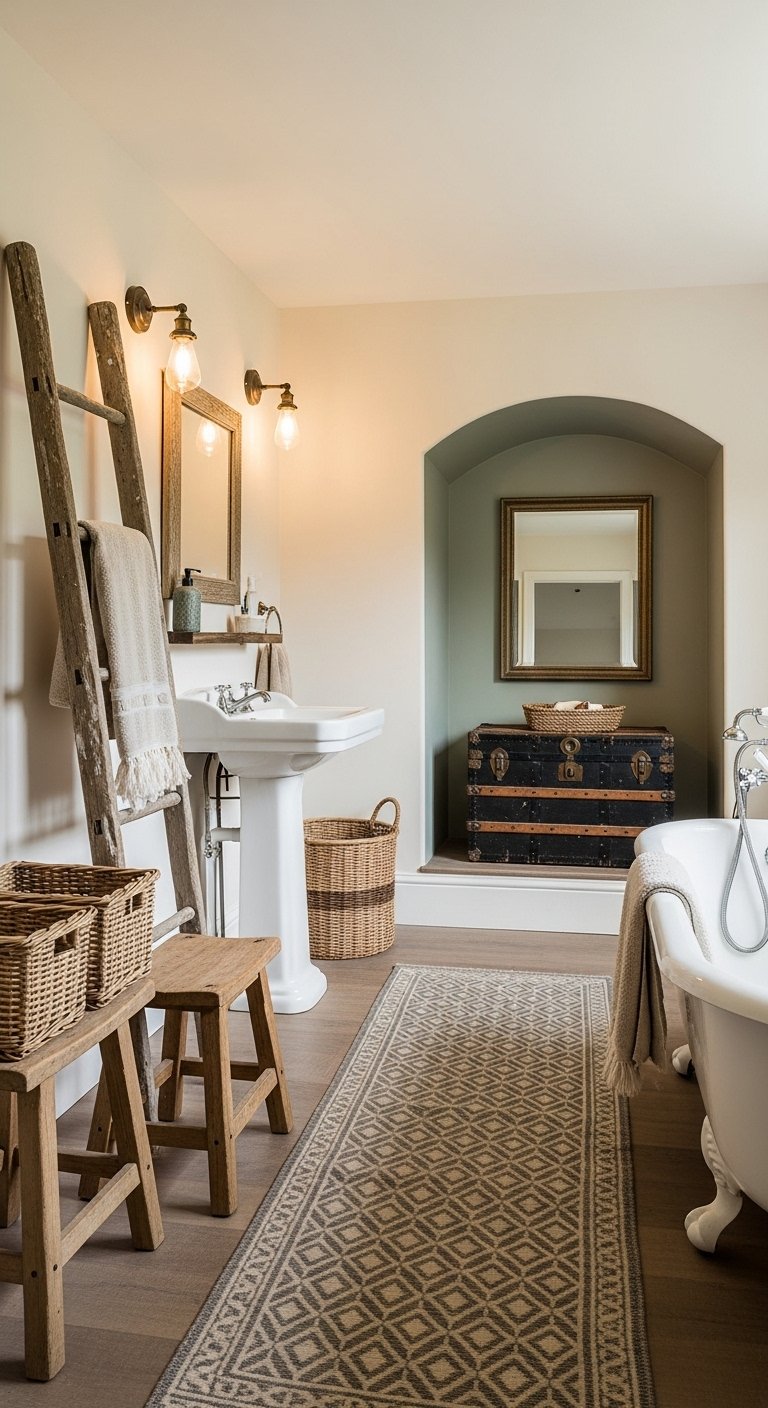
One of the defining characteristics of modern rustic style is the use of non-bathroom furniture in the bathroom. Instead of buying a standard vanity from a big-box store, repurpose an antique dresser, a wooden sideboard, or even an old workbench. These pieces have unique dimensions and craftsmanship details—like dovetail joints or hand-carved legs—that new furniture lacks. Converting a dresser into a vanity involves cutting a hole in the top for the sink and modifying the drawers to clear the plumbing, but the result is a one-of-a-kind statement piece.
If a full vanity conversion is too much work, look for smaller antique pieces. A vintage wooden milking stool placed next to the bathtub to hold a towel and a book looks incredibly chic. An old wooden ladder leaning against the wall serves as a perfect towel rack. Even a small antique medicine cabinet hung on the wall adds instant history. These pieces ground the space and prevent it from looking like a showroom.
Pro Tip: When using wooden furniture in a bathroom, ensure the feet are slightly raised off the floor or have plastic glides. You do not want the legs sitting in a puddle of water after a shower, which will cause rot over time.
Rustic Accessories
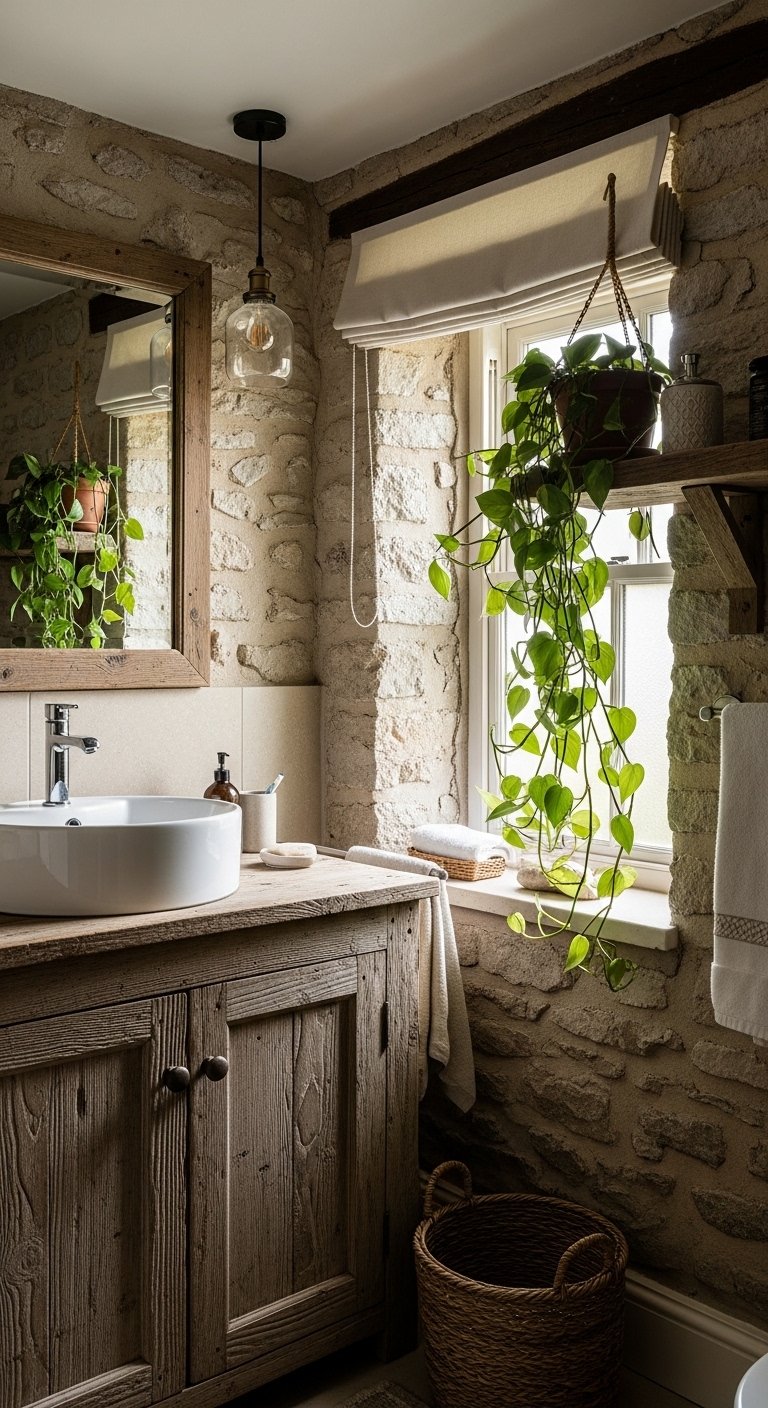
Accessories are where you can layer in texture without spending a fortune. In a rustic bathroom, replace plastic items with natural materials. Swap a plastic wastebasket for a woven wicker or sea-grass basket. Replace a synthetic bath mat with a jute runner or a heavy cotton rug. Look for a mirror framed in distressed wood, leather, or even wrought iron. These small swaps accumulate to create a cohesive look.
Textiles are crucial here. Choose waffle-weave towels, linen shower curtains, and cotton robes. These fabrics have a visible weave that complements the rough wood and stone surfaces in the room. Even your soap dispenser matters—amber glass bottles or stoneware pumps look far better than branded plastic bottles. You can also bring in nature directly: a vase of dried eucalyptus, a potted fern, or a piece of driftwood on a shelf adds a “living” element that freshens up the heavy materials.
Pro Tip: Use a wooden bath tray (caddy) across the tub. Style it with a loofah, a candle, and a rolled towel. It is a classic styling trick that makes the bathroom look expensive and inviting for guests.
Mason Jar Storage Solutions
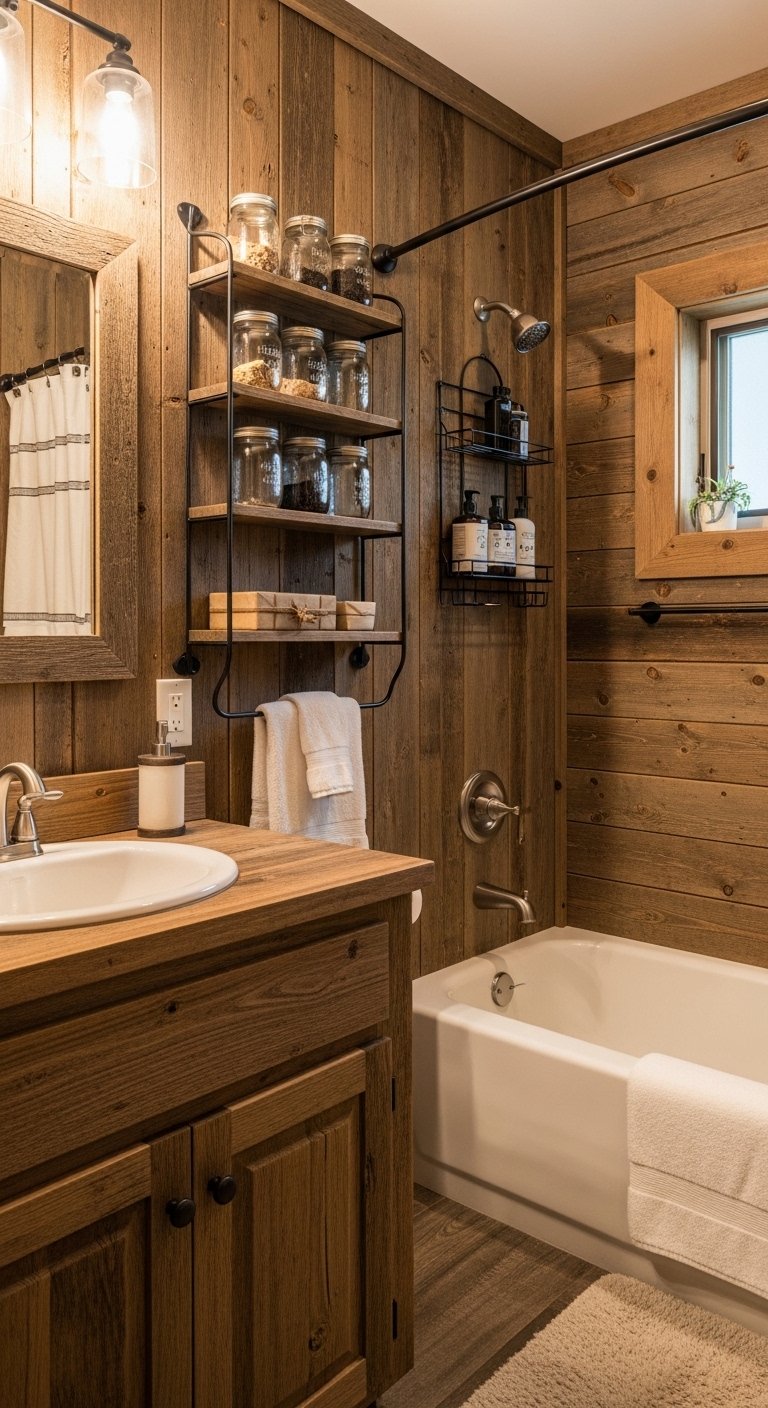
Mason jars are the ultimate rustic staple because they are the perfect intersection of utility and nostalgia. In a guest bathroom, small items like cotton balls, Q-tips, bath salts, and hair ties often clutter the counter in ugly packaging. Transferring these items into clear glass mason jars instantly organizes the space and turns everyday toiletries into decor. The glass allows guests to see exactly what is inside without rummaging through drawers.
You can take this a step further by mounting the jars. Use hose clamps attached to a piece of reclaimed wood to create a wall-mounted organizer for toothbrushes or makeup brushes. This clears precious counter space in a small bathroom. For a more refined look, paint the lids of the jars in a matte black or oil-rubbed bronze to match your faucets. You can also use larger mason jars as vases for wildflowers or as vessels for homemade candles.
Pro Tip: For a guest bath, create a “Guest Amenities” jar. Fill a wide-mouth mason jar with travel-sized toothpaste, a razor, aspirin, and mints. It is a thoughtful touch that saves your guest from having to ask for forgotten items.
Don’t forget to Pin this guide!
Get The Look: Rustic Essentials
- Lighting: Wall sconces with Edison bulbs and cage shades.
- Mirror: Round mirror with a thick wood or leather strap frame.
- Textiles: Turkish cotton towels in beige, charcoal, or rust.
- Scent: Soy candles with notes of cedar, pine, or amber.
Popular Asked Questions
How do I make my small bathroom look rustic?
You do not need a big space to go rustic. In fact, small spaces work better because they feel cozier. Focus on the walls and lighting. Add a wood-framed mirror and swap your vanity light for a vintage-style fixture. Use a woven basket for trash and add a wooden shelf above the toilet. These small changes add warmth without taking up floor space.
What are the best colors for a rustic bathroom?
Stay away from bright primary colors. The best colors are found in nature. Sage green, warm creamy white, taupe, terracotta, and charcoal grey are perfect. If you want a light bathroom, use a warm white (like Sherwin Williams Alabaster). If you want a moody bathroom, try a deep green (like Benjamin Moore Salamander).
Can you mix modern and rustic styles?
Yes, this is actually the most popular way to design right now! It is called “Modern Rustic.” The trick is balance. If you have a rustic wood vanity, pair it with a sleek, modern white countertop and a simple frameless mirror. If you have rustic stone floors, keep the walls clean and white. You want the rustic items to stand out against the clean, modern background.
Is rustic bathroom design expensive?
It can be expensive if you buy everything new, but it is also the easiest style to DIY for cheap. Because rustic style celebrates “imperfect” items, you can buy second-hand furniture and turn it into a vanity. You can use reclaimed wood for shelves which is often free or cheap. Mason jars and vintage accessories are also very affordable compared to modern luxury decor.
Conclusion
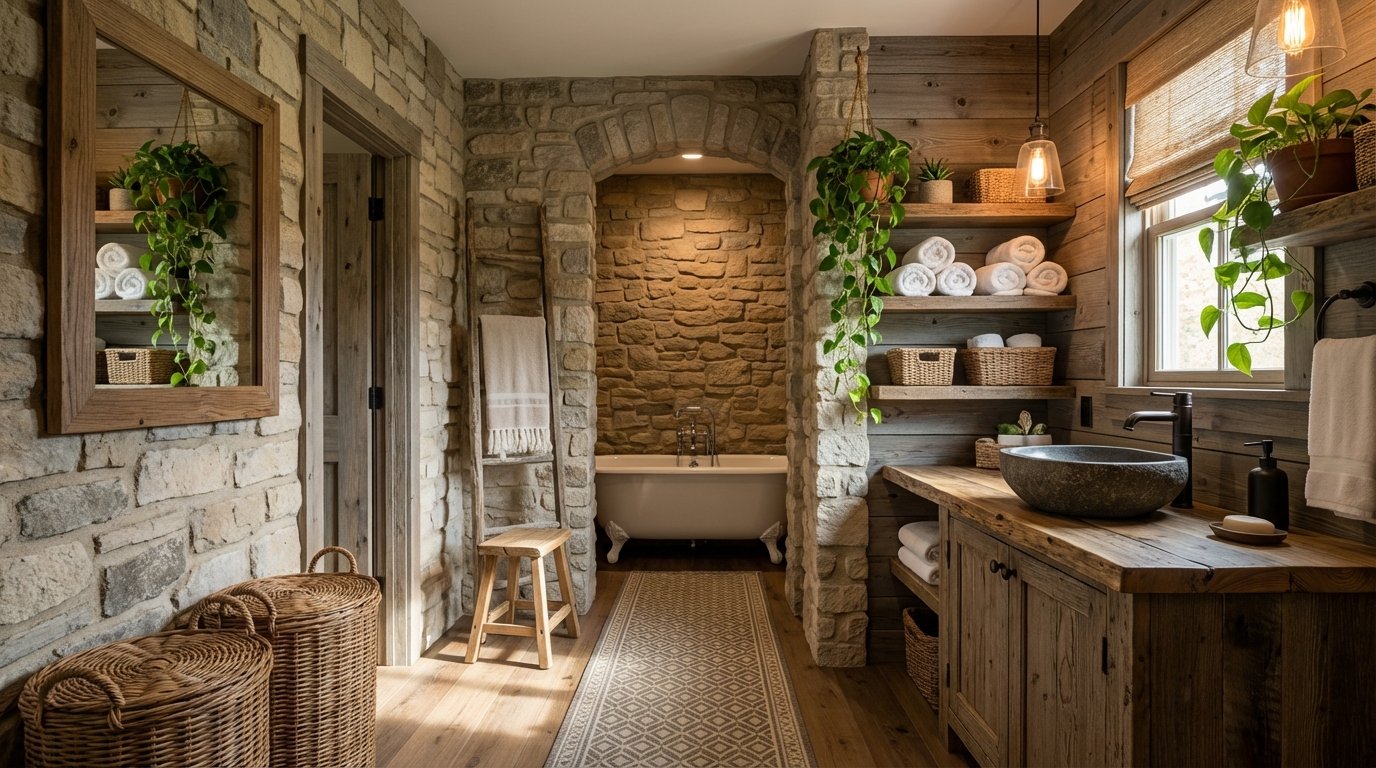
Creating a rustic guest bathroom is about more than just buying wood decor. It is about crafting a space that feels grounded, warm, and inviting. By layering natural textures like stone, wood, and vintage metals, you create a retreat where your guests can truly relax. Whether you install a full brick wall or just swap out your plastic soap dispenser for an amber glass one, every step brings you closer to that cozy aesthetic.
Which of these rustic ideas would you try in your own home? Let us know in the comments below!
Follow us on Pinterest for more Rustic Guest Bathroom inspiration.

Leave a Comment