
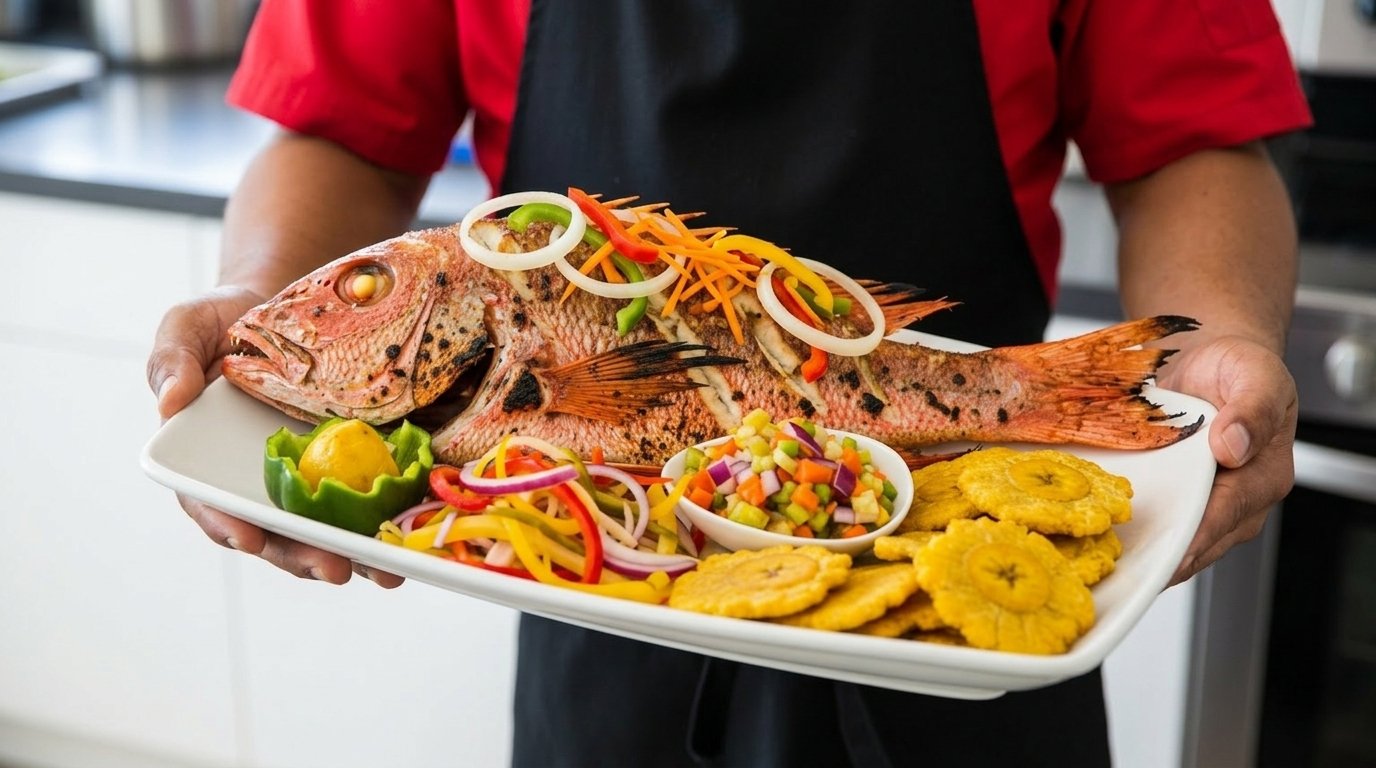
Caribbean cooking trends dominate home kitchens this summer. Home chefs struggle to replicate that perfect balance of crispy skin and tangy pickle sauce at home. This guide solves the mystery behind the authentic Jamaican Escovitch fish recipe. We provide thirty precise steps to master this classic dish. Readers will learn exact temperature controls and flavor balancing techniques. This comprehensive manual guarantees a restaurant quality meal in your own kitchen. You will discover how to prepare the firmest red snapper and the most flavorful pickled vegetables. Check out our related guide on pairing tropical cocktails with spicy seafood.
Key Takeaways
- Master the art of selecting and prepping whole red snapper for maximum flavor.
- Learn the exact ratio of vinegar to sugar for the perfect pickling sauce.
- Discover techniques for achieving ultra crispy skin without deep frying.
- Understand the role of scotch bonnet peppers and pimento berries in island cooking.
Ingredients
The Fish:
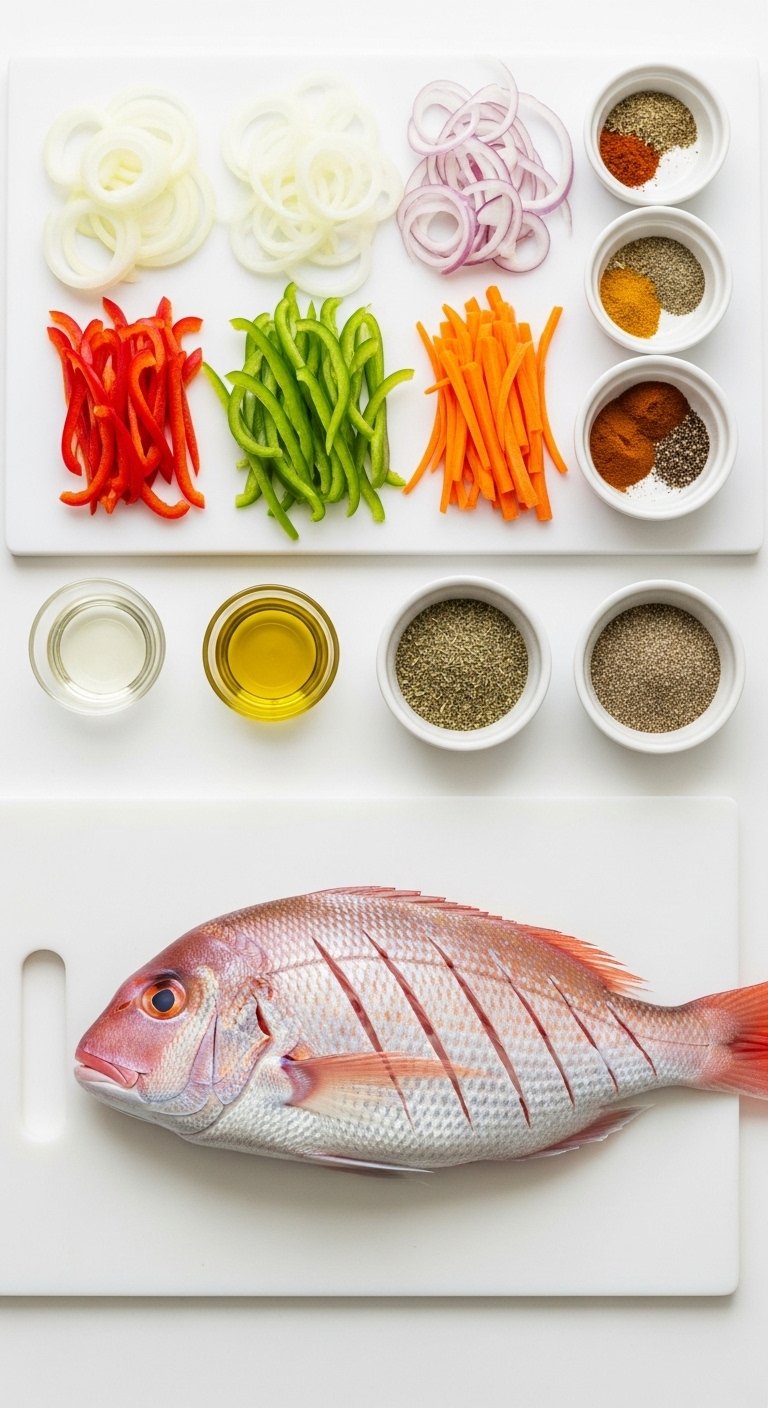
2 large whole Red Snappers (scaled, gutted, and cleaned)
1 teaspoon salt
1 teaspoon black pepper
1 teaspoon garlic powder
Juice of 1 lime (for washing the fish)
Oil for frying (vegetable or canola)
The Escovitch Sauce (The Pickle):
1 cup white vinegar
1 large onion, sliced into rings
1 large carrot, julienned (cut into matchsticks)
1 small chayote (chopped) or sliced bell peppers (optional)
1 to 2 Scotch Bonnet peppers, sliced (remove seeds for less heat)
10 whole Pimento berries (allspice berries)
1 teaspoon sugar (to balance the vinegar)
½ teaspoon salt
Instructions
Prep the Fish: Wash the fish with water and lime juice, then pat bone-dry with paper towels. Score the sides of the fish with 2–3 diagonal slashes—this helps the seasoning penetrate and ensures even frying.
Season: Rub the salt, pepper, and garlic powder into the skin and the cavity of the fish. Let it sit for 10 minutes.
Fry: Heat about 1 inch of oil in a large skillet over medium-high heat. Carefully place the fish in the hot oil. Fry for about 5–7 minutes per side until the skin is golden-brown and very crispy. Remove and drain on paper towels.
Make the Pickle: In a separate small saucepan, bring the vinegar, sugar, salt, and pimento berries to a boil.
Simmer: Add the onions, carrots, and Scotch Bonnet peppers. Simmer for only 2–3 minutes. You want the vegetables to lose their raw edge but remain crunchy.
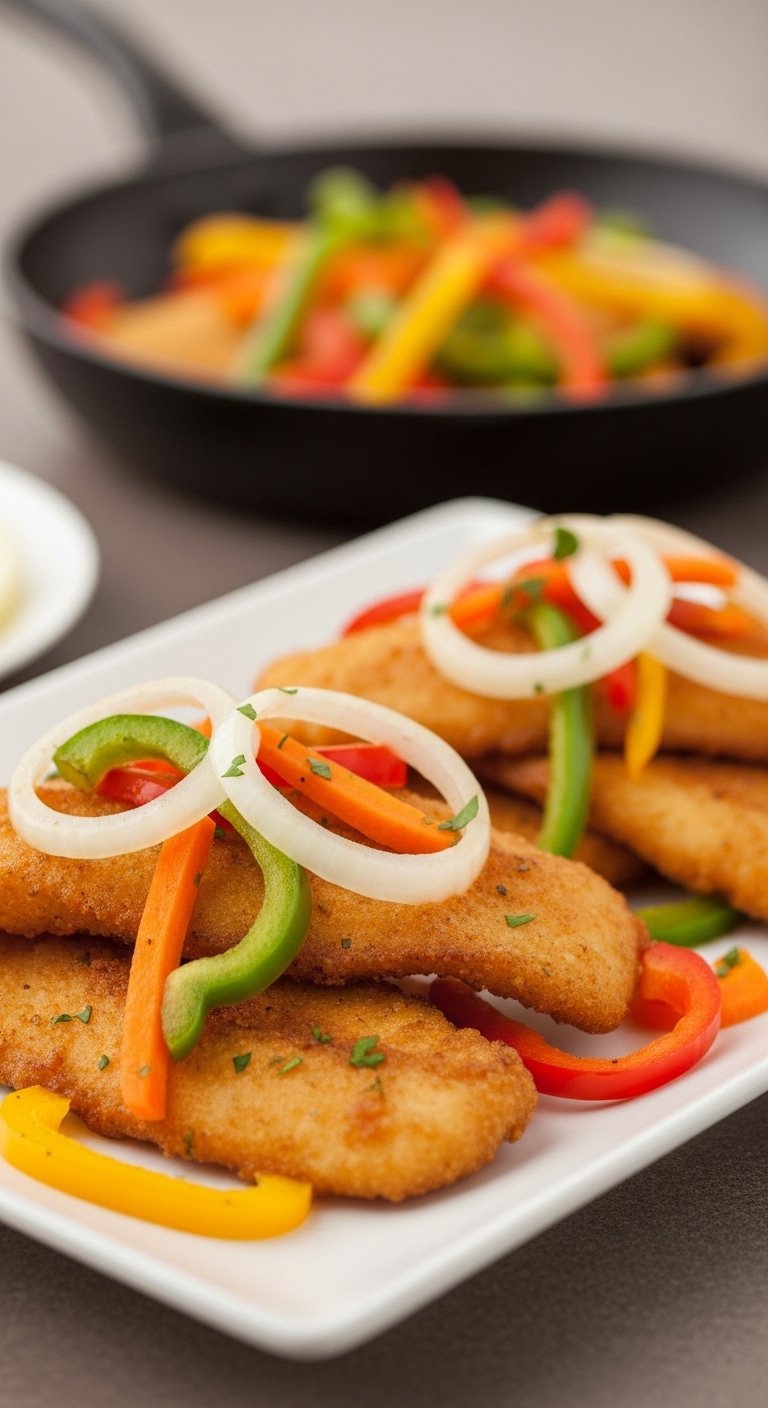
Combine: Place the fried fish on a serving platter. Pour the hot vinegar and the colorful vegetable medley over the fish while it is still warm.
The Presentation
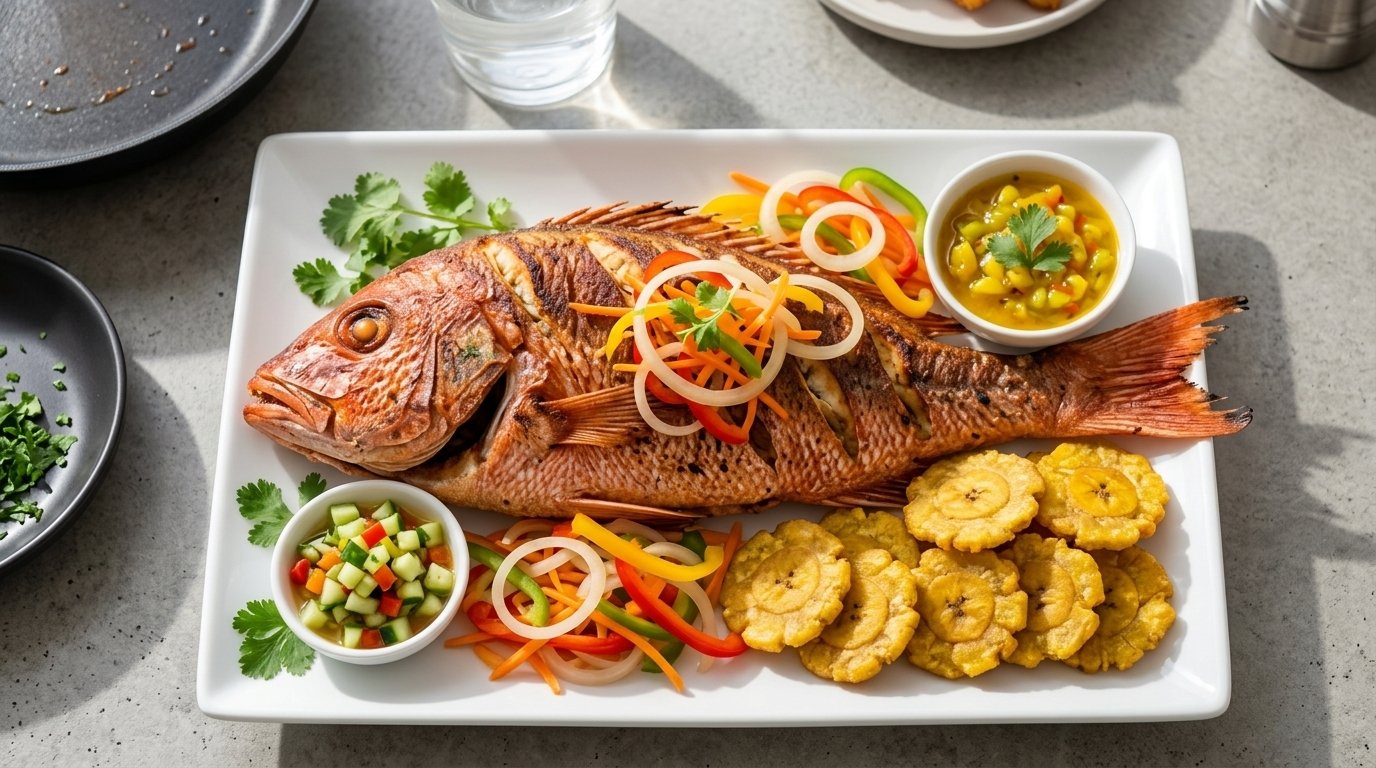
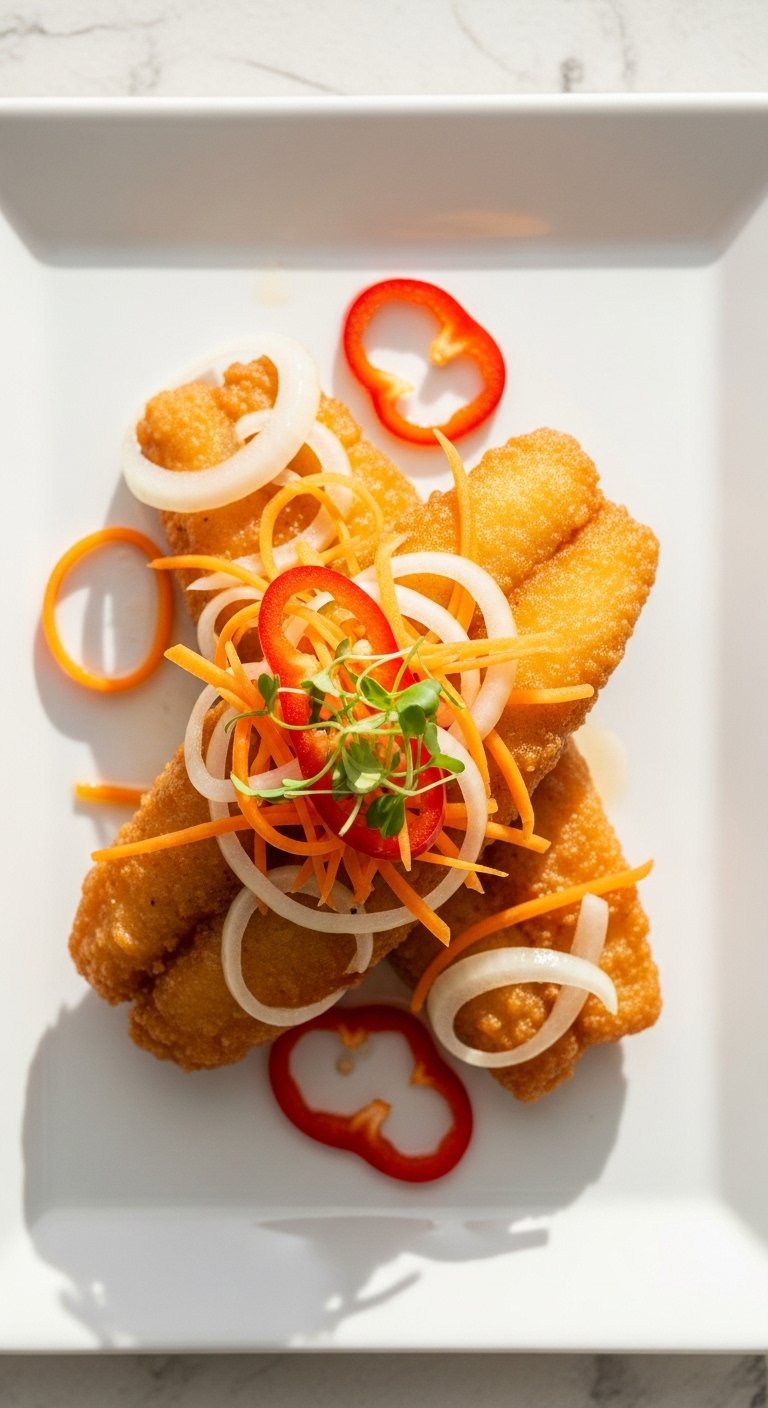
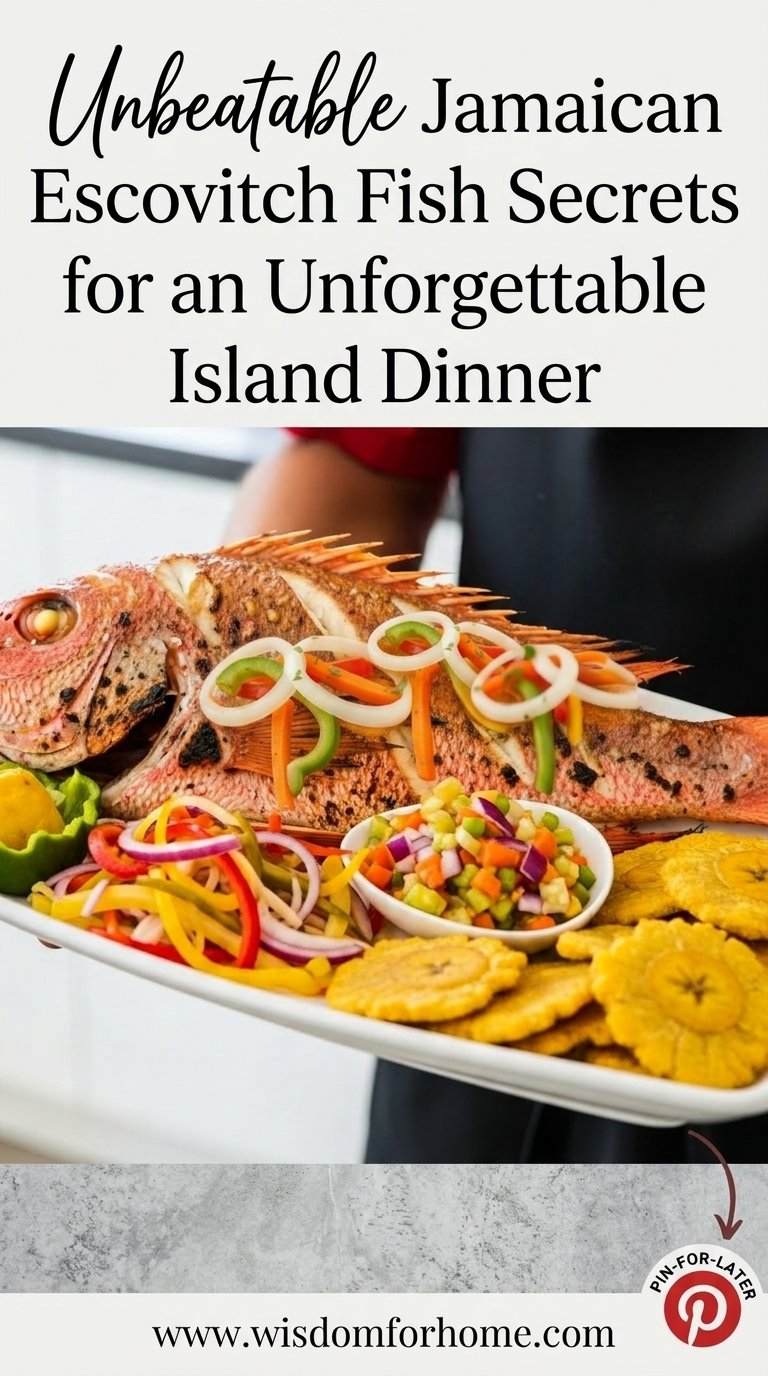
Escovitch fish is a visual feast because of the vibrant orange carrots, white onions, and red peppers draped over the dark, crispy fish.
Visual Plating
The Pour: Don’t just dump the vegetables on top. Carefully arrange the onion rings and carrot sticks across the length of the fish so the crispy skin is still visible underneath.
The “Rest”: Ideally, let the fish sit for at least 30 minutes before serving. This allows the vinegar to penetrate the crispy skin without making it soggy, resulting in a “pickled” flavor.
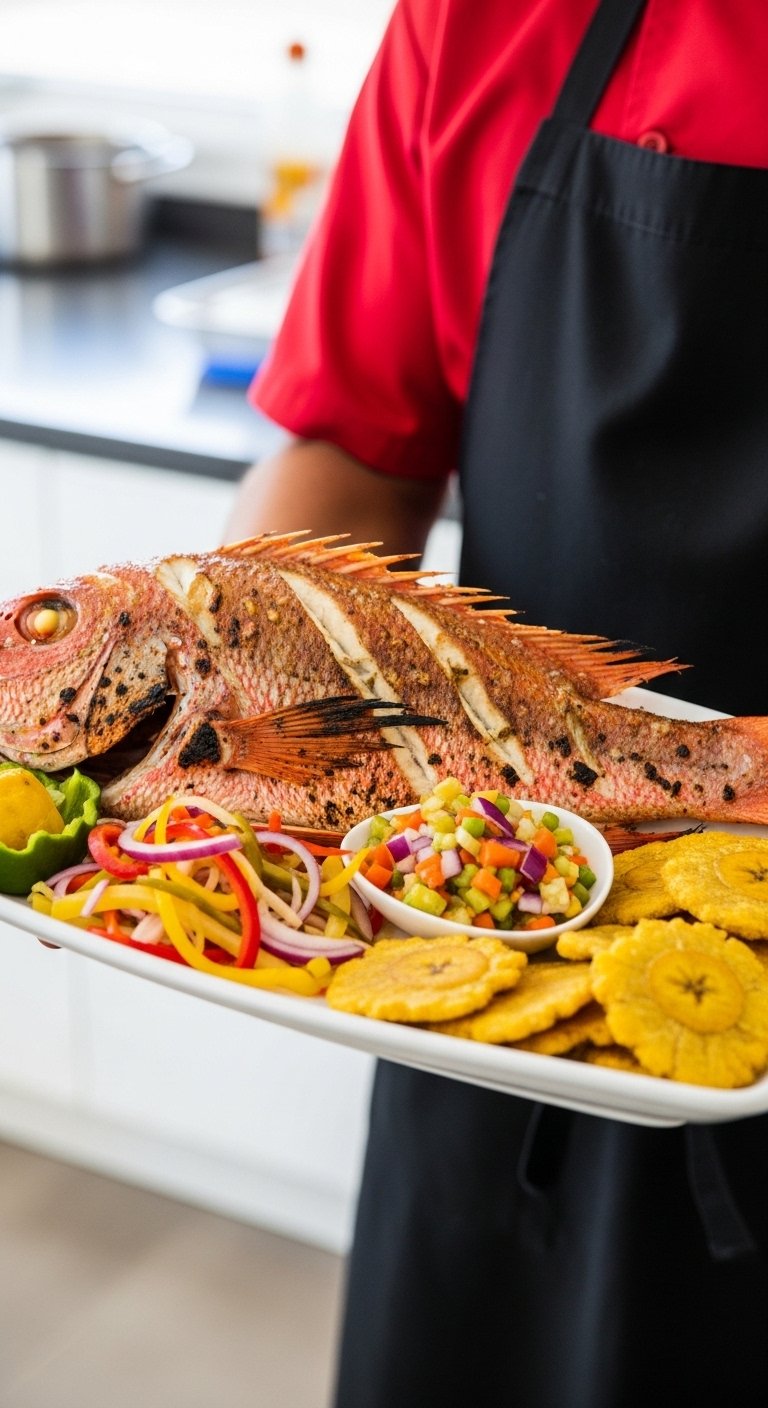
The Side: Serve this with Bammy (cassava flatbread) or Festival (sweet fried dumplings). The sweetness of the side dishes perfectly balances the sharp acidity of the fish.
Popular Asked Questions
Why is it called escovitch fish?
The name comes from the Spanish word escabeche. This old Spanish cooking style involves pickling fried meat in an acidic sauce. When the Spanish brought this method to the Caribbean hundreds of years ago, the locals adapted it using their own island spices. They added fiery scotch bonnet peppers and sweet allspice berries. Over time, the pronunciation shifted from escabeche to the familiar term we use today.
What can I use if I don’t have jerk seasoning?
Many people mistakenly think this recipe requires complex jerk paste. The authentic Jamaican Escovitch fish recipe relies on a very simple dry rub instead. You can easily use a basic mix of sea salt, black pepper, garlic powder, and onion powder. A simple Creole or Cajun dry seasoning blend works perfectly as a quick substitute. The real star of the dish is the tangy vinegar sauce, so keeping the dry rub simple works best.
Can I cook the fish in the oven instead?
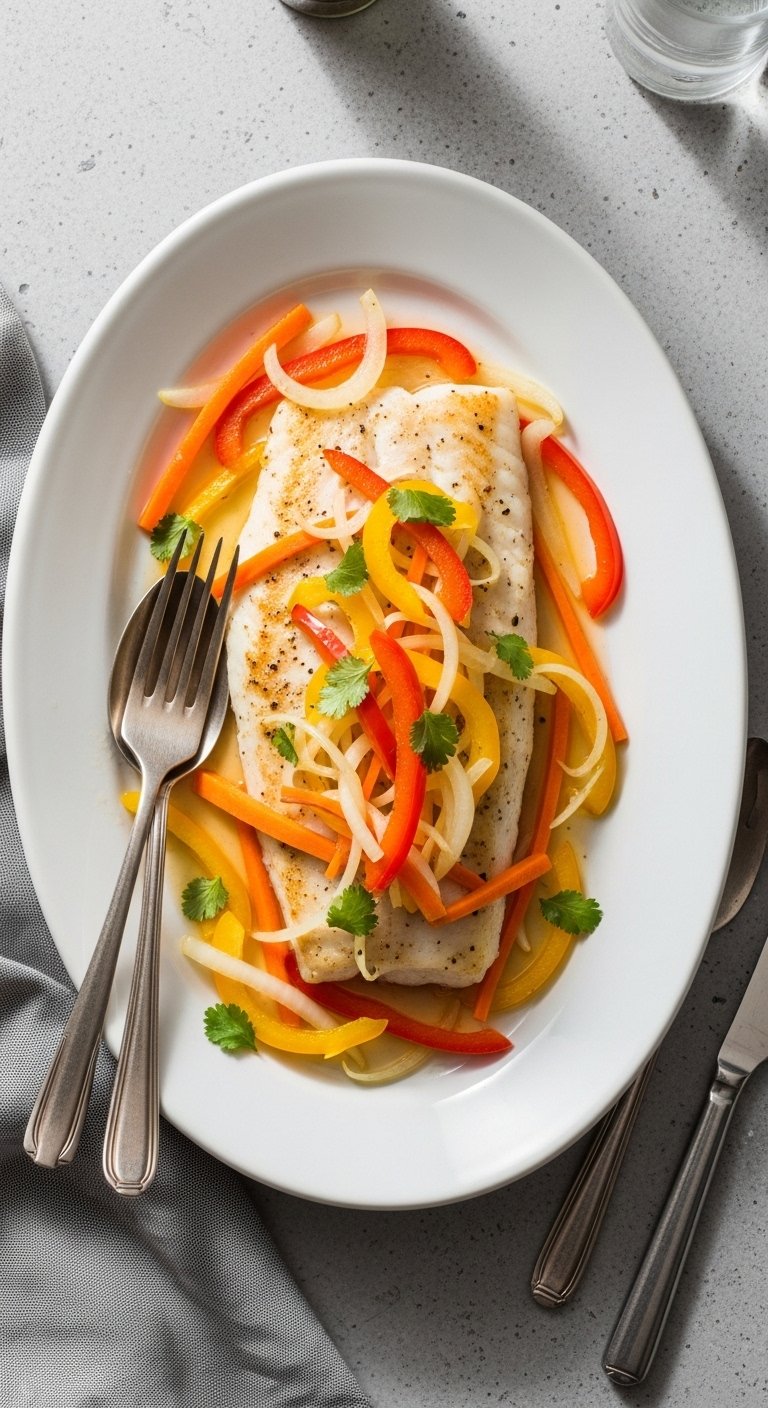
Yes, baking works wonderfully as a healthy baked Escovitch fish option. Simply preheat your oven to 400 degrees Fahrenheit. Coat your scored snapper with a tiny bit of oil and your dry spices. Bake it on a lined tray until the meat flakes easily with a fork. It will not get as crispy as the fried version, but the hot vinegar and vegetable topping will still pack it full of amazing flavor.
What to eat with escovitch fish?
Island locals love to pair this tangy meal with starchy sides that soak up the extra vinegar. Bammy, a thick flatbread made from cassava root, is the most traditional choice. Sweet fried plantains offer a wonderful sugary contrast to the sour and spicy sauce. A warm bowl of coconut rice and peas or some sweet fried dumplings called festival will complete the ultimate Caribbean feast.\
Conclusion
The authentic Jamaican Escovitch fish recipe perfectly captures the bold and fiery spirit of Caribbean cooking. Mastering the crispy skin and balancing the sweet and sour pickled vegetables elevates your home cooking to restaurant quality. This stunning meal guarantees an unforgettable dining experience for your family and friends. What side dish will you choose to soak up that delicious spicy vinegar sauce?
Follow us on Pinterest for more Jamaican Escovitch Fish inspiration.

Leave a Comment