
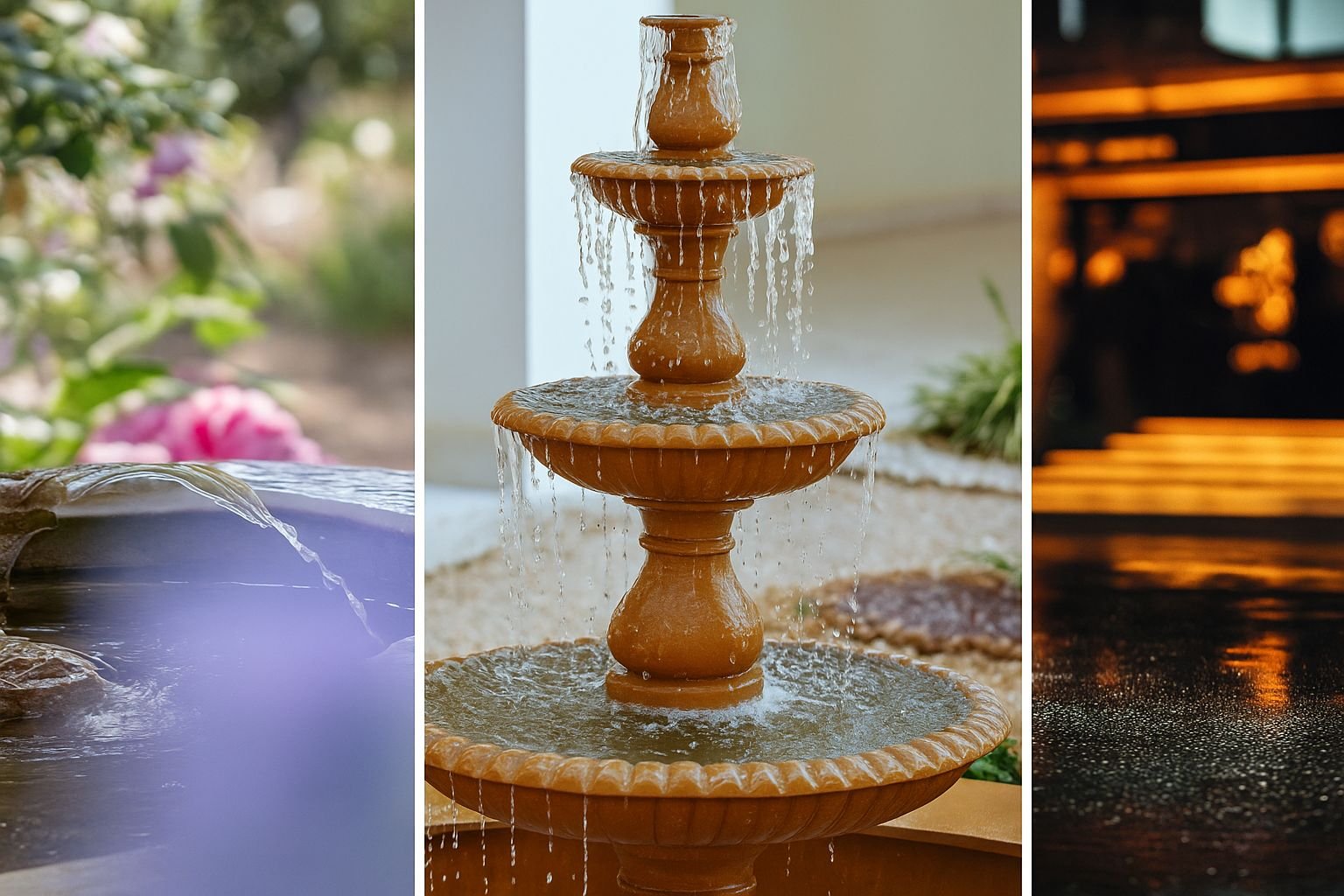
A Journey Through Fountain History
I’ve always been fascinated by fountains. There’s something about watching water dance and flow that stops me in my tracks every time. You know what’s really interesting? These beautiful water features we see everywhere today started out as nothing more than practical necessities. No fancy designs, no dramatic cascades, just simple structures built to keep people alive.
Walk back with me through history for a moment. Picture ancient civilizations where getting clean water meant more than turning a faucet. Fountains were the original water coolers, if you will. People gathered around them to fill their vessels, take a drink, or wash up after a long day’s work. The Romans were particularly clever about this. They built elaborate aqueduct systems that fed public fountains throughout their cities. These weren’t just water sources; they became social hubs where neighbors met, gossip spread, and community life thrived.
But here’s where things get interesting. Somewhere along the way, somebody looked at a functional fountain and thought, “We can make this prettier.” And boy, did they ever. The transition from purely practical to decorative happened gradually over centuries. Wealthy Romans started adding carved figures and ornamental details to their fountains. The message was clear: we’ve got water to spare, and we’re going to show off about it.
Fast forward to the Renaissance, and fountains had become full-blown works of art. Italian gardens sprouted elaborate water features that would make your jaw drop. The Medici family in Florence practically turned fountain design into a competitive sport. Each wealthy family tried to outdo the others with more impressive, more dramatic, more jaw-dropping water displays. I can only imagine the neighborhood gossip. “Did you see what the Medicis installed in their courtyard? Three tiers and actual marble cherubs!”
The evolution didn’t stop there. French formal gardens took fountain design to new heights during the 17th and 18th centuries. Versailles alone has more than fifty fountains, each one a masterpiece of engineering and artistry. These weren’t just decorative elements anymore; they were statements of power, wealth, and human mastery over nature. King Louis XIV used his fountains to literally show that he could make water flow uphill. Talk about a power move.
What strikes me most about this history is how our relationship with water changed. When water was scarce and hard to access, fountains were treasured for their utility. As water became more available, we started appreciating its aesthetic qualities. We began to value the sound of flowing water, the way light plays on its surface, the cooling effect it provides on hot days. Fountains transformed from survival tools into sources of pleasure and beauty.
Today, we’re living in what I’d call the golden age of fountain appreciation. We don’t need fountains for drinking water anymore, at least not in most developed areas. Yet we install them everywhere. City planners put them in public squares. Parks feature them as focal points. Office buildings use them in lobbies. And increasingly, homeowners are bringing them into their private spaces. We’ve come full circle in a way. Fountains started in homes and public spaces as necessities, disappeared for a while as plumbing made them obsolete, and now they’re back as purely decorative features.
The reasons people want fountains today are completely different from why our ancestors needed them. We’re not worried about dying of thirst. We want the ambiance, the atmosphere, the sense of tranquility that moving water provides. There’s something primal about our attraction to water. Maybe it’s hardwired into us from our evolutionary past. Or maybe we’re just tired of staring at screens all day and craving something natural and alive in our environment.
I find it funny that we’ve gotten so far from nature that we have to artificially bring it back into our lives. But that’s exactly what fountains do. They bring the soothing sound of a babbling brook into spaces where no brook would ever naturally flow. They create the cooling effect of a waterfall in climates where waterfalls don’t exist. They give us permission to pause, to listen, to let our minds wander the way they might by a natural water source.
The modern fountain serves a purpose our ancestors never imagined. It’s not just decoration. It’s therapy. It’s a stress reliever. It’s a reminder that not everything in life needs to move at digital speed. Water flows at its own pace, and when we stop to watch it, we’re forced to slow down too. That’s worth something in our hectic world.
Bringing the Magic Home with Wall Fountains
So here’s where things get really interesting for those of us who want a piece of that fountain magic but don’t happen to own a palace in Versailles. Wall fountains changed the game completely. I remember the first time I saw one installed in someone’s home. My friend Sarah had just moved into a new apartment, and she’d mounted this sleek copper wall fountain in her entryway. I walked in and immediately felt different. The space wasn’t just a hallway anymore; it was an experience.
Wall fountains solve a problem that’s plagued fountain lovers for centuries. How do you get all the benefits of a fountain when you don’t have a sprawling garden or a massive courtyard? Traditional fountains take up floor space. They need significant room around them to really make an impact. But wall fountains? They’re genius in their simplicity. They go vertical instead of horizontal, using wall space that was probably just holding a boring picture anyway.
The beauty of wall water fountains lies in their versatility. I’ve seen them in the tiniest studio apartments and in sprawling suburban homes. They work anywhere. A friend of mine who lives in a 400-square-foot efficiency has a small slate wall fountain in her bathroom. It transforms that cramped space into something that feels like a spa. Another friend installed a massive stone fountain feature that covers most of one wall in his two-story foyer. Same concept, completely different scales, both absolutely perfect for their spaces.
What makes wall fountains particularly brilliant for home use is how they integrate into your existing décor without demanding a complete redesign. You’re not sacrificing floor space or rearranging all your furniture to accommodate them. They become part of the wall itself, adding a new dimension to rooms that might otherwise feel flat or static. I’ve noticed that rooms with wall fountains feel more alive. There’s movement, there’s sound, there’s a focal point that draws the eye and holds attention.
The installation process is surprisingly straightforward for most wall fountains. I’m not particularly handy, and I managed to install a small one in my office with just a few basic tools and a YouTube tutorial. The hardest part was making sure it was level. Well, that and convincing my cat that the flowing water wasn’t a new drinking fountain put there specifically for his convenience. Spoiler alert: he still thinks it is.
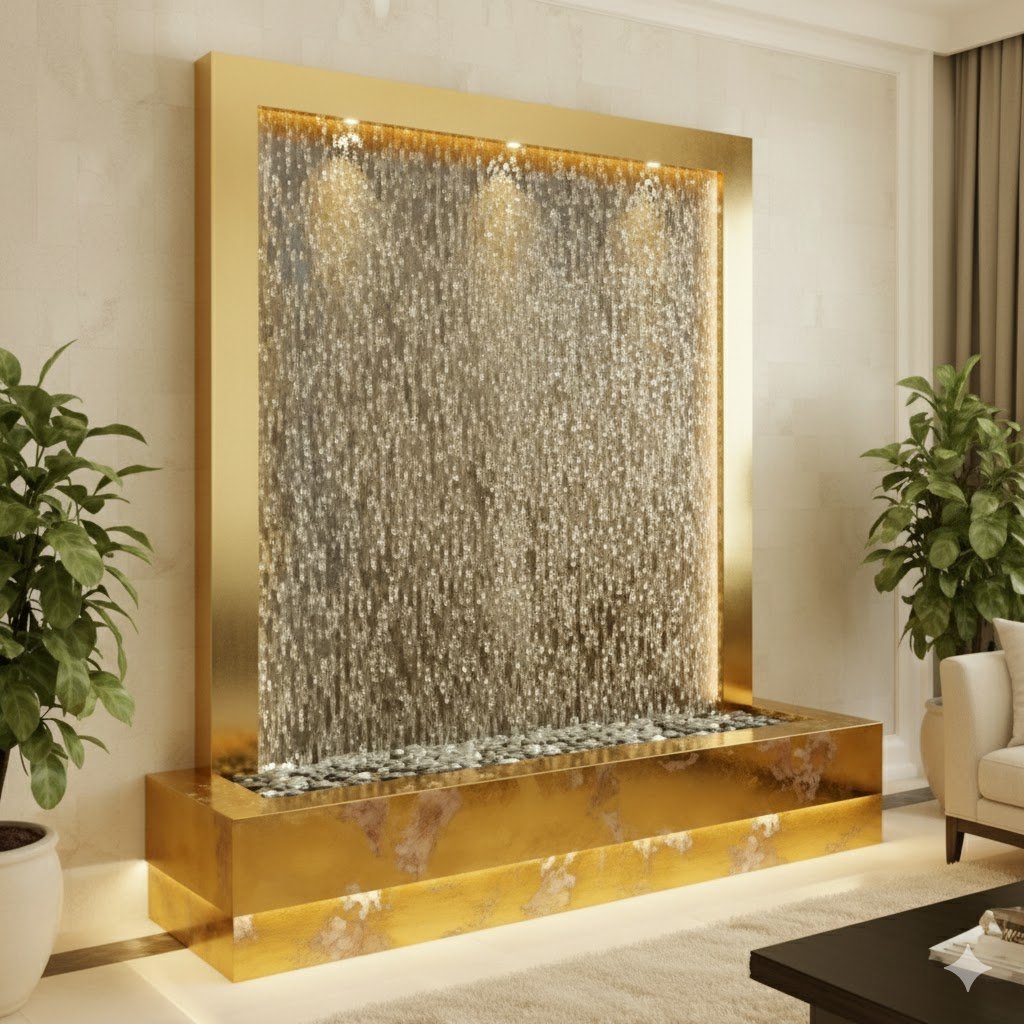
Let me tell you about the different types of wall fountains because there’s a wild variety out there. You’ve got your classic slate or stone fountains where water sheets down a natural rock surface. These give you that outdoor, natural feel. Then there are copper and metal fountains that develop a gorgeous patina over time. I’m partial to these because they change and evolve, becoming more beautiful as they age. Glass fountains create a completely different effect, more modern and sleek. Some are lit from behind, turning the water into a glowing, ethereal display at night.
The functional aspects are worth mentioning too. Wall fountains can help with air quality by adding moisture to dry indoor air. I live in a place where winter heating dries everything out, and my wall fountain helps combat that. It’s not a replacement for a humidifier, but it makes a noticeable difference. They’re particularly great if you have houseplants nearby that appreciate a bit of extra humidity. My ferns have never been happier since I installed mine.
One thing that surprised me about wall fountains is how much they can affect the acoustics of a room. I have a home office with hard floors and lots of windows. Before the fountain, every little sound echoed and felt harsh. The gentle sound of the water somehow softens everything. It creates white noise that masks distracting sounds from outside or from other parts of the house. I didn’t install it for that purpose, but it’s become one of my favorite benefits. During video calls, people often ask what that peaceful sound is in the background. It beats the usual barking dogs and garbage trucks that typically interrupt work-from-home calls.
Maintenance is honestly easier than I expected. Most wall fountains have a recirculating pump, meaning they use the same water over and over. You do need to top off the reservoir occasionally as water evaporates, and you should clean the pump every few months to keep things running smoothly. I use distilled water to prevent mineral buildup on the surface. It’s a small bit of upkeep for the amount of enjoyment I get from having it.
The energy consumption is minimal too. The pumps are small and efficient. Mine uses about as much electricity as a nightlight. I run it constantly during the day and turn it off at night. Some people leave theirs running 24/7. The electric cost is negligible, maybe a few dollars a year at most. When you compare that to the value it adds to your living space, it’s a no-brainer.
I think what I love most about wall fountains is how they make ordinary spaces feel special. My entryway used to be just a place to kick off shoes and dump mail. Now it’s a space I actually pause in. Friends who visit always comment on it. It sets a tone for the rest of the house that says, “You’re entering a place where people care about beauty and tranquility.” That might sound pretentious, but it’s true. Your environment shapes your mood, and having something as calming as a wall fountain affects how you feel every single day.
Transforming Living Spaces with Wall Fountain Design
Let me paint you a picture of what a well-placed wall fountain can do for a living room. My cousin Jenny renovated her 1960s ranch house last year. The living room had good bones but felt dated and a bit cold. She tried new paint, updated furniture, better lighting, all the usual tricks. The room looked better but still felt like it was missing something. Then she installed a large natural stone wall fountain on the wall opposite the fireplace. Everything clicked into place.
The fountain became the room’s conversation piece, literally and figuratively. When guests arrive, their eyes go straight to it. There’s something magnetic about moving water. We can’t help but look at it. Jenny chose a design with water flowing over stacked slate, giving it a natural, almost geological appearance. The texture and movement add depth to a wall that was previously just flat painted drywall. The room went from nice to memorable, and the fountain deserves most of the credit.
Living rooms are tricky spaces to design because they need to serve so many purposes. They’re where we relax after work, where we entertain guests, where families gather to watch movies or play games. A wall fountain enhances all these activities without getting in the way of any of them. It provides visual interest for guests, creates a calming atmosphere for relaxation, and adds pleasant background sound that makes conversations feel more intimate and comfortable.
I’ve noticed that wall fountains work particularly well in living rooms that have a lot of hard surfaces. Modern design trends favor wood floors, large windows, and minimal fabric. These materials are beautiful but can make a room feel acoustically harsh. Add in a flat-screen TV and some contemporary furniture, and you’ve got a space that might look great but doesn’t always feel warm. A wall fountain softens everything. The sound of water absorbs some of the acoustic harshness, and the presence of a natural element balances out all that modern sleekness.
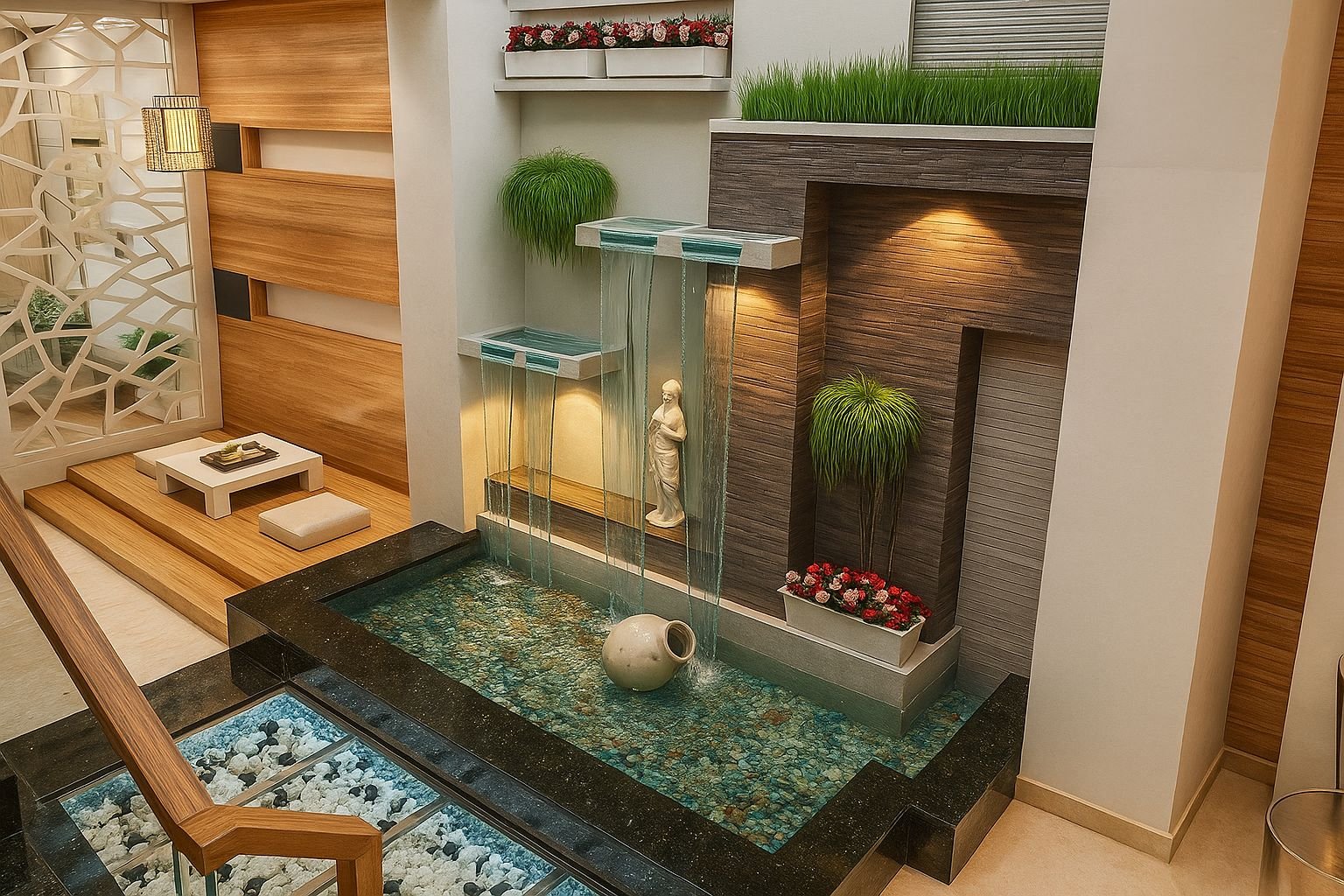
Placement matters more than you might think. I’ve seen wall fountains fail when they’re positioned poorly. You don’t want it directly across from your TV because the movement can be distracting. You don’t want it where people will constantly walk in front of it. The best spot is usually a focal wall, somewhere that’s visible from the main seating area but not in direct competition with other focal points like a fireplace or large window with a view.
The style of your fountain should complement your existing décor, but it doesn’t have to match exactly. My own living room skews mid-century modern with lots of warm wood tones and clean lines. I chose a copper wall fountain with a minimalist frame. The warm copper tones pick up the wood colors, and the simple design fits the mid-century aesthetic. But I’ve seen traditional living rooms with ornate stone fountains and ultra-modern spaces with glass and steel fountains. The key is finding something that feels intentional rather than random.
Size is another consideration that trips people up. There’s a tendency to go too small, thinking a fountain needs to be subtle and understated. But a tiny fountain on a large wall can look lost and ineffective. I learned this the hard way when I first started exploring fountains. I bought a small tabletop model and mounted it on my living room wall. It looked ridiculous, like I’d hung a toy. Wall fountains need enough scale to command attention and justify their presence. That doesn’t mean every wall fountain needs to be enormous, but it should be proportional to the wall and room size.
Lighting makes a huge difference in how your fountain looks. Natural daylight shows off the water’s movement beautifully during the day. But what about evening when your living room gets most of its use? Many wall fountains come with built-in LED lighting that illuminates the water from behind or below. This creates a completely different effect at night, turning your fountain into a glowing feature that adds both light and ambiance to the room. I installed a dimmer on mine so I can adjust the lighting intensity based on the mood I want.
Let me share a specific example of how a wall fountain transformed a problematic space. My friend Tom has a long, narrow living room in an older home. The proportions are awkward, and it’s always been hard to arrange furniture in a way that feels balanced. He installed a vertical wall fountain on one of the short walls. The fountain’s height emphasizes the room’s ceiling height while the vertical water flow draws the eye upward. It makes the room feel more spacious and better proportioned. Sometimes the right design element can completely change how a space reads.
The complementary relationship between wall fountains and furniture is worth exploring. I’m not talking about matching colors or styles exactly. I mean how the fountain influences where you want to sit and how you arrange your furniture. People naturally want to position themselves where they can see and hear the fountain. This might mean angling your sofa differently or adding a chair that faces the fountain. Let the fountain guide some of these decisions. Your living room layout will end up feeling more intentional and comfortable.
Wall fountains have this interesting ability to make new furniture look more established and older furniture look refreshed. I can’t quite explain the psychology behind it, but adding a fountain to a room makes everything else feel more thoughtfully curated. That couch you’ve had for ten years suddenly looks like a deliberate design choice rather than something you’re too lazy to replace. New pieces lose that just-bought quality and settle in immediately. The fountain creates context that elevates everything around it.
The Sensory Experience of Wall Fountains
There’s something primal about our response to water. Scientists have studied this. They’ve found that being near water lowers cortisol levels, reduces heart rate, and triggers relaxation responses in our brains. We evolved around water sources. Our ancestors survived by staying near rivers, lakes, and springs. Maybe that’s why the sound of flowing water still speaks to something deep inside us. When I turn on my wall fountain in the morning, I can literally feel my shoulders drop and my breathing slow.
The visual appeal is obvious. Water in motion is endlessly fascinating to watch. It catches light, creates patterns, reflects surroundings. Every moment is slightly different from the last. I sometimes find myself just staring at my fountain, watching how the water sheets down the surface, forms tiny rivulets, pools at the bottom, then cycles back up to flow again. It’s meditative in a way that static art never can be. A painting hangs there looking exactly the same day after day. A fountain is alive, changing, responding to the environment.
But the sound is what really gets me. Close your eyes and listen to a wall fountain for a minute. You’ll hear layers. There’s the main sound of water hitting the surface, a gentle splash or trickle depending on the fountain’s design. Then there’s the subtle burbling of water moving through channels or over edges. Maybe you’ll catch the slight hum of the pump if you listen carefully. These sounds combine into something that’s both stimulating enough to be interesting and repetitive enough to be soothing.
I’ve compared it to watching a campfire. Fire and water have this in common. They’re both dynamic, natural phenomena that humans can watch for hours without getting bored. A campfire crackles and pops, flames dance and shift. A fountain flows and splashes, water dances and sparkles. Both create this mesmerizing effect that pulls you out of your analytical mind and into a more receptive, peaceful state. Having a wall fountain is like having a bit of that campfire magic available any time you need it.
The way wall fountains mimic natural waterfalls is part of their appeal. When you see water flowing down rock or slate, your brain doesn’t think “decorative home feature.” It thinks “waterfall” or “stream.” Even though you’re indoors and you intellectually know this is an artificial construction, your nervous system responds as if you’re out in nature. I think that’s pretty remarkable. We can essentially trick our bodies into relaxing by recreating natural water patterns in our homes.
Different fountain designs create different sensory experiences. A fountain where water sheets smoothly down a flat surface creates a consistent, even sound. One where water flows over irregular stone or textured surfaces makes a more varied, babbling sound. Glass fountains can produce a tinkling quality as water hits the smooth surface. I spent way too long researching this before buying my first fountain, listening to video recordings of different styles. The sound you want depends on personal preference and what purpose you want the fountain to serve.
Some people prefer loud, dramatic fountains that become the dominant sound in a room. Others want something subtle that provides background ambiance without demanding attention. I fall somewhere in the middle. I want my fountain to be clearly audible but not so loud that it interferes with conversation or makes it hard to focus on other things. The flow rate usually determines volume, and most fountains have adjustable pumps so you can fine-tune the sound to your preference.
The cooling effect of a wall fountain shouldn’t be underestimated, especially if you live somewhere with hot summers. Evaporating water actually lowers the temperature in the immediate area around the fountain. It’s not dramatic enough to replace air conditioning, but it makes a noticeable difference. I have my fountain in my home office, and the corner where it’s located definitely feels cooler than the rest of the room on hot days. It’s a passive cooling effect that costs nothing beyond the minor electricity to run the pump.
There’s a psychological cooling effect too. Just seeing and hearing water makes you feel cooler. This has been documented in studies. Show people images of water or play recordings of water sounds, and they’ll report feeling cooler even if the temperature hasn’t changed. Having a wall fountain exploits this perceptual phenomenon. On sweltering summer days, I swear my fountain makes my whole house feel more comfortable, even in rooms where you can’t hear or see it. Just knowing it’s there somehow helps.
Let me tell you about an unexpected sensory benefit I discovered. My wall fountain has dramatically reduced how much I notice and get bothered by random household noises. I live in a fairly quiet neighborhood, but there are still sounds throughout the day. A neighbor’s dog barking, traffic from the nearby street, the HVAC system kicking on, the refrigerator running. Before I had the fountain, these noises would pull my attention and sometimes irritate me. Now the constant gentle sound of the fountain creates a baseline that masks these interruptions. My brain has learned to filter out the fountain sound while somehow also filtering out other noises. It’s like the fountain creates a buffer zone of calm.
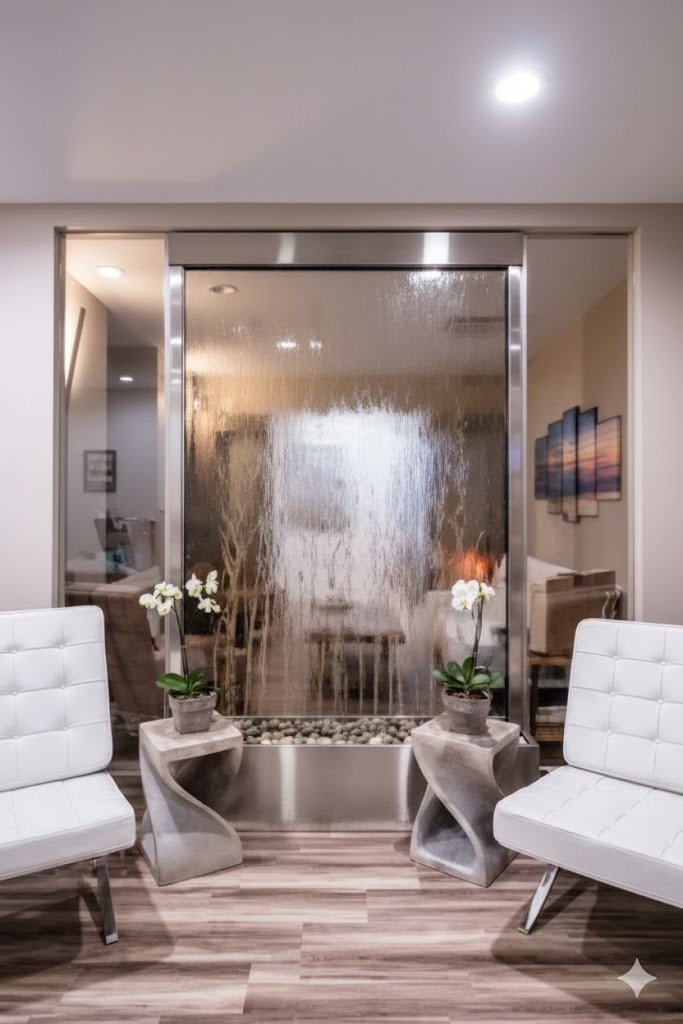
The aromatherapy potential is something I haven’t fully explored but others swear by. You can apparently add essential oils to fountain water to create a subtle scent distribution system. The evaporation carries the scent into the air. I’m skeptical about whether this actually works well or just clogs up your pump, but I know people who do it and love the results. They use eucalyptus for a spa-like atmosphere or lavender for relaxation. I stick with plain water, but it’s an option if you’re into that sort of thing.
Touch is the sense we often forget about with fountains, but it matters. Some people can’t resist running their fingers through the flowing water. There’s something satisfying about interrupting the flow, feeling the cool water, the smoothness of the wet stone or metal. I don’t recommend doing this constantly because oils from your skin can eventually affect how water flows and can encourage algae growth. But occasionally? Yeah, it feels good. It’s a tiny moment of tactile pleasure in a world where we spend too much time touching screens.
Choosing and Installing Your Perfect Fountain
Shopping for a wall fountain can be overwhelming. I know because I spent three months researching before making my first purchase, and I still second-guessed myself for a week after it arrived. There are so many options that it’s hard to know where to start. Let me walk you through what I learned so you can avoid some of the analysis paralysis I experienced.
Material choice matters more than I initially realized. Natural stone and slate fountains have an organic, earthy quality. They look like pieces of nature mounted on your wall. Water flows over the irregular surface in unpredictable patterns, giving each fountain a unique character. These tend to be heavier, which means more robust wall mounting. They also develop character over time as minerals in the water create patterns on the stone. Some people love this patina; others see it as staining that needs cleaning.
Copper fountains are gorgeous and get better with age. New copper has that bright, shiny penny look. Over time, it develops a rich patina that ranges from brown to green depending on the environment and water chemistry. I love how living copper fountains feel. They’re not static objects; they’re evolving pieces that look different after a year than they did when you installed them. The downside is that you can’t really control how the patina develops. You’re putting some trust in the process.
Glass fountains appeal to people who want a more contemporary, polished look. Water flows down clear or colored glass panels, creating a clean, modern aesthetic. These tend to be lighter than stone fountains and can include lighting that makes them glow. They’re easier to keep looking pristine because glass doesn’t absorb water or develop patina. The water flow tends to be smoother and more uniform compared to textured natural materials.
Metal fountains other than copper (think stainless steel, brushed aluminum) offer industrial or modern vibes. They’re durable, relatively lightweight, and maintain their appearance without developing patina unless you want them to. I’ve seen some stunning stainless steel fountains in modern homes where they complement stainless appliances and fixtures. These can sometimes feel cold or stark, but in the right setting, that sleek quality is exactly what’s needed.
Size decisions should start with measuring your wall space carefully. Measure height, width, and note any obstacles like light switches, outlets, or vents. Take into account furniture placement too. You don’t want your fountain hanging so low that the top of your couch blocks it. I made this mistake with a fountain I bought for my bedroom. It looked perfect height-wise on the empty wall in the store, but once I got it home and positioned my bed, the headboard partially covered it. Had to return it and get a taller model.
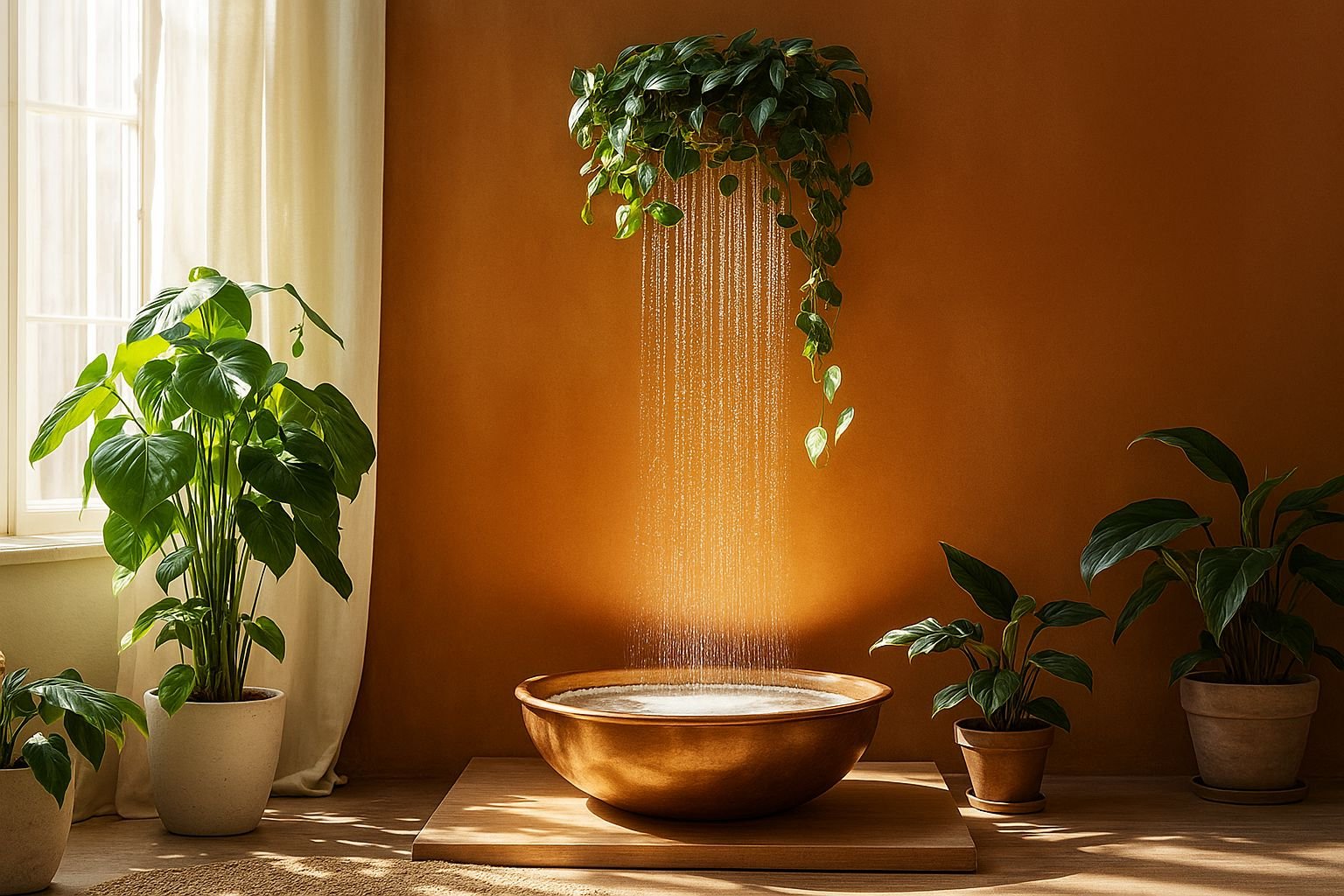
Style considerations go beyond the fountain itself. Think about your room’s overall design language. Are you working with traditional, contemporary, rustic, industrial, eclectic? Your fountain doesn’t have to match perfectly, but it should feel intentional. A super ornate fountain with lots of decorative elements will look strange in a minimalist space. A stark, simple fountain might get lost in a maximalist room full of patterns and colors. I tend toward “when in doubt, go simpler” because simple designs are more versatile and less likely to feel dated in a few years.
Installation scared me at first. I’m not particularly handy, and the idea of mounting something heavy on my wall that would constantly circulate water seemed like a recipe for disaster. But it turned out to be manageable. Most wall fountains come with mounting hardware and instructions. The key steps are finding studs in your wall, marking where brackets need to go, drilling holes, securing brackets, and hanging the fountain. If your fountain is heavy (over 50 pounds), definitely mount it to studs rather than just using drywall anchors.
The electrical component is usually straightforward. Most fountains plug into a standard outlet. You’ll want an outlet nearby so you’re not running an extension cord across your wall. Some people have an electrician add an outlet behind the fountain for a cleaner look. I just positioned my fountain near an existing outlet and ran the cord down the side where it’s barely visible. Not perfect, but functional and safe.
Water supply is self-contained in wall fountains, which is one reason they’re so practical. You fill a reservoir with water, the pump circulates it, and it keeps flowing indefinitely as long as you top off water lost to evaporation. This typically means adding water every week or two depending on your environment. Some fountains have larger reservoirs that need less frequent filling. I use a small pitcher kept nearby specifically for fountain duty. Takes two minutes every week or so.
Pump quality varies widely and often correlates with price. Cheap fountains have cheap pumps that die quickly or operate loudly. When you’re shopping, check reviews specifically mentioning pump performance and longevity. A good pump should be nearly silent and last for years. Replacing a failed pump is possible but annoying. Better to invest in quality upfront. I learned this the hard way with a budget fountain whose pump died after six months. The replacement fountain with a better pump cost more initially but has run flawlessly for three years now.
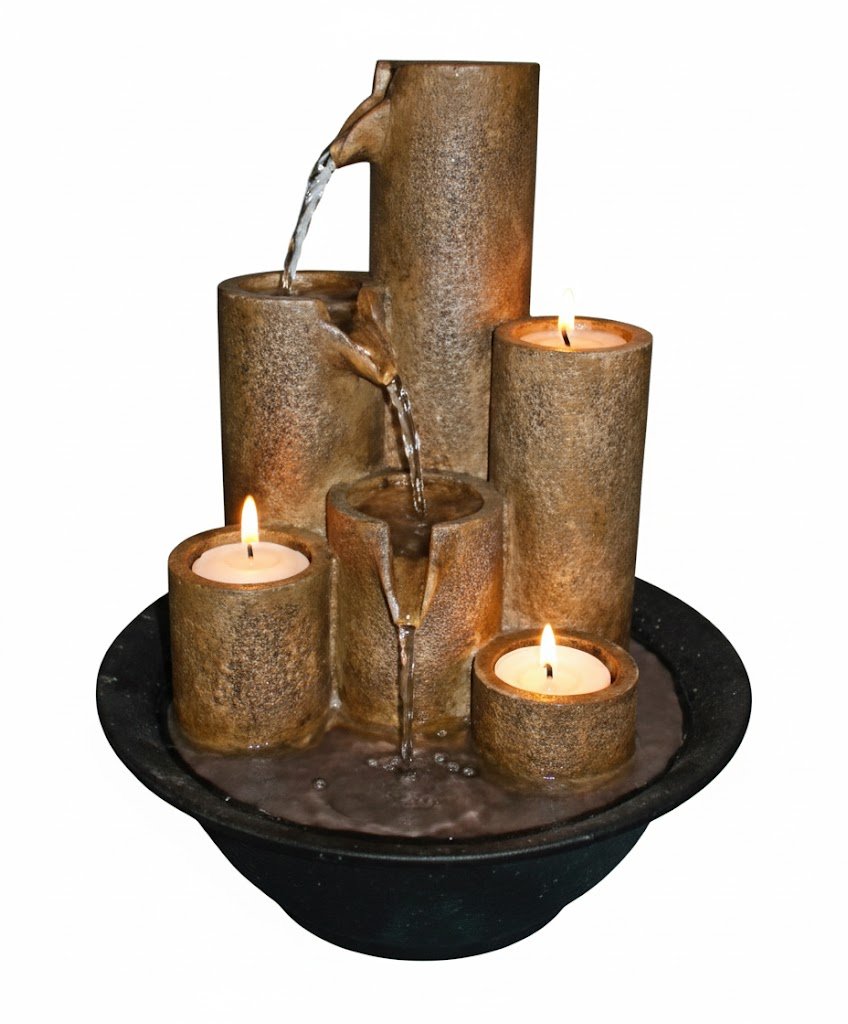
Let me mention table top fountains briefly because they’re closely related and worth considering. These are smaller units designed to sit on a table, desk, or shelf rather than mounting on a wall. They offer similar benefits to wall fountains but with more flexibility. You can move them easily, take them with you if you move, and try them in different locations. I have a small tabletop fountain on my desk at work. It’s not as dramatic as a wall fountain, but it serves the same purpose of providing soothing water sounds and visual interest.
Table top fountains work great in spaces where wall mounting isn’t practical or desirable. Rental apartments where you can’t or don’t want to drill into walls. Offices with cubicle walls that won’t support weight. Bedside tables for sleep sound. Kitchen counters. Bathroom vanities. They’re perfect for dipping your toe into the fountain world before committing to a larger wall installation. Many people start with a tabletop model, fall in love with it, then graduate to bigger wall fountains.
The variety in tabletop fountain designs is enormous. You can find tiny Zen-style fountains with Buddha figures and bamboo. Modern geometric designs. Naturalistic rock formations. Whimsical designs with ceramic animals or flowers. Prices range from under twenty dollars for basic models to several hundred for artistic pieces. I recommend starting modest with your first one. If you end up not liking it, you haven’t invested much. If you love it, you can always upgrade later.
Dining room tables benefit particularly from tabletop fountains as centerpieces. Think about it. Traditional centerpieces just sit there. Flowers die. Candles are nice but you can’t run them constantly. A tabletop fountain provides ongoing interest and ambiance during meals. The sound of flowing water creates a pleasant acoustic environment for dinner conversation. It’s unexpected and memorable. I’ve been to dinner parties where the host had a fountain on the table, and it always generates conversation and compliments.
Maintenance for tabletop fountains is similar to wall fountains but usually simpler because of their smaller size. Change water regularly to prevent algae and mineral buildup. Clean the pump filter monthly. Wipe down surfaces to keep them looking fresh. It’s minimal effort for the enjoyment you get. I clean mine when I notice the water getting cloudy or the flow decreasing. Takes maybe ten minutes every few months.
Living with Your Fountain
After you get your fountain installed and running, there’s an adjustment period. For the first few days or weeks, you’ll notice it constantly. Every time you walk into the room, your attention will go straight to the fountain. You’ll probably spend time just watching it, which is great. Enjoy that honeymoon phase. Take photos. Show it to friends. Revel in how much better your space feels.
Then something interesting happens. The fountain becomes part of your environment. Your brain stops actively noticing it every single time you walk by. But here’s the thing: it’s still affecting you. The calming sound continues to lower your stress levels. The visual appeal still softens your space. The sensory experience still works its magic. You just stop consciously thinking about it. It’s like how you stop noticing the hum of your refrigerator but would immediately notice if it stopped. The fountain becomes part of your home’s baseline atmosphere.
I’ve found that guests notice my fountain more acutely than I do now. When friends visit, they always comment on it. They ask questions about it. They want to know where I got it, how much it cost, how hard it was to install. This reminds me to appreciate it again. I’ll look at it with fresh eyes and remember why I wanted it in the first place. It’s a nice little cycle of rediscovery.
Seasonal considerations are worth thinking about. In winter when heating dries out indoor air, fountains work overtime adding beneficial humidity. You might need to refill more frequently as evaporation increases. In summer, the cooling effect becomes more noticeable and appreciated. Spring and fall tend to be the easiest seasons for fountain maintenance. Some people shut their fountains down in winter if their home gets very cold, though this isn’t necessary if you maintain normal indoor temperatures.
The relaxation benefits compound over time. Having a fountain isn’t like taking a vacation where you feel great for a week then immediately return to normal stress levels. It’s a persistent, low-level wellness intervention that adds up. You’re exposing yourself to a calming stimulus multiple times daily. Over months and years, this shapes your baseline stress levels and mood. I can’t prove my fountain is why I feel calmer and more centered than I used to, but the timing sure lines up.
Let me address some common concerns people have before getting fountains. Water damage fears are legitimate but largely unfounded if you install and maintain properly. The water is contained in a closed system. It doesn’t spray outward or overflow under normal operation. I’ve never had a water incident with any of my fountains. That said, check periodically to make sure the reservoir level is adequate and watch for any leaks from pump connections. Common sense precautions prevent problems.
Noise complaints sometimes come up, usually from people who bought low-quality fountains with loud pumps. A good fountain should provide soothing water sounds, not mechanical grinding or buzzing. If your fountain is annoyingly loud, the pump is probably defective or the wrong size for the fountain. Don’t settle for a noisy fountain. Life’s too short. Either fix it or replace it with something better.
Cleaning frequency depends on your water quality and environment. I clean mine thoroughly about four times a year, plus minor maintenance monthly. Thorough cleaning means disassembling the fountain, scrubbing all surfaces with a soft brush, cleaning the pump filter and impeller, and refilling with fresh water. Monthly maintenance is just topping off water and wiping down visible surfaces. If you notice algae growing or mineral deposits forming, clean sooner. Prevention is easier than removal.
Using distilled water minimizes mineral buildup on fountain surfaces. Tap water contains minerals that leave white crusty deposits as water evaporates. These deposits are harmless but ugly. Distilled water eliminates this issue. The cost is minimal since you’re only adding a gallon or two every week or two. I buy distilled water in gallon jugs and keep them stored near the fountain for easy refilling. Some people use filtered water with good results too.
Water additives are available specifically for fountains. These typically prevent algae growth and reduce mineral deposits. I use them occasionally, especially in summer when algae is more likely. Follow the instructions carefully because too much additive can damage your pump. A little goes a long way. I’m generally skeptical of adding chemicals to anything, but fountain additives serve a legitimate purpose and use safe, simple ingredients.
The investment pays off quickly in my opinion. A decent wall fountain costs anywhere from two hundred to over a thousand dollars depending on size, materials, and quality. That might seem steep for a decorative item. But compare it to other home improvements. A new couch costs more and doesn’t transform your space as dramatically. A fancy coffee table runs hundreds of dollars and just sits there. A fountain provides daily value through the ambiance and relaxation it creates. The cost per day of ownership becomes trivial pretty quickly.
I’ve never regretted buying any of my fountains. Some I liked more than others. One I eventually moved to a different room where it worked better. But none were mistakes. Each added something positive to my living space. Each made coming home a bit more pleasant. Each provided moments of calm in otherwise hectic days. That’s worth something real in our stressed-out, overstimulated modern world.
Wall fountains and tabletop fountains offer an accessible way to bring nature’s tranquility into our homes. They don’t require yards of outdoor space or elaborate plumbing. They work in apartments and houses, in large rooms and small ones. They suit traditional and modern aesthetics. They’re one of those rare home additions that almost universally make spaces better. The gentle sound of flowing water, the mesmerizing movement, the sense of life and energy they bring creates an atmosphere that enhances daily living in subtle but meaningful ways. If you’ve been considering adding a fountain to your home, stop considering and start shopping. Your future self will thank you every time you hear that peaceful flow of water welcoming you home.

Leave a Comment