
So you’re out there looking for a new bed, right? I get it. We’ve all been there, scrolling through endless furniture websites at 2 AM, trying to find something that doesn’t look like it belongs in a college dorm but won’t require us to take out a second mortgage. The thing is, most of us make the same mistake when we start this journey. We zero in on two things like they’re the only factors that matter: price and looks.
I’ve watched friends pick out bedroom furniture the way they’d choose a pair of shoes. They see something pretty, check the price tag, and if both check out, boom. Done deal. But here’s where things get interesting. Buying furniture for the room where you spend a third of your life? That deserves more thought than picking out footwear you’ll wear for a few hours.
Think about what really goes into making a smart furniture purchase. You’ve got bed size to think about. Will that king fit through your doorway, or are you going to be the person who has to return a mattress because you didn’t measure? Then there’s the whole question of what the thing is actually made from. This matters more than you’d think. I learned this the hard way when I bought what looked like a gorgeous bed frame, only to have it start falling apart six months later.
Comfort plays a huge role too. You can have the most beautiful bed in the world, but if you wake up every morning feeling like you slept on a park bench, what’s the point? The materials affect how the bed feels, how it holds up over time, and whether you’ll still be happy with it five years down the road.
Now here’s where people get all worked up. When you start looking at modern platform beds, you’re going to run into something called veneer beds. And boy, do these beds have a reputation. Some folks hear the word “veneer” and immediately think cheap, fake, not worth their time. They picture particle board furniture from their first apartment, the stuff that came in a flat pack and required an engineering degree to assemble.
But let’s pump the brakes for a second. Just because something uses veneer doesn’t automatically mean it’s garbage. I know that goes against what your gut might be telling you, but stick with me here. There’s actually a pretty compelling case to be made for these beds, and no, I’m not trying to sell you something. I just think it’s worth understanding what you’re really getting before you write off an entire category of furniture.
The furniture industry has changed a lot in recent years. Manufacturing techniques have gotten better. Materials science has advanced. What passed for veneer furniture twenty years ago bears little resemblance to what you can buy today. Yet the stigma remains. People still associate veneer with low quality, with furniture that’s one step up from cardboard.
Here’s what I want you to take away from this. Shopping for bedroom furniture means looking past the surface. It means asking questions. What is this made of? How will it hold up? Does it fit my actual needs, or am I just buying it because it looks good in the photo? When you start asking these questions, you might be surprised by the answers. You might find that what you thought you wanted isn’t what you actually need.
The bed you choose becomes part of your daily life. You’ll see it every morning when you wake up and every night before you sleep. It needs to work for you on multiple levels. Looks matter, sure. Price matters, absolutely. But digging deeper into the details, understanding the materials and construction, that’s what separates a purchase you’ll regret from one you’ll be happy with for years.
So before you click that buy button, before you hand over your credit card at the furniture store, take a breath. Look at the whole picture. Consider all the features, not just the obvious ones. Your back will thank you. Your wallet might too.
Understanding What Veneer Beds Really Are
Let me break down what we’re actually talking about when we say veneer beds. Most modern platform beds you’ll find today use this construction method. We’re talking about a core made from particle board or plywood, and then they add a thin layer of higher quality wood on top. That thin layer? That’s the veneer. It gives you the look of nice wood without using a solid piece of hardwood all the way through.
Now I can already hear some of you groaning. Particle board? Isn’t that the stuff that disintegrates if you look at it wrong? The material that swells up like a sponge if a single drop of water gets near it? You’re not entirely wrong to be skeptical. Early particle board furniture earned its bad reputation honestly. I’ve seen enough of it fall apart to understand where the concern comes from.
But here’s where things get more complicated. Not all veneer beds are created equal. The quality spectrum runs pretty wide. On one end, you’ve got the absolute bottom tier stuff. This is the furniture you pick up for fifty bucks because you need something, anything, to sleep on. It’s made with the cheapest materials, the thinnest veneer, and construction methods that prioritize speed over longevity. This furniture gives the entire category a bad name.
On the other end, you’ve got veneer beds that are genuinely well made. These use quality particle board or plywood cores. The veneer is thick enough to provide real protection. The construction is solid. These beds can last just as long as their solid wood counterparts. The catch? You need to know how to tell the difference.
Here’s what trips people up. They hear “veneer” and their brain immediately jumps to “cheap.” They assume any bed using veneer must be inferior to solid wood. This black and white thinking costs them. They either avoid veneer beds completely, missing out on some genuinely good options, or they buy the cheapest veneer bed they can find and end up disappointed when it doesn’t hold up.
The perception problem runs deep. I’ve had conversations with people who absolutely refuse to consider veneer furniture. They’ve decided solid wood is the only acceptable option. When I ask why, the answers get fuzzy. “It’s just better,” they’ll say. Or “It lasts longer.” But when we dig into specifics, they often can’t explain what makes solid wood superior beyond a general feeling that natural materials must be better than manufactured ones.
This kind of thinking ignores some practical realities. Solid wood has its own issues. It can warp. It responds to changes in humidity. It’s heavy, which matters if you ever need to move. It costs more, sometimes a lot more. Are you really getting value for that extra money, or are you paying for a perception of quality that doesn’t match reality?
The durability question deserves its own examination. People assume solid wood automatically means more durable. Sometimes that’s true. Sometimes it’s not. I’ve seen solid wood beds that started warping within a year. I’ve seen veneer beds that looked great after a decade of use. The quality of construction matters more than the basic material choice.
What about the boring factor? Yeah, some people think veneer beds are bland. Walk into any furniture store and you’ll see dozens of platform beds that look pretty similar. Many use veneer. Does that make them boring? Maybe. But you know what else is boring? Every solid wood bed that uses the same basic design. Boring isn’t really about the material. It’s about design choices.
The real question you should be asking isn’t “Is this veneer or solid wood?” The question should be “Is this well made?” A well constructed veneer bed beats a poorly made solid wood bed every time. But figuring out construction quality takes more work than just checking what material the manufacturer used. You need to look at joints, at how pieces connect, at weight ratings, at warranty terms.
I’ve come around on veneer beds over the years. I used to be one of those people who insisted on solid wood. Then I actually started paying attention. I looked at how furniture is made today. I examined the technology behind modern manufacturing. I compared prices and durability. My conclusion? The blanket dismissal of veneer furniture doesn’t hold up under scrutiny. Some veneer beds are junk. Some are great. Same goes for solid wood.
The Environmental Case for Veneer Beds
Want to know something that might surprise you? Those veneer beds everyone loves to criticize? They’re actually doing something good for the planet. I know, I know. When you’re shopping for furniture, environmental impact probably isn’t at the top of your priority list. You’re thinking about whether it’ll fit in your bedroom, not whether it’s saving trees. But hear me out on this one.
Making modern platform beds with veneer uses fewer resources than you’d expect. The materials themselves cost less than solid wood or metal, which means manufacturers can keep prices lower. But the bigger story is how these beds get made. The whole production process has a smaller carbon footprint compared to traditional furniture manufacturing. We’re talking about measurably less energy used, fewer emissions created, less waste generated.
Here’s where it gets interesting. You know what happens to all that sawdust in a lumber mill? Traditionally, it was just waste. Factories would generate mountains of the stuff and have to figure out what to do with it. Some got burned. Some got dumped. It was an environmental problem with no great solution. Then somebody had a bright idea. What if we could use that sawdust to make something useful?
That’s where particle board comes in. Veneer bed manufacturers take that sawdust and compress it into boards. They’re literally making furniture out of what used to be garbage. This means less hardwood needs to get cut down in the first place. Instead of needing a whole tree to make a bed frame, manufacturers can use a thin slice of quality wood for the veneer and fill in the rest with reclaimed materials.
Think about the math here. A solid wood bed requires cutting down trees, processing the lumber, drying it, shaping it. Each step uses energy and creates waste. A veneer bed uses a fraction of the hardwood. The core gets made from materials that would otherwise go to waste. The environmental savings add up quickly when you’re producing furniture at scale.
Now I’m not trying to turn this into a tree hugging lecture. You don’t have to chain yourself to an oak to appreciate the practical benefits of using resources more efficiently. Every tree that doesn’t get cut down is a tree that keeps growing, keeps absorbing carbon dioxide, keeps providing habitat for wildlife. It’s basic ecology.
But let’s be real about something. The furniture industry doesn’t do this purely out of love for Mother Earth. Using sawdust and wood scraps to make particle board saves money. It solves a waste disposal problem. It makes economic sense. The environmental benefits are nice, but they’re kind of a happy accident. Companies that use these methods get to market their products as eco friendly, which appeals to certain customers. Everyone wins.
Does this mean every veneer bed on the market is some kind of environmental hero? No. Manufacturing still requires energy. Shipping still produces emissions. The adhesives used to bind particle board together have their own environmental concerns. We’re not talking about a perfect solution here. We’re talking about a better option compared to the alternatives.
I’ve noticed something interesting about how people respond to environmental arguments. Some folks really care about this stuff. Tell them a product is better for the environment and that factors into their decision. Other people just don’t prioritize it. They want a good bed at a fair price, and whether it saves trees doesn’t move the needle for them. Both reactions are valid.
What I find compelling is that you don’t have to be an environmental crusader to benefit from these manufacturing improvements. Even if you couldn’t care less about carbon footprints, you still get a bed that costs less and works well. The resource efficiency that helps the environment is the same efficiency that keeps prices down. Your wallet and the planet both come out ahead.
The conservation angle matters more than people realize. Hardwood forests take decades to grow. Once you cut them down, they don’t come back quickly. Using less hardwood in furniture production means those forests can regenerate. It means wood remains available for future generations. It means we’re not treating trees as an infinite resource that we can harvest without consequences.
Here’s something that changed my perspective. I visited a furniture manufacturing facility a few years back. Seeing the process in person really drove home how much waste traditional methods created. Then I saw how modern plants operate. The efficiency was striking. Everything gets used. Scraps become particle board. Small pieces become veneer. Even the smallest wood chips get compressed into materials.
This closed loop approach makes sense from every angle. Economically, waste costs money. Environmentally, waste creates problems. By finding uses for everything, manufacturers solve multiple issues at once. The furniture you end up with is the result of a much more thoughtful process than most people realize when they’re just looking at a catalog.
Why Veneer Beds Are Tougher Than You Think
Okay, time to tackle the big concern everyone has about veneer beds. Durability. People worry these beds will fall apart. They picture flimsy furniture that can’t handle real use. They remember that cheap bookshelf from college that sagged under the weight of textbooks. But modern veneer beds? They’re actually pretty tough. Let me explain why.
The technology behind furniture manufacturing has come a long way in recent years. We’re not dealing with the same materials your parents bought. The veneer itself has changed dramatically. Manufacturers can now make it incredibly thin, like a film, while keeping all the properties of hardwood. This thin veneer bonds strongly to the core material. The result is a surface that looks and feels like solid wood but with some advantages the natural stuff doesn’t have.
Particle board gets a bad rap, and some of it is deserved. Cheap particle board is terrible. But quality particle board? That’s a different story. Modern manufacturing produces boards that are dense, strong, and stable. They can support significant weight without buckling. The key is density. Higher quality particle board packs more wood fibers into each square inch. This makes it stronger and more resistant to damage.
Here’s something most people don’t know about solid hardwood. It warps. Not always, not immediately, but wood is a natural material that responds to its environment. Changes in humidity make wood expand and contract. Over time, this can cause twisting and bending. I’ve seen beautiful hardwood beds develop gaps in the joints because the wood shifted. Particle board doesn’t do this. Unless you expose it to serious moisture, it stays stable.
That moisture thing is real though. Get particle board wet and you’re in trouble. It will swell up and lose its structural integrity. This is the big weakness of veneer beds. You can’t let water sit on them. Spill something and you need to wipe it up right away. Keep them away from windows where rain might blow in. Use a dehumidifier if you live somewhere humid. Take these precautions and particle board will outlast hardwood in many cases.
Let me share a personal experience. I bought a veneer platform bed about eight years ago. I was skeptical at the time. The price seemed too good, and I worried it wouldn’t hold up. But I liked the design and decided to take a chance. That bed is still in my guest room today. It looks the same as when I bought it. No warping. No sagging. No issues at all. My only regret is not buying a better mattress to go with it.
The strength of modern veneer beds comes from engineering. Manufacturers understand how forces work on furniture. They reinforce stress points. They use better adhesives. They test weight capacities. A well designed veneer bed can easily support 500 pounds or more. That’s plenty for any reasonable sleeping situation, even if you’re sharing the bed and have a collection of pillows that would make a hotel jealous.
What about longevity? This is where you need to be smart about your purchase. A cheap veneer bed bought at a discount store might last you three years. A quality veneer bed from a reputable manufacturer? Ten years or more isn’t unusual. The difference comes down to construction quality, material grade, and attention to detail. You can’t judge all veneer beds by the worst examples.
I’ve noticed that people who complain about veneer beds often bought the cheapest option they could find. Then they’re shocked when it doesn’t last. This would be like buying the cheapest used car on Craigslist and being surprised when it breaks down. Price isn’t everything, but rock bottom prices usually mean rock bottom quality. You get what you pay for, whether we’re talking about veneer beds or anything else.
The weight of the bed tells you a lot. Pick it up. If it feels like a cardboard box, it probably won’t last. Quality veneer beds have heft to them. The particle board core should be dense and heavy. The veneer should be smooth and well bonded. Look at the joints and connections. Are they reinforced? Do they fit together tightly? These details matter more than whether the bed uses veneer or solid wood.
Another factor people overlook is assembly. Many platform beds come flat packed and require assembly. How you put them together affects durability. Follow the instructions. Use the right tools. Tighten everything properly. I’ve seen people blame the bed when they’re the ones who assembled it poorly. A veneer bed put together correctly will hold up much better than a solid wood bed with loose joints.
The innovation in bedroom furniture technology really is impressive when you look at it objectively. Manufacturers have solved a lot of the problems that plagued early particle board furniture. The materials are better. The construction is stronger. The finishes are more durable. You just have to be willing to look past old assumptions and evaluate what’s actually available today.
Making Sense of Marketing Claims
Walk into any furniture store and you’ll see labels everywhere. “Solid hardwood construction.” “Genuine wood veneer.” “Engineered wood.” What does any of this actually mean? The marketing language around bedroom furniture can get confusing fast. Let’s decode some of this stuff so you know what you’re really buying.
Here’s something that throws people for a loop. A lot of modern bedroom furniture gets advertised as having both solid hardwood and veneer. You look at the specs and see “solid hardwood frame with wood veneer panels.” Sounds good, right? You’re getting the best of both worlds. But dig a little deeper and things get murky.
That solid hardwood they’re talking about? It might not be what you think. When manufacturers say solid hardwood in this context, they’re often referring to engineered wood products. This is basically high grade particle board that’s been manufactured to have similar properties to natural wood. It’s dense. It’s stable. It works well for furniture. But calling it solid hardwood feels like a stretch.
Is this misleading? That depends on your perspective. Technically, engineered wood products retain many qualities of natural wood. They’re made from wood fibers. They have similar strength characteristics. They look like wood. The industry has decided this counts as solid hardwood for marketing purposes. Whether consumers understand this distinction is another question.
I’ve talked to plenty of people who bought furniture thinking they were getting solid wood cut from trees, only to later realize they got engineered materials. Some felt deceived. Others didn’t care once they understood what they actually received. The furniture still worked fine. It looked good. It held up over time. The material composition mattered less than they thought it would.
Here’s the thing that bugs me about this situation. Most consumers don’t know what they really want. Ask someone shopping for a bed what material they prefer and they’ll often say solid wood. Ask them why and you get vague answers about quality and durability. Push them on specifics and they can’t articulate clear benefits of solid wood over quality engineered materials. They just have a feeling that natural wood must be better.
This creates an opening for marketing to exploit. People want solid wood, so manufacturers label engineered products as solid hardwood. Consumers get what they think they wanted. Nobody technically lied. But the whole transaction relies on people not understanding the terminology or materials well enough to ask better questions.
The truth that makes furniture salespeople uncomfortable is this. For most buyers, engineered wood products are actually the better choice. They’re more stable than natural wood. They cost less. They’re easier to manufacture consistently. They use resources more efficiently. The main advantage of real hardwood is aesthetic and traditional. Some people just prefer knowing their furniture came from a tree rather than a factory process.
But do you really care where your furniture came from if it looks good and works well? That’s the question worth asking yourself. We’ve been conditioned to value natural materials over manufactured ones. Wood good, plastic bad. Simple narratives that don’t always match reality. Modern manufacturing can produce materials that outperform their natural equivalents in many ways.
The misrepresentation of engineered wood as solid hardwood does create problems. It muddies the market. It makes comparing products harder. How do you evaluate two beds advertised as solid hardwood when one uses natural lumber and the other uses engineered wood? You can’t make an informed choice without digging deeper than the marketing copy.
My advice is to ignore the marketing terms and look at the actual construction details. What is the core material? What is the veneer? How thick is each layer? How are pieces joined together? What is the weight capacity? These specifics tell you more about quality than any amount of flowery language about premium materials or expert craftsmanship.
Read reviews from actual buyers. Look for comments about durability and construction quality. See if people report problems after months or years of use. This real world feedback matters more than manufacturer claims. Companies can say whatever they want in their marketing. Customers who used the product for a year will tell you what really happened.
Check return policies and warranties. A company confident in their product will stand behind it. Short warranties or restrictive return policies suggest the manufacturer knows their furniture might not hold up. This applies to both veneer beds and solid wood beds. Good construction deserves a good warranty regardless of materials used.
The confusion around materials and marketing claims doesn’t serve anyone except maybe the furniture companies who benefit from customers not fully understanding what they’re buying. Better transparency would help. Clearer labeling would help. But until that happens, you need to be your own advocate. Ask questions. Demand specifics. Don’t accept vague answers about premium quality or superior construction.
How to Actually Choose the Right Bed
So after all this talk about materials and construction and environmental impact, how do you actually choose a bed? Let me walk you through a practical approach that will serve you better than just picking something pretty and hoping for the best. This is the process I wish someone had explained to me before I made my first furniture purchase.
Start by figuring out what you actually need. Not what you think you want, but what your situation requires. How big is your bedroom? Measure it. Seriously, get a tape measure out and check the dimensions. I can’t tell you how many people buy beds that barely fit in their rooms. You need space to walk around. You need room for nightstands if you want them. A bed that fills every inch of floor space might look impressive in the showroom but will make your bedroom feel like a cave.
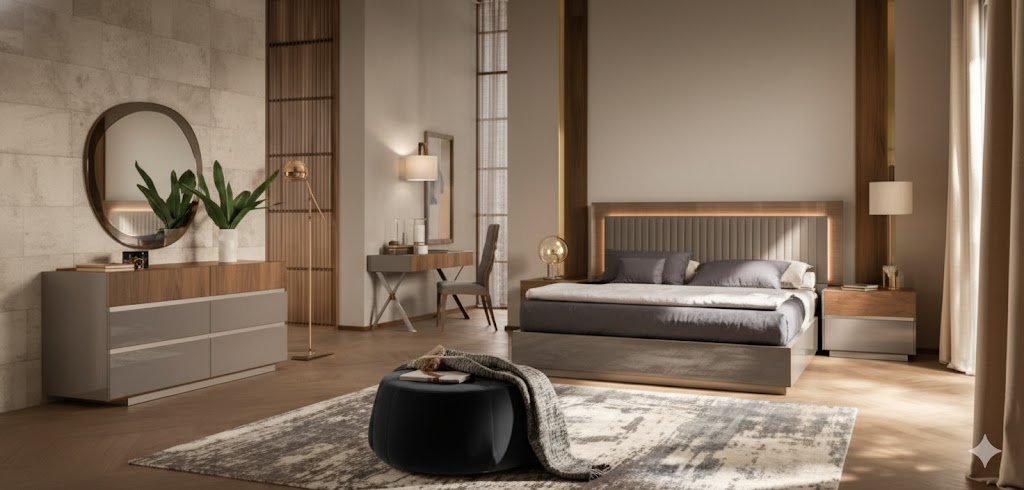
What size bed makes sense for your life? Are you sleeping alone? Sharing with a partner? Have kids who climb in on weekend mornings? Do you sprawl out when you sleep or stay in one position? These factors should guide your size choice. A queen bed works for most couples. A king is nice if you have room and don’t mind spending more on sheets. A full bed is fine for one person but gets cramped if you’re sharing.
Think about your sleeping habits. Do you tend to sit on the edge of the bed a lot? Then you want a frame that can handle that stress on the perimeter. Do you use your bed for more than sleeping, like reading or watching TV? Platform beds with lower profiles might not be comfortable for sitting up. A higher bed with good support makes sense if you spend time propped up against the headboard.
Now you can start looking at actual products. This is where people usually begin, but doing it after you’ve assessed your needs means you’ll make smarter choices. Look at a range of options in your budget. Don’t fixate on the cheapest or most expensive. The sweet spot for quality usually sits somewhere in the middle of the price range.
Pay attention to what each bed is made from. Read the full product descriptions. Look for details about core materials, veneer thickness, weight capacity, and construction methods. Compare these specifics across different beds. A veneer bed with quality particle board and thick veneer might be a better buy than a solid wood bed made from soft pine that dents easily.
Check dimensions carefully. Make sure the bed will fit through your doorways and up any stairs. Measure the ceiling height if you’re looking at beds with tall headboards. I helped a friend move once and we could not get their new bed frame up the narrow staircase. We ended up having to return it. Don’t be that person. Measure everything.
Read customer reviews, but read them smart. Ignore the five star reviews that just say “Great bed!” and the one star reviews that complain about shipping. Look for detailed reviews from people who’ve owned the bed for at least six months. What do they say about durability? Assembly difficulty? Comfort? Real use feedback tells you what life with that bed will actually be like.
Think about your future plans. Are you going to be in this home for a long time? Then investing in a higher quality bed makes sense. Are you likely to move in a year or two? Maybe get something less expensive that’s easier to transport. Will you be keeping this bed for a decade? Spring for better quality. Planning to upgrade in a few years? Mid range quality might be plenty.
Don’t forget about the whole sleep system. The bed frame matters, but so does your mattress, your pillows, your bedding. A great frame with a terrible mattress won’t give you good sleep. Budget for the complete package. Sometimes it makes more sense to get a less expensive frame so you can afford a better mattress. Your body doesn’t care if the frame is solid wood. It cares whether the mattress provides good support.
Consider assembly requirements if the bed ships flat packed. Are you handy with tools? Do you have help? Some beds take two people and three hours to put together. Others snap together in twenty minutes. Read the reviews about assembly before you buy. If everyone says it’s a nightmare to assemble and you’re not good at that kind of thing, maybe pick a different bed.
Look at the finish quality. Does the veneer look good up close? Are edges clean and smooth? Do pieces fit together tightly? These details indicate overall build quality. A bed with sloppy finishing probably has other issues you can’t see. Quality manufacturers take pride in their work and it shows in the details.
Think about longevity. A bed you replace in three years ends up costing more than a better bed that lasts ten years. Do the math on cost per year of use. Sometimes spending more upfront saves money long term. This applies whether you’re buying veneer or solid wood. Cheap furniture rarely proves economical when you factor in replacement costs.
Check what kind of support you need. Platform beds provide support through slats or a solid platform. Traditional bed frames need a box spring. Make sure you understand what you’re getting and what additional pieces you need to buy. Nothing worse than getting your new bed home and realizing you can’t use it without spending another couple hundred dollars on support components.
After you’ve done your homework, trust your judgment. You’ve looked at the features. You’ve read reviews. You’ve measured your space. You understand the materials. Now pick something that fits your needs and budget. Don’t second guess yourself into paralysis. There’s no perfect bed. There’s just the bed that works well for your situation.
And here’s the final piece of advice that nobody wants to hear but everyone needs to. Give your new bed time before you decide if it works for you. It takes a few weeks to adjust to new furniture. What feels strange on day one might feel perfect on day thirty. Don’t panic if your first impression isn’t love at first sight. Use it for a month before you form a final opinion.
The Bottom Line on Veneer Beds
Let’s wrap this up and get real about what we’ve been talking about. Veneer beds get a lot of unfair criticism from people who don’t understand how they’re made or what makes them different from solid wood. Yeah, some veneer beds are low quality junk that won’t last a year. But writing off the entire category because of the worst examples doesn’t make sense. That’s like saying all cars are bad because cheap ones break down.
The advantages of quality veneer beds are real and practical. They use materials more efficiently, which helps the environment and keeps costs down. Modern manufacturing has made them tougher and more reliable than old particle board furniture. They don’t warp like natural wood can. They’re stable and consistent. These aren’t minor benefits. These are legitimate reasons to consider veneer over solid wood.
Does this mean you should always buy veneer? No. Solid wood beds have their place. Some people just prefer the aesthetics of natural wood grain. Others want the traditional appeal of furniture made from trees. If you have the budget and these things matter to you, buy solid wood. There’s nothing wrong with that choice. Just don’t buy solid wood because you think veneer can’t possibly be good enough.
The key is matching the furniture to your needs and situation. A veneer bed might be perfect for a guest room that doesn’t get heavy use. A solid wood bed might make more sense as an heirloom piece you plan to keep for decades. Or maybe a quality veneer bed serves you better than a cheap solid wood bed. The right answer depends on your specific circumstances.
What bugs me about furniture shopping is how much marketing interferes with good decision making. Companies use confusing terminology. They emphasize materials over construction quality. They prey on assumptions people have about what makes furniture valuable. If the industry was more transparent about materials and manufacturing, consumers could make better choices. But that transparency would make it harder to charge premium prices for mediocre furniture, so don’t hold your breath waiting for change.
Your job as a buyer is to cut through the nonsense and focus on what actually matters. Build quality. Appropriate sizing. Fair pricing for what you’re getting. Reputation of the manufacturer. Real user feedback. These factors determine whether you’ll be happy with a bed, not whether it’s made from veneer or solid wood or some combination of engineered materials.
I’ve seen people spend way too much on solid wood beds they thought they needed, only to realize later that a less expensive veneer bed would have worked just fine. I’ve seen others buy the cheapest furniture they could find and regret it when the stuff fell apart. Both mistakes come from not doing enough homework before buying. Learn about furniture construction. Understand your options. Then make an informed choice.
The innovations in bedroom furniture technology have made quality accessible at more price points than ever before. You don’t need to spend thousands to get a bed that will last and look good. You just need to shop smart and avoid the bottom tier products that give cheaper options a bad name. Mid range pricing often delivers the best value if you pick carefully.
So when you’re out there looking for your next bed, keep an open mind. Don’t dismiss veneer beds without giving them fair consideration. Don’t assume solid wood automatically means better quality. Look at each product on its own merits. Check the construction details. Read the reviews. Think about your real needs rather than what you think you’re supposed to want.
And maybe, just maybe, you’ll find that the veneer bed you were ready to skip over is actually the perfect choice for your bedroom. It might save you money that you can spend on a better mattress or nicer bedding. It might hold up better than more expensive alternatives. It might be exactly what you need, even if it wasn’t what you thought you wanted when you started shopping.
The whole point of going through all this information is to make you a smarter furniture buyer. Someone who asks good questions. Someone who understands what they’re looking at. Someone who can tell the difference between quality and marketing hype. Take what you’ve learned here and use it. Your bedroom deserves furniture chosen with care and knowledge, not just whatever looked good in the showroom or had the lowest price tag.
Furniture shopping doesn’t have to be overwhelming. Break it down into steps. Do your research. Trust the process. And when you find the right bed, whether it’s veneer or solid wood or something else entirely, you’ll know you made the choice for the right reasons.

Leave a Comment