
From Practical Necessity to Stunning Decoration
I remember the first time I really paid attention to a fountain. Not just walking past it, but actually stopping to appreciate what it was doing. This wasn’t some grand European plaza or fancy hotel lobby. It was a simple stone fountain in a neighborhood park, water trickling down three tiers into a small pool at the bottom. I’d walked past that thing a hundred times before, but this particular day, I was stressed about work and just needed a minute. Standing there, listening to the water, I felt my shoulders drop. My breathing slowed. The tension started melting away.
That moment got me thinking about fountains in a completely new way. These things have been around forever. Ancient civilizations built them out of pure necessity. People needed water to survive. You couldn’t just turn on a tap. Communities gathered around fountains to collect drinking water, fill containers for cooking, and wash themselves after long days. The fountain was the heartbeat of daily life. No fountain meant no water, and no water meant you were in serious trouble.
But humans are creative creatures. We can’t help but make things beautiful, even when they start out purely functional. The Romans especially understood this. They engineered massive aqueduct systems to bring fresh water into their cities, and where did that water end up? In fountains scattered throughout public spaces. These weren’t just water sources anymore. They became gathering places, social hubs, pieces of civic pride. The wealthy Romans started adding carved figures and decorative stonework. If you had money, your fountain said so. It announced your status to anyone who walked by.
Fast forward through history, and fountains kept evolving. The Renaissance Italians took things to a whole new level. Garden fountains became elaborate works of art featuring mythological figures, multiple tiers, clever hydraulics. The Medici family in Florence basically turned fountain design into a competition. Each wealthy household tried to outdo the others. “Oh, you have a two-tier fountain? Well, mine has four tiers and marble dolphins.” It must have been exhausting keeping up with the Medicis, but it sure produced some beautiful fountains.
The French formal gardens of the 17th and 18th centuries pushed fountain design even further into pure spectacle. Versailles alone has more fountains than most people will see in a lifetime. King Louis XIV used his fountains as propaganda tools. They demonstrated power, control, wealth. Making water flow uphill through engineering genius wasn’t about providing drinking water. It was about showing what was possible when you had unlimited resources and labor. The function had completely shifted from practical to symbolic.
Today, we live in what I’d call the decorative age of fountains. Nobody installs a fountain because they need water. Plumbing handles that just fine. We want fountains for completely different reasons now. They make spaces more beautiful. They create calming atmospheres. They provide relief from heat on scorching summer days. They turn ordinary places into destinations worth visiting. City planners include fountains in public squares. Park designers make them focal points. Shopping centers use them to create pleasant environments. And regular people like you and me bring them into our homes and gardens.
The shift from functional to decorative happened gradually over centuries, but the result is pretty remarkable. Fountains now exist purely for the pleasure they bring. The sight of moving water captures our attention in ways that static objects never can. The sound of flowing water soothes our nervous systems. The cooling effect on hot days makes outdoor spaces more comfortable. These benefits explain why fountains appear everywhere now. Gardens, courtyards, parks, public squares, home patios, and increasingly, indoor living spaces.
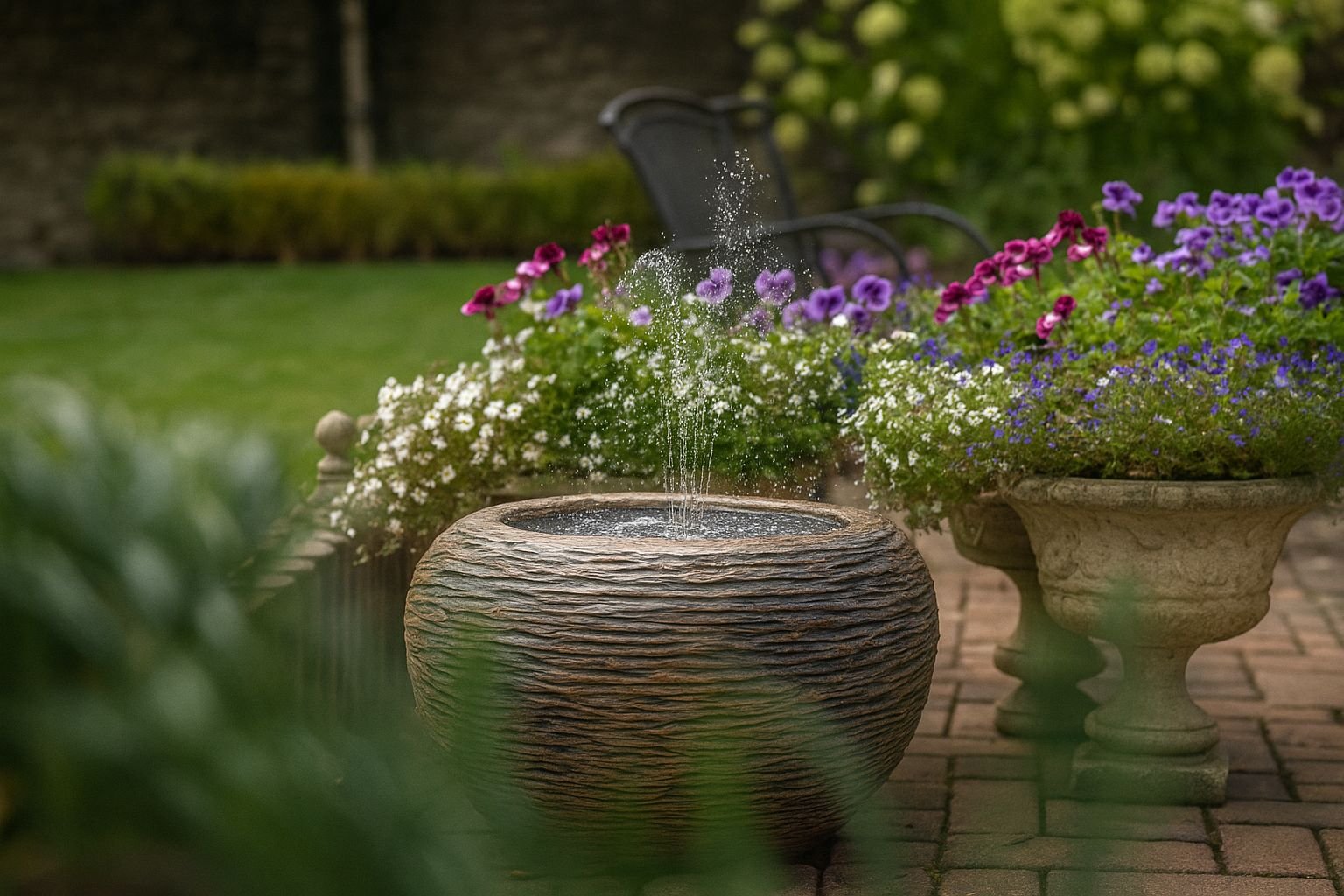
I find it interesting that we’ve come to value the secondary benefits of fountains more than their original purpose. Ancient people would have thought we were crazy. “You have water in pipes throughout your house, but you’re installing a fountain? Why?” The answer reveals something about modern life. We’re stressed, overstimulated, disconnected from nature. Fountains provide a remedy for these problems. They bring natural elements into artificial environments. They create pockets of tranquility in busy, noisy worlds. They give us permission to pause and just be present for a moment.
The decorative and dramatic effects that fountains create are now their primary selling points. Walk into a space with a fountain, and it immediately feels different. More alive. More interesting. More peaceful. The fountain becomes a focal point that draws the eye and creates a sense of place. Architects and designers understand this power. They use fountains to transform bland spaces into memorable ones. That’s why you see them in hotel lobbies, corporate atriums, restaurant courtyards. They’re tools for creating atmosphere and ambiance.
Summer heat relief is another major reason fountains remain popular. When temperatures soar, being near water just feels better. The evaporation cools the surrounding air. The sight and sound of water tricks your brain into feeling cooler even beyond the actual temperature drop. I’ve noticed this effect in my own garden. On brutal July afternoons, the corner with my fountain feels noticeably more comfortable than other parts of the yard. It’s not air conditioning, but it definitely helps. Kids and pets gravitate toward it instinctively, seeking that cooling effect.
The relaxing and cozy ambiance that fountains naturally provide might be their most valuable quality in our current era. We’re surrounded by screens, notifications, deadlines, traffic, noise. Our nervous systems stay on high alert constantly. Fountains offer an antidote. The repetitive sound of flowing water creates what scientists call white noise. It masks jarring sounds and helps our brains settle down. The visual element provides something soothing to focus on. Together, these effects create environments where we can actually relax and recharge. That’s worth a lot in today’s world.
Wall Fountains Bring Magic Into Your Home
So here’s where things get really interesting for those of us who don’t happen to own sprawling estates with acres of gardens. Wall fountains changed everything. Before these came along, bringing a fountain into your home meant sacrificing significant floor space. You needed room for the fountain itself plus clearance around it. Most people simply didn’t have that kind of square footage to spare, especially in modern homes and apartments where every inch counts.
Wall fountains solve this problem with elegant simplicity. They mount directly on your wall, taking up exactly zero floor space. Brilliant, right? I discovered this solution when I was trying to figure out how to bring water feature benefits into my fairly small house. I’d been to a friend’s place where they had this gorgeous wall fountain in their entryway. The moment I walked in, I felt the difference. The space felt calmer, more welcoming, more intentional. The gentle sound of trickling water set a tone for the entire house.
That visit inspired me to research wall fountains for my own home. I learned that these things come in every imaginable style, size, and material. You can get sleek modern designs with water flowing down glass or stainless steel. Natural stone options that look like pieces of mountainside mounted on your wall. Copper fountains that develop beautiful patinas over time. Ceramic designs with artistic flourishes. The variety is genuinely impressive and means there’s probably a wall fountain that fits your aesthetic, whatever that might be.
The functional benefits are the same as outdoor fountains, just adapted for indoor use. You get the visual appeal of moving water. You get the soothing sound that masks household noise and creates peaceful ambiance. You get a conversation piece that guests always notice and comment on. But you keep all your floor space available for furniture and movement. For people living in apartments, condos, townhouses, or just smaller homes, this trade-off is perfect.
Installation turned out to be easier than I expected. I’m not particularly handy. My tool collection consists of a hammer, two screwdrivers, and a wrench I inherited from my grandfather. But I managed to hang my wall fountain with just some basic instructions and a YouTube tutorial. The key is finding studs in your wall for secure mounting. Most wall fountains come with brackets that you screw into the studs. Then you hang the fountain on the brackets, plug it in, fill the reservoir with water, and you’re done. The whole process took maybe an hour, including the time I spent arguing with my drill.
Wall water fountains bring decorative and dramatic effects right into your living space. They transform boring walls into dynamic features. A plain painted wall is just background. Add a fountain, and suddenly that wall becomes a focal point. Your eye gets drawn to the movement and sparkle of water. The texture and dimension create visual interest that flat walls simply can’t provide. I’ve noticed this effect in my own home. The wall where my fountain hangs used to just hold a generic painting I bought at a home goods store. Now it’s the first thing people see when they enter the room.
The ambiance shift is immediate and powerful. Before I had my fountain, my living room felt a bit cold and echoey. Hard floors, minimal soft furnishings, lots of hard surfaces. Sound bounced around in ways that sometimes felt harsh. The fountain changed that completely. The flowing water creates a baseline sound that somehow makes everything else feel softer. It’s not loud. You can easily have conversations over it. But it’s present enough to absorb the acoustic harshness and create a more comfortable sound environment.
These fountains naturally imbibe a more relaxing atmosphere into homes. I know “imbibe” might sound like a fancy word, but it really describes what happens. The fountain doesn’t just add relaxation. It infuses the entire space with a calmer energy. You feel it the moment you walk in. Your breathing automatically slows. Your shoulders drop. The mental chatter quiets down a bit. This isn’t placebo effect or imagination. Moving water genuinely affects our nervous systems in measurable ways. Scientists have documented lower cortisol levels, reduced heart rates, and decreased anxiety markers in people exposed to water sounds.
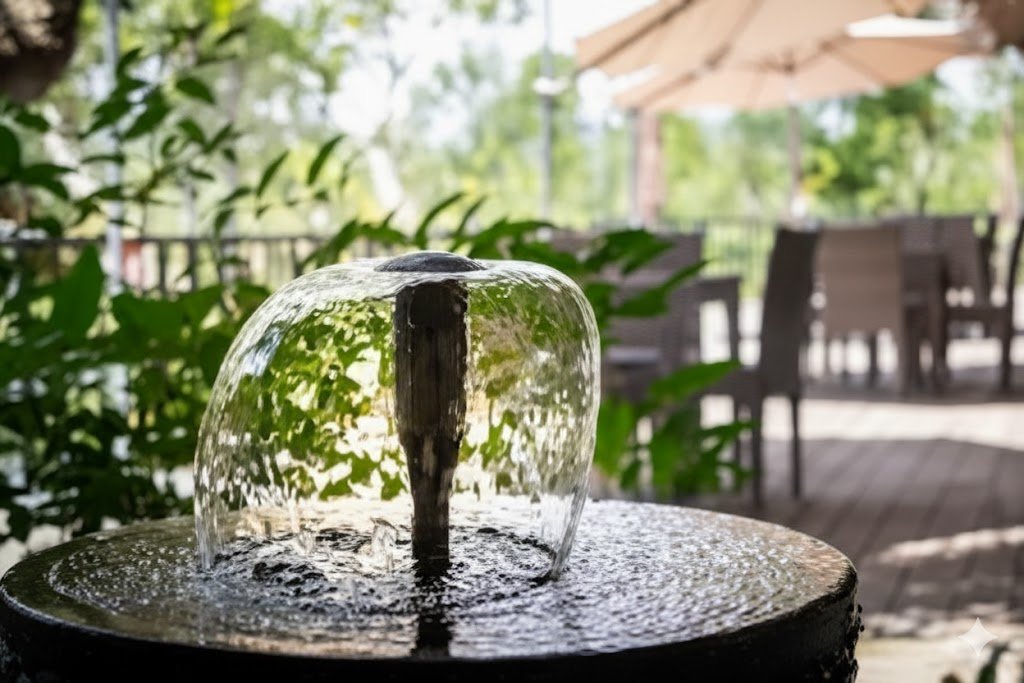
Wall fountains work in virtually any room, though some spaces benefit more than others. Living rooms are obvious choices. Entryways create wonderful first impressions with a wall fountain greeting guests. Home offices benefit from the focus-supporting white noise. Bedrooms can use gentler fountains for sleep support. I’ve even seen bathrooms with wall fountains that turn ordinary spaces into spa-like retreats. The versatility means you’re not limited to one specific installation location. You can put these things almost anywhere you want the benefits they provide.
The cozy factor cannot be overstated. Modern homes often feel sterile and disconnected from nature. We spend our lives in climate-controlled boxes staring at screens. This isn’t natural for humans. We evolved outdoors around natural elements like water, fire, plants, earth. Bringing a water feature indoors reconnects us to those elemental experiences in small but meaningful ways. Your home starts feeling less like a box and more like a sanctuary. That shift in how your space feels affects your overall wellbeing more than you might expect.
Transforming Your Living Room with Wall Fountains
Let me tell you about the time I redesigned my living room. I’d painted the walls, bought new furniture, updated the lighting, arranged everything according to design principles I found online. The room looked better than before. But something still felt off. It looked nice but didn’t feel quite right. I couldn’t put my finger on the problem until a friend visited and said, “This room needs something alive.” She was right. Everything was static. Nothing moved. Nothing made sound. It felt more like a staged room in a furniture store than a living space.
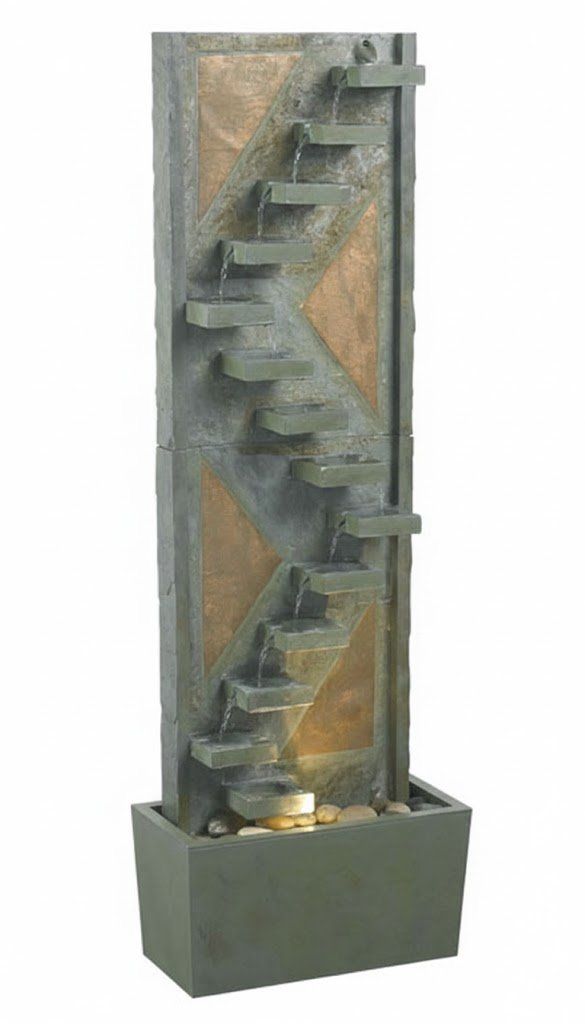
That’s when I started seriously considering a wall fountain for the living room. I’d been thinking about it for a while but kept talking myself out of it. “It’s too extravagant.” “It’ll be too much maintenance.” “What if I don’t like it?” But my friend’s comment pushed me over the edge. I started shopping around, looking at different styles and sizes. The perfect option presented itself after a few weeks of searching. A natural slate fountain with water cascading down stacked stone. Not too modern, not too traditional. Just right.
Installing that fountain completed my living room in a way nothing else had. The transformation was immediate and dramatic. Suddenly, the room had a focal point that made sense. Your eyes naturally went to the fountain when you entered. But unlike a television or a fireplace that demands attention, the fountain invited attention without insisting on it. You could look at it or ignore it. Either way, it improved the space just by being there. The gentle sound filled the room with something other than silence or electronic noise.
Wall water fountains possess this amazing ability to transform rooms into more inviting spaces. Before my fountain, my living room was a place to pass through or sit in front of the TV. After the fountain, it became a destination. A place where I actually wanted to spend time. I found myself choosing to read in there instead of in bed. Having friends over for conversation instead of just for watching shows. The fountain created an atmosphere that encouraged lingering, relaxing, connecting.
The transformation goes beyond just aesthetics. Yes, the fountain looks beautiful. Water catching light, creating patterns, flowing in constantly changing ways. That’s all visually appealing. But the real magic happens in how the fountain changes the room’s energy. Rooms without movement feel dead. Everything sits there looking exactly the same hour after hour, day after day. A fountain brings life into the space. Something moves. Something changes. The room feels inhabited even when you’re not in it.
Wall fountains make rooms more noticeable in the best possible way. Not noticeable in a “look how hard I’m trying” way. Noticeable in a “something special is happening here” way. Guests always comment on my fountain. Every single person who visits my house mentions it within five minutes of arriving. They ask where I got it, how much it cost, how hard it was to install. The fountain gives them something to talk about beyond weather and traffic. It breaks the ice naturally and creates an easy conversation starter.
The natural beauty of these fountains is hard to overstate. We’re talking about water flowing over stone or metal or glass. These are elemental materials arranged to mimic what happens in nature. A miniature waterfall in your living room. A tiny slice of a mountain stream. Our brains recognize these patterns and respond positively. Even though you intellectually know this is an artificial creation, your nervous system reacts as if you’re near a natural water source. That triggers relaxation responses that are hardwired into our biology from millions of years of evolution.
Charming appeal describes the effect perfectly. “Charm” is one of those words that’s hard to define but you know it when you see it. A charming space makes you smile. It has character and personality. It feels warm and welcoming. Wall fountains add charm effortlessly. They say, “Someone lives here who cares about beauty and tranquility.” They elevate the entire room without trying too hard or being pretentious about it.
Living rooms benefit especially from wall fountains because these are our primary gathering spaces. This is where families spend time together. Where friends visit. Where we relax after work. Where we entertain guests. The living room sets the tone for your entire home. Get this space right, and everything else falls into place. A fountain helps you get it right by providing a focal point that’s both beautiful and functional.
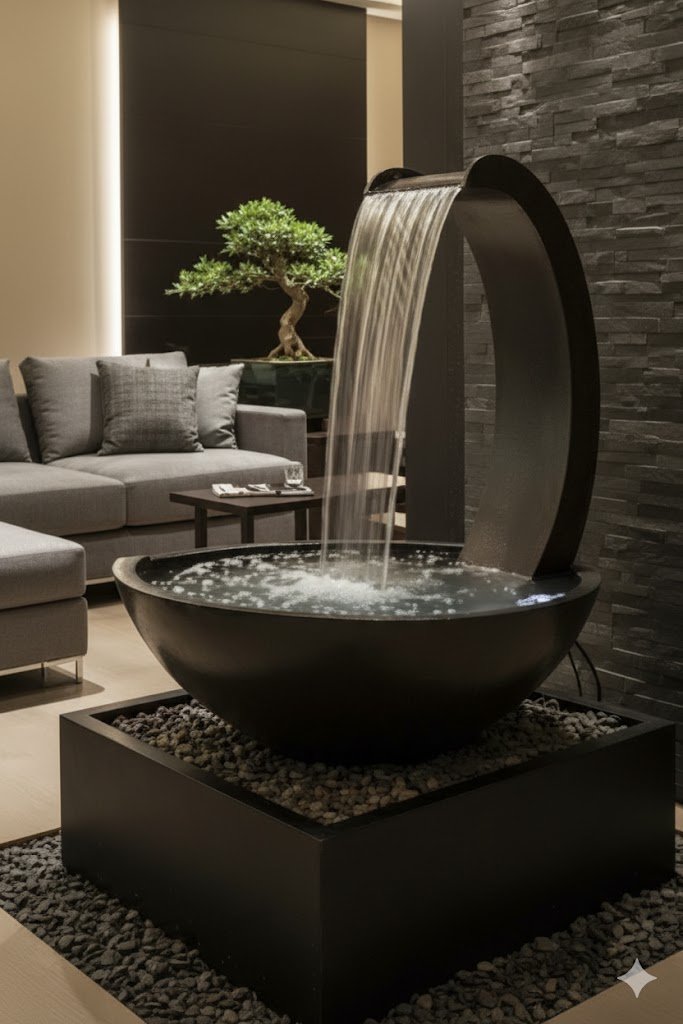
Complementing existing furniture is easier than you might think. I worried my fountain wouldn’t match my mid-century modern furniture. Turns out, fountains are pretty versatile. The natural elements of water and stone go with almost any design style. My slate fountain actually makes my furniture look more intentional and curated. It provides context and grounding. The organic textures of the stone balance out the clean lines of my modern furniture. Together, they create a more interesting and layered look than either would achieve alone.
The ideal placement for living room fountains depends on your specific layout. I positioned mine on the wall opposite my main seating area. This means I can see and hear it from the couch without it being directly in my line of sight when I’m watching TV. It’s present but not intrusive. Some people prefer their fountains on side walls where they’re visible from multiple angles. Others put them near entryways so the fountain greets you when you walk in. There’s no single right answer. Think about sightlines, traffic flow, and where you spend time in the room.
The Sensory Experience of Wall Fountains
Close your eyes for a second and imagine standing next to a mountain stream. You hear the water tumbling over rocks. You see sunlight sparkling on the surface. You feel cool mist on your face. Maybe you catch the scent of wet stone and clean water. That full sensory experience is what humans evolved around. Our ancestors survived by staying near reliable water sources. Those sensory cues told them, “You’re safe. There’s water here. You can rest.” Fast forward thousands of years, and those same cues still affect us just as powerfully.
Wall fountains recreate key elements of that natural experience inside your home. They won’t replicate everything, obviously. But they capture enough of the essential sensory components to trigger similar responses in your nervous system. The sound is probably the most powerful element. Water flowing and splashing creates a complex audio signature that our brains find inherently soothing. It’s irregular enough to be interesting but repetitive enough to be calming. This combination makes it perfect background sound for living spaces.
I’ve spent embarrassing amounts of time just watching my fountain. There’s something mesmerizing about water in motion. Each moment is slightly different from the last. The patterns shift. Light catches the water at different angles. Small variations in flow create constantly changing visual effects. It’s like having a living painting on your wall. Except instead of staying static, it’s always doing something new. My cat is equally fascinated. She sits and stares at the fountain for minutes at a time. Maybe she’s got the right idea about how to spend an afternoon.
Wall fountains replicate the way water cascades naturally, and that replication matters. When water flows down rock surfaces, it doesn’t flow smoothly and evenly. It finds paths of least resistance. It creates little channels and rivulets. It pools and drips and splashes. These irregular patterns are what make natural waterfalls so captivating. Good wall fountains mimic these patterns. The water doesn’t just sheet down in a boring, uniform way. It moves organically, creating the illusion of a natural water feature even though you’re inside looking at a manufactured product.
The visual appeal works on multiple levels. There’s the overall composition of the fountain itself. The materials, the shape, the proportions. Then there’s the water itself in motion, which adds dynamic visual interest. But there’s also the way light interacts with moving water. If your fountain has lighting, the effects multiply at night. The water glows. Shadows play on the wall behind it. The entire corner of the room takes on a different character after dark. I’ve found that my fountain essentially gives me two different pieces. One for daytime and one for evening. Both beautiful but in distinctly different ways.
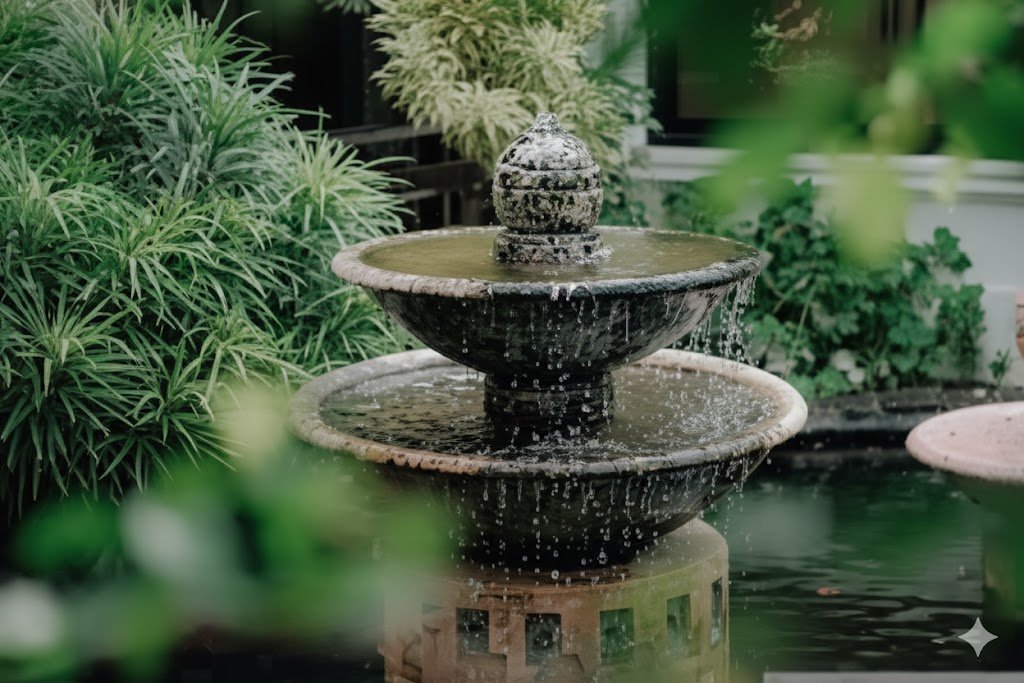
The soothing natural sound might be the most valuable benefit of wall fountains. I work from home, and concentration can be a real challenge. My neighborhood isn’t particularly noisy, but there are constant little sounds that pull my attention. A dog barking. A car door slamming. The garbage truck making its rounds. Before I had my fountain, these noises would yank me out of focus every few minutes. Now the fountain creates a consistent audio baseline that masks most of those interruptions. My brain has learned to tune out the fountain sound while simultaneously filtering out other noises. The result is I can actually concentrate for extended periods without constant distraction.
Relaxation benefits extend to both mind and body. Mental relaxation is obvious. The fountain gives your mind something peaceful to focus on. When anxiety or stress start building, you can look at the fountain and listen to the water for a minute. Let your thoughts settle. Come back to the present moment. Physical relaxation is subtler but equally real. Being around water sounds lowers your heart rate and blood pressure. Your breathing slows and deepens. Muscle tension decreases. These aren’t subjective feelings. They’re measurable physiological changes that happen automatically when you’re exposed to water sounds.
The cooling effect in summer surprised me. I didn’t expect a small indoor fountain to make any noticeable difference in temperature. But it does. The water evaporating from the fountain actually lowers the air temperature in the immediate area. It’s not dramatic. You won’t be able to turn off your air conditioning. But on moderately warm days, the fountain makes the room noticeably more comfortable. There’s also a psychological component. Seeing and hearing water makes you feel cooler even beyond any actual temperature change. Your brain associates water with coolness and comfort, so just being around it affects your perception.
The tactile experience of running your fingers through the flowing water is oddly satisfying. I can’t resist doing this when I walk past my fountain. The water is cool against your skin. The sensation of interrupting the flow, feeling it part around your hand, is pleasantly grounding. It’s a tiny moment of physical sensation in a world where most of our experiences happen through screens. Obviously, you shouldn’t do this constantly or you’ll mess up the water flow and introduce oils from your skin. But occasionally? Yeah, it feels good. It’s real and immediate in a way that’s increasingly rare in modern life.
Choosing From the Amazing Variety Available
Shopping for my first wall fountain was overwhelming. I thought there’d be maybe a couple dozen options. Pick a size, pick a style, done. I was completely wrong. There are literally hundreds of different wall fountain designs available. Probably thousands if you count custom options. The variety is both exciting and paralyzing. Where do you even start when faced with that many choices?
I started by narrowing down the basic categories. Wall fountains come in different material families. Stone and slate give you that natural, organic look. Copper develops a beautiful patina over time. Stainless steel and aluminum offer modern, sleek aesthetics. Glass creates elegant, contemporary effects. Ceramic opens up artistic possibilities with colors and textures. Each material family has its own character and maintenance requirements. Stone feels timeless but can be heavy. Copper evolves beautifully but you can’t control exactly how it ages. Metal stays consistent but might feel cold. Glass looks refined but shows water spots. Ceramic is artistic but can be fragile.
Shapes and designs vary wildly too. You can get rectangular fountains that look like framed artwork. Circular designs that create mandala-like patterns. Irregular natural shapes that look like actual pieces of cliff face. Sculptural designs that prioritize artistic expression. Abstract geometric patterns. Traditional designs with classic decorative elements. The shape you choose affects the overall look and how the water flows. Rectangular fountains create orderly, controlled flow patterns. Irregular shapes produce more organic, unpredictable movement.
Size options range from tiny fountains barely bigger than a picture frame to massive installations covering entire walls. I measured my available wall space carefully before shopping. You need to know your dimensions. A fountain that looks modest in a warehouse or on a website might dominate your actual room. Or a fountain that seems substantial online might look puny on your big blank wall. Physical scale is tricky to judge. I ended up using painter’s tape to mark out different size options on my wall. This helped me visualize the actual proportions better than just imagining it.
Materials matter more than I initially realized. Natural stone fountains weigh quite a bit. Mine weighs about 60 pounds. You need to make sure your wall can support that weight and that you mount it securely to studs. Lighter materials like aluminum or resin are easier to hang but might not have the same substantial presence. The material also affects the sound the fountain produces. Water flowing over rough stone makes a different sound than water flowing down smooth glass. Both are pleasant but distinctly different.
Each material and design gives out a unique effect. I spent way too much time watching video demonstrations of different fountains, trying to understand the specific qualities of each. Stone fountains produce earthy, natural vibes. Copper fountains feel warm and evolving. Glass fountains create modern, polished impressions. The lighting in the videos often made them look different than they would in real rooms, which complicated things. I learned to look past the staged lighting and focus on the fundamental qualities of the fountain itself.
Installation difficulty varies depending on the fountain. Most wall fountains are relatively straightforward to install if you have basic DIY skills. Some require more complex mounting systems or professional installation. The product descriptions usually indicate difficulty level. I deliberately chose something in the easy-to-moderate range for my first fountain. I wanted to prove to myself that I could handle it without calling for help. Success was empowering. Now I feel confident I could install larger or more complex fountains if I wanted to.
Maintenance requirements differ based on design and materials. Some fountains need frequent attention. Others are remarkably low maintenance. I wanted something on the easier end of the spectrum. My fountain needs water added weekly, a thorough cleaning every few months, and occasional pump maintenance. That’s manageable. More complex fountains with intricate designs or lots of small channels require more frequent cleaning to prevent buildup and keep water flowing properly.
Table top water fountains offer another option worth considering. These smaller units sit on furniture instead of hanging on walls. They provide similar benefits in a more flexible, portable format. I have a tabletop fountain on my desk at work. It’s not as dramatic as my wall fountain at home, but it serves the same basic purpose. The gentle sound helps me focus. The moving water gives my eyes something restful to look at during screen breaks. And it was cheap enough that I didn’t agonize over the purchase. Maybe thirty bucks online.
Dining room tables can benefit particularly from tabletop fountains. Think about it. A traditional table centerpiece just sits there. Flowers die after a week. Candles only work when you light them. A tabletop fountain provides ongoing interest and ambiance during meals. The sound creates a pleasant acoustic environment for conversation. It’s unexpected and memorable. I went to a dinner party where the host had a fountain on the table, and everyone talked about it. It became part of the evening’s charm.
The alluring and relaxing feel that tabletop fountains create works in smaller spaces too. A bedroom nightstand. A bathroom vanity. A kitchen counter. An office desk. These little fountains bring water feature benefits to spaces where wall fountains won’t fit or aren’t practical. They’re perfect for renters who can’t or don’t want to drill into walls. They’re great starter fountains if you’re not sure whether you’ll enjoy living with one. And they make thoughtful gifts for people who appreciate unique home décor items.
Wall Fountains as Interior Design Punctuation
I’ve come to think of my wall fountain as the punctuation mark in my home’s design sentence. You know how a period or exclamation point completes a sentence and clarifies its meaning? That’s what the fountain does for my living room. All the other design elements are like words strung together. The furniture, the colors, the lighting, the artwork. They create a message about the space. But the fountain provides the punctuation. It says, “This sentence is complete. This room is finished. Pay attention to what’s here.”
Punctuating home interior design with a fountain works because fountains occupy a unique category. They’re not furniture in the traditional sense. They’re not purely decorative like artwork. They’re not functional in the way a lamp or table is functional. They exist in this interesting in-between space. Functional art, maybe? Or artistic functionality? Whatever you call it, they fill a role that other design elements can’t quite match.
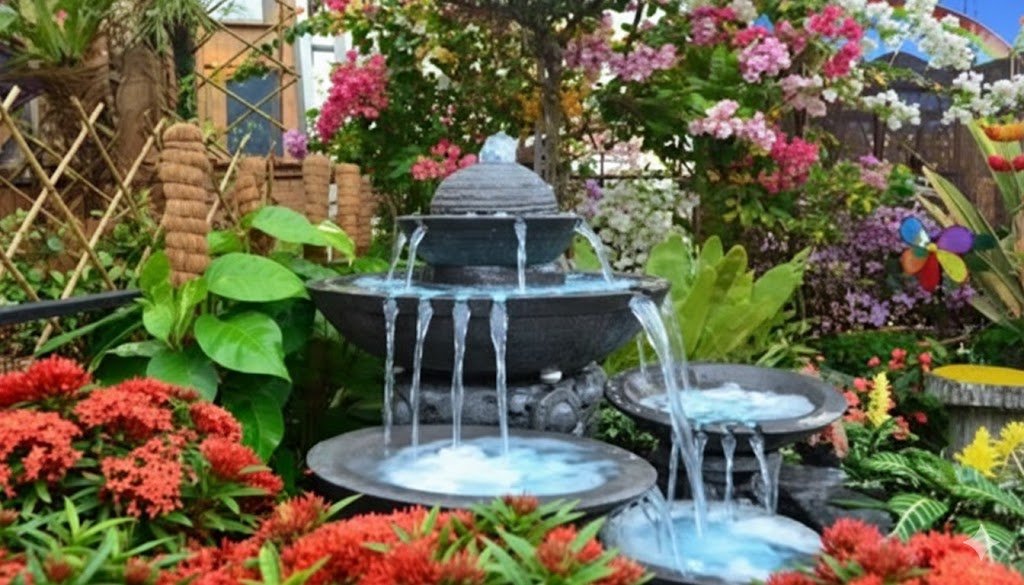
Wall water fountains make great choices for décor in living rooms specifically because living rooms need something special. These are our primary living spaces. Where we relax, entertain, gather with family. The design needs to support all these different activities without favoring one over the others. A fountain manages this balancing act beautifully. It’s interesting enough to spark conversation when guests visit. Calming enough to support quiet reading or relaxation. Present enough to create ambiance without being intrusive or demanding attention.
They’re great to look at, which sounds simple but matters quite a bit. We spend a lot of time in our living rooms. If the décor is boring, we get tired of it quickly. If it’s too busy or attention-grabbing, it becomes exhausting. Fountains strike a nice balance. They’re visually interesting without being overwhelming. You can look at your fountain and discover new details even after living with it for years. The way light hits the water at different times of day. Subtle variations in how water flows. These ongoing discoveries keep the fountain feeling fresh.
The way fountains replicate natural waterfalls matters for this visual appeal. When you see water cascading down rock surfaces, your brain immediately recognizes the pattern. “That’s a waterfall,” it thinks, even though you’re inside looking at a wall-mounted product. This recognition connects you to nature in a small but meaningful way. We’re wired to find natural patterns beautiful. Rivers, mountains, trees, clouds. These shapes and movements resonate with us deeply. A fountain taps into those natural aesthetics and brings them indoors.
The soothing sound component can’t be ignored when discussing décor. Most décor is silent. Paintings don’t make noise. Furniture sits quietly. Rugs, curtains, decorative objects—all silent. A fountain adds an audio dimension to your design that other elements can’t provide. This matters more than you might expect. Rooms with pleasant ambient sound feel more comfortable than silent rooms. The fountain fills the silence without using electronic speakers or recordings. It’s analog sound from a physical source. That authenticity registers subconsciously.
Relaxation for both mind and body should be a goal of living room design. What’s the point of a living room if it doesn’t help you relax and recharge? Too many living rooms prioritize appearance over function. They look great in photos but don’t actually feel good to spend time in. Hard surfaces, no softness, poor acoustic qualities. A fountain addresses the functional side of the equation. It makes the room feel better to be in, not just look better in photos.
Tabletop fountains deserve another mention here because they offer similar benefits on a smaller scale. Not everyone has wall space available. Not everyone wants to commit to a permanent installation. Tabletop versions provide flexibility. You can move them around, try them in different locations, take them with you when you move. I’ve moved my little desk fountain three times. From home office to bedroom nightstand to kitchen counter. Each location benefited from it in different ways.
The peaceful appeal that these fountains add to homes is their ultimate contribution. Peace is increasingly rare and valuable. We’re bombarded with stimulation, noise, demands on our attention. Our homes should be refuges from all that chaos. Sanctuaries where we can decompress and recover. Fountains help create that sanctuary feeling. They signal to your nervous system, “You’re safe here. You can relax now. It’s okay to let your guard down.” That signal matters more than we often acknowledge.
Wide selection of designs, styles, and sizes means there’s probably a perfect fountain for your specific situation. Your aesthetic preferences, your space constraints, your budget, your maintenance tolerance. All of these factors influence which fountain will work best for you. The variety can feel overwhelming when you start shopping. But it’s ultimately a good thing. It means you’re not limited to a one-size-fits-all solution. You can find something that genuinely fits your needs and preferences rather than settling for close enough.
Wall fountains and tabletop fountains have this distinct natural ability to transform spaces. Not just decorate them or fill them, but actually change their fundamental character. A room with a fountain feels different from the same room without one. The difference is subtle but pervasive. It affects mood, stress levels, how much time you want to spend there, how comfortable you feel. These benefits justify the cost and effort of adding a fountain to your home. You’re not just buying a decorative object. You’re investing in daily quality of life improvements that compound over months and years.

Leave a Comment