
From Ancient Springs to Architectural Showpieces
You know what’s funny? We take fountains for granted now, but these water features have been around longer than your great-great-great-grandparents could even imagine. I’m talking thousands of years here. When I first started learning about fountain history, I thought they’d always been those fancy decorative pieces you see in European gardens or shopping malls. Boy, was I wrong.
Let me take you back to the beginning. Picture ancient civilizations where running water wasn’t something you got by turning a handle. People needed water to survive, plain and simple. They couldn’t just walk to their kitchen sink. The earliest fountains weren’t about looking pretty at all. They were lifelines. Communities built them near natural springs or used gravity-fed systems to bring water from higher ground. These structures served one purpose: get clean water to people who needed it.
The Romans were absolute geniuses with this stuff. They built aqueducts that stretched for miles, bringing fresh water into their cities. At the end of these engineering marvels, you’d find public fountains where citizens would gather to fill their vessels. These weren’t Instagram-worthy photo ops. They were gathering spots where people would chat, share news, and yes, occasionally gossip about who was dating whom. The social aspect was just as important as the water itself.
Greek cities had their own approach. They created elaborate fountain houses called nymphaeums, named after the water nymphs of mythology. Now here’s where things get interesting. Even though these fountains served a practical purpose, the Greeks couldn’t help themselves. They started adding decorative elements. A carved lion’s head here, some ornate columns there. Humans have always had this drive to make functional things beautiful. It’s like we can’t help ourselves.
Fast forward to the Middle Ages, and fountains took on new meaning in different cultures. Islamic gardens featured fountains as central elements, representing paradise on earth. The sound of trickling water in a courtyard garden wasn’t just pleasant. It symbolized life itself in regions where water was scarce. Meanwhile, European monasteries built fountains in their cloisters where monks would wash before prayers. The spiritual and practical merged together.
Then came the Renaissance, and oh boy, did things change. The Italians went absolutely wild with fountain design. Suddenly, fountains weren’t just about water access anymore. They became statements of wealth, power, and artistic vision. The Trevi Fountain in Rome? That’s not a water source. That’s a theatrical performance in stone and water. The Fountain of Neptune in Florence? Pure swagger in fountain form.
French royalty saw what the Italians were doing and said, “Hold my wine.” The gardens at Versailles feature hundreds of fountains, each more elaborate than the last. These weren’t serving any practical purpose beyond showing off. Louis XIV wanted everyone to know he had the power to make water dance on command. And dance it did, with complex hydraulic systems that must have required armies of engineers to maintain.
By the time the Industrial Revolution rolled around, cities were installing modern plumbing systems. Suddenly, people didn’t need public fountains for drinking water anymore. So what happened to all those fountains? They evolved. Cities kept them around because people loved them. They added beauty to public spaces. They gave children somewhere to play on hot days. They became landmarks where people would arrange to meet.
The transformation was complete. Fountains had gone from necessity to luxury, from utility to art. What started as a hole in the ground where water collected had become a form of expression. Architects and artists could now design fountains with the sole purpose of creating something beautiful or meaningful. No longer constrained by the need to serve a functional purpose, fountain design exploded into countless styles and forms.
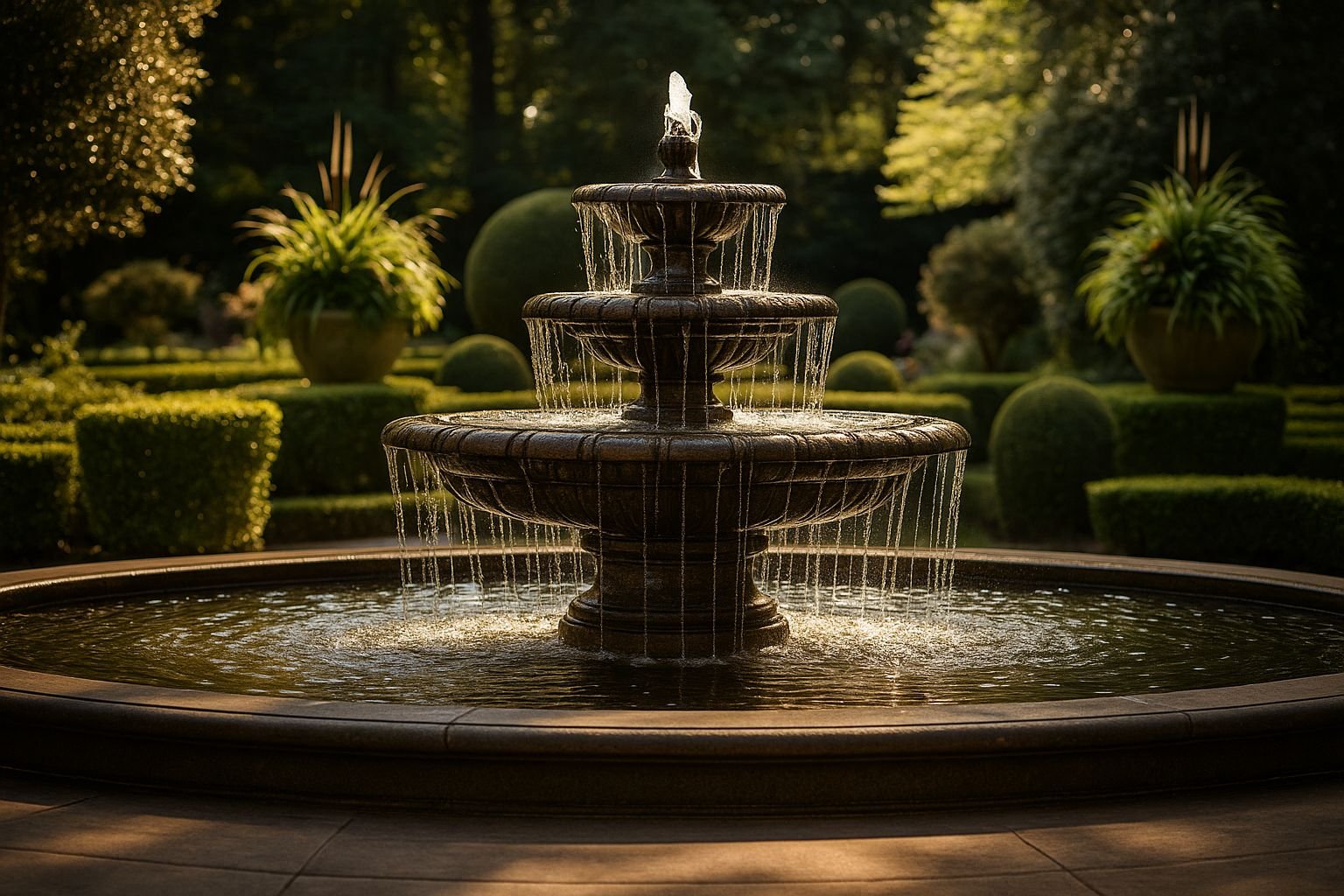
Today, when we look at historical fountains in old city squares or palace gardens, we’re seeing the end result of thousands of years of evolution. Each fountain tells a story about the people who built it, their values, their technology, and their dreams. That simple basin collecting spring water has become a canvas for human creativity. The journey from function to form, from necessity to artistry, reflects something deep about human nature. We don’t just want to survive. We want to surround ourselves with beauty while we do it.
Why Modern Cities and Homeowners Can’t Get Enough of Fountains
Walk through any major city today and count how many fountains you spot. Go ahead, I’ll wait. You’ll probably lose count before you make it three blocks. From tiny courtyard features to massive public installations, fountains have become as common as park benches. But why? What makes these water features so popular in our modern world?
Let’s start with the obvious: they look amazing. There’s something about moving water that catches the human eye in a way that static decorations simply can’t match. I’ve watched people in parks who were rushing somewhere suddenly stop when they hear a fountain. They pause, look, maybe even sit down for a minute. Water has this magnetic quality. It draws us in without trying.
Cities love fountains for practical reasons too. Urban planners discovered something neat: fountains can change how people feel about a space. Drop a fountain into a concrete plaza, and suddenly that space feels more welcoming. People linger instead of just passing through. They bring their lunch. They meet friends there. The fountain becomes an anchor point for community life. I’ve seen this happen in my own city, where a previously empty square became a popular hangout spot after they installed a modern fountain feature.
The cooling effect is real, not just psychological. On a blazing summer day, the mist and spray from a fountain can drop the temperature in the immediate area by several degrees. Cities dealing with urban heat islands have figured this out. Water features aren’t just decorative anymore. They’re part of climate adaptation strategies. Kids splash around in fountain spray zones while parents sit nearby in the cooler air. Everyone wins.
Parks and public squares use fountains as focal points. You know how some spaces just feel complete while others feel like something’s missing? A well-placed fountain often makes that difference. It gives the eye somewhere to land. It provides a sense of destination. When you tell someone to meet you at the park, “by the fountain” narrows it down perfectly. These features serve as wayfinding tools without anyone even thinking about it.
Now let’s talk about homes and private gardens. The fountain trend has exploded in residential landscaping over the past few decades. People want their yards to feel like retreats from the busy world. A fountain does something magical to outdoor space. It transforms a basic patio into what feels like a resort. I’m not exaggerating. The difference is night and day.
Homeowners I’ve talked to say the same thing over and over: the sound matters as much as the look. That gentle trickling, splashing, or burbling noise creates an audio buffer. It masks less pleasant sounds like traffic noise or loud neighbors. You’re sitting in your backyard trying to relax, but all you hear are cars and sirens. Add a fountain, and suddenly those sounds fade into the background. The water noise isn’t loud or intrusive. It’s just enough to create a peaceful audio environment.
There’s science behind why water sounds relax us. Our brains are wired to find these sounds soothing. Think about it from an evolutionary perspective. The sound of running water meant fresh, clean water was nearby. Safe to drink. Good place to camp. Our ancestors survived by moving toward these sounds. We still carry that wiring in our modern brains. When we hear water sounds, something deep inside us relaxes and says, “You’re safe. You’ve found water.”
Garden designers use fountains as tools to create outdoor rooms. A fountain can mark the transition from one area to another. It can draw visitors deeper into a garden. It can serve as the centerpiece that pulls an entire landscape design together. Without that water element, the same garden might feel scattered or incomplete. The fountain provides structure and purpose to the space around it.
Commercial properties jumped on this bandwagon years ago. Hotels, restaurants, shopping centers, office building lobbies. They all feature fountains. Why? Because they create an experience. They signal that a place is special, worth visiting, worth spending time in. A fountain at the entrance of a building makes a statement about quality and attention to detail. It tells visitors that the people who own this space care about creating beauty.
Residential communities use fountains at entrances and common areas for similar reasons. That neighborhood with the nice fountain at the entrance? Property values there are probably higher than the identical neighborhood two miles away without one. I’m not saying a fountain is the only factor, but it contributes to the overall impression of a well-maintained, desirable place to live.
The versatility of modern fountain design means there’s a style for every setting. Contemporary minimalist fountains with clean lines fit modern architecture. Classical tiered fountains complement traditional homes. Natural rock fountains work in rustic or woodland settings. Wall-mounted fountains suit urban spaces with limited square footage. The options have become endless.
Maintenance technology has improved dramatically too. Modern fountain pumps are efficient and reliable. Materials resist algae growth better. Automated water treatment systems keep the water clean with minimal effort. Twenty years ago, maintaining a fountain meant constant attention and frequent repairs. Today, many fountains need little more than occasional cleaning and seasonal care. This ease of maintenance has made fountains accessible to people who want the beauty without becoming full-time fountain keepers.
We’ve also gotten smarter about water conservation. Recirculating systems mean fountains use the same water over and over. They lose some water to evaporation, sure, but the amount is often less than you’d use watering the same square footage of lawn. Some modern fountains even collect rainwater or gray water. The fountain you see isn’t wasting a precious resource. It’s showcasing it in a beautiful way.
The psychological benefits keep coming up in research about outdoor spaces and mental health. Access to water features reduces stress. It lowers blood pressure. It helps people focus and think more clearly. Companies are putting fountains in their courtyards and finding that employees actually use those spaces during breaks. They come back refreshed instead of just caffeinated.
So when you see fountains everywhere, it’s not random. It’s not just fashion. There are solid reasons why these water features have become fixtures of modern life. They serve multiple purposes at once: aesthetic, practical, psychological, and social. They’ve earned their place in our cities and our gardens.
Bringing the Magic Inside Your Home with Wall Fountains
Here’s where things get really interesting. For most of history, fountains stayed outside. Obviously, right? You didn’t want water features in your living room with ancient plumbing. But modern engineering changed the game completely. We figured out how to bring the beauty and tranquility of fountains indoors without flooding our houses. Enter the wall fountain.
I remember the first time I saw a wall fountain in someone’s home. My jaw actually dropped. There it was, mounted on the living room wall, water cascading down a slate surface. The whole room felt different. Calmer. More sophisticated. More alive. I didn’t know such things existed outside of fancy hotels or corporate lobbies. But homeowners have caught on, and wall fountains have become one of the most popular interior design trends.
Wall fountains solve a problem that kept outdoor fountains outside for so long: space. Not everyone has a sprawling garden or even a decent-sized patio. But everyone has walls. These vertical water features take up minimal floor space while delivering maximum visual and auditory impact. You mount them on a wall just like you would a large piece of art. The footprint is tiny, but the presence is substantial.
The variety of designs available now would blow your mind. Sleek contemporary models with stainless steel and glass fit modern homes perfectly. Traditional copper or bronze designs complement classic décor. Natural stone options work in rustic or transitional spaces. There are artistic designs with sculptures integrated into the water flow. Abstract geometric patterns. Minimalist sheets of water on smooth surfaces. Whatever your style, there’s a wall fountain that fits.
What makes these indoor fountains work so well is the self-contained nature of modern designs. The water recirculates through a pump system hidden in the base or behind the wall panel. You fill a reservoir, plug the pump into a standard outlet, and you’re done. No plumbing required. No risk of water damage when properly installed and maintained. The water flows down the display surface, collects in the basin, and gets pumped back to the top. It’s a closed loop that runs indefinitely.
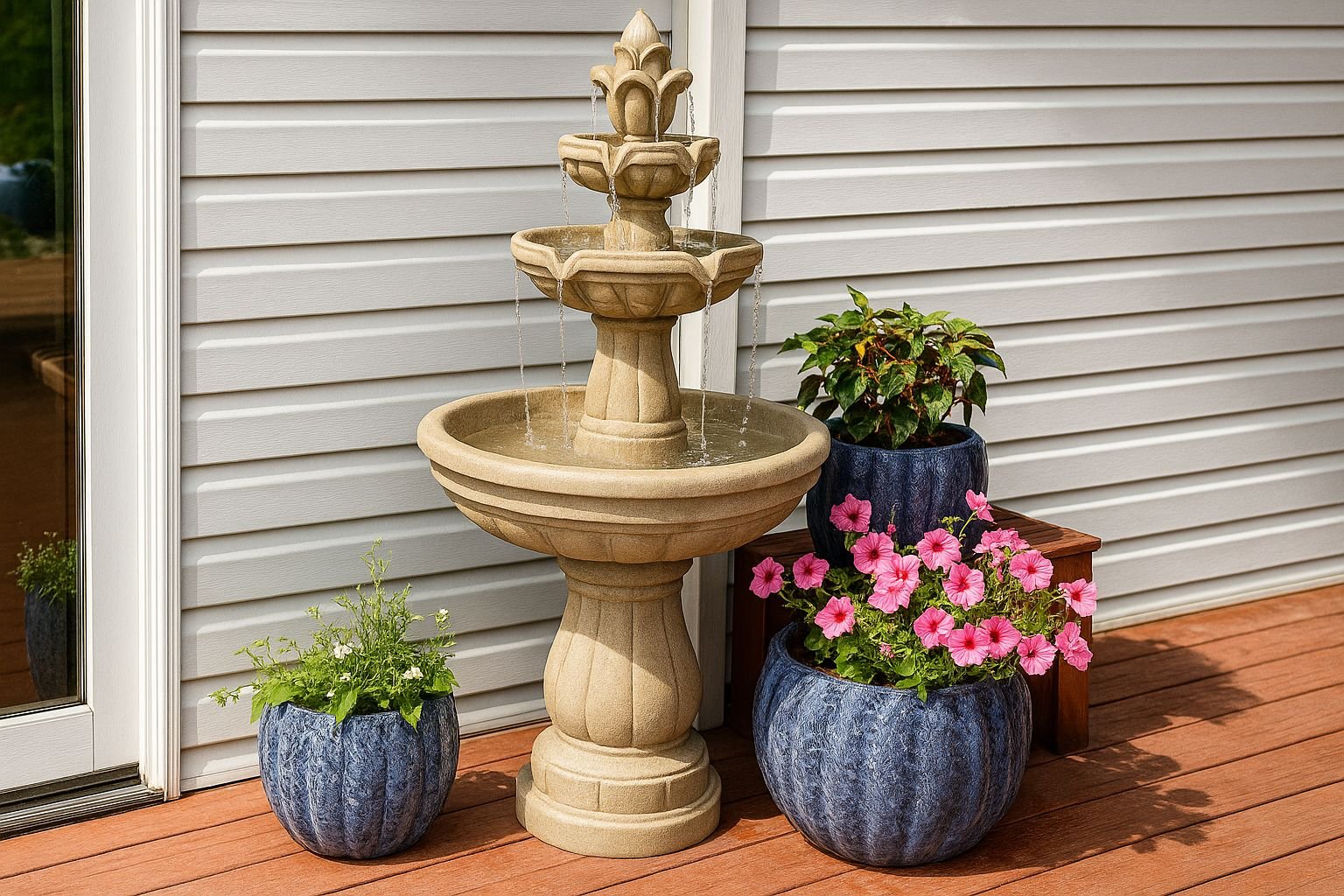
The sound quality of wall fountains is different from outdoor fountains, and that’s by design. Indoor acoustics amplify sound, so fountain designers create wall units that produce gentler, more subtle water sounds. You don’t want a roaring waterfall in your living room. You want a peaceful trickle or light splashing that adds ambiance without dominating conversations. The best wall fountains find that sweet spot where the water noise is present but not intrusive.
I’ve talked to interior designers who swear by wall fountains as focal points. They use them the way other designers might use a large painting or a fireplace. The fountain draws the eye and anchors the room’s design. Furniture arrangement often centers around the fountain as a key feature. Guests naturally gravitate toward it. It becomes a conversation starter and a defining element of the space.
The installation process is simpler than you might think. Most wall fountains come with mounting hardware and clear instructions. If you can hang a heavy mirror or a flat-screen TV, you can install a wall fountain. Some people hire professionals for peace of mind, but it’s definitely a doable DIY project for anyone comfortable with basic home improvement tasks. The trickiest part is making sure you mount it into wall studs or use proper anchors to support the weight.
Let’s talk about what wall fountains do for indoor air quality. Moving water adds moisture to the air through natural evaporation. In dry climates or during winter when heating systems dry out indoor air, this humidifying effect is welcome. Dry air causes all sorts of problems: dry skin, irritated sinuses, static electricity, even damage to wooden furniture. A wall fountain won’t replace a humidifier in a large space, but it contributes to a more comfortable humidity level.
There’s something almost hypnotic about watching water flow. I’ve spent embarrassing amounts of time just staring at the water patterns on my own wall fountain. The way light plays on the moving surface creates constantly changing visual effects. It’s like having a living piece of art that never looks exactly the same twice. Some people find it meditative. Others say it helps them think or concentrate. Either way, it’s more engaging than staring at a static painting.
Wall fountains work in unexpected places. I’ve seen them in home offices where the white noise helps block distractions and supports focus. Bedrooms benefit from the soothing sounds that can aid sleep. Bathrooms and spa rooms become more luxurious with a water feature. Even kitchens and dining rooms can accommodate smaller wall fountains that add interest without getting in the way of the room’s primary function.
The lighting element of modern wall fountains deserves mention. Many units come with integrated LED lighting that illuminates the water from behind or below. This creates stunning visual effects, especially in the evening. The play of light through water adds drama and depth. Some fountains offer color-changing lights, though I’d recommend sticking with warm white or soft blue for most home settings. You want elegant, not disco.
Maintenance is straightforward. You refill the reservoir as water evaporates. You clean the basin and surfaces periodically to prevent mineral buildup or algae growth. You might add a fountain treatment product to keep the water fresh. That’s about it. Most people spend maybe an hour per month on fountain maintenance. The payoff in daily enjoyment far exceeds that minimal time investment.
One concern people raise is noise at night. What if you want quiet for sleeping? Most wall fountains have adjustable flow rates. Turn down the pump speed, and the water sound becomes softer. Many units include remote controls or timers. Set it to turn off automatically at bedtime and back on in the morning. Problem solved. The flexibility of modern designs lets you control your environment exactly how you want it.
Cost varies widely depending on size, materials, and complexity. You can find small wall fountains for a couple hundred dollars. High-end custom designs can run into thousands. Most homeowners find something in the middle range that fits their budget and space. When you consider that a wall fountain serves as both art and ambiance, the cost compares favorably to other décor investments. It’s furniture and entertainment rolled into one.
Wall fountains prove that the magic of water features doesn’t have to stay outdoors. We can bring that sense of tranquility and natural beauty into our daily living spaces. The technology exists to do it safely and beautifully. Your walls have potential you might not have considered. Maybe it’s time to make one of them flow.
Transforming Your Living Room into a Peaceful Retreat
Your living room is probably where you spend most of your indoor time. It’s where you unwind after work, where you entertain guests, where you binge-watch shows on lazy weekends. So doesn’t it make sense to make this space as pleasant as possible? Adding a wall fountain to your living room might sound unconventional, but stick with me here. The transformation can be remarkable.
Let’s start with the visual impact. Living rooms often struggle with that one challenging wall. You know the one I mean. It’s too big for a normal piece of art, but you don’t want to just leave it blank. Furniture doesn’t work there. Multiple smaller pieces look cluttered. A wall fountain fills that space with purpose and style. It becomes the room’s signature feature, the thing that makes your living room distinctly yours.
The variety of wall fountain styles means you can match any décor scheme. Going for a modern minimalist look? Choose a fountain with clean lines, smooth surfaces, maybe brushed stainless steel or frosted glass. The water flows in a perfect sheet down the surface, reflecting light with understated elegance. This style complements contemporary furniture, neutral color palettes, and uncluttered spaces. It says you appreciate quality and attention to design without needing to shout about it.
Traditional or classic living rooms call for different fountain styles. Think carved stone, aged copper, or bronze finishes. These fountains have more ornate details, perhaps with decorative edges or sculptural elements. The water might cascade over multiple tiers or flow through designed channels. This style coordinates beautifully with wood furniture, rich fabrics, and warm color schemes. It adds a sense of timeless elegance to the space.
Rustic or natural living rooms benefit from stone fountain designs. Slate, granite, river rock, or stacked stone create a connection to the outdoors. The water flows over the irregular natural surfaces, creating organic patterns and sounds. This style works perfectly in homes with exposed beams, natural wood elements, or earth-tone color schemes. It brings a bit of wilderness inside without sacrificing sophistication.
The placement of your wall fountain matters more than you might think. The best spot is where you’ll see and hear it from your main seating area. You want to enjoy the fountain while you’re actually using the room. A fountain placed behind the sofa where you never see it wastes its potential. Most people find that the wall opposite or perpendicular to the main seating works best. This positioning lets the fountain serve as a focal point without competing with the TV or fireplace.
Speaking of TVs, can a fountain and television coexist in the same room? Absolutely. In fact, they complement each other nicely. The fountain provides ambiance during the day when the TV is off. It creates a more sophisticated environment than a black screen dominating the wall. When you do watch TV, you can turn down or off the fountain pump if you want silence. Or leave it running at low volume for subtle background sound. The choice is yours.
The water sound in a living room serves multiple purposes. It masks outside noise without adding jarring artificial sounds. Traffic, neighbors, street noise, all fade into the background. The fountain creates an audio bubble that makes conversations feel more private and intimate. Guests can chat comfortably without feeling like their voices carry through the whole house.
I’ve noticed something interesting about how fountain sounds affect social gatherings. People seem to relax faster when there’s ambient water noise. Those awkward silences that happen early in a party? They feel less uncomfortable with subtle background sound. The fountain gives people something to comment on, breaking the ice naturally. Plus, the visual interest of moving water gives guests something to look at during lulls in conversation.
The mood-setting power of living room fountains shouldn’t be underestimated. After a stressful day, walking into a room with the peaceful sound of flowing water immediately shifts your mental state. Your shoulders drop. Your breathing slows. The transition from work mode to home mode happens faster. It’s like having a built-in decompression chamber right in your house.
Living room fountains also influence how the space feels temperature-wise. The visual presence of water creates a psychological cooling effect. Even if the actual temperature doesn’t change, the room feels more comfortable. On hot days, this perception matters. The gentle evaporation from the fountain adds a touch of moisture to air-conditioned rooms that can get too dry.
Lighting plays a huge role in how your fountain looks throughout the day. Natural daylight streaming through windows creates sparkle and motion on the water surface. The play of light and shadow adds dynamic visual interest. In the evening, strategic lighting can transform the fountain into the room’s star attraction. Install spotlights or use the fountain’s built-in lighting to create dramatic effects after dark.
Let me address the elephant in the room: what about furniture and fabrics? Won’t the moisture damage things? In normal use, wall fountains don’t produce enough moisture to cause problems. The water stays contained within the unit. Evaporation happens gradually and disperses throughout the room. You’re not creating a humid tropical environment. Your furniture, fabrics, and electronics remain perfectly safe. Thousands of people have wall fountains in living rooms with no moisture issues whatsoever.
The relationship between the fountain and your existing furniture deserves thought. The fountain should complement, not clash with, your style. Consider the colors, textures, and overall aesthetic of your current setup. A copper fountain with warm tones enhances rooms with similar warm colors. A slate fountain with gray tones works beautifully with cool color schemes. The water feature becomes part of the composition, another element in your design story.
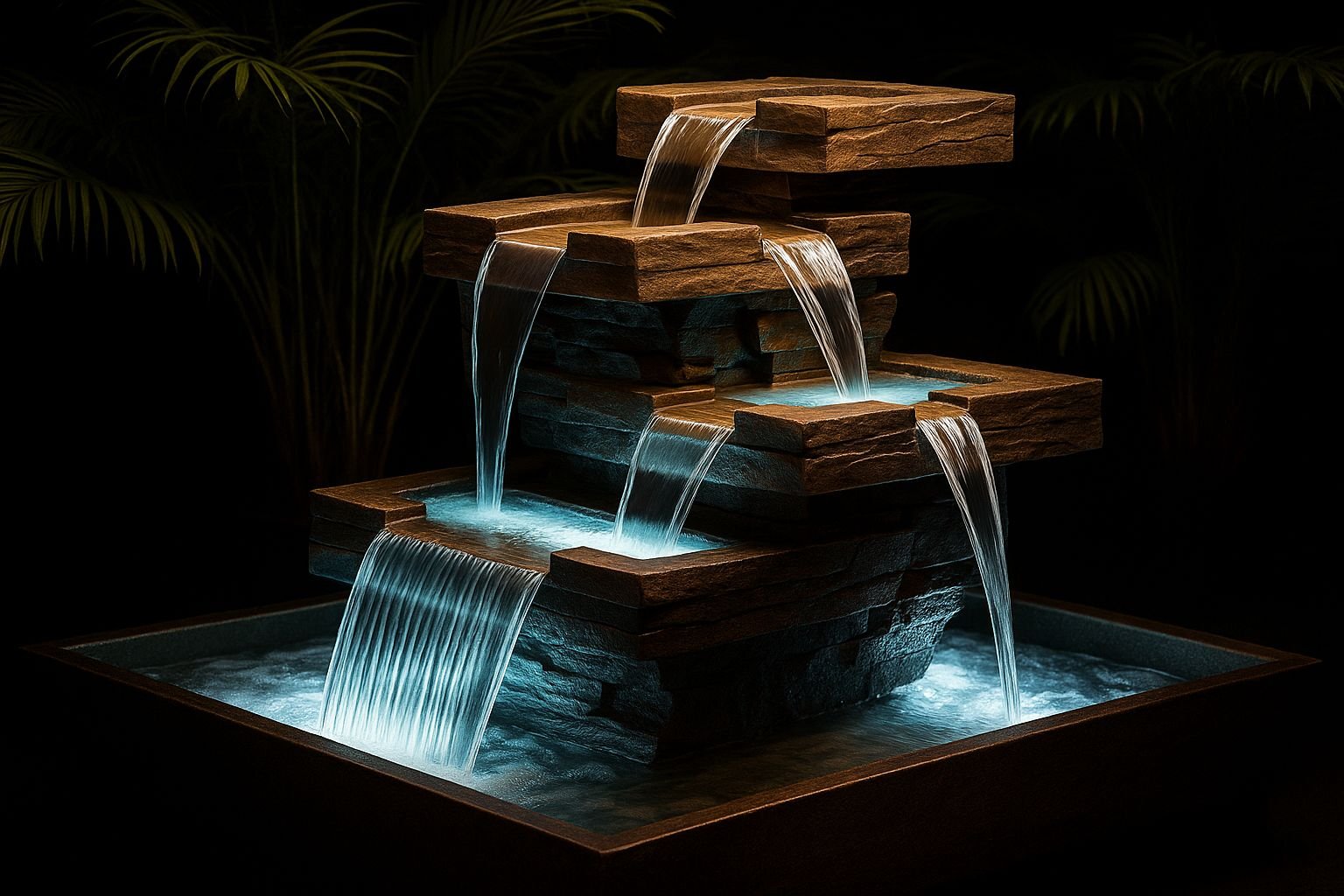
Accessorizing around a wall fountain takes some consideration. You don’t want to crowd it with too many competing elements. Let the fountain breathe. Give it some visual space. Perhaps a few carefully chosen decorative pieces on nearby surfaces, but not a cluttered gallery wall situation. The fountain itself is a statement. It doesn’t need a lot of help.
Plants and fountains are natural companions. The increased humidity benefits indoor plants, and greenery enhances the natural feel of the water feature. Place plants near but not right next to the fountain. You want them to benefit from the moisture without getting splashed by any errant spray. The combination of water and living plants creates a mini-ecosystem feel that’s incredibly calming.
Some people worry about the sound being too much for everyday living. What if you’re reading and want quiet? What if you’re on a phone call? Most wall fountains allow you to adjust the flow rate or turn them off entirely. They’re not like a noisy appliance that’s always on full blast. You control the experience. Want the visual without the sound? Turn the pump to minimum. Want full relaxation mode? Crank it up. The flexibility is built in.
Children and pets usually love living room fountains. Kids are fascinated by the water movement. It’s like having a living science demonstration in your house. Pets, especially cats, often become mesmerized by the flowing water. Just make sure the fountain is securely mounted and the electrical cord is safely positioned. Most fountain designs are stable and safe for homes with kids and animals.
The investment in a living room fountain pays dividends in daily quality of life. Every time you walk into the room, you get a little boost of pleasure from seeing and hearing your fountain. That adds up over time. Unlike a piece of art you eventually stop noticing, a fountain remains engaging because it’s always moving, always creating new patterns, always providing that soothing sound.
Your living room has the potential to be more than just a place with a couch and a TV. It can be a genuine retreat, a space that actively contributes to your wellbeing. A wall fountain is one of the most effective tools for creating that transformation. It works on multiple levels at once: visual, auditory, psychological, even spiritual. This isn’t just decoration. It’s an upgrade to your daily experience of home.
The Sensory Experience That Makes Wall Fountains Special
Let’s get into the real magic of wall fountains because it goes way deeper than just “looks nice.” I’m talking about a full sensory experience that engages multiple parts of your brain at once. When you understand what’s actually happening when you interact with a water feature, the appeal becomes obvious. This isn’t just interior decorating. It’s environmental psychology in action.
Start with the visual component. Your brain is wired to pay attention to movement. It’s a survival mechanism. Movement could mean food, danger, or opportunity. Even in the safety of your home, moving objects capture your attention more effectively than static ones. Water flowing down a wall fountain provides constant gentle motion that engages your visual system without demanding full attention. It’s there when you glance at it, rewarding you with interesting patterns, but it doesn’t distract you from other activities.
The patterns water creates are never exactly the same twice. The flow might be consistent, but tiny variations in the surface, small air bubbles, the angle of light, all create unique visual moments. This variability keeps the fountain interesting over time. Unlike a painting that you might eventually tune out, a fountain remains engaging because it’s always offering something new to see. Your brain doesn’t get bored because there’s always something subtly different happening.
Light interaction with water deserves its own discussion. When light hits moving water, it refracts and reflects in complex ways. The resulting patterns on the fountain surface and surrounding walls shift constantly. In natural daylight, these patterns are subtle and organic. With artificial lighting, especially LED systems built into the fountain, the effects can be quite dramatic. The interplay of light and water taps into something primal in us. We’re drawn to it the same way we’re drawn to campfires or ocean waves.
Now the auditory element, which honestly might be even more important than the visual. The sound of moving water does something remarkable to your nervous system. Studies using brain imaging show that natural sounds like flowing water activate the parasympathetic nervous system. That’s your rest and digest mode, the opposite of fight or flight. Your body literally relaxes in response to water sounds. Heart rate slows. Breathing deepens. Muscle tension decreases. This isn’t placebo effect. It’s measurable physiology.
The specific quality of the sound matters. A gentle trickle produces different effects than a splashing cascade. Wall fountains typically aim for softer, subtler sounds appropriate for indoor spaces. The water might sheet down a smooth surface with a quiet rushing sound. It might drip from tier to tier with gentle splashes. It might flow over textured stone with a babbling quality. Designers choose these sound profiles carefully to create calming ambiance without becoming intrusive.
White noise from fountains serves a practical function beyond relaxation. It masks intermittent sounds that might otherwise be distracting or annoying. The refrigerator cycling on. People talking in another room. Outside traffic. Your brain has an easier time tuning out these irregular sounds when there’s consistent background noise. The fountain sound doesn’t disappear exactly, but it fades into the background while blocking out more disruptive noises. It’s like an acoustic blanket over your environment.
The haptic element exists too, though it’s more subtle in wall fountains than in outdoor fountains where you might actually touch the water. But there’s a tactile dimension to the moisture in the air. The slight coolness on your skin from evaporation. The feeling that the air itself has a different quality near the fountain. These sensations register subconsciously and contribute to the overall experience.
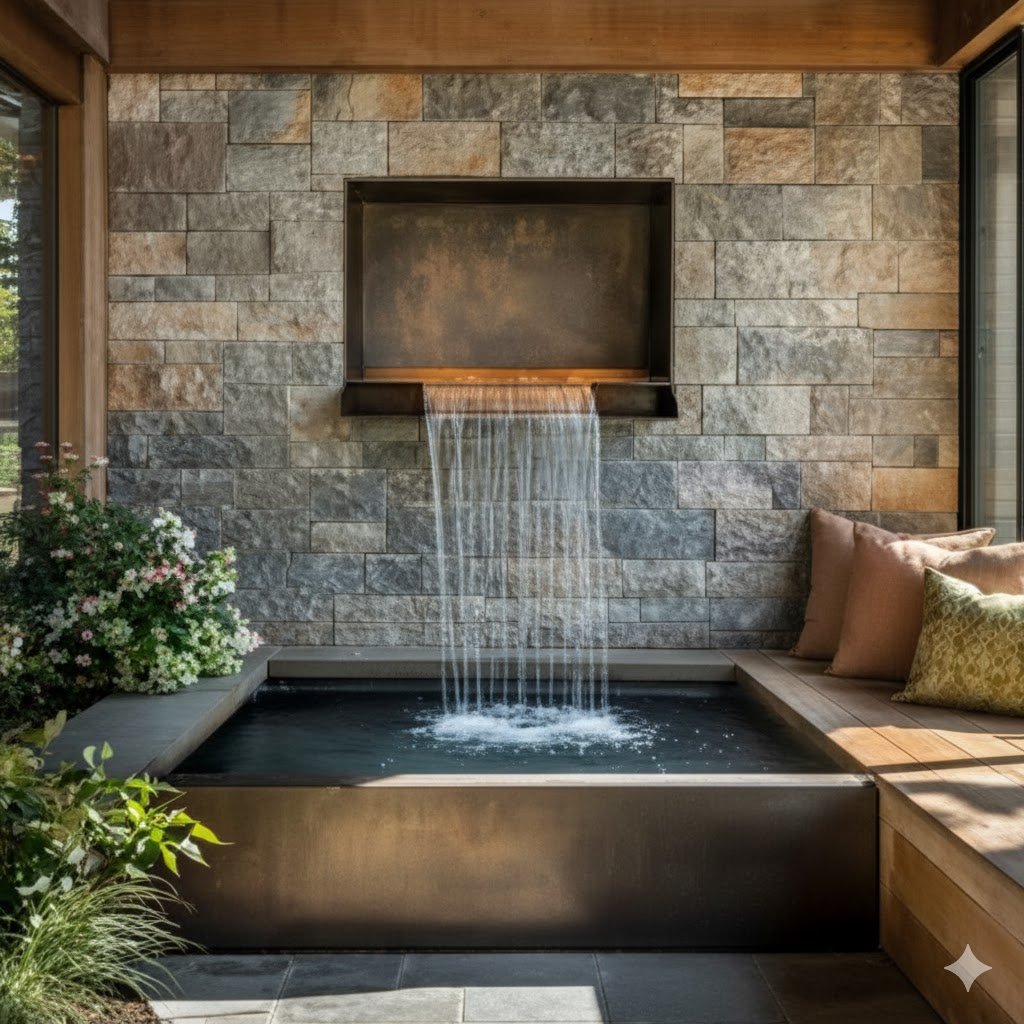
Smell plays a minor but real role. Moving water has a distinct clean, fresh scent. It’s subtle, not like a candle or air freshener. But if you pay attention, there’s an olfactory component to the fountain experience. That fresh water smell signals cleanliness and nature to our brains. Some people add a drop of essential oil to their fountain water, though I’d be careful with this. Too much can be overwhelming, and some oils might damage fountain materials.
The psychological impact of having a water feature in your space runs deep. Water represents life, cleansing, renewal across virtually every human culture. Having it present in your home environment taps into these deep symbolic associations. On some level, your subconscious registers the fountain as a positive, life-affirming presence. This might sound woo-woo, but environmental psychology research backs it up. People consistently report feeling better in spaces with water features.
There’s a meditative quality to watching water flow. It gives your mind something to settle on without requiring active thought. This is similar to the mental state people seek in meditation. Your attention focuses on the water movement, but your thinking mind quiets down. Time seems to slow. Worries and planning thoughts fade. You exist more fully in the present moment. Even a few minutes of this mental state provides measurable stress relief.
The way water mimics natural processes creates a connection to the outdoors. We evolved outdoors. Our brains and bodies are adapted to natural environments. But modern life keeps us indoors most of the time, disconnected from nature. This disconnect contributes to stress, anxiety, and reduced wellbeing. A wall fountain bringing water movement and sounds inside helps bridge that gap. It’s a piece of nature you can enjoy without leaving your living room.
The temporal dimension matters too. A fountain changes throughout the day as lighting conditions shift. Morning light creates different effects than afternoon sun or evening lamplight. The fountain essentially gives you a different experience depending on when you’re in the room. This temporal variety adds richness to your environment that static décor can’t match.
Fountains create what designers call a sense of place. A generic room with standard furniture feels like it could be anywhere. Add a distinctive water feature, and suddenly the space has character and identity. It becomes memorable. Guests who visit will remember your house as “the one with the beautiful fountain.” The space develops personality and uniqueness.
The air quality effects extend beyond humidity. Moving water naturally cleans air to some degree. It attracts dust and particles that settle in the water rather than floating around the room. The ionization from water movement may help reduce airborne allergens. These effects aren’t dramatic enough to replace proper air filtration, but they’re not nothing either. Every little bit contributes to a healthier indoor environment.
There’s an interesting cognitive effect too. Creative thinking and problem-solving improve in the presence of natural sounds and movements. When your environment provides gentle, non-demanding sensory input, your brain has resources available for deeper thinking. Compare working in complete silence or with jarring music to working with the subtle background of a fountain. Many people find they think more clearly with that soft water sound present.
The cumulative effect of all these sensory inputs creates an environment that supports wellbeing on multiple levels simultaneously. Your visual system enjoys the movement and light. Your auditory system relaxes to the sounds. Your nervous system shifts toward parasympathetic mode. Your conscious mind gets a focal point for meditation. Your subconscious recognizes symbols of life and renewal. All of this happens at once, creating a powerful positive impact on your experience of being in that space.
This is why wall fountains aren’t just decorative objects. They’re environmental interventions that actively improve your lived experience. They engage your senses, calm your nervous system, and create psychological benefits through multiple pathways. Understanding these mechanisms helps you appreciate what’s actually happening when you enjoy your fountain. It’s not superficial. It’s profound.
Choosing the Perfect Fountain Style for Every Space
The variety of fountain options available today can honestly feel overwhelming. Walk into a fountain store or browse online, and you’ll see hundreds of designs. How do you choose? Let me break down the decision-making process based on what actually matters. We’ll look at materials, sizes, styles, and practical considerations that will help you find your perfect match.
Material choice affects both aesthetics and function. Slate and stone fountains bring natural texture and earthy colors. The water flows over irregular surfaces, creating organic patterns and sounds. Stone has weight and presence. It feels permanent and grounded. These materials work beautifully in homes with natural or rustic elements, but they’re surprisingly versatile. A good slate fountain can look contemporary or traditional depending on the design and surrounding décor.
Metal fountains offer different vibes depending on the specific metal. Copper develops a natural patina over time, aging with character and warmth. It works well in traditional, rustic, or eclectic spaces. Stainless steel stays bright and modern, perfect for contemporary homes. Bronze has classical elegance that suits formal settings. Each metal interacts with water differently, affecting both sound and appearance. Copper, for instance, produces a warmer, softer sound than steel.
Glass fountains are the minimalist’s dream. Crystal clear or frosted, glass creates an almost ethereal effect. Water flows down smooth glass surfaces in perfect sheets. The transparency lets light pass through, creating stunning illumination effects. Glass fountains work beautifully in modern spaces but can also add unexpected lightness to traditional rooms. The downside is maintenance. Water spots and minerals show more obviously on glass, requiring more frequent cleaning.
Composite materials combine advantages from multiple sources. Resin-based fountains can mimic stone or metal at lighter weight and lower cost. Quality composites look convincing and perform well. They’re easier to mount than solid stone because they weigh less. Just make sure you’re getting good quality materials. Cheap composites look fake and degrade faster.
Size matters more than you might think. A fountain that’s too small for the space gets lost and fails to make the intended impact. Too large, and it overwhelms the room. Measure your wall space carefully. As a rule of thumb, your fountain should occupy roughly one-third to one-half of the wall’s width. Height can vary more, but generally, taller fountains make more dramatic statements while wider ones feel more grounded and stable.
The basin or reservoir size affects maintenance frequency. Larger reservoirs need refilling less often. If you travel frequently or tend to forget maintenance tasks, look for fountains with generous water capacity. Smaller reservoirs mean more frequent attention. This isn’t necessarily bad if you’re diligent, but it’s worth considering your lifestyle and habits.
Sound customization options vary between models. Some fountains have adjustable flow pumps that let you control the water volume and speed. This adjustability is fantastic because you can dial in exactly the sound level you want. Other fountains run at fixed speeds. You can still adjust them by adding or removing water, which changes how far the water falls and thus how loud it is. But having a variable-speed pump gives you more control.
Installation requirements differ quite a bit. Most wall fountains mount with brackets similar to hanging a heavy mirror or TV. You need to hit wall studs or use proper anchors to support the weight. Some larger fountains require more complex mounting systems. A few designs can be freestanding, leaning against the wall rather than mounted. Consider your comfort level with DIY installation when choosing. Professional installation is always an option, but it adds cost.
Power requirements are usually simple. Most wall fountains plug into standard outlets. The pump draws minimal electricity, typically less than a light bulb. Cord length varies, so check that the fountain can reach an outlet from your intended location. Some people install outlets behind where the fountain will hang for a cleaner look. If you’re planning this, do it before mounting the fountain obviously.
Lighting integration is a feature worth considering. Built-in LED lights add dramatic evening effects without requiring additional fixtures. Many modern fountains include lighting as standard or optional equipment. Color-changing options exist, though I’d suggest sticking with warm white or subtle blue for most home settings. You want elegance, not a nightclub vibe.
Style matching with your existing décor is where people sometimes get stuck. Here’s my advice: don’t overthink it. If your home is clearly one style throughout, choose a fountain that fits that aesthetic. But if your style is more eclectic or transitional, you have freedom to go in different directions. A fountain can either blend seamlessly with your current look or serve as an intentional contrast piece. Both approaches work.
Contemporary spaces benefit from fountains with clean lines and minimal ornamentation. Think flat panels, geometric shapes, smooth surfaces. The water flow itself provides the visual interest, so the structure can be simple. Materials like brushed stainless steel, frosted glass, or smooth slate work perfectly. The overall effect should feel calm and uncluttered, matching the aesthetic principles of modern design.
Traditional homes call for fountains with more classical elements. Curved edges, decorative details, warm metals like copper or bronze. Multi-tiered designs echo classical architecture. Natural stone with visible texture adds historical weight. These fountains can be more ornate without feeling overdone in traditional settings. They complement crown molding, wainscoting, and formal furniture beautifully.
Rustic or farmhouse styles pair wonderfully with natural stone fountains. Stacked slate, river rock, or rough-hewn stone create authentic outdoor vibes. The imperfect, organic quality of these materials matches the rustic aesthetic. Wood-frame fountains exist too, combining water features with reclaimed or weathered wood. These designs bring serious charm to country-style homes.

Transitional spaces that blend traditional and contemporary elements can handle a wider range of fountain styles. Look for designs that aren’t too far in either direction. A stone fountain with clean lines bridges both worlds. Metal fountains with simple shapes but warm finishes work well. The key is avoiding anything too ornate or too stark.
Table top fountains deserve discussion as alternatives or additions to wall-mounted units. These smaller fountains sit on furniture surfaces like coffee tables, dining tables, or console tables. They provide similar benefits of sight and sound in a more portable, flexible format. You can move them around, take them with you if you move, and place them exactly where you want without wall mounting.
The advantage of table top fountains is their flexibility. You can easily change their location to refresh your space or solve new problems. Maybe you want the fountain in the living room for a few months, then move it to your home office for a change of pace. No uninstalling and reinstalling required. Just unplug, move, and plug back in.
Dining room table fountains create interesting centerpieces. Instead of a static bowl or vase, you have a living, moving focal point for your table. Dinner parties become more memorable with the gentle sound of water enhancing conversation. The fountain adds sophistication and creates a dining experience that feels more special than everyday meals.
Size matters even more with table top fountains. You need something substantial enough to see and hear, but not so large it dominates the furniture or makes the space feel crowded. Measure your table or surface area carefully. Leave plenty of room for other items and activities. A fountain shouldn’t make your furniture less functional.
Materials for table top fountains follow similar patterns to wall fountains. Stone, metal, glass, ceramic, and composite options all exist. Ceramic fountains bring artistic possibilities with glazes and colors not available in other materials. Some table top fountains incorporate sculptural elements, turning them into functional art pieces. Others focus on minimalist design that disappears into the background while still providing water movement and sound.
Maintenance accessibility is simpler with table top fountains. Everything is right at hand level. No reaching up to refill reservoirs or clean surfaces. You can easily monitor water levels and spot any issues. The trade-off is that smaller reservoirs need attention more frequently. Weekly refilling is common with table top models compared to biweekly or monthly with larger wall fountains.
One creative approach is combining wall and table fountains in the same room. They don’t compete if you choose complementary styles. A wall fountain on one side of the room and a table fountain across the way create a sense of water throughout the space. The sounds blend together, creating a more immersive environment. Just don’t overdo it. Two fountains maximum per room unless you’re going for a very specific effect.
Seasonal considerations might influence your choice. Some people prefer fountains they can easily put away during certain times of year. If you live somewhere with dry winters, you might want the fountain running then but not in humid summers. Table top fountains give you that flexibility. Wall fountains are more permanent installations, though you can certainly turn them off seasonally if you want.
Budget ranges vary dramatically. Entry-level table top fountains start around fifty dollars. Basic wall fountains begin around one hundred fifty to two hundred dollars. Mid-range options run from three hundred to eight hundred dollars. High-end custom fountains can exceed several thousand dollars. Your budget will narrow your options, but quality fountains exist at every price point.
Don’t automatically assume the most expensive fountain is the best. Sometimes you’re paying for brand name or exotic materials that don’t actually perform better. Read reviews from actual owners. Check build quality. Make sure the pump is reliable and replaceable. A moderately priced fountain with good construction will outperform a cheap fountain with fancy looks but poor function.
Purchase location matters too. Specialty fountain stores offer expertise and often better quality control. Staff can help you choose the right model for your specific situation. Online retailers provide wider selection and competitive prices. Big box home improvement stores carry basic models at decent prices. Each option has trade-offs between convenience, selection, price, and expert guidance.
Consider warranty and customer service when making your decision. A fountain with a solid warranty and responsive customer service is worth paying a bit more for. Pumps can fail. Materials can have defects. You want to know the company will stand behind their product. Check return policies too. If the fountain doesn’t work in your space like you hoped, can you return or exchange it?
The perfect fountain for your space exists. It matches your style, fits your budget, works with your lifestyle, and brings joy every time you see and hear it. Taking time to consider all these factors will lead you to the right choice. Don’t rush the decision. Live with the idea for a bit. Look at examples. Imagine how different options would feel in your actual space. When you find the right one, you’ll know.
Living with Fountains and Why They’re Worth Every Penny
Let’s bring this whole thing together and talk about what it’s actually like to live with fountains. Because reading about them is one thing, but experiencing them daily is something else entirely. I want to give you the real picture, not some idealized version that ignores practical realities. Fountains require some attention, but they give back way more than they ask.
Daily life with a fountain becomes so normal so quickly that you almost forget it’s there. Then a friend visits and comments on it, and you remember that yeah, not everyone has a water feature in their living room. It becomes part of your environment like furniture or lighting. You stop actively noticing it most of the time, but it’s working on you subconsciously all day long.
The morning experience sets a different tone for your day. You wake up, head to the kitchen for coffee, and the fountain is already creating that peaceful ambiance. Mornings can be rushed and stressful, but that water sound keeps you a bit more grounded. You’re not just launching into the chaos of the day. You’re starting from a calmer baseline. It’s a subtle difference, but subtle differences compound over time.
Evening unwinding gets an upgrade too. You come home tired, maybe frustrated from work. But walking into a space with a fountain shifts something immediately. The sound tells your nervous system that you’re in a different environment now. Work mode can end. Home mode can begin. This transition matters more than we usually recognize. Clear boundaries between work and rest improve quality of life measurably.
Maintenance becomes routine quickly. I check my fountain’s water level every few days, takes maybe thirty seconds. Refilling the reservoir once a week or so takes a couple minutes. Monthly cleaning involves wiping down surfaces and maybe running some cleaning solution through the system. We’re talking about less than an hour per month total maintenance time. For the daily enjoyment you get, that’s an incredibly good trade-off.
Water quality stays good with minimal intervention. You can use distilled water to minimize mineral buildup, though regular tap water works fine in most places. Adding a fountain cleaning solution or a small amount of white vinegar helps prevent algae and keeps things fresh. Some people add a tiny piece of activated charcoal to the reservoir. Point is, keeping the water clean doesn’t require complicated chemistry or constant attention.
Pump longevity depends on quality and maintenance. Good pumps run for years without problems. Keeping the pump submerged and the water clean extends its life. If a pump does fail, they’re replaceable. You’re not throwing away the whole fountain. A new pump costs twenty to fifty dollars typically and takes minutes to swap in. This replaceable design means your fountain can last indefinitely with basic maintenance.
The cost-per-use analysis is incredibly favorable. Let’s say you spend four hundred dollars on a quality wall fountain. It runs for five years with minimal maintenance. That’s eighty dollars per year, less than seven dollars per month. For something you see and hear every single day, multiple times per day, that delivers real benefits to your wellbeing, the cost becomes negligible. Compare it to a gym membership you use twice a month or streaming services you barely watch.
Energy consumption is minimal. Most fountain pumps use about the same electricity as an LED light bulb. We’re talking a few dollars per year in electricity costs. Some people turn their fountains off at night or when away to save even more, though the savings are so small it barely matters. The environmental impact is essentially zero compared to other household appliances and electronics.
The water usage question comes up frequently. Because the system recirculates, you’re not constantly using new water. You only replace what evaporates. A typical indoor wall fountain might lose a gallon or two of water per week to evaporation. That’s less water than a single toilet flush. Annual water usage for a fountain is less than most people use watering a few houseplants. It’s not a meaningful environmental concern.
Guests almost always comment on fountains. They become conversation starters without trying to be. People are drawn to water features, and they’ll naturally ask about yours. Where you got it, how hard it is to maintain, how much it cost, whether you like it. These conversations are easy and positive. Your fountain gives people something to talk about beyond weather and small talk.
Children interact with fountains in interesting ways. They watch the water, sometimes touch it gently, ask questions about how it works. It becomes a teaching tool for conversations about gravity, pumps, water cycles, even art and design. Kids who visit your home will remember the fountain. It makes your space distinctive in their minds. That’s a nice side effect if you host families.
Pets, especially cats, often become fountain enthusiasts. Cats love running water, and a fountain provides endless entertainment for them. I’ve seen cats sit and watch fountains for extended periods, mesmerized by the movement. Some cats will actually drink from fountains if they can reach the water safely. Dogs seem less interested generally, but every pet has its own personality.
The impact on sleep quality surprises people. If you have a fountain in or near your bedroom, the white noise helps many people sleep better. It masks disruptive sounds that might wake you. It provides consistent auditory input that helps busy minds settle down. Some people who struggle with insomnia find that fountain sounds help them fall asleep faster and stay asleep longer. This isn’t universal, but it’s common enough to mention.
Property value considerations are real. Good design choices add value to homes. A well-chosen, properly installed fountain enhances your interior design and can positively influence home value. When you eventually sell, buyers remember homes with distinctive positive features. A fountain won’t make or break a sale, but it contributes to the overall impression of a well-maintained, thoughtfully designed home.
The flexibility to change your mind exists too. If you decide you don’t like the fountain or want to try a different location, moving or removing a wall fountain isn’t difficult. You’re left with mounting holes that can be patched and painted. The fountain itself retains value. You can sell it, give it away, or use it somewhere else. You’re not locked into the decision forever.
Long-term satisfaction rates with fountains are high. Most people who add water features to their homes report being happy with the decision years later. The initial novelty wears off, sure, but the underlying benefits remain. The calming effect persists. The visual interest continues. The space feels better with the fountain than it would without. That sustained satisfaction is rare with home décor purchases.
The comparison to other stress-relief purchases is worth making. People spend money on massage, therapy, meditation apps, spa days, all seeking relaxation and stress relief. A fountain is a one-time purchase that provides stress relief every single day. It’s passive. You don’t have to do anything or go anywhere. Just being in the space with the fountain delivers benefits. The return on investment stacks up favorably against almost any other wellbeing purchase.
Integration with other design elements grows over time. As you live with your fountain, you’ll naturally arrange and rearrange surrounding décor. Plants find their way near the fountain. Lighting gets adjusted to showcase the water. Furniture arrangement might shift to better enjoy the fountain. This evolution is natural and fun. Your space develops organically around the water feature.
Seasonal changes affect how you experience your fountain. Winter air is dry, so the humidifying effect feels more noticeable. Summer heat makes the cooling sensation more appreciated. Fall and spring offer their own subtleties. The fountain provides slightly different benefits throughout the year, remaining relevant across changing conditions.
The sense of home improvement satisfaction lasts longer with fountains than with many renovations or purchases. You made a choice that genuinely improved your daily environment. Every time you walk past and feel that little boost of pleasure from seeing and hearing the water, you remember you made a good decision. That positive reinforcement builds over time rather than fading.
So are fountains worth it? From every angle I can think of, the answer is yes. The upfront cost is reasonable. The maintenance is minimal. The benefits are real and sustained. The aesthetic impact is immediate and lasting. The psychological effects are measurable. The flexibility exists to change or remove the fountain if needed. And the daily experience of living with moving water in your space is genuinely delightful.
We’ve come full circle from ancient functional water sources to modern decorative features. The journey shows how fundamental water is to human experience. We need it, sure, but we also want it nearby. We want to see it, hear it, feel its presence. Fountains satisfy that deep human need to be near water. Bringing them into our homes isn’t frivolous. It’s connecting with something ancient and essential in a modern, convenient way.
Your walls have potential you might not have tapped. Your living spaces can feel better than they do right now. A fountain won’t solve all your problems or transform your life overnight. But it will make your environment more peaceful, more beautiful, more connected to nature. Day after day, year after year, that adds up to something meaningful. Sometimes the best home improvements are the ones that improve how you feel, not just how things look.
The world of fountains is open to you now. You understand the history, the psychology, the practical considerations, and the real-life experience. Whether you choose a dramatic wall fountain as a living room centerpiece or a subtle table top fountain for your office desk, you’re adding something valuable to your space. You’re making a choice that prioritizes beauty, tranquility, and wellbeing. That’s a choice worth making.

Leave a Comment