
Fountains Through the Ages and Why They’re Everywhere Now
Fountains are as old as civilization itself. Think about that for a second. While humans were still figuring out basic stuff like agriculture and written language, someone was building fountains. Not for decoration. Not for ambiance. For survival. Water meant life, and fountains were how communities got their water. Simple as that.
The transformation from survival tool to art piece took thousands of years. It wasn’t like someone woke up one day and decided fountains should be pretty. The shift happened gradually as cities developed better ways to deliver water. Once you didn’t need the fountain to stay alive, it had to justify its existence some other way. Enter beauty and design.
Ancient Rome deserves credit for really kicking off the decorative fountain trend. Those Romans loved their water features. They built massive aqueducts that brought water from miles away, and once they had all that flowing water, they got creative. Fountains became showcases for art and engineering. Statues. Carvings. Elaborate designs. The fountain stopped being just a utility and became a statement about power and wealth.
I visited Rome a few years back and saw some of these ancient fountains still operating. The Trevi Fountain blew my mind. Thousands of people crowded around it, tossing coins and taking photos. Nobody was there to get drinking water. They were there for the experience. For the beauty. For that feeling you get when you’re standing in front of something magnificent. That’s what fountains do now. They create moments.
Different cultures took the fountain concept and made it their own. The Persians built them in gardens to cool the air in desert climates. Smart engineering meets practical luxury. The Moors in Spain created fountains with intricate geometric tile work that’s still stunning centuries later. The French went big with their garden fountains, showing off their mastery of symmetry and scale. Each approach reflected cultural values and aesthetics.
The shift to decoration wasn’t a downgrade. It was an evolution. Fountains lost one function but gained others. They became gathering places. Social hubs. Landmarks. The fountain in the town square gave people a reason to congregate. It created community in ways a simple water pipe never could. That social function turned out to be just as valuable as the original practical one.
Jump to modern times and fountains are basically everywhere. City parks have them. Shopping malls install them in central atriums. Office buildings put them in lobbies. Hotels create elaborate fountain displays at their entrances. We’ve normalized moving water in places where it serves zero practical purpose. And nobody thinks it’s weird. We just accept that fountains make spaces better.
The summer heat relief factor is still real. I’ve watched kids run through fountain spray on 100 degree days while their parents sit on the edges with their feet in the cool water. The fountain provides free cooling when people need it most. That practical benefit never went away. It just became a bonus instead of the main purpose.
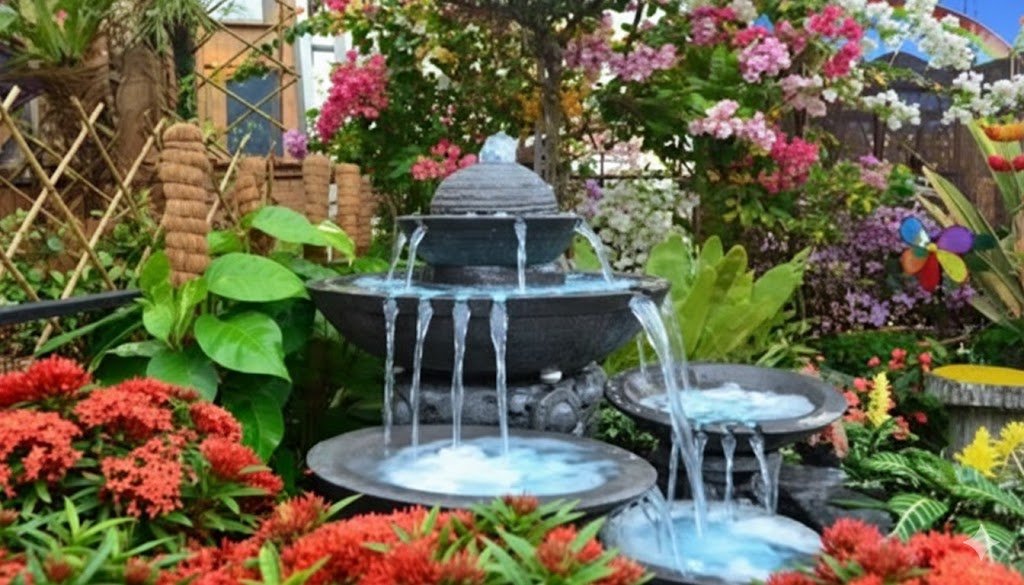
What really gets me is how fountains create ambiance without trying. Put a fountain in any space and that space immediately feels different. More peaceful. More intentional. More alive somehow. The constant sound of water changes how your brain processes being in that environment. Stress levels drop. Attention spans lengthen. People naturally gravitate toward the fountain and want to stay near it.
The decorative and dramatic effect that modern fountains bring is undeniable. Walk into a space with a fountain and walk into the same space without one. The difference is night and day. The fountain version feels complete. Finished. Like someone actually designed the space instead of just filling it with stuff. That completion is what makes fountains worth the investment for businesses and homeowners alike.
City planners understand fountain psychology better than most people realize. When they’re designing public spaces, fountains aren’t afterthoughts. They’re strategic tools. A fountain creates a focal point. Gives the space identity. Makes it memorable. People use fountains as landmarks. “Meet me at the fountain” actually means something. Try saying “meet me near the trash can” and see how that works out.
Parks and squares benefit from fountains in multiple ways. The obvious visual appeal draws people in. The sound masks traffic noise and creates pockets of relative quiet in busy urban areas. The cooling effect makes hot days more bearable. Kids are entertained just watching the water. Adults find themselves relaxing without consciously deciding to. All of this from moving water in a designed space.
Home gardens have gotten in on the fountain game too. Outdoor residential fountains used to be for rich people with estates. Now you can get a decent garden fountain for a couple hundred bucks at your local home improvement store. The democratization of fountains means regular people can enjoy them in their own spaces. That accessibility changed everything.
The relaxing and cozy ambiance that fountains provide isn’t marketing hype. It’s a real phenomenon backed by actual research. The sound of water affects brain wave patterns. It can lower cortisol levels. Reduce blood pressure. Slow heart rate. These are measurable physiological responses. A fountain literally makes your body calmer just by existing near you.
I think the reason fountains have stuck around for so long is they tap into something fundamental about being human. We’re drawn to water. It’s hardwired into us from millions of years of evolution. Our ancestors survived by staying near water sources. Modern humans might not need that for survival anymore, but the attraction remains. Fountains exploit that ancient instinct in the best possible way.
The transformation from functional to decorative represents human progress in a weird way. Once we met our basic survival needs, we started caring about beauty and experience. We wanted our surroundings to do more than just keep us alive. We wanted them to make us feel good. Fountains evolved to meet that desire. They went from answering “how do we get water?” to answering “how do we create spaces people actually want to be in?”
Looking at fountain history, you see this pattern of constant adaptation. The core element stays the same. Water flows. Gravity does its thing. But the purpose shifts to match what each era needs. Ancient times needed water delivery. Renaissance needed artistic expression. Modern times need stress relief and connection to nature. The fountain delivers whatever we’re asking for.
That adaptability is probably why fountains will keep existing long into the future. As long as humans respond to the sight and sound of moving water, there will be a place for fountains. The specific designs might change. The technology might improve. But the fundamental appeal will remain constant. Water flows. We watch. We listen. We feel better. Some things are timeless.
Wall Fountains Just Made Everything Easier
Wall fountains changed the whole game. Before they came along, having a fountain meant you needed space. Real estate. Square footage dedicated to water flowing. That worked fine if you had a big house or a yard. But for everyone else? Fountains stayed in the “nice to have but impractical” category. Wall fountains said forget that noise and went vertical.
The genius of mounting a fountain on a wall seems obvious in hindsight. We hang pictures. We hang mirrors. We hang shelves. Why not hang water features? But somebody had to think of it first and figure out how to make it work. How to contain the water. How to recirculate it. How to make it safe for indoor use. Once they solved those problems, wall fountains exploded in popularity.
I remember the first time I saw a wall fountain in person. A friend had just moved into a new place and invited me over. I walked in and heard water. Actual trickling water. Inside an apartment. My first thought was “did they leave the sink running?” Then I saw it. This sleek copper panel on the living room wall with water flowing down it. My second thought was “I need one of these.”
What makes wall fountains perfect for homes is they deliver all the fountain benefits without the fountain hassles. You get the visual interest. The soothing sound. The humidity boost. The cooling effect. The stress relief. All of that in a package that takes up zero floor space. Just a section of wall that was probably bare anyway. That efficiency is beautiful.
The decorative and dramatic effect transfers perfectly from outdoor fountains to indoor wall versions. Maybe even better. An outdoor fountain has to compete with nature. Trees. Sky. Birds. Clouds. An indoor fountain on your wall becomes the nature. It’s the only natural element in a room full of furniture and electronics. That contrast makes it stand out even more.
Installation scared me at first. I assumed you’d need special plumbing. Maybe cutting into walls. Definitely hiring someone. Turns out I was completely wrong. Most wall fountains are self contained units. They have a reservoir at the bottom. A pump circulates the water up and it flows back down. You hang it like a heavy picture. Fill the reservoir. Plug it in. That’s it. I’ve assembled furniture that was way more complicated.
The functional and decorative functions working together is what makes wall fountains so satisfying. They’re not just pretty faces. They actively improve your environment. The sound masks annoying background noise. The evaporating water adds humidity to dry air. The visual movement gives your brain something interesting to process. Beauty plus utility is a rare combination in home decor.
Being able to utilize fountains inside our homes used to seem impossible. Water belongs outside, right? Inside is for keeping dry. But wall fountains are designed specifically for indoor use. Sealed systems. Controlled flow. No splashing or spilling. The water stays where it’s supposed to. Your floors remain dry. Your walls don’t get damaged. The fountain just quietly does its thing without creating problems.
The relaxing and cozy ambiance thing is real and immediate. I turned my wall fountain on for the first time and within maybe thirty seconds felt different. Calmer. Less wound up. I’d had a stressful day at work and walked in all tense and irritated. That water sound hit me and something in my nervous system just released. I wasn’t expecting such a quick effect. But there it was.
Different wall fountain designs create different vibes. Sleek modern ones with glass or stainless steel feel contemporary and clean. Natural stone fountains feel organic and grounded. Copper fountains with patina feel artistic and unique. You can match your fountain to your existing decor or use it to add contrast and visual interest. Either approach works.
Size options range from small to massive. You can get wall fountains that are maybe two feet square. Perfect for a bathroom or small office. Or you can go huge with floor to ceiling installations that dominate an entire wall. Most people land somewhere in the middle. Big enough to register as a focal point but not so big it overwhelms the room.
The natural ability to imbibe ambiance is the perfect phrase for what wall fountains do. Imbibe means to absorb or soak up. The fountain soaks up the bland neutral energy of a room and replaces it with something better. Something more alive and dynamic. The room absorbs the fountain’s presence and becomes more than it was.
Maintenance is surprisingly simple. You add water when the level gets low. Depending on the size and how dry your air is, that might be weekly or every couple weeks. You wipe down the surface when you’re cleaning the room anyway. Maybe once a month you run some vinegar through it to prevent mineral buildup. That’s the whole routine. Ten minutes a month max.
I’ve had my wall fountain for three years now. Not once have I regretted getting it. Not once have I thought “this is more trouble than it’s worth.” The opposite actually. I’ve thought many times how glad I am I finally pulled the trigger on buying one. It’s one of those purchases that keeps paying dividends every single day.
The way wall fountains make homeowners feel like they’ve upgraded their lives without doing major renovations is powerful. You’re not knocking down walls. Not replacing flooring. Not repainting everything. You’re hanging one thing. And suddenly your home feels more sophisticated. More intentional. More like a place you’re proud to live in and show to others.
The availability of wall fountains has expanded dramatically over the past decade. Used to be you’d see them in specialty stores and expensive catalogs. Now they’re at regular home stores. Online retailers have hundreds of options. The market grew to meet demand, which means prices came down and quality went up. Good time to be fountain shopping.
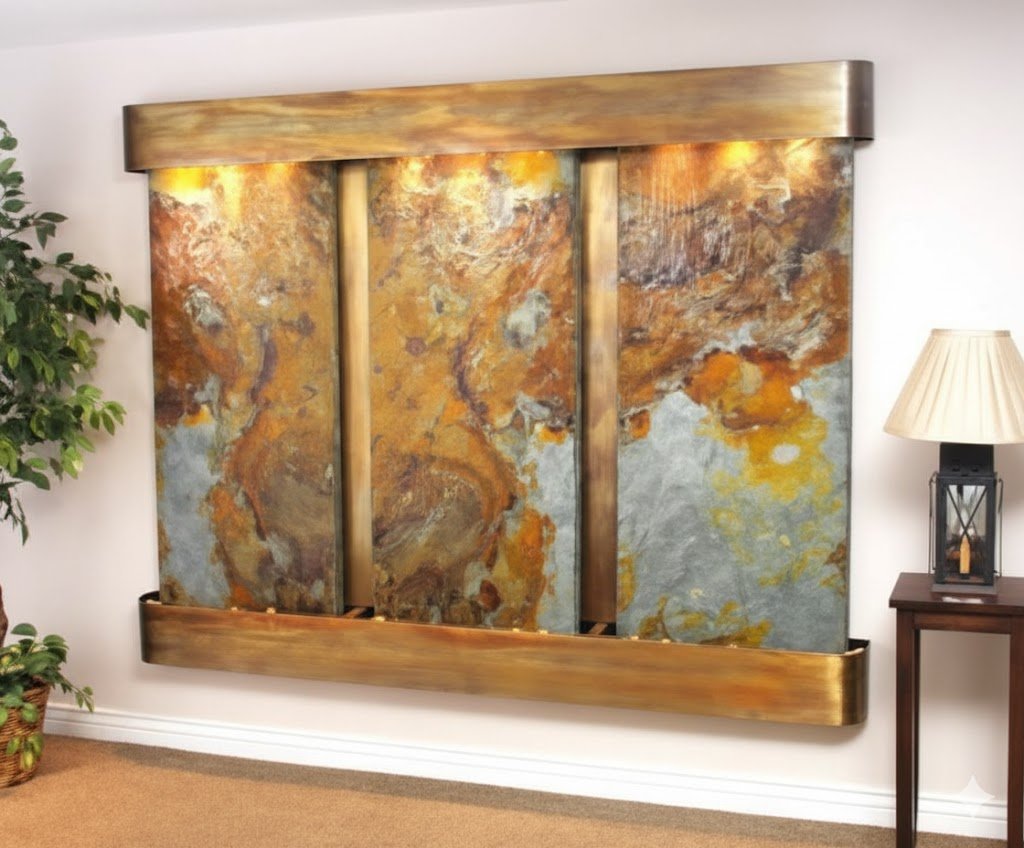
What I love most is how wall fountains prove you don’t need a mansion to have nice things. You don’t need a huge budget. You don’t need to hire designers. You just need a wall and a willingness to try something different. That accessibility is what makes wall fountains a real option for regular people instead of just a luxury for the wealthy.
The same decorative effect that fountains bring to fancy hotels and office buildings? You can have that at home. The same relaxation benefits? Available in your living room. Wall fountains democratized an experience that used to be exclusive. That’s worth celebrating. Luxury for everyone isn’t really luxury anymore. It’s just good living.
How Wall Fountains Saved Boring Living Rooms Everywhere
Your living room is supposed to be where you live. Where you relax. Where you gather with people you care about. So why do so many living rooms feel more like waiting rooms? Generic furniture. A TV. Some art that came from a chain store. Nothing wrong with any of it, but nothing particularly special either. Wall fountains fix that problem in one move.
Adding a wall fountain to your living room sounds like a bold choice. It is a bold choice. But that’s the point. Safe choices create safe rooms. Boring rooms. Rooms that function but don’t inspire. A fountain breaks the pattern. Says “this space matters to me.” Says “I’m willing to do something different to make this room better.” That intention shows.
The perfect choice for improving interior design is subjective, sure. What works in one space might flop in another. But wall fountains have this unusual ability to work almost anywhere. Modern room? There’s a fountain for that. Traditional space? Different fountain. Eclectic bohemian vibe? Yep, fountain options there too. The variety means you’re not forcing a fountain into your space. You’re finding the fountain that fits.
I used to think my living room was fine. Nice even. I’d picked furniture I liked. Arranged it well. Had good lighting. Checked all the basic boxes. Then I visited someone whose living room had a wall fountain and realized I’d been living in the rough draft. Their space felt complete in a way mine didn’t. That comparison motivated me to level up my own living room.
Wall water fountains transform rooms by adding an element that most rooms lack. Movement. Everything else in a typical living room is static. Furniture sits there. Art hangs there. Electronics just exist. A fountain moves. Constantly. That movement creates energy and life in a space that would otherwise be dead. Your living room goes from being a collection of objects to being an environment.
The more inviting feel is immediate and noticeable. Before my fountain, guests would come over and sit on the couch. Fine. Normal. After the fountain, they walk in and their whole demeanor changes. They relax visibly. They comment on how nice the space is. They stay longer. The fountain made my living room a place people actually want to be instead of just a place they are.
Noticeable doesn’t mean overwhelming. That’s the balance wall fountains manage to strike. They’re present without being loud. Interesting without being distracting. You can have a conversation without competing with fountain noise. You can watch TV without the fountain being intrusive. But when you’re just sitting there thinking or reading, the fountain fills the space in the best way.
The natural beauty of wall fountains comes from water doing what water does. Flowing downward. Following gravity. Creating ripples and patterns. You don’t need fancy programming or special effects. The water itself is inherently beautiful. Humans have been captivated by flowing water for our entire existence. A wall fountain taps into that ancient fascination.
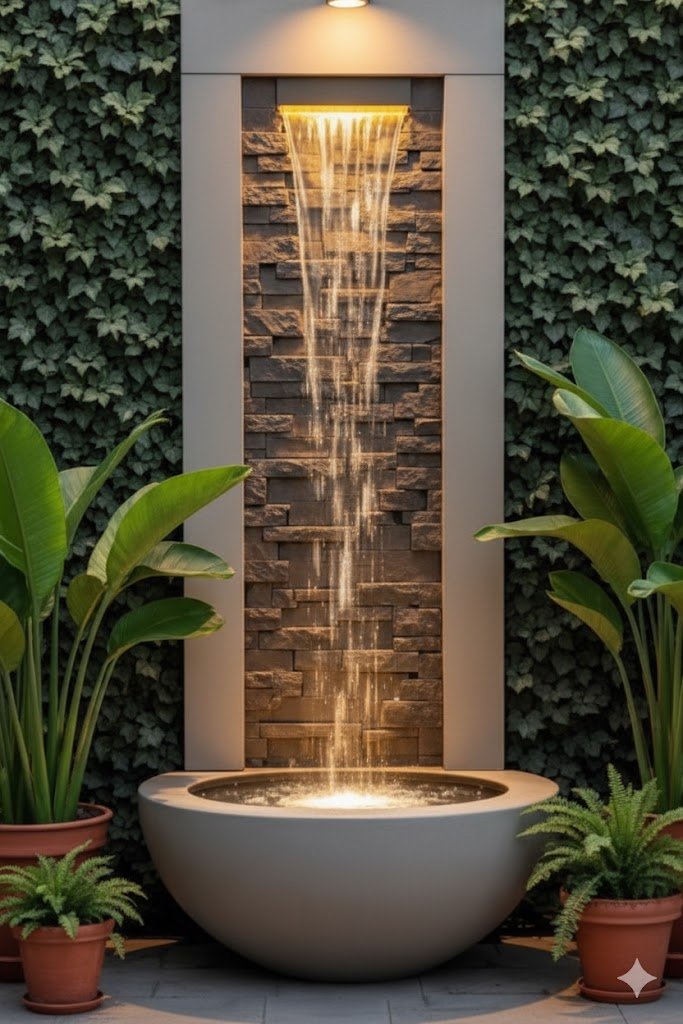
Charming appeal is an old fashioned phrase that fits. Wall fountains have this quality that makes spaces feel warmer and more personal. Like someone actually lives there and cares about creating a pleasant environment. The fountain signals that you value beauty and peace. That you’re willing to invest in daily quality of life. Those are appealing qualities.
Living rooms are ideal spaces for fountains because that’s where you spend time. You’re not just passing through. You’re settling in. Reading. Watching movies. Talking. Thinking. Having a fountain there means you get maximum exposure to its benefits. The more time you spend near it, the more value it provides.
The furniture complement factor matters more than I expected. I have this leather couch that I like but always felt was missing something. I tried different throw pillows. Different blankets. Different arrangements. None of it clicked. Then I added the fountain. Suddenly the couch made sense. The fountain gave the furniture something to relate to. The room came together as a cohesive design instead of just stuff in a space.
Perfect choices are rare in home decor. Usually you’re making tradeoffs. This looks good but isn’t comfortable. That’s functional but ugly. Wall fountains manage to be both beautiful and functional without compromising either aspect. They look great. They sound great. They make you feel great. Finding something that does all three isn’t easy.
What makes them special goes beyond just aesthetics. Sure, they’re pleasing to look at. But so is a nice painting. Wall fountains engage multiple senses. You see the water flowing. You hear it trickling. If you’re close enough, you feel the slight humidity. That multi sensory experience creates a richer, deeper impact than visual only decor can achieve.
The way they mimic natural waterfalls matters to our brains. Waterfalls are universally recognized as beautiful. We travel to see them. We photograph them obsessively. We’re drawn to them in ways we don’t fully understand. A wall fountain captures that essence. It’s not a waterfall obviously. But it has enough of the same qualities to trigger similar responses in our nervous systems.
Water cascading through rocks and boulders creates these complex patterns that are endlessly interesting to watch. The flow is consistent but never exactly the same. Each moment is unique. Your brain can watch that for surprisingly long periods without getting bored. Try staring at a still image for five minutes. Now try watching water flow for five minutes. Completely different experiences.
The soothing natural sound is the secret weapon. I thought the visual appeal would be the main benefit. The sound turned out to matter more. That gentle trickling covers up all the annoying background noises of modern life. The hum of appliances. Traffic from outside. Neighbors doing whatever neighbors do. The fountain creates an audio environment that’s actually pleasant instead of just less annoying.
Relaxation for both mind and body happens without conscious effort. You don’t sit down and think “now I will relax.” You just sit near the fountain and it happens automatically. Your muscles release tension. Your thoughts slow down. Your breathing deepens. The fountain does the heavy lifting. You just enjoy the results.
Living rooms with wall fountains become the favorite room in the house. I find myself choosing to hang out there instead of in other rooms. When I have free time, that’s where I go. Not because I should. Because I want to. The fountain made the space genuinely enjoyable to be in. That’s what good design does. It makes you want to use the space.
Why Looking at Your Fountain Never Gets Old
Wall fountains are designed to punctuate interior design. Punctuate means to give emphasis or make a point. Your fountain is literally the exclamation point of your room. Everything else in the space becomes context for the fountain. Supporting players to the main attraction. That’s not egotistical. That’s just how focal points work in design.
What makes them special for decor goes beyond their unique nature. Lots of things are unique. Unique doesn’t automatically mean good. Wall fountains are special because they’re unique and useful and beautiful all at once. That combination is rare. Most unique decor items are conversation pieces that don’t actually improve your daily life. Fountains do both.
Being pleasing to look at is table stakes for home decor. Everything in your home should be at least okay to look at. Wall fountains clear that bar easily. But they go further. They’re actively engaging to watch. Not in a demanding way. You don’t have to watch them. But when you do glance at them, there’s always something happening. Water moving. Light catching droplets. Patterns forming and dissolving.
The way water mimics natural phenomena is endlessly fascinating to our pattern seeking brains. We’re wired to find patterns in nature. Recognize them. Predict them. Water flowing follows rules but expresses them in infinitely variable ways. Each moment is governed by physics and gravity, but the specific arrangement of droplets and ripples is unique. That combination of order and chaos captivates us.
Water cascading through rocks creates this visual complexity that static art can’t match. A painting shows you one moment frozen in time. A fountain shows you continuous transformation. The water is always moving, always changing, always doing something new within predictable boundaries. Your brain never gets tired of it the way it gets tired of looking at the same static image.
Boulders and natural stone paired with water trigger these deep evolutionary responses. Humans evolved near water and rocks. These were our environments for millions of years. Seeing them together feels right on a level we don’t consciously process. The fountain taps into genetic memory or whatever you want to call it. It feels correct in ways that are hard to articulate but easy to feel.
Waterfalls have this universal appeal across cultures and time periods. Show anyone a waterfall and they respond positively. Babies watch them intently. Elders find them peaceful. Teenagers think they’re cool. Waterfalls unite humans across all the things that usually divide us. A wall fountain borrows that universal appeal and makes it accessible in your home.
The soothing natural sound of flowing water deserves its own section honestly. This might be the single best feature. The water sound covers up everything you don’t want to hear. The neighbor’s dog barking. Traffic noise. The HVAC system cycling on and off. All of that gets masked by gentle trickling. Your auditory environment improves dramatically.
Natural sound hits different than artificial sound. Play waterfall recordings on a speaker and it’s nice. But it’s not the same as actual water actually moving. There’s something about real physical water creating real physical sound waves that matters to our perception. Maybe it’s subtle vibrations we don’t consciously hear. Maybe it’s just knowing it’s real. Either way, real water wins.
The sound provides relaxation without requiring any action on your part. You don’t have to meditate. Don’t have to do breathing exercises. Don’t have to focus on anything. The sound just exists in your space and your nervous system responds to it automatically. Passive relaxation might be the best kind. You get the benefits without the work.
Mind relaxation from reduced stress and worry happens when your brain has something peaceful to focus on. The fountain gives you that focus option. When anxious thoughts start spiraling, you can direct your attention to the fountain instead. Watch the water. Listen to the sound. Ground yourself in the present moment. The fountain makes that easier.
Body relaxation shows up in ways you might not expect. Muscle tension you didn’t know you were carrying releases. Your jaw unclenches. Your shoulders drop. These physical holdings of stress dissolve when the fountain is running. You might not notice the tension until it’s gone. Then you realize how much better you feel.
Both mind and body benefits happening simultaneously is the real magic. Most interventions target one or the other. Massage helps your body. Meditation helps your mind. A fountain addresses both at once without you having to actively do anything. Just exist near it. Let it work. Reap the rewards.
The provision of soothing sound is constant. The fountain doesn’t take breaks. Doesn’t have an off day. As long as it’s running, it’s providing that audio benefit. That consistency matters. You come to depend on it. The fountain becomes part of your home’s baseline comfort level. Like good climate control or comfortable furniture.
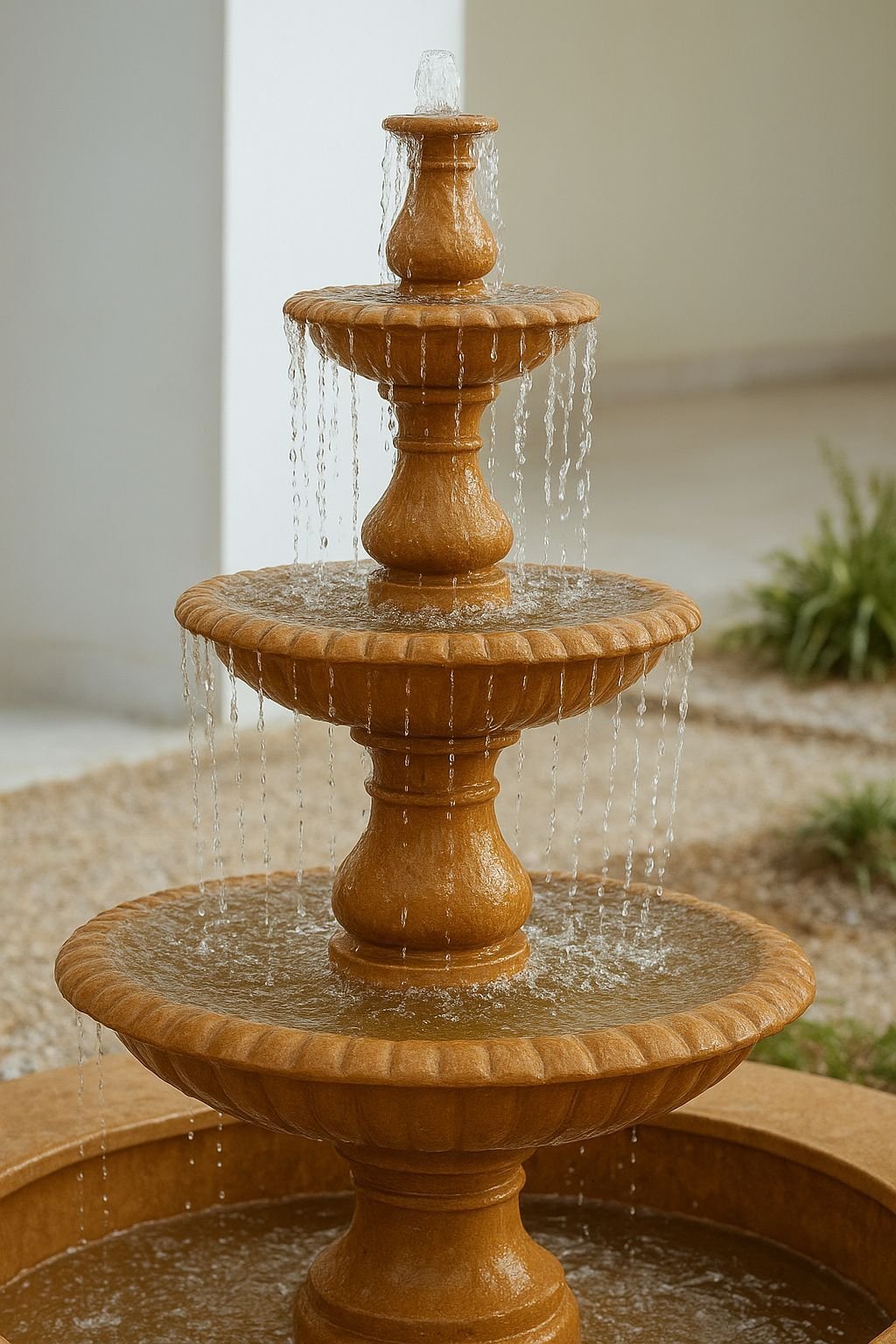
Cascading water mimicking natural waterfalls brings outdoor peace inside. Most of us don’t live near actual waterfalls. We can’t access that experience whenever we want. A wall fountain solves that problem. Want the waterfall feeling? Turn on your fountain. Instant access to natural beauty and peace. No hiking required.
The imitation is good enough to trigger the same responses as the real thing. Your brain doesn’t care that it’s a three foot fountain instead of a hundred foot waterfall. It recognizes water flowing over surfaces and responds accordingly. The biological response is what matters, not the specific scale or context.
Rock and boulder elements add to the natural aesthetic. Smooth manufactured surfaces are fine. But textured natural looking materials create more visual interest. They catch light differently. They interact with water in more complex ways. They feel more connected to nature. That connection is valuable for people living in urban or suburban environments far from wilderness.
The distinct effect each fountain design creates means you can customize the experience. Want energetic and dramatic? Choose a fountain with faster flow and more splashing. Want calm and meditative? Go for slow gentle flow over smooth surfaces. The fountain adapts to what you need from it. You’re not stuck with one preset vibe.
Shopping Smart and Finding Your Perfect Match
These fountains are available in more varieties than you probably expect. The market has exploded over the past decade. What used to be a niche product category is now mainstream. That growth means options. Lots of options. Sometimes too many options. Let me help you narrow it down without getting overwhelmed.
All sorts of designs exist to match different tastes and spaces. Traditional tiered fountains that look like smaller versions of outdoor models. Modern minimalist slabs where water sheets down flat surfaces. Artistic sculptural pieces that make a bold statement. Zen inspired fountains with bamboo and stones. Geometric contemporary designs. The variety means you’re not settling. You’re choosing what actually speaks to you.
Shapes range from standard rectangles to circles to free form organic designs. Rectangles are classics for a reason. They fit most spaces and most decor styles. But don’t be afraid to get creative. A circular fountain can soften a room full of right angles. An asymmetrical design adds visual interest and breaks up predictable patterns.
Sizes run from small tabletop models up to massive floor to ceiling installations. Be realistic about your space. Measure your wall. Really measure it. Write down the dimensions. Compare them to fountain specs before buying. A fountain that’s too small gets lost. One that’s too big overwhelms everything else. Getting the scale right matters more than any other single factor.
Materials make a bigger difference than most people realize. Stone and slate are natural and timeless. They develop character as they age. Water stains and mineral deposits become part of the beauty. Metal fountains, typically copper or stainless steel, stay looking newer longer. They’re easier to clean. The sound of water on metal is brighter and more pronounced than water on stone.
Glass and acrylic fountains are the contemporary option. They show every water droplet beautifully. Light passes through them creating cool effects. They require more frequent cleaning to look their best. Fingerprints and water spots show up immediately. But when they’re clean, they’re stunning.
Each material gives out a distinct effect on the overall vibe of your room. Stone feels organic and grounded. Metal feels modern and sleek. Glass feels elegant and sophisticated. Think about what your room needs. More warmth? Go stone. More edge? Go metal. More refinement? Go glass.
Installation being easy is one of the best features of modern wall fountains. Most come with mounting hardware and clear instructions. Some include templates so you know exactly where to drill. The hardest part is making sure you hit wall studs for secure mounting. But that’s true of hanging anything heavy. Find the studs. Use appropriate hardware. Level it. Done.
Not a problem for most people means you can DIY this. You don’t need to hire anyone. Don’t need special skills. If you can hang a heavy mirror or shelf, you can install a wall fountain. That saves money and gives you more control over the process. Plus the satisfaction of doing it yourself.
Most wall fountains can be installed anywhere with a few caveats. You need an electrical outlet nearby. The wall needs to be strong enough to support the weight. You need some clearance around it for air circulation. Beyond that, you’re good. Put it in your living room. Bedroom. Bathroom. Office. Hallway. Wherever you spend time and want the fountain benefits.
Table top water fountains deserve mention here as an alternative or addition to wall models. These smaller fountains sit on surfaces. Coffee tables. Sideboards. Desks. Nightstands. They provide the same basic benefits as wall fountains but on a smaller, more portable scale. Easy to move around. Easy to experiment with.
The same alluring and relaxing feel comes from tabletop models. The principles are identical. Water flows. You watch and listen. Your nervous system calms down. The smaller size means quieter sound and less visual impact. But for small spaces or budget conscious buyers, tabletop fountains are legitimate options.
Dining room tables can accommodate small fountains if you’ve got space. Picture this. Family dinner. Good food. Good conversation. And there’s this gentle water sound punctuating the meal. It transforms a regular dinner into an experience. Makes even weeknight meals feel more special. The fountain elevates the ordinary.
Peaceful appeal in homes comes from creating environments that support calm instead of undermining it. Most homes are full of stressors. Clutter. Noise. Harsh lighting. Uncomfortable furniture. Adding a fountain doesn’t fix all of that. But it adds a counterbalance. A peaceful element that offsets some of the stress. That balance matters for mental health.
Great choices for adding tranquility exist at every price point. You can spend fifty dollars on a small tabletop fountain or five thousand on a custom wall installation. Both will provide benefits. The expensive one won’t make you ten times happier than the cheap one. Diminishing returns apply. Find something in your budget that you like. That’s the great choice.
Wide assortment of designs available means you’ll find something you like if you look around. Don’t buy the first fountain you see. Browse. Compare. Think about it for a few days. Look at it in photos. Imagine it in your space. Make sure it’s really what you want. Impulse buying fountains usually works out fine. But intentional choosing works out better.
Styles from traditional to ultra modern all exist in the market. Your personal taste matters here. Don’t buy what you think you should like. Buy what you actually like. The fountain that appeals to you is the right fountain. Trust your gut. Your home should reflect your preferences, not what design blogs say is trendy.
Sizes accommodating different spaces mean everyone can have a fountain. Studio apartment? There’s a fountain for that. McMansion? Different fountain. Normal suburban house? Plenty of options. The fountain scales to fit your reality instead of requiring you to change your reality to accommodate a fountain.
The Real Reasons Fountains Belong in Every Home
Wall fountains are perfect choices for people who want to improve their living space without major renovations. You’re not tearing out walls. Not refinishing floors. Not replacing windows. You’re hanging one thing. And that one thing transforms how the space feels. That’s incredible ROI for both money and effort invested.
Punctuating home interior design means adding elements that create emphasis and interest. Most rooms are flat. Predictable. A fountain breaks that pattern. It says “pay attention here.” It gives the room a focal point that everything else can relate to. Good design needs these punctuation marks. Otherwise it’s just run on sentences of furniture and walls.
Water wall fountains and tabletop versions offer different benefits for different situations. Wall fountains make bigger statements. They’re permanent feeling. They commit to a space. Tabletop fountains are flexible. Portable. Easy to try out. Both types work. The choice depends on your space, budget, and how much commitment you want to make.
The distinct natural ability to improve spaces is what sets fountains apart from other decor. A painting is nice to look at but doesn’t change the environment. A fountain actively improves the air, sound, and feel of a room. It’s working for you constantly. That active improvement justifies the cost and the space it takes up.
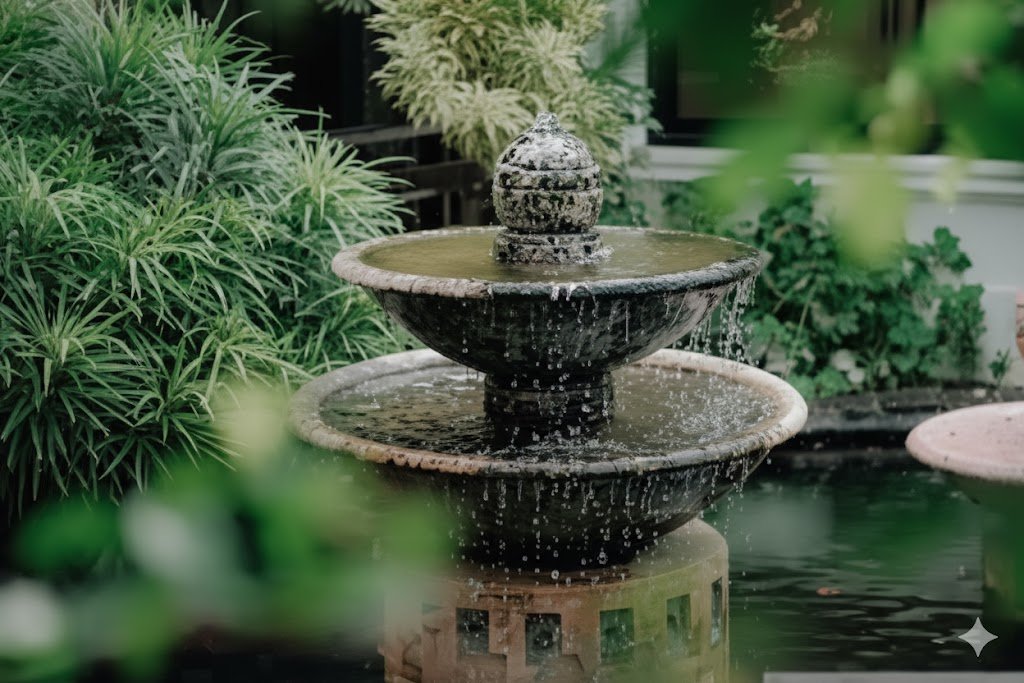
Providing a relaxed ambiance happens automatically once the fountain is running. You don’t have to do anything. Don’t have to maintain a mood. Don’t have to think about it. The fountain just creates that relaxed atmosphere as a byproduct of existing. That passive benefit is easy to take for granted but hard to replicate any other way.
Calming any home is possible with the right fountain. Doesn’t matter if you live in a busy city or quiet suburb. An old house or new apartment. The fountain brings calm wherever it goes. That universality is part of what makes fountains such safe bets. They work in basically every situation.
The soothing natural sound of flowing water never gets old. I’ve had my fountain for years. Still love the sound. Still notice it. Still appreciate it. Some things you adapt to and stop noticing. The fountain sound stays fresh. Your brain recognizes it as positive every single time.
Flowing water into a home creates this connection to nature that’s otherwise missing. We evolved outdoors. Near rivers and streams. Modern life is almost entirely indoors in artificial environments. That disconnection from nature affects us negatively in ways we don’t fully understand. A fountain bridges that gap. Brings a natural element into your constructed space.
Relaxation benefits for mind and body are well documented in research. This isn’t just marketing claims. The sound of water affects brainwave patterns. Lowers stress hormones. Reduces blood pressure. These are measurable changes. The fountain provides therapeutic benefits just by running in your space.
Great to look at is an understatement. Fountains are captivating. Beautiful in ways that never get boring. The constant movement means there’s always something new to see. Even though it’s fundamentally the same thing happening over and over, each moment is unique. That paradox keeps it interesting indefinitely.
Imitating natural water cascades brings outdoor beauty inside. You get the essence of a mountain stream or forest waterfall in your living room. That’s pretty amazing when you think about it. Technology and design working together to recreate nature’s beauty in a controlled indoor setting.
Water cascading through rocks triggers these deep responses we don’t consciously control. Our ancestors survived by finding water sources. Being near water meant safety and abundance. Those associations are still embedded in us. A fountain activates that ancient programming. Makes us feel safe and cared for on a subliminal level.
Boulders and natural stone elements ground the fountain in physical reality. Even sleek modern fountains benefit from some textural natural element. It gives the water something to interact with. Creates that visual complexity we find so satisfying. The interaction between water and stone is endlessly fascinating.
Waterfall aesthetics work because waterfalls are universally loved. Nobody dislikes waterfalls. They’re consensus beauty. A fountain captures that universal appeal and makes it accessible daily. You don’t have to travel or hike. You just walk into your living room. Instant access to something everyone agrees is beautiful.
The lasting impact of a good fountain exceeds its cost. You buy it once. Enjoy it for years. Maybe decades if you choose quality. The cost per day of ownership becomes negligible over time. But the benefits accrue every single day. That math works out strongly in favor of buying the fountain.

Leave a Comment