
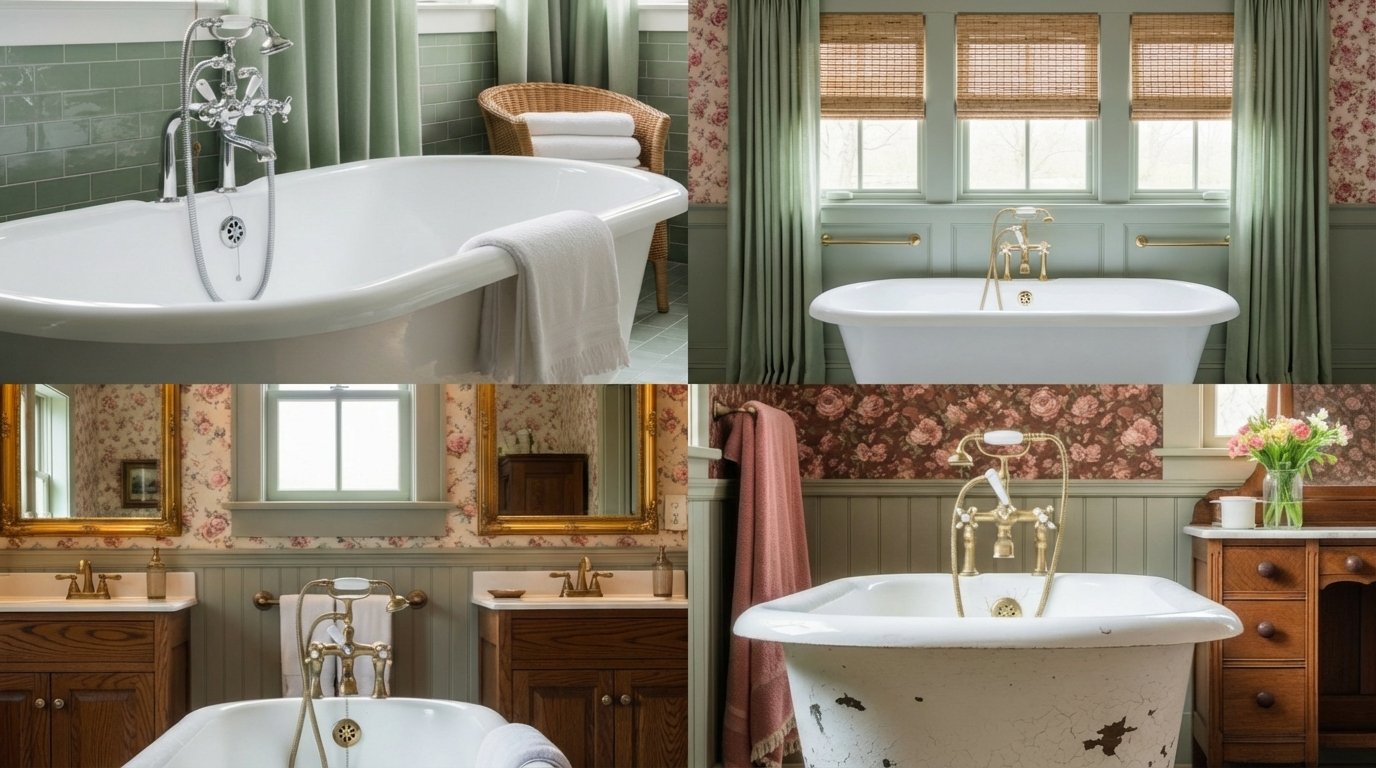
Vintage bathroom design is trending faster than ever in 2025, with searches for “Art Deco tiles” and “Victorian vanities” up by over 200%. But achieving that authentic, nostalgic look without your home feeling like a museum is a challenge. Many homeowners struggle to balance modern functionality—like good water pressure and storage—with the charm of a bygone era.
This guide solves that problem. We are breaking down 4 distinct vintage bathroom archetypes into over 40 specific, actionable design elements. Whether you are renovating a small powder room on a budget or gutting a master bath, you will find quantified solutions here, from tile patterns that expand visual space by 20% to the exact brass fixtures that add instant age.
Check out our related guide on Small Bathroom Storage Hacks.
Key Takeaways
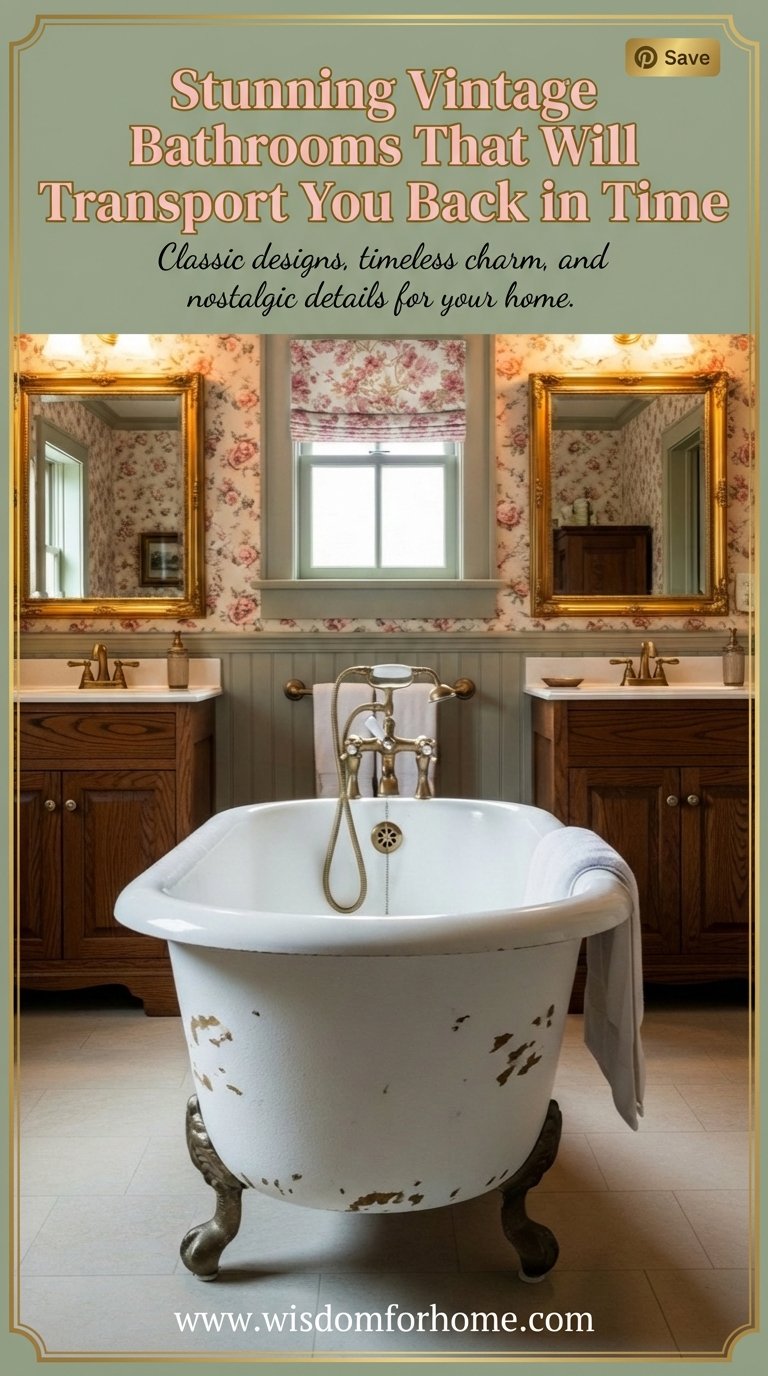
- Texture is King: Authentic vintage design relies on mixing materials like brass, porcelain, and natural wood to create depth, not just buying “old-looking” items.
- The “Rule of Three” for Metals: Stick to unlacquered brass, polished nickel, or matte black. Avoid mixing more than two metal finishes to keep the look cohesive.
- Tile defines the Era: Hexagon tiles scream early 1900s, while pink 4×4 squares are distinctly 1950s. Choosing the right floor anchors the entire room.
- Lighting transforms everything: Swapping harsh cool LEDs for warm (2700K) Edison bulbs in milk-glass sconces instantly ages the room 50 years (in a good way).
- Repurposing saves money: Using a vintage dresser as a vanity can save you $500+ compared to buying a new reproduction vanity.
Table of Contents
- What Makes a Vintage Bathroom?
- Style 1: The Victorian Romantic
- Style 2: The Art Deco Glamour
- Style 3: The Mid-Century Playful
- Style 4: The Rustic Farmhouse
- VINTAGE BATHROOM Furniture
- Adding Decorative Accents
- Incorporating Textiles and Soft Furnishings
- Comparison: Real Vintage vs. Reproduction
- Popular Asked Questions
- Conclusion
What Makes a Vintage Bathroom?
A true vintage bathroom isn’t just about old pipes. It is a curated collection of design choices that evoke a specific period, usually between the 1890s and the 1970s. The core of this aesthetic lies in permanence. Unlike modern “fast furniture,” vintage bathrooms emphasize materials that last: cast iron, solid brass, ceramic, and stone.
To transport you back in time, we have analyzed four stunning bathroom styles. We will break down every element so you can recreate the look.
Style 1: The Victorian Romantic
The Vibe: Airy, elegant, and filled with intricate details. Think 1900s London townhouse meets clean luxury. This style focuses on maximizing natural light and using white as a base color to make small vintage bathroom ideas come to life.
Clawfoot Tub Centerpiece
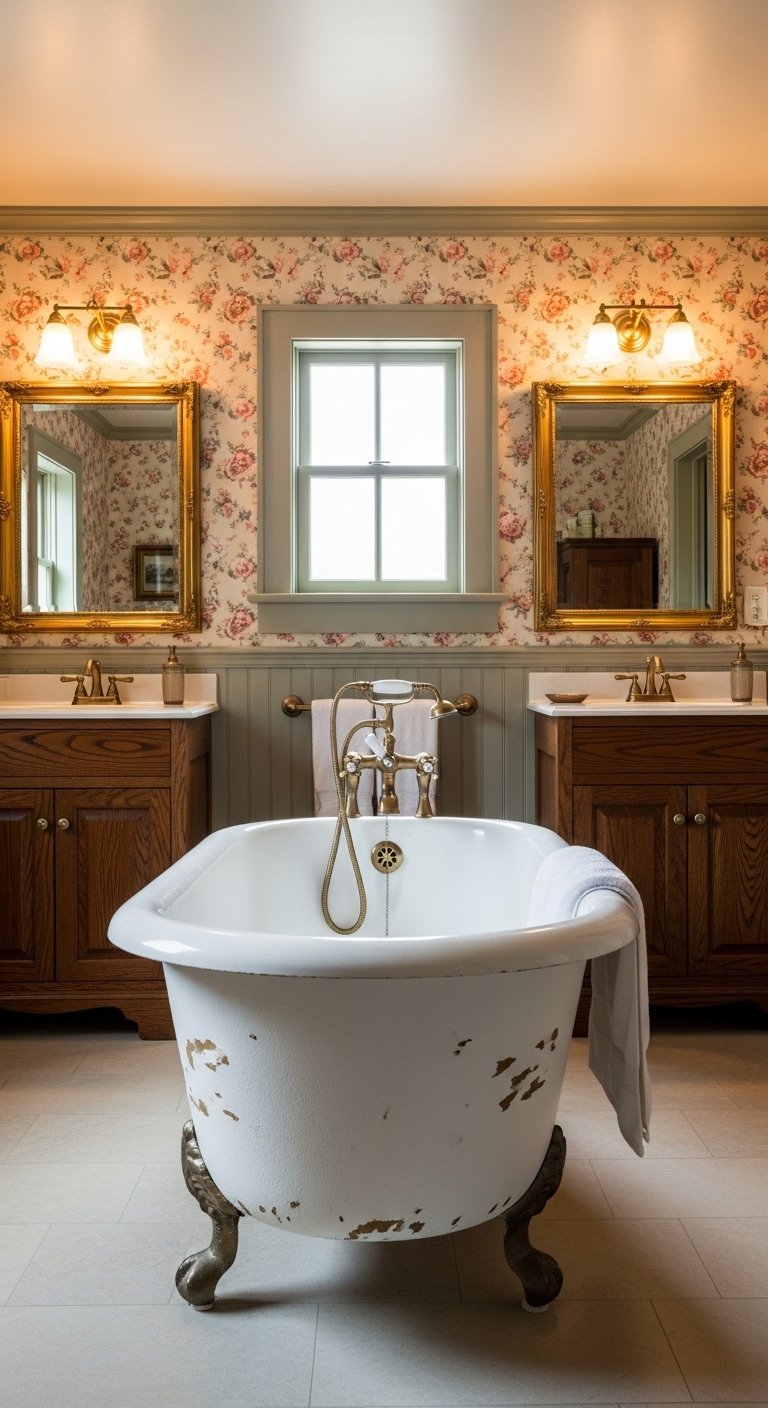
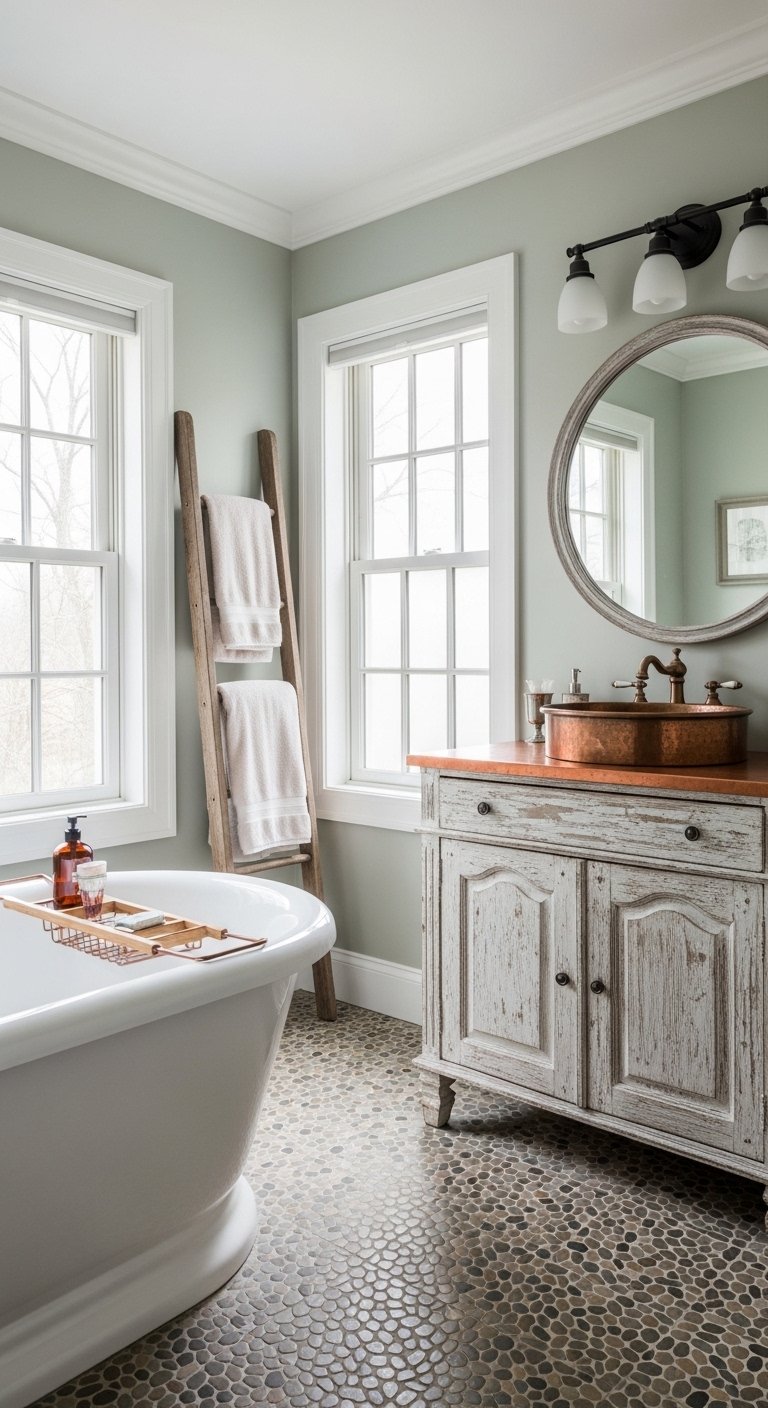
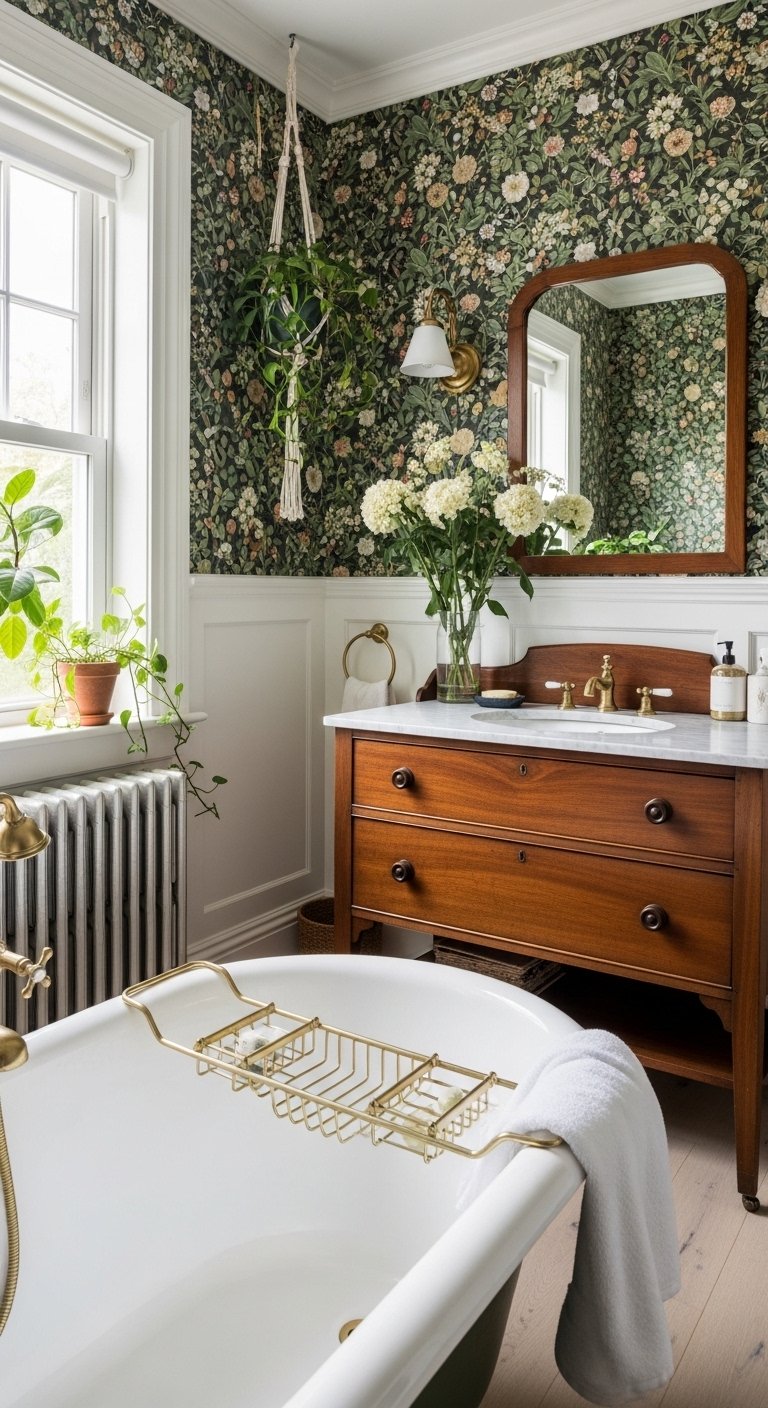
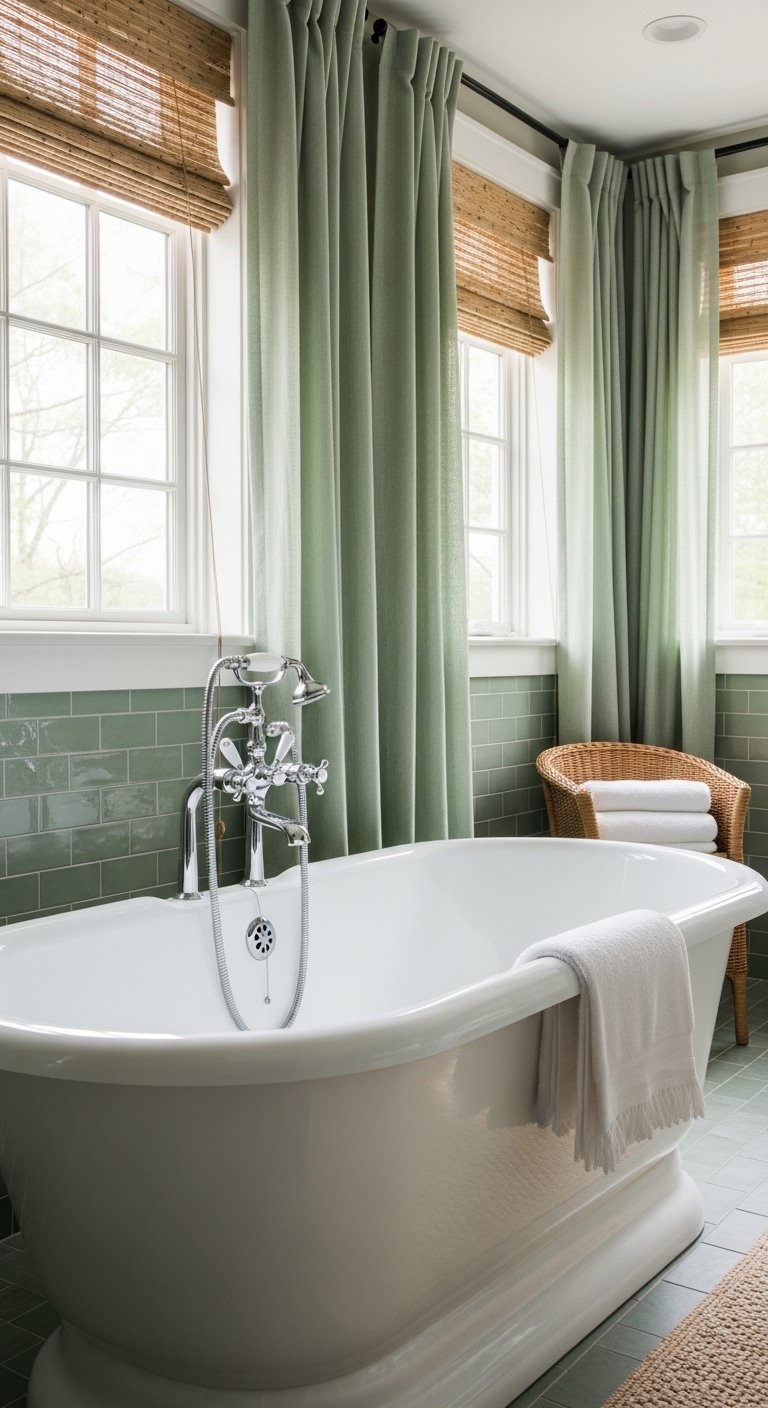
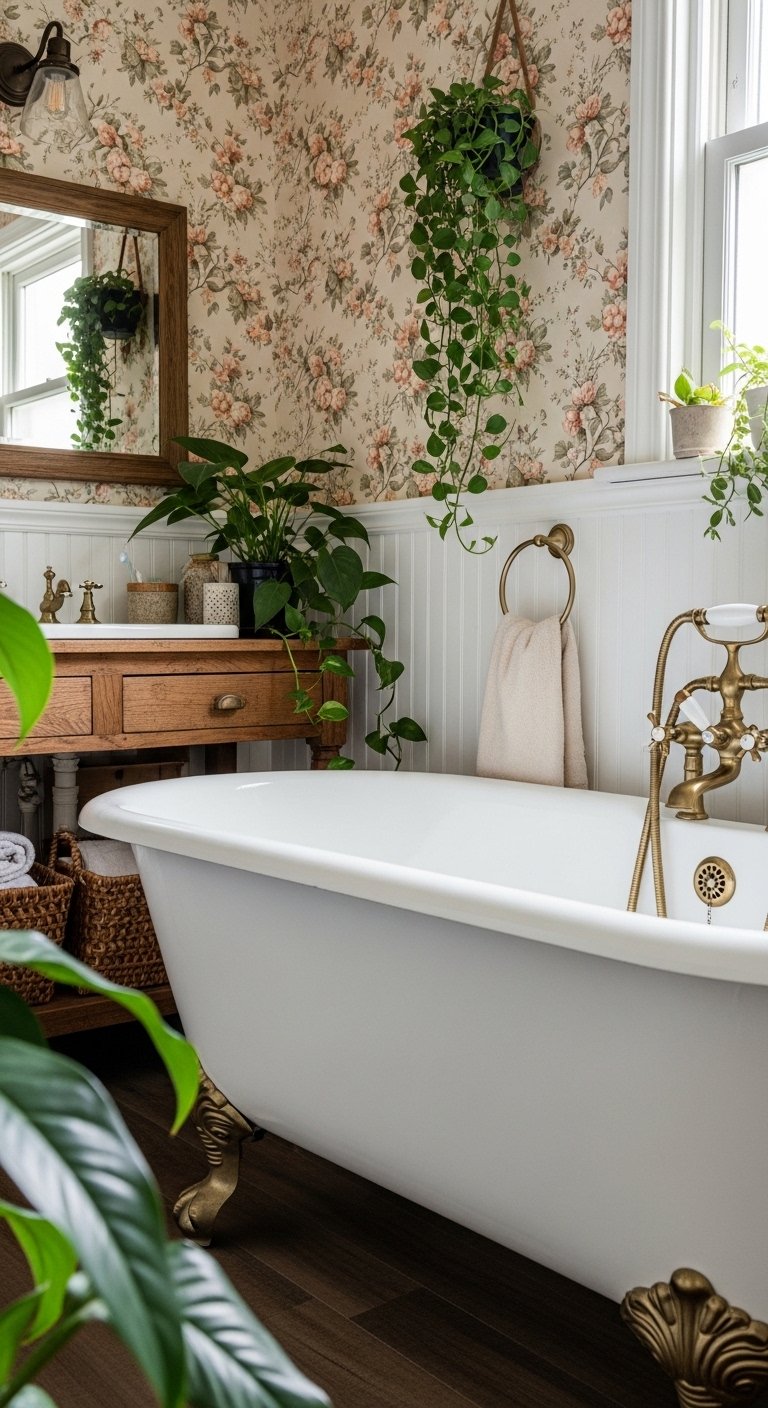
The defining feature of the Victorian bathroom is the cast-iron clawfoot tub. Visually, the raised profile of the tub exposes more floor tile, which actually makes a small bathroom feel larger. The curvature offers a softness that rigid modern tubs lack. For implementation, you can find authentic refinished tubs or lighter acrylic reproductions. If you choose cast iron, ensure your floor joists are reinforced to handle the immense weight (300+ lbs empty).
Pro Tip: Paint the exterior hull of the tub a matte black or navy blue for a dramatic focal point.
High-Tank Toilet
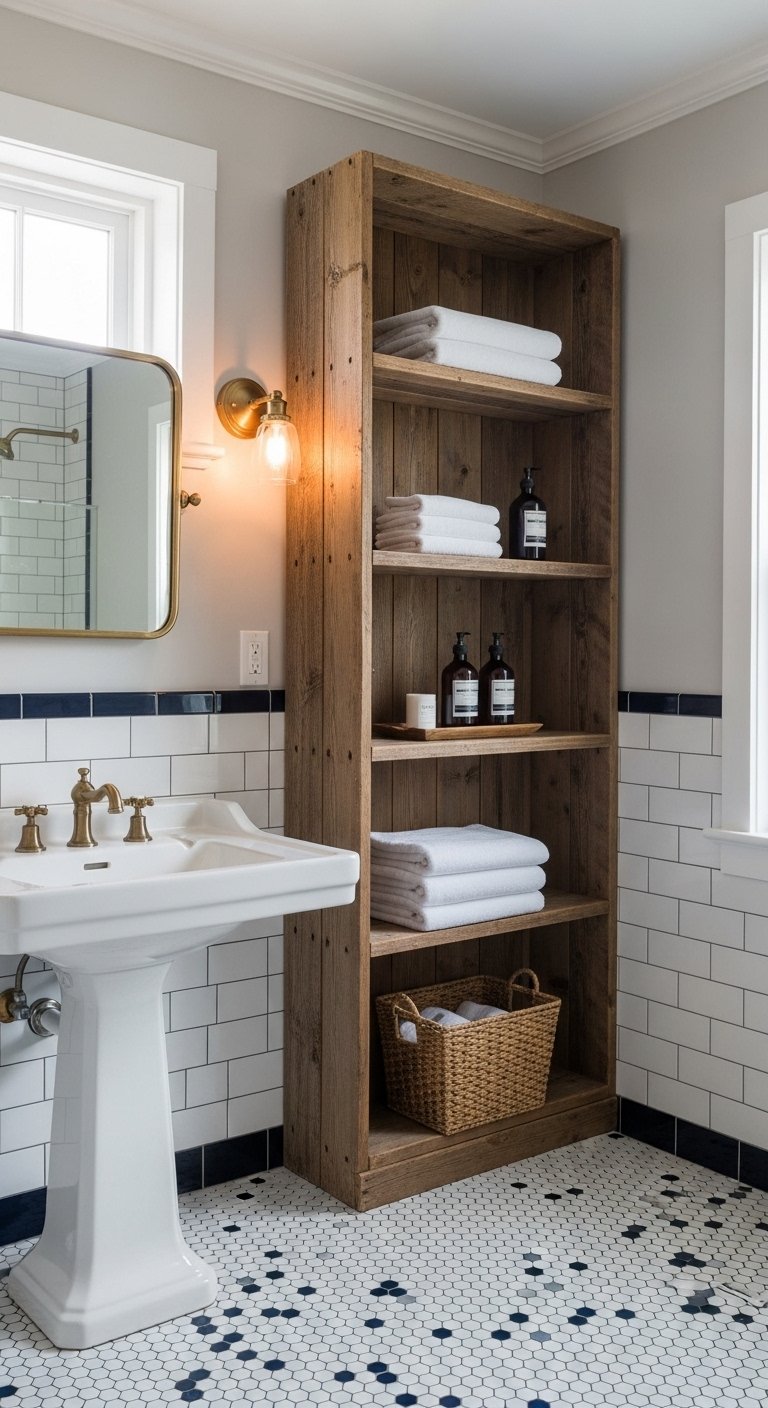
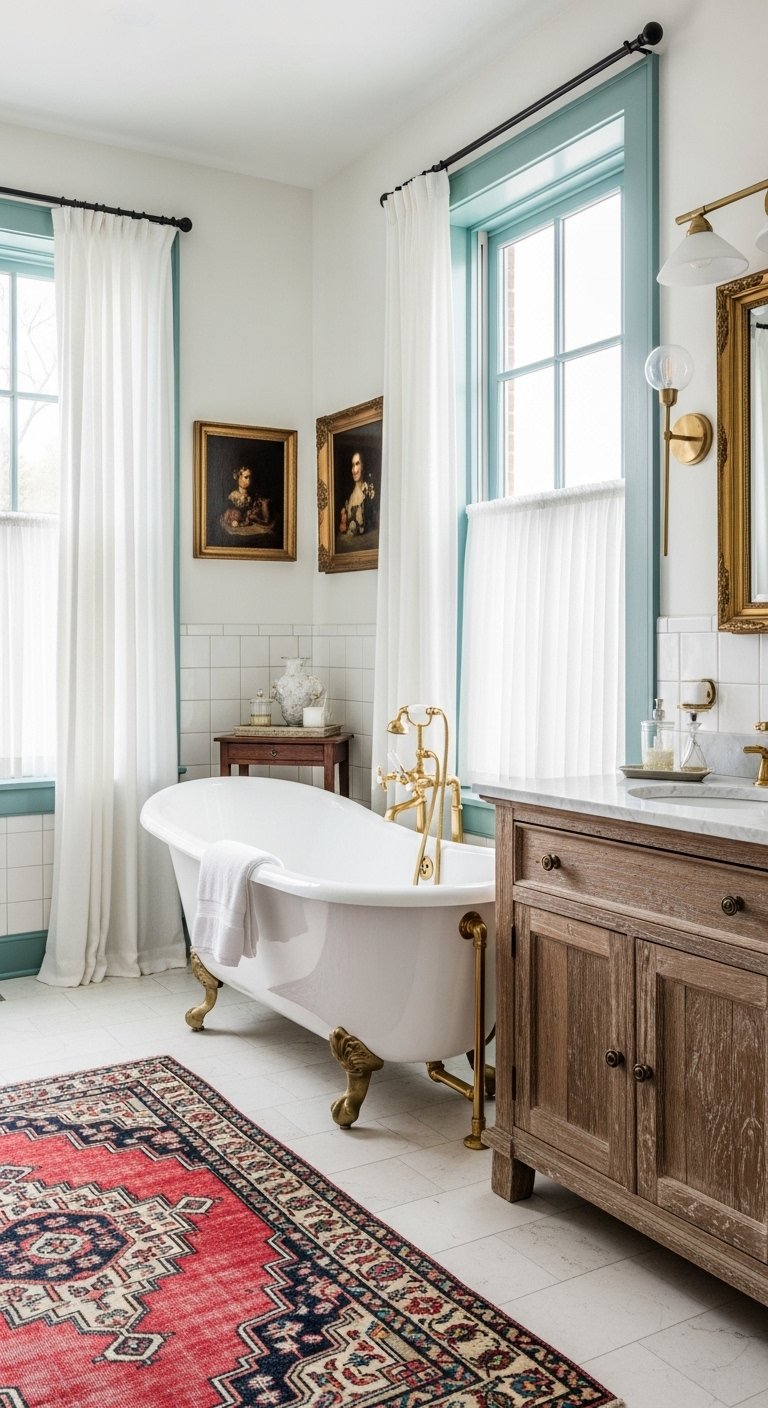
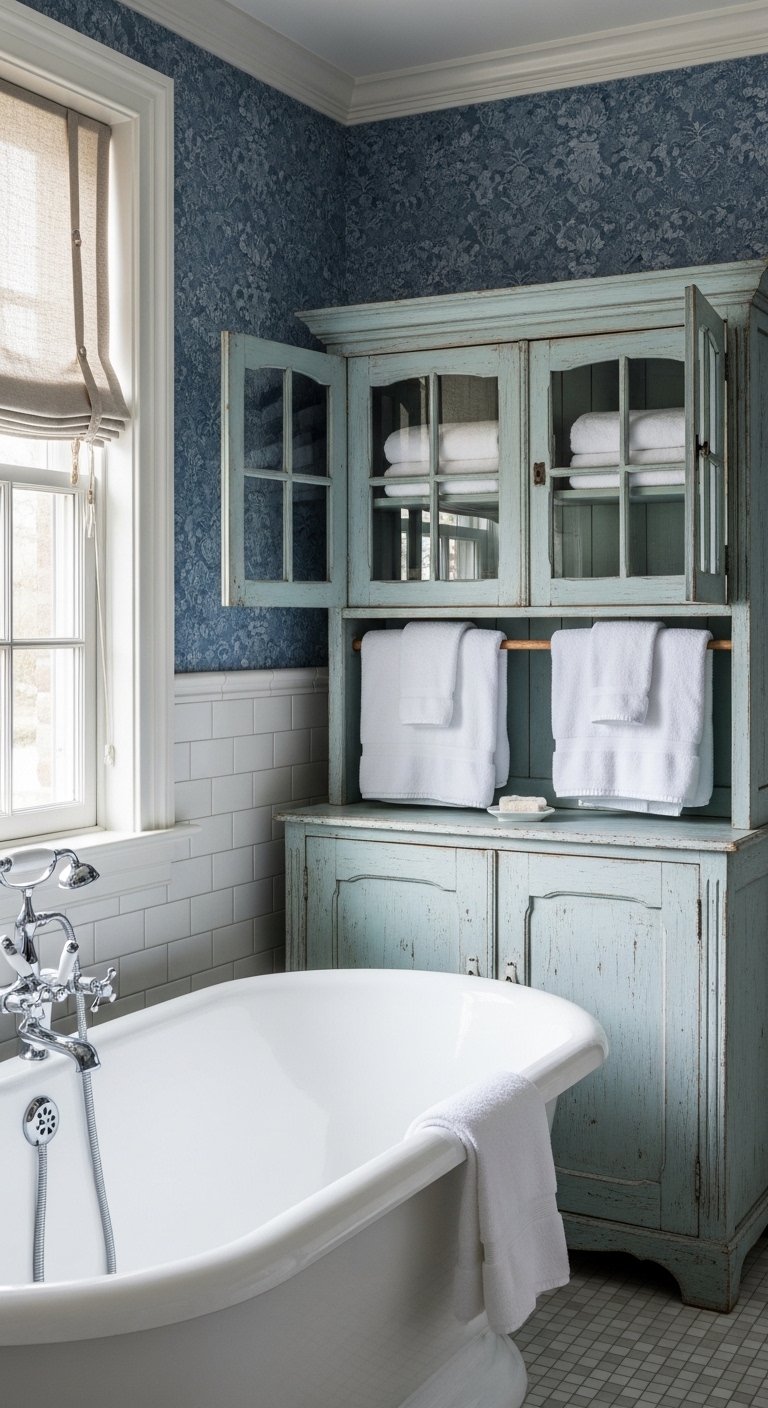
Nothing says “1890s” like a toilet with a cistern mounted high on the wall, connected by a long chrome or brass flush pipe. This utilizes vertical space, drawing the eye upward and making low ceilings feel higher. It is a bold mechanical statement that celebrates the plumbing rather than hiding it. While installation requires specific wall reinforcement, the visual payoff is unmatched.
Pro Tip: Ensure the pull chain has a ceramic or wood handle for tactile authenticity.
Hexagon Floor Tiles
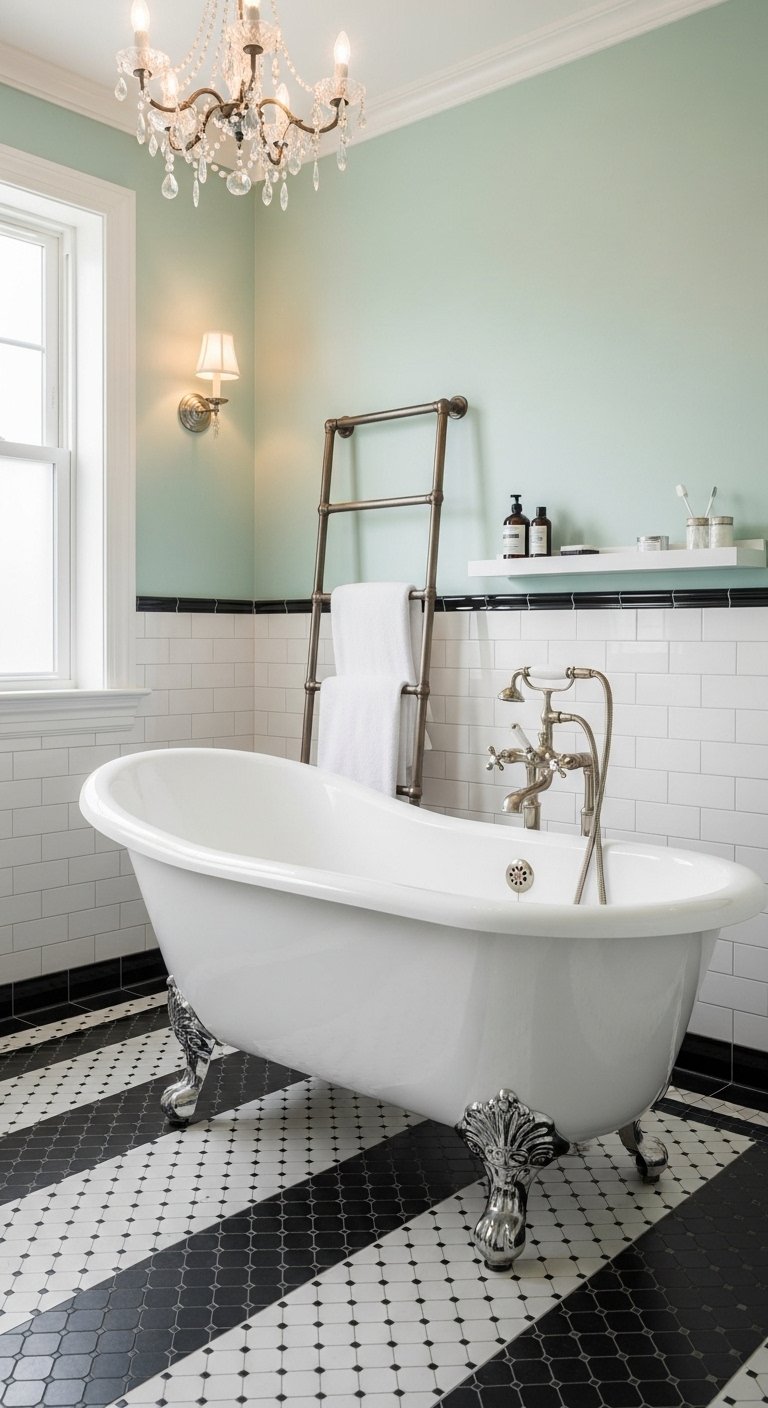
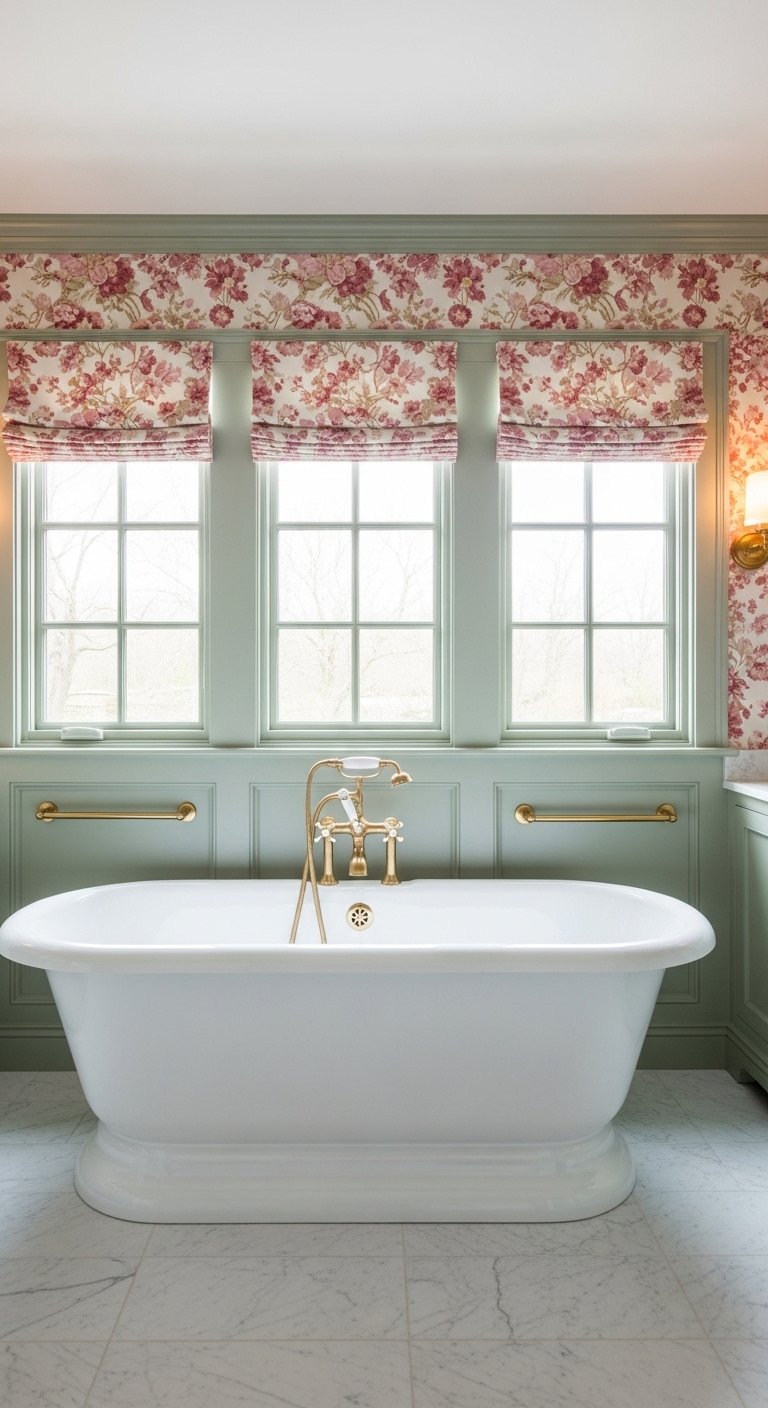
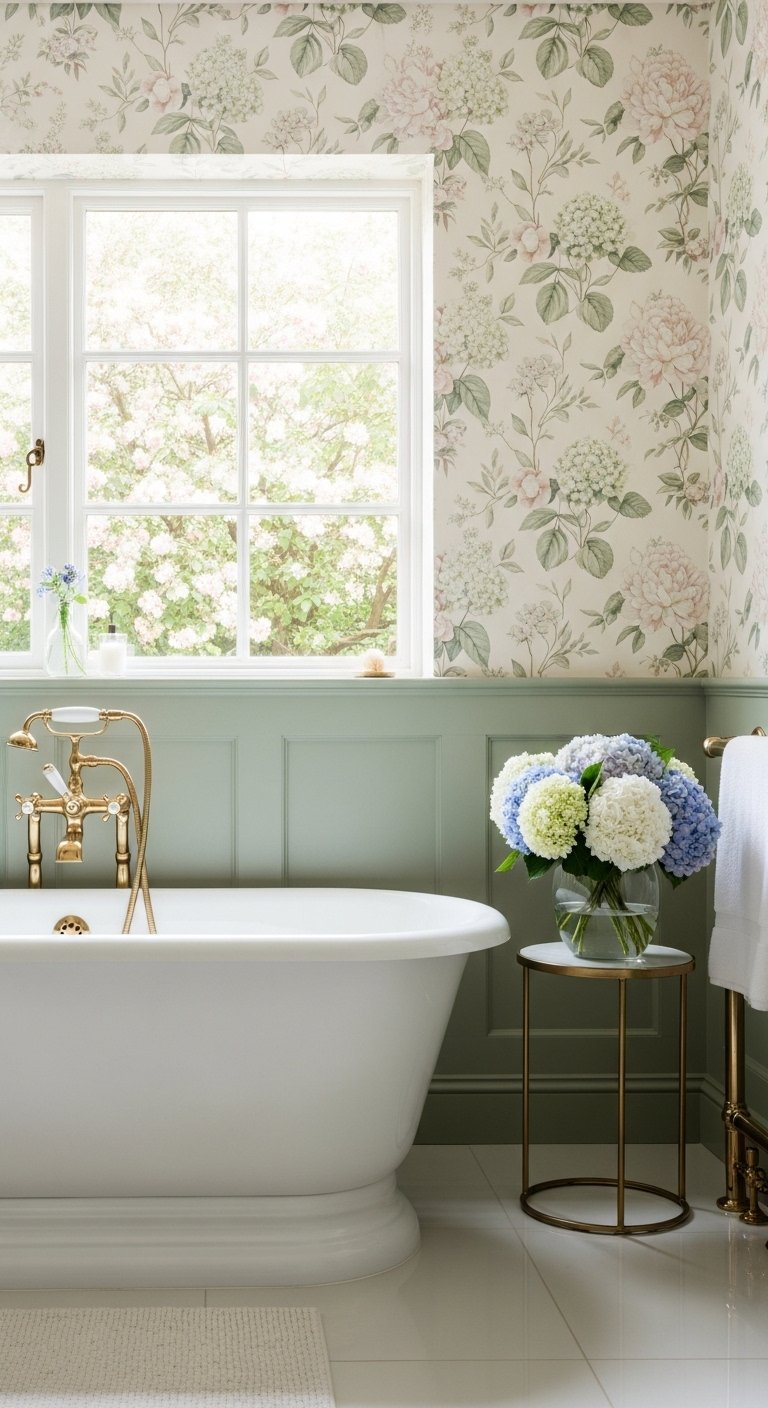
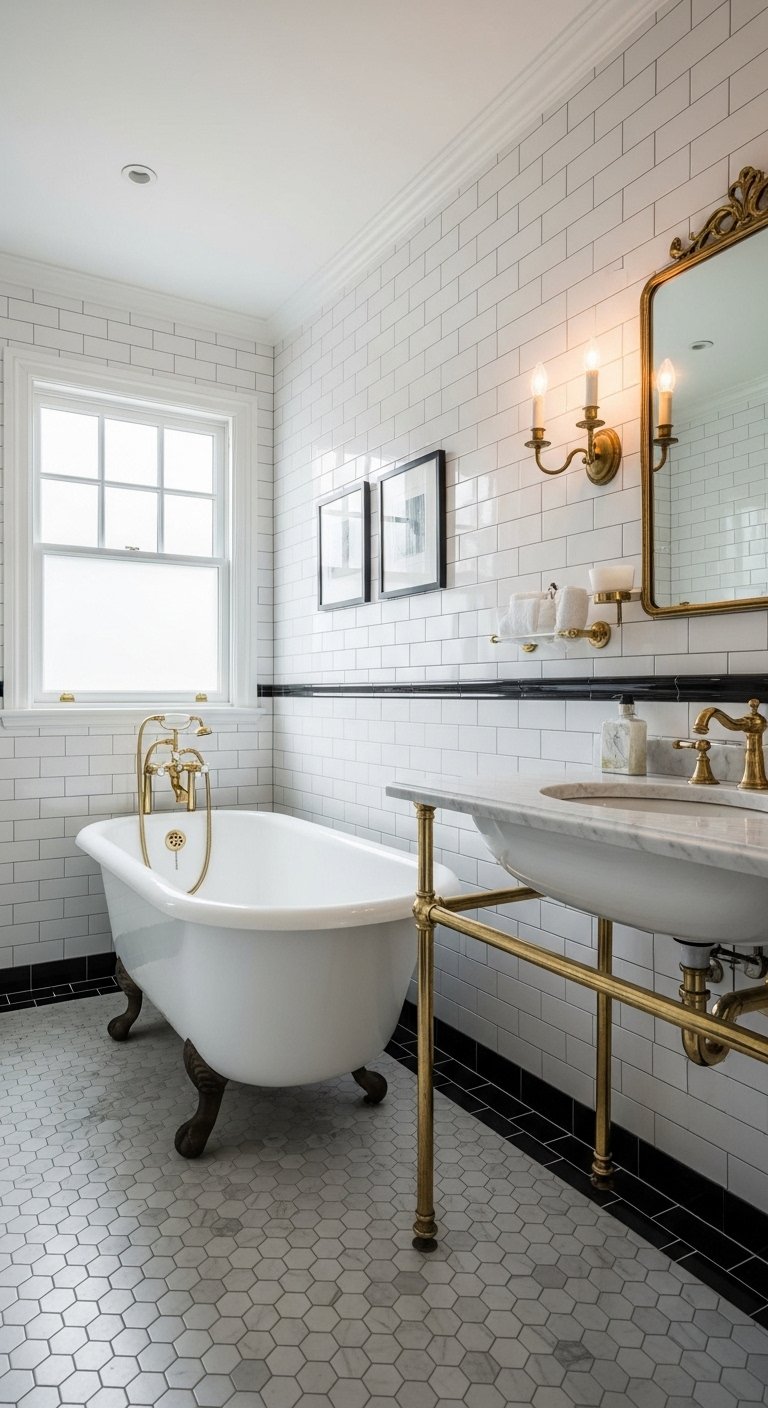
Small, white hexagon tiles (often 1-inch) are the quintessential flooring for this era. The high volume of grout lines provides excellent non-slip traction, making them practical for wet zones. From a design perspective, the honeycomb pattern is geometric yet organic. You can add a “flower” pattern using black tiles every few feet to break up the white expanse.
Save this idea to your Pinterest.
Pedestal Sinks
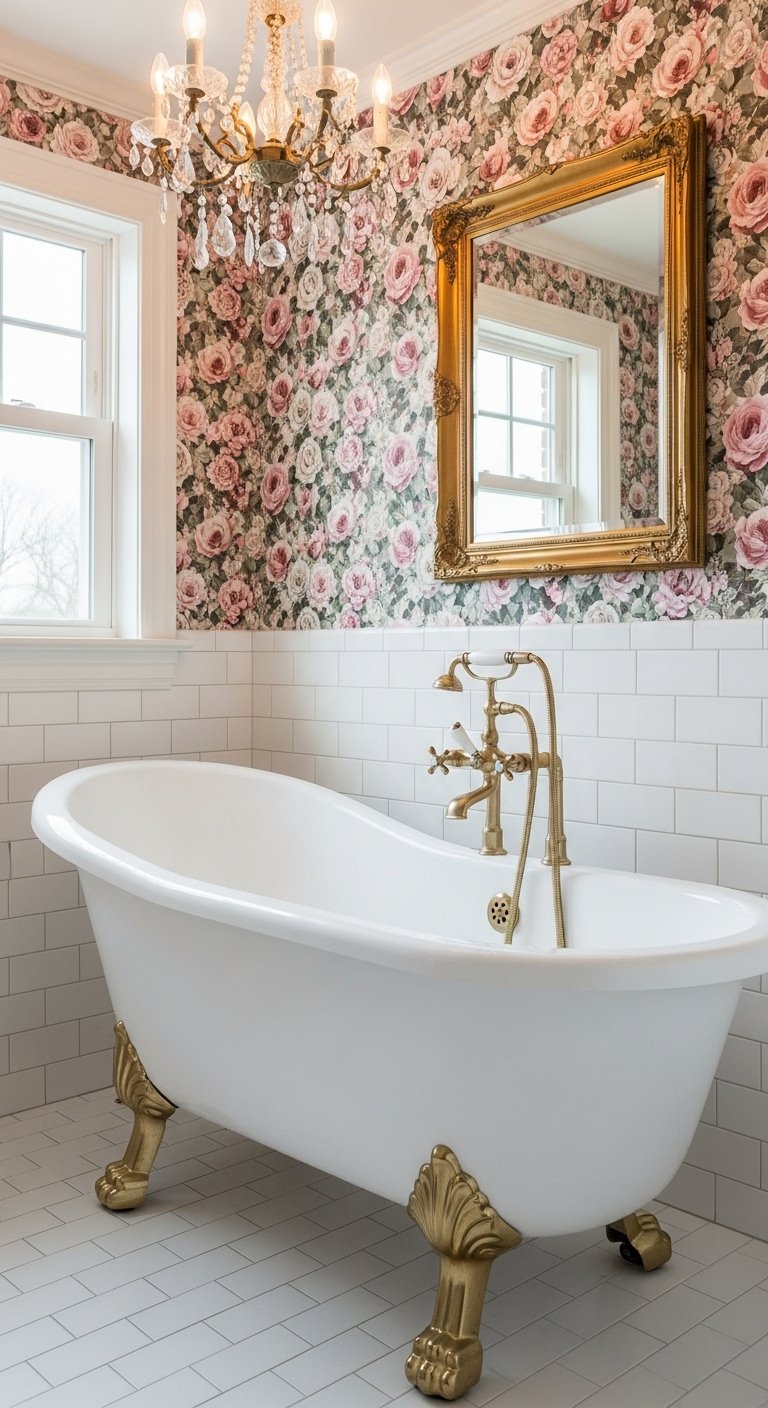
Victorian bathrooms rarely had bulky cabinetry. The pedestal sink stands alone, showcasing elegant porcelain curves. This is the ultimate “small space” hack because it has a tiny footprint. However, it sacrifices storage. To implement this without losing functionality, you must pair it with a mirrored medicine cabinet or glass shelves above the toilet.
Popular Asked Questions
### How do I make my bathroom look vintage on a budget?
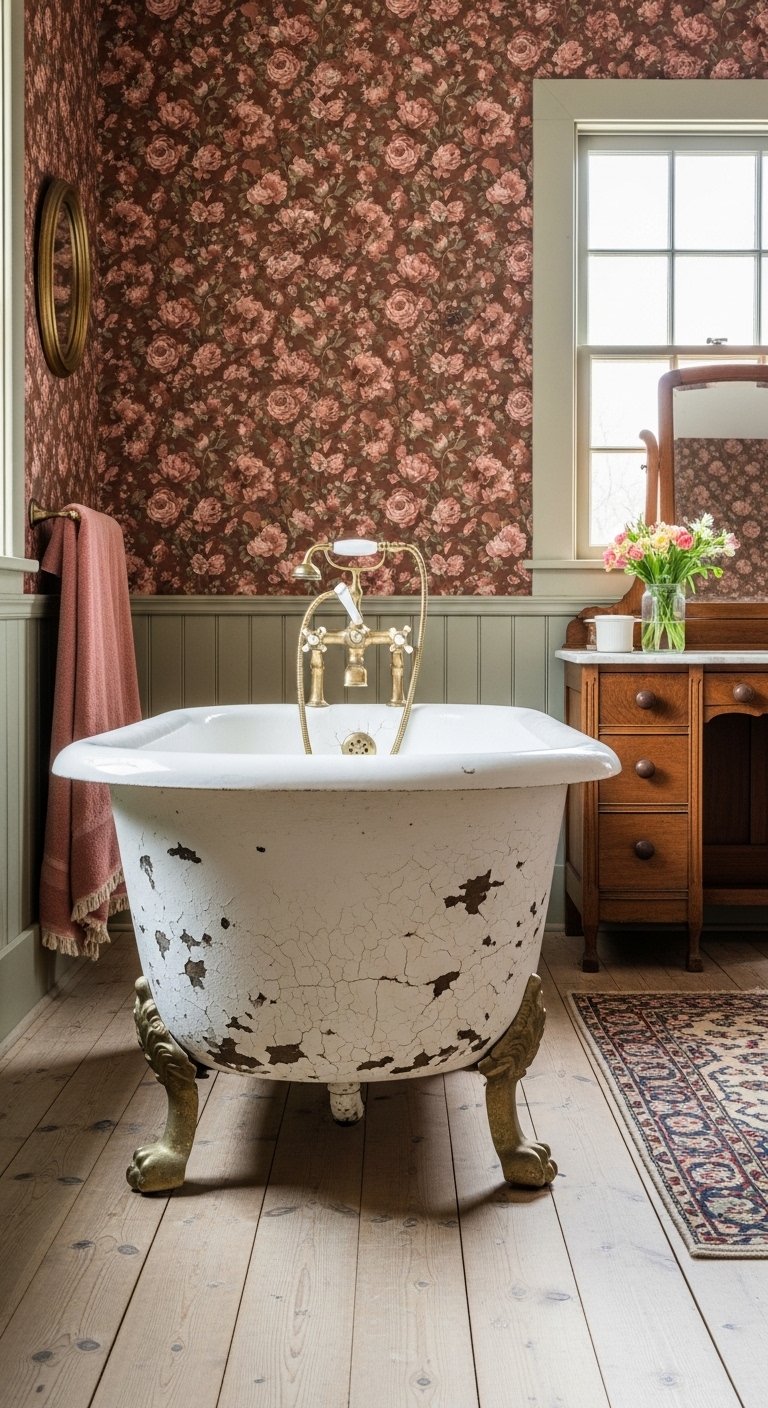
You don’t need to renovate to get the look. Start by swapping your hardware (cabinet knobs and faucet handles) for brass or ceramic options. Paint your vanity a deep mood color like navy or sage. Finally, replace your lighting with warm Edison bulbs and add a vintage rug. These cosmetic changes cost under $200 but drastically change the vibe.
What is the difference between retro and vintage bathrooms?
“Vintage” generally refers to items or styles that are 20 to 100 years old, focusing on elegance and craftsmanship (Victorian, Art Deco). “Retro” usually refers to the culturally distinct styles of the recent past (1950s-1970s), often characterized by bold colors, kitsch, and playful patterns. Vintage is timeless; Retro is nostalgic fun.
### Can you mix modern and vintage in a bathroom?
Absolutely. In fact, “Modern Vintage” is a top trend for 2025. The trick is to keep the “permanent” fixtures (tub, toilet, shower layout) vintage or classic white, and use modern functionality for the hidden parts (plumbing, waterproofing). You can also mix a sleek modern glass shower enclosure with vintage floor tiles to keep the room feeling open.
### Are vintage bathrooms expensive to maintain?
They can be if you use original plumbing parts. Original 1920s faucets can be prone to leaks and hard to find parts for. The best approach is to buy new fixtures that look vintage. This gives you the aesthetic of the past with the ceramic disc valve reliability of the present. However, items like cast iron tubs are virtually indestructible and require very little maintenance.
### What is the best color for a small vintage bathroom?
White is the classic choice because it reflects light and pairs with any era. However, don’t be afraid of dark colors in small spaces. A dark charcoal or forest green wainscoting with white walls above can create depth and make the corners of the room “disappear,” actually making the space feel cozier and larger.
Conclusion
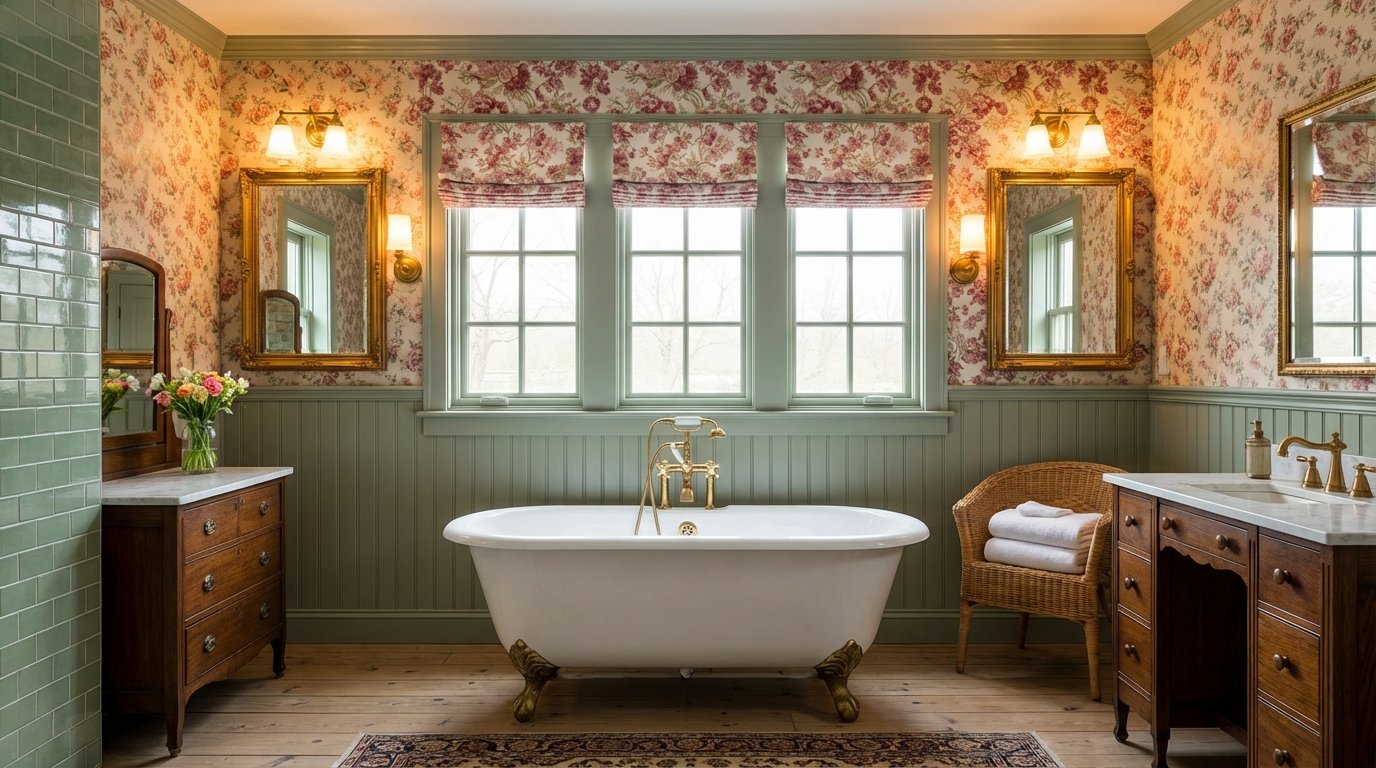
Creating a stunning vintage bathroom is about more than just buying an old tub. It is about layering textures—wood, stone, brass, and porcelain—to tell a story. Whether you choose the romantic Victorian, the glamorous Art Deco, the playful Mid-Century, or the grounded Farmhouse, the key is consistency.
Start with one focal piece, like a patterned floor or a unique vanity, and build the room around it. Don’t rush. The best vintage bathrooms look collected over time.
Which of these 4 styles speaks to your home? Let us know in the comments below!
Follow us on Pinterest for more Vintage Bathroom inspiration.

Leave a Comment