
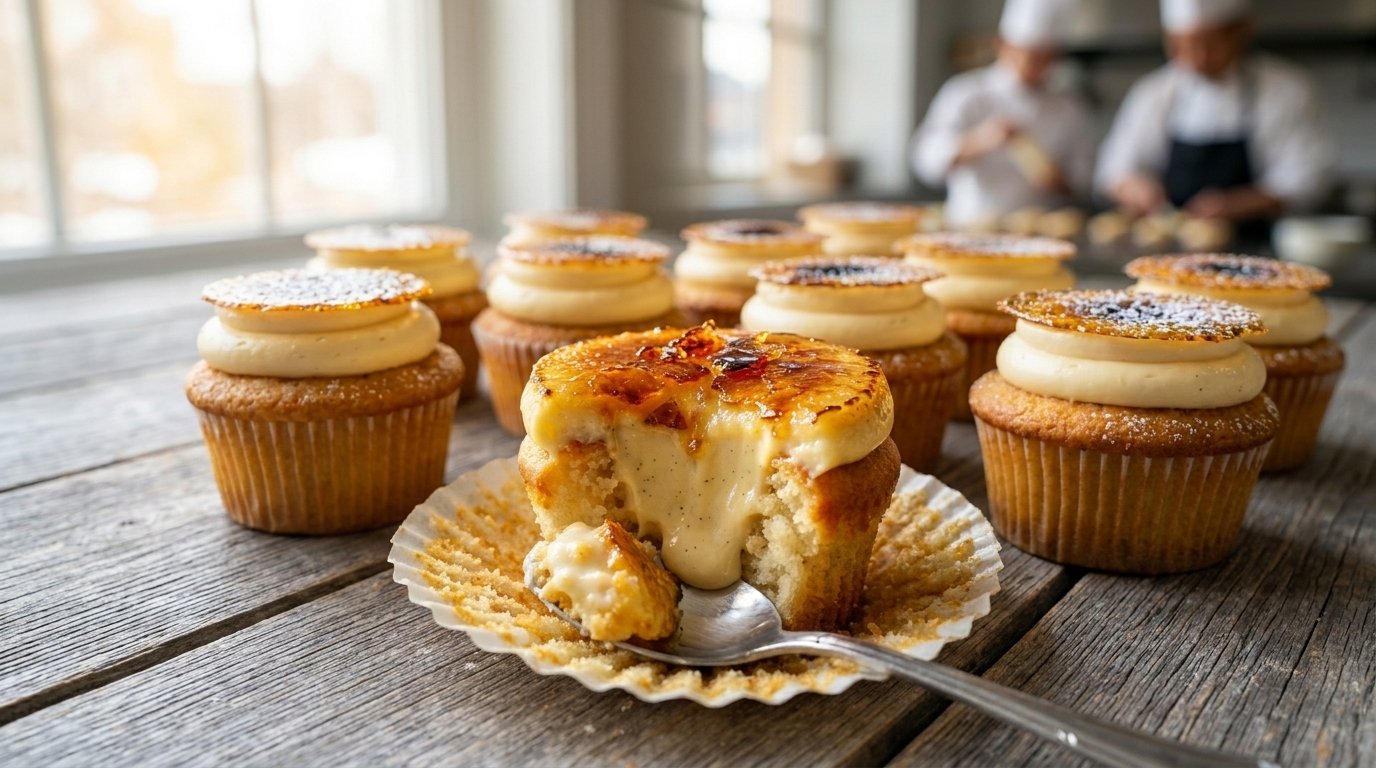
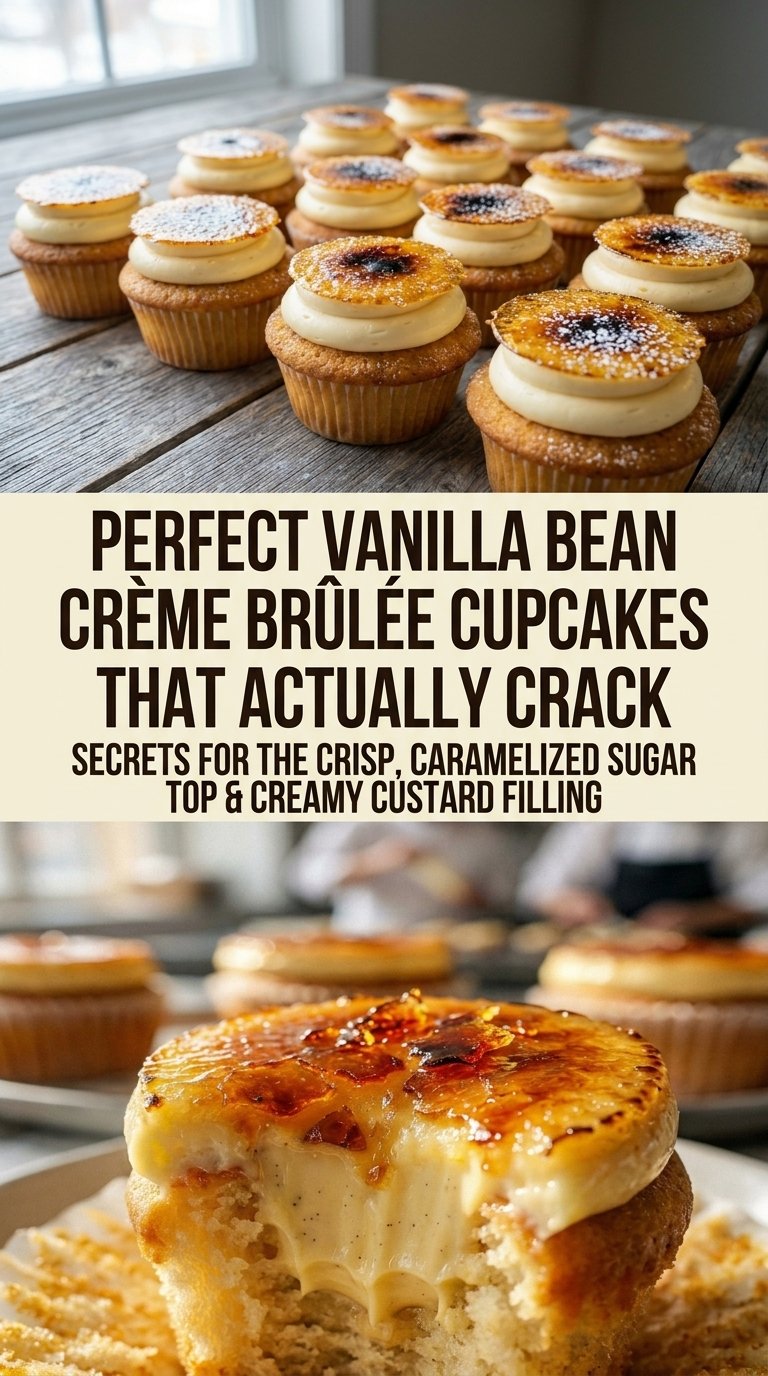
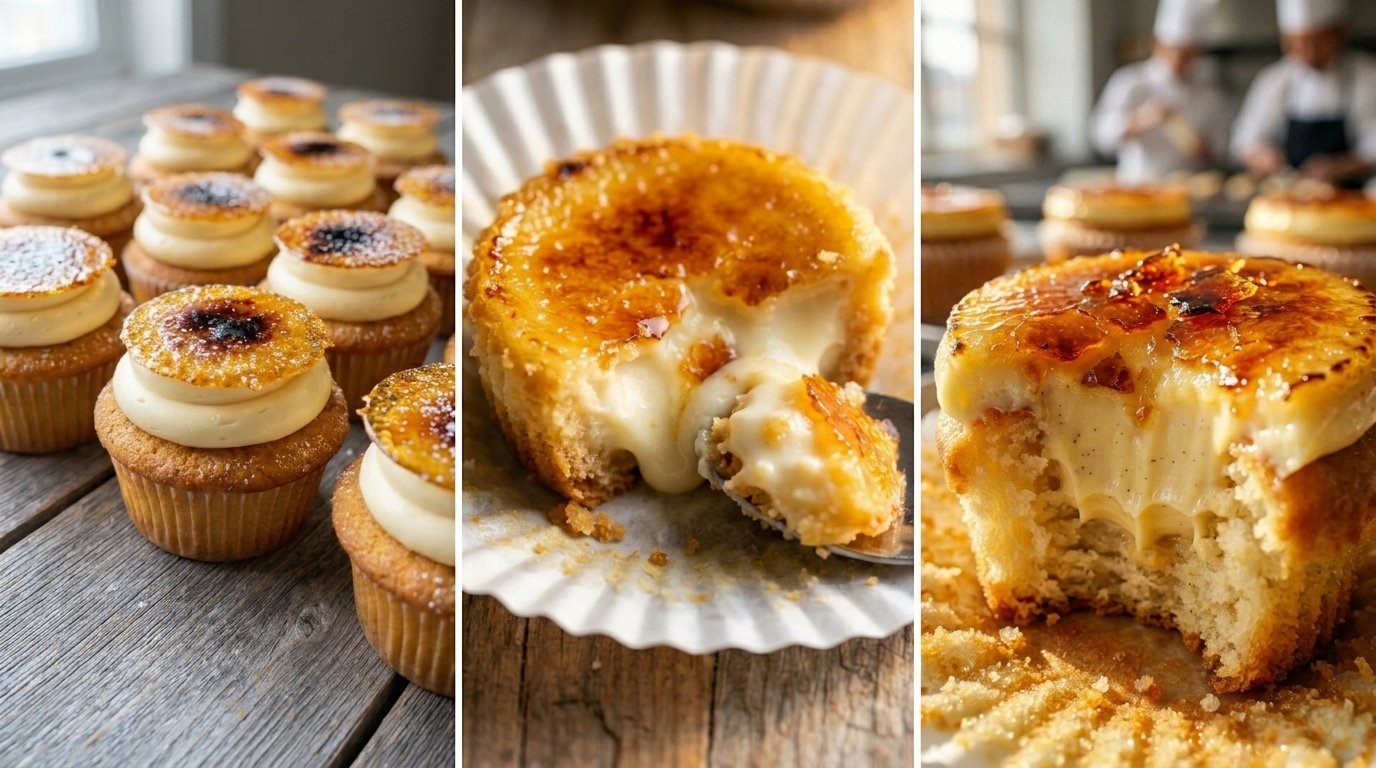
Vanilla bean crème brûlée cupcakes are all over Pinterest right now. And for good reason. They bring together two crowd-winning desserts into one handheld bite: a soft vanilla cupcake base, a silky pastry cream center, and a sugar top that cracks when you tap it. The problem most bakers run into is that the sugar goes soggy fast, the custard turns grainy, or the cupcake base feels dry against all that cream. This guide walks you through every stage of the process with real fixes for each common problem, from the pastry cream method to the brûlée technique. No torch? Covered. No vanilla bean? Also covered.
Check out our related guide on Classic French Custard Desserts for Beginners.
Key Takeaways
- Real vanilla bean paste makes a visible, flavor-deep difference compared to extract alone.
- Pastry cream is the heart of this recipe. Make it a day ahead so it firms up properly for piping.
- Timing the brûlée is everything. Torch or broil the sugar only minutes before serving.
- Room-temperature ingredients prevent lumps in the batter and curdling in the custard.
- No kitchen torch needed. A preheated broiler works when you watch it closely.
Vanilla Bean Crème Brûlée Cupcakes: Full Ingredients
This recipe yields 12 standard-size cupcakes. Every ingredient below contributes to a specific texture or flavor outcome.
For the Vanilla Bean Cupcakes:
- ½ cup (113g) unsalted butter, room temperature
- ¾ cup (150g) granulated sugar
- 2 large eggs, room temperature
- 1 tsp pure vanilla extract
- 1½ cups (180g) cake flour
- 1½ tsp baking powder
- ¼ tsp fine salt
- ½ cup (120ml) whole milk or buttermilk, room temperature
The base batter uses unsalted butter for control over the salt level, whole milk or buttermilk for moisture, and a full teaspoon of pure vanilla extract for aroma. Cake flour gives a finer, softer crumb than all-purpose flour. If you only have all-purpose, replace two tablespoons per cup with cornstarch to approximate the lower protein content of cake flour.
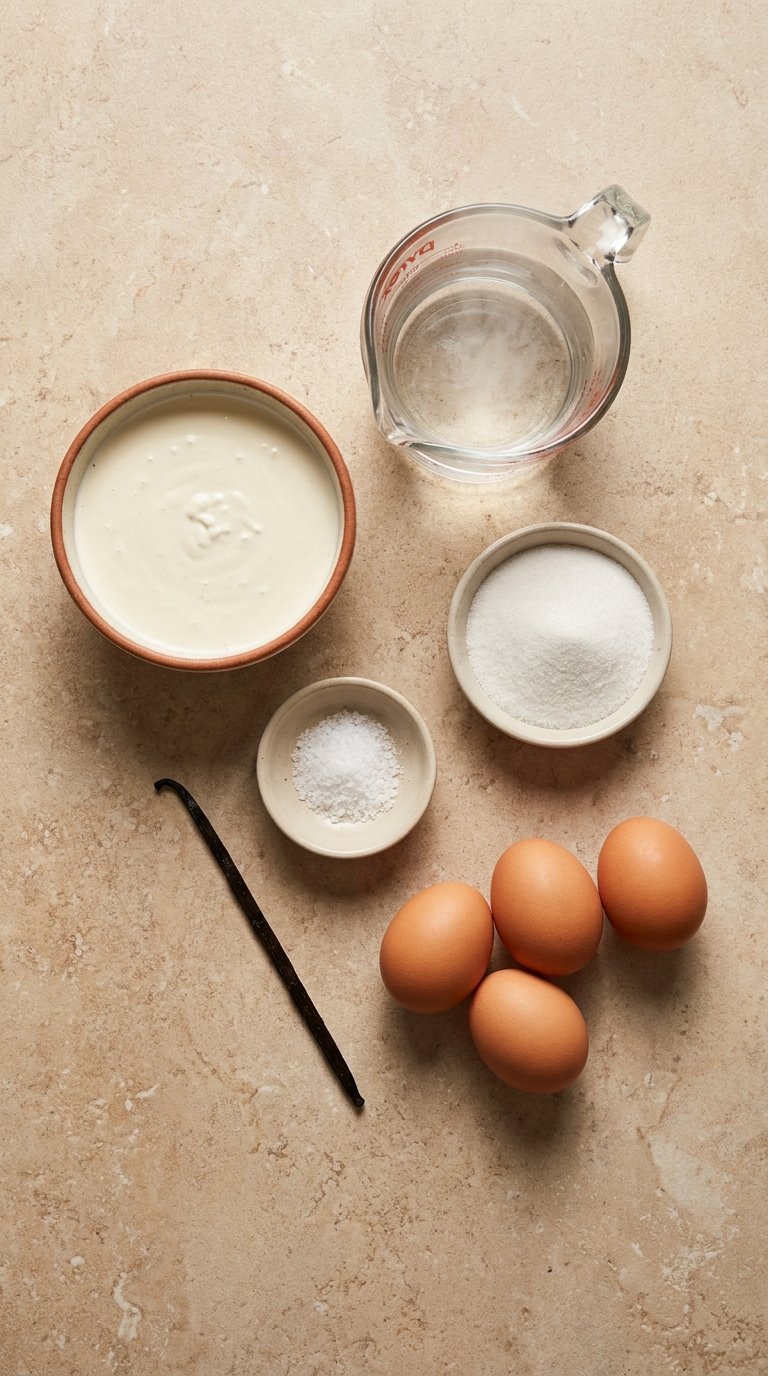
For the Vanilla Bean Pastry Cream:
- 2 cups (480ml) whole milk or heavy cream
- 1 vanilla bean, split and seeds scraped (or 1 tbsp vanilla bean paste)
- 4 large egg yolks
- ½ cup (100g) granulated sugar
- 3 tbsp (24g) cornstarch
- 2 tbsp (28g) unsalted butter, cubed (optional, for extra richness)
Egg yolks carry the richness. Whole milk works but heavy cream gives a richer, more stable cream that pipes cleanly. Cornstarch is the thickener. Do not swap it for flour as the texture will be starchier and less silky.
For the Brûlée Topping:
- 6 tsp demerara sugar (½ tsp per cupcake)
Demerara sugar is the best choice. Turbinado sugar is a close second. Both have large, rough crystals that melt into a crinkled, glass-like surface. Fine granulated sugar can work but burns quickly under the torch.
Step-by-Step Instructions
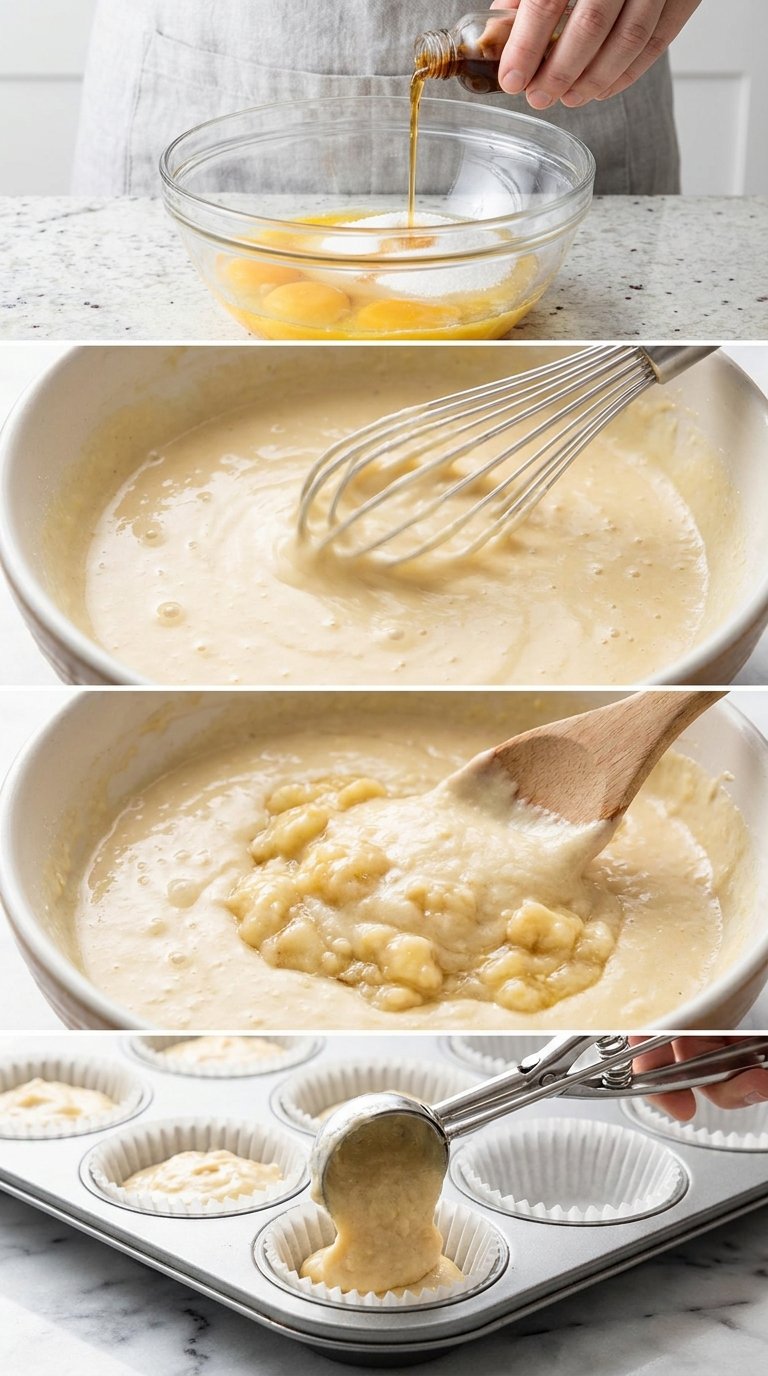
Step 1: Make the Pastry Cream First
Do this the night before or at least 4 hours before you plan to serve. The cream must be fully chilled to pipe cleanly.
In a medium saucepan, warm 2 cups of whole milk with one split vanilla bean and its seeds over medium-low heat until steaming. In a bowl, whisk 4 egg yolks with half a cup of sugar until pale, then stir in 3 tablespoons of cornstarch. Slowly pour the hot milk into the egg mixture one ladle at a time while whisking. Return the mixture to the saucepan and cook over medium heat, stirring constantly, until thick. Cook for one more minute once thickened. Remove from heat and stir in the butter cubes if using. Transfer to a clean bowl, press plastic wrap directly to the surface, and chill for at least 4 hours.
Step 2: Make the Cupcake Batter
Preheat your oven to 350°F (175°C). Line a 12-cup muffin tin with paper liners.
Beat half a cup of room-temperature unsalted butter with three-quarters of a cup of granulated sugar until light and fluffy, about 3 minutes. Add 2 eggs one at a time, mixing well after each. Mix in 1 teaspoon of pure vanilla extract. In a separate bowl, whisk the cake flour with the baking powder and salt. Add the flour mixture to the butter mixture in three additions, alternating with the milk. Mix until just combined. Do not overmix.
Step 3: Bake the Cupcakes
Divide the batter evenly between the lined cups, filling each to about two-thirds. Bake for 18 to 22 minutes, until a toothpick inserted in the center comes out clean. Let them cool in the pan for 5 minutes, then transfer to a wire rack to cool completely. Do not fill warm cupcakes. The pastry cream will melt.
Step 4: Core and Fill
Use a cupcake corer or paring knife to remove the center of each cooled cupcake, going halfway down. Transfer the chilled pastry cream to a piping bag fitted with a round tip. Pipe the cream into the hole until level with the top of the cupcake. Then pipe a second smooth layer on top of each cupcake, keeping the surface as flat and even as possible.
Step 5: Brûlée and Serve
Sprinkle about half a teaspoon of demerara sugar over the pastry cream surface of each cupcake. Use a kitchen torch held 2 inches above the surface, moving in slow circles, until the sugar melts and turns amber. No torch? Slide the cupcakes under a fully preheated broiler on high for 2 to 4 minutes, watching closely. Wait 1 to 2 minutes for the crust to harden, then serve immediately.
Popular Asked Questions
Can I make crème brûlée cupcakes without a kitchen torch?
Yes. Place sugar-topped cupcakes on a baking sheet and slide them under a fully preheated broiler set to high. Keep the rack as close to the broiler element as possible and watch them from the moment they go in. The sugar should caramelize in two to four minutes. Check every 30 seconds once you see the edges start to melt. Remove as soon as the surface turns amber. The broiler method heats the pastry cream slightly more than a torch does, so serve these cupcakes promptly.
How far in advance can I make crème brûlée cupcakes?
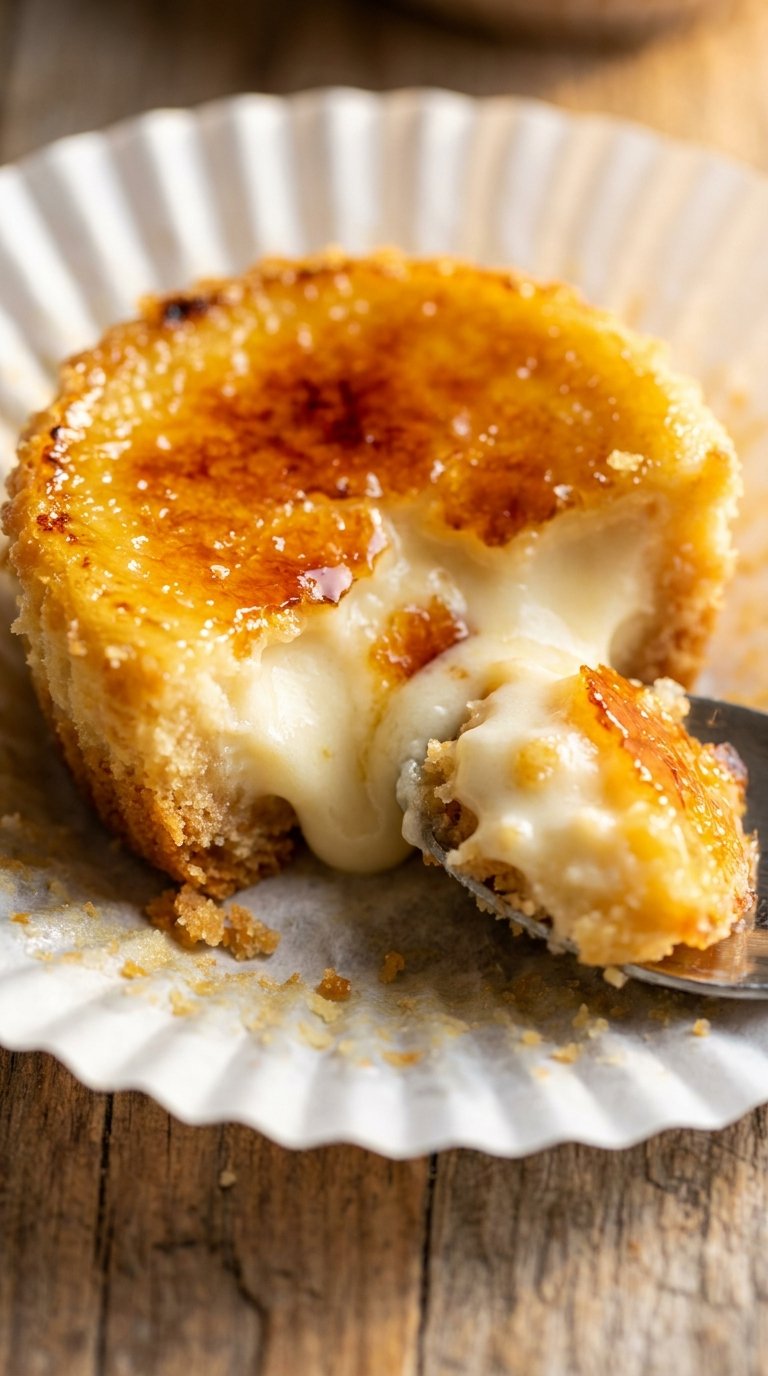
The pastry cream can be made up to three days ahead and stored covered in the refrigerator. The cupcake bases can be baked and frozen up to one month in advance. Fill the cupcakes with pastry cream the day before serving and store them covered in the fridge. Do not brûlée the sugar top until 30 minutes before you plan to serve. The sugar crust softens overnight in the refrigerator and loses its signature crack.
What kind of sugar is best for the brûlée topping on cupcakes?
Demerara sugar gives the best result. Its large crystals melt into a thick, crinkled, glass-like crust that cracks cleanly. Turbinado sugar is a good second choice. Fine granulated sugar works but it burns more quickly and produces a thinner crust. Avoid brown sugar for the brûlée top as its molasses content makes it prone to uneven burning rather than clean caramelization.
Why is my pastry cream not setting up properly?
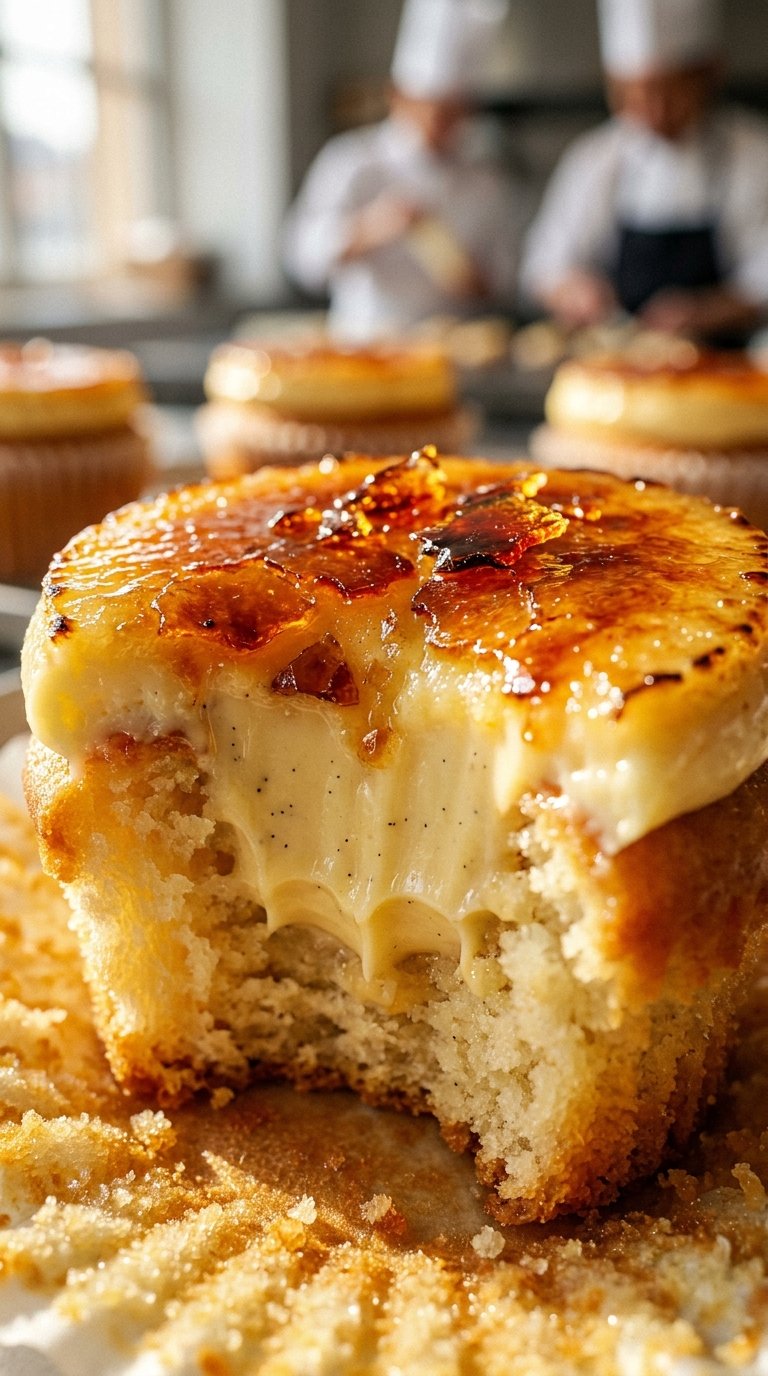
Pastry cream needs enough cornstarch and enough cook time after thickening. The most common reason it stays loose is pulling it from the heat too early. After the cream thickens and begins to bubble, keep it on the heat for at least one more full minute while stirring. This cooks out the raw cornstarch taste and sets the starch network that firms the cream as it chills. If it still seems loose after chilling, the ratio of yolks or cornstarch may have been off. Chilling overnight usually firms it further.
Can I use vanilla extract instead of vanilla bean in crème brûlée cupcakes?
Yes. Use one tablespoon of pure vanilla extract per vanilla bean. Add it off heat after the pastry cream has thickened and been removed from the stove. Heat reduces the aromatic compounds in extract, so adding it late preserves more flavor. For the cupcake batter, one teaspoon of extract for the full batch is the standard amount. The result will taste very good, though it will lack the visible black specks and the slightly more complex flavor note that comes from whole beans or paste.
Final Thoughts
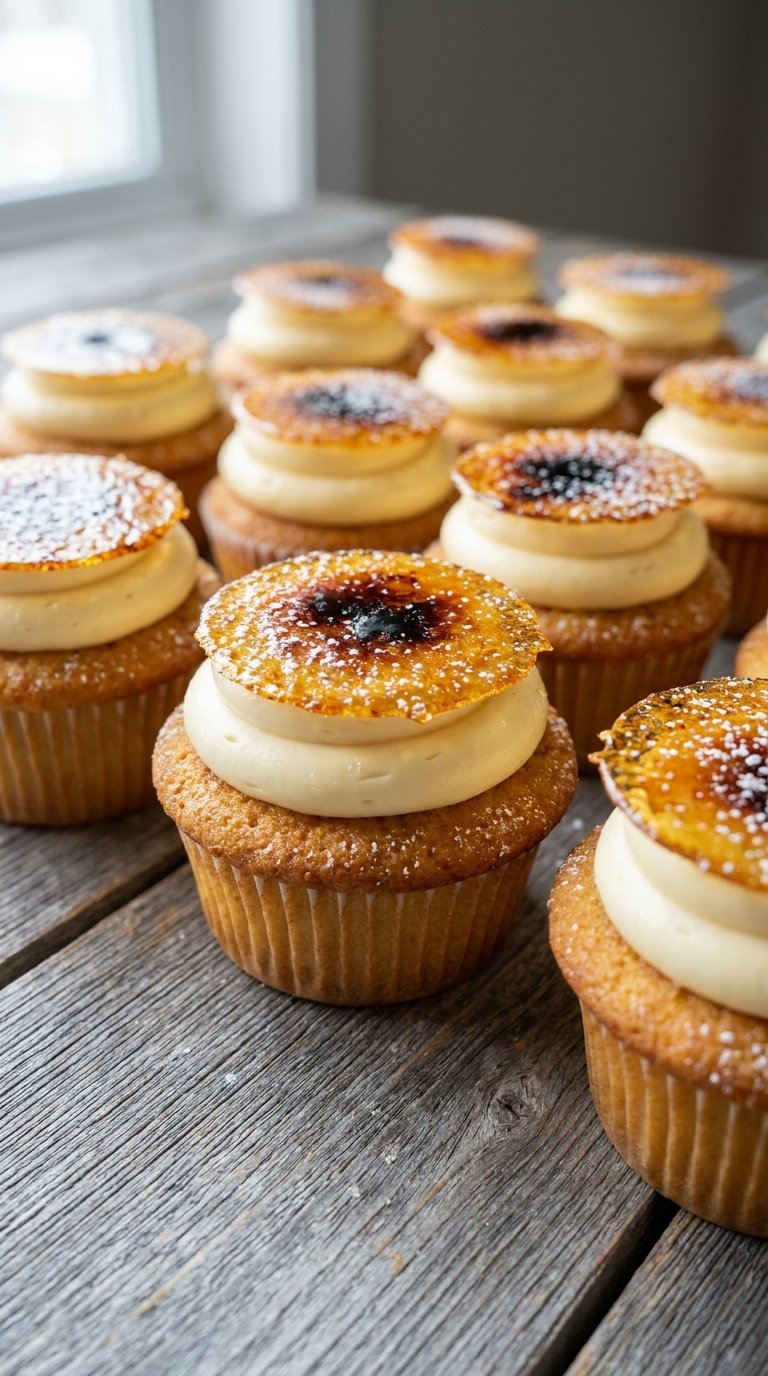
Vanilla bean crème brûlée cupcakes sit at the intersection of technique and payoff. The steps are not quick, but none of them are difficult. The pastry cream comes together in under 20 minutes. The batter mixes in one bowl. The brûlée takes less than a minute per cupcake with a torch. The result is a dessert that earns the kind of silence at a table that means everyone is too busy eating to say anything.
The best version of this recipe is the one you make twice. The first time you learn the feel of the pastry cream at the right thickness, the second time you know exactly when to stop torching the sugar.
Which part of this recipe are you trying first, the pastry cream from scratch or the brûlée top? Leave a comment below.
Follow us on Pinterest for more vanilla bean crème brûlée cupcakes inspiration and easy French dessert recipes: wisdomforhome.com

Leave a Comment