
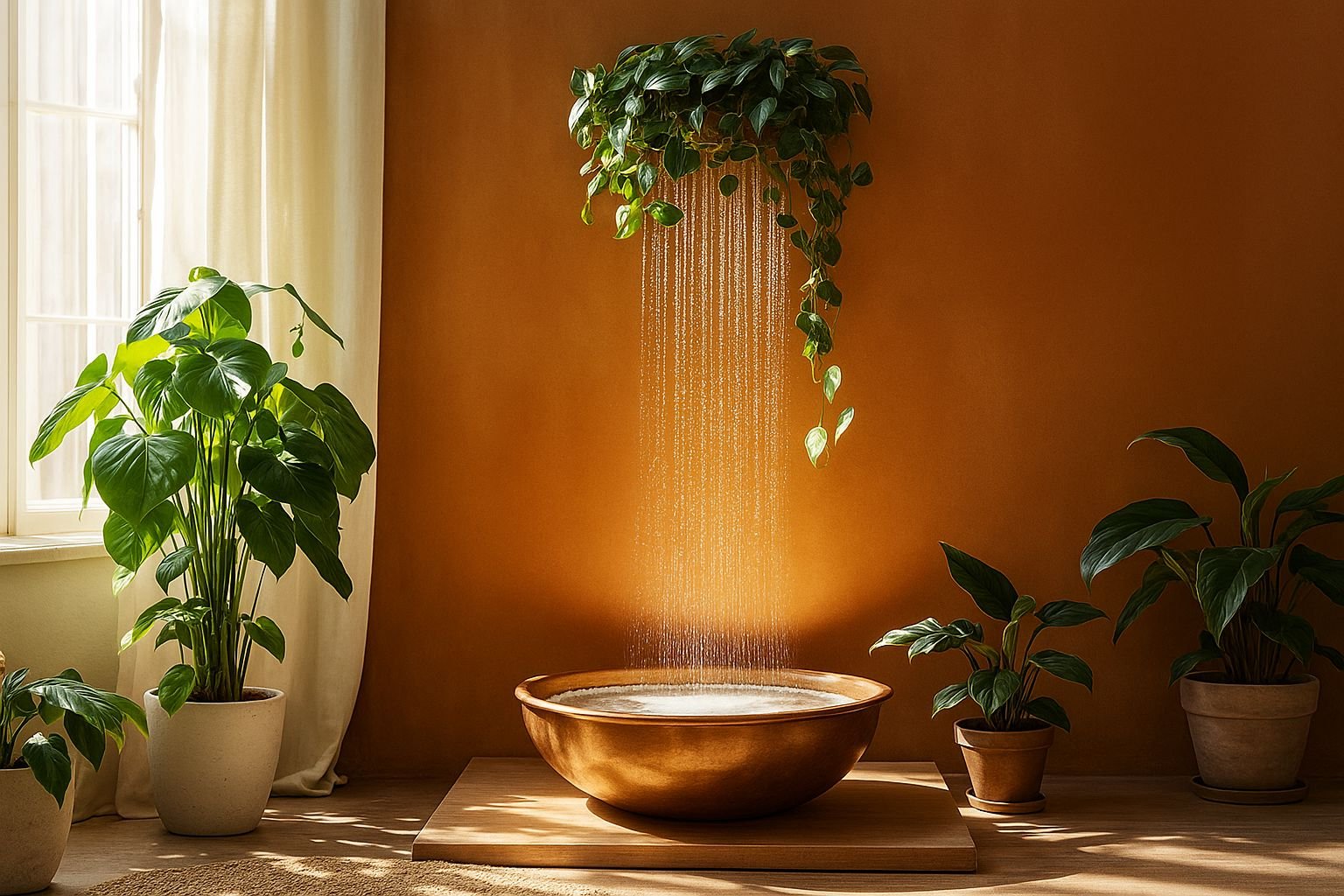
How Fountains Went From Life Support to Luxury Items
Fountains have been reinvented more times than most things we use today. They’ve gone through transformations that would make a butterfly jealous. What started as a pure survival necessity became one of the most beloved decorative elements in architecture. That journey from “we need this to live” to “we need this because it’s gorgeous” tells you everything about human progress.
Ancient times required fountains for survival. Plain and simple. People needed water to drink. Needed water to bathe. Needed water for cooking and cleaning. The fountain was where you got it. No turning on a tap. No bottles from the store. You walked to the fountain with your containers and filled them up. That was daily life for millions of people across thousands of years.
The original design served both purposes without any conflict. These early fountains supplied water AND looked good doing it. The Romans especially understood this dual function. They’d build these elaborate fountains with statues and carvings. Beautiful architecture that also kept people alive. That’s efficiency at its finest.
Water supply was job number one for ancient fountains. Everything else came second. You could make it pretty if you wanted. That was a nice bonus. But if it didn’t deliver clean water reliably, none of the decoration mattered. Function over form was the rule back then.
Decorative purposes got more attention as civilizations advanced. Once cities figured out better water distribution, fountains didn’t need to be the only source. They could afford to make them more ornate. More artistic. More impressive. The engineering was there. The water was flowing. Why not make something beautiful?
It was only later when everything changed. The function shifted from necessity to luxury. From survival tool to status symbol. This didn’t happen overnight. It took centuries of gradual change. Better plumbing. More sophisticated water systems. Suddenly fountains were optional instead of required.
The function of fountains changing represents a massive shift in human priorities. We moved from “how do we stay alive” to “how do we make our lives beautiful.” That’s not frivolous. That’s human nature. Once basic needs are met, we start caring about aesthetics and experience.
Modern times flipped the script completely. Now fountains are almost entirely decorative. Sure, some still provide drinking water in parks. But that’s not why we build them. We build them because they look amazing. Because they sound peaceful. Because they make spaces feel special.
Contemporary approaches to fountains focus on the experience they create. The visual impact. The auditory environment. The way they make people feel. These psychological and emotional effects matter more than practical water delivery. That shift defines modern fountain design.
The way fountains are utilized now would confuse ancient people. “You’re making water flow just to look at it? Just to listen to it? You’re not even drinking it?” They’d think we lost our minds. But we’d tell them we found something more valuable than just hydration.
Decorative and dramatic effects became the whole point. Fountains exist to create moments. To make spaces memorable. To give people something beautiful to experience. The water still flows. Gravity still pulls it down. But now those basic physics create art instead of just providing resources.
Fountains possess an almost magical quality in modern settings. They transform ordinary spaces into extraordinary ones. A park with a fountain feels more alive than one without. A building lobby with a fountain feels more luxurious. The fountain makes the difference even though it serves no practical purpose.
Given more importance than functionality might sound backwards. Why would decoration matter more than function? But think about it. We have function covered. Pipes deliver water everywhere. The fountain doesn’t need to be functional anymore. So it gets to be purely beautiful. That’s actually progress.
Present everywhere describes modern fountain placement perfectly. City parks have them. Public squares build around them. Shopping centers install them. Office buildings put them in lobbies. We’ve normalized seeing elaborate water features in places where they serve zero practical purpose.
Every city park and square seems to have a fountain now. It’s almost expected. A nice public space without a fountain feels incomplete somehow. We’ve come to associate fountains with quality public areas. They signal that someone cared enough to create something special.
Home gardens jumped on the fountain trend relatively recently. Used to be only rich people with estates had garden fountains. Now you can pick one up at the hardware store. That democratization changed everything. Regular people with regular yards can enjoy moving water in their outdoor spaces.
Providing instant relief from summer heat is still a practical benefit. Kids run through fountain spray on hot days. Adults sit near them to cool off. The evaporating water actually lowers the temperature around the fountain. So even decorative fountains serve a function. It’s just different from the original one.
The natural ability to create relaxing and cozy ambiance is what makes fountains valuable today. We don’t need them for water. We need them for our mental health. For stress relief. For creating environments where we can actually relax instead of staying wound up constantly.
More relaxing spaces happen when you add moving water. The sound masks annoying background noise. The movement gives your eyes something peaceful to focus on. The humidity makes the air feel better. All of these effects combine to create environments that support wellbeing.
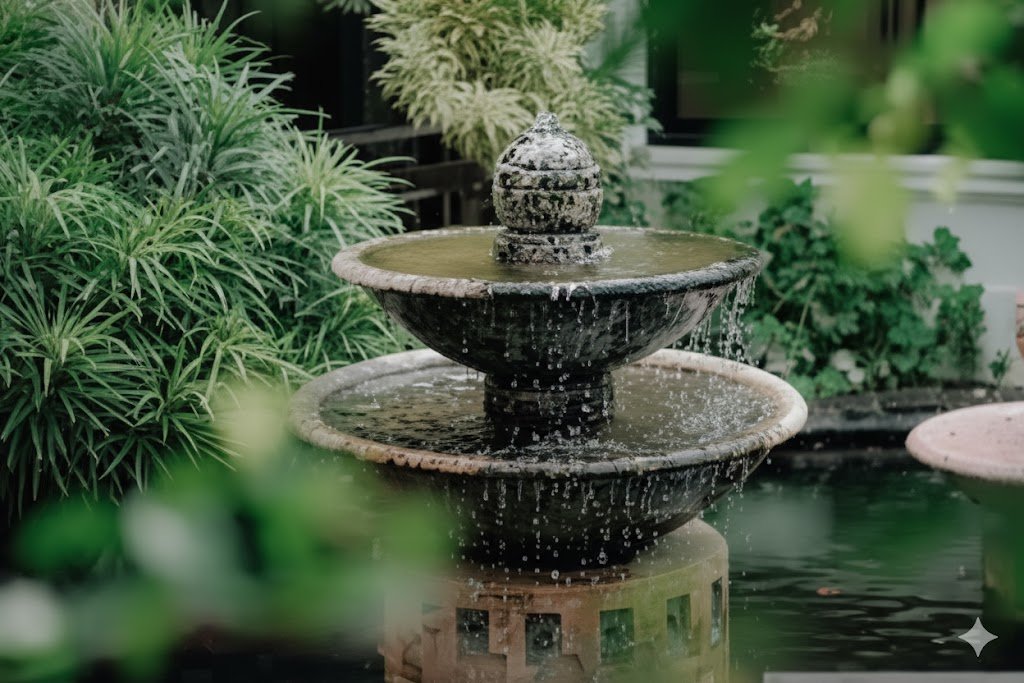
Cozy ambiance comes from multiple sensory inputs working together. The sight of flowing water. The sound of it trickling. The slight coolness it creates. The way light plays off the droplets. Your brain processes all of this and decides “this is a good place to be.”
Any place with a fountain feels different from the same place without one. That difference is hard to quantify but easy to feel. The fountain doesn’t just decorate. It transforms. It changes how people experience and remember that space.
When Public Fountains Make You Rethink Your Whole House
We walk past fountains constantly and barely notice them. They’re just part of the background. Part of the urban landscape we take for granted. Then one day you really see one. Really notice it. And suddenly you can’t stop thinking about how good it makes that space feel.
Constantly overwhelmed by exquisiteness sounds dramatic but it’s accurate. Some fountains are so well designed they stop you in your tracks. You weren’t planning to pause. You were walking somewhere with purpose. But the fountain catches your eye and you find yourself standing there just looking at it.
The fountains we see in city parks range from simple to spectacular. Some are basic. Water shooting up. Water coming down. Nothing fancy. Others are elaborate installations with multiple levels, lighting, even choreographed movements. Both types work. Both create positive experiences.
Other places use fountains strategically to improve their spaces. Hotel lobbies put massive fountains right at the entrance. Shopping centers install them in central atriums. Corporate offices feature them in reception areas. These aren’t random choices. Fountains make spaces feel more impressive and welcoming.
Simply staring at fountains can be surprisingly satisfying. I’ve caught myself watching a fountain for way longer than I intended. You glance at it while walking by. Then you stop for “just a second.” Five minutes later you’re still standing there mesmerized by water flowing. It’s weirdly hypnotic.
Given an idea about home improvement happens in these moments. You’re looking at this beautiful fountain in a public space and thinking “why don’t I have something like this at home?” The mental gears start turning. You start imagining possibilities. That’s when inspiration strikes.
Improving our home’s interior design often requires inspiration from outside our homes. We get stuck seeing our spaces the same way. Walking into them the same way. We stop noticing what could be better. Seeing something impressive elsewhere breaks that pattern. Opens up new possibilities.
Water fountains are perfect choices for reasons that become obvious once you think about them. They’re significant enough to make a real impact. They’re not so massive that you need to renovate your entire house. They work with existing decor instead of requiring everything to match them.
A perfect choice for decorating doesn’t come along often. Most decor provides one benefit. Looks nice OR functions well OR creates ambiance. Fountains do all three simultaneously. That’s rare and valuable.
Decorating and improving happen together with fountains. You’re not choosing between aesthetics and function. You get both. The fountain looks good, which handles the decorating side. And it improves air quality, sound, and vibe, which handles the function side.
Home interior design gets elevated when you add unexpected elements. Most homes have predictable furniture and standard decorations. A fountain breaks that predictability. It says “something different is happening here.” That difference makes your space memorable.
The same decorative effect that works in public spaces works at home. The principles don’t change. Water flowing looks beautiful and sounds peaceful whether it’s in a park or your living room. The scale adjusts but the core appeal remains constant.
Dramatic effects don’t require drama. You don’t need a massive installation or complicated features. Simple water flowing down a wall creates drama just by existing. Movement in a static space is inherently dramatic.
Fountains bring certain qualities to other places that transfer perfectly to homes. The sense of calm. The visual interest. The pleasant ambient sound. These qualities aren’t location dependent. They work anywhere you put a fountain.
Enjoyed within our homes means we get daily access to what used to be occasional experiences. You used to encounter fountains only when you went somewhere special. Now you can have that experience every single day in your own space.
Within our homes changes the whole equation. Public fountains are nice to visit. Home fountains are nice to live with. That difference in frequency of exposure means home fountains provide more cumulative benefit. You’re not getting one nice moment. You’re getting thousands of nice moments.
These fountains work in residential settings better than most people expect. There’s a mental block for some folks. Fountains seem too fancy. Too complicated. Too commercial. But once you see one in an actual home, that mental block dissolves. You realize it’s totally doable.

Making Your Living Room Actually Worth Living In
Placing a water fountain inside changes everything. Not gradually. Instantly. The moment you install it and turn it on, the room transforms. What was an ordinary living room becomes a space with presence. With personality. With something worth talking about.
Our homes deserve great finishing touches. We spend so much time and money getting the basics right. Good furniture. Nice paint. Decent lighting. Then we stop before adding that final element that ties it all together. The fountain is that element for a lot of people.
A great finishing touch elevates everything else. Your existing furniture looks better next to a fountain. Your art seems more intentional. The whole room clicks into place in a way it didn’t before. That’s what good finishing touches do.
Home design benefits from focal points that create immediate impact. Without a clear focal point, rooms feel scattered. Your eye doesn’t know where to land. A fountain becomes that focal point automatically. It draws the eye. Anchors the space. Gives the room identity.
Fountains are excellent choices for multiple reasons. They work with almost any decor style. They provide benefits beyond just looking nice. They’re conversation starters that actually lead to good conversations. They make your space distinctive without being weird or pretentious.
Great choices for decorating balance beauty and function. Pure decoration with no function feels frivolous. Pure function with no beauty feels sterile. Fountains deliver both in equal measure. That balance is what makes them such solid choices.
Living rooms need fountain love because that’s where life actually happens. You’re not decorating a museum. You’re creating a space for daily use. For relaxing after work. For hanging out with people you care about. The fountain supports all of those activities.
Astounding and compelling looks come from water doing what water naturally does. You don’t need special effects or complicated engineering. Simple water flowing is inherently compelling. Our brains are wired to find it interesting.
Compelling looks hold attention without demanding it. A fountain doesn’t scream for focus. But when your gaze lands on it, it rewards that attention. There’s always something happening. Always subtle changes in the water patterns. That variability keeps it interesting.
They imitate natural waterfalls in the essential ways. Not in scale, obviously. Your living room fountain isn’t competing with Yosemite. But the core qualities are there. Water cascading downward. The sound it creates. The movement that catches your eye.
Water cascades in patterns that fascinate humans universally. Every culture responds positively to flowing water. That’s not learned. That’s biological. We evolved near water sources. Our brains light up when we encounter moving water even in artificial contexts.
Through rocks and boulders creates visual complexity that static surfaces can’t match. The water interacts with textures. Follows paths. Creates ripples and splashes. Each moment is similar but unique. That combination of predictability and surprise holds our attention.
Just like waterfalls in nature trigger the same positive responses as artificial fountains. Your nervous system doesn’t care if it’s “real” or not. It recognizes the essential elements and responds accordingly. That biological response is what makes fountains so effective.
Great to look at is baseline that fountains clear easily. Making an ugly fountain would actually take effort. Water flowing is inherently beautiful. The challenge isn’t achieving beauty. It’s choosing which beautiful option fits your space best.
Eye candies provide pleasure without guilt. Looking at a fountain doesn’t hurt anyone. Doesn’t cost anything after the initial purchase. Doesn’t have calories or side effects. It’s pure aesthetic pleasure that you can enjoy as often as you want.
Renowned for providing soothing sounds matters more than most people realize. The visual appeal gets you interested. The sound keeps you interested long term. That gentle trickling becomes part of your home’s audio environment. Part of what makes your space feel like yours.
Soothing natural sounds affect human biology in measurable ways. Water sounds lower stress hormones. Slow heart rate. Reduce blood pressure. These aren’t placebo effects. They’re real physiological changes that improve your health just from existing near the fountain.
Flowing water into your home creates an auditory environment that supports relaxation. Instead of silence interrupted by annoyances, you have pleasant sound covering up problems. Instead of jarring noises spiking your stress, you have consistent gentle sound keeping you calm.
Relaxation to both mind and body happens automatically. You don’t work at it. Don’t practice techniques. Don’t focus on breathing. The fountain just creates conditions where relaxation naturally occurs. That passive benefit is one of the best features.
Mind and body together is rare from a single passive source. Most things that help your mind don’t help your body. Most things that help your body don’t help your mind. Fountains manage both simultaneously without requiring any effort from you.
The Fountain Shopping Experience Doesn’t Have to Suck
There is currently a ridiculous amount of choice available. The fountain market exploded over the past decade. What used to be a tiny niche became totally mainstream. That growth means variety. Lots of variety. Sometimes overwhelming variety if you don’t know what you’re looking for.
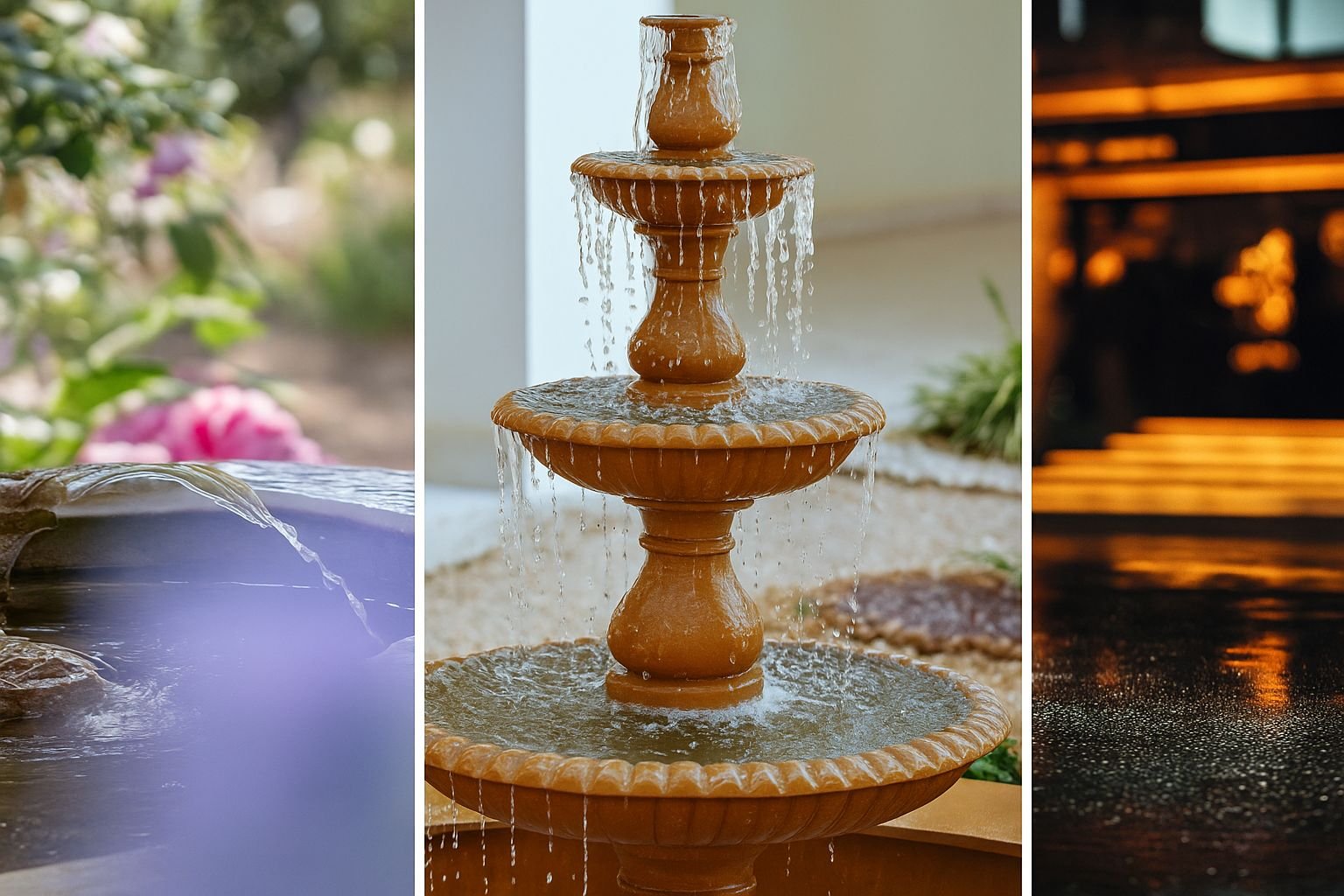
A vast array of water fountains covers every possible style and budget. Modern minimalist designs. Traditional ornate pieces. Natural rock formations. Artistic sculptures. The variety is actually impressive once you start looking. Whatever aesthetic you’re working with, someone has made a fountain for it.
Available in the market right now are options that didn’t exist five years ago. The innovation happening in fountain design is real. New materials. New configurations. New features. The market keeps evolving and improving. That benefits buyers who get better products at better prices.
Water fountains are sold everywhere now. Not just specialty stores. Regular home improvement places carry them. Garden centers stock them. Online retailers have massive selections. The accessibility makes buying a fountain way easier than it used to be.
Widely sold in numerous forms means you’re not locked into one type. Floor fountains. Wall mounted fountains. Tabletop fountains. Free standing fountains. Each type works better in different situations. Having options lets you match the fountain type to your specific needs.
Numerous forms including floor models give you flexibility. Floor fountains make big statements. They anchor a space. They become the centerpiece of a room. If you’ve got floor space and want impact, floor fountains deliver.
Floor fountains and other types each have their own advantages. Floor fountains are usually larger. Hold more water. Create more sound. Wall fountains save floor space. Tabletop fountains offer portability. Thinking about these differences helps you choose the right type.
Free standing fountains are similar to floor models but usually more portable. You can move them easier. Try different locations. Take them with you if you move. That flexibility reduces commitment anxiety. Makes the decision feel less permanent.
Wall fountains and tabletop versions offer different benefits. Wall fountains make architectural statements. They become part of the room’s structure. Tabletop fountains are more casual. More experimental. You can try one with minimal commitment.
Table top fountains among others round out the available options. These small fountains pack a lot of benefit into compact packages. They’re perfect for people who want to test the fountain concept before going all in.
These fountains including all the different types are available in varying sizes. Tiny tabletop models. Medium wall fountains. Massive floor installations. The size range accommodates every possible space constraint.
Different sizes ranging from huge to tiny means you can match the fountain to your actual available space. Not forcing something too big into a small room. Not losing a tiny fountain in a huge space. Getting the proportions right.
Large fountains to smaller ones covers the entire spectrum. Large fountains dominate spaces. Command attention. Become defining features. Smaller fountains add subtle interest. Complement rather than dominate. Both approaches work for different goals.
Smaller sized ones work better in compact spaces. A massive fountain in a small apartment overwhelms the space. A smaller fountain maintains proper scale. Adds interest without crowding. Sometimes restraint is the better choice.
A wide array of designs keeps things interesting. Traditional tiered fountains. Sleek modern panels. Natural rock walls. Geometric abstracts. The design variety means you’re choosing what actually appeals to you. Not settling for whatever happens to be available.
Wide array of styles accommodates different aesthetic preferences. Modern. Traditional. Rustic. Industrial. Bohemian. Minimalist. Whatever your style is, there are fountain options that fit. The fountain adapts to your existing decor instead of forcing you to change everything.
Designs and styles to choose from can feel overwhelming at first. But it’s actually good news. You’re not settling. You’re selecting. Finding the option that actually works for your specific situation instead of making do with close enough.
Making Smart Choices Without Overthinking Everything
The important thing is matching the fountain to your reality. Not to some idealized version of your home. Not to what looks good in photos. To your actual space with its actual constraints and your actual lifestyle.
Make sure you’re being realistic about what will work. That huge impressive fountain in the showroom might not fit your living room. That elaborate design might be too much maintenance. Being honest with yourself prevents expensive mistakes.
Choose the right one by evaluating your actual needs and constraints. What size will fit? What maintenance can you actually handle? What budget are you really working with? Honest answers to these questions lead to better choices.
Best fit your personal preferences without ignoring practical requirements. Your taste matters. You should like how your fountain looks. But liking something that doesn’t fit or doesn’t work in your space just creates frustration.
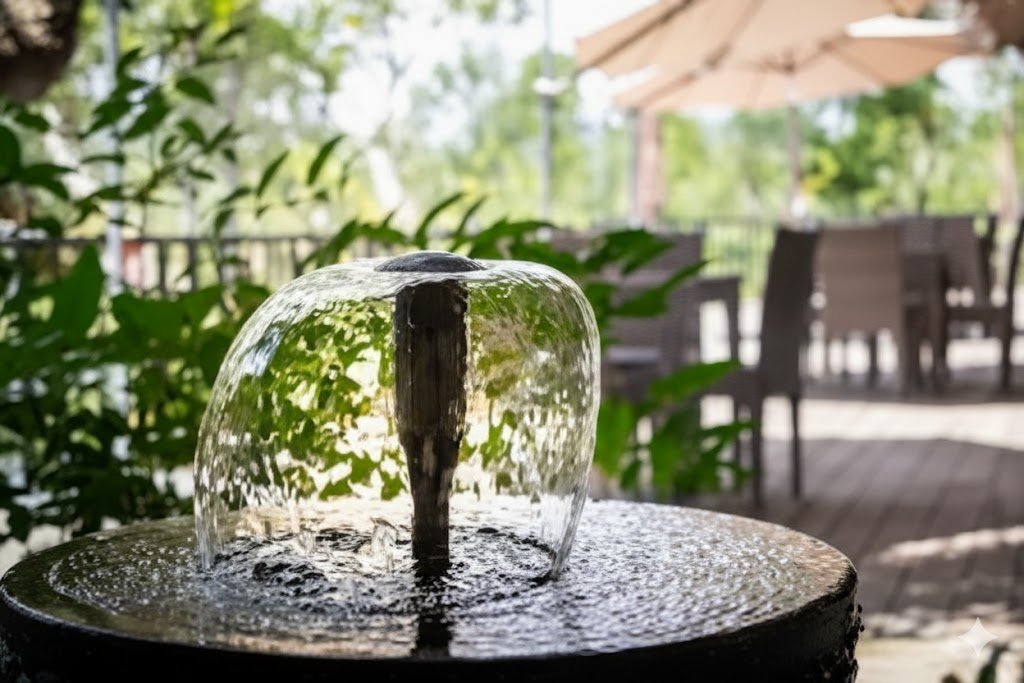
Personal preferences and home requirements both matter. The trick is balancing them. Leading with practical requirements narrows your options to things that will actually work. Then you choose based on preference within that practical set.
Home requirements include things you can’t change. Your room size. Your wall strength. Your electrical setup. These fixed factors should eliminate options before you start falling in love with specific fountains.
It’s smart to consider practical factors before aesthetic ones. Get the boring stuff right first. Make sure the fountain will physically fit and function. Then narrow down to options you actually like looking at.
Several factors deserve careful thought. Available space. Existing furniture. Traffic patterns. Maintenance requirements. Budget limits. Each factor eliminates some options and highlights others.
Like the availability of floor space determines whether floor fountains are even possible. No floor space? Floor fountains are off the table. Wall fountains become your focus. Let your constraints guide you toward appropriate solutions.
Size of the room affects appropriate fountain size directly. Big room can handle big fountain. Small room needs small fountain. The proportional relationship matters more than absolute size.
More than our personal tastes might sound harsh. But practical constraints should narrow options first. Otherwise you risk buying something you love that doesn’t work. Better to love something practical than tolerate something dysfunctional.
Current furniture sets create context the fountain needs to work within. You’re probably not replacing all your furniture. The fountain joins what’s already there. It needs to complement not clash.
Your home already has furniture that’s staying put. The fountain becomes part of that collection. Thinking about how it relates to existing pieces prevents awkward combinations.
Selecting a water fountain means thinking about relationships. How does this fountain relate to your couch? Your coffee table? Your wall color? These relationships affect whether the fountain feels like it belongs or like it was randomly added.
We must be certain means doing proper homework. Measure your space carefully. Research your options thoroughly. Read real user reviews. Maybe see fountains in person. The more certain you are, the happier you’ll be with the result.
It can effectively complement when you choose thoughtfully. Complementing means creating positive relationships. Your fountain can echo colors in the room. Or provide contrast. Both approaches work when done intentionally.
Other furniture present matters because it creates the environment the fountain joins. The fountain doesn’t exist in isolation. It becomes part of a larger composition. Thinking about that composition leads to better choices.
In our homes means in your specific unique home. Generic advice only goes so far. Your home has particular characteristics. Your space. Your style. Your life. The right fountain for you might be completely wrong for someone else.
Why Fountains Are Worth the Investment
Water fountains are perfect for adding that final element to a room. The thing that makes it feel complete instead of just adequate. The detail that takes it from good to great. That’s what we’re talking about when we say “perfect choice.”
A perfect choice to punctuate means to emphasize or make a point. Your fountain becomes the exclamation point of your room. The thing that says “this space is done and it’s done well.” That sense of completion is satisfying.
Punctuate a home’s interior design with something distinctive. Something memorable. Something that makes your space yours instead of just anyone’s. The fountain serves that purpose better than most alternatives.
Home interior design gets better with unexpected additions. Things people don’t anticipate seeing. Things that make them look twice. A fountain fits that description perfectly. It’s sophisticated without being stuffy. Interesting without being weird.
These fountains have staying power that trends don’t. Water flowing has appealed to humans for thousands of years. It’ll keep appealing for thousands more. You’re not buying into a passing fad. You’re adding something with timeless appeal.
A distinct natural ability to improve spaces sets fountains apart. They don’t just decorate. They actively make the space better to exist in. Better air. Better sound. Better vibe. That active improvement justifies the investment.
Provide a relaxed ambiance automatically once you turn them on. You don’t maintain the mood. Don’t work at creating atmosphere. The fountain handles that as a natural consequence of running. Passive benefits are the best benefits.
Relaxed and calming environments support wellbeing in ways we’re only beginning to understand. Chronic stress kills. Literal
ly shortens lifespan. Anything that creates genuine relaxation has real health value. A fountain does that.
Calming ambiance to any home becomes possible with the right fountain. Your starting point doesn’t matter. Chaotic house? Fountain helps. Boring house? Fountain helps. The fountain improves whatever you’re working with.
Any home can benefit regardless of size or style. Apartment or house. Modern or traditional. Budget or luxury. The fountain concept scales and adapts. That universality means it works for basically everyone.
Fountains come in enough variety to fit any situation. That’s the message here. You’re not trying to force one solution everywhere. You’re matching fountain type and style to your specific circumstances.
Many forms including all the types we discussed means comprehensive options. Floor. Wall. Tabletop. Free standing. You’ve got choices for different spaces and different needs.
Floor fountains and other types each solve different problems. Floor fountains fill vertical space. Wall fountains save floor space. Tabletop fountains offer flexibility. Pick the type that solves your specific problem.
Free standing fountains and wall versions offer different advantages. Free standing models are portable. Wall fountains are permanent statements. Neither is better. They’re just different approaches.
Wall fountains and tabletops represent the two most popular residential options. Wall fountains for significant impact. Tabletops for testing the concept. Both valid starting points.
Table top fountains among all the options provide the lowest barrier to entry. Cheap. Small. Easy. Perfect for people who are fountain curious but not fountain committed yet.
These fountains are also available in all the size ranges. From huge statement pieces to tiny desk accessories. The size spectrum accommodates every possible space constraint.
Different sizes ranging across the full spectrum means appropriate options exist for every room size. Match the fountain scale to your room scale. That proportional relationship matters for the fountain looking right instead of awkward.
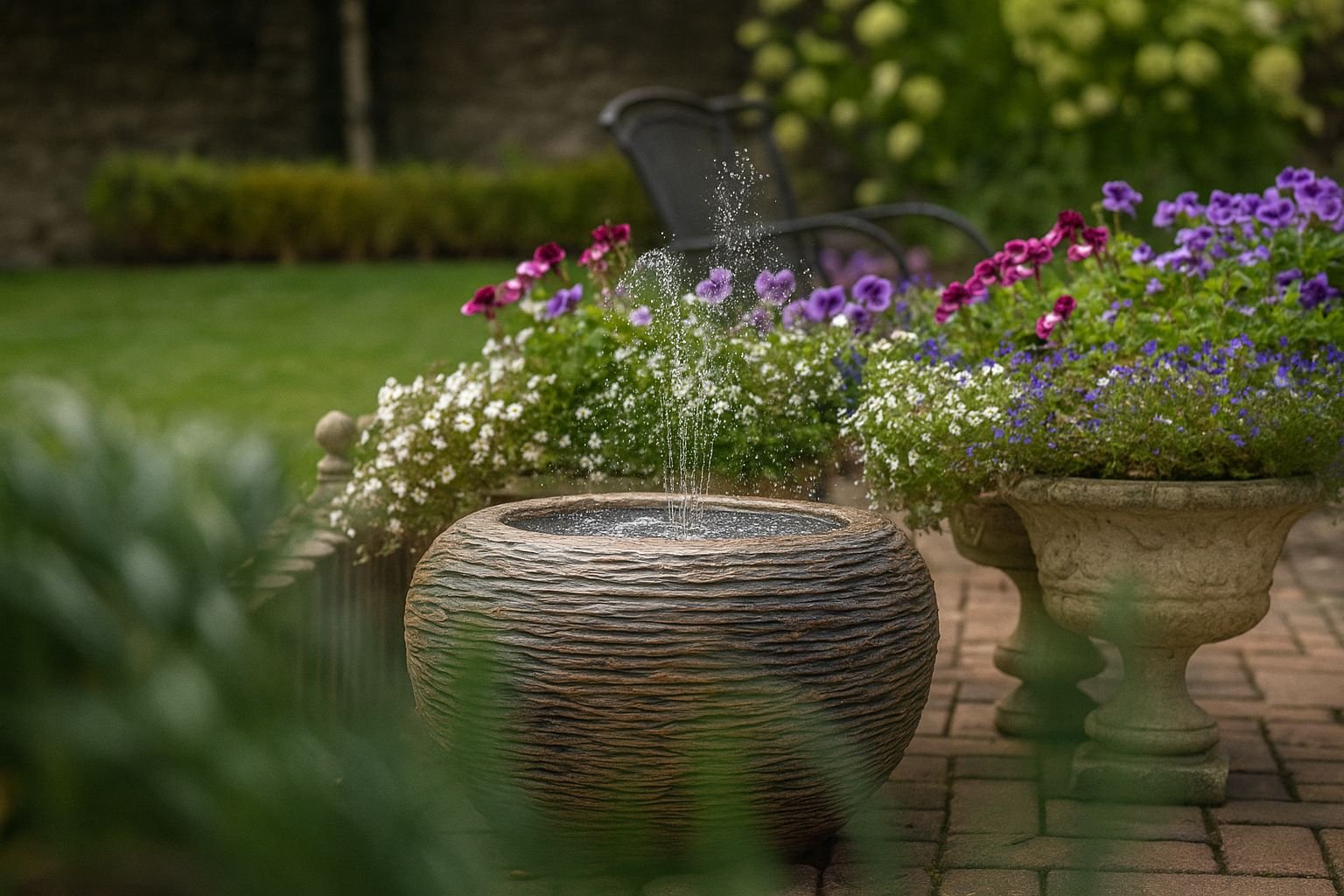
Large fountains to smaller models covers every possibility. You’re not locked into one size category. You can find exactly the size that works for your specific space and goals.
Smaller sized ones shouldn’t be dismissed just because they’re small. Small fountains still provide all the core benefits. Just in more modest packages that fit modest spaces. Size doesn’t determine value here.

Leave a Comment