
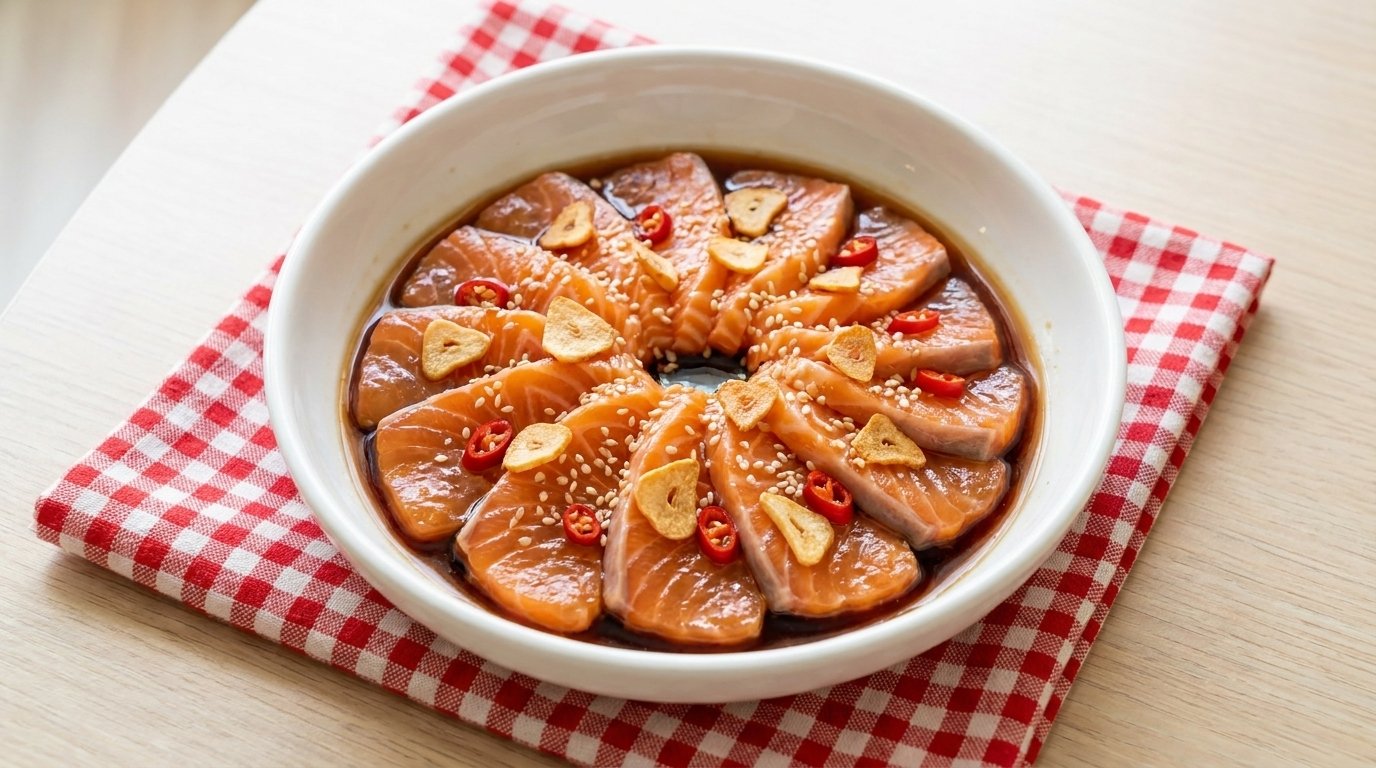
Salmon raw pickled in shoyu sauce is trending hard on Pinterest and Google right now, and the searches are not slowing down. Food lovers want the clean, umami-rich flavors of Japanese-style raw fish without the complexity of a full sushi setup. The problem most home cooks face is simple: they are unsure which salmon to buy, how long to marinate, and how to get the balance of salt, acid, and depth right without overseasoning. This post answers all of that. You get a full ingredient list, step-by-step instructions, flavor variations, pairing ideas, and every detail that separates a forgettable marinade from one that tastes like it came from a Japanese izakaya.
Check out our related guide on Easy Japanese-Inspired Dinner Recipes.

What Is Salmon Raw Pickled in Shoyu Sauce
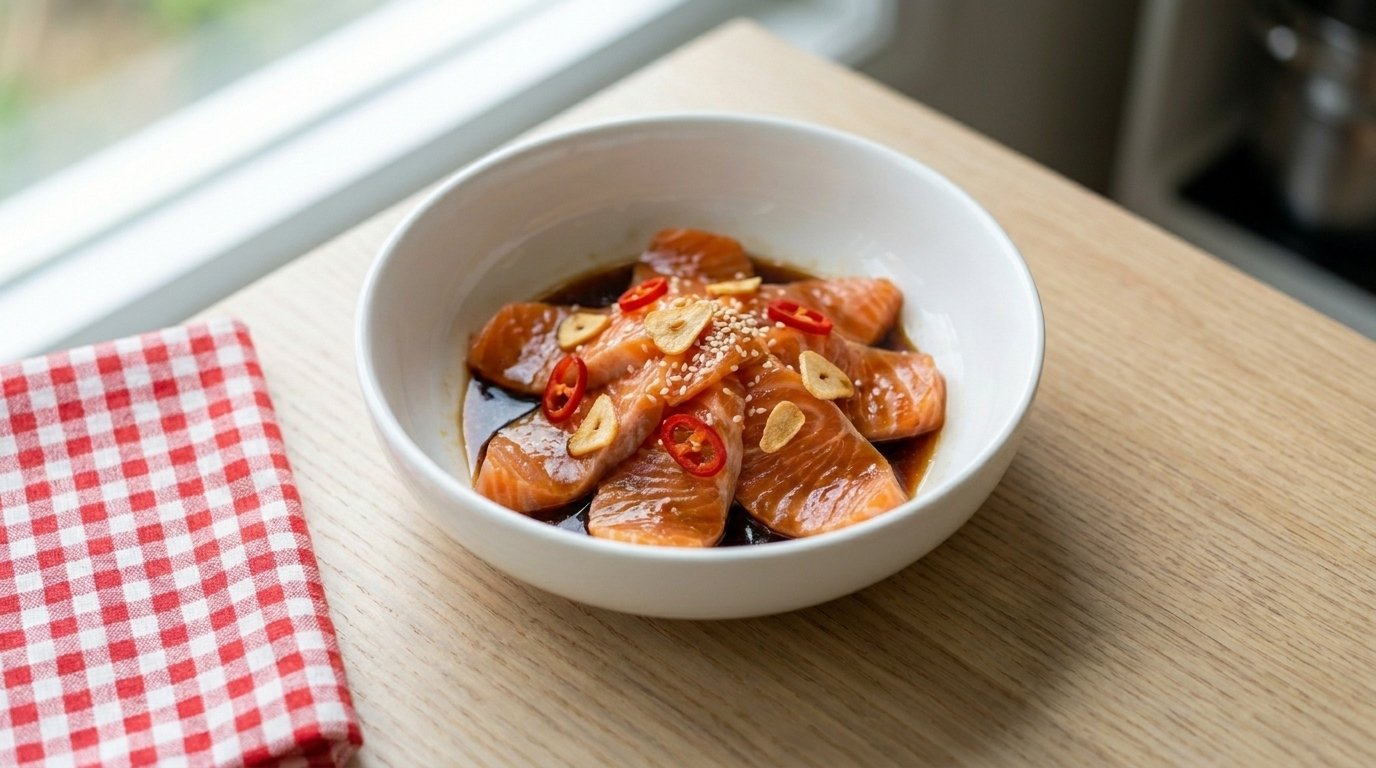
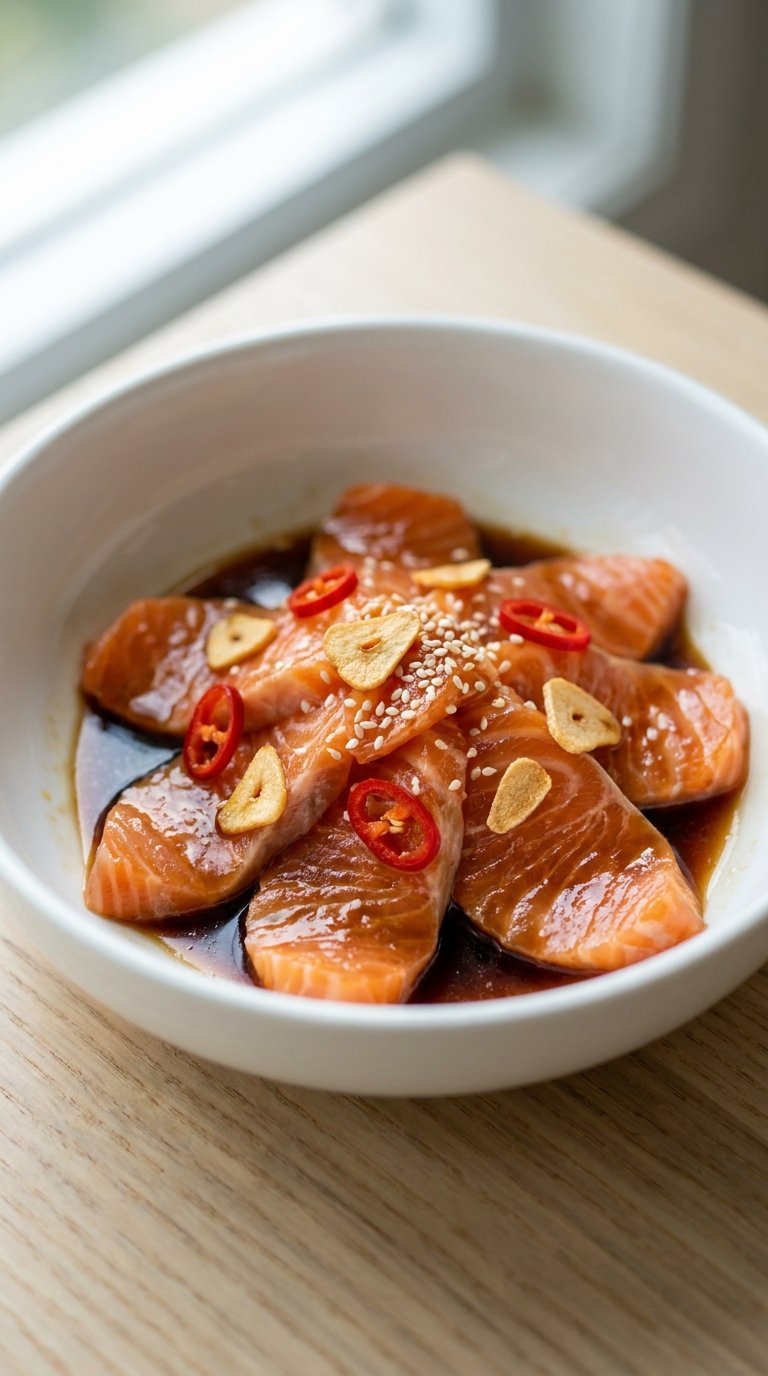
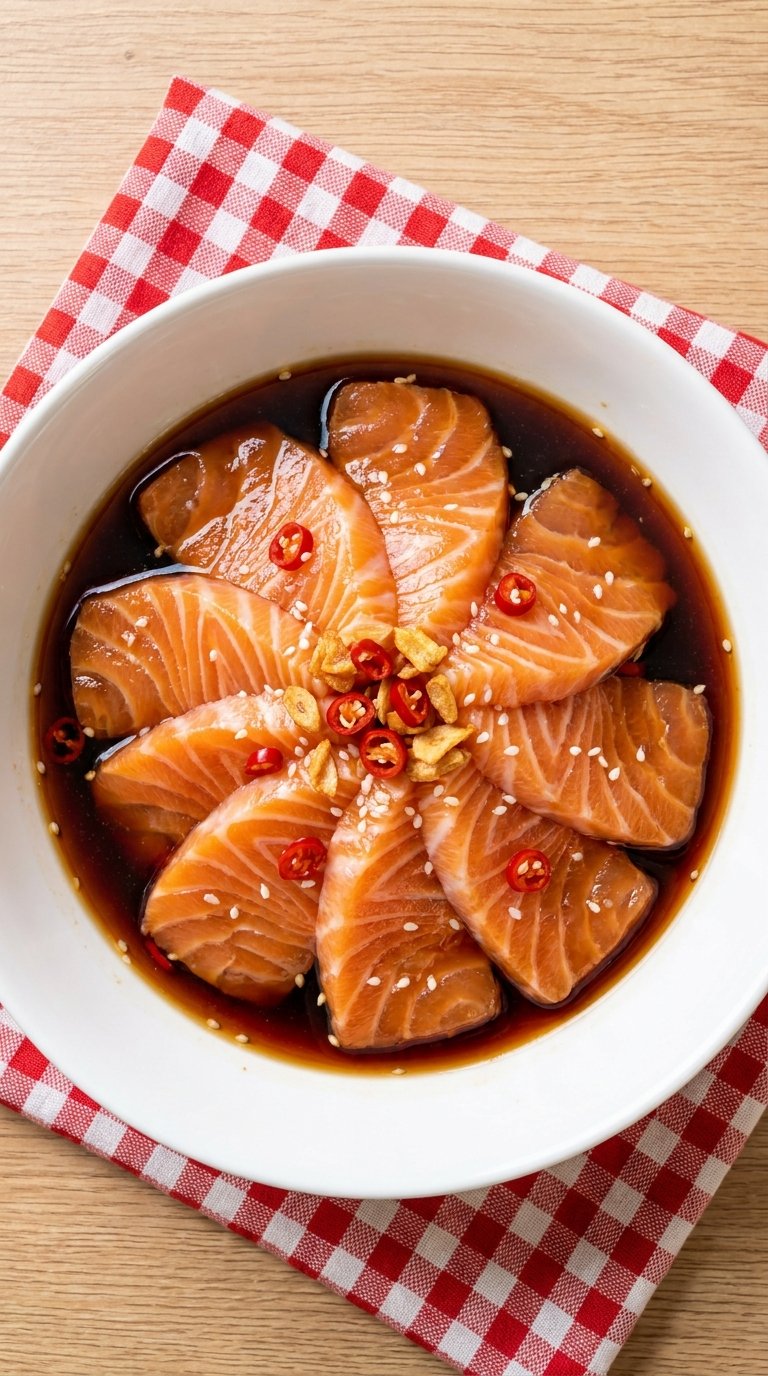
Salmon raw pickled in shoyu sauce is a Japanese-style dish where fresh, sushi-grade salmon sits in a seasoned marinade of shoyu, rice vinegar, ginger, sesame oil, and aromatics for 30 minutes to 2 hours. The result is a dish that looks deceptively simple and tastes anything but. The salmon takes on a deep amber tint at the edges, the flesh stays silky and raw at the center, and each bite delivers layered umami, mild acidity, and the clean freshness of quality fish.
This is not the same as ceviche, where citric acid chemically cooks the fish. Shoyu pickling is a marinade and flavor process. The fish stays genuinely raw. The soy sauce and rice vinegar season the outer layer while the inside keeps its soft, yielding texture.
The dish lands somewhere between Japanese sashimi and Hawaiian poke. It shares the clean presentation of sashimi and the marinated boldness of poke. Served over steamed rice with sesame seeds and sliced scallions, it becomes a full meal in under an hour.
Pro Tip: The quality of your shoyu changes the dish more than anything else. Koikuchi shoyu (the standard all-purpose Japanese soy sauce, like Kikkoman) works well. Saishikomi (double-brewed shoyu) is the traditional choice for raw fish and gives a deeper, more rounded flavor.
Save this idea to your Pinterest.
Ingredients
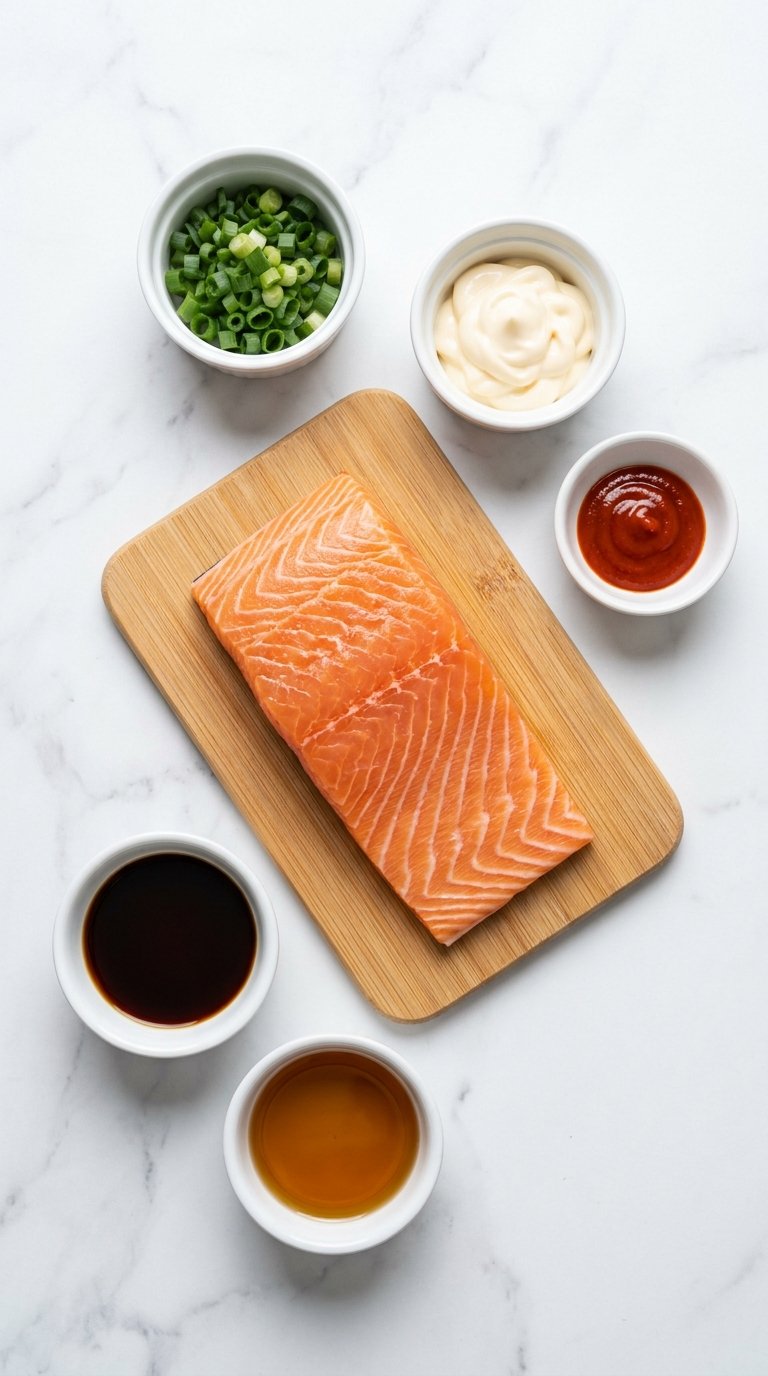
This Japanese marinated raw salmon easy recipe uses a short ingredient list. Every item plays a specific role in the marinade.
For the Salmon
- 300g (10.5 oz) sushi-grade fresh salmon fillet, skin removed
- Fine sea salt (for a brief pre-rinse seasoning, optional)
For the Spicy Shoyu Marinade
- 3 tbsp shoyu (Japanese soy sauce, koikuchi style recommended)
- 1 tbsp rice vinegar (unseasoned)
- 1 tsp sesame oil (toasted)
- 1 tsp fresh ginger, finely minced or grated
- 1 small clove garlic, finely minced (optional)
- 1/2 to 1 tsp red chili pepper, finely minced (adjust to heat preference)
- 1/2 tsp white sugar or honey (balances the salt and acid)
For Serving
- 2 tsp toasted sesame seeds
- 3 scallions (green onions), thinly sliced
- Fresh cucumber slices or shredded daikon (optional)
- Steamed Japanese short-grain rice or cauliflower rice
Optional Add-Ins for the Marinade
- 1 tsp mirin (adds a mild sweetness)
- A few drops of yuzu juice or lemon juice (brightens the whole marinade)
- Thin-sliced white or yellow onion (adds crunch and sharpness)
Ingredient Notes:
Use unseasoned rice vinegar only. Seasoned rice vinegar already contains sugar and salt, which will throw off the marinade balance. For sesame oil, buy toasted sesame oil in a dark bottle. The pale, untoasted kind has almost no flavor. The ginger should be fresh, not dried.
Pro Tip: Slice the ginger as thin as possible or grate it on a microplane before mincing. Large chunks of ginger do not fully infuse during a short marinate time and leave uneven flavor pockets in the finished dish.
Instructions
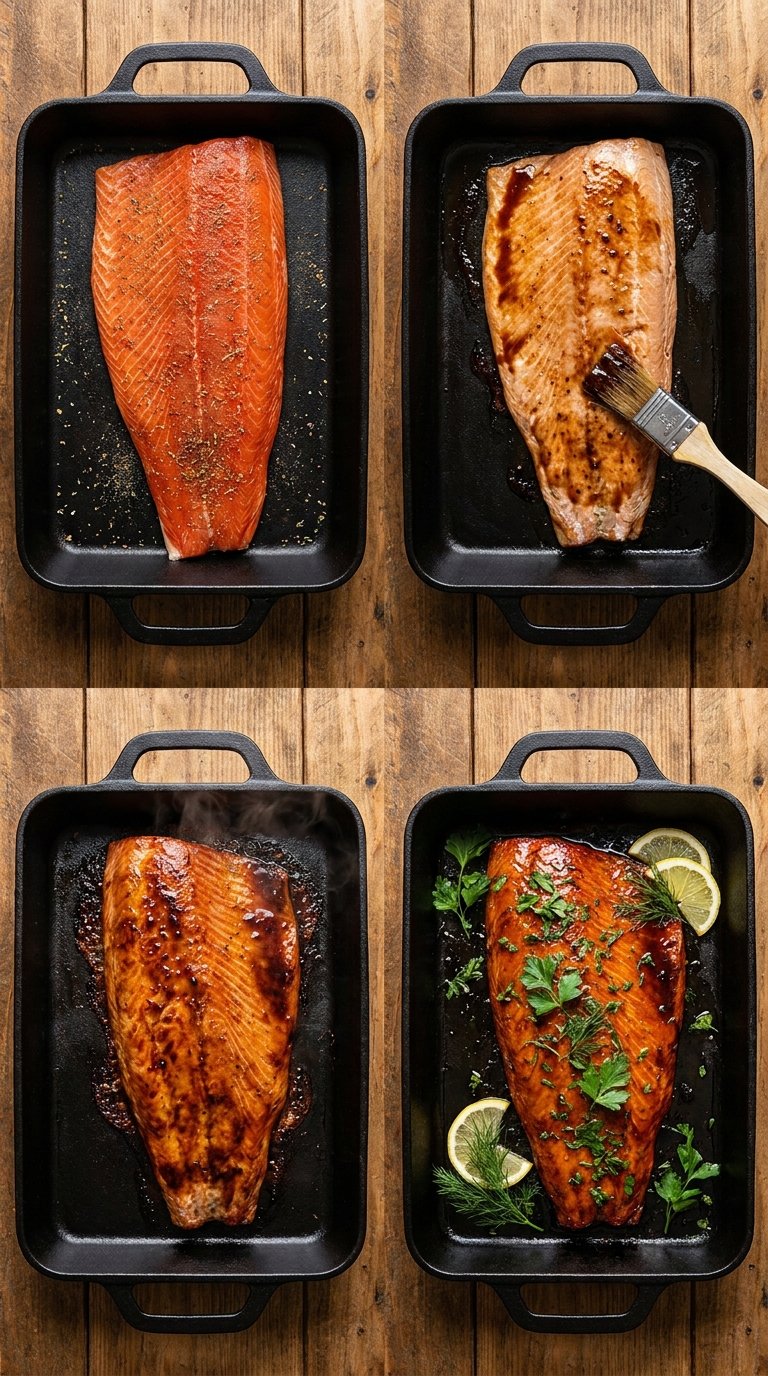
This sushi grade salmon marinade recipe takes under 15 minutes of active prep and 30 minutes of passive marinating time. No cooking equipment needed beyond a sharp knife and a mixing bowl.
Step 1 — Prep the Salmon
Remove the salmon from its packaging and pat it dry with a paper towel. Check the fillet carefully for any remaining pin bones by running your finger along the centerline. Remove any bones with fish tweezers or needle-nose pliers.
If the skin is still on, place the fillet skin-side down on a cutting board and run a sharp knife between the skin and flesh, keeping the blade angled slightly downward to avoid wasting meat. Discard the skin.
Step 2 — Slice the Salmon
Cut the salmon into bite-sized cubes, roughly 2cm x 2cm (about 3/4 inch). You can also cut it into thin strips, about 5mm (1/4 inch) thick, if you prefer a more sashimi-style presentation. Cubes are better for poke-style bowls. Strips are better for plated appetizers.
For maximum marinade absorption, uniform size matters. Pieces that vary too much in thickness will absorb the marinade at different rates, giving you some over-seasoned and some under-seasoned bites.
Step 3 — Make the Shoyu Marinade
In a medium bowl, combine the shoyu, rice vinegar, toasted sesame oil, minced ginger, minced garlic (if using), minced red chili, and sugar. Stir until the sugar fully dissolves. Taste the marinade at this point. It should be salty, slightly acidic, faintly sweet, and aromatic. Adjust with a small extra splash of rice vinegar for more brightness or a pinch more sugar for less sharpness.
Step 4 — Marinate the Salmon
Place the salmon pieces into the marinade bowl. Turn them gently to coat every surface. Cover the bowl with plastic wrap or a plate and place in the refrigerator.
Marinate for a minimum of 30 minutes. This is the shortest time that lets the shoyu flavor penetrate the salmon visibly. For a more deeply seasoned result, marinate for 60 to 90 minutes. Do not exceed 2 hours. Past that point, the rice vinegar begins to break down the outer proteins of the fish, softening it into a texture closer to ceviche.
Step 5 — Serve and Garnish
Remove the salmon from the refrigerator. Arrange the pieces on a plate or over a bowl of steamed short-grain rice. Spoon a small amount of the remaining marinade over the top. Scatter toasted sesame seeds and sliced scallions generously. Add cucumber slices or shredded daikon alongside for a cool, crunchy contrast.
Serve immediately. Do not let the plated dish sit for more than 20 minutes before eating.
Pro Tip: Chill your serving bowl in the refrigerator for 10 minutes before plating. A cold bowl keeps the raw salmon at a safe temperature during the few minutes between plating and eating, and it also makes the dish look visually clean and restaurant-style.
Save this idea to your Pinterest.
Popular Asked Questions
Is raw salmon safe to eat when pickled in shoyu sauce at home?
Yes, with the right salmon. You need sushi-grade salmon that has been flash-frozen to kill parasites before you bought it. Farm-raised Norwegian salmon is the safest choice because its controlled diet results in lower parasite risk than wild-caught fish. Buy from a trusted fishmonger, keep the fish cold at all times, and marinate in the refrigerator. People who are pregnant, very young, elderly, or immunocompromised should not eat raw fish in any form.
How long should salmon marinate in shoyu sauce?
A minimum of 30 minutes lets the shoyu flavor penetrate the salmon enough to taste it throughout each piece. For a more deeply seasoned result, 60 to 90 minutes is the sweet spot. Do not leave the salmon in the marinade for longer than 2 hours. Past that point, the rice vinegar begins to break down the fish proteins, changing the texture from silky raw to something closer to ceviche. Always marinate in the refrigerator, not at room temperature.
What is the difference between shoyu and regular soy sauce for this recipe?
Shoyu is Japanese-style soy sauce made from soybeans, wheat, salt, and water. The wheat gives it a slightly sweeter, cleaner flavor compared to Chinese-style soy sauce, which is sharper and more one-dimensional. For raw fish specifically, shoyu’s gentler salt profile works better. It seasons the salmon without overpowering its natural flavor. Standard Chinese soy sauce will work if shoyu is not available, but the marinade will taste saltier and less nuanced.
Can I use regular grocery store salmon for this recipe?
Only if it is labeled sushi-grade or sashimi-grade. Regular salmon from a grocery store is not processed for raw consumption and may not have been frozen to the temperatures needed to kill parasites. If the label says “not for raw consumption,” do not use it for this recipe. If you want to use grocery store salmon and cannot verify the handling, freeze it at home at your freezer’s lowest setting for at least 7 days before using it raw. Thaw in the refrigerator overnight before slicing.
What does salmon pickled in shoyu sauce taste like?
The flavor is savory, slightly salty, mildly acidic, and clean. The shoyu delivers deep umami that feels rich without being heavy. The rice vinegar brightens the whole profile and gives it a mild “pickled” quality at the edges of each piece. The inside of the salmon stays buttery and fresh-tasting. Adding ginger brings a clean heat, and toasted sesame oil gives the marinade a subtle nuttiness that rounds everything out. It does not taste strongly of soy sauce the way a stir-fry would. It tastes balanced and fresh.
Conclusion
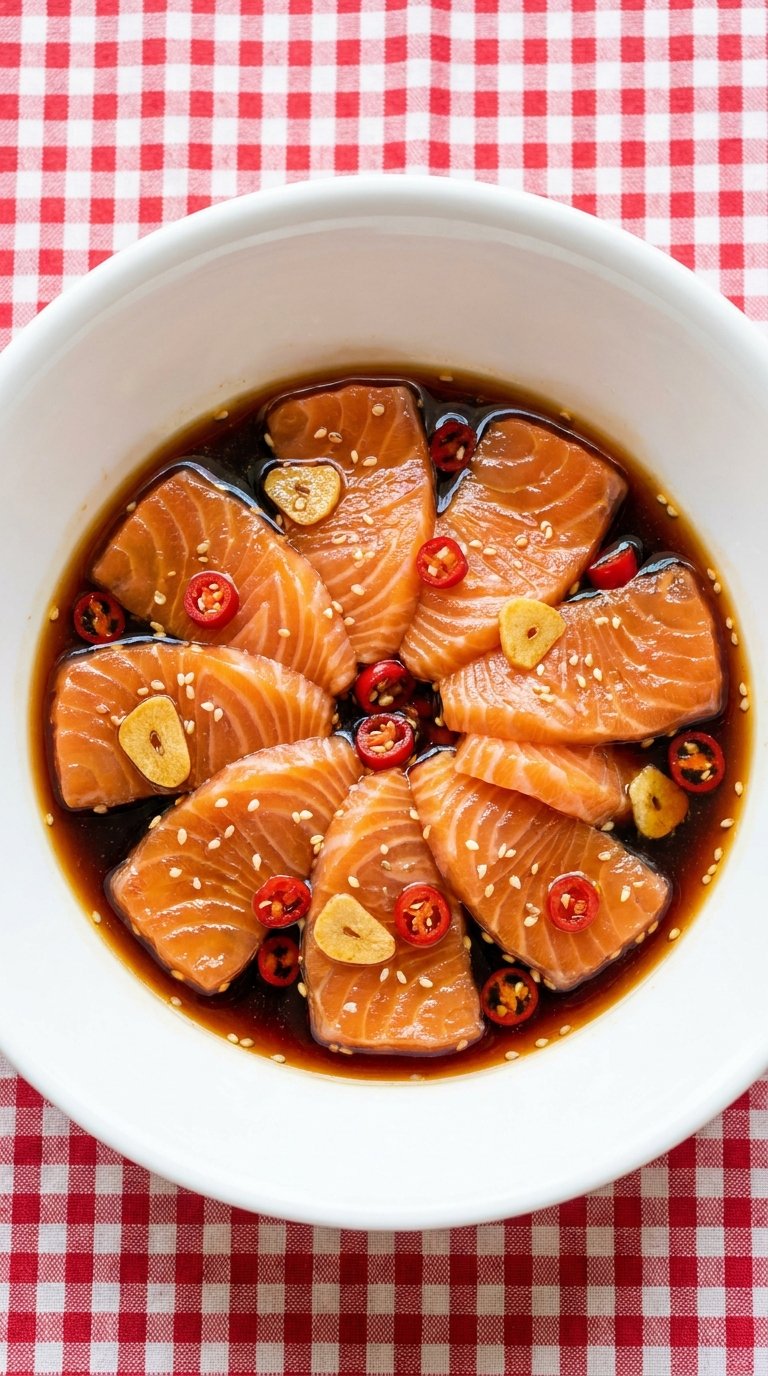
Salmon raw pickled in shoyu sauce is one of those recipes that looks impressive, tastes complex, and asks almost nothing of you in terms of active cooking time. The marinade comes together in 5 minutes. The salmon does the work in the refrigerator. What you end up with is a dish that belongs on a restaurant menu but lands easily in a home kitchen.
The real reward is in the details: choosing the right salmon, using genuine shoyu, slicing the fish with care, and giving it exactly the right amount of time in the marinade. None of those steps are difficult. They just require attention.
Which variation are you most interested in trying first? The spicy shoyu version with fresh chili, the bright citrus ponzu version, or the classic all the way? Let us know in the comments below.
Follow us on Pinterest for more Salmon Raw Pickled in Shoyu Sauce inspiration and easy Japanese-style recipe ideas.

Leave a Comment