
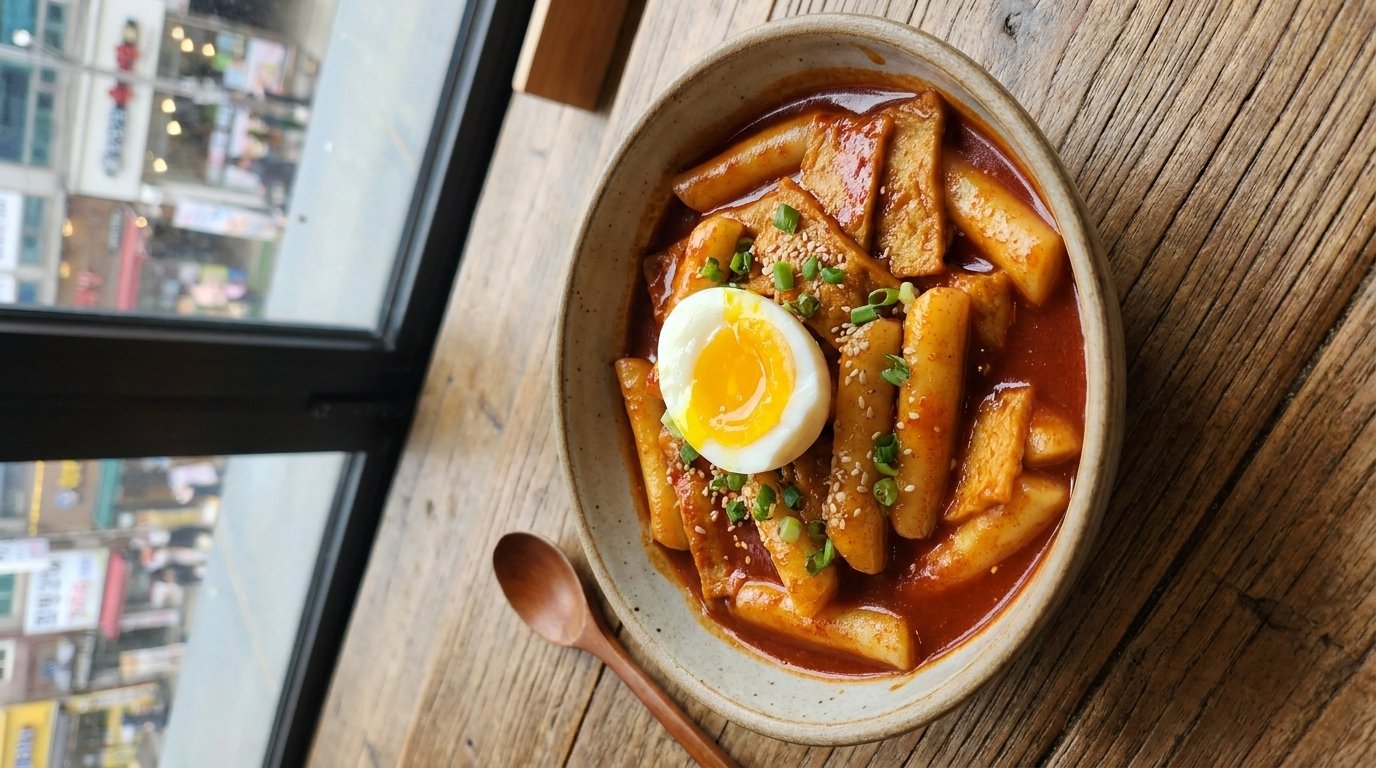
Korean tteokbokki with boiled eggs is one of the most searched Korean recipes outside Korea right now. Pinterest saves on this dish have climbed sharply over the past two years, fueled by K-drama food scenes and a growing wave of home cooks wanting to recreate that sticky, fiery, glossy sauce at home. The good news is that the dish is genuinely fast. The classic version takes under 30 minutes and uses a short list of ingredients you can find at any Korean grocery store or online.
If you have watched a bowl of chewy rice cakes coated in deep red sauce on screen and wondered exactly how to make it — including where the boiled eggs fit in and how to get the sauce thick without burning it — this guide walks through every version. From the street-style original to the creamy rosé spin, the cheese-topped crowd pleaser, and a vegetarian build, all the key techniques are here. Check out our related guide on Easy Asian Recipes for Beginners.
in water before cooking is the single step that most beginners skip and most professionals swear by.

What Is Tteokbokki?
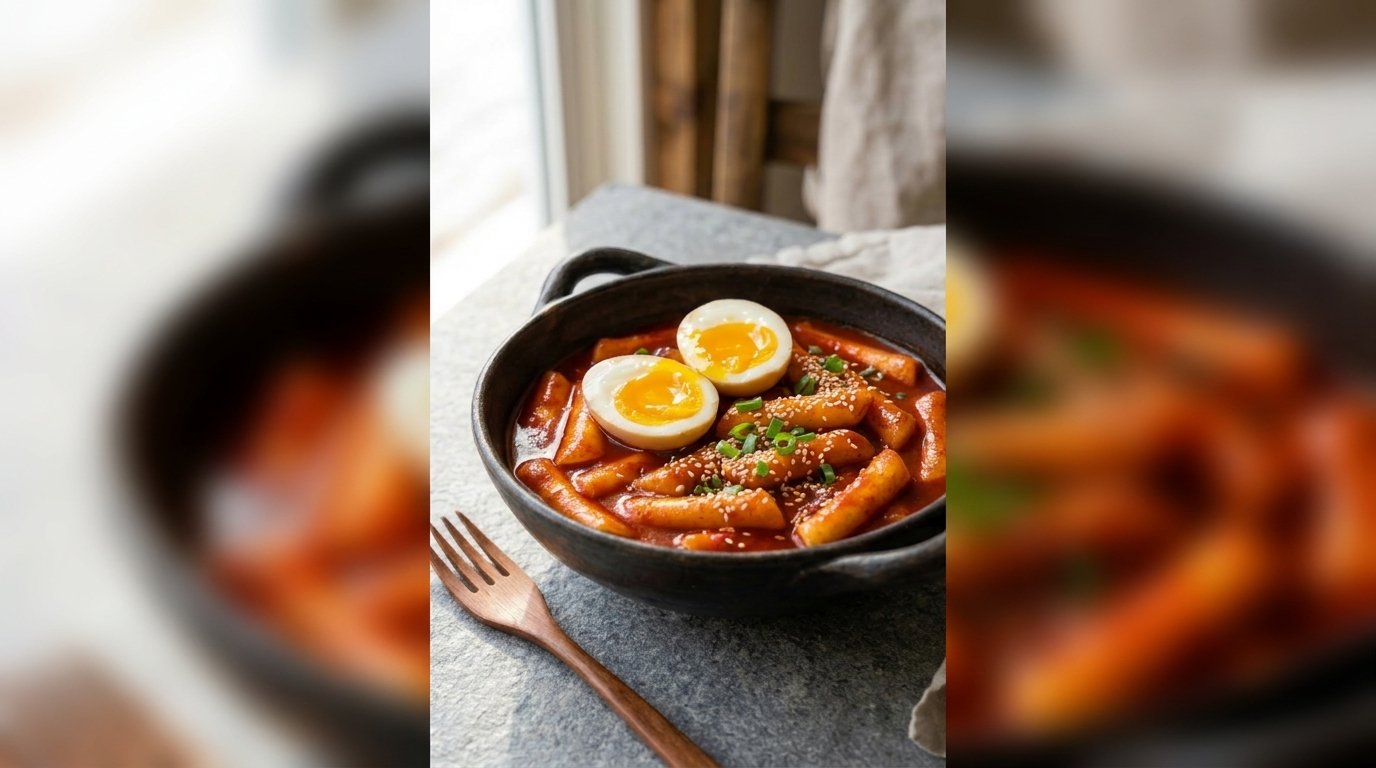
Tteokbokki (떡볶이), also spelled topokki or ddukbokki, is a Korean dish of cylindrical rice cakes simmered in a bold, glossy red sauce. The name translates to “stir-fried rice cake,” and it is one of Korea’s most iconic street foods — sold at pojangmacha (outdoor tent stalls) and bunsikjip (snack bars) across the country.
The dish has deep roots. A mild, soy-sauce-based royal court version called gungjung tteokbokki dates back centuries to the Joseon dynasty. The fiery red version most people know came after the Korean War, when street vendors in Seoul’s Sindang-dong neighborhood started adding gochujang to create an affordable, warming snack. That version spread fast. Today it is Korea’s default street food alongside kimbap and Korean fried chicken.
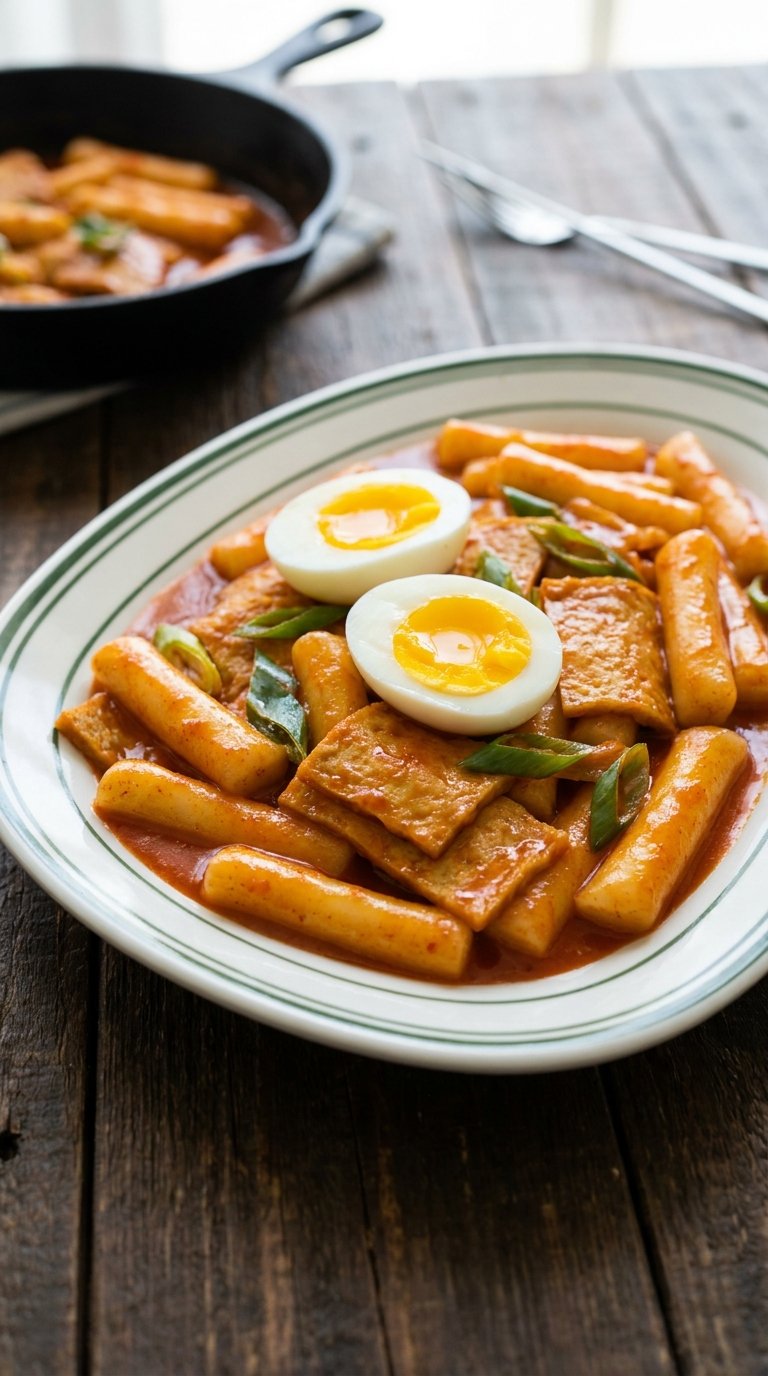
Korean tteokbokki with boiled eggs is the street-vendor standard. Hard-boiled eggs go into the pot toward the end of cooking and absorb the spicy-sweet sauce, turning the whites a deep red and the entire egg into something that tastes completely different from a plain boiled egg. The combination of chewy rice cake, savory fish cake, and rich egg in that glossy sauce is what K-drama food scenes keep returning to.
Pro Tip: Search for tteokbokki in the freezer section of Korean or Asian grocery stores if you cannot find fresh rice cakes. Frozen rice cakes work just as well after a 10-minute soak in warm water.
Tteokbokki Ingredients
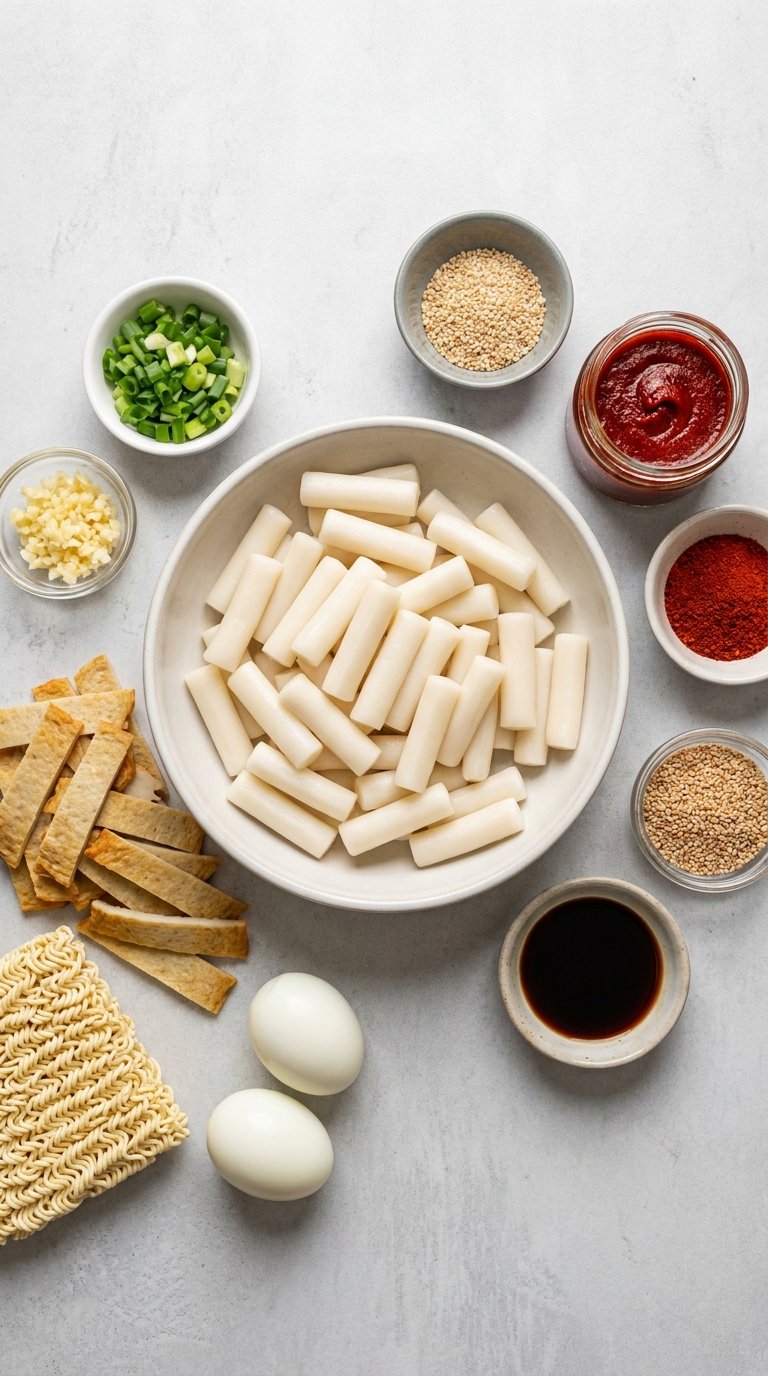
The ingredient list for tteokbokki with boiled eggs is short. Most of the flavor comes from two fermented Korean condiments rather than a long list of components.
Garaetteok (rice cakes) are cylindrical, finger-shaped rice cakes made from non-glutinous rice flour. Fresh ones are soft and ready to cook. Refrigerated ones need a brief room-temperature rest. Frozen ones need a 10-minute soak in warm water before going into the pan.
Gochujang is a fermented Korean chili paste. It is spicy, slightly sweet, deeply savory, and carries a funky fermented undertone that no other chili paste replicates exactly. It is the non-negotiable backbone of the sauce.
Gochugaru (Korean red pepper flakes) adds more heat and a brighter red color. It is optional but produces a more vivid sauce.
Sugar or rice syrup balances the heat and helps the sauce develop its glossy finish.
Soy sauce adds saltiness and umami depth. Regular soy sauce — not low-sodium — seasons the sauce properly.
Fish cakes (eomuk) are flat sheets of processed fish paste. They soak up the sauce and add a mild seafood flavor and a chewy-soft texture contrast to the rice cakes.
Hard-boiled eggs are the protein anchor. Two eggs per serving is standard.
Green onion goes in at the end for freshness and color.
Pro Tip: Use regular soy sauce, not low-sodium. The sauce needs that full salt level to season the starchy rice cakes properly. Low-sodium soy sauce leaves the dish tasting flat.
Save this idea to your Pinterest.
How to Make Anchovy-Kelp Broth
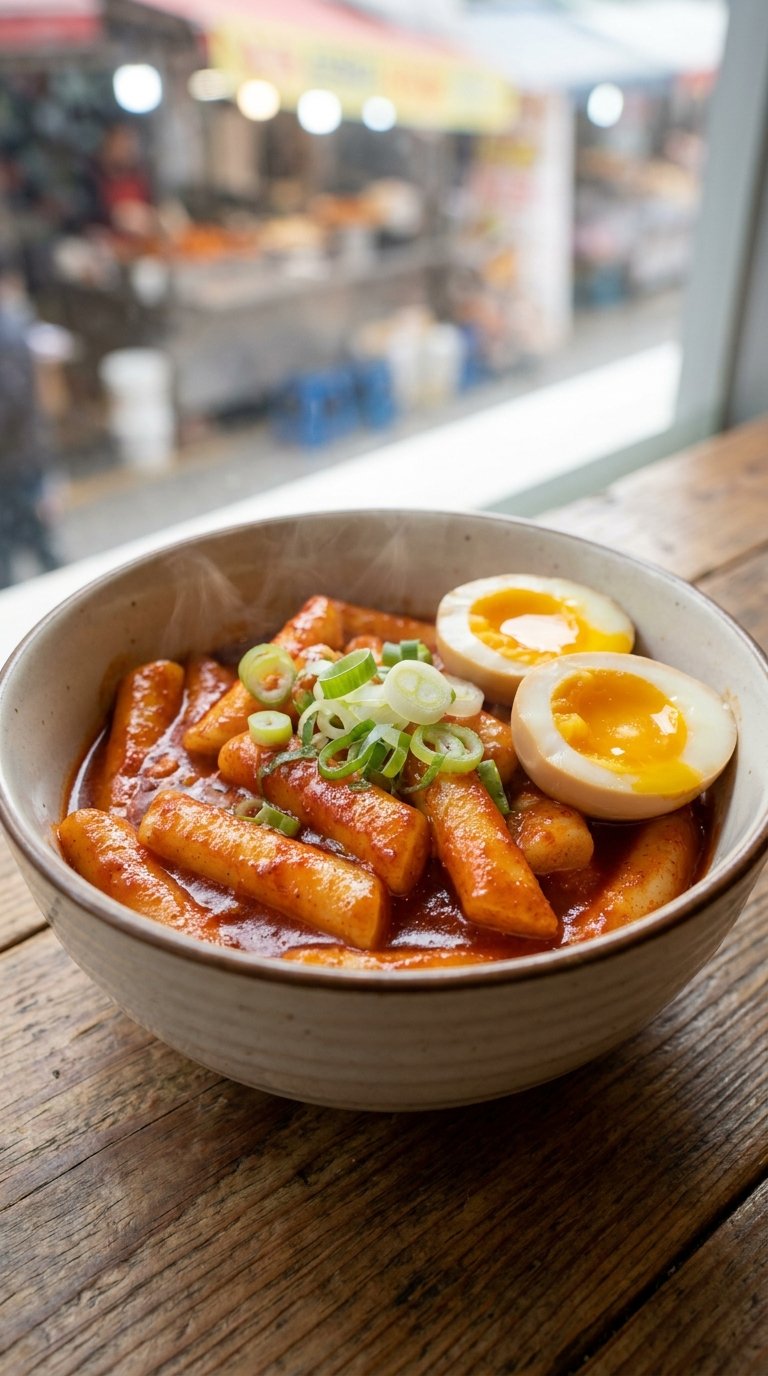
Anchovy-kelp broth is the authentic base for tteokbokki. It adds a clean, deep umami that plain water cannot match. The technique is simple but the payoff in flavor is significant.
Add 6 to 8 dried anchovies (heads and innards removed) and one 4-inch piece of dried kelp (dashima) to a shallow pot with 3 cups of cold water. Bring it to a boil over medium-high heat without a lid and cook for 15 minutes. The water turns a pale golden color and picks up a subtle, oceanic depth.
Remove the anchovies and kelp with a strainer or tongs. What remains is a clean stock that forms the liquid base of your tteokbokki sauce. Its flavor is savory and slightly mineral — not fishy in the way raw anchovies smell, but rounded and full.
Dried anchovies and kelp are available at Korean or Japanese grocery stores. Broth packets (sachets of dried anchovy and kelp) are a fast and consistent shortcut — drop one packet in water, boil for 10 minutes, remove. If neither is accessible, dissolve a small pinch of MSG or a teaspoon of fish sauce into plain water. The flavor will not be identical but it gets close.
Pro Tip: Make a double batch of anchovy-kelp broth and freeze the extra in ice cube trays. Drop two or three cubes into your tteokbokki pan the next time you cook — no broth-making step needed.
Step-by-Step Tteokbokki Instructions
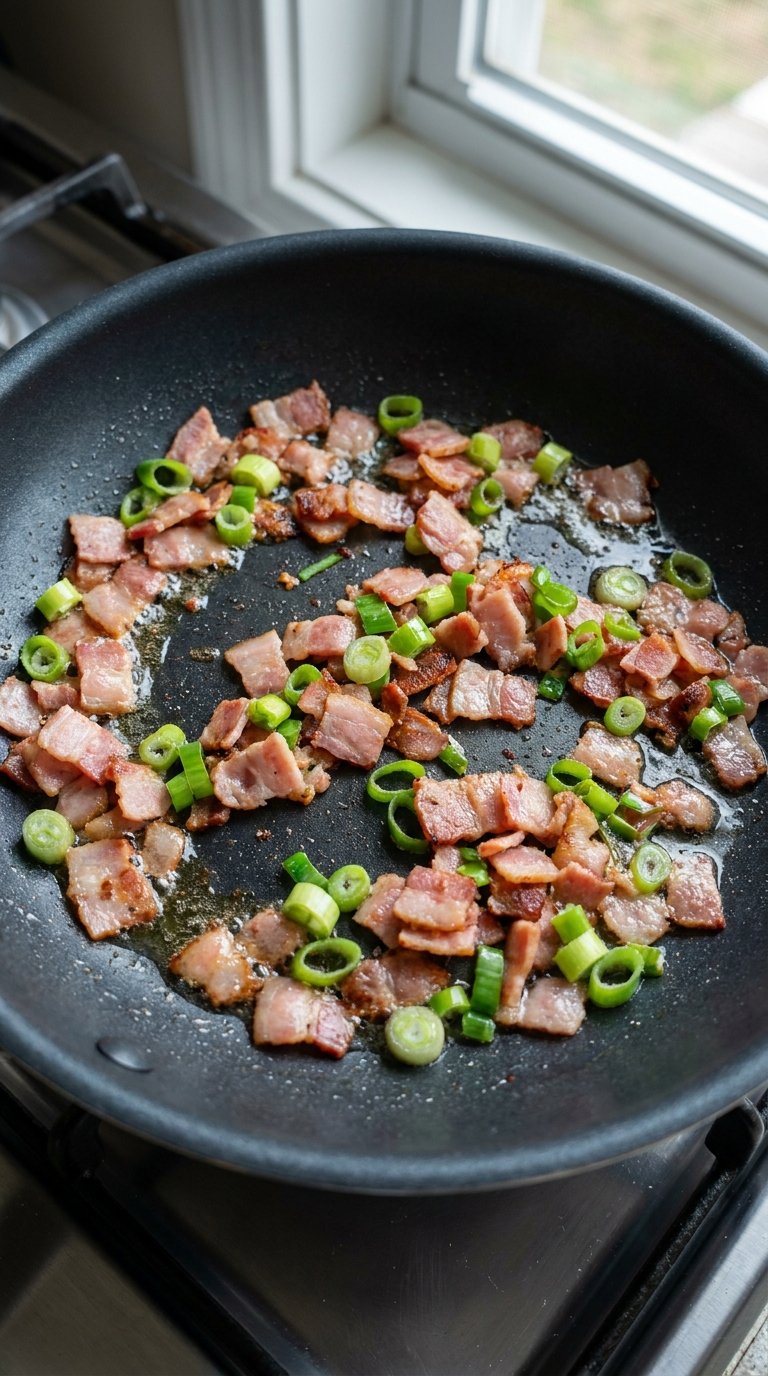
These instructions cover the classic version — the one that forms the base for every variation in this guide. The total active cooking time is about 20 minutes.
Soak the rice cakes. Place rice cakes in a bowl of room-temperature water for 10 minutes if they are refrigerated or slightly dry. Soak frozen rice cakes in warm water for 10 minutes. Fresh rice cakes need no soaking. This step prevents a tough, chewy center in the finished dish.
Make the sauce paste. Combine 3 tablespoons of gochujang, 1 tablespoon of gochugaru, 2 tablespoons of sugar, and 1 tablespoon of soy sauce in a small bowl. Stir until smooth. Having the sauce pre-mixed means you add it as a single step rather than juggling individual ingredients over a hot pan.
Build the broth. Pour 2.5 cups of anchovy-kelp broth into a wide, shallow pan or wok. Bring it to a boil over medium-high heat. Add the sauce paste and stir until fully dissolved. The broth turns a deep, glossy red.
Add fish cake and rice cakes. Drop the fish cake pieces and drained rice cakes into the boiling red broth. Stir to coat. Cook over medium-high heat for 8 to 10 minutes, stirring every 2 minutes so the rice cakes do not stick to the pan.
Add the boiled eggs. Place whole or halved hard-boiled eggs into the sauce in the last 3 to 4 minutes of cooking. Spoon sauce over them repeatedly so they absorb the flavor and color on all sides.
Add green onion. Scatter sliced green onion over the top in the last 30 seconds. Remove from heat and serve immediately — tteokbokki thickens fast as it cools.
Pro Tip: If the sauce thickens too fast before the rice cakes are fully tender, add a tablespoon of water or broth at a time and keep cooking. The rice cakes need to soften before the sauce reduces to its final glossy consistency.
Popular Asked Questions
What do boiled eggs do in tteokbokki?
Boiled eggs in tteokbokki serve two purposes. They add protein to what is otherwise a carbohydrate-heavy dish, and they absorb the spicy-sweet sauce as they sit in the hot pan. The sauce stains the egg whites deep red and the flavor of the egg shifts from plain to richly savory and spicy. Many people consider the sauce-soaked egg the best part of the whole dish.
Can you use soft-boiled eggs in tteokbokki instead of hard-boiled?
Soft-boiled eggs with runny yolks will break apart in the hot tteokbokki sauce and cloud the broth. Fully hard-boiled eggs — cooked for 10 minutes and chilled immediately — hold their shape and absorb the sauce cleanly. Seven-minute eggs with a just-set, slightly jammy yolk can work if you add them at the very end and serve immediately, but they are less practical than fully hard-boiled eggs for cooking in the sauce.
Is tteokbokki very spicy?
The classic version of tteokbokki is moderately to very spicy, depending on how much gochujang and gochugaru you use. Korean street-vendor versions are typically quite hot. Home cooks can adjust the heat easily by reducing the gochujang from 3 tablespoons to 1 to 2 tablespoons. The rosé tteokbokki version cuts the gochujang further and adds cream, making it mild enough for spice-sensitive eaters. The gungjung version uses no gochujang at all.
What is the best way to soak rice cakes for tteokbokki?
Frozen rice cakes need a 10-minute soak in warm (not boiling) water. This thaws and softens them so they cook evenly in the sauce. Refrigerated rice cakes benefit from a brief soak in room-temperature water — 5 to 10 minutes — to loosen the surface starch and prevent the exterior from overcooking before the center softens. Fresh rice cakes need no soaking. Dry or old refrigerated rice cakes can be soaked up to 30 minutes to revive their texture.
Can I make tteokbokki without fish cake?
Yes. Tteokbokki without fish cake is a common adjustment for vegetarians, people with seafood allergies, or anyone who cannot find eomuk at a local store. The sauce does not change — the fish cake adds texture and a mild savory note rather than the primary flavor of the dish. Replace it with sliced tofu, extra vegetables (cabbage, mushrooms, zucchini), or leave it out entirely. The dish still tastes complete with just the rice cakes and boiled eggs.
Conclusion
Korean tteokbokki with boiled eggs is a dish that rewards cooks at every level. The classic street-style version is one of the most satisfying 25-minute dinners in any recipe library. The rosé variation turns the same technique into a dinner-party dish. The vegetarian and non-spicy builds make the recipe accessible to nearly any table.
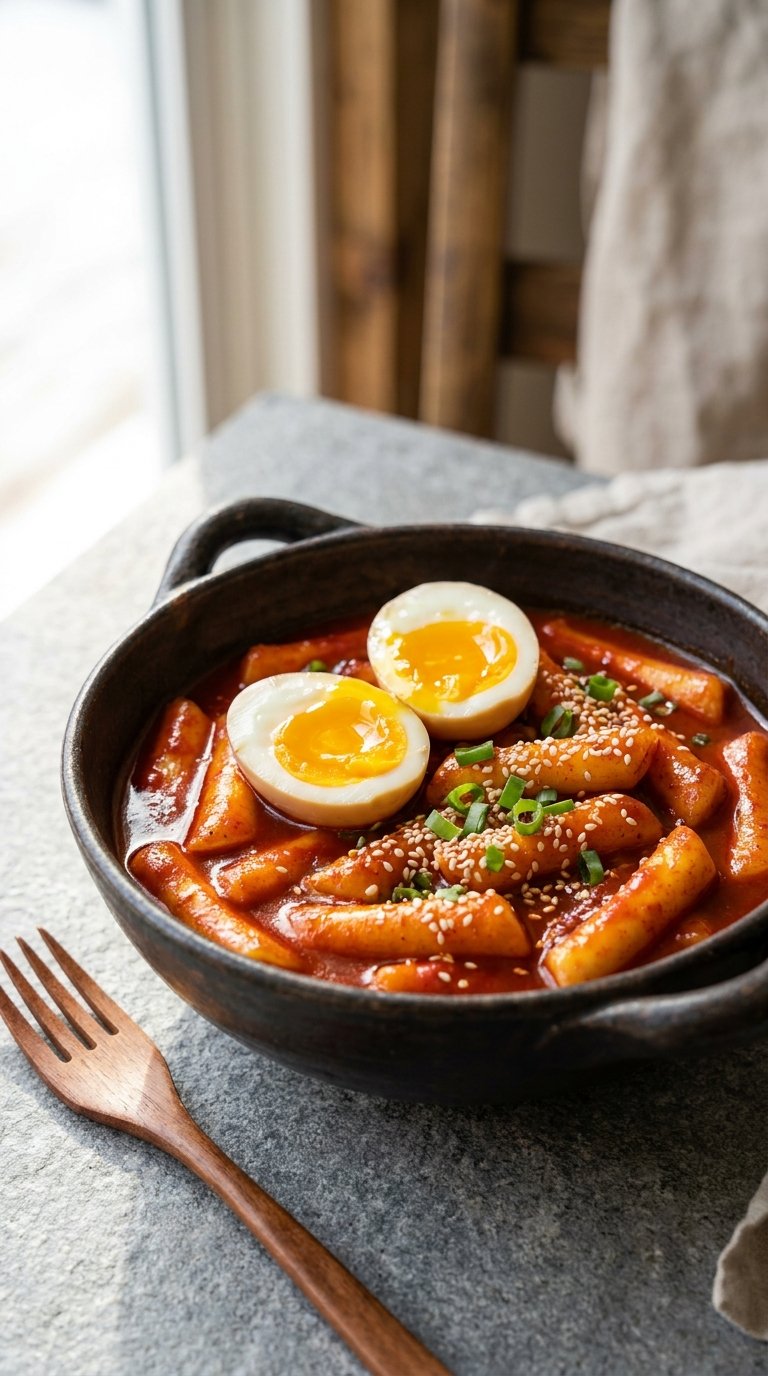
The boiled eggs are not an optional extra — they are the protein core that makes the dish balanced and the visual anchor that makes every photograph worth saving. A sauce-stained egg cut in half over a bowl of glossy red rice cakes is the image that keeps people coming back to this recipe.
Which version are you trying first — the fiery classic, the creamy rosé, or the non-spicy gungjung? Tell us in the comments.
Follow us on Pinterest for more Korean tteokbokki inspiration and easy Korean recipes.

Leave a Comment