
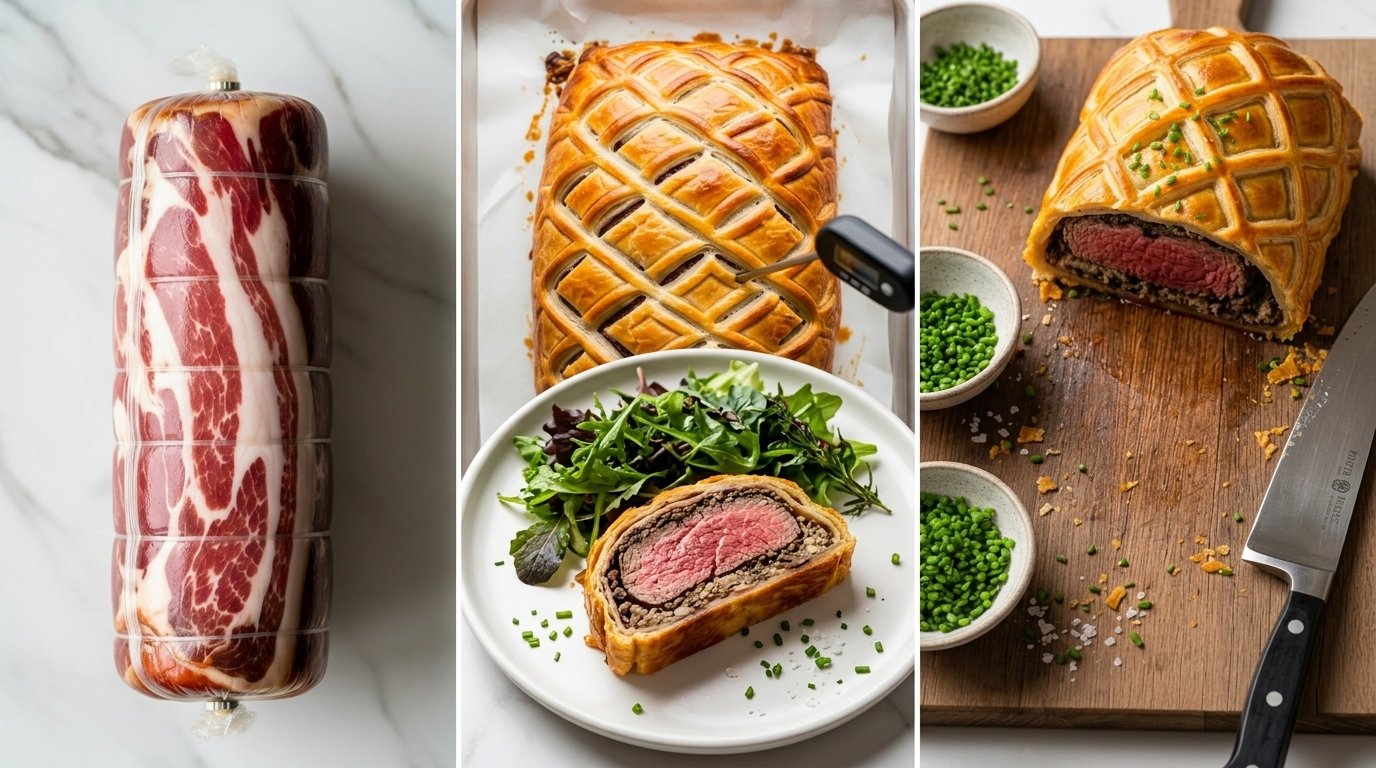
A perfect Beef Wellington is all about moisture control—ensuring the beef is perfectly medium-rare while the puff pastry remains shatteringly crisp.
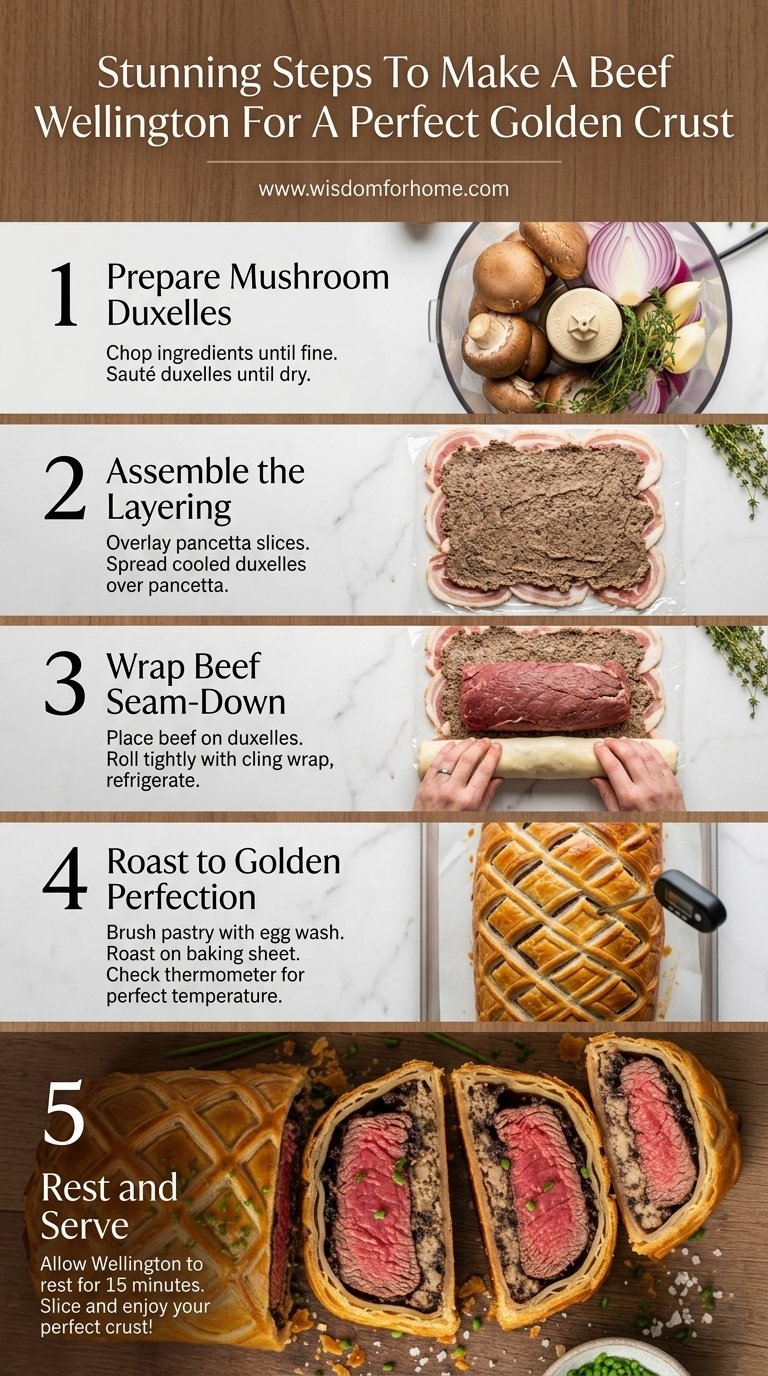
Holiday dinners demand a showstopping centerpiece. Beef Wellington dominates Pinterest trends every single winter. Cooks often struggle with soggy bottoms and overcooked meat. You want a flawless crust and a perfect pink center. This guide solves those common cooking problems. You will learn the exact methods to build a beautiful and delicious roast. We break down the process into easy pieces. You get a perfect medium rare center every single time. The flaky pastry stays crisp and golden. Your guests will ask for a second slice. Check out our related guide on simple holiday side dishes.
Classic Beef Wellington
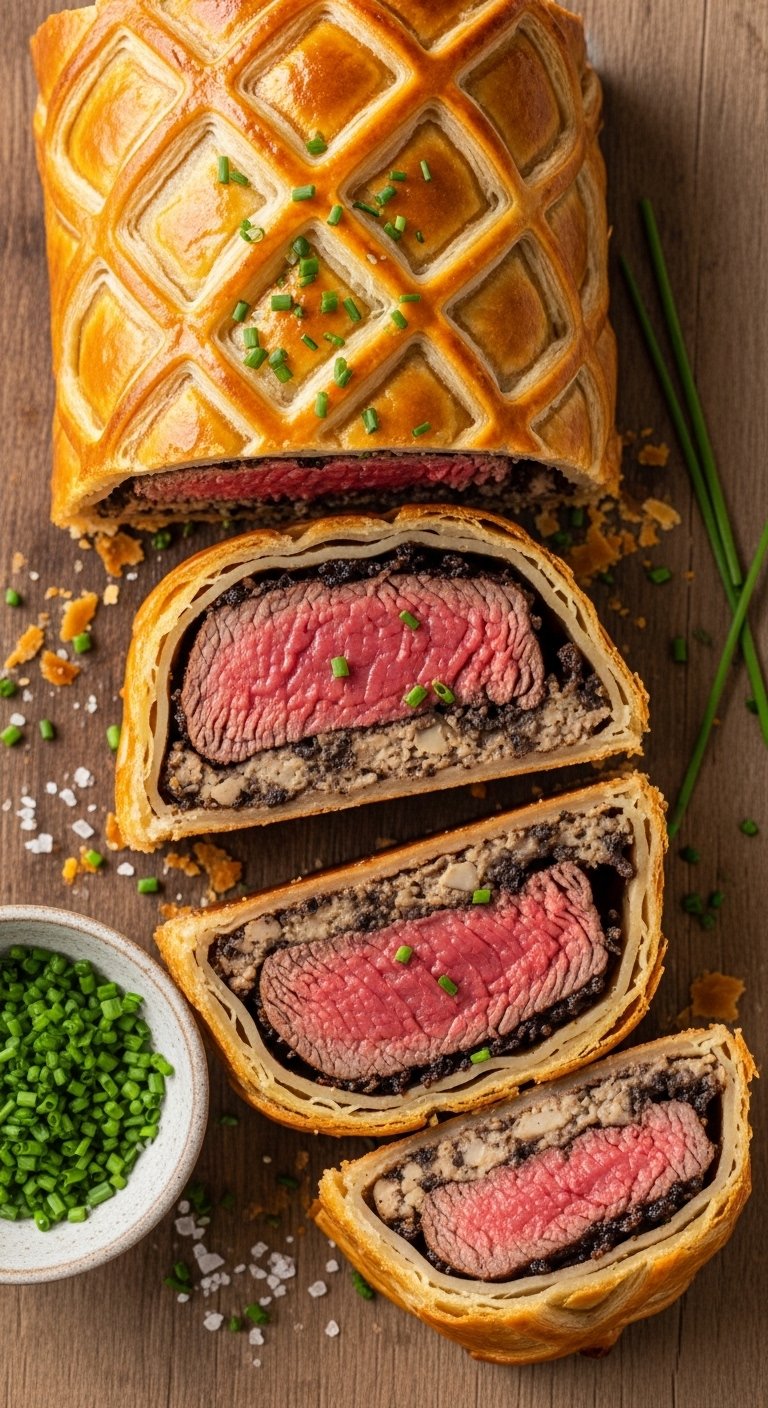
Ingredients
For the Beef and Duxelles (Mushroom Paste):
- 2 lbs (about 1 kg) center-cut beef tenderloin (Chateaubriand roast), trimmed
- 2 tablespoons olive oil
- 2 tablespoons Dijon mustard
- 1 lb (450g) cremini or button mushrooms, very finely chopped
- 2 shallots, finely minced
- 2 cloves garlic, minced
- 1 sprig fresh thyme (leaves only)
- 1 splash dry white wine or cognac
- Salt and freshly cracked black pepper

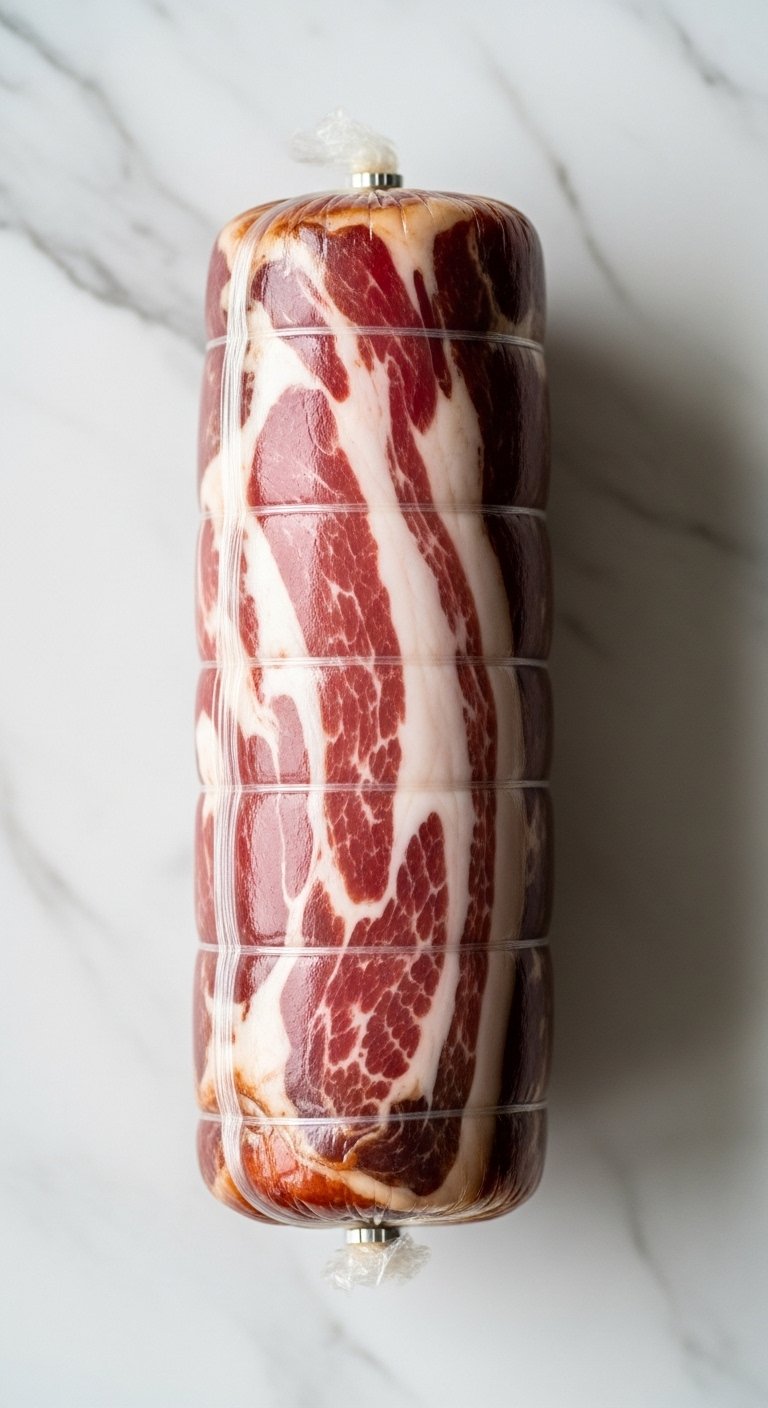
For the Wrap:
- 6 to 8 slices prosciutto
- 1 sheet all-butter puff pastry, thawed but kept cold
- 2 egg yolks beaten with 1 tablespoon water (for the egg wash)
- Coarse sea salt (for sprinkling)
Instructions
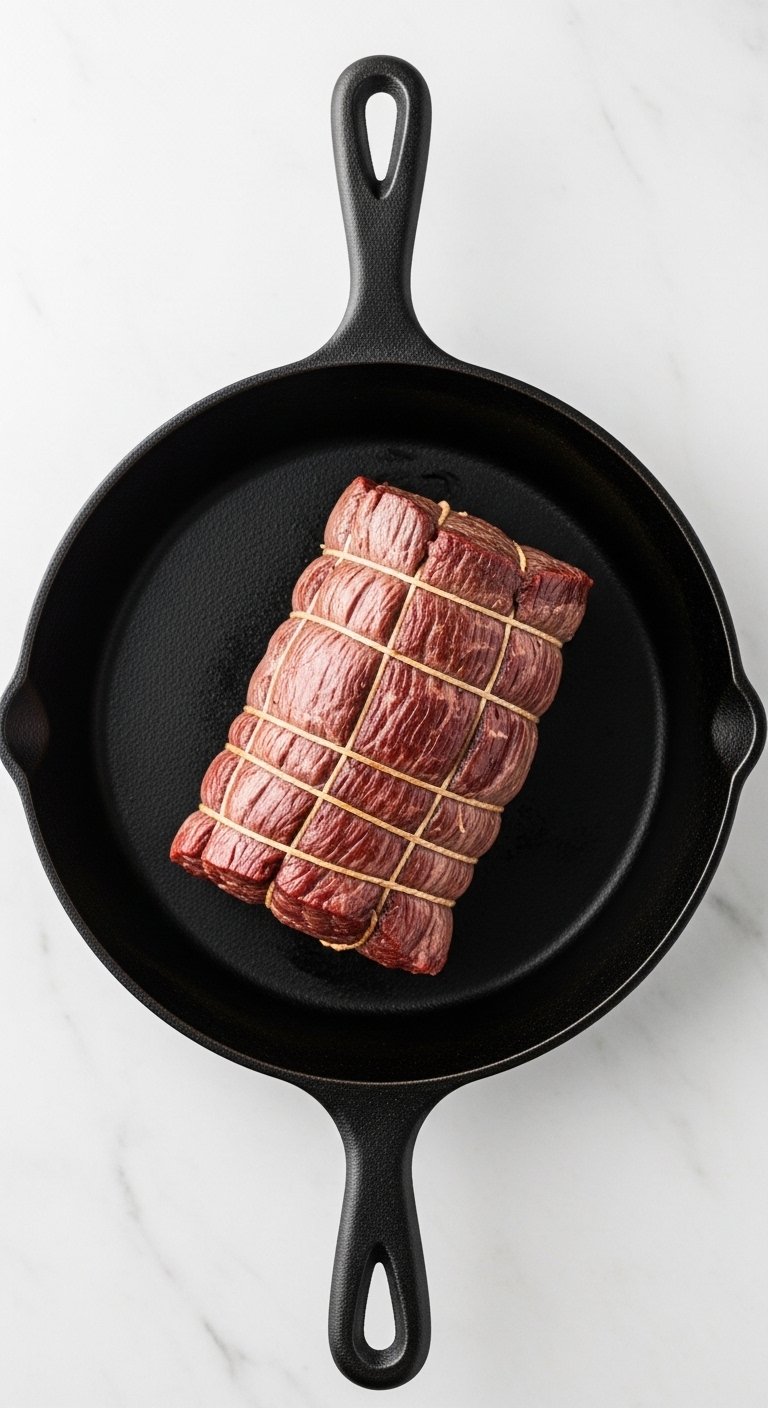
- Sear the Beef: Season the beef generously with salt and pepper. Heat the olive oil in a large skillet over high heat. Sear the beef on all sides until well browned (about 1-2 minutes per side). Remove from the heat and immediately brush the hot meat all over with the Dijon mustard. Let it cool completely.
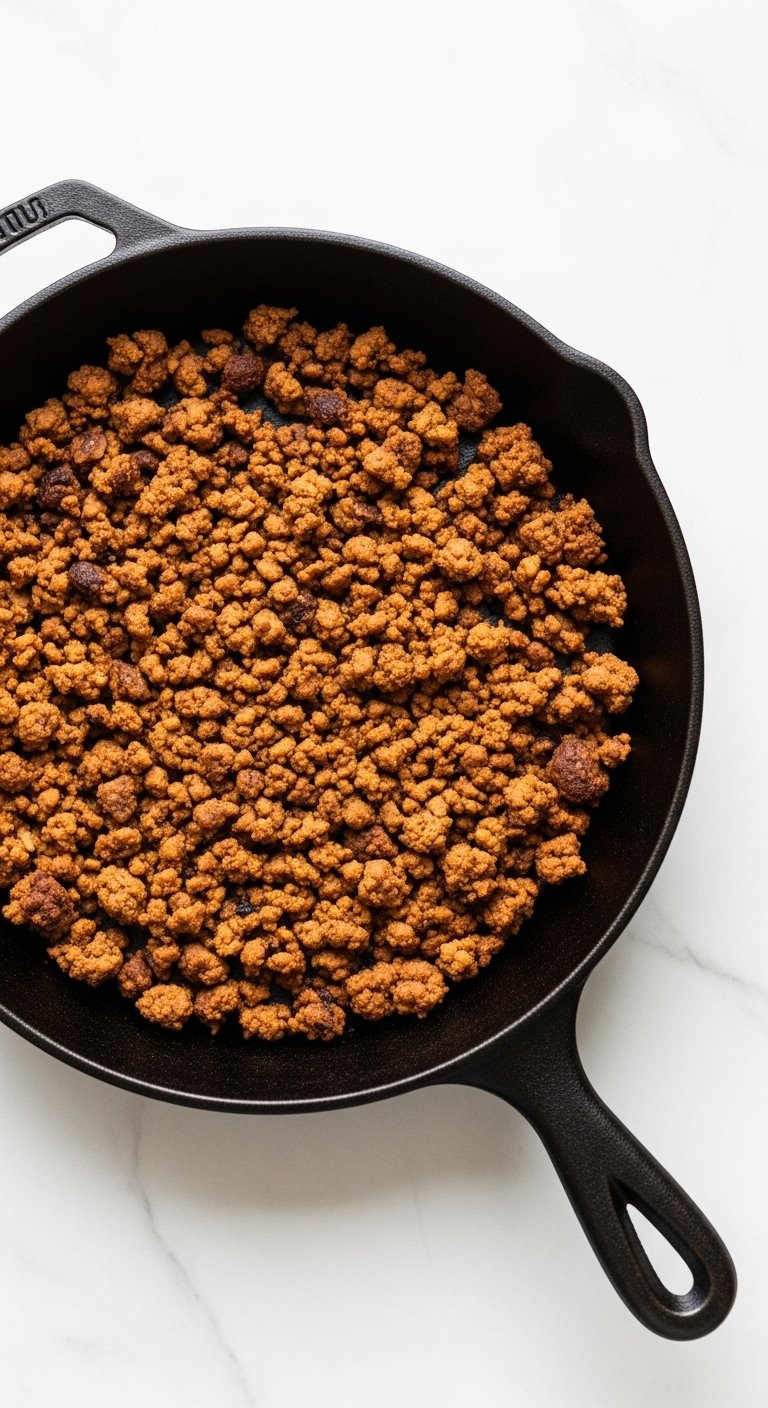
- Make the Duxelles: In the same skillet over medium heat, add the mushrooms, shallots, garlic, and thyme. Cook until the mushrooms release their liquid. Add the wine or cognac and continue to cook until all the moisture has completely evaporated and the mixture is a dry paste (about 10-15 minutes). Season with salt and pepper, then let it cool.
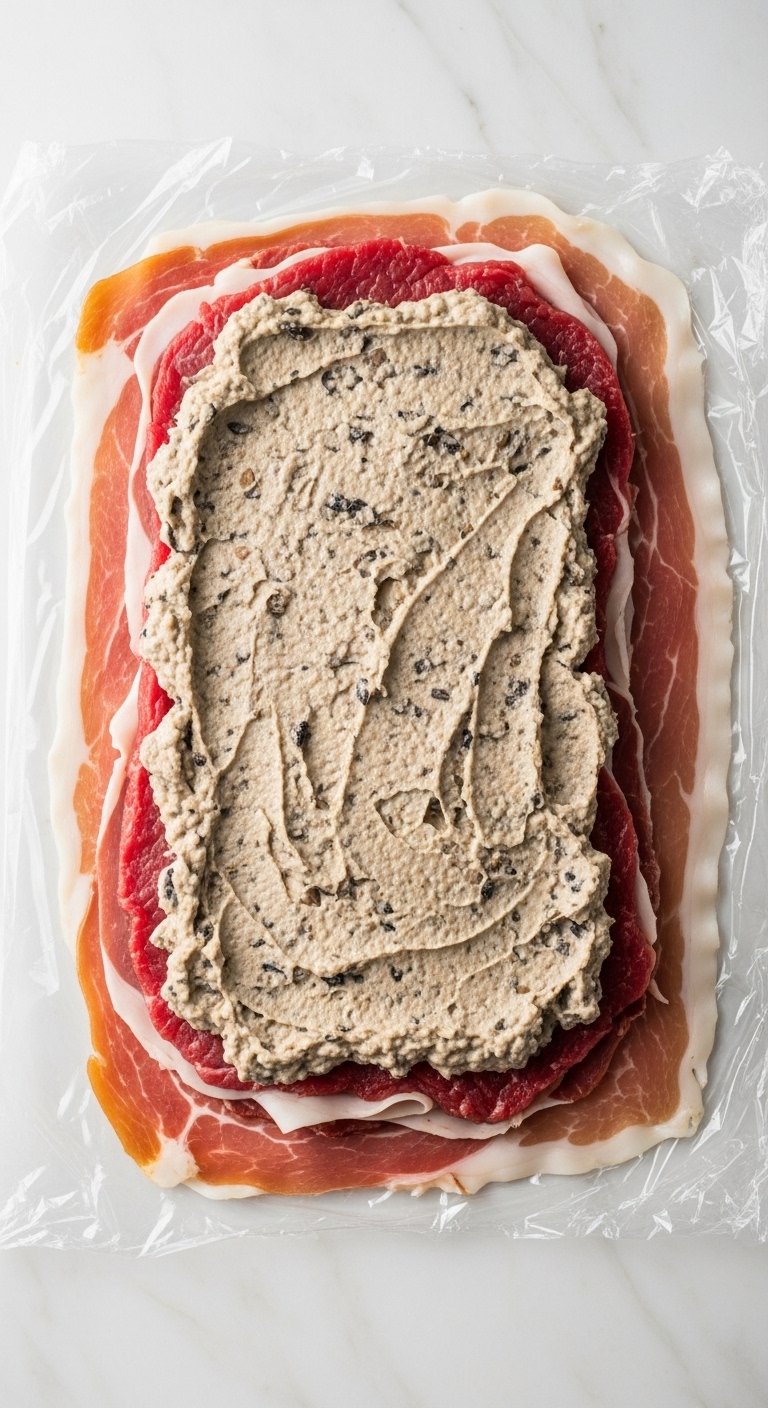
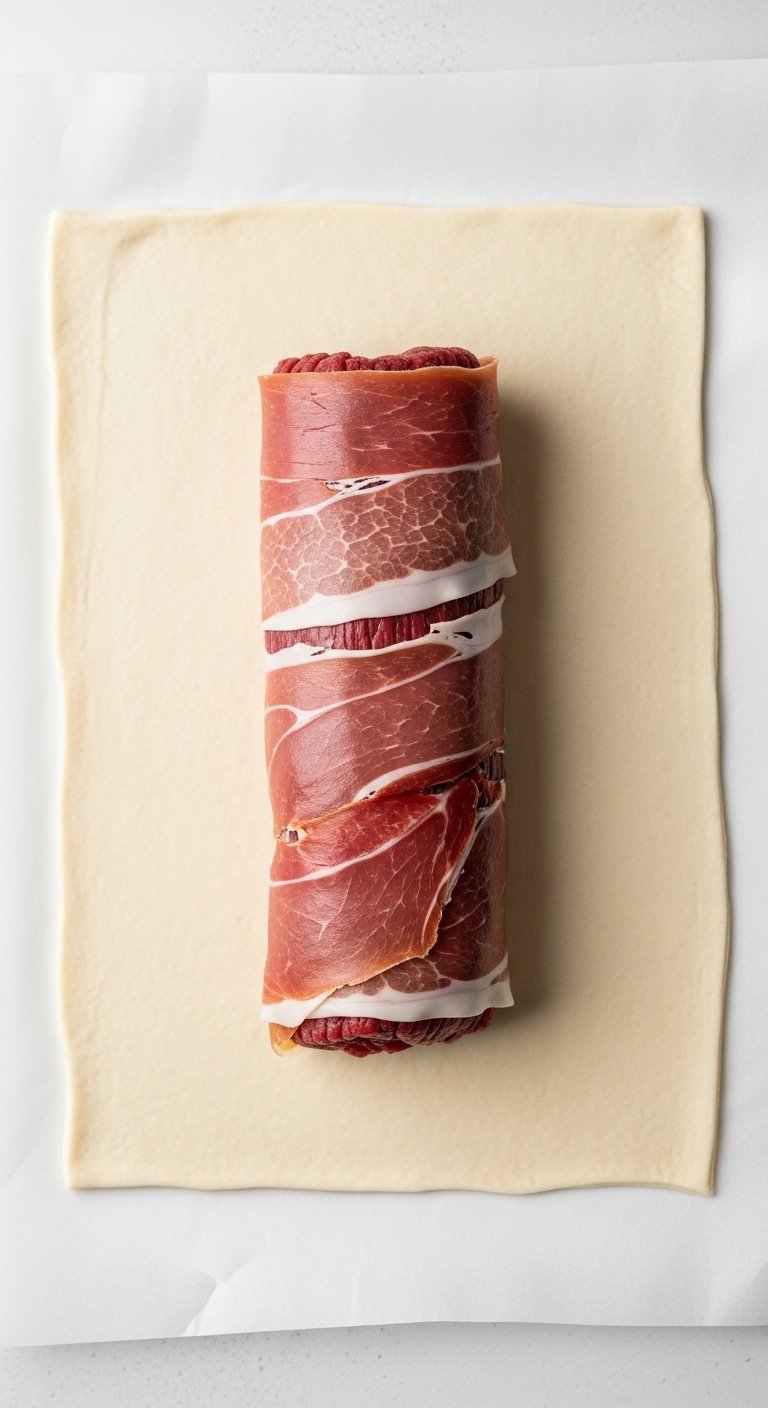
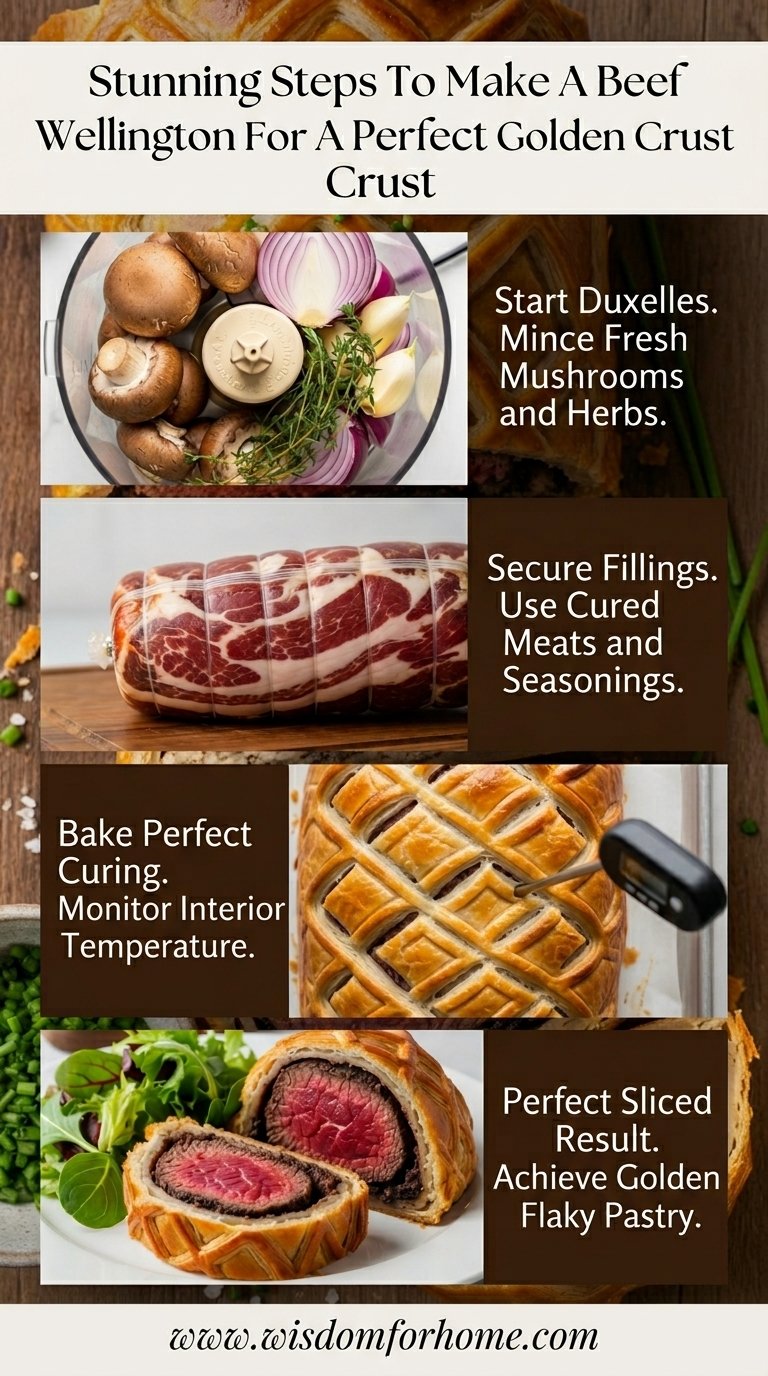
- The First Wrap: Lay out a large sheet of plastic wrap on your counter. Lay the prosciutto slices on the plastic so they overlap slightly, creating a rectangle large enough to enclose the beef. Spread the cooled mushroom duxelles evenly over the prosciutto. Place the seared beef at the bottom edge and tightly roll it up, using the plastic wrap to form a firm, tight cylinder. Twist the ends of the plastic and chill in the fridge for at least 30 minutes to set its shape.
- The Pastry Wrap: Preheat your oven to 200°C (400°F). Roll out the cold puff pastry on a lightly floured surface. Unwrap the chilled beef and place it in the center of the pastry. Brush the edges of the pastry with the egg wash, then fold it over the beef, sealing the edges perfectly. Trim any excess pastry.
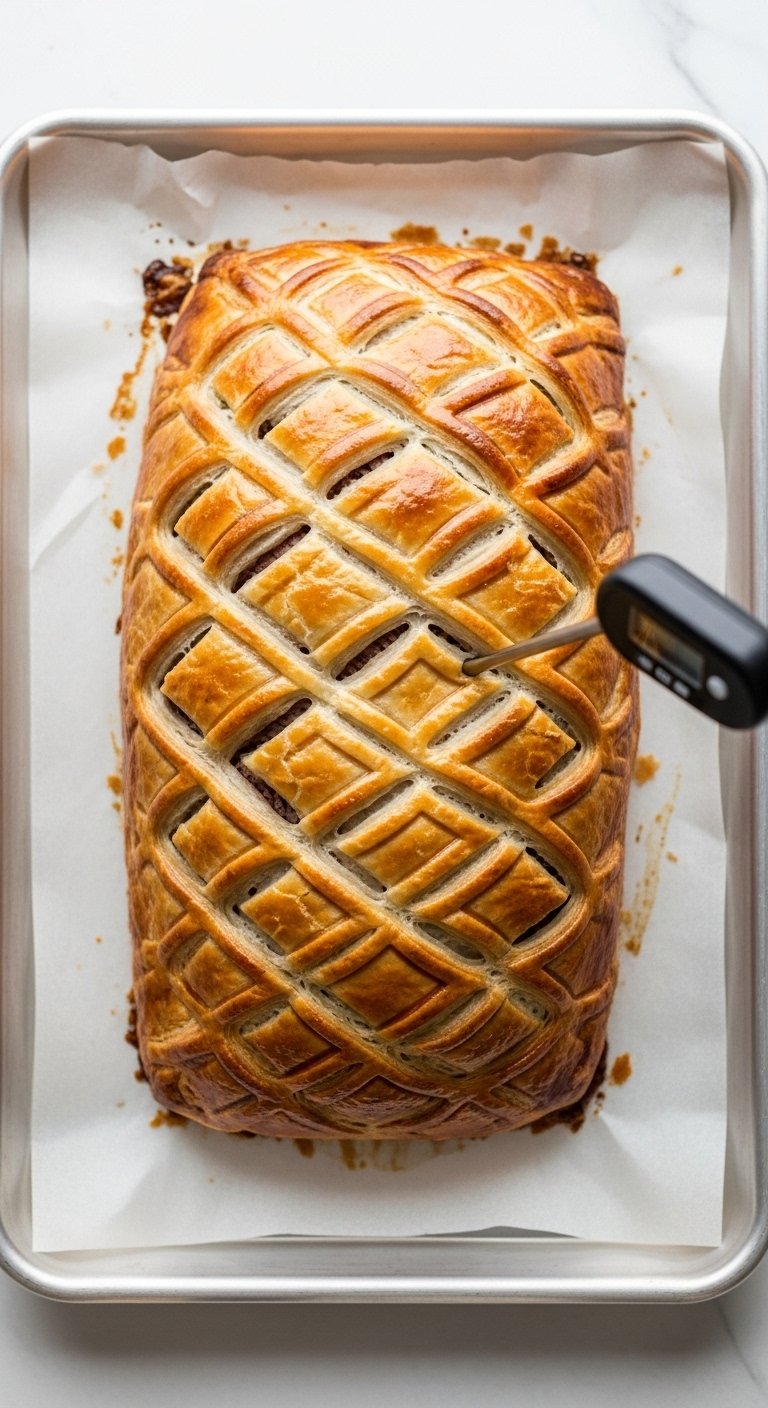
- Decorate and Chill: Place the Wellington seam-side down on a parchment-lined baking sheet. Brush the entire outside with the remaining egg wash. Score the top lightly with a sharp knife in a crosshatch pattern (being careful not to cut all the way through). Sprinkle with coarse sea salt. Chill for another 15 minutes.
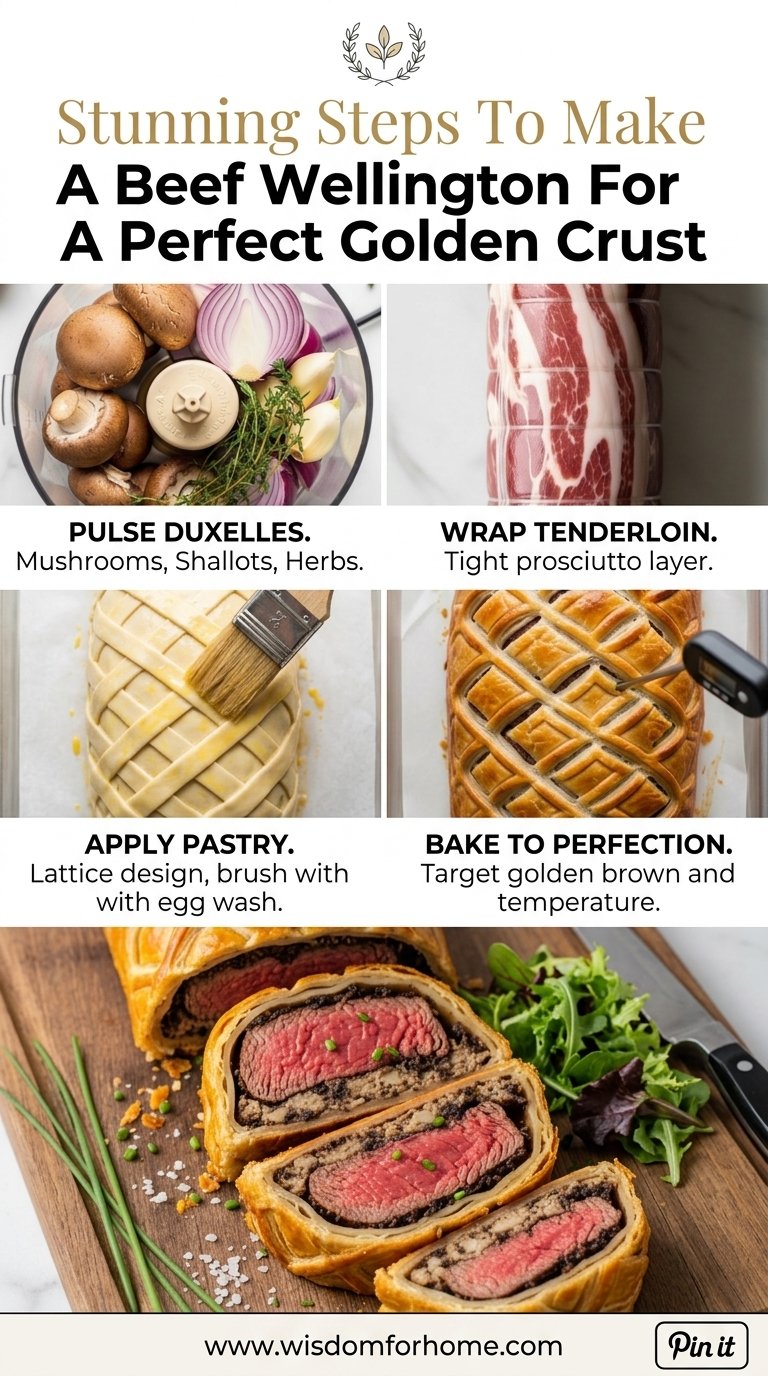
- Bake: Bake for 35 to 40 minutes, or until the pastry is deeply golden brown and a meat thermometer inserted into the very center reads 48°C to 51°C (120°F to 125°F) for medium-rare.
- Rest: This is crucial. Let the Wellington rest on a cutting board for at least 15 minutes before carving, allowing the juices to redistribute so they don’t make the pastry soggy when cut.
The Presentation
Beef Wellington is a show-stopping centerpiece, and carving it is part of the theatrical experience.
Visual Plating
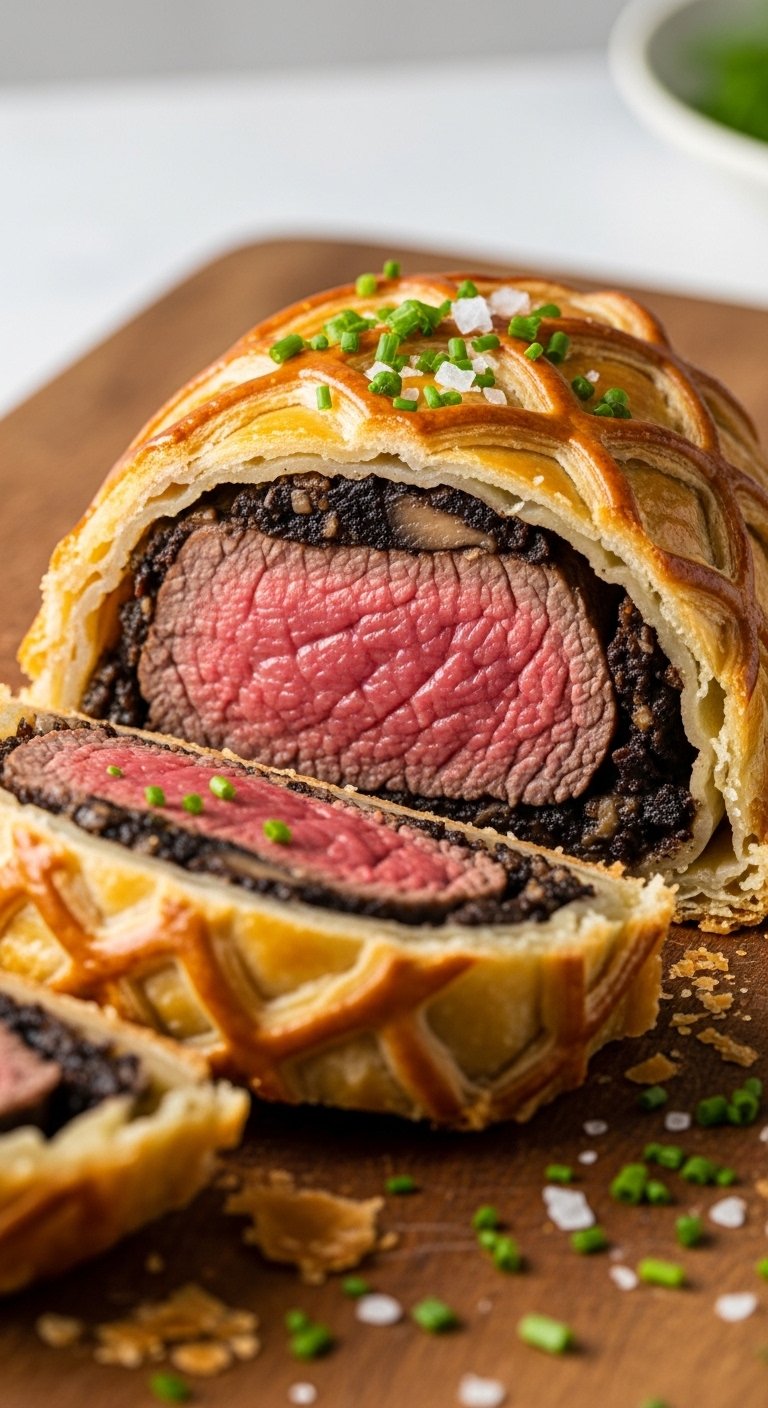
- The Carve: Bring the whole, rested Wellington to the table uncut. Use a long, sharp serrated knife to carve thick, 1-inch to 1.5-inch slices. Use gentle, sawing motions so you do not crush the delicate, flaky pastry.
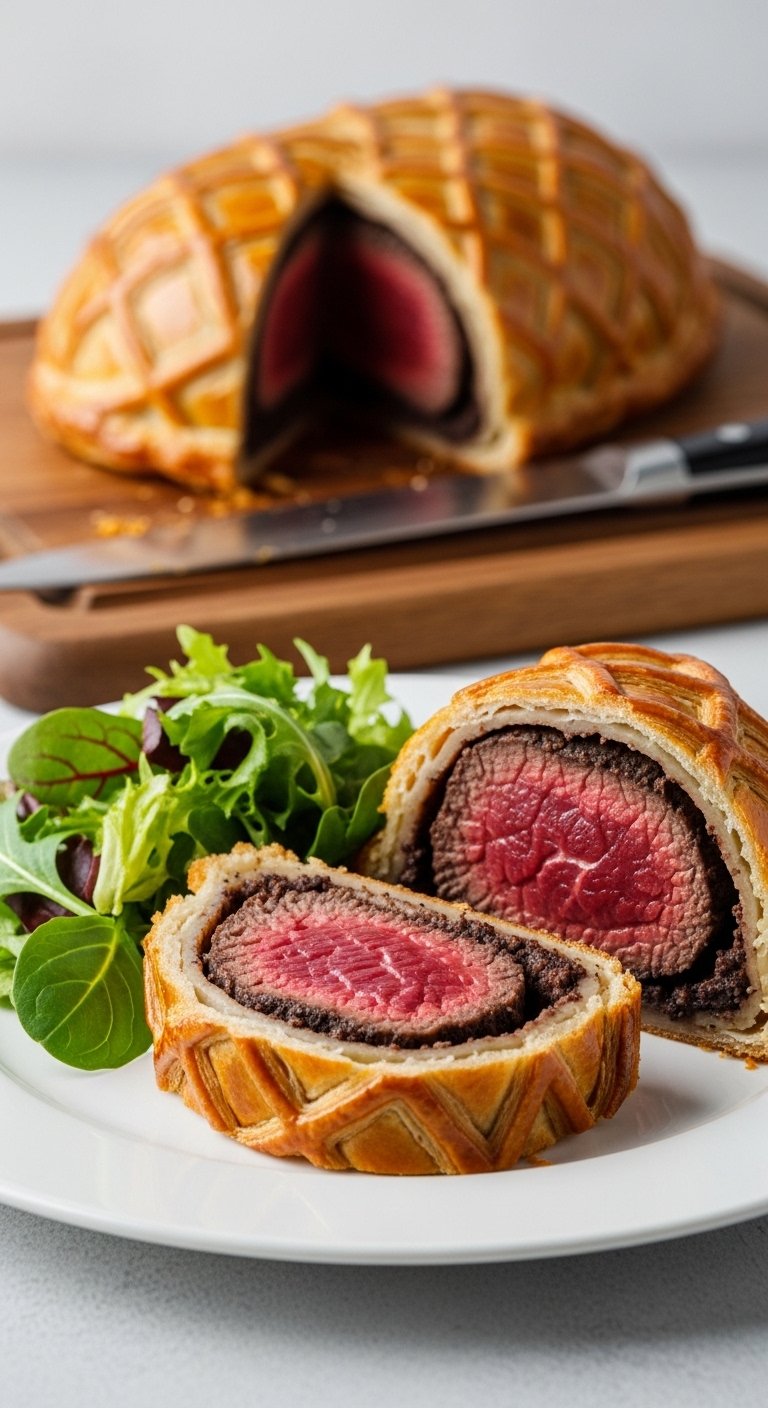
- The Reveal: A perfect slice will showcase a distinct “bullseye” effect: the golden puff pastry ring, the dark layer of savory mushrooms and prosciutto, and the bright, ruby-red, medium-rare beef in the center.
- The Sauce: Never pour sauce directly over the top of the pastry, as it will instantly ruin the crispness. Instead, pool a rich red wine demi-glace or beef jus at the bottom of a warm plate, and gently lay the Wellington slice on top of it.

How do I prevent a soggy bottom on my Beef Wellington?
Cook your mushroom mixture until all moisture disappears. The mixture must look like a thick dry paste. Wrap the beef tightly in prosciutto to block escaping meat juices. Rest the final baked roast on a wire cooling rack. The wire rack stops steam from softening the bottom crust.
What cut of beef is best for Beef Wellington?
Buy a center cut beef tenderloin. People call this cut a chateaubriand. This specific muscle does no heavy work for the animal. The lack of exercise makes the meat extremely tender. The center cut provides a uniform cylinder shape for even cooking.
Can I prepare Beef Wellington ahead of time?
You can build the entire raw roll one day before serving. Wrap the raw pastry covered roast tightly in plastic wrap. Keep the roll in the refrigerator overnight. The long chill time firms up the shape. Bake the cold roast directly from the fridge the next day.
What internal temperature should the beef reach?
Cook the roast until the center reads 130 degrees Fahrenheit for a medium rare finish. Remove the pan from the oven at 125 degrees Fahrenheit. The internal temperature will rise another five degrees during the resting period. Always use a digital meat probe for the most accurate reading.
Conclusion
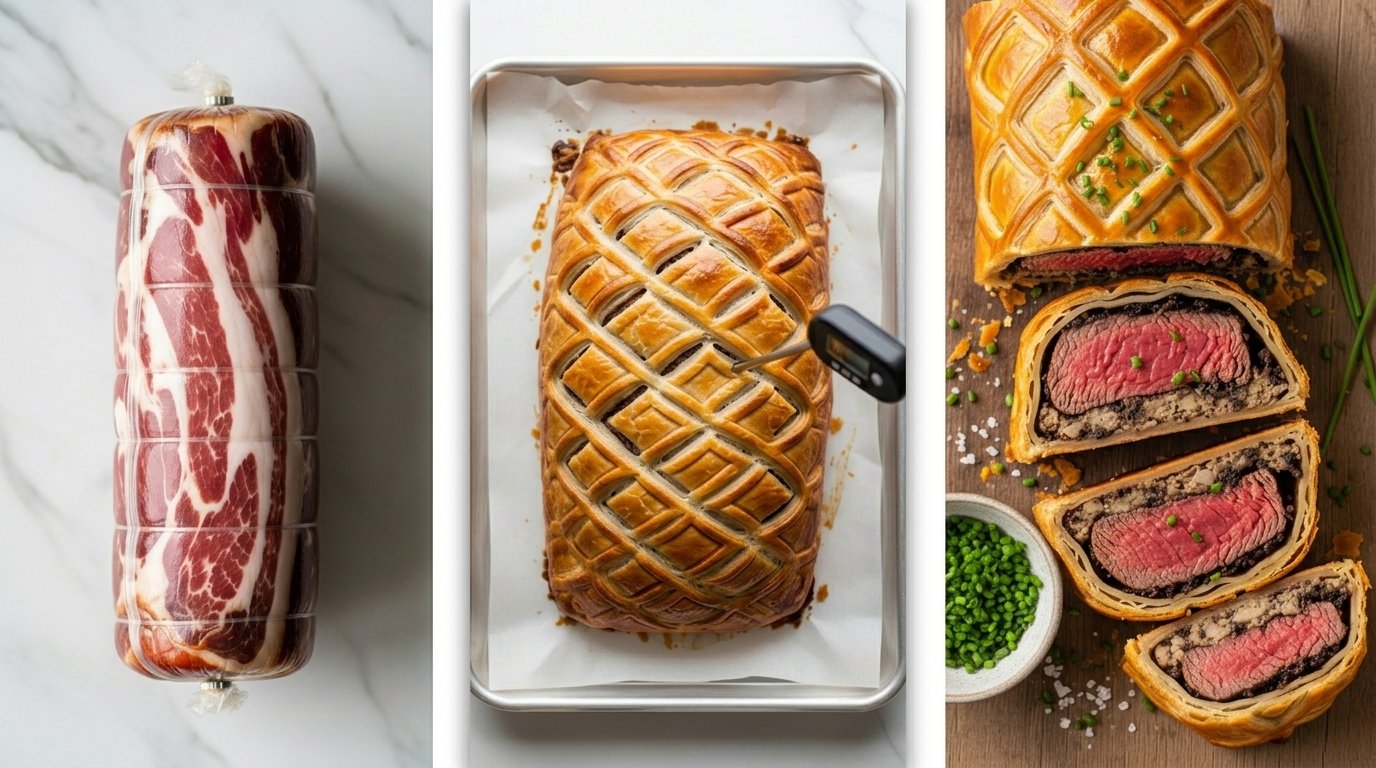
A beautiful golden roast makes the perfect centerpiece for any holiday dinner table. You now possess the exact techniques to build a flawless crust and a perfect medium rare center. Every step builds upon the last to create a stunning final dish. Which side dish will you serve with your beautiful masterpiece? Leave a comment below with your favorite holiday pairing ideas. Follow us on Pinterest for more recipe inspiration.

Leave a Comment