
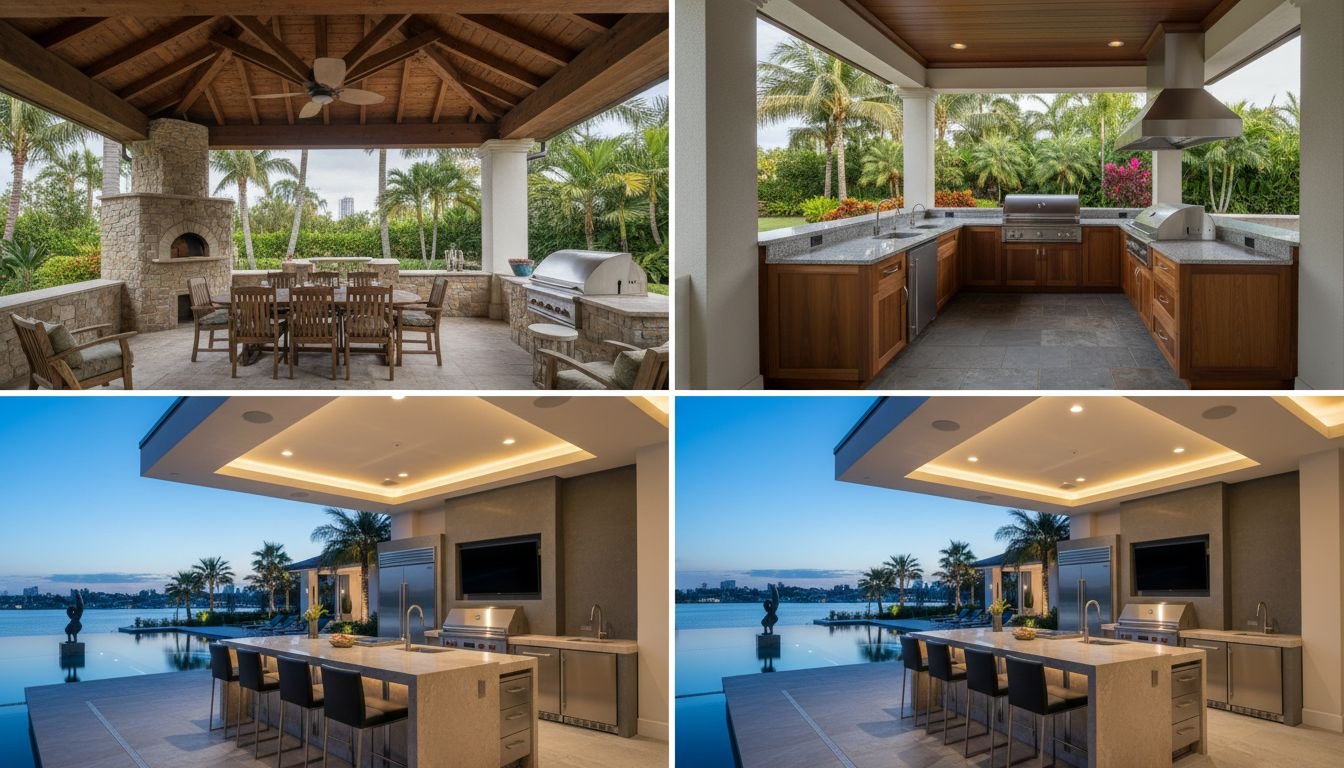
The Ultimate Guide to Weatherproof Luxury and Coastal Style
Florida living centers on the blur between indoor comfort and the wild humidity of the outdoors. You want a space that survives hurricane season yet looks like a five star resort in January. Most homeowners struggle with materials that rust or fade under the intense UV index. This guide solves that. We break down ten distinct design archetypes tailored for the Sunshine State. You will find specific layout strategies and material recommendations here. These designs prioritize airflow and durability without sacrificing the modern aesthetic you crave.
Check out our related guide on [Small Patio Decor Ideas].
Key Takeaways
- Durability is paramount. Florida salt air destroys standard appliances. We focus on marine grade polymer and 304 stainless steel.
- Shade dictates usability. A modern kitchen is useless if the midday sun makes it uninhabitable. Integrated pergolas and lanai extensions are necessary.
- Flow creates value. The best designs use pass through windows or level flooring to erase the threshold between the living room and the patio.
- Lighting extends usage. Modern LED strip lighting and smart controls allow these spaces to transition from cooking zones to evening lounges.
Table of Contents
- The Sleek Monochromatic Lanai
- Coastal White and Teak Fusion
- Industrial Stainless Steel Haven
- The Tropical Modern Bar
- Indoor Outdoor Passthrough Window
- Compact Modular Smart Kitchen
- Dark Moody Stone Aesthetic
- The L Shaped Poolside Lounge
- Covered Pergola with Skylights
- Eco Friendly Sustainable Patio
- Popular Asked Questions
- Conclusion
The Sleek Monochromatic Lanai
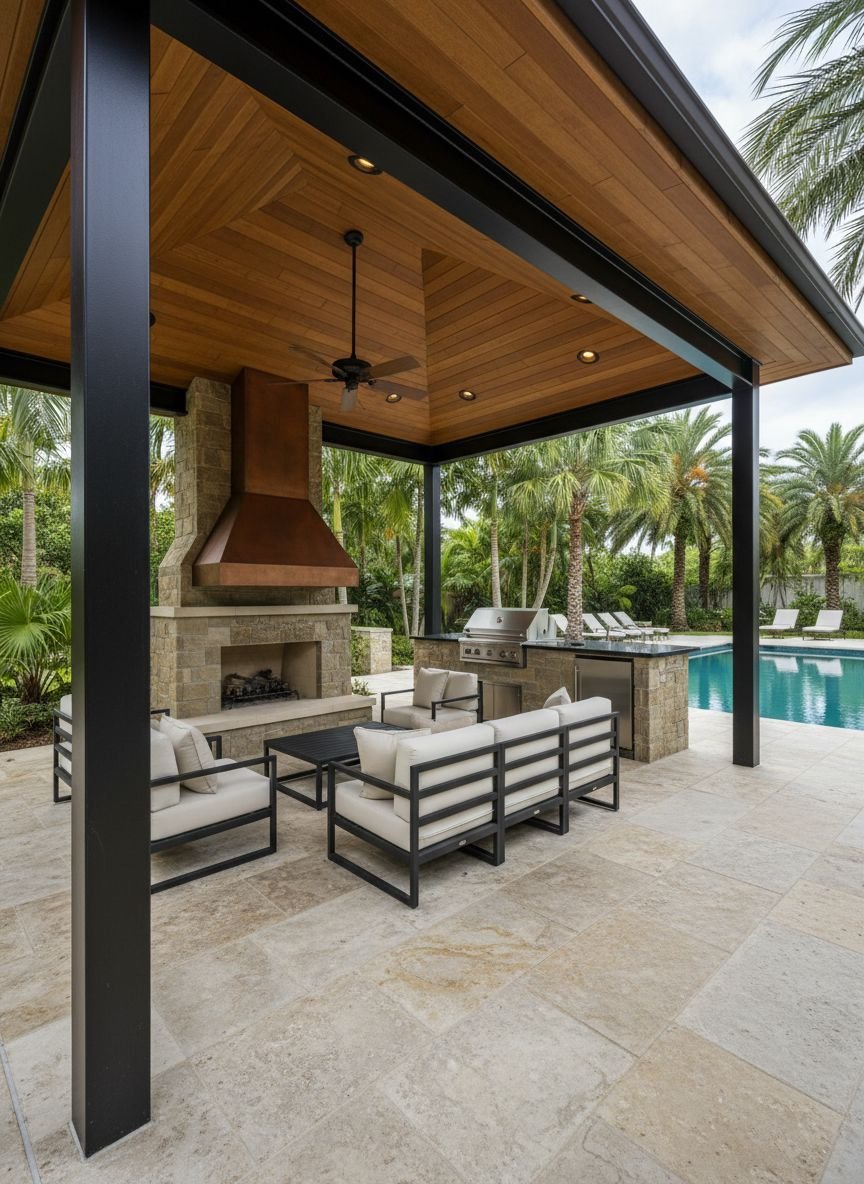
A monochromatic palette offers the most foolproof way to achieve a modern look in a Florida screen enclosure. You start with a foundation of polished concrete flooring that resists sand tracking and stays cool underfoot. The cabinetry should match the floor tone closely to create a seamless visual weight. Matte black fixtures provide the necessary contrast against cool greys or bright whites. This lack of color clutter makes a small lanai feel twice as large.
Lighting plays a massive role in this design. Strip LEDs installed under the cabinet toe kicks create a floating effect at night. This eliminates harsh overhead shadows and keeps the vibe lounge like. You should choose sintered stone for countertops here. Sintered stone withstands thermal shock better than quartz. It will not yellow under direct Florida sun exposure. The goal is a unified surface that looks carved from a single block of material.
Maintenance becomes effortless with this approach. The lack of grout lines in the flooring prevents mold buildup from humidity. You can hose down the entire area without worrying about water damage. This design works best for homes with modern architectural lines or mid century renovations.
Pro Tip: seal your concrete floors with a penetrating lithosphere sealer rather than a topical film to prevent peeling in high heat.
Save this idea to your Pinterest.
Coastal White and Teak Fusion
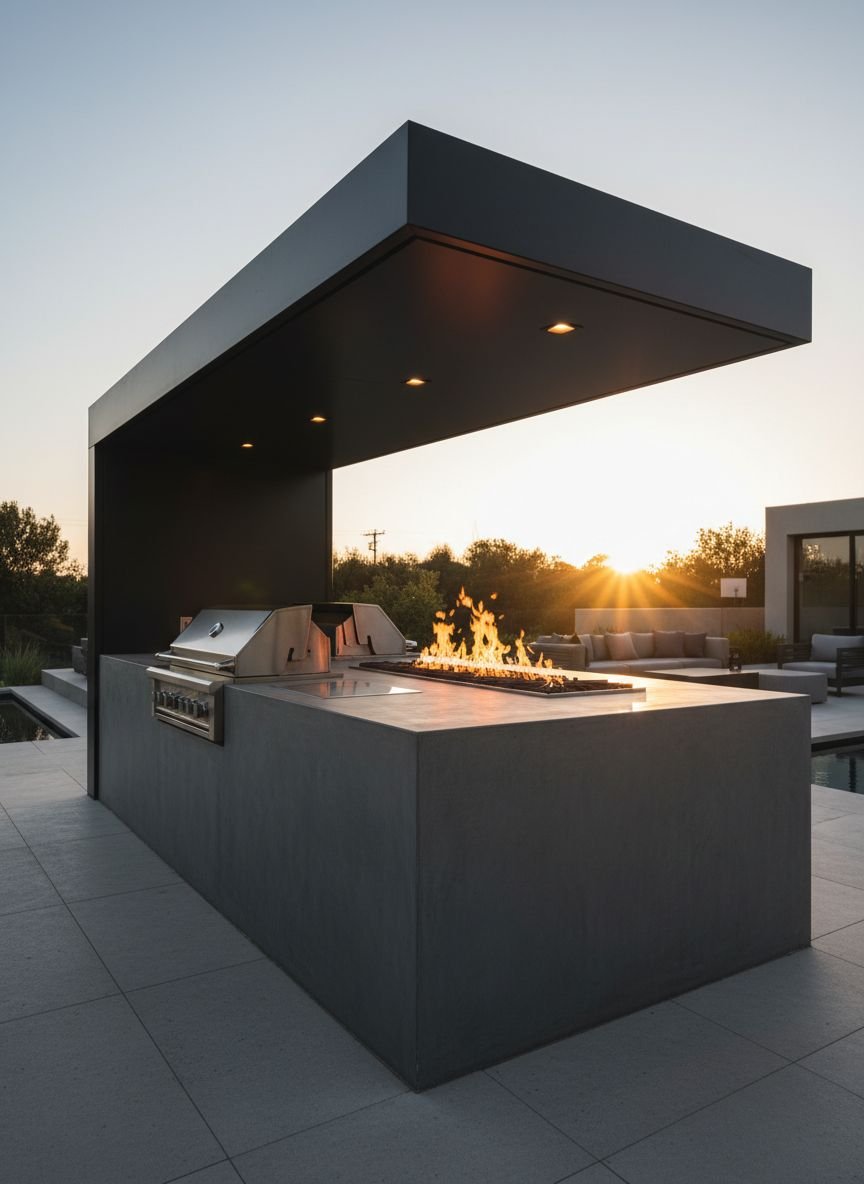
Nothing says Florida quite like the combination of crisp white cabinetry and warm wood accents. This design channels the luxury of a private yacht. You use marine grade high density polyethylene (HDPE) for the cabinets. This material is completely waterproof. It will not rot, swell, or delaminate even if a summer storm floods the patio. The white surface reflects heat and keeps the internal storage temperature lower.
Teak acts as the warming element. You apply it sparingly as slat wall detailing or open shelving. Real teak contains natural oils that repel water and insects. Over time it will weather to a silvery grey if left untreated. You might prefer this patina or you can oil it annually to keep the rich honey tone. The contrast between the clinical white HDPE and the organic wood grain creates a balanced aesthetic.
Style this kitchen with woven pendant lights made from synthetic rattan. Natural fibers rot in the humidity so synthetic options are safer. Add bar stools with removable and washable slipcovers. This setup invites relaxation and feels approachable rather than museum like. It suits waterfront properties perfectly by echoing the colors of sand and driftwood.
Pro Tip: use 316 marine grade stainless steel hardware for all hinges and handles to prevent salt air pitting.
Industrial Stainless Steel Haven
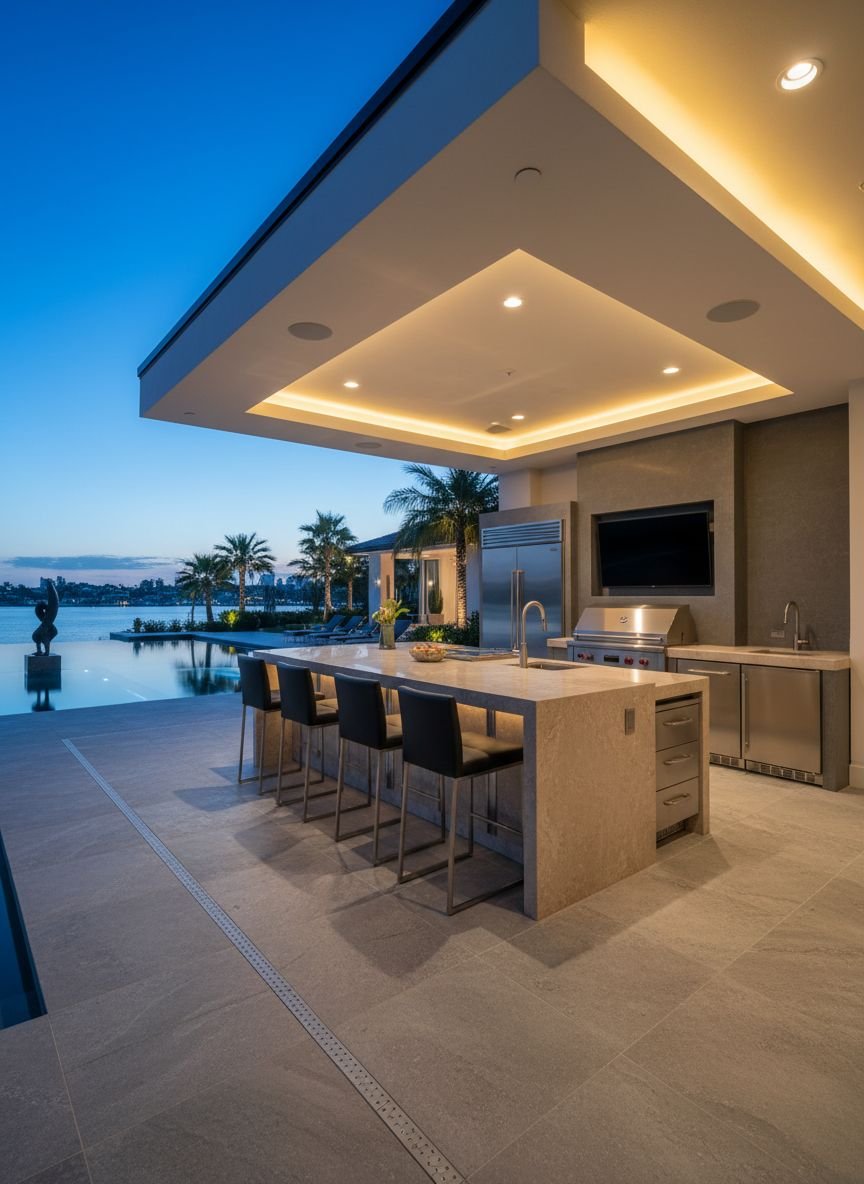
Serious home chefs often gravitate toward the full industrial look. This design centers on functionality and hygiene. You construct the entire run of cabinetry and countertops from stainless steel. This surface is non porous. Bacteria from raw meat prep cannot penetrate it. Cleanup involves a simple wipe down with a disinfectant. The reflective quality of the steel also bounces light around a covered patio and makes it feel brighter during twilight hours.
The visual impact is striking and bold. To avoid the space feeling like a commercial cafeteria you soften it with greenery. Large potted bird of paradise plants or a vertical herb garden break up the metallic expanse. The green leaves pop against the silver background. You can also introduce a geometric patterned rug made from recycled plastic to ground the dining area.
Durability is the main selling point here. Steel does not crack or chip. You must however be mindful of heat retention. If your kitchen sits in direct sunlight the steel will get hot. This design is best suited for covered lanais or pergolas. It signals to guests that you take grilling seriously.
Pro Tip: choose a brushed finish over a mirror finish to hide fingerprints and minor scratches from cooking utensils.
The Tropical Modern Bar
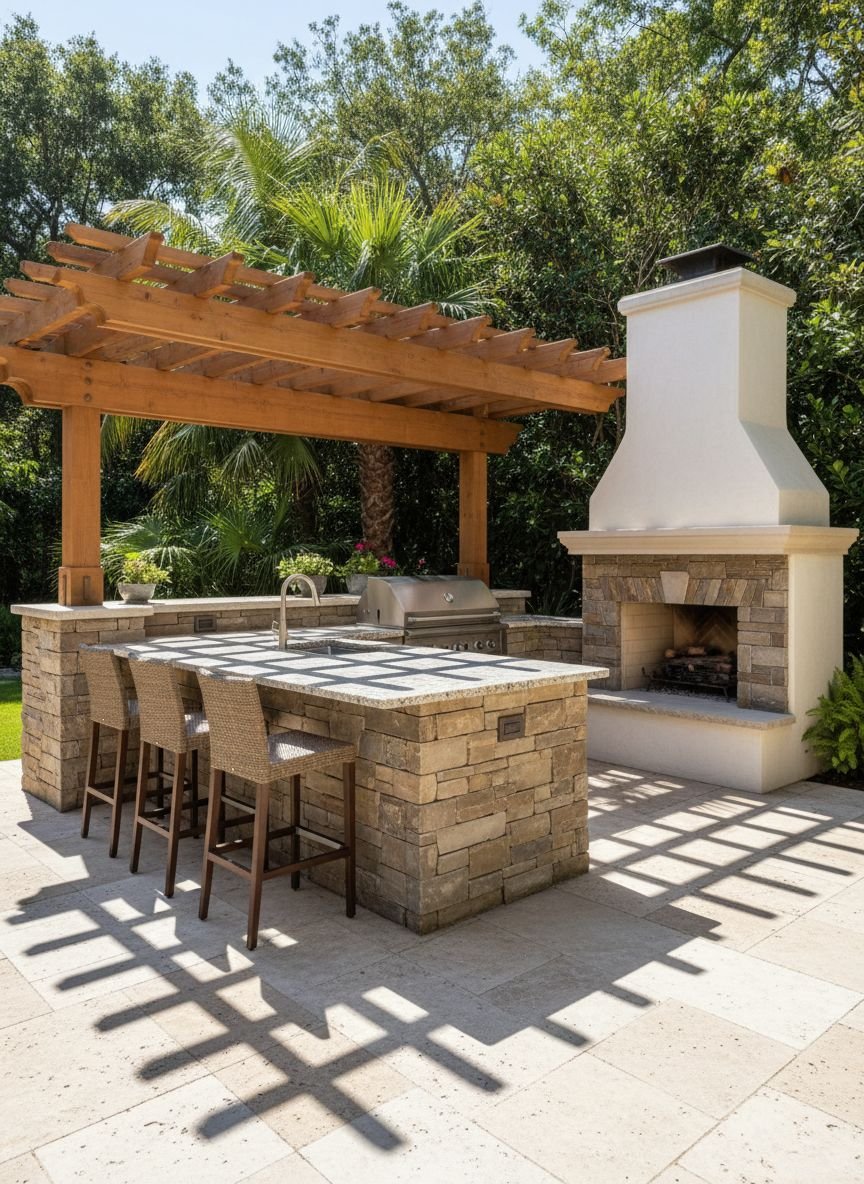
This design flips the script by making the beverage center the focal point. Florida entertaining often revolves around cold drinks by the pool. The layout features a raised bar top that seats four to six guests facing the cook. You use bamboo or composite cladding that mimics bamboo to wrap the island. This gives a resort vibe without the kitsch of a tiki hut.
The countertop choice is crucial here. Concrete with embedded crushed glass or sea shells adds local character. Or you might choose a live edge wood slab sealed with marine epoxy. Behind the bar you install specialized appliances. An outdoor rated kegerator, a crushed ice machine, and a wine fridge are standard.
Design the backsplash with bold patterned tiles. Encaustic cement tiles work well if sealed properly. They add a punch of color that defines the zone. This kitchen is less about five course meals and more about tapas and cocktails. It encourages social interaction. Guests can sit and chat while you mix drinks or flip burgers.
Pro Tip: install a misting system along the overhang of the bar roof to drop the ambient temperature by ten degrees during July afternoons.
Save this idea to your Pinterest.
Comparison: Stainless Steel vs. Marine Grade Polymer
| Feature | Stainless Steel (304/316) | Marine Grade Polymer (HDPE) |
|---|---|---|
| Durability | High (can dent) | Extreme (bounces back) |
| Rust Risk | Moderate to Low (depends on grade) | None (plastic based) |
| Heat Retention | High (get hot in sun) | Low (stays cool) |
| Maintenance | Polishing required | Hose down/Power wash |
| Cost | $$$ | $$$$ |
| Aesthetic | Industrial/Sleek | Coastal/Clean |
Indoor Outdoor Passthrough Window
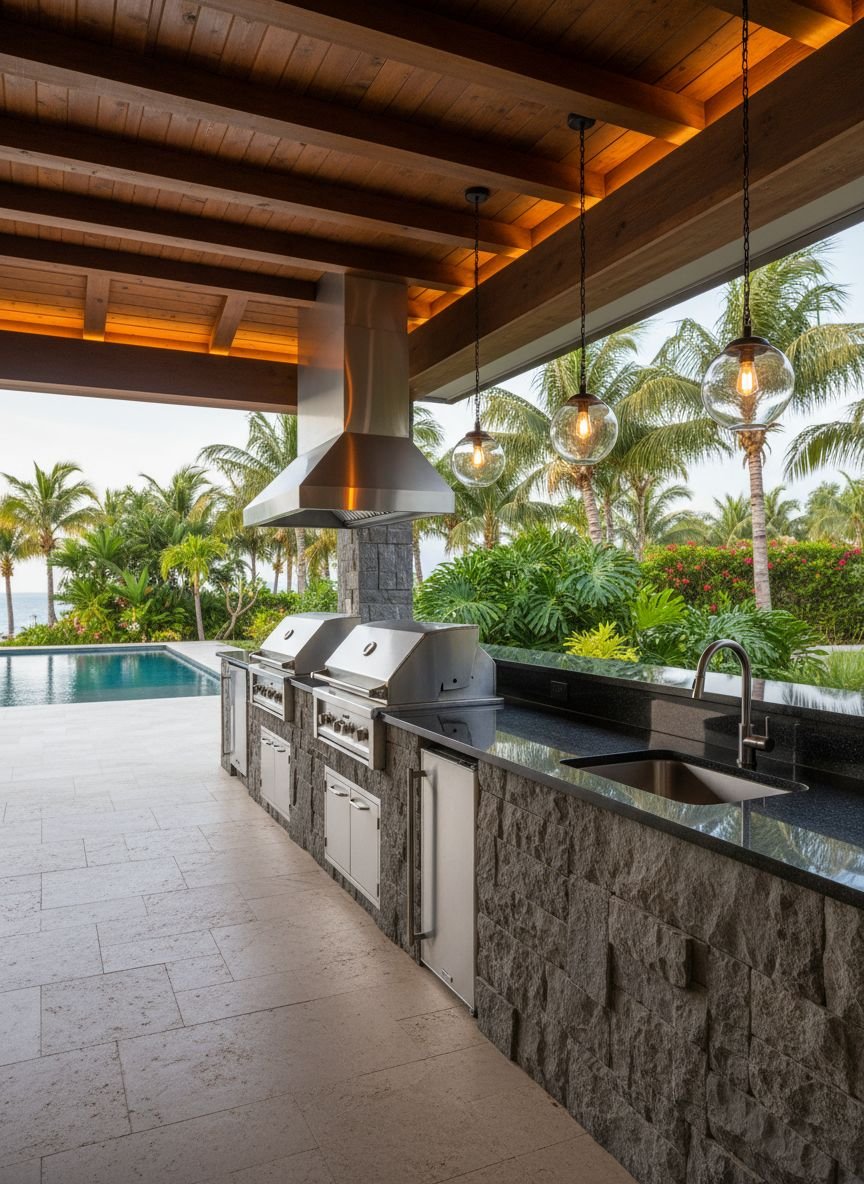
The barrier between your indoor kitchen and outdoor patio disappears with this architectural hack. You replace a standard kitchen window with a hydraulic gas strut window or a bifold system. This creates a serving counter that straddles both spaces. You can prep food inside in the air conditioning and pass it directly to the person manning the grill outside.
This design saves money. You do not need a second sink or a second fridge outdoors because the indoor ones are within reach. You focus your budget on a high end built in grill and a durable countertop extension. The counter material should run continuously from inside to outside to enhance the illusion of a single room.
Styling involves keeping the sightlines clear. Avoid tall centerpieces. Use bar stools that tuck completely under the outdoor overhang. This setup is ideal for families with kids. Parents can supervise pool time while chopping vegetables inside. It maximizes the utility of a smaller floor plan.
Pro Tip: ensure your countertop overhang extends at least 12 inches outdoors to provide comfortable legroom for seating.
Compact Modular Smart Kitchen
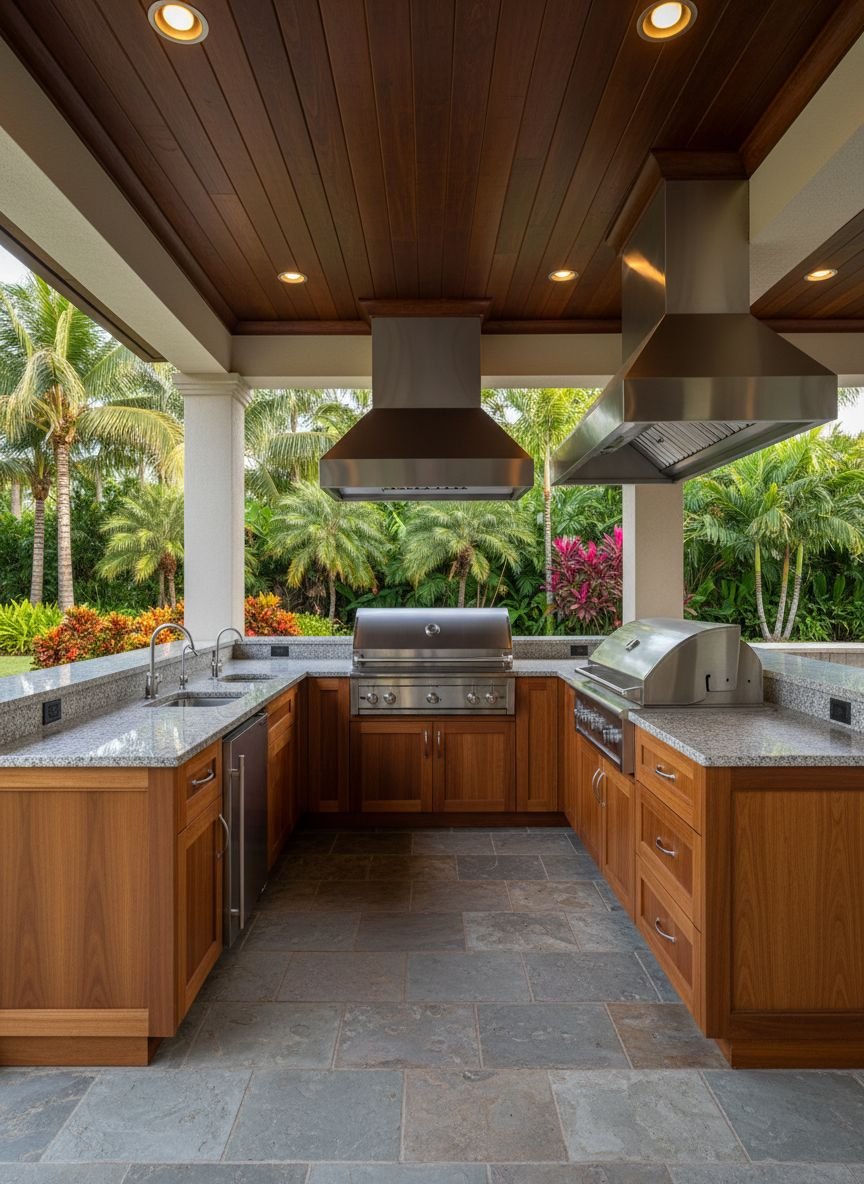
Not every Florida home has a sprawling backyard. Townhomes and condos need efficient solutions. Modular outdoor kitchens offer the answer. These are pre fabricated units that bolt together. You can mix and match a grill module, a sink module, and a storage module. They fit perfectly on small patios or balconies.
Modern modular units come with smart technology integration. You can find grills that sync with your phone to monitor meat temperatures. Some units have built in USB charging ports for your devices. The finishes are sleek and usually powder coated aluminum. Aluminum is lightweight and rust proof.
Visually you keep the footprint tight. You place the unit against a wall to save floor space for seating. Vertical storage becomes important. Use wall mounted magnetic strips for utensils. Install floating shelves above the unit for herbs or spices. This design proves you do not need massive square footage to cook luxury meals outdoors.
Pro Tip: check your HOA regulations regarding gas grills on balconies before purchasing specific modular units.
Dark Moody Stone Aesthetic
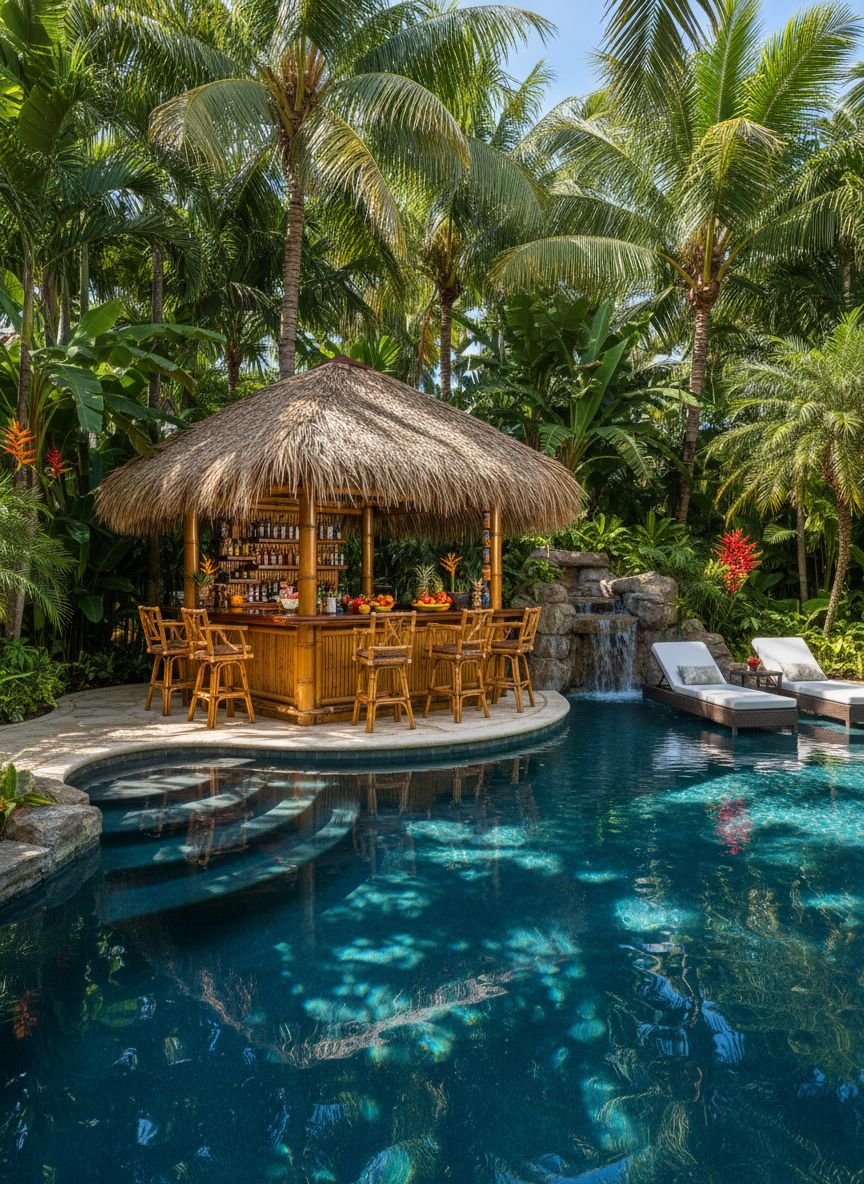
White kitchens are common but black and charcoal themes are taking over modern design. This look uses dark granite or soapstone. The stone often features a leathered or honed finish rather than a high gloss polish. This texture hides water spots and pollen. You pair the dark stone with cabinetry in charcoal or deep forest green.
This aesthetic creates a sophisticated lounge atmosphere. It feels more like an upscale night club than a backyard barbecue. You accentuate the dark tones with warm copper or brass hardware. The metal warms up the space and glows beautifully under evening lights.
Fire features complement this look well. A linear gas fire pit integrated into the nearby seating area reflects off the dark surfaces. You use large format slate pavers for the flooring. The key is to vary the textures since the colors are similar. Mix smooth metal with rough stone and soft textiles. This design hides dirt exceptionally well and looks pristine with minimal effort.
Pro Tip: dark surfaces absorb heat so ample shade from a solid roof or high quality umbrella is non negotiable for this design.
Save this idea to your Pinterest.
The L Shaped Poolside Lounge
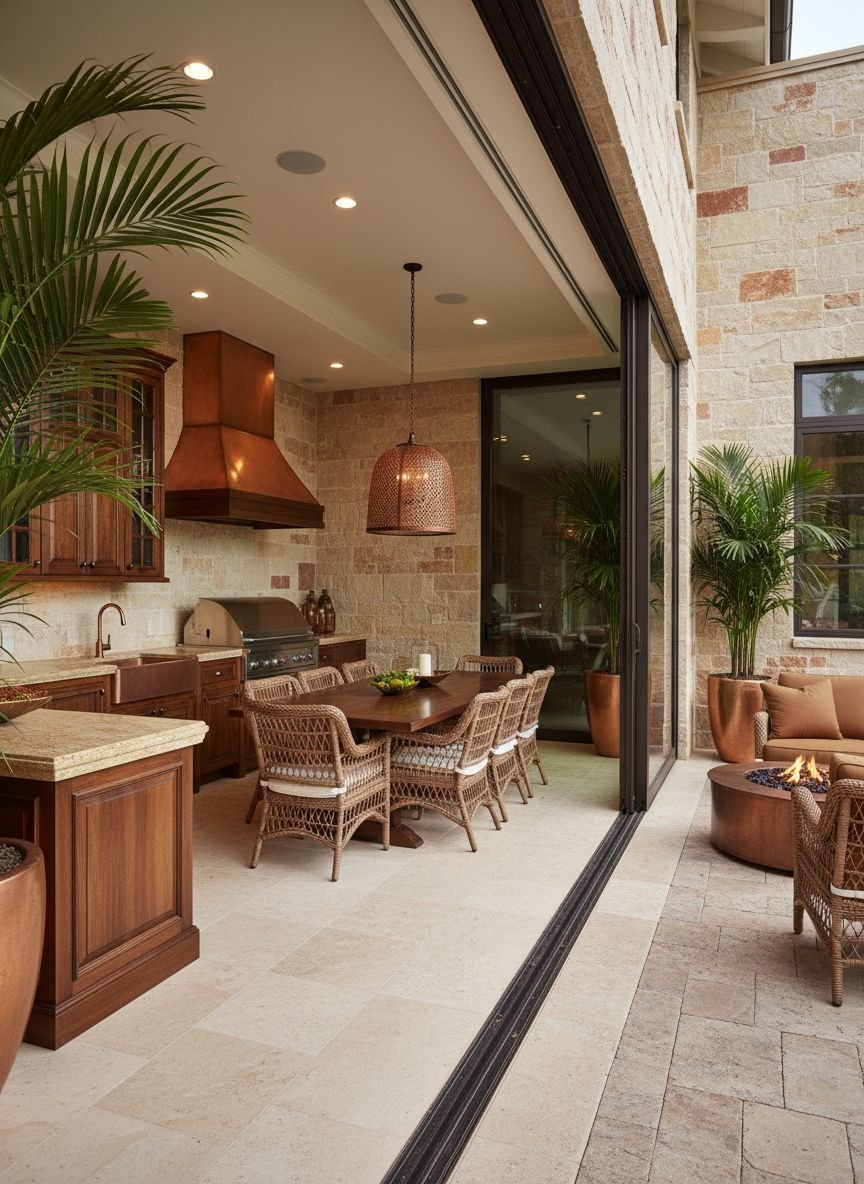
The L shape is the most ergonomic layout for an outdoor kitchen. It creates a natural “work triangle” between the grill, the sink, and the prep zone. One leg of the L usually serves as the cooking station while the other acts as a bar or buffet line. This shapes defines the patio edge and separates the cooking area from the pool deck.
Safety is a major benefit here. The counter creates a barrier that keeps running children away from the hot grill. You can face the cooking equipment toward the guests so the chef is never turning their back on the party.
Material choices often involve stacked stone veneer for the cabinet bases. This ties the kitchen into the pool coping or retaining walls. You create a cohesive landscape design. For the countertop choose a light colored porcelain paver slab. It resists staining from spilled wine or marinades better than natural stone. This layout maximizes corner storage which is often wasted in linear designs.
Pro Tip: install a trash pull out bin in the corner cabinet to keep refuse hidden and away from local wildlife.
Get The Look: Florida Modern Essentials
- Flooring: Large format porcelain pavers (anti slip rated).
- Cabinetry: HDPE polymer in “Seafoam” or “Slate”.
- Lighting: Phillips Hue outdoor light strips (color changing).
- Cooling: Big Ass Fans (Haiku model for damp ratings).
Covered Pergola with Skylights
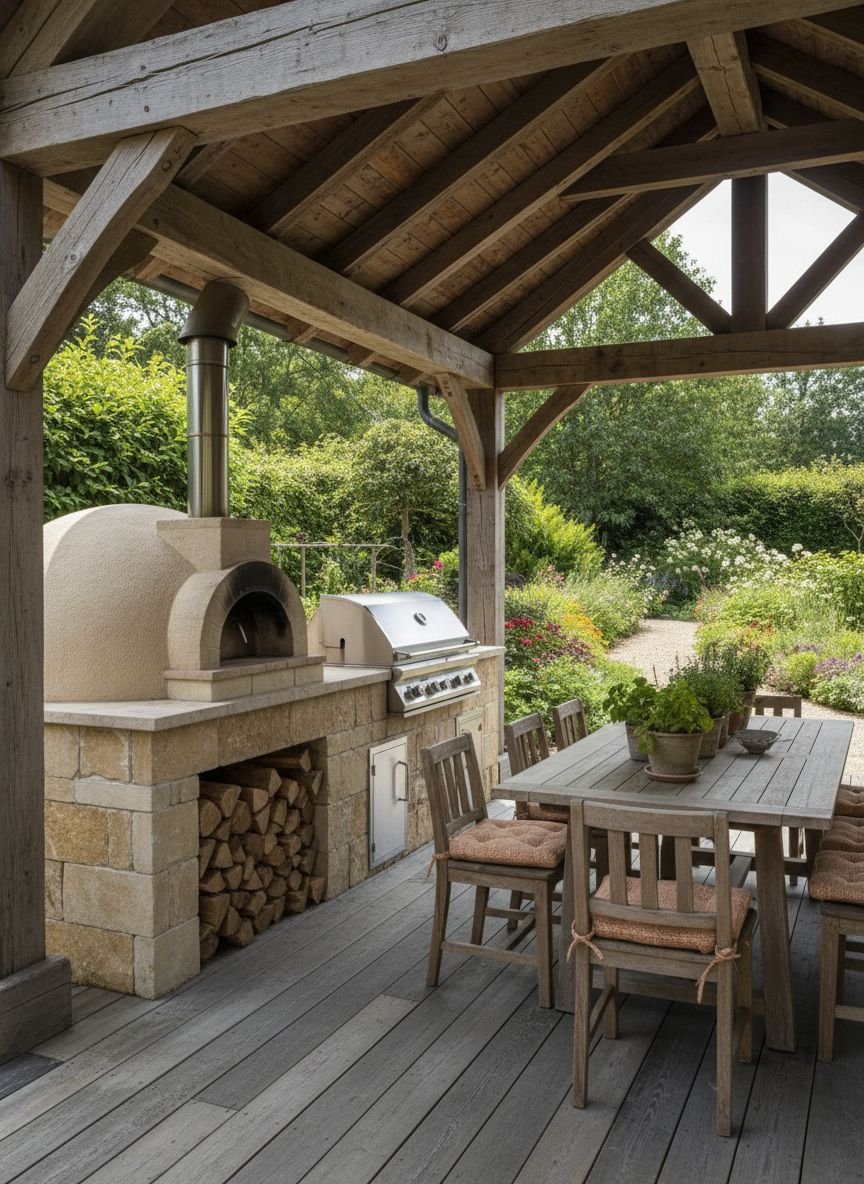
Rain showers in Florida are sudden and intense. A solid roof is good but it can make the adjacent indoor rooms dark. The solution is a modern pergola with integrated polycarbonate or glass roof panels. This structure provides 100% rain protection but lets sunlight filter through.
You frame the kitchen within the posts of the pergola. The structure creates a room within a room. You can hang heavy duty outdoor curtains from the beams. These curtains offer privacy from neighbors and block low angle sun in the late afternoon.
The kitchen design under the pergola often features open shelving suspended from the roof structure. This keeps the counter space clear. You can grow climbing vines like jasmine up the posts to soften the architectural lines. The scent of jasmine combined with the smell of grilling food creates a sensory experience that is purely Floridian.
Pro Tip: ensure your pergola roof has a slight pitch and proper gutter system to divert water away from the kitchen foundation.
Eco Friendly Sustainable Patio
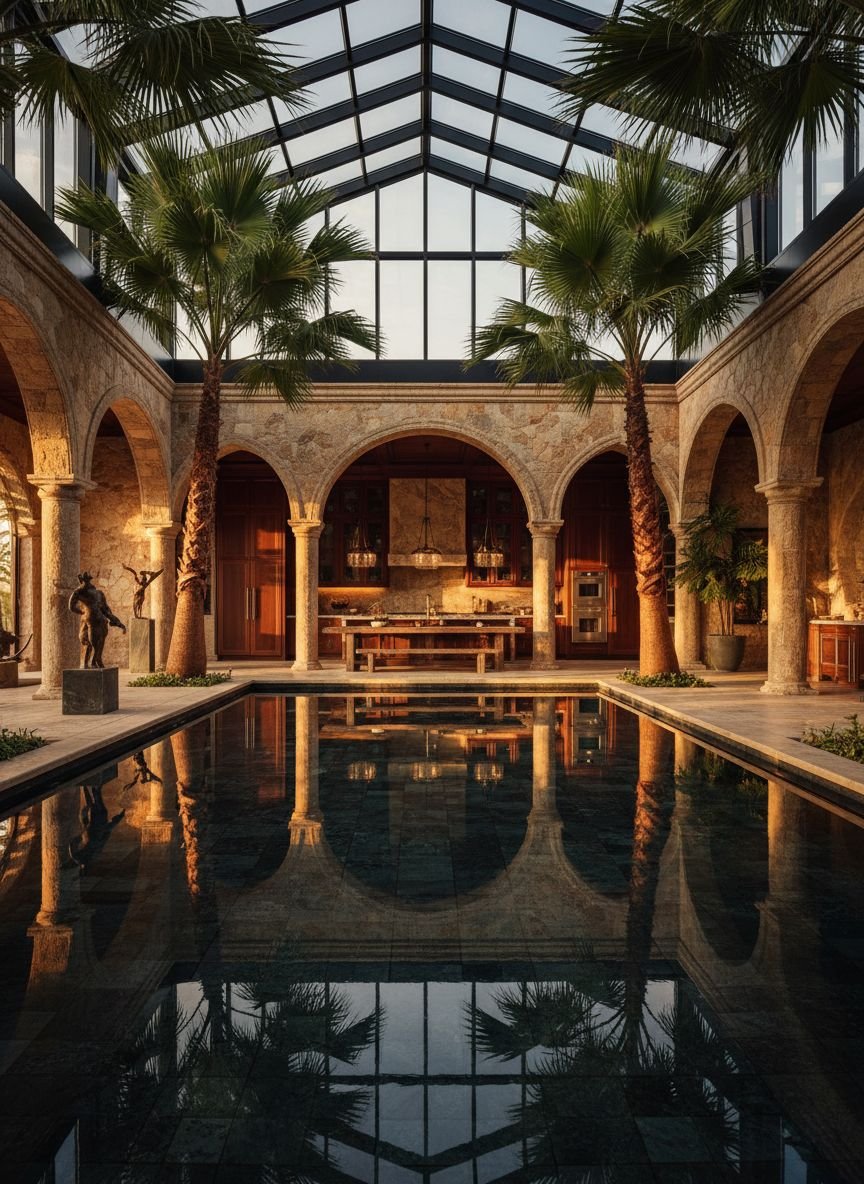
Sustainability is a massive trend in modern design. This kitchen focuses on recycled and locally sourced materials. You use cabinets made from reclaimed wood or recycled plastic lumber. The countertops are crafted from recycled glass bound in concrete. These surfaces are incredibly durable and unique.
Solar power drives this kitchen. You install solar panels on the roof of the lanai to power the mini fridge and the lighting. You incorporate a rainwater collection system to water the surrounding herb garden.
The appliances are energy efficient. You might choose an induction cooktop for boiling water alongside a traditional charcoal grill to reduce gas consumption. The flooring utilizes permeable pavers. These allow rainwater to soak into the ground rather than running off into storm drains. This design connects you to the environment and reduces your carbon footprint.
Pro Tip: plant lemon grass and marigolds around the perimeter as natural mosquito repellents.
Save this idea to your Pinterest.
Popular Asked Questions
How much does a modern outdoor kitchen cost in Florida?
A basic setup with a grill and prefab cabinet starts around five thousand dollars. Custom designs with plumbing, electrical work, and high end appliances typically range from fifteen thousand to thirty thousand dollars. Luxury builds with extensive stone work and roofs can exceed fifty thousand.
Do I need a permit for a summer kitchen in Florida?
Yes. Almost all outdoor kitchens require a permit because they involve plumbing, electrical, and gas lines. You also need to meet zoning setbacks. Building without a permit can cause issues when you try to sell your home later.
What is the best material for outdoor cabinets in Florida?
High Density Polyethylene (HDPE) is the gold standard. It is a marine grade plastic that does not rust, rot, or fade. Stainless steel is a close second but requires more cleaning to prevent tea staining from salt air.
Does a summer kitchen add value to a home in Florida?
Absolutely. Outdoor living spaces are top priority for Florida buyers. A well designed summer kitchen can yield a return on investment between one hundred percent and two hundred percent at resale.
Conclusion
Creating a modern outdoor kitchen in Florida requires a balance of engineering and art. You must respect the climate while asserting your style. Whether you choose the industrial strength of stainless steel or the warm vibes of a teak accented bar the goal remains the same. You are extending your living space. You are creating a venue for memories that happen outside the walls of your house.
Which of these ten designs fits your current backyard layout?
Follow us on Pinterest for more Modern Design inspiration.

Leave a Comment