
Picking out an indoor water fountain shouldn’t feel like solving a puzzle, but somehow it does. You walk into a store or start scrolling online, and suddenly you’re staring at dozens of options. Some are tiny enough to fit on a desk. Others need their own dedicated floor space. The whole thing can get overwhelming fast, especially when you’re just trying to add a little peaceful water sound to your living room.
I learned this the hard way when I bought my first fountain. Saw it online, thought it looked great in the photos, ordered it without thinking too much about the details. When it arrived, the thing was massive. I mean, we’re talking about a fountain that needed half my entryway just to exist. My partner took one look at it and asked if I’d accidentally ordered the outdoor model. Nope, just didn’t pay attention to dimensions. That fountain ended up in my sister’s house because she actually had room for it.
The space you have available really dictates what kind of fountain makes sense. This isn’t one of those situations where you can just squeeze something in and hope it works. A wall mounted fountain needs wall space that isn’t covered with pictures or shelves. A floor fountain needs actual floor space where people won’t be walking. Tabletop fountains are flexible, but even they need a stable surface that can handle some weight and potential water splashes.
Think about your room layout before you get excited about any specific fountain. Walk around your space with a measuring tape. Look at your walls. Check your tables. Figure out what’s actually available. I know this sounds boring, but it saves you from that awkward moment when your new fountain arrives and you realize you have nowhere to put it. Been there, done that, don’t recommend it.
The style of fountain you choose should match how you actually live. Some people want a statement piece that everyone notices when they walk in. Others want something subtle that blends into the background. Neither approach is wrong. It just depends on what you’re going for. My aunt has this huge copper wall fountain in her entryway that’s basically the first thing you see when you visit. It’s gorgeous, and it works for her space. My setup is way more low key because that’s what fits my style.
Your existing furniture and decor matter too. A super modern glass fountain looks weird in a room full of rustic wooden furniture. A traditional stone fountain feels out of place in a minimalist space. You don’t need everything to match perfectly, but things should at least get along. I’ve seen some homes where the fountain clearly came from a different design universe than everything else in the room, and it just looks off.
Budget plays a role, obviously. Fountains range from cheap tabletop models you can grab for thirty bucks to elaborate wall installations that cost hundreds or even thousands. The expensive ones usually last longer and look better, but plenty of mid range options work great. I’ve had good luck with fountains in the hundred to two hundred dollar range. They’re nice enough to look good but not so expensive that I stress about them constantly.
Noise level is something people forget to think about until the fountain is already running in their house. Some fountains make a gentle trickling sound that’s barely noticeable. Others are loud enough to hear from the next room. If you’re putting a fountain in a bedroom or office, you probably want something on the quieter side. Living room or entryway? You can handle more sound. Just read reviews and pay attention when people mention how loud the water is.
The Beauty and Benefits of Tabletop Water Fountains
Tabletop fountains are the gateway drug of the fountain world. They’re small enough that buying one doesn’t feel like a huge commitment. They’re affordable enough that if you hate it, you’re not out a ton of money. And they’re versatile enough to move around until you find the perfect spot. This is where most people start, and honestly, many people never feel the need to upgrade.
I got my first tabletop fountain as a gift from a friend who was really into feng shui. She insisted that having moving water in my home would improve my energy or my chi or something. I was skeptical. Sounded like the kind of thing people say to sell you stuff you don’t need. But I put the fountain on my desk anyway because, hey, free gift. Turned out the water sound was actually pretty nice when I was working. Blocked out some of the background noise from the street. Made my workspace feel calmer.
The decorative value of these smaller fountains is real. A well chosen tabletop fountain can be a conversation starter. I’ve had people comment on mine more than once. It adds visual interest to a space without taking over. You can put one on a coffee table, a side table, a bookshelf, even on top of a filing cabinet if you’re trying to make your home office feel less depressing. The options are pretty endless as long as you have a flat, stable surface.
Most tabletop fountains are made from glass, ceramic, or stone. Glass ones tend to look more modern and contemporary. They catch the light in interesting ways. Ceramic fountains come in tons of different styles and colors. You can find something that matches almost any decor. Stone fountains feel more natural and organic. They’re usually heavier, which makes them more stable but harder to move around.
Size wise, tabletop fountains usually range from about six inches tall to maybe two feet. The tiny ones are cute but sometimes the water sound is so quiet you can barely hear it. The bigger tabletop models have more presence and usually make more sound. I’ve found that something in the 10 to 15 inch range hits a sweet spot. Big enough to notice, small enough to fit most places.
One unexpected benefit I discovered is humidity. I live in a dry climate where the air feels like it’s trying to mummify you, especially in winter when the heat is running. Having a small fountain in my bedroom actually helps. The water evaporating puts a little moisture back into the air. Not as much as a dedicated humidifier, but enough that I stopped waking up with a dry throat and stuffy nose every morning. My skin is probably happier too, though that’s harder to measure.
Moving a tabletop fountain from room to room is easy. If you’re spending more time in your office, take it there. If you’re hanging out in the living room, move it to the coffee table. This flexibility is huge if you like changing up your space or if different rooms serve different purposes at different times of year. I move mine around more than I thought I would. Right now it’s in my bedroom for the humidity factor, but it spends summers in my living room and sometimes makes appearances in my home office.
The maintenance on tabletop fountains is pretty simple. You need to add water every few days because it evaporates. You should change the water completely every week or two to keep it from getting gross. Clean the pump occasionally so it doesn’t get clogged. That’s really about it. Takes maybe five minutes a week of actual work. Way less demanding than a pet, slightly more demanding than a houseplant.
Desktop fountains are just small tabletop fountains that happen to live on your desk. Same concept, just marketed toward people who work at computers all day. I had one at my office job before I started working from home. It helped drown out annoying coworkers and gave me something to look at besides my computer screen. Some offices have rules about personal electronics or water near computers, so check before you bring one in. Getting in trouble over a fountain would be a weird HR conversation.
Shopping Smart for Floor Fountains and Their Features
Floor fountains are a different beast entirely. These are bigger, more expensive, and make more of a statement. You’re not just buying a decorative accent. You’re adding a focal point to your room. This means you need to think harder about what you want and whether it actually works for your space.
When I started looking at floor fountains, I was surprised by how many options existed. Tall narrow ones that fit in corners. Wide ones that need several feet of open floor. Fountains with multiple tiers. Fountains with just one level. Some with lights built in. Others that are just the fountain and nothing else. The variety is both exciting and kind of exhausting.
The first thing to check when shopping is what comes in the package. Most floor fountains include everything you need to set them up. The pump, the tubing, the electrical cord, maybe some stones or decorative elements. But some fountains are sold separately from their components. You get the fountain structure itself, but you need to buy the pump and accessories separately. This can add a lot to the total cost. Always read the product description carefully to know what you’re actually buying.
I almost made this mistake when I was shopping for my current floor fountain. Found one I loved, price seemed reasonable, added it to my cart. Then I read the reviews and discovered the pump wasn’t included. The pump alone cost another eighty dollars. Suddenly my “reasonably priced” fountain was pushing into expensive territory. Ended up choosing a different one that came complete. Saved myself money and frustration.
Add on features can make a fountain more interesting or more complicated, depending on how you look at it. Lights are popular. They illuminate the water at night and create a nice ambiance. Some fountains have color changing lights that cycle through different colors. This sounds cool in theory but can get annoying in practice. I prefer a simple warm white light that stays consistent. The color changing thing feels more like a nightclub than a relaxing home environment.
Some floor fountains have places to add plants or decorative objects. These built in spots let you customize the look and add your own touches. I’ve seen people put small succulents around their fountains, which looks great and doesn’t require much maintenance. Others use decorative stones, crystals, or small figurines. It’s a nice way to make the fountain feel more personal instead of just being something you bought and plugged in.
One fountain I bought a few years ago had a dual purpose design. The top part was a large vase where you could put fresh flowers. The fountain part was below, circulating water through the base. It looked amazing in my kitchen. Served two functions in one piece of furniture. Guests always commented on it. The only downside was cleaning it took a bit longer because the vase part needed attention too. But for the aesthetic value, totally worth it.
Sound options are something manufacturers are starting to include more often. Some fountains let you adjust the flow rate, which changes how loud the water sound is. Others have different settings for different water patterns. A gentle trickle versus a faster flow. Being able to control this is nice because your mood changes. Sometimes you want background noise. Other times you want it quieter. Having that flexibility means your fountain works for more situations.
The weight of floor fountains matters more than you’d think. These things can be heavy, especially once you fill them with water. Moving them after they’re set up is a pain. I learned to think carefully about placement before filling the fountain. Pick the spot, set up the fountain empty, make sure you like where it is, then add water. Moving a 50 pound fountain is doable but annoying. Moving a 50 pound fountain full of water is asking for a wet floor and a sore back.
Creating Atmosphere with Fountains in Different Rooms
Putting a fountain in the right room changes the whole feel of that space. I’ve experimented with fountain placement over the years. Some spots work perfectly. Others just feel wrong. There’s definitely an art to figuring out where a fountain belongs in your home.
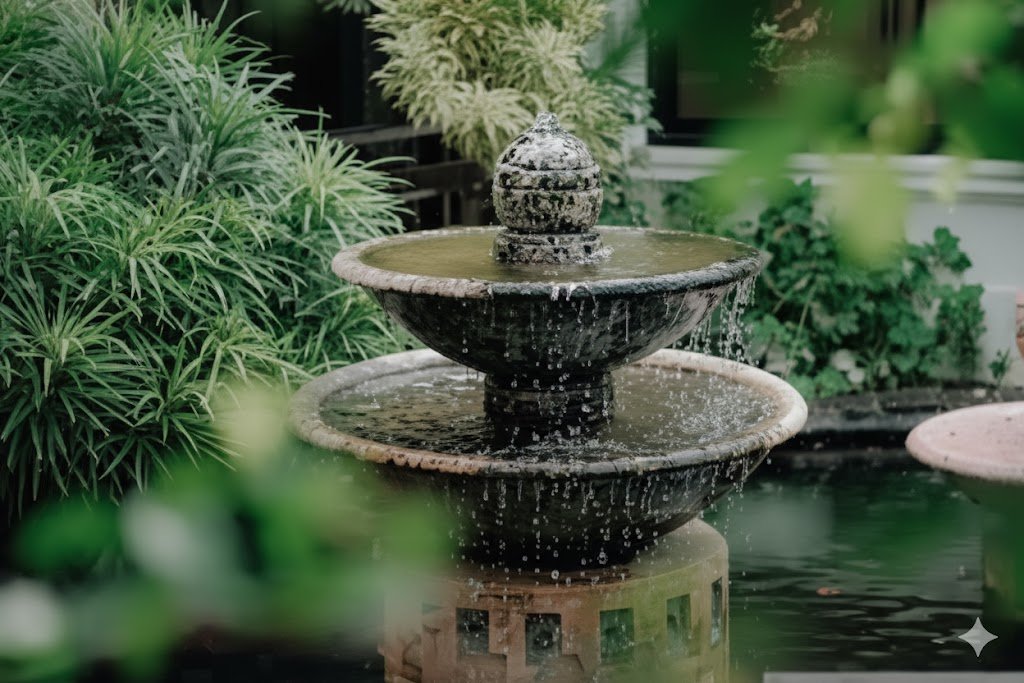
Bookshelves seem like an odd place for a fountain, but it can actually work really well. I have a tabletop fountain on one of my bookshelves, tucked between some hardcover books and a small plant. It adds this unexpected element of movement and sound to what would otherwise be a static display. People always do a double take when they notice it. A bookshelf full of books is fine. A bookshelf with books, a plant, and a water fountain is interesting.
The trick with bookshelf fountains is making sure the shelf is stable and that water won’t damage anything if there’s a spill. I put a waterproof mat under mine just in case. Books and water don’t mix well, and replacing a whole shelf of books because of fountain mishap would be an expensive lesson. A little prevention goes a long way. Just make sure your fountain is on a level surface and that you’re not filling it so full that water sloshes over the edge.
Mantles are another great spot for a fountain. If you have a fireplace with a mantle, that space is prime real estate for decorative items. A fountain there becomes part of the room’s focal point. You’ve already got the fireplace drawing attention. Adding a fountain nearby creates this nice combination of elements. Fire and water, if you want to get philosophical about it. But really it just looks good and makes the space feel more complete.
Entertainment centers are tricky. You’ve got electronics nearby, which means you need to be extra careful about water. But if you can find a spot that’s safe, a small fountain on or near an entertainment center adds life to that area. Living rooms with big TVs and gaming consoles can feel a little sterile. The fountain softens that tech heavy vibe. Just keep it away from any vents or openings where water could potentially get inside expensive equipment.
Guest reactions to fountains are fun to watch. People hear the water sound and take a second to figure out where it’s coming from. Then they spot the fountain and you can see them relax a little. There’s something about moving water that just makes people feel more at ease. I’ve noticed guests tend to linger longer in rooms with fountains. They sit down, they chat, they seem less in a hurry to leave. Maybe it’s psychological, but it’s definitely a thing.
The calming effect is real. I’m naturally a pretty anxious person. My brain tends to race with thoughts and worries, especially at night when I’m trying to wind down. Having a fountain in my bedroom gives me something to focus on besides my own thoughts. The steady water sound is predictable and soothing. It’s easier to fall asleep when you’re listening to trickling water than when you’re listening to your own internal monologue about everything you did wrong that day.
Nature sounds from speakers or white noise machines try to replicate this effect, but they’re not quite the same. There’s something about real water making real sound that works better. Maybe it’s knowing that it’s authentic. Maybe it’s the subtle variations in the sound that recordings don’t capture. I’ve tried both, and the actual fountain wins every time. The electronics work okay, but they feel like a substitute for the real thing.
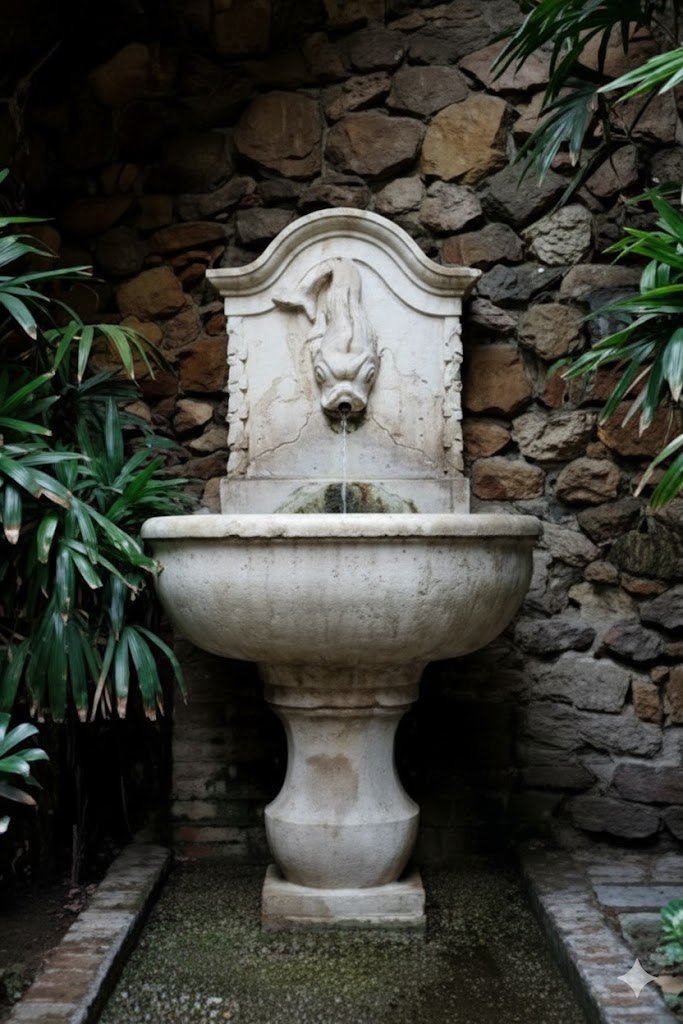
Most fountains with sound options let you change between different settings. If you want it louder, you increase the pump speed. If you want it quieter, you turn it down. Some people like the sound of water barely moving. Others prefer a more noticeable flow. I tend to keep mine somewhere in the middle. Loud enough to hear clearly, quiet enough that it’s not disruptive if I’m watching TV or having a conversation.
Rooms where you spend a lot of time benefit most from fountains. Bedrooms, living rooms, home offices. These are the spaces where you actually need that calming influence. Putting a fountain in a room you barely use is kind of pointless. Sure, it looks nice, but you’re not getting the full benefit. Put it where you’ll hear it, where you’ll see it, where it actually impacts your daily experience.
Wall Fountains and Fog Features for Statement Pieces
Wall fountains are commitment pieces. You’re not just buying furniture you can move around. You’re installing something semi permanent that becomes part of your room’s architecture. This means you need to be really sure about what you want and where you want it.
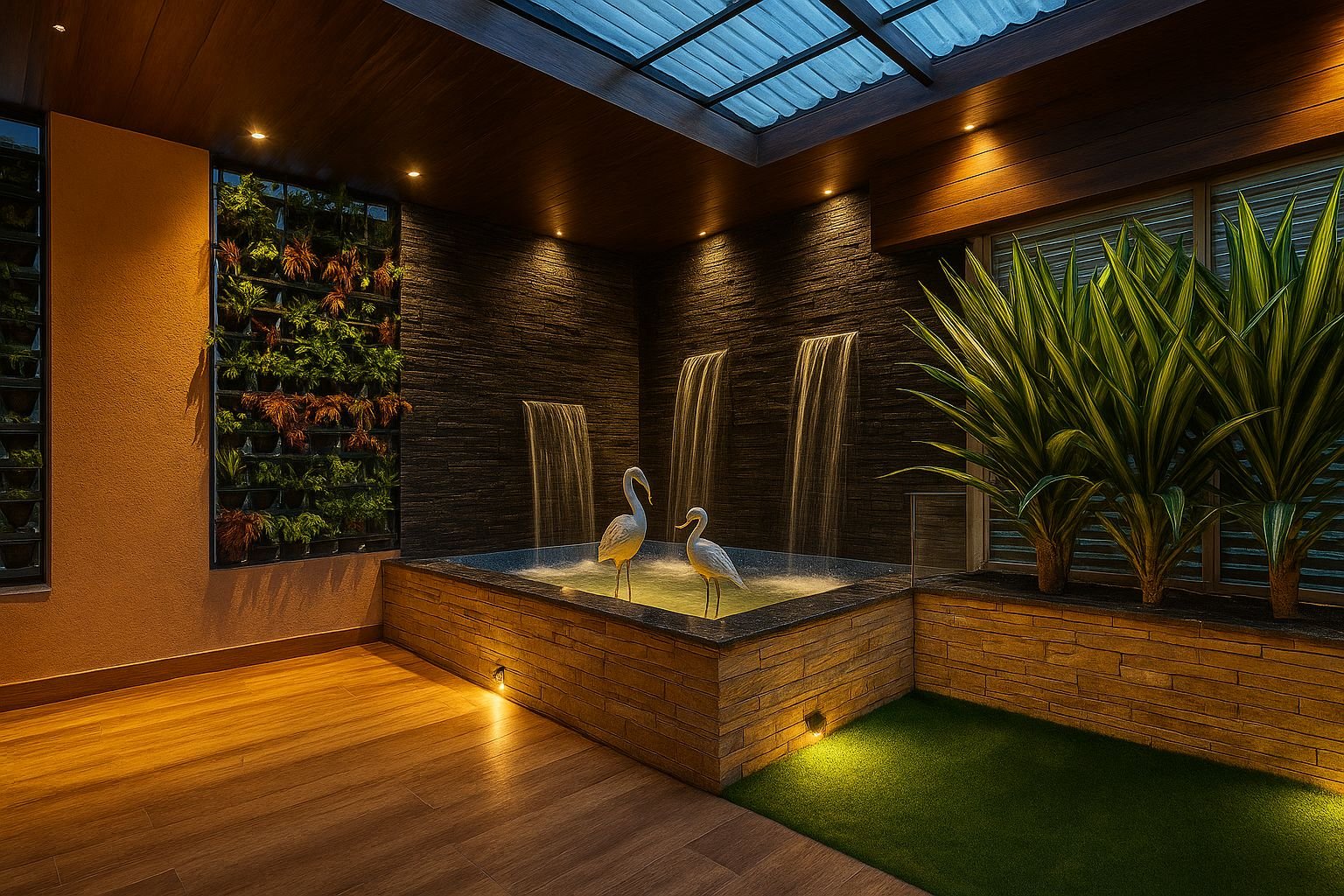
I was nervous about getting a wall fountain. The installation seemed complicated. What if I chose the wrong spot and hated it? What if it leaked and damaged my wall? What if it was too loud? All these worries ran through my head. But I wanted a statement piece for my living room, and a wall fountain seemed like the way to go. So I took the plunge.
The installation was easier than expected. Most wall fountains come with mounting brackets and clear instructions. You need to find studs in your wall to mount it securely. A stud finder costs like ten bucks and makes this simple. Once you’ve got the fountain mounted, you just add water, plug it in, and you’re done. The whole process took maybe an hour, and half of that was me being overly cautious and double checking everything.
Copper wall fountains have this beautiful warmth to them. The copper develops a patina over time that adds character. When light hits it right, the whole thing glows. These are definitely statement pieces meant to be the main attraction in a room. You don’t put a copper wall fountain in a room and then expect people to ignore it. It’s going to be noticed, commented on, and probably photographed by visitors who think it’s cool.
My copper fountain hangs in my living room on the wall opposite the couch. It’s the first thing you see when you walk in from the hallway. Guests always notice it immediately. Most people don’t have wall fountains, so it’s unexpected. That element of surprise makes it a great conversation starter. Plus the sound fills the room without being overwhelming. It creates this pleasant background ambiance that makes the whole space feel more peaceful.
Fog fountains are a whole different category. These use ultrasonic technology to create mist that looks like fog rolling over water. The effect is pretty dramatic, especially with the right lighting. Some fog fountains have LED lights that illuminate the mist in different colors. It can look really cool, almost magical. Kids love them. Adults usually think they’re neat too, at least for the first few minutes.
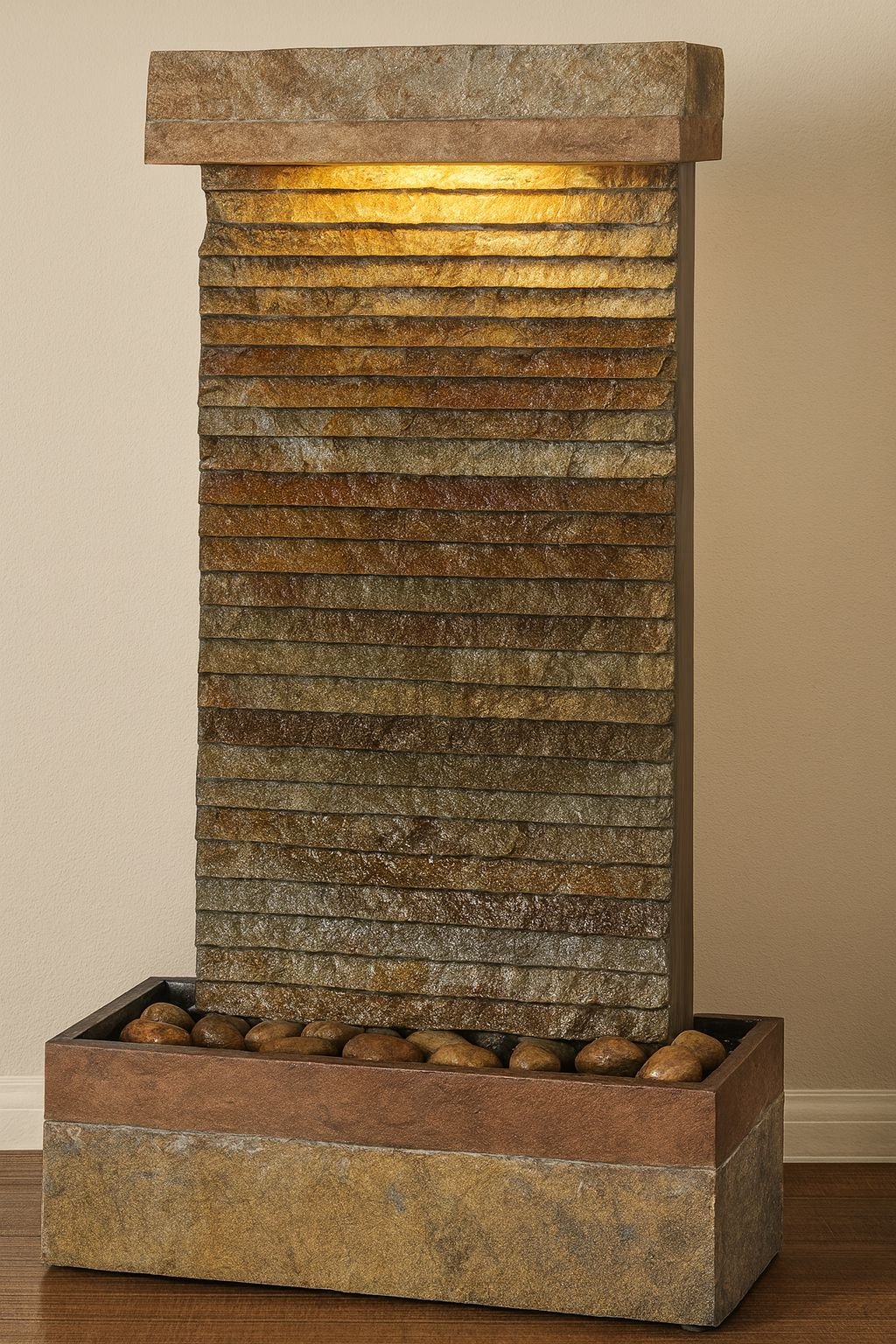
The practical benefit of fog fountains is humidity. These things put moisture into the air more effectively than regular fountains because they’re specifically designed to create mist. If you live somewhere dry, a fog fountain can double as a humidifier. I used one in my bedroom during winter and it definitely helped with dry air. My skin felt better, my sinuses were clearer, and I wasn’t waking up feeling like I’d been camping in the desert.
The downside of fog fountains is maintenance. The ultrasonic mechanism needs regular cleaning. Minerals from the water can build up and reduce the fog output. You need to use distilled water instead of tap water to prevent this buildup. And the mist can leave a slight film on nearby surfaces. Nothing terrible, but it means wiping down furniture occasionally. For some people this extra maintenance is worth it for the visual effect. For others, it’s just one more thing to deal with.
Creating ambiance with a fountain is about more than just the fountain itself. Lighting matters. I have a small spotlight aimed at my wall fountain that highlights the water flow at night. Without the light, the fountain kind of disappears into the wall. With the light, it becomes a focal point. The same principle works with any fountain. Think about how light interacts with water. Position lamps or add small lights to make the most of your fountain’s visual appeal.
Sizing and Placement Tips for Every Type of Fountain
Getting the size right matters more than almost anything else. A fountain that’s too big overwhelms the space. A fountain that’s too small gets lost and feels like an afterthought. You want something that fits the scale of your room and complements the other furniture without dominating everything.
Hallways are common places for wall fountains, but you need to be smart about size. A huge fountain in a narrow hallway creates problems. The sound bounces off the walls and gets amplified. What would be a pleasant trickling in a large room becomes a distracting noise in a confined space. I made this mistake once. Put a wall fountain in a hallway thinking it would class up the space. The thing was too loud. Every time someone walked by, the water sound drowned out conversation. Ended up moving it to a wider room where it worked much better.
The general rule I follow is that fountains should be proportional to the room. In a large living room with high ceilings, you can handle a big floor fountain or an impressive wall piece. In a small bedroom or office, stick with tabletop models or small wall fountains. This probably seems obvious, but it’s easy to fall in love with a fountain online and not think about whether it actually fits your space until it arrives.
Noise levels change based on room size and materials. Hard surfaces like tile or hardwood floors make fountain sounds louder. Carpets and upholstered furniture absorb sound. If your room has lots of hard surfaces, you might want a quieter fountain or one with adjustable flow. If your room is full of soft materials, you can probably handle more water sound without it becoming disruptive.
The type of fountain you choose should match the room’s purpose. Bedrooms benefit from quiet, gentle fountains. You’re trying to sleep, so you don’t want loud splashing. Living rooms and entryways can handle more dramatic fountains with bolder sounds. Home offices fall somewhere in between. You want enough sound to block distractions but not so much that it becomes a distraction itself.
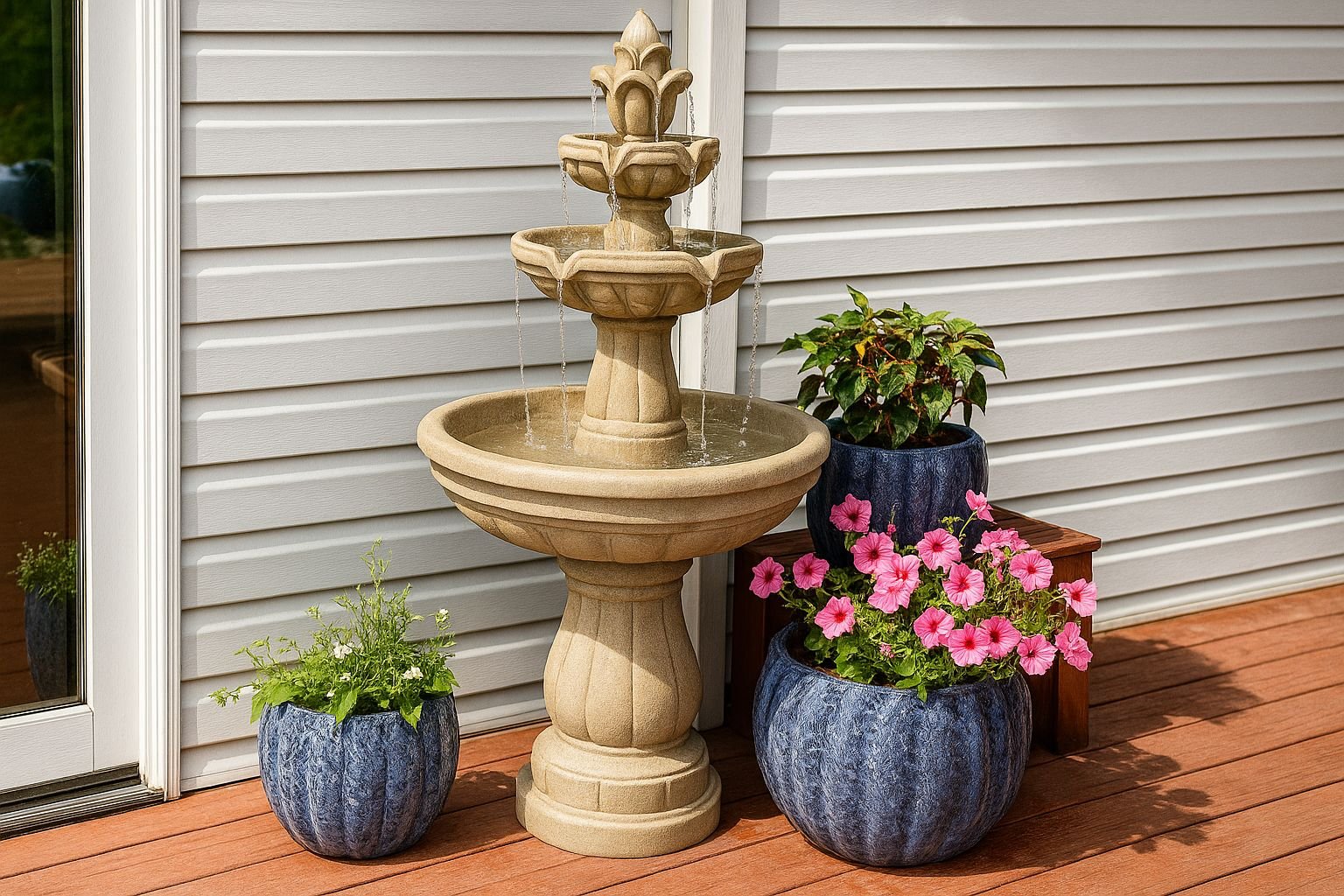
Dribbling fountains are perfect for spaces where you want water sound without water noise, if that makes sense. These fountains have water that flows smoothly down surfaces instead of splashing or cascading. The sound is gentle, consistent, and peaceful. They work great in bedrooms, meditation spaces, or anywhere you want a calming presence that doesn’t demand attention. I have one in my guest bedroom, and visitors always comment on how well they sleep when they stay over.
The water flow on dribbling fountains creates this barely there background sound. You hear it if you’re paying attention, but it’s subtle enough that it doesn’t interfere with anything else. Watching TV? The fountain doesn’t compete with the dialogue. Having a conversation? Nobody has to raise their voice. Working or reading? The fountain provides gentle ambiance without breaking your concentration. This versatility makes them a solid choice for multi purpose rooms.
Placement near electronics requires caution. Water and electronics don’t mix. Keep fountains at least a few feet away from computers, TVs, gaming systems, or any other expensive tech. If you’re putting a fountain on the same table as your laptop, use a tray or mat to contain any potential splashes or drips. Better to be paranoid about water damage than to replace a thousand dollar computer because you got careless with fountain placement.
Corner placement works well for floor fountains. Corners are often dead space in rooms. We put lamps there, maybe a plant, but they don’t usually serve much purpose. A fountain in a corner fills that space with something interesting. It’s out of the way so people won’t bump into it, but it’s still visible and adds to the room’s atmosphere. Just make sure you can reach it easily for maintenance and water refills.
Temperature and humidity affect fountain performance. In really dry climates, water evaporates faster. You’ll need to refill more often. In humid areas, evaporation is slower. Extreme cold can be an issue if your fountain is near a drafty window or in an unheated space. Water shouldn’t freeze in your fountain, but cold temperatures can make pumps work less efficiently. Keep your fountain in a comfortable room temperature environment for best results.
Tabletop fountains can go almost anywhere. Coffee tables, end tables, desks, bookshelves, kitchen counters, bathroom vanities. The flexibility is one of their best features. I move my tabletop fountain around based on where I’m spending time. Working from home a lot? It goes on my desk. Relaxing in the evening? It moves to the living room. This adaptability means you get more value from one fountain than you would from something that has to stay in one permanent spot.
Wall and floor fountains need more planning. You’re picking a spot that’s going to be their home for a long time. Think about traffic patterns. Will people be walking past constantly? That might get annoying. Consider furniture arrangement. Does the fountain work with your current setup? What if you rearrange things later? These aren’t fun questions, but they’re worth asking before you install something or place a heavy fountain that’s a pain to move.

Leave a Comment