
Making Your Home the Talk of the Neighborhood
You know that feeling when someone walks into your house and their jaw just drops? Yeah, that’s the feeling we’re all chasing. I’ve been there, standing in my entryway, watching my mother in law’s eyes widen as she takes in the space I’ve spent months perfecting. That moment of silence before she says something nice? Pure gold.
We pour so much of ourselves into our homes. Every paint color, every piece of furniture, every little knickknack tells a story about who we are. And let’s be honest, we want those stories to be impressive. There’s nothing wrong with wanting your space to wow people. I used to feel a bit guilty about caring so much about what visitors thought, like I was being shallow or something. But then I realized that creating a beautiful home isn’t about showing off. It’s about creating an environment that makes people feel good, that sparks conversation, that maybe even inspires them to try something new in their own spaces.
The thing is, most of us hit a wall at some point. We’ve got the couch we love, the coffee table that works perfectly, maybe even some art that speaks to us. But something’s still missing. The room feels complete but not quite alive. That’s where I was about two years ago. I kept rearranging the same furniture, buying new throw pillows, switching out picture frames. Nothing clicked.
Then my neighbor invited me over for coffee, and I walked into her living room to find this gorgeous water feature mounted on her wall. I’m not exaggerating when I say it changed everything I thought I knew about home design. The sound of water trickling down slate tiles, the way the light caught the ripples, the whole vibe of the room shifted from “nice” to “I never want to leave.” She’d added just one element, and suddenly her entire space felt like a spa retreat instead of a regular suburban living room.
That’s when I started researching wall fountains. I’ll be straight with you, I was skeptical at first. Would it be too much? Would it look pretentious? Would my husband think I’d lost my mind spending money on “fancy wall water” as he so eloquently put it? But the more I learned, the more sense it made. We spend thousands on TVs and sound systems and fancy lighting. Why not invest in something that literally changes the atmosphere of your most used room?
The beauty of a well placed fountain goes beyond just looking pretty. It becomes the focal point that ties everything together. Remember when accent walls were all the rage? This is like that, but better. Instead of just paint or wallpaper, you’ve got movement, sound, and a living element that interacts with your space. Your other furniture suddenly looks better because it’s got this anchor point, this conversation starter that makes people look around and appreciate everything else too.

I’ve watched friends walk into our home and immediately relax their shoulders when they hear the water. They don’t even realize they’re doing it. One friend actually asked if I was burning a relaxation candle or something. Nope, just physics and good design working together to create an environment that tells your nervous system to chill out. That’s the kind of impression you can’t fake with throw pillows.
Your Living Room Deserves Better Than Generic
Let’s talk about the living room for a minute. This space gets more action than any other room in your house, right? It’s where you collapse after work, where you host game nights, where your kids do homework while you pretend to watch TV but actually scroll your phone. It’s the multipurpose hub of home life.
But here’s what drives me crazy. We treat it like an afterthought. We buy whatever couch is on sale, throw in a coffee table that fits, maybe hang a generic piece of art from that big box store. Then we wonder why the room feels blah. I’ve been guilty of this too. My first apartment had a living room that looked like it came straight from a catalog page titled “Inoffensive Beige Living.” Nothing was wrong with it, but nothing was right either.
The living room is where first impressions happen. When someone comes over for the first time, they’re not getting a tour of your bedroom or peeking in your closets. They’re seeing your living room, and they’re making snap judgments about you based on what they find there. Sounds harsh, but it’s true. We’re all doing it, whether we admit it or not.
I learned this the hard way when I had a potential client come to my home for a meeting. I’m a freelance graphic designer, and sometimes it’s easier to meet at my place than rent office space or deal with coffee shop noise. This particular client walked in, looked around my living room, and I could see her confidence in me waver. The space was clean but uninspired. It said “I put in minimum effort.” Not exactly the message you want to send when you’re trying to convince someone you’re creative and detail oriented.
That experience lit a fire under me. I started looking at my living room like it was a project for a demanding client. What story was I telling? What feeling did I want to create? How could I make this space reflect who I actually am instead of just filling it with stuff that fits?
Furniture is the foundation, sure. You need somewhere to sit, somewhere to set your drink, maybe a place to prop up your feet after a long day. But if you stop there, you’re missing out on what makes a living room actually live. The accessories, the art, the unexpected elements are what transform a furniture showroom into a home.
Think about restaurants you love. The good ones don’t just have tables and chairs. They’ve got lighting that sets a mood, music at just the right volume, maybe plants or art or architectural details that make you want to linger. Your living room can do the same thing. It’s not about spending a fortune or following every design trend. It’s about adding layers that create an experience.
I started small. A better lamp here, some books arranged by color there, plants that actually stayed alive for more than a week. Each addition made the room feel more intentional. But something was still missing. The room looked better, but it didn’t feel different. That’s when I realized I needed an anchor, something that would shift the entire energy of the space. Not just something to look at, but something that would engage multiple senses and create an atmosphere you could feel the moment you walked in.
The Secret Ingredient Your Living Room Is Missing
Comfort and style don’t have to be enemies. I used to think they were mutually exclusive, like you could either have a beautiful living room or a comfortable one, pick one. But that’s nonsense. The best spaces manage both, and the trick is knowing what elements contribute to each.
We all know the comfort basics. Soft seating, good lighting, the right temperature. But what about comfort for your mind? That’s where most living rooms fall short. They’re physically comfortable enough, but mentally they feel cluttered or sterile or just off somehow. You can sit down, but you can’t really unwind.
I’ve got this friend who’s a massage therapist, and she once told me that half her job is just creating an environment where people’s bodies remember how to relax. The table, the music, the dim lighting, the essential oils. Her clients are literally paying for an atmosphere as much as the massage itself. That conversation stuck with me. What if we could create even a fraction of that relaxation in our own living rooms?
Water features in homes aren’t exactly new. People have been putting fountains in courtyards and gardens for centuries. But bringing that element indoors, especially in a way that works for modern homes, that’s been the game changer. Wall mounted fountains specifically solve a bunch of problems that traditional floor fountains created.
I’ll tell you what sold me on trying one. I was at my dentist’s office, of all places, and they had this water feature in the waiting room. Now, I hate the dentist. Always have. The smell, the sounds, the anticipation of discomfort, all of it makes me tense. But sitting in that waiting room, listening to water cascade down this copper and stone wall piece, I felt my jaw unclench. My breathing slowed down. I actually felt calmer, and I was at the dentist.
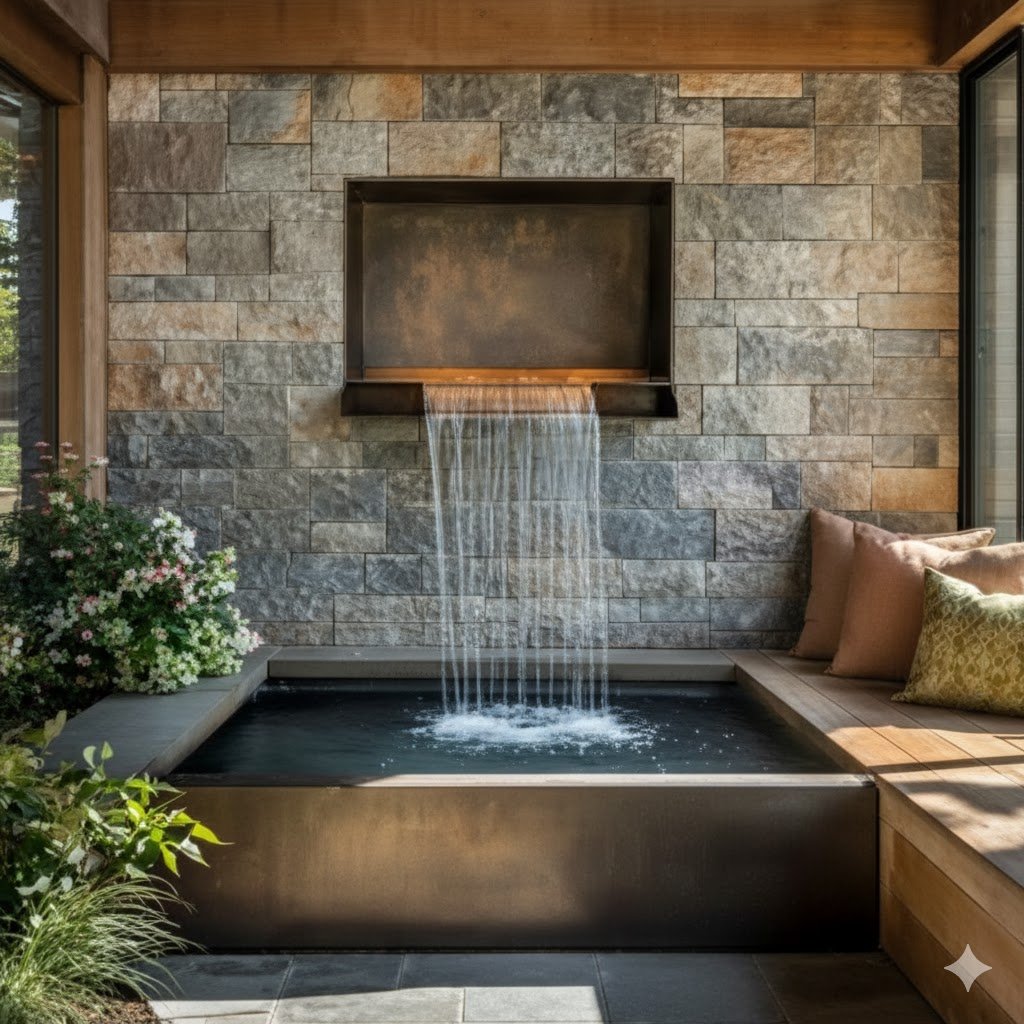
If a fountain could make a dentist’s waiting room tolerable, imagine what it could do for a living room where you actually want to spend time. The science backs this up too. The sound of moving water triggers something in our brains, some evolutionary response that tells us we’re near a resource, we’re safe, we can let our guard down. It’s why people pay premium prices for hotel rooms with ocean views or houses near streams.
The visual element matters too. There’s something mesmerizing about watching water move. It’s not like watching TV where you’re absorbing information or following a story. It’s more meditative, like staring at a fire or watching clouds move. Your eyes can rest on it without your brain having to work. That kind of passive visual interest is rare in our homes. Most things are either demanding our attention or completely static.
When you combine the sound and the sight of moving water with your existing living room setup, something clicks into place. Your comfortable couch becomes more comfortable. Your carefully chosen paint color looks better. Even your guests seem to linger longer, talking more freely, laughing more easily. The fountain doesn’t just add to your space. It multiplies the effect of everything else you’ve already done right.
Why Wall Fountains Are Having a Moment
Let’s get into the practical stuff. Wall fountains are blowing up right now, and it’s not just because they look cool on Instagram. Though they do, I’m not gonna lie. I’ve gotten more questions about our fountain from photos I’ve posted than about anything else in our house, including the kitchen renovation that nearly bankrupted us.
The benefits stack up fast. First off, they’re stunning to look at. I mean really stunning, not just “oh that’s nice” but “wait, can you show me where you got that because I need one immediately.” The way water moves down different materials creates patterns that are never exactly the same twice. Slate, copper, glass, stone, each one creates a different effect. Some are dramatic and bold, others are subtle and zen. The variety means you can find something that fits your style, whatever that might be.
My fountain has this dark slate panel with water sheeting down it evenly. When light hits it just right, usually in the late afternoon when the sun comes through our west facing window, it creates these shifting patterns on the wall next to it. I’ve literally sat and watched it like it’s a TV show. Is that weird? Maybe. Do I care? Not even a little bit.
The sound component deserves its own paragraph. We’re so used to mechanical sounds in our homes. The hum of the refrigerator, the whoosh of the HVAC, the beep of appliances. All that noise pollution affects us more than we realize. Adding a natural sound into the mix changes the entire acoustic landscape of your space. The water sound doesn’t cover up other noises exactly. It’s more like it gives your ears something pleasant to focus on, and suddenly you stop noticing the annoying stuff as much.
I work from home a lot, and I used to struggle with concentration. I’d put on music, but then I’d start singing along. I’d try silence, but then every little noise would distract me. White noise machines helped a bit, but they felt artificial and kind of depressing after a while. The fountain solved this problem I didn’t even know it could solve. It provides just enough ambient sound to help me focus without being distracting. My productivity has honestly improved since we installed it.
For guests, the impact is immediate and obvious. People walk in and go quiet for a second, listening. They’ll say something like “is that water?” and then they’ll smile. I’ve never seen someone have a negative reaction. At worst, they’re neutral. At best, they’re blown away and want to know everything about it. That’s a pretty good ratio for a home design choice.
Tabletop versions exist too, which is great if you’re not ready to commit to a wall installation or if you’re renting. They don’t have quite the same dramatic impact, but they work on the same principles. Sound, movement, visual interest. I actually started with a tabletop fountain to test whether I’d like the concept. Kept it running for a month, and by the end I was already shopping for something bigger and more permanent.
The health benefits aren’t just in your head either. Moving water adds moisture to the air, which can help in dry climates or during winter when heating systems make everything feel like the Sahara. Some people claim fountains produce negative ions that improve air quality and mood. I’m not scientist enough to verify that, but I can tell you our living room feels fresher since we added ours.
Finding Your Perfect Fountain Match
Shopping for a wall fountain is way more fun than it should be. I spent weeks browsing options, and I regret nothing. The selection available now compared to even five years ago is night and day. You’ve got options ranging from massive statement pieces that dominate an entire wall to modest designs that tuck into a corner and whisper rather than shout.
Size is your first consideration, and it’s the one that trips people up most often. We tend to think smaller is safer. Less commitment, less risk of it looking weird. But here’s what I learned the hard way. Go bigger than you think you need. I’m serious. The number one regret I hear from people who’ve installed fountains is wishing they’d gotten the next size up.
My first instinct was to get a fountain that was maybe three feet tall and two feet wide. Seemed reasonable, right? Safe. But when I measured out that size on our wall with painter’s tape, it looked tiny. Insignificant. Like it was scared to take up space. So I sized up to a four foot by three foot piece, and it’s perfect. Big enough to make a statement and create the acoustic effect I wanted, but not so large it overwhelms the room.
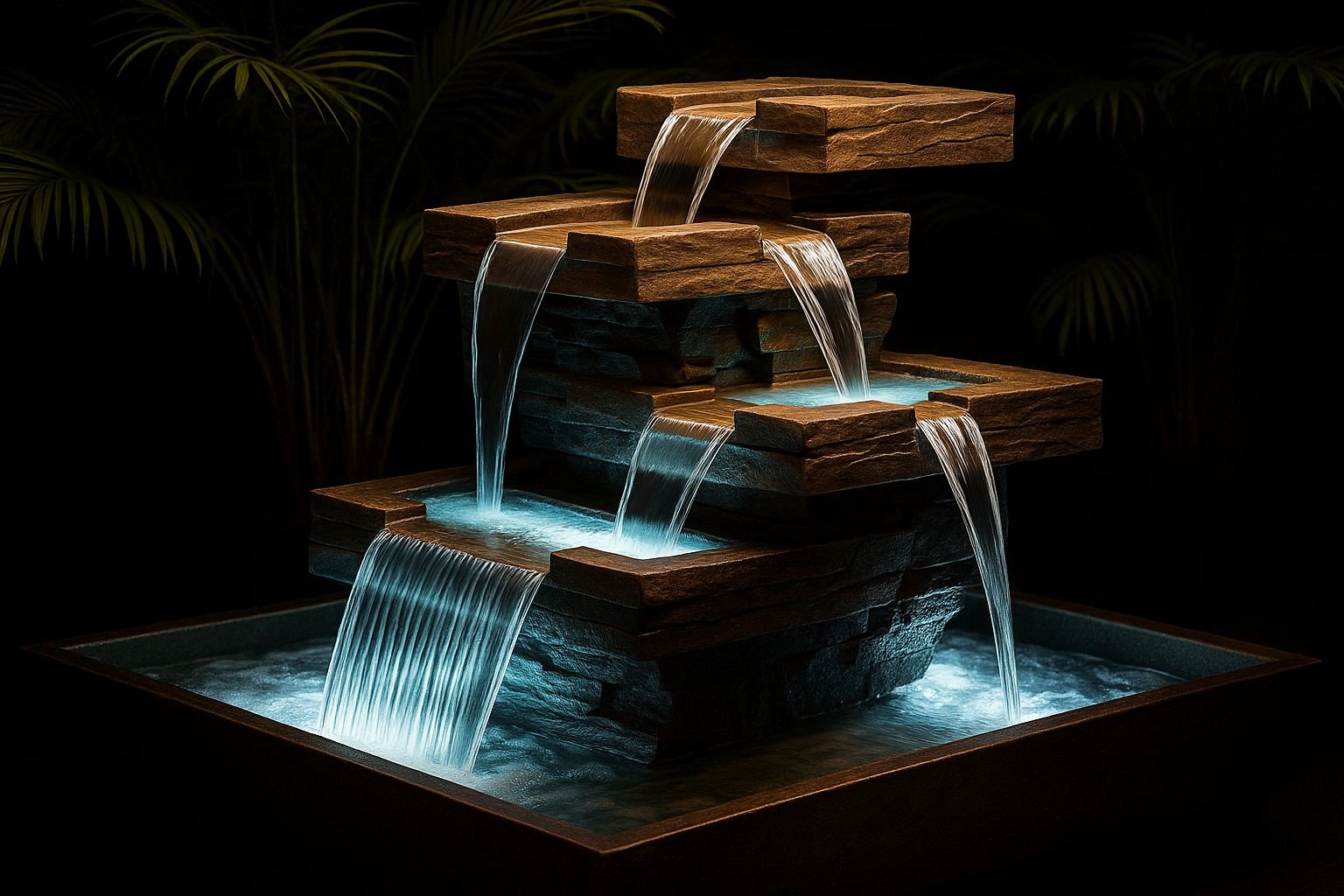
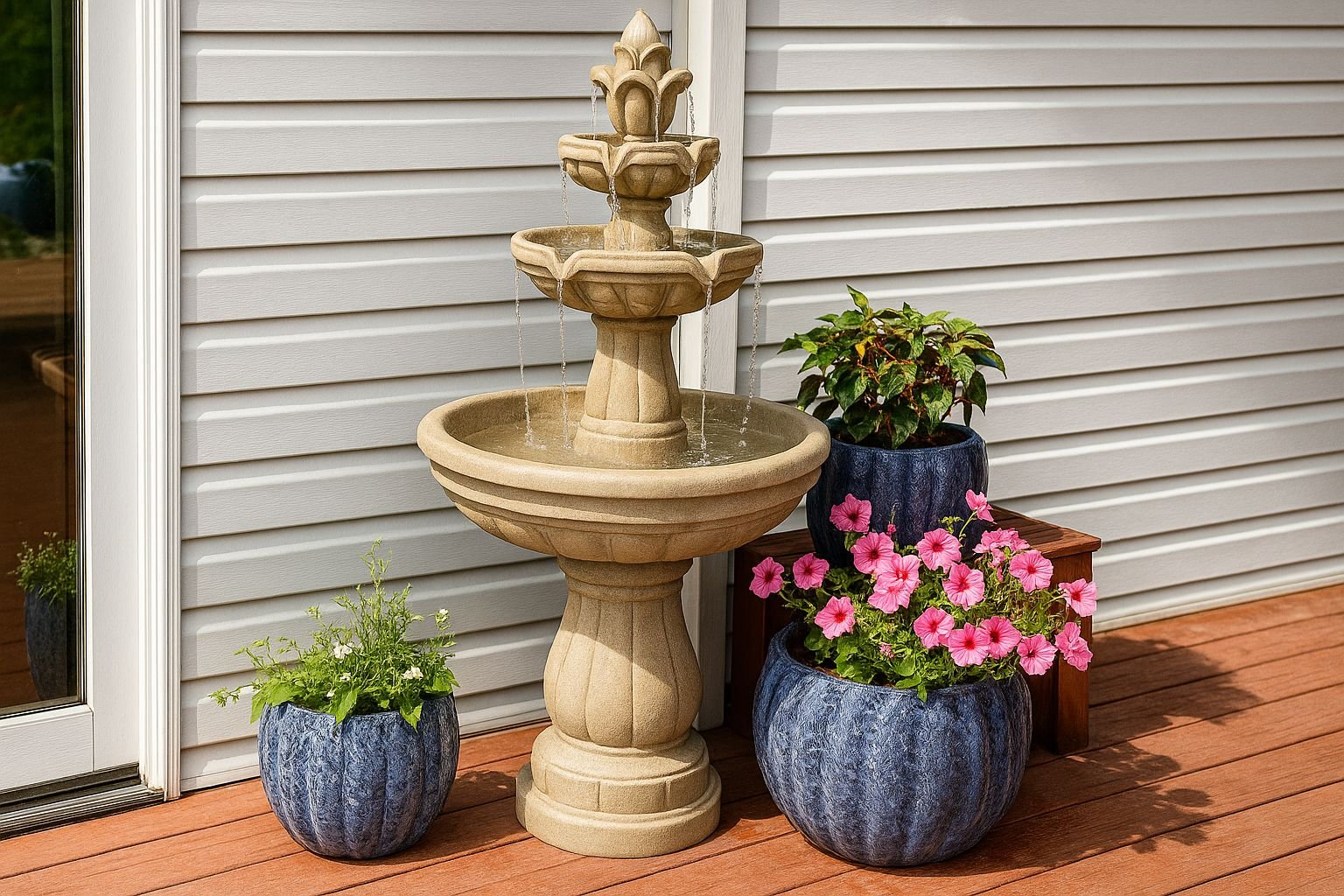
The style options will make your head spin in the best way. Modern designs with clean lines and metal finishes. Rustic pieces with natural stone and copper accents. Asian inspired fountains with bamboo and river rocks. Contemporary glass panels with LED lighting. Traditional tiered designs that nod to classical garden fountains. Whatever your aesthetic, someone’s making a fountain that fits.
I gravitated toward natural materials because our home has a lot of wood and earth tones already. The slate and copper combination felt right. But my sister has a super modern home with lots of white and chrome, and she went with a glass panel fountain with color changing lights. It looks completely different from mine but equally impressive in her space. That’s the beauty of having so many options. You’re not forcing a one size fits all solution into your unique home.
Design details matter more than you might think. How does the water enter the panel? Where does it exit? Is the flow even and smooth or more random and natural? Does it make noise at the bottom when water hits the reservoir? Can you adjust the flow rate? These aren’t just technical specs. They affect how the fountain looks and sounds in actual use.
When I was comparing options, I made the mistake of judging purely from photos. Big mistake. I ordered one that looked perfect online, and when it arrived, the water flow was all wrong. It had these dry spots where water wasn’t reaching, and the sound was more of a splashing than a flowing. Returned it immediately and found a local showroom where I could see fountains running in person. Completely different experience.
Tabletop fountains follow the same principles but on a smaller scale. They’re great for apartments, offices, or bedrooms. I’ve got a small one in my home office now too. It doesn’t have the presence of the wall fountain, but it still provides that water sound and visual movement. Some designs are surprisingly elaborate and beautiful despite their compact size. Others are minimalist and zen like. Prices range from affordable impulse purchase to investment piece.
Making the Smart Choice for Your Space
Picking the right fountain isn’t just about falling in love with a design and clicking buy. Though that’s tempting, trust me. You need to think about your actual space and how a fountain will function in it. I learned this through trial and error, which is expensive. Learn from my mistakes instead.
Your personal taste matters, obviously. If you hate the look of copper, don’t buy a copper fountain just because some blog told you it’s trendy. You’re the one who has to look at it every day. But your personal preferences have to work within the constraints of your physical space. A fountain you love that doesn’t fit your living room is just a beautiful thing taking up storage space in your garage.
Floor space is the big one. Wall fountains mount on the wall, sure, but they project out into the room. Some are nearly flush, maybe an inch or two deep. Others extend six inches or more. That depth matters when you’re thinking about furniture placement and traffic flow. Measure your current setup carefully. Can you afford to lose six inches of floor space in that location? Will the fountain stick out past your couch or make the walkway feel cramped?
I almost made a huge mistake with this. I’d picked out this gorgeous fountain that was deeper than most because it had this elaborate rock formation. Looked amazing. Would have stuck out nearly eight inches from the wall. Our couch sits about two feet from that wall, which I thought would be plenty of clearance. But when I actually measured, accounting for how far the couch cushions extend when people sit on them and how much space you need to walk behind it, we would have been down to like ten inches of clearance. That’s tight. Too tight. I switched to a slimmer design, and I’m glad I did.
Room size matters too. A fountain that looks perfect in a showroom with 20 foot ceilings and open space might overwhelm your cozy 12 by 14 living room. Or the opposite, a dainty fountain that works in a small apartment might disappear on a large wall in a big room. There’s this principle in interior design about scale and proportion. The short version is that objects should relate to each other and to the room in a way that feels balanced.
I used a trick I learned from a designer friend. Take photos of your wall from different angles. Print them out or pull them up on a tablet. Then sketch in roughly where the fountain would go and how big it would be. Does it look right in proportion to your windows, your furniture, your ceiling height? This saved me from at least one more ordering mistake.
The other furniture in your room affects fountain choice more than you’d think. If you’ve got a traditional space with classic furniture, antique finishes, and warm colors, an ultra modern fountain with glass and chrome might clash. Not in a cool eclectic way, in an awkward “these things don’t belong together” way. The fountain should complement your existing style, not fight with it.
That said, a fountain can be the thing that bridges different styles if you’re going for that collected over time look. Our living room mixes some mid century pieces with more contemporary stuff. The fountain I chose has clean lines that read modern but natural materials that feel timeless. It works with both styles and ties the room together.
Think about what you want the fountain to do for your space beyond just being pretty. Do you want it to be the focal point that dominates the room? Or more of a supporting player that adds ambiance without demanding attention? Do you want dramatic lighting effects or simple elegance? Do you want a conversation starter or a calming presence? Your answers will guide you toward the right choice.
Bringing It All Together
So here’s where we land. Wall fountains aren’t just a trend that’ll look dated in five years. They’re a thoughtful addition that can transform your living room from a place you pass through into a space you actually want to inhabit. Not because you have to, but because it genuinely feels good to be there.
The finishing touch concept is real. You can have a perfectly nice living room that checks all the boxes. Good furniture, nice colors, proper lighting. But without that element that brings it to life, it’s just a room. The fountain is that element for a lot of homes. It adds the sparkle, the personality, the wow factor that makes everything else snap into focus and make sense.
I think about the difference between our living room before and after, and it’s striking. The room didn’t change that much physically. Same couch, same paint, same layout. But the feeling is completely different. People settle in faster. Conversations flow more easily. Even I choose to spend time in there when I could be anywhere else in the house. That’s what good design does. It doesn’t just look better. It functions better on an emotional and practical level.
The natural appeal of moving water can’t be overstated. We’re drawn to it instinctively. Put a fountain in your space, and you’re tapping into something primal and universally appealing. It’s not about following design rules or impressing anyone. It’s about creating an environment that supports the life you want to live. If that life includes feeling calm, connected, and proud of your space, a fountain might be exactly what you’re missing.
The charming part is how effortless it looks once it’s installed. Guests don’t see the research, the measuring, the decision making process. They just see this beautiful element that seems like it was always meant to be there. That’s the mark of a smart design choice. It feels inevitable, not tacked on.
Tranquil is the word that keeps coming up. Our living room is tranquil now in a way it never was before. Not boring or sleepy, just peaceful. Like the space itself is taking a deep breath and inviting you to do the same. In a world that’s constantly demanding our attention and amping up our stress, having a room that actively calms us down is not a luxury. It’s basically necessary.
Tabletop options give you a low risk way to test the concept. Spend fifty or a hundred bucks on a small fountain and see how you like it. If it changes how you feel in that space, scale up. If it doesn’t do much for you, you’re not out much money and you learned something about your preferences. But I’d be willing to bet most people who try even a small fountain will end up wanting something bigger.

The variety in forms and sizes means there’s probably a fountain out there that’s perfect for your specific situation. Small apartment with limited wall space? There’s a fountain for that. Huge living room with a blank wall that needs something dramatic? There’s a fountain for that too. Rental where you can’t drill into walls? Freestanding and tabletop options have you covered.
I can’t promise a fountain will change your life. That’d be ridiculous. But I can tell you from experience that it might change how you feel about your home, and that’s pretty significant. We spend so much time in our houses. Making them places that actively contribute to our wellbeing instead of just sheltering us from weather is worth the effort and investment. A wall fountain is one tool in that toolbox, and for a lot of people including me, it’s been the tool that made the biggest difference.

Leave a Comment