
How Fountains Went From Keeping People Alive to Making Spaces Beautiful
You know what’s funny? We take fountains for granted now. You walk past one in a shopping mall or see one in someone’s fancy garden, and you barely give it a second thought. But stop for a minute and think about this. These water features used to be the difference between life and death. I’m not being dramatic here. Before we had pipes running into every building, fountains were where you went to get a drink. Where you filled your buckets. Where you bathed when you needed to clean up.
The ancient Romans were absolutely obsessed with fountains. They built these massive aqueducts that brought water from miles away, just so they could have fountains in their cities. Can you imagine the engineering that took? No computers. No modern tools. Just pure human ingenuity and probably a lot of trial and error. These weren’t the decorative pieces we see today either. They were practical. Functional. People lined up at them every single day.
But here’s where it gets interesting. Somewhere along the way, someone looked at these water sources and thought, “Hey, what if we made this look nice?” And that changed everything. The Persians were probably the first to really go wild with decorative fountains in their gardens. They figured out that moving water could cool down a space. Smart, right? When you’re living in a desert climate, you’ll try anything to beat the heat.
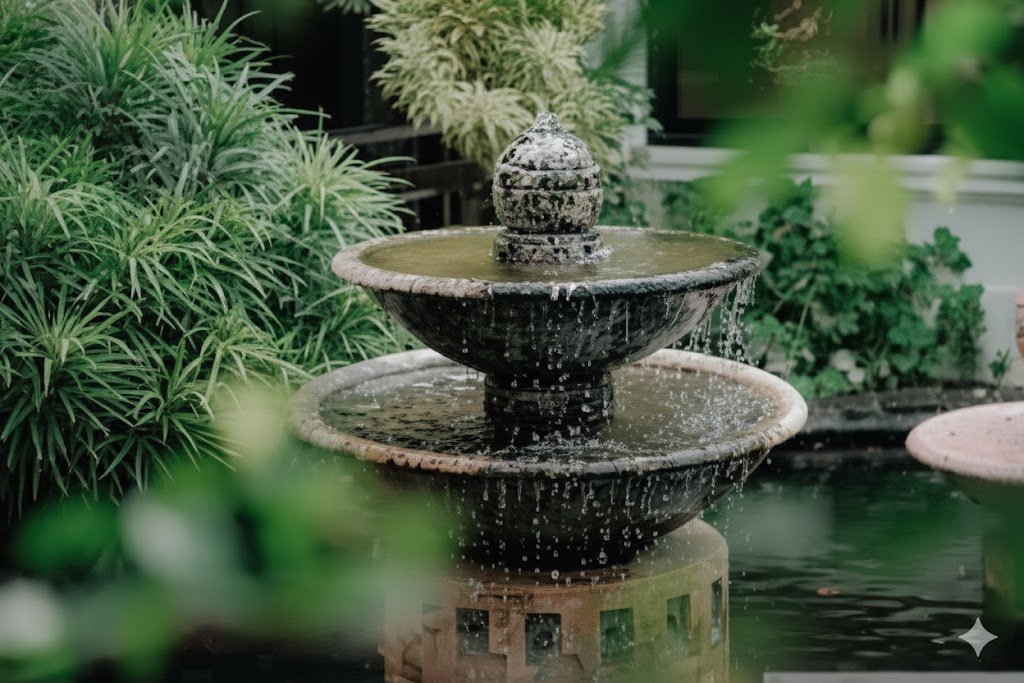
Fast forward through history, and fountains became status symbols. If you had a fancy fountain in your courtyard, it meant you had money. It meant you had power. The Italian Renaissance took this to a whole new level. Those gardens in Florence and Rome? Absolute masterpieces. The fountains weren’t just about water anymore. They were art. Sculptures. Stories carved in stone with water bringing them to life.
What really gets me is how the purpose completely flipped over time. We went from “I need this to survive” to “I want this because it’s gorgeous.” That’s a pretty massive shift when you think about it. The function stayed the same at its core. Water still flows. Gravity still does its thing. But the why behind it? Totally different.
These days, I can’t drive through any city without seeing fountains everywhere. Parks have them. Public squares have them. That fancy office building downtown? You bet there’s a fountain in the lobby. They’re not there because we need drinking water. We’ve got bottles and water coolers for that. They’re there because they make us feel something. They make a space memorable.
I remember visiting Barcelona a few years back. The Magic Fountain at Montjuïc? Mind blowing. Thousands of people just sitting there watching water dance to music. Nobody needed that water to survive. But we all needed that moment of beauty. That break from our phones and our busy lives. That’s what fountains do now. They give us permission to pause.
The transformation from utility to beauty didn’t happen overnight. It took centuries. Different cultures added their own spin. The Moors brought intricate tile work and geometric patterns. The French went big and symmetrical. The Japanese made theirs zen and minimal. Each approach tells you something about the people who built them.
Think about modern city planning. Why do urban designers put fountains in public spaces? They’re trying to create gathering spots. Places where people want to be. Water has this magnetic quality. People are drawn to it. We evolved near water sources, so maybe it’s just hardwired into us. Whatever the reason, it works.
I’ve noticed something interesting about how we use fountains today. They serve this dual purpose that’s kind of genius. On hot summer days, kids run through them. Adults dip their hands in. That’s the functional part coming back around. But even when it’s cold outside, people still stop to look at them. Take photos. Meet friends nearby. The decorative aspect pulls its weight year round.
Shopping malls figured this out decades ago. Put a fountain in the middle, and people congregate around it. They sit on the edges. They toss in coins and make wishes. Who started that tradition anyway? Someone somewhere decided that throwing money into water would bring good luck, and now we all do it. That’s kind of hilarious when you think about it.
The evolution of fountain technology is pretty wild too. Ancient fountains relied purely on gravity and natural water pressure. If you wanted water to shoot up high, you needed a water source that was even higher. Simple physics. Now we’ve got pumps that can make water do basically anything. Shoot straight up. Arc gracefully. Cascade down in sheets. Dance to programmed routines.
But here’s what hasn’t changed. Water still sounds the same. That gentle splashing, that constant movement, it affects us the same way it affected people thousands of years ago. It’s calming. It masks other noises. It creates this bubble of peace in whatever space it occupies.
I think that’s why fountains made the jump from public spaces into private homes. Once we figured out how to make them small enough and affordable enough, people wanted that feeling in their own spaces. That sense of tranquility. That touch of luxury. You don’t need a massive estate anymore to have moving water in your life.
The journey from necessity to decoration tells us something about human nature. Once we meet our basic needs, we start craving beauty. We want our surroundings to reflect more than just function. We want them to inspire us. Calm us. Remind us that there’s more to life than just surviving.
Bringing the Magic Home With Wall Fountains
Wall fountains changed the game completely. Before they came along, if you wanted a fountain, you needed space. Lots of it. You needed a yard or at least a big patio. You needed to worry about installation and plumbing and all sorts of headaches. Wall fountains said, “Forget all that. We’re coming inside.”
I’ll be honest, the first time I saw a wall fountain in someone’s home, I was skeptical. It seemed like one of those things that would be more trouble than it’s worth. Like, great, now you’ve got water running inside your house. What could possibly go wrong? But then I actually experienced one. Stood in front of it. Listened to the water trickling down. And I got it. I totally got it.
The brilliant thing about wall fountains is they take up vertical space instead of floor space. In modern homes where every square foot counts, that’s huge. You’re not sacrificing a corner of your living room or a chunk of your entryway. You’re using wall space that was probably just painted drywall anyway. Might as well make it do something interesting.
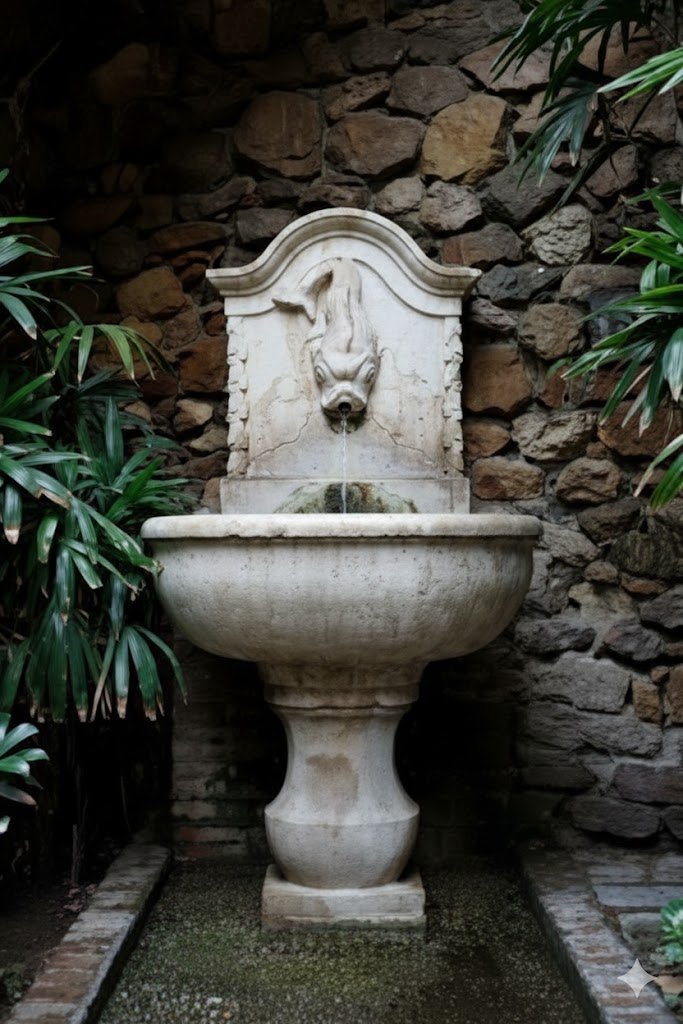
These fountains bring all the benefits of their outdoor cousins right into your living space. That soothing sound of moving water? Check. The visual interest of watching water flow? Check. The humidity boost in dry climates? Bonus check. You get all of this without needing to step outside or maintain a huge outdoor feature.
What surprised me most is how much they affect the feel of a room. I walked into a friend’s house once, and something was different. Couldn’t put my finger on it at first. The space felt calmer somehow. More put together. Turned out they’d installed a wall fountain in their hallway. Such a simple addition, but it transformed the entire vibe of the entrance.
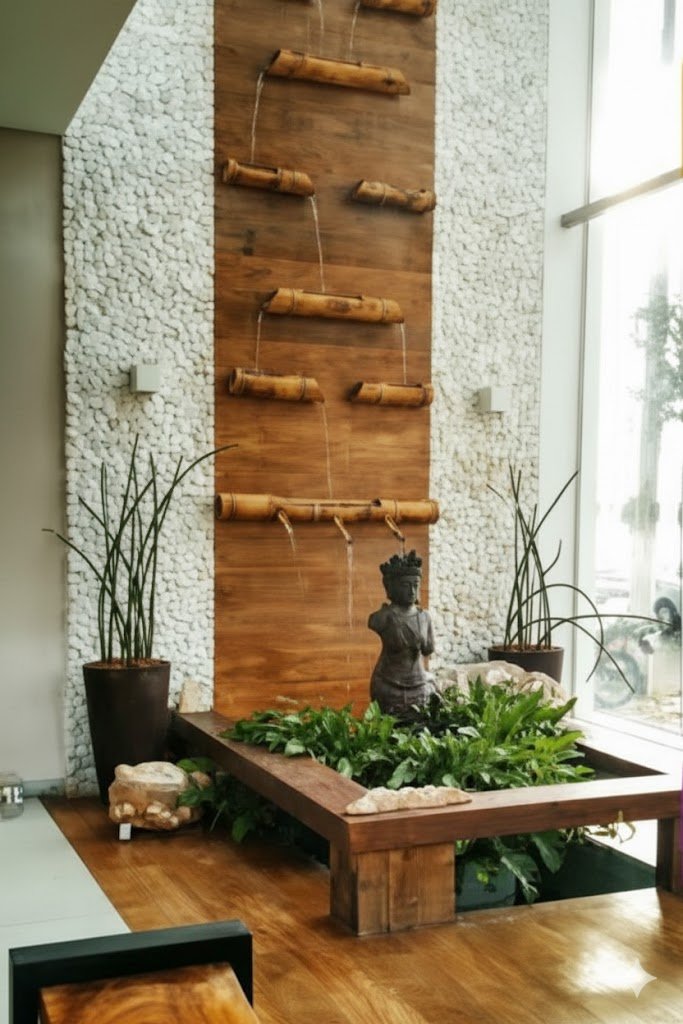
Wall fountains come in every style you can imagine. Want something modern and sleek? There are fountains made of glass and stainless steel that look like they belong in a contemporary art museum. Prefer something more natural? You can get ones with real slate or stone that make you feel like you’re near a mountain stream. Going for an Asian inspired look? There are bamboo and copper options that fit perfectly.
The size variety is just as impressive. Some wall fountains are these massive statement pieces that take up an entire wall. Others are small and subtle, maybe two feet tall, perfect for a powder room or a small office. You can match the scale to your space, which means pretty much anyone can find something that works.
Installation is way easier than you’d think. Most wall fountains are self contained. They have their own reservoir built in. The water circulates through a pump, flows down the front, and returns to the bottom. You’re not connecting to your home’s plumbing. You’re not drilling through walls to run pipes. You’re basically hanging something on the wall, filling it with water, and plugging it in. I’ve hung pictures that were more complicated.
The maintenance isn’t bad either. You add water when the level gets low. You clean it every few weeks to prevent algae. Maybe add some water treatment to keep things fresh. That’s about it. Compare that to maintaining an outdoor pond or a big garden fountain, and it’s laughably simple.
Here’s something I didn’t expect. Wall fountains are conversation starters. People notice them. They comment on them. They ask where you got them. It’s like having a piece of functional art that people actually want to talk about. Try getting that reaction from a regular painting.
The sound is probably the biggest selling point. We live in a noisy world. Traffic outside. Appliances humming. Neighbors doing whatever neighbors do. A wall fountain creates this gentle white noise that covers all of that up. It’s not loud enough to be intrusive, but it’s present enough to mask the stuff you don’t want to hear. I know people who swear they sleep better with a fountain running in their bedroom.
Different designs create different sounds. A fountain where water cascades down a flat surface makes a gentle sheeting sound. One where water drips from multiple points creates more of a babbling brook effect. The material matters too. Water hitting stone sounds different from water hitting glass. You can actually choose your fountain based on what you want to hear.
The relaxation factor is real. There’s science behind this. The sound of moving water affects our brain waves. It can lower stress hormones. Reduce anxiety. Some therapists’ offices have fountains for exactly this reason. If you can recreate that effect at home, why wouldn’t you?
I think wall fountains appeal to something primal in us. Humans have always been drawn to water sources. It’s survival instinct. But in our modern world where water comes from taps, we’ve lost that daily connection to moving water. Wall fountains bring it back. They remind us that we’re part of nature, even when we’re sitting in our climate controlled homes scrolling through our phones.
The humidity boost is no joke either, especially if you live somewhere dry. Running the heat in winter or the AC in summer strips moisture from the air. Dry air causes all sorts of problems. Dry skin. Scratchy throats. Static electricity that shocks you every time you touch a doorknob. A wall fountain adds moisture back into your space naturally. No electric humidifier needed.
Price wise, wall fountains are all over the map. You can spend a couple hundred bucks on something simple and attractive. Or you can drop thousands on a custom piece that’s basically sculpture. Most people fall somewhere in the middle. The point is there are options for different budgets.
The best part? You can change your mind. Not loving where you put it? Move it to a different wall. Want to redecorate? A fountain works with pretty much any style. Getting sick of it? You can replace it with something else. Try doing that with built in water features.
Wall fountains prove that you don’t need a mansion to enjoy the benefits of moving water in your home. You don’t need a backyard. You don’t need a contractor. You just need a wall, an outlet, and a willingness to try something a little different. Once you do, you might wonder how you ever lived without it.
Making Your Living Room the Best Room in the House
Your living room says a lot about you. It’s where guests form their first impressions. Where your family actually spends time. Where life happens. So why not make it spectacular? That’s where wall fountains come into play. They turn an ordinary living room into a space that people remember.
I used to think living room décor was all about the furniture. Get a nice couch. Find a coffee table that doesn’t wobble. Hang some art. Call it done. Then I realized the best living rooms have something extra. Something that engages more than just your eyes. A wall fountain hits multiple senses at once. You see it. You hear it. If you’re close enough, you might feel the slight humidity it creates. That multi sensory experience makes a space feel complete.
Placement is everything with a wall fountain in your living room. You want it to be a focal point without overwhelming everything else. A common spot is the wall opposite your seating area. That way, when you’re sitting on the couch, you’re facing it. You get the visual and auditory benefits while you’re relaxing. Another option is placing it on a side wall where it’s visible but not the first thing you see when you enter the room.
The size of your fountain should match the scale of your room. A huge fountain in a small living room feels cramped and overwhelming. A tiny fountain in a massive space gets lost and seems like an afterthought. Walk into your living room and really look at the walls. Imagine different sizes. Most people find that a fountain around three to five feet tall works well for average sized living rooms.
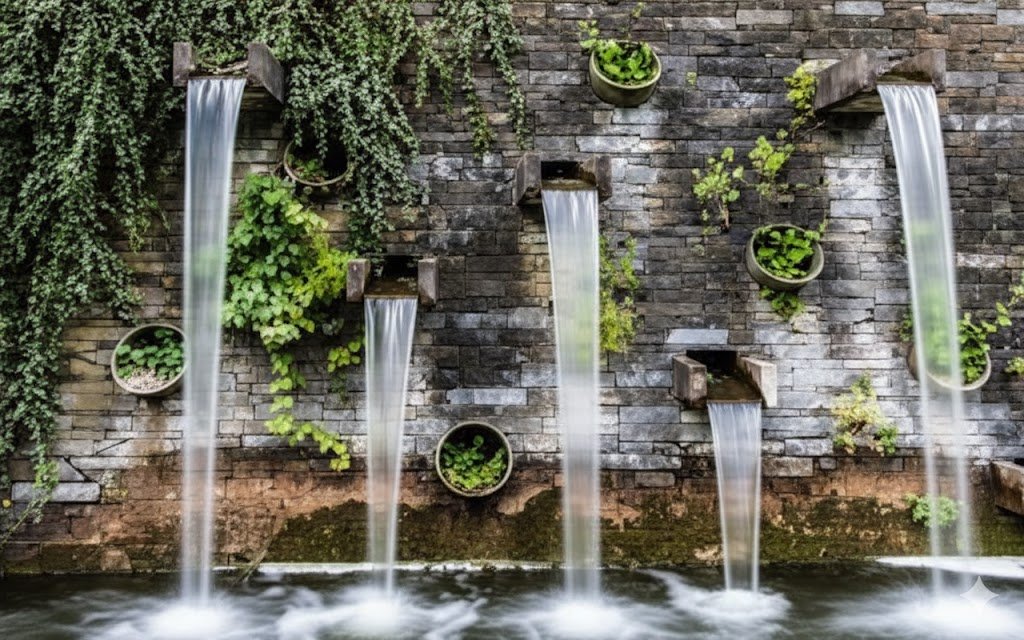
Color and material choices matter more than you might think. A dark slate fountain creates a different vibe than a light colored stone one. A metallic copper fountain catches light differently than a matte finish. Think about your existing color scheme. A fountain should complement what you’ve already got going on. That doesn’t mean it has to match exactly. Sometimes a slight contrast is what makes it interesting.
Lighting can make or break how your fountain looks. Some fountains come with built in LED lights that illuminate the water from behind. The effect can be stunning, especially at night. Even without built in lighting, you can position a floor lamp or track lighting to highlight your fountain. Water and light play together in really cool ways. The reflections and shadows add dimension to your whole room.
Here’s a thought that might not have occurred to you. A wall fountain can actually make your living room feel bigger. Weird, right? You’re adding something to the wall, so logically it should make the space feel smaller. But the movement of the water creates depth. Your eye is drawn to it and perceives distance. The sound expands the space auditorily too. Suddenly your living room doesn’t feel quite so enclosed.
If you’ve got kids or pets, you might worry about a wall fountain being practical. Fair concern. But most modern wall fountains are pretty sturdy. The water is contained. Unless someone is actively trying to make a mess, it stays put. I know families who’ve had wall fountains for years with zero incidents. That said, if you’ve got a toddler who treats everything like a jungle gym, maybe wait a year or two.
Wall fountains work surprisingly well with different décor styles. Modern minimalist? A sleek glass and steel fountain fits right in. Traditional and cozy? A natural stone fountain with a rustic vibe works great. Mid century modern? Look for something with clean lines and interesting geometric shapes. Bohemian eclectic? There are artistic, colorful options that add to that vibe.
The furniture arrangement around your fountain matters. You don’t want to block it completely, but you don’t need a clear path to it either. It’s not interactive in the way a TV is. People aren’t walking up to it constantly. Think of it more like a fireplace. It’s something you enjoy from a distance while you’re doing other things.
One mistake people make is treating the fountain like an island. They install it and leave the surrounding wall empty. Big missed opportunity. You can create a whole arrangement around it. Flank it with narrow shelves. Add some plants nearby. Hang a piece of complementary art on an adjacent wall. The fountain becomes part of a larger design statement rather than standing alone.
Maintenance in a living room setting is straightforward. You’re inside, so you’re not dealing with leaves and debris like you would with an outdoor fountain. Dust is your main enemy. Wipe down the surface every couple of weeks. Check the water level. Add distilled water when needed. Run some vinegar through it occasionally to prevent mineral buildup. Takes maybe ten minutes a month.
The sound level is perfect for a living room. It’s present but not intrusive. You can have a conversation without raising your voice. You can watch TV without cranking the volume. But when you’re just sitting there reading or scrolling on your phone, the sound fills the silence in a pleasant way. Better than the hum of the refrigerator or the weird creaks your house makes.
Guest reactions are always fun. Some people notice the fountain right away and comment immediately. Others take a few minutes and then suddenly realize what’s creating that ambiance. The best is when someone asks, “Why does your living room feel so different?” and they can’t pinpoint it until you draw their attention to the fountain. That’s when you know it’s working.
Pairing a wall fountain with the right furniture creates a cohesive look. If your fountain has a natural stone element, consider bringing in other natural textures. Wood furniture. Woven baskets. Indoor plants. Let the fountain set a tone that the rest of your décor supports. Or go the opposite direction. If you’ve got a very modern fountain, lean into that with contemporary furniture and clean lines throughout.
Seasonal decorating gets more interesting with a fountain. You can’t exactly dress it up with holiday decorations, but you can change what’s around it. Put some pumpkins nearby in fall. Add some evergreen branches and pinecones in winter. Fresh flowers in spring. The fountain becomes part of your seasonal display without actually needing to change itself.
Here’s the thing about living rooms. They’re supposed to be inviting. They’re called living rooms because that’s where living happens. A wall fountain makes the room feel alive in a literal sense. There’s movement. There’s sound. There’s this element that’s constantly changing even though it’s always the same. That paradox is part of what makes it so captivating.
If you work from home and your living room pulls double duty as an office, a fountain is even more valuable. That gentle background noise helps you focus. It marks your space as separate from the rest of the house. When the fountain is running, you’re in work mode. Turn it off when you’re done for the day. It becomes part of your routine.
Finding the Perfect Fountain for Your Space
Shopping for fountains can feel overwhelming. There are so many options. So many variables. How do you even begin to narrow it down? Let’s break it into manageable pieces so you can find something you’ll actually love instead of something you’ll tolerate.
Design is the obvious starting point. What catches your eye? Some fountains are all about the water itself. Clear glass or acrylic panels where you can see every drop flowing down. Others focus on the material. Rough cut stone that looks like it came from a mountainside. Smooth polished slate in dark charcoal. Copper that develops a green patina over time. Each creates a completely different look.
Shape options are wilder than you’d think. The classic rectangle works in almost any space. But there are circular fountains too. Asymmetrical free form designs. Multi panel arrangements. Some fountains are flat against the wall. Others have depth and dimension, jutting out several inches. Think about your wall space and how much three dimensional presence you want.
Size becomes really important when you’re actually shopping. Those product photos can be deceiving. A fountain that looks perfect in a photograph might be way too big or surprisingly small in person. Always check the dimensions. Write them down. Go to your wall with a tape measure and mark out the space. Stand back and look at it. Does that size feel right?
Materials affect more than just appearance. They affect durability, maintenance, and sound. Stone and slate are classic. They’re heavy and substantial. They develop character over time. Metal fountains, like copper or stainless steel, stay looking newer longer. They’re easier to clean. The sound of water on metal is brighter than water on stone. Glass and acrylic are modern. They show every water droplet. They require more frequent cleaning to look their best but create stunning visual effects.
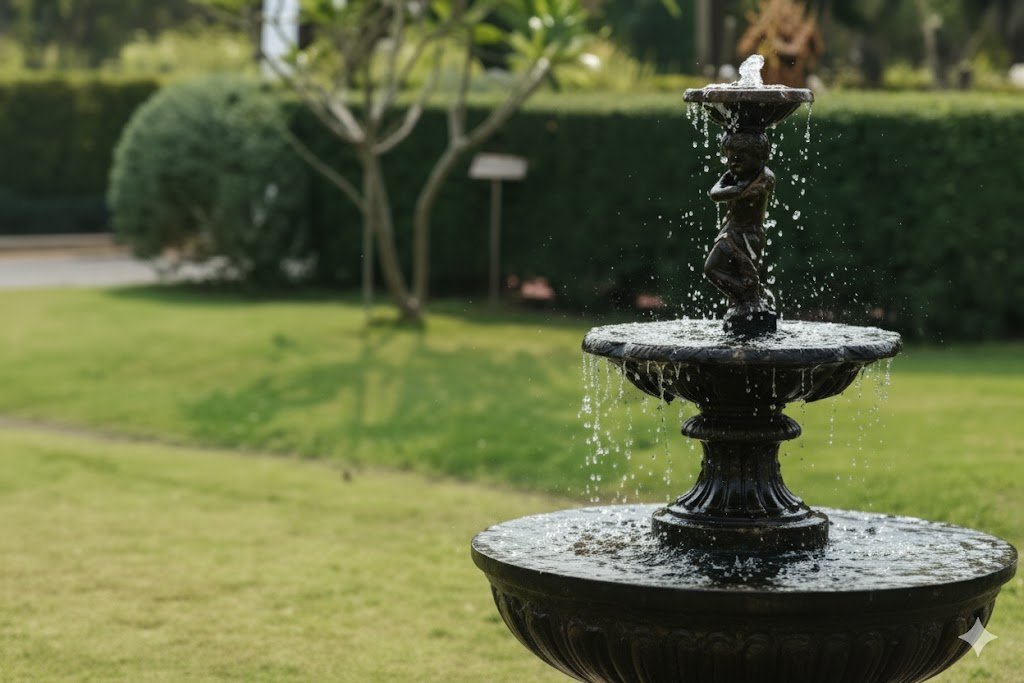
Color might seem straightforward, but it’s not just about matching your wall color. Think about whether you want the fountain to blend in or stand out. A fountain in a similar tone to your wall becomes a subtle textural element. A fountain in a contrasting color becomes a statement piece. Both approaches work. It depends on what your room needs.
Some fountains come with fun extras. Built in lighting can be really cool. LED strips that change colors. Underwater lights that illuminate the reservoir. Spotlights that highlight the water flow. These features add visual interest, especially at night. They’re not necessary, but they’re fun if that’s your thing.
Table top fountains deserve their own mention. These are the little siblings of wall fountains. They sit on surfaces like coffee tables, side tables, or dining room sideboards. They’re perfect if you’re not ready to commit to installing something on your wall. Or if you rent and your landlord gets twitchy about holes in the walls. Or if you just want something smaller and more portable.
The variety in table top fountains is impressive. Tiny zen gardens with a small water feature and some rocks. Miniature waterfalls that fit in the palm of your hand. Decorative pieces that incorporate water with other elements like crystals or plants. They bring that same calming water element but on a smaller, more manageable scale.
Dining rooms are great spots for table top fountains. Picture this. You’re having dinner. Good food. Good conversation. And there’s this gentle water sound in the background. It elevates the whole experience. Makes a regular Tuesday dinner feel a little more special. Plus, if you’re someone who gets anxious about silence during meals, a fountain fills that void nicely.
Installation for table top fountains is about as simple as it gets. Unbox it. Find a spot. Add water. Plug it in. Done. No tools required. No measuring. No drilling. If you don’t like where you put it, pick it up and move it somewhere else. The freedom is refreshing.
Maintenance on smaller fountains is even easier than wall fountains. Less water means less to worry about. Refilling takes seconds. Cleaning takes a few minutes. Some people keep multiple small fountains and rotate them around their house. One in the bedroom for a while. Then move it to the bathroom. Swap in a different one. Keeps things fresh.
When you’re shopping, pay attention to reviews. Not just the star rating, but what people actually say. Are there common complaints about leaking? About pumps dying quickly? About materials looking cheaper in person than in photos? Real user experiences tell you way more than marketing copy ever will.
Price shopping is smart, but be careful about going too cheap. A fountain that costs half as much but breaks in three months isn’t a deal. That said, you don’t need to spend a fortune either. The mid range often gives you the best value. Good quality without the premium price tag of designer brands.
Think about where you’re buying from too. Some companies specialize in water features and know their stuff. They can answer questions. They understand the products. Buying from some random online marketplace? You might get a great deal, or you might get something that looks nothing like the picture. Do your homework.
Power requirements are worth checking. Most fountains just need a standard outlet. But some larger ones might have specific electrical needs. Make sure you’ve got an outlet where you want to place your fountain. Extension cords can work, but they’re not ideal. You don’t want cords snaking across your floor where people can trip.
Noise level varies between fountains. Some are whisper quiet. Others have more of a babbling brook sound. If possible, look for videos of fountains running. Some sellers post these online. Hearing the actual sound helps you decide if it’s what you want. A fountain that’s too loud will drive you crazy. One that’s too quiet won’t give you the benefits you’re looking for.
Return policies matter. A fountain might look perfect in the store or online and completely wrong in your actual space. Being able to return or exchange it without a huge hassle is valuable peace of mind. Read the fine print before you buy.
The best advice I can give? Don’t overthink it. You’re not choosing a spouse. You’re picking a fountain. If you like how it looks and it fits your space and budget, go for it. You can always change your mind later. The point is to try something that makes your space more enjoyable. Start there and see what happens.
Why Water Features Still Matter in Modern Homes
We’ve come full circle in a way. Fountains started as necessities. Became decorations. And now they’re necessities again, just for different reasons. We need them for our mental health. For our stress levels. For creating homes that feel like sanctuaries instead of just places where we sleep between work shifts.
The modern world is relentlessly loud. Not just in terms of noise, though that’s part of it. Everything demands our attention constantly. Notifications. Emails. News alerts. Social media. Our brains are fried. A fountain in your home creates this one spot where things slow down. Where the only thing happening is water flowing. It’s simple. It’s repetitive. It’s exactly what our overstimulated minds need.
I’ve noticed something interesting. People who have fountains in their homes tend to gravitate toward them. They sit near them. They position their reading chairs close by. They choose the dining table spot where they can see and hear the fountain. We’re drawn to that consistency. That reliability. The fountain will be there doing its thing whether we had a great day or a terrible one.
The health benefits go beyond just stress reduction. That humidity I mentioned earlier? It helps with respiratory stuff. Dry air irritates sinuses and throats. Proper humidity levels make breathing easier. Some people with allergies find that fountains help because the moisture in the air causes dust and pollen particles to settle instead of floating around.
Then there’s the sleep angle. White noise machines have become hugely popular, right? People pay good money for devices that make artificial sounds of rain or ocean waves. A fountain gives you the real thing. Natural white noise that blocks out disruptive sounds. No batteries required. No weird electronic hum underneath the water sounds.
Wall fountains and table top fountains have this advantage over other home décor. They’re interactive without requiring interaction. A painting just hangs there. A sculpture sits there. They’re static. A fountain is always doing something. Always moving. Always changing slightly even though it’s fundamentally the same. Your eye catches it. Your brain registers it. And something in you relaxes.
The naturalistic aspect matters too. We spend so much time in artificial environments. Climate controlled buildings. Cars. Offices with fluorescent lights. Bringing a natural element like flowing water inside creates a bridge between our indoor lives and the natural world. It’s a reminder that we’re biological creatures who evolved outdoors, not in cubicles.
Kids respond to fountains in interesting ways. They’re fascinated by the movement. They watch the water for longer than they watch most things these days. No screens involved. Just pure observation of a natural phenomenon. Some parents use fountain time as a calming activity before bed. Five minutes watching the water flow helps transition from the chaos of the day to sleep mode.
The customization possibilities keep expanding. Smart home technology is creeping into fountains now. Some can be controlled by apps. You can turn them on and off remotely. Set schedules. Adjust pump speeds to change the water flow. Change lighting colors and patterns. It sounds excessive, but having control over your environment is part of what makes a house feel like home.
Fountains work in basically any room. We’ve talked about living rooms and dining rooms, but don’t forget bedrooms. A small fountain on a nightstand or a wall fountain across from your bed can transform your sleep space. Bathrooms are natural spots too. The moisture fits with the room’s purpose. Home offices benefit from that focus enhancing white noise.
The longevity of a good fountain is impressive. Buy a quality piece and it’ll last for years. Decades even. The pump might need replacing eventually, but the fountain itself? That stone or metal or glass isn’t going anywhere. Compare that to trendy décor items that feel dated in a season or two. A fountain is pretty timeless.
There’s an emotional component that’s hard to quantify. A fountain makes a house feel finished. Polished. Intentional. Like someone actually lives there and cares about their space. It’s one of those touches that elevates everything around it. Your regular furniture looks better next to a fountain. Your plants seem lusher. The whole room just works.
The meditative quality can’t be overstated. Meditation apps and breathing exercises are great. But sometimes you need something physical to focus on. Watching water cascade down a surface. Listening to the gentle splashing. It grounds you in the present moment. You can’t worry about tomorrow’s meeting or yesterday’s argument when you’re focused on water flowing right now.
Entertaining becomes more pleasant with a fountain. Background noise fills awkward silences when conversation lulls. The fountain gives guests something to comment on. It creates ambiance without you having to do anything. No candles to light. No music playlist to curate. The fountain handles the atmosphere on its own.
The investment makes sense when you think about it holistically. You’re not just buying a decorative object. You’re buying better air quality. Stress reduction. Improved sleep. A more pleasant living environment. A conversation piece. Something that makes you smile when you walk past it. That’s a lot of value packed into one item.
We’re living in an era where self care is finally being taken seriously. Taking care of your mental health isn’t indulgent. It’s necessary. Creating a home environment that supports your wellbeing is part of that. A fountain is one tool in that toolbox. One element that makes your home a place where you can actually recharge instead of just exist.
The future of home fountains looks interesting. Designers are getting more creative. Materials are improving. Technology is being integrated thoughtfully. But the core appeal remains the same. Water moves. We watch. We listen. We breathe a little easier. That’s been true for thousands of years and it’ll be true thousands of years from now.
So yeah, fountains matter. They mattered when they kept ancient civilizations alive. They mattered when they decorated royal gardens. And they matter now when they help us decompress after brutal days. Different reasons, same result. Water flowing makes life a little bit better.

Leave a Comment