
You know what? I spent three weekends last summer staring at my bedroom walls, trying to figure out where I went wrong with my interior design. The mismatched furniture, the clashing colors, the general sense that my room belonged in a time capsule from 2003. I wanted something fresh, something modern, but I felt completely lost about where to begin.
Here’s what I learned after talking to designers, browsing countless furniture stores, and making a few mistakes along the way. Starting with your bedroom makes way more sense than tackling your entire house at once. I used to think that sounded backwards. Shouldn’t you start with the living room, where guests actually see things? But there’s real logic here that changed my mind completely.
The bedroom offers you a manageable scope. You’re not dealing with entertainment centers, dining tables, bookshelves, and all the other stuff that clutters up the rest of your home. In a bedroom, you really only need three main pieces to get the look right. We’re talking about the bed, the wardrobe, and the dresser. That’s it. Those three pieces form the foundation of everything else you’ll do in that space.
This limited selection actually gives you freedom rather than taking it away. When you walk into a furniture store with just three pieces on your shopping list, you can focus your energy on finding exactly the right items. You’re not overwhelmed by the massive task of furnishing multiple rooms. You can take your time, compare options, and make thoughtful choices instead of impulse buys that you’ll regret six months later.
I made the mistake of trying to redesign my living room first. Big error. I got lost in the weeds of media consoles, accent chairs, coffee tables, side tables, lamps, and about seventeen other things I thought I needed. Three months later, I had a half-finished room and a credit card bill that made me wince every time I checked my email. Don’t be like past me.
Starting small with the bedroom lets you build confidence. You figure out what contemporary style actually means to you. You develop an eye for the pieces that work together. You make your mistakes in a private space where only you and maybe your partner will see them. Then, when you’re ready to move into the more public areas of your home, you’ve got experience under your belt.
Think of it like learning to cook. You don’t start by hosting a dinner party for twelve people. You make scrambled eggs for yourself first. You burn a few things, you figure out your stove’s quirks, and then you gradually work up to more complex meals. Same principle applies here. The bedroom is your practice kitchen, and those three pieces of furniture are your scrambled eggs.
The contemporary style fits perfectly with this approach because it strips away all the unnecessary complications. You’re not hunting for ornate carvings or trying to match seven different wood finishes. You’re looking for clean lines, simple shapes, and pieces that let the overall design speak for itself rather than shouting for individual attention.
When I finally committed to this approach, everything changed. I stopped second-guessing every choice. I stopped buying random pieces just because they were on sale. I developed a clear vision for what I wanted my bedroom to feel like when I walked into it at the end of a long day. That clarity made the entire process not just easier, but actually enjoyable.
Your bedroom should be your sanctuary. It’s where you start your day and where you end it. Getting this space right affects your mood, your sleep quality, and your overall sense of well-being more than you might realize. I didn’t understand this until I finally got my bedroom design sorted out. The difference was immediate and profound.
So before you do anything else, before you browse another furniture website or step into another showroom, commit to starting with your bedroom. Give yourself permission to focus on just those three key pieces. Trust me, this focused approach will save you time, money, and a whole lot of buyer’s remorse. I wish someone had told me this two years ago. I could have saved myself from that awful phase where my bedroom looked like a furniture store exploded in there.
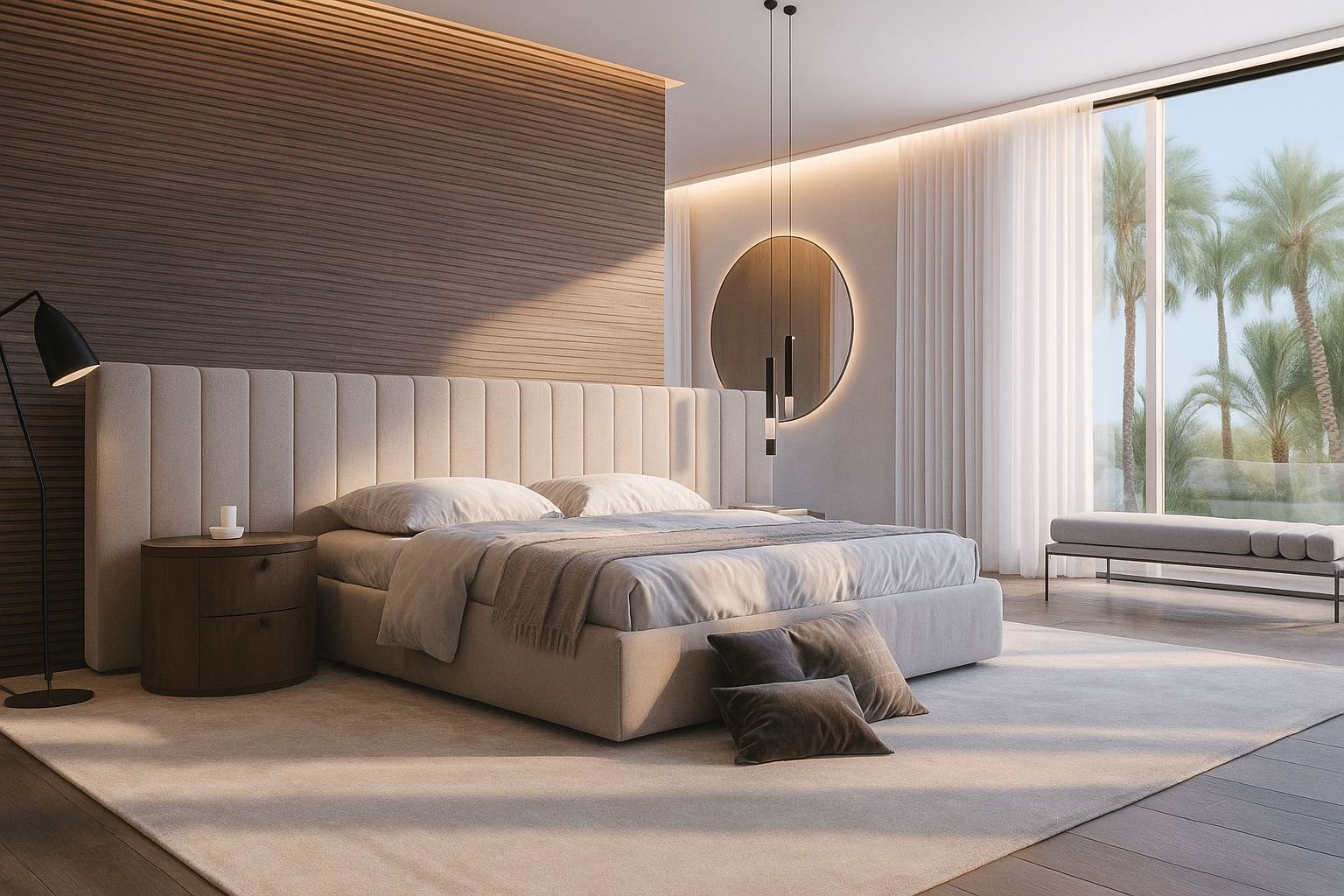
Choosing Your Bed First
Let me tell you about the time I bought a dresser before I bought a bed. Yeah, I know. What was I thinking? I found this gorgeous piece on sale, contemporary styling, perfect finish, and I snapped it up immediately. Then I spent the next month trying to find a bed that worked with it. Spoiler alert, I ended up returning the dresser and starting over.
The bed comes first. Always. This isn’t just some arbitrary rule that designers made up to sound authoritative. There’s real reasoning behind it, and I learned it the hard way so you don’t have to.
Your bed is the biggest piece of furniture in your bedroom. Not just physically biggest, though it certainly is that. It’s the biggest presence in the room. When you walk through the door, your eye goes straight to the bed. It dominates the space in a way that no wardrobe or dresser ever could. That makes it the natural focal point for your entire design scheme.
Think about hotel rooms for a second. Even in budget hotels, they understand this principle. They might cheap out on the side tables or skip the dresser entirely, but they put thought into that bed. They know it’s the first thing you notice when you walk in. They know it sets the tone for your entire experience in that room. Your home works the same way.
I used to think focal points were just fancy designer talk. Like, who cares which piece of furniture draws your eye first? Turns out, your brain cares quite a bit. When you enter a room without a clear focal point, it feels chaotic and disorganized even if everything is technically neat and tidy. Your brain doesn’t know where to rest, where to focus its attention. That creates a subtle sense of unease that you might not even consciously notice.
Choosing the bed first lets everything else fall into place around it. Once you’ve got your bed picked out, you can select side tables that complement its height and style. You can choose a dresser that echoes its material or finish. You can pick bedding that works with its color and design. The bed becomes your anchor point, your reference for every other decision you’ll make.
The contemporary bedroom style makes this even clearer. We’re not working with fussy Victorian designs where everything competes for attention. Contemporary design is about creating a cohesive, unified space where each piece supports the others. The bed, as the largest and most prominent piece, naturally leads this effort.
When I finally got serious about my bedroom redesign, I spent two full weeks just looking at beds. I know that sounds excessive. My partner certainly thought so. But I wanted to get this decision right because I knew everything else would flow from it. I sat on platform beds, storage beds, upholstered beds. I compared wood frames to metal frames. I measured my room about forty times to make sure I understood the proportions.
That time investment paid off. Once I selected my bed, choosing the other pieces took maybe three days total. I knew exactly what I was looking for. The bed had established the aesthetic direction, and I just needed to find pieces that matched that vision. Easy. Quick. No second-guessing, no returns, no buyer’s remorse.
Here’s something else I discovered. Starting with the bed forces you to confront your space constraints. You learn really fast if you’ve got room for a king-size frame or if you need to stick with a queen. You figure out if your bedroom can handle a bed with a footboard or if that’ll make the room feel cramped. These practical considerations affect everything else you’ll buy.
I nearly made a huge mistake by falling in love with a California king platform bed. Gorgeous piece, perfect contemporary styling, exactly what I wanted aesthetically. Then I actually measured my bedroom and realized that putting that bed in there would leave me about fourteen inches to walk around it. Sometimes you need that reality check before you get too attached to an idea.
The bed you choose tells a story about your priorities. Do you value storage and pick a bed with built-in drawers? Do you prioritize aesthetics and go for a floating platform design? Do you want something upholstered for comfort, or do you prefer the clean look of wood or metal? These choices reveal what matters most to you, and they guide the rest of your design decisions.
My final choice was a low-profile platform bed in walnut with a simple floating design. No headboard, no footboard, just a clean rectangular frame that sits close to the ground. Very Japanese-inspired, very contemporary. That single choice established the entire vibe for my bedroom. Once I had that bed in place, I knew I wanted minimal furniture, low profiles on everything, warm wood tones throughout. The bed made those decisions for me.
You might be thinking this all sounds like a lot of pressure to put on one piece of furniture. And yeah, it kind of is. But here’s the thing. You’re going to buy a bed anyway. You might as well be intentional about it. You might as well make it the foundation of your design rather than treating it as just another item on your shopping list.
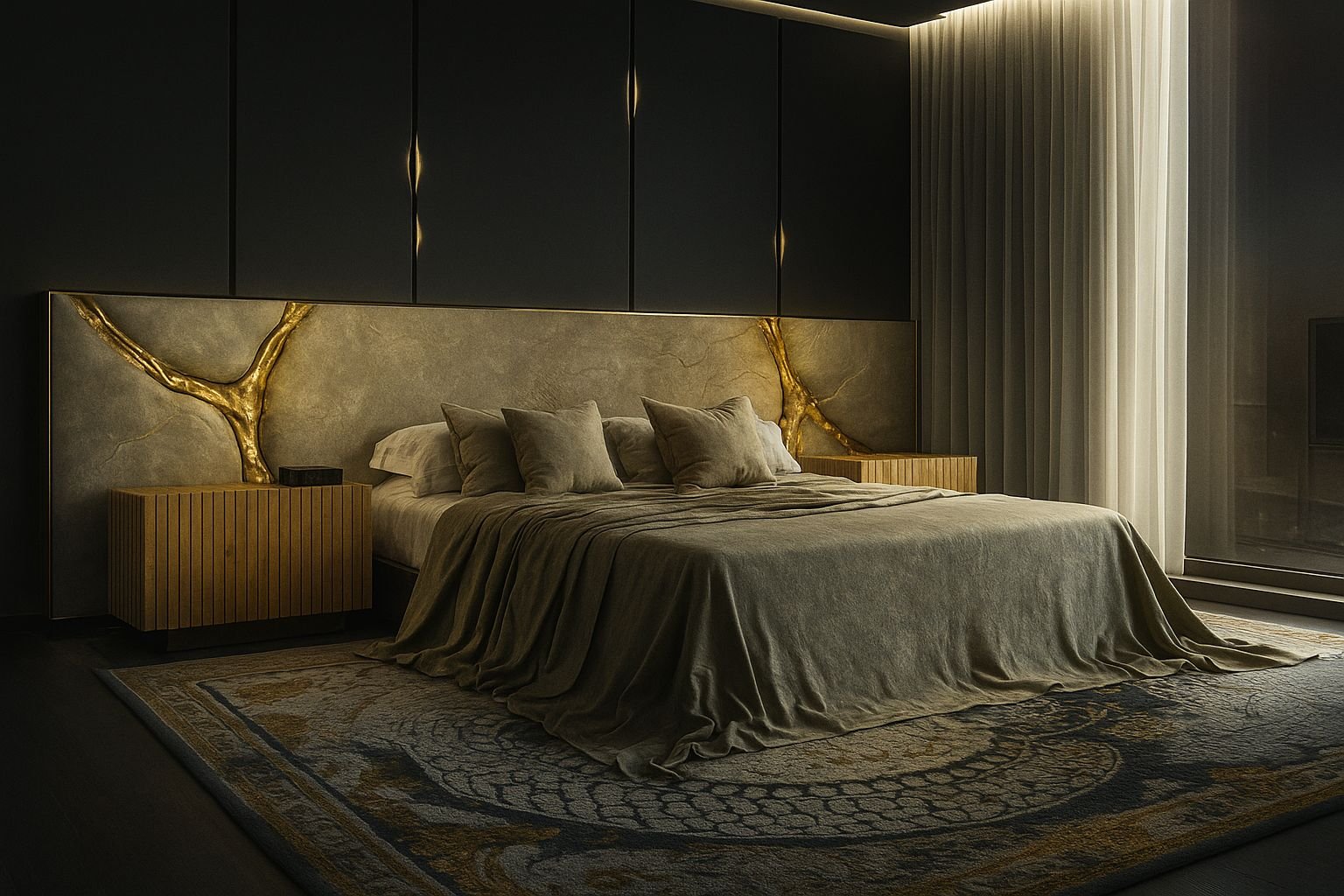
Understanding Contemporary Furniture Design
I’ll be honest with you. Before I started this whole bedroom redesign project, I thought contemporary furniture just meant “not old.” I figured if something looked modern and didn’t have grandma’s floral patterns on it, that counted as contemporary. Turns out, I was missing about ninety percent of what actually defines this style.
Contemporary design is really about stripping things down to their essence. You take a piece of furniture and you ask yourself, what does this thing actually need to do its job? Then you remove everything else. No decorative carvings because the wood grain is beautiful enough on its own. No brass hardware because simple recessed handles work just fine. No turned legs because straight legs support the piece perfectly well.
This philosophy sounds simple, but applying it takes real discipline. I can’t count how many times I found myself drawn to a dresser or nightstand with some little decorative detail. A bit of inlay here, some carved edges there. My brain kept trying to convince me that these little touches added personality to the piece. But they really just muddied the clean aesthetic I was trying to achieve.
The focus shifts from details to the overall form. When you look at a contemporary platform bed, you’re not examining the joinery or admiring some fancy scrollwork. You’re taking in the entire shape as one unified object. The beauty comes from the proportions, the materials, the way the piece sits in space. It’s a completely different way of seeing furniture.
I remember standing in a showroom looking at two similar beds. One had this subtle decorative trim running along the side rails. The other was completely plain, just smooth surfaces and right angles. The first one kept catching my eye because of that trim. The second one almost disappeared, in a good way. It sat quietly in the space, doing its job without demanding attention. That’s when I finally understood what contemporary design was going for.
This restraint extends to materials too. Contemporary furniture doesn’t mix oak with maple with cherry just for variety’s sake. You pick one primary material and you commit to it. Maybe it’s a rich walnut wood. Maybe it’s powder-coated steel. Maybe it’s upholstery in a solid fabric. Whatever you choose, that material becomes the defining characteristic of the piece.
My platform bed is all walnut, no mixing or matching. The grain runs consistently across the entire frame. There’s no contrasting wood for accent, no metal details breaking up the surface. Just walnut, pure and simple. That consistency gives the piece a sense of integrity. It feels like one cohesive object rather than an assembly of different parts.
The shapes in contemporary furniture follow this same logic. You see a lot of rectangles, clean horizontal and vertical lines, right angles. Curves show up sometimes, but they’re gentle and purposeful rather than decorative. The overall effect is calm and ordered. Your eye can rest on these pieces without getting distracted by visual complexity.
I used to find this style kind of boring if I’m being completely honest. Where was the personality? Where was the character? Then I lived with contemporary furniture for a while and I got it. The personality comes from the space as a whole, not from individual pieces shouting for attention. The character develops from how you arrange things, what you put on the walls, how light moves through the room.
Contemporary design also plays really well with negative space. That’s designer talk for empty space, the areas where there’s nothing. In older decorating styles, people tried to fill every corner, every surface, every wall. Contemporary design embraces emptiness as part of the aesthetic. That platform bed I keep mentioning? It sits low and doesn’t have a headboard. That creates this beautiful negative space above and around it. The wall behind it becomes part of the design.
This relationship with space took me the longest to understand. I kept feeling like I needed to fill empty walls with art or add more furniture to empty corners. My partner had to physically stop me from buying a chair that we absolutely did not need. She was right. Once I relaxed and let the empty spaces just be empty, the room started breathing. It felt bigger, calmer, less cluttered in every way.
The materials you choose should let their natural qualities shine through. If you pick wood, you want to see that wood grain. If you choose metal, you want to see how light reflects off its surface. If you go with upholstery, you want to feel the texture of the fabric. Contemporary design doesn’t hide materials under layers of paint or finish. It celebrates what they naturally are.
My dresser is the same walnut as my bed, with just a clear matte finish that protects the wood while letting you see every bit of grain pattern. I can run my hand across the top and feel the slight texture of the wood. That tactile quality adds so much to the piece. It makes it feel real and substantial in a way that heavily finished furniture never quite achieves.
This approach to design creates furniture that ages gracefully. There are no trendy details that’ll look dated in five years. No brass hardware that’ll tarnish and need replacing. No decorative elements that might go out of style. Simple shapes and quality materials remain beautiful year after year, decade after decade.
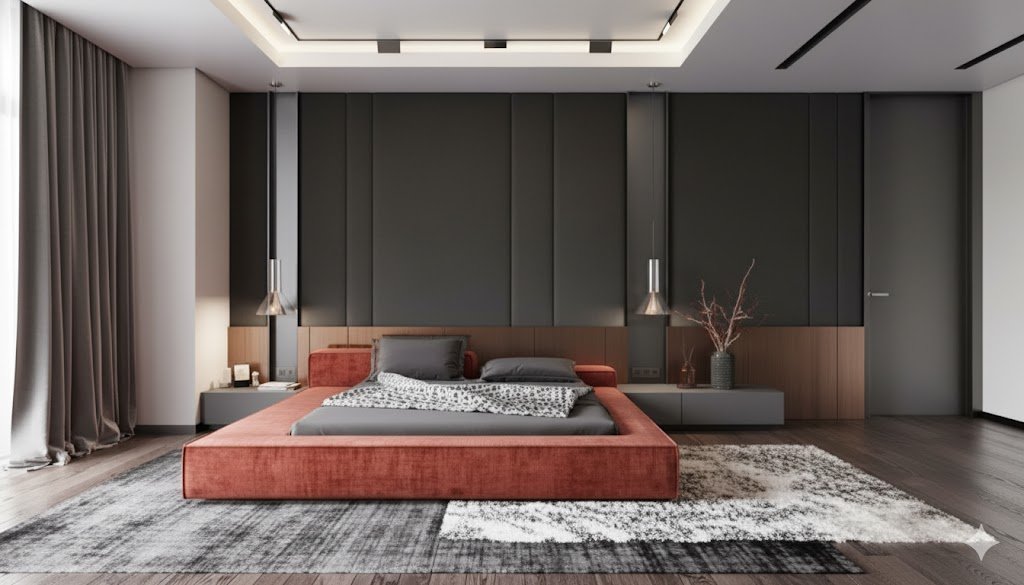
Mixing and Matching Contemporary Pieces
One of my biggest fears when I started buying contemporary furniture was that everything would need to match perfectly. I had visions of spending months hunting for pieces from the same collection, same wood finish, same everything. The idea exhausted me before I even started. Good news though. Contemporary design actually makes mixing and matching pretty straightforward once you understand a few basic principles.
The simplicity of contemporary furniture works in your favor here. When pieces don’t have a lot of decorative details competing for attention, they naturally play well together. My walnut platform bed works beautifully with my steel-frame nightstands even though they’re completely different materials. The clean lines on both pieces create a visual conversation between them.
You don’t need everything to be from the same furniture collection or even the same manufacturer. I learned this by accident when the nightstands I originally planned to buy got discontinued. I panicked at first, thinking I’d need to start over. But then I found these simple steel-frame tables from a completely different company, and they actually looked better with my bed than the original tables I’d planned to buy.
The key is maintaining some level of visual consistency across your pieces. That consistency might come from similar proportions. My bed and dresser are both low-profile pieces that sit close to the ground. That shared characteristic ties them together even though one is wood and the other has some metal hardware. The overall horizontal emphasis creates unity across the room.
Color consistency helps too. I went with dark, rich tones throughout my bedroom. The walnut furniture has those deep brown undertones. The steel frames on my nightstands have a dark matte finish. Even my wardrobe, which is actually a different wood entirely, stays within that same tonal range. Nothing jumps out as dramatically lighter or brighter than anything else.
You can mix materials freely as long as you’re thoughtful about it. Wood with metal works great. Metal with glass looks sharp. Wood with upholstery adds warmth. What doesn’t work as well is trying to mix three different wood types in different finishes. That starts looking disjointed, like you just grabbed random pieces from different rooms and shoved them together.
I tested this theory by temporarily bringing an old oak dresser into my newly designed bedroom. The oak had this light honey color with lots of visible grain. It clashed terribly with the darker walnut tones I’d established. Not because oak is bad, but because it told a completely different visual story. The oak wanted to be country casual while my walnut was going for urban contemporary. They just couldn’t coexist.
The flexibility of contemporary design really shines when you want to change things up over time. Maybe you start with all wood furniture, then later you decide to add some metal accents. The clean lines of contemporary pieces let you do that without destroying your overall aesthetic. You’re building a collection that can evolve rather than locking yourself into one rigid look.
My bedroom has evolved quite a bit since I first put it together. I started with just the bed, dresser, and nightstands. Later I added a simple metal clothing rack because I needed more storage. Then I brought in a low wooden bench at the foot of the bed. Each addition worked with what was already there because they all shared that contemporary sensibility of simple shapes and quality materials.
This approach saves you money too. You don’t have to buy everything at once from one expensive collection. You can spread out your purchases, wait for sales, shop different stores. As long as you stick to those basic principles of clean lines and compatible finishes, your pieces will work together. I probably saved a thousand dollars by shopping this way instead of committing to one complete bedroom set.
Another benefit? You end up with a more interesting room. Perfectly matched furniture sets can look a bit sterile, like a hotel room or a furniture store display. When you mix pieces thoughtfully, you create something more personal. Your bedroom tells a story about your choices and priorities rather than just reflecting whatever the furniture designer decided looked good together.
I watch my friends struggle with this all the time. They find a piece they love, but it doesn’t exactly match their existing furniture, so they talk themselves out of it. Then they settle for something that matches but that they don’t really love. That’s backwards thinking. If you find a piece with clean contemporary lines and it works with your color scheme, go for it. The slight differences between pieces add visual interest rather than creating problems.
The platform bed remains my anchor point for all these decisions. When I’m considering a new piece, I imagine it in the room next to that bed. Does it share the same design philosophy? Does it maintain that sense of calm simplicity? Does it add something useful without cluttering up the space? If the answers are yes, the piece probably works.
This flexibility extends beyond just bedroom furniture. Once you understand how contemporary pieces work together, you can apply that knowledge throughout your home. The console table in my hallway is a different style than my bedroom furniture, but it shares those same contemporary characteristics. Clean lines, simple form, quality materials. That consistency creates flow as you move through the house.
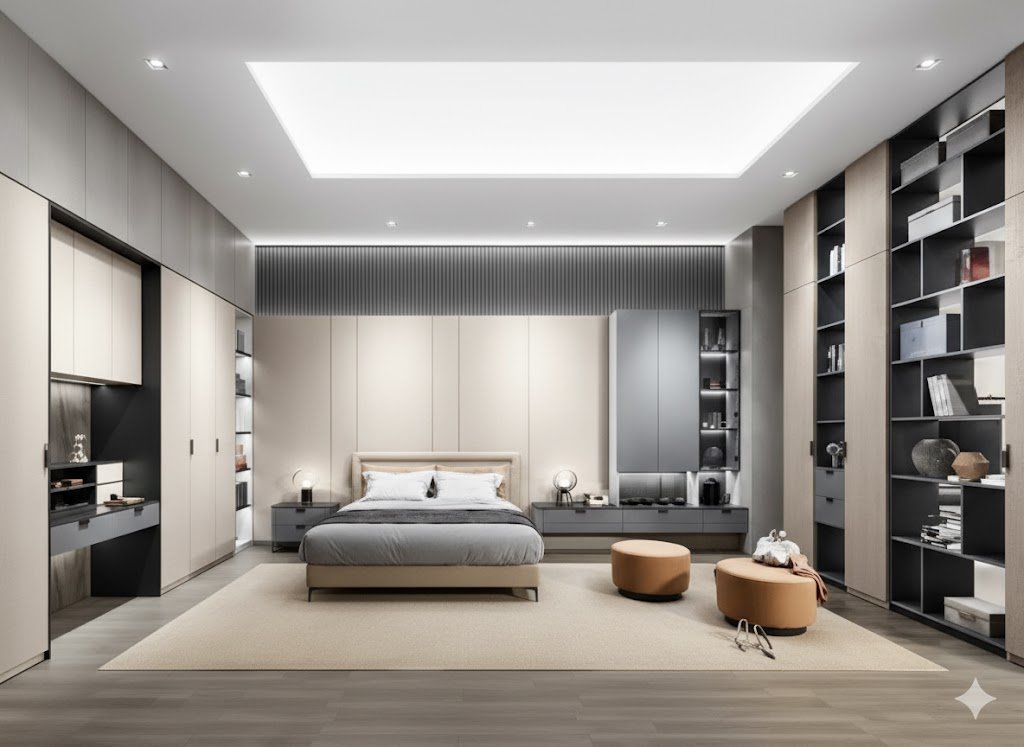
Decorating Around Your Platform Bed
So you’ve got your contemporary platform bed picked out and delivered. Now what? This is where I made some of my most embarrassing decorating mistakes, and I’m going to save you from repeating them. Decorating around a platform bed requires a different approach than decorating around a traditional bed with a headboard and footboard.
The open design of most platform beds creates unique opportunities and challenges. That lack of a headboard means your wall becomes a much more prominent part of your bed area. You can’t just ignore it and let the headboard do the visual heavy lifting. The wall needs to contribute to the overall design in some way.
I initially left my wall completely bare. Big mistake. The emptiness behind the bed didn’t read as intentional negative space. It just looked like I forgot to finish decorating. My partner kept asking when I was going to hang something back there. She was right to push me on this.
But here’s the thing. You can’t just slap any old artwork on that wall and call it done. The piece needs to work with the contemporary aesthetic you’ve established with your furniture. I nearly hung this ornate framed mirror that I loved from my old apartment. My partner took one look and vetoed it immediately. Too fussy, too traditional, completely wrong for the space.
We ended up with a large canvas print in muted grays and blacks, abstract geometric shapes that echo the clean lines of the bed. The piece is big enough to make a statement without overwhelming the room. It sits centered on the wall, floating about eight inches above the top of the mattress. That placement creates a visual connection between the art and the bed without making them feel like one fused unit.
Side tables become really important with platform beds. Since you don’t have a headboard with built-in shelves or outlets, you need somewhere to put your phone, a glass of water, maybe a book. The tables you choose need to work with your bed’s height and style.
My bed sits pretty low to the ground, about twelve inches from floor to top of mattress. I needed nightstands that matched that low profile. Tall traditional nightstands would have looked ridiculous, towering over the bed like confused sentries. I went with those steel-frame tables I mentioned earlier. They sit at about eighteen inches high, just slightly higher than the mattress. Perfect proportion.
The material difference between my wooden bed and metal tables could have been a problem. But the sleek, minimal design of the tables echoes the simplicity of the bed frame. They’re both contemporary pieces speaking the same design language, just in different materials. That shared vocabulary ties them together.
Lighting requires special attention around platform beds. You don’t have bedside lamps sitting on tall nightstands throwing light everywhere. With lower furniture, your lighting needs to be more intentional. I installed wall-mounted reading lights on either side of the bed. They swing out when you need them and tuck back against the wall when you don’t. Clean, functional, contemporary.
Some people go for pendant lights hanging from the ceiling over their nightstands. That can look really sharp if you’ve got the ceiling height for it. My bedroom has standard eight-foot ceilings, so pendants would have felt cramped. The wall-mounted solution worked better for my space.
Here’s something I didn’t expect. The low profile of my platform bed makes the room feel bigger. Traditional beds with tall headboards and footboards chop up the space vertically. Platform beds maintain those long horizontal lines that make the room feel wider and more open. But that means you need to be careful about the other furniture you bring in.
I made the mistake of buying a tall dresser initially. Six drawers high, this massive vertical piece that completely contradicted the horizontal emphasis of my bed. It looked wrong the moment it was delivered. I ended up exchanging it for a wider, shorter dresser. Three drawers high instead of six, twice as wide. Much better proportion for the room.
Your bedding choices matter more with platform beds too. The bed frame itself is so simple that your sheets, comforter, and pillows become more prominent design elements. Busy patterns or bright colors can overwhelm the minimalist aesthetic you’re trying to achieve.
I went with solid charcoal gray sheets and a black comforter. Sounds boring, maybe, but it looks incredibly sophisticated in person. The lack of pattern keeps the focus on the texture of the fabrics and the clean lines of the furniture. I throw on a couple of accent pillows in slightly lighter gray for some tonal variation.
This is where you can inject a tiny bit of personality if you want. I have one throw pillow with a subtle geometric pattern in silver thread. It’s enough visual interest to keep things from feeling sterile, but not so much that it breaks the contemporary aesthetic. That balance took me several tries to get right.
Rugs anchor the space around a platform bed. Since the bed sits low, a rug helps define the sleeping area and adds warmth underfoot when you get out of bed. I chose a simple gray rug with a low pile, nothing shaggy or heavily textured. It extends about two feet beyond the bed on three sides, creating a visual frame around the sleeping area.
The rug also solved a practical problem. My bedroom has hardwood floors, and they get cold in winter. Having something soft to step onto in the morning makes a real difference in daily comfort. Function and aesthetics working together, which is kind of the whole point of contemporary design when you think about it.
Storage becomes a consideration with platform beds. Some have built-in drawers underneath, which is genius for small spaces. Mine doesn’t, so I had to think about where I’d put things like extra blankets or off-season clothes. I ended up with that low wooden bench at the foot of the bed. It has hidden storage inside and gives me a place to sit while putting on shoes.
The bench also breaks up that long horizontal line of the bed. Without it, the bed was just this big rectangle floating in the middle of the room. The bench adds a layer of visual interest while maintaining the low-profile aesthetic. It’s the same height as my mattress, so it feels like an extension of the bed rather than a separate piece.
Choosing Bed Linens and Accessories
Bedding was the absolute last thing I thought about when planning my contemporary bedroom. I figured I’d just throw on whatever sheets and comforter I already owned and call it good. Then I put my old floral bedding on my new platform bed and immediately realized my mistake. The disconnect between my sleek furniture and my busy, patterned linens was almost comical.
Contemporary bedroom design extends all the way to your bedding choices. The fabrics that touch your bed matter just as much as the bed frame itself. Maybe more, actually, since bedding takes up so much visual space and you can change it way more easily than furniture.
Start with color, which is where most people go wrong. I see bedrooms all the time with beautiful contemporary furniture and then bright red sheets or some wild tropical print comforter. It’s like wearing a tuxedo jacket with swim trunks. The pieces fight each other instead of working together.
Stick with dark, solid colors. Black, charcoal gray, deep navy, rich brown, maybe a dark forest green if you’re feeling adventurous. These colors maintain the sophisticated, calm aesthetic that contemporary design is going for. They don’t scream for attention. They support the overall look without demanding to be the star of the show.
I went through three different bedding sets before I found one that felt right. First attempt was a cream color, which I thought would create nice contrast with my dark wood bed. Nope. It looked dingy against the rich walnut tones and made the whole room feel washed out. Second attempt was a navy blue with white piping detail. Better, but that piping was too decorative for the minimalist aesthetic I wanted.
Third time was the charm. Solid charcoal gray sheets, no decorative elements at all. Just good quality cotton percale with a matte finish. The color sits perfectly between my dark walnut bed and my black comforter. No contrast shock, no visual competition. Everything flows together.
The texture of your bedding matters in contemporary design. You’re working with simple colors, so texture becomes one of your primary ways to add visual interest. My sheets have a crisp, smooth percale weave that catches light differently than my matte black comforter. That subtle difference keeps the bed from looking flat or boring.
I added a thin quilted blanket in a slightly lighter gray between my sheet and comforter. You can barely see it, just a hint of lighter tone peeking out at the top. But it adds another layer of texture and depth to the bed. These small details make a bigger difference than you’d think.
Avoid patterns almost entirely. I know, I know. Solid colors can feel boring, and maybe you love that geometric duvet cover you saw at Target. But patterned bedding rarely works with contemporary furniture. Patterns add visual complexity that fights against the simplicity you’ve worked so hard to achieve with your furniture choices.
If you absolutely must have some pattern, keep it incredibly subtle. Maybe a tone-on-tone texture where the pattern is created by the weave rather than printed or dyed on. Maybe a very fine pinstripe in close values. But even then, you’re taking a risk. I’d honestly recommend just sticking with solids until you’re really confident in your design eye.
Throw pillows are where you can bend the rules just slightly. I have mostly solid pillows that match my bedding, but I allow myself one or two with very subtle patterns or textures. That silver geometric pillow I mentioned earlier. A velvet pillow in a slightly lighter shade of gray. These tiny variations add personality without destroying the aesthetic.
The key word here is restraint. One patterned pillow among six solid ones. A subtle texture rather than a bold print. Contemporary design is all about knowing when to stop, when you’ve added just enough interest without tipping over into visual chaos.
I learned this through trial and error, mostly error. At one point I had five different throw pillows all with different patterns, trying to inject some life into my gray bedding. My bedroom looked like a clearance bin at HomeGoods. My partner came home, surveyed the situation, and quietly removed four of the five pillows. She was absolutely right. Less was definitely more.
Blanket and comforter weight affects the overall look too. Heavy, puffy comforters create volume and dimension that can overwhelm a low-profile platform bed. I switched from a thick down comforter to a thinner quilted version, and the bed immediately looked better. The lighter bedding maintains those clean horizontal lines instead of puffing up into a massive cloud.
This doesn’t mean your bed has to be uncomfortable. I have plenty of warmth from multiple layers. But the layers are thinner and sleeker, creating a more streamlined appearance. Function and form working together again.
Bed skirts are almost always wrong for contemporary platform beds. They’re meant to hide the space under traditional beds, but most platform beds either sit directly on the floor or have exposed legs that are part of the design. Covering that up with a ruffled bed skirt defeats the entire purpose of a platform bed. Let the structure show. That’s part of the aesthetic.
Even flat panel bed skirts, which are less offensive than ruffled ones, usually don’t work. They add an extra element that clutters up the clean lines you’re going for. If you absolutely hate seeing under your bed, choose a platform bed with a solid base that goes all the way to the floor. Much better solution.
Your pillowcases need to match your sheets in color and quality. Mixing colors or patterns between sheets and pillowcases creates visual fragmentation. Everything should feel like one cohesive bedding set even if you actually purchased the pieces separately.
I use the same charcoal gray for both my fitted sheet, flat sheet, and pillowcases. Sometimes I switch out the pillowcases for a slightly lighter or darker shade of gray for subtle variation. But I never mix in a completely different color. That would break the visual unity I’ve worked to create.
Quality matters more in contemporary design because there are fewer distractions. With ornate furniture and busy patterns, you might not notice that your sheets are kind of rough or your comforter is lumpy. But with simple, clean design, these flaws become obvious. Invest in decent bedding. It’s worth it.
I spent more on my bedding than I expected to, but the difference is noticeable every single day. The sheets feel good, they look crisp even after washing, and they’ve held up beautifully over time. Cheap bedding in simple colors just looks cheap. Better bedding in those same colors looks sophisticated and intentional.
Bringing It All Together
After months of planning, shopping, and second-guessing myself, my contemporary bedroom finally came together. Standing in the doorway and looking at the finished space, I felt this sense of satisfaction that’s hard to describe. Everything worked together in a way that my old bedroom never had.
The platform bed anchors the space exactly like it should. Its simple walnut frame draws your eye without demanding attention. The horizontal lines create a sense of calm and order. The low profile makes the room feel more spacious than it actually is. This one piece of furniture set the tone for everything else in the room.
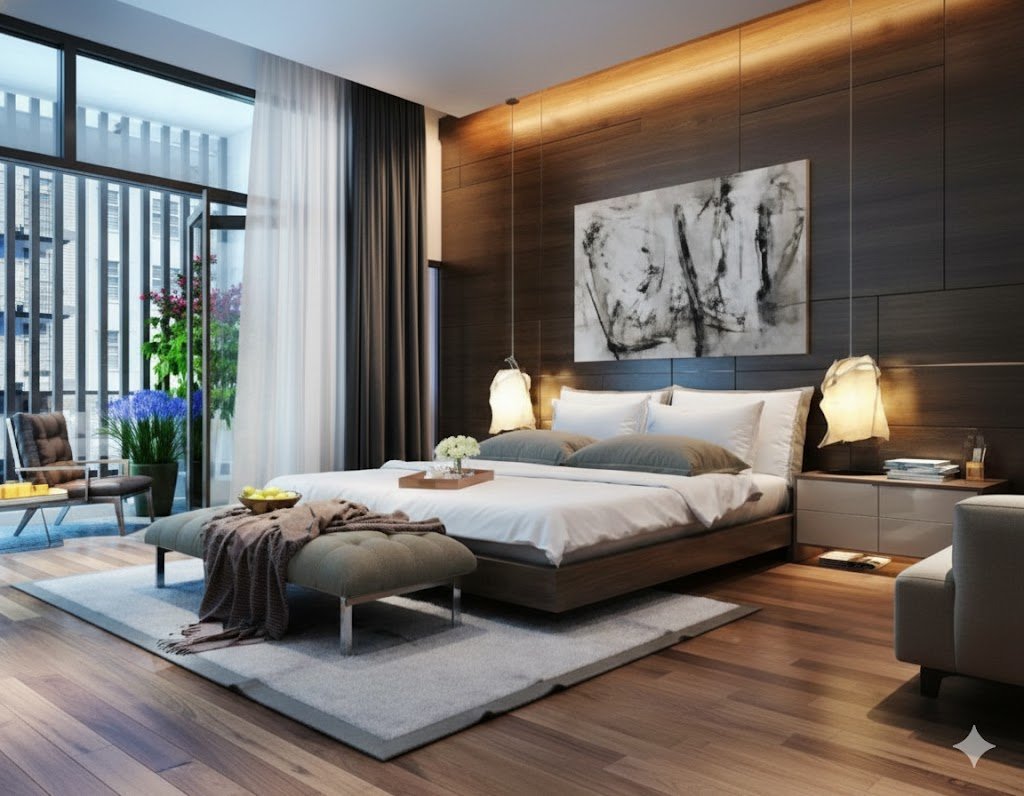
My steel-frame nightstands flank the bed, their minimal design echoing the bed’s simplicity while introducing a new material into the mix. The combination of wood and metal should feel disjointed, but it doesn’t. Both pieces share that contemporary sensibility of clean lines and honest materials. They speak the same language even though they’re made of different stuff.
The wall-mounted reading lights swing out when needed, their articulated arms adding a slight industrial touch that works with the steel nightstands. When they’re tucked back against the wall, they almost disappear. Functional, minimal, exactly right for the space.
Above the bed, that large abstract canvas creates a focal point without overwhelming the room. The muted grays and blacks pick up colors from throughout the space. The geometric shapes reference the rectangular forms of the furniture. It ties everything together visually while adding just enough interest to keep the wall from feeling empty.
My dresser sits against the opposite wall, its wider and shorter proportions balancing the bed’s long horizontal lines. Same walnut wood, same simple design philosophy. The drawer pulls are recessed, maintaining those smooth, uninterrupted surfaces that define contemporary design. It holds all my clothes without making a fuss about it.
The wooden bench at the foot of my bed provides storage and a place to sit without cluttering up the room. Its low profile matches everything else. The wood tone coordinates with both the bed and dresser. It feels like a natural extension of the bed rather than a separate piece of furniture plopped into the space.
That gray rug frames the sleeping area, its low pile and solid color supporting the overall design without trying to steal the show. It adds warmth and defines the space without creating visual clutter. When I step out of bed in the morning, my feet land on something soft. Form and function, working together.
The bedding pulls everything together. Those charcoal gray sheets, black comforter, and carefully chosen throw pillows create layers of texture and subtle tonal variation. No patterns to distract the eye, no bright colors to disrupt the calm. Just sophisticated shades working in harmony with the furniture and walls.
What strikes me most about the finished room is how peaceful it feels. I used to walk into my bedroom and feel vaguely stressed by all the visual noise. Mismatched furniture, busy patterns, stuff everywhere. My brain couldn’t rest in that environment. Now when I walk in, I feel my shoulders drop. The calm, ordered space helps me actually relax.
The contemporary aesthetic accomplishes something that traditional decorating styles struggle with. It creates visual interest through restraint rather than addition. Instead of filling every surface and covering every wall, it lets empty space breathe. It trusts that simple, well-chosen pieces are enough.
This doesn’t mean my bedroom is cold or impersonal. The wood brings warmth. The textures in the bedding add depth. The art adds personality. But these elements work together to create one cohesive experience rather than competing for attention. The room feels like it was designed with intention rather than assembled randomly over time.
I’ve had friends visit and comment on how expensive my bedroom must have been to put together. They’re always surprised when I tell them the actual numbers. Contemporary furniture can be affordable because you’re paying for good materials and good construction rather than elaborate ornamentation. You need fewer pieces because each one makes a bigger impact.
The maintenance is easier too. No dusting around a thousand decorative details. No polishing ornate hardware. Just simple surfaces that wipe clean. The design is forgiving of daily life in a way that more elaborate styles aren’t. A few items on my dresser don’t create visual chaos because the underlying design is so calm and ordered.
Living in this space has changed how I think about design throughout my home. I’m slowly applying these same principles to other rooms. The living room is next on my list. I keep thinking about that platform bed and how one strong anchor piece can guide all your other decisions. Maybe a contemporary sofa can do the same thing in the living room.
The bedroom taught me that good design isn’t about following strict rules or buying expensive designer pieces. It’s about understanding a few basic principles and applying them consistently. Clean lines, quality materials, thoughtful restraint. That’s really all you need.
When people ask me for decorating advice now, I tell them what I wish someone had told me. Start with your bedroom. Pick three pieces. Let those pieces guide everything else. Don’t rush. Don’t try to do everything at once. Build your space thoughtfully, one decision at a time.
The contemporary style makes this process easier because it strips away unnecessary complexity. You’re not trying to match seventeen different decorative elements or hunt down specific hardware finishes. You’re looking for simple pieces that do their job well. That clarity removes so much of the stress from furniture shopping.
My bedroom isn’t finished, and it never will be. That sounds negative, but I mean it in a good way. The space can evolve as my needs change. I can swap out that canvas for something different if I get tired of it. I can add different throw pillows when I want a change. The strong foundation of contemporary furniture gives me flexibility to adjust details without redoing everything.
That platform bed will still look good ten years from now. Twenty years, probably. Simple designs don’t go out of style the way trendy ones do. I’m not locked into a particular moment in design history. I’ve created something that can grow and change with me while maintaining its essential character.
The time I spent getting my bedroom right was absolutely worth it. I sleep better in this space. I wake up in a better mood. Coming home at the end of a difficult day and walking into this calm, ordered room genuinely improves my mental state. That’s not an exaggeration or some woo-woo nonsense. The environment you create affects how you feel.
Starting with the bedroom was the right call. It gave me a private space to practice, to make mistakes, to figure out what I actually wanted. The lessons I learned here will guide me as I tackle other rooms. I’ve developed an eye for contemporary design that I didn’t have before. I can walk into a furniture store now and immediately spot the pieces that will work in my home.
The three-piece approach kept me focused. Bed, dresser, nightstands. Everything else flowed naturally from those foundational choices. I didn’t get overwhelmed by options or distracted by pieces that didn’t serve my vision. That discipline made the whole process manageable when it could have been completely overwhelming.
If you’re standing where I was two years ago, staring at your bedroom and wondering where to start, I hope this helps. Pick that bed first. Let it set your direction. Choose pieces that share its design philosophy. Be patient with the process. Trust that simple, well-made furniture will serve you better than elaborate pieces that scream for attention.
Your bedroom deserves this attention. It’s not just where you sleep. It’s your private retreat from the world. Making it a place that genuinely supports your wellbeing isn’t frivolous or self-indulgent. It’s one of the smartest investments you can make in your daily quality of life.
The contemporary approach to bedroom design works because it aligns with how we actually live. We don’t need fussy furniture that requires constant maintenance. We don’t need visual complexity that makes our brains work overtime. We need spaces that support us, that help us relax, that make daily life just a little bit easier and more pleasant.
My platform bed sits there every day, quietly doing its job. It holds my mattress. It looks good. It makes me happy when I see it. That’s really all furniture needs to do. Contemporary design understands this in a way that more elaborate styles sometimes forget. Function comes first, beauty emerges naturally from good function and honest materials.
I still make mistakes with my bedroom. I bought a plant that was too big for the space and had to return it. I hung that canvas at the wrong height initially and had to rehang it. I tried a different rug that didn’t work. But these mistakes don’t derail the whole design because the foundation is solid. The bed, dresser, and nightstands create a strong enough framework that small errors don’t matter much.
That resilience is one of contemporary design’s best qualities. When your underlying aesthetic is simple and clear, you can adjust details without destroying the overall effect. Compare that to heavily decorated rooms where every element needs to match perfectly or the whole thing falls apart. Contemporary design gives you breathing room to experiment and evolve.
Looking back at that frustrated version of me staring at mismatched furniture and wondering what to do, I wish I could tell him to relax. To take it one piece at a time. To trust the process. To understand that creating a space you love doesn’t require unlimited money or professional design skills. It just requires patience, attention, and a willingness to learn as you go.
My contemporary bedroom proves that good design is accessible. You don’t need a huge budget or expert knowledge. You need to understand a few basic principles and apply them consistently. You need to make thoughtful choices rather than impulse buys. You need to be willing to take your time and get things right.
The room I ended up with exceeds what I imagined when I started this project. I thought I’d create something that looked okay, that I could live with. Instead I created a space that I actively love, that improves my life in tangible ways every single day. That’s the power of good design applied thoughtfully and patiently.
So start with your bedroom. Choose that platform bed. Let it guide your other decisions. Embrace the simplicity of contemporary design. Trust that less really can be more. Your future self, the one sleeping peacefully in a beautifully designed room, will thank you for the effort.

Leave a Comment