
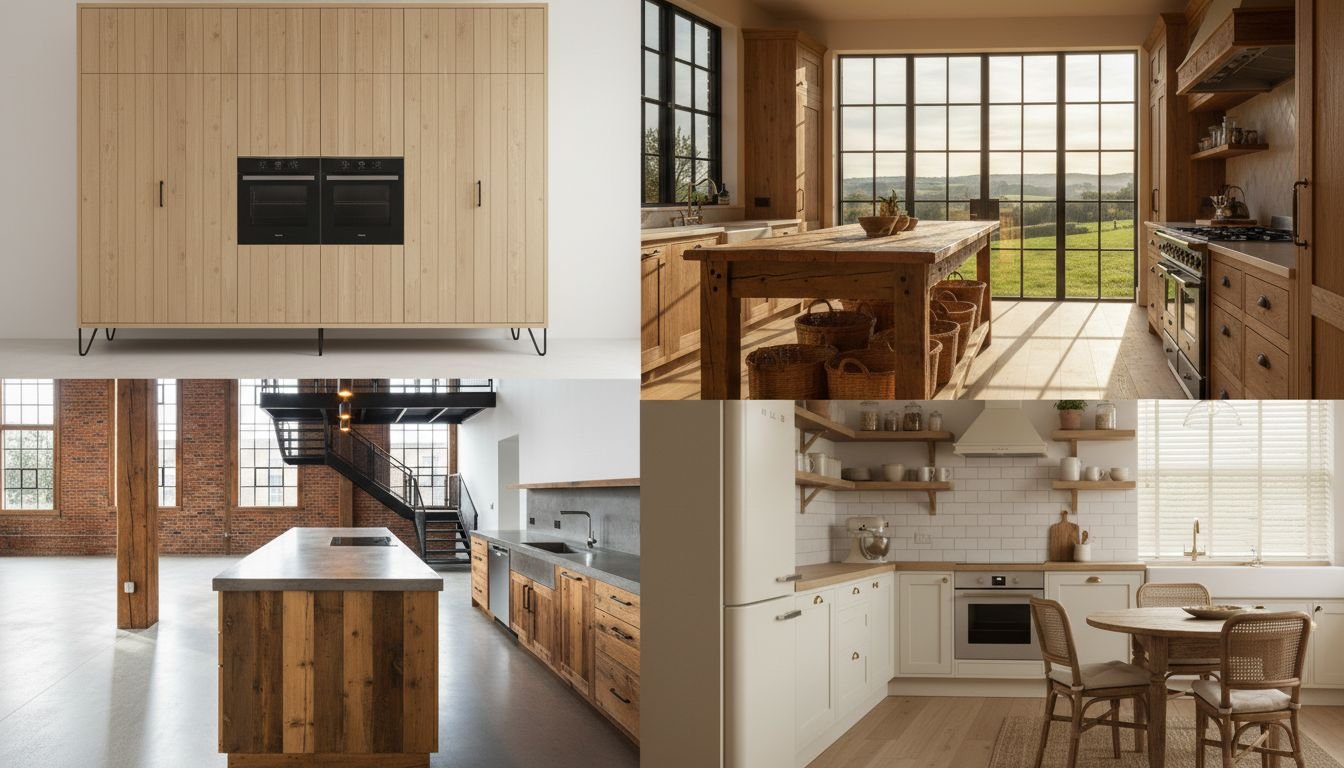
Kitchens are the heartbeat of the home, yet designing one that balances function with breathtaking aesthetics often feels overwhelming. You are likely scrolling through endless feeds, paralyzed by the choice between a cozy farmhouse vibe or a sleek modern edge, terrified of making a costly mistake. We have curated a massive list of 32 distinct, actionable kitchen inspirations categorized by the world’s most enduring styles to help you finally visualize your dream space.
Below, you will find specific design elements, material pairings, and layout hacks that solve common problems like small footprints or lack of storage. Whether you are planning a full gut renovation or a weekend refresh, this guide provides the exact blueprint you need.
Check out our related guide on Small Bathroom Renovations for more space-saving home tips.
Key Takeaways
- Warmth is King: Sterile white kitchens are out; warm neutrals, butter yellows, and natural woods are the new standard for 2025.
- Hidden Functionality: “Appliance garages” and integrated cabinetry are essential for the trending clutter-free aesthetic.
- Texture Over Color: Visual interest now comes from materials like fluted wood, Zellige tiles, and concrete rather than just paint.
- Mixed Eras: The most viral kitchens successfully blend vintage runners and antique brass with modern quartz and smart appliances.
Table of Contents
- Scandinavian Simplicity: The Blonde Wood Cabinet
- Scandinavian Simplicity: Monochromatic White Texture
- Scandinavian Simplicity: Hygge Lighting Fixtures
- Scandinavian Simplicity: Functional Open Shelving
- Industrial Chic: Exposed Brick Backsplash
- Industrial Chic: Matte Black Hardware
- Industrial Chic: Poured Concrete Countertops
- Industrial Chic: Factory-Style Pendant Lights
- Farmhouse Charm: The Modern Apron Sink
- Farmhouse Charm: Shiplap Island Accents
- Farmhouse Charm: Vintage Runner Rugs
- Farmhouse Charm: Butcher Block Surfaces
- Coastal Retreat: Soft Blue Cabinetry
- Coastal Retreat: Woven Rattan Bar Stools
- Coastal Retreat: Glass-Front Upper Cabinets
- Coastal Retreat: Weathered Wood Flooring
- Modern Elegance: The Waterfall Quartz Island
- Modern Elegance: Handleless Cabinet Design
- Modern Elegance: Smart Integrated Appliances
- Modern Elegance: High-Gloss Finishes
- Eclectic Fusion: Mixed Metal Finishes
- Eclectic Fusion: Bold Patterned Floor Tiles
- Eclectic Fusion: Mismatched Dining Seating
- Eclectic Fusion: The Kitchen Gallery Wall
- Traditional Timelessness: Detailed Crown Molding
- Traditional Timelessness: Brass Pot Fillers
- Traditional Timelessness: Raised Panel Cabinetry
- Traditional Timelessness: Natural Stone Flooring
- Minimalist Zen: Hidden Storage Walls
- Minimalist Zen: Japandi Wood Tones
- Minimalist Zen: Slab Stone Backsplash
- Minimalist Zen: Uncluttered Countertops
- Popular Asked Questions
- Conclusion
Scandinavian Simplicity: The Blonde Wood Cabinet
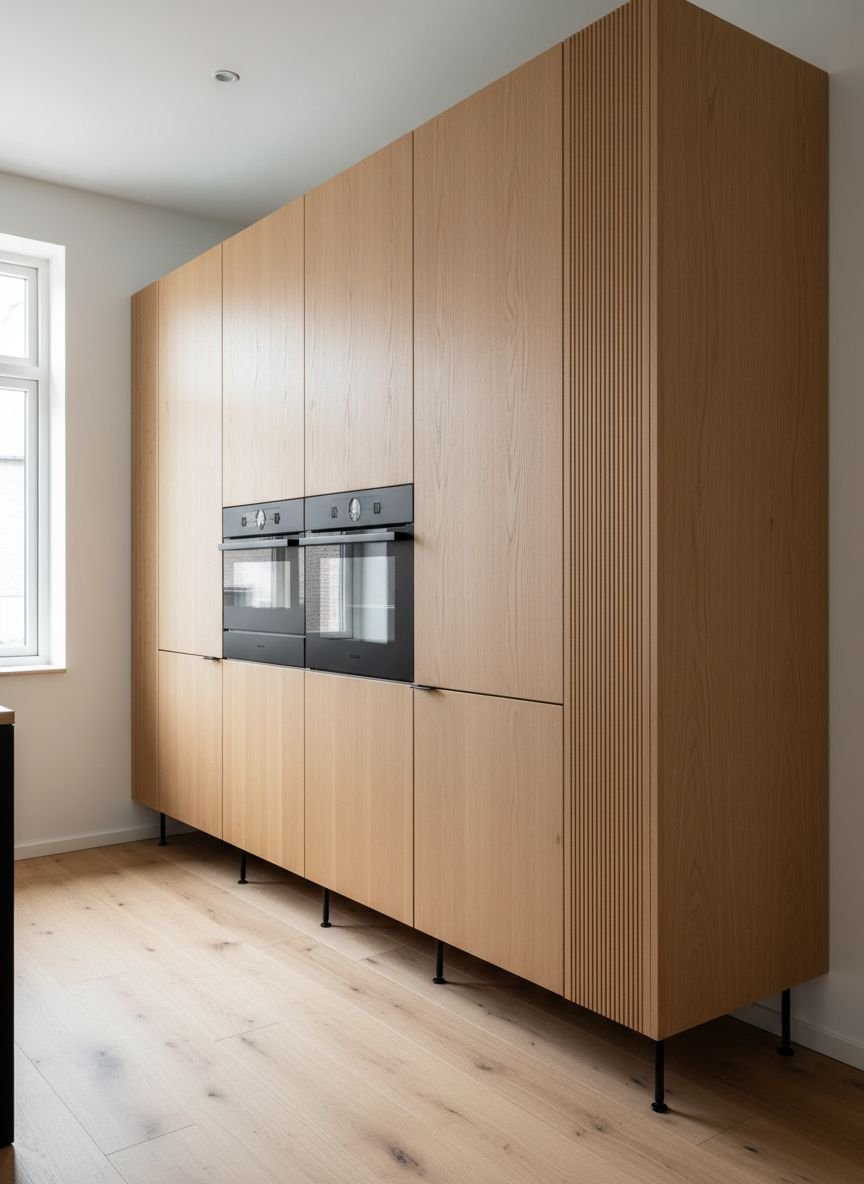
The foundation of any Nordic-inspired kitchen lies in the warmth of the cabinetry. Moving away from the stark, high-gloss whites of the early 2010s, the current trend embraces pale wood tones like ash, birch, or white oak. These materials bring an organic texture to the room that feels grounded and serene. The key here is the finish; you want a matte, almost raw look that highlights the grain without darkening the room.
To implement this, look for flat-panel (slab) cabinet doors. The absence of beveling or intricate molding keeps the eye moving smoothly across the surface, enhancing the sense of space in small kitchens. This creates a soft backdrop that reflects natural light beautifully, making your kitchen feel airy even on gloomy days.
Pro Tip: Use a “bona” matte seal on wood cabinets to protect them from grease while maintaining that raw, natural appearance.
Scandinavian Simplicity: Monochromatic White Texture
While color is making a comeback, the all-white Scandinavian kitchen remains a classic by pivoting to texture. Instead of flat white paint on dry-wall, this look relies on layered white materials to create depth. Think white subway tiles with white grout, paired with white quartz counters and white painted brick. The subtle difference in how light hits the glossy tile versus the matte brick creates a rich visual experience without chaotic color.
This approach is perfect for budget remodels because white materials are often the most affordable and readily available. The design principle at play is “tone-on-tone,” which calms the mind. By removing color distraction, you highlight the architectural lines of your kitchen.
Pro Tip: Add a white ceramic vase with dried bunny tails or wheat on the counter to introduce organic softness to the monochrome palette.
Scandinavian Simplicity: Hygge Lighting Fixtures
Lighting in a Scandi kitchen is never just practical; it is an emotional anchor. The concept of Hygge (cozy contentment) dictates that lighting should be warm, diffused, and low-profile. Avoid aggressive cool-white LEDs that feel clinical. Instead, opt for fixtures with soft curves made from matte metal or opal glass that cast a warm glow (2700K to 3000K temperature).
Pendant lights over the island or dining nook should hang relatively low to create an intimate atmosphere. The design mimics the soft light of a candle, extending the usability of the kitchen from a morning workspace to an evening retreat. Simple shapes like domes or cones in neutral hues like greige or soft black work best here.
Pro Tip: Install dimmer switches on all overhead lighting to easily transition your kitchen from “prep mode” to “dinner party mode.”
Scandinavian Simplicity: Functional Open Shelving
Open shelving is a hallmark of Scandinavian design, but it must be executed with intentionality to avoid clutter. This style replaces upper cabinets with floating shelves made of light natural wood. The goal is to force a curation of your kitchenware. You display only what is beautiful and used daily—stoneware mugs, clear glass jars for pantry staples, and simple plates.
This solves the problem of “heavy” kitchens where wall-to-wall cabinetry can make a small room feel claustrophobic. By opening up the walls, you increase the visual volume of the room. It also encourages a minimalist lifestyle, as there is no dark cupboard to hide mismatched Tupperware.
Pro Tip: “Save this idea to your Pinterest.” Keep a consistent color palette for items on the shelves (e.g., white, wood, and glass) to prevent the look from becoming messy.
Comparison: Open Shelving vs. Upper Cabinets
| Feature | Open Shelving | Upper Cabinets |
|---|---|---|
| Visual Space | Makes kitchen look larger/airier | Can make small kitchens feel closed in |
| Maintenance | Requires frequent dusting | Hides dust and mess inside |
| Storage | Limited to aesthetic items | Maximum storage for all items |
| Cost | Generally cheaper (material + labor) | More expensive |
| Accessibility | Grab-and-go convenience | Doors add a step to access |
Industrial Chic: Exposed Brick Backsplash
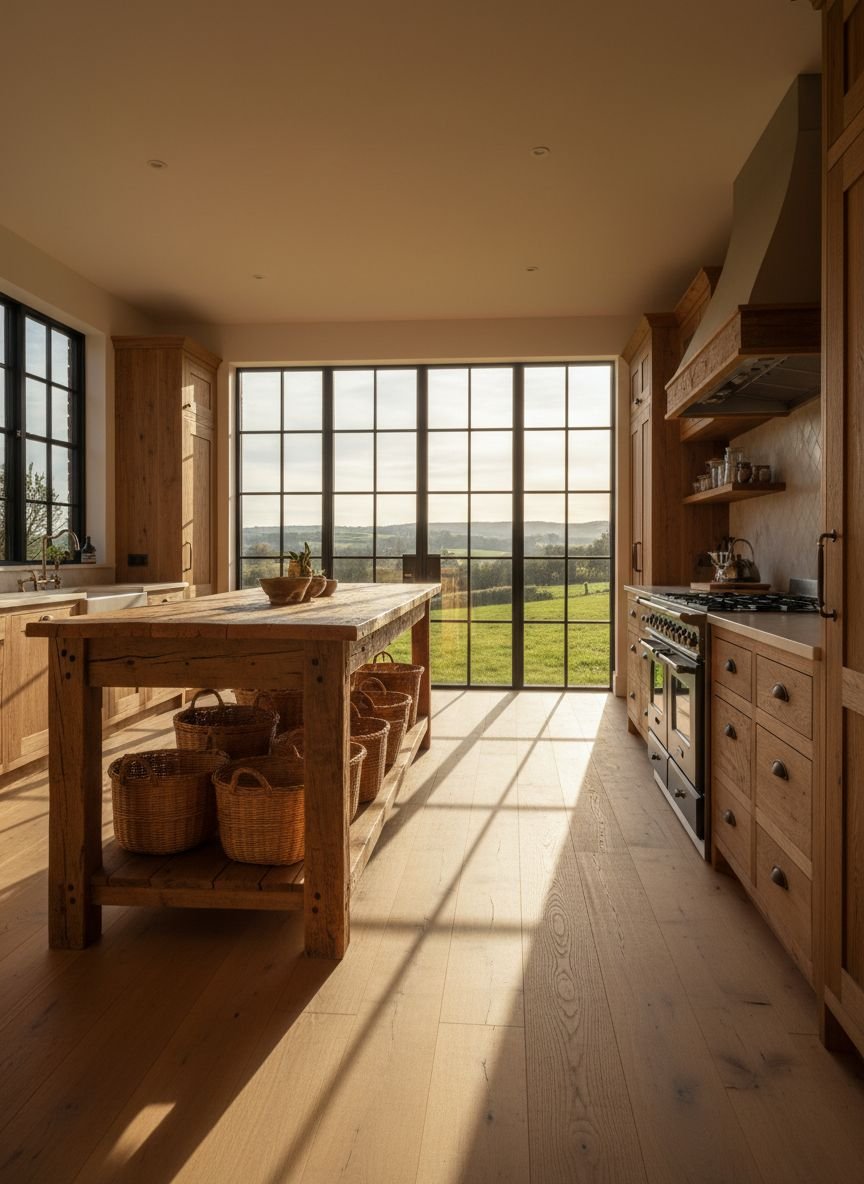
Nothing says “Industrial Chic” quite like the raw, historical texture of exposed brick. If your home has original brick walls hidden behind drywall, exposing them creates an instant focal point that brings warmth and history to the kitchen. If not, high-quality brick veneers can mimic the look perfectly. The rough texture of the red or whitewashed brick contrasts stunningly with sleek appliances.
This design choice works exceptionally well in loft-style apartments or homes where you want to add a masculine, architectural edge. It acts as a durable backsplash that hides splashes better than white grout, though it does require sealing. The variegated colors in the brick allow you to pull out different accent colors for your accessories, such as terracotta or deep charcoal.
Pro Tip: Apply a clear matte masonry sealer to the brick to prevent dusting and make it wipeable behind the stove.
Industrial Chic: Matte Black Hardware
To achieve that edgy, urban warehouse look, swap out chrome or brushed nickel for matte black hardware. This includes cabinet handles, faucets, and even shelf brackets. Black hardware acts as the “eyeliner” of the kitchen; it defines the lines and adds a sharp, graphic contrast, especially against lighter cabinets or wood textures.
This is one of the most effective low-cost upgrades for a kitchen. A simple faucet swap can modernize a dated sink area instantly. The matte finish is also practical as it resists fingerprints and water spots better than polished chrome. Stick to simple, tubular shapes or squared-off edges to maintain the utilitarian vibe.
Pro Tip: When choosing black faucets, look for PVD (Physical Vapor Deposition) finishes which are highly resistant to chipping and scratching.
Industrial Chic: Poured Concrete Countertops
For a countertop that is virtually indestructible and uniquely beautiful, poured concrete is the industrial standard. Unlike uniform quartz, concrete has a raw, organic movement with subtle imperfections that develop a patina over time. It can be poured in place to create massive, seamless islands without the join lines found in stone slabs.
Concrete counters pair perfectly with wood or stainless steel cabinets, bridging the gap between natural and man-made. They offer a heavy, substantial feel that anchors the room. You can also customize the color during the mixing process, though the standard cool grey is the most authentic to the style.
Pro Tip: Wax your concrete countertops once a month with food-safe wax to prevent staining from acidic foods like lemon or wine.
Industrial Chic: Factory-Style Pendant Lights
Lighting in an industrial kitchen should look like it was salvaged from a 1920s manufacturing plant. Look for oversized metal domes, cages, or fixtures with exposed Edison bulbs. Materials like spun aluminum, copper, or black steel are ideal. These fixtures are often hung using chains or thick braided cords, adding to the mechanical aesthetic.
Hang these in pairs or trios over a kitchen island to create a strong visual ceiling plane. The scale is important here; industrial design favors bold, oversized elements. If your island is small, one large statement light often looks better than two tiny ones.
Pro Tip: Use “warm vintage” LED bulbs with visible filaments to get the old-school look without the high heat and energy cost of incandescent bulbs.
Farmhouse Charm: The Modern Apron Sink
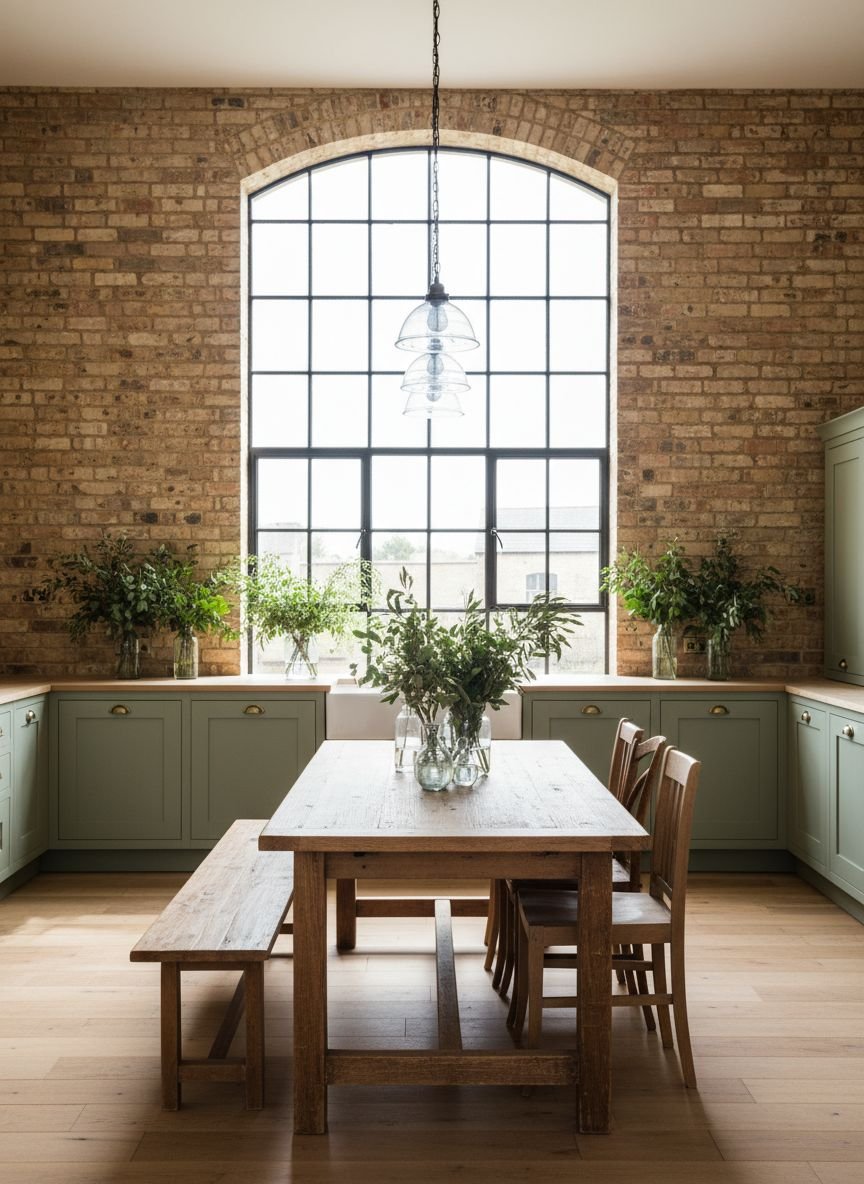
The apron-front sink (or farmhouse sink) is the undisputed jewel of this style. Traditionally made of white fireclay, modern iterations now include hammered copper, stainless steel, and natural stone. The deep basin is incredibly practical for washing large pots and baking sheets that don’t fit in standard sinks, solving a major pain point for avid home cooks.
Visually, the exposed front breaks up the cabinetry run and adds a sense of craftsmanship. It implies a kitchen that is used for work and family gatherings. To modernize this look, pair a classic white fireclay sink with a sleek, bridge-style faucet in unlacquered brass.
Pro Tip: Invest in a sink grid (a metal rack for the bottom) to protect the fireclay surface from scratches and pots from chipping.
Farmhouse Charm: Shiplap Island Accents
Shiplap (horizontal wooden boards) adds instant texture and leads the eye horizontally, making spaces feel wider. While covering an entire room in shiplap is a fading trend, using it as an accent on the kitchen island remains a timeless farmhouse touch. It adds durability to the “kick side” of the island where bar stools sit, protecting the drywall from scuff marks.
Paint the shiplap island a different color than your perimeter cabinets—perhaps a deep sage green, navy, or charcoal—to create a focal point. This “two-tone” kitchen trend adds depth and prevents the farmhouse aesthetic from looking too generic.
Pro Tip: “Save this idea to your Pinterest.” Install the shiplap vertically instead of horizontally for a modern twist that makes standard ceiling heights feel taller.
Farmhouse Charm: Vintage Runner Rugs
To soften the hard surfaces of a kitchen, a vintage or vintage-style runner rug is essential. Placed between the island and the sink, these rugs introduce color, pattern, and soul into the space. A faded Turkish or Persian runner in deep reds, blues, and rusts contrasts beautifully against white or wood cabinetry.
Beyond aesthetics, this solves the problem of comfort. Standing for hours during meal prep is taxing on the joints; a high-quality wool rug provides a soft landing. It also helps dampen sound in kitchens with high ceilings and hard floors.
Pro Tip: Use a heavy-duty rug pad underneath to prevent slipping and to protect your hardwood floors from the rough backing of vintage rugs.
Farmhouse Charm: Butcher Block Surfaces
Butcher block countertops bring literal warmth to the kitchen. Whether used for the entire kitchen or just as a feature on the island, wood counters invite touch and use. They are the most authentic surface for a farmhouse kitchen, reminiscent of old kneading tables. Maple, walnut, and oak are the most common durable choices.
This material is budget-friendly compared to stone and offers a forgiving surface for dropped dishes. Over time, the wood will gain scratches and marks, telling the story of the meals prepared there. If it gets too worn, it can be sanded down and resealed, making it a sustainable, long-term option.
Pro Tip: Use mineral oil frequently to keep the wood hydrated and water-repellent. Avoid polyurethane if you plan to cut directly on the surface.
“Get The Look”: Modern Farmhouse Essentials
- Sink: White Fireclay Apron Front (Single Basin preferred).
- Faucet: Bridge Faucet in Unlacquered Brass or Oil-Rubbed Bronze.
- Cabinet Color: Creamy White (e.g., Benjamin Moore “Swiss Coffee”) or Sage Green.
- Hardware: Cup pulls on drawers, simple knobs on doors.
- Accents: Wooden cutting boards layered against the backsplash.
Coastal Retreat: Soft Blue Cabinetry
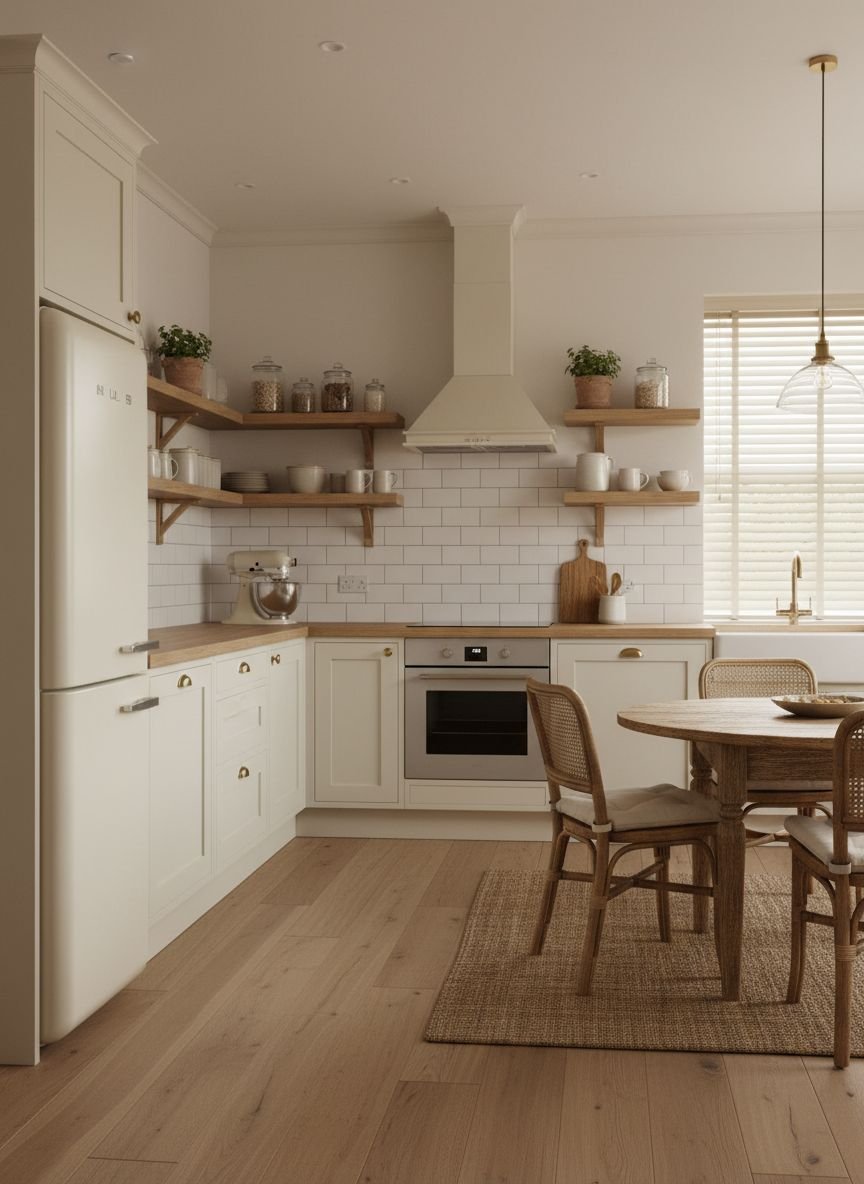
Coastal style is not about seashells and anchors anymore; it is about capturing the light and colors of the seaside. Soft blue cabinetry—ranging from pale mist to dusty slate—evokes the ocean and sky. These cool tones naturally make a space feel larger and more tranquil, acting as a neutral that pairs well with white marble and brass.
This color choice works particularly well in kitchens that receive a lot of sunlight, as the cool tones balance the warm sun. It creates a vacation-like atmosphere right in your home. Pair blue lower cabinets with white upper cabinets to keep the room feeling lofty and bright.
Pro Tip: Test paint samples at different times of the day. Blues can turn purple or grey depending on the lighting in your specific room.
Coastal Retreat: Woven Rattan Bar Stools
Texture is vital in a coastal kitchen to prevent it from feeling cold. Woven rattan or wicker bar stools introduce a natural, sandy element that grounds the airy blue and white palette. The intricate weaving adds visual detail without adding visual weight, as many rattan designs are open and airy.
These natural materials connect the indoors to the outdoors, a key tenet of coastal living. They are also generally lightweight and comfortable. Look for stools with a teak or bamboo frame for durability, and consider performance fabric cushions if you have young children.
Pro Tip: If you are worried about durability, look for “all-weather wicker” or synthetic rattan which is wipeable and virtually indestructible.
Coastal Retreat: Glass-Front Upper Cabinets
Mimicking the transparency of water, glass-front cabinets are a staple of the coastal retreat. They allow you to display beautiful dishware—perhaps a collection of sea-glass green tumblers or white ceramic plates—while keeping them dust-free. The reflection from the glass also bounces light around the room, enhancing the brightness.
You can customize the glass to fit the vibe: seeded glass (with little bubbles) feels more vintage and casual, while clear glass is modern and crisp. Paint the interior of the cabinets a soft blue or white to make the dishes pop.
Pro Tip: Install LED strip lighting vertically inside the front frame of the cabinet to illuminate your display in the evening.
Coastal Retreat: Weathered Wood Flooring
To complete the beach house look, the flooring should resemble driftwood or boardwalk planks. Wide-plank white oak flooring with a matte, wire-brushed finish is the perfect choice. Avoid dark, shiny floors which show every grain of sand and feel too formal.
The lighter wood tone hides dust and footprints remarkably well, making it ideal for high-traffic kitchens. The “wire-brushed” texture pulls out the soft grain of the wood, giving it a tactile quality that feels great under bare feet.
Pro Tip: “Save this idea to your Pinterest.” Choose an engineered hardwood for the kitchen as it is more stable against humidity and temperature changes than solid wood.
Modern Elegance: The Waterfall Quartz Island
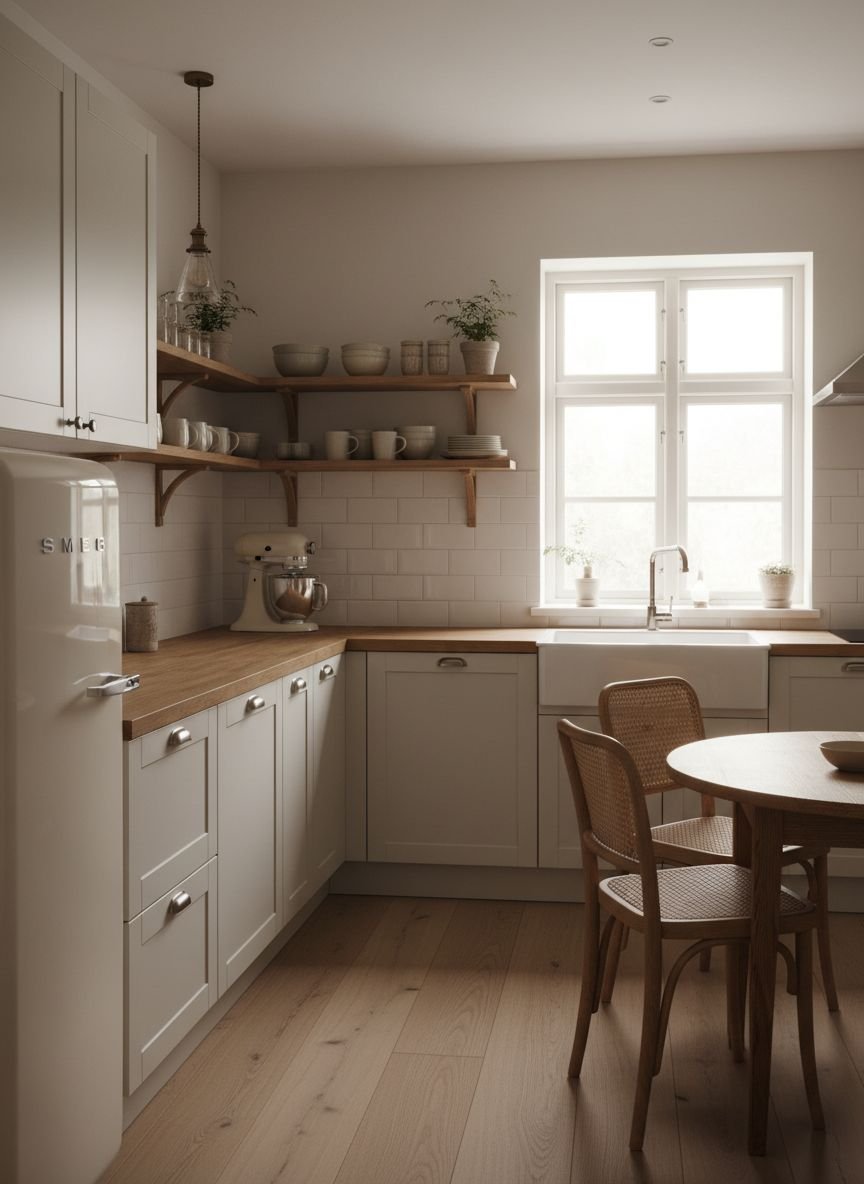
The epitome of modern luxury is the waterfall island, where the countertop material continues down the sides of the cabinetry to the floor. Using a high-quality quartz with dramatic veining creates a stunning, seamless block of stone that serves as art.
This design protects the cabinetry sides from scuffs and creates clean, uninterrupted lines that define modern elegance. Quartz is the preferred material here because it is non-porous, requires no sealing, and allows for consistent pattern matching (book-matching) down the vertical edges.
Pro Tip: Ensure you have an electrical outlet cut into the waterfall leg or hidden under the overhang to meet building codes without ruining the aesthetic.
Modern Elegance: Handleless Cabinet Design
Modern design prioritizes the removal of visual noise. Handleless cabinets (using push-to-open mechanisms or integrated J-pull channels) create a sleek, smooth wall of cabinetry. Without protruding knobs or handles, the eye glides effortlessly across the kitchen, making the space feel larger and more architectural.
This is also a practical solution for narrow kitchens, as you won’t catch your clothing on hardware while squeezing past the island. It simplifies cleaning immensely—just a quick wipe down the front without navigating around handles.
Pro Tip: For high-traffic drawers, consider an integrated aluminum channel handle rather than push-to-open, as push mechanisms can get annoying if you have dirty hands.
Modern Elegance: Smart Integrated Appliances
In a truly modern kitchen, appliances should be heard (quietly) but not seen. Panel-ready appliances allow your refrigerator and dishwasher to disappear behind cabinet doors, creating a unified look. For ovens and cooktops that cannot be hidden, look for “smart” technology—sleek black glass interfaces, Wi-Fi connectivity for remote preheating, and induction cooktops that sit flush with the counter.
This integration is key to the “living room kitchen” trend, where the kitchen blends seamlessly into the entertainment space. It removes the industrial feel of stainless steel, making the kitchen feel more like high-end furniture.
Pro Tip: When choosing panel-ready appliances, ensure your cabinet maker has the exact specifications of the appliance hinges to ensure a flush fit.
Modern Elegance: High-Gloss Finishes
While matte is popular in rustic styles, high-gloss cabinetry remains a powerhouse in modern luxury. A flat-panel cabinet with a high-gloss lacquer or acrylic finish reflects light like a mirror. This is a massive problem-solver for small or dark kitchens, as it bounces light into every corner, effectively doubling the sense of brightness.
Contrast is key here; pair high-gloss white or grey cabinets with matte wood or stone elements to prevent the room from feeling like a hospital. The surface is incredibly easy to clean—spills wipe right off the non-porous layer.
Pro Tip: Use a microfiber cloth for cleaning high-gloss surfaces to avoid creating micro-scratches or swirls over time.
Eclectic Fusion: Mixed Metal Finishes
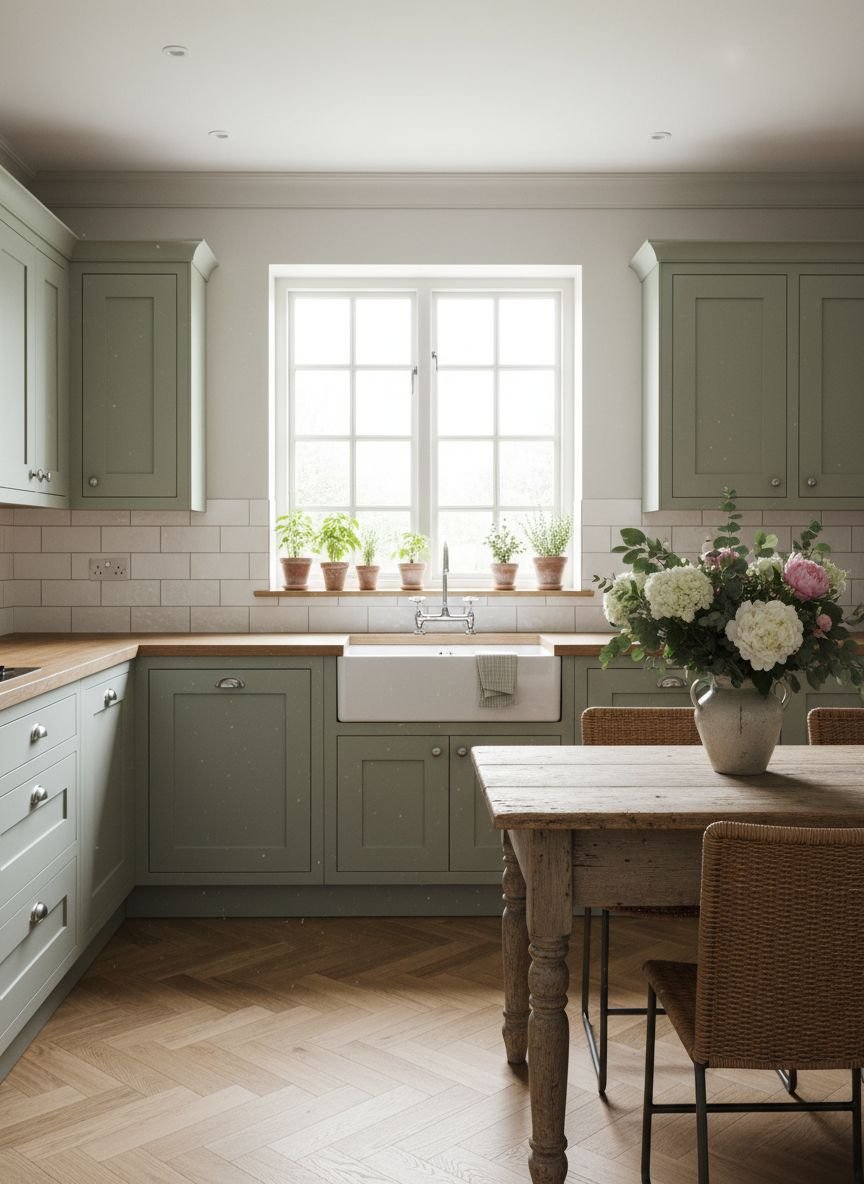
The rule that all metals must match is dead. Eclectic Fusion embraces the mixing of metals to create a curated, collected-over-time look. Try pairing a polished nickel faucet with unlacquered brass cabinet hardware and a matte black light fixture.
The trick to making this work is to choose one dominant metal (about 70% of the finishes) and one or two accent metals. Separating them by height helps too—for example, keep all eye-level fixtures (lights) one metal and hand-level fixtures (pulls) another. This adds layers of interest and sophistication that a matchy-matchy kitchen lacks.
Pro Tip: Include a “bridge” element that contains both metals, like a copper pot with a brass handle, to tie the look together visually.
Eclectic Fusion: Bold Patterned Floor Tiles
If you want your kitchen to have personality, look down. Encaustic cement tiles or patterned ceramic tiles on the floor can turn a kitchen into a statement room. Whether it is a Moroccan trellis pattern, a vintage checkerboard, or a modern geometric design, a bold floor anchors the room and hides crumbs effectively.
This allows you to keep the cabinets and walls relatively neutral while still having a “wow” factor. It is particularly effective in galley kitchens, where the pattern draws the eye through the space.
Pro Tip: Cement tiles are porous. If you want the look without the maintenance, look for “porcelain look-alikes” which are stain-proof and durable.
Eclectic Fusion: Mismatched Dining Seating
Eclectic style thrives on the unexpected. Instead of a uniform set of dining chairs, mix and match styles around your kitchen table or island. You might pair a sleek mid-century modern bench on one side with vintage Windsor chairs on the other.
This creates a relaxed, inviting atmosphere that feels personal rather than catalog-bought. To keep it cohesive, try to keep one element consistent, such as the color (e.g., all chairs painted black) or the material (all wood), while varying the shapes.
Pro Tip: “Save this idea to your Pinterest.” Scour thrift stores for single wooden chairs. Painting them all a uniform vibrant color like emerald green can unify disparate shapes.
Eclectic Fusion: The Kitchen Gallery Wall
Who says art belongs only in the living room? An eclectic kitchen often features a gallery wall of vintage oil paintings, botanical prints, or quirky sketches. Placing art on open shelving, leaning against the backsplash, or hanging on a blank wall elevates the kitchen from a utility room to a living space.
This is a great way to introduce color and personality without permanent renovation. Vintage art in gold frames looks particularly stunning against dark green or navy walls.
Pro Tip: Ensure any art near the stove is under glass to protect it from grease splatter, or stick to inexpensive prints that can be easily replaced.
Traditional Timelessness: Detailed Crown Molding
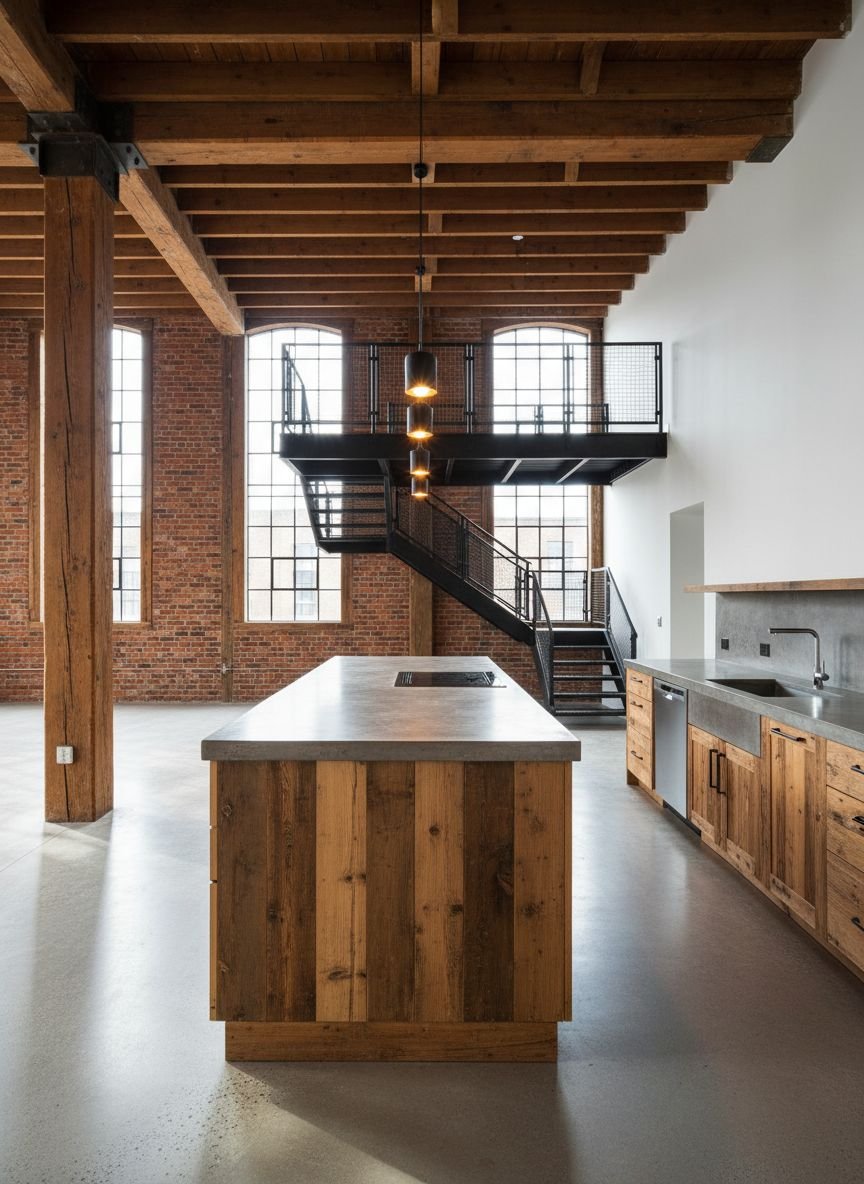
Traditional design is all about the details, and nothing elevates cabinetry like substantial crown molding. Extending the cabinets all the way to the ceiling and finishing them with a complex cornice eliminates the “dust gap” and draws the eye upward, making ceilings feel higher.
This architectural detail gives the kitchen a built-in, furniture-like quality that characterizes historic homes. It signifies quality and permanence. Even in a simple kitchen, adding crown molding can make stock cabinets look custom and high-end.
Pro Tip: If your ceiling is uneven (common in older homes), use a two-piece crown molding system. A flat “riser” piece goes up first to absorb the height variance, and the detailed crown floats over it.
Traditional Timelessness: Brass Pot Fillers
A brass pot filler installed above the stove is the ultimate symbol of a luxury traditional kitchen. Beyond its visual appeal as a jewelry-like centerpiece on the backsplash, it is highly functional, allowing you to fill heavy stockpots directly on the burner without lugging them from the sink.
The articulated arm of the faucet adds a mechanical complexity that contrasts beautifully with stone backsplashes. Unlacquered brass is the finish of choice here; it will develop a living patina, darkening in the spots you touch most, which adds to the timeless charm.
Pro Tip: Ensure you have a shut-off valve for the pot filler installed in a nearby cabinet for easy maintenance or emergencies.
Traditional Timelessness: Raised Panel Cabinetry
While modern styles favor flat doors, traditional kitchens rely on the shadow and depth of raised panel doors. This style features a center panel that is raised to the height of the door frame, often with intricate profiling.
This cabinetry style interacts with light differently, creating shadows that add visual richness. It pairs perfectly with glazed finishes or antique paints that highlight the grooves and details. It suggests heritage and craftsmanship.
Pro Tip: Keep the hardware substantial. Tiny knobs get lost on raised panel doors; opt for heavier latches or larger bin pulls to match the visual weight of the cabinets.
Traditional Timelessness: Natural Stone Flooring
To ground a traditional kitchen, use natural stone flooring like limestone, travertine, or slate. Laid in a Versailles pattern (a mix of four different sizes) or a classic herringbone, stone offers a texture that manufactured tiles cannot replicate.
Stone is cool to the touch and incredibly durable. It creates a neutral, earthy base that allows cabinetry and fabrics to shine. Honed finishes are preferred over polished ones to hide scratches and prevent slipping.
Pro Tip: Install radiant floor heating mats under the stone. Stone conducts heat beautifully, turning your kitchen floor into a cozy heat source in winter.
Minimalist Zen: Hidden Storage Walls
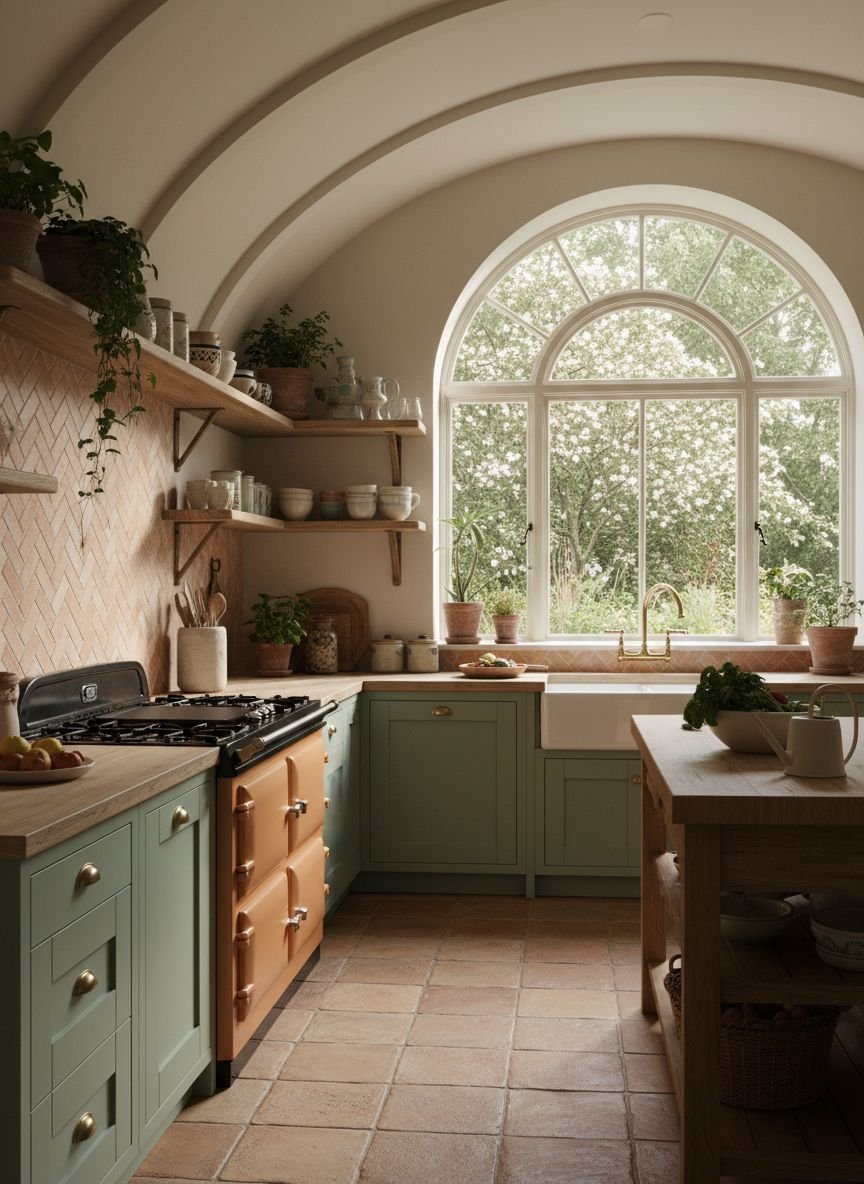
Minimalist Zen is not about having nothing; it is about hiding everything. The floor-to-ceiling storage wall is a key feature, often utilizing tall pantry cabinets that conceal the fridge, microwave, coffee station, and dry goods behind uniform doors.
This reduces visual clutter to zero. When the doors are closed, the kitchen looks like a serene wood or lacquer wall. This promotes a calm mind, allowing you to focus on the act of cooking without the distraction of branded cereal boxes or appliances.
Pro Tip: Use “pocket doors” for your appliance stations. These doors slide back into the cabinet walls, so they don’t block walkways when your coffee station is in use.
Minimalist Zen: Japandi Wood Tones
“Japandi” is the fusion of Japanese rustic minimalism and Scandinavian functionality. The color palette revolves around warm, mid-tone woods like oak or walnut, paired with soft greys and creams. The wood grain is the primary decoration.
This style avoids high contrast. Instead of black and white, it uses beige and brown. The wood brings nature indoors, fostering a connection to the earth. Vertical wood slatting (tambour) is a common detail on islands or range hoods to add texture without breaking the Zen vibe.
Pro Tip: Match your dining table wood to your cabinetry wood. In Zen design, continuity and flow are more important than contrast.
Minimalist Zen: Slab Stone Backsplash
To avoid the busy “grid” look of tile grout, Minimalist Zen kitchens use a solid stone slab backsplash. Often, this is the same material as the countertop, extended up the wall to the cabinets or ceiling.
This creates a seamless, monolithic look that is incredibly soothing. It also creates a very practical, easy-to-clean surface with no grout lines to scrub. Marble with soft, flowing veins works best to introduce movement without chaos.
Pro Tip: If a full stone slab is out of budget, look for “large format” porcelain tiles (24×48 inches) which minimize grout lines significantly.
Minimalist Zen: Uncluttered Countertops
The final and most important element of a Zen kitchen is the discipline of clear countertops. This is a design choice as much as a habit. Designate specific drawers for the toaster, the blender, and the knife block. The only things on the counter should be a singular sculptural bowl or a branch in a vase.
This negative space allows the eyes to rest and highlights the quality of the materials you have chosen—the stone, the wood, the light.
Pro Tip: Install pop-up electrical outlets in the countertop. When not in use, they are pushed down flush with the surface, removing the visual clutter of wall outlets.
Popular Asked Questions
What is the biggest kitchen trend for 2025?
The biggest shift is away from “all grey” or “all white” sterile spaces toward Warm Minimalism. This means using creamy off-whites, natural wood cabinets, and tactile materials like stone and brick. Homeowners want kitchens that feel cozy and lived-in, not like a showroom.
How can I update my kitchen without a full renovation?
You can achieve a massive transformation by changing three things: Hardware, Lighting, and Paint. Swapping old knobs for modern brass ones, hanging new pendant lights, and painting your existing cabinets a trending color like Sage Green or Navy can make a kitchen feel brand new for under $1,000.
Is the “Farmhouse” style dead?
The old farmhouse style (signs that say “EAT,” distressed white paint, heavy shiplap) is fading. It is being replaced by “Modern Rustic”. This keeps the warmth and natural wood of farmhouse style but cleans up the lines, removes the kitschy decor, and uses more sophisticated, darker colors.
What is the most durable countertop material?
Quartz remains the king of durability. It is harder than granite, non-porous (so it won’t stain like marble), and doesn’t need sealing. However, Quartzite (a natural stone, different from Quartz) is gaining popularity for those who want the durability of granite with the look of marble.
Conclusion
Whether you are drawn to the clean lines of Minimalist Zen or the collected warmth of Eclectic Fusion, the perfect kitchen is one that solves your specific problems while reflecting your personality. The days of the “cookie-cutter” kitchen are over. 2025 is about mixing materials, embracing warmth, and prioritizing functionality that hides the mess.
Which of these styles resonates most with your home? Tell us in the comments below!
Follow us on Pinterest for more Kitchen Inspiration.

Leave a Comment