
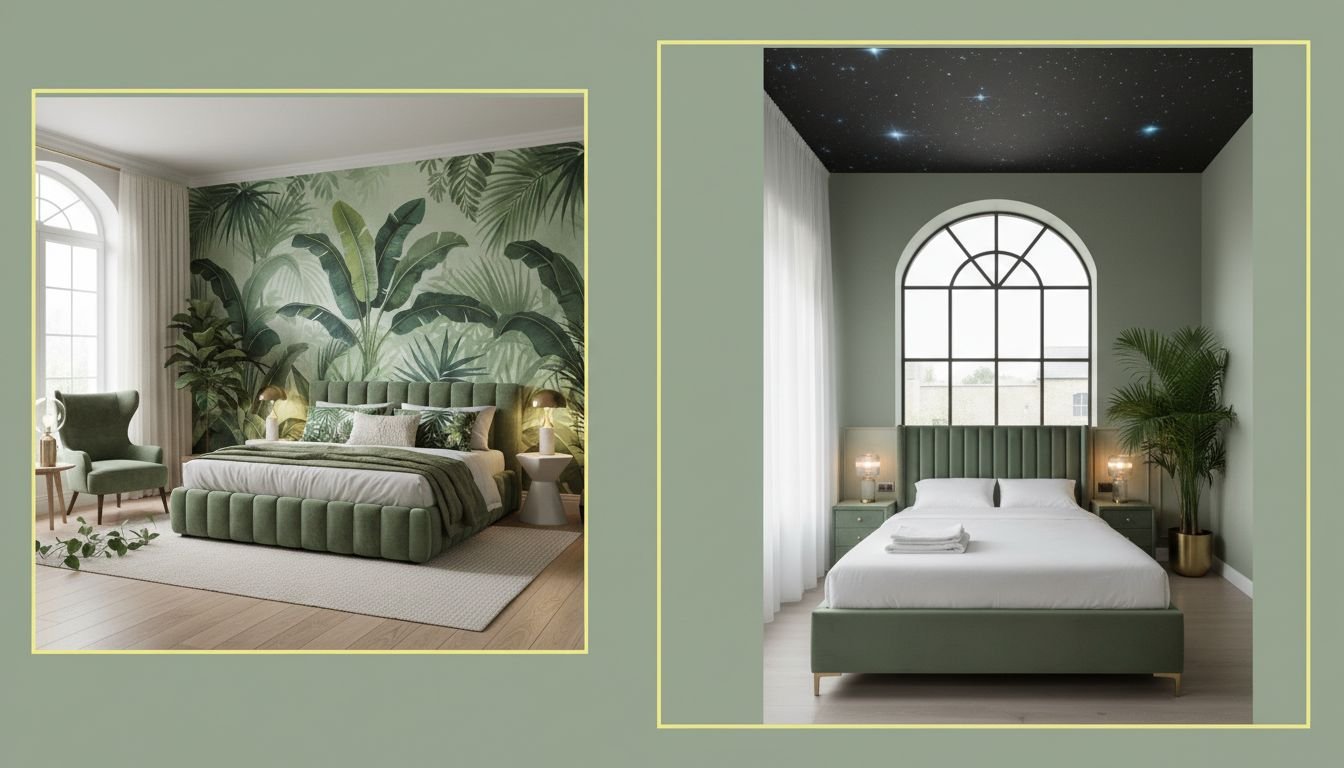
Sage green dominates interior trends this year for good reason. You likely feel the need for a retreat from the noise of daily life. Standard white walls often feel too clinical, while dark colors can shrink a small room. Sage bridges the gap perfectly. It brings the calming essence of nature indoors without demanding a total renovation. This guide details twenty nine specific ways to apply this restorative hue to your sleeping quarters. You will find practical steps here to layer textures, select complementary palettes, and style your room for better sleep.
Check out our related guide on [Biophilic Design Principles].
Key Takeaways
- Sage acts as a neutral grounding color that pairs easily with wood, metal, and stone textures.
- Layering shades of green creates depth and prevents the space from feeling flat or one-dimensional.
- Lighting changes everything so test paint samples at night and day to ensure the undertones remain soothing.
- Texture variety is the secret to a high-end look; mix velvet, linen, and raw wood to keep the eye interested.
Table of Contents
- Sage Green Canopy
- Fresh Green and White
- Vintage Furniture Makeover
- Green & Lavender Room Theme
- Floating Shelves in Sage Green
- Sage Green Wallpaper Feature
- Sage Green Reading Nook
- Sage Green Velvet Headboard
- Pipe Shelving in Sage Green
- Green and Gold Glam Accents
- Pine Forest Green Accent Wall
- Sage Green Wooden Beams
- Restful Sleep with Sage Green Curtains
- Green Gallery Wall
- Sage Green Lighting Fixtures
- Sage Green Bed Linen
- Sage Green Zen Corner
- Coastal Sage Green Rugs
- Sage Green Mirror Frames
- Sage Green Dresser
- Transitional Sage Green Walls
- Sage Green Floral Arrangements
- Sage Green Lounge Chair
- Green Metallic Bedroom Accents
- Sage Green Knit Throw
- Nautical Green & Navy Combo
- Botanical Print Upholstery
- Sage Green Ceiling Stars
- Sage Green Macramé
- Popular Asked Questions
- Conclusion
Sage Green Canopy
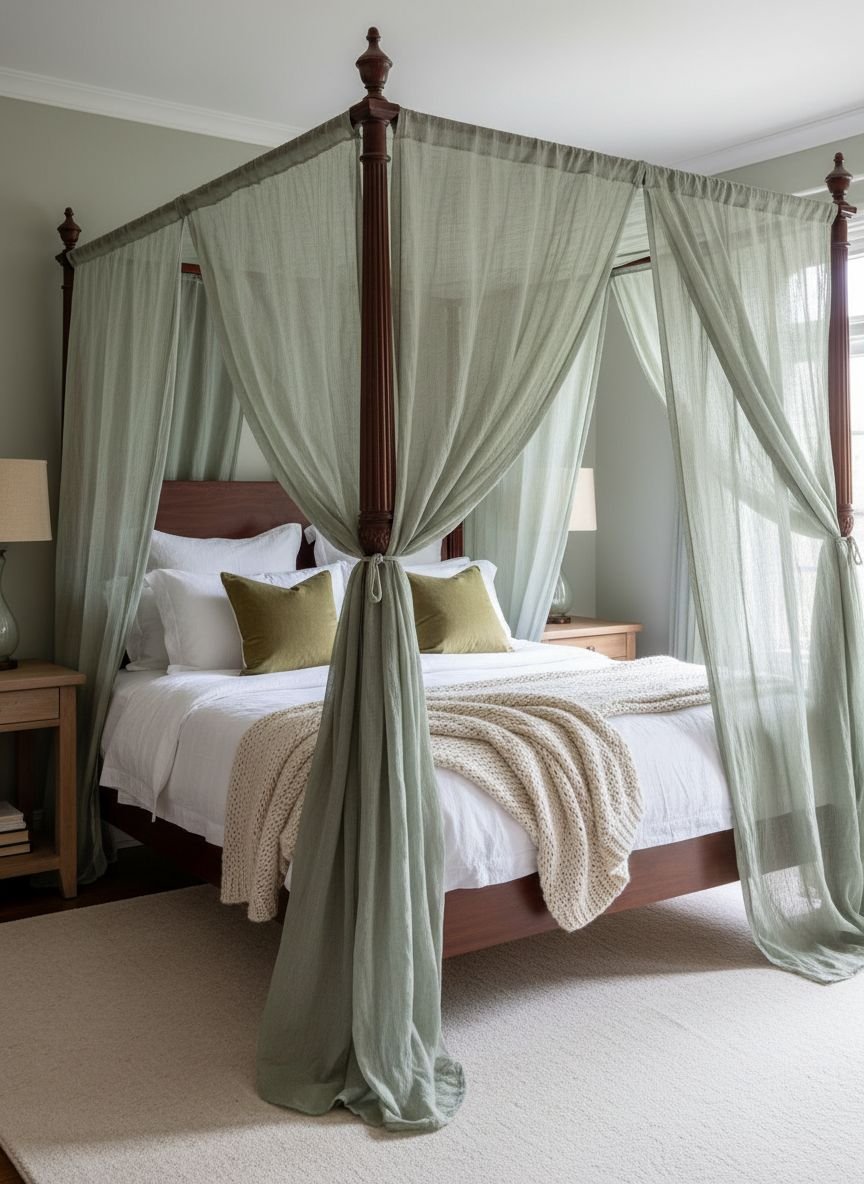
A canopy bed frames your sleeping area and creates an immediate sense of privacy. Choosing a sage green fabric for the draping adds a soft, organic filter to the light surrounding your bed. The fabric should be light, such as sheer cotton or linen, to allow airflow while still providing that visual separation. This setup works exceptionally well in rooms with tall ceilings as it draws the eye upward and emphasizes vertical space. The green tone mimics the feeling of sleeping under a tree canopy. You avoid the heaviness of darker drapes while still blocking harsh morning glare. Secure the fabric to the ceiling with hooks if you lack a four-poster frame. This creates a tent-like effect that feels adventurous yet secure.
Pro Tip: Steam the fabric after hanging to remove creases for a hotel-quality finish.
Fresh Green and White
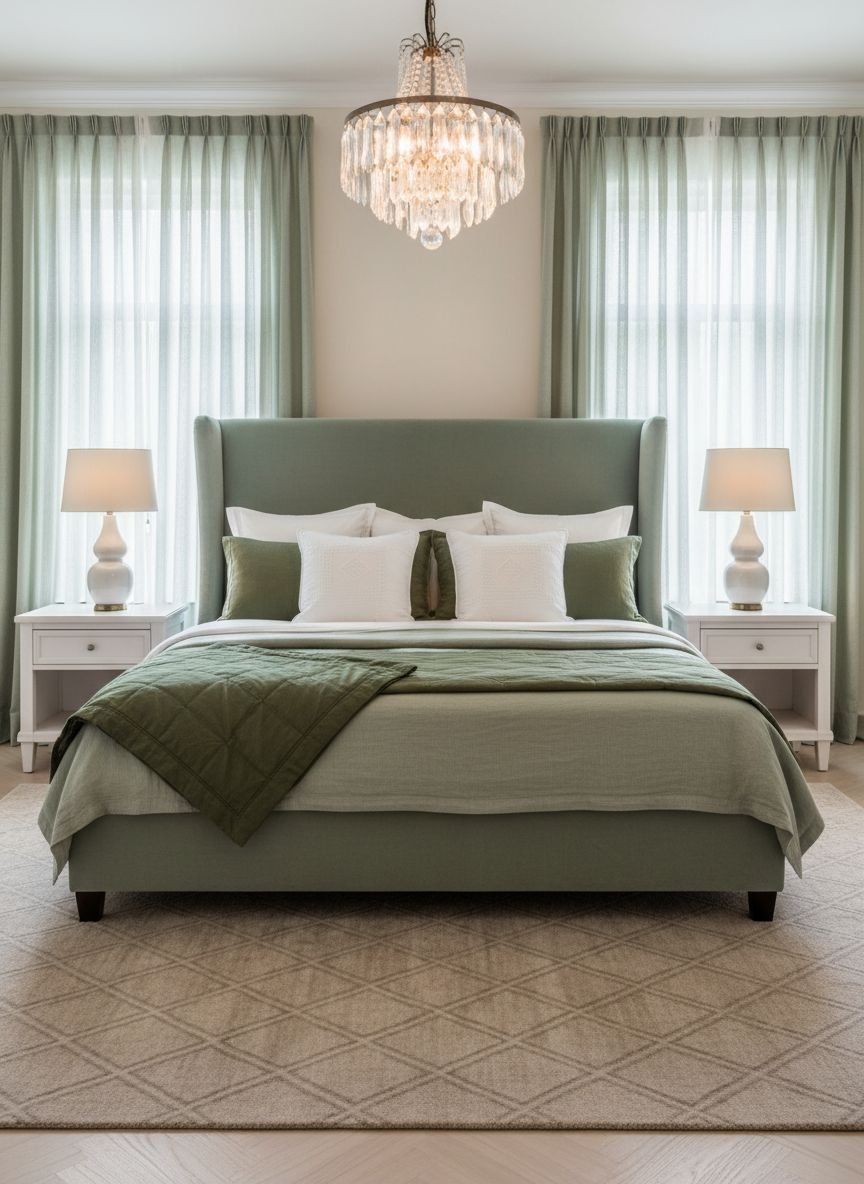
Pairing sage green with bright white creates a crisp and clean aesthetic that feels invigorating in the morning. Paint the walls a soft sage and keep all trim, doors, and ceilings a stark, high-gloss white. This high contrast defines the architectural lines of the room. The white reflects natural light, making the green appear more luminous and the room larger. Use white bedding to anchor the space and prevent the green from becoming overwhelming. This combination suits coastal or farmhouse styles perfectly. You can introduce natural wood elements to warm up the palette if it feels too cool. The result is a space that feels sanitized and organized without being sterile.
Pro Tip: Use a satin finish for the white trim to make it easy to wipe down and keep pristine.
Save this idea to your Pinterest.
Vintage Furniture Makeover
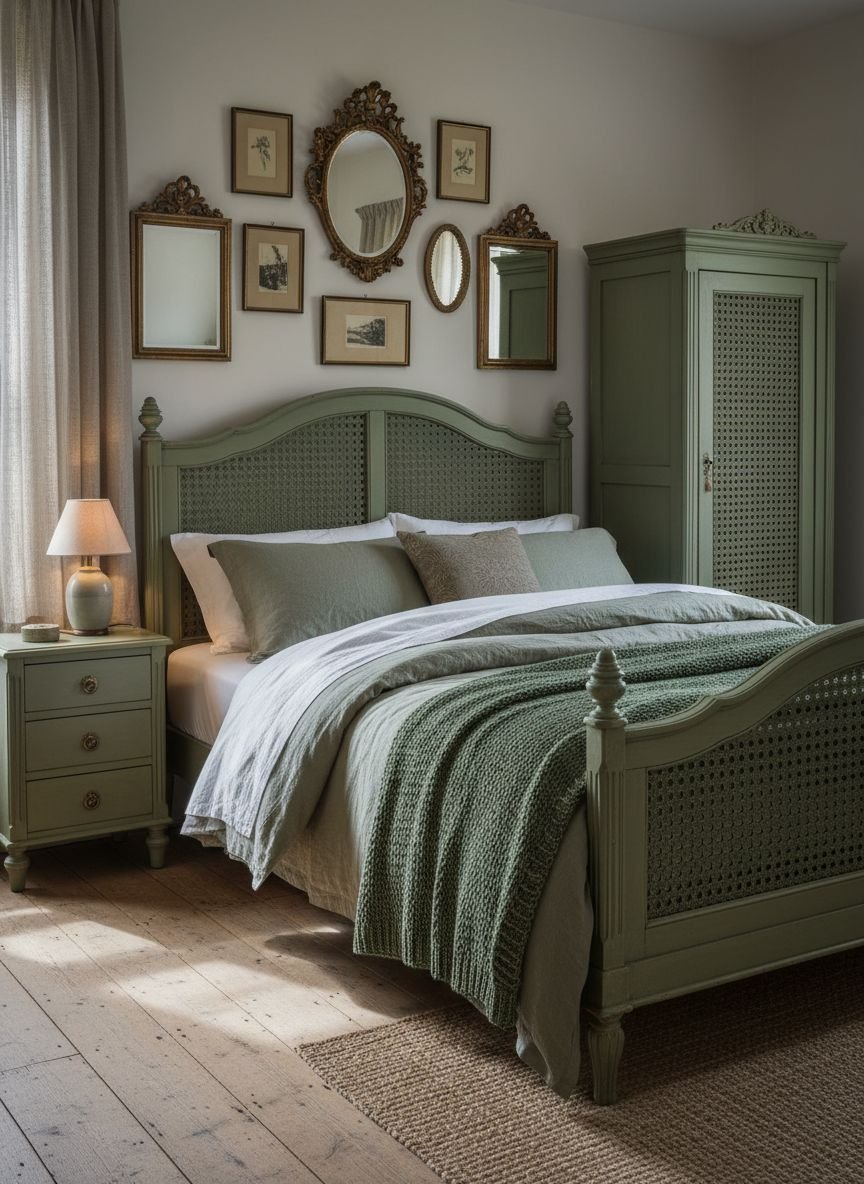
Old wooden dressers or nightstands often have great bones but outdated finishes. Sanding down a thrifted piece and applying a coat of sage green chalk paint breathes new life into it. The matte finish of chalk paint complements the earthy quality of the green. Distressing the edges slightly with sandpaper reveals the wood underneath and adds character. This approach allows you to introduce the color trend without painting your walls. You gain a custom furniture piece that serves as a focal point. New hardware, such as brass or ceramic knobs, completes the transformation. This method saves money and prevents quality furniture from ending up in a landfill.
Pro Tip: Apply a clear wax topcoat to seal the paint and protect it from water rings.
Green & Lavender Room Theme
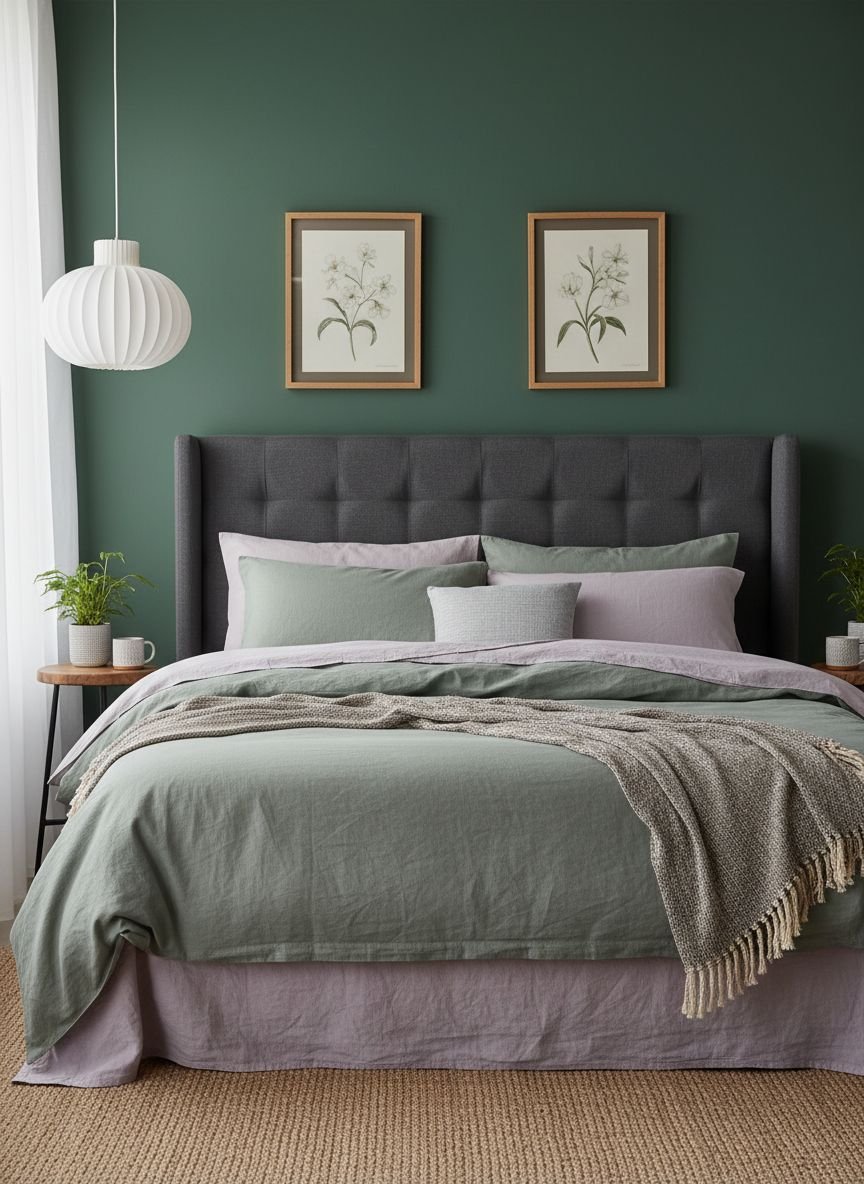
Sage green and lavender sit opposite each other on the color wheel, creating a complementary yet low-contrast pairing. This combination evokes the feeling of a wild herb garden. Use sage as your dominant base color on walls or large furniture pieces. Introduce lavender through smaller accents like throw pillows, a vase, or a rug. The cool undertones in both colors promote relaxation and lower heart rates, making them ideal for a bedroom. Avoid neon purples; stick to muted, dusty lavender shades to match the desaturated nature of sage. This palette feels feminine and sophisticated. It moves away from standard beige neutrals while remaining soft on the eyes.
Pro Tip: Fresh dried lavender bundles on the nightstand reinforce the visual theme with scent.
Floating Shelves in Sage Green
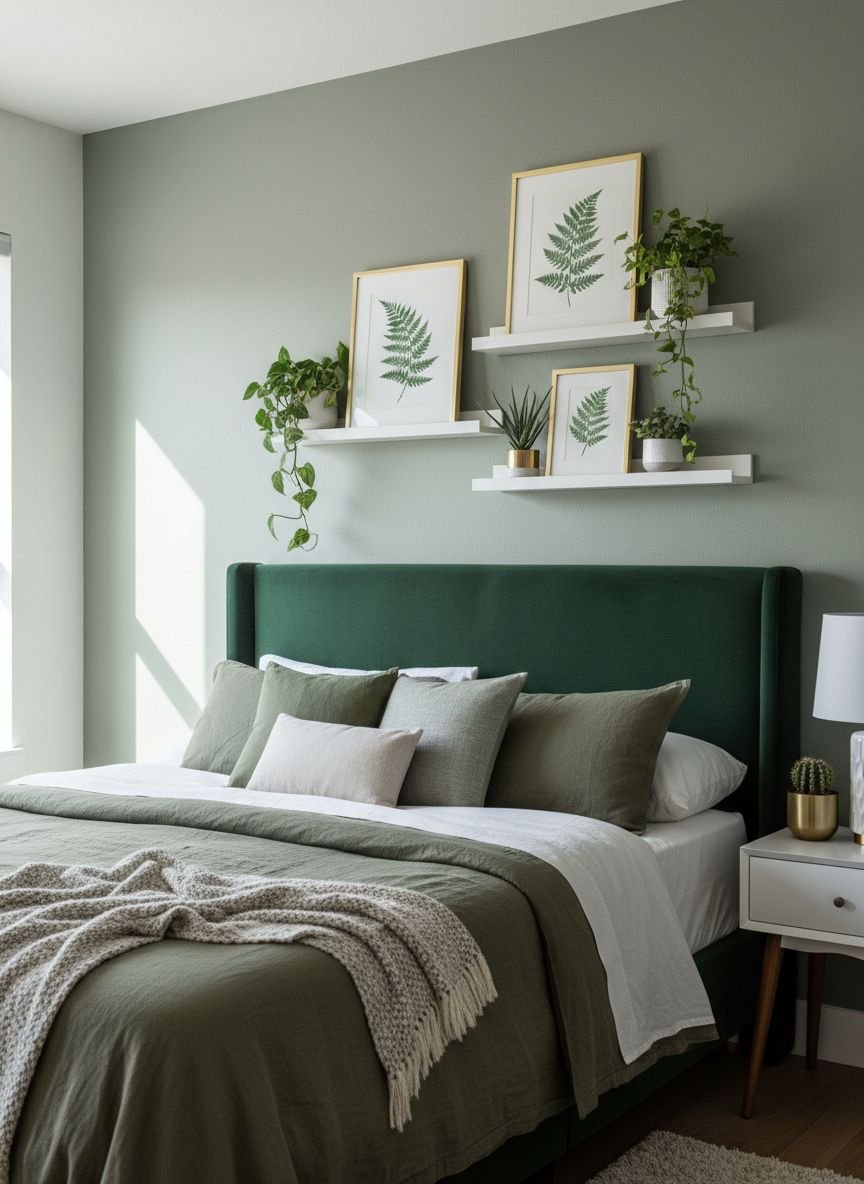
Floating shelves painted the exact same shade of sage as the wall behind them create a seamless, built-in look. This monochromatic technique reduces visual clutter. The shelves appear to recede rather than protrude, which helps small rooms feel more spacious. Display objects like books, plants, or pottery stand out more effectively against the continuous color. Use this strategy to utilize vertical storage space above a desk or bed. The lack of visible brackets maintains a modern, minimalist vibe. You get the functionality of storage without the bulk of a heavy bookcase. This design choice creates a textured 3D effect on your wall using shadow and light.
Pro Tip: Use a level during installation to ensure the clean lines remain perfectly horizontal.
Quick Comparison: Sage Paint vs. Wallpaper
| Feature | Sage Paint | Sage Wallpaper |
|---|---|---|
| Cost | Low (DIY friendly) | Medium to High |
| Texture | Smooth/Flat | Rich/Tactile |
| Durability | Easy touch-ups | Can peel/fade |
| Best For | Full rooms | Accent walls |
Sage Green Wallpaper Feature
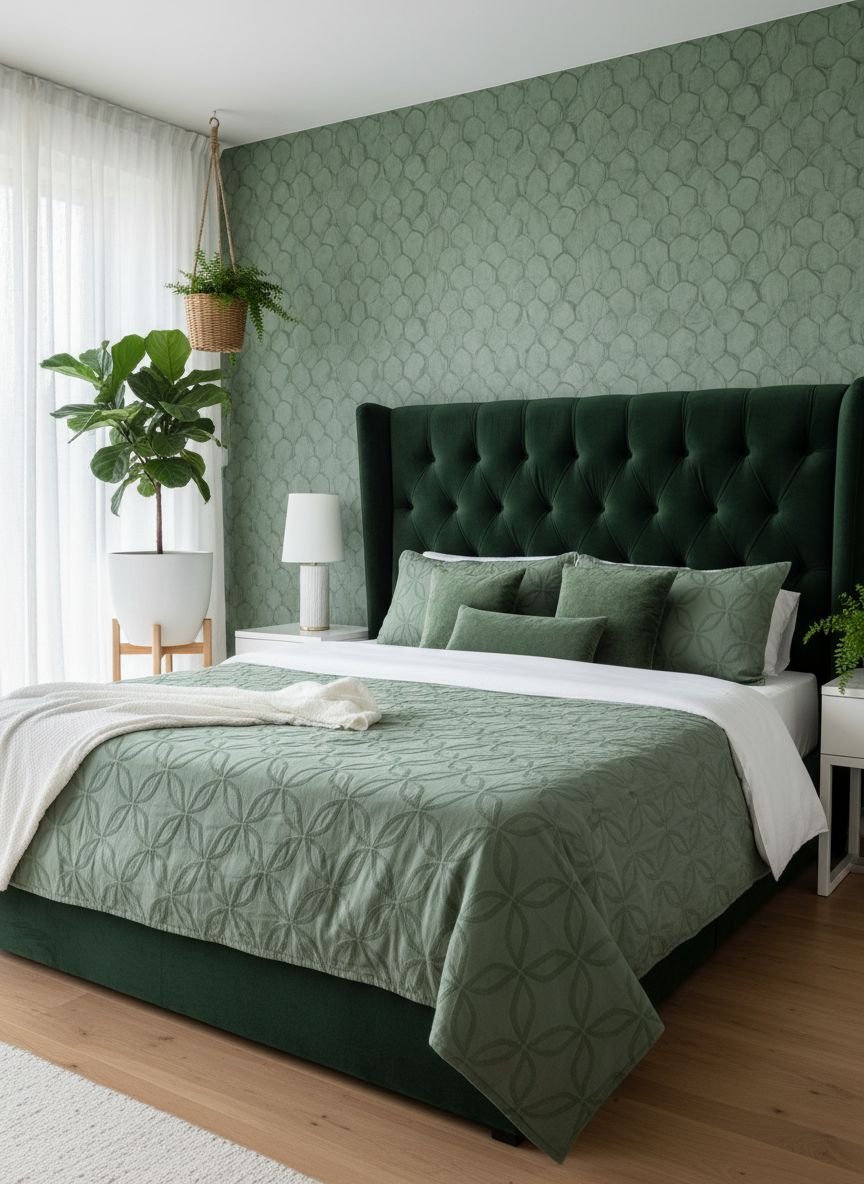
A single wall covered in sage green wallpaper creates an instant focal point behind the headboard. Choose a pattern that incorporates botanical prints, geometric lines, or subtle textures. The pattern breaks up the monotony of solid painted walls. Peel-and-stick options allow renters to enjoy this trend without losing their deposit. The green tones in the paper connect with nature, while the pattern adds artistic flair. Keep the remaining walls neutral to let the wallpaper shine. This draws attention immediately upon entering the room. You can pull accent colors from the wallpaper pattern to use in your bedding or curtains for a cohesive look.
Pro Tip: Order a sample swatch first to see how the print looks in your specific room lighting.
Sage Green Reading Nook
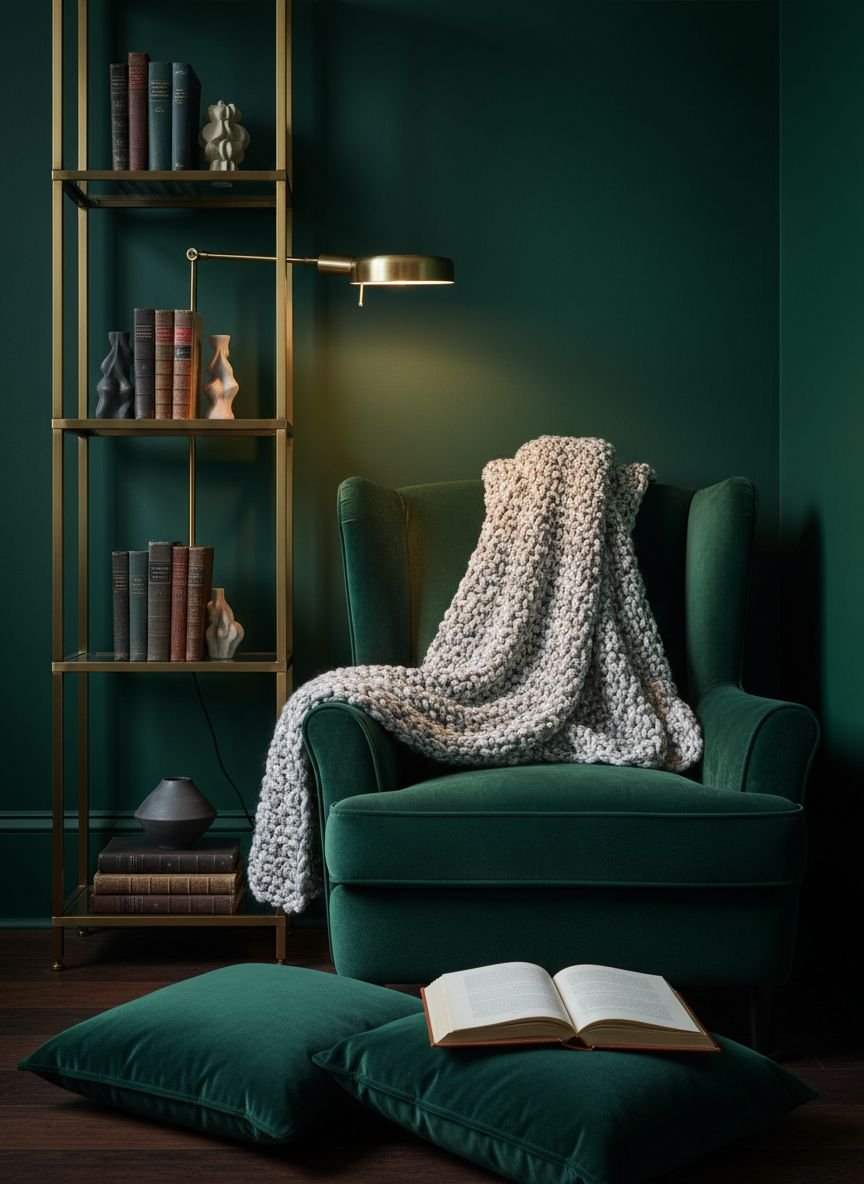
Dedicate a corner of your bedroom to relaxation by defining it with color. Paint a corner shape (triangle or arch) in sage green to visually separate the nook from the sleeping area. Place a comfortable armchair, a floor lamp, and a small side table within this painted zone. The green backdrop signals to your brain that this is a quiet space for unwinding. Adding a soft sage throw blanket creates consistency. This micro-zone increases the functionality of your bedroom. You get a private retreat for reading or journaling. The visual zoning implies architecture that might not actually exist.
Pro Tip: Install a small wall sconce inside the painted arch to save floor space.
Sage Green Velvet Headboard
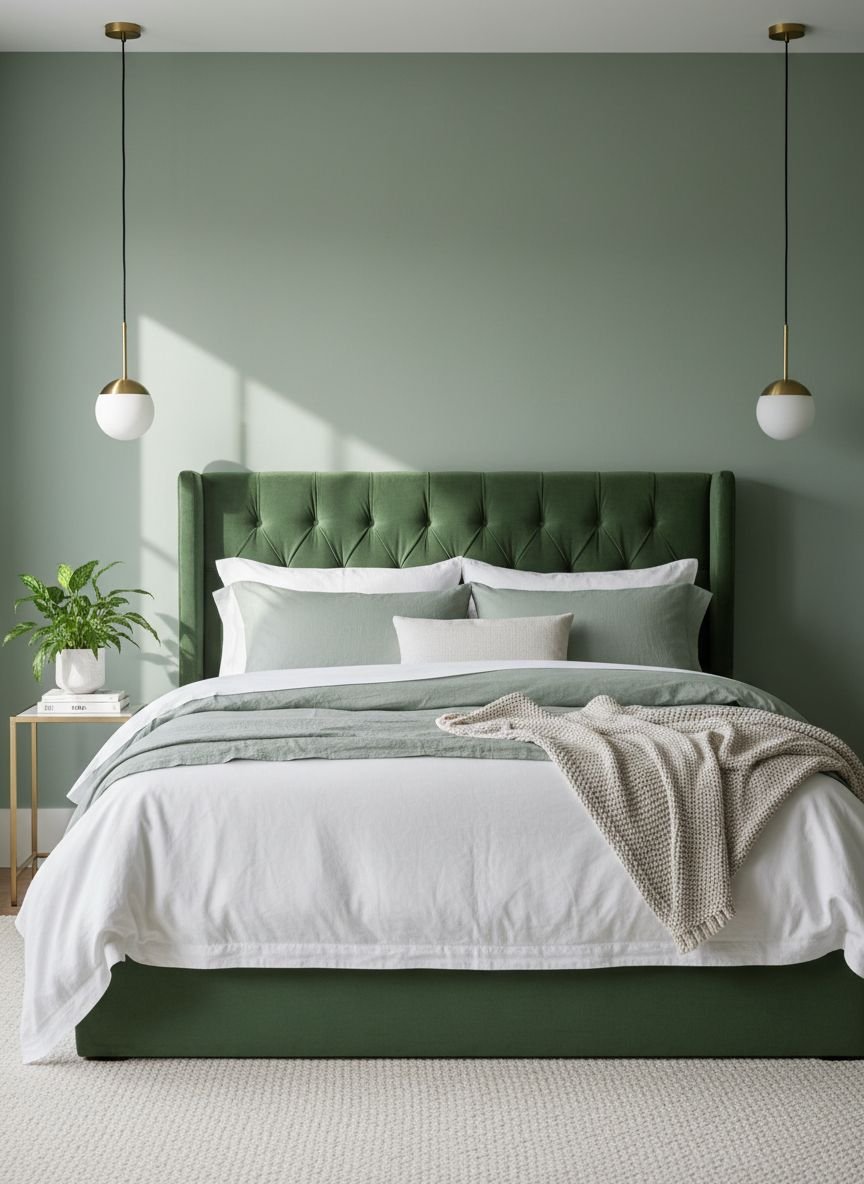
Velvet fabric absorbs light, giving sage green a deep, rich appearance that changes throughout the day. A tufted velvet headboard adds a layer of luxury and softness to the room. It creates a comfortable backrest for reading in bed. The material contrasts beautifully with crisp cotton sheets and smooth wooden floors. This is a tactile addition that invites touch and comfort. The muted green prevents the velvet from looking too theatrical or heavy. It serves as a sophisticated center of gravity for the room. You can build a DIY version with plywood, foam, and fabric staples for a budget-friendly project.
Pro Tip: Brush the velvet in one direction with a lint roller to keep the color looking uniform.
Save this idea to your Pinterest.
Pipe Shelving in Sage Green
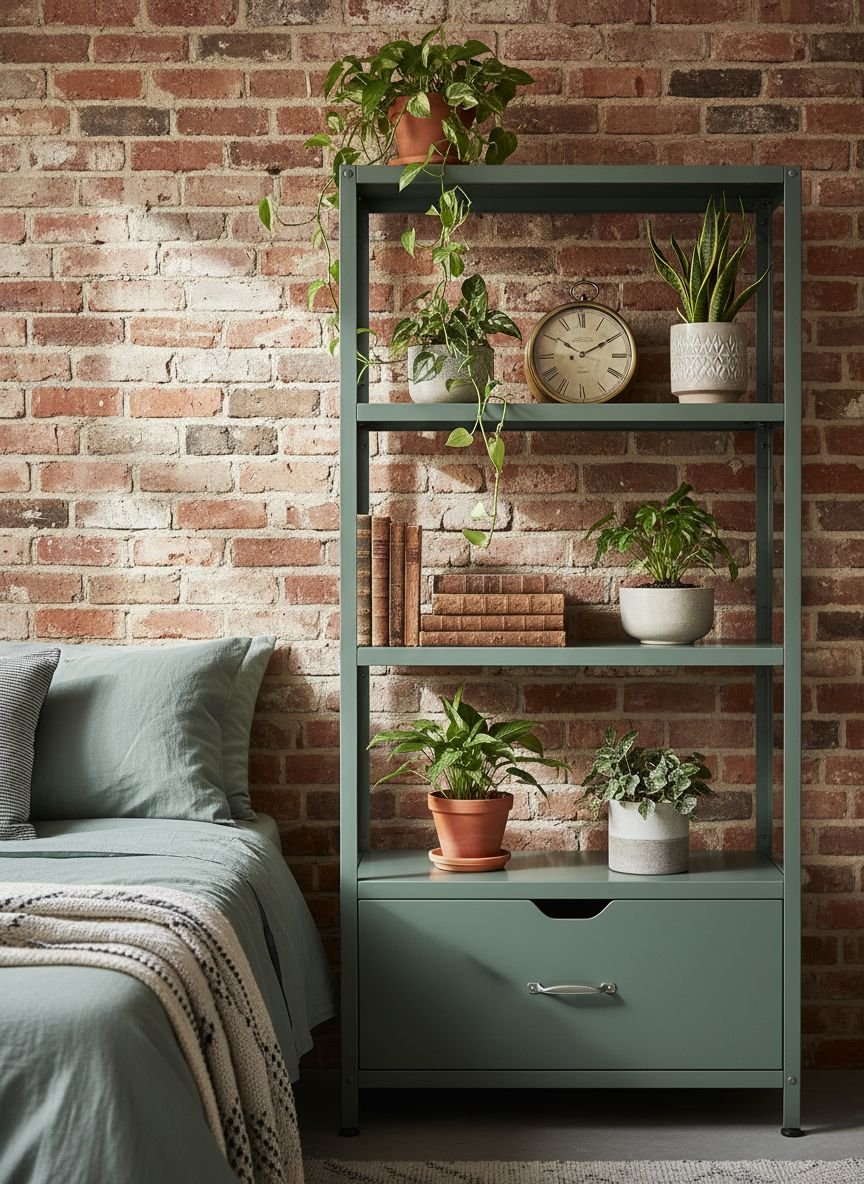
Industrial design often uses black or galvanized metal, but painting the pipes sage green softens the look. This works well for open closets or heavy-duty bookshelves in a bedroom. The industrial structure provides sturdy storage, while the green paint ties it into a softer, nature-inspired aesthetic. This juxtaposition of hard materials and soft colors creates interest. Use spray paint designed for metal to ensure adhesion. The shelves themselves can be natural wood to maintain warmth. This custom storage solution fits awkward alcoves perfectly. You gain a bespoke furniture piece that looks expensive but costs little to assemble.
Pro Tip: Clean the pipes with a degreaser before painting to prevent chipping.
Green and Gold Glam Accents
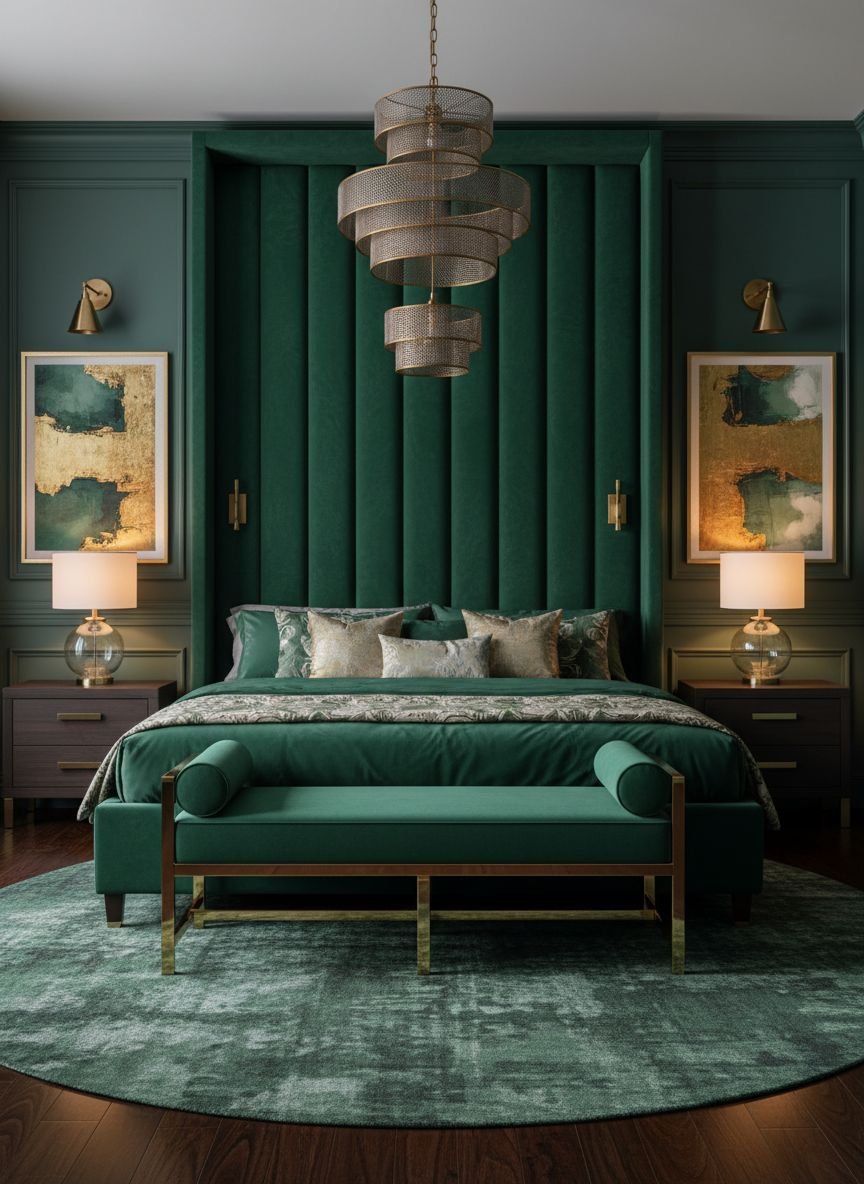
Gold hardware warms up the cool undertones of sage green. Swap out drawer pulls, curtain rods, and light fixtures for brushed brass or gold finishes. The metallic sheen acts as jewelry for the room. It catches the light and adds a sparkle that prevents the matte green from feeling flat. This combination creates a classic, upscale atmosphere. Use thin gold frames for artwork against sage walls. The yellow undertones in gold highlight the yellow base in sage green, creating a harmonious color story. This creates a balanced look that feels curated and intentional.
Pro Tip: Stick to one finish of gold (brushed vs. polished) to maintain visual consistency.
Get The Look: Soft Textures
- Chunky Knit Throw: Cream or Oatmeal wool.
- Linen Sheets: Stone washed white or eucalyptus green.
- Area Rug: Jute or high-pile Moroccan shag.
Pine Forest Green Accent Wall
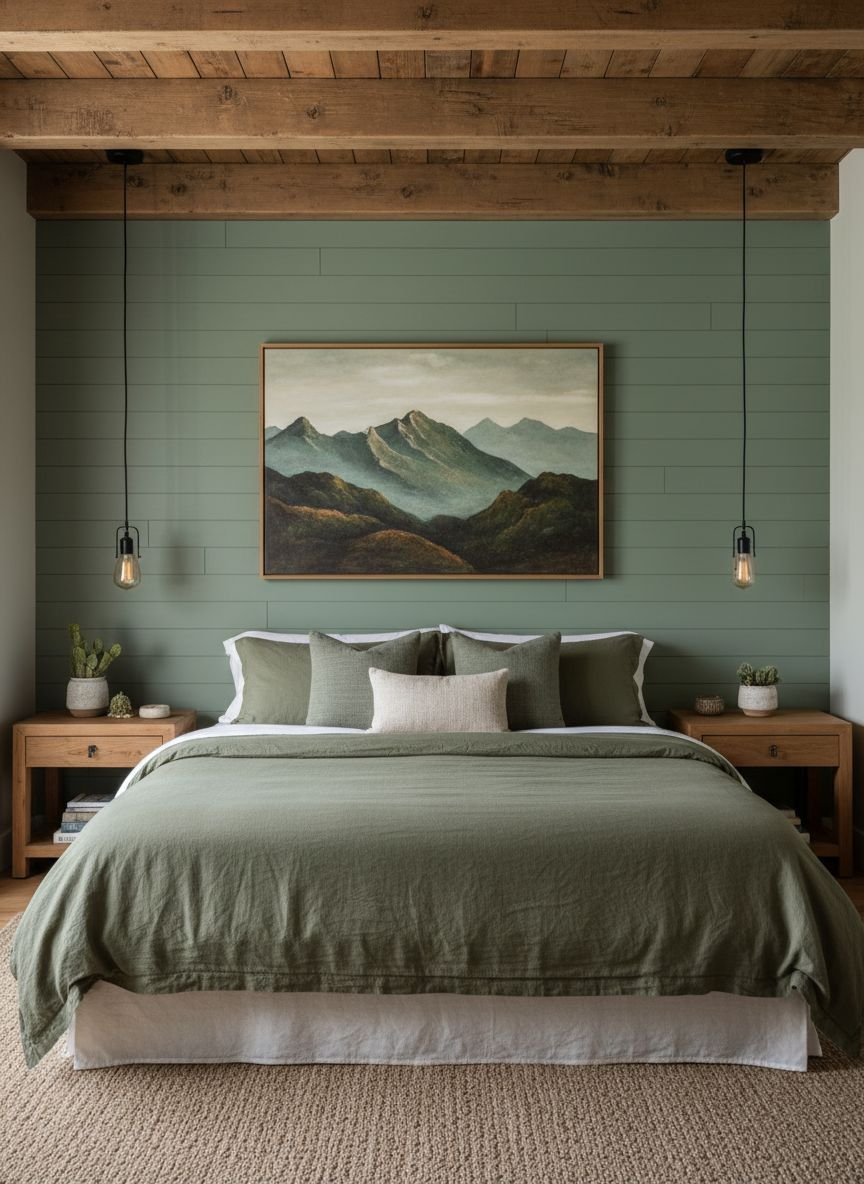
While sage is the main theme, anchoring it with a deeper pine green wall adds drama. Paint the wall behind the bed in a dark forest green and use sage for the adjacent walls or bedding. This tone-on-tone approach creates a monochromatic gradient. The dark wall creates a cave-like, cozy feeling conducive to sleep. It makes the lighter sage elements pop by comparison. This technique adds depth to square, boxy rooms. The transition from dark to light guides the eye and adds sophistication. You achieve a moody aesthetic without making the entire room feel dark.
Pro Tip: Use matte paint for the dark wall to hide any drywall imperfections.
Sage Green Wooden Beams
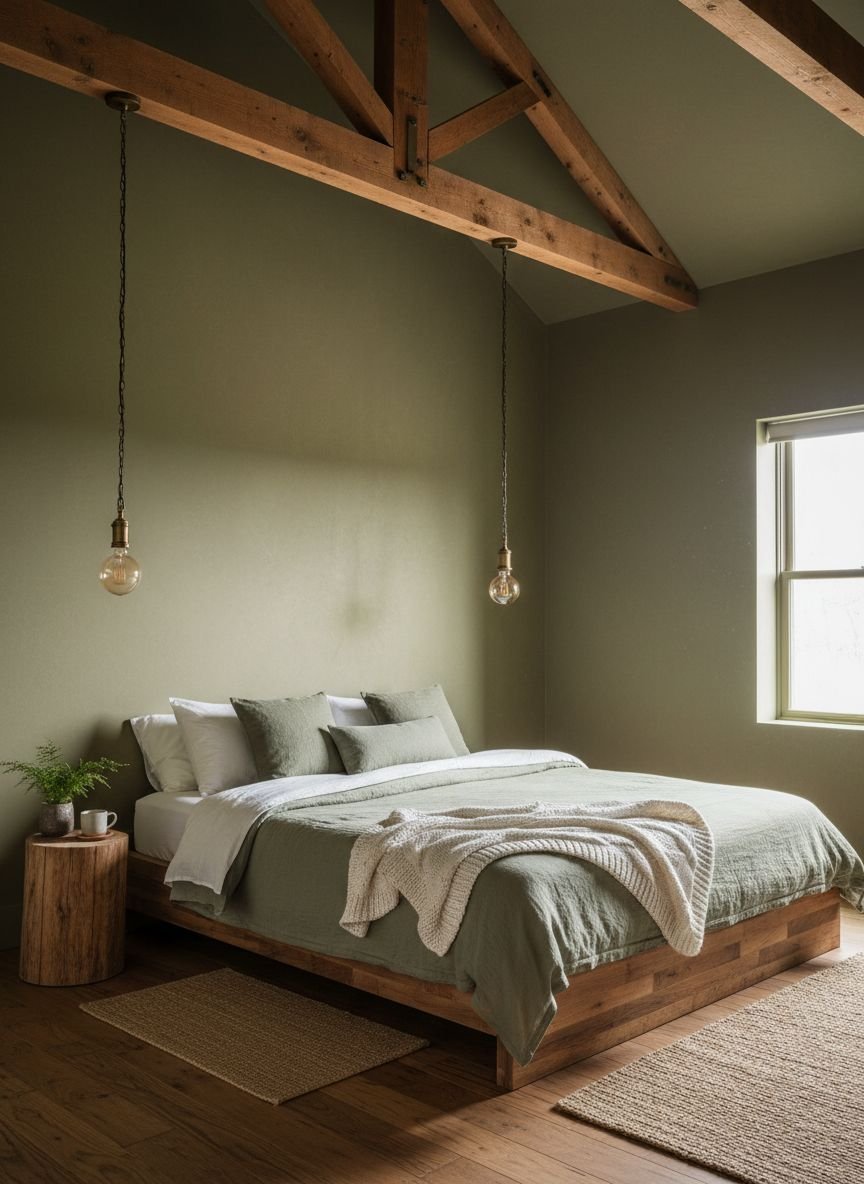
Exposed ceiling beams usually stay natural wood, but painting them sage green lifts the ceiling visually. This draws the eye upward and integrates the architectural structure into the design scheme. It works particularly well in attic bedrooms or cottages with sloped ceilings. The green beams against a white ceiling create a fresh, airy pattern. This reduces the visual weight of heavy timber. The room feels taller and more open. It is a bold choice that pays off by making the space feel custom-designed. The color overhead mimics the feeling of sitting under a tree branch.
Pro Tip: Use a sprayer for painting beams to get into the cracks and crevices easily.
Restful Sleep with Sage Green Curtains
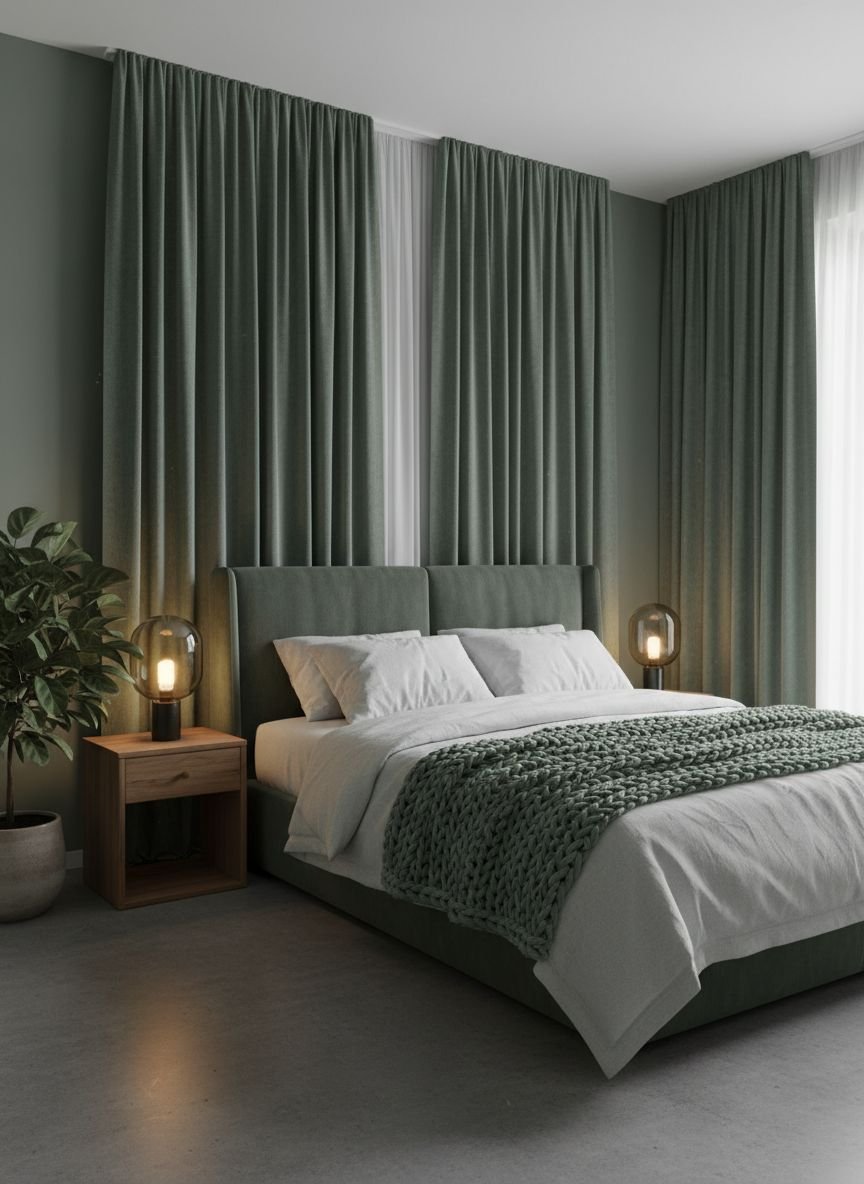
Window treatments control light and privacy, but they also occupy significant visual space. Floor-to-ceiling sage green curtains extend the wall color, making the room feel wider. Choose blackout lining to ensure functional darkness for sleep. The fabric creates a soft vertical line that adds elegance. When closed, they create a cocoon effect. Velvet or heavy linen curtains insulate the window, keeping the room warmer in winter and cooler in summer. The green fabric filters the sunlight at the edges, casting a pleasant glow. This is a simple swap that dramatically alters the room’s mood.
Pro Tip: Hang the curtain rod six inches above the window frame to make the window look taller.
Green Gallery Wall
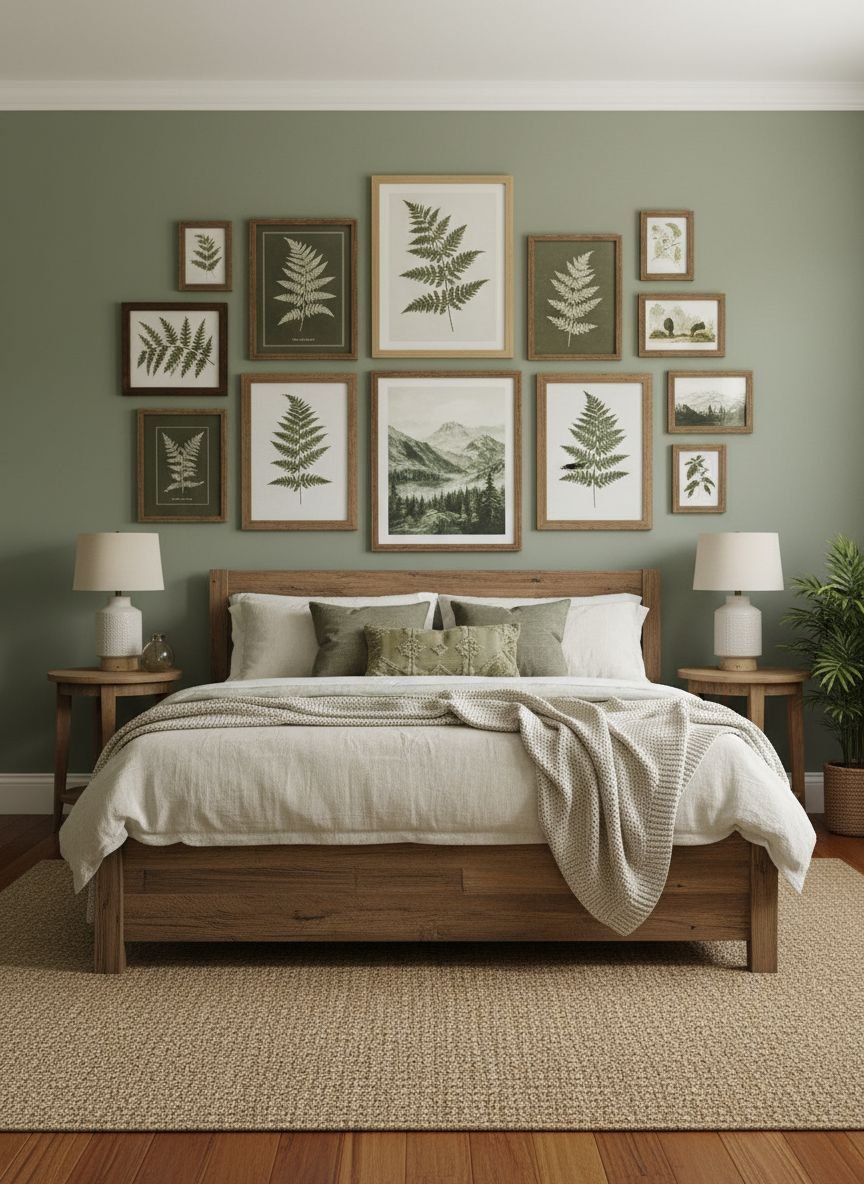
Create a gallery wall using exclusively green-themed art or sage green mats. Mix botanical prints, abstract green landscapes, and pressed leaves. The common color thread unifies disparate art styles. You can use simple wood or white frames to let the art stand out. This brings the sage theme to eye level without requiring paint. Arrange the frames in an organic, non-linear layout for a relaxed vibe. This acts as a conversation piece and infuses personality into the room. You can easily swap out prints as your taste changes.
Pro Tip: Lay out your frame arrangement on the floor first to find the best balance.
Sage Green Lighting Fixtures
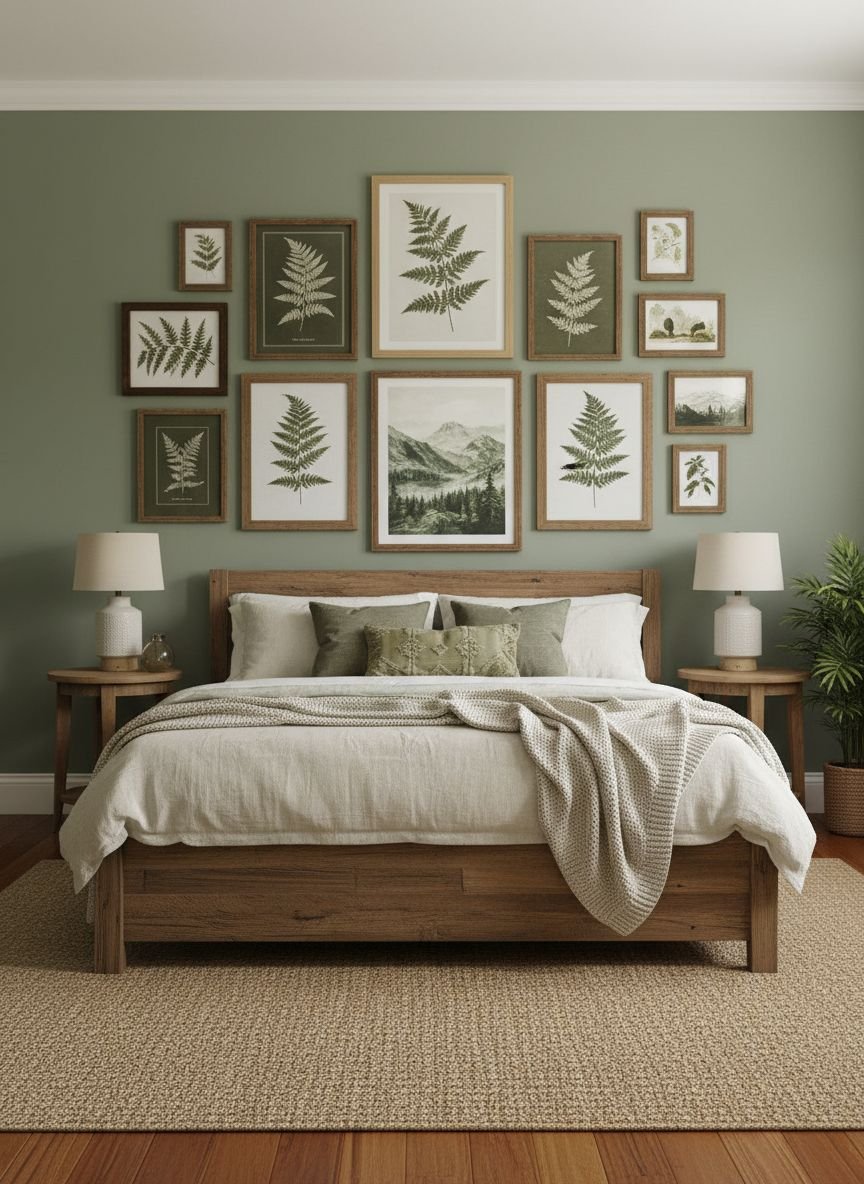
Pendant lights or bedside lamps with sage green shades or ceramic bases add a pop of color in unexpected places. A green ceramic lamp base adds a glossy texture that contrasts with matte walls. Metal sconces in a powder-coated sage finish look modern and sleek. This distributes the color throughout the room rather than keeping it on the walls. The light emitted from a green shade will have a slight tint, so ensure you have other main light sources. This detail shows a high level of design consideration. It ties the upper half of the room to the lower furniture.
Pro Tip: Use warm white bulbs (2700K) to keep the green from looking sterile.
Quick Comparison: Gold vs. Silver Accents
| Metal | Vibe | Best With |
|---|---|---|
| Gold/Brass | Warm, Vintage, Glam | Warm Sage, Cream |
| Silver/Chrome | Cool, Modern, Sleek | Cool Sage, Grey |
| Black Matte | Industrial, Bold | Any Sage, White |
Sage Green Bed Linen
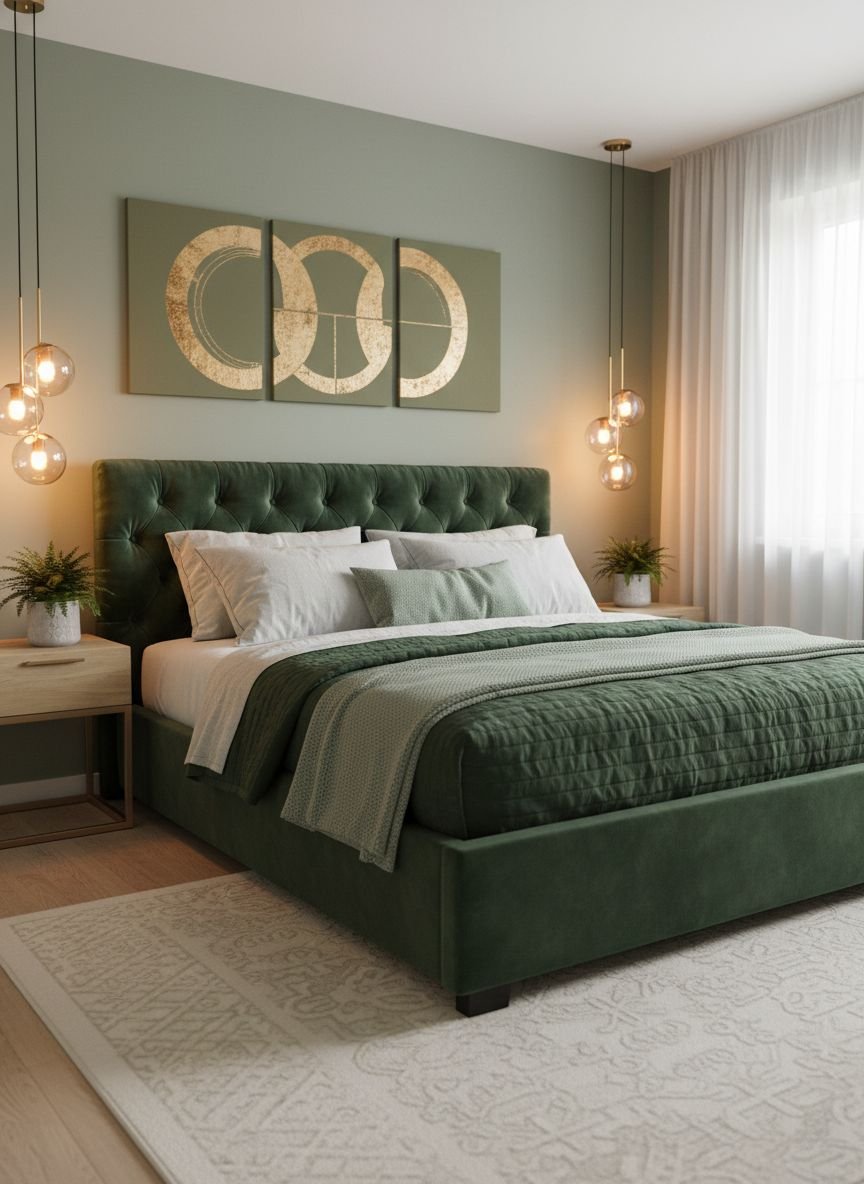
The bed is the largest object in the room, so its color dictates the mood. Sage green duvet covers or sheets invite you to dive into comfort. Linen fabric in sage looks particularly good because the natural wrinkles enhance the earthy vibe. Layer different shades of green pillows to build volume. This allows you to keep walls neutral if you rent or prefer white walls. The color hides minor stains better than white sheets. It feels fresher than grey and warmer than blue. You can mix sage sheets with a terracotta throw for an earth-tone palette.
Pro Tip: Wash linen sheets with baking soda initially to soften the fibers.
Sage Green Zen Corner
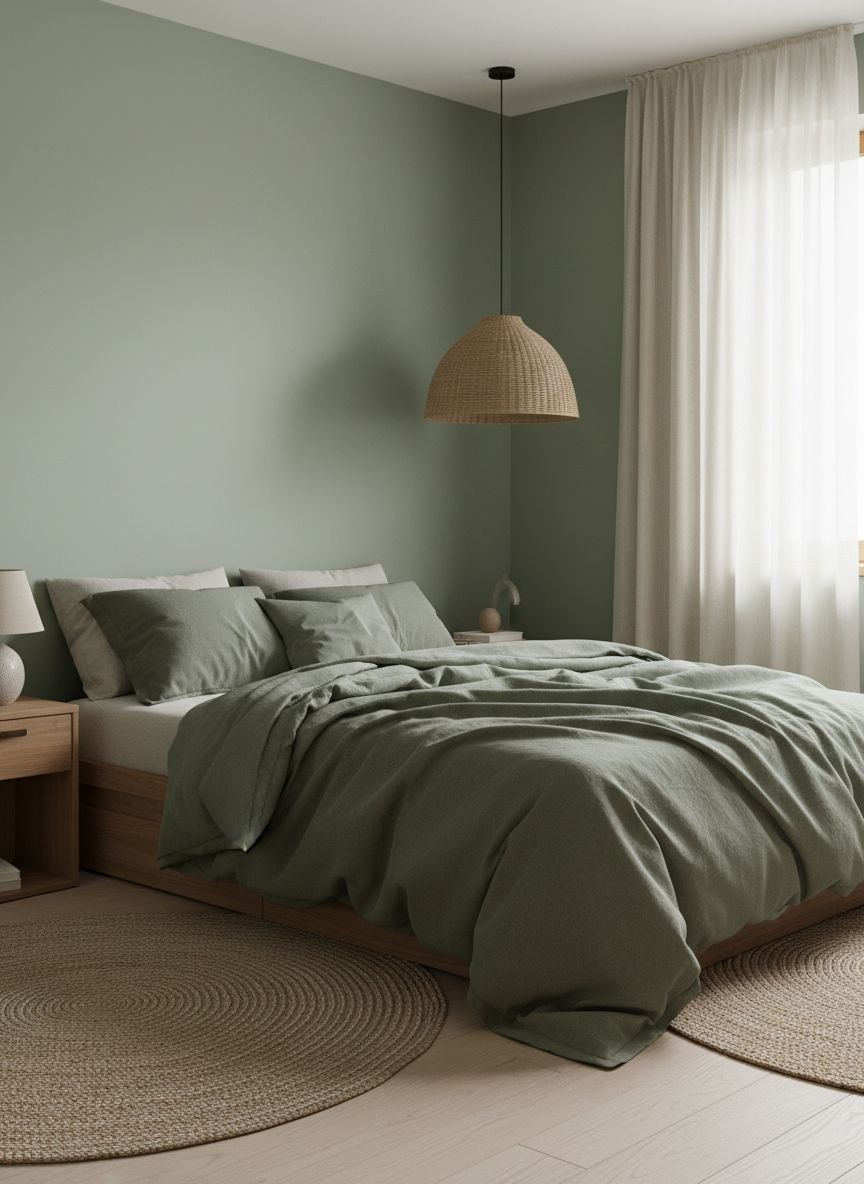
Create a space dedicated to mindfulness. Use a low sage green floor cushion or yoga mat as the anchor. Add a small water feature or a sand garden on a low table. The color green connects directly to the heart chakra in color therapy, promoting balance and love. Surrounded by plants, this corner becomes a retreat for meditation. Keep the area free of electronics and clutter. The visual cue of the green cushion reminds you to take a breath. It turns a dead corner into a functional wellness station.
Pro Tip: specific lighting, like a salt lamp, enhances the calming atmosphere here.
Save this idea to your Pinterest.
Coastal Sage Green Rugs
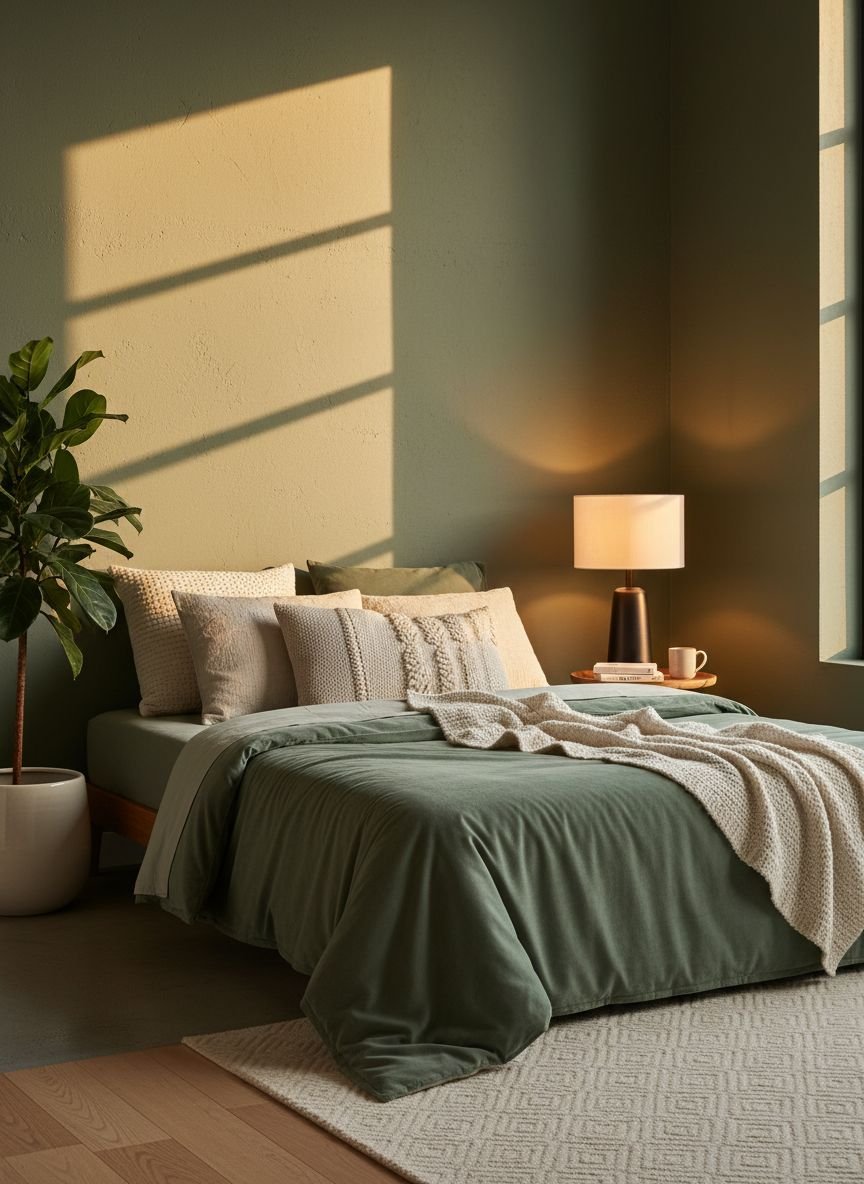
A large area rug grounds the furniture and dampens sound. A rug featuring sage green and cream stripes or patterns brings a coastal energy. It feels soft underfoot, making the first step out of bed pleasant. The green in the rug ties together the walls and bedding. Choose a low-pile rug for easy cleaning or a shag rug for texture. If the room has wood floors, the green rug highlights the wood grain. It creates a defined sleeping zone in an open studio apartment. The color hides footprints better than beige rugs.
Pro Tip: Ensure the rug extends at least 18 inches beyond the sides of the bed.
Sage Green Mirror Frames
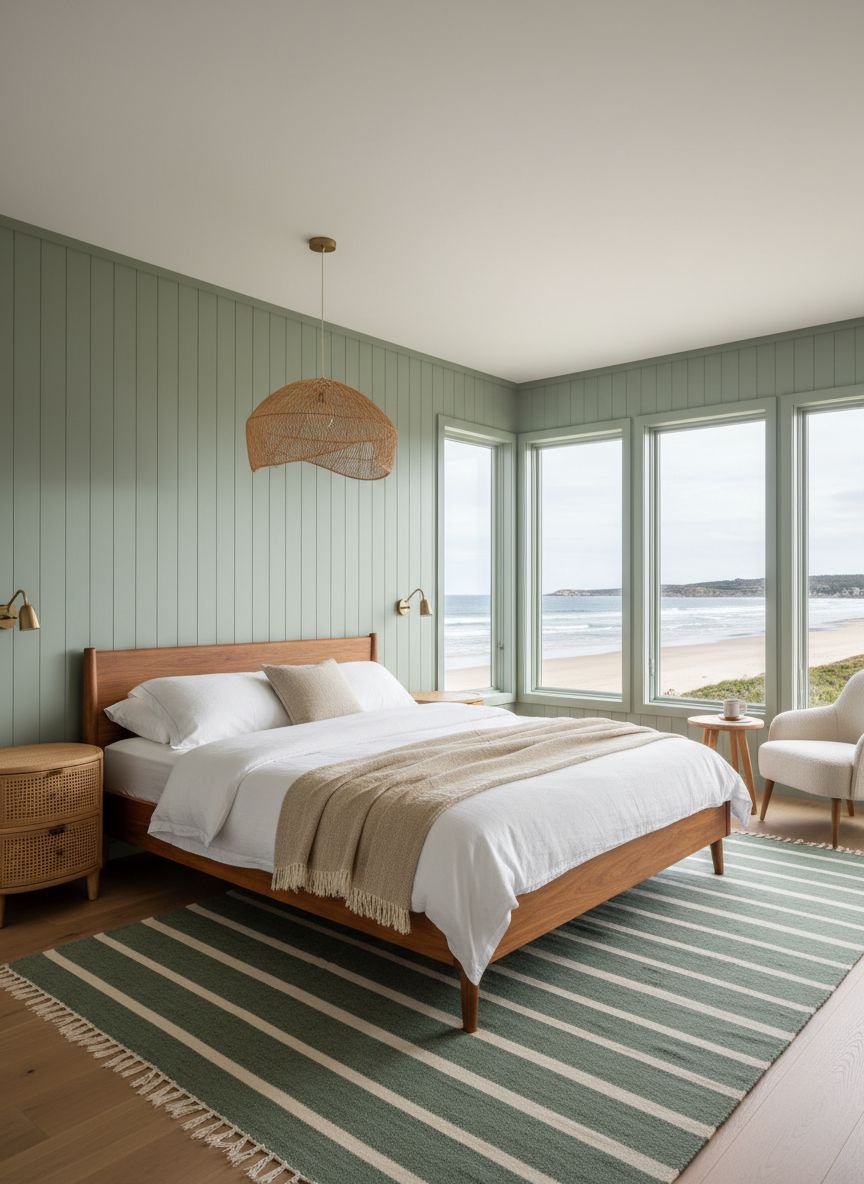
Mirrors bounce light and double the visual space. Painting a chunky mirror frame in sage green turns it into a statement piece. It works well on a full-length leaning mirror or a round vanity mirror. The reflection often captures other parts of the room, doubling the greenery. This is a subtle way to add color without overwhelming the space. Distressed paint on the frame adds a farmhouse touch. Glossy paint looks modern. It frames your reflection in a flattering, natural color.
Pro Tip: mask the glass carefully with painter’s tape before applying any paint.
Sage Green Dresser
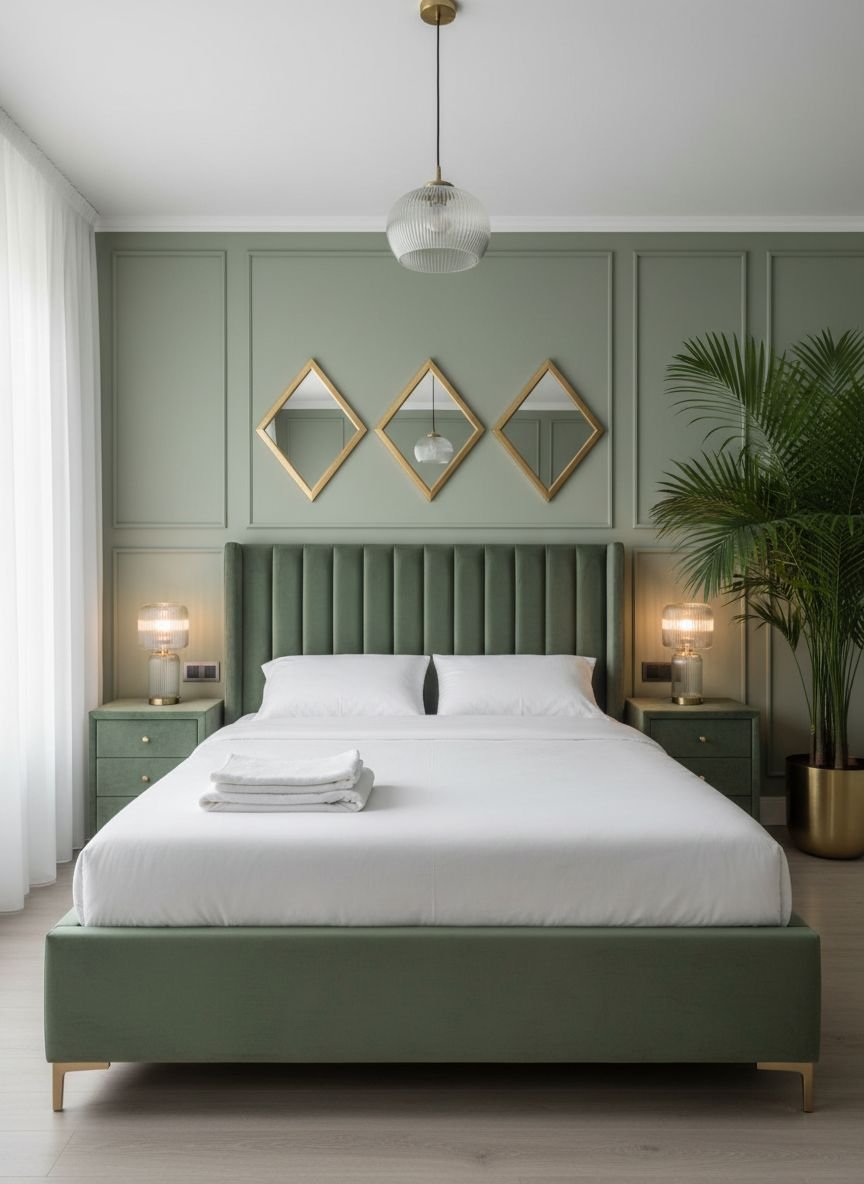
A standalone dresser painted sage green acts as an anchor piece. It breaks up a room full of wood tones. Replace standard knobs with leather pulls to enhance the rustic, organic feel. The large surface area of color makes a bold impact. Style the top with brass candlesticks or a wood tray. This piece can move with you to future homes, making it a versatile investment. It hides dust better than black furniture. The color works well in both children’s rooms and master suites.
Pro Tip: Sand between coats of paint for a professional, smooth finish.
Transitional Sage Green Walls
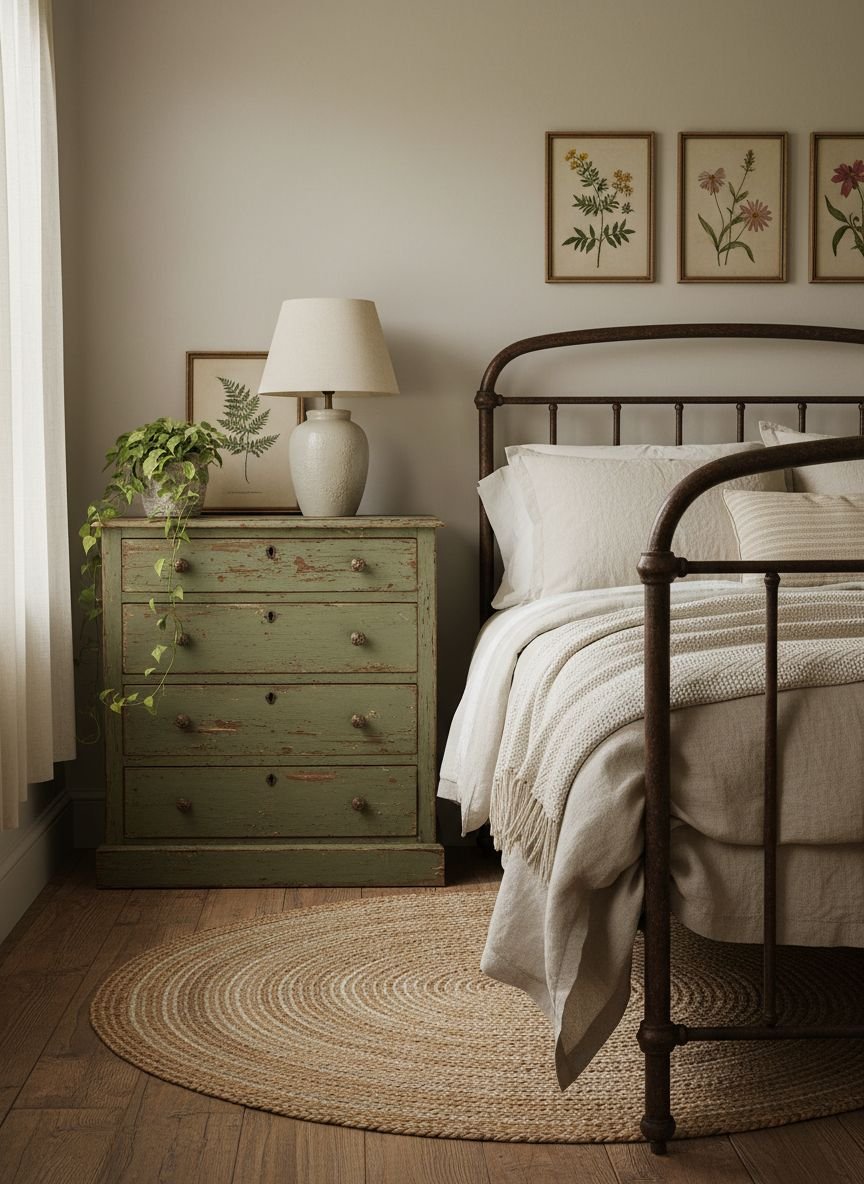
Transitional style blends traditional and modern elements. Sage green walls serve as the perfect backdrop for this mix. It suits antique wood beds just as well as sleek metal frames. The color is timeless, not trendy, so it won’t date quickly. Paint the walls flat sage and use white crown molding to bridge the gap between styles. This flexibility allows you to change decor accessories without repainting. It feels sophisticated and grown-up. The color adapts to the furniture you already own.
Pro Tip: Use an eggshell finish on walls for the best balance of durability and low sheen.
Sage Green Floral Arrangements
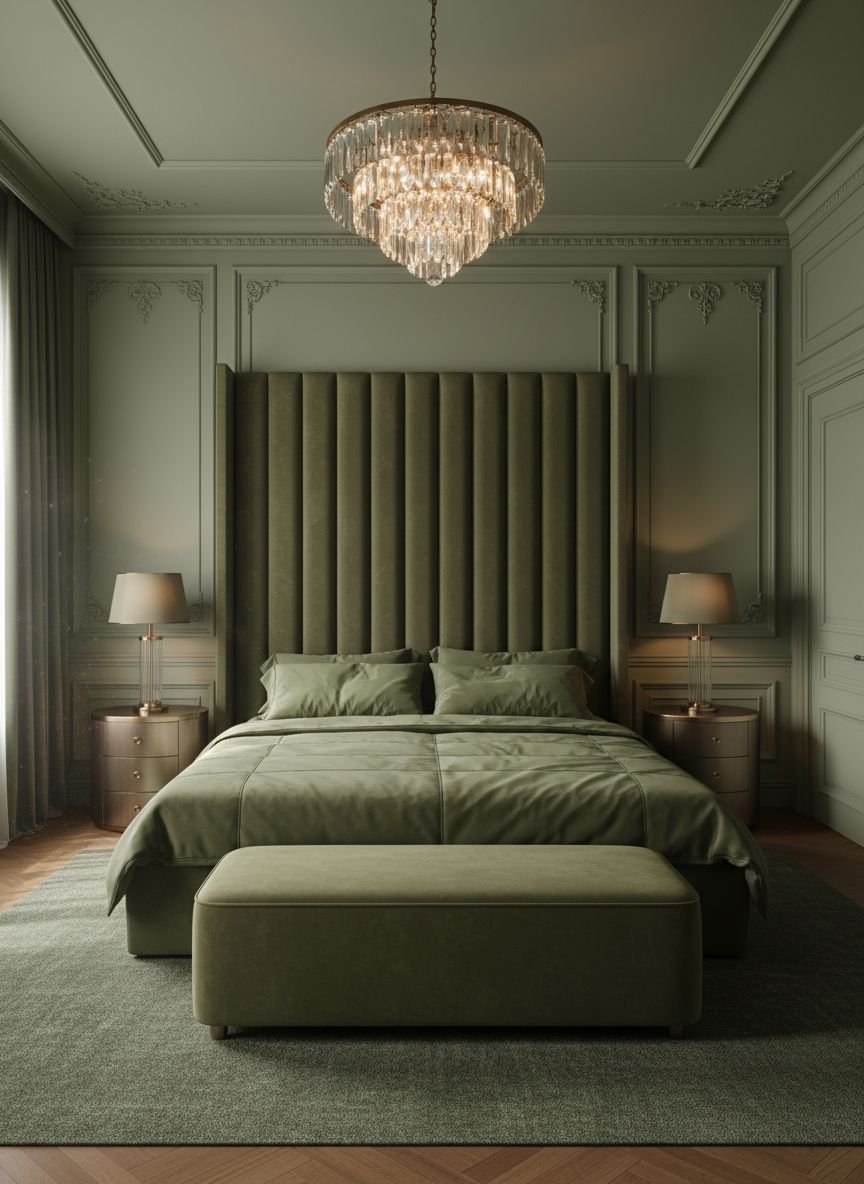
Live or high-quality faux florals add life to the bedroom. Focus on greenery like eucalyptus, ferns, or succulents which naturally carry sage tones. Place them in clear glass vases to keep the look light. The architectural shapes of the branches add interest. Real eucalyptus releases a scent that clears sinuses and aids sleep. This is the easiest way to add the color. No painting or heavy lifting is required. The organic shapes break up the straight lines of furniture.
Pro Tip: Hammer the ends of fresh eucalyptus stems to help them absorb water and last longer.
Sage Green Lounge Chair
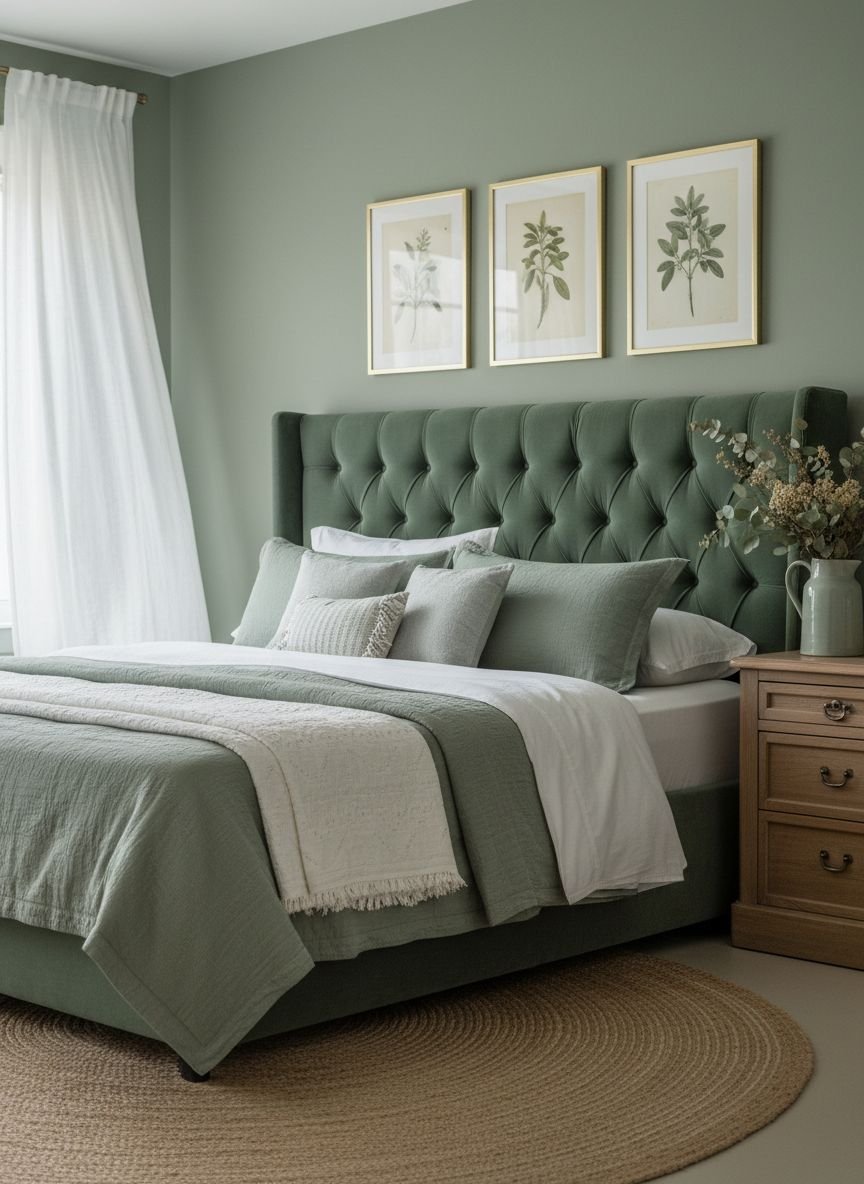
An accent chair in the corner provides a spot to put on shoes or read. A sage green upholstery in bouclé or velvet makes the chair a cozy destination. It stands out against a neutral wall. Throw a sheepskin over it for added texture. This furniture piece completes the room’s layout. It adds functionality and style simultaneously. The curved lines of a lounge chair soften the room. The color hides wear and tear well.
Pro Tip: choose a chair with legs that show the floor to keep the room feeling spacious.
Green Metallic Bedroom Accents
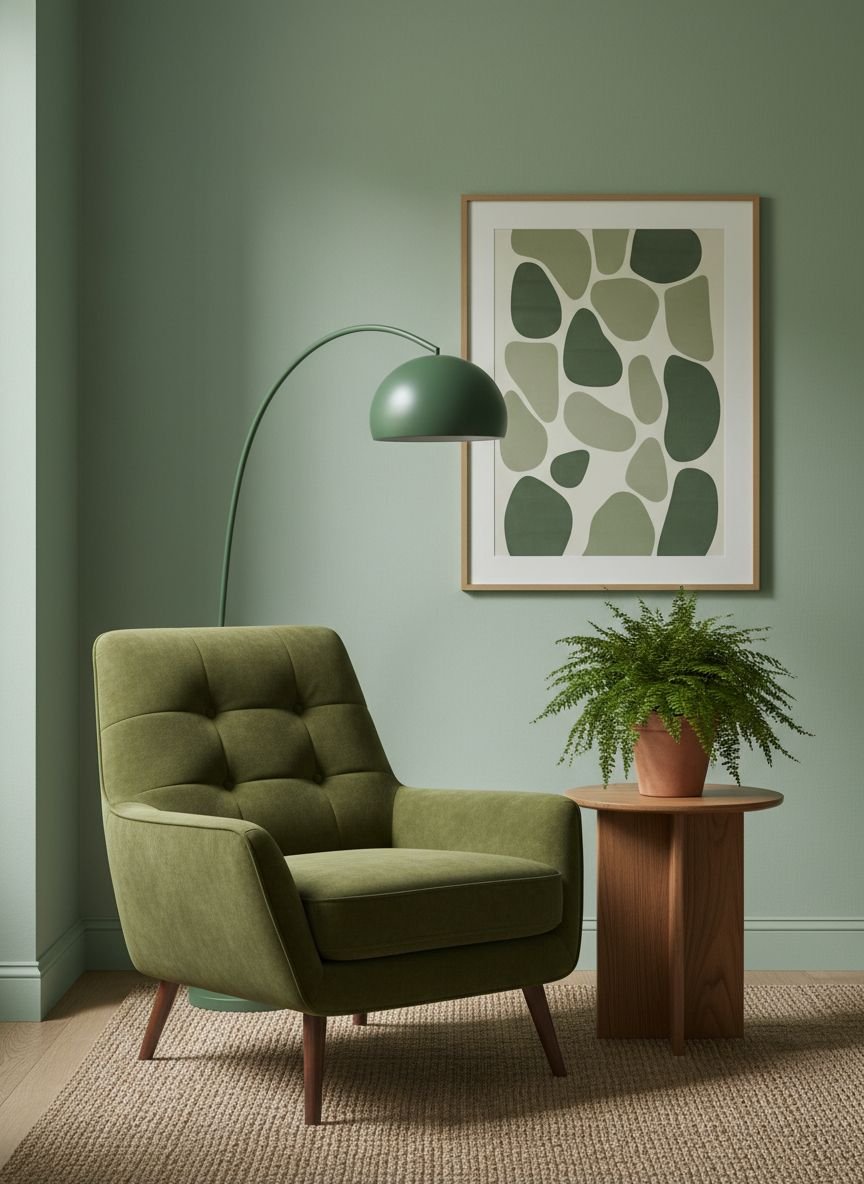
Metallic sage green is a rare but stunning finish. Look for metal vases, lamp bases, or picture frames with a metallic green sheen. This industrial twist on the color adds edge. It reflects light differently than paint or fabric. It works well in modern or maximalist bedrooms. The shimmer catches the eye. It adds a layer of complexity to the color palette. Mix it with matte black for a masculine look.
Pro Tip: Use spray paint with a “metallic” finish to transform existing decor items.
Sage Green Knit Throw
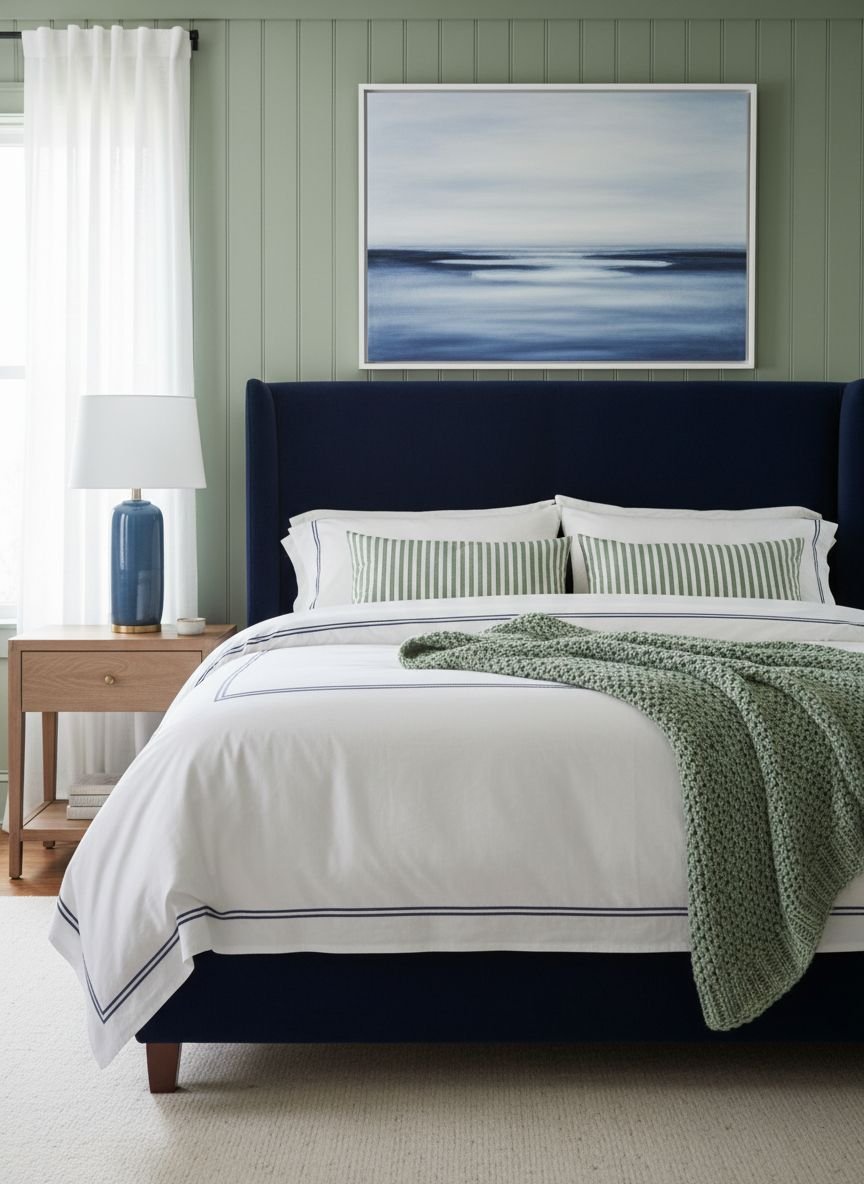
Texture is crucial in a bedroom. A chunky knit throw in sage green draped over the foot of the bed adds immediate coziness. The large loops of yarn create deep shadows. It invites you to nap. This layer is easy to remove or change with the seasons. It breaks up the expanse of the duvet cover. The tactile quality comforts the senses. It serves a practical purpose on cold nights.
Pro Tip: Look for wool blends rather than 100% acrylic for better breathability.
Save this idea to your Pinterest.
Nautical Green & Navy Combo
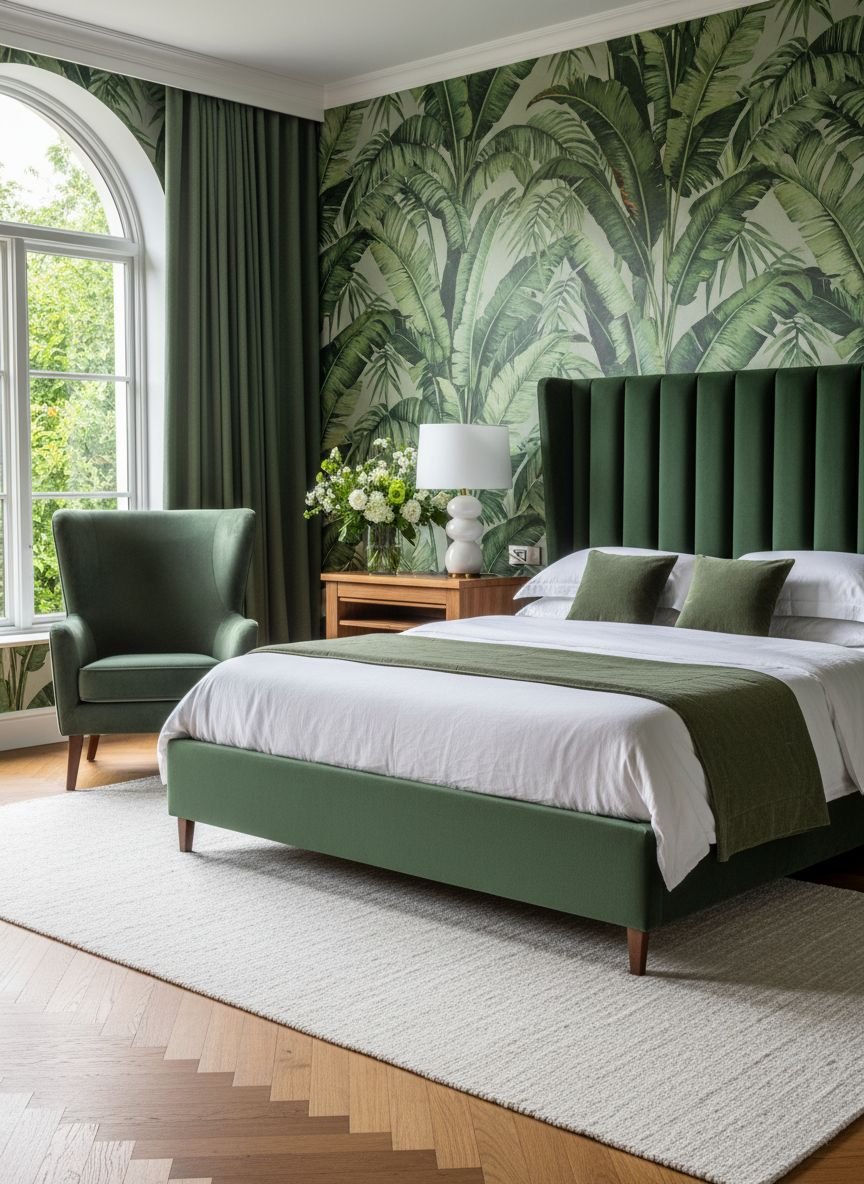
Sage green and navy blue create a sophisticated, masculine, or nautical vibe. The deep navy grounds the airy sage. Use navy for the headboard or rug and sage for the walls. This pairing mimics the colors of the sea and seagrass. It feels stable and calm. White accents prevent the room from becoming too dark. This is a great alternative to the classic black and white. It feels historic and established.
Pro Tip: Add tan leather accents to bridge the gap between the blue and green.
Botanical Print Upholstery
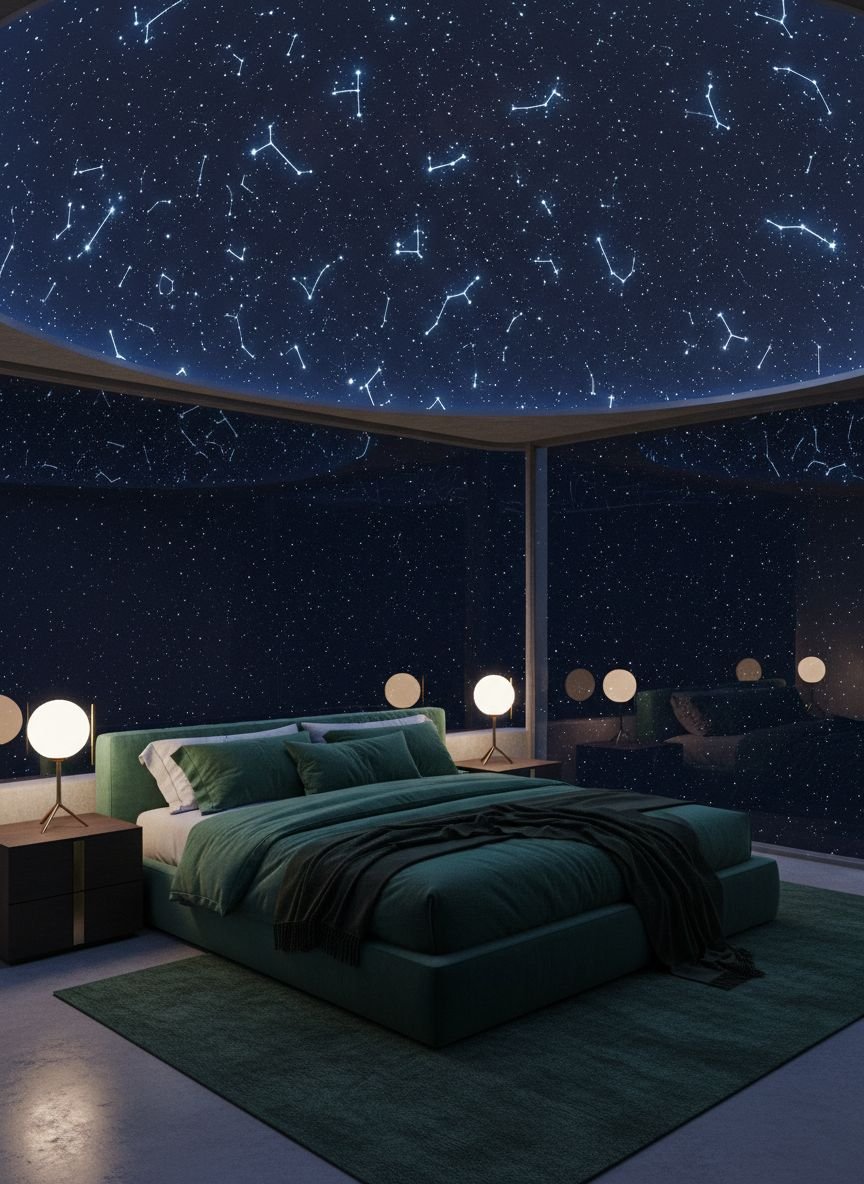
Upholster a bench or ottoman in a fabric featuring sage green botanical illustrations. This brings a pattern into the room that isn’t geometric. The leaves and vines connect the interior to the outdoors. It hides stains effectively due to the busy pattern. This works well at the foot of the bed. It adds a romantic, cottage-core element. The pattern adds detail that solid colors lack.
Pro Tip: Scotchgard the fabric immediately to protect it from spills.
Sage Green Ceiling Stars
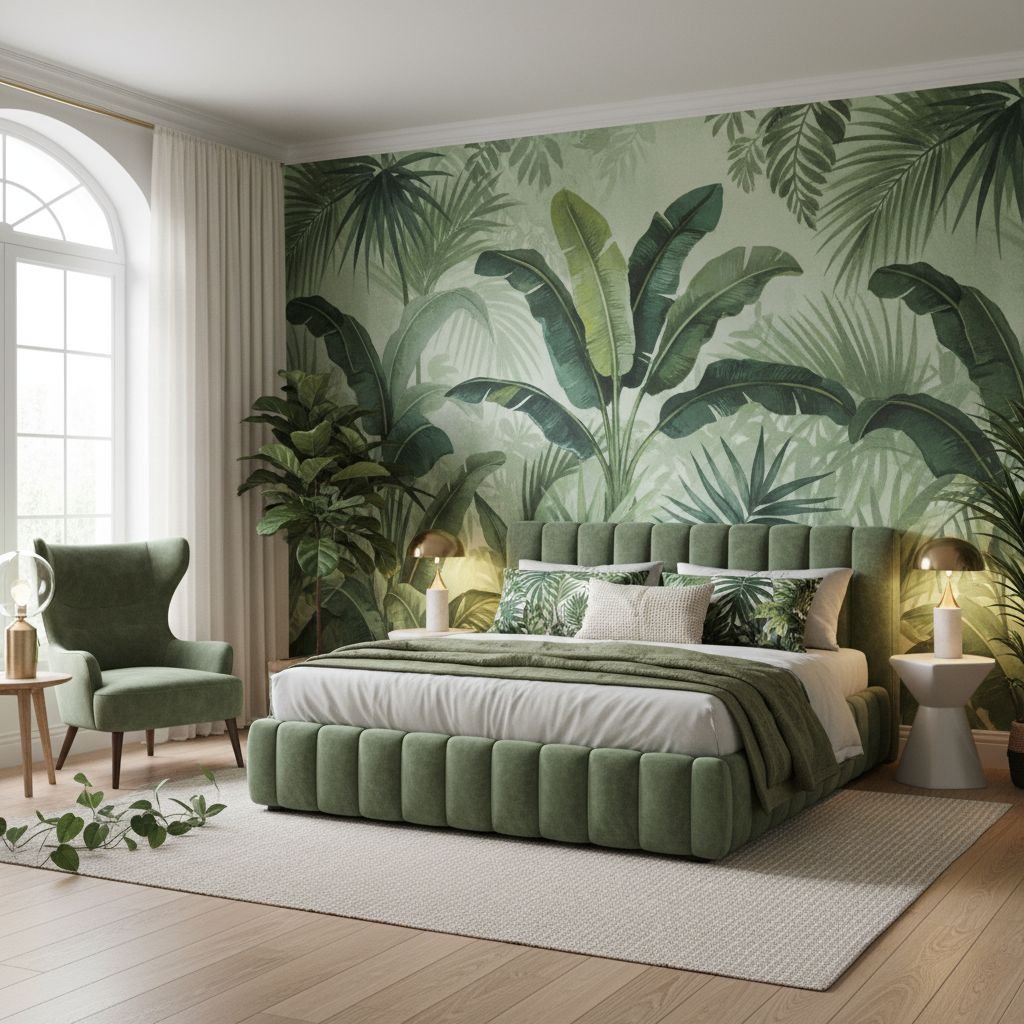
For a whimsical touch, paint the ceiling sage green and add glow-in-the-dark or gold decal stars. Alternatively, paint the ceiling a dark sage and use fiber optic lights. This creates a dreamscape above you. It is perfect for attic rooms or kids’ rooms. The green ceiling feels lower and cozier than white. It replicates the feeling of sleeping outdoors. It stimulates imagination before sleep.
Pro Tip: Keep the walls light to prevent the room from feeling like a cave.
Sage Green Macramé
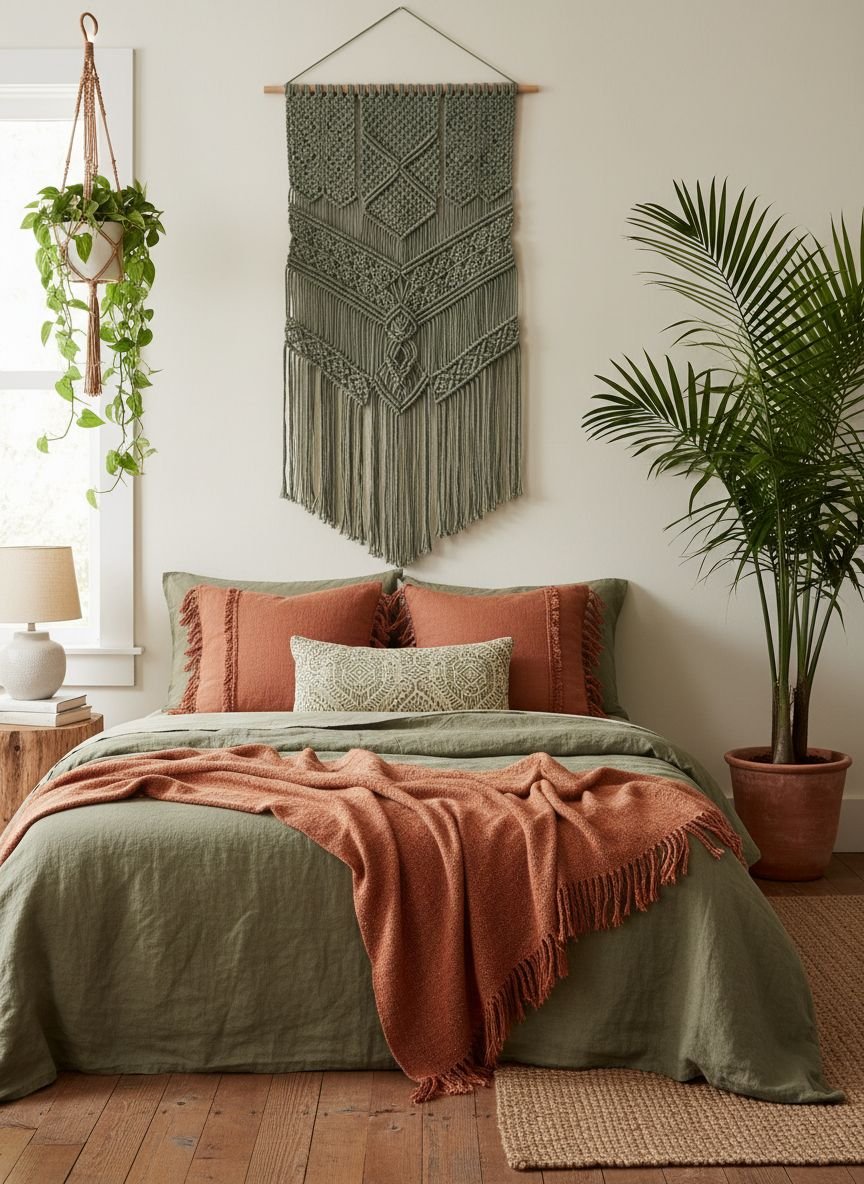
Macramé wall hangings add bohemian flair. Dip-dyed macramé in sage green adds a splash of color to the natural cotton rope. The texture is intricate and soft. It acts as a headboard alternative or fills a narrow wall space. The handmade quality adds warmth. It absorbs sound, reducing echo in the room. This is a lightweight decor option that is easy to hang.
Pro Tip: Comb out the fringe of the macramé occasionally to keep it looking neat.
Popular Asked Questions
What colors go best with sage green in a bedroom?
Sage green is very versatile. It looks best with crisp white for a fresh look, terracotta or rust for an earthy vibe, and soft pink or lavender for a calming, feminine feel. Navy blue also works well for a high-contrast, moody style.
Is sage green a good color for sleep?
Yes, sage green is one of the best colors for sleep. It mimics nature, which lowers anxiety and heart rate. It is less stimulating than red or yellow and warmer than cool greys, creating a perfect balance for relaxation.
Does sage green make a room look smaller?
Generally, no. Sage green is a light-to-medium tone that reflects some light. If you paint the ceiling and trim white, sage green walls can actually make a small room feel airier and more open compared to darker shades.
Should I choose warm or cool sage green?
This depends on your room’s lighting. If you have north-facing windows (cool light), a warm sage with yellow undertones helps the room feel cozy. If you have south-facing windows (warm light), a cool sage with blue undertones balances the heat.
Conclusion
Sage green offers a timeless solution for a restful bedroom. It connects you to nature and provides a neutral backdrop that adapts to your style changes. Whether you paint the walls, add a velvet headboard, or simply drape a knit throw, this color lowers stress and improves sleep quality. Start with one small accent and see how the energy in your room shifts.
Which of these sage green ideas would you try first in your home? Tell us in the comments below.
Follow us on Pinterest for more Bedroom inspiration.

Leave a Comment