
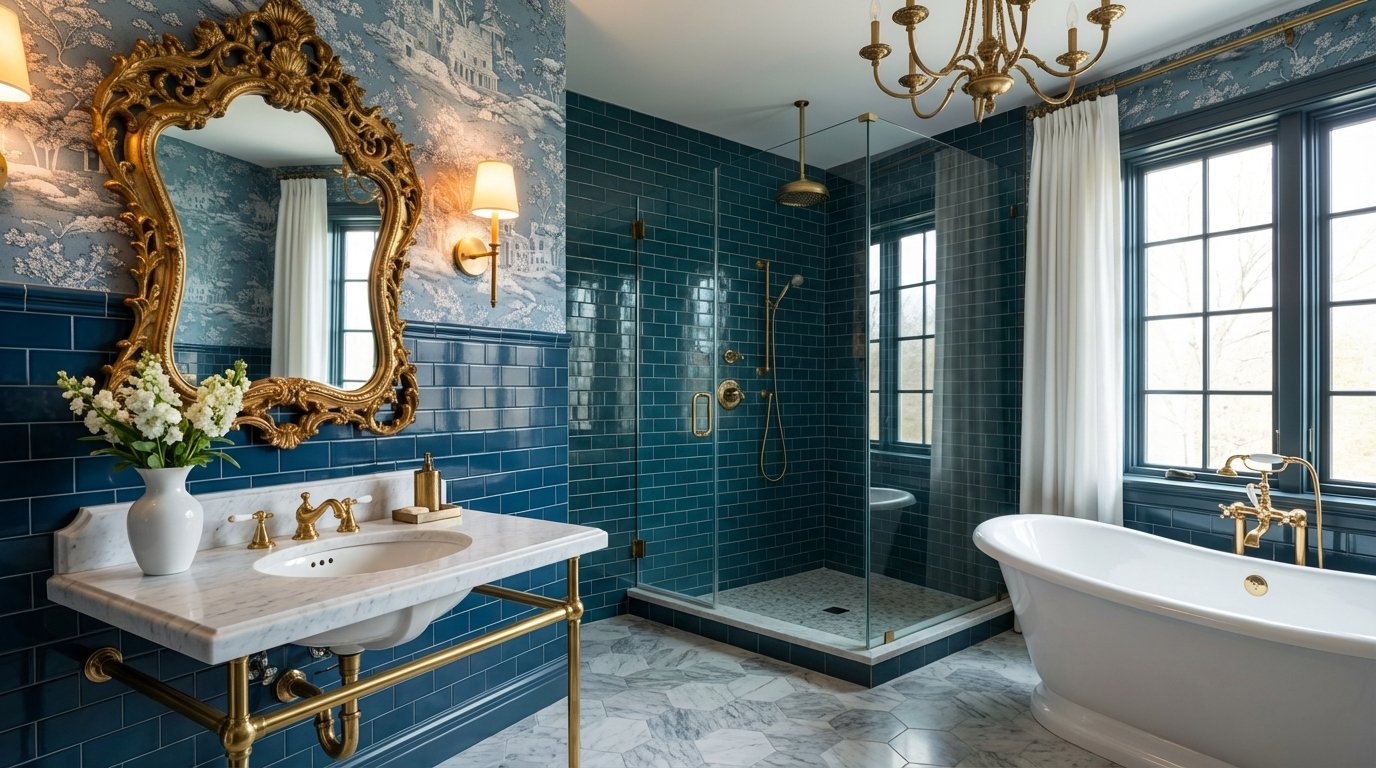
Homeowners often feel stuck between two worlds. You love the warmth of classic design but fear your bathroom will look like a museum piece. Or you crave modern clean lines but worry about creating a sterile, cold space. The solution lies in the middle. Blending traditional elements with modern functionality creates a space that feels established yet fresh. This “transitional” style increases home value and stands the test of time.
This guide provides specific, actionable design strategies to merge vintage charm with contemporary living. You will find ways to mix metals, repurpose furniture, and select timeless materials that work for actual daily life.
Key Takeaways
- Contrast Creates Depth: The most successful designs pair opposites, such as sleek glass showers against rough, vintage brick or wood.
- Hardware is Jewelry: Swapping chrome for unlacquered brass or matte black instantly bridges the gap between eras without a full renovation.
- Texture over Color: Traditional design relies on patterns and bold colors, while modern design favors neutrals. Blend them by using traditional materials (like marble) in modern, monochromatic colorways.
- Lighting Sets the Tone: Modern LED technology inside vintage-style sconces gives you the best of energy efficiency and aesthetic warmth.
Contents
- Classic Elegance Meets Modern Functionality
- Vintage Charm with Contemporary Flair
- Time-Honored Craftsmanship in Modern Settings
- Popular Asked Questions
- Conclusion
Classic Elegance Meets Modern Functionality
The Modern Clawfoot Tub
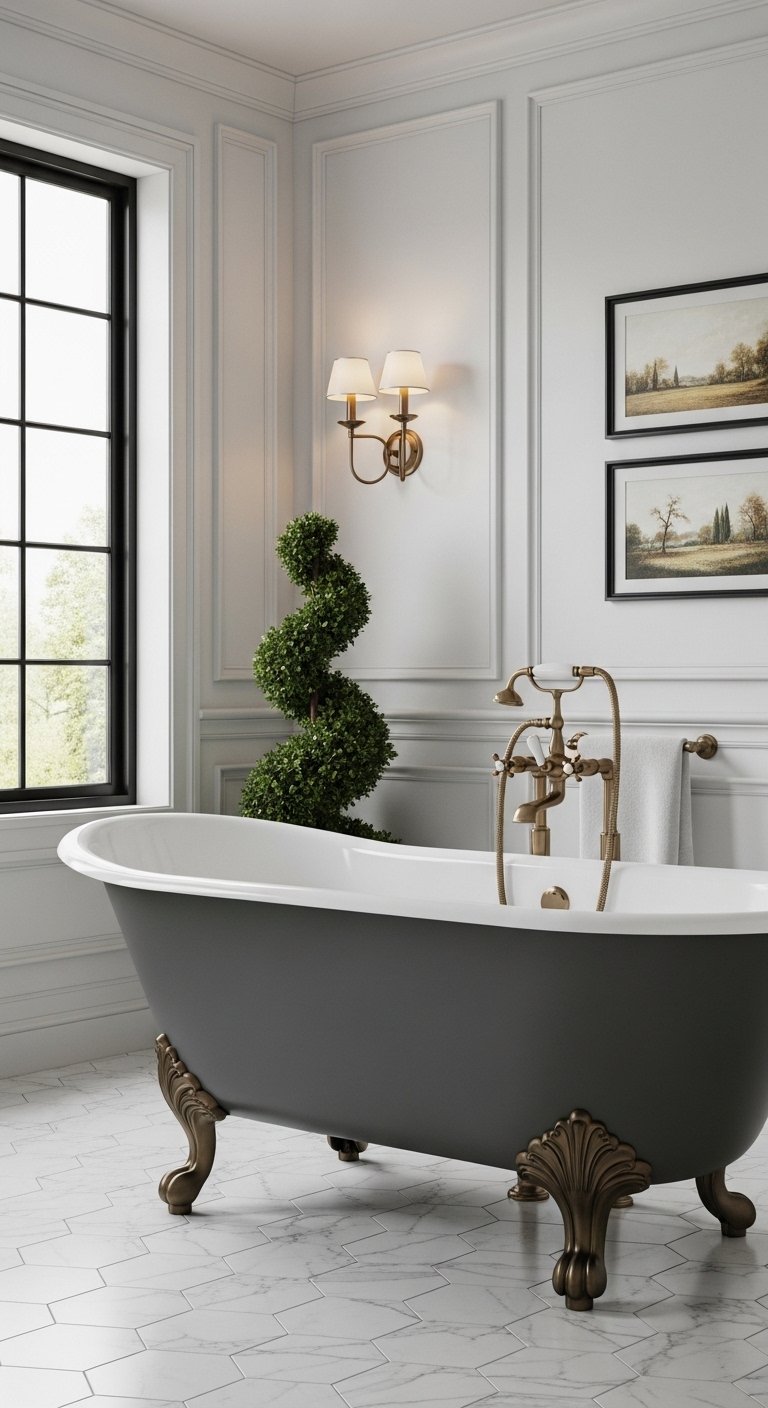
The clawfoot tub remains the ultimate symbol of traditional luxury, but modern iterations strip away the ornate detailing for a cleaner look. You can choose a tub with a smooth, matte white or black exterior rather than the intricate iron feet of the past. This creates a focal point that feels historic in shape but contemporary in finish. Place the tub against a wall of simple, large-format tiles to let the curves of the porcelain stand out.
Maintenance becomes easier with these updated styles. Traditional tubs often have hard-to-reach crevices where dust and moisture collect. New models feature seamless skirts or simplified feet that allow for quick mopping underneath. A floor-mounted tub filler in a sleek chrome or brushed nickel finish completes the setup. This pairs the romance of a soak with the practicality of high-flow modern plumbing.
Pro Tip: Choose a tub made of acrylic rather than cast iron if you are renovating a second-floor bathroom to reduce structural weight load.
Floating Marble Vanities
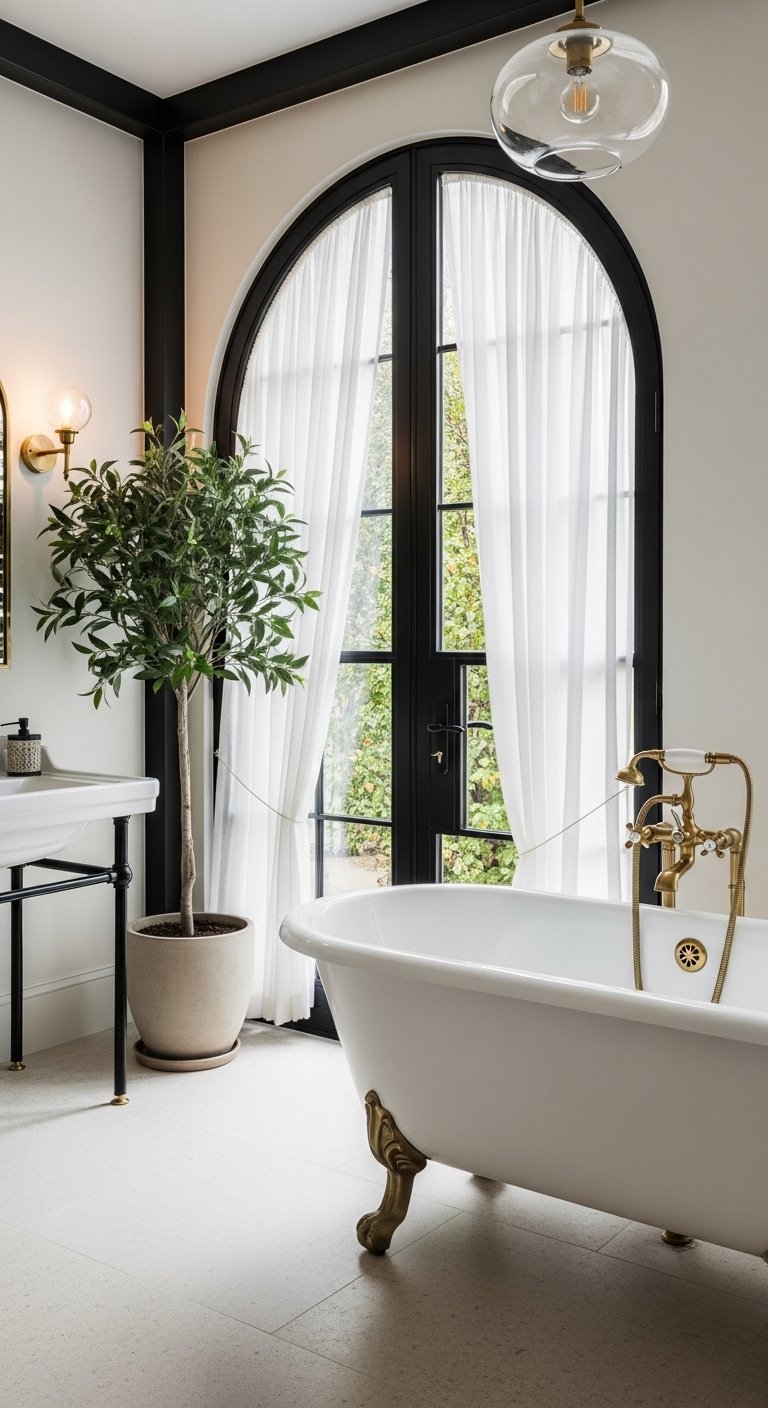
Marble has served as a staple in bath design for centuries, signaling wealth and permanence. A floating vanity updates this classic material by removing the heavy legs and cabinetry that usually anchor it to the floor. The suspension creates an illusion of more space, making even small bathrooms feel expansive. Using a thick slab of Carrara or Calacatta marble for the countertop and sink basin maintains that old-world weightiness while the floating design adds airiness.
Hidden storage systems within the floating drawers keep clutter off the counters. You get the visual impact of a solid stone block without the visual bulk. Under-cabinet lighting adds a futuristic touch that doubles as a soft nightlight. This design choice merges the heavy, tactile quality of stone with the gravity-defying aesthetics of modern architecture.
Save this idea to your Pinterest.
Frameless Glass Showers with Brass Hardware
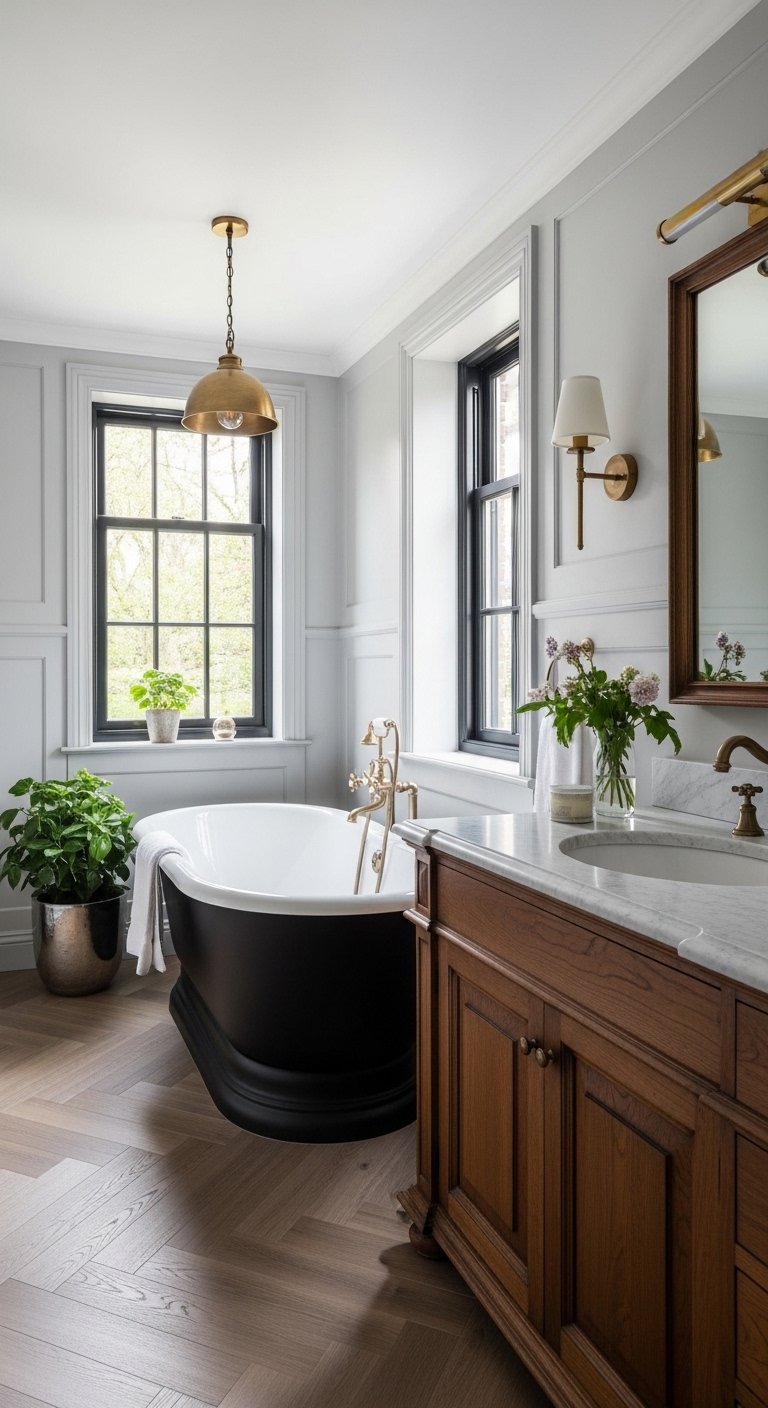
Heavy curtains or frosted sliding doors date a bathroom instantly. A frameless glass enclosure opens the room completely and puts your tile work on display. To bring in the traditional element, use unlacquered brass for the hinges, handles, and showerhead. The brass creates a warm, golden contrast against the invisible glass walls. Over time, unlacquered brass develops a patina, adding a sense of history and age to an otherwise brand-new installation.
Visual flow improves significantly with this setup. Light travels uninterrupted from the window to the door, making the brass accents sparkle. The combination works because the glass represents modern minimalism, while the brass anchors the space in tradition. You get a spa-like open feel with touches of antique charm.
Pro Tip: Treat the glass with a hydrophobic coating immediately after installation to repel water spots and reduce cleaning time.
Large-Format Subway Tile
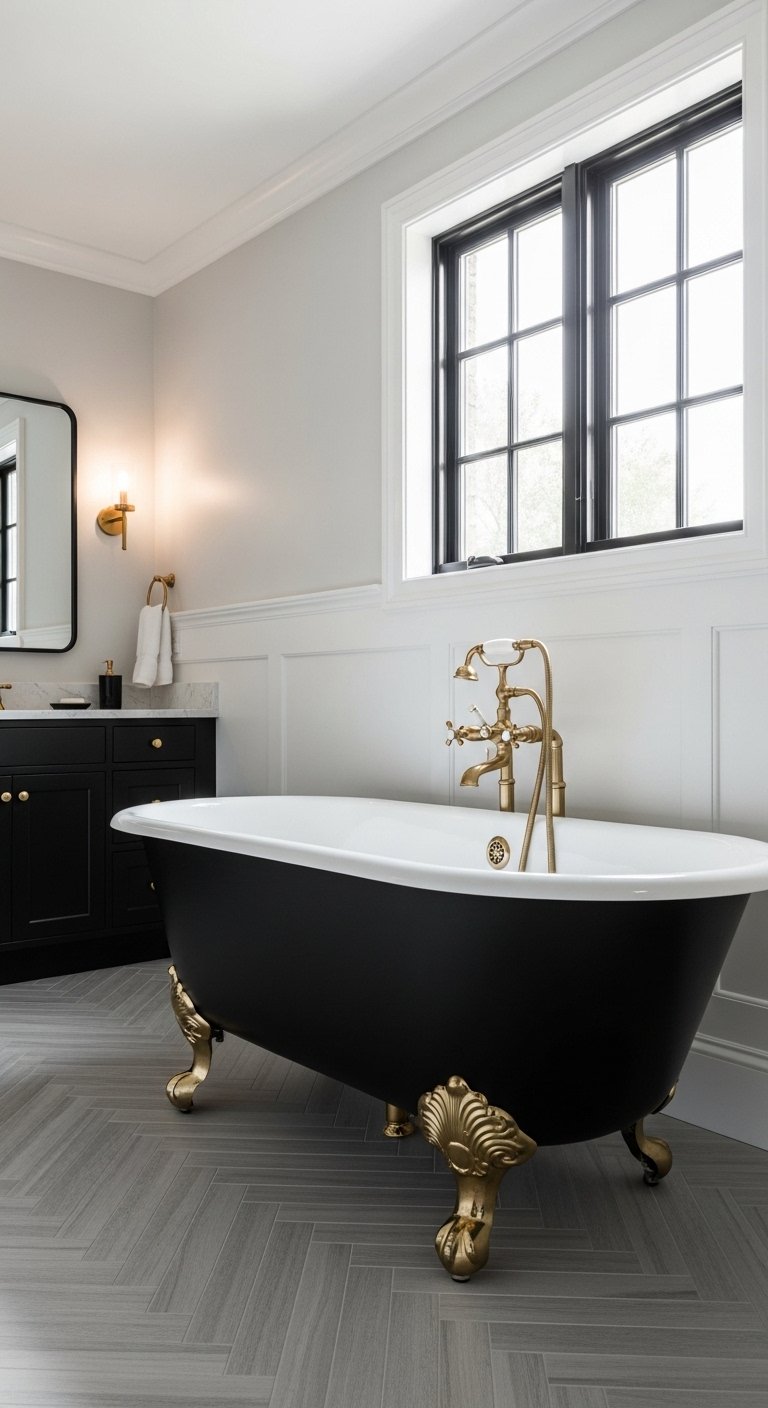
Standard 3×6 subway tile defines the Victorian sanitary movement. To update this look, stretch the proportions. Use 4×12 or even 6×18 tiles. The familiar brick pattern remains, keeping the traditional rhythm, but the larger scale reduces the amount of grout lines. Fewer grout lines mean a cleaner, less busy visual field and significantly less scrubbing.
Laying these larger tiles in a vertical stack rather than a horizontal running bond pushes the look even further toward the modern. This technique draws the eye upward, making low ceilings feel higher. White ceramic remains the classic choice, but the shift in scale and orientation signals that the space is current. It honors the sanitary roots of the bathroom while embracing modern geometric preferences.
Smart Toilets in Vintage Settings
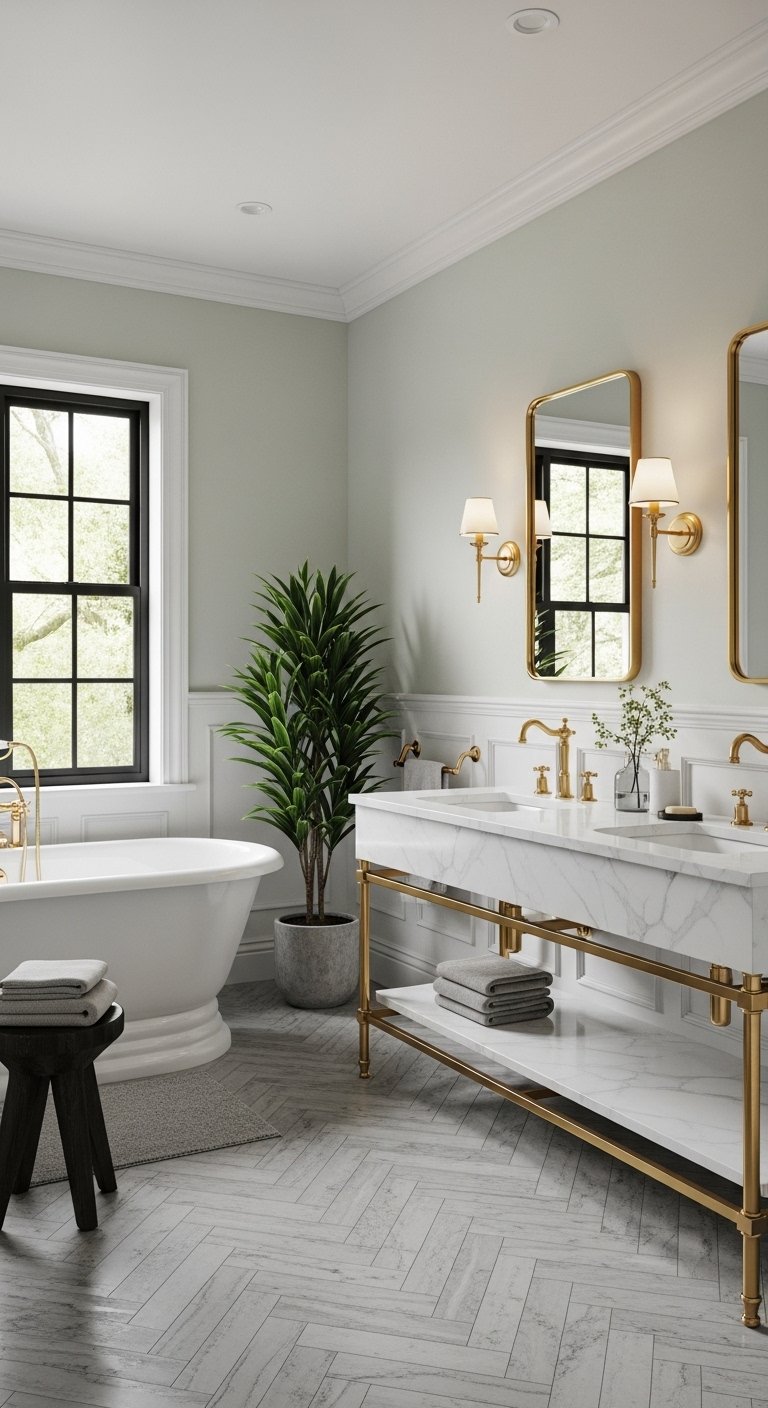
Nothing disrupts a vintage aesthetic like a bulky, plastic-looking toilet. Manufacturers now design smart toilets with skirted trapways and classic tank lines that hide advanced technology. You can have heated seats, bidet functions, and self-cleaning capabilities without a spaceship sitting in your powder room. The key lies in selecting a model with a ceramic white finish and a traditional lever flush handle, even if the flush mechanism is digital.
Tucking a smart toilet into a bathroom with wainscoting and crown molding creates a functional paradox. The room looks 1920, but functions 2025. This hidden luxury improves daily hygiene and comfort without breaking the design immersion. It proves that you do not need to sacrifice modern conveniences to maintain a period-correct atmosphere.
Herringbone Wood-Look Tile
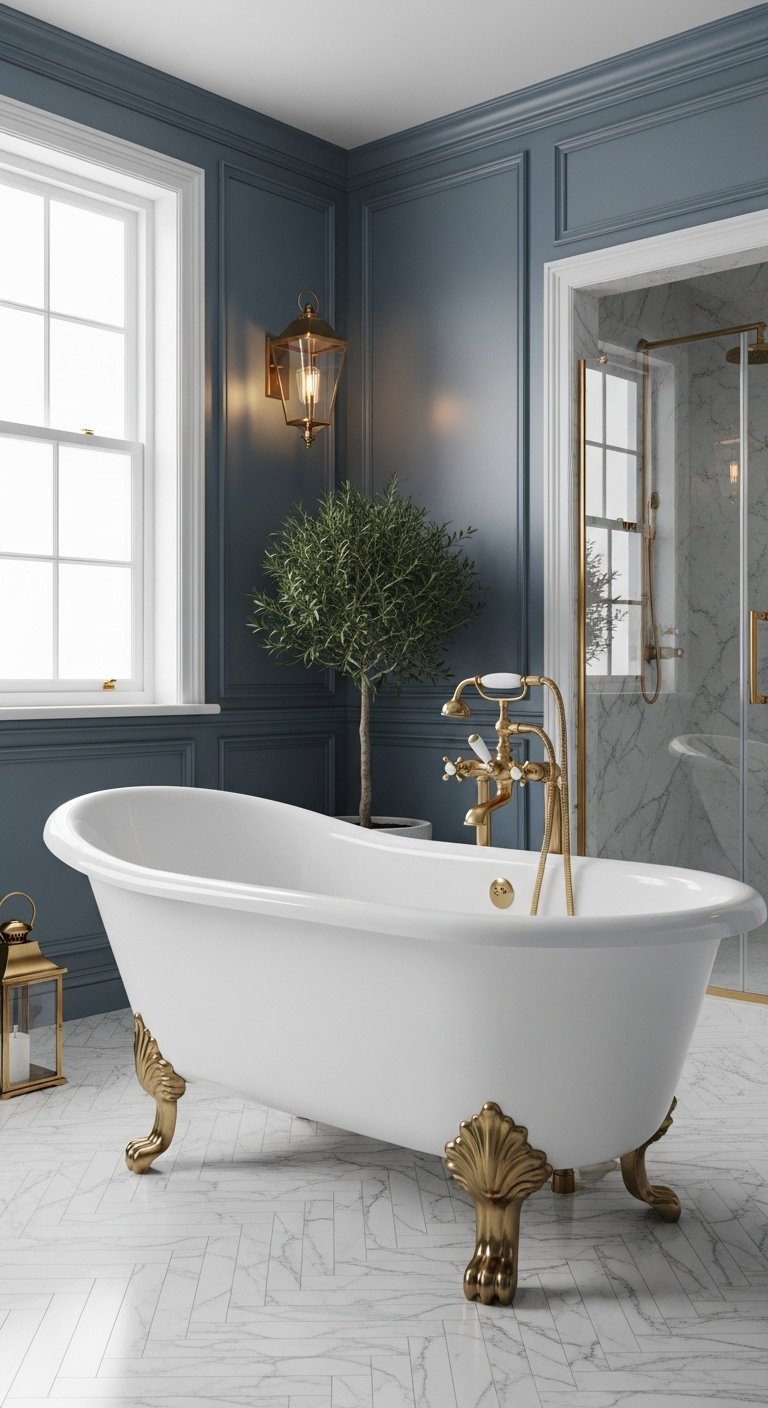
Hardwood floors in bathrooms historically spell disaster due to warping and water damage. Porcelain tile that mimics wood grain offers the perfect solution. Laying this tile in a herringbone pattern invokes the grand parquet floors of French estates. The pattern is undeniably traditional, but the material is virtually indestructible and waterproof.
Select a tile with a matte finish and rectified edges for tight grout lines. This minimizes the “tile look” and maximizes the realistic wood appearance. A light oak or walnut tone warms up the typically cold surfaces of a bathroom. This floor serves as a neutral, organic base that allows you to layer both modern fixtures and antique accessories without clashing.
Pro Tip: Use a grout color that matches the darkest tone in the wood grain to create a seamless, realistic shadow effect.
The Double Sconce Update
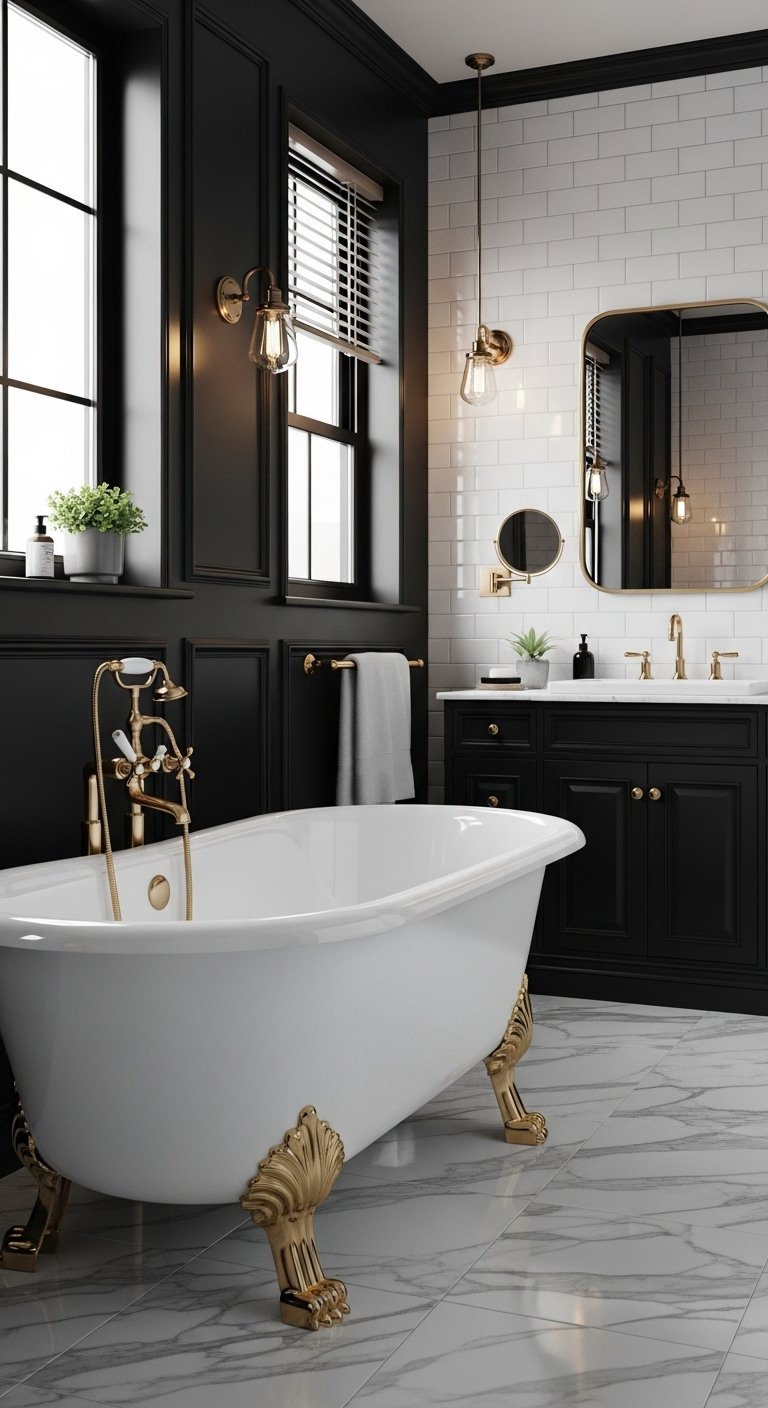
Lighting around the vanity often suffers from bad placement. The traditional approach uses sconces flanking the mirror, which provides the most flattering illumination for grooming. Update this classic layout by choosing fixtures with simplified silhouettes. Think clear glass globes on straight metal arms or sleek cylindrical shades.
These stripped-down shapes remove the fussiness of crystal drops or fabric shades found in older homes. The symmetry remains classic, but the fixture itself reads modern. Installing them directly through a wall-to-wall mirror creates a high-end, custom look often seen in luxury hotels. This technique doubles the light output and adds depth to the room.
Minimalist Shaker Cabinetry
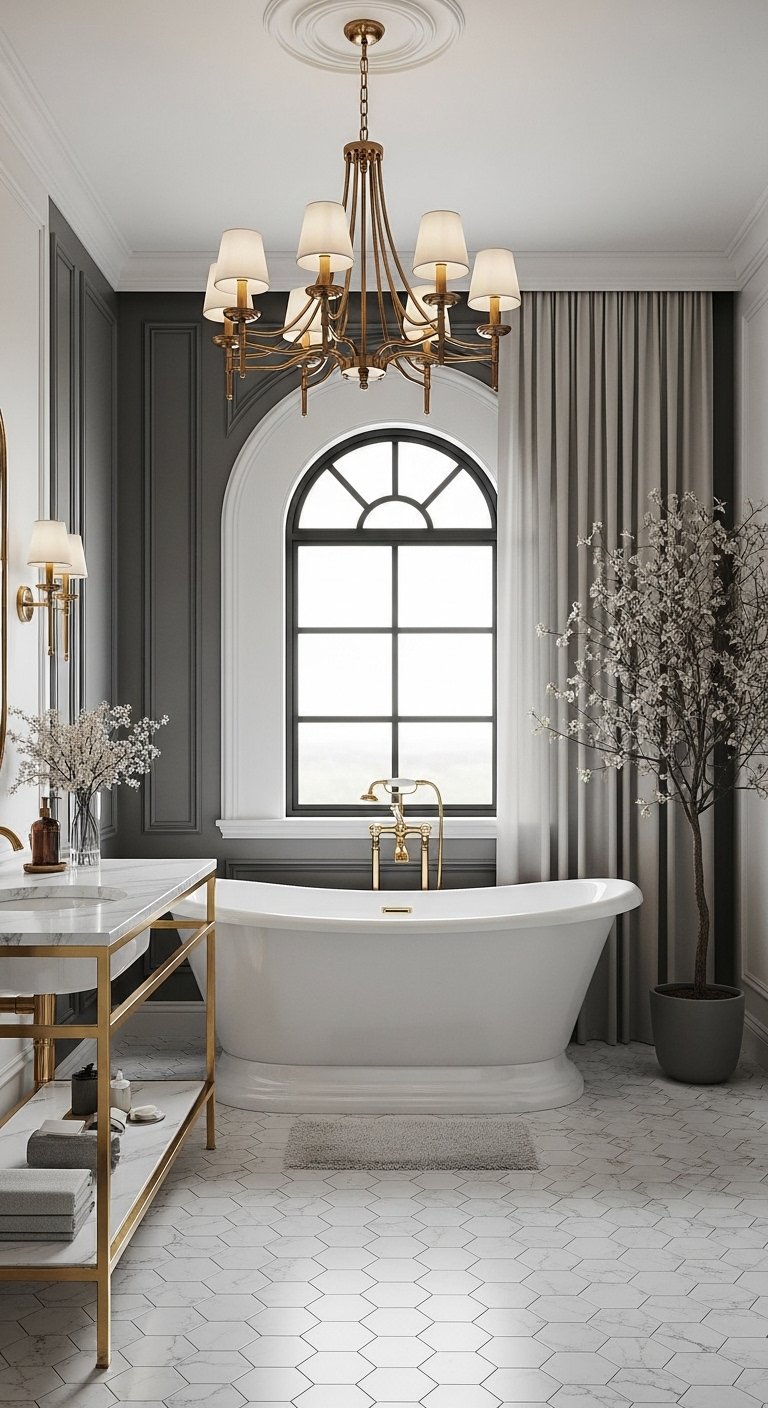
Shaker style originated in the 18th century, defined by utility and simplicity. It transitions perfectly into modern design because it lacks ornamentation. A Shaker vanity painted in a deep charcoal, navy, or forest green bridges the gap. The recessed panel doors provide just enough shadow and detail to avoid the flatness of slab doors, yet they remain clean and uncluttered.
Pairing these cabinets with sleek, edge-pull hardware instead of knobs modernizes the profile further. The dark paint choice contrasts with white countertops, a hallmark of modern design, while the wood construction honors traditional craftsmanship. This cabinet style works in every home era, from farmhouses to city apartments.
Save this idea to your Pinterest.
Comparison: Genuine Stone vs. Porcelain Look-alikes
| Feature | Genuine Marble/Stone | Porcelain Look-alike |
|---|---|---|
| Aesthetic | Unmatched depth, unique veining, cool to touch. | High-quality prints are realistic but lack depth. |
| Maintenance | Requires sealing annually; stains and etches easily. | Zero maintenance; impervious to stains and acids. |
| Cost | High ($50-$150+ per sq ft). | Moderate ($5-$15 per sq ft). |
| Durability | Chips or cracks with heavy impact. | Extremely hard and durable. |
| Best For | Low-traffic master baths, vanity tops. | Kids’ bathrooms, showers, floors. |
Vintage Charm with Contemporary Flair
## Repurposed Dresser Vanities
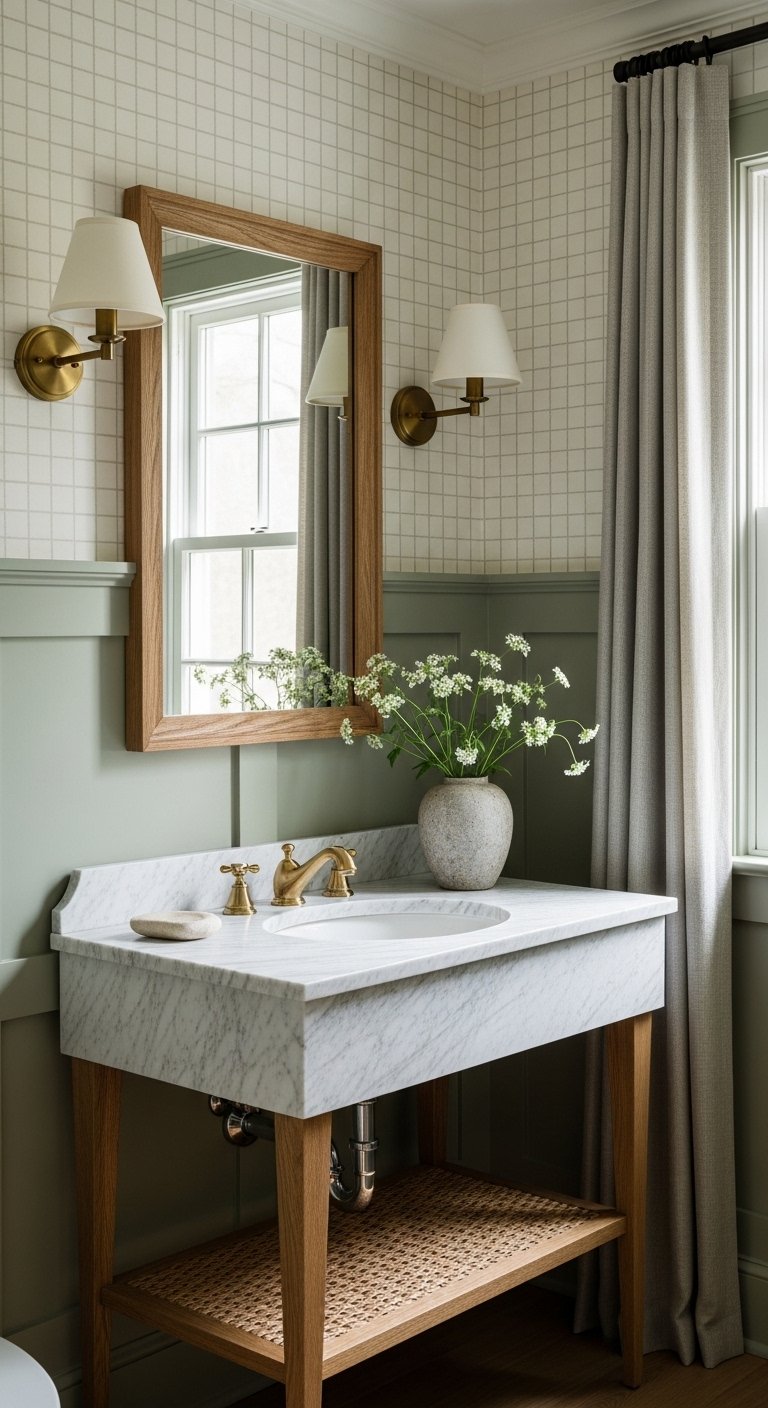
Transforming an antique dresser into a vanity brings instant soul to a sterile bathroom. The rich wood grain, scratches, and detailed carving of a Victorian or mid-century chest act as a counterpoint to sleek modern tiles. To make it functional, a contractor cuts the top to fit a sink and seals the wood against moisture. A vessel sink sitting on top creates a modern “sculptural” moment against the vintage furniture.
This juxtaposition works because it surprises the eye. You expect standard cabinetry, but see a piece of living room furniture. Use a modern, tall faucet to clear the vessel sink rim. The storage inside might need modification to accommodate plumbing, but the exterior visual impact is worth the effort. It creates a bespoke look that you cannot buy from a big-box store.
Penny Tile with Graphic Borders
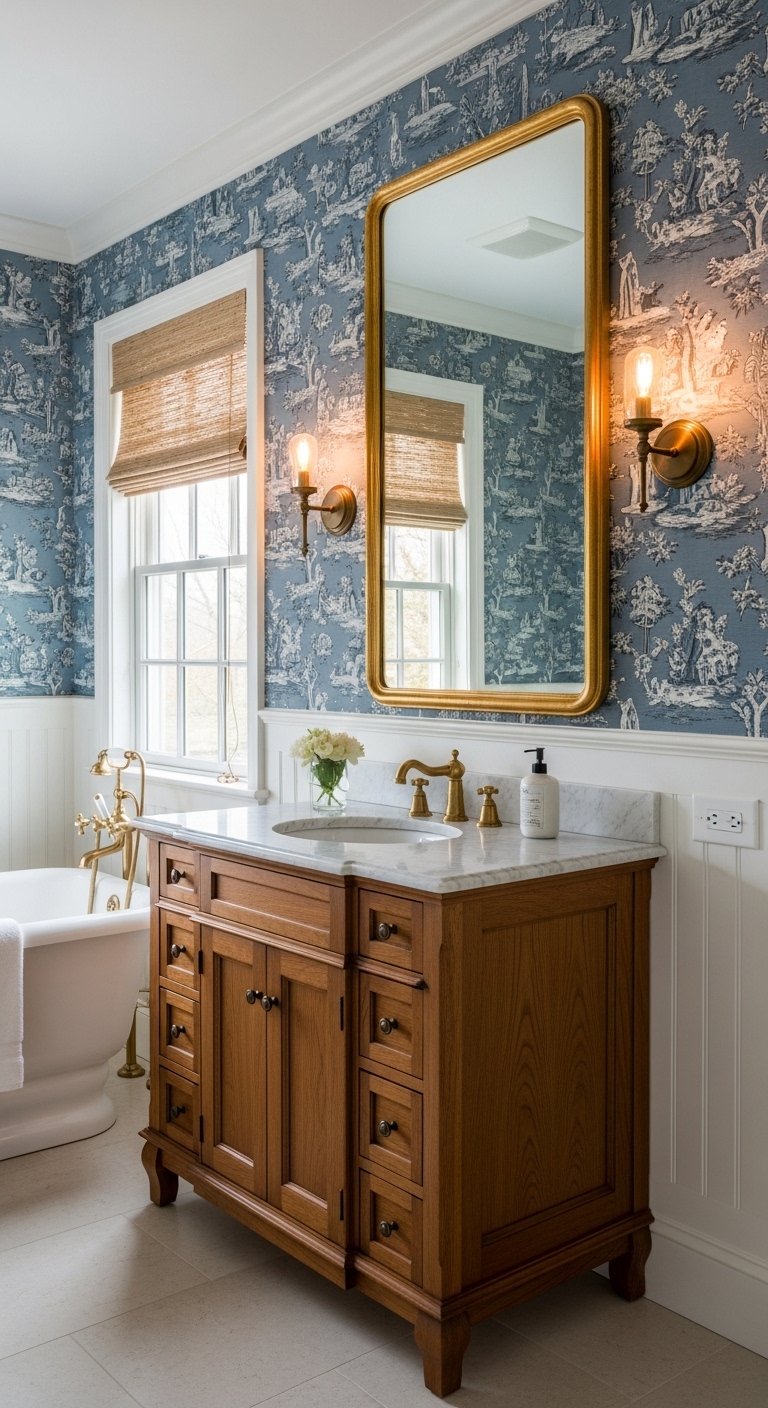
Penny tiles were a staple in early 20th-century flooring. They are affordable, non-slip, and charming. To bring them into the current decade, use them to create bold, custom text or geometric borders. Instead of a plain white floor, inset a black border or write “WASH” or the house number in contrasting tile.
The graphic element borrows from the typography trends of modern graphic design. Keeping the rest of the room simple allows the floor to become the art. This is a high-labor, low-material-cost project perfect for DIYers. The repetitive circles add texture that feels pleasant underfoot, while the custom design makes the space feel personalized and intentional.
Pro Tip: Use a charcoal or grey grout rather than white. It highlights the penny shape better and hides the inevitable discoloration that happens on bathroom floors.
Matte Black Meets Victorian
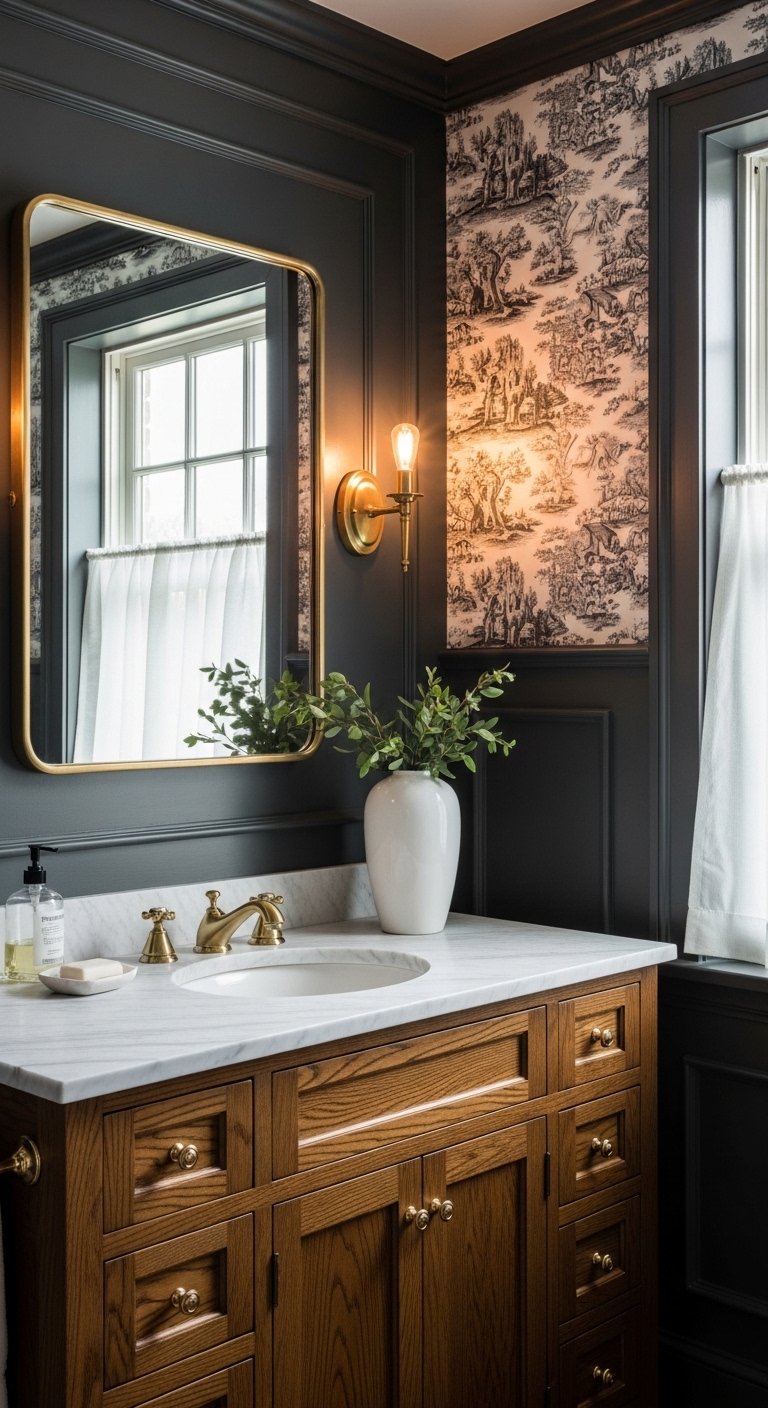
Victorian design is known for floral patterns, pastels, and complexity. Matte black hardware cuts through that sweetness with a sharp, industrial edge. Replacing porcelain knobs or polished brass with matte black faucets, towel bars, and door handles grounds a flowery room. The black acts as an anchor, preventing the space from looking like a dollhouse.
Apply this to shower frames or lighting fixtures as well. The high contrast between soft Victorian wallpapers and rigid black metal creates a dynamic tension. It signals that the homeowner respects the architecture but lives firmly in the present. This is one of the easiest, most reversible changes you can make to update a traditional bathroom.
Arch Mirrors over Rectangular Sinks
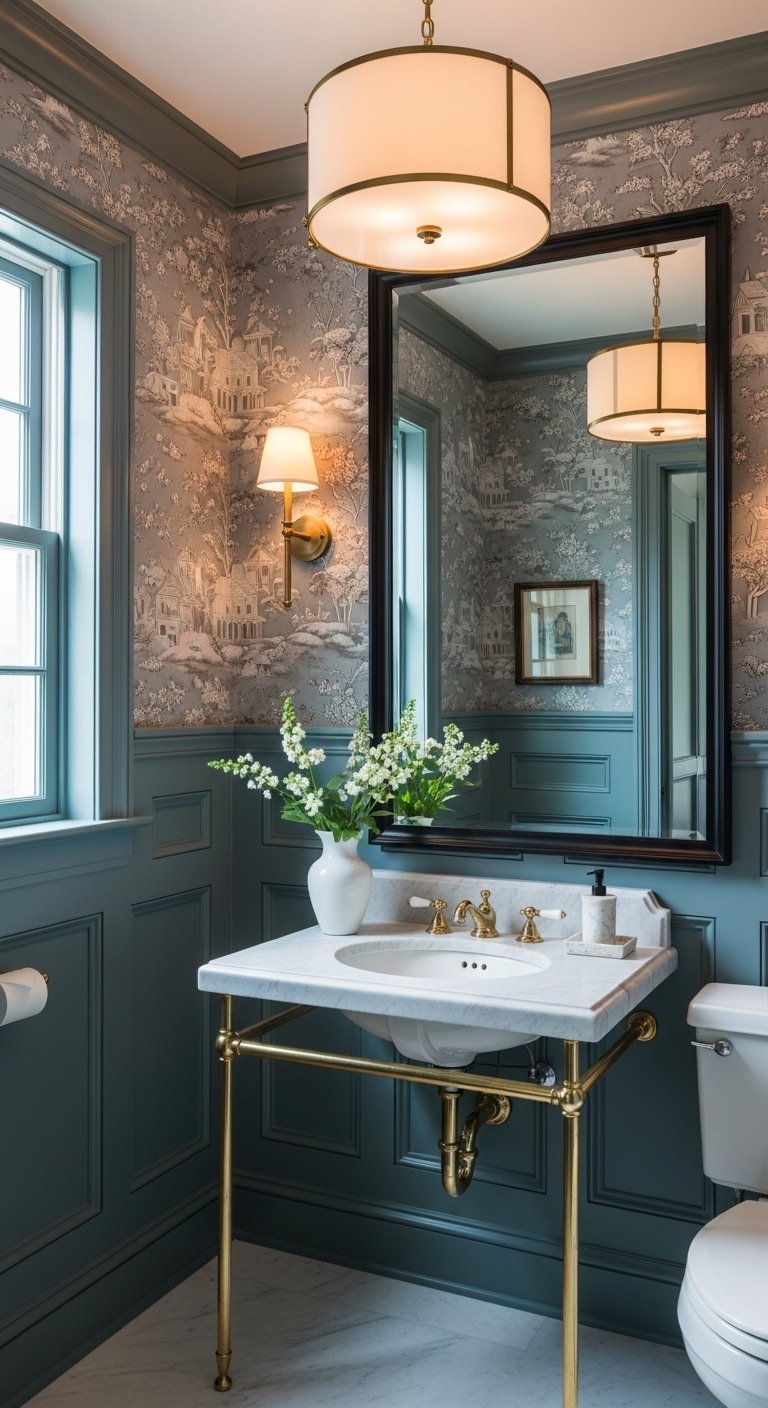
Rectangles dominate bathroom design: tiles, vanities, and rugs usually feature 90-degree angles. Introducing an arched mirror softens these hard lines. The arch is a classical architectural shape reminiscent of Roman aqueducts and cathedral windows. When placed above a sharp, rectangular modern sink, it balances the composition.
Choose a mirror with a thin metal frame or no frame at all to keep the look current. The curve draws the eye up, breaking the monotony of the horizontal lines in the tile and vanity. This simple geometry switch makes the vanity area feel more organic and welcoming without requiring any structural changes.
Wallpaper in the Water Closet
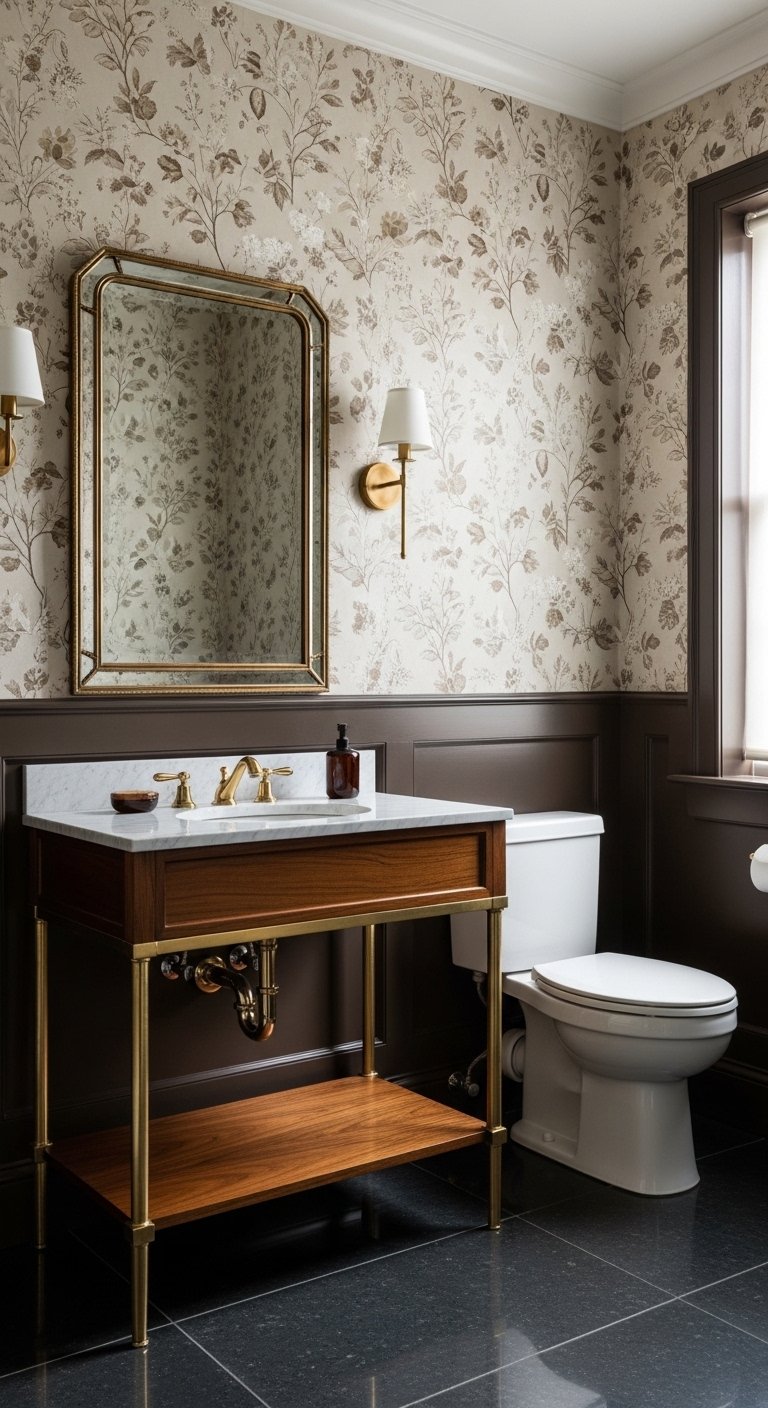
Small, enclosed toilet rooms (water closets) or powder rooms are the perfect places to take risks. Traditional Chinoiserie or Toile de Jouy wallpapers feature intricate scenes and patterns. In a main living area, these might feel overwhelming. In a small bathroom, they create a “jewel box” effect.
Pair this busy, historic wall covering with ultra-modern fixtures. A wall-hung toilet and a minimalist pedestal sink let the wallpaper shine without competition. The lack of moisture from a shower in a powder room means you can use standard wallpaper without fear of peeling. This design choice turns a utilitarian space into a conversation starter.
## Industrial Pendant Lighting
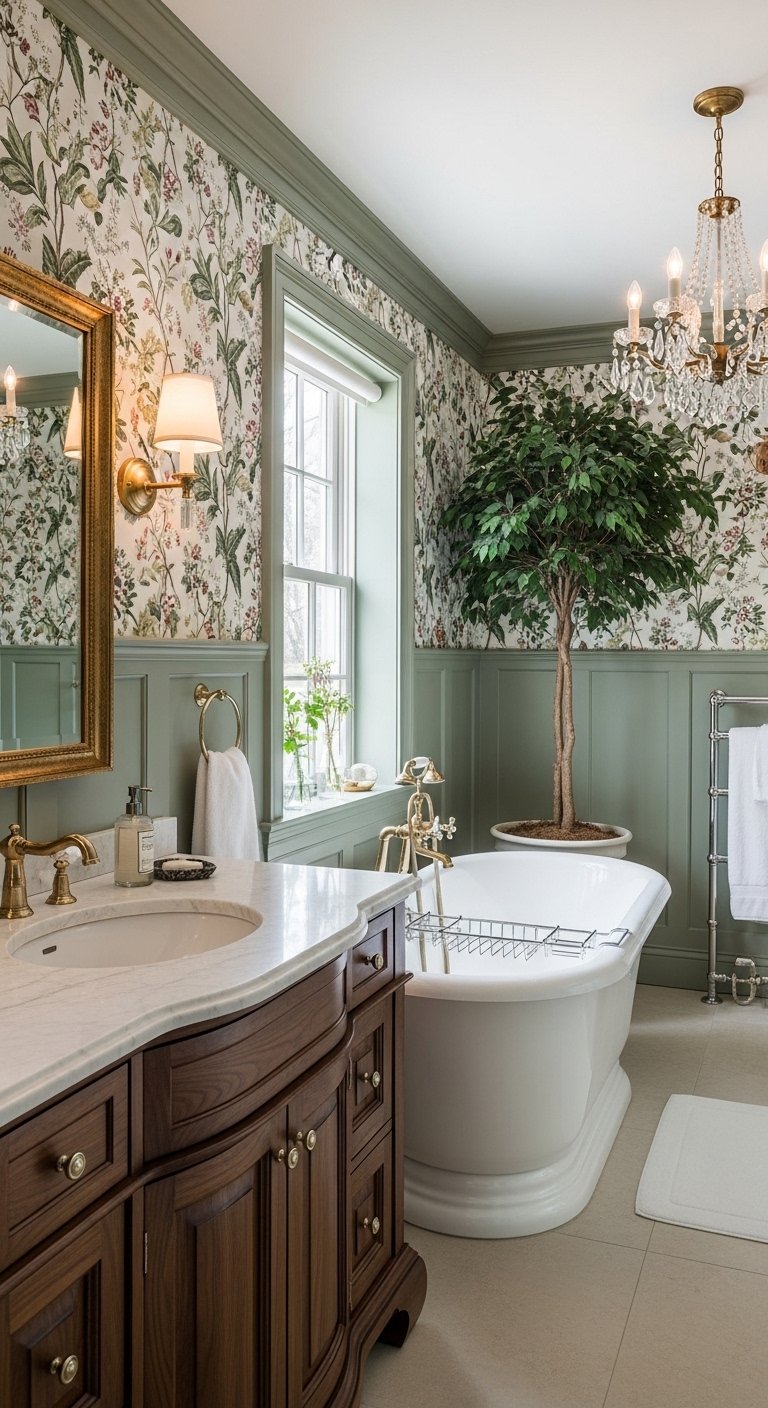
Traditional bathrooms often rely on flush mounts or sconces. Hanging an industrial-style pendant light over the vanity or near the tub adds a layer of unexpected vertical interest. Look for spun metal shades, exposed bulbs, or wire cages. These elements recall the factories of the early 1900s but are now staples of modern loft design.
The cord or chain allows you to adjust the height, bringing the light source closer to where you need it. This works exceptionally well in bathrooms with high ceilings, lowering the visual center of the room to human scale. It adds a touch of grit to a room that is otherwise filled with smooth, polished surfaces.
Save this idea to your Pinterest.
Exposed Plumbing with Clean Lines
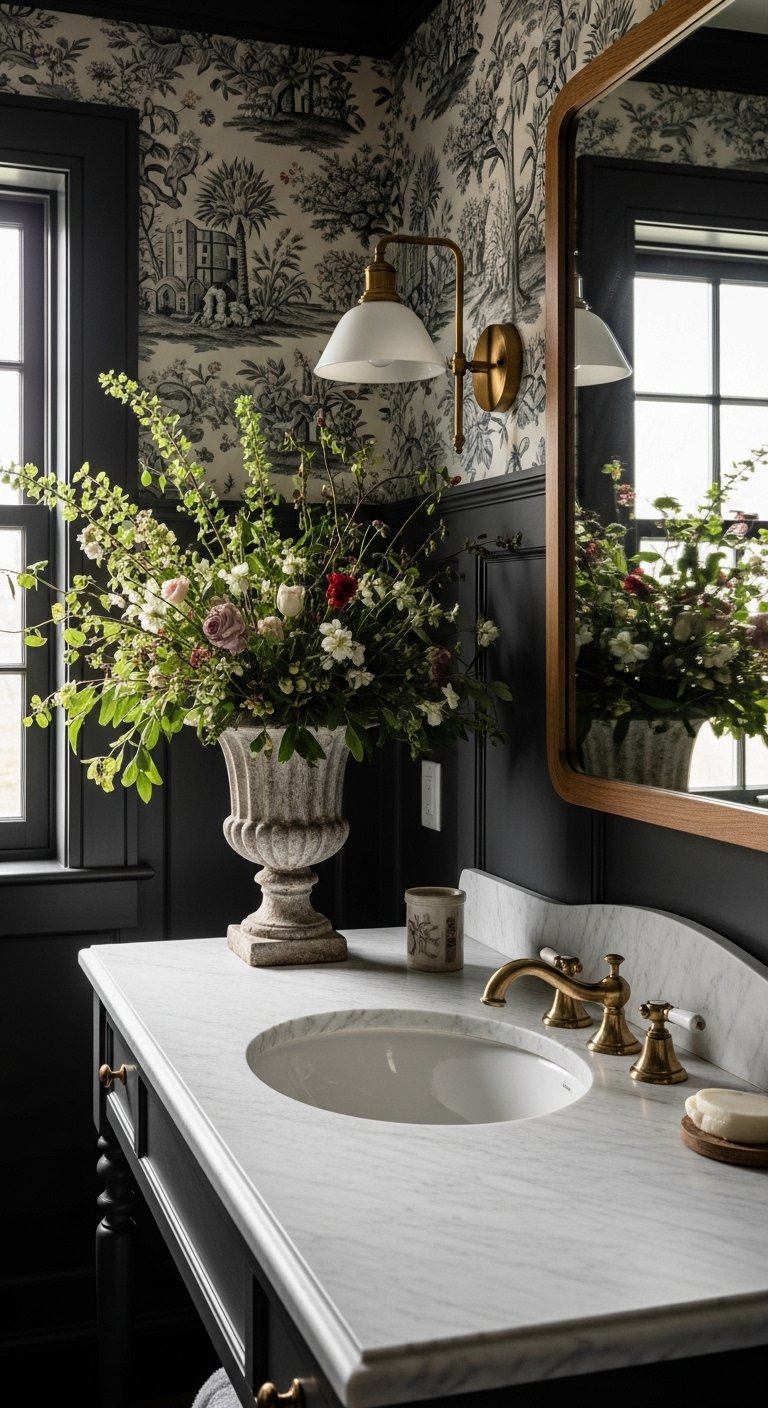
Hiding pipes behind walls is a modern standard, but exposing them celebrates the machine aesthetic of the early industrial age. An exposed shower system, known as a rigid riser, shows the water’s path. To keep this from looking messy, choose a system with very straight lines and right angles, rather than the curvy, decorative pipes of the Victorian era.
Finish matters here. Polished chrome or nickel keeps the look bright and clean. This setup implies honesty in construction—you see exactly how the room works. It pairs beautifully with simple subway tile, allowing the metal pipes to act as the primary decoration on the wall.
Dark Grouted Hexagons
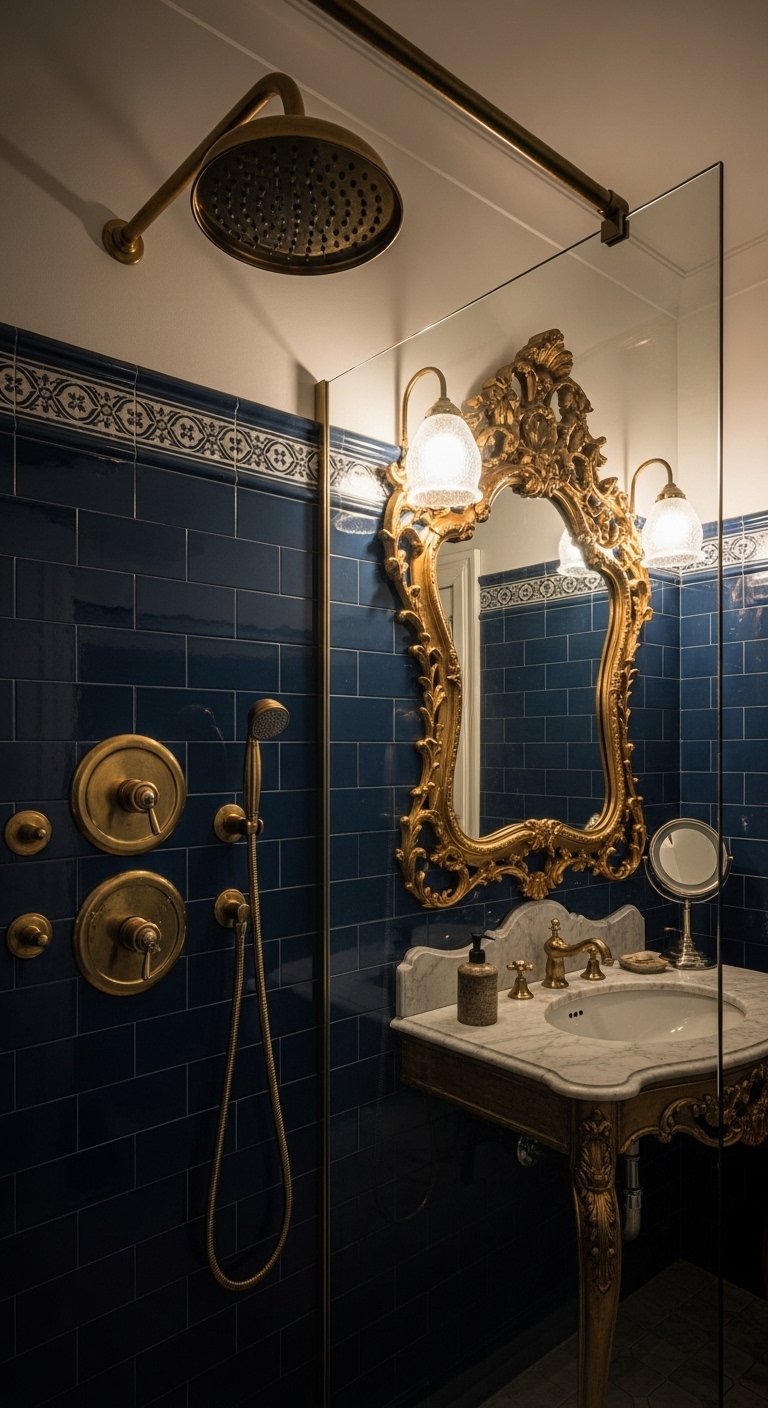
White hexagonal tile is as traditional as it gets. Using dark grey or black grout completely transforms it. The contrast emphasizes the honeycomb geometry, turning a subtle floor into a graphic statement. This is a practical choice as well; white grout on a floor eventually turns grey. Starting with dark grout keeps the floor looking new for years.
The high-contrast grid creates a visual vibration that feels energetic and modern. It works well in small bathrooms because the pattern distracts the eye from the tight dimensions. Combine this with a classic pedestal sink and you have a perfect blend of 1920s structure with 2020s graphic sensibility.
Pro Tip: Apply a grout sealer immediately after the grout cures to prevent the dark pigment from staining the white tile surface during cleaning.
Get The Look: Vintage Modern Essentials
- Materials: Unlacquered brass hardware, Matte black faucets, Carrara marble (or quartz look-alike), Walnut wood accents.
- Colors: Soft white, Charcoal grey, Navy blue, Forest green.
- Textures: Woven baskets, Linen towels, Glass canisters, Ceramic trays.
Time-Honored Craftsmanship in Modern Settings
Floor-to-Ceiling Wainscoting
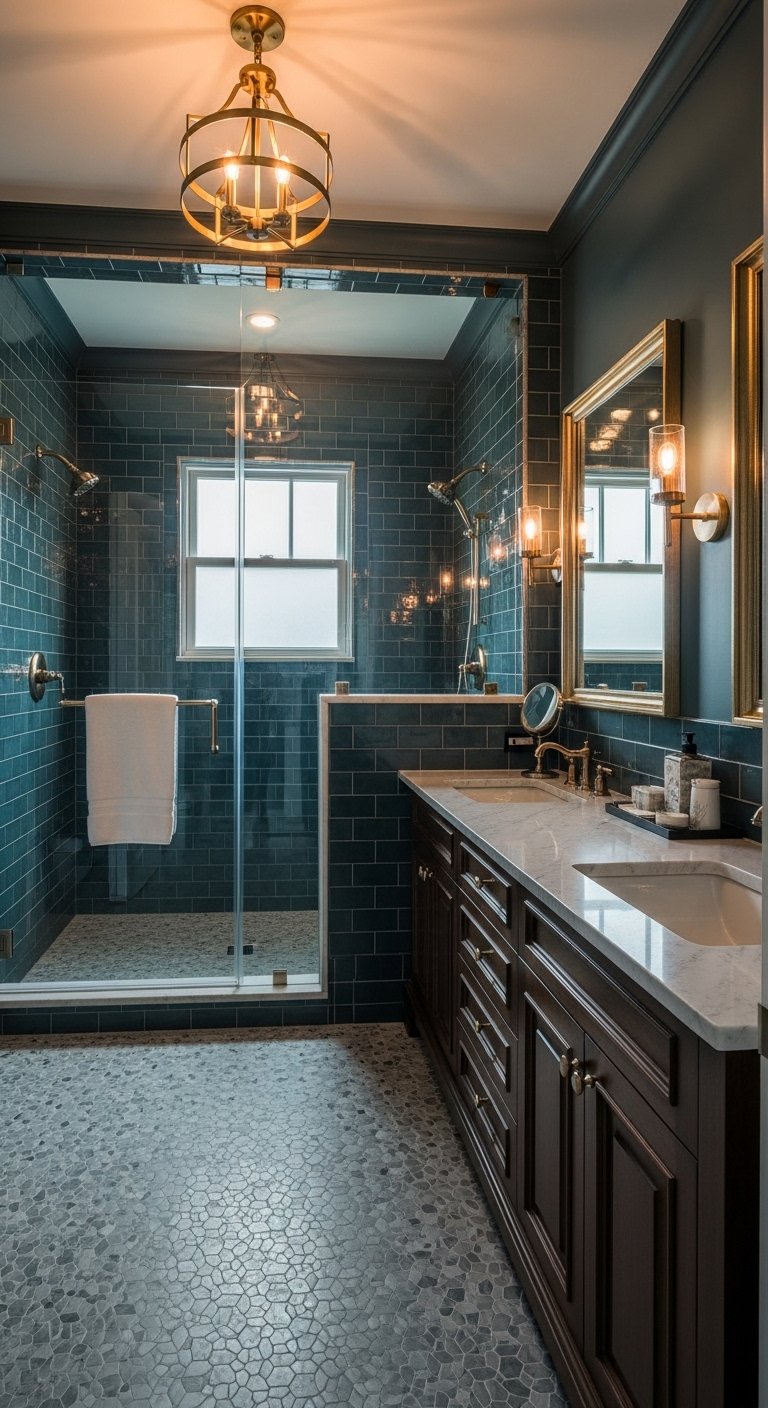
Wainscoting usually stops at chair-rail height. Taking tongue-and-groove or board-and-batten paneling all the way to the ceiling creates a modern, monolithic texture. It elongates the room visually. When painted in a crisp white or a moody monochromatic color, the vertical lines add rhythm without chaos.
This architectural detail adds insulation and sound dampening, a practical benefit in older homes. It provides a durable surface that withstands moisture better than drywall. By covering the entire wall, you unify the space, making weird corners or uneven walls disappear behind a veil of structured carpentry.
Concrete Sinks on Antique Stands
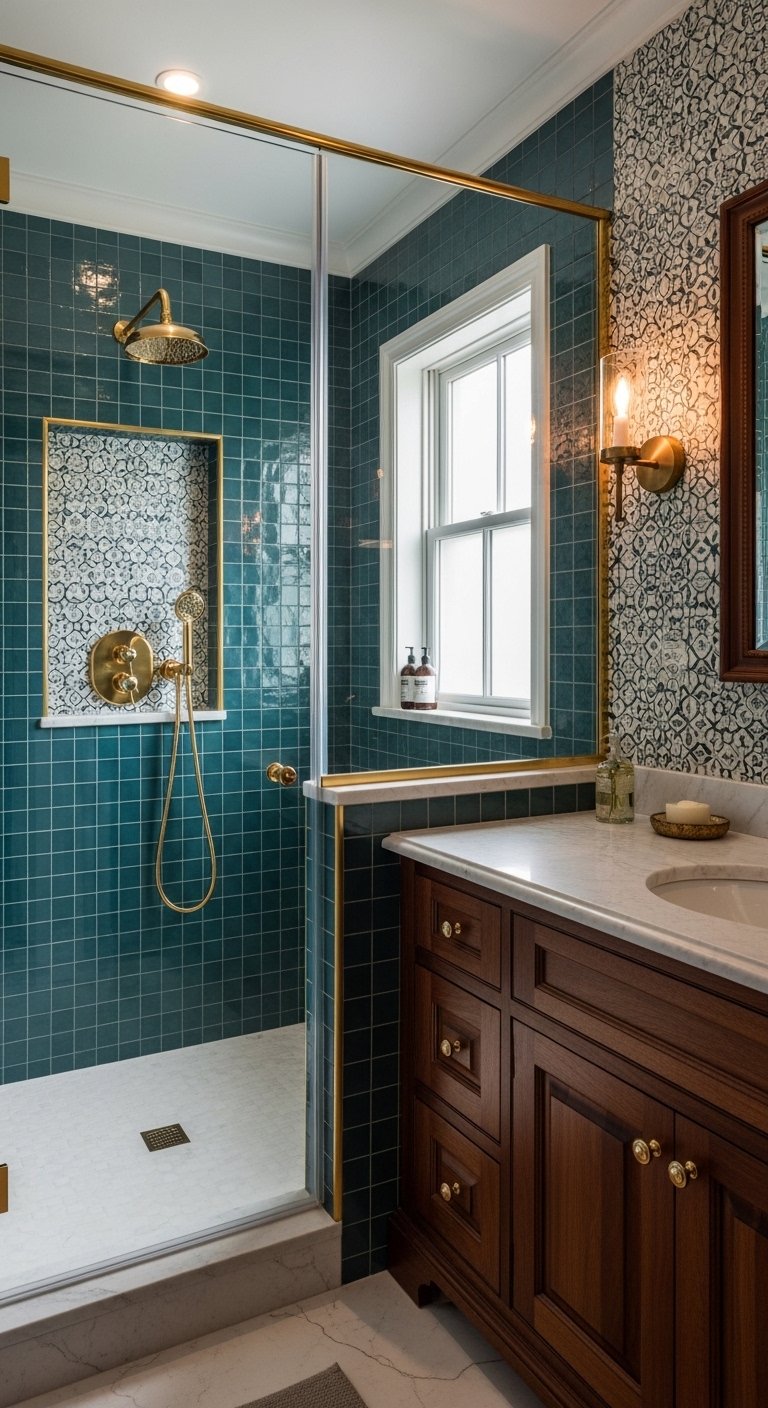
Concrete is the definitive material of modern brutality and industrialism. Casting a sink out of concrete results in a raw, imperfect texture. Placing this heavy, modern basin on top of a delicate, antique metal washstand creates a stunning juxtaposition of mass and lightness.
The grey tones of the concrete temper the ornateness of the stand. You get the durability of stone with an edgy, urban feel. Concrete sinks can be custom-cast to fit odd sizes, making them a problem-solver for vintage renovations where standard vanity sizes do not fit.
Mixed Metal Finishes
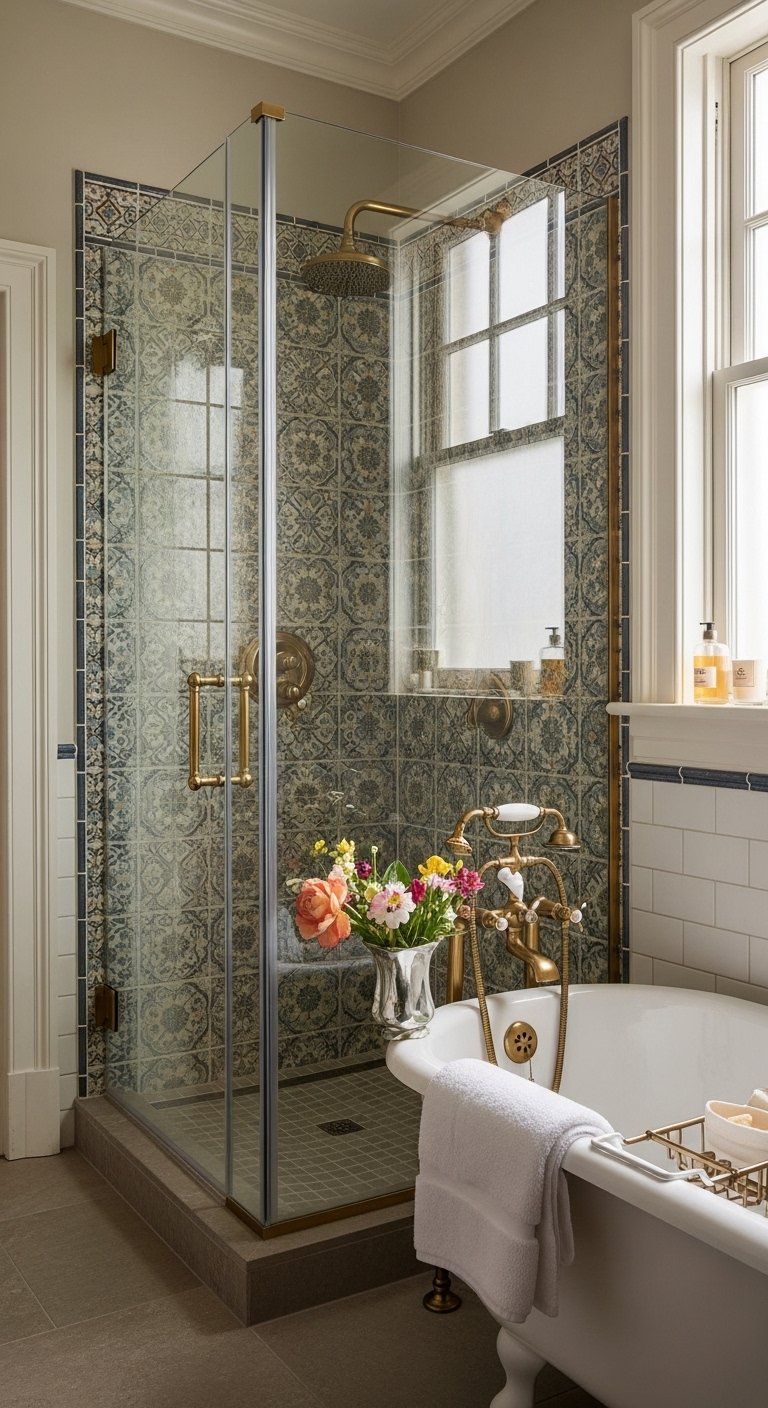
Old rules dictated that all metal finishes in a bathroom must match. The new school of design encourages mixing metals to create a curated, collected look. Pair a polished nickel faucet (warm, traditional) with matte black light fixtures (modern, cool). Or mix brass cabinet pulls with chrome plumbing.
The secret is to keep the styles distinct. Let the plumbing be one finish and the accessories another. This adds layers to the room. It prevents the “builder-grade” look where everything came from a single matching set. It suggests the room evolved over time, a hallmark of traditional character.
The Wet Room Layout
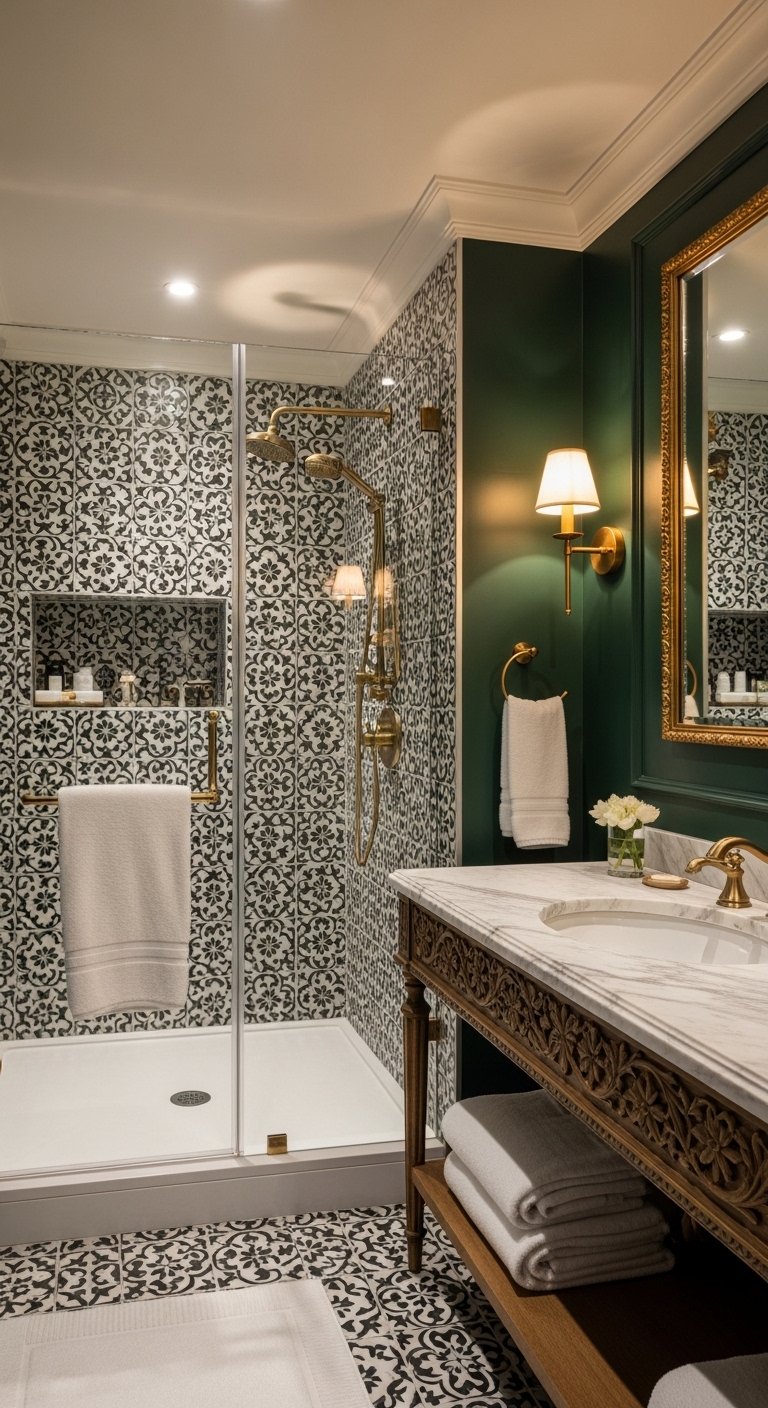
A wet room places the shower and tub in a single, waterproofed zone, often behind a glass partition or completely open. This is a very modern, European concept. Using traditional materials like slate, travertine, or handmade ceramic tile in this layout grounds the futuristic concept.
You gain massive functionality in small spaces by removing the shower curb and tub deck. The room feels larger because the floor material continues continuously from the vanity area into the shower. It is the ultimate accessibility upgrade (aging in place) disguised as a luxury design feature.
Save this idea to your Pinterest.
Zellige Tile Backsplash
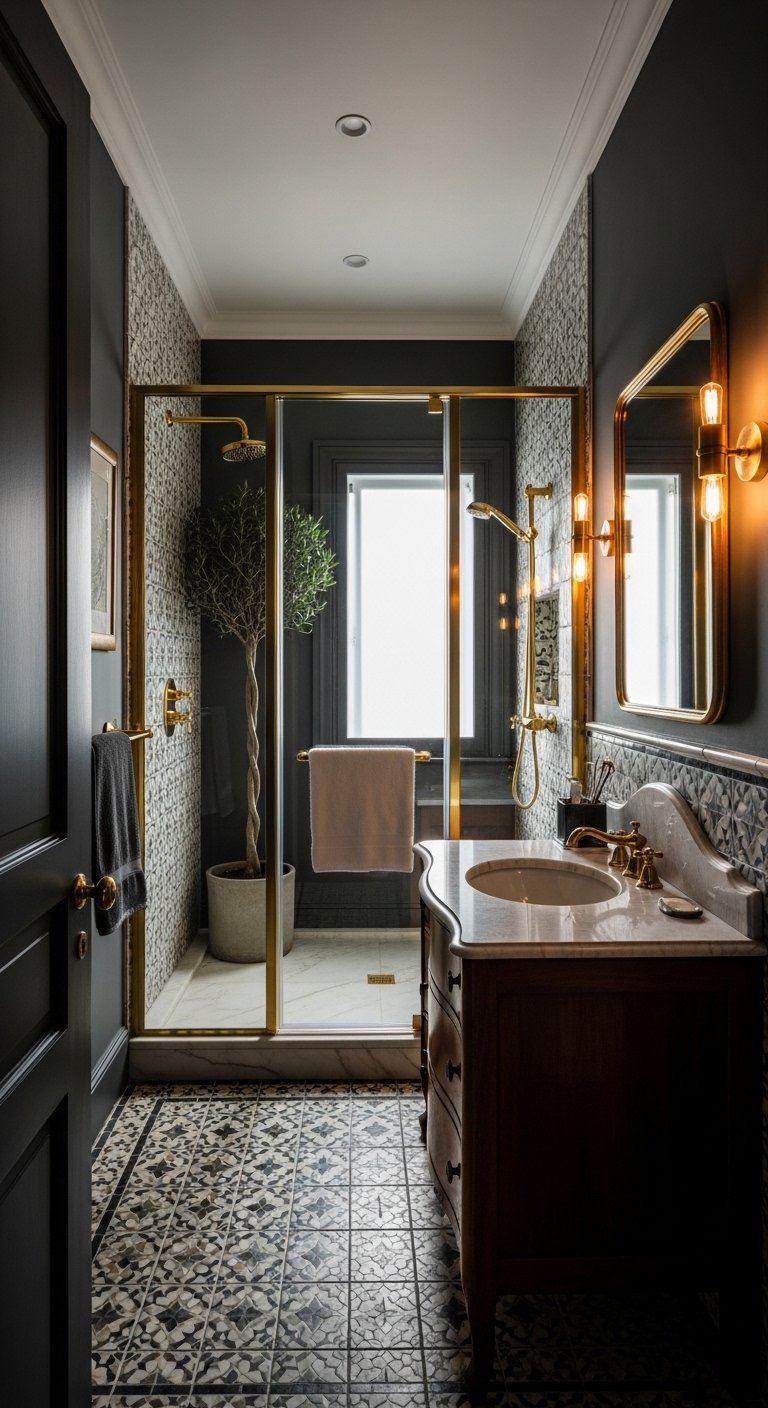
Zellige tiles are handmade in Morocco, known for their irregularities, chipped edges, and variation in glaze. They reflect light in a shimmering, watery way that machine-made tiles cannot replicate. Using them as a vanity backsplash brings an ancient artisan craft into the home.
Because they are so textured, they pair best with sleek, modern mirrors and faucets. The contrast between the perfectly smooth factory-made glass and the bumpy, imperfect clay tile highlights the beauty of both. It adds a human touch, a sense that hands made this room, which creates warmth.
Modern Ceiling Medallions
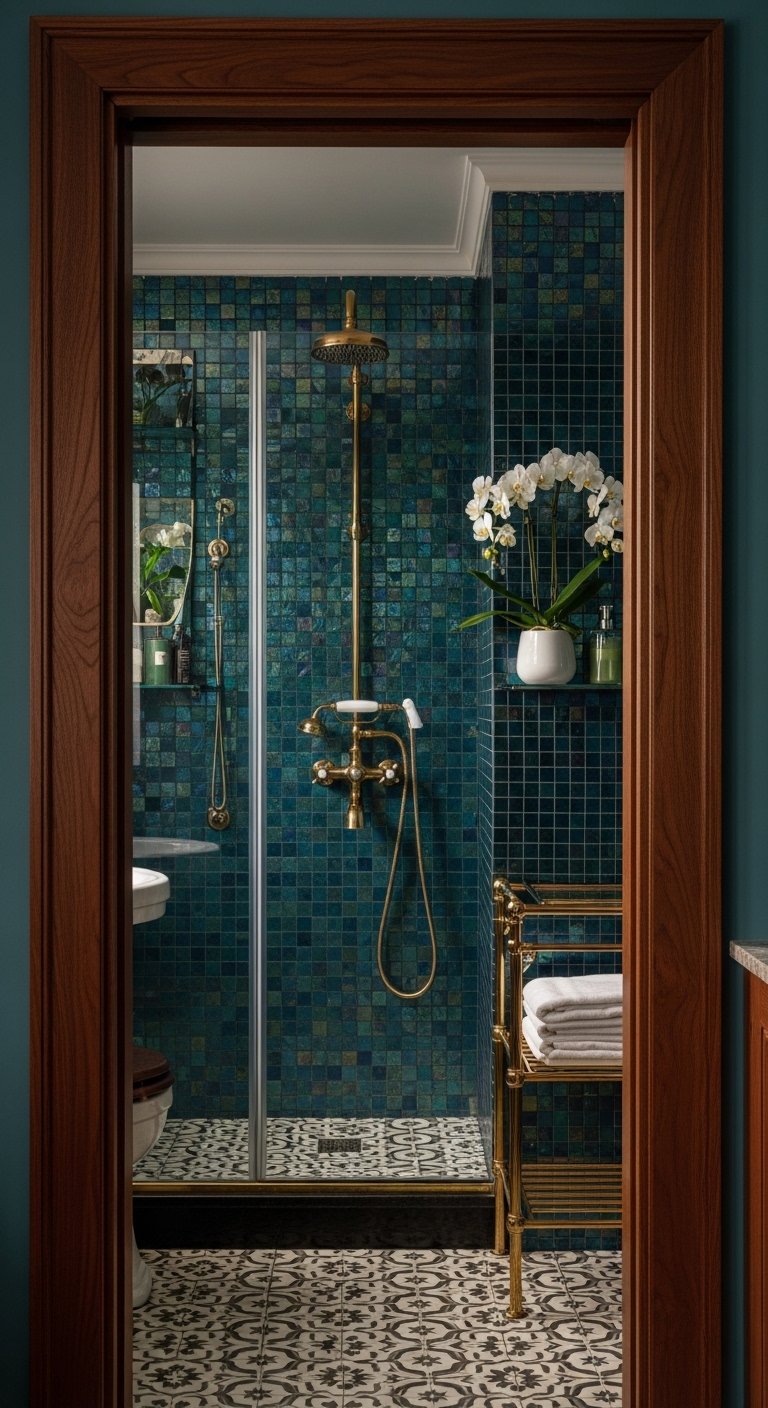
Ceiling medallions were once plaster masterpieces reserved for chandeliers in dining halls. Installing one in a bathroom above a modern pendant light adds a touch of grandeur to an unexpected place. Keep the medallion white (matching the ceiling) to focus on the texture rather than the color.
This draws the eye upward, celebrating the ceiling height. It frames the modern light fixture, acting as a bridge between the architecture of the house and the decor you have chosen. It is a low-cost addition that makes a generic drywall ceiling look custom and expensive.
Picture Frame Molding
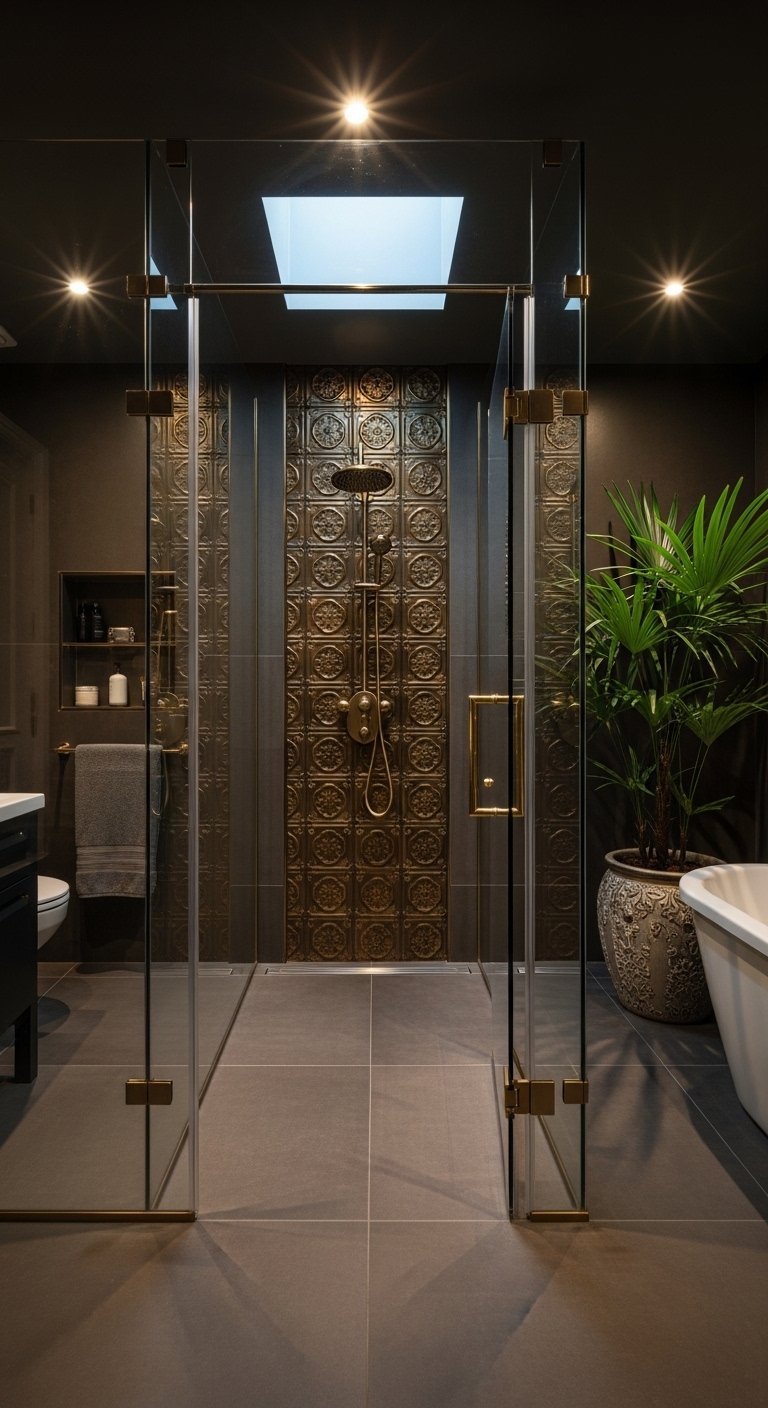
Applied molding in rectangular shapes on the walls mimics the look of paneling without the wood expense. It gives a flat wall depth and shadow. In a modern traditional bathroom, keep the molding simple and thin. Paint the molding the exact same color as the wall for a subtle, sculptural effect.
This background texture elevates everything placed in front of it. A simple modern towel hook or a piece of abstract art looks more important when framed by molding. It creates a sense of order and symmetry, calming the mind—perfect for a relaxation space.
Pro Tip: Use waterproof PVC molding instead of wood in bathrooms to prevent swelling from steam and humidity.
Statement Stone Bathtubs
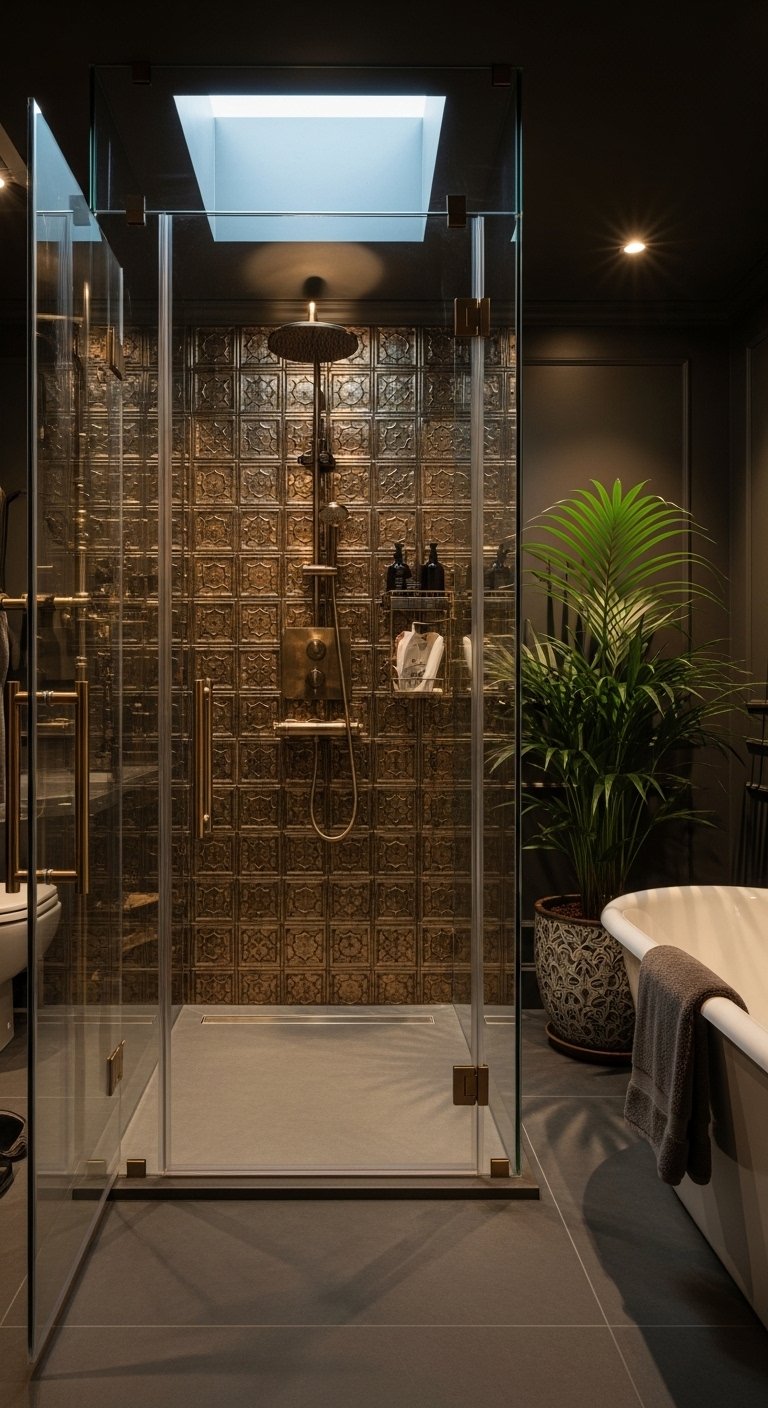
A bathtub carved from a solid block of stone or composite is a modern luxury. It has the weight and presence of an ancient sarcophagus or Roman bath but with ergonomic, smooth curves. These tubs are heavy and require reinforced floors, but they retain heat longer than acrylic.
Visually, a stone tub acts as a sculpture. It does not need to be tucked in a corner. Place it in the center of the room or near a window. The natural material connects the bather to the earth, while the design is pure contemporary luxury. It is the ultimate investment piece for a forever home.
Popular Asked Questions
What is the “transitional” bathroom style?
Transitional style is the art of mixing traditional and modern elements. It balances the warmth and detail of classic design (like wood vanities or vintage rugs) with the clean lines and functionality of modern styles (like glass showers or minimalist faucets). It is currently the most popular design style because it feels timeless yet updated.
How do I modernize my traditional bathroom without a full renovation?
Start with the hardware and lighting. swapping out old cabinet knobs for sleek matte black or unlacquered brass pulls makes a huge difference. Replacing a dated light fixture with a modern globe sconce instantly updates the room. Also, painting a dark wood vanity a crisp white or navy blue can modernize the space for the cost of a can of paint.
Can you mix chrome and brass in a bathroom?
Yes, absolutely. Mixing metals adds depth and character. A good rule of thumb is to pick a dominant metal (like chrome for all plumbing fixtures) and an accent metal (like brass for mirrors, lights, and cabinet pulls). Keep the finishes consistent (e.g., all polished or all brushed) to maintain cohesion.
Is wainscoting still in style for 2025?
Yes, wainscoting remains a classic staple. However, the style has shifted. ornate, heavy molding is being replaced by cleaner lines like vertical shiplap, beadboard, or simple board-and-batten. Painting the wainscoting a bold color while keeping the upper walls neutral is a trending look that feels very current.
How do I make a small bathroom look traditional but feel spacious?
Use a floating vanity to reveal more floor space, which tricks the brain into thinking the room is larger. Stick to a light, neutral color palette but add traditional texture through marble floor tiles or a vintage runner rug. Use a large mirror to reflect light and double the visual space.
Conclusion
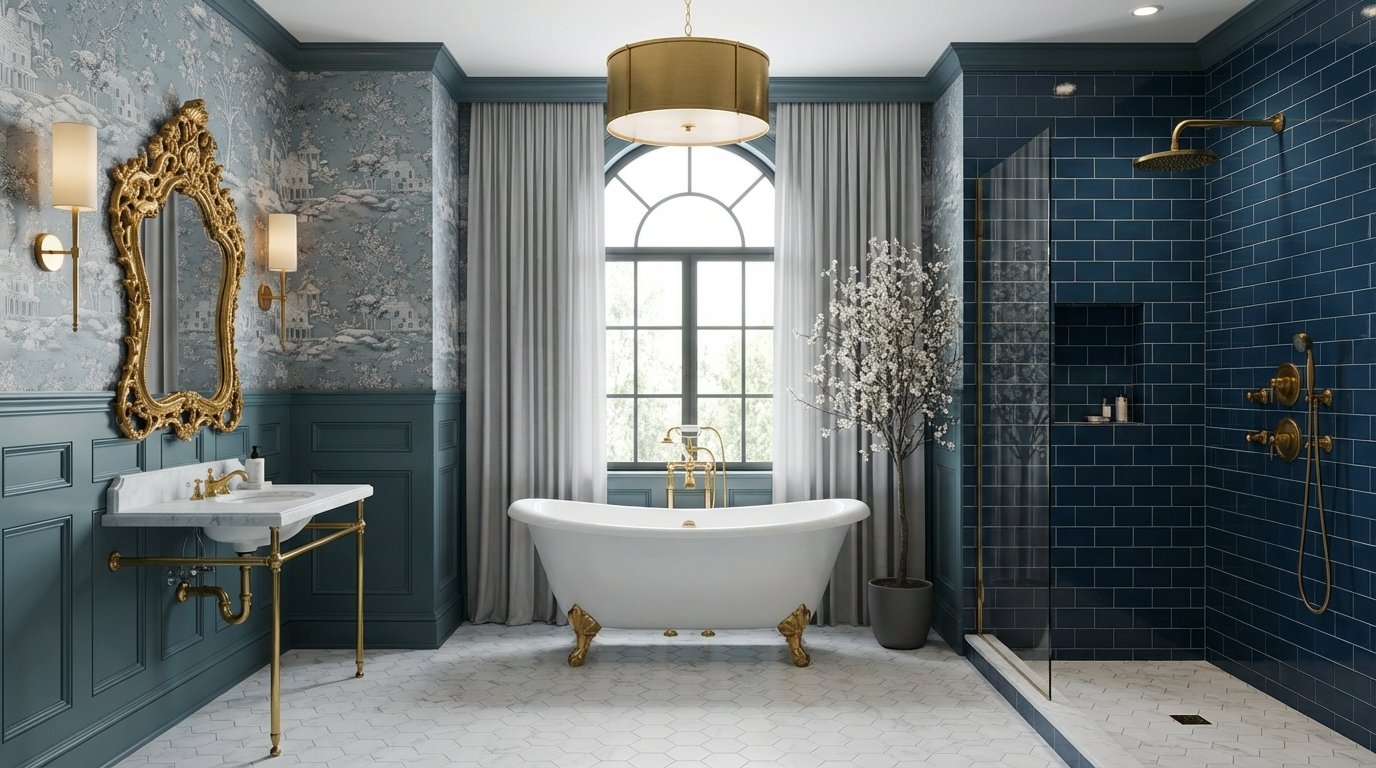
Blending traditional charm with modern design allows you to create a bathroom that feels personal, collected, and highly functional. It creates a space that respects the past without being stuck in it. Whether you are installing a clawfoot tub with a matte finish or simply swapping out hardware, these changes increase the comfort and value of your home.
Which of these blended design ideas would you try in your own home? Let us know in the comments below.
Follow us on Pinterest for more Traditional Bathroom inspiration.

Leave a Comment