
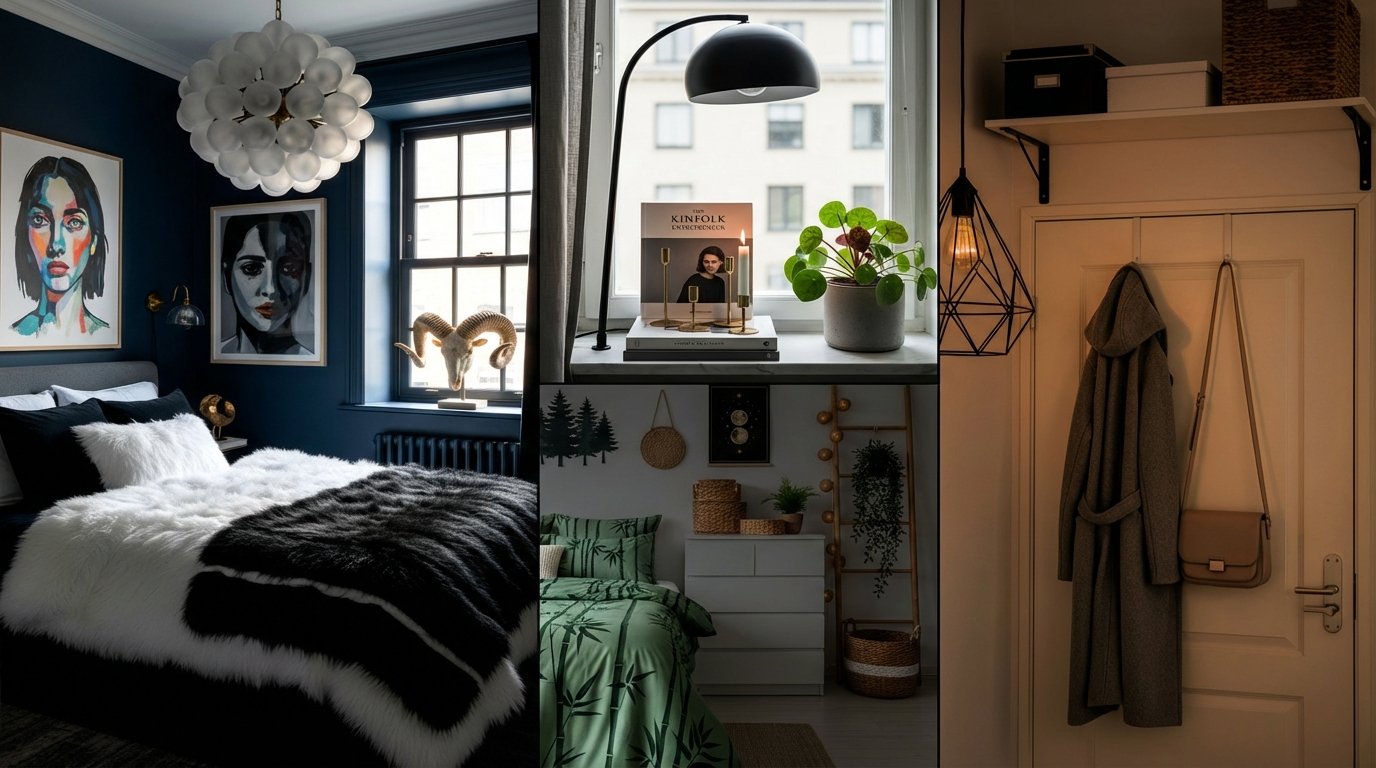
Living in a small apartment often means sacrificing square footage, but it should never mean sacrificing style or peace of mind. The reality is that a cramped bedroom quickly becomes a source of stress rather than a sanctuary. You look around and see clutter, dead space, and a layout that feels impossible to fix without knocking down a wall.
But here is the good news: you don’t need a renovation budget to transform your sleeping quarters. With the right visual tricks and smart storage hacks, even the tiniest box room can feel spacious and luxurious. These 23 life-changing small apartment bedroom ideas focus on verticality, light manipulation, and furniture that works twice as hard as you do. By the end of this post, you will have a concrete plan to turn your limited space into an efficient, stunning retreat.
Check out our related guide on Minimalist Interior Design Trends.
Key Takeaways
- Go Vertical: When floor space is limited, the only way is up. Utilizing walls for storage and decor draws the eye upward and clears walking paths.
- Light & Reflection: Mirrors and strategic lighting are the most effective non-structural ways to “expand” a room visually.
- Double-Duty Furniture: Every piece of furniture in a small bedroom must serve at least two purposes (e.g., a bed that stores clothes, a shelf that acts as a desk).
- Visual Continuity: Using cohesive colors and materials prevents the visual fragmentation that makes small rooms feel cluttered.
Contents
- Statement Chandelier
- Decorative Baskets
- Storage Headboard
- Add a Mirror
- Wall Sconces
- Bedroom Plants
- Nightstand With Storage
- Floating Nightstands
- Area Rugs
- Bedroom Bench
- Bedding Styling
- Tile Flooring
- Door Storage
- Natural Materials
- Tranquil Colors
- Floating Shelves
- DIY Wall of Shelves
- Build Around The Bed
- Mood Lighting
- Stunning Artworks
- Window Sills
- Floor-to-Ceiling Curtains
- Storage Bed
- Popular Asked Questions
- Conclusion
Statement Chandelier
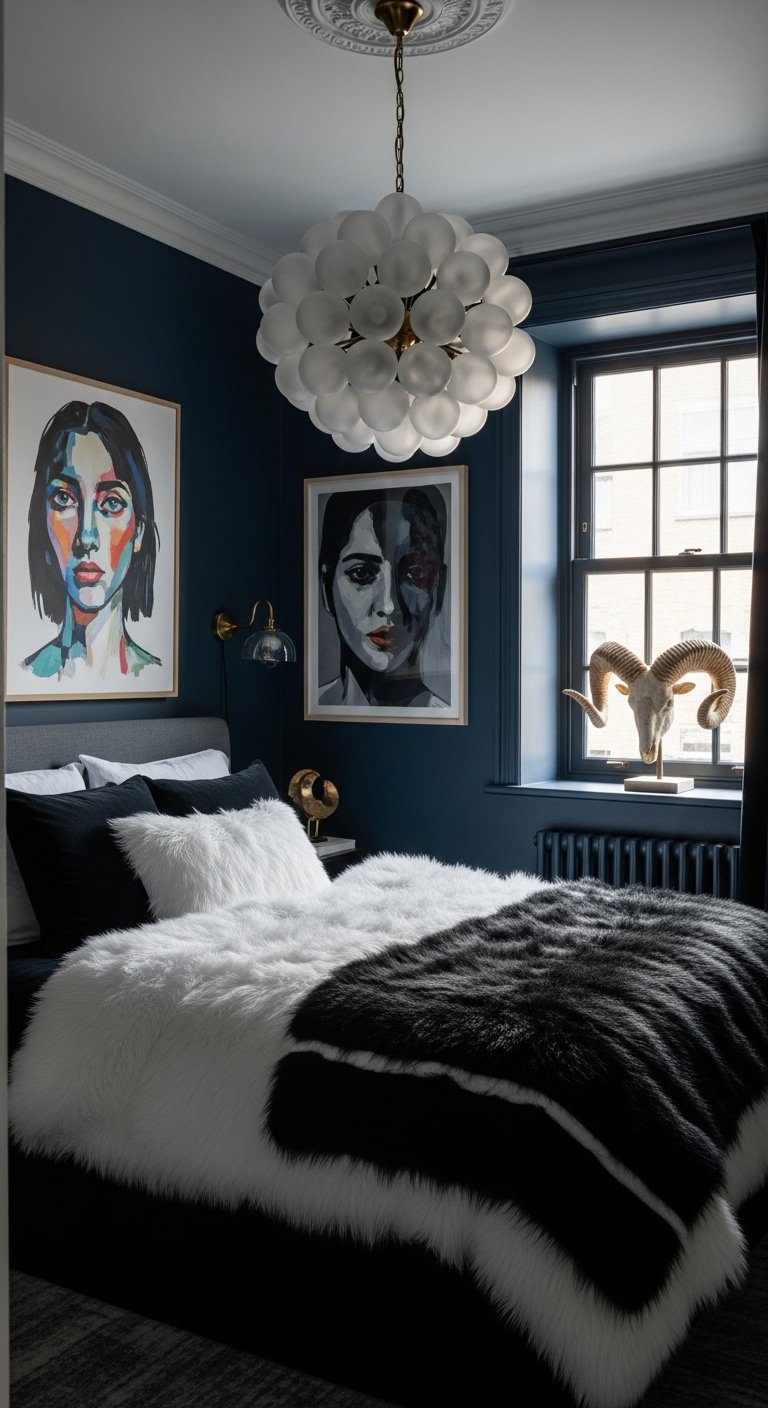
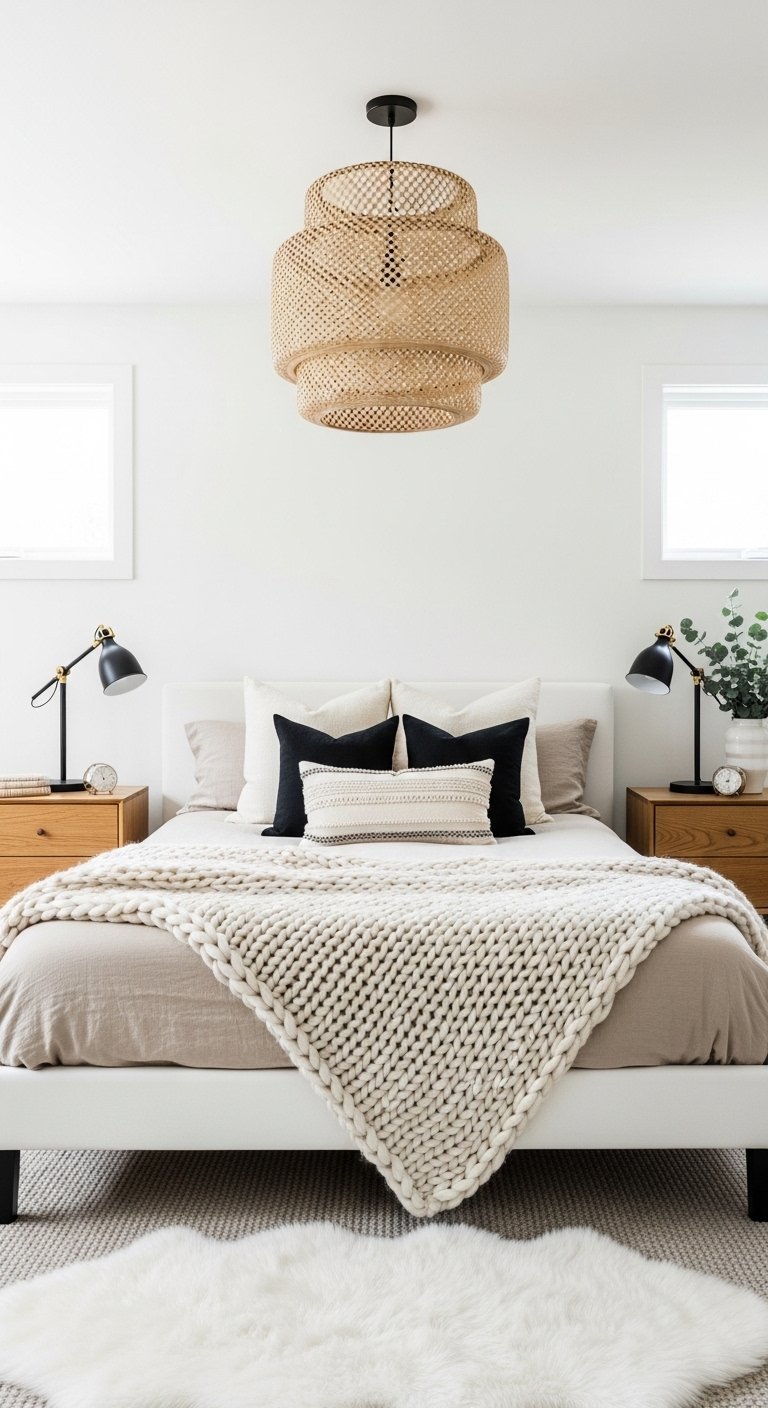
In a small room, the floor is often crowded with necessities like the bed and dresser. This makes the ceiling one of the few open “canvases” left to make a design impact. Installing a statement chandelier draws the eye upward immediately upon entering the room. This vertical movement of the eye tricks the brain into perceiving the ceiling as higher than it actually is, creating a sense of volume that counteracts the tight floor plan.
Choose a fixture that complements the scale of the room without overwhelming it. A sputnik-style light or a woven rattan pendant adds personality and becomes a focal point that doesn’t take up a single inch of precious foot traffic space. Ensure the fixture hangs high enough to clear head-space but low enough to feel intentional and intimate.
Pro Tip: Install a dimmer switch with your chandelier. Being able to control light intensity allows you to shift the room from a bright workspace to a cozy den instantly.
Decorative Baskets
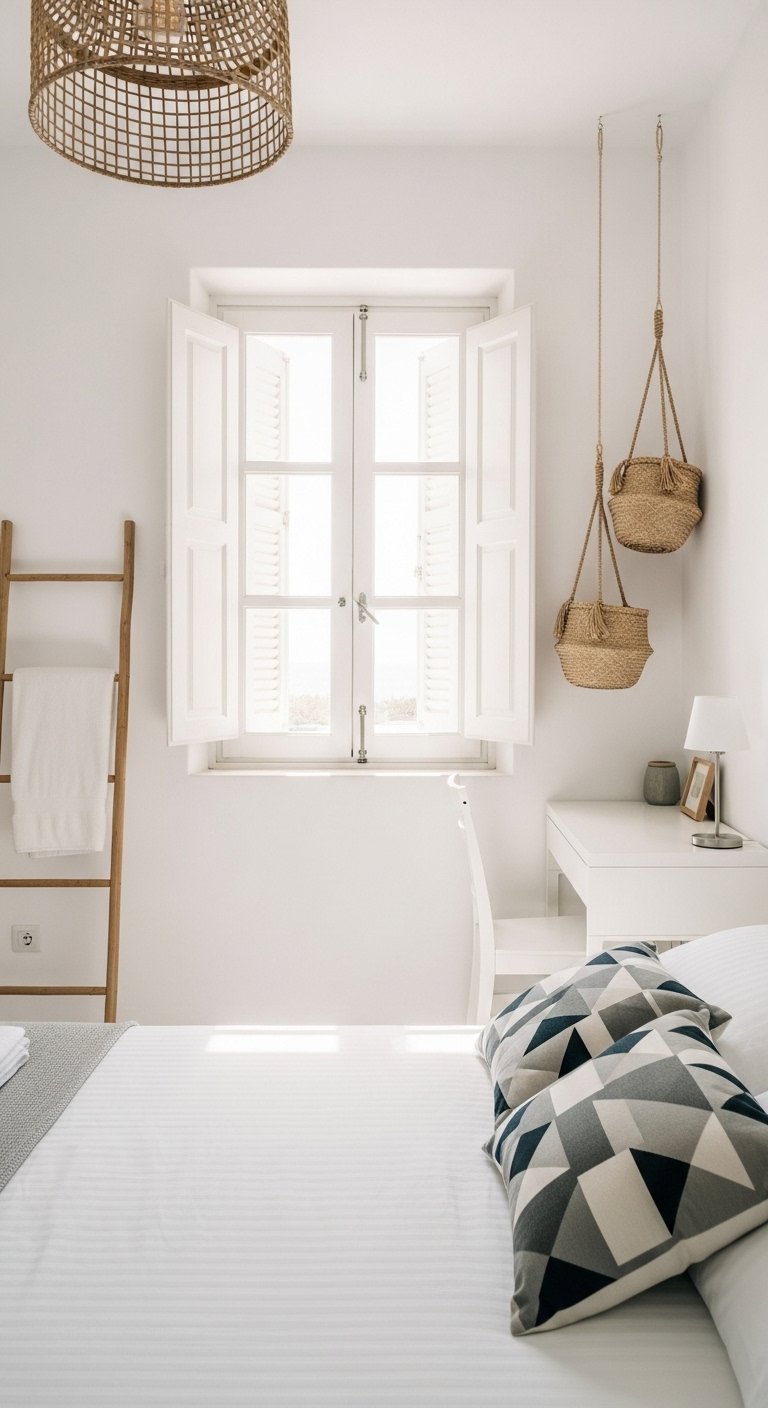
Clutter is the enemy of small spaces. When visible items have no dedicated home, a room feels chaotic and smaller. Woven baskets are the ultimate solution for “lazy” organization—they allow you to quickly stash throws, pillows, or miscellaneous items while adding texture and warmth to the design. The natural fibers of wicker, seagrass, or jute introduce an organic element that softens the hard lines of boxy apartment architecture.
Place a large, sturdy basket in a corner for laundry or extra bedding. Smaller, matching baskets can sit on open shelves to hide charging cables, skincare products, or paperwork. This technique creates a unified look where storage becomes part of the decor rather than a plastic bin you want to hide.
Save this idea to your Pinterest.
Storage Headboard
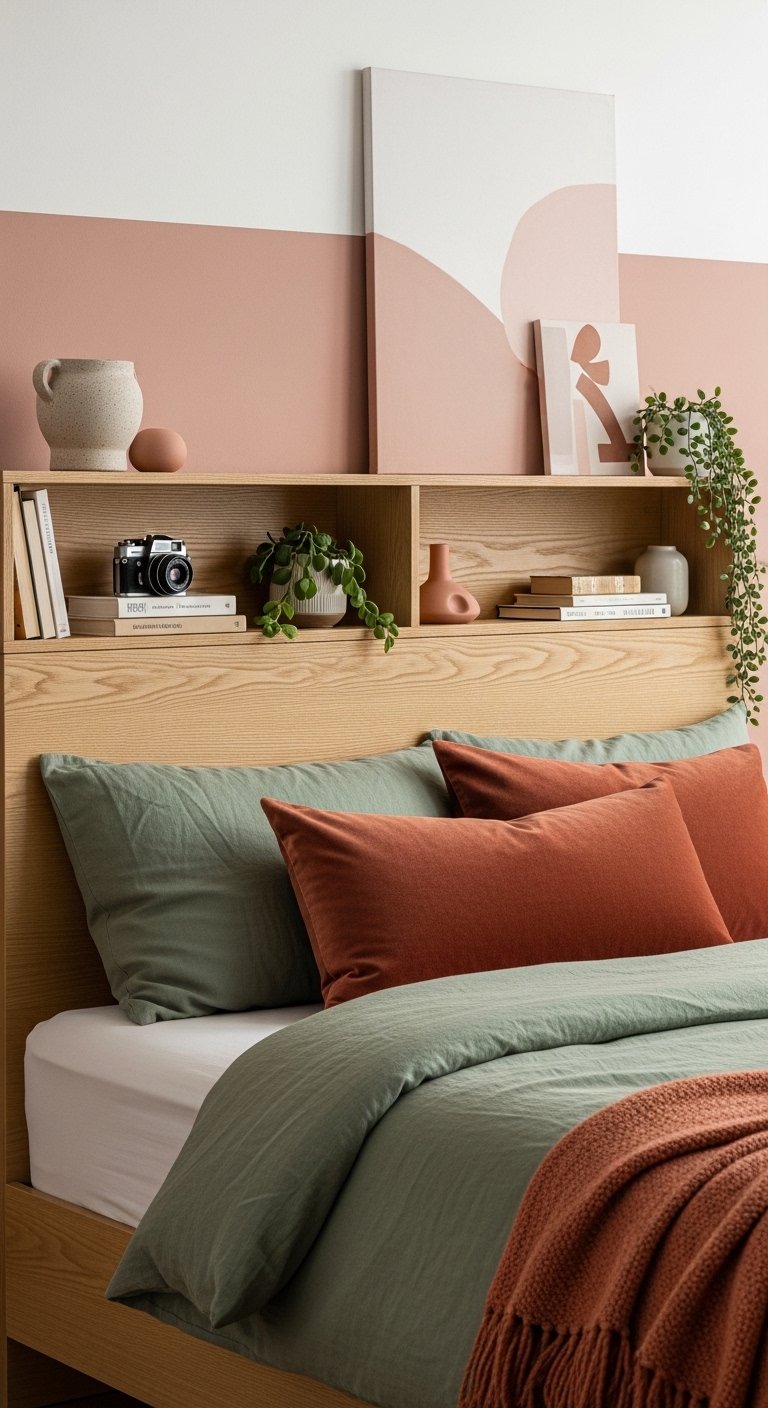
The space directly behind your head is often underutilized real estate. A storage headboard bridges the gap between functionality and style by replacing a standard flat panel with a unit containing shelves, cubbies, or sliding compartments. This is particularly brilliant for rooms so narrow that traditional nightstands won’t fit. You can store books, your phone, glasses, and water right within arm’s reach.
From a design perspective, a custom or well-chosen storage headboard frames the bed and anchors the room. It eliminates the need for extra side tables, freeing up floor space for a rug or a plant. Look for designs with hidden side-pullout drawers for an even sleeker look that keeps visual clutter to a minimum.
Pro Tip: If you build a DIY storage headboard, install electrical outlets inside the cubbies to keep charging cords completely hidden.
Add a Mirror
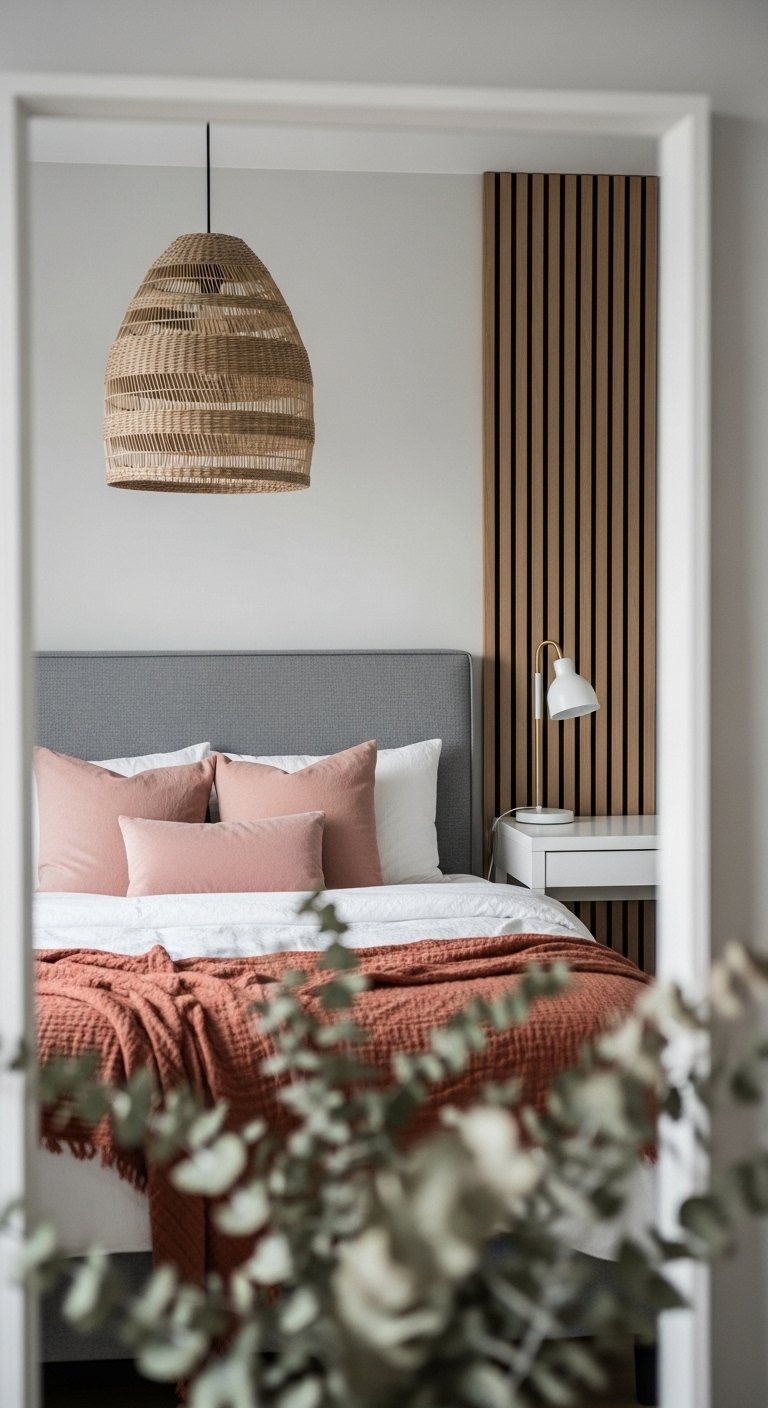
Mirrors are the oldest trick in the interior design book for a reason: they work. A well-placed mirror doubles the visual depth of a room and bounces natural light into dark corners. In a small apartment bedroom, a large floor-length mirror leaning against a wall creates a “window” effect, making the room feel open and airy.
For a more structural approach, consider mirrored closet doors or a large round mirror above the bed. The reflection breaks up solid walls, preventing that boxed-in feeling. Position the mirror across from a window if possible; this captures the outdoors and brings it inside, further expanding the perceived boundary of the room.
Wall Sconces
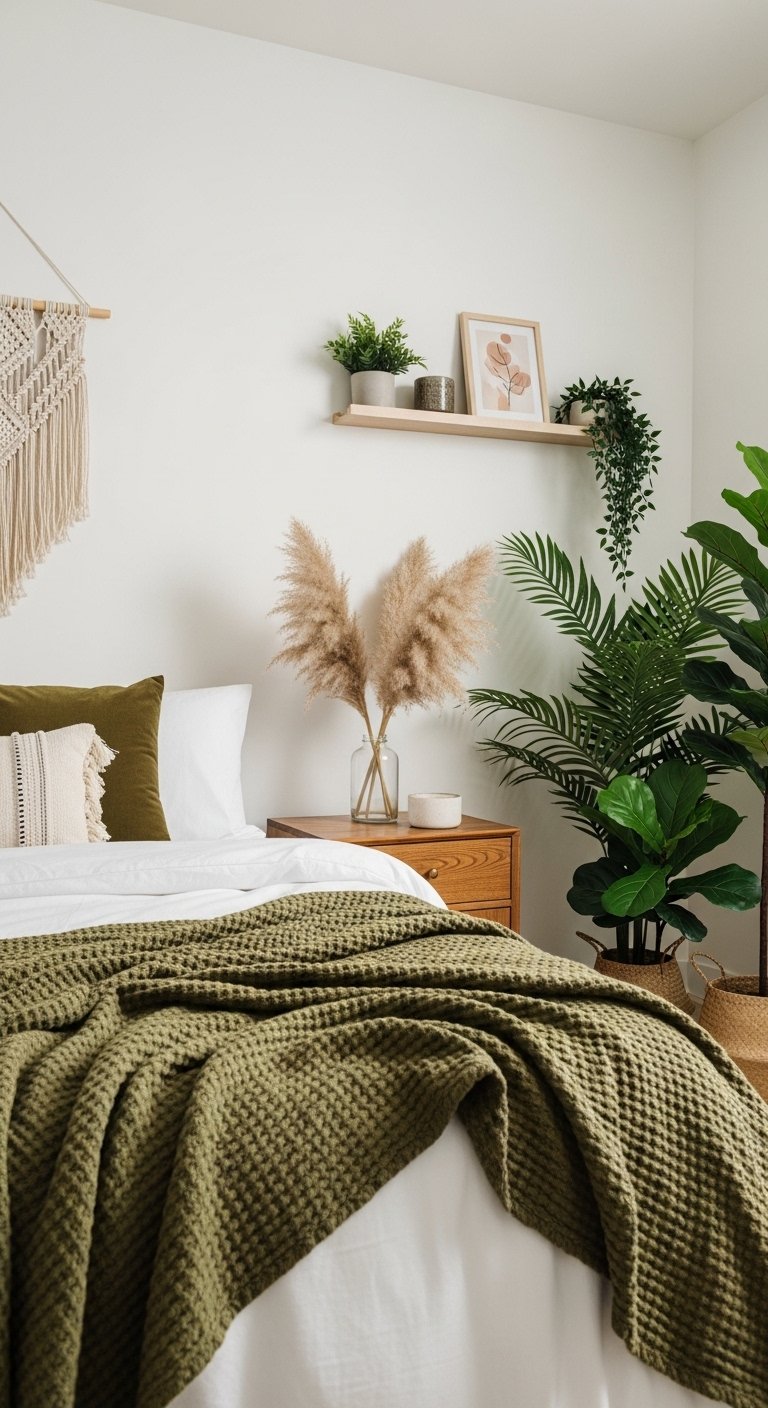
Table lamps are beautiful, but they require a surface to sit on. When your nightstand is tiny (or non-existent), a lamp takes up space that could be used for a book, a glass of water, or your phone. Wall sconces solve this problem by moving the lighting source to the vertical plane.
Swinging arm sconces are adjustable and offer excellent task lighting for reading in bed. Hardwired options look cleaner, but plug-in sconces are a renter-friendly alternative that requires zero electrical work—just mount them and plug them in. This simple swap instantly makes the bedside area feel less cluttered and more curated, mimicking the look of a high-end boutique hotel.
Comparison: Wall Sconces vs. Table Lamps
| Feature | Wall Sconces | Table Lamps |
|---|---|---|
| Surface Space | Frees up 100% of nightstand surface | Occupies 30-50% of nightstand |
| Installation | Requires mounting (sometimes wiring) | Plug and play |
| Visual Weight | Light and airy | Can feel bulky in small rooms |
| Adjustability | High (swing arms, pivoting heads) | Low (fixed position) |
| Best For | Tight corners, reading in bed | Decorative accent, ambient glow |
Bedroom Plants
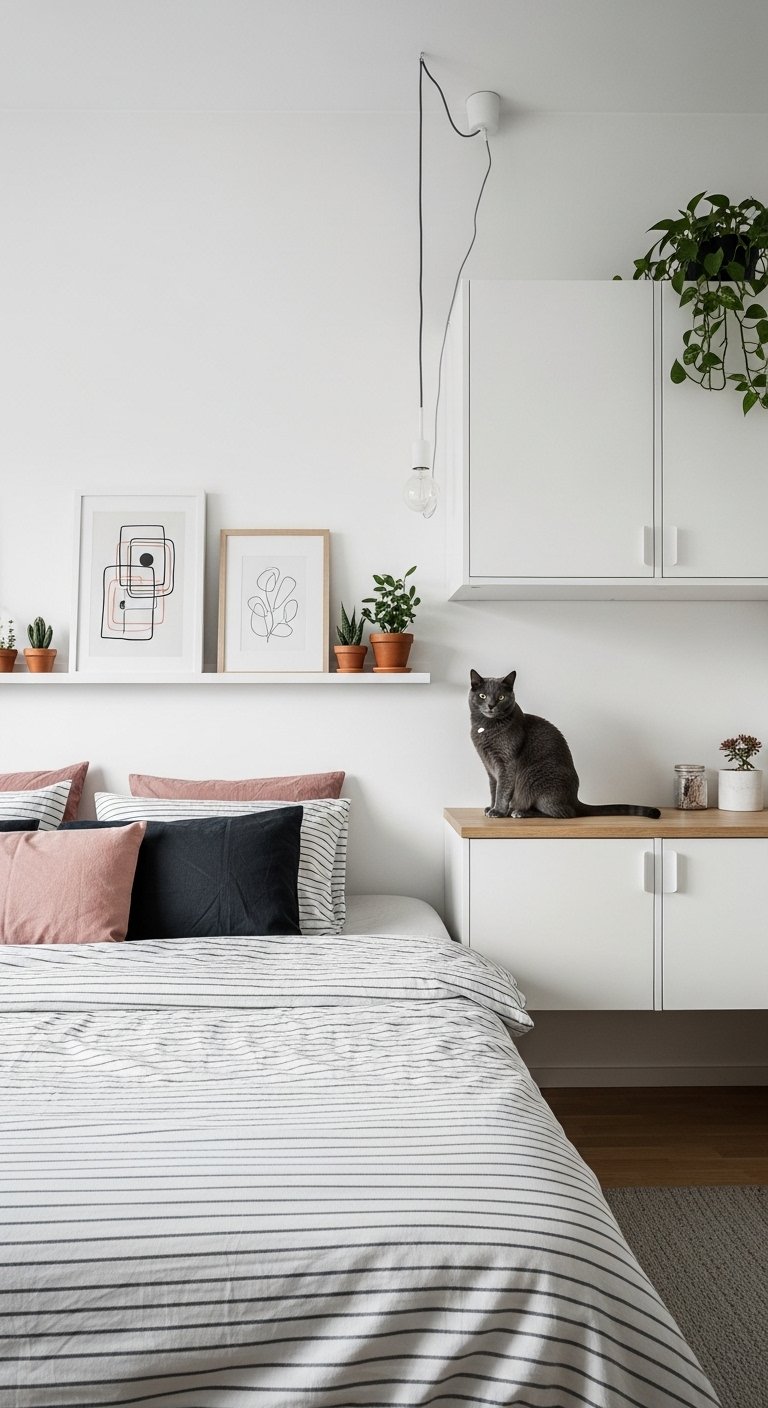
Bringing nature indoors blurs the lines between the built environment and the outside world. Plants add vibrancy, improve air quality, and introduce organic shapes that break up the rigidity of furniture. In a small bedroom, you might think you don’t have space for pots, but this is where you get creative with placement.
Trailing plants like Pothos or Philodendrons work perfectly on high shelves or hanging planters, drawing the eye up without consuming floor space. A tall, slender Snake Plant in a corner adds verticality. The green foliage acts as a natural neutral, calming the mind and making the space feel fresh rather than stagnant.
Nightstand With Storage
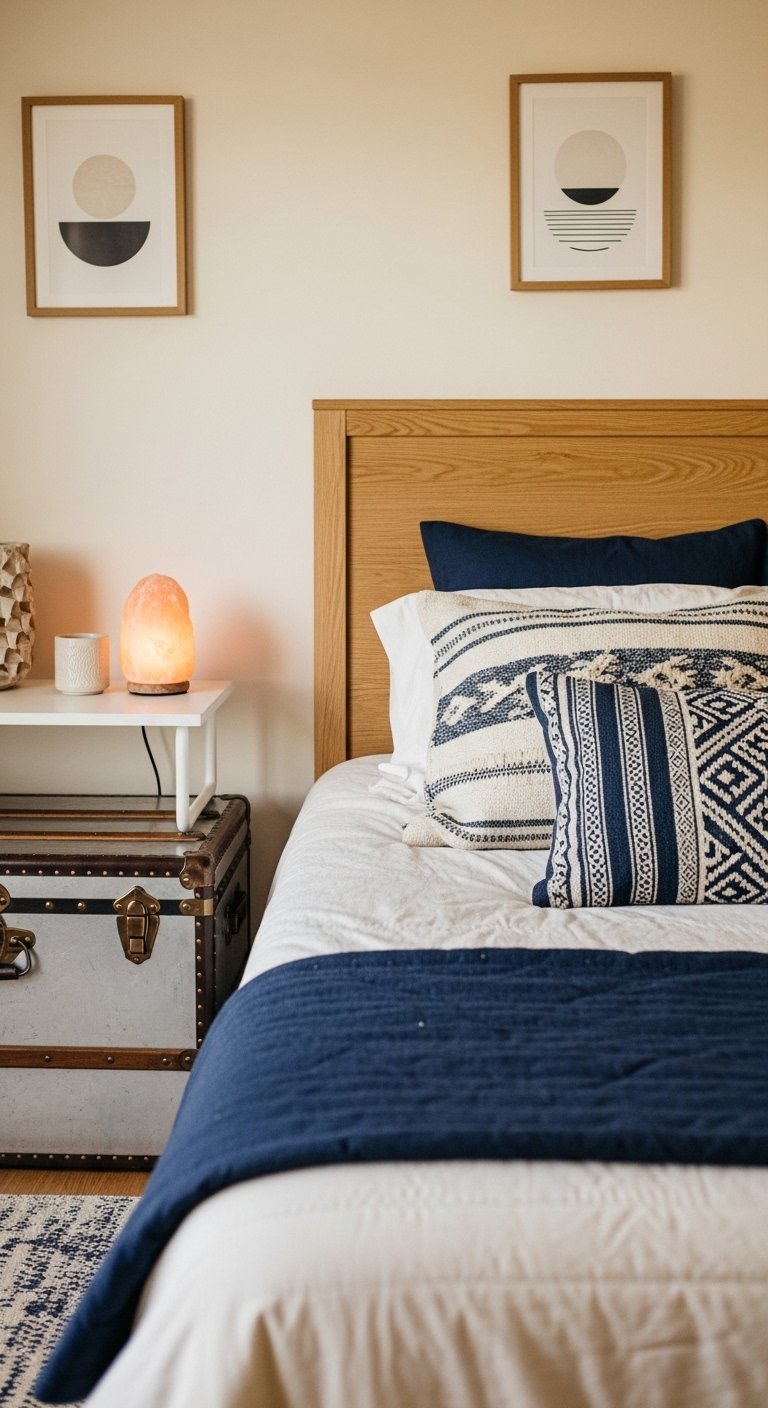
If you do have space for a nightstand, never settle for a simple table. A table offers one surface; a nightstand with drawers or shelves offers three or four. In a small apartment, every piece of furniture must pull its weight in storage capacity.
Choose a unit with at least one drawer to hide “ugly” necessities like lotions, medications, and chargers. The top surface remains clear for decor and daily essentials, maintaining a tidy appearance. Styling a nightstand with closed storage allows you to keep the visual noise down, which is critical for a restful sleep environment.
Pro Tip: Use drawer dividers inside your nightstand to maximize the small internal space and prevent a “junk drawer” situation.
Floating Nightstands
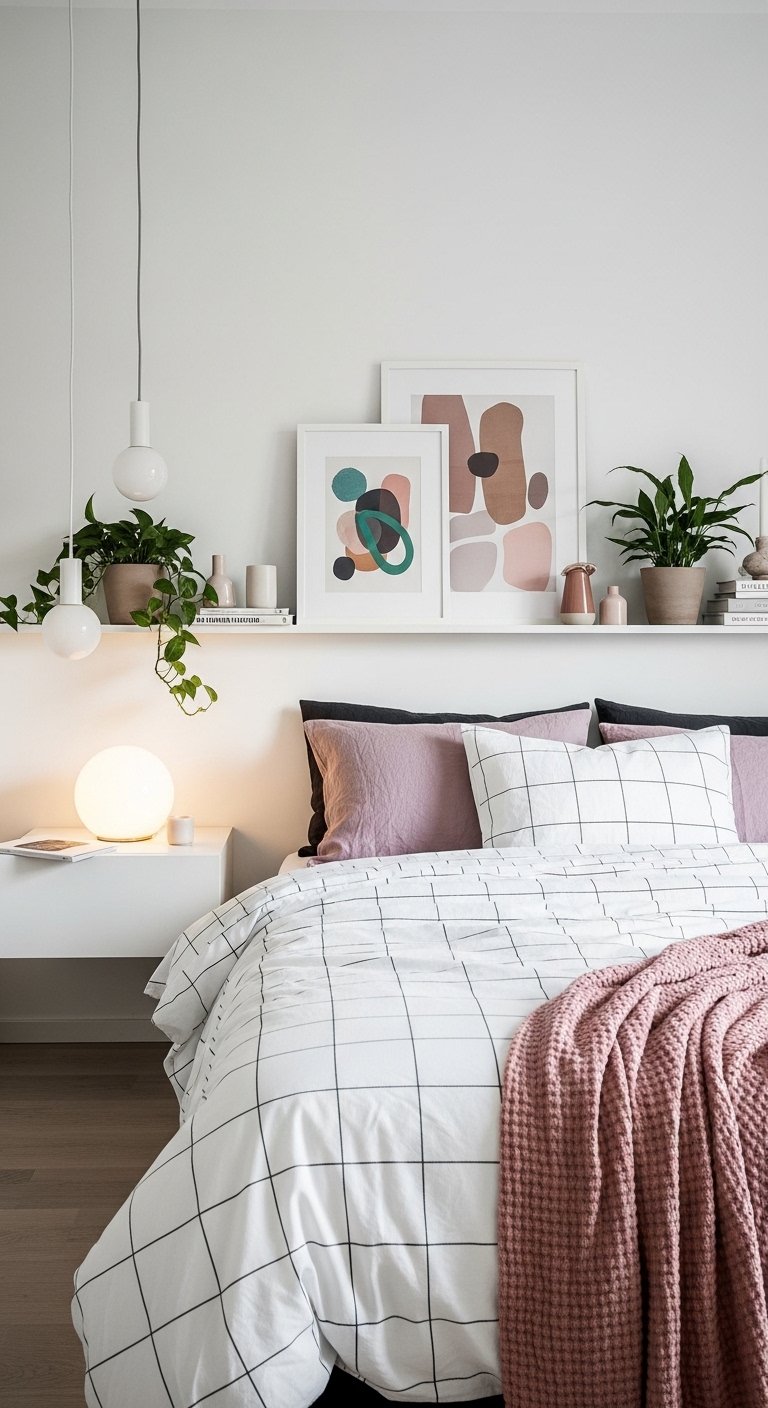
Floor visibility is a powerful psychological cue in interior design. The more floor you see, the larger the room feels. Floating nightstands mount directly to the wall, leaving the floor area underneath completely open. This lack of legs creates a sense of flow and airiness that heavy furniture cannot achieve.
These units are often compact and minimalist, perfect for tight spaces between the bed and the wall. They provide just enough surface area for the essentials and often include a small drawer or cubby. The open space underneath can be left empty for a clean look or used to tuck away slippers or a small decorative basket.
Save this idea to your Pinterest.
Area Rugs
A common mistake in small rooms is using a small rug. A tiny rug floating in the middle of the room chops up the floor plan and makes the space feel disjointed. Paradoxically, a large area rug that extends under the bed and furniture anchors the room and makes it feel grander.
The rug defines the “sleeping zone” and adds a layer of softness and acoustic insulation. Choose a rug with a subtle pattern or texture to add interest without overwhelming the eye. Ensure there is at least 12 to 18 inches of bare floor visible around the perimeter of the rug to maintain a sense of proportion.
Bedroom Bench
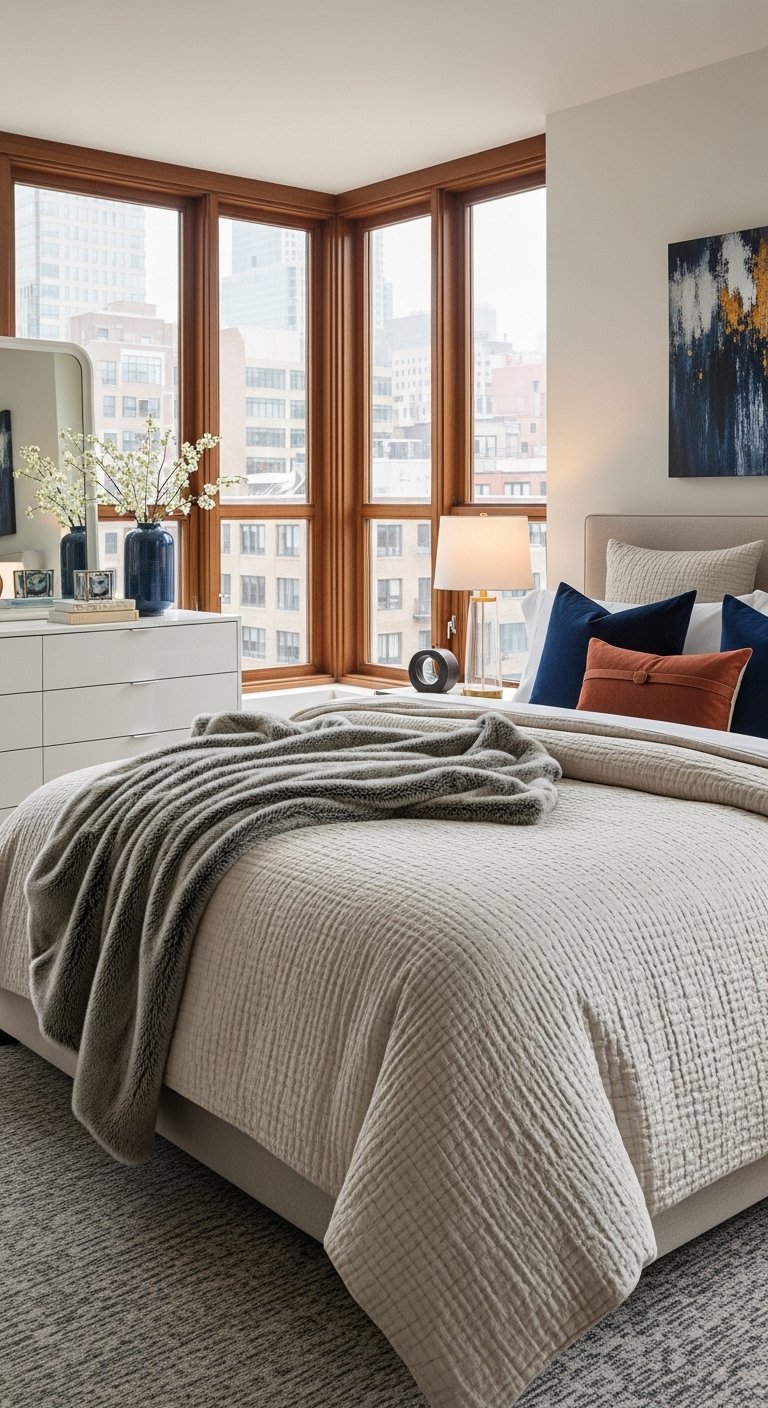
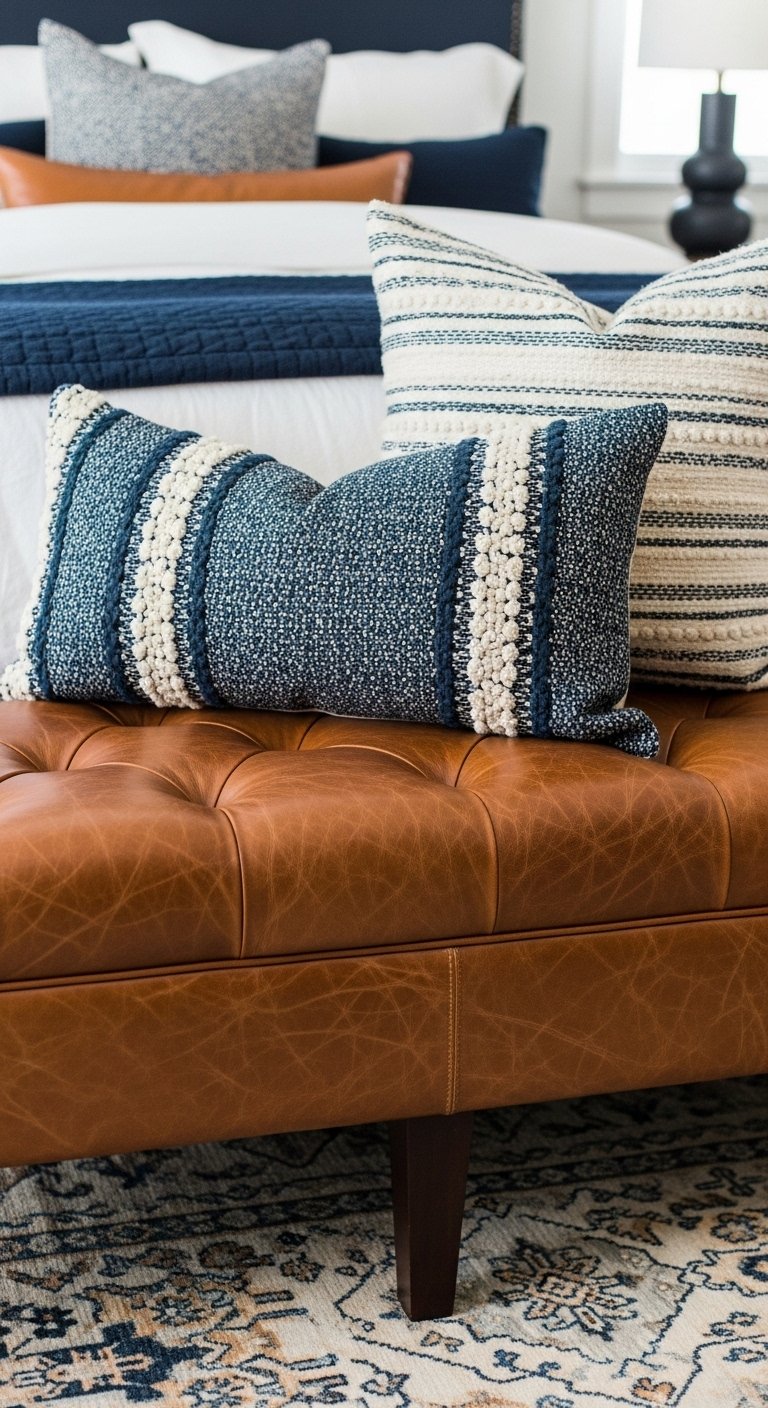
If you have a few feet at the end of your bed, a bench is a versatile addition. It provides a place to sit while putting on shoes, a surface to lay out clothes for the next day, and, most importantly, potential storage.
Look for a bench with a lift-top lid or open shelving underneath. This is the perfect spot to store extra blankets, off-season clothing, or shoes. Ideally, the bench should be slightly narrower than the width of the bed to keep the flow natural. It acts as a visual footboard, finishing the look of the bed and adding a touch of luxury.
Get The Look: Textures & Textiles
To make a small bedroom feel like a sanctuary, layer these materials:
- Velvet: Adds depth and luxury (pillows, bench upholstery).
- Linen: Breathable and casual (bedding, curtains).
- Jute/Sisal: Earthy and grounding (rugs, baskets).
- Knits: Cozy and inviting (throw blankets).
- Wood: Warmth and structure (furniture, frames).
Bedding Styling
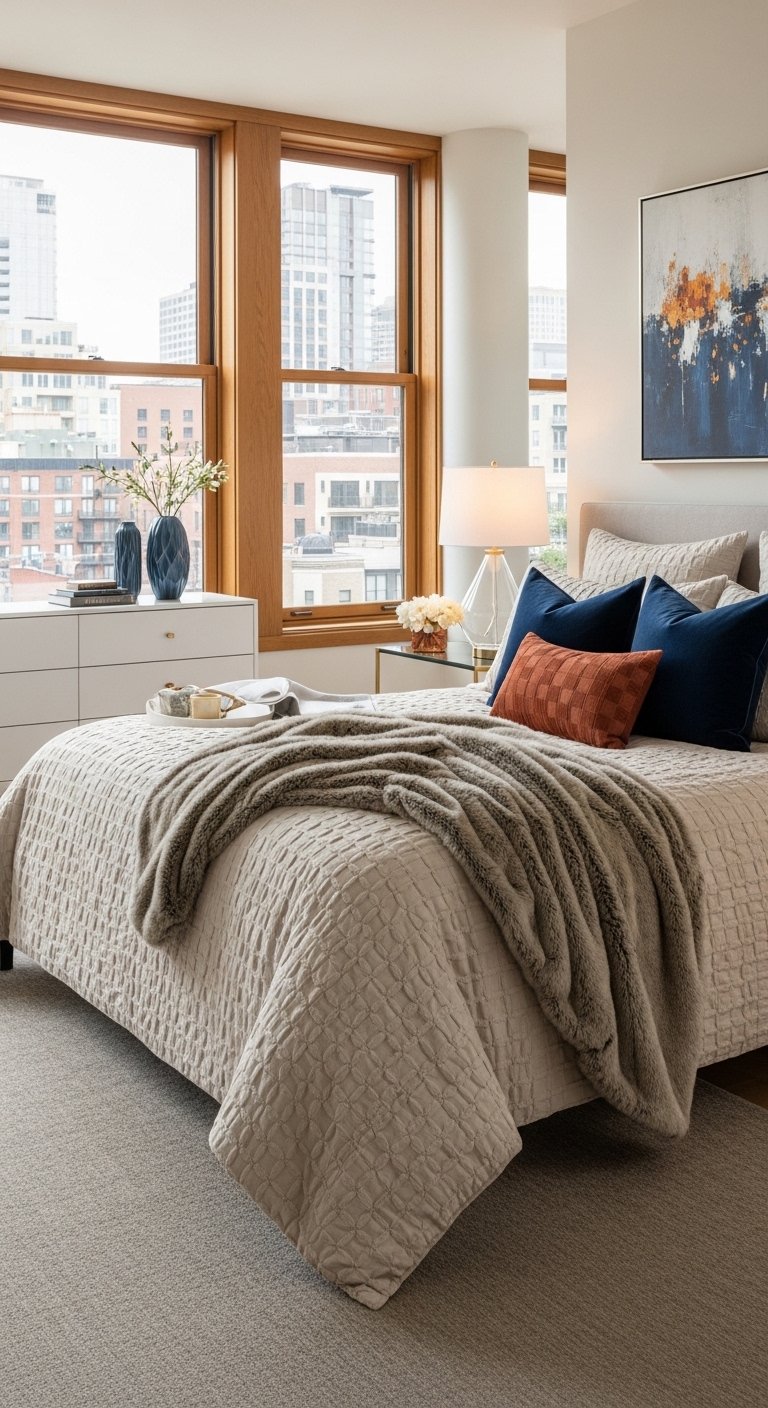
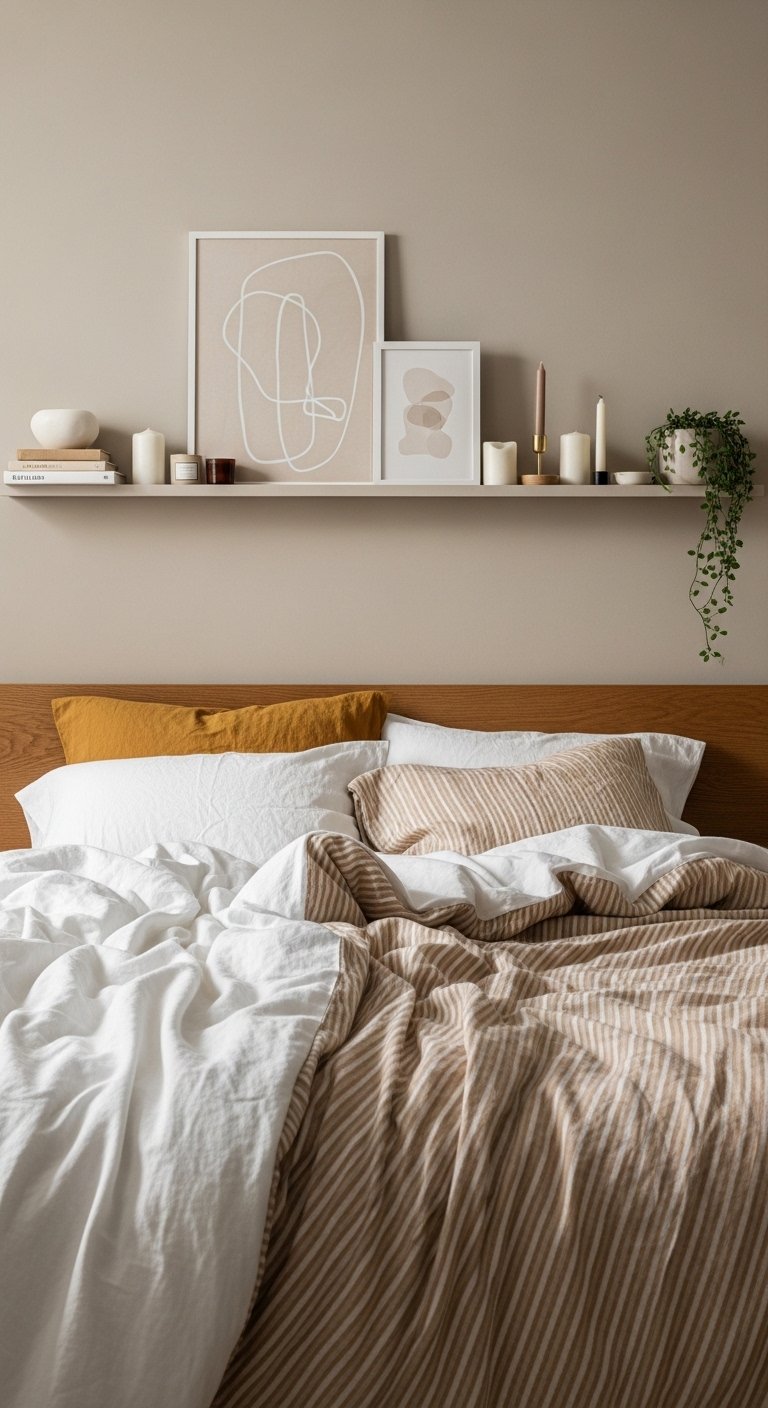
Your bed is the largest object in the room, so its appearance dictates the vibe of the entire space. A messy or uninspired bed makes the whole apartment feel disorganized. Styling your bed with layers creates a focal point that feels intentional and inviting.
Start with quality sheets, add a duvet with a textured cover, and finish with a throw blanket draped casually at the foot. Use euro shams or large square pillows against the headboard to add height and fullness. This layering technique adds visual weight and comfort, turning the bed into a “cloud” that you can’t wait to dive into, distracting from the small dimensions of the room.
Tile Flooring
While hardwood and carpet are standard, tile flooring in a bedroom is a bold design choice that can pay off in small spaces, particularly in warmer climates. Large-format tiles minimize grout lines, creating a seamless, expansive surface that tricks the eye into seeing a larger floor area.
Light-colored tiles reflect light, brightening the room from the ground up. If you want warmth, opt for wood-look porcelain tiles that offer the durability of stone with the aesthetic of oak or walnut. You can layer a plush rug over the tile to ensure your feet land on something soft in the morning, giving you the best of both worlds: sleek design and cozy comfort.
Door Storage
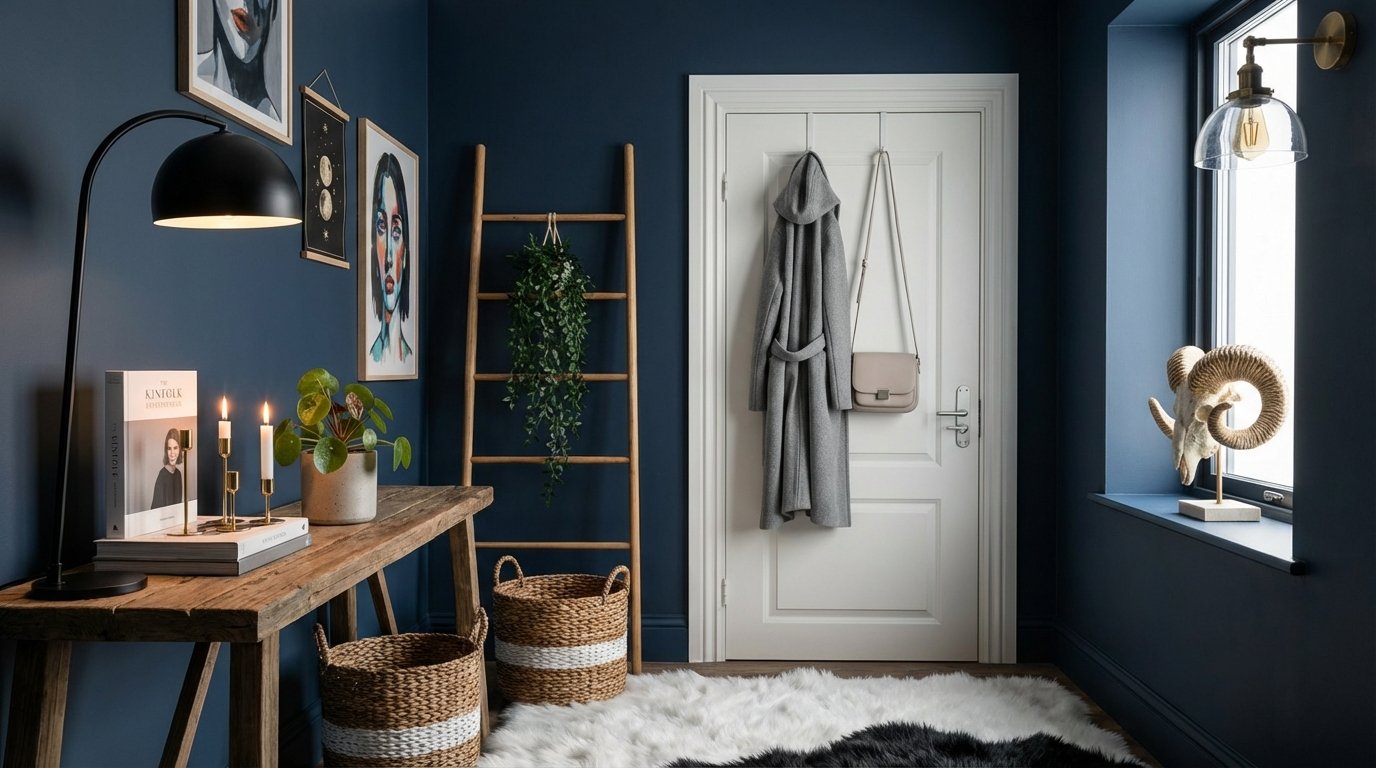
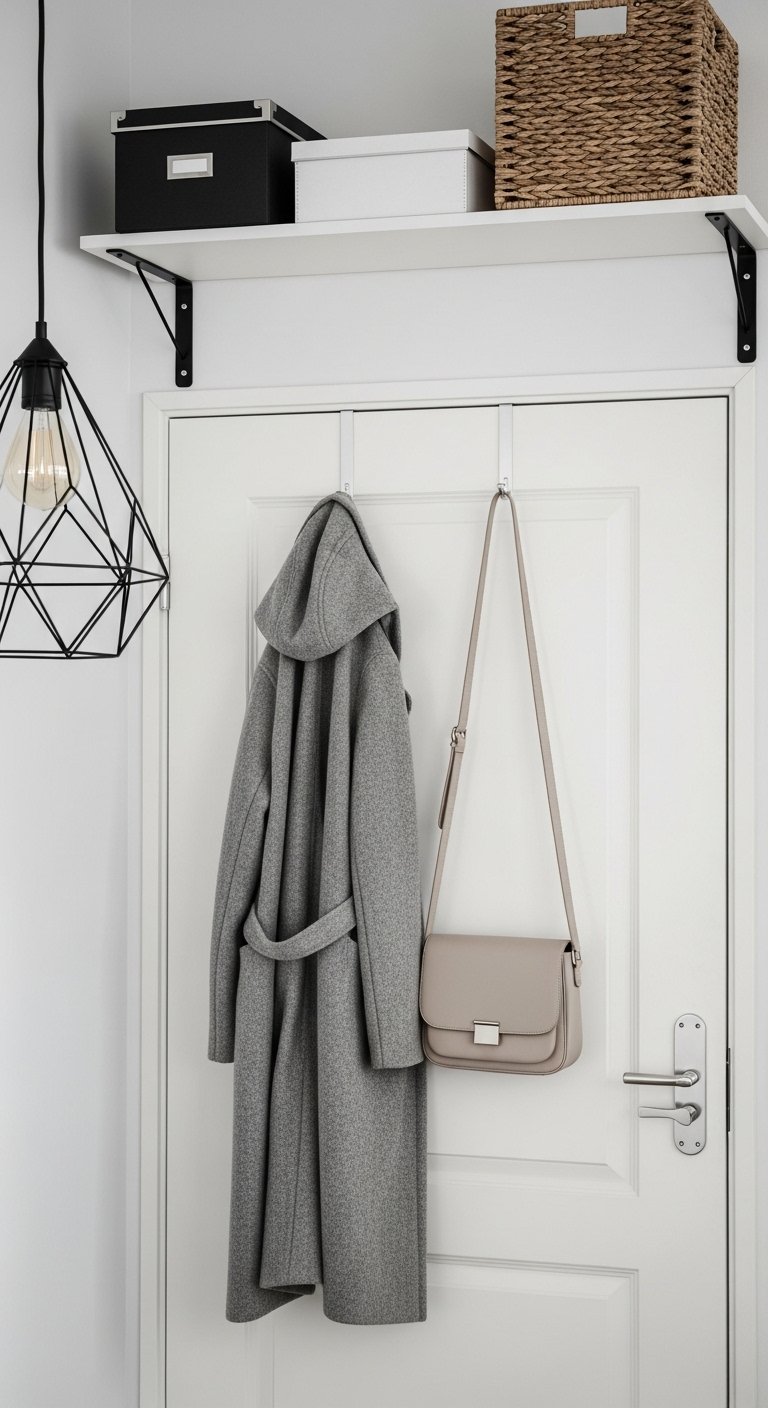
The back of your bedroom door is prime storage real estate that is invisible when the door is open. Over-the-door organizers have evolved far beyond cheap plastic shoe pockets. You can now find stylish racks with hooks, baskets, and mirrors designed to hang securely on standard doors.
Use this space to hang robes, tomorrow’s outfit, bags, or scarves. If you have a small closet, an over-the-door shoe rack can free up significant floor space inside the closet itself. This utilizes “dead” vertical space and keeps items off the floor and chairs.
Pro Tip: Choose an organizer that matches the color of your door (e.g., white on white) to help it blend in and reduce visual clutter.
Natural Materials
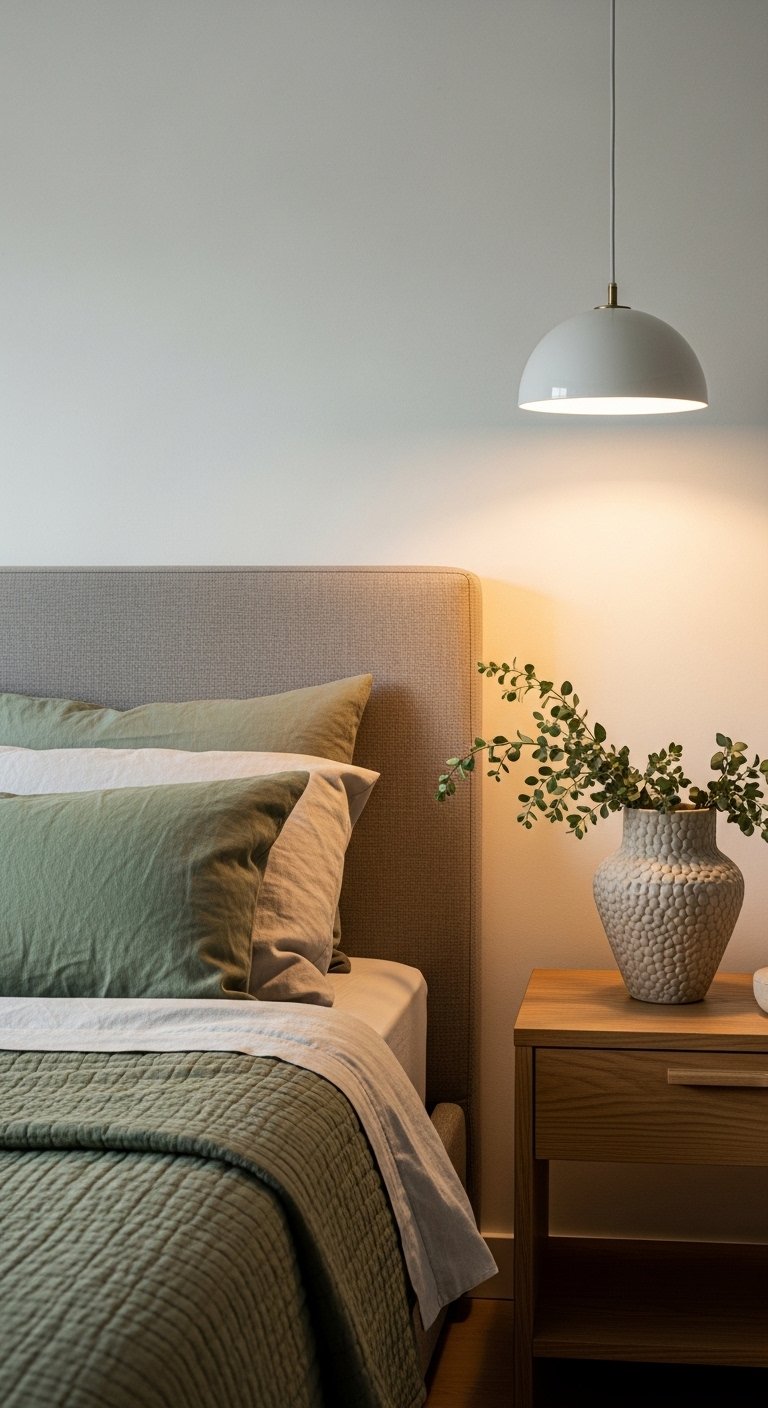
Small spaces can easily feel boxy and artificial. Incorporating natural materials brings warmth and life into the bedroom, making it feel less like a compartment and more like a home. Wood, rattan, bamboo, stone, and wool introduce irregular textures that are pleasing to the eye and touch.
Swap a metal nightstand for a wooden stump or a rattan side table. Use a linen duvet cover instead of synthetic polyester. These materials age beautifully and add character. The variation in natural grain and weave provides visual interest without the need for loud patterns that can shrink a room.
Tranquil Colors
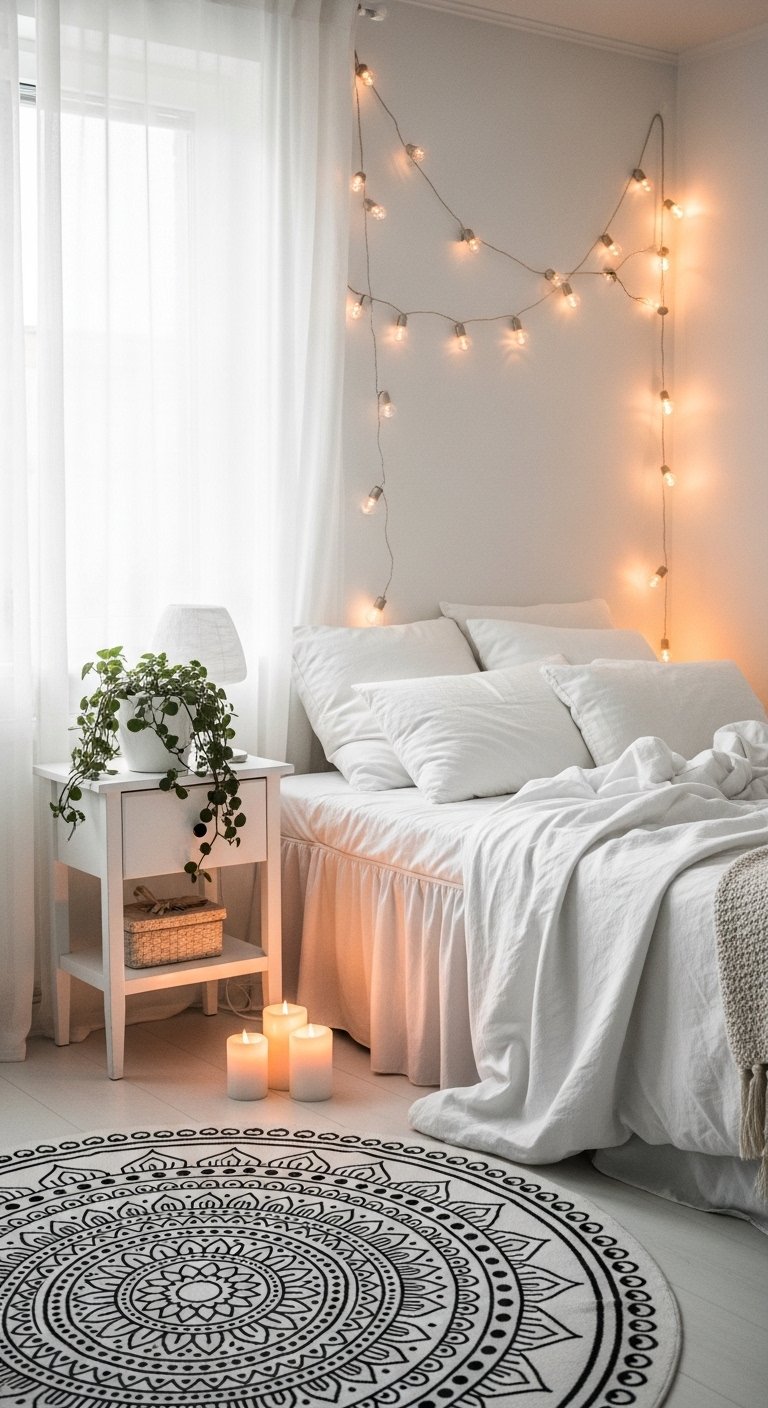
Color has a physical effect on how we perceive space. While dark colors can be cozy, light and tranquil colors are generally best for maximizing the feeling of space in a small bedroom. Soft whites, creams, pale greys, and muted pastels like sage green or sky blue reflect light and blur the corners of the room.
Monochromatic color schemes—using different shades of the same color—create a seamless flow that allows the eye to move uninterrupted. This lack of sharp contrast between walls, trim, and furniture makes the boundaries of the room disappear. If you crave color, keep it to the accessories or art, allowing the shell of the room to remain airy.
Quick Tip: The 60-30-10 Rule
- 60%: Dominant tranquil color (Walls, large furniture).
- 30%: Secondary texture or shade (Bedding, rug, curtains).
- 10%: Accent pop (Art, lamp, throw pillow).
Floating Shelves
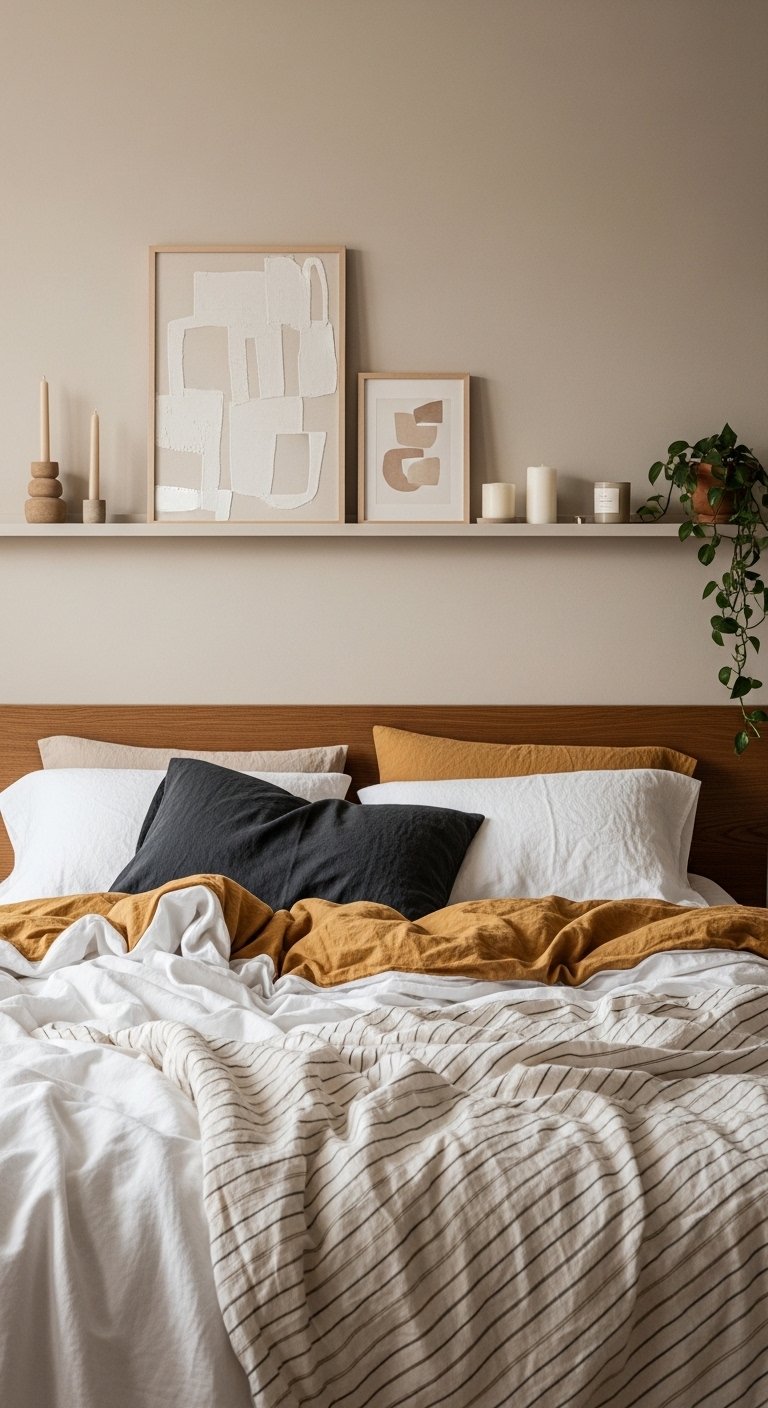
When you cannot build out, build up. Floating shelves are the ultimate space-saver for small apartments. They provide storage and display space without the heavy footprint of a bookcase. Installing a few shelves above a desk or in a narrow alcove utilizes vertical space that would otherwise be wasted.
Style them with a mix of books, plants, and decorative objects. Keep the styling light—leave some negative space on the shelves so they don’t look heavy. The absence of brackets (hidden mounting) gives them a clean, modern look that suits small spaces perfectly.
DIY Wall of Shelves
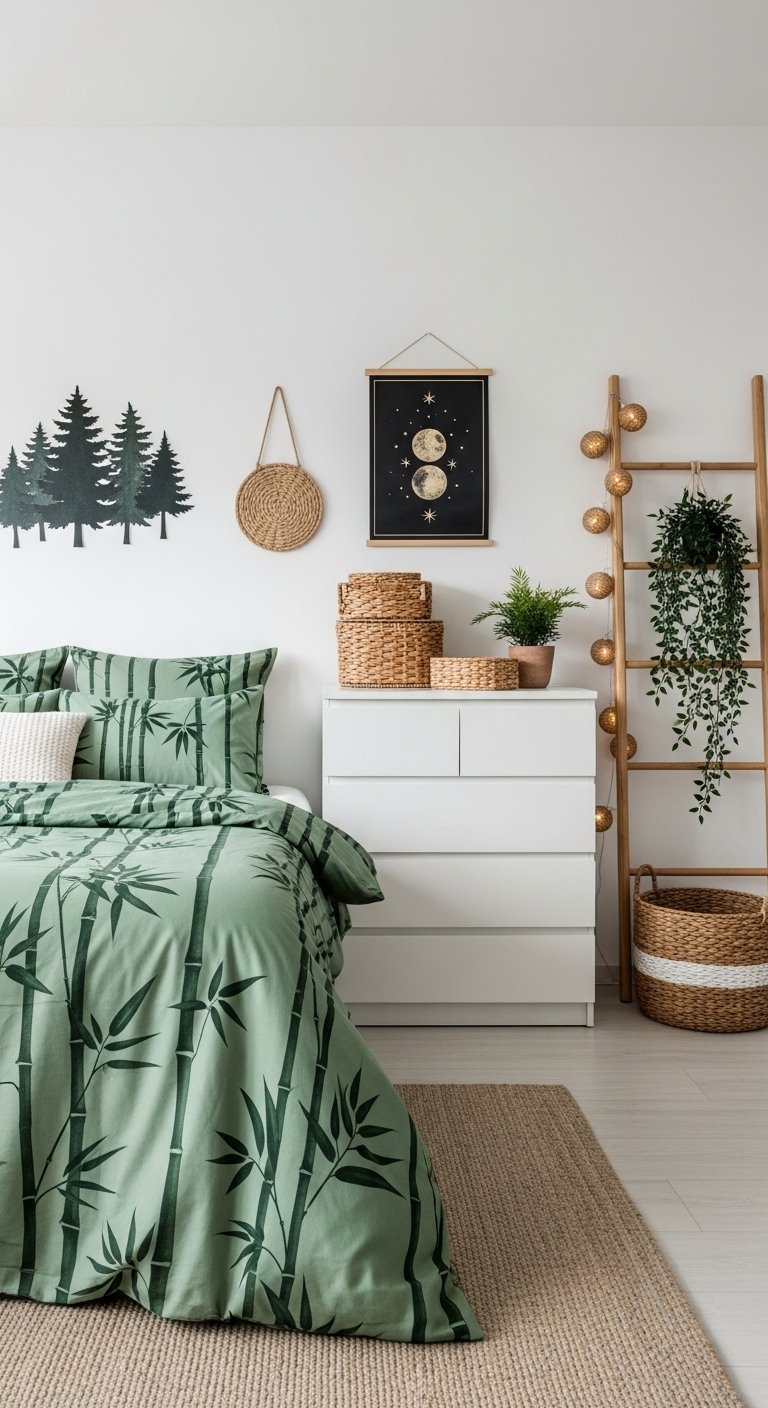
For those who need serious storage, consider transforming an entire wall into a shelving unit. This might sound counterintuitive for a small room, but a floor-to-ceiling shelving system can actually make the room feel larger. It creates a single, unified focal point rather than several small pieces of furniture scattered around.
You can DIY this with simple lumber and brackets or use modular systems. Place the shelves around the bed (creating a bridge) or on the wall opposite the bed. Paint the shelves the same color as the walls to make them look built-in. This provides a home for absolutely everything you own, leaving the rest of the room completely clutter-free.
Save this idea to your Pinterest.
Build Around The Bed
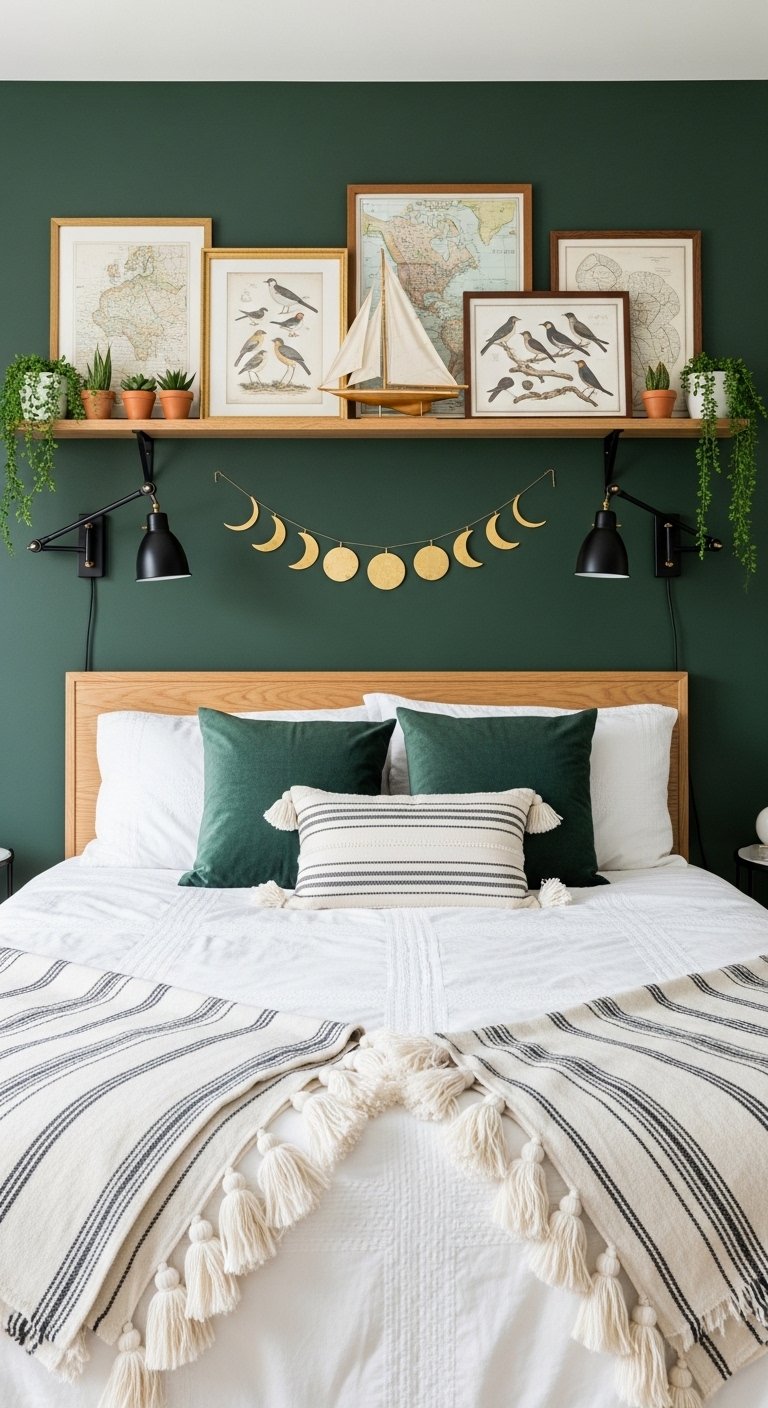
The “bridge” layout is a classic small-space solution that is seeing a modern revival. This involves installing wardrobes or tall cabinets on either side of the bed and connecting them with overhead storage. This creates a cozy, recessed sleeping nook while providing the storage capacity of a massive closet.
This layout maximizes the wall your bed is already on, freeing up the other three walls for artwork or a clear path. It creates a custom, built-in look that elevates the architecture of a plain apartment bedroom. Use sleek, handle-less doors for a modern, seamless appearance.
Mood Lighting
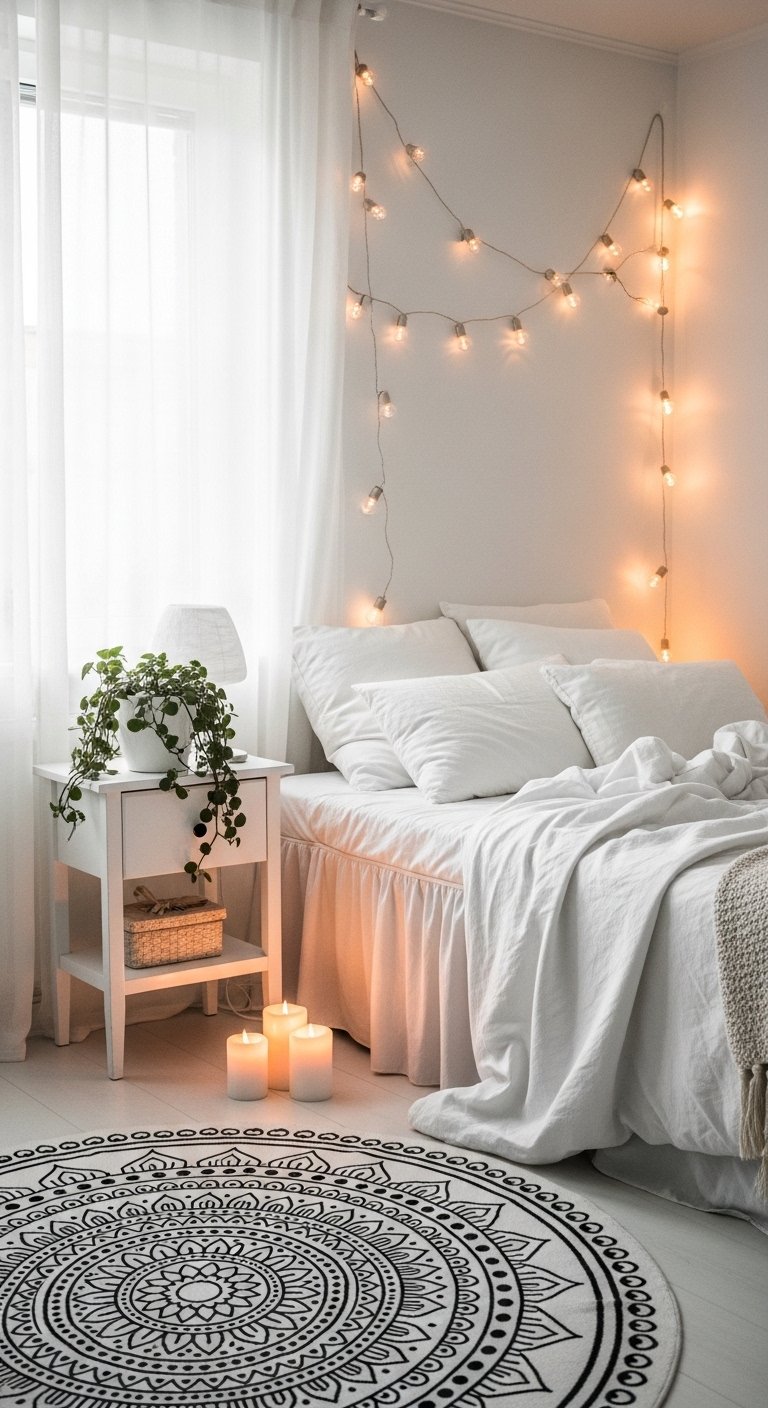
Lighting sets the atmosphere. In a small bedroom, you want to avoid harsh overhead lighting that casts deep shadows and highlights the small dimensions. Instead, layer your lighting to create depth and pockets of warmth.
Combine your wall sconces with LED strip lights behind the headboard or under the bed frame for a soft glow. Use a warm-toned light bulb (2700K-3000K) to create a relaxing vibe. Being able to illuminate different corners of the room draws the eye around the space, making it feel dynamic and larger than it is.
Stunning Artworks
A small room does not mean small art. In fact, a gallery wall of tiny frames can sometimes look cluttered. One large, oversized piece of art above the bed can act as a powerful anchor. It draws attention immediately and sets the tone for the room.
Alternatively, a vertical stack of two or three medium prints can accentuate the height of the ceiling. Choose art that you love—it’s the best way to inject personality into a rental where you might not be able to paint the walls.
Window Sills
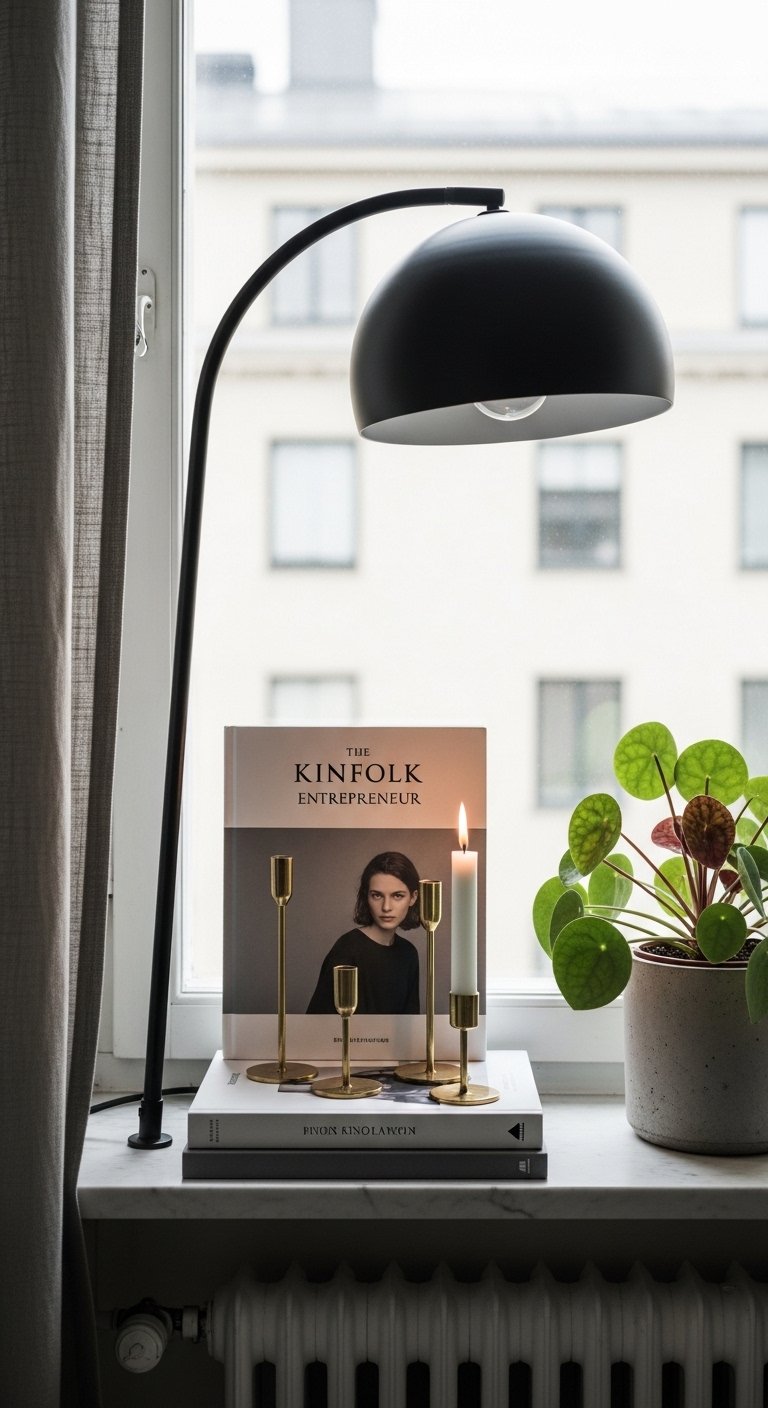
If you are lucky enough to have deep window sills, do not let them go to waste. A sill can act as a secondary nightstand, a bookshelf, or a plant display. In extremely tight rooms, pushing the bed up against the window allows the sill to function as your primary bedside table.
Keep the styling simple to avoid blocking natural light. A small stack of books, a succulent, or a candle is all you need. This utilizes existing architectural features to save on furniture costs and floor space.
Floor-to-Ceiling Curtains
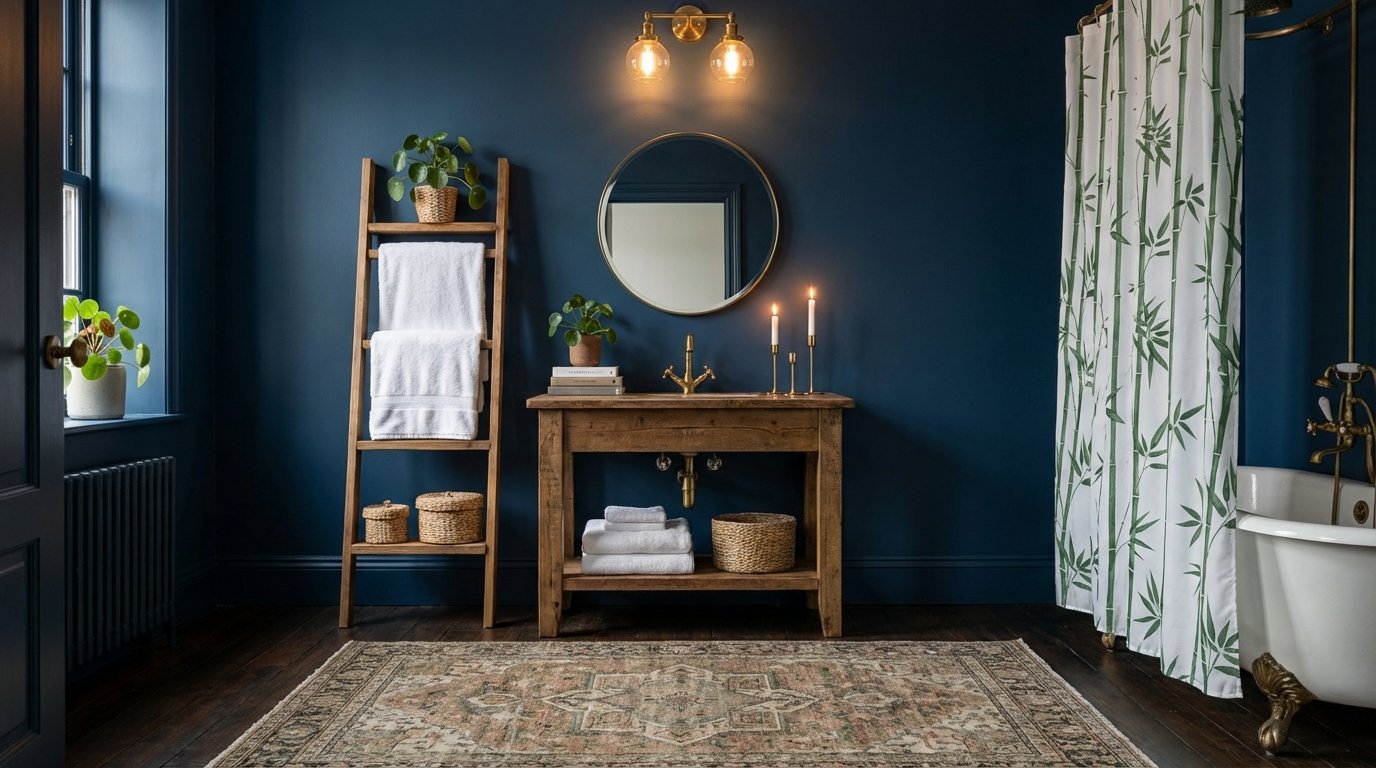
Hanging curtains incorrectly is a common design error that shrinks a room. To maximize height, install your curtain rod as close to the ceiling as possible—not right above the window frame. Let the fabric fall all the way to the floor.
This long, vertical line draws the eye up and creates the illusion of grand, high ceilings. It also makes the window itself appear larger. Choose a light, breezy fabric like linen or cotton to let natural light filter through even when the curtains are drawn, keeping the room feeling open.
Storage Bed
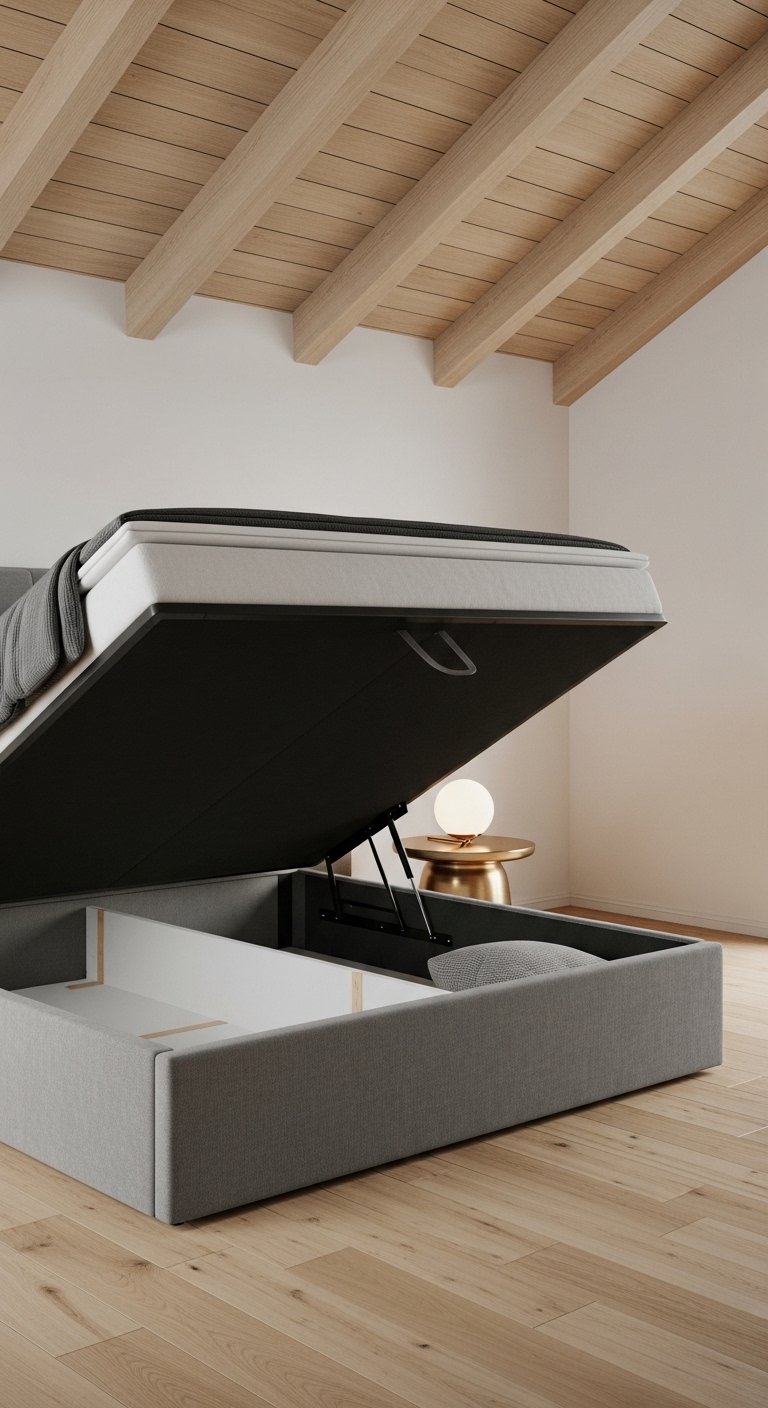
If you implement only one idea from this list, make it this one. A storage bed is the single most efficient piece of furniture for a small apartment. Whether it is a hydraulic lift-up ottoman bed or a frame with deep drawers, the storage capacity is often equivalent to a standard dresser.
Use this hidden space for bulky items like winter coats, suitcases, or spare linens. Because the storage is located within the footprint of the bed itself, it takes up zero additional floor space. This allows you to potentially eliminate a dresser entirely, giving you back precious square footage for a desk or a chair.
Pro Tip: If you can’t buy a new bed, use bed risers to lift your current frame and slide rolling bins underneath. Use a bed skirt to conceal the bins for a clean look.
Popular Asked Questions
How do I store things in a small bedroom without a closet?
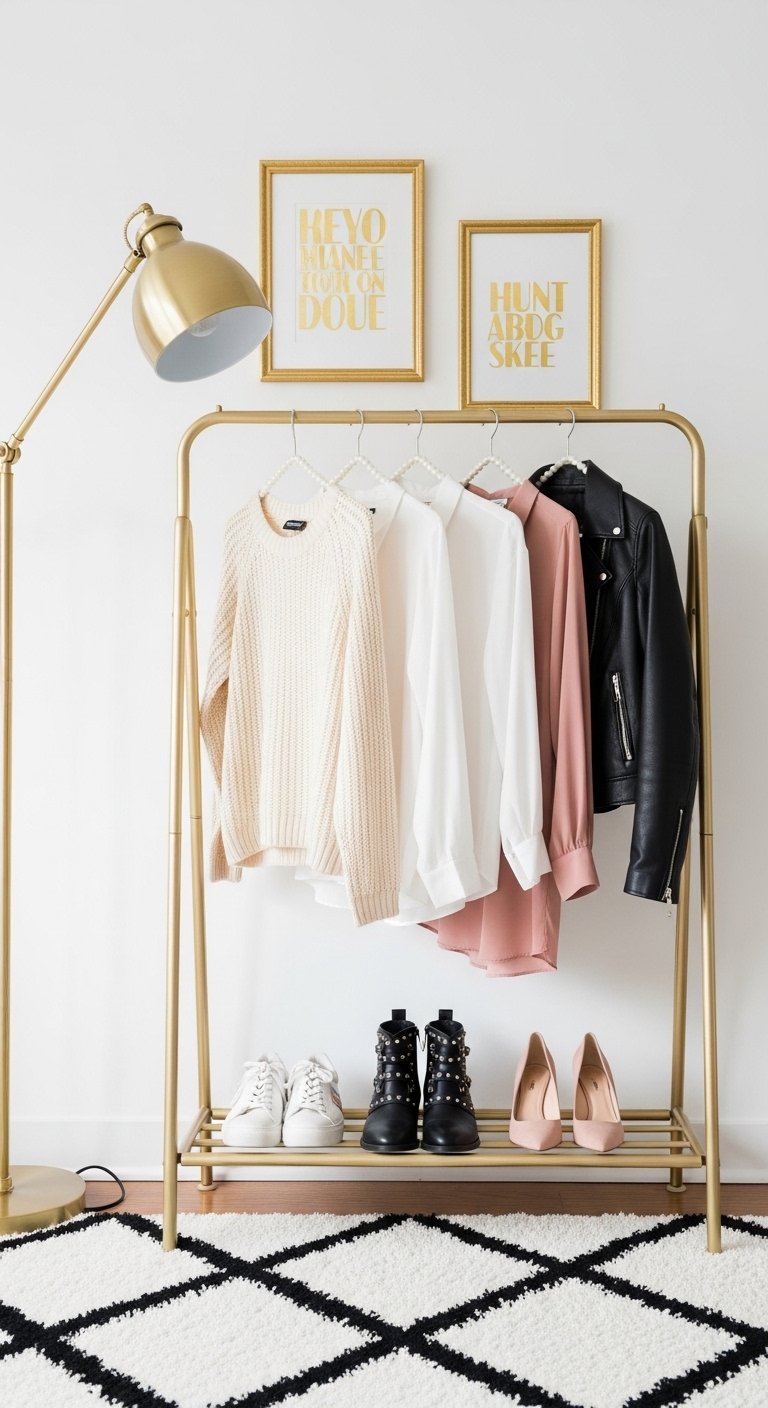
When a closet is missing, you must create one. Use a wardrobe rack or a freestanding armoire. Under-bed storage is crucial for out-of-season items. You can also install wall-mounted shelves or a rail system to hang clothes as a display. Over-the-door organizers are excellent for shoes and accessories.
How can I make my small bedroom look bigger and brighter?
Stick to light, neutral paint colors like white, cream, or soft grey, which reflect light. distinct from the walls. Use mirrors to bounce light and create depth. Ensure you have multiple light sources (ambient, task, accent) rather than just one ceiling light. Keep the floor as visible as possible by using furniture with legs.
What is the best layout for a small square bedroom?
The most efficient layout is often pushing the bed into a corner or centering it on the main wall with slim floating nightstands. Avoid placing the bed in a way that blocks the flow of traffic. If the room is very tight, consider a “hotel layout” with the bed centered and built-in storage surrounding the headboard.
How do I maximize storage in a small bedroom?
Think vertically. Use floor-to-ceiling shelving, tall wardrobes, and hooks on walls and doors. Utilize multi-functional furniture like a storage bed or an ottoman with a lid. Declutter surfaces by using wall sconces instead of lamps and installing floating shelves for decor.
Conclusion
Transforming a small apartment bedroom doesn’t require magic; it requires strategy. By prioritizing vertical storage, controlling the lighting, and selecting furniture that serves multiple purposes, you can turn even the most modest room into a functional, stylish retreat. Remember, a small space forces you to be intentional with your possessions, often leading to a more curated and peaceful home.
Which of these storage hacks will you try first? Let us know in the comments below!
Follow us on Pinterest for more Small Apartment inspiration.

Leave a Comment