
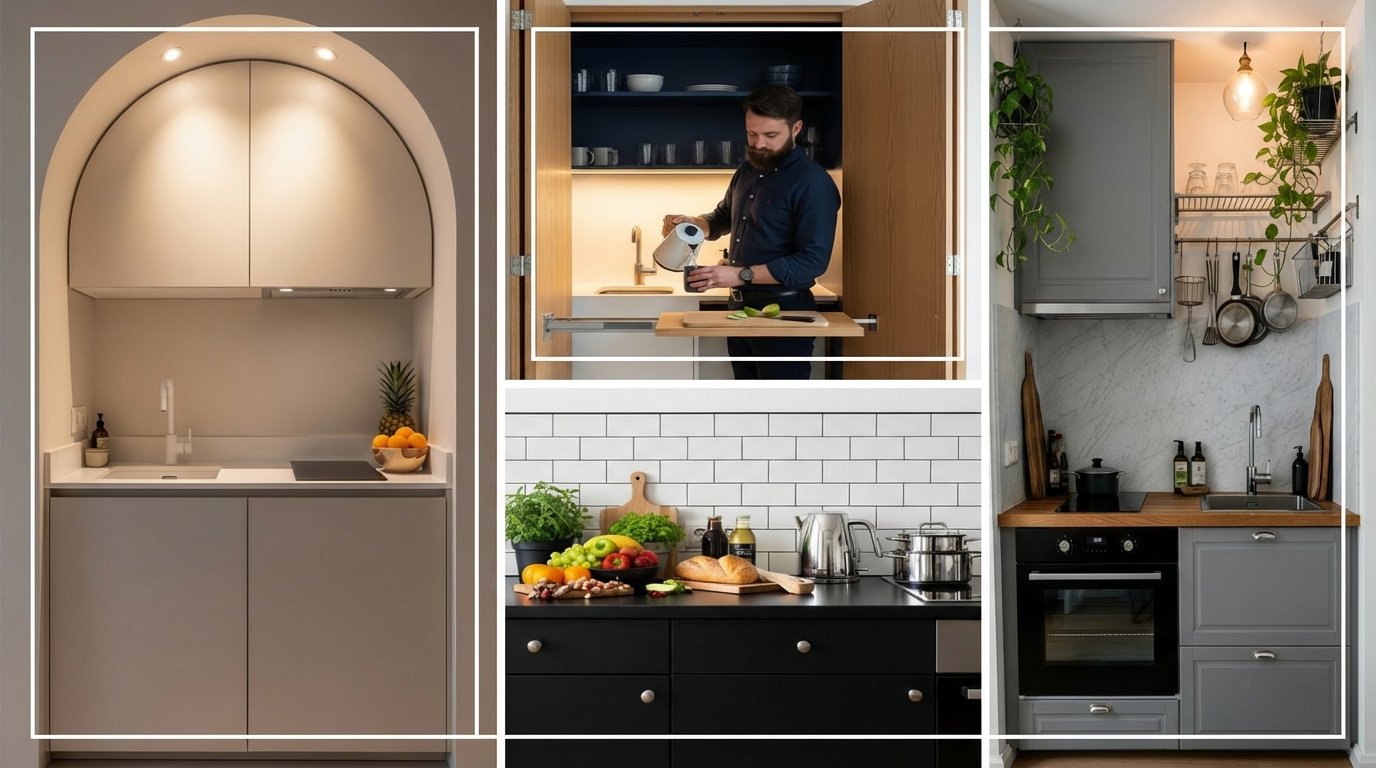
Small spaces demand big creativity. You might be renovating a basement, setting up a home office, or maximizing a studio apartment. A well-designed kitchenette adds massive value and convenience without the footprint of a full kitchen. This isn’t about compromising. It is about distilling the cooking experience down to its most functional and beautiful essentials.
We see a massive shift in interior design toward multi-functional zones. Homeowners want efficiency. They want style. They need solutions that fit tight corners and tighter budgets. A kitchenette solves the problem of needing a dedicated food prep area away from the main kitchen. You gain independence for guests, convenience for workers, and utility for renters.
Below you will find the ultimate guide to creating a stunning small kitchenette. We cover layouts, appliances, and thirteen specific design styles to inspire your next project.
Check out our related guide on Small Bathroom Renovations.
Key Takeaways
- Define Your Needs: Decide if your kitchenette is for coffee, light meals, or full guest living to determine appliance choice.
- Vertical Storage: Use every inch of wall space with open shelving and magnetic strips to keep counters clear.
- Lighting Matters: Under-cabinet lighting and mirrored backsplashes instantly double the visual size of the space.
- Appliance Scale: Choose slim, apartment-sized appliances rather than standard sizes to save critical floor space.
Contents
- What Is a Kitchenette?
- The Difference Between a Kitchen and a Kitchenette
- Essential Appliances
- Clever Storage Solutions
- Functional Countertops
- Efficient Layout
- Light and Bright Aesthetics
- Personal Touches
- The Basement Kitchenette
- The Office Kitchenette
- The Hotel or Guest Room Kitchenette
- The Studio Apartment Kitchenette
- The Hidden Closet Design
- The Wet Bar Conversion
- The Modern Rustic Nook
- The Minimalist Monochrome
- The Under-Stair Kitchenette
- The Industrial Loft Style
- The Pop of Color
- The Outdoor Patio Kitchenette
- The Renter Friendly DIY
- Pros and Cons of a Kitchenette Design
- Popular Asked Questions
- Conclusion
What Is a Kitchenette?
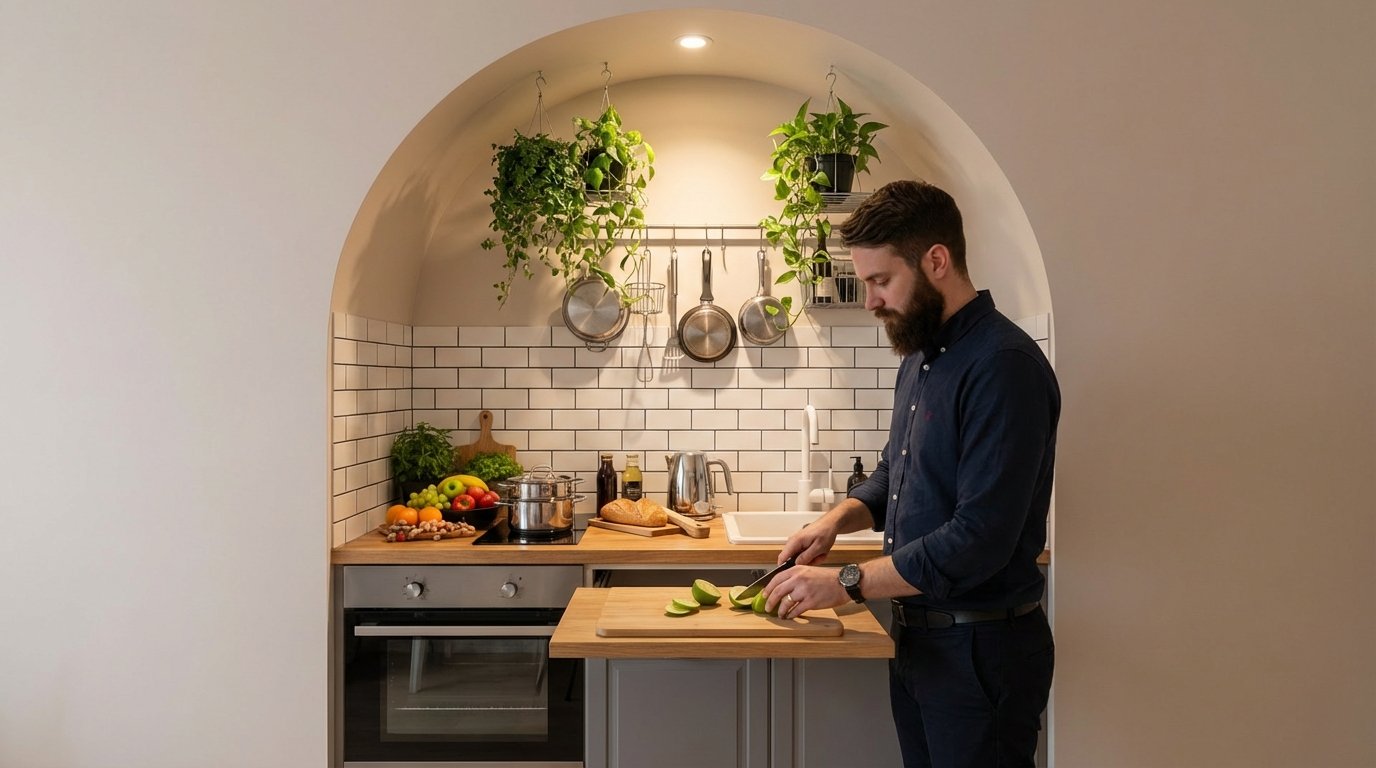
A kitchenette is a smaller, more compact version of a kitchen. It typically includes the basics needed for meal preparation but lacks the full suite of appliances found in a standard culinary space. You will usually find a mini-fridge, a microwave, a small sink, and perhaps a two-burner cooktop. The square footage is limited. The design focus leans heavily on efficiency.
These spaces appear frequently in motel rooms, dormitories, basements, and pool houses. The goal is to provide autonomy for quick meals and drinks without requiring the plumbing and electrical overhaul of a full chef’s kitchen.
The Difference Between a Kitchen and a Kitchenette
The primary distinction lies in size and equipment. A standard kitchen serves as the heart of a home. It features a full-sized refrigerator/freezer, a four-burner stove with an oven, a dishwasher, and ample countertop space. Building codes often define a kitchen by the presence of a cooking range and specific ventilation systems.
A kitchenette strips these requirements back. It often lacks a built-in oven or a dishwasher. The fridge is usually under-counter size. Storage is minimal. While a kitchen invites complex meal preparation for families, a kitchenette supports simple reheating, light cooking, and beverage service. This difference makes kitchenettes significantly cheaper to install and easier to fit into non-traditional spaces.
Essential Appliances
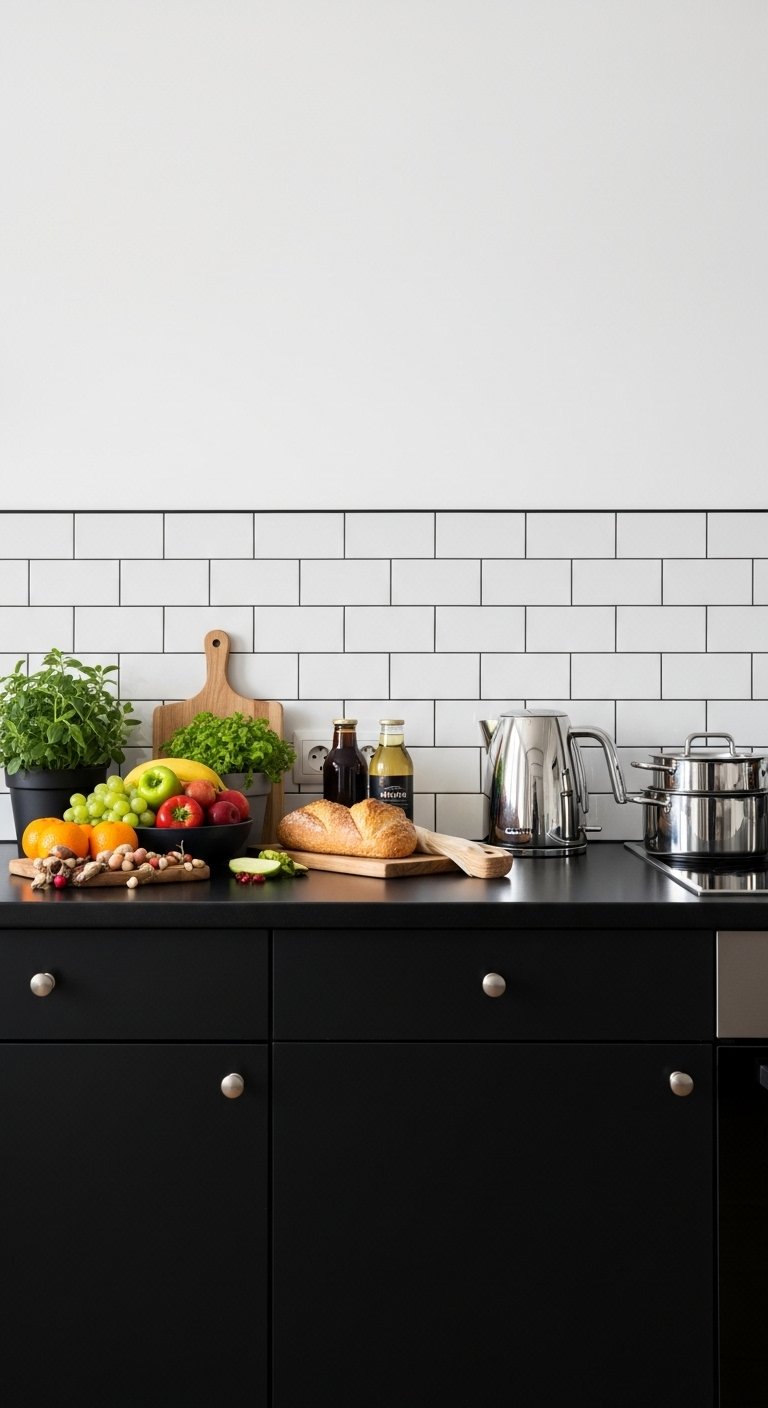
Selecting the right gear dictates the functionality of your space. You have limited real estate, so every item must earn its keep.
- Refrigeration: Skip the bulky standard fridge. Opt for a high-quality under-counter drawer fridge or a retro-style mini-fridge. These fit seamlessly beneath countertops and provide enough storage for drinks and essentials.
- Cooking: Replace the massive range with a sleek, two-burner induction cooktop. These heat up fast, clean easily, and can be stored away in a drawer when not in use if you choose a portable model. A high-end toaster oven or a convection microwave can handle baking and roasting duties without the space demands of a wall oven.
- Cleaning: A single-basin sink is sufficient. Deep sinks are better than wide ones here. If dishwashing is non-negotiable, look for an 18-inch apartment-sized dishwasher or a drawer dishwasher.
Clever Storage Solutions
Clutter kills small spaces. You need to keep surfaces clear to maintain usability.
Verticality is your friend. Install open shelving all the way to the ceiling. Use the top shelves for items you rarely use and the lower shelves for daily dishware. Magnetic knife strips replace bulky counter blocks. Hanging rails under cabinets can hold mugs, utensils, and even small pots.
Hidden compartments work wonders. Use toe-kick drawers at the base of your cabinets to store flat items like baking sheets or placemats. If you have a corner cabinet, install a lazy Susan or a pull-out organizer to access the dark recesses. Every cubic inch inside a cabinet should have a purpose.
Functional Countertops
You do not have acres of space for chopping and prepping. The countertop material needs to be durable and, ideally, multi-functional.
Quartz is a top contender. It resists staining and scratching, requires no sealing, and comes in light colors that brighten the corner. Butcher block is another excellent choice. It adds warmth and can double as a cutting board, saving you the need to store a separate one.
Avoid materials that are easily damaged by water or heat, as accidents happen more frequently in tight quarters. If your budget allows, a solid surface material that integrates the sink can eliminate seams where crumbs and water collect.
Efficient Layout
Traffic flow determines if a kitchenette feels cozy or cramped.
- The One-Wall Layout: This is the most common kitchenette configuration. All appliances and cabinets run along a single wall. It is the ultimate space-saver.
- The L-Shape: If you have a corner, this layout provides a “working triangle.” It gives you a bit more counter space and separates the sink from the cooking area.
- The Galley: Two parallel runs of cabinets. This is rare for a kitchenette but works in narrow passageways.
Keep the sink and the fridge near the outer edges of the layout so guests can grab a drink without blocking the person preparing food.
Light and Bright Aesthetics
Dark corners feel smaller. To make your kitchenette feel expansive, prioritize light.
Use light-reflective colors on the walls and cabinets. Whites, creams, and pale grays bounce light around the room. High-gloss cabinet finishes also help reflect light.
Lighting fixtures are critical. A single overhead light casts shadows. Install LED strip lights under your upper cabinets to illuminate the workspace. If you have open shelves, add small accent lights. A mirror used as a backsplash is a designer trick that creates the illusion of depth and doubles the light in the room.
Personal Touches
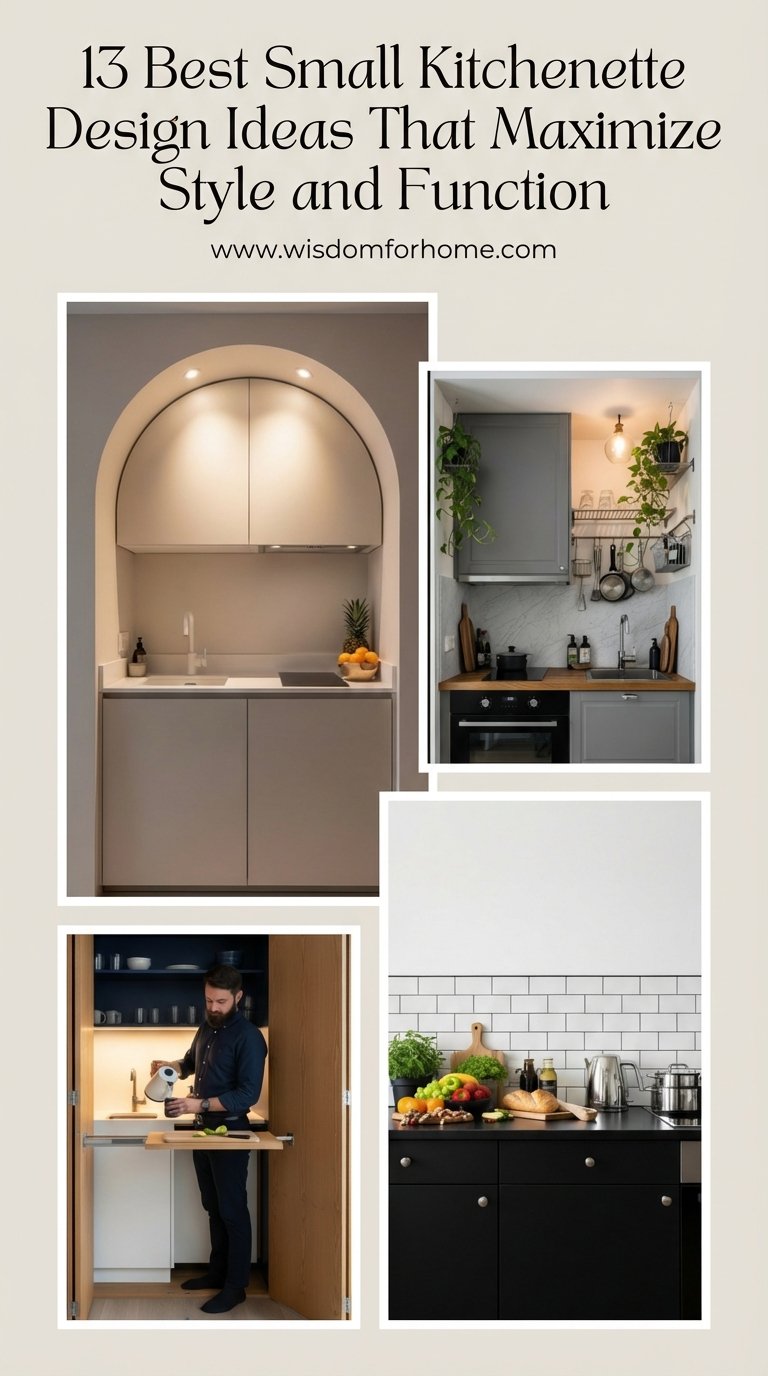
Small spaces risk feeling sterile. Inject personality through hardware and decor.
Swap out standard builder-grade knobs for brushed brass or matte black handles. These small details act like jewelry for the room. Add a small potted plant or fresh herbs on the window sill or shelf. The greenery adds life and improves air quality.
Textiles also soften the hard edges. A nice tea towel, a small rug, or patterned roman shades can introduce color and texture without cluttering the valuable counter space.
The Basement Kitchenette
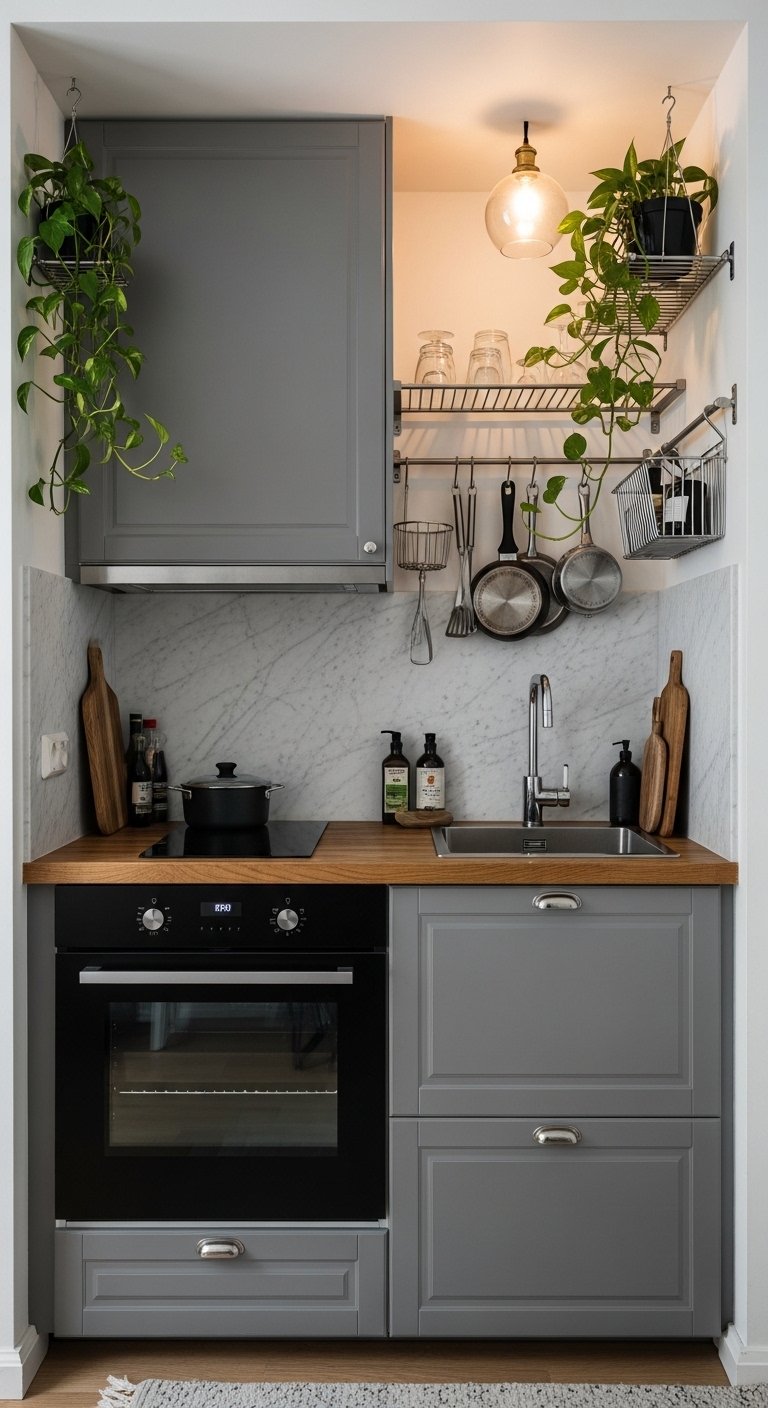
Basements often suffer from low light and odd layouts, but they are the prime location for a kitchenette. This design focuses on entertainment. Think of it as a secondary social hub. Dark cabinetry works here to create a moody, lounge-like atmosphere. Pair navy or charcoal cabinets with warm brass lighting fixtures.
Since plumbing might be tricky in a basement, a macerating pump system can handle the sink waste without breaking the concrete floor. Focus on a large beverage cooler rather than a food fridge. A wet bar setup with a small prep sink and plenty of glass storage defines this space.
- Pro Tip: Install a floating shelf above the backsplash to display premium liquor bottles or glassware, turning storage into art.
- Micro-CTA: Save this idea to your Pinterest.
The Office Kitchenette
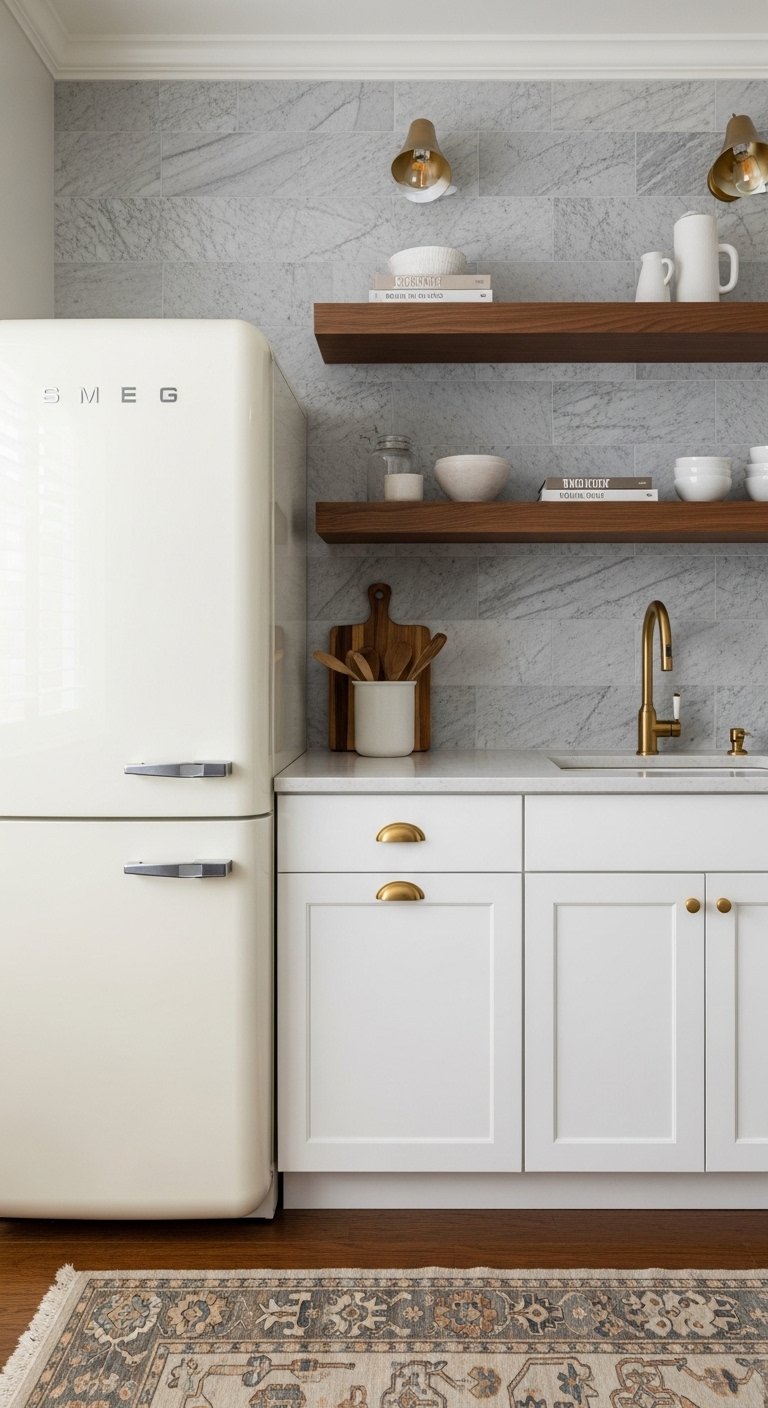
Productivity relies on fuel. An office kitchenette needs to deliver caffeine and quick snacks efficiently. The aesthetic should be clean, professional, and distracting-free. Matte white cabinets with hidden finger pulls create a sleek look that blends into the background of a professional environment.
Prioritize the coffee station. Dedicate a specific counter area for the espresso machine or drip coffee maker. Ensure there is an outlet immediately behind it. Use a drawer organizer for pods, stirrers, and sugar to keep the visual noise to a minimum. A small microwave hidden behind a cabinet door allows for lunch heating without smelling up the office with food odors all day.
- Pro Tip: Use a deep drawer for trash and recycling pull-outs to keep the floor clear of unsightly bins.
The Hotel or Guest Room Kitchenette
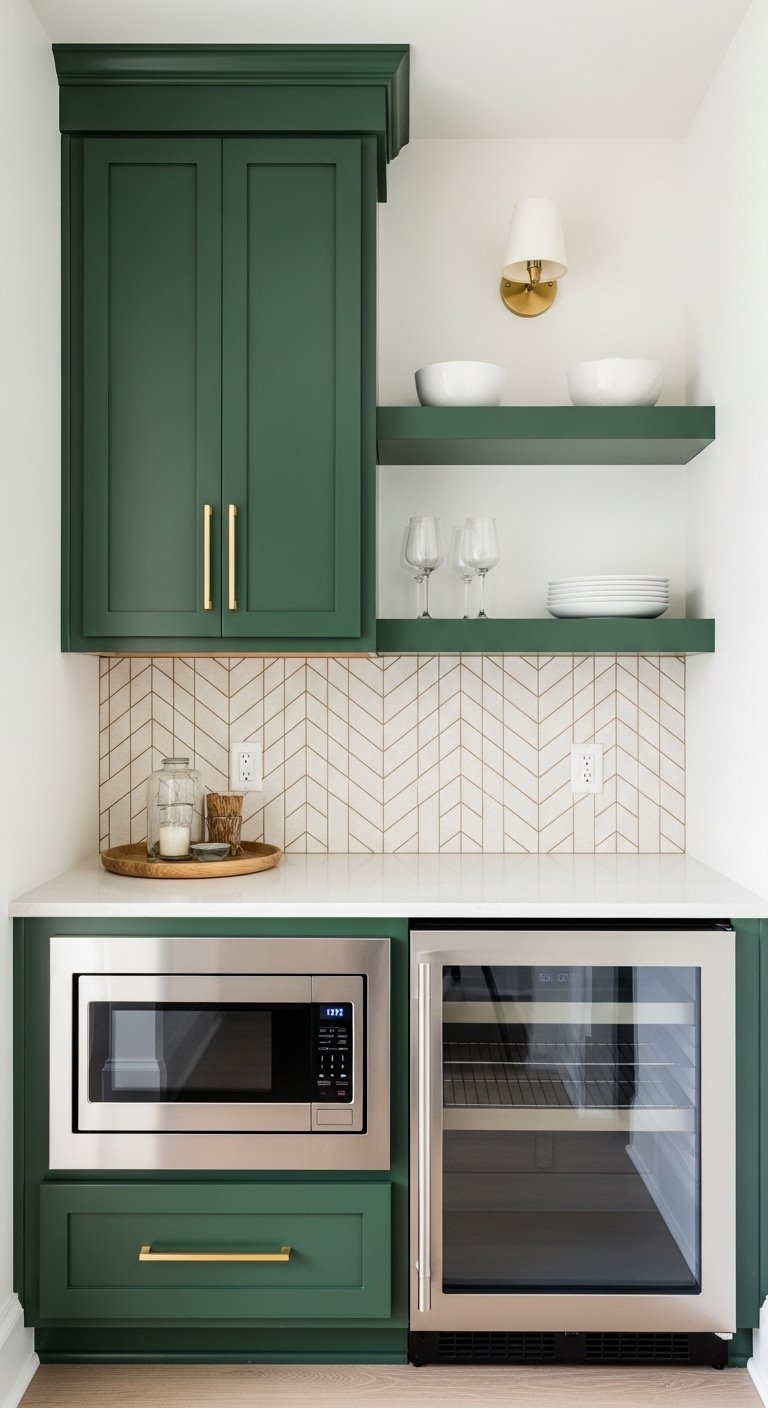
Hospitality design is all about luxury in miniature. Treat your guest suite kitchenette like a high-end hotel amenity. Use premium materials like marble or granite for the small section of countertop. It elevates the perceived value of the entire room.
Include a small under-counter fridge stocked with water and drinks. A single-cup coffee maker is essential. Simplicity is key here; guests do not need to cook a five-course meal. They need convenience. Open shelving with perfectly stacked white mugs and wine glasses invites usage. Keep colors neutral and soothing—beiges, soft woods, and whites.
- Pro Tip: Add a dedicated electrical outlet with USB ports on the backsplash so guests can charge phones while making coffee.
- Micro-CTA: Save this idea to your Pinterest.
The Studio Apartment Kitchenette
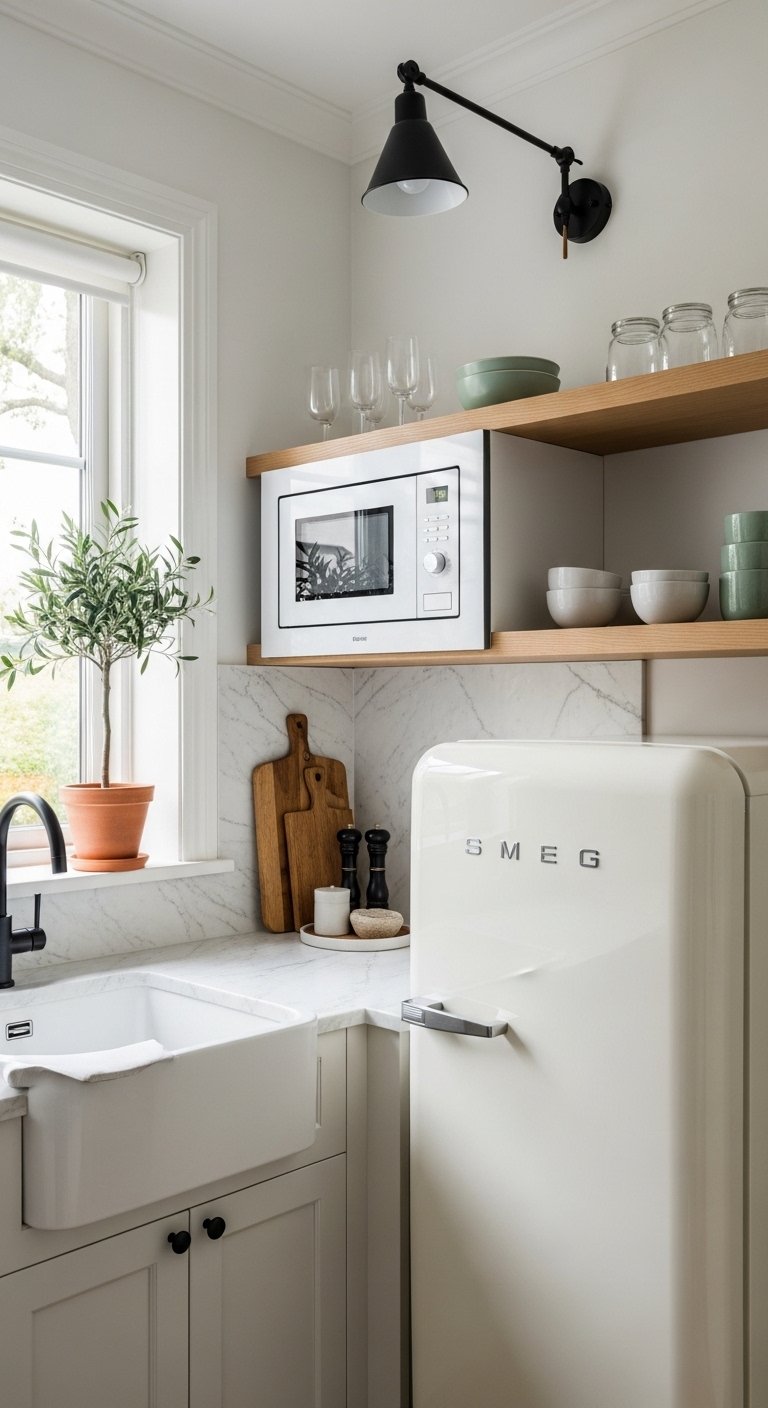
In a studio, the kitchenette is part of the living room and bedroom. It cannot look like a utility closet. It must be a piece of furniture. Custom cabinetry that matches the wardrobe or media unit helps integrate the kitchen into the living space.
Concealment is a strong strategy. Panel-ready appliances (where the fridge door matches the cabinets) make the kitchen machinery disappear. Use a two-burner ceramic cooktop that lies flush with the counter. When not in use, it creates a seamless surface. High cabinets maximize storage in rooms with small footprints but high ceilings.
- Pro Tip: Use a rolling island or butcher block cart. It serves as prep space when cooking and a dining table or desk when you are done.
The Hidden Closet Design
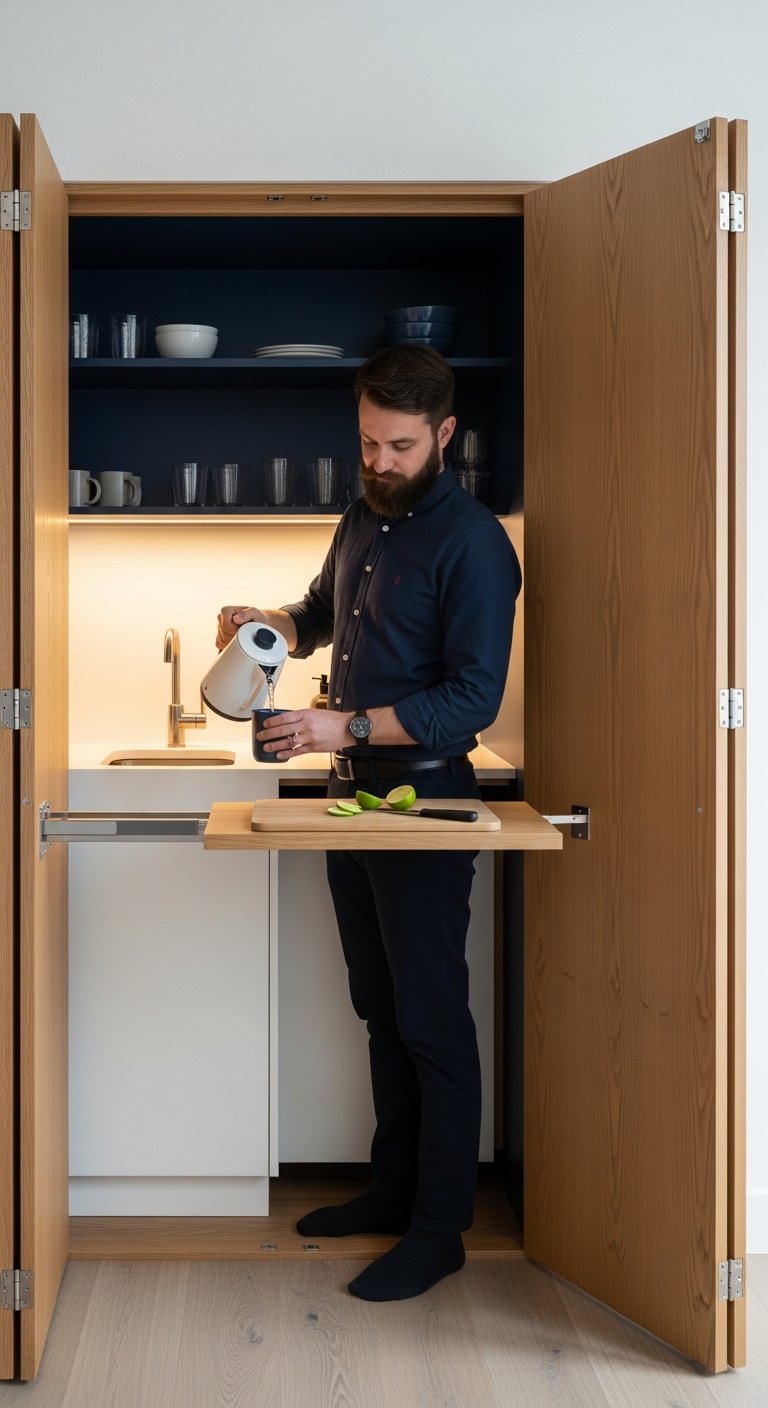
This is the ultimate solution for multi-purpose rooms. The entire kitchenette resides behind bi-fold or pocket doors. When closed, it looks like a wardrobe or storage wall. When open, it reveals a fully functional wet bar or coffee station.
Interior lighting is crucial here. The moment the doors open, a motion sensor should trigger bright LED strips. Use a contrasting color inside the closet—like a bold wallpaper or a vibrant paint color—to create a “surprise” element. Since the doors hide the mess, you can be a bit more relaxed with open storage inside.
- Pro Tip: Ensure you have an electrical cutoff switch that automatically turns off the cooktop or microwave when the doors are closed to prevent fire hazards.
- Micro-CTA: Save this idea to your Pinterest.
The Wet Bar Conversion
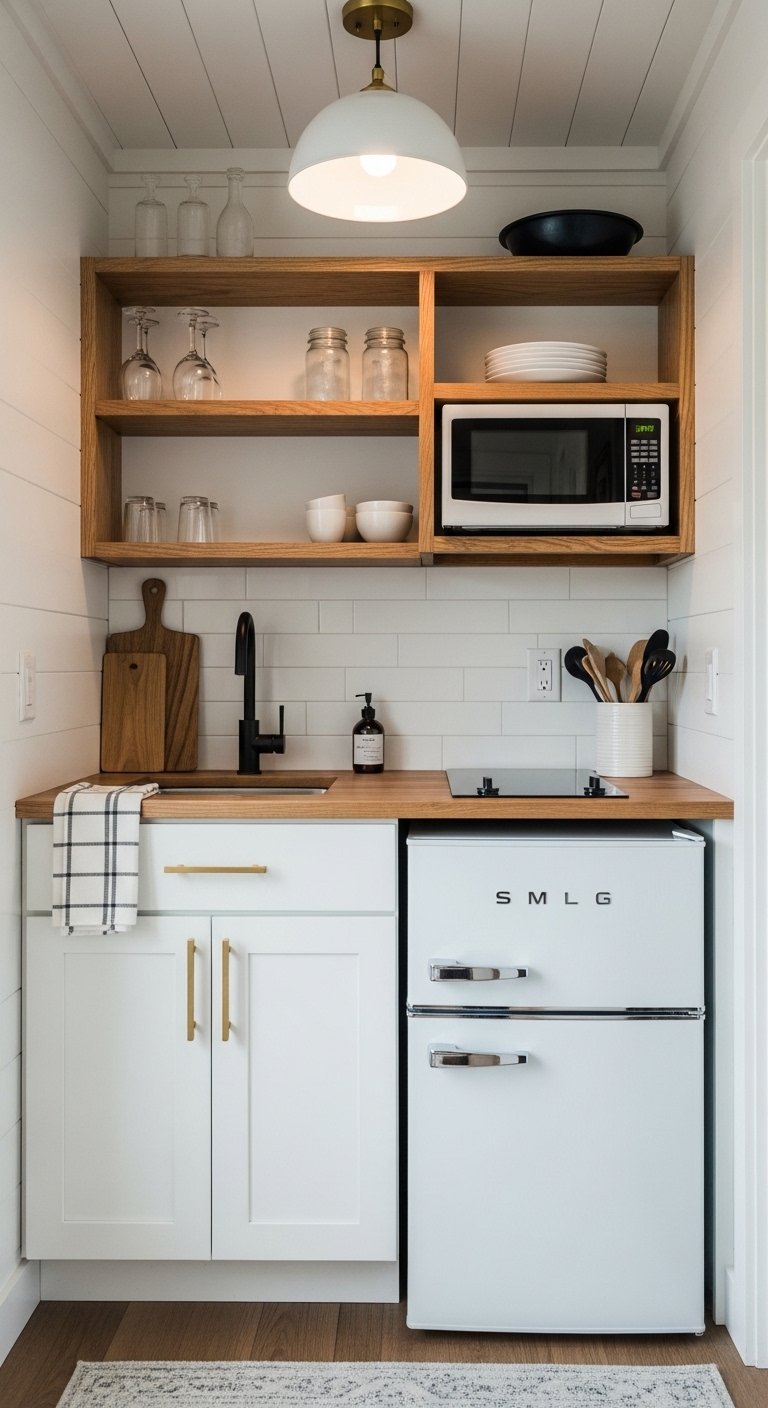
Many older homes have awkward wet bars in living rooms. Transform this dated feature into a modern kitchenette. Remove the upper cabinets to open up the space and replace them with glass shelving.
Focus on the sink. Upgrade to a hammered copper or stone composite sink to make it a focal point. A beverage center is better than a fridge here. This space serves best for cocktail hour or morning coffee. Use a mirrored backsplash to reflect the room and make the niche feel twice as deep.
- Pro Tip: Add a wine glass rack under the upper shelf or cabinet to free up counter space and display your stemware.
The Modern Rustic Nook
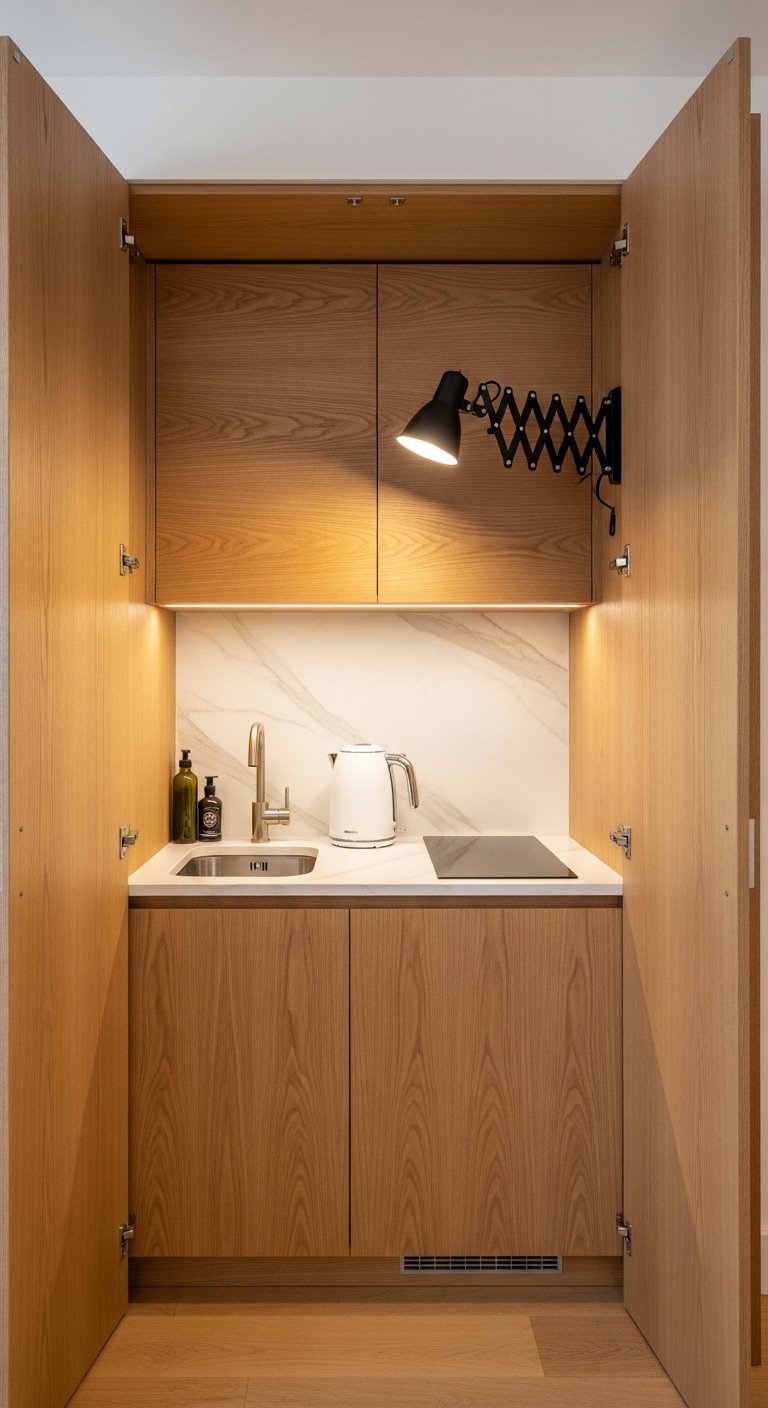
Combine the warmth of a cabin with modern lines. Use reclaimed wood for open shelves against a clean, white subway tile backsplash. The contrast between the rough wood and the glossy tile creates immediate visual interest.
Choose cabinets in a sage green or slate blue. These nature-inspired tones ground the space. Iron or bronze hardware completes the rustic vibe. For the countertop, butcher block is the natural choice. It requires maintenance but offers a texture that stone cannot match.
- Pro Tip: Use mason jars for dry storage (pasta, rice, sugar) on the open shelves to enhance the farmhouse aesthetic.
- Micro-CTA: Save this idea to your Pinterest.
The Minimalist Monochrome
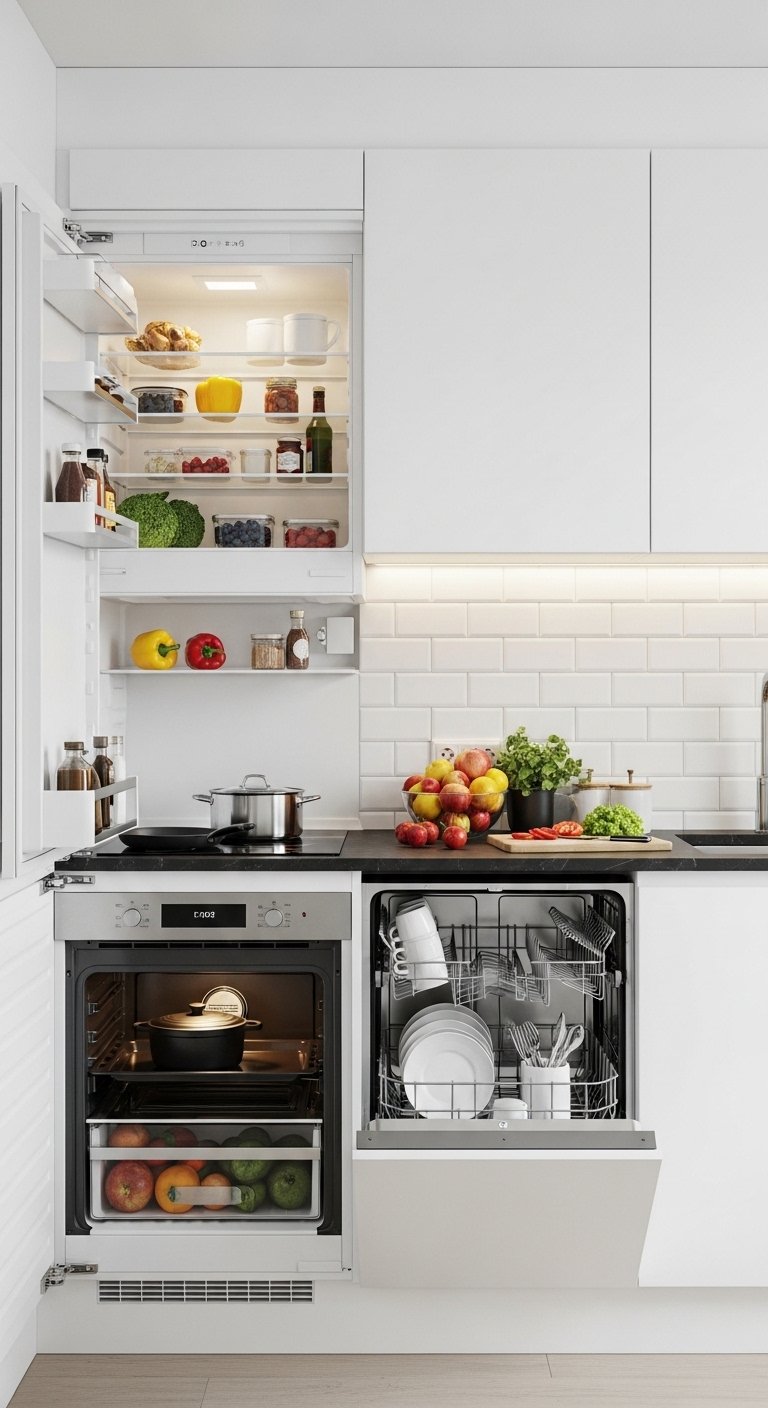
Less is more. A monochrome palette—all white, all grey, or all black—reduces visual clutter. This is powerful in tiny spaces where different colors can make the room feel chaotic.
Go for flat-panel cabinets with no hardware (push-to-open latches). Match the countertop color to the cabinets. Use a solid sheet backsplash of the same material or painted glass. The goal is to create a seamless block of color. This architectural approach makes the kitchenette look like a sculptural element rather than a workspace.
- Pro Tip: Keep the counter completely bare. Store the toaster and coffee maker inside a cabinet “appliance garage” to maintain the sleek lines.
The Under-Stair Kitchenette
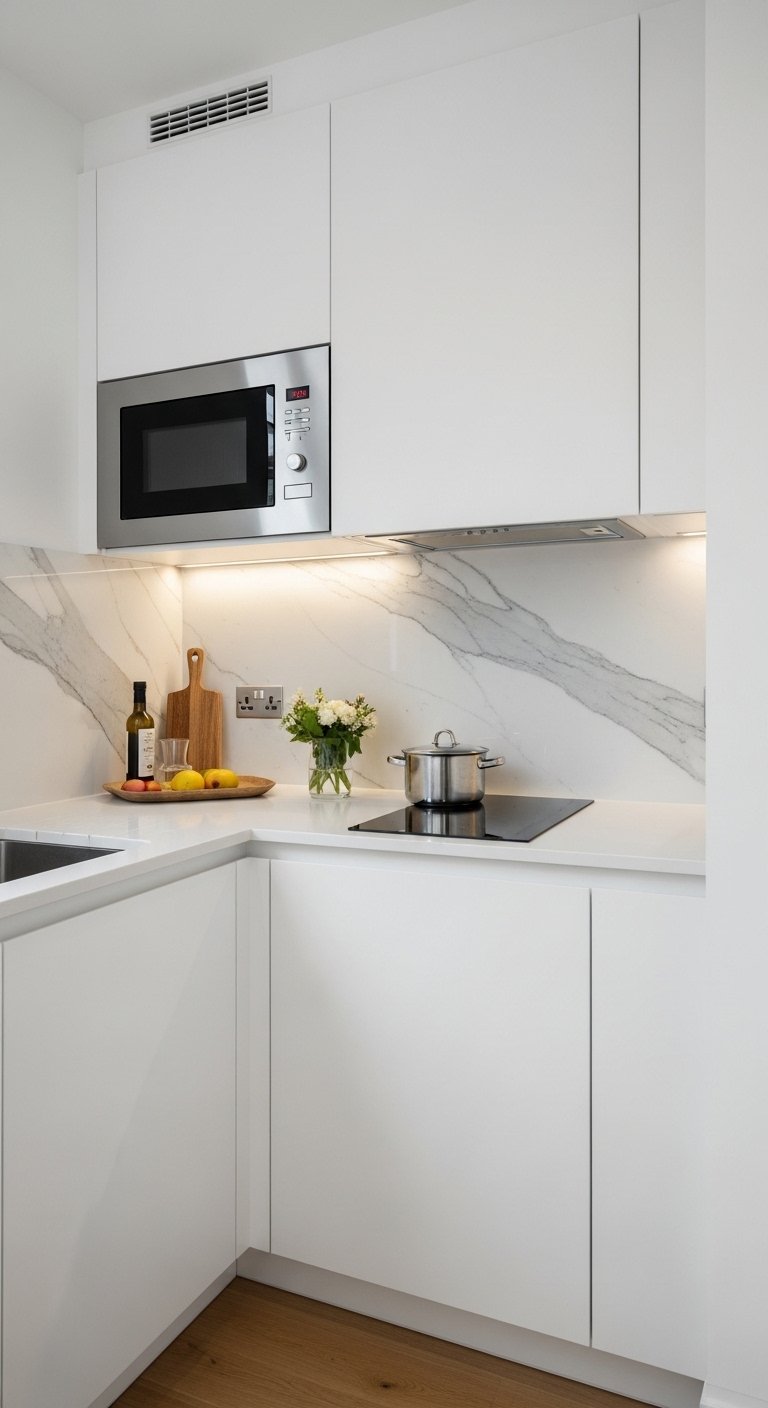
The space under a staircase is often wasted. It is the perfect depth for a kitchenette. The sloped ceiling presents a challenge but also a design opportunity.
Custom cabinetry is usually required to fit the angle. Place the tallest items (fridge, pantry) at the high end of the slope and the sink or prep area at the lower end. Use the triangular space at the very bottom for wine storage or pet bowls. This turns a dead zone into a high-value feature.
- Pro Tip: Use light colors to prevent the shadowed under-stair area from feeling like a cave. Good lighting is non-negotiable here.
- Micro-CTA: Save this idea to your Pinterest.
The Industrial Loft Style
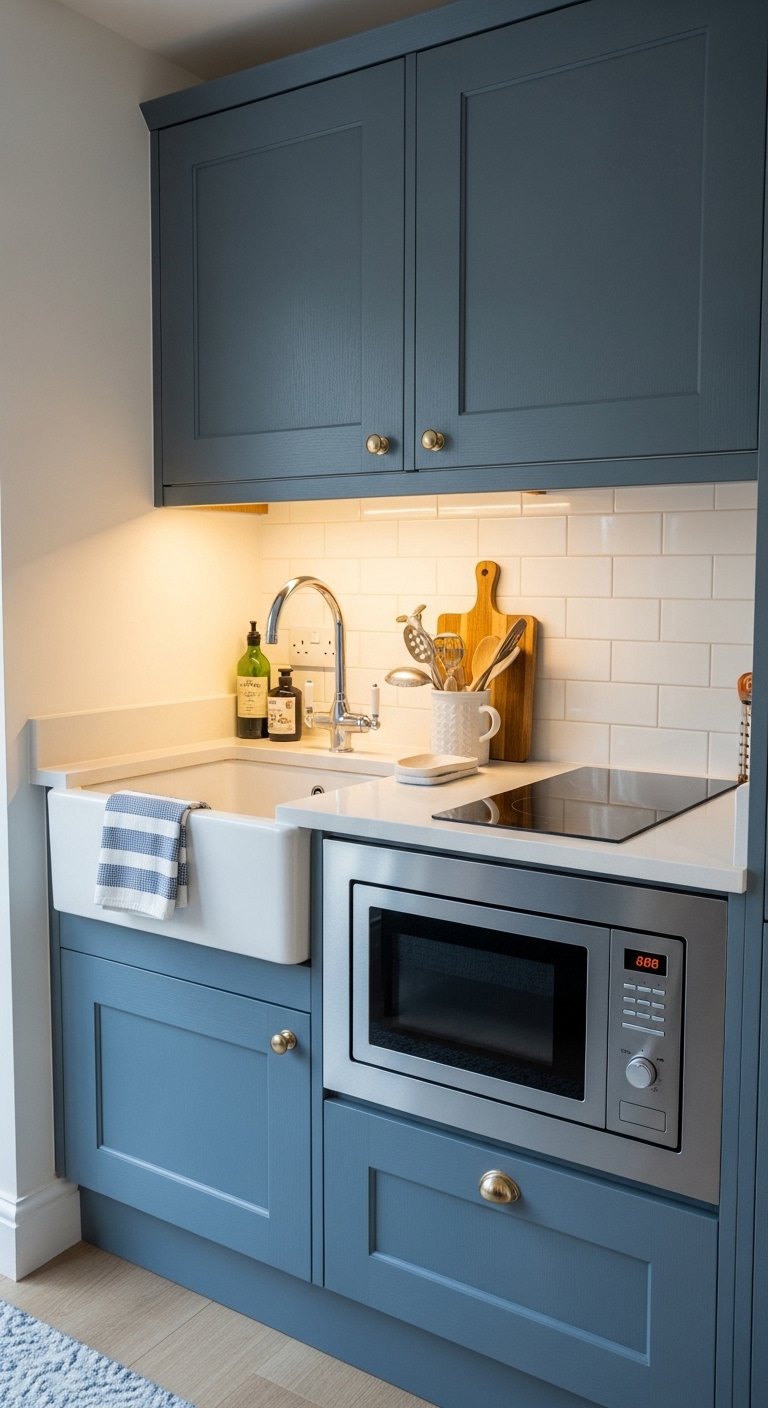
Exposed elements define this look. If you have brick walls, leave them exposed. Use stainless steel for the countertop or the lower cabinets. It is durable, hygienic, and screams industrial chic.
Pipe shelving is a great DIY option for this style. Use black iron pipes and wood planks for storage. Hang a cage light or an Edison bulb pendant. This style forgives imperfections and looks great with open storage, making it perfect for a kitchenette where you might not have the budget for custom cabinetry.
- Pro Tip: A stainless steel pegboard on the wall provides flexible storage for pans and utensils, fitting perfectly with the industrial vibe.
The Pop of Color
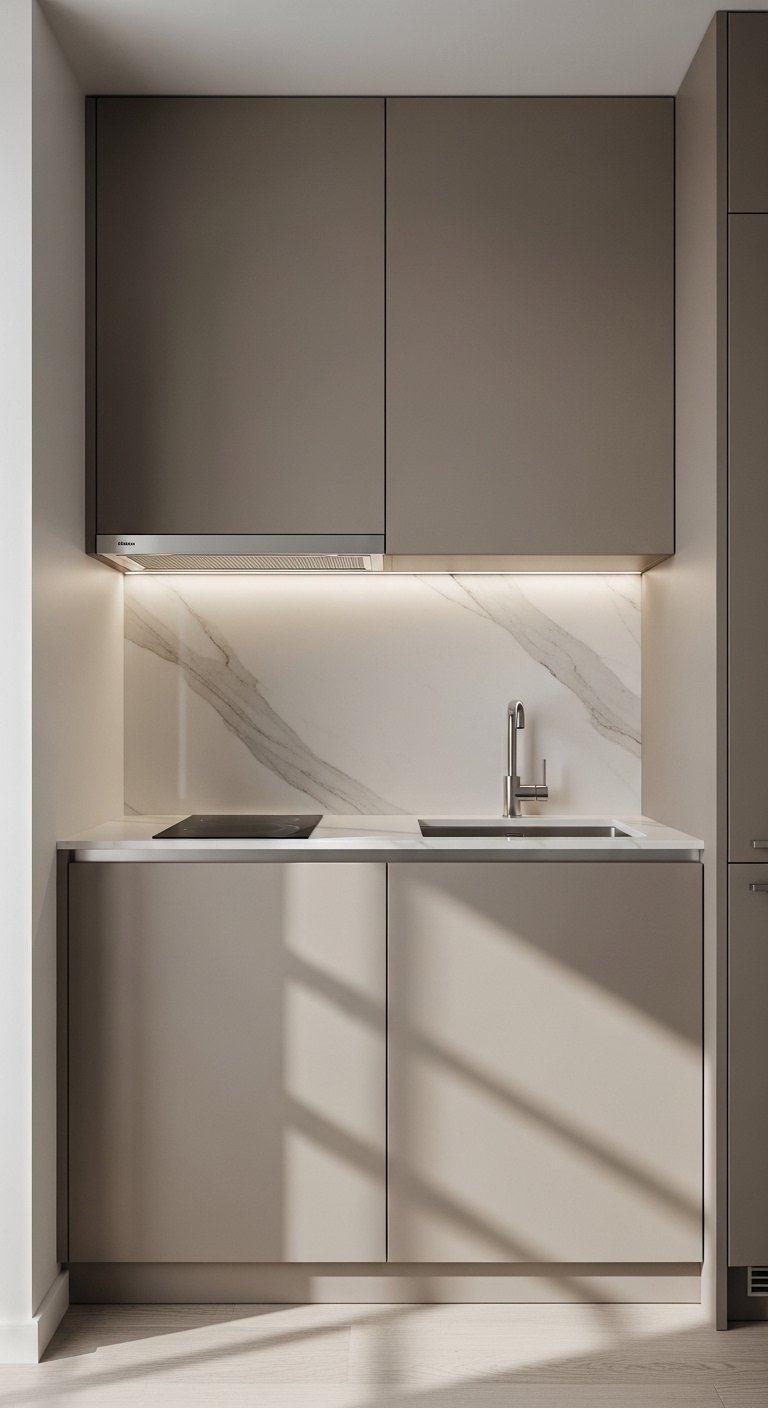
Small spaces are safe places to take big risks. A kitchenette is small enough that a bold color won’t overwhelm the house. Paint the cabinets a vibrant yellow, a deep teal, or a coral pink.
Keep the rest of the room neutral. White walls and light floors let the kitchenette stand out as a jewel box. Use neutral hardware (chrome or brass) to balance the intensity of the paint. This approach creates a joyful, energetic focal point.
- Pro Tip: If painting cabinets feels too permanent, use peel-and-stick wallpaper on the fridge or the backsplash for a reversible pop of color.
- Micro-CTA: Save this idea to your Pinterest.
The Outdoor Patio Kitchenette
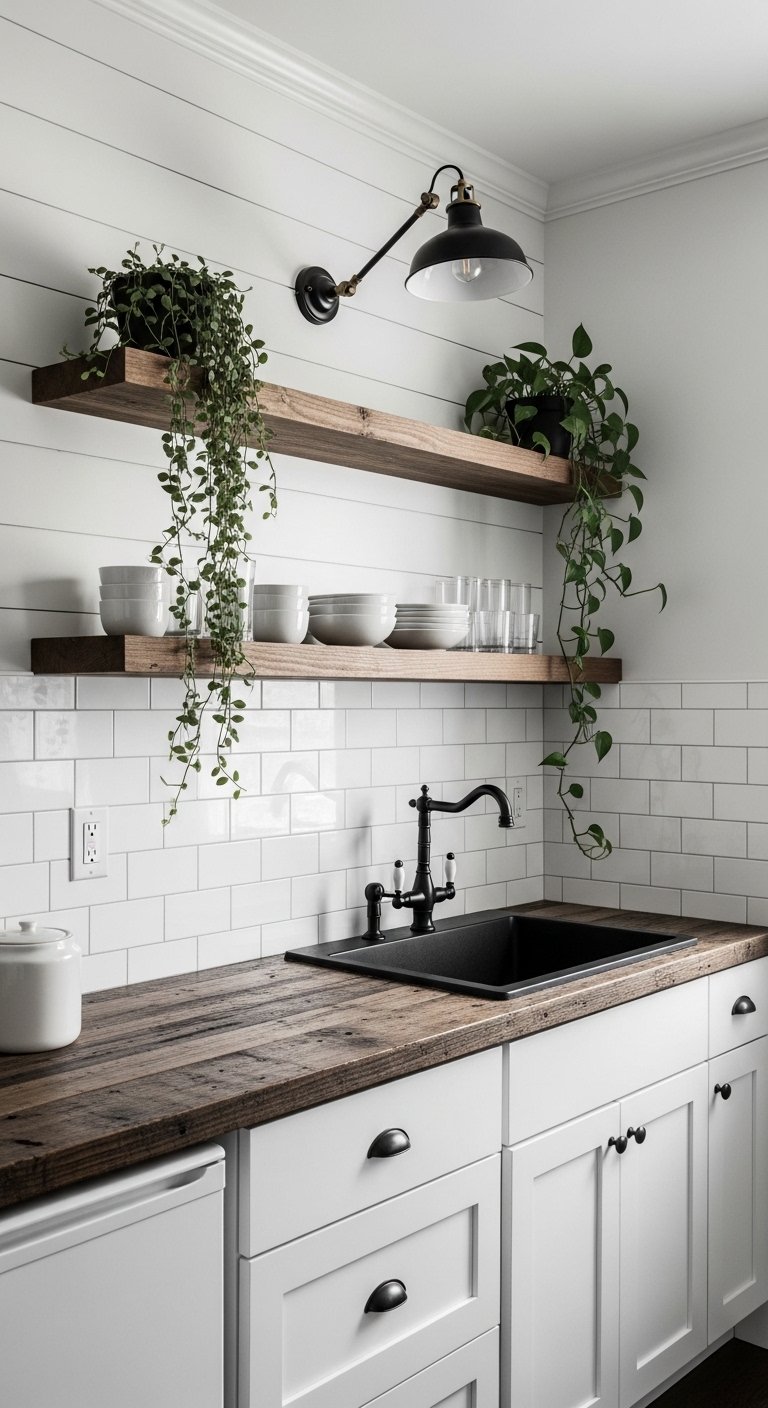
Extend your living space outdoors. An outdoor kitchenette or “summer kitchen” keeps the heat out of the main house during warm months. Durability is the main factor here.
Stainless steel cabinets or masonry (stone/brick) structures are necessary to withstand weather. You need a grill or a pizza oven instead of a microwave. A small outdoor-rated fridge keeps drinks cold. Concrete countertops are affordable and incredibly durable for exterior use.
- Pro Tip: Ensure all electrical outlets are GFCI rated and have weather covers. Plumbing needs a drain valve to prevent freezing in winter.
The Renter Friendly DIY
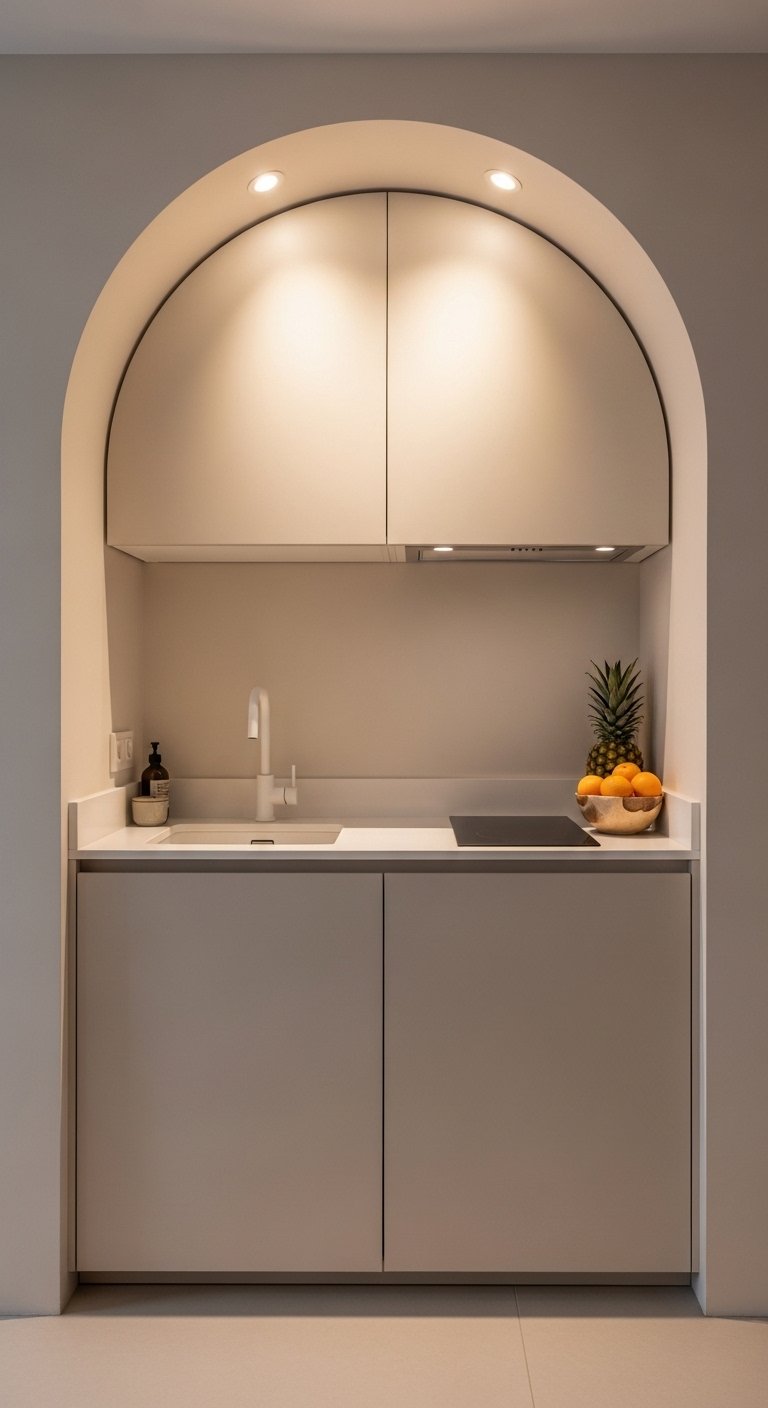
You don’t need to own the home to have a great kitchenette. This design relies on freestanding furniture. A large sideboard or buffet table can serve as the base.
Place a heavy-duty butcher block on top of two filing cabinets or short bookshelves for an instant counter. Use a plug-in induction burner and a toaster oven. Adhesive hooks hold utensils on the wall without drilling. Contact paper transforms a generic surface into “marble” or “wood” for the duration of your lease.
- Pro Tip: Use a rolling utility cart (like a bar cart) to hold the coffee machine and supplies. You can take it with you when you move.
- Micro-CTA: Save this idea to your Pinterest.
Comparison: Pros and Cons of a Kitchenette Design
| Feature | Pros | Cons |
|---|---|---|
| Cost | Significantly cheaper than a full kitchen renovation. | Does not add as much resale value as a full kitchen. |
| Space | Fits in corners, closets, and basements. | Limited counter space for meal prep. |
| Appliances | Energy-efficient, compact units save electricity. | Cannot cook large meals (e.g., Thanksgiving turkey). |
| Installation | simpler plumbing and electrical requirements. | Often lacks a dishwasher or proper ventilation. |
Pros and Cons of a Kitchenette Design
Understanding the trade-offs helps you manage expectations.
The Pros:
Efficiency is the biggest win. Everything is within arm’s reach. Cleanup takes minutes, not hours. It also creates a separation of zones—guests can help themselves without entering your main private cooking space. For rentals (Airbnb or long-term), a kitchenette allows you to charge significantly higher rates than a room with just a bed.
The Cons:
You cannot cook for a crowd. The lack of a full oven limits your menu to stovetop meals or small baked items. Storage is always a fight. You have to shop for groceries more frequently because you lack the pantry space for bulk buying. Also, resale value increases, but not as dramatically as adding a “legal” second kitchen which implies a separate dwelling unit.
Popular Asked Questions
What is the smallest size for a kitchenette?
You can fit a functional kitchenette into a space as small as 6 feet wide by 2 feet deep (roughly 1.8 meters by 0.6 meters). This creates a “one-wall” layout that accommodates a 24-inch sink cabinet, a 24-inch under-counter fridge, and a small section of drawers or shelves.
Do I need a permit to build a kitchenette?
Yes, usually. While it depends on your local municipality, adding plumbing (sink) and electrical circuits (for the microwave and fridge) typically requires a building permit. However, because you are often not installing a full range/stove, the ventilation and fire safety requirements are less strict than a full kitchen.
How much does it cost to build a kitchenette?
A DIY kitchenette using stock cabinets and laminate countertops can cost between $3,000 and $5,000. A high-end custom kitchenette with quartz counters, designer lighting, and premium appliances can range from $10,000 to over $20,000.
Can you have a stove in a kitchenette?
Technically, yes, but it often changes the classification of the room. Many building codes define a “kitchen” by the presence of a permanent cooking range. To keep it classified as a kitchenette (and avoid stricter codes), many designers use portable induction cooktops or plug-in appliances that are not hardwired.
What is the difference between a wet bar and a kitchenette?
A wet bar is designed primarily for mixing drinks. It has a sink and a fridge but usually no cooking appliances or food prep space. A kitchenette includes the ability to prepare food, meaning it will have a microwave, toaster oven, or hot plate in addition to the sink and fridge.
Conclusion
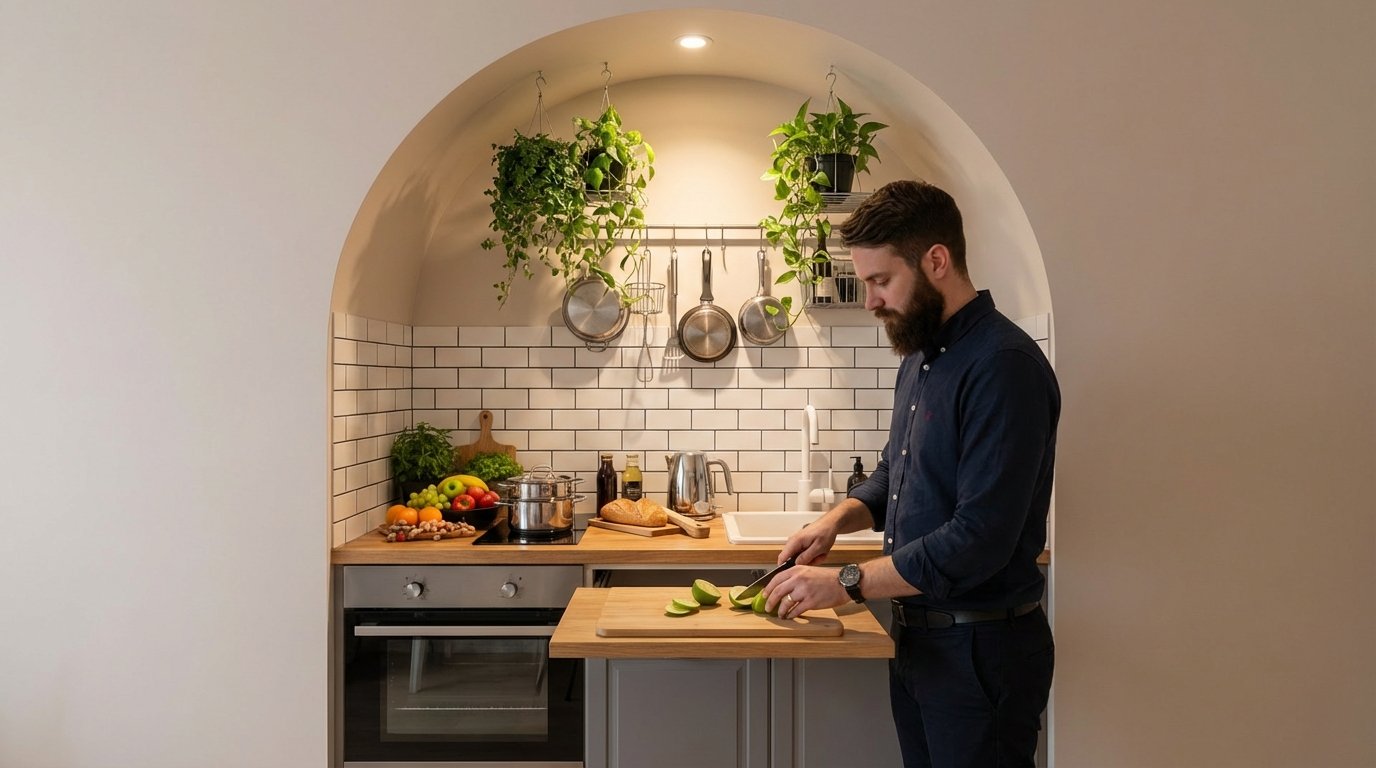
A small kitchenette offers a blend of luxury and practicality that few other home renovations can match. Whether you are carving out a guest suite in the basement or maximizing a studio apartment, the principles remain the same: prioritize vertical storage, choose the right scale for appliances, and don’t be afraid to add personal style.
You do not need a massive footprint to create a culinary haven. You just need a smart design.
Which of these kitchenette ideas would work best in your space? Tell us in the comments below!
Follow us on Pinterest for more Small Kitchenette Design Ideas inspiration.

Leave a Comment