The Utility Hook
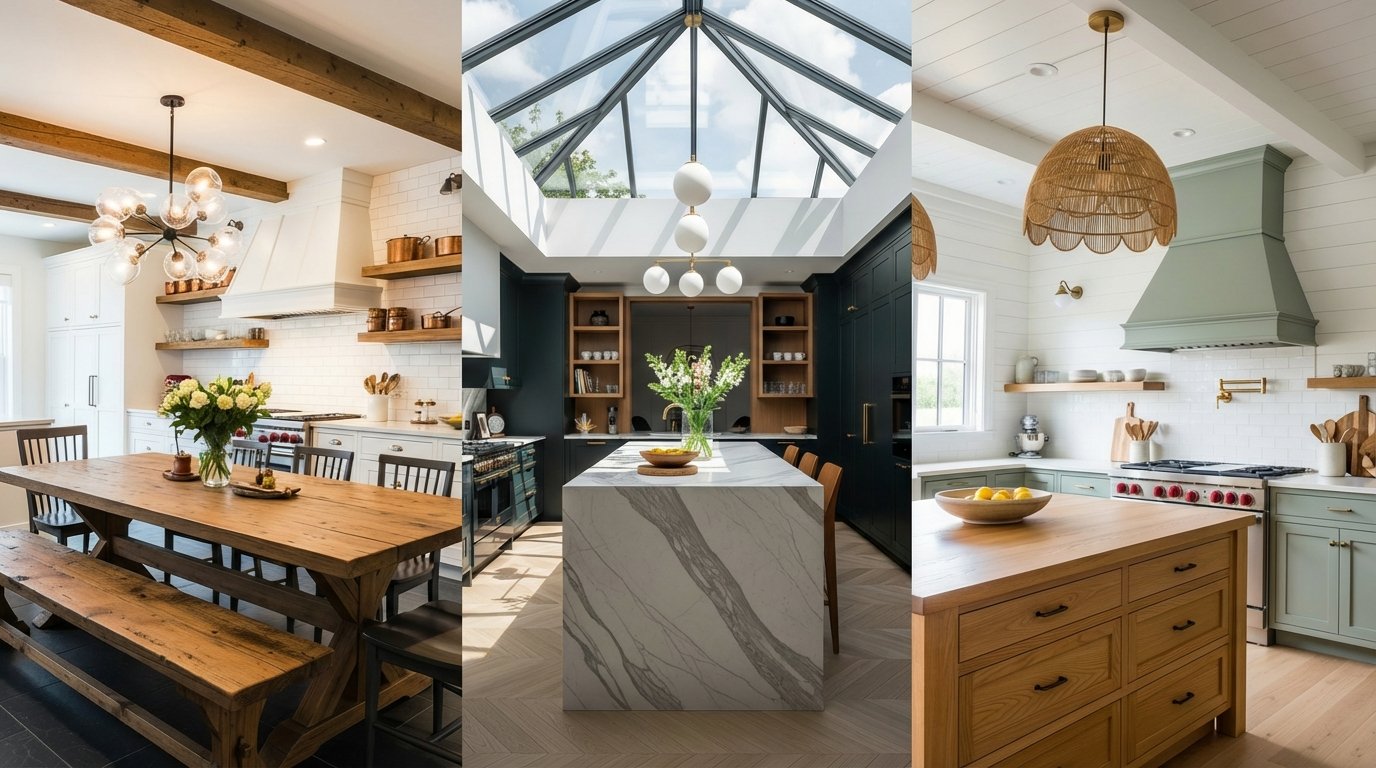
Modern rustic kitchens are trending because they solve a common design problem: sterile, cold spaces. You want the clean lines of modern design, but you also crave the cozy, lived-in feeling of a farmhouse. Achieving this balance is difficult. Use too much wood, and it looks dated. Use too much white, and it feels like a clinic.
This guide provides 30 specific, actionable design elements to nail this aesthetic. We analyze real-world examples to show you exactly how to mix textures, lighting, and materials. By the end, you will have a clear blueprint to renovate or style your kitchen for under-budget prices while maximizing visual impact.
Check out our related guide on Minimalist Home Decor.
Key Takeaways
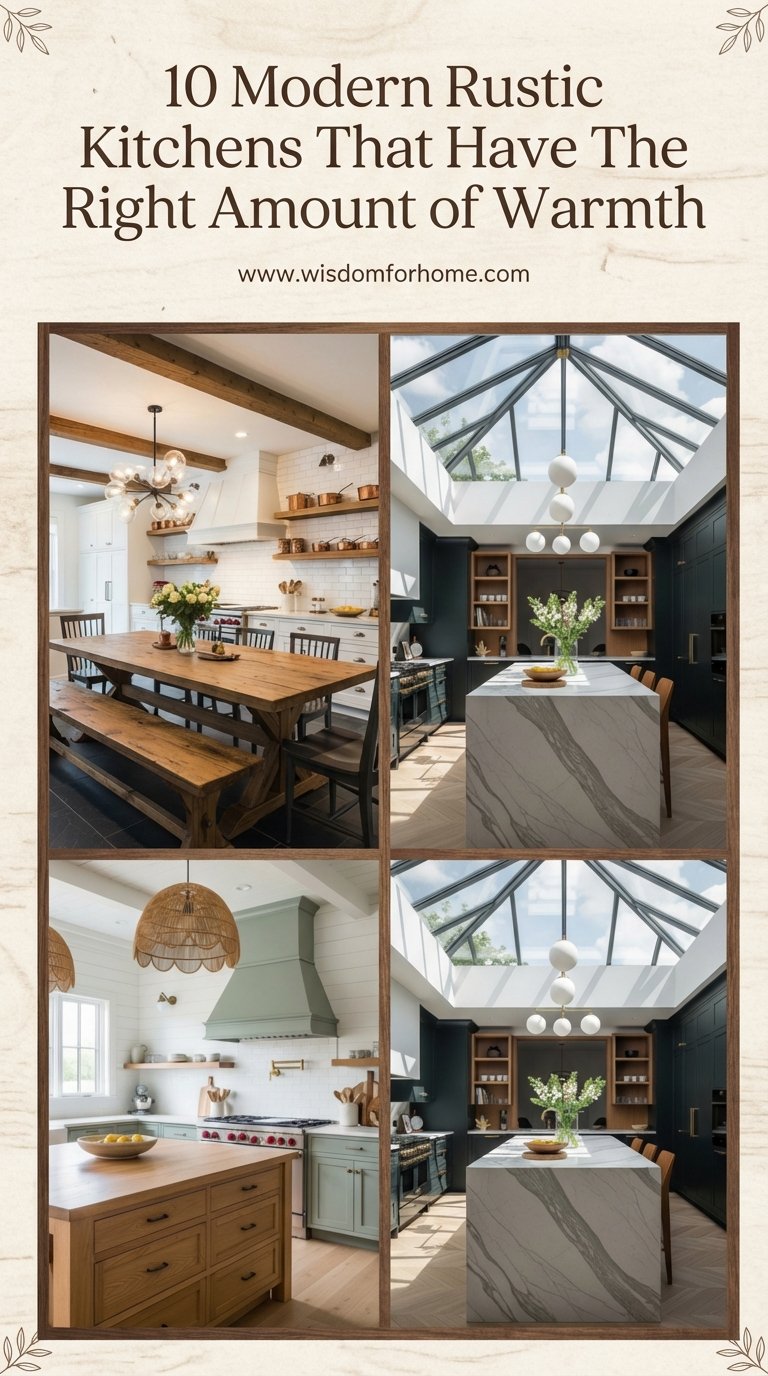
- Texture is King: The secret to warmth isn’t just color; it is the tactile difference between smooth stone, rough wood, and matte metals.
- The 70/30 Rule: distinct balance works best—70% modern clean lines (cabinetry, countertops) mixed with 30% rustic accents (beams, shelving, decor).
- Lighting Layers: Warmth comes from lighting temperature (2700K-3000K) and fixture materials like woven rattan or brass.
- Imperfection is Perfect: Embracing natural flaws in wood and stone adds the character that “perfect” modern kitchens lack.
Contents
- Open Shelving with Vintage Touch
- Exposed Wood Beams
- Black Accents
- Wood Kitchen Island and Shiplap Backsplash
- Green Cabinets & Wood Kitchen Island
- Wood Beam Above Stove
- Exposed Stone Wall
- Brick Backsplash
- Wood Cabinets
- White Wood Kitchen Islan
- Popular Asked Questions
- Conclusion
Open Shelving with Vintage Touch
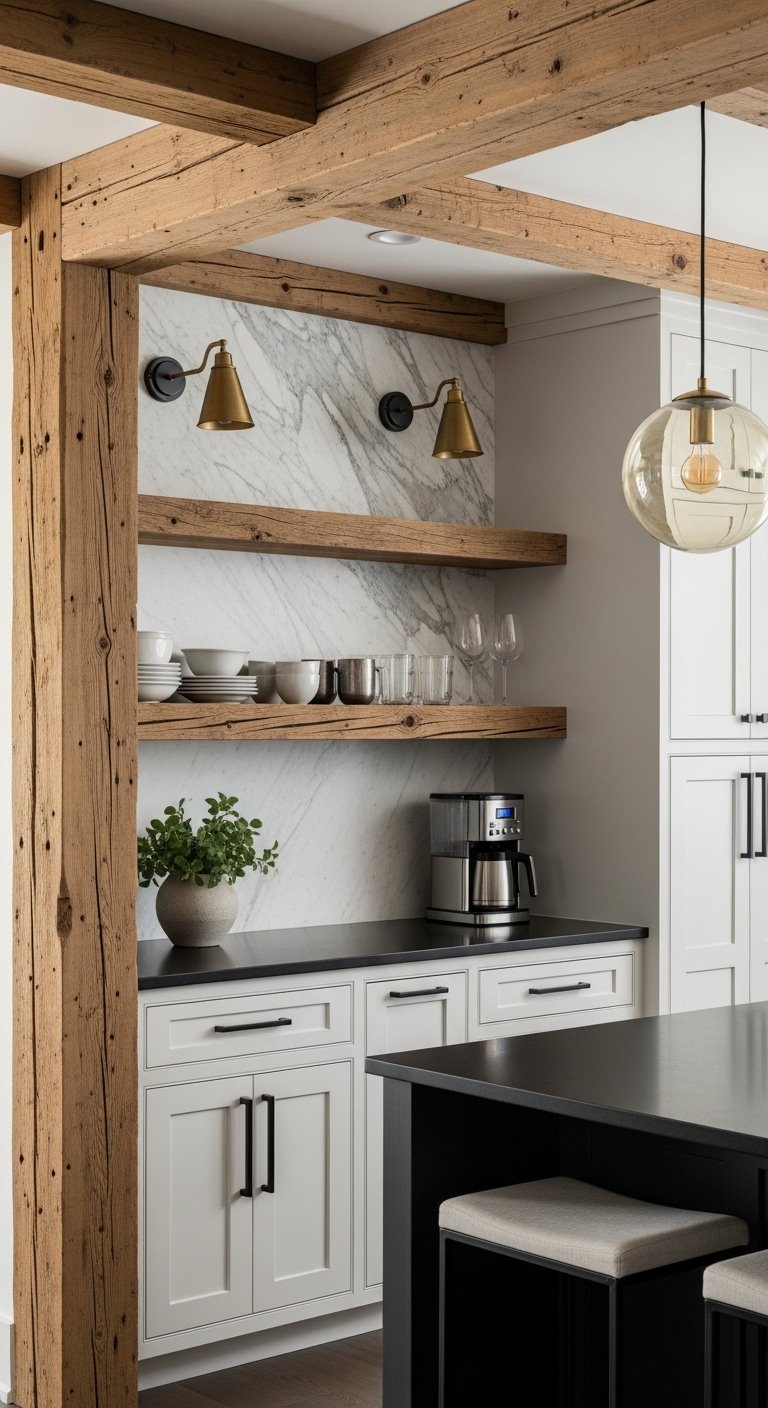
Open shelving is a staple in modern rustic design because it breaks up the heaviness of upper cabinetry. This approach forces you to curate your items, turning everyday dishes into decor. The “vintage touch” comes from mixing your modern white ceramics with thrifted finds like amber glass bottles, copper mugs, or ironstone pitchers. The wood of the shelf itself should be thick and stained in a medium tone to contrast against a lighter wall.
To implement this, remove a section of upper cabinets near the sink or window. Install heavy-duty iron brackets that support reclaimed wood planks. The negative space created by the shelves allows light to travel further, making the kitchen feel larger while the wood adds that essential organic warmth.
Pro Tip: Stick to a cohesive color palette for displayed items (e.g., whites, creams, and woods) to avoid visual clutter.
Exposed Wood Beams
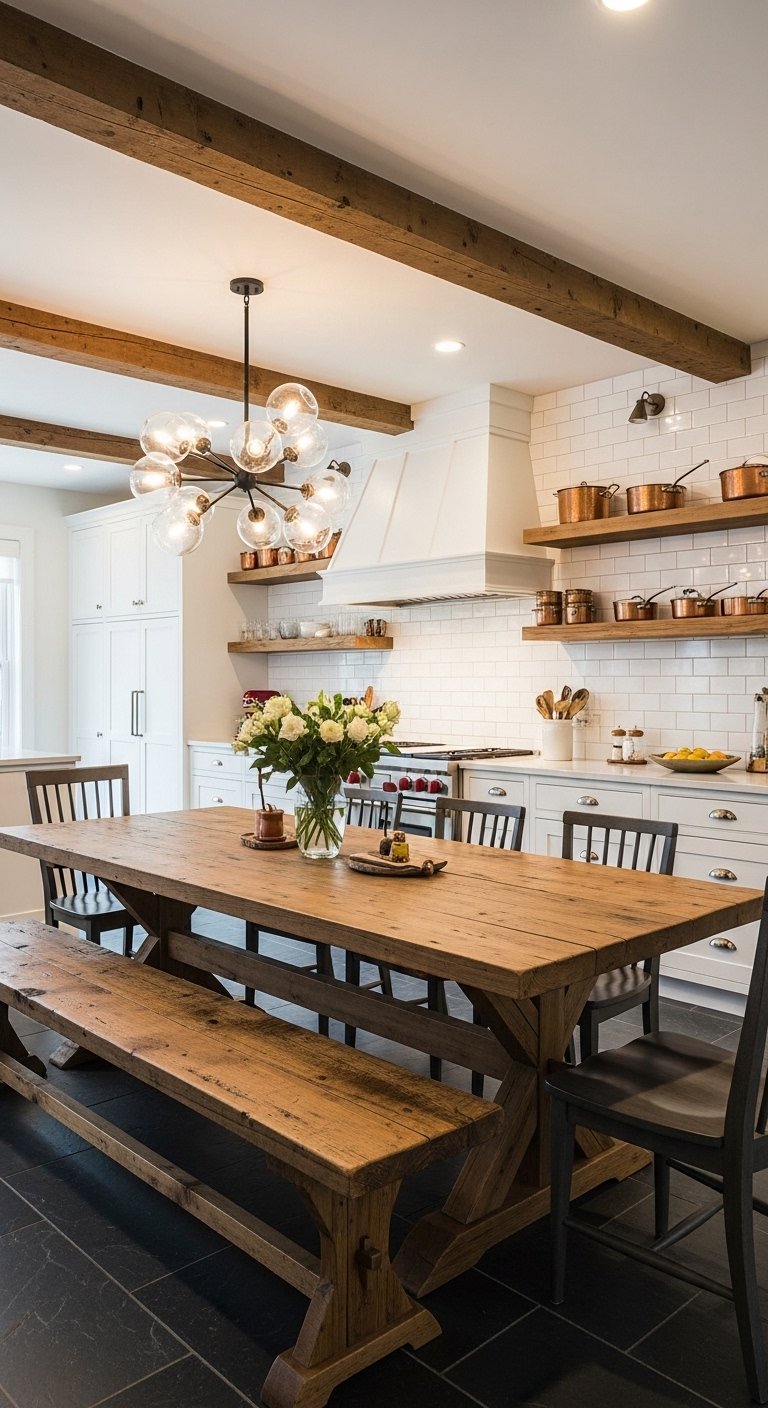
Nothing grounds a soaring ceiling like exposed wood beams. In a modern kitchen, these beams act as a visual anchor, drawing the eye up and adding architectural interest to a plain white box. The contrast between a sleek, smooth ceiling and the rough, knotted texture of the timber creates immediate sophistication. You do not need a historic home to achieve this; faux wood beams made of high-density polyurethane look hyper-realistic and are lightweight enough for easy DIY installation.
When choosing a stain, match the beams to your flooring or your island base. This repetition of color creates a harmonious loop for the eye. If your kitchen has low ceilings, opt for shallower, lighter-colored beams to avoid making the room feel cave-like.
Pro Tip: Install recessed lighting between the beams rather than on them to keep the rustic aesthetic clean.
Black Accents
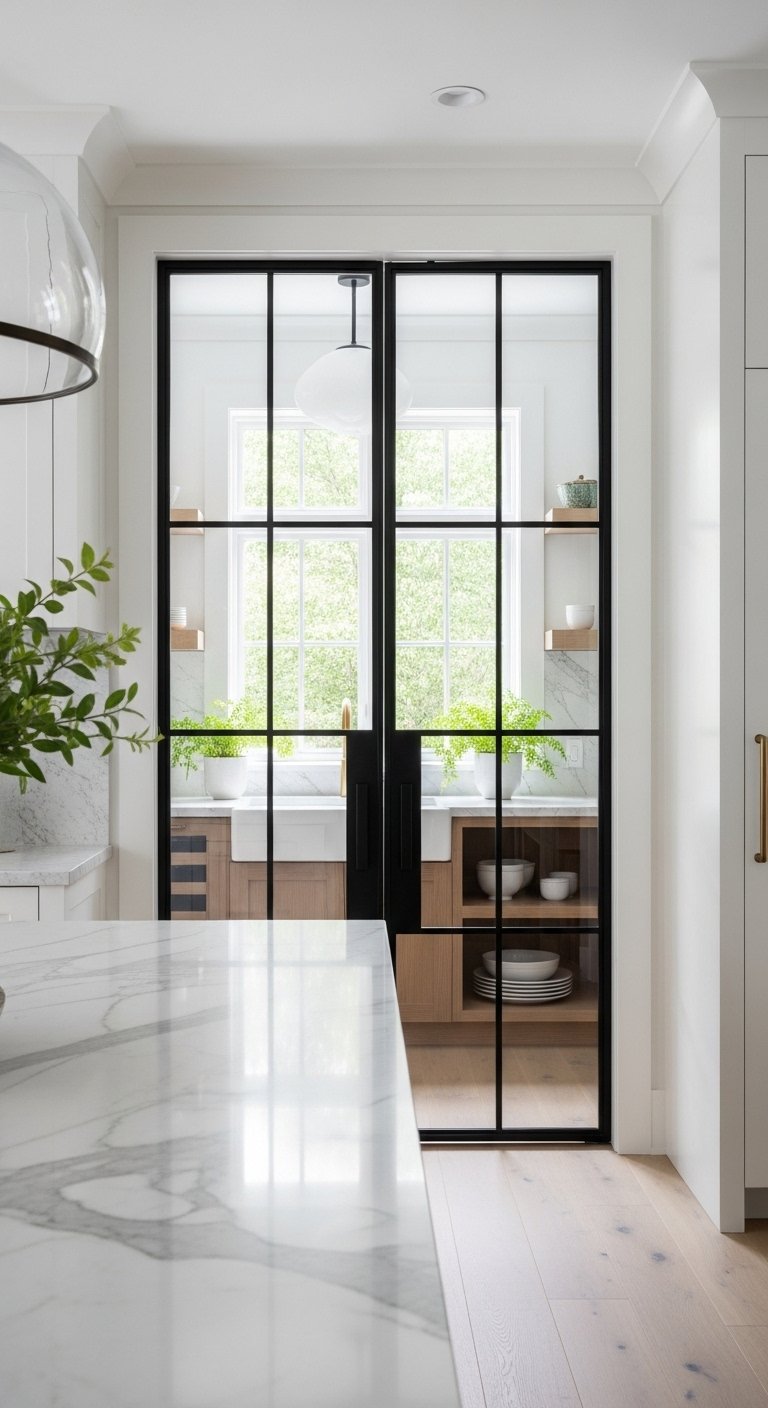
Black is the modern anchor in a rustic space. Without it, a room full of wood and white can look washed out. Black accents provide a necessary “edge” that defines the space. Think matte black cabinet pulls, a black metal faucet, or black steel frames on windows. These sharp, dark lines cut through the softness of the wood and the brightness of the white, creating a high-contrast look that feels intentional and designed.
You can start small with hardware or go big with a black painted pantry door or a black kitchen island. The key is the finish; avoid glossy black, which looks too contemporary and plastic. Matte or satin finishes absorb light and feel softer to the touch, blending better with rustic materials.
Pro Tip: Swap out your silver faucet for a matte black one for an instant, under-$200 upgrade.
Wood Kitchen Island and Shiplap Backsplash
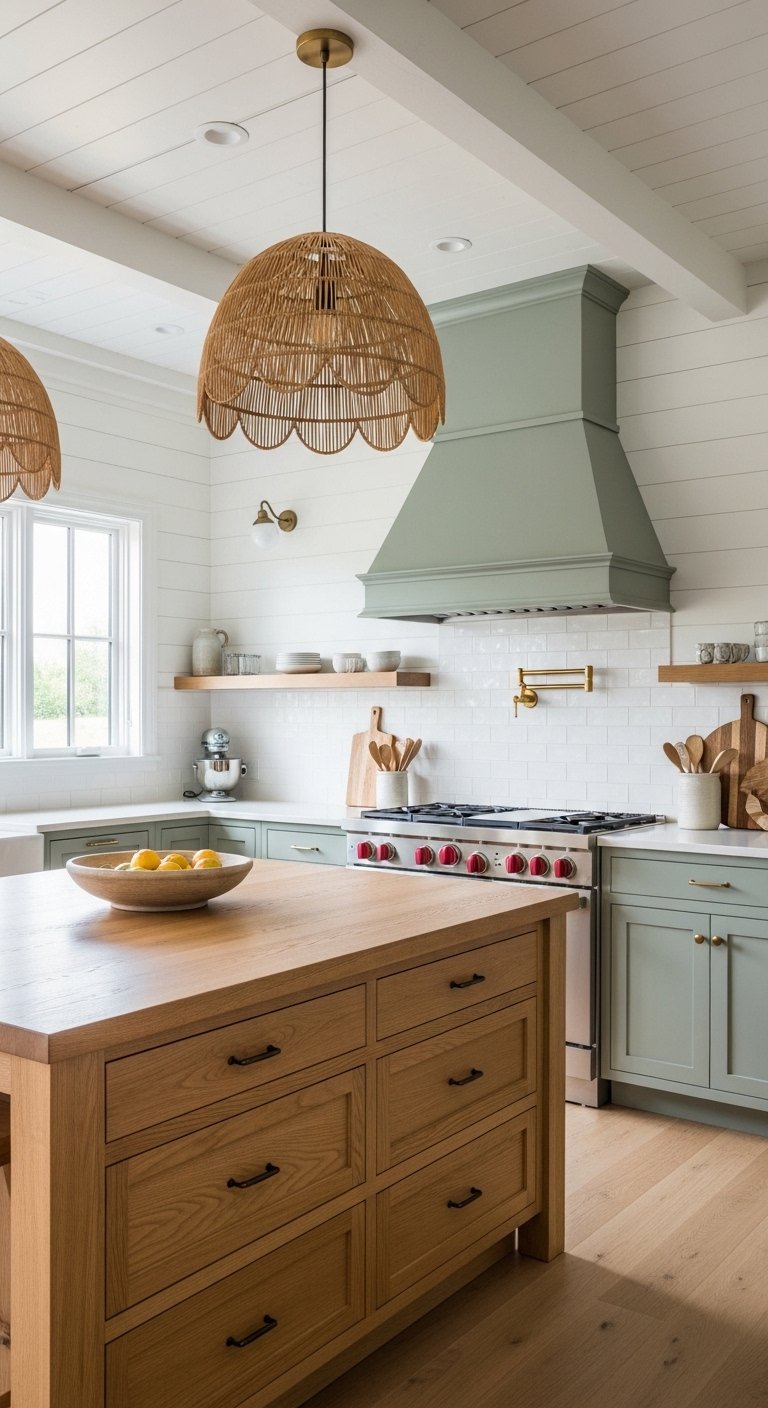
This combination is the epitome of the modern rustic trend. The wood kitchen island serves as a warm, furniture-style focal point in the center of the room. It breaks up the monotony of painted perimeter cabinets. Pairing this with a shiplap backsplash adds horizontal lines that visually widen the room. Shiplap is less busy than tile grout lines, offering a cleaner, more streamlined look that still offers texture.
For the island, look for white oak or walnut with a clear matte sealer. Avoid orange-tinted stains. For the shiplap, use marine-grade paint if it is near the sink to protect against moisture. The horizontal lines of the wood boards on the wall contrast beautifully with the vertical grain of the island cabinetry.
Pro Tip: Use nickel-gap shiplap rather than standard tongue-and-groove for a tighter, more modern shadow line.
Green Cabinets & Wood Kitchen Island
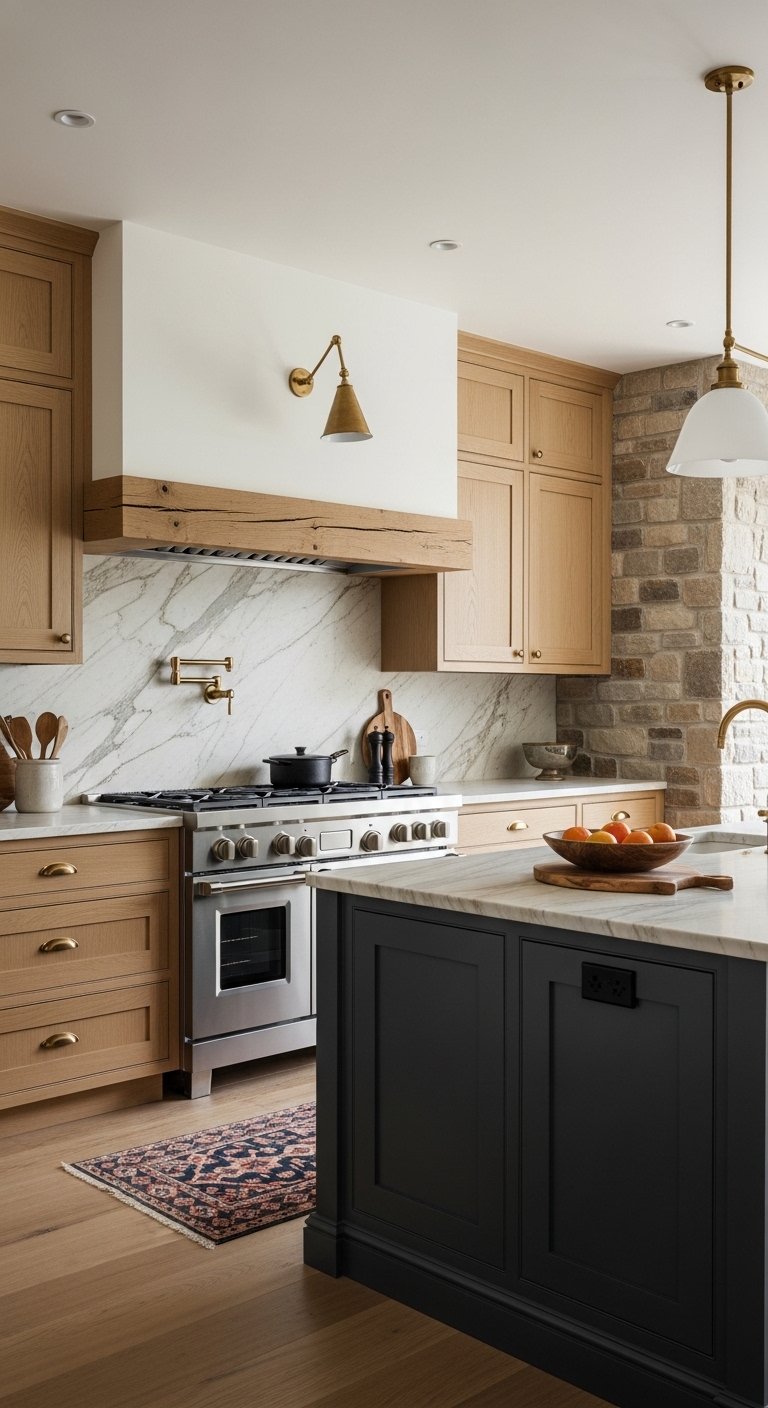
Green is nature’s neutral. Sage, olive, and forest green cabinets pair flawlessly with wood tones because the combination mimics the colors found in a forest. This palette creates an immediately calming, organic atmosphere. By keeping the island wood and painting the perimeter cabinets green (or vice versa), you avoid the “heavy” feeling of a fully dark kitchen while still injecting personality.
Select a green with gray undertones rather than yellow undertones. These “muddy” greens look more sophisticated and timeless. Brass hardware looks exceptional against green cabinetry, adding a touch of gold that warms up the cool green tones. The wood island acts as a bridge, connecting the painted surfaces to the flooring.
Save this idea to your Pinterest.
Pro Tip: Test your green paint samples at night; artificial lighting can turn some greens too blue or too yellow.
Wood Beam Above Stove
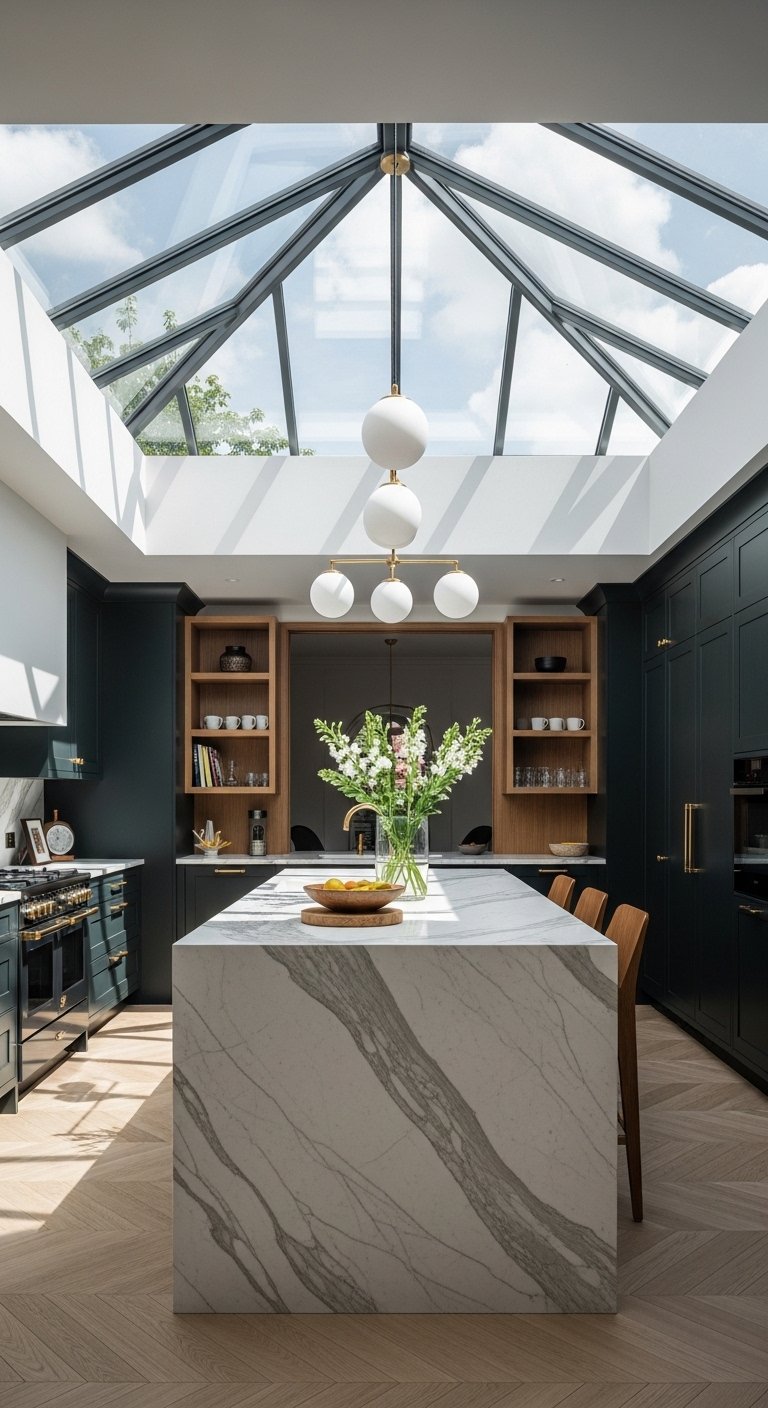
A wood beam mounted above the stove area, often framing the range hood, creates a dedicated focal point for the cooking zone. This mimics the look of an old-world hearth. It defines the space and provides a natural shelf for displaying oils, spices, or decorative cutting boards. This small addition brings the rustic element down to eye level, making it more impactful than ceiling beams.
Ensure the wood is sealed properly to resist steam and grease. If you are building a custom range hood cover, wrapping the bottom edge in a wood trim is a cost-effective way to get this look without structural changes. It softens the hard metal edges of appliances.
Pro Tip: Keep the beam at least 30 inches above the heat source to comply with fire safety codes.
Exposed Stone Wall
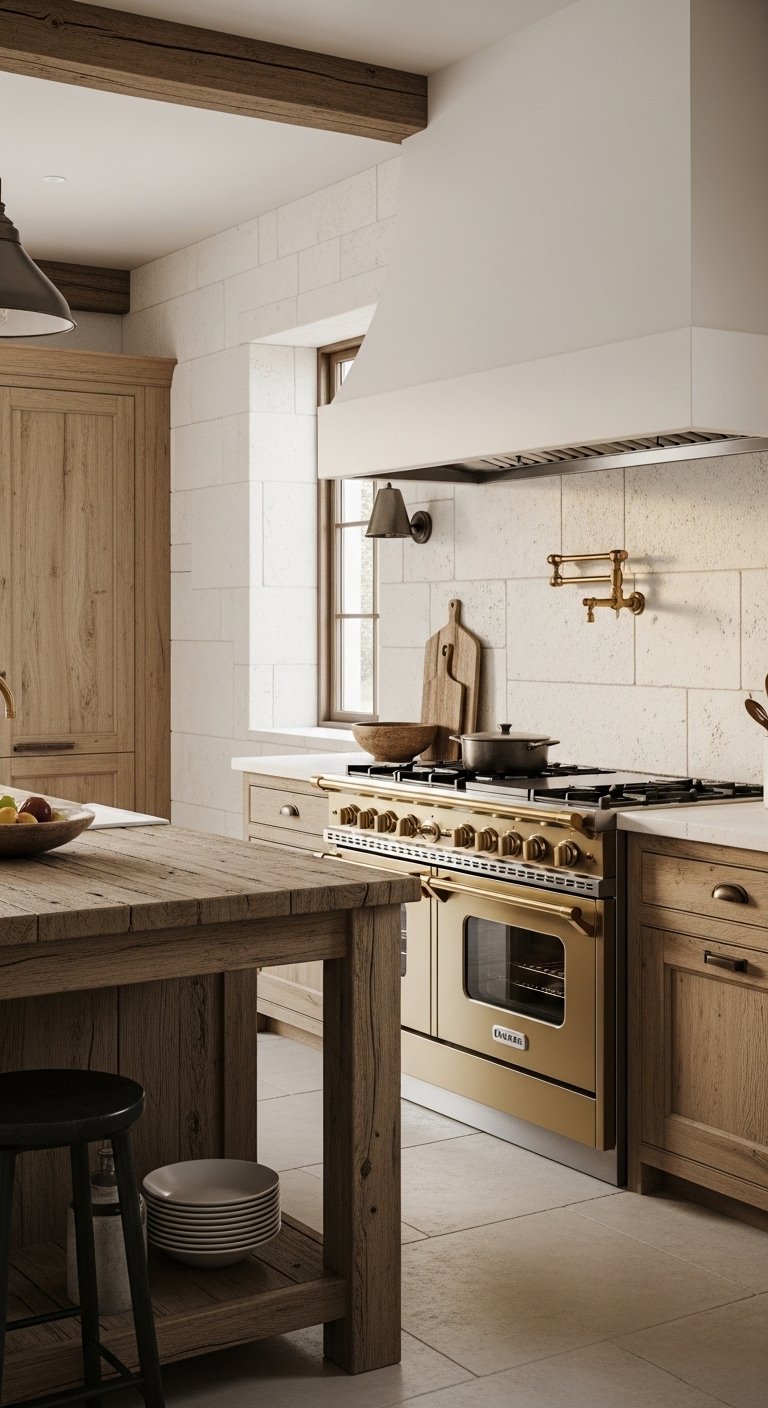
An exposed stone wall brings instant history and texture to a modern kitchen. Whether it is a full accent wall or just the backsplash area behind the stove, stone introduces a rough, organic element that feels permanent and grounded. In a modern rustic kitchen, light-colored stones like limestone or sandstone work best to keep the room bright.
If you don’t have existing masonry, stone veneer is a viable alternative. Modern veneers are thin and can be applied over drywall. The key is to over-grout the stone (a technique called “German Smear”) or use a lime wash to soften the color variations, ensuring it blends with a modern aesthetic rather than looking like a mountain lodge.
Pro Tip: Use under-cabinet lighting to wash light down the stone wall, highlighting the texture and shadows.
Brick Backsplash
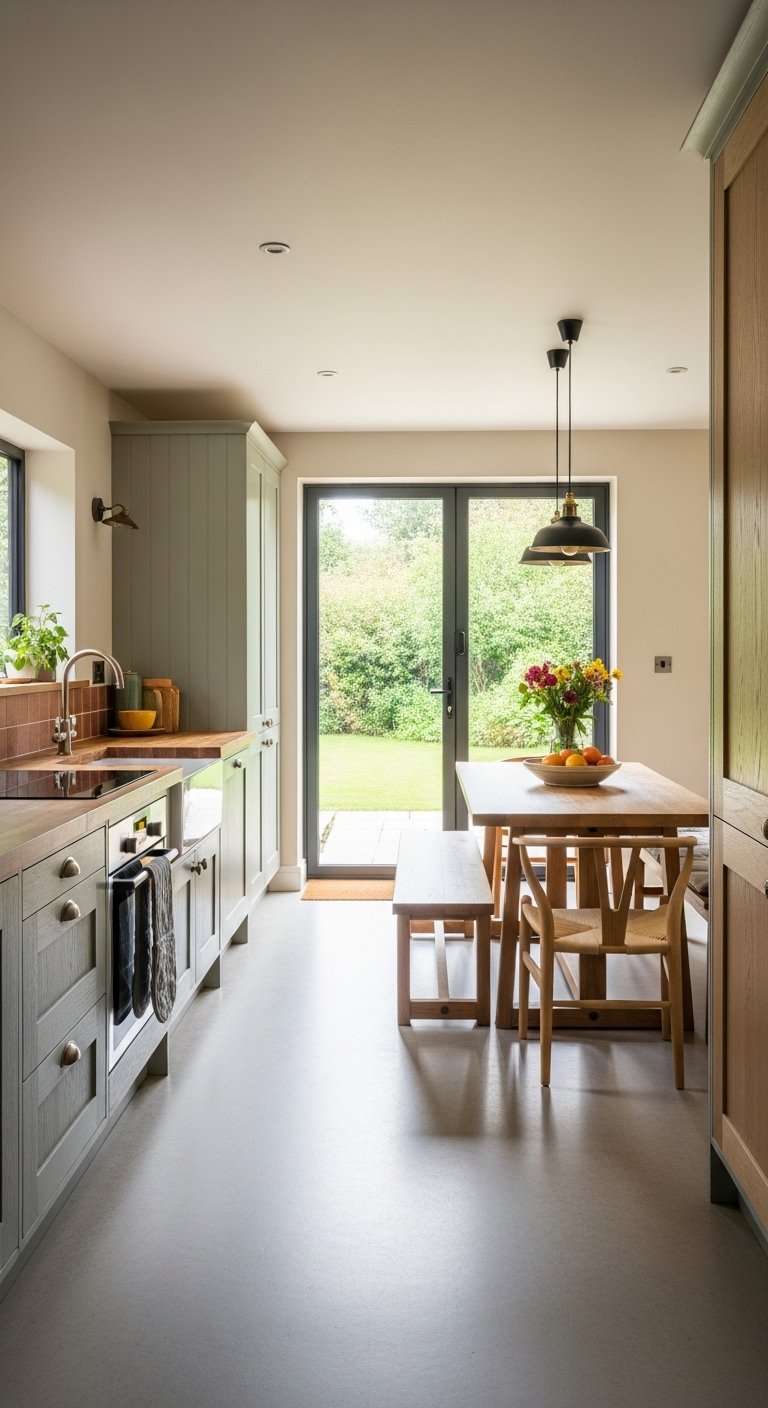
Brick offers a similar texture to stone but with a more industrial, uniform pattern. A raw red brick backsplash adds warmth through color, while a whitewashed brick backsplash adds texture without darkening the room. Brick works exceptionally well in kitchens with open shelving, as the repetitive pattern of the bricks provides a structured backdrop for the loose arrangement of items on shelves.
For a truly modern rustic vibe, avoid glossy sealed brick. Keep the finish matte. If you are using brick veneers, ensure they are sealed with a penetrating sealer that doesn’t change the sheen, protecting them from splashes while maintaining that dry, clay look.
Pro Tip: Lay brick in a herringbone pattern behind the stove for an elevated, custom design feature.
Wood Cabinets
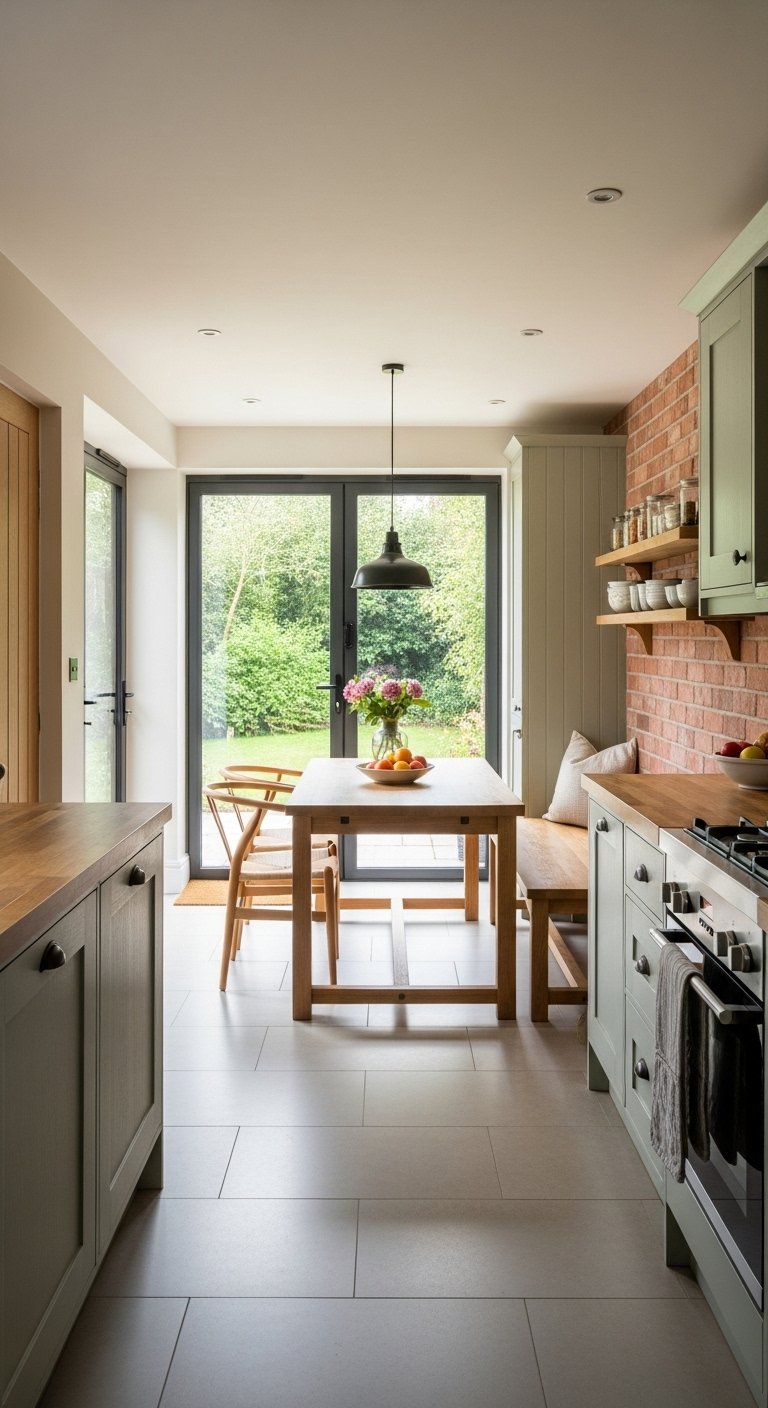
Full wood cabinetry is back, but it looks different than the honey-oak kitchens of the 1990s. Modern rustic wood cabinets feature flat-panel or slim shaker doors with minimal grain variation and matte finishes. White oak, ash, and walnut are the top choices. The goal is to let the material speak for itself without heavy stains or gloss.
To keep this from feeling heavy, pair full wood cabinets with light countertops (white quartz or marble) and a light backsplash. This high contrast brightens the wood and makes it feel fresh. You can also mix slab fronts (flat) on drawers with shaker styles on doors to add subtle modern geometry.
Pro Tip: Choose “rift-sawn” or “quarter-sawn” wood cuts for straight grain lines that look more modern than the wavy “cathedral” grain of plain-sawn wood.
White Wood Kitchen Island
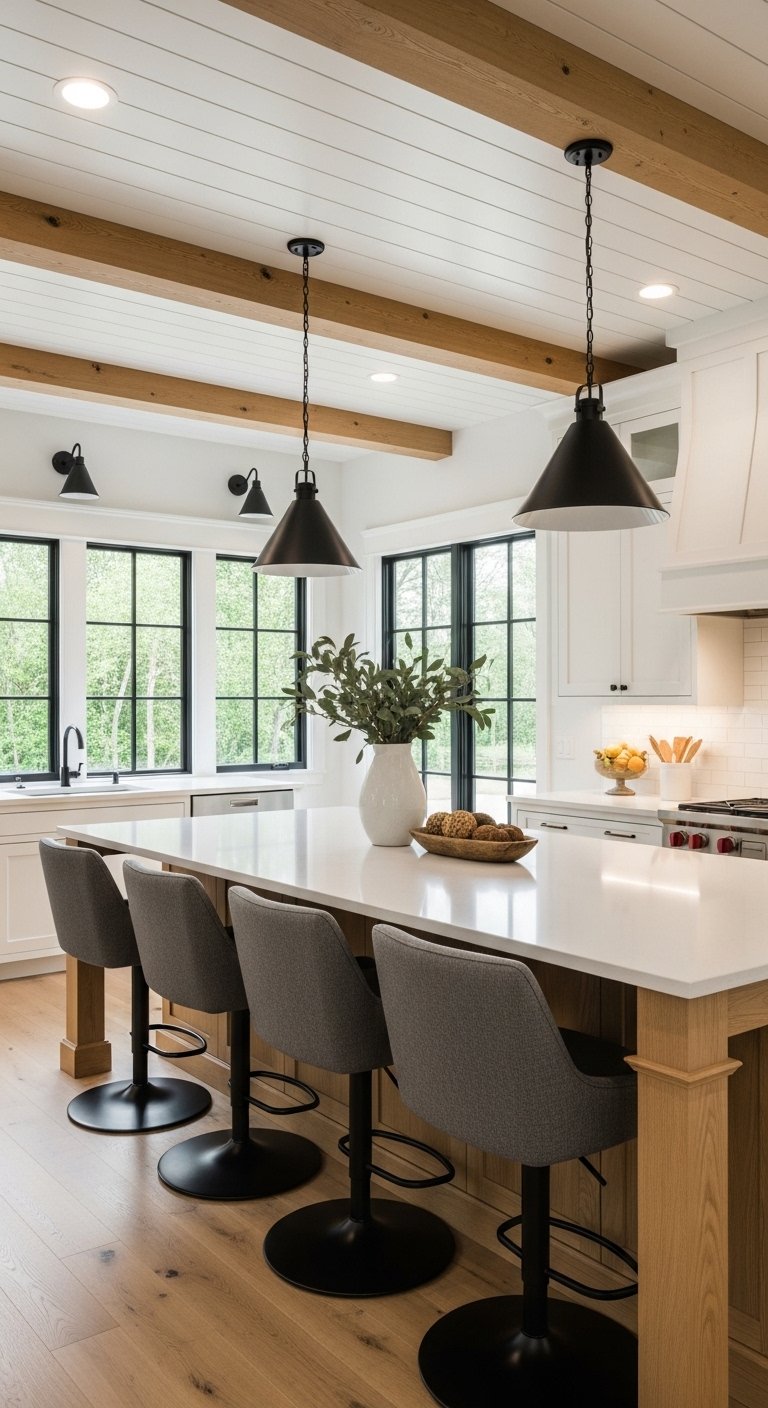
A white wood kitchen island (meaning painted white wood) is a classic farmhouse element that brightens the center of the room. In a modern rustic context, this works best when the island legs or base have some detailing—like X-braces or turned legs—but the countertop is a warm butcher block or a dark soapstone.
Alternatively, this can refer to a whitewashed wood island where the grain is still visible through a sheer white stain. This technique, often called “cerused” or “limed” wood, highlights the texture of the grain while lightening the overall color. It is perfect for coastal or cottage-style rustic kitchens.
Pro Tip: If your island is white, use barstools with leather or woven seats to introduce the necessary warmth and contrast.
Comparison: Countertop Materials for Modern Rustic Kitchens
| Feature | Quartz (Matte) | Butcher Block | Soapstone |
|---|---|---|---|
| Visual Warmth | Low (Cool/Sleek) | High (Very Warm) | Medium (Earthy) |
| Maintenance | Low (No sealing) | High (Regular oiling) | Medium (Oiling optional) |
| Durability | High (Scratch/Heat resistant) | Medium (Scratches easily) | High (Heat resistant, chips) |
| Cost | $$$ | $ | $$$ |
| Best For | Perimeter Counters | Island Tops | Statement Islands |
Reclaimed Wood Range Hood
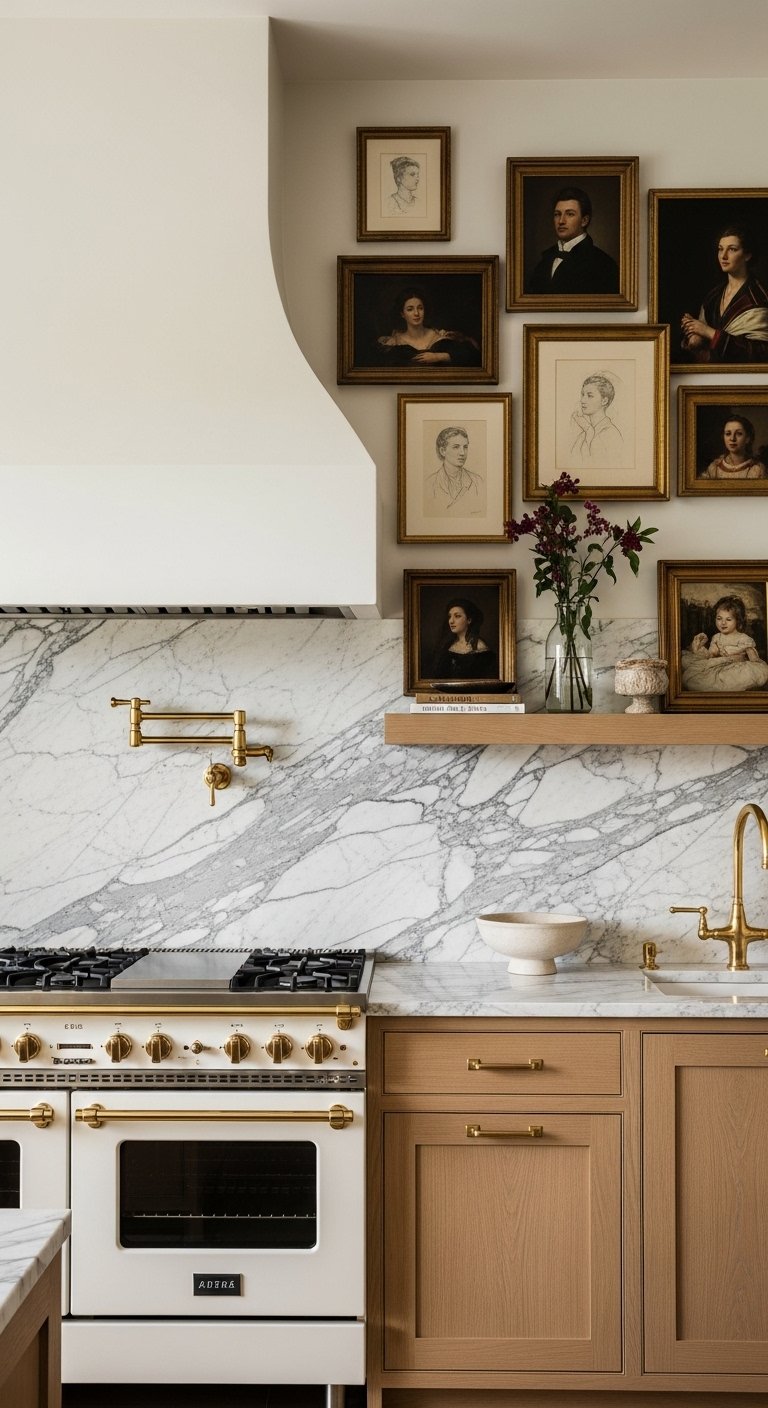
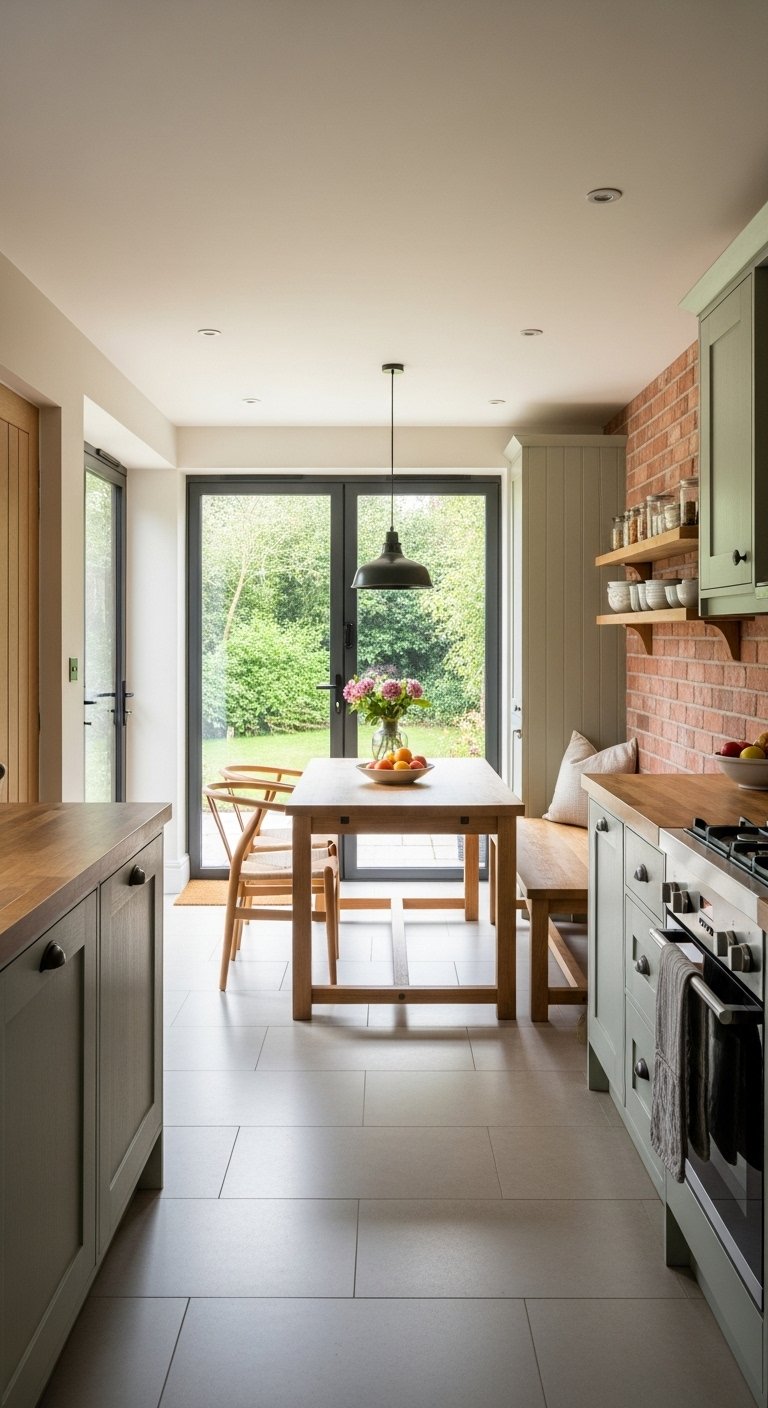
Covering a standard metal vent hood with reclaimed wood planks creates a stunning vertical focal point. The weathered grey and brown tones of barn wood contrast beautifully against smooth white subway tiles or slab backsplashes. This draws the eye upward, making ceilings feel higher.
You can construct a simple box frame over your insert and clad it in thin reclaimed boards. Ensure the wood is cleaned and sealed to prevent dust and grease buildup. This single element can transform a generic white kitchen into a custom designed space.
Pro Tip: Run the wood planks horizontally for a wider feel, or vertically to emphasize height.
Popular Asked Questions
How do I add warmth to a white kitchen?
To warm up a white kitchen, introduce natural textures. Add wood elements like a cutting board display, wooden barstools, or open shelving. Swap cold chrome hardware for unlacquered brass or matte black. Finally, use a runner rug with warm tones (reds, rusts) to cover cold tile floors.
What is the difference between Rustic and Modern Rustic?
Traditional Rustic style relies on heavy, dark woods, chunky furniture, and themed decor (like rooster motifs). Modern Rustic keeps the natural materials (wood, stone) but applies them to clean, minimal lines. It is lighter, airier, and decluttered, focusing on the quality of materials rather than ornamentation.
Are wood cabinets coming back in style for 2026?
Yes, wood cabinets are a massive trend for 2026. However, the trend is specific to lighter, natural tones like white oak, ash, and walnut with matte finishes. The orange, glossy oak of the past is not returning. The modern look is about raw, organic texture.
Can I mix modern and rustic styles in a small kitchen?
Absolutely. In a small space, rely on the “Modern” side for the layout (clean lines, hidden storage) to keep it feeling open. Use “Rustic” for accents: a wood shelf, a textured backsplash, or a vintage rug. Too many rustic elements in a small space can make it feel cluttered.
What are the best colors for a Modern Rustic kitchen?
The best palette includes warm neutrals: creamy white (Swiss Coffee), greige (Mushroom), charcoal, and soft earth tones like sage green or terracotta. Avoid bright primary colors or cool, blue-based grays.
Conclusion
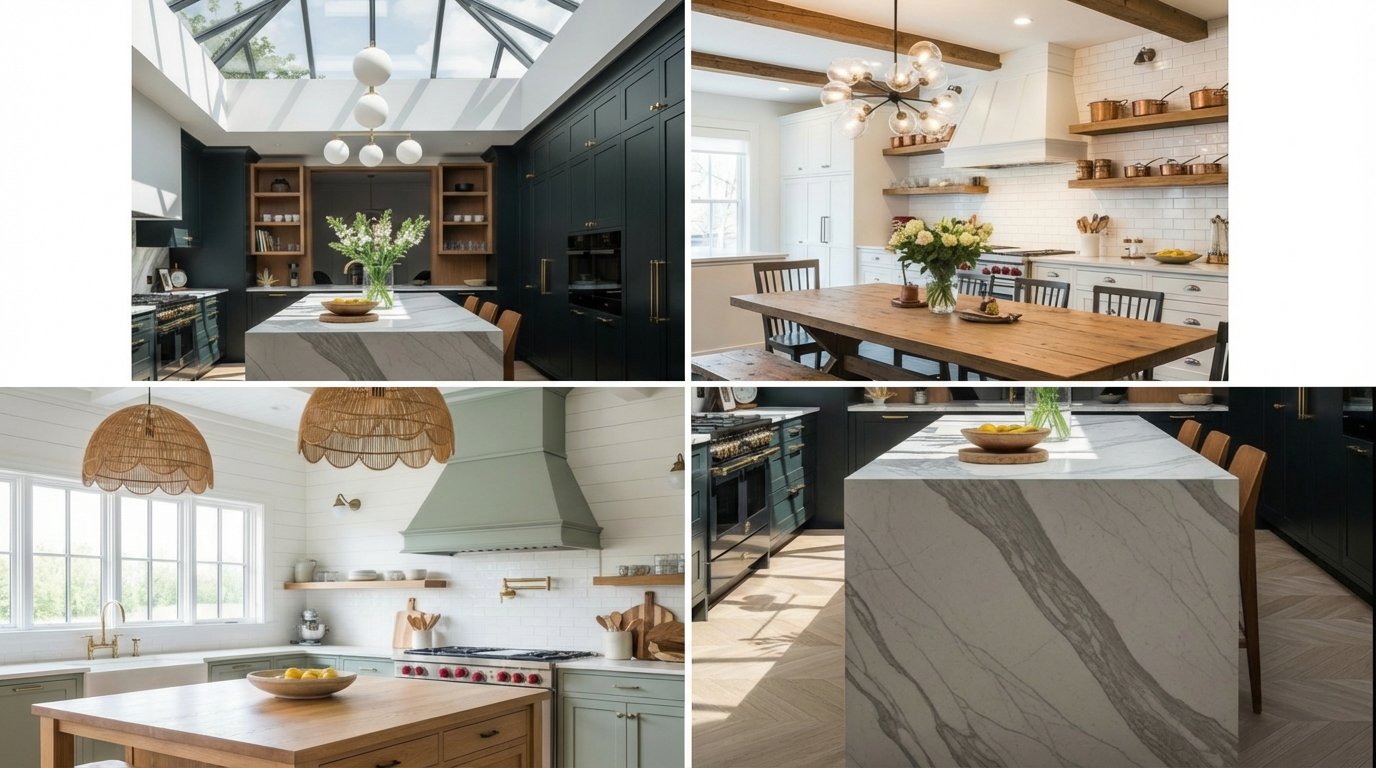
Creating a modern rustic kitchen is about striking a balance. It is the tension between the old and the new that creates style. You don’t need to renovate your entire space to get the look. Start by swapping your hardware, adding a vintage rug, or installing a single wood shelf.
Which of these modern rustic elements would you try in your home first? Let us know in the comments below.
Follow us on Pinterest for more Modern Rustic Kitchen inspiration.

Leave a Comment