
The Overwhelming World of Outdoor Furniture Choices
You know that moment when you look at your patio and think, “This could be so much better”? Yeah, I’ve been there. Multiple times, actually. The good news is we live in an era where outdoor furniture options are absolutely endless. The bad news? We live in an era where outdoor furniture options are absolutely endless. That’s both a blessing and a curse, isn’t it?
Our grandparents had it easier in some ways. They’d walk into a store, see maybe five or six options for patio furniture, pick one, and call it a day. Done. No second-guessing, no endless scrolling through websites at 2 AM wondering if the beige cushions or the gray ones would look better. They just made a choice and moved on with their lives. I’m a little jealous of that simplicity, to be honest. But at the same time, having options means we can actually find something that fits our space, our style, and our budget. That’s worth the extra effort, right?
Walk into any home improvement store today, and you’ll see what I mean. There are entire sections dedicated to outdoor living. Rows and rows of furniture sets in every material you can imagine. Wood, metal, wicker, resin, combinations of all of the above. Some pieces look like they belong in a fancy resort. Others have that casual backyard BBQ vibe. The variety is honestly kind of overwhelming when you first start looking. I remember my first serious attempt at buying patio furniture. I walked into the store with confidence, walked around for about 20 minutes, and walked out completely confused. There were just too many choices, and I had no framework for making a decision.
The thing is, all those options exist for a reason. Different people have different needs. Different spaces call for different solutions. A small apartment balcony needs totally different furniture than a sprawling backyard patio. A beach house has different requirements than a mountain cabin. Climate matters too. What works great in sunny California might not hold up in rainy Seattle or snowy Minnesota. The furniture market has expanded to meet all these varied needs, which is great. It just means we need to do a bit more thinking before we buy.
The trick really is in narrowing things down. You can’t evaluate every single option out there. You’d lose your mind trying. What you need is a strategy, a way to filter through the noise and focus on what actually matters for your specific situation. That’s what I eventually figured out after a few false starts and one regrettable purchase I’d rather not talk about. Once I understood what questions to ask myself, the whole process became manageable. Not easy, exactly, but manageable. And kind of fun, if I’m being honest.
Here’s what I learned. Before you even start shopping, you need to get clear on what you’re trying to accomplish. Not in some vague “make my patio nicer” way, but in concrete, specific terms. How do you actually use your outdoor space? How do you want to use it? What’s holding you back from using it more? These questions might seem obvious, but most people skip right over them and jump straight to looking at furniture. That’s backwards. Understanding your needs comes first. Everything else flows from that.
The outdoor furniture market has matured a lot over the past couple decades. Manufacturers have gotten way better at making pieces that can withstand weather, look good, and stay comfortable. The quality and durability have improved across the board. Even budget options today are often better than premium options from 20 years ago. That’s encouraging if you’re shopping on a tight budget. You don’t have to spend a fortune to get something decent that’ll last. You just have to shop smart and know what to look for.
Another thing that’s changed is the design aesthetic. Outdoor furniture used to be pretty utilitarian and boring. Now it’s treated as an extension of your interior design. People put real thought into how their outdoor spaces look and feel. We want our patios and decks to be actual living spaces, not just places to park a couple of plastic chairs. That shift in thinking has driven a lot of the innovation and variety we see in today’s market. It’s reflected in the materials, the styles, the comfort levels. Outdoor furniture is having a moment, and we’re all benefiting from it.
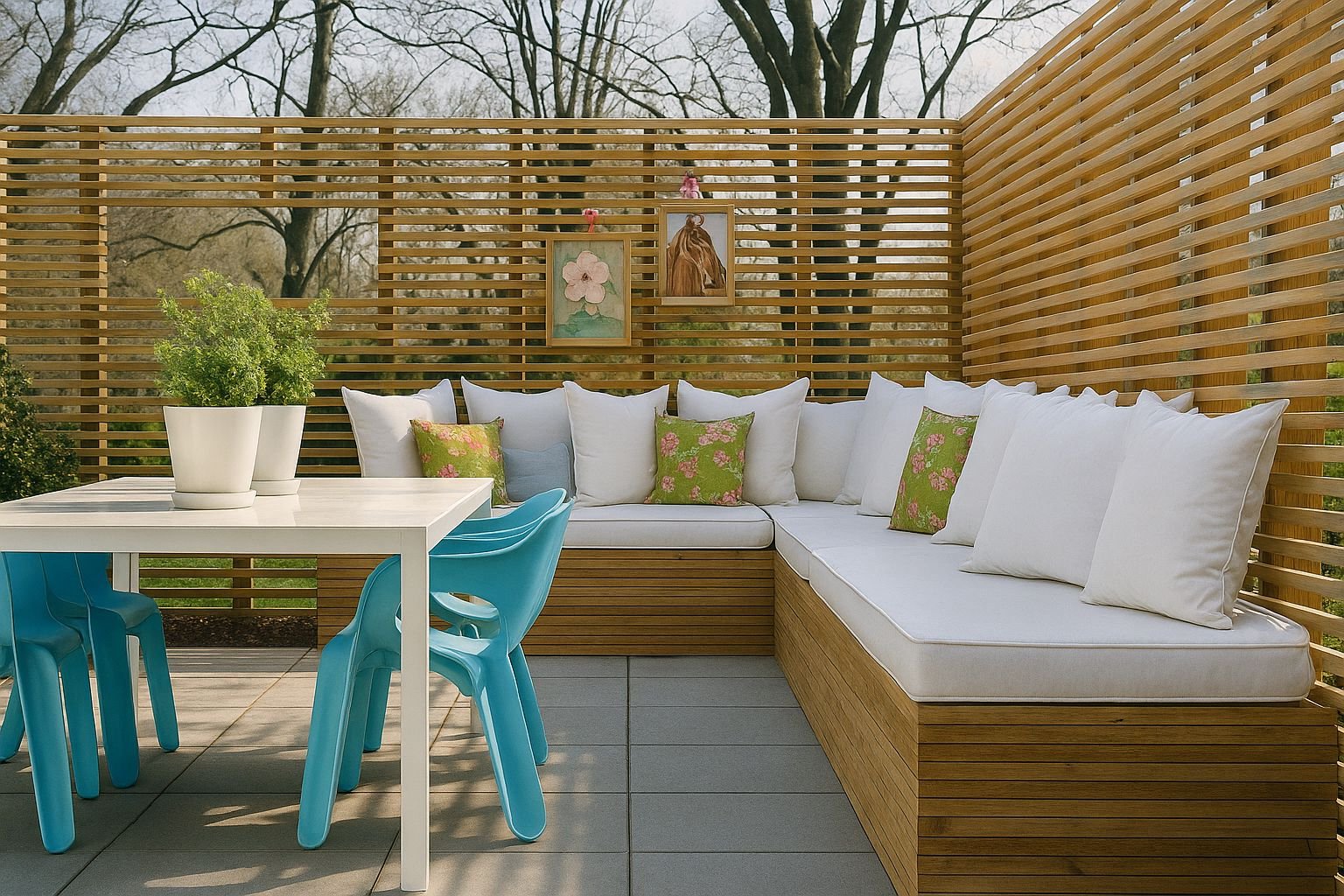
The key to not getting overwhelmed is taking it step by step. Don’t try to figure everything out at once. Break the process down into manageable chunks. First, understand what you need. Then, figure out what materials and styles work for your situation. After that, set a realistic budget. Finally, start actually shopping with all that information in hand. That systematic approach saved me from making more bad decisions and helped me end up with outdoor furniture I actually love and use regularly. That’s the goal, right? Not just buying something that looks nice in the store, but ending up with furniture that improves your daily life.
Understanding Your Outdoor Dining Needs
Let’s talk about outdoor dining furniture for a minute. This is one of those categories that sounds simple but gets complicated fast when you start thinking about the details. I mean, it’s a table and some chairs, right? How hard can it be? Turns out, pretty hard if you want to get it right.
The first question you need to ask yourself is honest and maybe a little uncomfortable. How do you actually use your outdoor space? Not how you imagine using it in some perfect future version of your life. How do you actually use it right now, and how might that realistically change? I’ve fallen into this trap before. I’d picture myself hosting elaborate dinner parties every weekend, so I’d shop for furniture to support that fantasy. Then reality would hit. Most weeks I’d eat dinner outside alone or with my partner, maybe have a few friends over once a month. That huge dining set I bought sat there mocking me, taking up space, being way more furniture than I needed.
Be real with yourself about your lifestyle. If you’re the type who loves hosting and regularly has people over, then yeah, you need substantial outdoor dining furniture. Think bigger tables, plenty of seating, maybe even multiple areas for different groups to hang out. If that’s genuinely how you live, invest in furniture that supports it. You’ll get tons of use out of it, and the investment will make sense. Your outdoor space can become the gathering spot everyone loves, and that’s worth paying for.
On the flip side, if you’re more of a quiet, intimate outdoor person, don’t buy for a lifestyle you don’t have. A small bistro set might be perfect. Two chairs, a little table, enough space for morning coffee or a quiet dinner. That can be just as satisfying as a big setup, maybe more so because it matches how you actually live. There’s something really nice about furniture that fits your life exactly, without extra bulk or pieces you never use. I downsized my outdoor dining setup a few years back, and it was one of the best decisions I made. Less furniture, more enjoyment. Go figure.
The entertaining question matters a lot. If you do plan to have people over regularly, think through the logistics. How many people typically? Where will they sit? Do you need one big table or multiple smaller ones? Can you set up additional seating easily if you need it? I’ve been to outdoor gatherings where the hosts clearly didn’t think this through. Not enough seats, people standing awkwardly, the vibe getting weird because half the group can’t sit comfortably. You don’t want to be that host. Better to have a clear plan for how you’ll accommodate guests.
Weather plays into this more than you’d think. If you live somewhere with a short outdoor season, you might want to invest less in outdoor dining furniture. Why spend a fortune on something you’ll use three months a year? On the flip side, if you’re in a climate where outdoor dining is possible most of the year, that changes the calculation. The furniture becomes a much bigger part of your daily life, so it makes sense to invest more and get exactly what you want.
Storage is another angle people often overlook. Where will this furniture go when you’re not using it? Some pieces can stay outside year-round in any weather. Others need to be covered or brought inside during bad weather or off-seasons. If you have limited storage space, that might push you toward certain materials and designs. Folding furniture, stackable chairs, tables that break down easily, these features become really valuable if storage is tight. I learned this the hard way after buying a beautiful but bulky dining set I had nowhere to store during winter. Ended up selling it at a loss and buying something more practical.
The style of dining you prefer matters too. Do you want a formal setup with a proper dining table and chairs? Or something more casual like a picnic table or low lounge seating with side tables? There’s no right answer, just what fits your personality and how you enjoy being outdoors. I gravitate toward the casual side, personally. Formal outdoor dining feels a bit stuffy to me. But I have friends who love setting a proper table outside, using nice dishes, making a whole production of it. If that’s your style, embrace it and buy furniture that supports it.
Think about the practical side of meals too. Will you be carrying food from the kitchen? How far? Is there a convenient path? Will you need surfaces for food prep or serving? A bar cart or serving table might be just as important as the dining table itself. These supporting pieces can make the difference between outdoor dining feeling easy and natural versus feeling like a hassle you eventually stop doing. The goal is to remove friction, make the experience smooth enough that you actually use the space regularly.
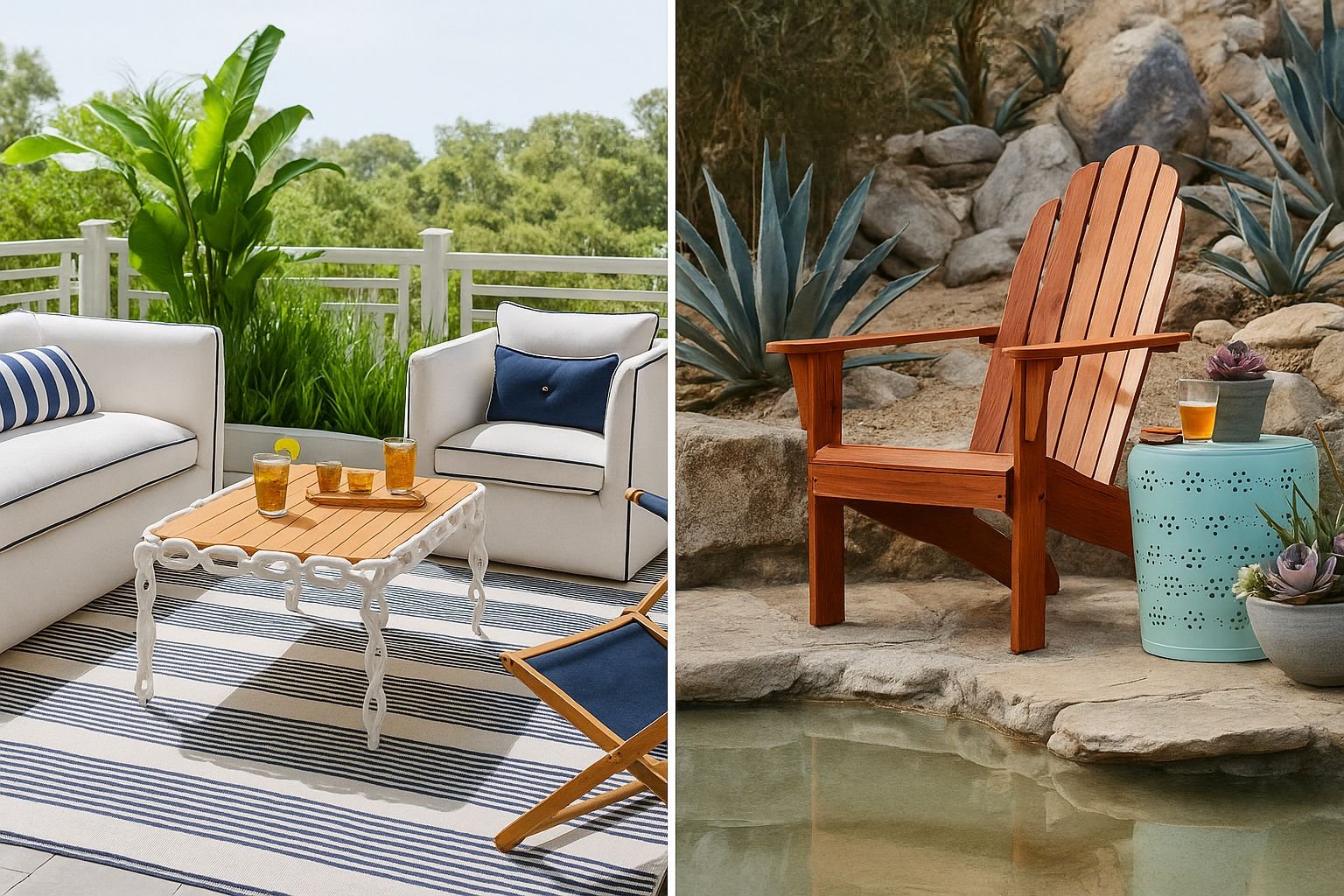
Lighting and shade matter for dining spaces too. Will you be eating during the day, evening, or both? Do you need an umbrella for sun protection? String lights for ambiance? These elements affect what furniture makes sense. A table with an umbrella hole limits your options but might be necessary. The height of an umbrella affects what chairs work underneath it. These details seem small until you’re actually using the space and realize something doesn’t work right. Better to think it through upfront.
The Durability of Resin Wicker for Outdoor Living
Okay, let’s get into specific materials. Resin wicker deserves its own conversation because it’s become super popular for good reasons. If you’ve shopped for outdoor furniture recently, you’ve definitely seen it. That woven look that resembles natural wicker or rattan but is actually made from synthetic materials. It’s everywhere now, and that’s not by accident.
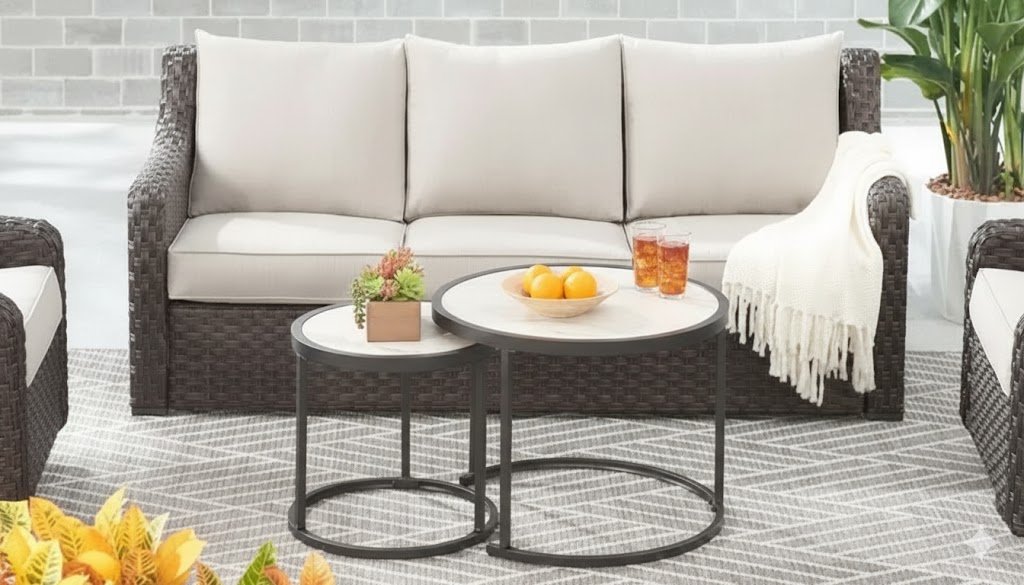
Natural wicker is beautiful, no question. It has that organic, textured look that feels warm and inviting. But let me tell you, natural wicker outdoors is a nightmare. I know this from painful experience. I bought a gorgeous natural wicker chair set for my patio years ago. Looked amazing for about three months. Then the weather got to it. Rain, sun, humidity, temperature swings. The wicker started cracking, fraying, falling apart. Within a year, the set looked terrible and was legitimately uncomfortable to sit in. Sharp broken pieces of wicker that would catch on your clothes or scratch your skin. I had to throw the whole thing out. Expensive lesson learned.
Resin wicker solves all those problems. It’s made from synthetic materials, usually polyethylene, that are designed to withstand outdoor conditions. Rain doesn’t faze it. Sun doesn’t make it brittle. Humidity doesn’t cause mold or rot. Temperature swings don’t crack it. The stuff is genuinely tough. You can leave it outside year-round in most climates without worrying about it deteriorating. That durability is the main reason it’s become so popular for outdoor furniture. People want things that last without constant maintenance.
The look has improved dramatically too. Early resin wicker furniture was pretty obviously fake. The texture was too uniform, the color was off, the whole thing just screamed synthetic. Modern resin wicker is way better. Manufacturers have gotten good at creating varied textures and natural-looking colors. Some of it is honestly hard to distinguish from real wicker unless you touch it. And even then, it feels more substantial and solid than natural wicker, which can be a positive. You get the aesthetic of wicker without the fragility.
Comfort is another area where resin wicker furniture has improved. The frames are usually aluminum or steel, which provides good support. The wicker weave is tight enough to be comfortable but has some give to it. Add cushions, which most sets include, and you’ve got seating that’s legitimately comfortable for extended periods. I can sit in my resin wicker chairs for hours without getting uncomfortable. That wasn’t true of cheaper sets from a decade ago. The quality has really come up across the board.
Maintenance is minimal, which is a huge selling point if you’re busy or just don’t want to spend your weekends maintaining furniture. You can clean resin wicker with a hose and mild soap. That’s pretty much it. No special treatments, no conditioning, no worrying about it between cleanings. Spill something on it? Wipe it off. Bird droppings? Hose it down. The material is non-porous, so stains don’t set in. Compare that to wood furniture that needs regular oiling or painting, or metal that can rust without proper care. Resin wicker is just easier to live with.
The weight is worth mentioning. Resin wicker furniture is usually pretty light, especially pieces with aluminum frames. That makes it easy to move around, which is handy if you like rearranging your space or need to move furniture for cleaning or events. But the light weight can be a drawback too. Wind can blow lightweight pieces around if you don’t secure them or weight them down somehow. I’ve chased chairs across my yard during storms more than once. It’s a tradeoff. Lighter weight means easier to move but potentially less stable in wind.
Price-wise, resin wicker falls into the mid-range category. It’s more expensive than basic plastic furniture but less than high-end teak or metal sets. You’re getting good value for money if you choose quality brands. Cheaper resin wicker sets exist, but they’re often not great. The weave is loose, the frames are flimsy, the cushions are thin. Spend a bit more to get something substantial, and it’ll last much longer. I’d say resin wicker is one of those categories where going mid-range rather than budget makes a real difference in satisfaction and longevity.
Style options are extensive now. You can find resin wicker furniture in modern designs, traditional looks, coastal vibes, contemporary styles. The color range has expanded too. Classic brown tones that mimic natural wicker, grays and blacks for modern aesthetics, even white or two-tone options. The variety means you can probably find something that matches your existing outdoor decor or the vision you have for your space.
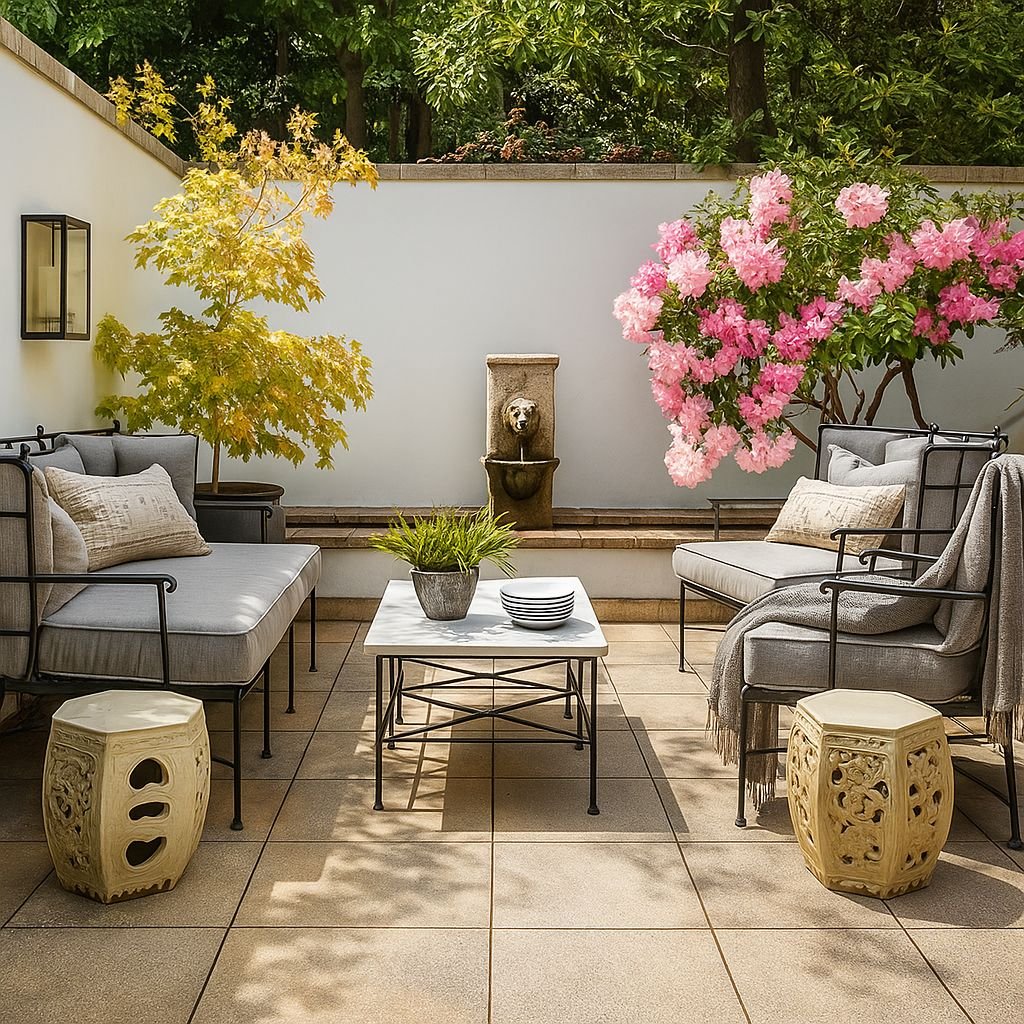
One thing to watch for is UV resistance. Not all resin wicker is created equal. Better quality pieces use UV-resistant materials that won’t fade or become brittle from sun exposure. Cheaper versions can fade noticeably and become weak after extended sun exposure. Check product descriptions or ask about UV resistance before buying. It makes a big difference in how the furniture holds up over years of use. The initial cost might be higher, but you won’t be replacing it as quickly.
Getting the Style and Measurements Right
Let’s talk about the practical side of making outdoor furniture work in your actual space. This is where a lot of people mess up, including past versions of me. You can find the perfect furniture in theory, but if it doesn’t fit your space properly or clashes with everything around it, you’re not going to be happy with it. Trust me on this.
Color coordination matters more than you might think. Your outdoor furniture doesn’t exist in isolation. It’s surrounded by your house exterior, your deck or patio materials, any landscaping, neighboring structures. All of that creates a visual context. Furniture that works with that context looks intentional and pleasing. Furniture that clashes looks like a mistake, no matter how nice the pieces are individually. I once bought a bright blue furniture set that I loved in the store. Got it home, set it up, and immediately realized it looked terrible against my red brick patio and beige house siding. The colors fought each other. I lived with it for a season, but it bothered me every time I looked at it.
The safe approach is choosing neutral colors. Tans, browns, grays, blacks, whites. These work with most settings and give you flexibility to add pops of color through cushions and accessories. You can change out those smaller elements easily and cheaply if you get tired of them. Changing the actual furniture because you’re sick of the color? That’s expensive and wasteful. I’ve settled into a pattern of buying neutral furniture frames and playing with cushion colors and patterns. It satisfies my desire for variety without committing to permanent color choices I might regret.
That said, if you have a strong color preference and you’re confident it works with your space, go for it. Bold colored furniture can look amazing in the right setting. A bright white set against dark wood decking. A sleek black set in a modern minimalist space. A coastal blue set in a beach-themed yard. Color can be part of what makes your outdoor space feel special and distinct. Just make sure you’re seeing the furniture in context before committing. If possible, get samples or use visualization tools to see how colors will look in your actual space.
Patterns on cushions and fabrics deserve thought too. Solid colors are safe and classic. Patterns add visual interest but can also feel busy or go out of style faster. I tend toward subtle patterns rather than bold ones. Small geometrics, simple stripes, tone-on-tone designs. These have more interest than solid colors but won’t feel dated in a few years. Loud patterns can be fun, but they’re also riskier. You might love that big tropical floral print now, but will you still love it in three years? Maybe, maybe not.
Now for the measuring part. This is not optional, people. I cannot stress this enough. Measure your space before shopping. Measure twice if you need to. Know the dimensions of your patio, deck, balcony, whatever area you’re furnishing. Write those measurements down. Bring them with you when you shop or have them handy when shopping online. You need this information to make good decisions.
Here’s what happens if you skip measuring. You fall in love with a furniture set in the store. It looks perfect. You buy it, bring it home, set it up, and realize it’s way too big for your space. Everything feels cramped. You can barely walk around. Or the opposite happens and the furniture looks comically small and lost in a large space. Either way, you’re not happy, and fixing the problem means returning furniture (if you even can) and starting over. Save yourself that headache. Measure first.
Think about traffic flow when planning furniture placement. People need to be able to move through the space comfortably. There should be clear paths from doors to seating areas, between different furniture groupings, around tables. I usually aim for at least three feet of clearance for main pathways. Less than that and the space starts feeling tight and awkward. If you have a small space, you might need to compromise, but be intentional about it. Knowing where the tight spots will be helps you plan around them.
Consider furniture scale relative to your space. A massive dining table might seat 10 people, but if it dominates your patio and leaves no room for anything else, is that the right choice? Maybe a slightly smaller table that seats eight but leaves room for a conversation area makes more sense. Balance is key. You want enough furniture to serve your needs but not so much that the space feels cluttered or overcrowded. This takes some visualization skills. Measure furniture dimensions and mark them out in your space with tape if needed. Stand back and look. Can you picture living with that arrangement?
Height matters too, something people often forget about. Will your furniture fit under existing features like pergolas, awnings, or overhangs? Is there enough clearance for people to stand up comfortably? Will an umbrella fit at your table without hitting the ceiling or beams? These vertical dimensions are easy to overlook but can create real problems. Measure vertical clearances and compare them to furniture heights before buying.
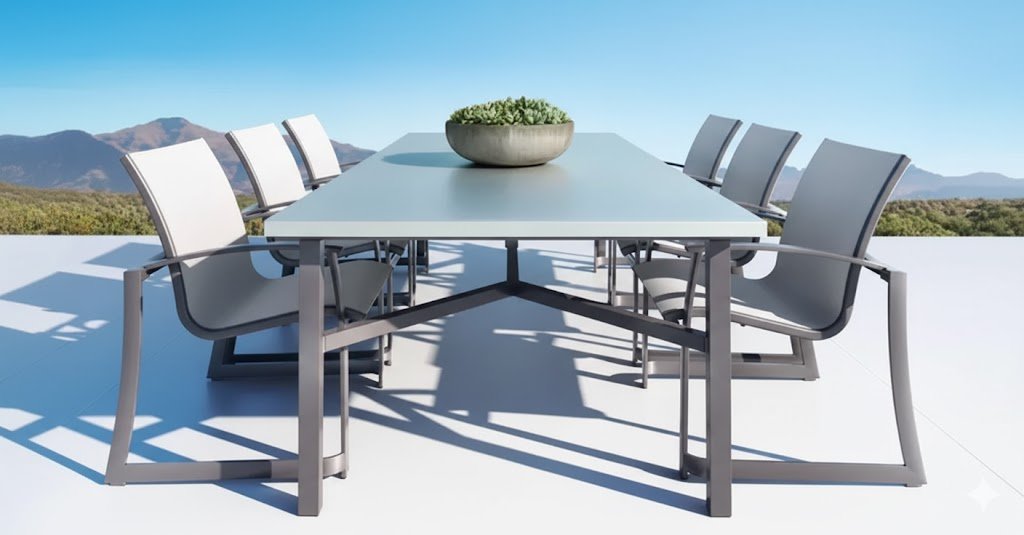
The shape of your space influences furniture choices. A long, narrow balcony calls for different arrangements than a square patio. Corner spaces have their own challenges and opportunities. Irregularly shaped areas need creative solutions. Look at your actual space and think about what shapes and configurations will work best. Sometimes that means choosing sectional seating that can wrap around corners. Sometimes it means multiple small groupings rather than one large one. The space itself will guide you if you pay attention to it.
The Shopping and Selection Process
Alright, you’ve done the thinking. You understand your needs, you’ve measured your space, you have a style direction in mind. Now comes the fun part – actually shopping for outdoor furniture. And yes, it can actually be fun if you approach it right. It can also be frustrating and exhausting if you don’t have a strategy. Let me share what works for me.
Start online, even if you plan to buy in a physical store. The internet gives you a broad view of what’s available and what price ranges look like. You can browse hundreds of options quickly, save favorites, compare features. This research phase is valuable. You’re educating yourself about what exists, what different materials and styles cost, what brands have good reputations. I usually spend a few hours over several days just browsing and bookmarking interesting options. No pressure to buy, just gathering information and ideas.
Pay attention to reviews when shopping online. Real customer reviews tell you things manufacturers won’t. They’ll mention if furniture is uncomfortable, if it arrived damaged, if it fell apart after one season, if the color looks different in person. Read the critical reviews especially. What are people complaining about? Are the complaints things that would bother you? Sometimes a negative review mentions something that wouldn’t be a dealbreaker for you. Other times they highlight problems you definitely want to avoid. I’ve dodged a few bullets by reading reviews carefully before buying.
Visit physical stores before making final decisions if at all possible. Seeing furniture in person matters. Colors look different in real life than on screens. Scale is hard to judge from photos. Comfort is impossible to evaluate without actually sitting in things. Even if you ultimately buy online for better prices, visiting stores to test furniture is worth the time. Sit in the chairs. Touch the materials. Look at construction quality up close. Move pieces around to see how heavy they are. That tactile experience informs your decisions in ways photos and descriptions can’t.
Don’t feel pressured to buy the first thing you like. This is a big purchase. It’s okay to take your time. I’ve made the mistake of impulse buying outdoor furniture because I was excited and didn’t want to lose the sale. Usually regretted it. Better to go home, think about it, compare with other options you’ve seen, come back later if you decide that’s really what you want. Good furniture will still be available, or something similar will be. The urgency retailers try to create is mostly artificial. Sales happen all the time. You’re not going to miss out on the one perfect set that’ll never be available again.
Budget is obviously a factor. Set a realistic budget before you start seriously shopping. What can you afford without straining your finances? Be honest about this number. Then look at what’s available in that price range. Sometimes you’ll need to adjust expectations based on budget. Maybe you wanted a 10-piece set but can only afford six pieces. That’s okay. Better to buy quality furniture in the quantity you can afford than cheap furniture in the quantity you want. You can always add more pieces later if needed.
Look for sales and off-season deals. Outdoor furniture prices fluctuate seasonally. Late summer and fall are often good times to find deals as retailers clear out inventory. End-of-season sales can save you serious money, sometimes 40% to 50% off. If you can plan ahead and buy furniture when you don’t immediately need it, you’ll often get better prices. I bought my current patio set in September when everyone else was thinking about fall and winter. Got a great deal on furniture that would’ve cost way more in spring or early summer.
Think about the whole package when comparing options. What looks like a cheaper option might not include cushions or covers. Another set might cost more upfront but includes everything you need. Calculate total costs including any accessories or extras you’ll need to buy separately. Sometimes the more expensive set is actually the better value when you factor everything in. Don’t just look at the base price and assume that tells the whole story.
Assembly is another consideration. Some outdoor furniture arrives fully assembled or requires minimal setup. Other pieces need extensive assembly that can take hours. If you’re handy and don’t mind assembly, that’s fine. If the thought of assembling furniture makes you want to cry, look for options that come ready to use or pay for assembly services if available. Your time and sanity have value. Factor that into your decision-making.
Delivery options matter too. Can you transport the furniture yourself? Do you have a vehicle large enough? Does the retailer offer delivery? What does that cost? These logistics affect the real cost and convenience of your purchase. I once bought a great furniture set at a store 30 miles away without thinking about how I’d get it home. Ended up making three trips in a borrowed truck. Would’ve been worth paying for delivery to avoid that hassle.
Warranty and return policies are boring but important. What’s covered if something breaks or turns out to be defective? How long is the warranty? What’s the process for making a claim? What’s the return policy if you get the furniture home and it doesn’t work out? Understanding these policies upfront saves headaches later. I’ve dealt with outdoor furniture companies that have great policies and others that make returning or getting warranty service nearly impossible. That difference matters when problems arise.
Finally, trust your gut. After you’ve done all the research and comparison, go with what feels right. You’re going to be living with this furniture, looking at it, sitting in it. If something about an option bothers you, even if it checks all the logical boxes, listen to that feeling. You want furniture that makes you happy when you see it and comfortable when you use it. Sometimes the choice that makes sense on paper isn’t the one that makes you smile. And making yourself smile? That’s worth something too.

Leave a Comment