
Why Your Outdoor Space Deserves the Same Attention as Your Living Room
Here’s something we don’t talk about enough. We’ll spend weeks agonizing over which couch to buy for the living room, measuring every inch, checking fabric samples in different lighting, making sure the color matches the throw pillows. Then we walk outside to our patio, see some random plastic chairs we bought on clearance five years ago, and think, “Yeah, that’s fine.” Why do we do this to ourselves?
Your outdoor space is still your home. It’s just the part without a roof. And if you’re lucky enough to have a patio, deck, porch, or yard, you’re basically sitting on unused square footage that could be just as comfortable and styled as any room inside. I learned this the hard way when I realized I was spending maybe ten minutes a week on my back deck, even though it was a beautiful space. The problem? I’d treated it like an afterthought. The furniture was uncomfortable, mismatched, and frankly, kind of sad looking.
The shift happened when I started thinking about my outdoor areas the same way I thought about indoor rooms. What’s the purpose of this space? Who uses it? What activities happen here? When I applied these same questions to my patio that I’d used when furnishing my bedroom or kitchen, suddenly everything clicked. Outdoor furniture isn’t just about having somewhere to sit when you wander outside. It’s about creating an environment that reflects how you actually live.
Think about your lifestyle for a second. Are you the person who hosts big cookouts every weekend? Do you like quiet mornings with coffee and a book? Maybe you’ve got kids who need space to do their thing while you supervise from a comfortable chair. Or perhaps you’re into evening cocktails with a small group of friends. Each of these lifestyles needs different furniture arrangements. And here’s the kicker: your outdoor space can tell visitors a lot about you, just like your living room does.
I’ve been to houses where the outdoor furniture clearly came from one bulk purchase at a big box store. Everything matches in that corporate, catalog kind of way. Then I’ve been to places where every piece tells a story. A vintage metal chair painted bright turquoise. A handmade wooden table. Some weathered wicker that’s seen twenty summers and still looks great. Guess which spaces feel more like someone actually lives there?
Your personality should show up in your outdoor choices. If you’re the minimalist type who keeps everything clean and simple inside, why would you suddenly fill your patio with fussy, ornate furniture? If your house is full of color and pattern and life, why would your deck be all neutral and boring? The outside should feel like a natural extension of the inside. Not identical, mind you. Just related. Like siblings who share some features but have their own distinct vibe.
Let me tell you about my neighbor’s setup. Inside their house, everything is modern and sleek. Lots of white, some black accents, clean lines everywhere. Then you step onto their back patio, and it’s the same energy but adapted for outdoors. They’ve got these low profile chairs in weatherproof fabric, a concrete table that’s somehow both industrial and elegant, and strategic pops of green from plants. It works. It feels like their space. When you sit out there, you’re not wondering whose patio you stumbled onto.
The mistake people make is thinking outdoor furniture is just stuff you put outside. But good outdoor furniture serves the same purpose as good indoor furniture. It needs to be comfortable enough that you actually want to use it. It needs to look good so you feel proud of your space. It needs to function for the activities you do. And it needs to handle weather, which is the one big difference from indoor furniture.
Weather resistance is real. I made the mistake once of buying these cushions that looked amazing but weren’t actually outdoor rated. After one summer of sun and a few rainstorms, they were faded and kind of gross. I’d basically thrown money away. Now I check labels. I make sure things are meant for outdoor use. Not outdoor-ish. Not “can probably handle some weather.” Actually designed for rain, sun, humidity, and everything else nature throws at it.
But here’s what’s cool about outdoor furniture these days. You don’t have to sacrifice style for durability. The outdoor furniture market has gotten so much better in the last decade. You can find pieces that look like they belong in a fancy indoor living room but are built to survive outside. Resin wicker that looks like natural wicker but won’t rot. Metal frames with powder coating that resists rust. Fabrics that repel water and resist fading. We’re living in the golden age of outdoor furniture, and we should take advantage.
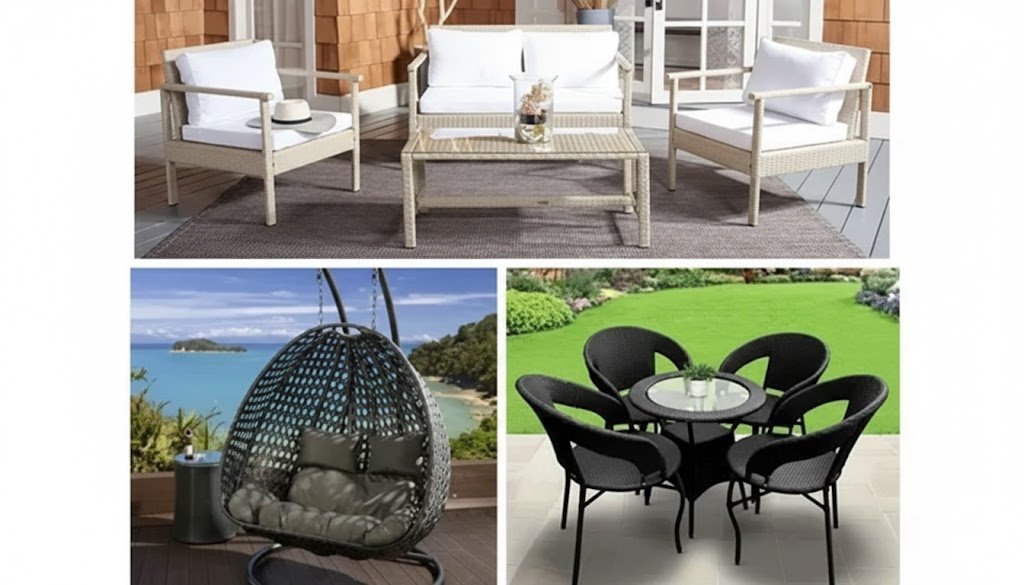
When you treat your outdoor space with the same respect you give your indoor rooms, something shifts. You start using it more. You maintain it better. You show it off to guests. It becomes part of your home instead of this separate zone you occasionally remember exists. And that’s worth way more than whatever you spend on a good outdoor dining set or a comfortable lounge chair.
So before you buy another piece of outdoor furniture, ask yourself the same questions you’d ask about indoor furniture. Does this fit my style? Will I actually use this? Is it comfortable? Does it work with what I already have? If you can answer yes to these questions, you’re on the right track. If you’re just buying something to fill space, you’re probably making the same mistake I made with those terrible cushions.
Understanding Front Porch Furniture vs Back Porch Setup
Front porches and back porches might as well be different planets when it comes to furniture. I know they’re both porches. I know they’re both outside. But the way we use them, the way they feel, and the furniture that works for each one? Completely different. Let me break this down in a way that’ll actually help you make smart choices.
Your front porch is basically your home’s handshake. It’s the first thing people see. It’s where the UPS driver drops packages. It’s where neighbors wave as they walk by. You might sit out there sometimes, sure, but you’re on display. You’re part of the neighborhood theater. This changes everything about what furniture makes sense.
I’ve never seen someone put a full dining set on a front porch. Could you? I guess, technically. But it would be weird. Front porches call for furniture that says, “I’m friendly and approachable, but I’m not eating dinner out here.” That usually means seating that’s comfortable enough for a conversation but not so comfortable you’re taking a nap. Rocking chairs are classic for good reason. They signal relaxation without being too casual. A porch swing? Perfect. A couple of chairs with a small table between them for setting down drinks? Great.
The key with front porch furniture is that it needs to look good from the street. People walking or driving by will see it. Your furniture is part of your curb appeal, which matters if you ever plan to sell your house, but more than that, it matters for how you feel about your home. Coming home to a front porch that looks inviting feels different than coming home to a front porch that’s empty or messy or furnished with obvious afterthoughts.
Back porches though? That’s your private kingdom. Most back yards have fences or hedges or something that provides privacy. Even if they don’t, the back of your house isn’t on display the way the front is. This means you can do whatever you want back there. Full dining table? Absolutely. Deep seating with thick cushions where you can sprawl out? Yes. A whole outdoor kitchen setup? Why not?
I’ve spent way more hours on my back porch than my front porch, and I bet you have too. The back is where life happens. It’s where you cook out, where kids play, where you have those long summer evening conversations that stretch until you realize it’s somehow 11 PM and you’ve been sitting outside for four hours. This is the space that needs to work hard for you.
The furniture you put back there should match what you actually do. If you cook outside a lot, you need a dining table big enough for people to eat at comfortably. If you’re more of a lounger, you need seating that supports that. I see people all the time who buy these formal dining sets for their back porch, then they never use them for actual meals. They end up eating on their laps in the lounge chairs. That expensive table just sits there looking nice but serving no purpose. Don’t be that person.
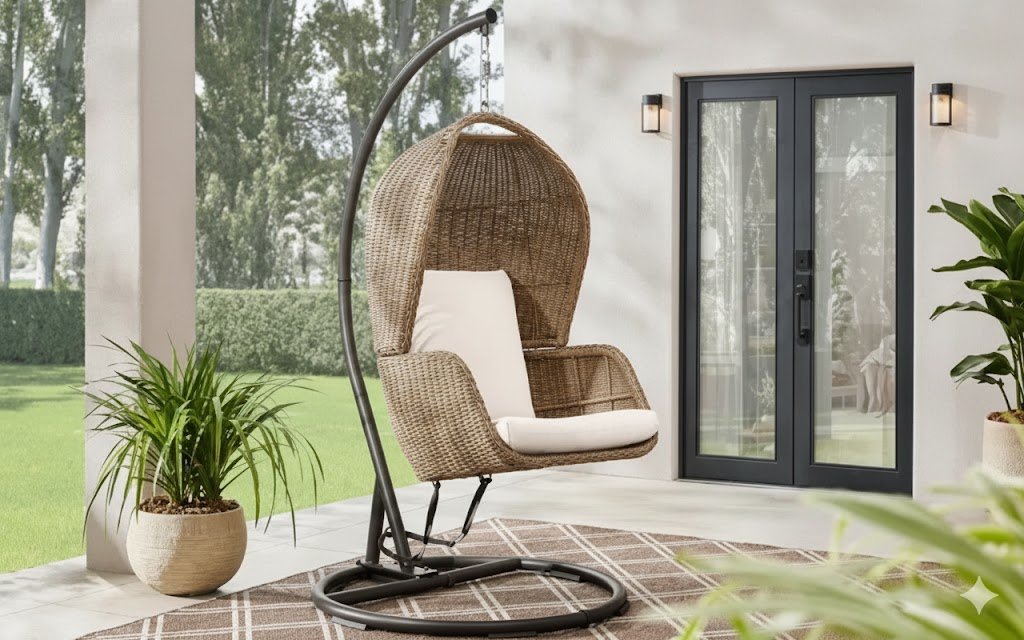
Privacy changes the game for furniture style too. On a front porch, you might stick with traditional or conservative choices. You don’t want to be the house with the weird furniture that everyone talks about. But in the back? You can get funky. You can paint furniture bright colors. You can mix styles that technically don’t match but somehow work. You can have that hammock, that hanging egg chair, that bar height table with stools. Nobody’s judging you back there.
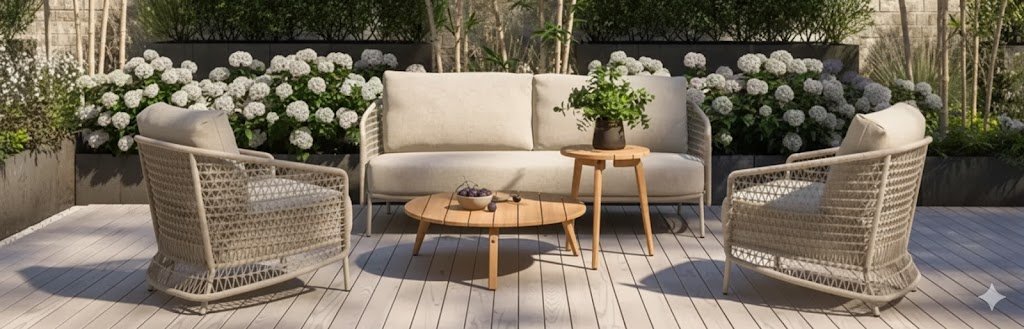
Here’s something else about the front versus back dynamic. Front porches tend to be smaller. They’re usually just a landing area by the front door. This limits what you can fit. You’re working with maybe six feet by eight feet, possibly less. You can’t jam a ton of furniture into that space without it looking cluttered. Pick a couple of key pieces that fit comfortably with room to move around them.
Back porches and patios usually offer more space. You can create different zones. A dining area over here. A lounging area over there. Maybe a fire pit with chairs around it in another spot. When you have room to work with, you can get creative with how you divide up the space. But this also means you need to think about traffic flow. People need to be able to walk from the house to different areas without climbing over furniture.
The exposure to elements differs too. Your front porch might be covered, protecting furniture from rain and direct sun. Or it might be completely open. Back patios can be covered, partially covered, or open to the sky. This affects what furniture materials will work. If your furniture is under a roof, you can get away with materials that are less weather resistant. If it’s fully exposed, you need tougher stuff.
I learned this when I put some wooden chairs on my uncovered back patio. They looked great for about a season. Then the finish started peeling. The wood started cracking. By the second year, they were basically firewood. Now I know better. Exposed furniture needs to be built for exposure. Covered furniture can be a bit less bulletproof.
Let’s talk about the social aspect for a minute. Front porch sitting is a different kind of social than back porch hanging out. When you sit on your front porch, you’re semi-public. You might chat with neighbors walking by. You’re keeping an eye on the street. It’s casual and spontaneous. Back porch time is more intentional. You invite people back there. It’s where deeper conversations happen.
This social difference should influence your furniture. Front porch furniture can be simple because interactions there are usually short. Quick conversations. Brief visits. You’re not entertaining for hours. Back porch furniture needs to support longer sessions. More comfort. More space for food and drinks. Places for people to settle in.
One more thing about front porches. They need to work year round, or at least look good year round. Even if you don’t sit out there in winter, people still see it. Back porches can be more seasonal. You can store cushions in the fall, cover furniture, and not worry about it until spring. Your front porch is always on display.
Why Back Yards Get More Love and How to Furniture Them Right
Let’s be honest about something. When was the last time you spent a full afternoon on your front porch? Now, when was the last time you spent a full afternoon in your back yard? I’m guessing the answer to the second question is way more recent. There’s a reason back yards are where we invest our outdoor furniture budgets, and it’s not just about privacy.
Back yards are retreat spaces. They’re where we go to actually relax, not just wave at the mail carrier. When I step into my back yard, something shifts. I’m off duty. I’m not monitoring who’s walking by or wondering if I should have mowed yesterday. I’m just there, in my space, doing whatever I want to do. This feeling is exactly why back yard furniture matters so much.
Privacy plays a huge role here. Most back yards have fences, shrubs, or some boundary that creates a sense of enclosure. You’re not on display. You can read a book in your pajamas. You can have conversations that you wouldn’t want broadcast to the neighborhood. You can let kids run around making noise. You can play music at a reasonable volume. All of this is possible when you’re not performing for passersby.
This privacy makes back yards perfect for entertaining, which is another reason they get more furniture investment. Think about where you’d rather host a barbecue, a birthday party, or a casual get together. Front yard? Awkward. Everyone’s watching. There’s no privacy. Back yard? Perfect. You’ve got space, privacy, and the freedom to make some noise and have fun.
When you’re furnishing a back yard for entertaining, the dining table becomes your centerpiece. Not just any table. A table big enough to actually seat people comfortably. I made the mistake early on of buying a four person table when we regularly had six or eight people over. We’d end up cramming people in, or worse, some people would eat standing up or sitting on steps. It was dumb. Invest in a table that fits your actual entertaining pattern, not what you wish it was.
Seating around that table matters more than you’d think. I’ve sat in some outdoor chairs that were clearly designed by people who hate humans. Hard surfaces, weird angles, no back support. You sit down, and within five minutes you’re shifting around trying to find a position that doesn’t hurt. Don’t do this to your guests. Get chairs that people can sit in for a full meal without suffering.
But tables and dining chairs are just one part of back yard furniture. You need lounging space too. This is where people gravitate before dinner, after dinner, or instead of dinner if the food’s not ready yet. Deep seating is great for this. I’m talking about those sectionals or loveseats with thick cushions where you can really sink in. Some people call them conversation sets, and that’s accurate. They encourage people to settle in and talk.
The layout of lounging furniture affects how people interact. If you arrange chairs in a circle, you’re creating one big conversation space. Everyone talks to everyone. If you set up smaller clusters, you’re allowing for multiple conversations to happen at once. Neither is wrong. Think about your typical gatherings. Do you like one big group discussion, or do you prefer when people break into smaller groups? Arrange your furniture to support that.
Fire pits have become huge in the last few years, and I get why. There’s something primal about gathering around fire. It extends the season when you can use your back yard. It creates a focal point. It gives people something to look at and interact with. If you add a fire pit, you need seating around it. Adirondack chairs are classic for this. They’re angled back just right for fire staring. Plus, they’re comfortably uncomfortable, if that makes sense. Comfortable enough to sit in for hours, but not so comfortable you fall asleep.
Let’s talk about shade and sun for a minute. A back yard usually has both. You might have a covered patio attached to the house, then open lawn or deck beyond that. This creates options for furniture placement. Some people want to sit in full sun. Others want shade. Give them both options if you can. Furniture under a pergola or umbrella serves the shade seekers. Furniture in the open serves the sun worshippers.
Back yards often become outdoor living rooms during good weather. We eat out there, watch kids play out there, read out there, nap out there. This means your furniture needs to support multiple activities. A good dining setup. A comfortable lounging area. Maybe a side table where you can set a book and a drink. Think about your furniture as supporting an outdoor lifestyle, not just as objects to fill space.
Storage is something people forget about. Where do you put the cushions when it rains? Where do the toys go? Where’s the extra propane tank for the grill? If you plan ahead, you can incorporate storage into your furniture choices. Storage benches. Tables with shelves underneath. A deck box that doubles as seating. This stuff matters when you’re actually living in the space.
Maintenance access is real. I put a bench in a corner of my patio once, and it looked great. Then I needed to access the water spigot behind it. I had to move this heavy bench every time I wanted to hook up the hose. After a few weeks of this, I moved the bench permanently. Make sure your furniture placement doesn’t block things you need to access regularly.
Back yards change throughout the day. Morning light comes from one direction. Afternoon sun is intense. Evening brings different light and temperature. If possible, observe your back yard at different times before committing to furniture placement. That spot that seems perfect at 10 AM might be a sun oven at 3 PM.
One last thing about back yards. They’re where memories happen. Birthday parties, graduations, retirement celebrations, or just Tuesday evenings when everything clicked and you realized how lucky you are. The furniture you choose becomes part of these memories. That table where you’ve shared a hundred meals. Those chairs where friends have laughed and cried. This stuff matters more than we usually admit. Choose furniture that’ll be part of good memories.
Getting Smart About Furniture Placement and Shade Trees
Where you put your furniture matters almost as much as what furniture you buy. I know that sounds dramatic, but I’ve seen beautiful, expensive furniture basically wasted because it was in the wrong spot. And I’ve seen cheap, basic furniture work perfectly because someone was smart about placement. Let me walk you through how to think about this.
Shade trees are your best friend for outdoor comfort. If you have a mature tree in your yard, you’ve got a natural umbrella that no store-bought solution can match. The dappled shade under a tree stays cooler than shade from a manufactured structure. There’s something about the way leaves filter light that just feels better. Plus, you get the sound of leaves rustling, which is basically free background music.
Putting a bench under a shade tree is such a classic move for good reason. It works. You’ve created an instant retreat spot. Morning coffee under a tree hits different than morning coffee on an open deck. There’s something about being under that canopy that makes you want to linger. I’ve got an old bench under an oak tree, and it’s where I go when I need to think. It’s my outdoor office for the kind of work that requires staring into space.
The position of the tree relative to the sun matters. If the tree is on the east side of your yard, you get morning shade there. West side trees give afternoon shade. South side trees provide shade during the peak heat hours. North side trees give spotty shade. Think about when you’re most likely to use your outdoor space, then pick shade accordingly. If you’re a morning person who’s outside with coffee at 7 AM, east side shade is gold. If you’re an afternoon lounger, west side is what you need.
Let me tell you what not to do, though. Don’t put furniture directly against the tree trunk. You need room for the tree to grow. You need air circulation. You need to be able to maintain the tree. And honestly, tree roots can mess up ground-level surfaces over time. Give the tree some breathing room. A few feet away is fine. You’re still under the canopy. You just haven’t strangled the tree with furniture.
Birds live in trees. This means bird droppings are a thing. I love birds. I love trees. I do not love cleaning bird poop off furniture cushions. If you’re placing furniture under a tree, accept that you’ll need to wipe it down regularly. Or choose furniture that’s easy to clean. Or just make peace with nature being messy. All valid options.
Falling leaves are the other tree issue. If your shade tree is deciduous, it’ll drop leaves in fall. If your furniture is under that tree, you’ll be sweeping leaves off it constantly. This isn’t necessarily a dealbreaker. Just go in with your eyes open. Some people don’t mind this. It’s part of the seasonal rhythm. Others find it annoying. Know yourself.
Let’s say you don’t have a mature shade tree. You’ve got a young tree that’s not big enough yet to provide shade. Or you’ve got no trees at all. This is where you need to create shade artificially. Umbrellas work. Pergolas work. Shade sails work. Awnings work. All of these can provide good shade. They just don’t have the same organic feel as a tree.
When you’re planning furniture placement, walk your yard at different times of day. Watch where the sun is at 9 AM, noon, 3 PM, and 6 PM. Watch how shadows move across your space. This tells you where the naturally comfortable spots are. Then you can place furniture to take advantage of these spots or to compensate for problem areas.
There’s such a thing as too much shade. I’ve been in yards where everything was under heavy tree cover. It felt a bit dark and damp. Some sun is good. It warms things up. It makes the space feel more alive. The ideal is a mix. Some shady spots for hot days. Some sunny spots for cool mornings or evenings.
Wind patterns matter too. Some spots in your yard might be more sheltered than others. You probably already know where the wind whips through when storms come. Don’t put lightweight furniture in wind tunnels. I chased cushions across my yard more than once before I figured this out. They’d literally blow away on windy days. Now I know which areas are calm and which areas are breezy, and I place furniture accordingly.
Sight lines are part of smart placement too. When you sit in a piece of furniture, what do you see? Are you looking at a beautiful garden, or are you staring at your neighbor’s garbage cans? Position furniture to take advantage of the good views and minimize the bad ones. This seems obvious, but I’ve seen people put loungers facing the least attractive part of their yard for no apparent reason.
Distance from the house affects how often you use furniture. If something is way out at the far corner of your lot, you might visit it occasionally on nice days. But you won’t use it daily. Furniture closer to the house gets used more because it’s convenient. There’s no right answer here. Sometimes you want that distant retreat spot. Sometimes you want everyday convenience. Match placement to purpose.
Think about pathways too. How do people move from the house to different areas of the yard? Your furniture placement should support natural walking patterns, not fight against them. If people have to walk around furniture to get somewhere, that’s annoying. If furniture creates natural pathways, that’s good design.
One trick I learned is to use temporary markers before committing to furniture placement. Put down cardboard boxes or lawn chairs or whatever as stand-ins. Live with that arrangement for a few days. See how it feels. See if you naturally gravitate toward those spots. See if the placement makes sense for how you actually use your space. Then, once you’re sure, bring in the real furniture. This saves you from having to rearrange heavy furniture later.
Dealing With Views, Architecture, and Your Home’s Style
Your outdoor furniture doesn’t exist in a vacuum. It’s part of a larger context that includes your house, your yard, and what you can see from your outdoor spaces. Getting all of this to work together is where things get interesting. Let me tell you what I’ve learned about making these connections work.
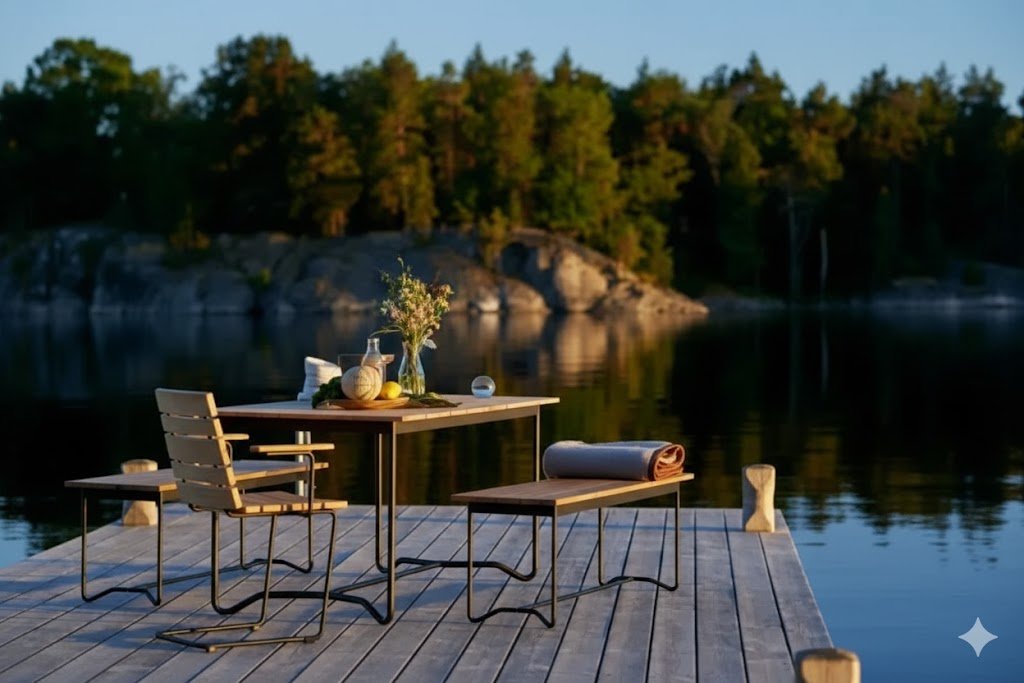
If you live near water, you’ve got built-in entertainment. A lake, pond, river, or ocean view is something people pay big money for. If you’re lucky enough to have this, your furniture arrangement should take advantage of it. Orient your seating toward the water. Put your main dining table where people can watch the water while they eat. This seems obvious, but I’ve seen people completely ignore their water views when placing furniture.
I’ve got a friend with a pond in their back yard. Nothing fancy, just a small natural pond. They put their patio furniture with their backs to the pond. When I asked why, they said they’d never really thought about it. We moved everything around, and suddenly their outdoor space made sense. Now when they sit outside, they’re watching the pond. They see birds, frogs, and the way light changes on the water. Same furniture. Completely different experience.
The same goes for any noteworthy view. Mountains, city skylines, gardens, interesting trees, whatever. If you’ve got something worth looking at, look at it. Position your furniture to frame these views. This is free entertainment. Use it.
Let’s talk about how your house factors into outdoor furniture decisions. Your house has an architectural style. Maybe it’s traditional, modern, craftsman, colonial, whatever. This style should influence your outdoor furniture choices, especially if that furniture is visible from inside or is close to the house. A sleek modern house with Victorian style wicker furniture on the patio looks confused. A rustic cabin with ultra-contemporary metal furniture looks like someone wasn’t paying attention.
This doesn’t mean everything has to match exactly. You don’t need to turn your patio into a museum exhibit. But there should be some relationship between the architecture and the furniture. Pick up colors from your house exterior. Echo shapes or lines. Create harmony, not clash.
The closer furniture is to the house, the more it should relate to the house’s style. I think of it like this. Furniture right next to the house is basically an extension of the house. It’s in the same visual field. It should feel connected. Furniture way out in the yard, away from the house? That can be more independent. It’s far enough away that the visual connection to the house is weaker.
I’ve got a brick ranch house with dark green trim. Very traditional. My patio furniture right off the back door is wood and wrought iron. Classic shapes, neutral colors. It works with the house. But way out by my fire pit, I’ve got more casual Adirondack chairs in brighter colors. They’re far enough from the house that they don’t need to match it. They’re doing their own thing.
Rooflines, columns, railings, all of these architectural elements create patterns and rhythms. You can echo these in your furniture choices. If your house has horizontal lines, furniture with horizontal slats or low profiles reinforces that. If your house has vertical elements, taller furniture pieces can play off that. I’m not saying you need to be a design expert. Just notice what your house is doing and don’t fight against it.
Material matters here too. If your house has a lot of wood siding, wood furniture makes sense. Stone house? Stone or concrete furniture elements work. Stucco? You can go lots of directions. The point is to create relationships. You’re trying to make everything feel like it belongs together, like someone with a cohesive vision made all these choices.
Color is probably the easiest way to create connection between your house and furniture. Pull colors from your house into your outdoor furniture. If your front door is red, maybe you have red cushions. If your shutters are blue, maybe that shows up in your outdoor pillows or umbrella. These little color echoes tie things together without being matchy-matchy.
But what if you don’t care about matching your house? What if you want your outdoor space to be completely different? That’s fine too. Just be intentional about it. Create enough separation that it’s clear you’re making a choice, not a mistake. Use a pergola or plantings or some element to create a transition between the house and the outdoor space. This signals that you’re moving from one aesthetic to another on purpose.
Let me tell you about a mistake I made. I bought this really cool modern outdoor sofa. Angular, low profile, sleek lines. It was beautiful. I put it on my very traditional patio, right next to my very traditional house. It looked like someone had dropped a piece of furniture from another dimension into my yard. It didn’t work. I tried for a whole season to make it work. It never did. I eventually sold it and got something that fit better.
Pools create their own furniture requirements. Pool furniture needs to be water-resistant on a whole different level than regular outdoor furniture. People are constantly sitting on it wet. Chlorine or salt water is splashing on it. The sun reflection off the water intensifies UV exposure. This rules out certain materials and requires others. Resin and mesh fabrics work great. Quick-dry foam is good. Wood and metal without proper coating? Problems waiting to happen.
Pool furniture placement is about function first. You need loungers for sunbathing. You need shade spots for when people need a break from the sun. You need a table somewhere for drinks and snacks. You need storage for towels and pool toys. All of this needs to work together to support how people actually use a pool.
The view from inside your house matters too. When you look out your windows, what do you see? If you can see your patio from your kitchen or living room, you’re looking at that furniture every day, whether you’re outside or not. Make it look good from inside too. This might mean arranging furniture in a way that’s visually pleasing from inside, even if it’s not the most functional arrangement for when you’re actually sitting in it. Sometimes you compromise. That’s okay.
Creating Visual Interest and Keeping Things Flexible
Here’s where we get into the fun stuff. Making your outdoor furniture arrangement actually interesting to look at. Not just functional, not just comfortable, but good. Something that makes people say, “Oh, that’s nice” when they see it. Let me tell you how to think about this.
A single piece of furniture in an unexpected spot can change your whole yard. I’m talking about that one bench way out at the far edge of your property. Or a chair tucked into a garden corner. Or a hammock strung between trees away from the main patio. These isolated furniture pieces create what I call destination points. They give you a reason to walk to different parts of your yard.
I put a bench at the back corner of my lot, kind of hidden behind some shrubs. It’s not visible from the house. You have to walk back there to find it. And that’s the point. It’s a little secret spot. Sometimes I go back there just to sit and be away from everything. It’s maybe 50 feet from my house, but it feels like a different world. That bench cost me $50 at a garage sale. It’s one of the best outdoor furniture decisions I’ve made.
When you place a piece of furniture away from the main areas, think about what someone will see when they sit there. You’re creating a viewing platform. What’s the view? If it’s just a fence, that’s boring. But if it looks out over a garden, or toward an interesting tree, or down a pathway, now you’ve got something. The furniture becomes a way to frame and appreciate different parts of your property.
Approach matters. How do people encounter furniture pieces? If you can see everything from one spot, there’s no discovery. But if furniture is tucked into different areas, revealed as you walk around, that creates interest. Your yard becomes something to explore rather than something to glance at.
Let’s talk about angles. Most people put furniture square to their house or patio. Everything is at 90-degree angles. Predictable. Safe. Boring. Try angling some pieces. Put a bench at a 45-degree angle in a corner. Arrange chairs in a gentle curve instead of a straight line. Offset your dining table slightly from the edge of your patio. These small adjustments make spaces feel more dynamic.
I’m not saying go crazy. You don’t want your yard to look like a furniture tornado hit it. But a little intentional asymmetry goes a long way. It signals that someone thought about the arrangement. It feels designed rather than just placed.
The front of furniture matters more than you’d think. Every piece of furniture has a front, a side that looks most finished and intentional. You want people to see the front, not the back. When you place furniture, walk around it. Look at it from different angles. Make sure the side people see most is the good side.
If you move furniture around a lot, lightweight is your friend. I’m talking about resin pieces, aluminum frames, anything you can pick up and relocate without throwing your back out. Some people like to reconfigure their outdoor space for different occasions. Big party? Move things around to accommodate more people. Quiet weekend? Rearrange for intimate seating. Lightweight furniture makes this possible.
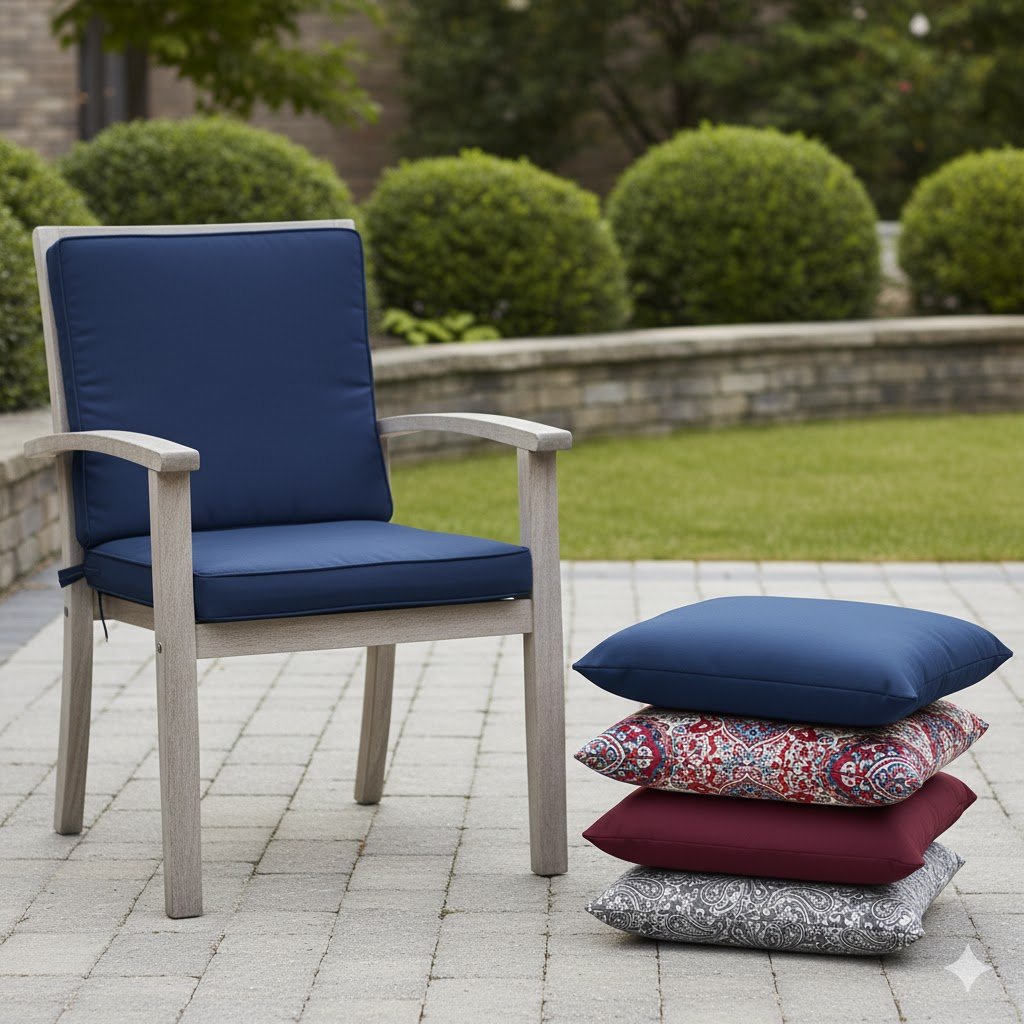
I’ve got a mix in my yard. Some heavy pieces that stay put, like my dining table and big lounge chairs. These anchor the space. Then I’ve got lighter pieces I can move around. Extra chairs, side tables, ottomans. This gives me flexibility without chaos.
Seasonal changes can inspire furniture moves too. In spring and fall, I want furniture in sunny spots. In summer, I move things to shadier areas. This keeps me comfortable and makes the most of my space throughout the year. If your furniture is too heavy to move seasonally, you’re stuck with whatever you chose initially. That’s fine if you got it right. But if you didn’t, you’re going to be uncomfortable for months.
Storage is worth mentioning here. If you move furniture around, you need somewhere to put pieces when they’re not in use. A shed, garage, or storage bench works. But this requires planning. You don’t want to be that person with furniture stacked haphazardly against the side of your house all winter. That’s not flexible. That’s messy.
Let’s talk about focus. Every outdoor space should have a focal point, something that draws the eye. This could be a fire pit, a water feature, a beautiful tree, or even a piece of furniture. If you don’t have a natural focal point, you can create one with furniture. A really nice bench in a prominent spot. An interesting table. A unique chair. This gives your space a sense of intention.
But don’t create too many focal points. More than one or two, and you’ve got competition for attention. Your space will feel scattered. Pick one main focal point, maybe one secondary one, and let everything else support these.
Pathways and furniture interact. If you have a path through your garden, putting a bench along it makes sense. People walking the path will use the bench to rest. The bench makes the path more than just a way to get from one place to another. It becomes an experience.
I see yards where furniture blocks pathways. You have to squeeze past a chair to get somewhere. Or walk around the long way because furniture is in the direct route. This is bad. Furniture should support movement through your space, not fight it. If you find yourself constantly walking around furniture, rearrange it.
Lighting changes how furniture looks and functions. A bench might be perfect during the day but useless at night if there’s no light. Think about where light falls in the evening. String lights, landscape lighting, or even a simple lantern can extend the usability of furniture into evening hours.
One last thing about flexibility. Your needs will change. You’ll host different types of gatherings. Kids will grow up. You’ll get new hobbies. Your furniture arrangement should be able to evolve. Don’t commit to anything so permanent that you can’t adjust it later. Leave yourself room to grow and change.

Leave a Comment