
When Water Features Were Actually About Water
Fountains have this fascinating backstory that most people never think about. We see them now as decorative elements, things that make spaces look and feel better. But rewind a few thousand years and fountains were serious business, literal matters of life and death. Early civilizations built them out of necessity, not because they wanted their courtyards to look Instagram worthy. Water access was survival, and fountains were the technology that made it possible.
The presence of fountains in ancient times tells us a lot about human ingenuity. People figured out how to move water from sources to population centers, sometimes across incredible distances. The engineering behind early fountain systems was mind blowing for the time. Aqueducts, gravity fed systems, underground pipes, all of it working together to deliver fresh water to public fountains where people could gather and fill their containers. This wasn’t decoration. This was infrastructure.
Even during early times when fountains served purely functional roles, there was already a hint of something more. Humans can’t help themselves. We take practical things and make them beautiful. The ancient Romans are a perfect example. They needed fountains for water distribution, sure. But they also carved them from marble, added sculptures, created architectural features that were as much about civic pride and beauty as they were about function. The seeds of decorative fountains were planted right from the start.
The radical transformation from utility to art happened gradually over centuries. As societies developed better water distribution systems, as indoor plumbing became possible, fountains lost their primary purpose. They stopped being the only place to get water. People could access water in their homes. Public fountains became less necessary from a survival standpoint. That’s when they started becoming more decorative, more about creating atmosphere and beauty than serving a functional need.
The course of history shows us that objects often outlive their original purposes when they bring other value. Fountains survived the transition from necessary infrastructure to optional decoration because people loved having them around. Even when we didn’t need them for water access anymore, we wanted them for how they looked and sounded and made us feel. That emotional and aesthetic value kept fountains relevant through massive technological changes.
Being purely functional suppliers of drinking water seems almost quaint now when we think about fountains. But for most of human history, that’s exactly what they were. The local fountain was where you went every day, where you’d meet neighbors, where kids would play while adults filled their jugs. Fountains were community gathering spots by default because everyone needed water. The social function emerged naturally from the practical one.
Drinking water and water for bathing were the two main services fountains provided. Cleanliness and hydration, the basics of human health. Ancient cities with good fountain systems had healthier populations. The correlation between water access and public health was obvious even before anyone understood germ theory or how diseases spread. Clean water from fountains literally kept cities alive and functioning.
The transformation during history reflects changing human priorities and capabilities. When water access is scarce, fountains are tools for survival. When water becomes abundant and easily distributed, fountains become tools for beautification. That shift tells you something about what happens when basic needs are met. We don’t abandon the things we needed, we reimagine them, we find new reasons to keep them around.
From being functional to becoming decorative took generations. The change wasn’t sudden or planned. People just started paying more attention to how fountains looked once how they functioned became less urgent. A wealthy family might commission a particularly beautiful fountain for their courtyard. A city might build an ornate public fountain to commemorate an event. Slowly, the aesthetic aspects started competing with and eventually surpassing the practical aspects in importance.
Decorative pieces of architecture emerged as a category once fountains shed their utilitarian origins. They became things to admire, to photograph, to use as meeting landmarks. The fountain in the town square stopped being primarily about water access and started being about identity, about making a place memorable and special. That transition marked the birth of fountains as we mostly understand them today, as elements that make spaces better through beauty rather than function.
How Fountains Became Everywhere
In this modern day we live in, fountains occupy an interesting position. They’re common enough that we barely notice them in public spaces, but special enough that having one at home still feels like a statement. The shift from rare and necessary to widespread and optional says a lot about how far we’ve come in terms of water infrastructure and how much we value creating pleasant environments even when they’re not strictly necessary for survival.
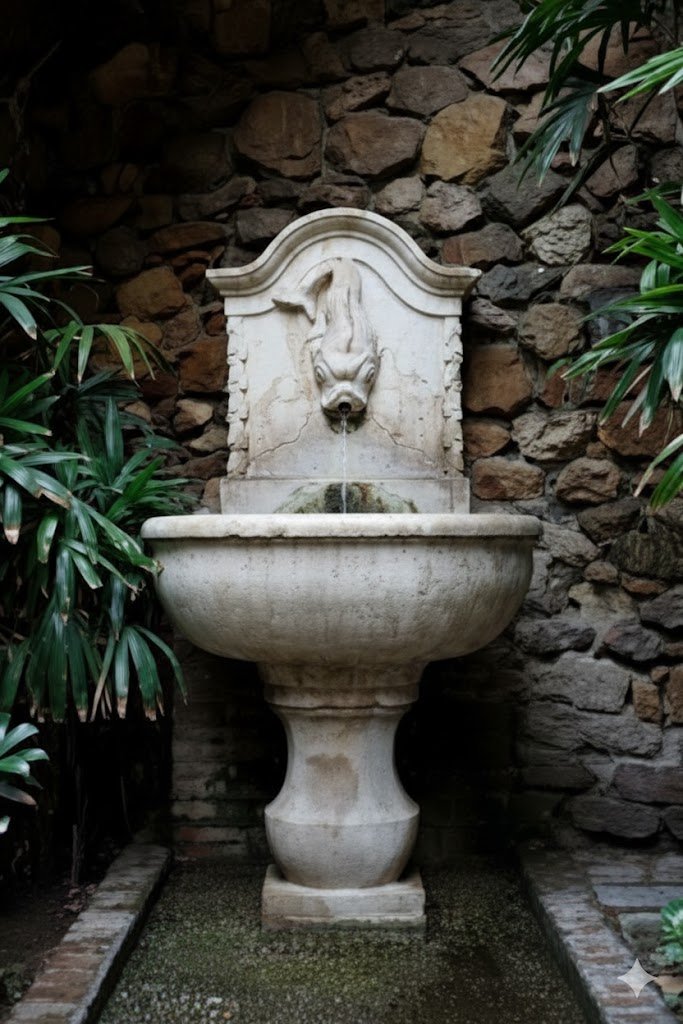
The age we’re in treats fountains primarily as design elements. Function takes a back seat to form in most cases. Nobody’s installing a fountain in their garden because they need access to water. They’re doing it because fountains make spaces feel better, look better, sound better. That purpose shift is complete. Fountains have successfully transitioned from tools to art, from infrastructure to decoration, and somehow remained relevant through the entire transformation.
Fountains being well regarded today comes from genuine appreciation for what they contribute to spaces. We’ve lost nothing by no longer needing them for water access. Instead, we’ve gained a design element that works on multiple sensory levels. The decorative effect is obvious and intentional. We place fountains specifically to create visual interest, to draw the eye, to serve as focal points. But the dramatic effect goes deeper, affecting how spaces feel and sound and function socially.
The dramatic effect they bring manifests in ways both obvious and subtle. A fountain changes a space instantly. You walk into a courtyard or park or lobby with a fountain and you notice it. Your ears register the water sound. Your eyes track the movement. Your sense of the place shifts to accommodate this dynamic element. Fountains create drama through their mere presence, through the life and motion they add to otherwise static environments.
To a certain place, fountains bring a quality that’s hard to replicate with other design elements. They’re unique in how they engage multiple senses. Most decor is purely visual. Fountains are visual and auditory, sometimes even affecting how the air feels through subtle humidity changes. That multi sensory impact is part of what makes them so effective at transforming spaces. They’re not just something to look at. They’re something to experience.
Present anywhere as decorations is the status fountains have achieved in modern design. You find them in corporate lobbies, shopping malls, hotel entrances, restaurant patios, residential gardens, public parks, city squares. Their ubiquity speaks to how universally appealing they are, how reliably they improve spaces across different contexts and purposes. When something becomes that widespread, it’s because it works. Fountains work.
Decorations such as in gardens have become the primary context where we encounter fountains. The garden fountain is almost a cliche at this point, but it’s a cliche for good reasons. Water and plants complement each other beautifully. The sound of water adds another layer to the garden experience. Fountains give gardens focal points and create destinations within the space. They turn gardens from just collections of plants into designed environments with structure and purpose.
Courtyards, parks, and squares all benefit from fountain installations in similar ways. They break up large open spaces. They give people reasons to pause and sit. They create ambient sound that masks traffic noise and other urban intrusions. In public spaces especially, fountains serve important functions beyond just looking nice. They make places more human scale, more inviting, more likely to be used and enjoyed by the community.
Even in our homes, fountains have found a place, which would have seemed absurd to our ancestors who needed them for drinking water. Now we’re bringing them inside purely for ambiance. That full circle moment where fountains move from outdoor necessities to outdoor decorations to indoor decorations shows how completely our relationship with them has changed. They’ve become optional luxuries that many people choose to include.
Capable of providing instant relief from summer heat is a practical benefit that survives from fountains’ ancient origins. Water cools the air around it through evaporation. Sitting near a fountain on a hot day genuinely feels better than sitting away from one. That physical comfort aspect still matters, still influences where we place fountains and why we appreciate them. The cooling effect is real and measurable, a bonus function on top of the aesthetic value.
Part of the reason fountains show up in almost every city park makes sense when you think about heat islands and urban temperatures. Cities get hot, concrete and asphalt absorb and radiate heat, and fountains provide measurable relief. City planners understand this. A park with a fountain is more comfortable and therefore more used than a park without one. That utilization rate justifies the installation and maintenance costs.
Squares and home gardens benefit from the same cooling effects on smaller scales. The principle is identical whether you’re cooling a public plaza or your backyard patio. Water moving through air changes the temperature and humidity in immediate proximity. On hot days, that change makes the difference between uncomfortable and pleasant, between avoiding a space and wanting to spend time there.
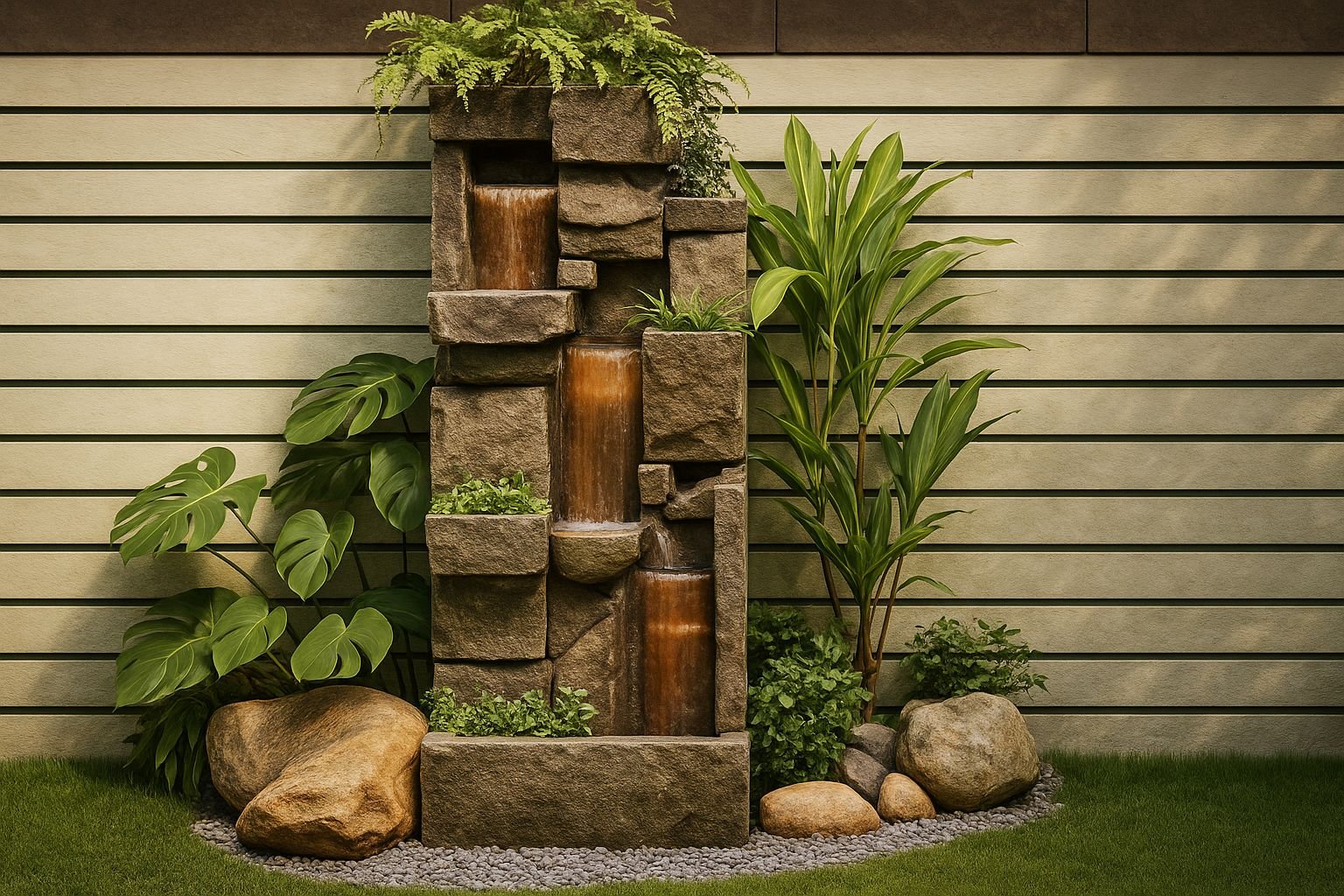
Revered for their natural ability to change atmospheres is the reputation fountains have earned. This isn’t marketing hype or trendy thinking. It’s observable reality backed by both historical use and modern understanding of how humans respond to environmental stimuli. Water sounds calm us. Water movement attracts our attention in pleasant ways. These effects are universal and well documented across cultures and time periods.
Providing a more relaxing and cozy ambiance to any place is what fountains do best in their modern decorative role. The relaxation aspect comes from multiple factors working together. The sound masks stressful environmental noise. The movement gives eyes something soothing to watch. The presence of water triggers positive associations we’re barely conscious of. All of this combines to create spaces that feel more comfortable and welcoming.
To any place means fountains are remarkably flexible in terms of where they work. Indoor, outdoor, formal, casual, large, small, fountains adapt to different contexts while maintaining their core benefits. That versatility is part of why they’ve remained popular through changing design trends and styles. A fountain can fit into almost any space if sized and styled appropriately. Few design elements offer that kind of range.
When Fountains Came Inside Our Homes
The emergence of wall fountains as a category changed everything for residential fountain use. Before wall mounted options existed, home fountains were mostly limited to outdoor spaces or very large indoor atriums. Wall fountains made it practical to have fountains in normal sized rooms, in regular houses, without requiring major construction or floor space sacrifices. That innovation brought fountains within reach for way more homeowners.
Wall fountain technology has paved the way for everyday people to enjoy fountain benefits. You don’t need a mansion with a courtyard anymore. You don’t need a sprawling garden. You can mount a fountain on a living room wall and get many of the same atmospheric effects that huge estate fountains provide. That democratization of fountain access is genuinely significant. Something that used to be reserved for the wealthy or for public spaces became accessible to regular homeowners.
Homeowners being able to avail themselves of fountain benefits represents a big shift in interior design possibilities. The same decorative and dramatic effect that fountains bring to hotels and parks and public buildings can now exist in your house. That leveling of the playing field, that access to design elements previously reserved for commercial or institutional spaces, opens up new options for how we think about and create our home environments.
The dramatic effect that fountains bring to other places translates surprisingly well to residential settings. The scale changes but the principle remains the same. A wall fountain in your living room creates a focal point, adds movement and sound, transforms the space in ways similar to how a large fountain affects a public square. The impact is proportional to the space, which is exactly what you want.
With wall water fountains making this possible, the barriers to fountain ownership dropped dramatically. Cost came down as production scaled up. Installation became simpler, often DIY friendly. Maintenance requirements decreased with better pump technology and materials. All of these improvements meant more people could realistically consider adding fountains to their homes without it being a huge project or expense.
The functional and decorative functions of fountains working together is what makes them so valuable in homes. They’re not just pretty objects sitting there. They’re actively improving your space every moment they’re running. That dual purpose nature, beauty plus function, makes fountains better investments than purely decorative items. You’re getting more value per dollar spent because the fountain is working on multiple levels simultaneously.
Functions of fountains being enjoyed inside our homes would have seemed absurd to ancient people who struggled to get water at all. Now we’re bringing water features inside specifically for ambiance and aesthetics. That luxury, that ability to prioritize how spaces feel over pure function, represents progress in a real way. We’re secure enough in our basic needs that we can focus on making our homes pleasant, not just livable.
These kinds of fountains, meaning wall mounted ones specifically, carry advantages that traditional floor fountains don’t. They save floor space, which is precious in modern homes. They’re easier to install without professional help. They’re often less expensive. They project from the wall at various depths, giving you control over how much three dimensional space the fountain occupies. That flexibility makes them practical for a wider range of homes and rooms.
Naturally capable of imbibing more relaxing and cozy ambiance is something wall fountains do automatically once you turn them on. There’s no special technique or effort required. The water flows, the sound fills the space, and the atmosphere shifts. That ease of use, that automatic benefit delivery, makes fountains very appealing compared to other ambiance creation methods that require more active management or maintenance.
To our homes, wall fountains bring a sophistication and uniqueness that’s hard to achieve with conventional decor. They signal that thought and creativity went into designing the space. They provide talking points when guests visit. They make rooms memorable instead of forgettable. Those social and aesthetic benefits add up to significant value beyond just the object itself.
Transforming Rooms One Fountain at a Time
Adding a wall fountain inside our homes is a decision more people are making as these products become more accessible and better designed. The transformation potential is real. I’ve seen living rooms go from bland to memorable with one well chosen fountain. The change isn’t subtle. It’s immediate and obvious, which makes fountains very satisfying as home improvements. You’re not waiting months to see if something works. You know right away.
A perfect way of transforming home interior design exists in elements that create outsized impact from reasonable investments. Fountains fit that description better than most options. You’re spending a few hundred to maybe a couple thousand dollars depending on what you choose, and getting a transformation that affects how your space looks, sounds, and feels. That return on investment is hard to beat with other single design elements.
Transforming our home’s interior design is what we’re all trying to do in various ways. Paint colors, furniture choices, lighting decisions, all of these contribute. But fountains occupy a unique position because they’re so unexpected in residential settings. Most homes don’t have them, which means yours becomes distinctive and memorable when you add one. That differentiation has value beyond just aesthetics.
Wall water fountains being capable of room transformation isn’t hype. It’s observable reality. The fountain becomes an instant focal point. Eyes are drawn to it naturally because of the movement and the way light plays on water. That focal point role helps organize the rest of the room, giving other design elements something to relate to and support. Rooms with clear focal points feel more intentional and cohesive than rooms where your eye wanders around looking for somewhere to land.
Transforming a certain room into something more inviting happens through multiple mechanisms when you add a fountain. The sound makes the space feel less empty or echoey. The visual interest makes it feel less static. The water element makes it feel more connected to nature even when you’re fully indoors. All of these small shifts combine into a room that people want to spend time in rather than just pass through.
Into a more inviting and noticeable room, a fountain transforms your space without requiring you to change everything else. That’s the beauty of a strong focal point addition. The fountain does heavy lifting on its own, making your existing furniture and decor look better by giving them context and support. You’re not starting from scratch. You’re elevating what you already have.
Noticeable is what you want your home to be when people visit. Not in a flashy or desperate way, but in a “they put thought into this” way. Fountains achieve that noticeability naturally. They’re different enough from standard home decor that people pause and really look. That pause, that moment of genuine attention, is what you’re going for with any design element you choose to highlight.
With its natural beauty working in your favor, a fountain brings organic appeal that manufactured decor can’t quite match. Water moving over stone or metal creates effects that feel alive and real. That natural element grounds rooms and makes them feel less artificial, less like showrooms and more like spaces where humans actually live.
Charming appeal comes built in to any water feature. There’s something inherently pleasant about fountains that transcends style preferences or design trends. People who like modern decor and people who prefer traditional spaces can both appreciate a well chosen fountain. That broad appeal is part of what makes them safe investments. You’re unlikely to look back in five years and regret the fountain choice the way you might regret a trendy paint color or furniture style.
These kinds of fountains, meaning wall mounted options specifically, are ideal for living rooms because of space and placement flexibility. Living rooms are where we entertain, where we spend most of our home time, where we want to make the best impression. Putting your best design foot forward in the living room makes sense, and a fountain does that job beautifully.
Ideal for our living room means the fountain fits the space’s purpose and use patterns. Living rooms need to be comfortable, inviting, interesting, and functional all at once. Fountains contribute to all of those goals simultaneously. They don’t interfere with furniture arrangements or traffic flow if sized and placed correctly. They improve the acoustic environment for conversation. They create visual interest without clutter. That multi dimensional contribution makes them genuinely ideal, not just acceptable.
They are ideal choices to complement living room furniture in ways that other decorative elements struggle to achieve. A fountain relates to furniture without competing with it. The fountain becomes the jewelry, the finishing touch that makes everything else look more intentional and pulled together. Good design is about relationships between elements, and fountains play well with others.
To complement the furniture in our living room, fountains need appropriate styling and sizing. That’s where some thought and planning come in. You can’t just pick the prettiest fountain and call it done. It needs to work with your existing pieces in terms of scale, style, and overall aesthetic. When that match is right, the fountain and furniture feel like they were always meant to coexist. When it’s wrong, the disconnect is obvious and uncomfortable.
Of our living room, fountains can become the defining element, the thing that makes the space memorable. Not every room needs or benefits from having one standout star. But living rooms often do, and fountains fill that role naturally. They’re interesting enough to demand attention without being so overwhelming that nothing else matters. That balance is what makes them effective focal points.
Making Wall Fountains Work for You
Wall fountain uses for punctuating home interior design are varied and effective. Punctuation in design means creating emphasis, marking transitions, defining spaces within spaces. Fountains do all of that through their presence and impact. They mark where your eye should land. They create natural divisions in open floor plans. They give rooms identity and character that would be harder to achieve with conventional decor.
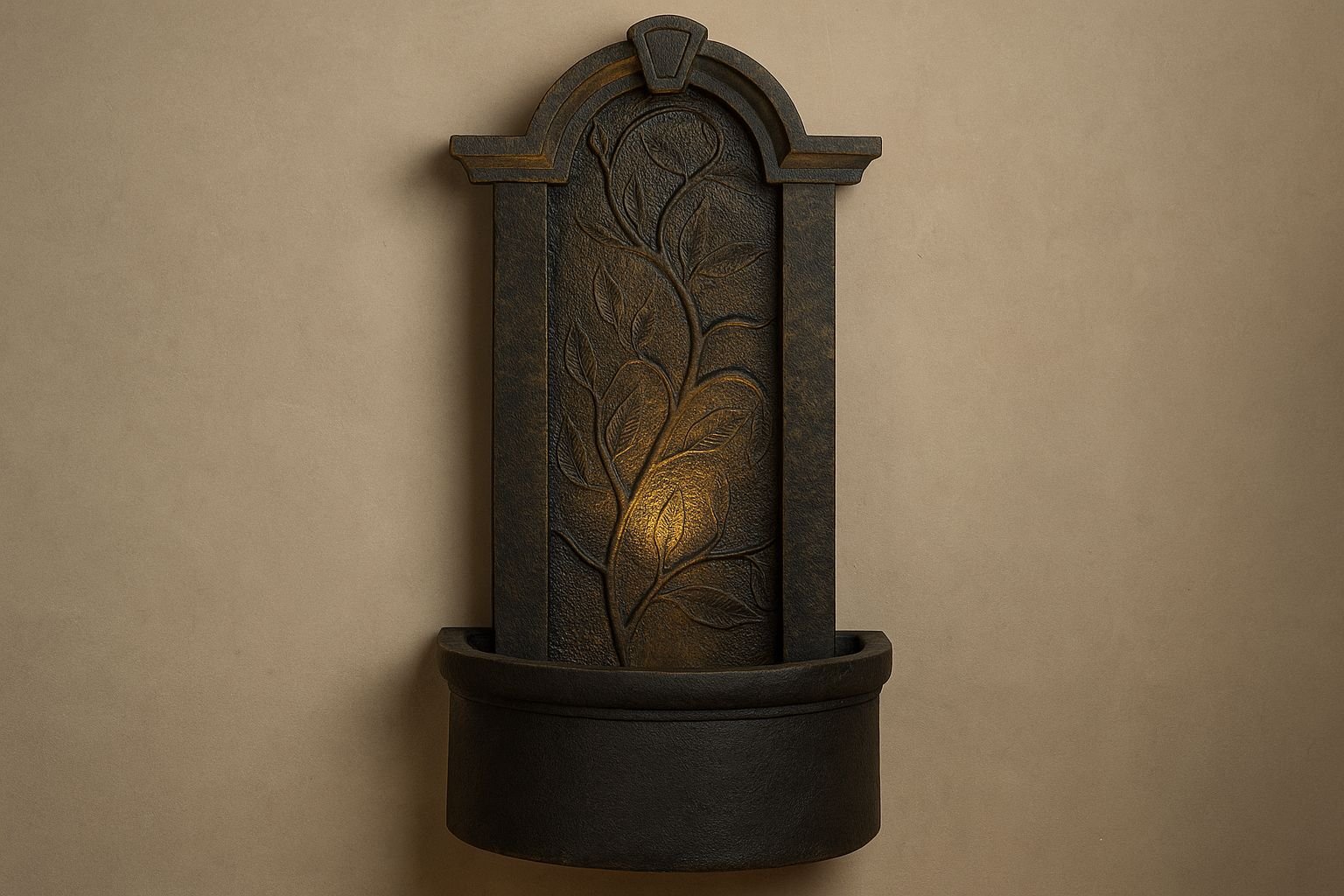
Used to punctuate means using intentionally for effect, not just filling space. The fountain should have a purpose beyond existing. Where you place it matters. How it relates to room layout matters. What it draws attention to or away from matters. That intentionality is what separates good design from random furniture and object placement that happens to fill a room.
Our home interior design benefits from punctuation because it creates rhythm and interest. A room where everything is equally emphasized is actually a room where nothing is emphasized. Your eye needs hierarchy, needs to know where to look first, second, third. Fountains create that hierarchy naturally. They’re the thing you notice first, which then allows you to appreciate everything else in proper order.
What makes them great choices goes beyond just appearance. Fountains check multiple boxes that few other design elements can claim. Beautiful? Check. Functional? Check. Unique? Check. Conversation worthy? Check. That combination is rare and valuable. Most decor choices involve tradeoffs. Fountains deliver on multiple fronts with fewer compromises.
Great choices for decor in living rooms come from understanding what living rooms need. Focal points, comfortable atmospheres, interesting but not distracting elements, things that facilitate conversation and connection. Fountains serve all those needs naturally without requiring special arrangements or conditions. They just work, which is the highest praise for any design element.
For our living rooms specifically, fountains make sense because of how we use these spaces. We’re there a lot. We bring guests there. We want to feel proud of how it looks and feels. A fountain contributes to all of those goals without being high maintenance or requiring constant attention. Set it up, turn it on, let it do its thing. That simplicity paired with impact is a winning combination.
That they are great to look at seems obvious but it’s worth stating clearly. Aesthetics matter in home design. We want spaces that please our eyes, that make us happy to be in them. Fountains deliver aesthetic pleasure through movement, light interaction, material beauty, and proportional harmony. They’re objects designed to be looked at and appreciated, and good ones succeed at that primary purpose beautifully.
They mimic how water cascades naturally, which taps into something primal in human appreciation. We evolved around water sources. Waterfalls and streams were important to our ancestors for survival. That programming doesn’t disappear. We still respond positively to water in motion, still find it mesmerizing and calming. Fountains exploit that hardwired response in the best possible way.
Through rocks and boulders, water finds its path in nature, creating patterns and sounds we find inherently pleasant. Good fountains capture that essence without trying to literally recreate a stream or waterfall. They suggest nature rather than copying it, which is usually more effective in designed spaces. That suggestion, that hint of the natural world brought indoors, is part of what makes fountains so valuable in homes.
Just like in water falls, the sound of water moving over surfaces creates acoustic effects we find soothing. The consistency mixed with subtle randomness, the way it masks other sounds without being intrusive, the associations it triggers with peaceful natural settings, all of this works together to create sound environments that reduce stress and improve mood. That’s not speculation. That’s well documented human response to water sounds.
In addition to visual appeal, fountains provide auditory benefits that other decor simply can’t match. A painting looks nice but does nothing for your room’s sound environment. A sculpture adds visual interest but doesn’t mask traffic noise. Fountains do both, looking good and sounding good simultaneously. That dual contribution makes them more valuable than the sum of their parts would suggest.
Wall water fountains being capable of sound production is one of their primary benefits. The soothing natural sound they create transforms acoustic environments from harsh or empty to pleasant and full. That baseline of good sound affects everyone in the space, usually without them consciously realizing it. They just know the room feels better, more comfortable, more inviting.
Providing a soothing natural sound happens automatically once the fountain is running. You don’t need to adjust settings constantly or maintain it actively during use. The sound just happens, consistent and calming, requiring nothing from you except occasional water refills. That ease of benefit delivery makes fountains very appealing compared to other ambiance creation methods.
Of flowing water into your home brings elements we usually only experience outdoors or in commercial spaces. That interior access to water sounds is genuinely valuable for daily quality of life. Coming home to the sound of water running creates instant stress relief. Working from home with a fountain providing background sound improves focus. Living with these benefits day to day adds up to significant improvement in how your home feels and functions.
Which can provide relaxation is the promise fountains make, and it’s one they consistently keep. The relaxation isn’t subtle or imagined. It’s real and measurable, affecting both mental and physical states. Heart rates slow near fountains. Breathing deepens. Tension releases from muscles. These are physiological responses to water sounds and movement, not placebo effects.
To both mind and body, fountains provide benefits that few other home elements can claim. Your mind gets aesthetic pleasure and meditative focus from watching water move. Your body responds to sound with actual relaxation responses. That complete package, addressing multiple aspects of wellbeing simultaneously, is what makes fountains such valuable additions to homes.
The Variety That Makes It All Possible
These fountains coming in all sorts of options means finding one that works for your space is actually realistic. The variety available now spans every conceivable style, size, material, and price point. That range is genuinely helpful once you get past the initial overwhelm of having too many choices. You’re not settling for close enough. You can find something that actually fits your vision and requirements.
Available in all sorts of combinations of features is how the fountain market operates now. Want modern or traditional? Both exist. Prefer natural materials or manufactured finishes? Take your pick. Need something small and subtle or large and dramatic? The options span that full spectrum. This variety means fountains are accessible to many different types of homes and homeowners with different tastes and needs.
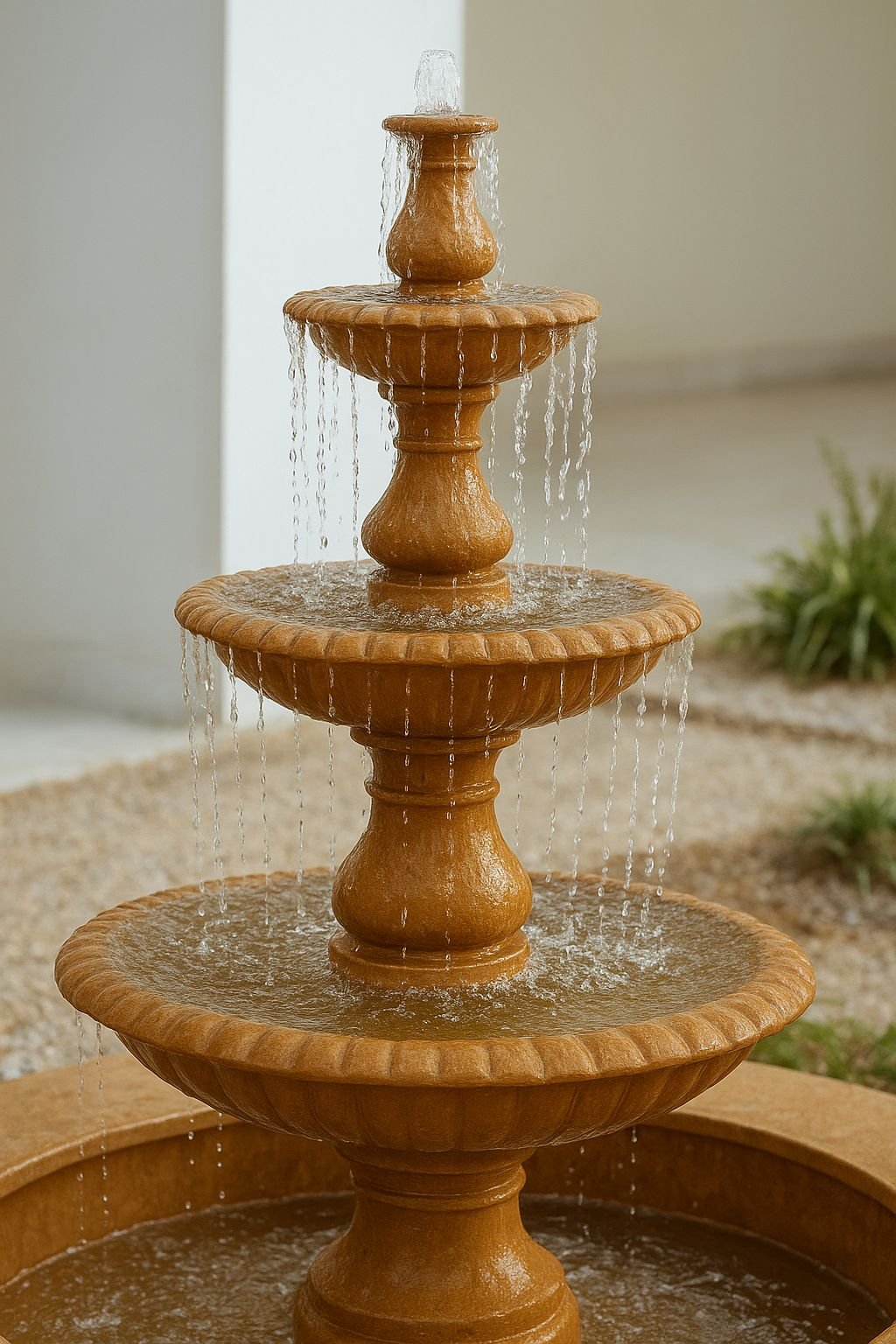
Fancy designs exist for people who want elaborate, eye catching pieces. Ornate frames, complex water patterns, integrated lighting, multiple tiers, all of these options are out there for buyers who want their fountains to be showstoppers. That high end market serves people who want fountains as primary focal points, as the stars of their rooms.
Shapes ranging from geometric to organic give you control over the aesthetic message your fountain sends. A circular fountain feels different from a rectangular one. An irregular natural edge fountain creates a different impression than a sleek modern panel. These shape choices affect how the fountain relates to other elements in your room and what overall style story you’re telling.
Sizes spanning from compact to massive mean matching fountain to space is actually possible. You’re not trying to make one standard size work everywhere. You can get exactly the right size for your wall and room proportions. That precision in sizing is what allows fountains to feel like they belong rather than like awkward additions forced into spaces they don’t quite fit.
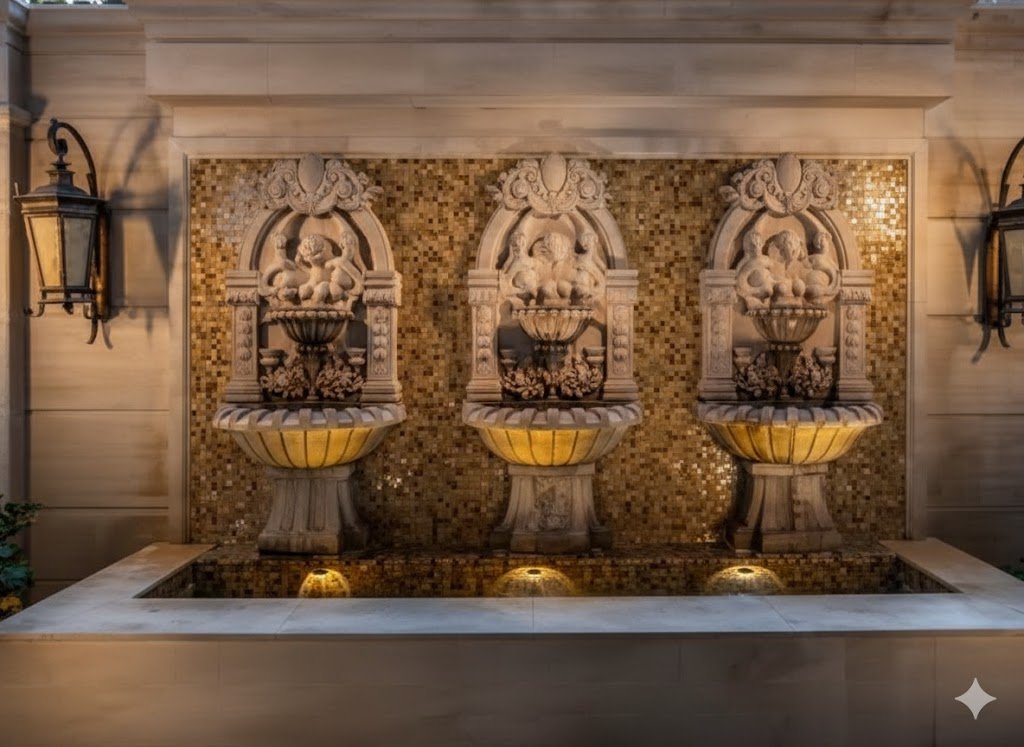
Materials including stone, metal, glass, resin, and combinations thereof offer different looks and maintenance profiles. Natural stone fountains have organic appeal but show water spots. Metal develops patina over time. Glass is modern and clean looking but shows fingerprints. Understanding these material tradeoffs helps you choose fountains you’ll still be happy with after the novelty wears off.
With each giving out distinct effects means you’re choosing not just how the fountain looks but how it sounds and how light interacts with it. These factors matter as much as the basic appearance. A fountain that looks great but sounds wrong won’t work. A fountain that photographs beautifully but looks wrong in person is a bad investment. Considering all these dimensions leads to better choices.
Distinct effect is what you want from a fountain, something that changes your space in noticeable ways. That distinction should align with your goals for the room. Do you want drama or subtlety? Modern or traditional? Natural or architectural? Getting clear on what distinct effect you’re chasing helps narrow down options and make selection less overwhelming.
Installation being easy or at least manageable is what modern fountains offer. Most wall fountains come with mounting hardware and clear instructions. Some are even designed for DIY installation without specialized skills or tools. That accessibility means you can have a fountain without hiring contractors or undertaking major projects. For many homeowners, that ease of installation is what makes fountains realistic options.
Not a problem with installation is the goal manufacturers aim for, though some fountains are definitely easier than others. Reading reviews about installation experiences helps set expectations. Knowing whether you’ll need help or can do it yourself factors into the purchase decision. A fountain that’s perfect in every way except impossible to install isn’t actually perfect.
Since most of them work in various locations is part of what makes fountains flexible design elements. A fountain that only looks right in one very specific context isn’t as valuable as one that could work in multiple rooms or locations. That versatility gives you options if you move or want to change things up later. You’re not locked into one placement forever.
Can be installed anywhere is an exaggeration, but many fountains really do offer substantial placement flexibility. Different wall types, indoor or outdoor, various room styles, fountains adapt to these different contexts better than you might expect. That adaptability is part of their enduring appeal across changing design trends and personal style evolution.
Meanwhile, table top water fountain options provide alternatives for people who can’t or don’t want wall mounted installations. Tabletop fountains offer many of the same benefits in smaller, more portable packages. They’re perfect for renters, for offices, for bedrooms, for spaces where wall mounting isn’t practical or desirable. That category expansion makes fountain benefits accessible to even more people in more situations.
A great help in imbibing means contributing to creating, bringing into existence the feelings and atmosphere you want. Tabletop fountains do this on smaller scales than wall fountains but through the same basic mechanisms. Water sound, water movement, visual interest, all present and effective even in compact formats.
The same alluring and relaxing feel that larger fountains create gets delivered by tabletop versions too, just calibrated for smaller spaces and more modest budgets. Don’t discount tabletop fountains as lesser options. They’re different tools for different situations, often exactly right for their contexts. A small fountain that fits your space beats a large fountain that doesn’t.
To our dining room’s table, a tabletop fountain brings unexpected elegance and interest. Dining rooms often get overlooked in decorating priorities, but adding a fountain centerpiece transforms them into more special spaces. That transformation makes everyday meals feel a bit more elevated, which is a small luxury worth having.
This table top fountain is portable and flexible, which are significant advantages. You can move it between rooms as needs or preferences change. You can take it with you if you move. You can experiment with placement and find what works best. That freedom to adjust is valuable when you’re still figuring out your design preferences and how fountains fit into your life.
A perfect choice for adding tranquil feelings to specific spots, tabletop fountains serve focused purposes well. A fountain by your bedside for sleep improvement. A fountain in your home office for focus. A fountain on a patio table for outdoor dining ambiance. These targeted applications make tabletop fountains practical tools, not just decorative objects.
Tranquil feel in our homes is what we’re all trying to create in various ways. Tabletop fountains contribute to that goal without requiring major commitment or expense. They’re low risk ways to test whether you like having fountains in your living space before investing in larger, more permanent installations.
In our homes, fountains of all types serve the same basic purpose of making spaces better. Wall mounted, freestanding, tabletop, the format matters less than the effect. Water moving, water sounds, those are the active ingredients. The delivery mechanism is just about what fits your specific situation and preferences.
This fountain referring to any fountain option, carries potential to improve your space. The question isn’t whether fountains can make a difference. They can and do. The question is which fountain fits your needs, your space, your budget, and your style. Answering that question is where the research and thinking come in.
Widely sold in wide assortment means shopping for fountains is actually feasible now. You’re not hunting for specialty items from obscure suppliers. Major retailers carry fountains. Online options are plentiful. That availability makes the shopping and buying process straightforward instead of challenging.
Assortment of designs covering every aesthetic is what makes fountains accessible to people with different tastes. You’re not all buying the same standard fountain and hoping it works. You’re finding designs that actually match your vision. That customization within the category makes fountains personal choices rather than generic additions.
Styles and sizes spanning the full spectrum give you control over both appearance and impact. The fountain you choose should reflect your intentions for the space and your overall design aesthetic. Having options makes that matching process possible instead of forcing compromises you’re not happy with.
Why Wall Fountains Keep Winning
Wall fountain serving as perfect choices to punctuate home interior design isn’t just sales talk. It’s observable reality backed by countless successful installations. The reason wall fountains keep gaining popularity isn’t mysterious. They work. They deliver on their promises. They make spaces better in ways that are both immediate and lasting. That consistent performance is what builds word of mouth recommendations and repeat buyers.
Perfect choices come from delivering multiple benefits simultaneously. Wall fountains look good, sound good, make spaces feel good, and create talking points when guests visit. That comprehensive value package is hard to beat with other single design elements. Most decor choices involve tradeoffs. Fountains minimize those tradeoffs by succeeding on multiple dimensions at once.
To punctuate a home’s interior design means to emphasize, to mark important moments or transitions in the visual flow. Wall fountains excel at this punctuation role. They create natural stopping points for eyes. They define spaces within larger rooms. They give weight and importance to walls that might otherwise disappear. That structural contribution to room design is something few other decorative elements provide as effectively.
A home’s interior design needing punctuation is common in modern open concept spaces. Rooms flow together, which is great for movement and light but can make spaces feel undefined. A fountain on a shared wall between living and dining areas, for instance, can mark that transition while working for both spaces. That double duty utility makes fountains especially valuable in contemporary home layouts.
Interior design challenges get solved by elements that offer flexibility and impact. Wall fountains check both boxes. They’re flexible in terms of where they can go and what styles they work with. They create impact through multiple sensory channels. That combination makes them reliable problem solvers for rooms that need something but where conventional solutions haven’t worked.
Water wall fountains referring to wall mounted options specifically, have become the most popular residential fountain format. The space efficiency, installation simplicity, and range of styles available all contribute to that popularity. When people think about adding a fountain to their home now, they usually start by looking at wall options. That category dominance reflects real advantages over other fountain types for typical homes.
Table top water fountains rounding out the product category provide alternatives for different situations. Together, wall and tabletop fountains cover most residential use cases. You can find the right format and size for almost any space between those two categories. That complete coverage is part of what makes fountains accessible to such a wide range of homeowners.
Have a distinct natural ability means possessing an inherent quality that doesn’t require enhancement or special conditions. Fountains naturally create calming atmospheres. You don’t need to do anything special to activate that benefit. Just having water moving in your space triggers positive responses. That built in effectiveness is part of what makes fountains such reliable design choices.
Natural ability to provide benefits sets fountains apart from elements that require ongoing effort or management. A candle creates ambiance but needs lighting and monitoring. Music provides sound but requires selection and volume adjustment. Fountains just run, automatically delivering their benefits with minimal intervention. That ease of use matters for busy people who want better spaces without adding tasks to their to do lists.
To provide a relaxed and calming ambiance is the primary modern purpose fountains serve. They’ve completed the journey from functional infrastructure to atmospheric enhancement. That transformation represents centuries of human design evolution, of figuring out what we value beyond pure survival needs. Fountains in homes are small luxuries that significantly improve daily life quality.
A relaxed and calming ambiance is what everyone wants their home to provide. We have enough stress outside our homes. Our living spaces should offer refuge and restoration. Fountains contribute to that restorative quality through sound, movement, and the psychological effects of having a water element present. That contribution makes them valuable investments in wellbeing, not just in decor.
Calming ambiance to any home means fountains work across different styles and spaces. They’re not limited to spa aesthetics or zen gardens. A fountain can provide calming effects in a modern loft, a traditional colonial, a rustic farmhouse, or a minimalist apartment. The calming comes from the water itself, not from specific styling, which makes fountains universally applicable.
To any home regardless of size or style is where fountains show their versatility. Big houses benefit from them. Small apartments benefit from them. Formal spaces and casual spaces both gain something from water features. That broad applicability is rare in home design elements, most of which work well only in specific contexts or styles.
They can provide means fountains have capability but not guarantee. You still need to choose well, install correctly, and maintain adequately. But when you do those things right, fountains reliably deliver their benefits. That reliability backed by thousands of successful installations gives buyers confidence that they’re not gambling on something that might not work.
A soothing natural sound consistently ranks as the benefit people value most after living with fountains. The visual appeal is what draws initial interest, but the audio benefit is what creates lasting appreciation. That sound improves daily life in ways that aren’t obvious until you experience them. Then they become essential, something you wouldn’t want to live without.
Of flowing water being present in your home brings nature indoors in meaningful ways. We’re increasingly disconnected from natural environments, spending most of our time in climate controlled buildings. Having a fountain creates a small bridge back to the natural world, a reminder that we’re part of larger systems and rhythms. That connection, even in small doses, benefits us psychologically.
Into a home that already has plenty of stuff, fountains fit by replacing nothing and improving everything. You don’t need to get rid of furniture or artwork to accommodate a fountain. It adds to what you have, making existing elements look and feel better through its presence. That additive rather than substitutional nature makes fountains easy to integrate into established spaces.
Which can provide relaxation is the ongoing promise fountains make every day they run. That daily delivery of benefit is what makes them worth their cost. Calculate the value not per dollar spent but per day improved. Seen that way, fountains are incredibly cost effective investments in quality of life.
To both mind and body simultaneously is how fountains work, addressing multiple aspects of human wellbeing at once. Your mind appreciates the beauty, gets the meditative benefit of watching water move, enjoys the masking of stressful sounds. Your body responds with measurable relaxation responses to water sounds. Both dimensions matter and both get served.
They are great to look at bears repeating because aesthetics matter in home environments. We’re visual creatures. Our surroundings affect our moods and energy levels. Having something beautiful to look at, something that never looks exactly the same twice, adds richness to daily life that shouldn’t be dismissed as frivolous. Beauty has value.
Great to look at as they imitate natural water movement taps into preferences shaped by millions of years of human evolution. We’re drawn to water. We find it mesmerizing and calming. Fountains exploit that hardwiring in ways that benefit us. There’s nothing manipulative about it. It’s just good design working with human nature instead of against it.
The water as it cascades creates patterns and sounds that vary subtly, never boring, never demanding, always pleasant. That sweet spot between too much stimulation and not enough is where fountains sit. They’re interesting without being distracting, present without being intrusive. Finding that balance is what makes them such successful environmental additions.
Through rocks and boulders just like in waterfalls is the aesthetic most fountains aim for, whether they use actual rocks or stylized representations. That reference to natural water features grounds the design in something familiar and universally appealing. Even abstract modern fountains often hint at natural water movement patterns.
Just like in water falls, fountains create both visual and auditory experiences that humans find inherently pleasant. The comparison to waterfalls is useful because everyone has positive associations with waterfalls. They’re special natural features that people seek out and travel to see. Having even a small echo of that experience in your home is genuinely valuable.
In water falls, nature demonstrates principles that fountain designers try to capture. The way water finds its level, responds to surfaces, creates spray and mist, all of this inspires fountain design. Good fountains feel natural rather than mechanical, organic rather than contrived. That naturalness is what makes them fit into living spaces instead of feeling like weird art projects.
The conclusion we reach after exploring fountain history, benefits, and options is straightforward. Fountains have evolved from survival necessities to design luxuries, and that evolution represents progress. We’re fortunate to live in times and places where we can choose to have fountains purely for how they make our spaces look and feel. That choice, that luxury, is something worth taking advantage of. A well chosen fountain improves daily life in ways both obvious and subtle, making it an investment in wellbeing that pays dividends every single day.

Leave a Comment