
Beyond Price Tags and Pretty Faces
Let me tell you something that most furniture salespeople won’t admit right away. When we walk into a showroom or start scrolling through pages of bedroom furniture online, our brains do this funny thing where they latch onto two things immediately. The price and how good it looks. That’s it. We see a sleek platform bed with clean lines, check the price tag, and our decision-making process is basically done. But here’s the thing I learned after buying three different beds over the past decade and regretting at least two of those purchases. There’s so much more to think about.
I remember standing in a furniture store about five years ago, completely mesmerized by this gorgeous mid-century modern bed frame. The walnut finish was stunning. The price? Well, it made my wallet cry a little, but I convinced myself it was an investment. What I didn’t think about was whether a queen size would actually fit comfortably in my bedroom with space for nightstands. I didn’t consider what materials it was made from or whether those materials would hold up to my cat’s scratching habits. And comfort? I figured a bed frame was a bed frame. Spoiler alert: I was wrong about pretty much everything.
The real decision-making process needs to include things we often brush past. Bed size matters more than you’d think. Sure, you might love the look of a California king, but if it turns your bedroom into an obstacle course, you’re going to hate it within a week. Building materials aren’t just about durability, though that’s huge. They affect weight, how easy the bed is to move, whether it’ll survive a cross-country relocation, and even how it interacts with your mattress. Some materials breathe better than others. Some squeak when you shift positions at night. These details add up.
Then there’s the comfort factor, which people assume is all about the mattress. Not quite. The bed frame affects airflow under your mattress, which impacts temperature regulation. It determines how high off the ground you sleep, which matters more than you’d expect for getting in and out of bed easily. The support system under your mattress can make even an expensive mattress feel cheap or a budget mattress perform better than it should. We’re talking about the place where you spend roughly a third of your life. Maybe we should put a bit more thought into it than we do when picking out a coffee maker.
Now, here’s where things get interesting. When I started digging into all these factors, I kept running into this term: veneer beds. My first reaction was pretty much what yours might be right now. Oh great, the cheap stuff. Fake wood. The furniture equivalent of fast fashion. I had this mental image of particle board desks from college that fell apart if you looked at them wrong. But the more I learned, the more I realized I’d been completely wrong about veneer furniture. Not sort of wrong. Completely, totally, embarrassingly wrong.
See, most of us have been conditioned to think that solid wood equals quality and anything else equals garbage. We picture our grandparents’ solid oak furniture that weighs about as much as a small car and will probably outlive us all. That stuff was built like a tank. So when we hear “veneer” or “particle board,” we think we’re being sold something inferior. We imagine furniture that’ll collapse under normal use or start falling apart after a year. But the furniture industry has changed a lot in the past couple of decades. The technology, the materials, the manufacturing processes, they’ve all evolved. What we think we know about cheap furniture is often based on outdated information.
Here’s what really changed my perspective. I started asking myself what I actually needed from a bed frame. Not what I thought I should want, not what would impress guests, but what would genuinely serve me well. Did I need something that could survive a nuclear blast? Probably not. Did I need something that looked good, felt sturdy, wouldn’t bankrupt me, and could handle being moved a few times? Yeah, that sounded about right. Once I shifted my thinking from “what’s the best” to “what’s best for me,” everything got clearer.
The truth is that veneer beds aren’t automatically bad choices. In many cases, they’re actually the smarter choice. I know that sounds like I’m trying to convince you to buy cheaper furniture, but stick with me here. There are legitimate, practical reasons why veneer construction makes sense for a lot of people. Cost is obviously one factor, but it’s not the only one. Not even close. There are environmental considerations, durability factors that might surprise you, and practical benefits that solid wood just can’t match. We’re going to dig into all of this, and by the end, you might find yourself rethinking everything you thought you knew about bedroom furniture. I certainly did.
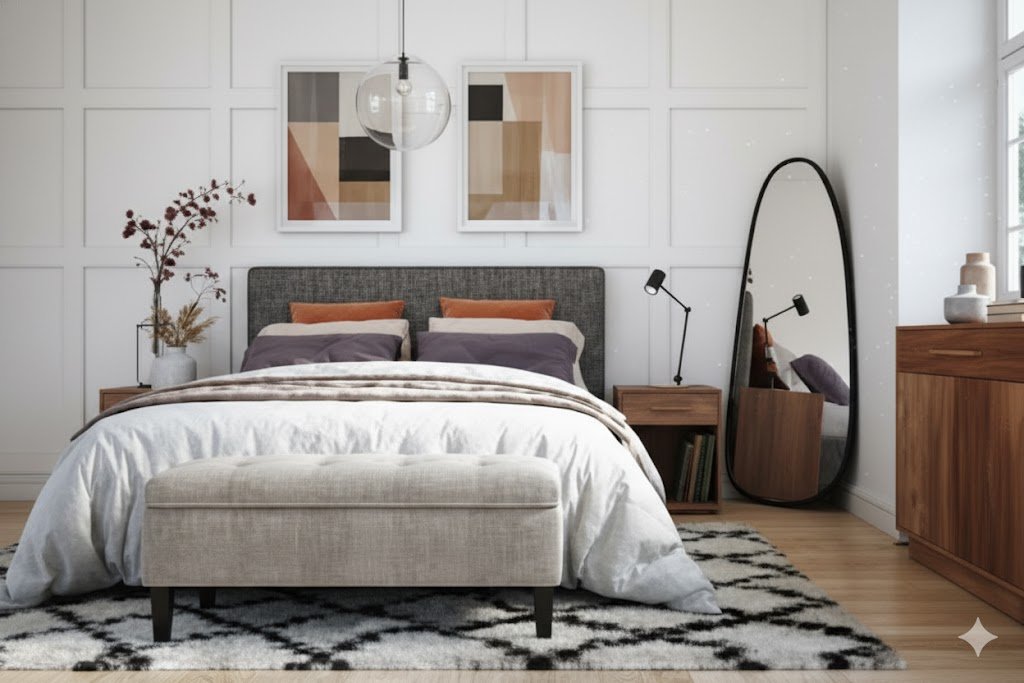
Understanding Veneer Beds and Why They’re Everywhere
Walk into any furniture store right now, big box retailer or fancy boutique, and I’ll bet you money that at least 70% of the platform beds you see are veneer construction. Probably more like 80 or 90%. This isn’t because furniture companies are trying to pull a fast one on you. It’s because veneer construction has become the standard way to build modern platform beds, and there are some pretty solid reasons for that. But first, let me explain what we’re actually talking about when we say veneer beds, since there’s a lot of confusion out there.
A veneer bed starts with a core made from engineered wood products. We’re usually talking about particle board or plywood. Now, before you make that face, hear me out. These aren’t the same particle board products your parents dealt with in the 1980s. Modern engineered wood has come a long way. Particle board today is made from wood particles and sawdust that get mixed with resin and compressed under extreme pressure. The result is a dense, uniform material that doesn’t have the natural flaws you find in solid wood. No knots, no grain irregularities, no weak spots where the tree grew funny. Just consistent, predictable material throughout.
Plywood is a bit different. It’s made from thin layers of wood veneer (yes, veneer is used to make the core for veneer furniture, which is kind of funny) that get glued together with the grain running in different directions. This cross-grain construction makes plywood incredibly strong and resistant to warping. It’s why plywood is used in construction for subflooring and roof decking. The stuff is tough. For furniture, plywood cores tend to be a bit more expensive than particle board, but they’re lighter and can handle more weight. You’ll often see plywood used for bigger pieces or parts of the bed that need extra strength.
So you’ve got this core of engineered wood, and then the magic happens. A thin layer of real wood veneer gets applied to the surface. When I say thin, I mean really thin. We’re talking about wood sliced so fine it’s almost like paper. Modern manufacturing can slice veneer to about 1/64th of an inch. That’s thinner than a credit card. This veneer comes from real trees, often higher quality hardwoods like oak, walnut, or cherry. The kind of wood that would be prohibitively expensive if you tried to make an entire bed frame out of solid pieces. By using it as a veneer, manufacturers can give you the look and feel of premium hardwood at a fraction of the cost.
The veneer gets adhered to the core using advanced adhesives and pressure systems. We’re not talking about someone brushing on some Elmer’s glue here. This is industrial-grade bonding that creates a permanent connection between the veneer and the core. When done right, that veneer isn’t going anywhere. It becomes part of the structure. The finished product looks like solid wood from the outside. You see the grain, the color, the natural variation of real hardwood. Most people can’t tell the difference just by looking. Even touching it, you’d be hard-pressed to know it’s not solid wood unless you look at the edges or underside.
Now, I’ll be straight with you about the perception problem. A lot of people hear “veneer” and immediately think “cheap knockoff.” I get it. We’ve all seen bad veneer furniture. The stuff where the veneer is peeling at the corners, or it’s obviously just a printed pattern trying to look like wood grain. That fake wood contact paper look. Yeah, that stuff is awful. But lumping all veneer furniture into that category is like saying all cars are bad because you once drove a beat-up 1987 sedan that barely ran. The quality range in veneer furniture is massive.
There’s another perception that bugs me, probably because I believed it for so long myself. People think veneer furniture is less durable than solid wood. They imagine it falling apart quickly, not holding up to daily use, basically being disposable furniture. This reputation comes partly from genuinely bad products flooding the market, especially in the budget furniture segment. But it’s also based on this nostalgic view of furniture that I mentioned earlier. We remember grandma’s solid oak dining table that could double as a bomb shelter. That stuff was indestructible. But we forget that it was also incredibly heavy, expensive, required special care, and had plenty of its own problems.
The durability question really depends on quality. A well-made veneer bed from a reputable manufacturer will outlast a cheap solid wood bed every time. I’ve seen particle board furniture that’s 20 years old and still going strong. I’ve also seen solid wood furniture fall apart in five years because the wood wasn’t properly dried, or the joinery was garbage, or it was made from soft wood that dents if you breathe on it too hard. The construction quality, the materials used, and the manufacturing process matter way more than whether something is solid wood or veneer. Way more.
Here’s something that really shifted my thinking. Veneer construction actually has some inherent advantages over solid wood. I know, that sounds backwards. But think about it like this. Solid wood is a natural material, which means it moves. It expands when it’s humid, contracts when it’s dry. This movement can cause warping, cracking, and joint failures over time. Ever seen an old solid wood table with cracks running through the top? That’s the wood moving. Engineered wood cores don’t do this nearly as much. They’re more dimensionally stable. That particle board core isn’t going to warp unless you really abuse it. The veneer on top gives you the beauty of real wood without most of the maintenance headaches.
The variety available in veneer furniture is another huge plus. Because manufacturers are using thin slices of real wood, they can offer exotic species that would be ridiculously expensive as solid wood. Want a bed that looks like it’s made from rare Brazilian walnut? You can probably find a veneer version that won’t require you to take out a second mortgage. The veneer can also be book-matched, which means arranging the grain patterns to create symmetrical, visually striking designs. Try doing that with solid wood at any reasonable price point. Can’t happen.
I think the biggest shift in my understanding came when I realized that veneer furniture isn’t trying to be solid wood. It’s not a cheaper substitute for the “real thing.” It’s a different product category with its own strengths and weaknesses. Judging veneer furniture by solid wood standards is missing the point entirely. It’s like comparing a laptop to a desktop computer and declaring one inferior because it doesn’t work the same way. They’re designed for different purposes and priorities. Once I understood that, the whole conversation about furniture quality started making a lot more sense.
The Environmental Case for Veneer Furniture
Okay, let me talk about something that doesn’t get nearly enough attention in furniture discussions. The environmental impact. I’ll admit, this wasn’t even on my radar when I bought my first couple of beds. I was thinking about style, price, and whether it would fit through my apartment doorway. The ecological footprint of furniture manufacturing? Yeah, that never crossed my mind. But once I started learning about it, I couldn’t unknow what I’d discovered. And honestly, it made me feel a lot better about choosing veneer furniture.
Let’s start with the most obvious point. Making veneer beds uses less hardwood than making solid wood beds. Like, dramatically less. When you’re slicing veneer to 1/64th of an inch, a single tree can produce an enormous amount of surface material. The same amount of wood that might make one solid wood bed frame can produce veneer for dozens of frames. We’re talking about an efficiency increase that’s hard to even wrap your head around. This matters because hardwood forests, particularly the species people want for furniture, are under pressure worldwide. Anything that reduces the harvest rate is a good thing.
But here’s where it gets really interesting, and this is the part that made me sit up and pay attention. Remember that particle board core I mentioned? The one that gets covered with veneer? That particle board is made from sawdust and wood chips. Basically, the leftovers from other wood processing operations. When a sawmill cuts lumber, they produce huge amounts of waste material. Sawdust piles up. Wood chips accumulate. Before engineered wood products became common, most of this waste got burned or sent to landfills. Now, it gets turned into useful products. That’s not just efficient; it’s actually kind of brilliant when you think about it.
I visited a furniture manufacturing facility once (yes, I’m that person who takes factory tours on vacation), and seeing the process in person really drove this home. They showed us how the sawdust gets collected, mixed with resin, formed into sheets, and pressed. Nothing goes to waste. Even the heat generated from the manufacturing process gets recaptured and reused. The whole operation is set up to minimize waste at every step. Compare that to solid wood manufacturing, where you’re starting with whole trees, cutting them down to size, and inevitably producing waste that can’t always be reclaimed. The math just doesn’t add up the same way.
The carbon footprint difference is significant too. Growing a tree to the size needed for solid wood furniture takes decades. During that time, yes, the tree is sequestering carbon, which is good. But once you cut it down and turn it into furniture, that carbon sequestration stops. The tree is gone. With veneer and engineered wood products, you’re using a much smaller amount of new hardwood. The bulk of the material comes from fast-growing species used for the particle board or plywood core, or from reclaimed waste products. These can be replenished much faster. The net carbon impact ends up being lower over the full product lifecycle.
Then there’s transportation to think about. This might seem like a minor point, but it adds up. Solid wood furniture is heavy. Really heavy. Moving it from factory to warehouse to store to your home burns more fuel at every step. Veneer furniture is significantly lighter for the same size piece. That lighter weight means more efficient shipping, lower fuel consumption, and reduced emissions. Multiply that across millions of furniture pieces being shipped around the world every year, and you’re looking at a measurable difference in environmental impact. Every little bit counts, right?
The manufacturing process itself tends to be more sustainable with modern engineered wood products. Making particle board and plywood requires less energy than processing solid hardwood. The equipment doesn’t have to work as hard. The drying time is shorter because you’re working with smaller pieces that have more surface area. The machinery lasts longer because it’s not dealing with the inconsistencies and hardness variations you get in solid wood. All of this translates to lower energy consumption and less wear on equipment, which means less resource use overall. It’s one of those situations where efficiency gains compound in ways that aren’t immediately obvious.
Water usage is another factor that doesn’t get talked about much. Solid wood processing, particularly the kiln drying phase, uses substantial amounts of water. You need to control humidity carefully to prevent the wood from drying too quickly and cracking. With engineered wood products, the water requirements are lower. The manufacturing process is more controlled, and the materials don’t need the same kind of conditioning that solid wood does. In an era where water scarcity is becoming a real concern in many parts of the world, any reduction in industrial water use is worth paying attention to.
I’ve heard people argue that solid wood is more sustainable because it lasts longer. The idea being that if you buy one solid wood bed that lasts 50 years instead of veneer beds that might need replacing, you come out ahead environmentally. On the surface, this makes sense. But there are a few problems with this thinking. First, not all solid wood furniture lasts 50 years. Plenty of it falls apart much sooner, especially at lower price points. Second, well-made veneer furniture can last decades too. I know people using veneer bedroom sets they bought in the 1990s. Third, and this is key, most people don’t keep furniture for 50 years anymore. We move more often, our styles change, our needs evolve. That solid wood bed might be physically capable of lasting half a century, but in reality, it’ll probably get replaced or discarded long before then.
The repairability angle is worth thinking about too. When solid wood furniture gets damaged, repairs often require specialized skills and materials. Finding someone who can properly fix that cracked solid oak headboard isn’t always easy or cheap. With veneer furniture, many repairs are simpler. Minor damage to the veneer can be fixed with touch-up products or by patching. The structural core is usually fine even if the surface gets dinged. This matters for longevity. Furniture that’s easy to repair tends to get repaired instead of thrown away. Furniture that requires expensive, difficult repairs often ends up in the landfill even though the underlying structure is fine.
Here’s something that surprised me when I learned it. The forestry practices behind engineered wood products have improved dramatically over the past few decades. Many manufacturers now source their wood from certified sustainable forests. They’re required to prove that for every tree harvested, new trees are planted. The industry has moved toward using fast-growing species that can be harvested on shorter rotation cycles. Compare this to the hardwood species used in solid wood furniture, many of which take 80 to 100 years to reach harvest size. The sustainable forestry math just works better with engineered products.
The end-of-life considerations matter too. When a piece of veneer furniture finally reaches the end of its useful life, the materials can often be recycled or repurposed more easily than solid wood. Particle board can be ground down and used in new particle board or other composite materials. The thin veneer layer doesn’t significantly contaminate the recycling stream. Solid wood furniture, particularly pieces that have been treated with stains, varnishes, or other finishes, can be harder to recycle. The chemicals used in finishing need to be dealt with carefully. A lot of solid wood furniture ends up being burned or sent to landfills simply because recycling it isn’t economically viable.
Look, I’m not saying everyone should throw away their solid wood furniture and replace it with veneer. That would completely defeat the environmental benefits we’ve been talking about. The most sustainable furniture is the furniture you already own, whatever it’s made from. But when you’re in the market for new furniture, considering the environmental impact is worth your time. The knee-jerk assumption that solid wood is always the greener choice doesn’t hold up when you dig into the details. Modern veneer and engineered wood furniture, when produced by responsible manufacturers, can actually be the more environmentally sound option.
Durability and Technology in Modern Furniture
Let’s bust some myths about durability, because this is where a lot of people get stuck. They’ve got this mental image of particle board furniture collapsing under normal use, and I get it. We’ve all seen the cheap bookcases that bow in the middle or the desk that starts wobbling after a few months. But here’s what most people don’t realize. The quality gap in particle board and veneer furniture is absolutely massive. We’re talking about a range that goes from “will fall apart if you look at it sideways” all the way up to “will outlast most solid wood furniture at the same price point.” Understanding where that quality comes from makes all the difference.
The density of particle board is the first big factor. Cheap particle board is loosely compressed and lightweight. You can often tell just by picking it up. It feels almost hollow. This stuff is weak. It doesn’t hold screws well, it dents easily, and it breaks down quickly under stress. Higher quality particle board is compressed at much greater pressure, creating a much denser, heavier product. The particles are smaller and more uniform. The resin content is higher, creating better bonding throughout. This dense particle board can actually be stronger than some solid woods in certain applications. It definitely holds screws and hardware better than soft woods like pine or poplar.
The veneer layer itself has gotten incredibly sophisticated. I mentioned earlier that modern veneer is super thin, but that thinness isn’t a weakness. It’s a feature. The technology for bonding thin veneer to the core has advanced to the point where it creates essentially a single, unified material. The adhesives used are stronger than the wood itself in most cases. If stress is applied, the wood will fail before the bond does. That means the veneer isn’t going to peel or separate under normal use. It’s not like the contact paper stuff that starts lifting at the edges. We’re talking about an industrial bond that’s permanent.
The finishing process adds another layer of protection. Modern veneer furniture gets sealed with polyurethane, lacquer, or other protective coatings that are incredibly durable. These finishes are harder and more scratch-resistant than the natural wood underneath. They’re also moisture-resistant, which addresses one of the big weaknesses of particle board. Bare particle board and water are enemies. Particle board exposed to moisture will swell and deteriorate. But sealed particle board? That’s a different story. The protective coating keeps moisture from penetrating. As long as that seal remains intact, the particle board stays stable.
One of the legitimate advantages veneer furniture has over solid wood is dimensional stability. Solid wood moves. I mentioned this earlier, but it bears repeating because it’s such a big deal. Wood expands across the grain when humidity increases and contracts when the air gets dry. In climates with significant seasonal humidity changes, this movement can be substantial. Joints can loosen, panels can crack, and doors can stop fitting properly. I’ve lived in older homes where the solid wood doors literally wouldn’t close in the summer because the wood had swollen. Come winter, gaps would appear around the same doors.
Particle board doesn’t do this. The manufacturing process destroys the cellular structure of the wood and realigns everything. The resulting material has no grain direction, which means it doesn’t expand and contract directionally like solid wood does. It’s dimensionally stable across its entire surface. For furniture, this is actually a huge advantage. Your veneer bed frame isn’t going to warp or twist over time due to humidity changes. The joints aren’t going to loosen because one part expanded while another didn’t. It’s just going to sit there and stay the same shape. That’s exactly what you want from furniture.
The weak point of particle board is actually its strength in one specific scenario. Water damage. If you flood your bedroom and leave a particle board bed frame sitting in water for hours, yeah, it’s going to be toast. The particle board will swell, the veneer will probably separate, and you’ll need a new bed. Solid wood might survive that scenario, though it would definitely be damaged too. But here’s the thing. How often does that happen? For most people, never. And if it does happen once, you’ve got bigger problems than your bed frame. Normal household moisture, spills that get wiped up quickly, routine cleaning, none of that will hurt quality veneer furniture. You have to really soak it for the moisture to penetrate the finish and reach the particle board underneath.
The construction techniques used in modern platform beds have improved massively too. We’re not just talking about slapping some boards together with cheap hardware anymore. Good manufacturers use cam locks, dowels, and other fastening systems that create strong, rigid connections. The engineering of how the pieces fit together has been refined over years of production. Forces get distributed properly. Stress points are reinforced. The result is furniture that feels solid and stable even though it’s made from engineered materials. I’ve got a veneer platform bed that doesn’t make a single squeak or creak, and I’ve had it for seven years. The solid wood bed I had before that? Started squeaking within six months.
Testing standards have gotten stricter too. Reputable furniture manufacturers put their products through rigorous testing that simulates years of use. They test weight capacity, drawer cycling, impact resistance, all kinds of stuff. The furniture that makes it to market has been proven to hold up. The cheap stuff that doesn’t meet standards gets weeded out, at least from legitimate retailers. This wasn’t always the case. Back in the day, a lot of garbage furniture made it to market because there wasn’t as much quality control. The industry has matured. Standards have risen. The average quality of furniture you can buy today is actually higher than it was 20 or 30 years ago, even though people love to complain about how “they don’t make things like they used to.”
The innovation in materials keeps rolling forward too. Manufacturers are constantly developing new types of engineered wood that perform better. MDF, which is like super-fine particle board, offers even greater density and smoothness. Newer formulations of particle board use better resins that are more moisture-resistant and create stronger bonds. Plywood technology has advanced with better adhesives and more precise manufacturing. Each generation of products is a bit better than the last. This is why you can’t judge current veneer furniture based on what you remember from decades ago. It’s not the same product anymore.
Weight capacity is something people worry about, and rightfully so. Nobody wants their bed frame collapsing in the middle of the night. Here’s where modern engineering really shines. A well-designed veneer platform bed can easily support 500 to 1000 pounds, which is more than sufficient for any normal use case. The key is in the design. Proper support slats spaced correctly, reinforced corners, sturdy legs, all of this adds up. The material being particle board instead of solid wood doesn’t limit the weight capacity if the engineering is done right. I’ve seen stress tests where quality veneer beds held up as well as or better than solid wood beds at the same price point.
Scratches and dents are the everyday durability concern most people have. You’re going to bump into your bed frame. You’ll hit it with a vacuum cleaner. Something will get dragged across it. How does veneer hold up? Pretty well, actually. The protective finish takes most of the abuse. Minor scratches often don’t even penetrate through to the wood. For scratches that do go deeper, touch-up markers and pens made for furniture repair work great on veneer. You can usually make a scratch nearly invisible. With solid wood, you’re often sanding and refinishing to properly fix damage. Dents are harder to repair in any material, but the dense particle board core actually resists denting better than soft solid woods.
The longevity question ultimately comes down to quality and care. Buy cheap furniture of any type, and it won’t last long. Buy quality furniture and take reasonable care of it, and it’ll serve you well for years or decades. The material matters less than the construction quality and how you use it. I know people still using veneer furniture they bought 20 years ago. It’s not some disposable product that falls apart quickly. The assumption that solid wood automatically means durability and veneer automatically means cheap throwaway furniture is just wrong. Both can be durable. Both can be garbage. You have to look at the specific piece and the manufacturer’s reputation.
The Marketing Confusion Around Materials
There’s this weird thing happening in furniture marketing right now that I need to talk about. You’ll see beds advertised as “solid hardwood and veneer construction” or “genuine hardwood components.” It sounds impressive. It sounds like you’re getting the best of both worlds. But here’s the truth that furniture salespeople usually don’t explain. That “solid hardwood” they’re advertising often isn’t what you think it is. In many cases, we’re still talking about engineered wood products. Just ones that have been marketed in a way that sounds more premium. The terminology gets slippery, and companies take advantage of customer confusion.
The term “solid hardwood” has gotten stretched pretty thin in furniture marketing. Technically, engineered wood products like MDF and high-density particle board can be called solid hardwood in some contexts because they’re made from hardwood particles. They’re solid in the sense that they’re not hollow. They’re hardwood in the sense that the wood particles came from hardwood trees. Put those two facts together, and boom, you’ve got “solid hardwood” in marketing speak. Never mind that this isn’t what consumers imagine when they hear those words. People picture solid planks cut from trees, not compressed wood particles. The industry knows this and uses the confusion to their advantage.
I saw this firsthand when I was shopping for a dining table a couple of years ago. The listing said “solid wood table” and showed beautiful grain patterns in the photos. When I asked the sales associate what type of wood it was, she said “solid hardwood construction.” I pushed further. What species? “It’s a hardwood composite.” Wait, so not solid wood in the traditional sense? “Well, it’s solid, and it’s made from hardwood, so yes.” See how that works? The marketing says one thing. The reality is something else. They’re not technically lying, but they’re definitely not being transparent either.
The engineered wood products being sold as “solid hardwood” actually have some advantages over traditional solid wood. That’s the funny part. Modern high-density fiberboard and similar materials can be more stable, more uniform, and more predictable than natural wood. They’re engineered specifically to avoid the problems that solid wood has. But companies can’t market them honestly because consumers have been trained to view engineered wood as inferior. So instead, we get this linguistic tap dance where engineered products get rebranded with language that suggests they’re something else. It’s frustrating because it makes informed shopping almost impossible.
Here’s what really bothers me about this. The deception isn’t necessary. If companies would just educate consumers about what modern engineered wood actually is and why it’s a good option, people would be fine with it. But instead, they’ve decided that selling to our preconceptions is easier than changing them. So we get marketing that plays into outdated beliefs about materials while actually selling us something completely different. The result is a market where nobody really knows what they’re buying. Terms don’t mean what they sound like they mean. Comparisons between products become meaningless because the materials being compared aren’t even clearly defined.
The “solid hardwood” terminology problem extends to other parts of furniture too. Bed slats might be advertised as solid hardwood when they’re actually LVL, which is laminated veneer lumber. It’s strips of wood veneer glued together into a stronger, more consistent product. Again, this is actually a good thing from a performance standpoint. LVL is stronger than solid wood of the same dimensions. But the marketing makes it sound like you’re getting traditional solid wood because that’s what tests well with consumers. The technical improvement gets hidden behind traditional language.
I started paying close attention to furniture labels and descriptions after I realized how much confusion existed. Reading the fine print reveals a lot. Many pieces advertised prominently as hardwood turn out to have “hardwood solids and veneers” in the details, which is code for “the parts you see are veneered, and maybe some internal structural elements are solid wood.” Sometimes you’ll see “wood and wood products” which basically means “we used whatever was cheapest and we’re not going to specify exactly what.” The vaguer the language, the more you should be suspicious of what you’re actually getting.
The consumer education problem runs both ways. Companies aren’t being transparent about materials, but consumers also aren’t equipped to understand what they’re looking at. Most people don’t know the difference between particle board, MDF, plywood, and solid wood. They couldn’t identify them by looking. They don’t understand the performance characteristics of each material. So even when companies do provide accurate information, it doesn’t help much because shoppers can’t interpret it. We’re stuck in this cycle where ignorance and deception reinforce each other.
Price is supposed to be a signal of quality, but even that gets murky. You’d think expensive furniture would be solid wood and cheap furniture would be veneer, right? Nope. I’ve seen veneer furniture priced higher than solid wood furniture. The price reflects brand positioning, design, finish quality, and marketing more than it reflects materials. You can’t use price as a proxy for understanding what materials you’re getting. I’ve bought budget furniture that was surprisingly well-made particle board and expensive furniture that turned out to be low-quality veneered junk. The correlation between price and material quality is weak at best.
What consumers really want, I think, is honesty. Tell me exactly what materials are in this bed frame. Tell me where they came from. Tell me how they’ll perform over time. Tell me what maintenance they need. Give me that information clearly and straightforwardly, and let me make an informed decision. But that’s not how furniture marketing works. Instead, we get romantic language about craftsmanship and heritage and quality, while the actual material facts hide in fine print or get obscured by carefully chosen terminology. It’s exhausting.
The irony is that modern engineered wood products are actually pretty impressive from a technical standpoint. The engineering that goes into creating uniform, predictable, high-performing building materials from wood waste is genuinely cool. If companies marketed their products based on performance characteristics instead of trying to make everything sound like old-fashioned solid wood, we’d all be better off. But they’ve calculated that nostalgia sells better than innovation. So here we are, in a market where the products are modern but the marketing pretends we’re still living in 1950.
My advice after dealing with all this confusion? Ignore the marketing language completely. Look for specific material disclosures. Ask direct questions about what you’re actually getting. If a salesperson can’t or won’t tell you exactly what materials are used and where, walk away. Find manufacturers who are transparent about their construction methods and materials. They exist. They’re just harder to find because they’re not spending as much money on marketing that disguises what they’re selling. The ones willing to be honest about using engineered wood because they’re confident in their product quality? Those are the ones you want to buy from.
The whole situation would be funny if it wasn’t so frustrating. We have better furniture materials and manufacturing processes than ever before. Furniture is more affordable, more durable, and more environmentally sustainable than it used to be. But because of marketing confusion and consumer misconceptions, people don’t trust what they’re buying. They think they want solid wood, but what they actually need is good quality engineered wood. The market is failing to connect people with the products that would serve them best. It’s a mess, and it benefits nobody except maybe the marketing departments that get to play word games with material descriptions.
Making Smart Furniture Decisions
So after wading through all this information about materials, construction, environment, and marketing nonsense, how do you actually make a good decision about bedroom furniture? Let me walk you through the process that I wish someone had explained to me before I bought my first bed. It starts with being honest about your actual needs instead of what you think you’re supposed to want. This is harder than it sounds because we’ve all been conditioned with ideas about what quality means and what we should be buying.
Start by thinking about how long you need this furniture to last. If you’re in your early twenties and planning to move several times over the next few years, do you really need a bed that’ll last 30 years? Probably not. You need something decent that’ll survive a few moves and look good without breaking the bank. A quality veneer bed makes perfect sense here. On the other hand, if you’re in your late forties buying furniture for a house you plan to age in, longevity becomes more important. Maybe you want to invest in higher-end furniture that’ll last decades. But even then, well-made veneer can absolutely meet that need. The timeline matters because it affects what you should spend and what quality level makes sense.
Think about your living situation too. Are you renting or do you own? Renters typically move more often, which means furniture needs to be relatively easy to disassemble and reassemble. Weight becomes a consideration. Try moving a solid oak bed frame up three flights of narrow apartment stairs, and you’ll understand why lighter veneer furniture has appeal. I learned this the hard way with that walnut bed I mentioned earlier. Moving it was a nightmare every single time. The thing weighed probably 200 pounds, and the headboard barely fit through doorways. After the third move, I sold it and bought something more practical. Wish I’d thought about that before the first purchase.
Your climate matters more than most people realize. If you live somewhere with big seasonal humidity swings, solid wood furniture will move and potentially develop problems. Veneer furniture stays more stable. If you’re in a dry climate, moisture isn’t as much of a concern for particle board. If you live somewhere humid or prone to flooding, you might want to be more careful about where you place particle board furniture. Don’t put it in a basement that gets damp. Don’t position it where rain could blow in through a window. These are just common sense precautions, but they’re worth thinking through before you buy.
Budget is obviously a factor, but think about it in terms of value rather than just price. A $300 veneer bed that lasts 10 years is a better value than a $200 veneer bed that falls apart in three years. A $1200 solid wood bed that lasts 20 years might or might not be better value than a $600 veneer bed that lasts 15 years. You have to factor in not just durability but also moving costs, flexibility if your needs change, and opportunity cost of the money. Sometimes the more expensive option is worth it. Sometimes it’s not. The answer depends on your specific situation.
Once you’ve figured out your actual needs, the next step is education. Learn what you’re looking at when you shop. Understand the difference between particle board, MDF, plywood, and solid wood. Know what questions to ask salespeople and what answers should raise red flags. When someone tells you something is solid hardwood, ask what species. Ask if it’s solid planks or engineered. Ask about the core construction. Ask about the finish and what kind of maintenance it needs. Good salespeople will appreciate informed questions. Bad salespeople will get evasive, which tells you something useful.
Read reviews, but read them intelligently. A bunch of one-star reviews complaining that furniture arrived damaged tells you about the shipping and packaging, not the furniture quality. Reviews mentioning problems after six months or a year of use are more valuable. Look for patterns. If multiple reviews mention the same issue, that’s a real problem. If reviews are all over the place with no consistent themes, the furniture is probably fine and you’re just seeing the normal variation in customer expectations and experiences. Pay attention to reviews from people who seem similar to you in terms of how they’ll use the furniture.
Check the warranty and return policy before you buy. A generous warranty suggests the manufacturer has confidence in their product. A short warranty or one loaded with exclusions suggests they expect problems. The return policy matters too, especially for online purchases. Furniture is hard to judge from photos. Being able to return something that doesn’t work for you provides peace of mind. I’ve used return policies twice for furniture, once because the color was nothing like the photos and once because the quality was obviously terrible when it arrived. Both times I was glad I’d checked the policy before buying.
Look at the construction details if you’re buying in person. Open drawers and look at how they’re made. Are the joints solid? Does everything feel sturdy? Check the weight. Lift a corner of the bed frame if possible. Does it feel substantial or flimsy? Look at the finish up close. Is it smooth and even, or can you see flaws and inconsistencies? Inspect the hardware. Quality furniture uses real metal hardware, not plastic. The little details add up to tell you a lot about overall quality. Trust your hands as much as your eyes.
For online purchases, dig into the product specifications. Legitimate manufacturers will tell you the exact materials used, dimensions, weight capacity, and construction methods. If that information isn’t available, that’s a warning sign. Look for detailed photos showing construction details, not just styled shots. Check if the manufacturer has a website with real information about their products and processes. A company that’s proud of what they make will want to show you how it’s made. A company hiding behind vague marketing language is probably hiding product quality too.
Consider assembly requirements. Some people enjoy putting furniture together. I find it tedious and annoying. If you’re like me, factor in assembly difficulty or the cost of having someone else do it. Really cheap furniture often has terrible assembly instructions and poor quality hardware, which makes the process frustrating even if you’re good at it. Mid-range and higher furniture usually comes with better instructions and hardware. Some higher-end furniture comes pre-assembled or with professional assembly included. Know what you’re signing up for before you buy.
Think about maintenance over the life of the furniture. Solid wood needs periodic treatment with oil or polish to maintain its appearance. The finish can wear off high-touch areas and need refinishing. Veneer furniture generally needs less maintenance. Keep it clean, don’t soak it with water, and it’ll be fine. If low maintenance appeals to you, veneer might be the better choice even if you could afford solid wood. Your time and hassle tolerance are valid factors in the decision.
Style and aesthetics obviously matter. This is furniture you’ll look at every day. It needs to work with your space and make you happy. The good news is that veneer furniture comes in every style imaginable. You’re not sacrificing design options by choosing veneer over solid wood. You can find modern platform beds, traditional sleigh beds, minimalist frames, ornate carved pieces, and everything in between. The veneer manufacturing process actually enables some designs that would be difficult or impossible with solid wood. Don’t let anyone tell you that veneer means compromising on style.
Size is non-negotiable. Measure your space carefully before you shop. Account for how much room you need to walk around the bed comfortably. Make sure bedroom doors can open fully. Think about whether you’ll need to get the bed frame up stairs or around corners. I’ve seen people buy beds that literally wouldn’t fit in their bedrooms because they didn’t measure properly. Don’t be that person. Measure twice, buy once. And remember that dimensions in product listings usually don’t include things like decorative finials or the extra space needed for bedding overhang.
Test if possible before buying. If you’re shopping in person, sit on the bed. Lean against the headboard. Push on the frame to check for wobble. You wouldn’t buy a car without test driving it. Furniture deserves similar scrutiny. Online shopping makes this harder, but many online retailers now have showrooms or partner stores where you can see products in person. Taking the time to see and touch furniture before committing to a purchase is worth the effort. Photos and descriptions only tell you so much.
Be realistic about your expectations. No furniture is perfect. Everything involves tradeoffs. The lightest bed will sacrifice some sturdiness. The cheapest bed won’t have premium finishes. The most durable materials might not be the most environmentally friendly. The key is finding the right balance of priorities for your situation. Perfect is the enemy of good. You’re looking for furniture that meets your needs well enough and that you’ll be happy with for years. That’s achievable. Furniture that’s perfect in every possible way? That doesn’t exist at any price point.
Don’t rush the decision. I know the pressure when you need a bed right now because you’re moving or your old one broke. But buying in a hurry usually leads to regret. If you can, use a temporary solution while you take time to shop properly. Sleep on an air mattress for a couple of weeks if you have to. The short-term inconvenience is worth it if it means you end up with furniture you actually like instead of something you settled for. I’ve made impulse furniture purchases I regretted immediately. Patience pays off.
Trust your gut too. If something feels off about a piece of furniture or a retailer, listen to that instinct. If a deal seems too good to be true, it probably is. If a salesperson is being pushy or evasive, shop elsewhere. If your partner or roommate hates a piece you love, keep looking for something you can both live with. Your intuition about these things is usually right. Logic and research are important, but so is that gut feeling when something just works or doesn’t work for you.
After you buy, take care of your furniture properly. Follow the manufacturer’s care instructions. Clean spills promptly. Use coasters and mats to protect surfaces. Tighten hardware periodically to keep joints solid. Avoid dragging furniture across floors. Basic care extends the life of any furniture, regardless of materials. The difference between furniture that lasts five years and furniture that lasts fifteen often comes down to how well it’s maintained. A little effort goes a long way.
Keep your expectations realistic about what furniture shopping can accomplish. You’re buying a functional object, not solving all your life problems. A nicer bed won’t fix your sleep issues if those are caused by stress or health problems. A stylish bedroom set won’t save a bad relationship. Furniture is just stuff. Useful stuff, important stuff, but still just stuff. Keep it in perspective. Buy what serves your needs, what you can afford, and what makes your space pleasant. That’s really all that matters. Everything else is just marketing trying to convince you that furniture purchases are more significant than they actually are.
The process I’ve laid out here might sound like a lot of work. It is more effort than just walking into a store and buying whatever looks good. But that extra effort pays off. You end up with furniture that actually works for your life instead of furniture that looked great in the showroom but turns out to be wrong for your needs. You avoid buyer’s remorse. You get better value for your money. You make decisions you’ll still feel good about years later. That’s worth a few hours of research and careful consideration.
Here’s the bottom line, stripped of all the details and complications. Figure out what you actually need from bedroom furniture based on your real life situation. Get educated about what different materials and construction methods offer. Ask direct questions and demand clear answers. Ignore marketing hype and focus on facts. Buy the best quality you can afford at whatever price point makes sense for you. Take care of what you buy. That’s it. That’s the whole strategy. The rest is just implementation details. You can do this. Shopping for furniture doesn’t have to be confusing or stressful. It just requires a bit of knowledge and clear thinking about priorities.
One last thing I’ll say. Don’t let anyone make you feel bad about your furniture choices. Not snobby friends who look down on veneer. Not environmental activists who guilt you about consumption. Not interior designers who insist you need expensive statement pieces. You’re the one living with this furniture. You’re the one paying for it. You’re the one who has to be happy with it. If a quality veneer bed meets your needs and fits your budget and makes you happy, that’s the right choice. Period. The opinions of others don’t matter. Buy what works for you and ignore the noise. Your bedroom, your choice, your life. Anyone who wants to judge your furniture choices can go furnish their own space and leave yours alone.
Now you’ve got the information you need. You understand veneer beds, what they are, how they’re made, their advantages and disadvantages. You know about environmental considerations. You’ve learned about durability and quality factors. You’re aware of marketing tricks and terminology games. You have a framework for making smart purchasing decisions. You’re equipped to shop intelligently and avoid common mistakes. The rest is up to you. Go find a bed that works for your life. Enjoy the process if you can. And may your new furniture serve you well for many years to come.

Leave a Comment