
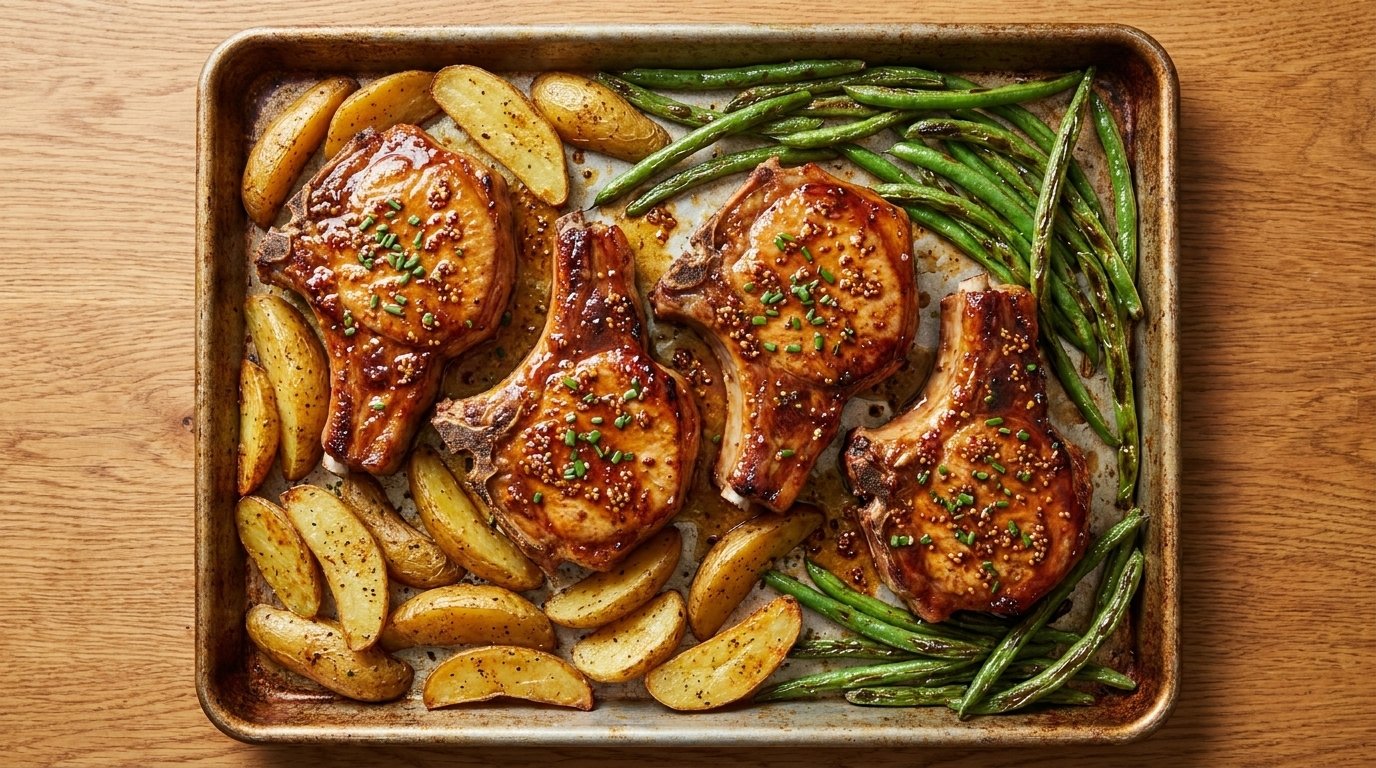
Oven baked pork chops with honey mustard glaze have become one of the most-pinned weeknight dinners for good reason. The honey mustard combination coats pork better than almost any other glaze — sweet and sharp, it caramelizes to a sticky, glossy finish in the oven’s heat and keeps the meat from drying out even if your timing is slightly off.
If your pork chops always come out chalky, bland, or tough, the problem is almost always one of three things — wrong temperature, wrong thickness, or skipping the rest time after baking. This guide fixes all three. You get the exact glaze ratio, the right oven temperature for different chop thicknesses, the sear-then-bake method for a restaurant crust, a sheet pan version with vegetables, and six flavor variations from maple mustard to spicy sriracha. Everything is built around one consistent goal — juicy pork chops with a lacquered glaze that clings to every bite. Check out our related guide on Easy Weeknight Dinner Recipes for Busy Families.

Why Honey Mustard Works So Well on Pork
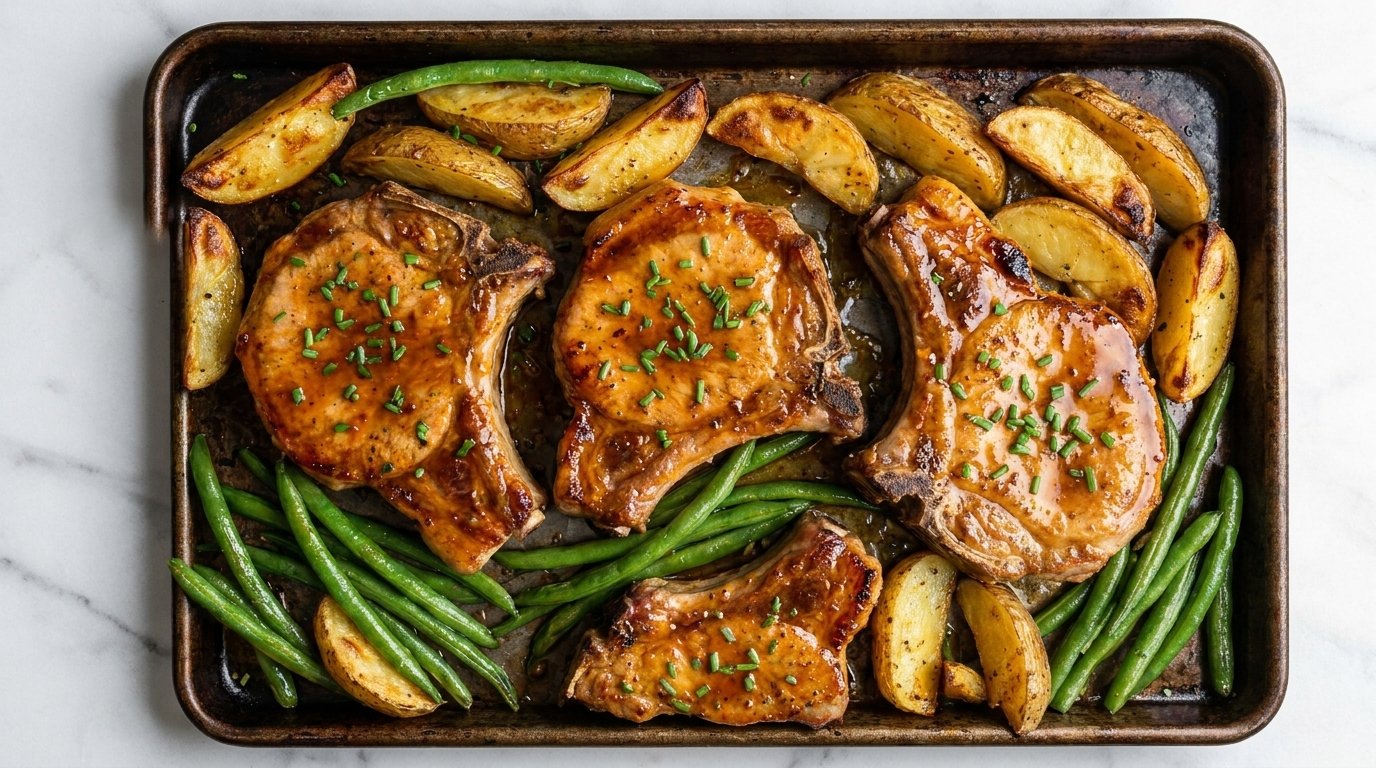
Honey mustard and pork are one of those pairings that make complete chemical sense. Pork carries a mild, slightly sweet fat flavor that needs both acid and sweetness to come alive. Mustard provides the acid and the sharpness; honey provides the sweetness and the caramelizing sugar. Together they create a glaze that does three jobs at once — it seasons the surface, it seals moisture as it bakes, and it forms a lacquered crust through caramelization.
The Maillard reaction — the browning process that creates the deep, savory crust on roasted meat — needs sugar to work. Honey is almost entirely sugar, which means a honey-based glaze caramelizes fast and deep when heat hits it. The mustard’s acidity counteracts the potential for the glaze to taste one-dimensionally sweet, and its emulsifying properties help the oil and water components of the glaze bind rather than separate in the oven.
The result is a glaze that looks glossy and amber-golden on the plate, smells of warm caramel and sharp mustard as it comes out of the oven, and tastes balanced — not too sweet, not too sharp — on every bite of meat.
Pro Tip: Use two types of mustard in your glaze rather than one. Dijon adds smooth, sharp creaminess. Whole-grain mustard adds pops of texture and a deeper, more complex flavor. Together they produce a glaze that is more interesting than either one alone.
Oven Baked Pork Chops With Honey Mustard Glaze Ingredients
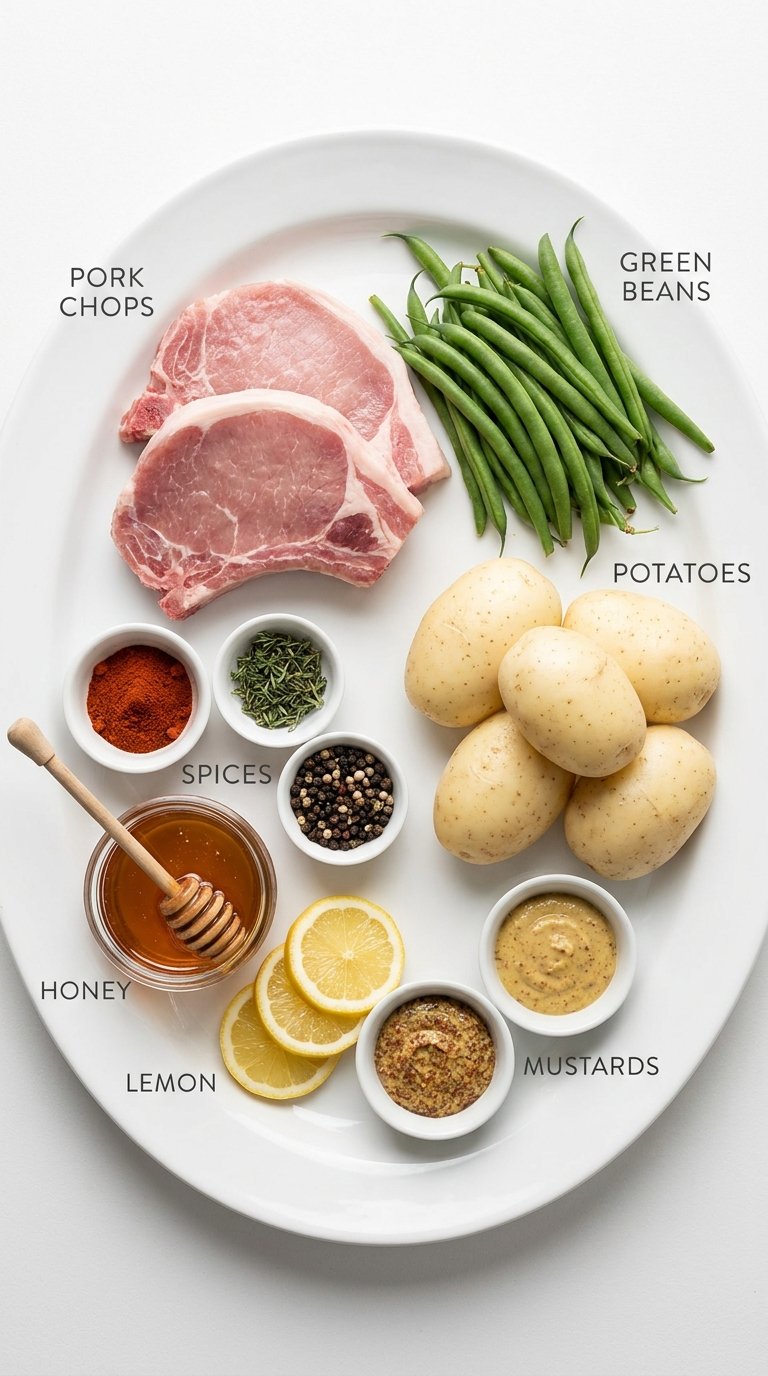
The ingredient list for oven baked pork chops with honey mustard glaze is short. Every item earns its place.
Pork chops are the foundation. Thick-cut chops — at least 1 inch, ideally 1.25 inches — stay juicy in the oven far better than thin ones. Bone-in or boneless both work; bone-in has marginally more flavor from the marrow but takes a few minutes longer to cook through.
Dijon mustard is the smooth base of the glaze. It provides a creamy, sharp tang and acts as an emulsifier that helps the glaze bind to the surface of the meat.
Whole-grain mustard adds texture — the small mustard seeds pop slightly under heat and leave visible specks on the glaze that signal flavor complexity at a glance.
Honey is the sweetening and caramelizing agent. Raw, unfiltered honey has a deeper, slightly floral flavor; standard runny honey works well and is easier to whisk into the glaze without warming.
Fresh lemon juice cuts through the richness of the pork fat and the sweetness of the honey. Half a lemon per four chops is the right amount.
Garlic powder, smoked paprika, salt, and black pepper form the dry rub that goes on the chops before the glaze. The dry rub builds flavor in the meat itself rather than relying entirely on the surface glaze.
Olive oil helps the dry rub adhere and promotes browning on the surface of the chops.
Pro Tip: Take your pork chops out of the fridge 20 minutes before cooking. Chops that go straight from fridge-cold into a hot oven cook unevenly — the exterior overcooks before the cold center reaches the right temperature. Room-temperature meat cooks faster and more evenly.
Save this idea to your Pinterest.
How to Make the Honey Mustard Glaze
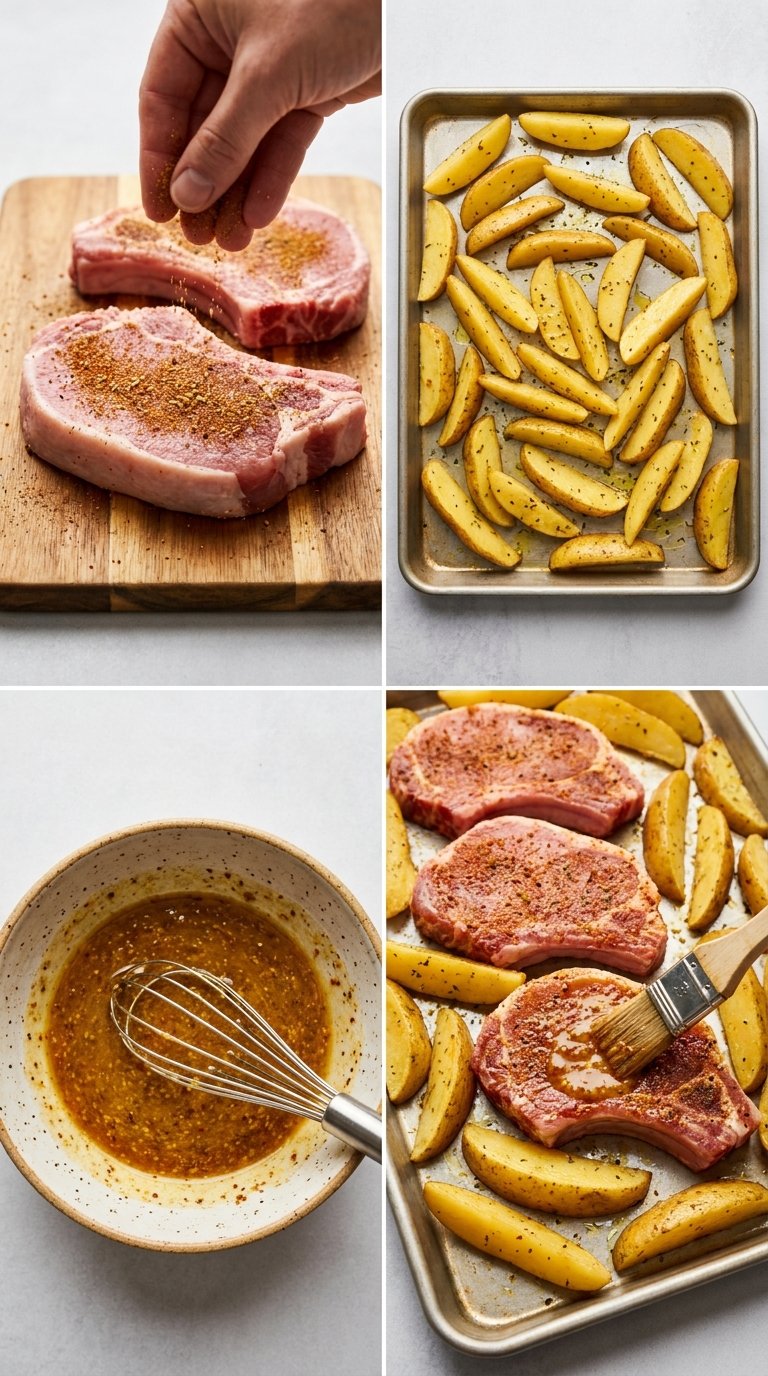
The honey mustard glaze for pork chops takes two minutes and uses one bowl. Getting the ratio right means it clings to the surface of the meat without running off, caramelizes without burning, and tastes balanced rather than one-note.
The base ratio is 2 tablespoons of Dijon mustard, 1 tablespoon of whole-grain mustard, 2 tablespoons of honey, 1 tablespoon of fresh lemon juice, and a pinch of salt and pepper. Whisk until fully combined. The glaze should be thick enough to coat the back of a spoon without dripping off in a thin stream.
If the glaze looks too thick (this happens in cold kitchens where honey stiffens), warm the honey briefly in a microwave for 10 seconds before whisking. It loosens instantly and combines cleanly with the mustard.
Taste the glaze before brushing it on the meat. If it tastes too sharp, add another half teaspoon of honey. If it tastes too sweet, add a few more drops of lemon juice or a quarter teaspoon of apple cider vinegar. Adjusting the glaze to your preference before it hits the oven is far easier than correcting the finished dish.
Divide the glaze into two portions — half for before baking, half for the final broil or basting step. The two-coat method produces a deeper, more layered glaze than applying all of it at once.
Pro Tip: Add a teaspoon of soy sauce to the glaze. It adds salt and a faint umami note that makes the whole glaze taste more complex without changing the honey mustard character. The color deepens slightly to a richer amber.
Step-by-Step Oven Baked Pork Chops Instructions
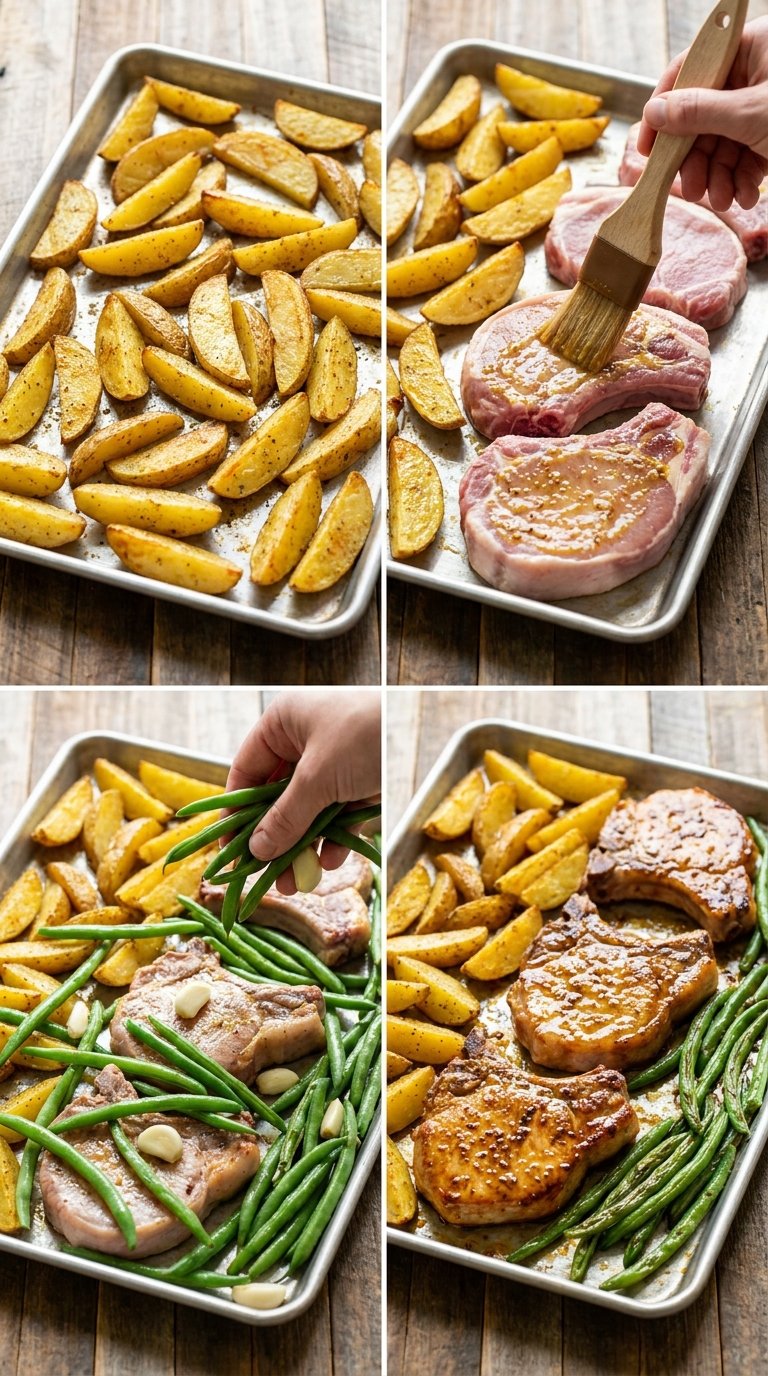
This is the standard oven method — no searing, one pan, under 35 minutes from prep to plate.
Preheat the oven to 400°F (200°C). Higher than 375°F gives the glaze the heat it needs to caramelize properly. Lower temperatures produce a cooked chop with a pale, sticky glaze rather than a caramelized, glossy one.
Pat the chops dry. Use paper towels and press firmly on both sides. Dry surfaces brown; wet surfaces steam. This step takes 20 seconds and makes a visible difference in the finished color of the chops.
Season with the dry rub. Rub olive oil on both sides, then sprinkle with garlic powder, smoked paprika, salt, and black pepper. Press the seasoning into the surface so it adheres.
Brush with half the glaze. Use a pastry brush or the back of a spoon to coat the top side of each chop. Lay them on a wire rack set inside a rimmed baking sheet — the rack lifts the chops off the pan so air circulates underneath and the bottom does not steam in pooled juices.
Bake for 15 minutes. Flip the chops, brush the second side with the remaining glaze, and return to the oven for 8 to 12 more minutes, depending on thickness.
Check the internal temperature. An instant-read thermometer inserted into the thickest part (not touching bone) should read 145°F. Pull them at this temperature, not higher.
Broil for 2 minutes. Switch the oven to high broil and watch the chops. The glaze will bubble, darken, and blister into a caramelized crust within 60 to 90 seconds. Pull them the moment the edges begin to char.
Rest for 5 minutes before serving. Tent loosely with foil. The internal temperature will carry over to 148 to 150°F during the rest, which is exactly right.
Pro Tip: Set the rack in the center of the oven rather than the top. Top-rack baking exposes the glaze to intense upper heat and burns it before the interior cooks through. Center rack gives even heat from all sides.
Popular Asked Questions
What temperature should oven baked pork chops reach?
Oven baked pork chops with honey mustard glaze should reach an internal temperature of 145°F (63°C), as recommended by the USDA. At this temperature, the pork is fully safe and still juicy. Pull the chops from the oven at 145°F and let them rest for 5 minutes — the temperature carries over to 148 to 150°F during the rest, which is the sweet spot between safe and perfectly cooked. Anything past 155°F produces noticeably drier meat.
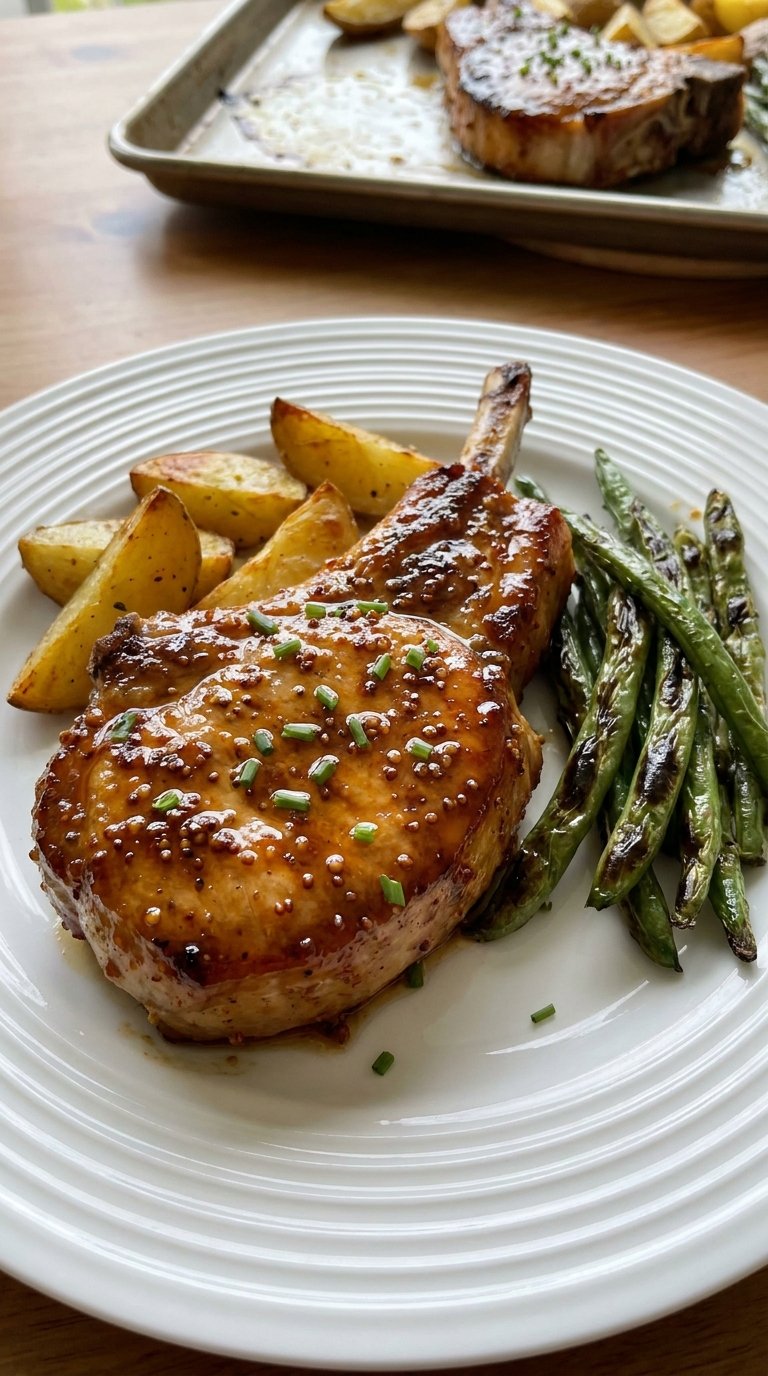
How long do you bake pork chops at 400°F?
At 400°F, boneless pork chops that are 1 inch thick need 18 to 22 minutes. Bone-in pork chops of the same thickness need 22 to 28 minutes. Thinner chops cook faster — a 3/4-inch boneless chop is done in 12 to 15 minutes. Always use an instant-read thermometer rather than relying on time alone, since oven calibration and chop weight vary. These times assume the chops came to room temperature for 20 minutes before going into the oven.
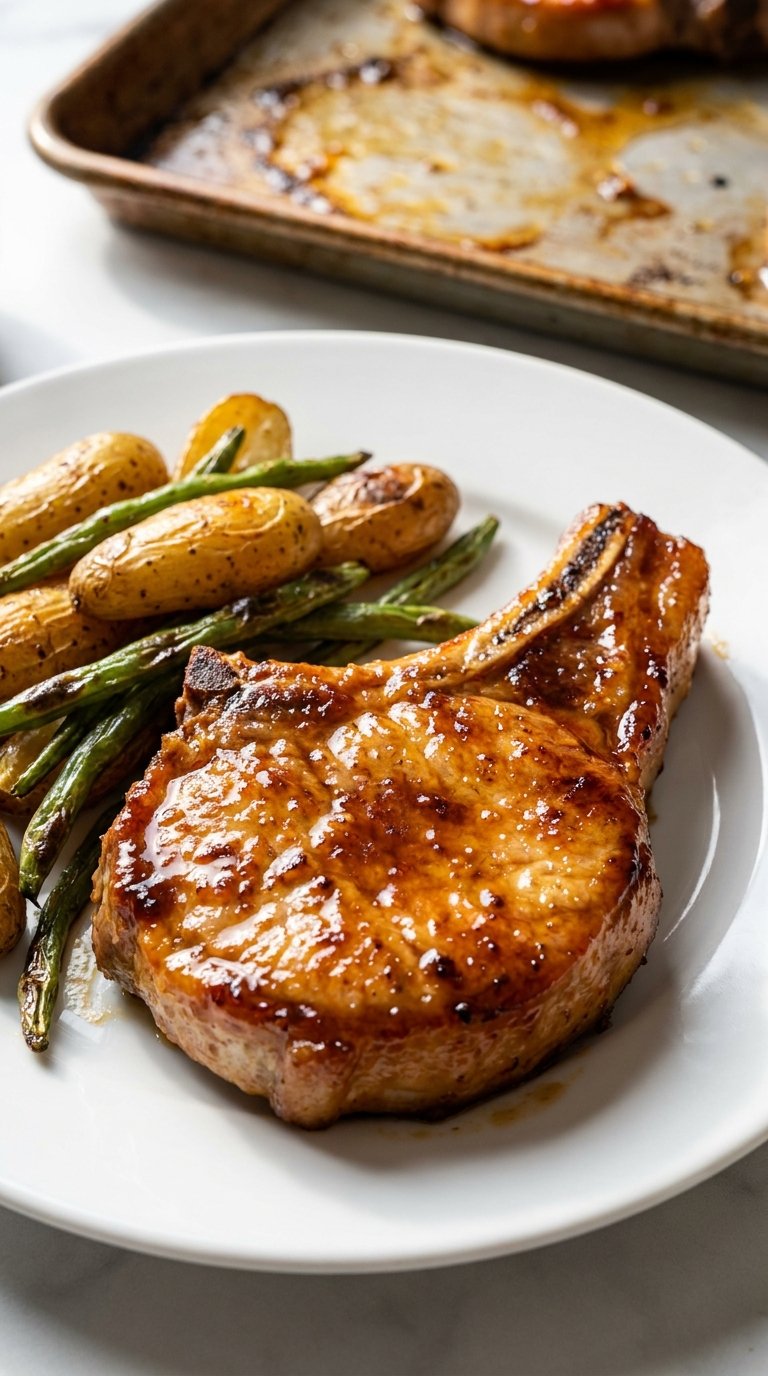
Should you cover pork chops when baking in the oven?
No — baking pork chops uncovered produces the best result for a honey mustard glaze. Covering the pan traps steam, which prevents the glaze from caramelizing and makes the surface of the meat soft rather than slightly crisped. Uncovered baking allows dry heat to circulate around the chop, caramelizing the honey in the glaze and browning the surface. The only time to cover pork chops during cooking is during the reheating stage, when you want to restore moisture without adding color.
Can you bake pork chops from frozen?
You can, but the result is significantly less reliable than thawing first. Frozen pork chops need 50% more cooking time than fresh ones, and the exterior tends to overcook before the frozen center reaches temperature. The honey mustard glaze also does not adhere properly to a frozen, wet surface. Thaw overnight in the fridge for the most predictable result. If you need to cook from frozen, use a lower oven temperature (325°F) and cover with foil for the first half of the cooking time to bring the center up gently.
What is the best mustard for honey mustard pork chops?
A combination of Dijon mustard and whole-grain mustard produces the best honey mustard glaze for pork chops. Dijon adds smooth creaminess and sharp tang. Whole-grain mustard adds texture from the mustard seeds and a deeper, earthier flavor. Yellow mustard works in a pinch but produces a sharper, thinner glaze with less complexity. English mustard is significantly hotter than Dijon and should be used at half the quantity if substituting. The specific mustard brands matter less than the type — any quality Dijon and any quality whole-grain mustard will produce an excellent result.
Conclusion
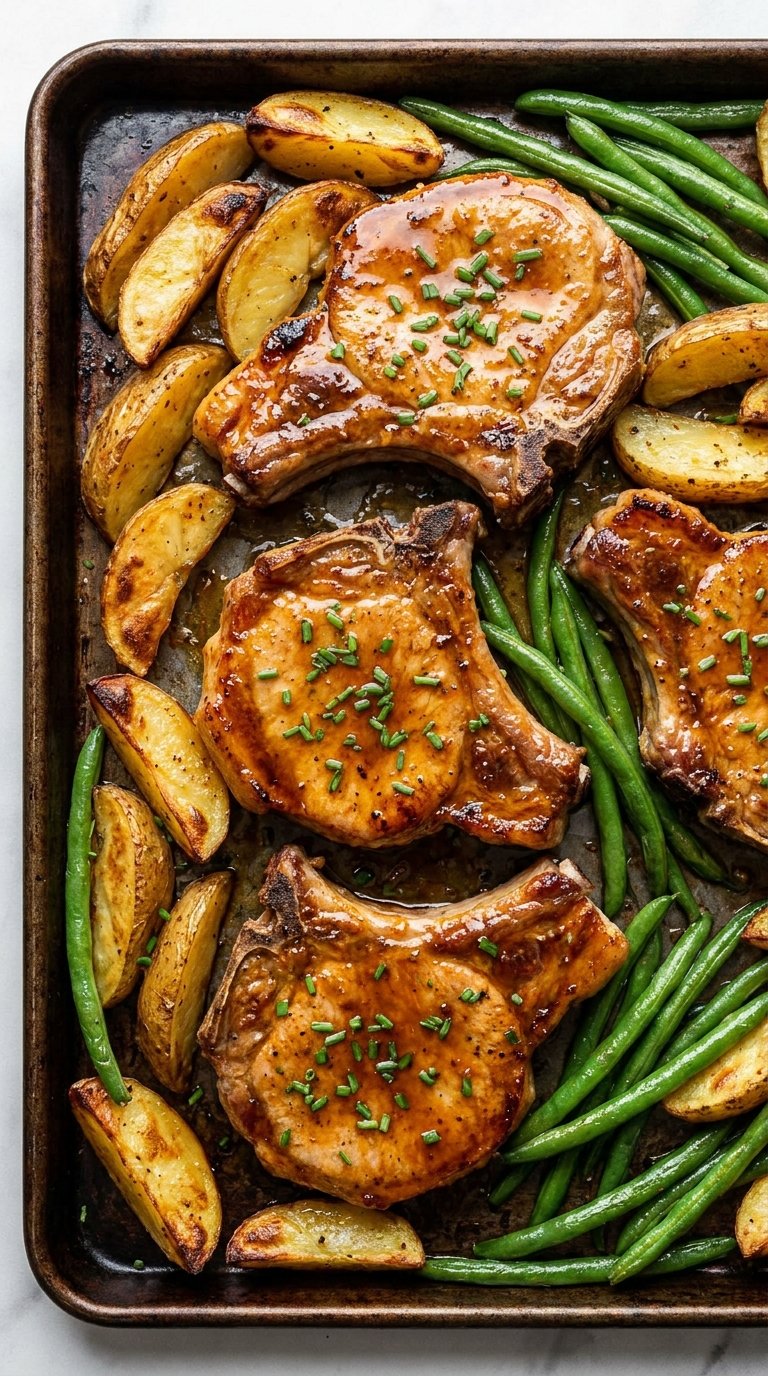
Oven baked pork chops with honey mustard glaze reward the cooks who pay attention to a few non-negotiable details — thick chops, a preheated oven, dry surfaces before glazing, a two-coat glaze application, and a thermometer to pull them at the right temperature. Get those right and the dish works reliably every time, in every variation.
The caramelized honey mustard crust, the juicy interior, and the pan drippings that double as a sauce all come together in under 35 minutes. That is the reason this recipe appears on so many weeknight dinner tables — it punches above its effort level every single time.
Which variation are you making first — the classic, the maple mustard autumn version, or the spicy sriracha build? Tell us in the comments.
Follow us on Pinterest for more oven baked pork chops inspiration and easy weeknight dinner recipes.

Leave a Comment