
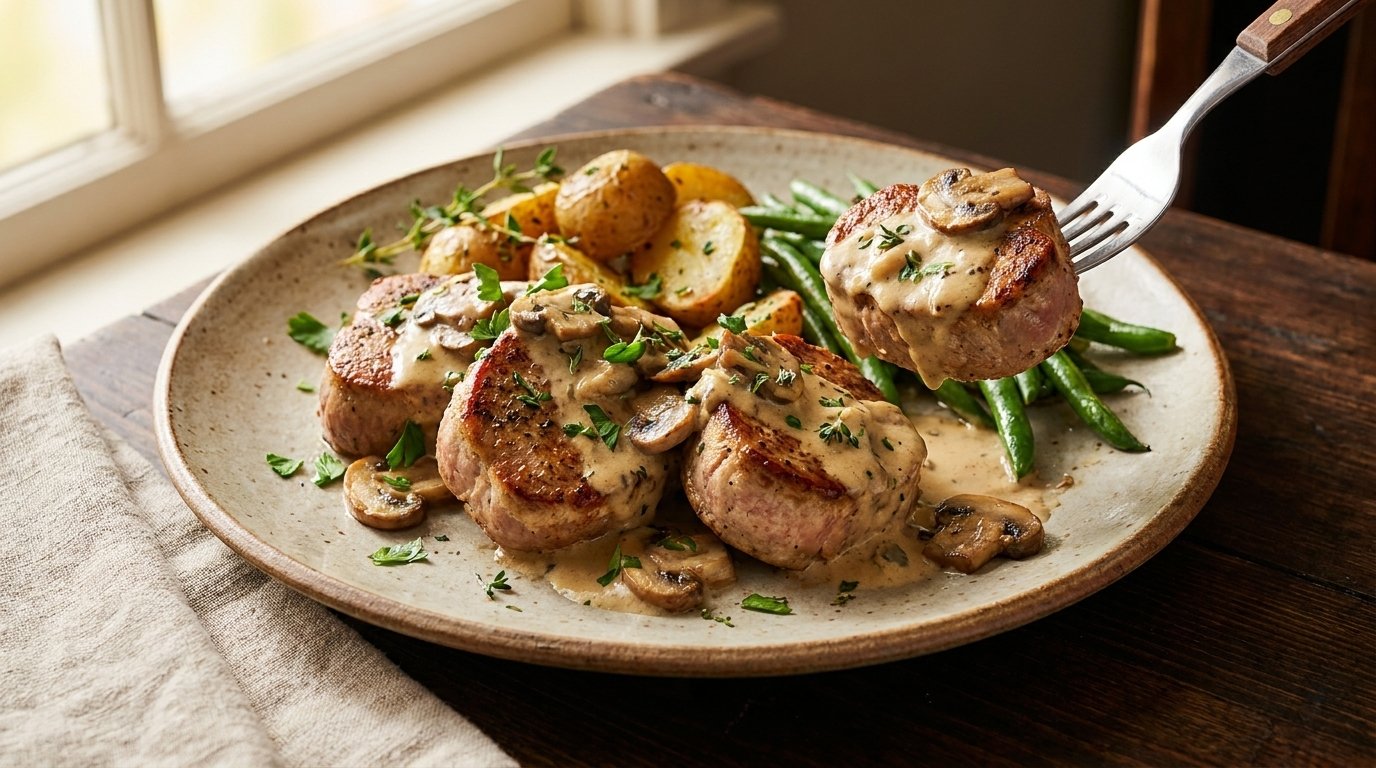
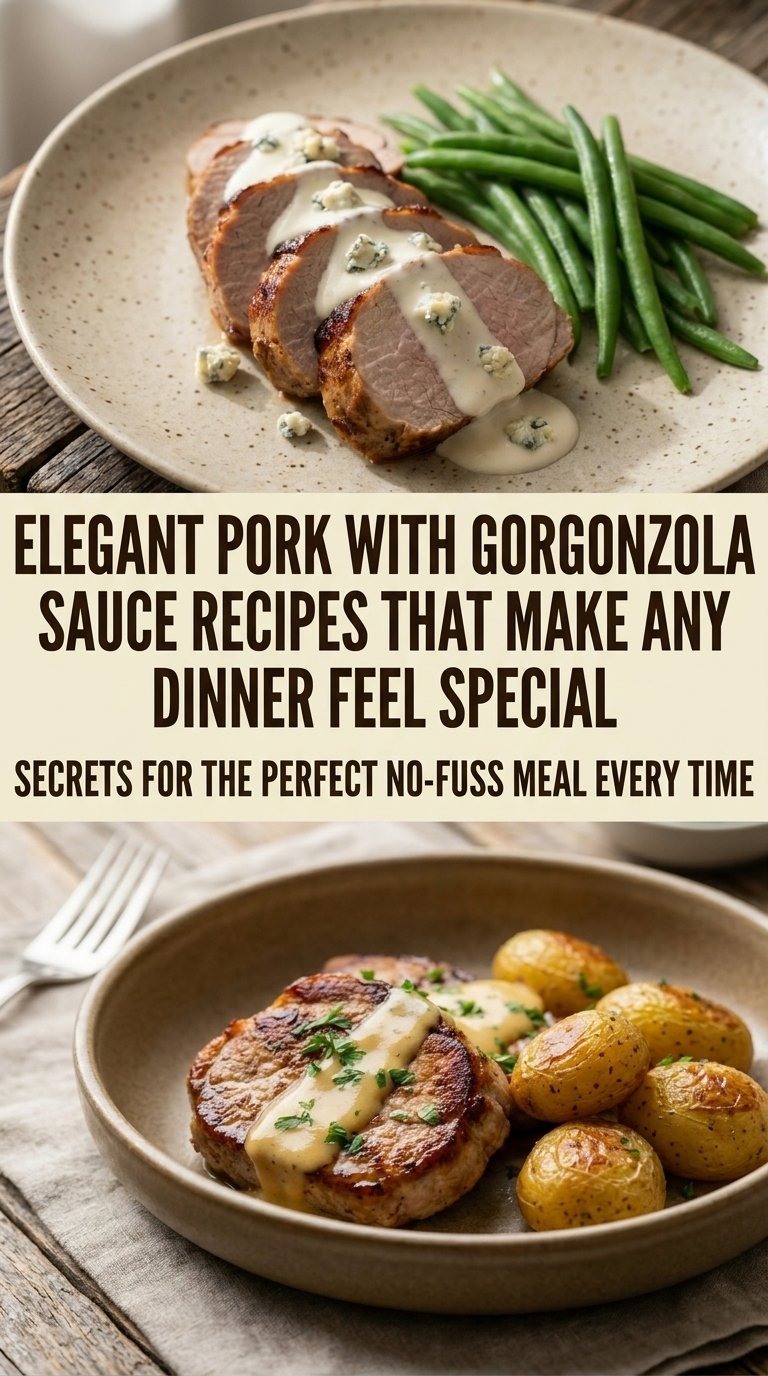
Pork with gorgonzola sauce is one of the most-pinned Italian-inspired dinner recipes right now, and the reason is obvious once you taste it. Tender pork tenderloin paired with a tangy, creamy gorgonzola cream sauce delivers restaurant-quality results from a home kitchen in under an hour. The two complaints that drive people back to search are a sauce that breaks or turns grainy, and pork that dries out before it gets enough color on the outside. This guide solves both. You get the full recipe with the Dijon mustard crust method, a foolproof gorgonzola cream sauce that holds without breaking, nine variations from prosciutto-wrapped to quick pan-seared scaloppine, and a complete breakdown of what to serve alongside. Whether you are cooking for a weeknight dinner or a formal occasion, this dish delivers.
Check out our related guide on Elegant Italian-Inspired Dinners You Can Make at Home.
kes ahead perfectly.** Prepare it up to three days in advance and reheat gently on low heat with a splash of cream to restore the texture.
Why Pork and Gorgonzola Work Together
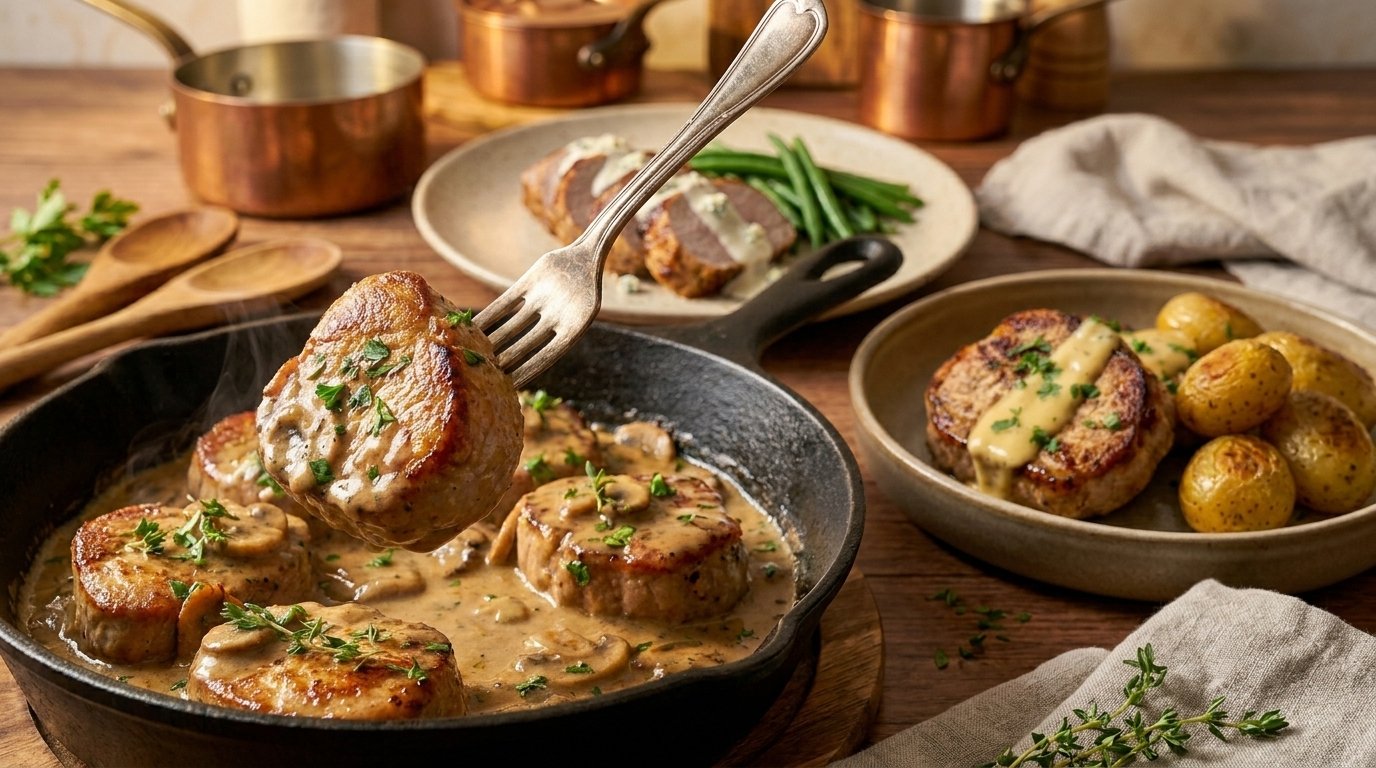
Sliced pork tenderloin fanned on a white plate with gorgonzola cream sauce pooled around it, garnished with fresh thyme and cracked pepper]
The pairing of pork with gorgonzola sauce works because of fat contrast and flavor tension. Pork tenderloin is one of the leanest cuts of meat available. Gorgonzola is one of the richest, most assertively flavored cheeses. The lean pork gives the sauce something clean to land on, and the sauce gives the mild meat the character it needs to anchor a full plate.
Italian cooks have paired blue cheese with pork for centuries, particularly in the northern regions of Lombardy and Piedmont where gorgonzola originates. The cheese produced in those regions was traditionally served with cured meats, fresh pork, and polenta. The cream sauce format is a more modern refinement of that tradition, one that makes the combination accessible and practical for a home cook with a standard kitchen.
Beyond the historical context, the flavor logic is straightforward. Pork has a gentle sweetness, especially in the tenderloin. Gorgonzola has a sharp, salty, earthy intensity. The cream bridges them and rounds the edges of both. The result is a plate where no single element dominates.
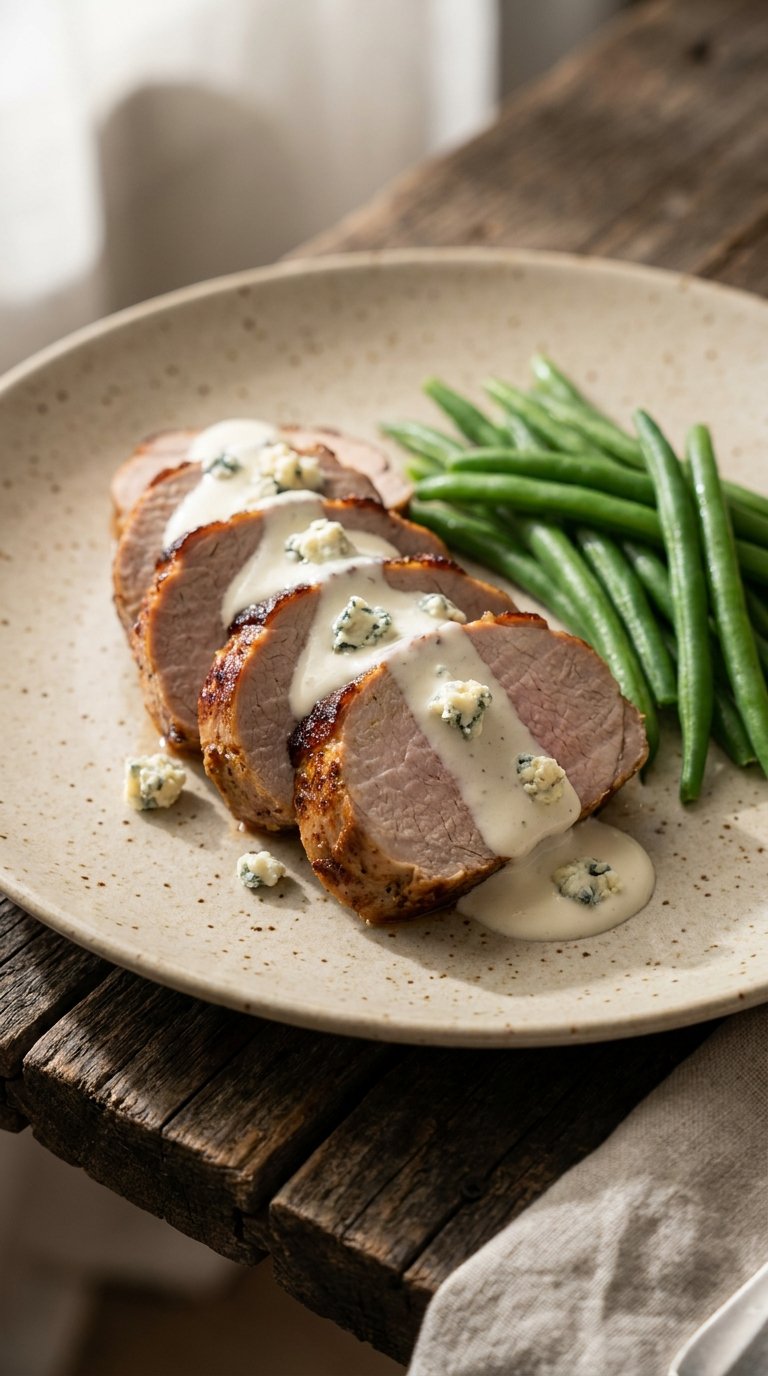
Pro Tip: For the most photogenic plating, slice the tenderloin on a slight bias into half-inch medallions. Fan them slightly on the plate and spoon the sauce in a pool beside rather than over the meat. This keeps the crust visible and lets the diner mix each bite to their own preference.
Pork with Gorgonzola Sauce: Full Ingredients
All ingredients laid out in small bowls and ramekins on a dark marble surface, labeled by category]
This recipe serves six. The sauce recipe makes enough to dress the pork generously with additional sauce passed at the table.
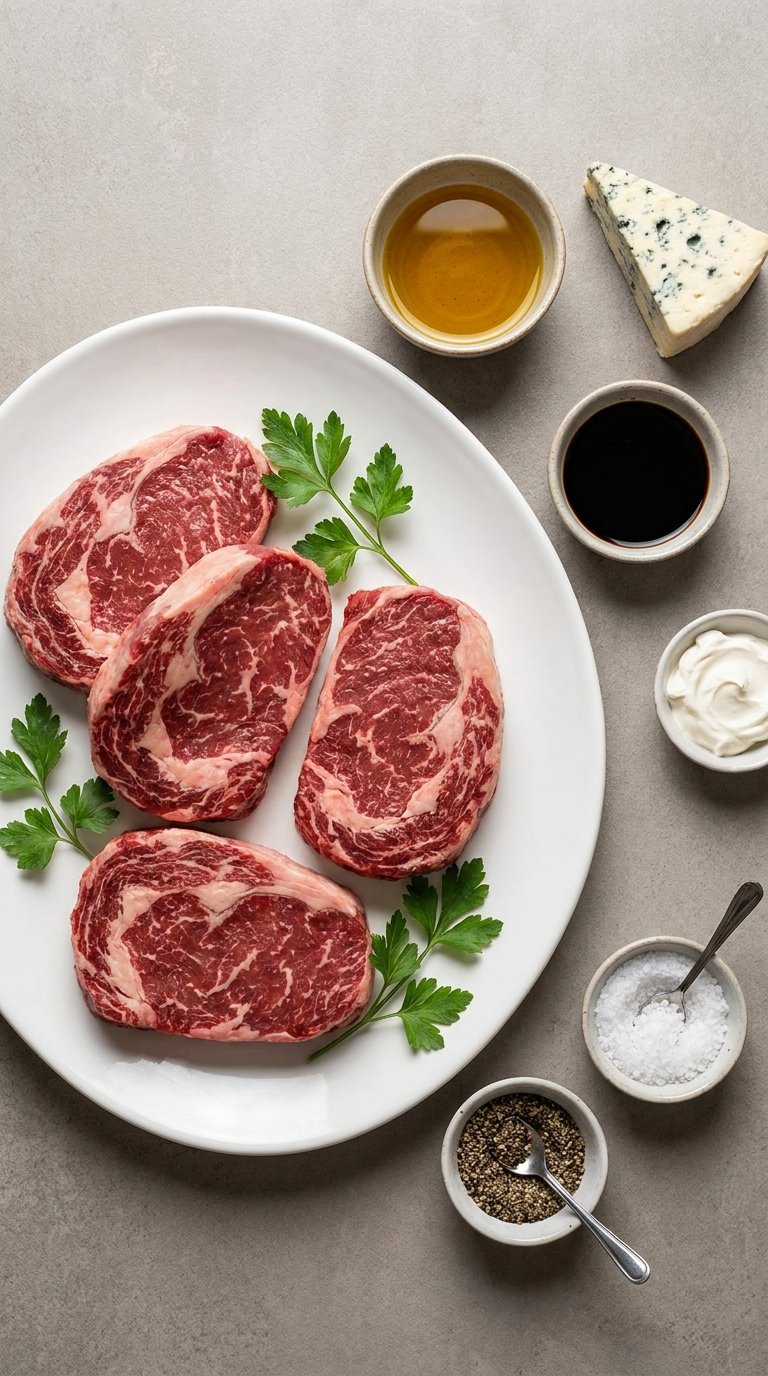
For the Pork:
- 2 pork tenderloins (about ¾ lb / 340g each)
- Salt and freshly ground black pepper
- 1 tbsp olive oil or avocado oil (for searing)
For the Dijon Crust:
- ¼ cup Dijon mustard
- 1 tbsp olive oil
- 1 tbsp dried thyme (or 2 tsp fresh thyme leaves)
For the Gorgonzola Cream Sauce:
- 1 tbsp unsalted butter
- 1 clove garlic, finely minced
- 1 tbsp all-purpose flour
- 1 cup heavy whipping cream
- ¼ cup dry white wine (Pinot Grigio or Sauvignon Blanc)
- ¼ cup low-sodium chicken broth
- 1 cup (4 oz / 115g) crumbled gorgonzola dolce
- Salt and white pepper to taste
The gorgonzola dolce melts more smoothly than aged piccante and is the right choice for this base recipe. If you prefer a stronger blue cheese flavor, substitute half the dolce with piccante. Salt the sauce lightly before tasting, since gorgonzola is already salty. White pepper rather than black keeps the sauce visually clean.
Step-by-Step Instructions
Four-panel image showing dry pork before searing, seared crust, Dijon coating, and finished sliced tenderloin with sauce]
Step 1: Preheat and Prep
Preheat the oven to 425°F. Pat both tenderloins completely dry with paper towels. Season generously with salt and black pepper on all sides. In a small bowl, whisk together the Dijon mustard, one tablespoon of olive oil, and thyme. Set aside.
Step 2: Sear the Pork
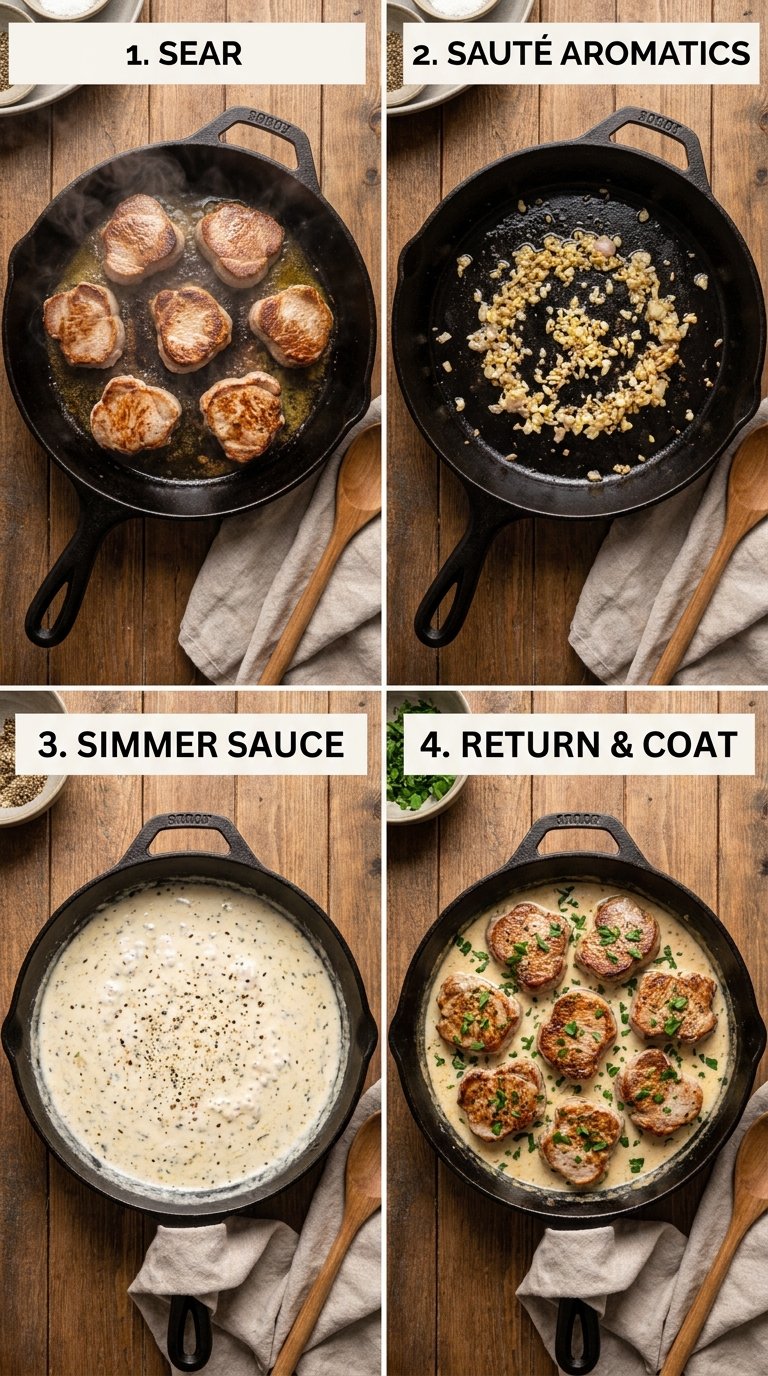
Heat a large oven-safe skillet or cast iron pan over high heat until lightly smoking. Add one tablespoon of oil. Place the tenderloins in the pan and sear without moving for 90 seconds per side, rotating to brown all four sides. Total sear time is eight to ten minutes.
Step 3: Apply the Dijon Crust and Roast
Transfer the seared tenderloins to a foil-lined roasting pan if not using an oven-safe skillet. Spread the Dijon mustard mixture over all sides of the pork. Roast in the preheated oven until an instant-read thermometer reads 145°F, about 10 to 20 minutes depending on the thickness of the tenderloins. Remove from the oven and rest for five minutes.
Step 4: Make the Gorgonzola Cream Sauce
Set a small saucepan over medium heat. Melt the butter, then sauté the garlic for 30 seconds until fragrant. Whisk in the flour and cook for 60 seconds. Gradually whisk in the cream, white wine, and chicken broth in a thin, steady stream. Bring to a gentle boil and cook, whisking frequently, until the sauce thickens enough to coat the back of a spoon, about one to two minutes.
Reduce the heat to low. Add the crumbled gorgonzola in two additions, whisking gently after each until fully melted and smooth. Season with white pepper and a small pinch of salt if needed. Keep warm on very low heat until ready to serve.
Step 5: Slice and Plate
Slice the rested tenderloins on a slight bias into half-inch medallions. Fan them on warm plates. Spoon the gorgonzola cream sauce generously over and around the pork. Serve immediately with additional sauce passed separately.
Popular Asked Questions
What is the best cut of pork for gorgonzola sauce?
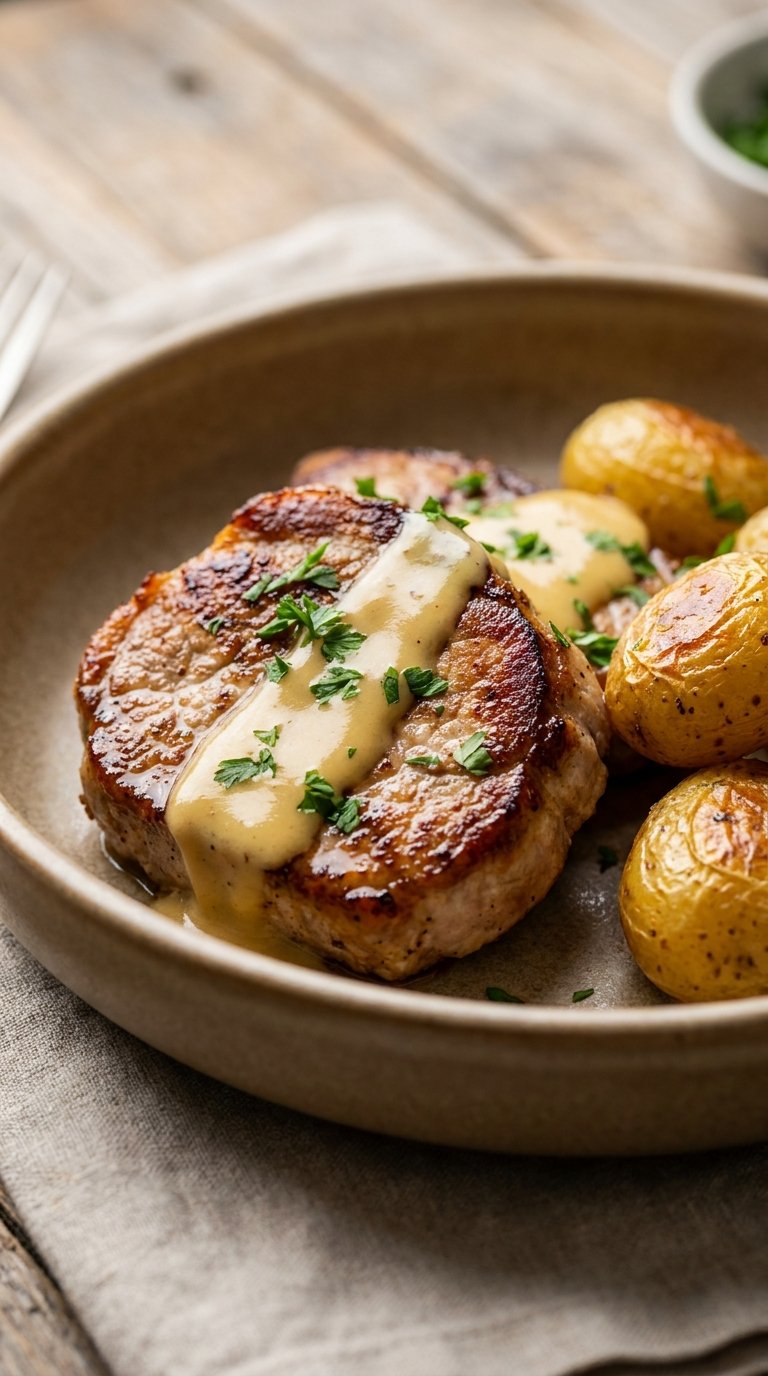
Pork tenderloin is the most popular choice for pork with gorgonzola sauce and delivers the best results for a dinner party or special occasion. It is lean, tender, and cooks in under 30 minutes using the sear and roast method. Bone-in pork chops are the better choice for a quick weeknight version. They take under 15 minutes total and the bone adds flavor to the pan drippings that go directly into the sauce. Pork loin roast works for feeding a large group but requires longer cooking and benefits from brining the night before to prevent drying out.
Can you substitute blue cheese for gorgonzola in the cream sauce?
Yes. Other blue cheeses work well in a gorgonzola cream sauce for pork, each with slightly different results. Stilton is firmer and sharper than gorgonzola dolce and produces a more pungent sauce. Roquefort is made from sheep’s milk and has a creamier, more complex flavor with a distinct mineral note. Danish blue is milder and more affordable than the others. For the smoothest sauce regardless of which blue cheese you use, crumble it finely and add it to cream that has been reduced to a sauce consistency over low heat. Add it in small stages and whisk gently after each addition.
Can the gorgonzola cream sauce be made ahead of time?
Yes. Gorgonzola cream sauce keeps for up to three days in the refrigerator in a sealed container. Reheat it gently over low heat with a splash of heavy cream whisked in at the start. High heat will break the sauce and separate the fat from the dairy. Stir continuously during reheating and remove from heat as soon as the sauce returns to a smooth, pourable consistency. Do not freeze the sauce. The dairy components separate during freezing and do not recover properly when reheated.
What temperature should pork tenderloin reach when cooked with gorgonzola sauce?
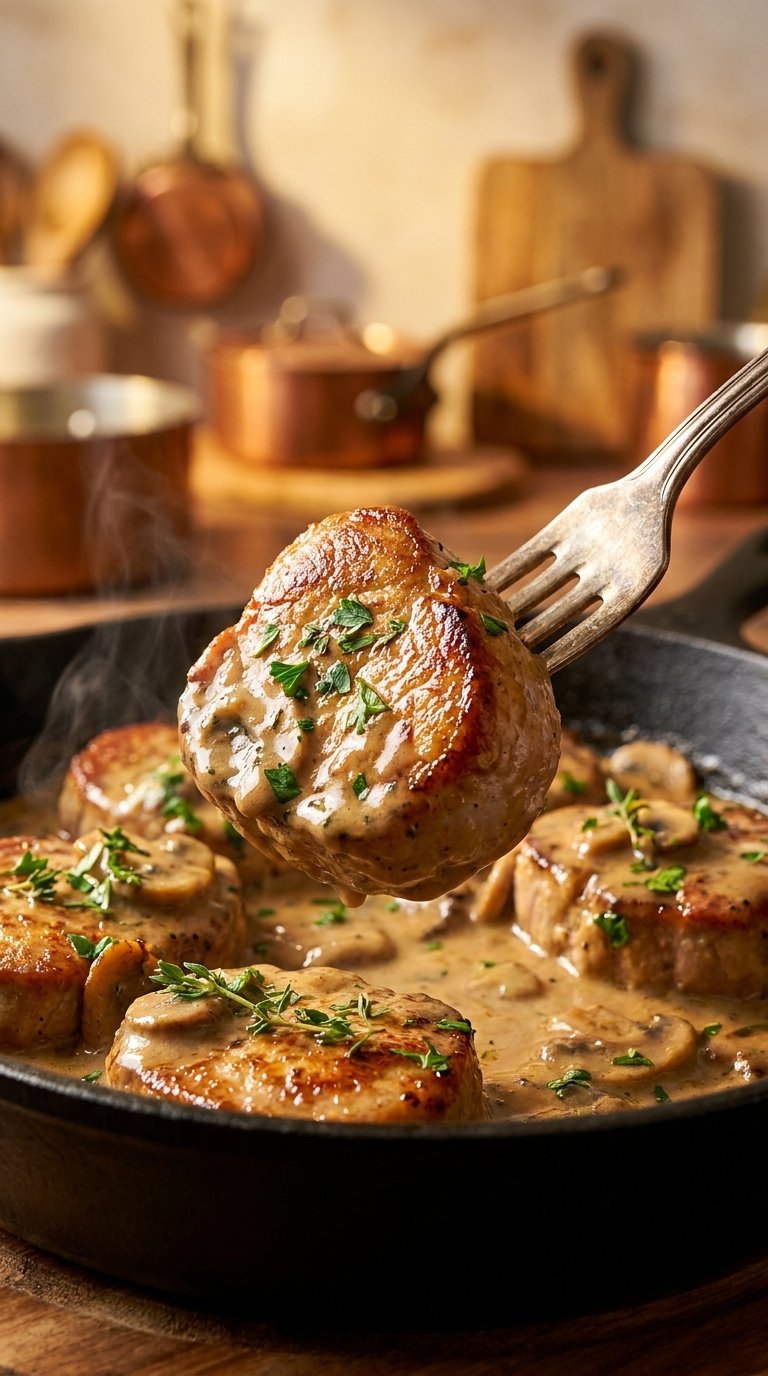
The safe internal temperature for pork tenderloin is 145°F (63°C), as confirmed by the USDA. At this temperature the pork is pale pink inside, fully safe to eat, and at its most tender and juicy. Cooking beyond 160°F makes the lean tenderloin noticeably dry and tough. Use an instant-read thermometer inserted into the thickest part of the meat to check. Remove the pork from the oven at 145°F and let it rest for five minutes on a cutting board. The temperature will rise another three to five degrees during the rest.
What pasta or side dish goes with pork and gorgonzola sauce?
The most common and complementary sides for pork with gorgonzola cream sauce are creamy mashed potatoes, soft polenta, and roasted broccolini. Mashed potatoes and polenta absorb the sauce and provide a neutral, starchy base that lets the flavors of the pork and cheese stay prominent. Roasted broccolini adds color contrast and a slightly bitter note that cuts the richness of the cream. For a pasta-based meal, fettuccine or pappardelle tossed directly with the gorgonzola sauce and topped with sliced pork works as a complete one-course dinner for four to six people.
Final Thoughts
Pork with gorgonzola sauce rewards a measured approach. The Dijon crust, the sear-and-roast method, and the low-heat cheese technique are three small techniques that separate a memorable plate from a forgettable one. None of them are difficult. All of them are learnable in a single cook.
The sauce makes ahead perfectly, the pork preps in minutes, and the finished plate looks and tastes like it came from a serious restaurant. For a dinner party, the variation with prosciutto and fresh rosemary is the one to save.
Which version are you making first, the classic Dijon and gorgonzola cream, or the prosciutto-wrapped tenderloin for a dinner party? Leave a comment below and tell us which side dish you served alongside it.
Follow us on Pinterest for more pork with gorgonzola sauce recipes and elegant Italian-inspired dinner ideas: wisdomforhome.com

Leave a Comment