
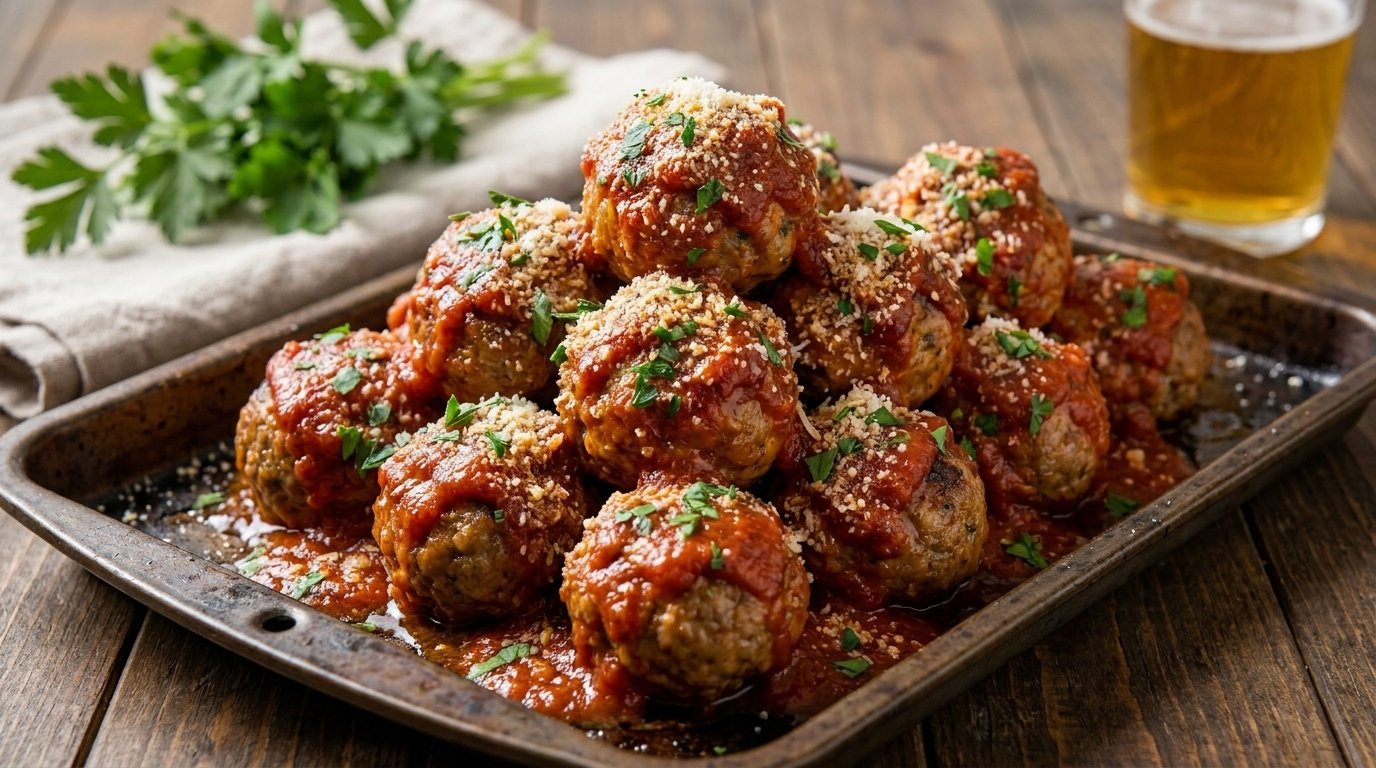
Meatballs are one of the most searched dinner recipes online right now, and the reason is simple. People want a meal that comes together fast, freezes well, and works across multiple dishes without needing a new recipe every time.
The problem most home cooks run into is dry, dense meatballs that fall apart in the pan or turn rubbery after reheating. This guide fixes that. You get 9 detailed variations, a foolproof base recipe with exact measurements and step-by-step instructions, a complete freezer guide, and a breakdown of every technique that separates a good meatball from a great one.
Whether you need a quick weeknight meatball recipe, a make-ahead freezer batch, or a crowd-pleasing party appetizer, every answer is here.

Key Takeaways
- One batch makes 24 meatballs — enough for dinner tonight and a full freezer portion for next week
- The panade (milk-soaked breadcrumbs) is the single biggest factor in keeping meatballs tender and never dry
- Baked at 425°F beats pan-frying for even cooking with less mess and better moisture retention
- Freeze raw or baked — both methods work, and baked-from-frozen takes only 18 minutes at 375°F
- 9 variations covered, from classic Italian to turkey, Swedish, and slow cooker styles
Ingredients
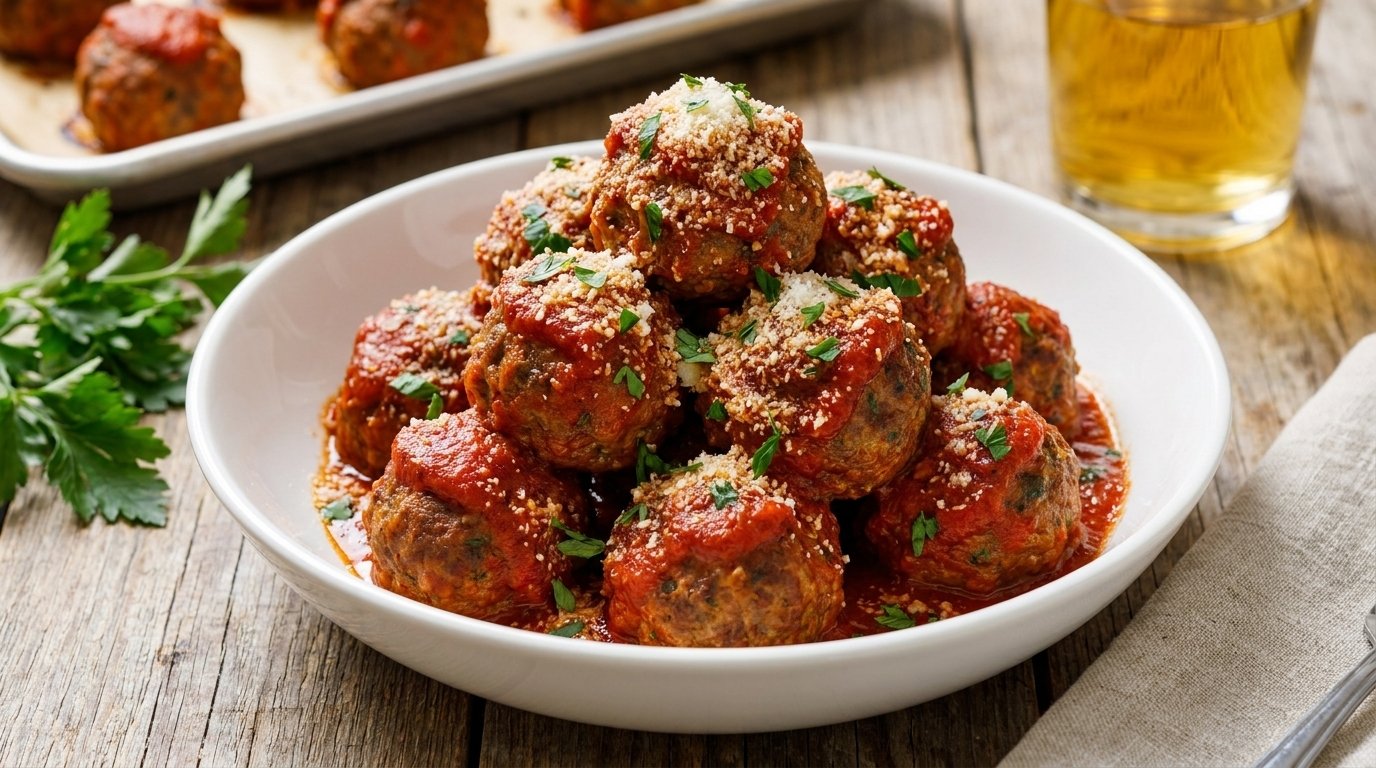
This base recipe makes 24 meatballs, serving 4 to 6 people.
The Meat
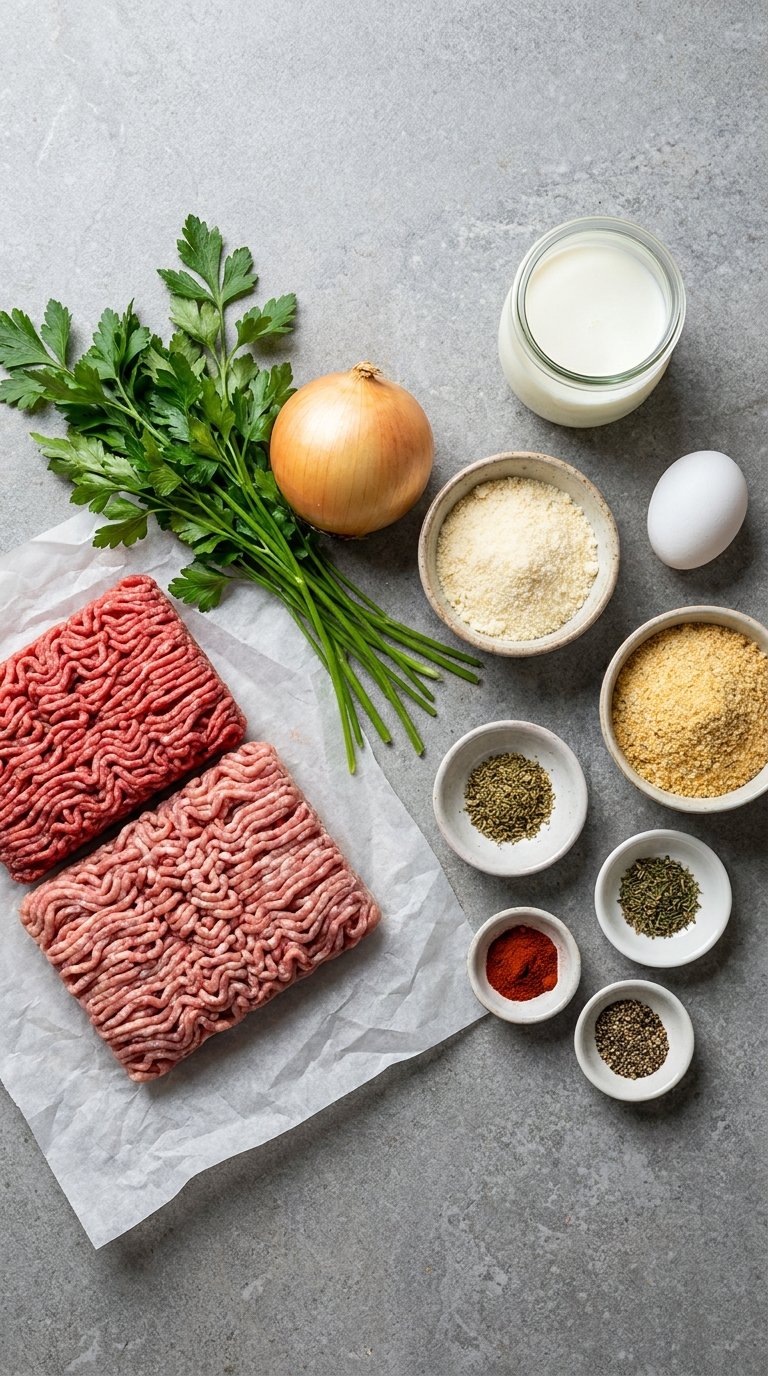
- 1 lb ground beef (80/20)
- 1 lb ground pork
The Panade (Moisture Binder)
- ½ cup plain breadcrumbs (or panko)
- ¼ cup whole milk
The Binders and Flavor
- 1 large egg
- ½ cup Parmesan cheese, finely grated
- 3 cloves garlic, minced
- 3 tablespoons fresh parsley, finely chopped
- 1½ teaspoons kosher salt
- ½ teaspoon black pepper
- ½ teaspoon dried oregano
- 1 teaspoon Worcestershire sauce
Instructions
Step 1 — Make the Panade
Combine the breadcrumbs and milk in a small bowl. Stir once to mix, then let it sit for 5 minutes. The breadcrumbs absorb the milk and become soft and pasty. This mixture is the single most important step for tender meatballs — do not skip or rush it.
Step 2 — Combine the Flavor Ingredients
Crack the egg into a large mixing bowl and beat it lightly. Add the grated Parmesan, minced garlic, chopped parsley, salt, black pepper, dried oregano, and Worcestershire sauce. Whisk everything together until the mixture is uniform.
Step 3 — Add the Meat and Panade
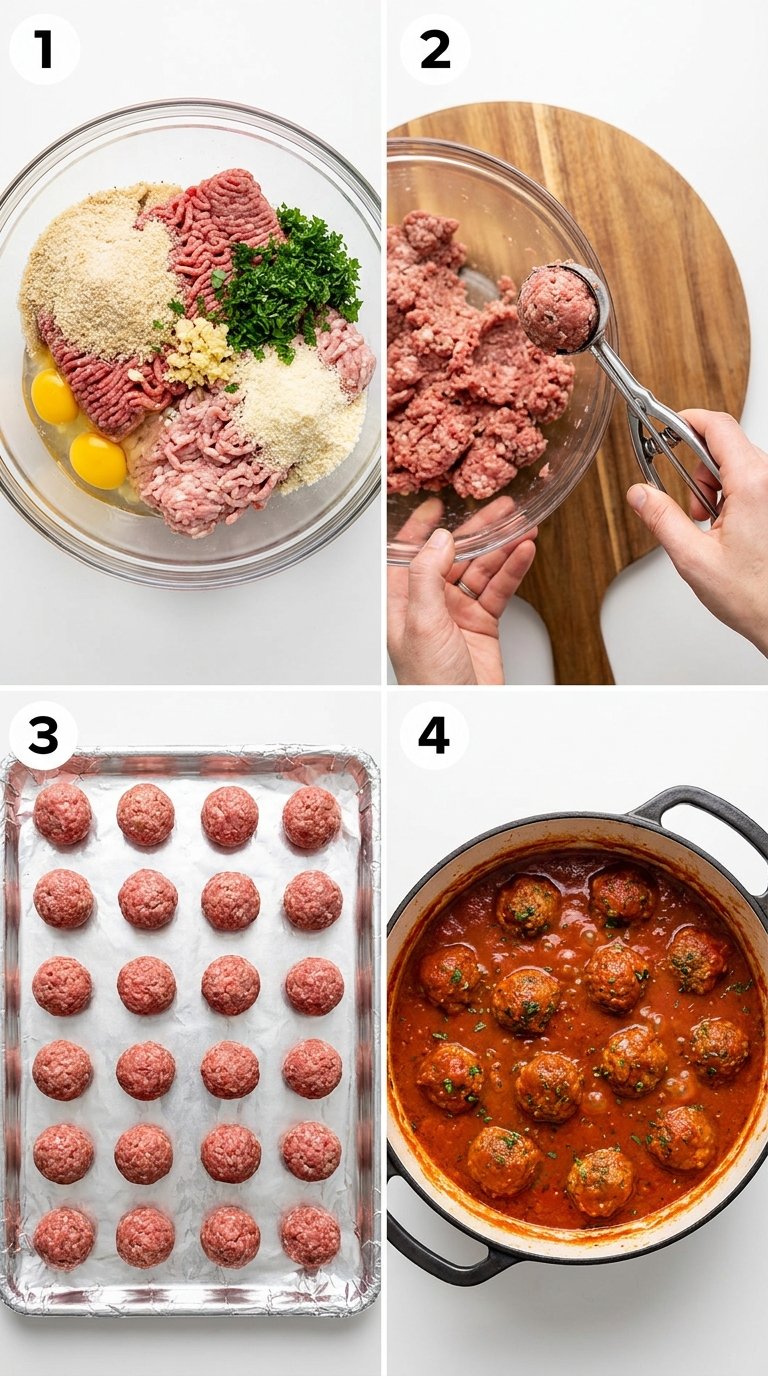
Add both ground meats to the bowl in chunks. Spoon the panade over the top. Use clean hands to mix everything together, pressing and folding rather than squeezing or kneading. Stop mixing the moment you can no longer see separate ingredients. Overworking the mixture develops the protein structure and produces tough, dense meatballs.
Step 4 — Rest the Mixture
Cover the bowl with plastic wrap and refrigerate for 15 minutes. This rest period allows the breadcrumbs to finish absorbing moisture and the salt to start drawing flavor from the meat. Skipping this step is fine for a quick weeknight dinner, but the 15-minute rest produces a noticeably better texture.
Step 5 — Preheat and Prep
Heat the oven to 425°F. Line two rimmed baking sheets with foil or parchment paper. High heat is what creates the browned crust — anything below 400°F produces a pale, steamed exterior.
Step 6 — Form the Meatballs
Use a medium cookie scoop (about 1.5 tablespoons) to portion the mixture. Roll each portion between your palms with light, even pressure to form a smooth sphere. Place them on the prepared baking sheets with 1 inch of space between each one.
Uniform size means uniform cooking time. If some meatballs are twice the size of others, the smaller ones overcook before the larger ones reach a safe internal temperature.
Step 7 — Bake
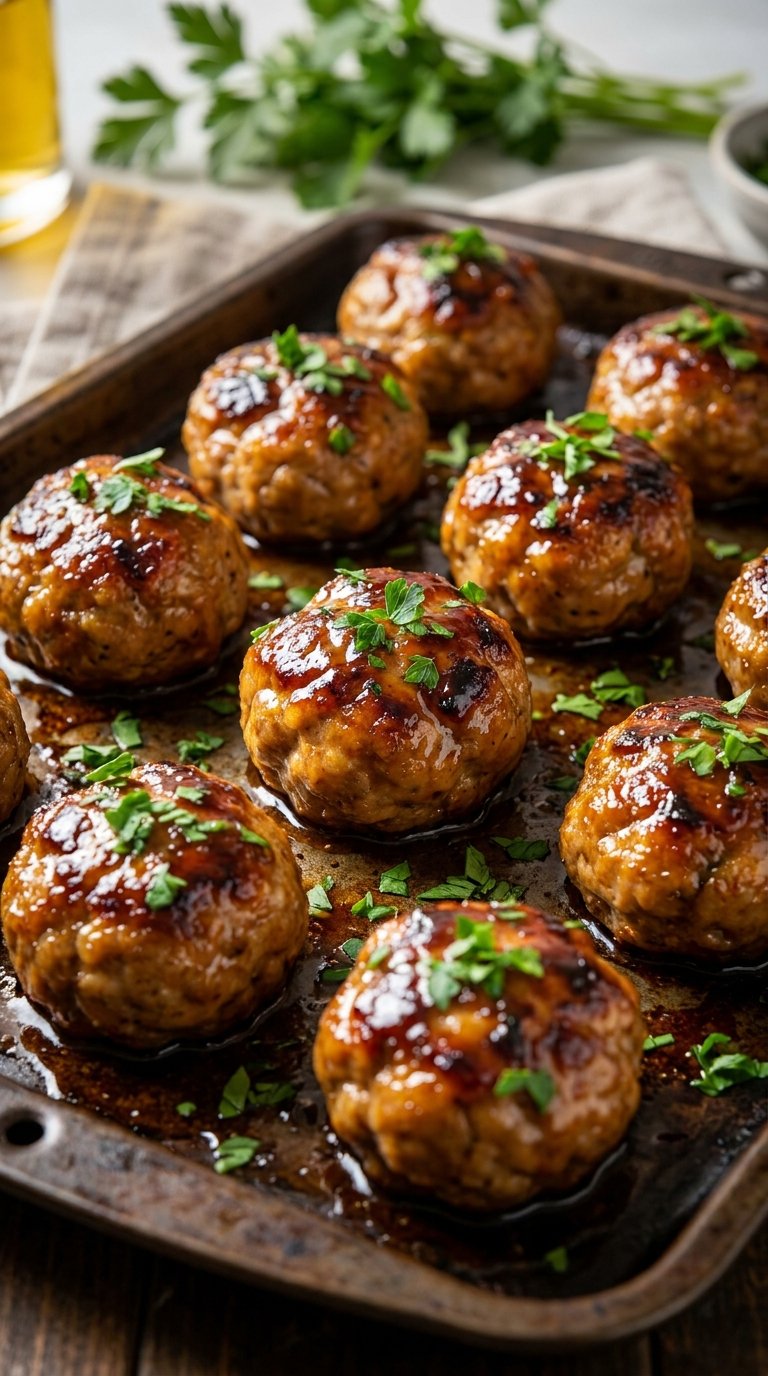
Bake at 425°F for 14 to 16 minutes. The tops and edges should be deep golden brown and the internal temperature should read 165°F on an instant-read thermometer. Do not bake longer than needed — every extra minute of heat drives out moisture that cannot be replaced.
Step 8 — Rest Before Serving
Let the meatballs rest on the pan for 3 minutes before serving or adding to sauce. Resting allows the juices to redistribute from the center to the edges so they do not all pour out on the first cut.
Popular Asked Questions
Why do my meatballs fall apart when I cook them?
Meatballs fall apart when the binder is not strong enough or was not mixed in evenly. The egg and breadcrumbs are both needed — the egg holds the mixture together, and the breadcrumbs trap moisture inside so the meat does not tighten and crack during cooking. If you are skipping either one, add it back. If both are present and the meatballs still fall apart, the mixture was likely overworked, which breaks down the fat structure and causes the meatball to crumble rather than hold its shape. Mix gently, and stop as soon as everything comes together.
What is the best meat for homemade meatballs?
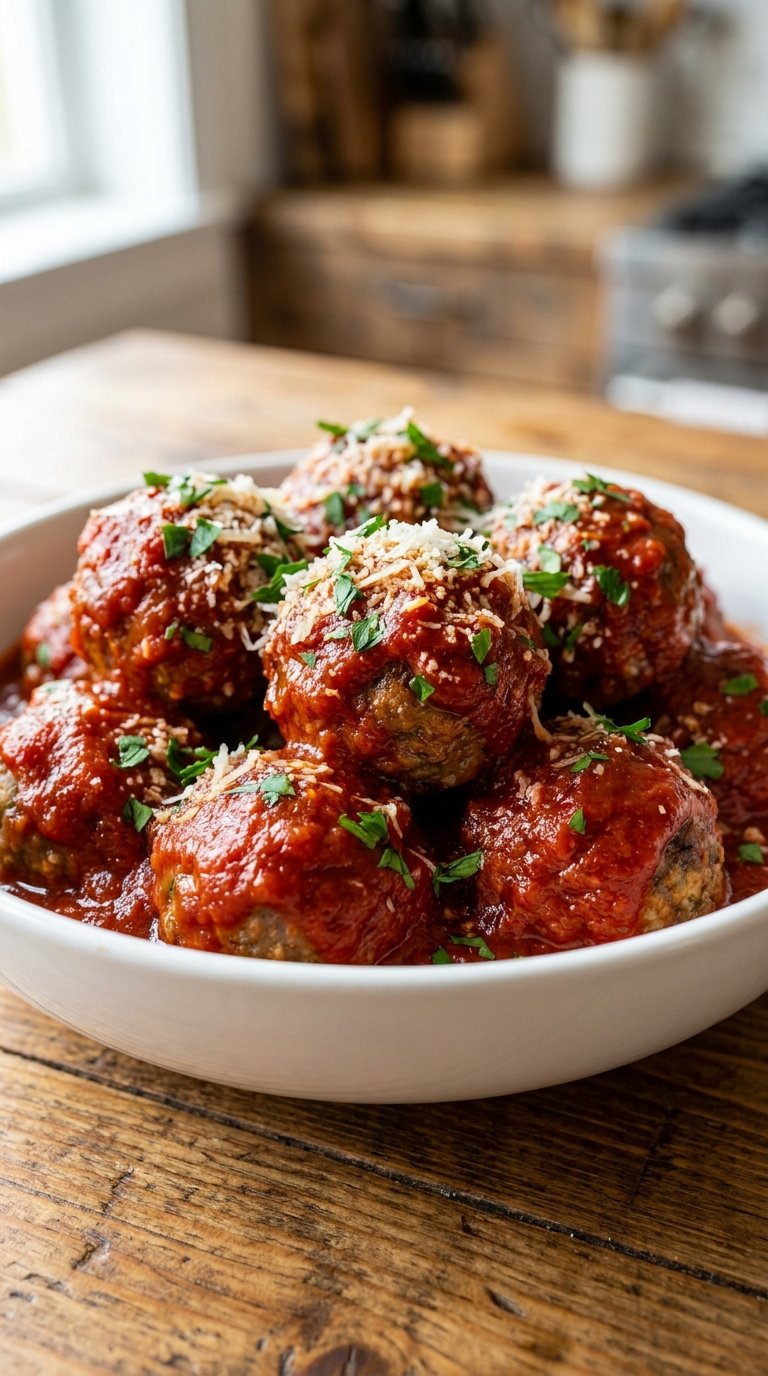
An 80/20 ground beef works well on its own, but a 50/50 blend of ground beef and ground pork produces the best texture and flavor. Pork adds natural fat and sweetness that beef alone cannot provide. Ground turkey works for a leaner version but needs extra help from olive oil and a full milk-soaked breadcrumb binder to stay tender. Veal is traditional in Italian-American recipes and produces a very fine, silky texture, though it is harder to find and more expensive.
Should I bake or fry meatballs?
Baking at high heat (425°F) is easier, produces more consistent results, and keeps the meatballs juicier because you are not losing fat into a pan. Pan-frying creates a deeper, crispier crust with more surface browning, but it requires attention and does not cook the interior as evenly. The best of both worlds is a quick pan sear for color followed by finishing in the oven or simmering in sauce. For meal prep and freezer batches, baking is the better method every time.
How long do homemade meatballs last in the freezer?
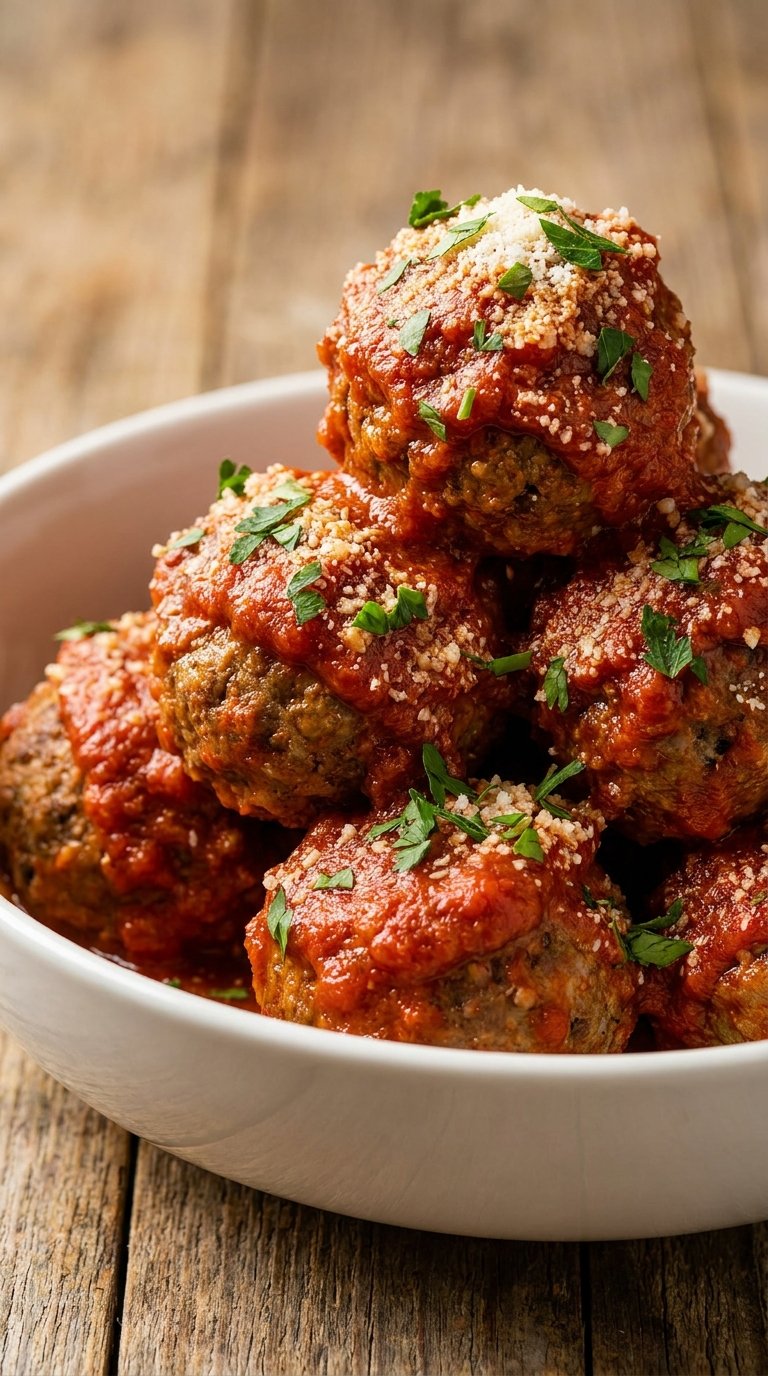
Baked meatballs last up to 3 months in the freezer when wrapped tightly and stored in a sealed freezer bag with the air pressed out. Raw, formed meatballs last up to 4 months frozen because they have not gone through the cooking process yet. Label bags with the date. After 3 months, the quality starts to drop — the texture becomes slightly grainy and the flavor flattens. They are still safe to eat past that point, but they are at their best within the first 3 months.
How do I keep meatballs moist when reheating?
Reheat in sauce whenever possible. The liquid in the sauce replaces the moisture that evaporates during reheating and the meatballs absorb flavor at the same time. If reheating without sauce, place them on an oven-safe dish with 2 tablespoons of water or broth in the bottom, cover tightly with foil, and heat at 300°F for 15 minutes. The steam from the liquid keeps them from drying out. The microwave works for a quick reheat but tends to create hot spots — wrap in a damp paper towel and use medium power (50%) for better results.
Conclusion
A great easy meatball recipe comes down to three things: the right fat ratio in the meat, a proper milk-soaked breadcrumb binder, and enough restraint to stop mixing before the mixture gets overworked. Get those three things right and every variation in this guide will turn out juicy, tender, and worth making again.
The nine variations here cover everything from a classic Sunday dinner to a 10-minute weeknight solution, and every one of them fits into a freezer routine that makes future meals faster.
Which variation are you trying first — the classic Italian, the mozzarella-stuffed version, or the spicy honey garlic glaze? Leave a comment below and tell us.
Follow us on Pinterest for more easy meatball recipe inspiration and weeknight dinner ideas.

Leave a Comment