
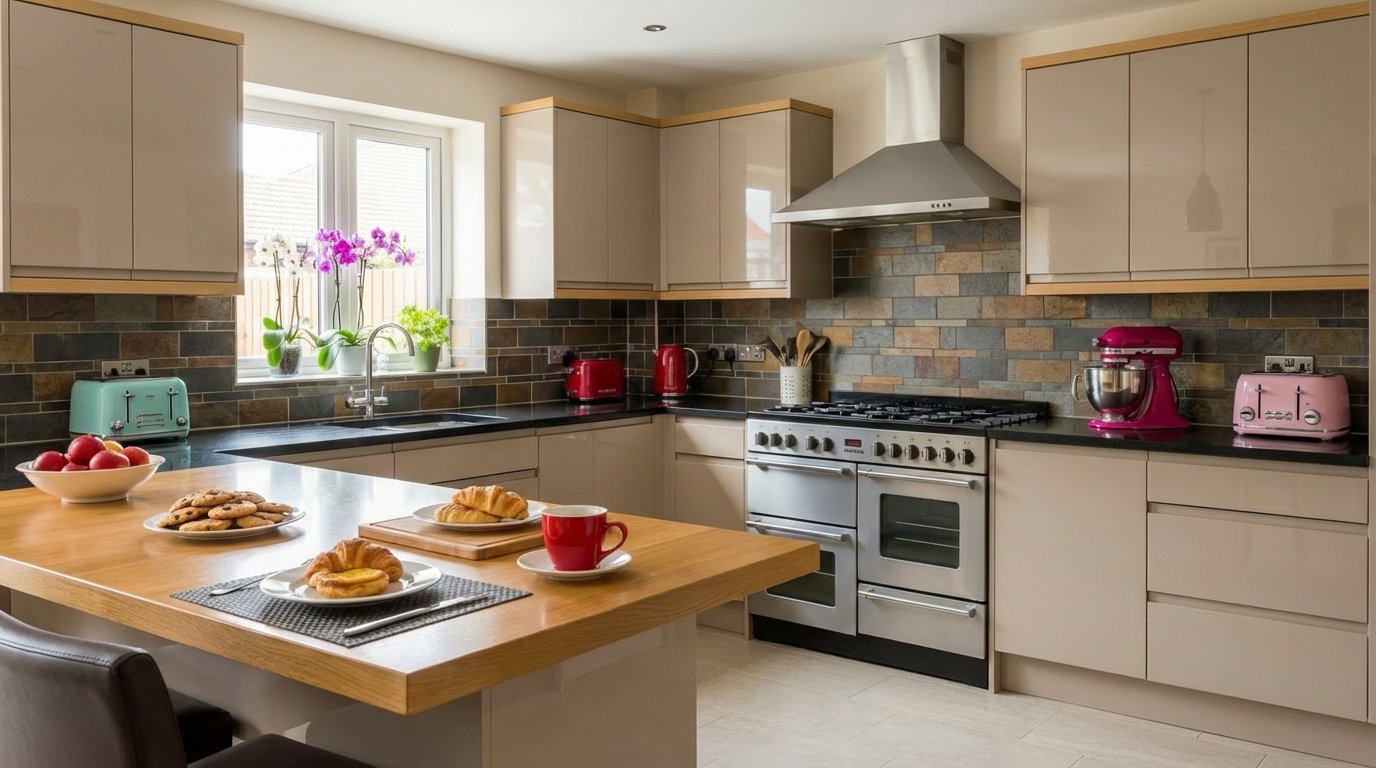
The Utility Hook
You have a U-shaped kitchen layout. You likely feel the space creates a distinct boundary between cooking and living. This layout often offers great counter space but can feel cramped if not planned well. Many homeowners struggle with dark corners and limited floor area in this configuration. You want a kitchen that feels open yet functional. The right design choices transform a tight “U” into a spacious cooking haven. This guide provides specific measurements, layout tweaks, and styling tricks to maximize your footprint.
Check out our related guide on [Small Kitchen Layouts].
Key Takeaways
- Optimize Corners: Blind corners kill storage. Swing-out units or diagonal drawers recover up to 30% more space.
- Light Matters: Under-cabinet lighting and glossy finishes push walls back visually.
- Flow Control: Keep the fridge on the outer edge of the U-shape to stop traffic jams.
- Vertical Gain: Floor-to-ceiling cabinetry on one wall doubles pantry storage without using floor space.
Contents
- Tuck Away an Arm
- Extend With a Table
- Fake It With a Seating Nook
- Create an Entertaining Space
- Maximise Floorspace
- Embrace a Sleek Look
- Work a Peninsula Arm
- Trick the Eye
- Work a Small Space
- Set Up a Breakfast Station
- Opt for a Slimline U
- Plan Around a Window
- Introduce an Island
- Add Colour and Pattern
- Work in Architectural Features
- Go Dark and Dramatic
- Install Open Shelving
- Mix Metal Finishes
- Use Glass Front Cabinets
- Add a Skylight
- Choose Handleless Units
- Layer Your Lighting
- Install a Pot Filler
- Create a Coffee Zone
- Use Rugs for Warmth
- Hide Appliances
- Tile the Ceiling
- Add Natural Wood Elements
- Try Two-Tone Cabinetry
- Popular Asked Questions
- Conclusion
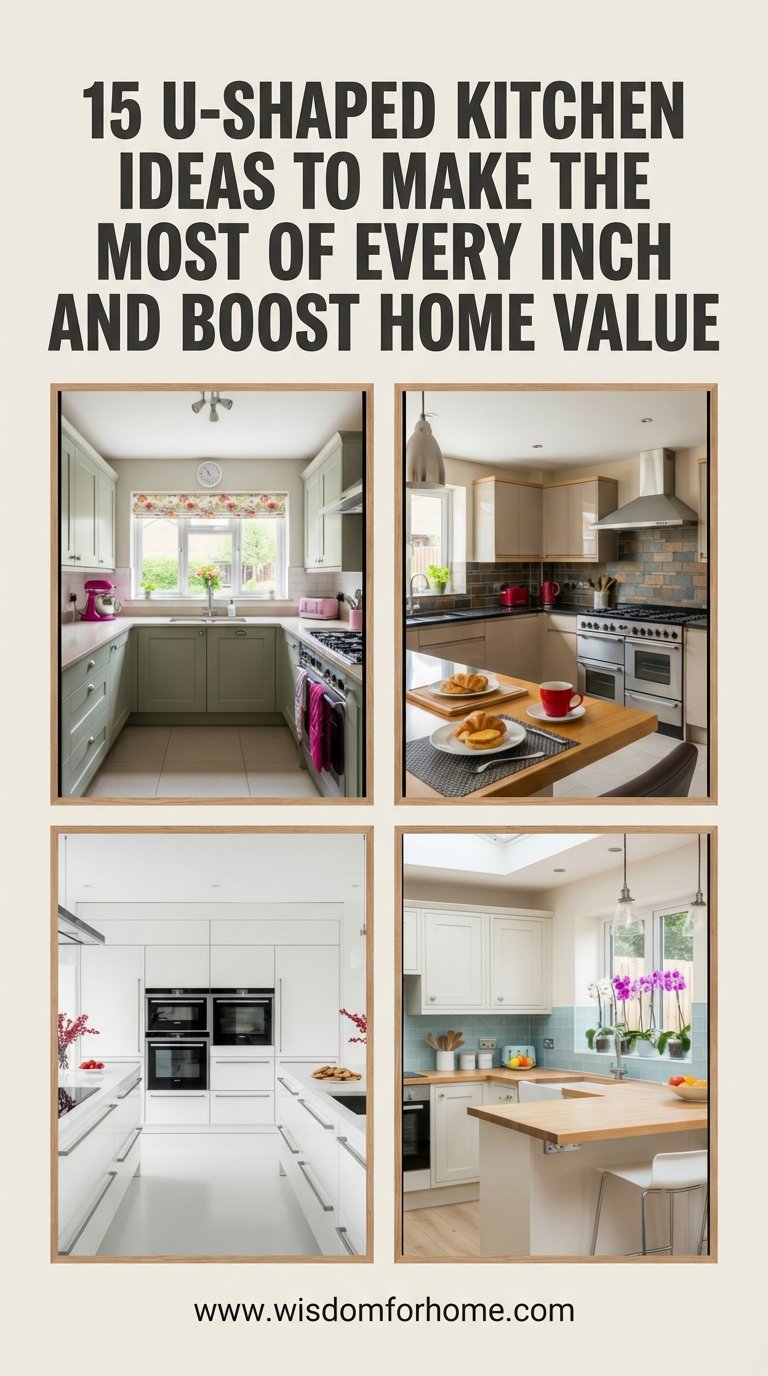
Tuck Away an Arm
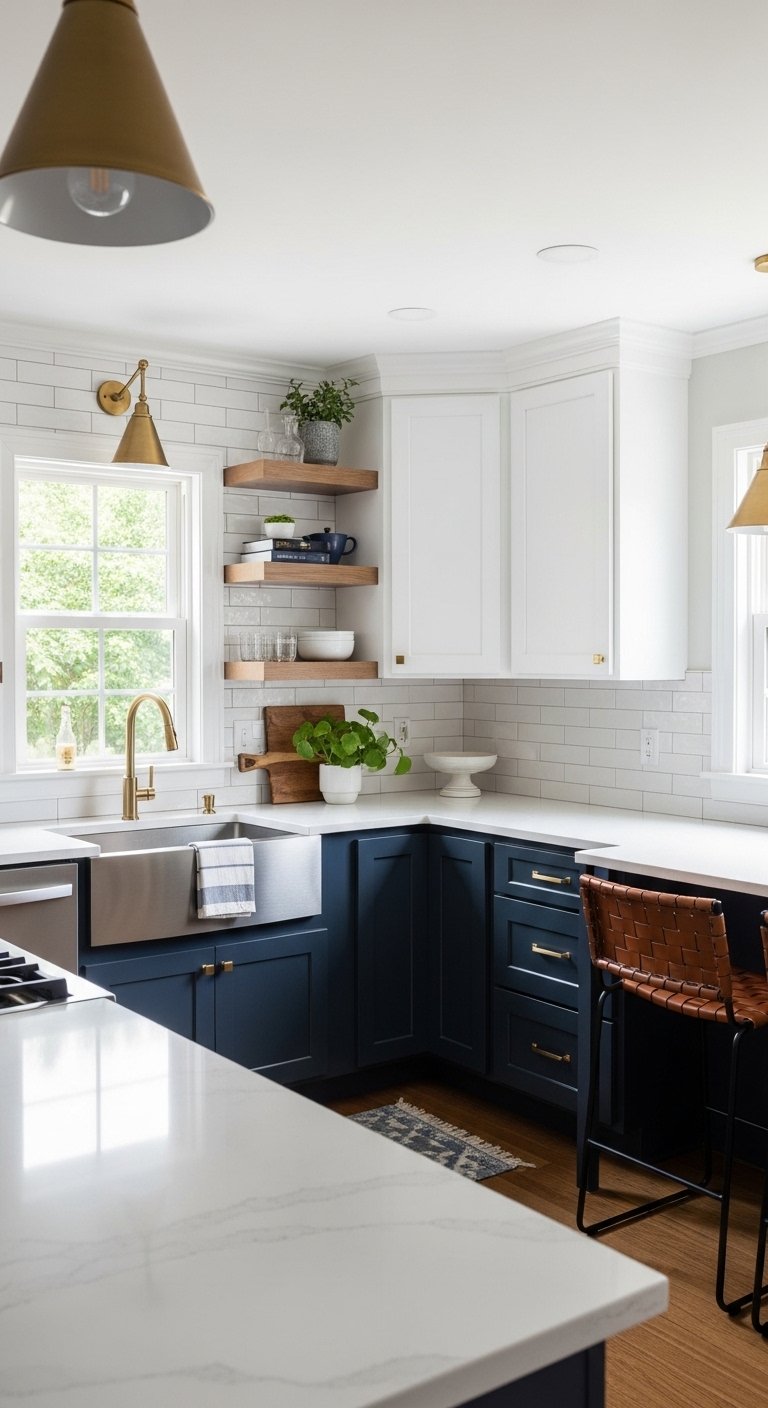
Tall cabinetry creates a wall of storage that disappears into the architecture. One entire “arm” of your U-shape becomes a floor-to-ceiling bank of cupboards. This houses your fridge, pantry, and oven tower. The look remains clean because small appliances stay hidden behind large doors. You remove visual clutter from the worktop. The room feels wider because the eye scans a flat surface rather than jagged counter heights. Matte finishes work best here to blend the unit with the wall color.
Keep the hardware minimal. Push-to-open latches eliminate protruding handles. This prevents you from catching clothes on knobs in tight spaces. You gain a streamlined path through the kitchen. The focus shifts to the open counter space on the other two walls.
Pro Tip: Use a pull-out larder unit in this arm to access items at the back without reaching.
Extend With a Table
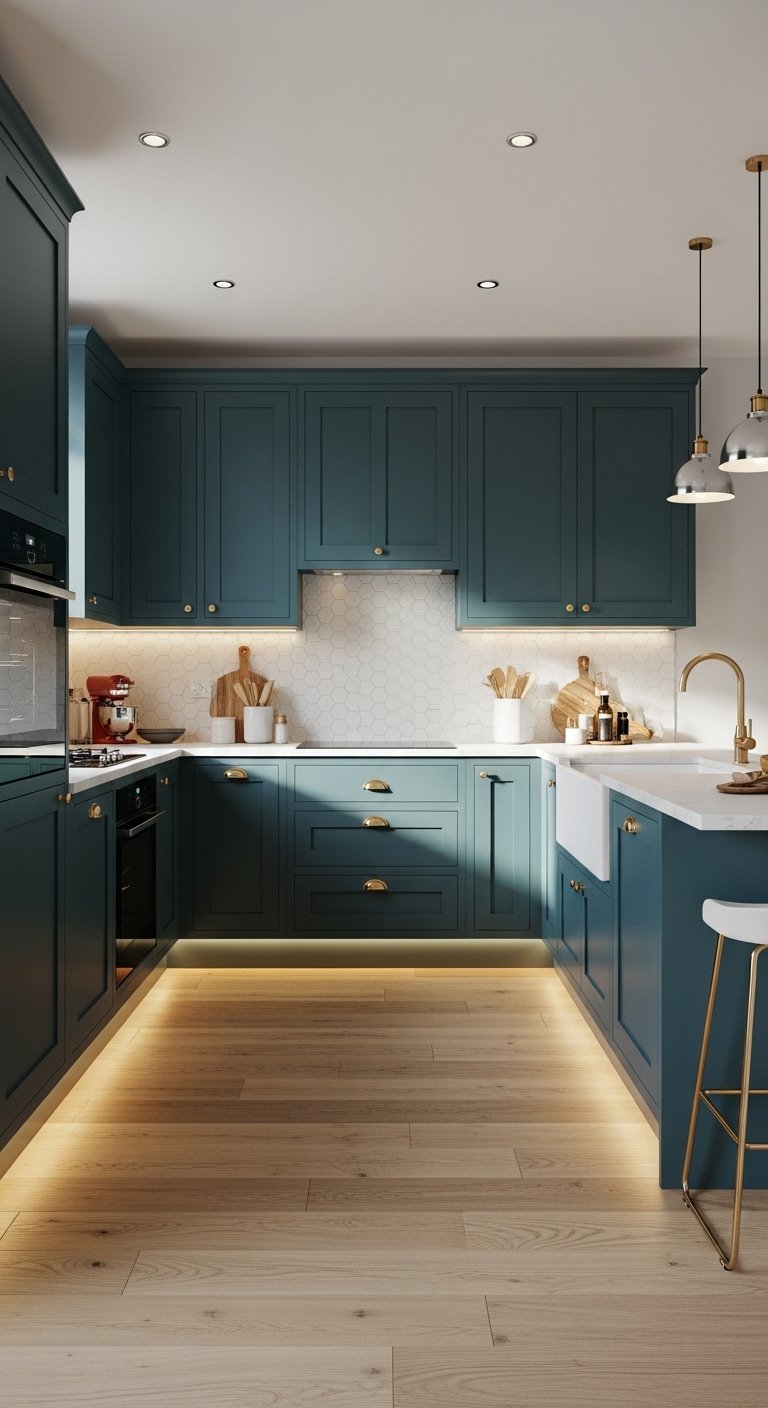
A dining table attached to the outer arm converts your U-shape into a social hub. You bridge the gap between cooking and eating. A drop-down table saves space when not in use. A permanent extension in the same worktop material creates a custom look. This “G-shaped” evolution allows guests to sit near the cook without entering the work triangle. You keep the floor clear in the main kitchen area.
Wood tones on the table add warmth to stone counters. The contrast separates the zones visually. Lowering the table height to standard dining levels accommodates regular chairs. This provides more comfort than high bar stools. You encourage longer meals and conversation.
Save this idea to your Pinterest.
Fake It With a Seating Nook
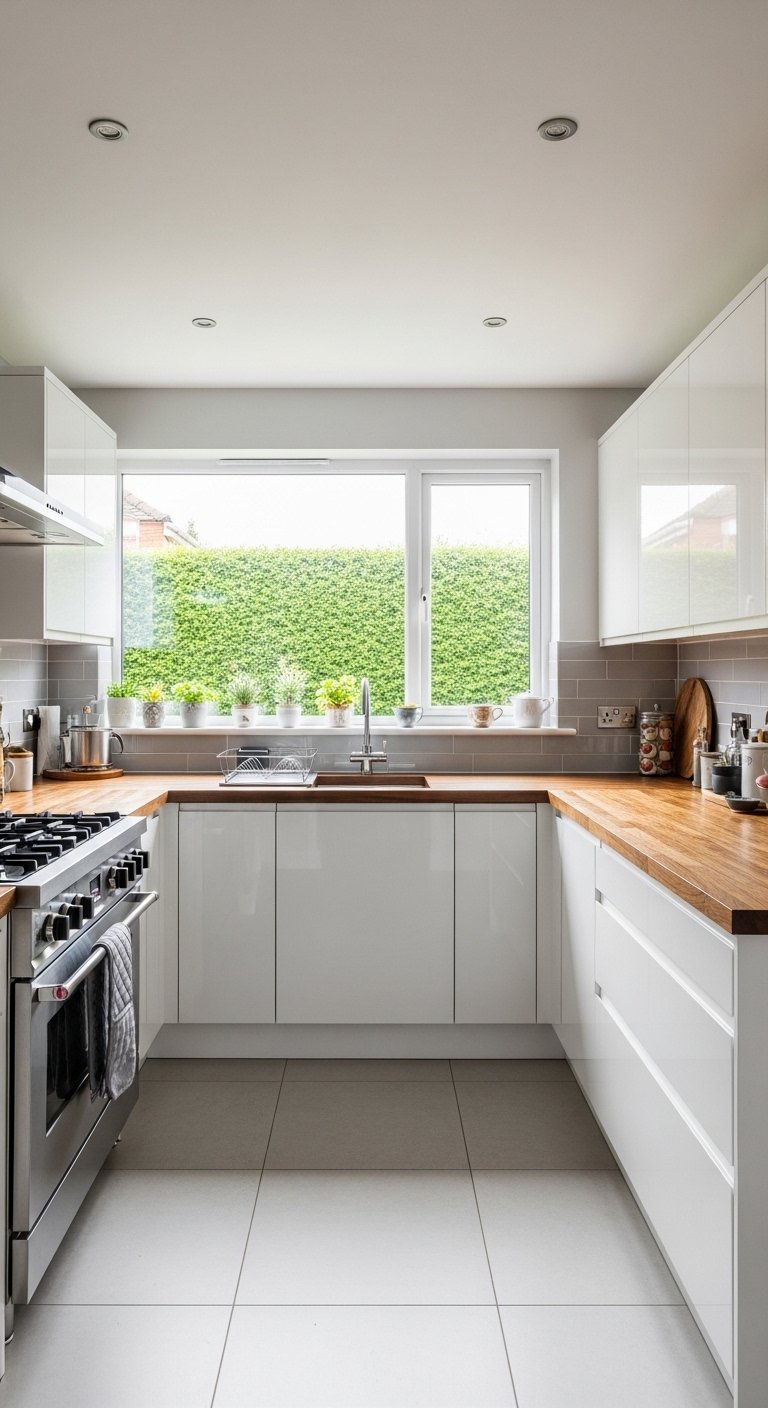
The end of a U-shaped layout often leaves a dead zone. A built-in bench seat transforms this idle space. You create a cozy breakfast nook without needing a full dining room. Under-bench drawers add storage for linens or bulky pots. Soft cushions introduce texture and color to a room full of hard surfaces. The kitchen feels less industrial and more inviting.
Place a small round table here. Round tables improve flow in square rooms. No sharp corners mean easier movement around the seating area. A pendant light above the table defines the zone. You create a destination within the kitchen itself.
Pro Tip: Use performance fabric on cushions to resist food stains and fading.
Create an Entertaining Space
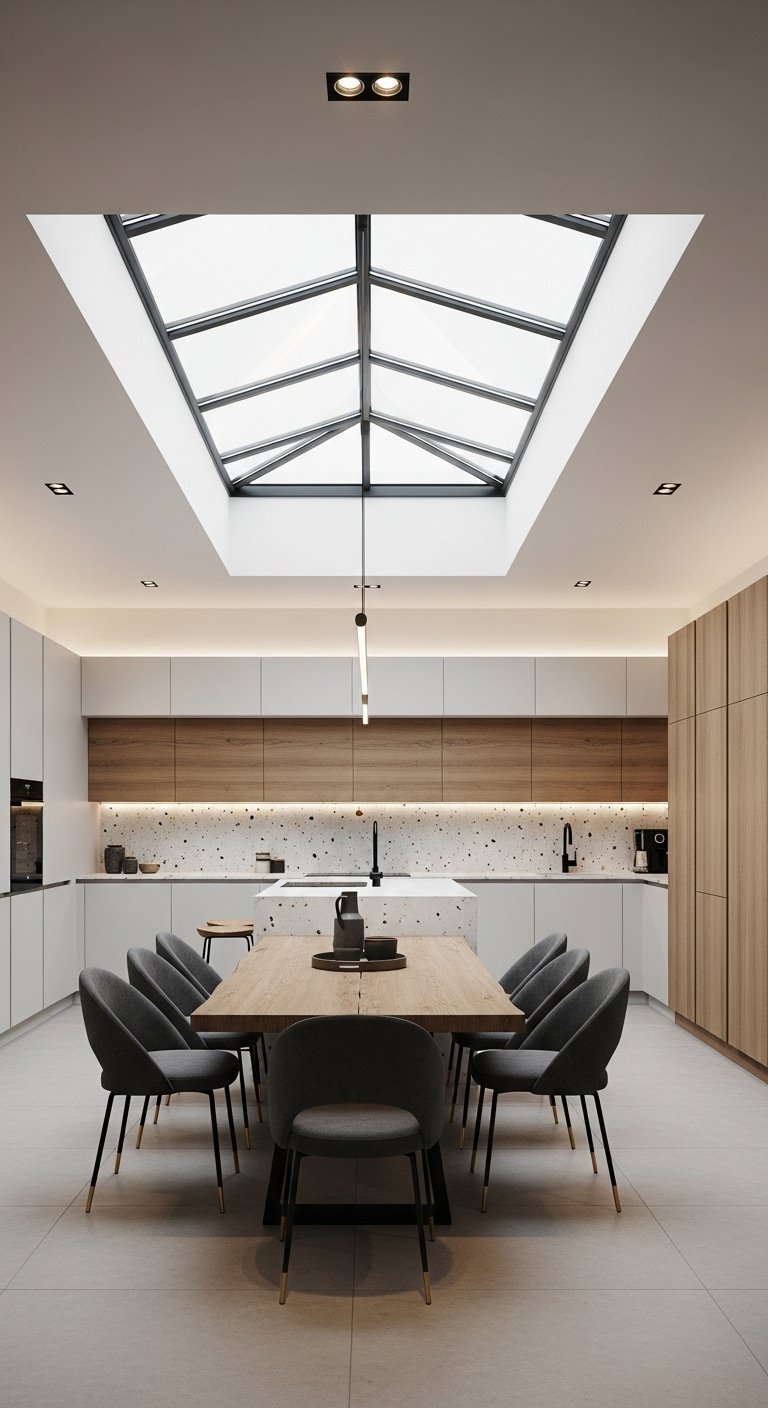
Open up one side of the U to face the living area. This layout keeps the cook involved in the party. A raised breakfast bar hides dirty dishes from the guests’ view. Wine fridges facing outward let guests serve themselves. You reduce traffic in the cooking zone. The kitchen becomes a stage for hosting.
Use durable materials like quartz on the guest-facing side. It withstands spills and leans. Pendant lights over this section signal that it is a gathering spot. Dimmable switches allow you to change the mood from prep time to party time. The space adapts to your needs instantly.
Maximise Floorspace
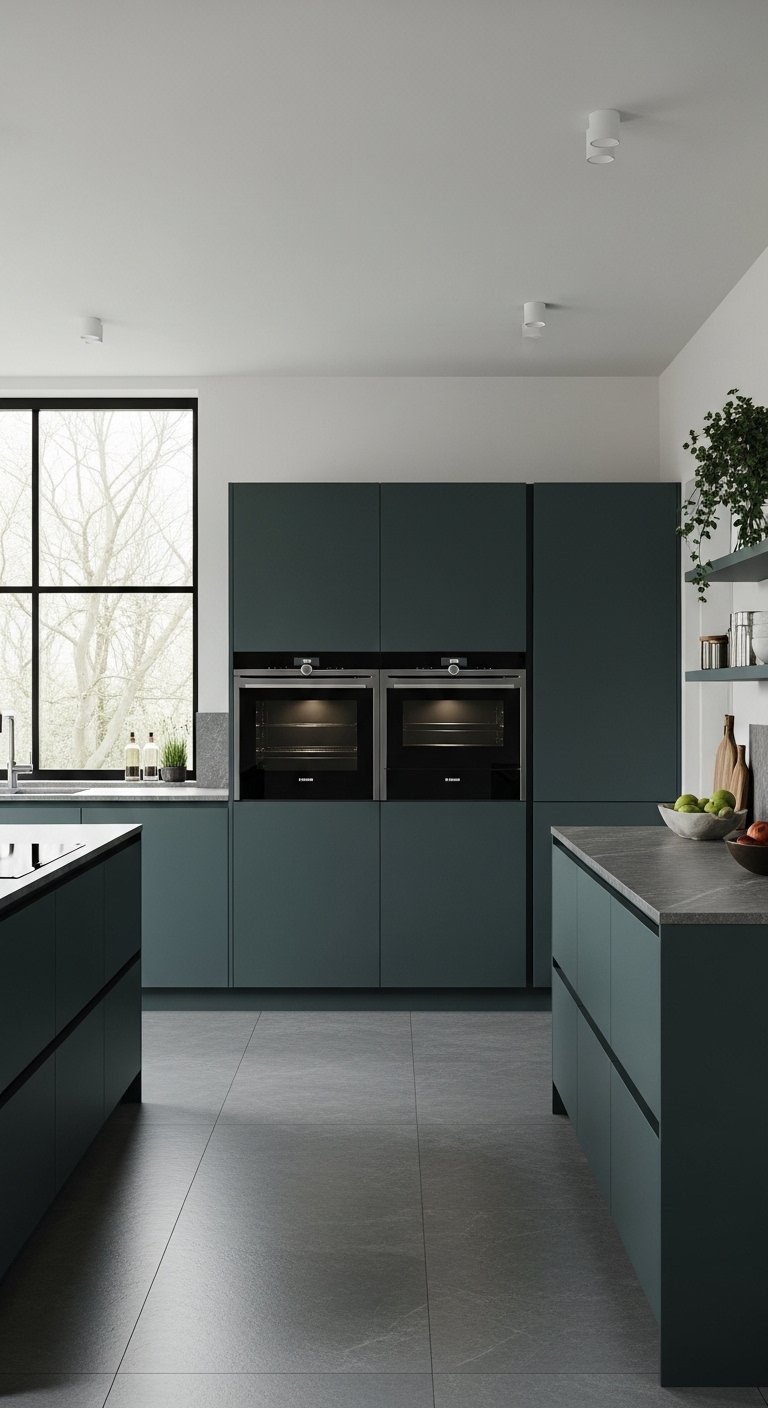
Floor area dictates how big a room feels. Keep base cabinets shallow on one side if the U is narrow. Standard depth is 24 inches, but 15-inch cabinets work for canned goods and glassware. You gain nine inches of floor width. This extra room allows two people to pass each other comfortably. The visual difference is massive.
Wall-mounted appliances free up counters. A microwave shelf or a wall oven keeps heavy items off the work surface. The room looks airier with clear counters. Light-colored flooring reflects overhead light. This tricks the brain into seeing a larger ground area.
Comparison: Gloss vs. Matte Finish
| Feature | Gloss Finish | Matte Finish |
|---|---|---|
| Space Perception | Reflects light, makes room feel bigger | Absorbs light, makes room feel cozy |
| Maintenance | Shows fingerprints and smudges easily | Hides smudges better, harder to clean grease |
| Style Vibe | Modern, high-tech, glamorous | Understated, classic, sophisticated |
| Best For | Small, dark U-shaped kitchens | Large, well-lit spaces |
Embrace a Sleek Look
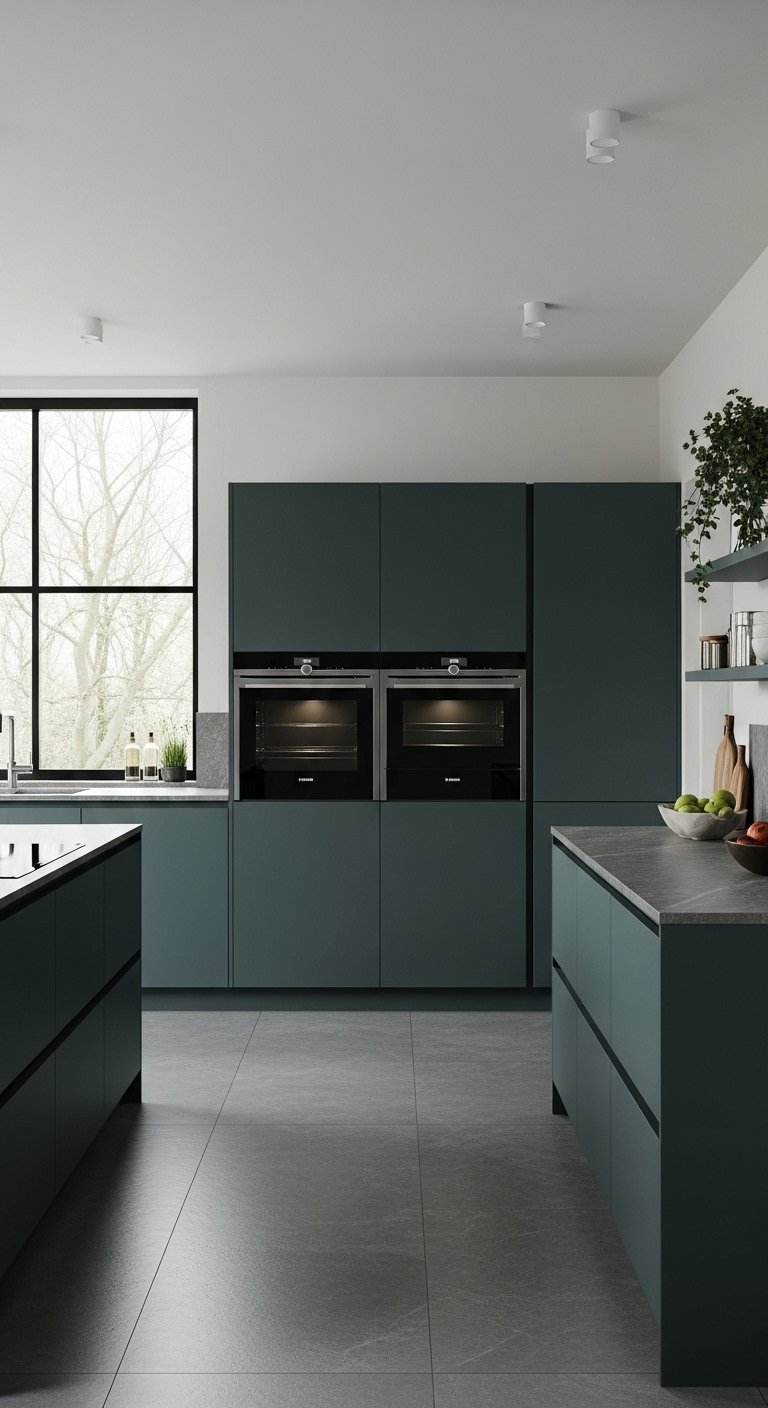
Minimalism favors small U-shaped kitchens. Flat-panel cabinet doors eliminate visual noise. Intricate molding casts shadows that shrink the space. Smooth surfaces reflect natural light. Choose a monochromatic palette. White on white or cool greys blur the lines where walls meet ceilings. The room boundaries disappear.
Integrated appliances blend in seamlessy. A dishwasher panel that matches the cabinets maintains the horizontal lines. Avoid clutter on the backsplash. A solid sheet of glass or stone looks larger than small subway tiles. The eye travels smoothly across the room without interruption.
Pro Tip: Install a boiling water tap to remove the kettle from the countertop permanently.
Work a Peninsula Arm
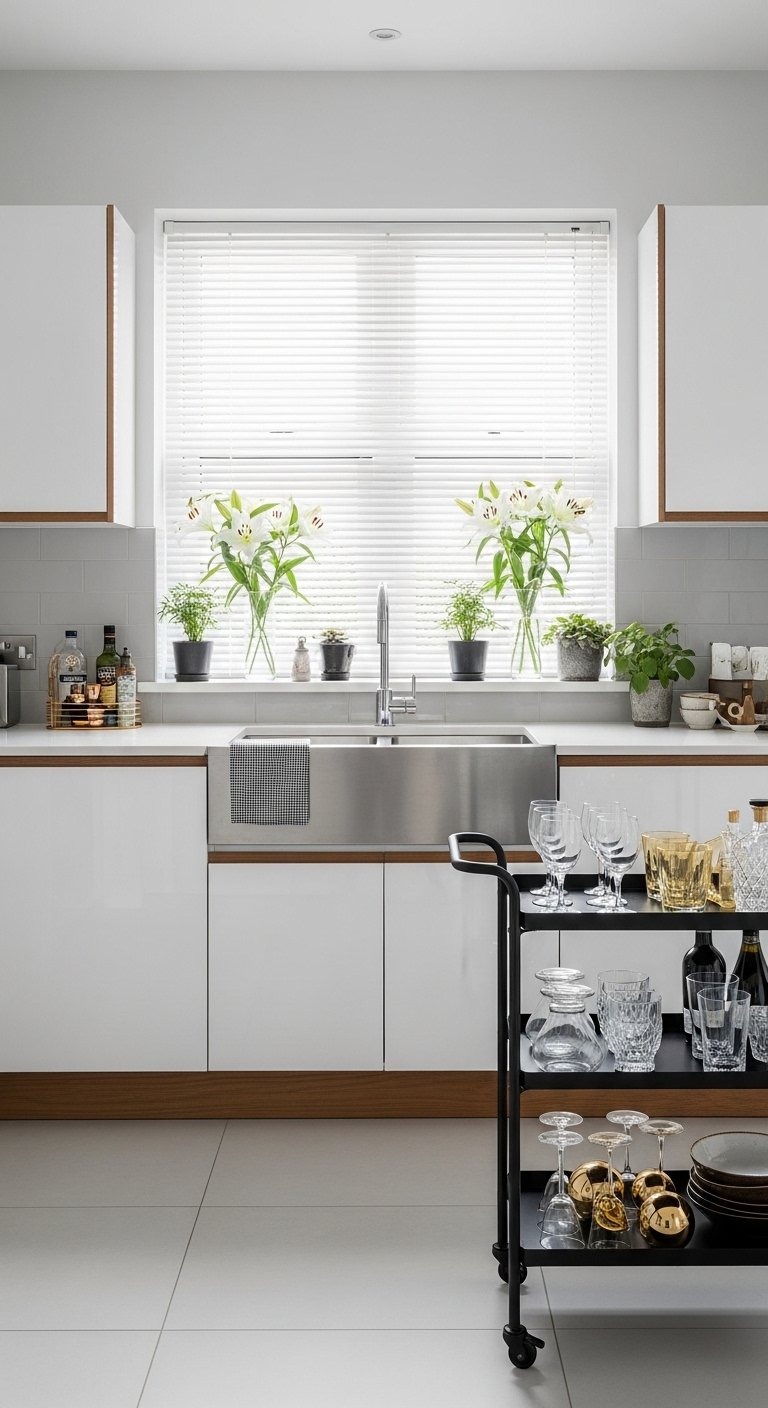
A peninsula acts as a room divider without closing off the wall. You get the storage of a U-shape with the openness of an island. This arm serves as a prep station and a serving buffet. Guests lean here while you cook. You define the kitchen zone clearly in an open-plan house.
Add an overhang for seating. Twelve inches is enough for knee space. Choose backless stools that tuck completely under the counter. This keeps the walkway clear when no one is eating. The peninsula becomes a multitasking powerhouse.
Trick the Eye
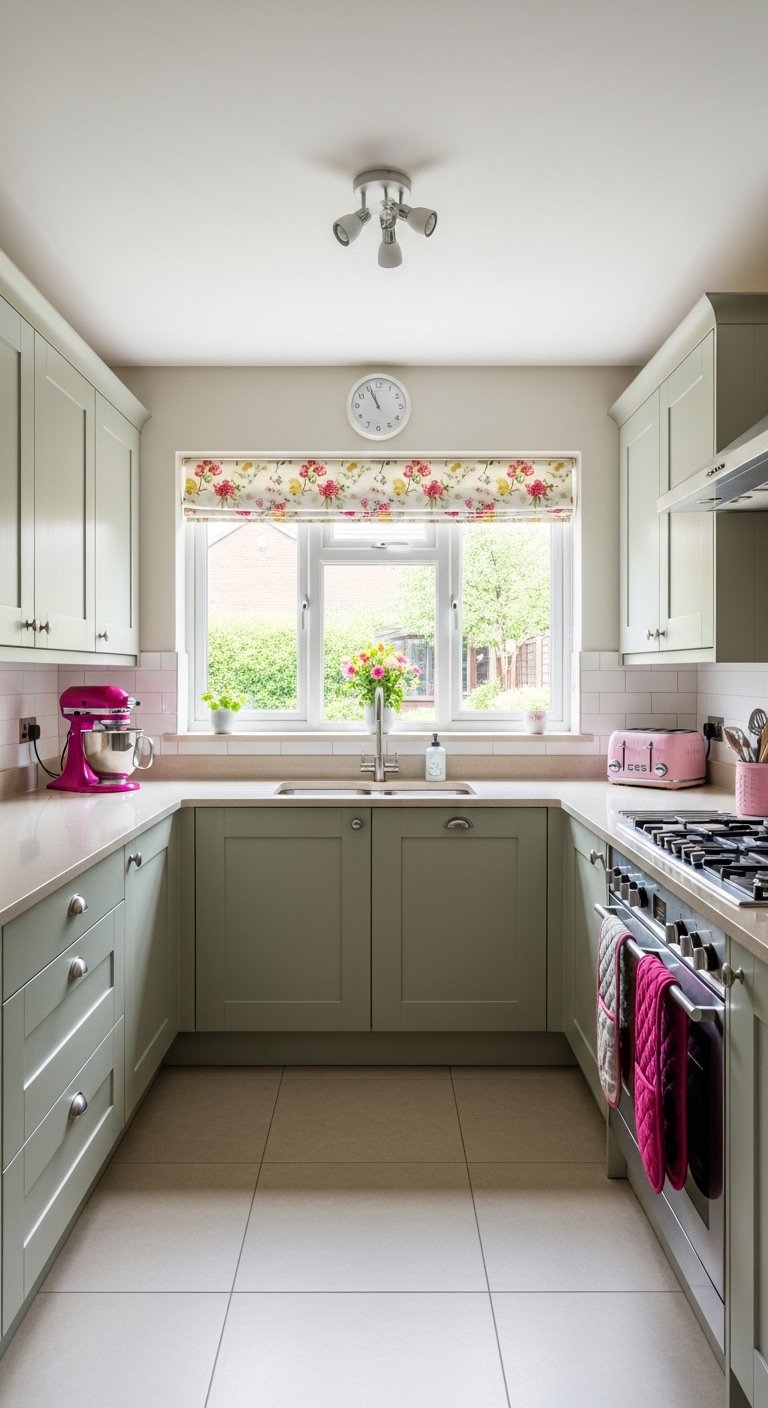
Optical illusions expand small spaces. Horizontal grain on timber cabinets stretches the width of the wall. Running floorboards parallel to the longest arm makes the room look longer. Mirrors on the backsplash double the perceived depth. You see a reflection of the room, suggesting space beyond the wall.
Glass cabinet doors on upper units create depth. You see the back of the cabinet, not just a solid door. Light travels through the storage. Style the shelves inside carefully to avoid a messy look. White dishes keep things tidy and bright.
Save this idea to your Pinterest.
Work a Small Space
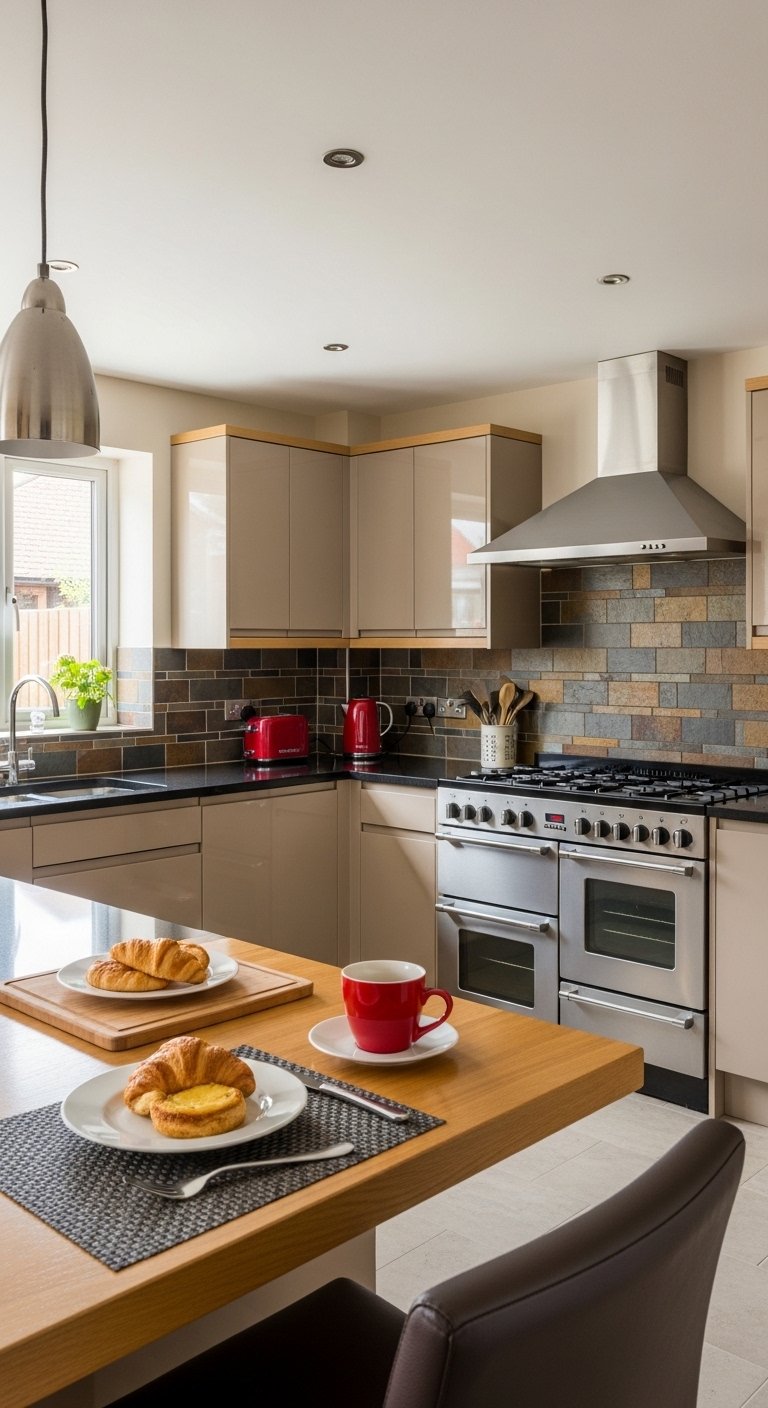
Tiny U-kitchens require strict editing. Use every inch of vertical wall. Cabinets should touch the ceiling. Store rarely used items on the top shelf. Use a rolling ladder for access if ceilings are high. Hooks under upper cabinets hold mugs or utensils. You clear drawer space for bulkier tools.
Choose a single-bowl sink. Double bowls waste cabinet width. A deep single basin handles large pots easily. Place a cutting board over the sink to create temporary counter space. Every surface must serve two purposes.
Pro Tip: Install toe-kick drawers to store baking sheets in the wasted space near the floor.
Get The Look: Modern Farmhouse
- Cabinet Color: Sage Green or Navy Blue
- Hardware: Brushed Brass Cup Pulls
- Countertop: Butcher Block or White Quartz
- Sink: White Apron Front (Farmhouse)
- Lighting: Industrial Metal Pendants
Set Up a Breakfast Station
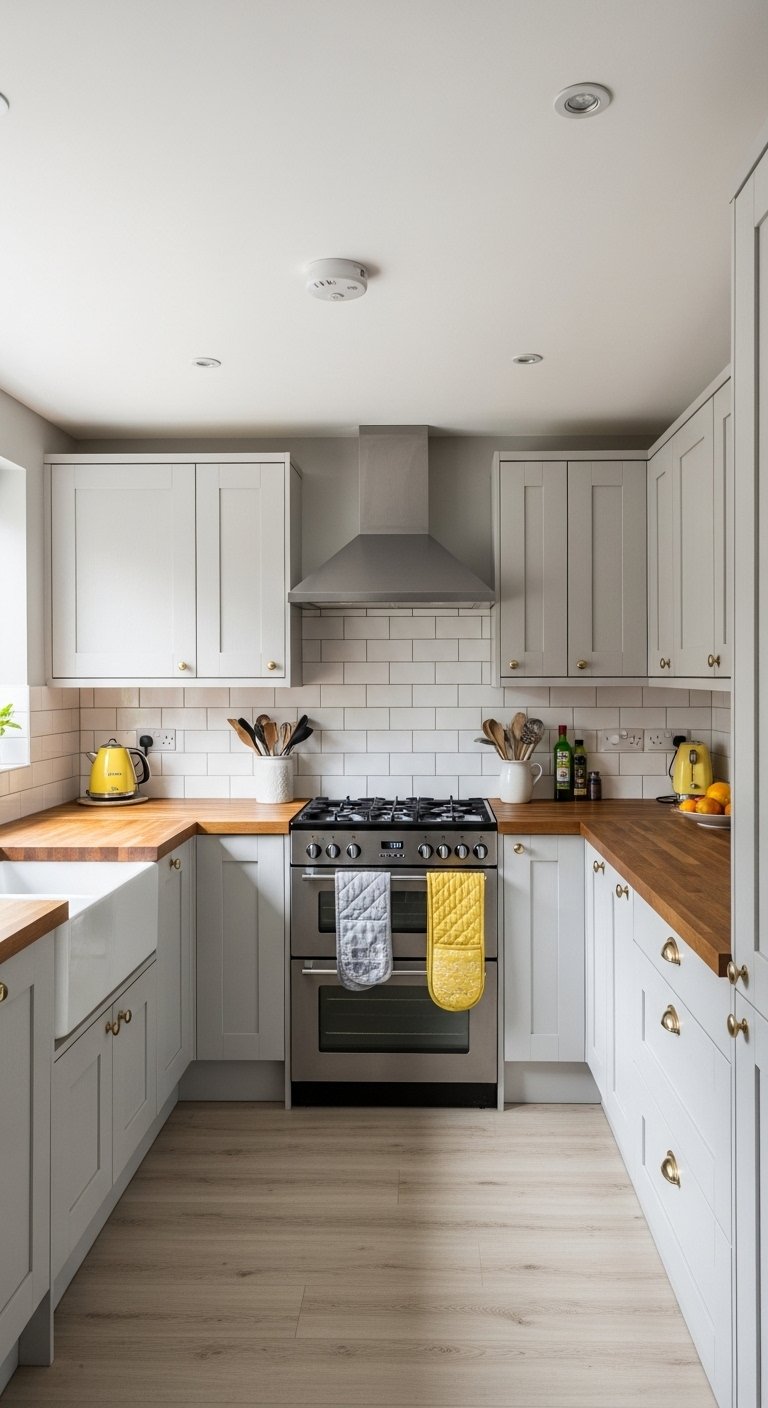
Dedicate a corner of the U to mornings. House the toaster, coffee machine, and cereal jars in an appliance garage. A roll-top door hides the clutter instantly. You pull it down when breakfast ends. The kitchen looks tidy for the rest of the day.
Keep mugs and bowls directly above this station. The fridge should be close by for milk access. This creates a micro-workflow within the larger triangle. Family members get breakfast without crossing the cook’s path. Mornings become efficient and calm.
Opt for a Slimline U
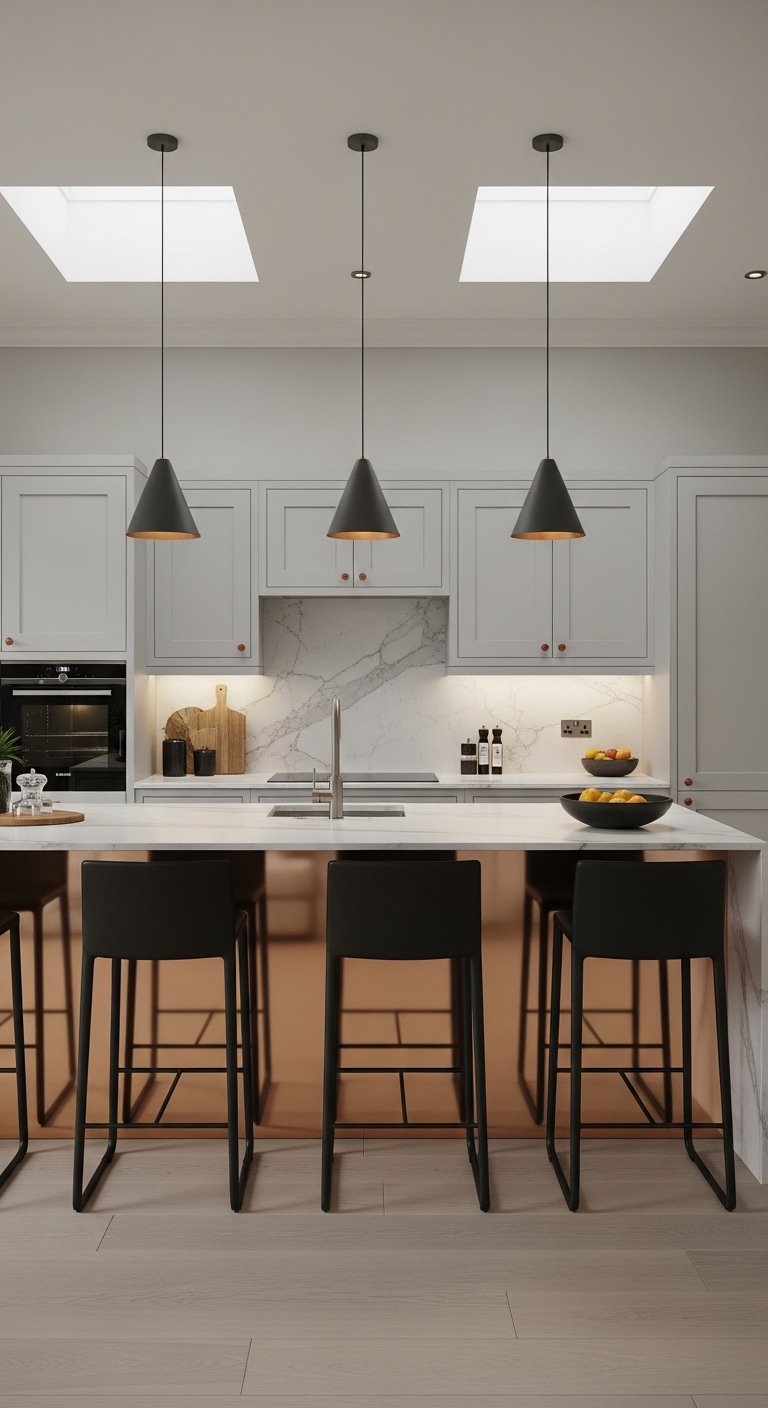
Narrow rooms often force a galley layout, but a slim U is possible. Use reduced-depth cabinets on the connecting wall. This “bridge” connects the two sides. It works perfectly for shallow items like spices or glasses. You gain a continuous countertop run.
Keep the window area clear. Do not block natural light with heavy upper cabinets. Open shelving across the window keeps the view open. Sunlight reaches the back of the room. The space feels less like a tunnel and more like a room.
Plan Around a Window
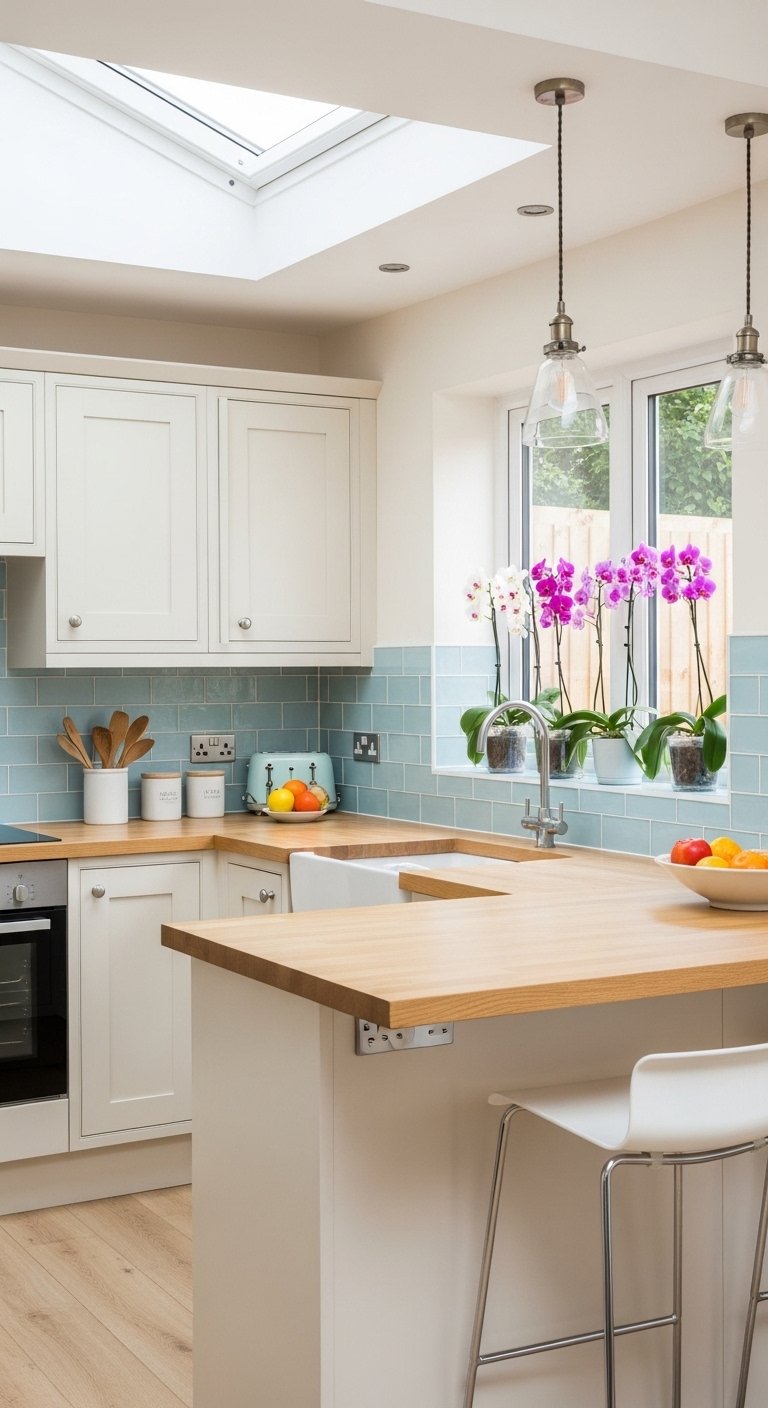
The sink usually sits under the window in a U-shape. This gives you a view while washing up. Extend the sill to meet the countertop. This creates a deeper surface for plants or herbs. Natural light floods the work area. You use less electricity during the day.
Avoid upper cabinets immediately next to the window. Leave a few inches of breathing room. This lets the light spread sideways. The window becomes a focal point. Frame it with simple blinds rather than heavy curtains.
Pro Tip: Choose a faucet that folds down if your window opens inward.
Introduce an Island
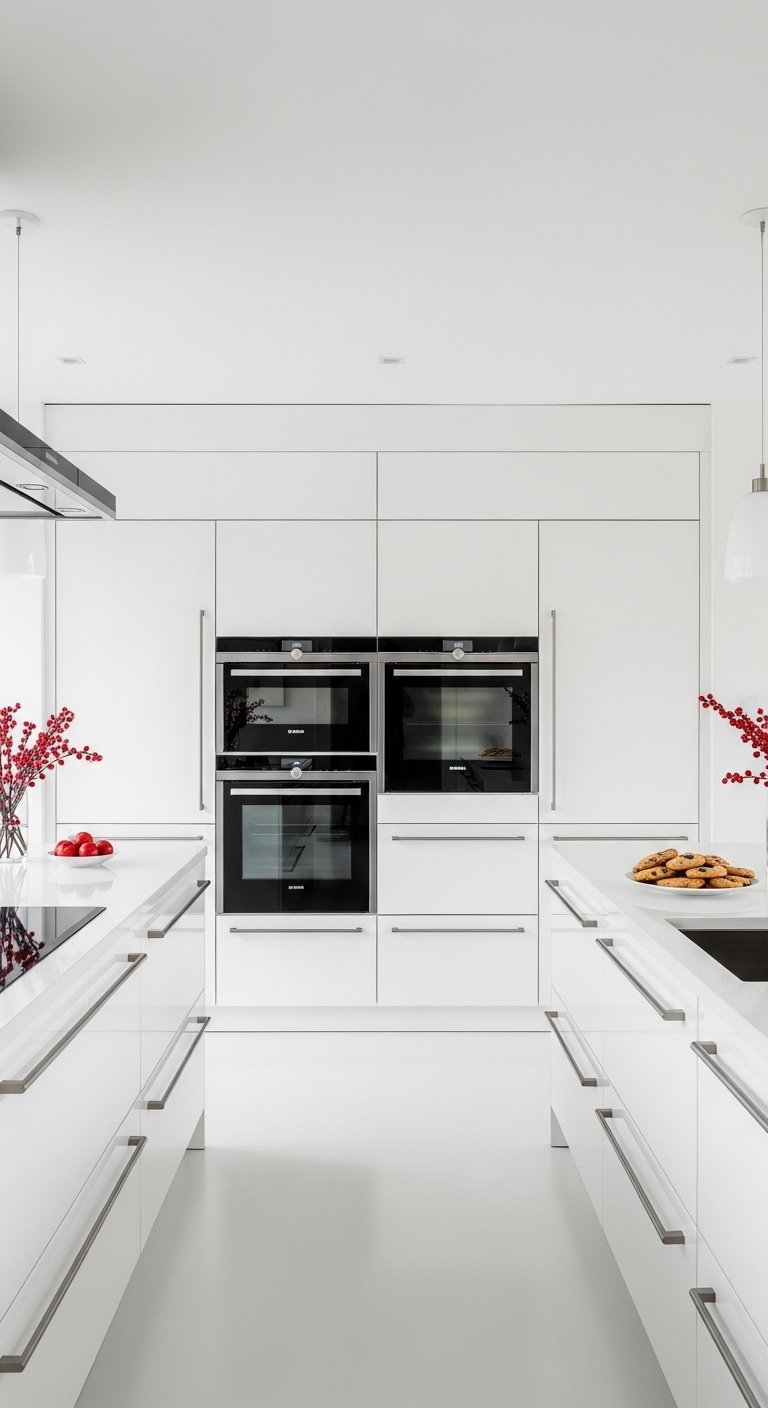
Large U-shaped kitchens feel empty in the middle. An island fixes this. It provides a central landing zone for groceries. You gain a second prep area. The distance between counters decreases to a comfortable 42 inches. You turn fewer steps into more cooking.
Contrast the island color with the main cabinets. A dark navy island anchors a white kitchen. Use a different countertop material to highlight the feature. Butcher block on the island warms up stone perimeter counters. The design feels layered and custom.
Add Colour and Pattern
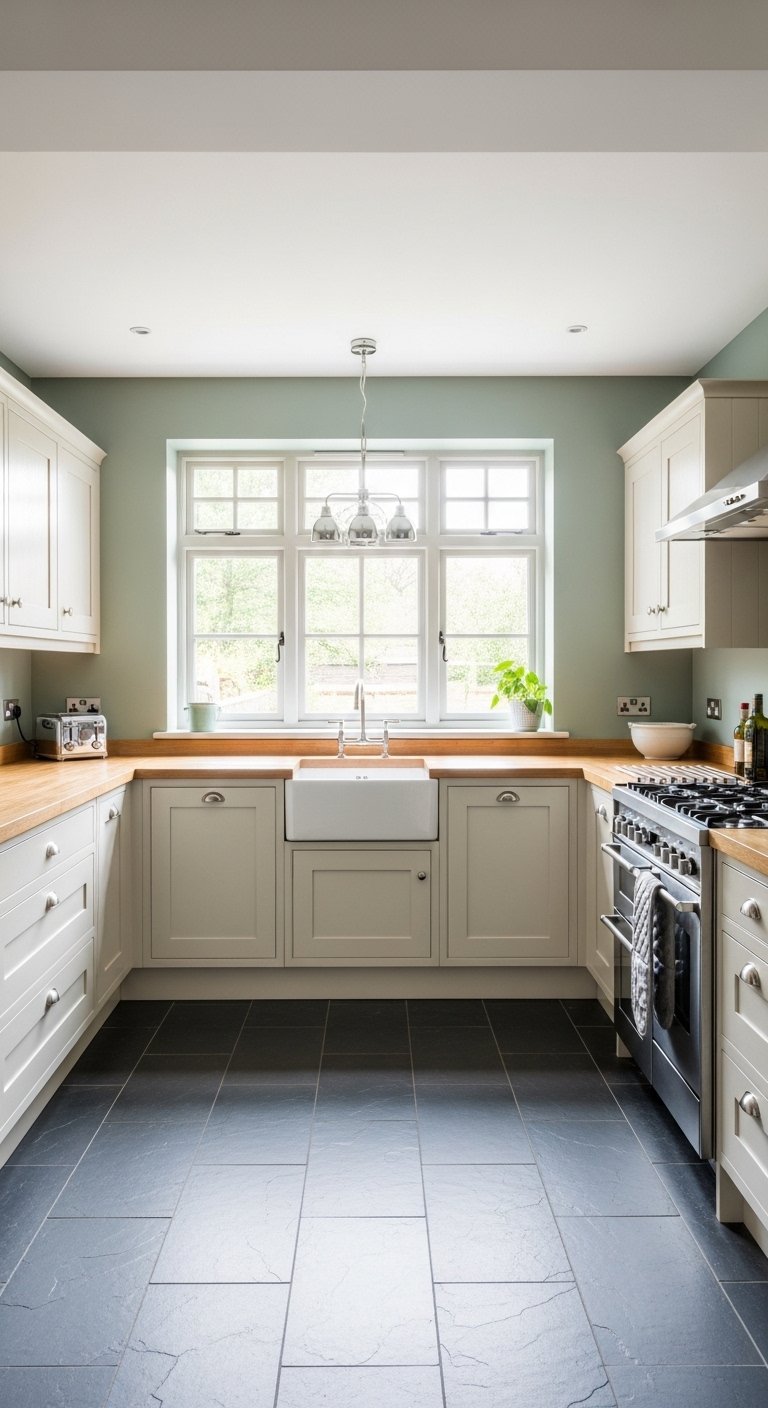
White is safe, but color adds personality. Paint base cabinets a bold shade like forest green. Keep uppers neutral to maintain an airy feel. Patterned floor tiles distract from a small footprint. Your eye looks down at the design rather than at the walls.
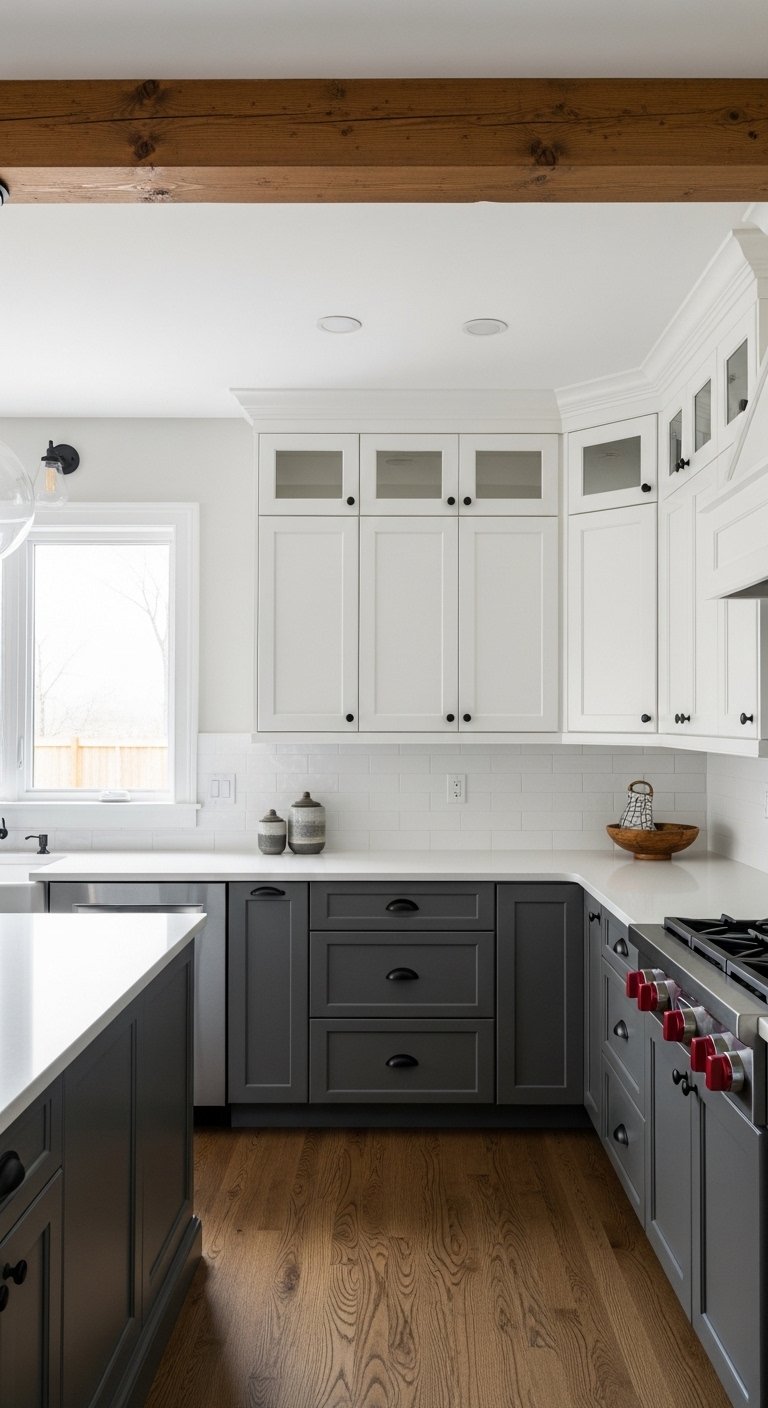
Backsplashes offer a low-risk place for pattern. Geometric tiles add energy. Vertical stack tiles raise the ceiling height visually. Coordinate small appliances with your accent color. A red mixer pops against a grey backsplash. The room feels designed, not just assembled.
Work in Architectural Features
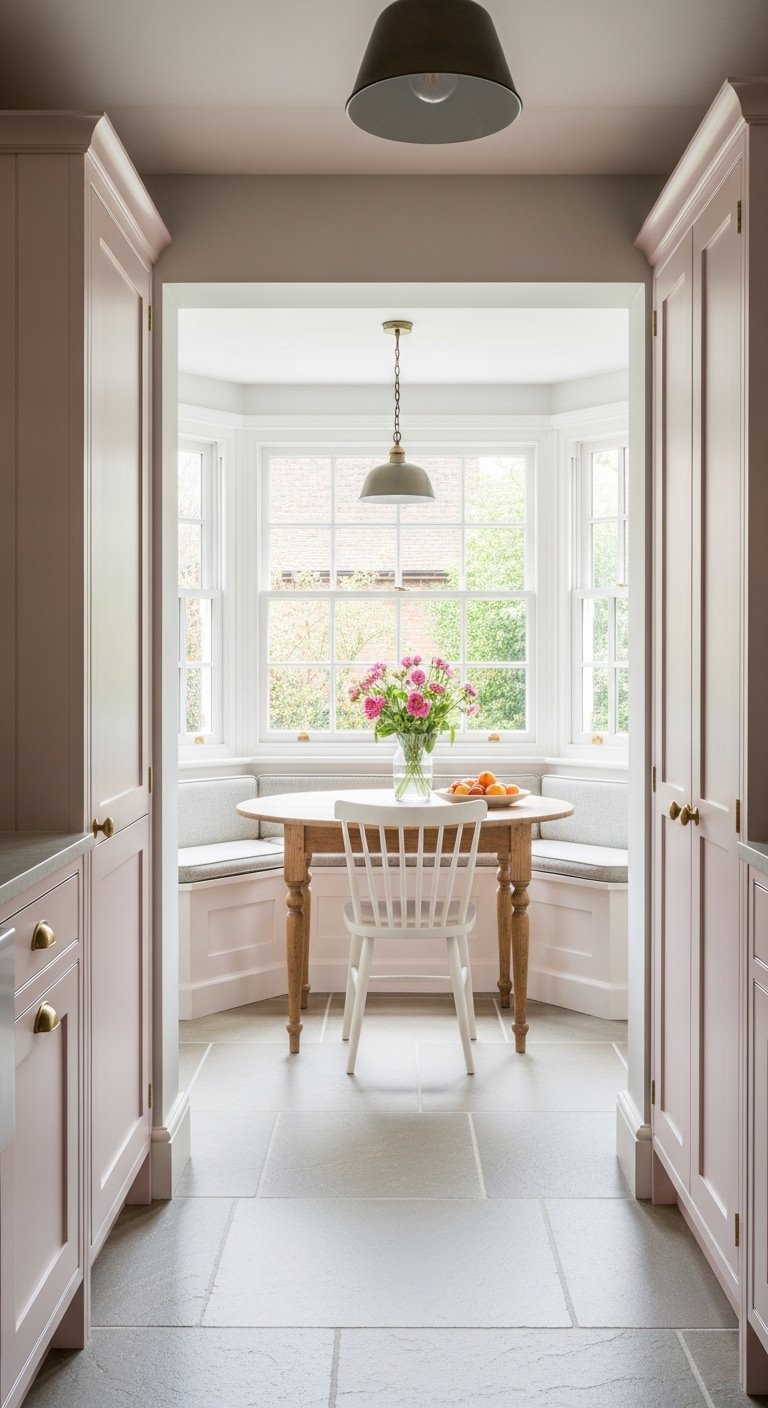
Beams, pillars, and alcoves add character. Do not box them in. Build shelving around a chimney breast. Expose brick walls for texture. These quirks make your kitchen unique. They break up the monotony of standard cabinetry.
Use an alcove for a pantry or wine rack. Custom joinery ensures a perfect fit. A structural pillar can anchor a breakfast bar. Incorporate the obstacle into the design. The kitchen feels built-in and established.
Popular Asked Questions
Is a U-shaped kitchen a good layout?
Yes, it is one of the most efficient layouts. It allows for a perfect “work triangle” where the sink, stove, and fridge are on three separate sides. This keeps everything within reach. It also provides the maximum amount of counter space compared to galley or L-shaped designs.
What is the minimum width for a U-shaped kitchen?
You need at least 10 feet of width to fit an island in the middle. If you do not have an island, the central floor space (the aisle) should be at least 4 to 5 feet wide. This allows two people to walk past each other and lets you open the dishwasher and oven doors safely.
Where should the refrigerator go in a U-shaped kitchen?
Place the fridge at one of the open ends of the “U”. This prevents people from walking through the cooking zone to get a drink. It keeps traffic out of the chef’s way. Ensure the door swing does not block the entrance to the room.
Can you put an island in a small U-shaped kitchen?
Usually, no. If the aisle is less than 10 feet wide, an island will make it too tight. Instead, try a narrow butcher block cart on wheels. You can move it out of the way when you need more floor space. A peninsula is often a better choice for smaller rooms.
Conclusion
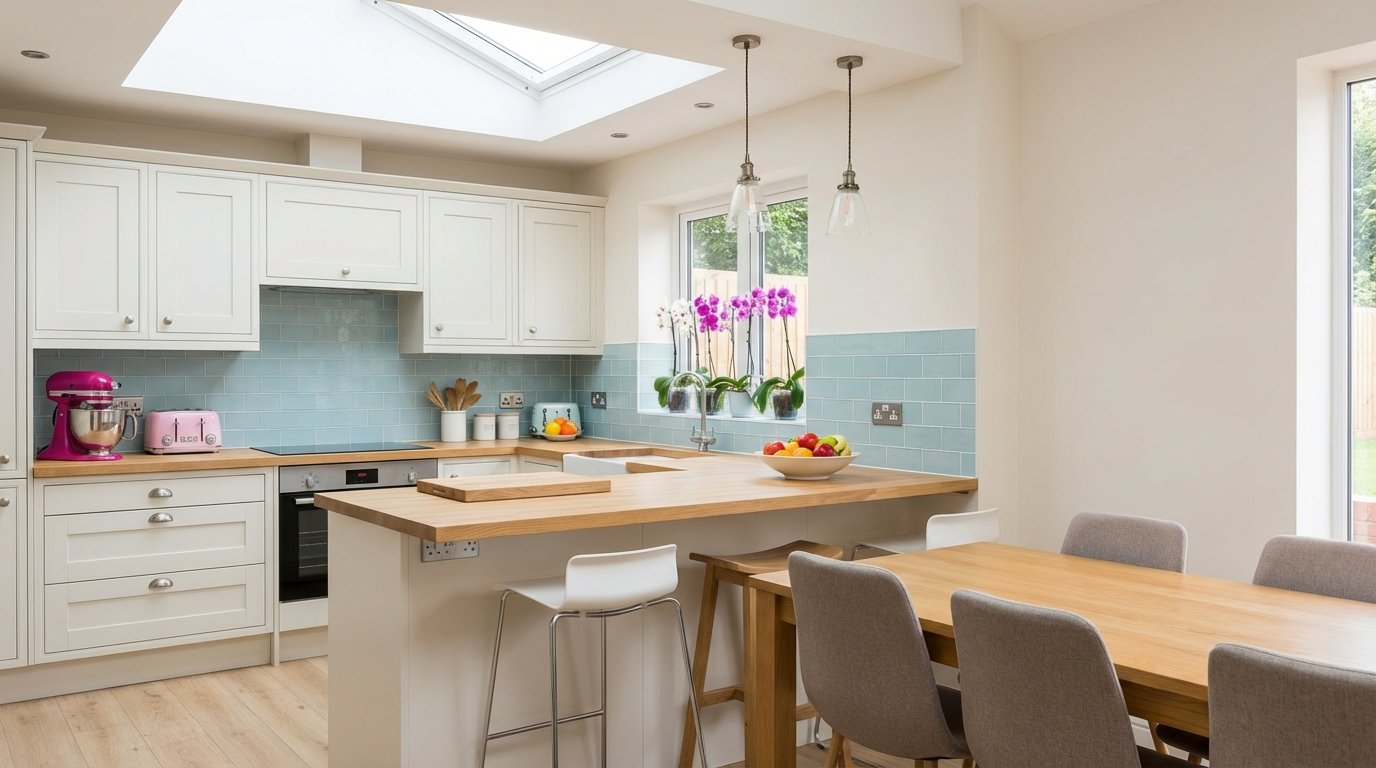
A U-shaped kitchen offers incredible potential for storage and flow. It works in both large homes and compact apartments. By using smart lighting, optimizing corners, and selecting the right finishes, you turn a standard layout into a custom feature. The key is to balance the density of cabinetry with open visual space.
Which of these ideas would solve your biggest kitchen frustration? Tell us in the comments below.
Follow us on Pinterest for more Kitchen Design inspiration.

Leave a Comment