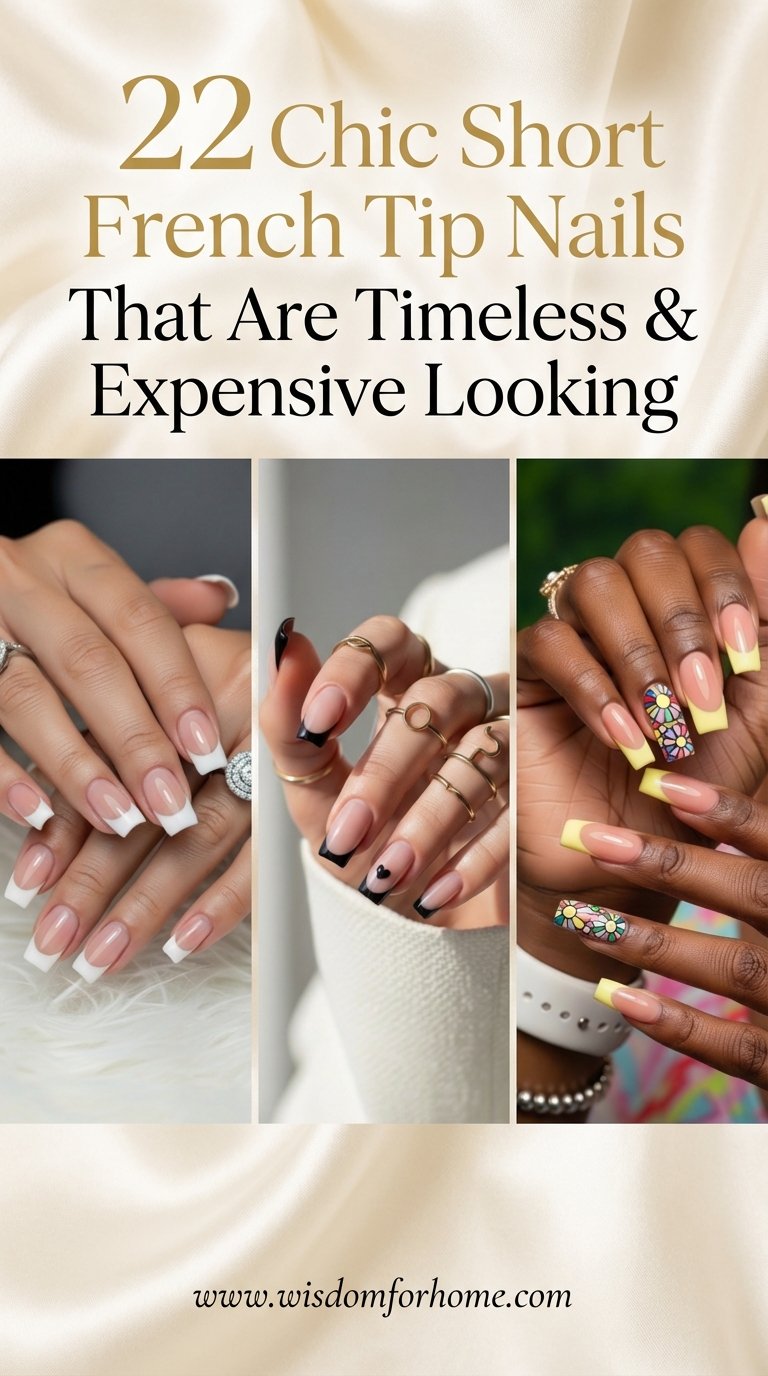
22 Chic Short French Tip Nails That Are Timeless & Expensive Looking
The Utility Hook Short nails often feel limited in styling options, leaving many of us stuck in a cycle of plain nude polish. You might think the classic French manicure requires length to look elegant, but the “micro-French” and modern short-tip trends prove otherwise. In fact, applying a thin French tip to short nails creates an optical illusion that elongates the nail bed while maintaining everyday practicality.
This guide provides 22 specific, high-retention styles that solve the “boring short nail” problem. We focus on designs that maximize the visible nail plate, utilize color theory to flatter skin tones, and offer low-maintenance grow-out phases. Whether you need a professional look for the office or a durable design for active hands, these styles deliver sophistication without the breakage risks of long acrylics.
Check out our related guide on [Minimalist Nail Care Essentials].
Key Takeaways
The “Micro” Rule: For short nails, keep the tip line under 2mm to maximize the visual length of the nail bed.
Shape Matters: Soft square or squoval shapes provide the best canvas for short French tips, offering more width for the design than rounded edges.
Base Color Contrast: A sheer, high-gloss nude base that matches your skin’s undertone is critical for making the tip pop and looking “expensive.”
Vertical Illusion: Adding abstract or swirled French elements draws the eye vertically, making fingers appear more slender.
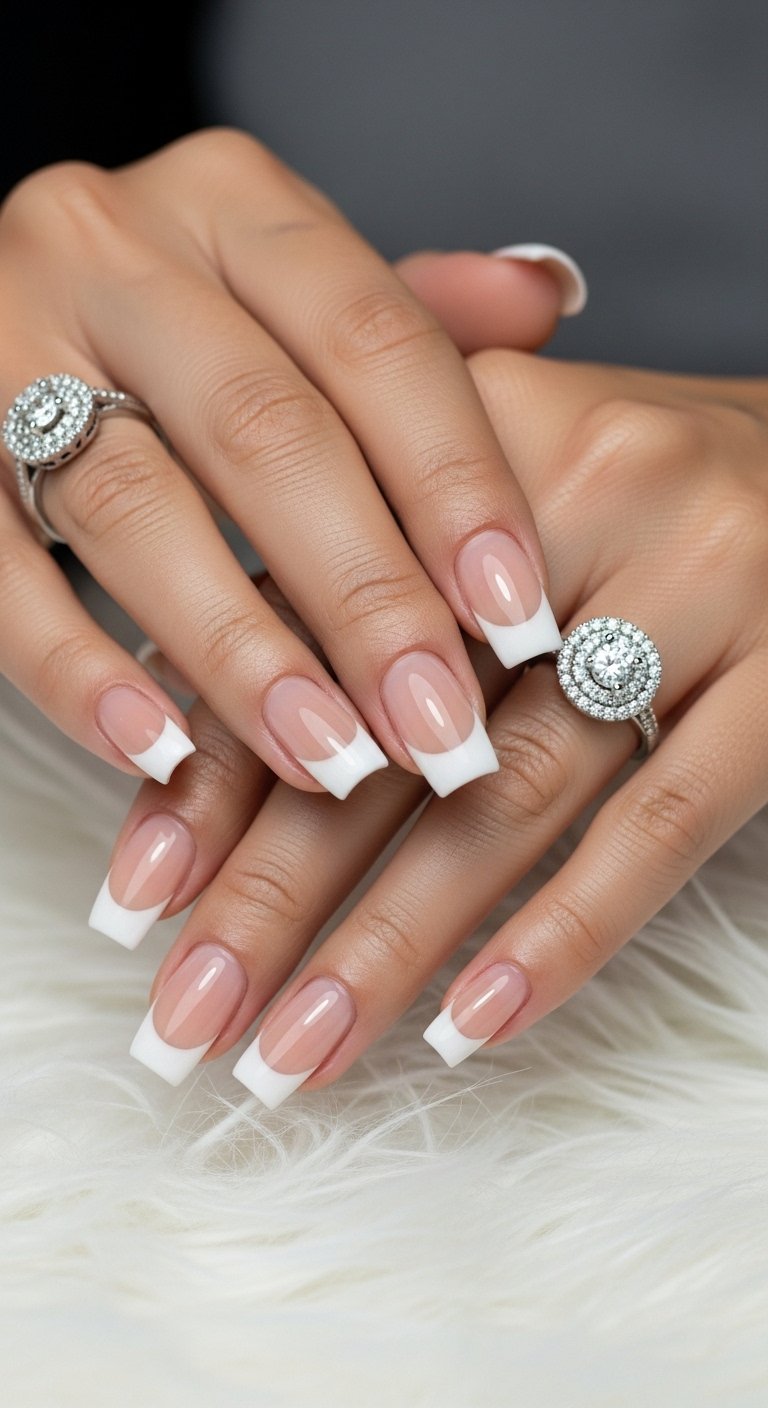
The quintessential classic reimagined for shorter lengths relies heavily on the “micro-tip” technique. Instead of the thick, white band often seen on long acrylics, this style uses a razor-thin line that barely grazes the free edge. This proportion is vital because a thick line on a short nail cuts the visual length in half, making the finger look stubby. The base should be a milky, semi-sheer pink that blurs the lunula (the half-moon at the cuticle) for a seamless, healthy appearance.
To achieve this crisp look at home, avoid using the standard brush that comes in the bottle. A fine liner brush dipped in high-pigment opaque white polish allows for a steady, single-stroke application. The stark white offers the highest contrast possible against a natural base, creating a clean, architectural finish that suits everything from bridal wear to denim.
Pro Tip: Use a brush dipped in acetone to clean up the smile line immediately after painting for that salon-quality curve.
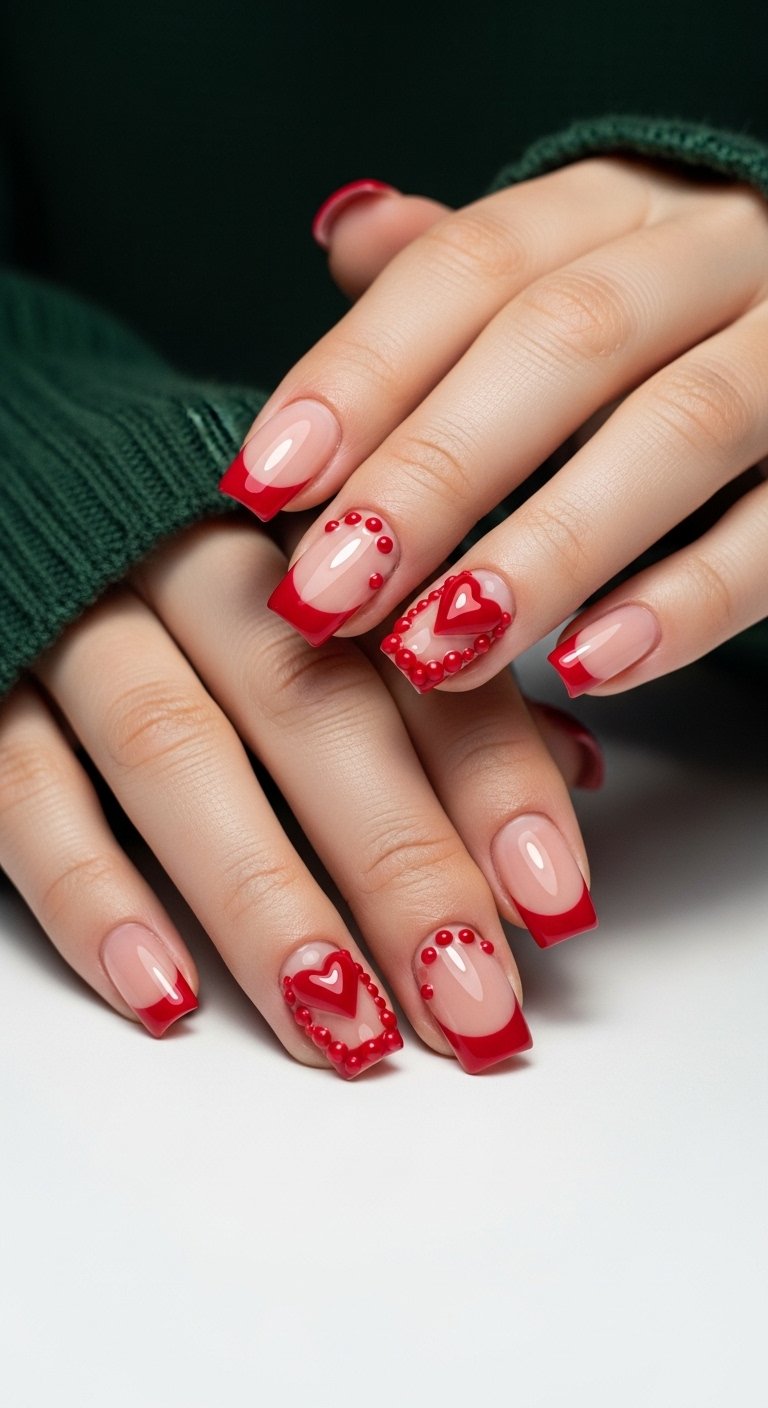
Red French Tips
Replacing the traditional white with a vibrant red instantly shifts the mood from subtle to bold without requiring a full nail of color. Red tips on short nails are particularly striking because they mimic the vintage “moon manicure” aesthetic but with a modern twist. A blue-based cherry red tends to pop most against cool and neutral skin tones, while a brick or tomato red warms up olive and deeper complexions. This design is excellent for those who want the power of a red manicure but fear the visible chipping that happens with full coverage.
Functionally, red tips hide staining better than white tips, making them a practical choice for anyone who works with their hands or cooks frequently. The high gloss finish is non-negotiable here; a matte top coat can make the red look dull or like marker ink. Ensure the curve of the red tip deeply follows the natural “smile line” of your nail to elongate the nail bed visually.
Pro Tip: Apply a coat of sheer nude over the red tip if you want a “jelly” look, or keep it on top for maximum opacity.
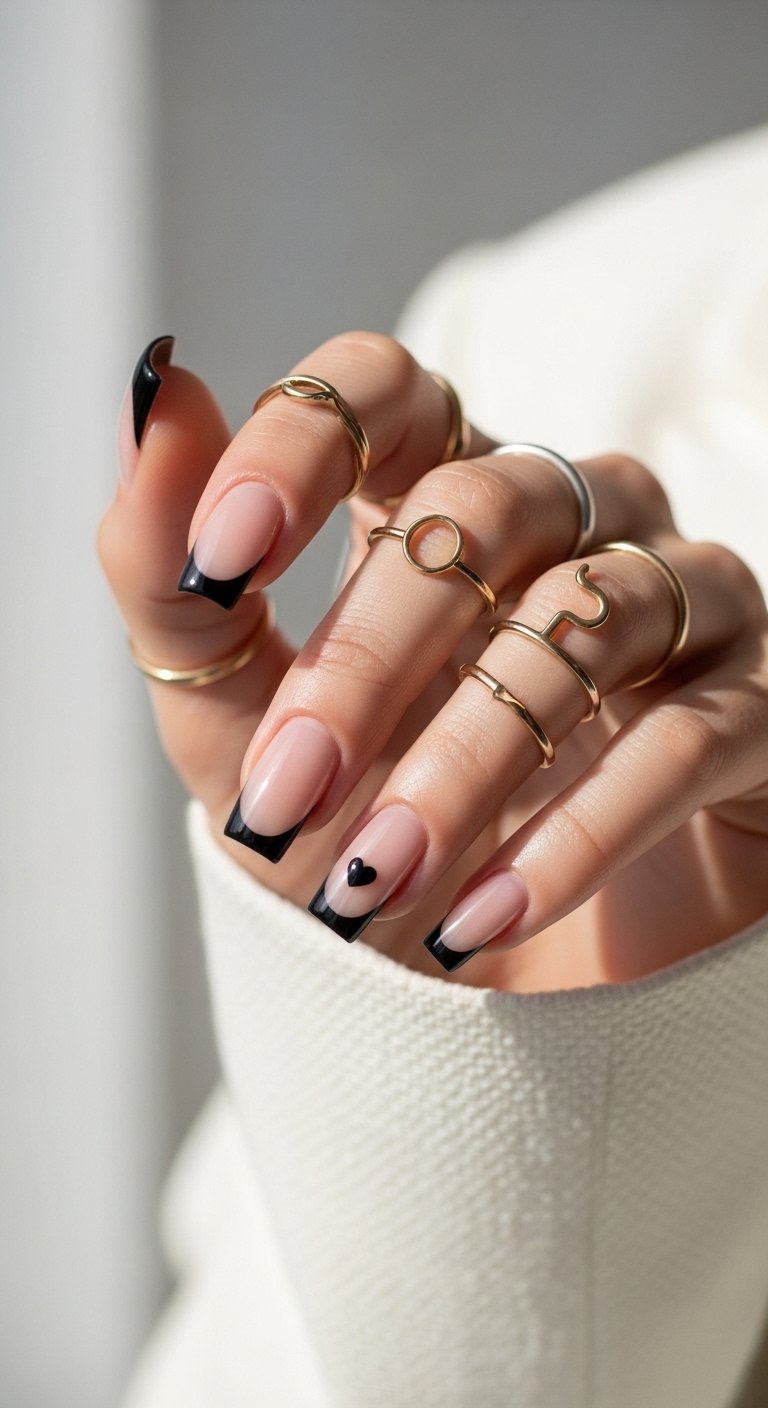
Black French Tips
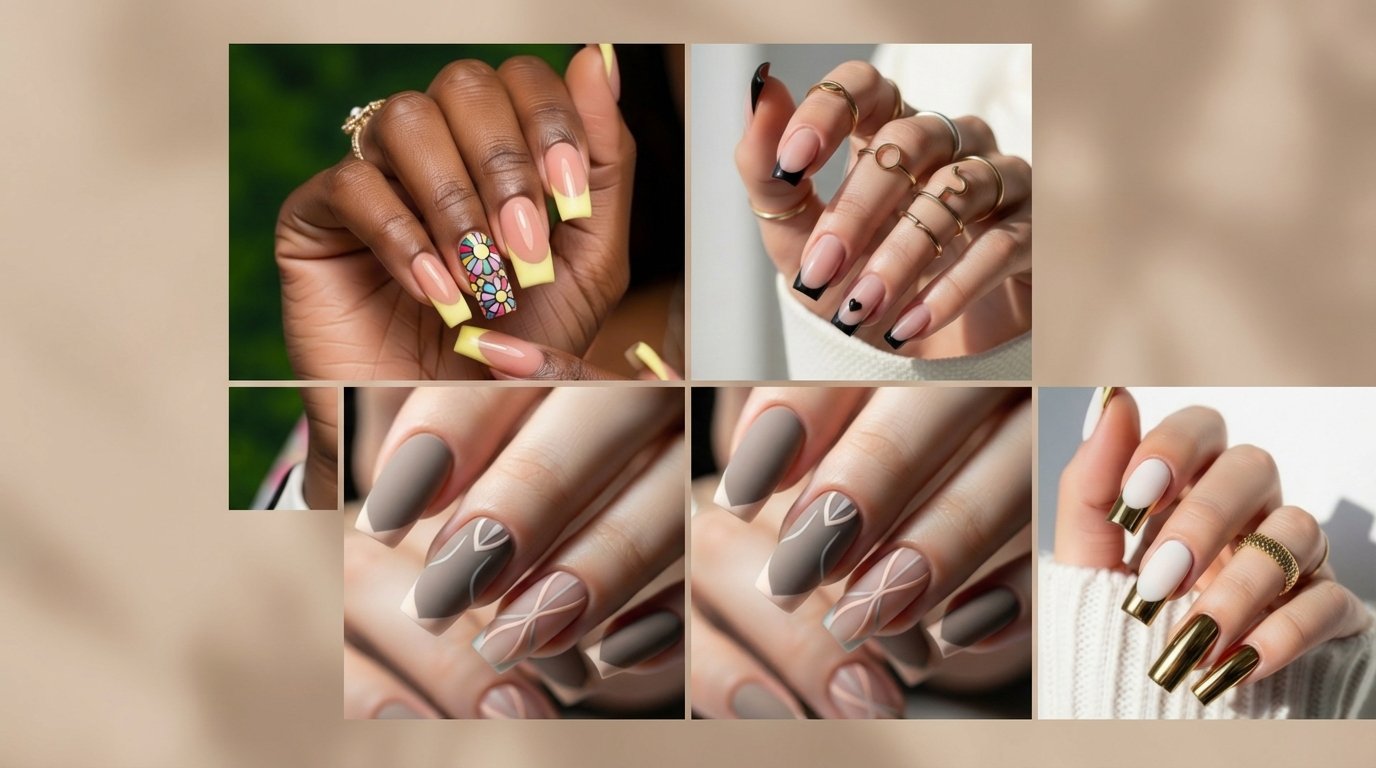
The “tuxedo” nail is the edgier, sophisticated cousin of the classic French. Black tips on a short, square nail create a graphic, modern art effect that feels incredibly chic. The key to preventing this from looking “goth” (unless that is the goal) is a pristine, glossy nude base that perfectly matches your skin tone. The contrast between the skin-like base and the jet-black tip creates a sharp boundary that defines the nail shape.
When executing this on short nails, precision is paramount. Any wobble in the black line is immediately visible. Many professionals prefer a “straight across” French tip for black polish on square nails, rather than a curved smile line. This geometric approach emphasizes the shortness of the nail in a deliberate, stylistic way, turning the length into a fashion statement rather than a limitation.
Pro Tip: Use a black gel liner for this design, as regular black polish can sometimes bleed into the nude base before drying.
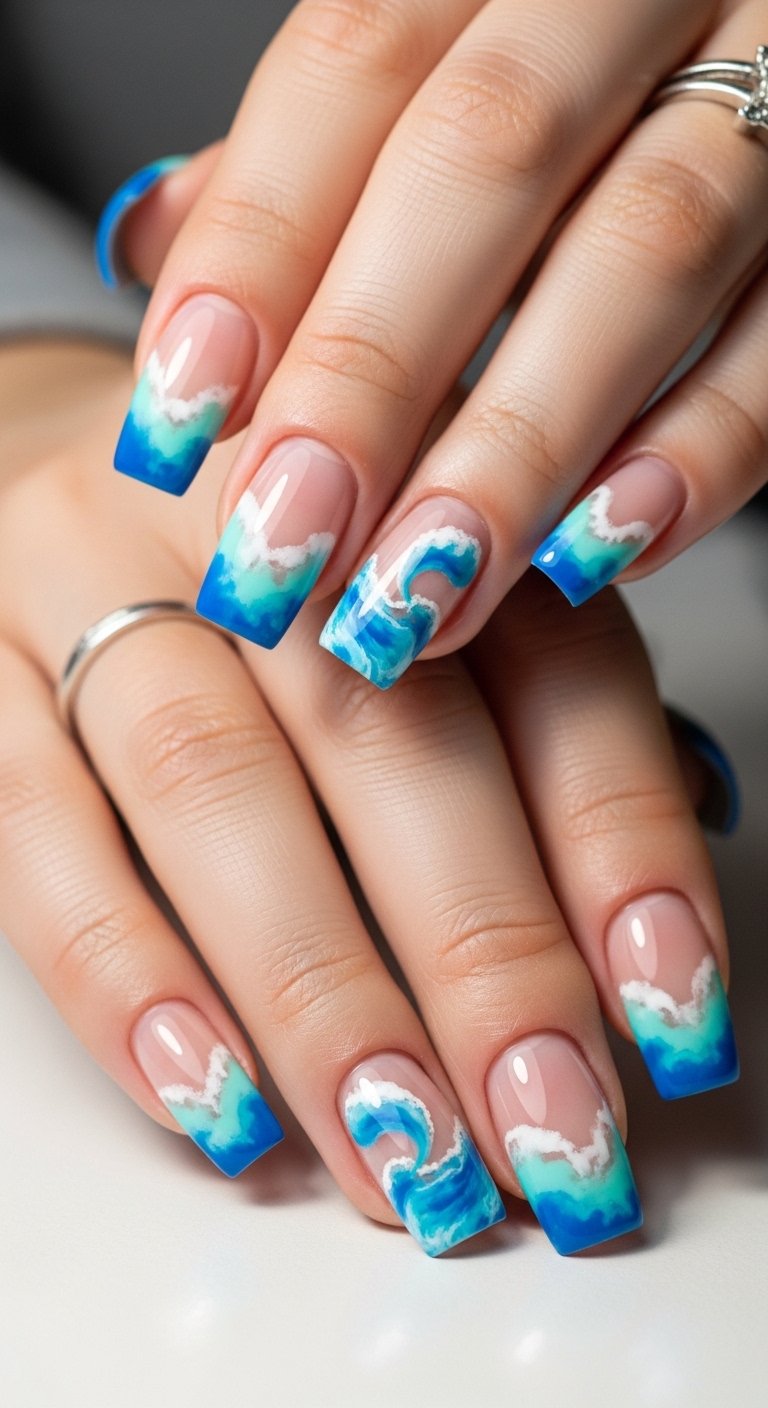
Blue French Tips
From electric cobalt to soft powder blue, this variation brings a calming yet playful energy to the hands. For short nails, a “baby blue” tip is surprisingly effective at making the nail plate look larger because the color recedes slightly visually, unlike a hot neon. However, a dark navy tip acts similarly to black, offering a high-fashion edge that pairs beautifully with denim and silver jewelry.
The texture plays a role here as well. A metallic dark blue tip adds depth and catches the light, distracting from the lack of length. If you have cool undertones, stick to icy blues or royal blues. If you have warm undertones, look for teals or turquoise shades. This style is fantastic for transitioning from winter to spring, bridging the gap between moody darks and fresh pastels.
Save this idea to your Pinterest.
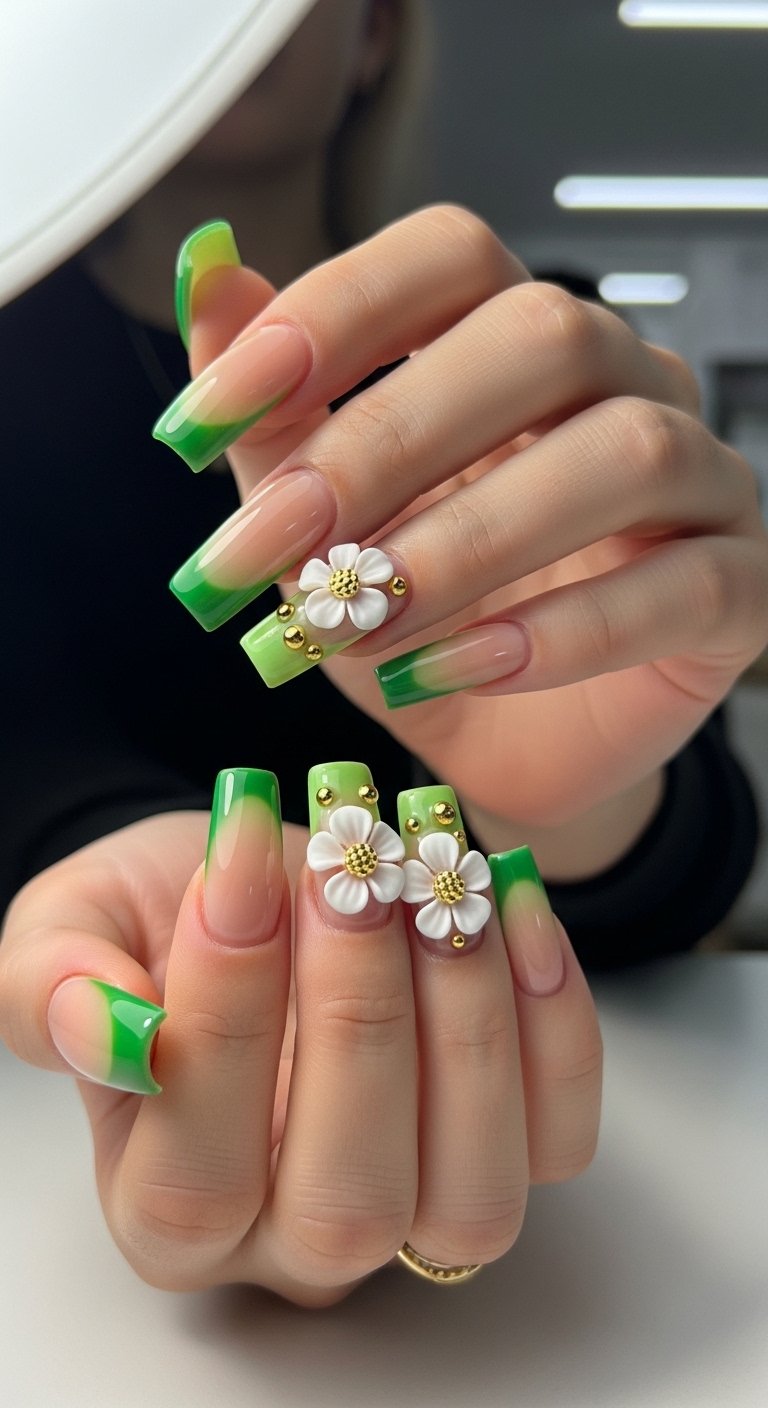
Green French Tips
Green is often overlooked in nail art, but as a French tip, it offers an earthy, grounded aesthetic. Sage or olive green tips are perfect for a minimalist, “old money” vibe, appearing almost neutral against warm skin tones. On the other end of the spectrum, a bright Bottega green or emerald adds a luxurious jewel-toned accent that feels expensive.
For short nails, try a “V-cut” French tip with green polish. Instead of a curved line, paint two diagonal lines that meet at the center of the free edge. This arrow-like shape draws the eye upward and outward, creating a powerful lengthening illusion that a standard curve cannot achieve. It turns a short, round nail into a structured, almond-like silhouette visually.
Pro Tip: Pair olive green tips with gold jewelry to bring out the yellow undertones in the polish.
Comparison: Classic White vs. Colored Tips on Short Nails
Feature
Classic White Tips
Colored Tips (Red, Black, Blue, etc.)
Visual Length
High (blends with free edge)
Medium (creates a distinct border)
Maintenance
Shows dirt/stains easily
Hides stains under the tip
Vibe
Clean, Professional, Bridal
Trendy, Expressive, Edgy
Best Shape
Oval or Squoval
Square or Soft Square
Versatility
Matches 100% of outfits
May clash with certain patterns
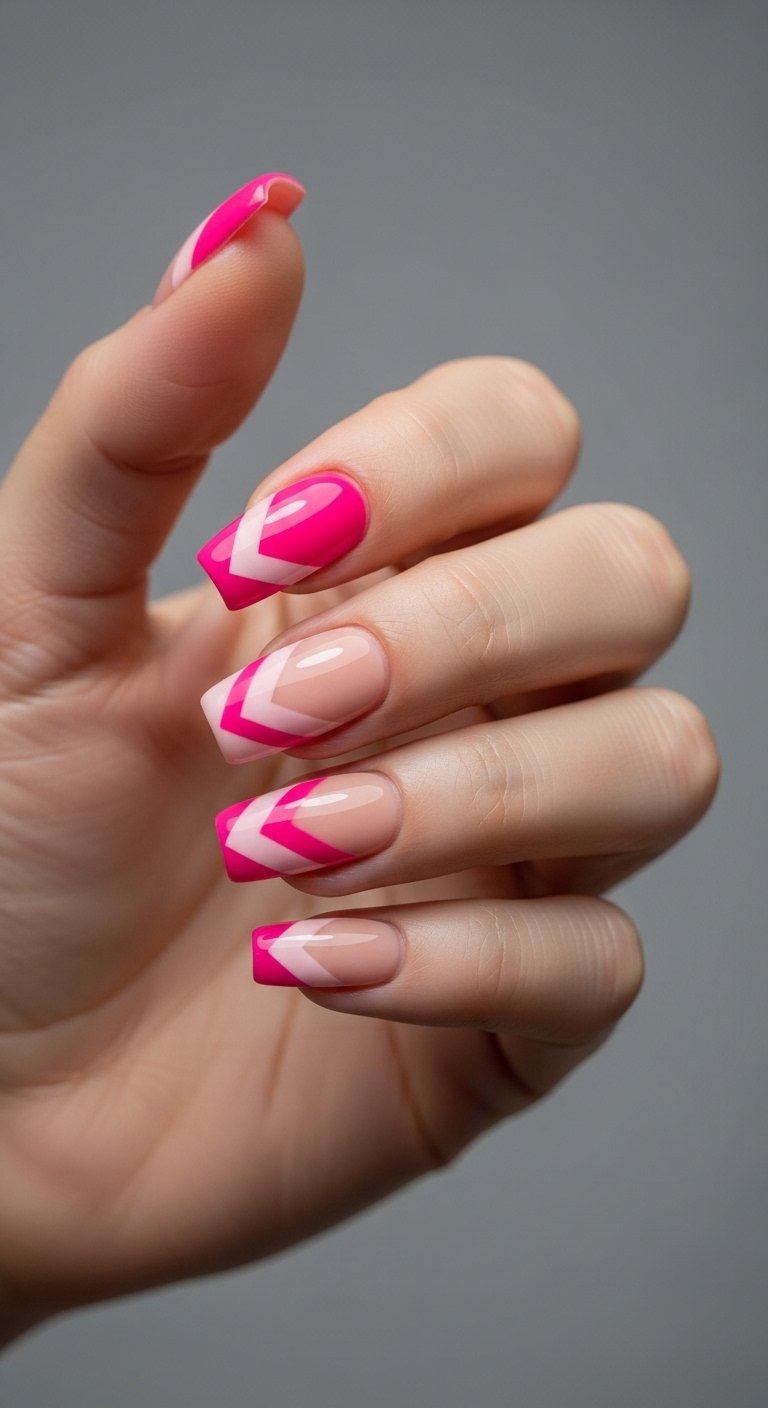
Pink French Tips
A monochromatic pink-on-pink look is the ultimate “clean girl” aesthetic. By pairing a sheer, milky pink base with a hot pink or bubblegum tip, you create a cohesive gradient effect that is soft and feminine. This style is particularly forgiving on very short nails because the lack of harsh contrast (like black on nude) means the eye glides over the nail rather than stopping abruptly at the tip.
This design works exceptionally well on round or oval short nails. The curve of the pink tip accentuates the natural roundness of the finger, creating a delicate, doll-like appearance. It is a youthful style that brightens the hands. For a more mature take, swap the hot pink for a dusty rose or mauve tip, which offers a subtle elegance suitable for conservative work environments.
Pro Tip: Use a dotting tool to add a tiny white dot at the base of the cuticle for a “reverse French” accent.
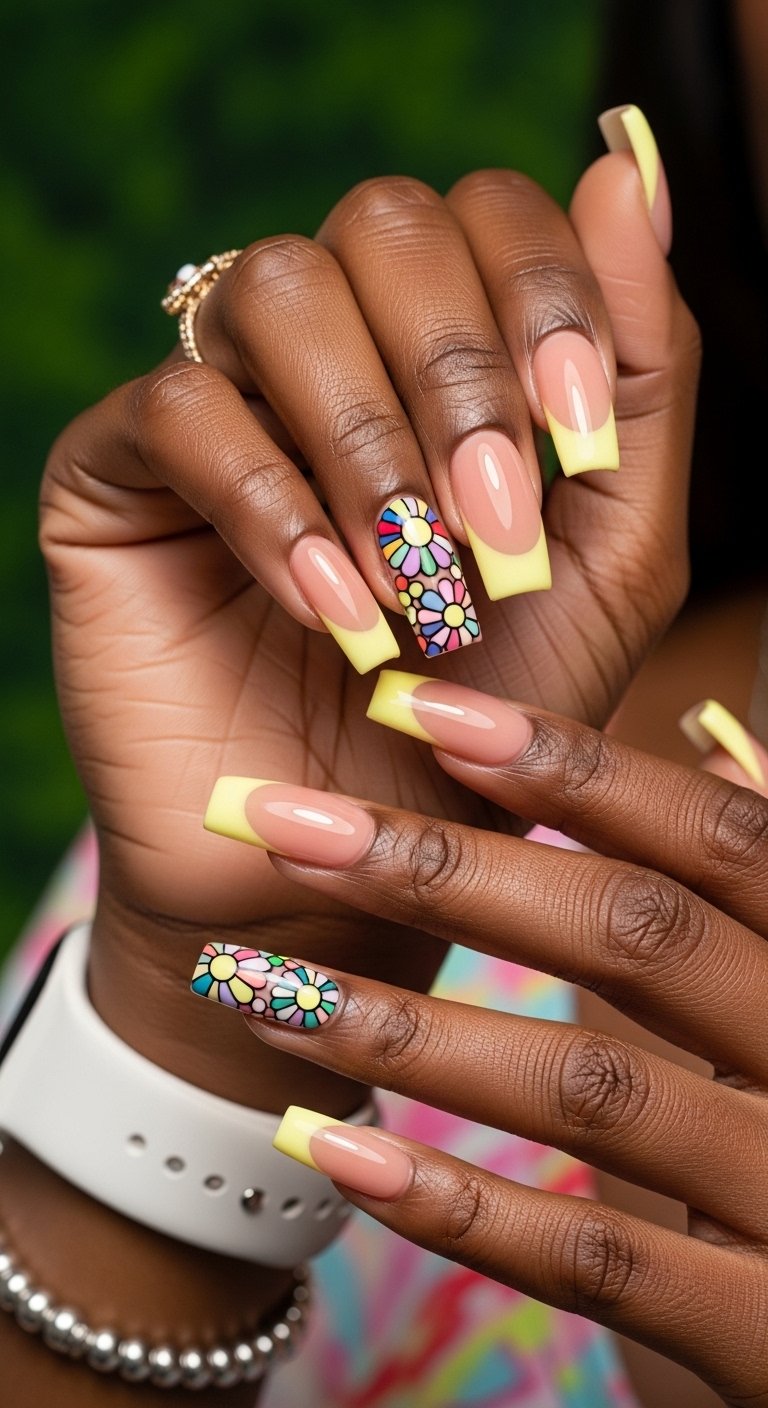
Yellow French Tips
Yellow is a high-energy color that instantly lifts the mood. On short nails, a lemon or pastel yellow tip feels fresh and summery. Because yellow is a light color, it doesn’t “box in” the nail the way dark colors can, helping the nail plate appear open and airy. It is imperative to use a high-opacity yellow; streaky yellow polish can look unhealthy or stained.
This style pairs beautifully with a “milky” base rather than a clear one. The white undertone in a milky base helps the yellow pop and prevents the natural white of your free edge from conflicting with the yellow polish. If you have a darker skin tone, a neon yellow tip creates stunning contrast, while pale skin tones look lovely with a buttercup or mustard shade.
Pro Tip: If you can’t find an opaque yellow, paint a thin layer of white first, then layer the yellow on top.
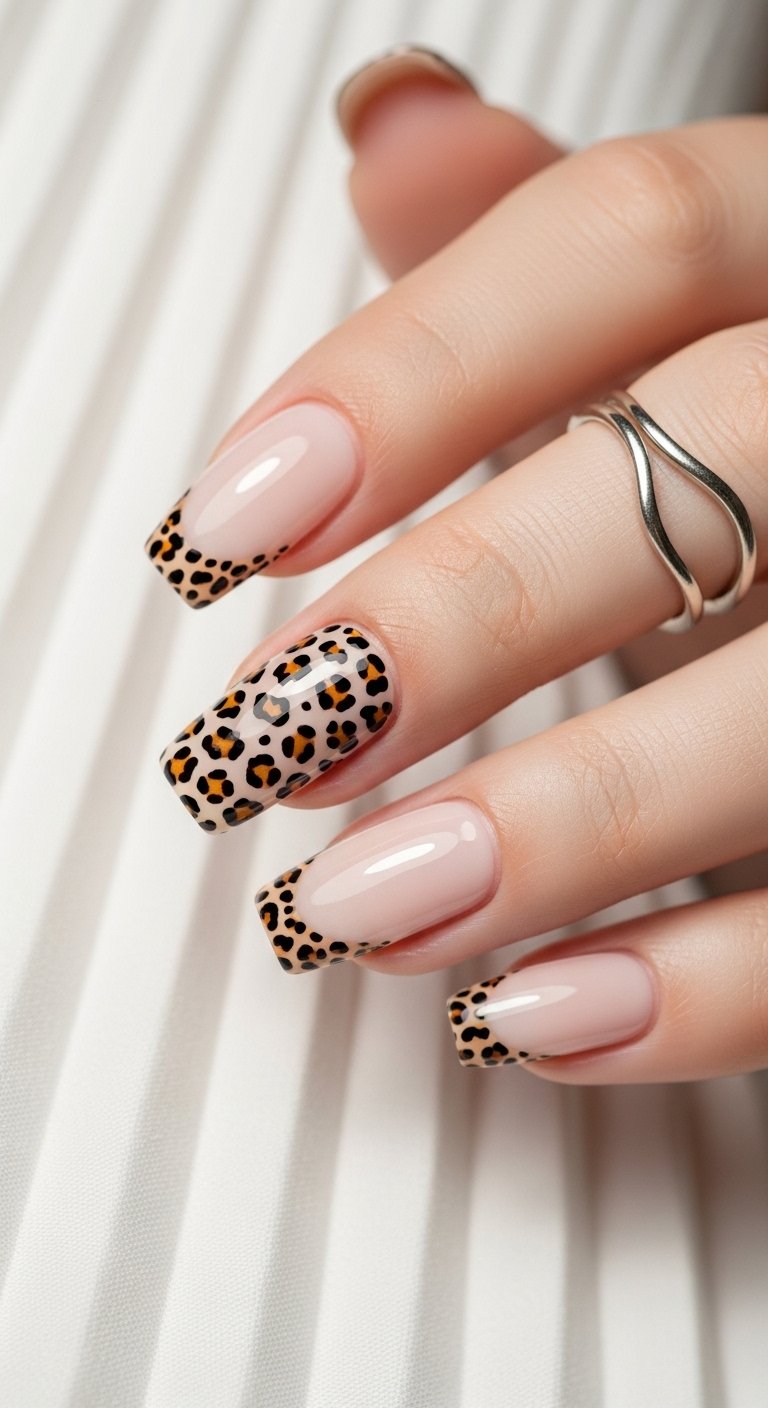
Animal Print French Tips
Confining a busy pattern like leopard or tortoise shell to just the tip is a brilliant way to wear bold prints without overwhelming a short nail. A full nail of leopard print on a short bed can look cluttered, but a delicate French strip of spots looks intentional and high-end. Tortoise shell tips, with their amber and brown jelly layers, are especially chic for autumn and pair perfectly with gold rings.
To recreate this, you don’t need to be a professional artist. Use a toothpick or fine dotting tool. For leopard, place irregular gold blobs and bracket them with black C-shapes. For cow print—another massive trend—simple black blobs on a white tip base work perfectly. Keep the scale of the print small; large spots will distort the shape of the French tip line.
Pro Tip: Seal animal print tips with a thick gel top coat to smooth out any texture from the multiple layers of polish.
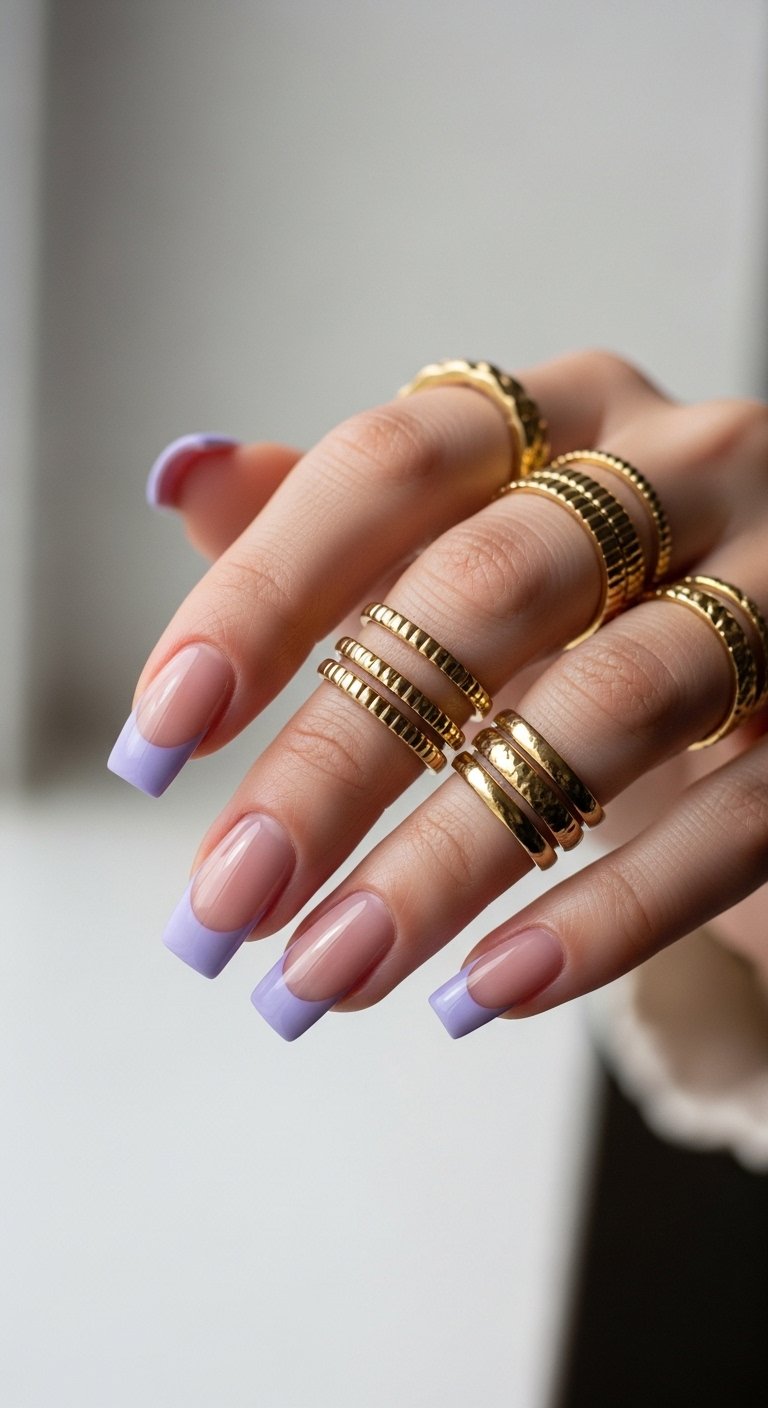
Lavender French Tips
Lavender is arguably the most universally flattering pastel for French tips. It strikes a balance between cool and warm, suiting almost every skin tone. On short nails, lavender tips evoke a spring-like, floral feeling that is lighter than blue but more interesting than pink. This shade looks particularly beautiful with a matte top coat, which transforms the nails into looking like sugared almonds or sea glass.
The “digital lavender” trend has made this color synonymous with wellness and calm. Pairing a lavender tip with a sheer, pearlescent base adds a dreamy, ethereal quality to the manicure. It is a low-contrast look, meaning it grows out gracefully and doesn’t draw attention to the cuticle line as the weeks pass.
Pro Tip: Mix a tiny bit of white into your lavender polish if you want it to stand out more against a rosy nail bed.
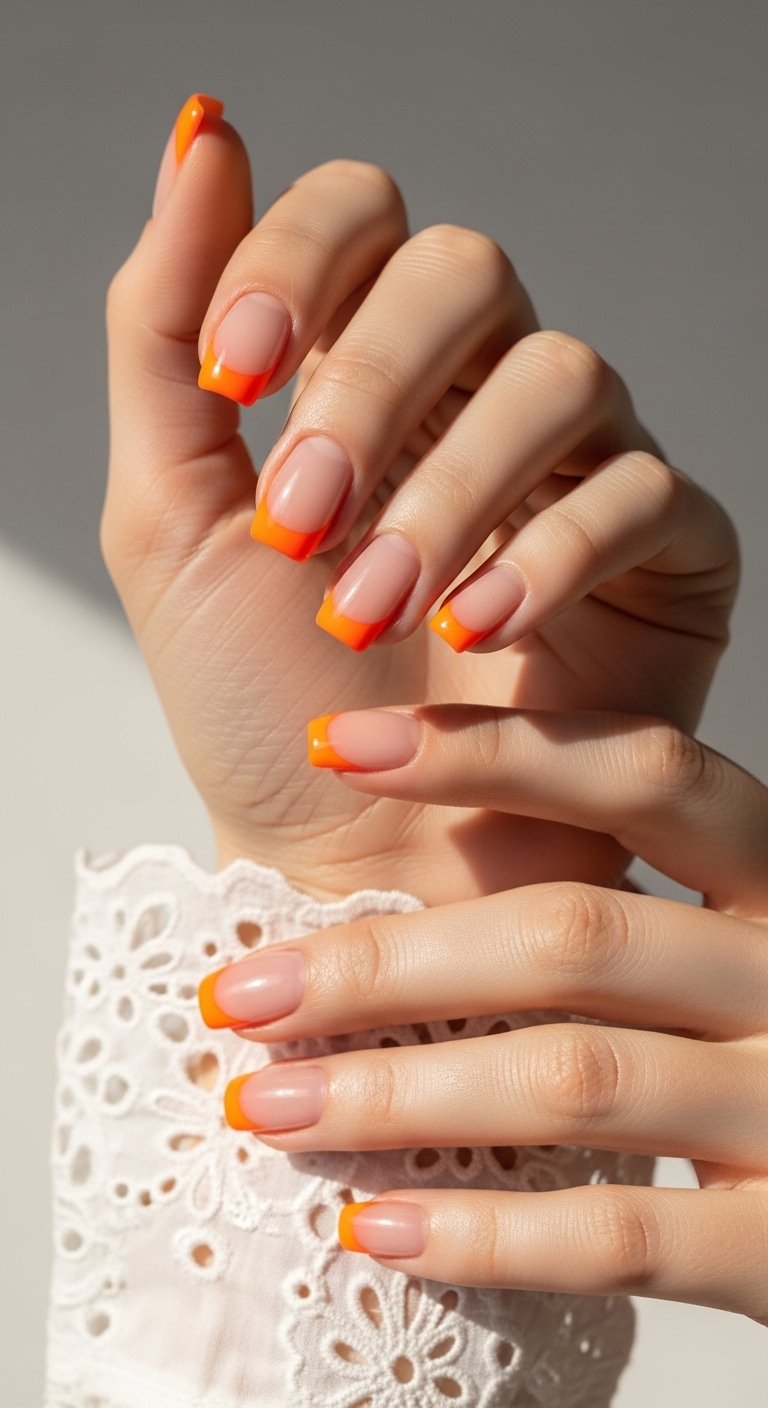
Orange French Tips
Orange tips are the unexpected hero of modern nail art. A burnt orange or terracotta tip offers a sophisticated 70s vibe, while a bright tangerine screams summer vacation. This color is a warm neutral for many deeper skin tones and provides a vibrant pop against paler hands. Because orange sits opposite blue on the color wheel, it stands out vividly against denim jeans, making it a great accessory for casual outfits.
For the most flattering look on short nails, ensure the orange tone matches the warmth of your skin. If you are cool-toned, lean toward a coral-orange. If you are warm-toned, a true pumpkin orange works best. The line should be crisp; a blurry orange edge can look like stained fingers (think Cheeto dust), so use a clean-up brush dipped in remover to perfect the curve.
Save this idea to your Pinterest.
“Get The Look” Essentials
To achieve these precise short tips at home, you need specific tools. Regular bottle brushes are often too wide.
Fine Liner Brush: Look for a “striping brush” or a size 00 detail brush.
Silicone Stamper: For the “hack” method—paint polish on the stamper and press your nail tip into it.
Cleanup Brush: An angled synthetic brush dipped in acetone to refine the smile line.
Sheer Nude Base: Ideally one that is “buildable” to hide nail ridges.
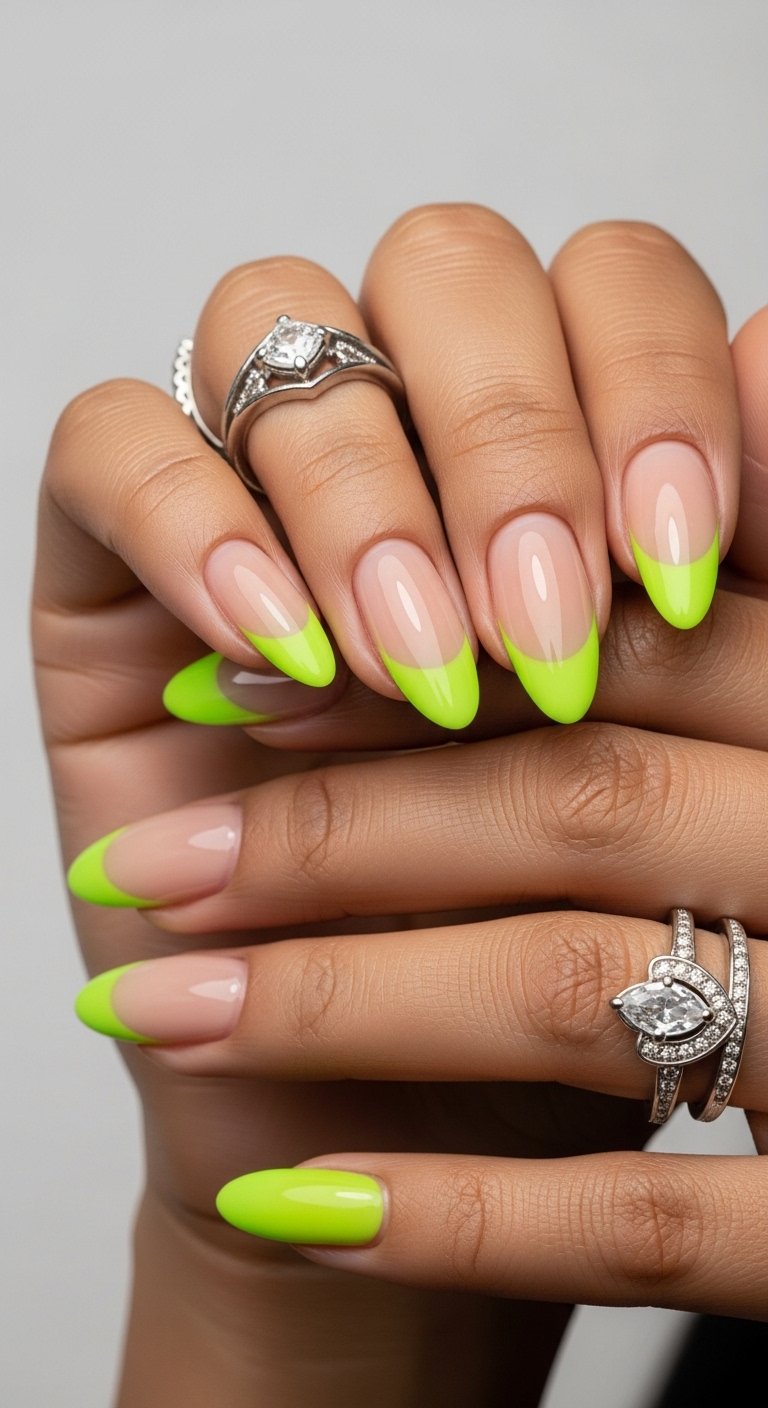
Neon French Tip Nails
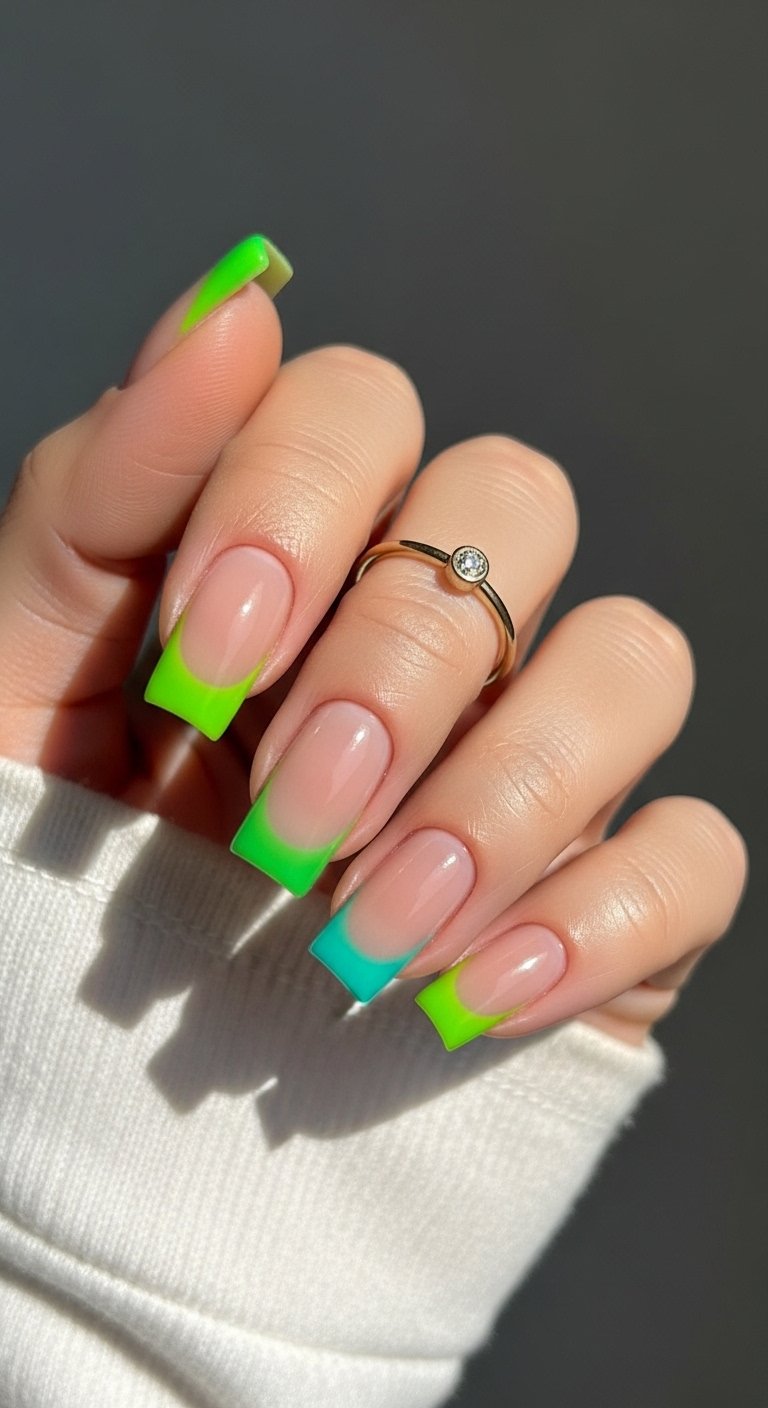
Neon tips are a staple for festival season and summer holidays. Electric lime, hot pink, and highlighter yellow are aggressive colors that can look overwhelming as a solid coat on short nails. However, as a micro-French tip, they provide just the right amount of “punch” without shortening the finger. The nude base acts as negative space, balancing the intensity of the neon.
A popular variation for neons is the gradient tip, where the French line transitions from one neon color to another (e.g., pink to orange) across the width of a single nail. This requires a steady hand or a sponge application, but the result is mesmerizing. Neon polishes dry matte naturally, so a high-gloss top coat is essential to give them that plastic, candy-like shine.
Pro Tip: Apply a white base line first for neons to ensure the color is true-to-bottle and not muddy.
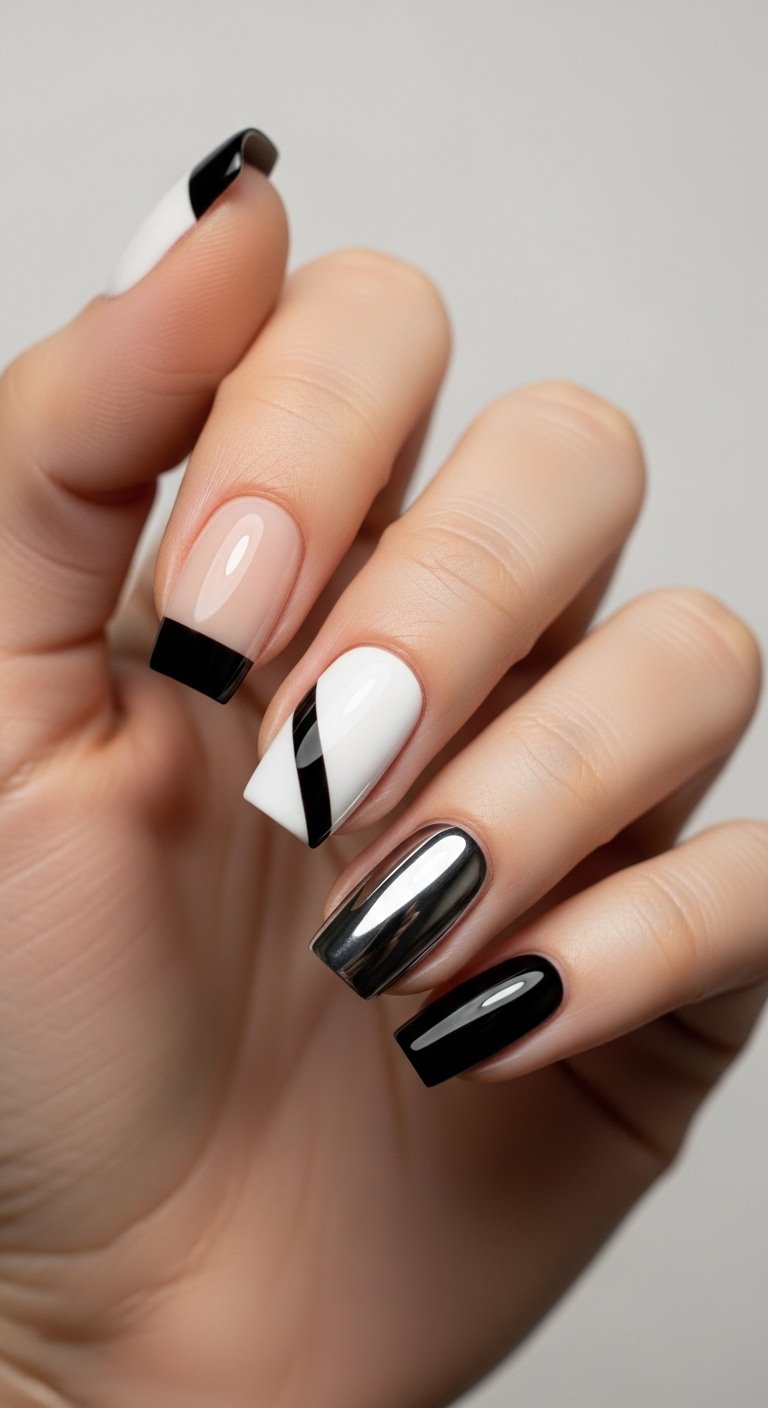
Black and White French Tips
This design plays with positive and negative space or contrasting patterns. One chic variation is the “outline French,” where the tip is white, but a thin black line separates the white tip from the nude base. Alternatively, you can alternate hands (one hand black tips, one hand white) or alternate fingers. This monochrome palette is graphic, mod, and undeniably cool.
Another approach is the split tip: half the French tip is black, and the other half is white, meeting in a sharp vertical line at the center of the nail. This vertical division helps lead the eye up the nail, countering the width of short, square nails. It’s a design that looks complicated but is easily achieved with striping tape.
Pro Tip: Wait for the white half to dry completely before applying the black half to prevent smearing gray streaks.
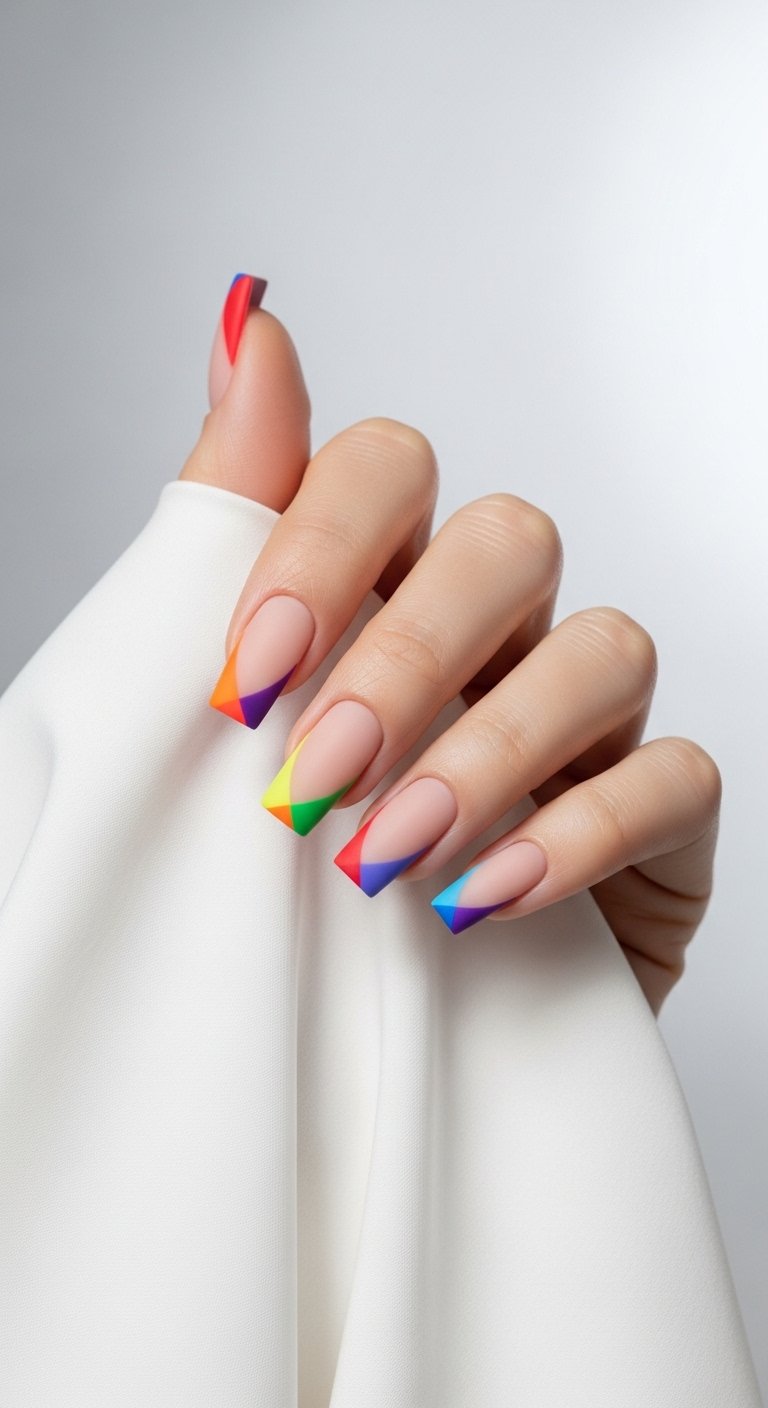
Colorful French Tips
Why choose one color when you can have them all? The “skittle” French manicure involves painting each nail tip a different color. You can choose a cohesive palette (like all warm tones: red, orange, yellow, pink) or a completely random mix. This is arguably the best design for short nails because the variety distracts the eye from the length of the nail beds. It reads as fun, artistic, and intentional.
To keep this looking cohesive rather than chaotic, ensure the saturation of the colors is similar. For example, use all pastels or all muted earth tones. Do not mix a neon with a muddy brown. The uniformity of the “smile line” shape across all fingers ties the look together, even if the colors are wildly different.
Pro Tip: Arrange the bottles in order before you start painting to ensure a pleasing color flow across the hand.
Black and Gold French Tips
This is evening wear for your nails. A black tip with a thin gold line bordering it (often called a “double French”) exudes luxury. The metallic gold catches the light, while the black grounds the design. This combination looks fantastic on short, square nails, mimicking the clasp of a designer handbag or high-end jewelry.
You can also use gold foil instead of polish for the accent. Apply the black tip, cure or let dry, apply a line of foil glue, and press the gold foil on for a textured, distressed metal look. This adds dimension that flat polish cannot achieve. It is a heavy look, so keep the base very sheer and natural to prevent the nail from looking “weighed down.”
Pro Tip: Use a metallic gold gel paint for the crispest line; standard metallic polishes can be runny and separate.
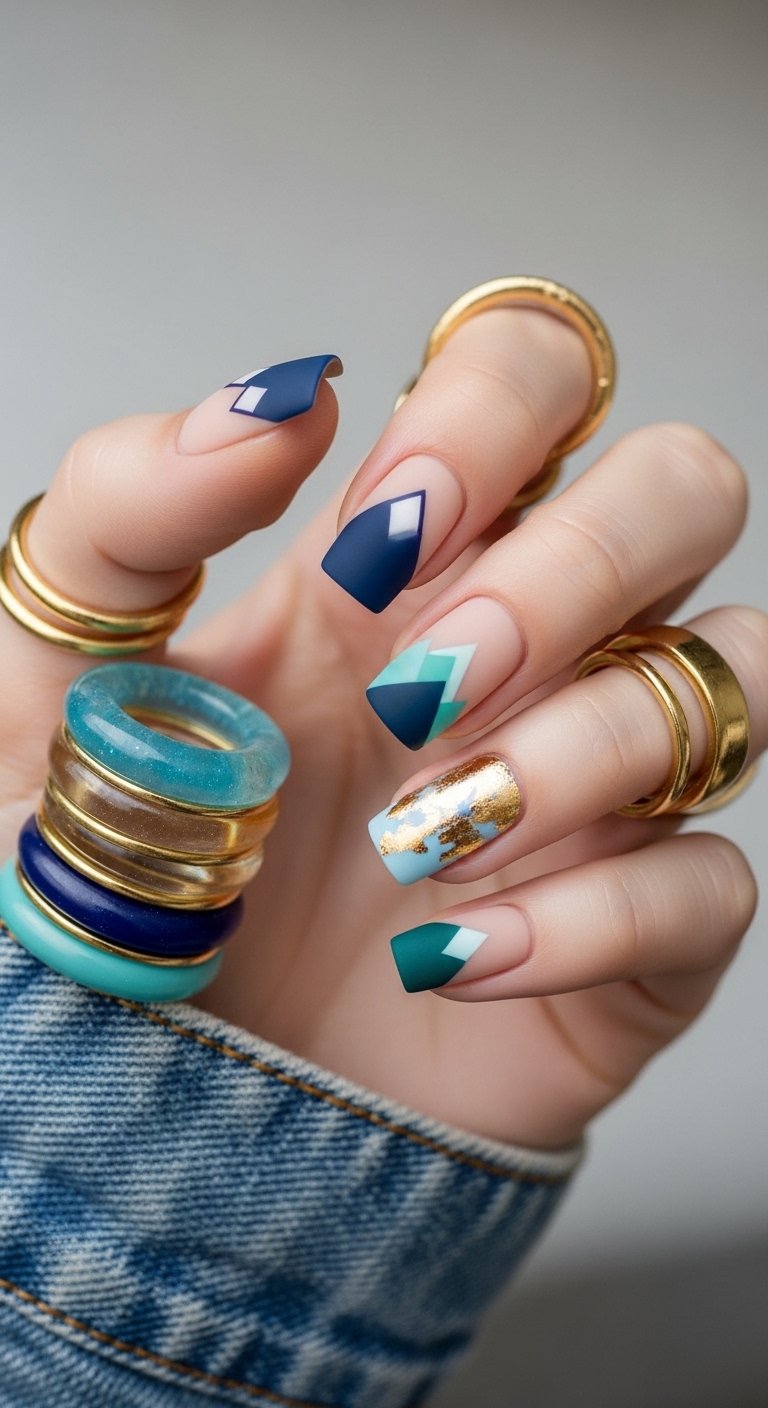
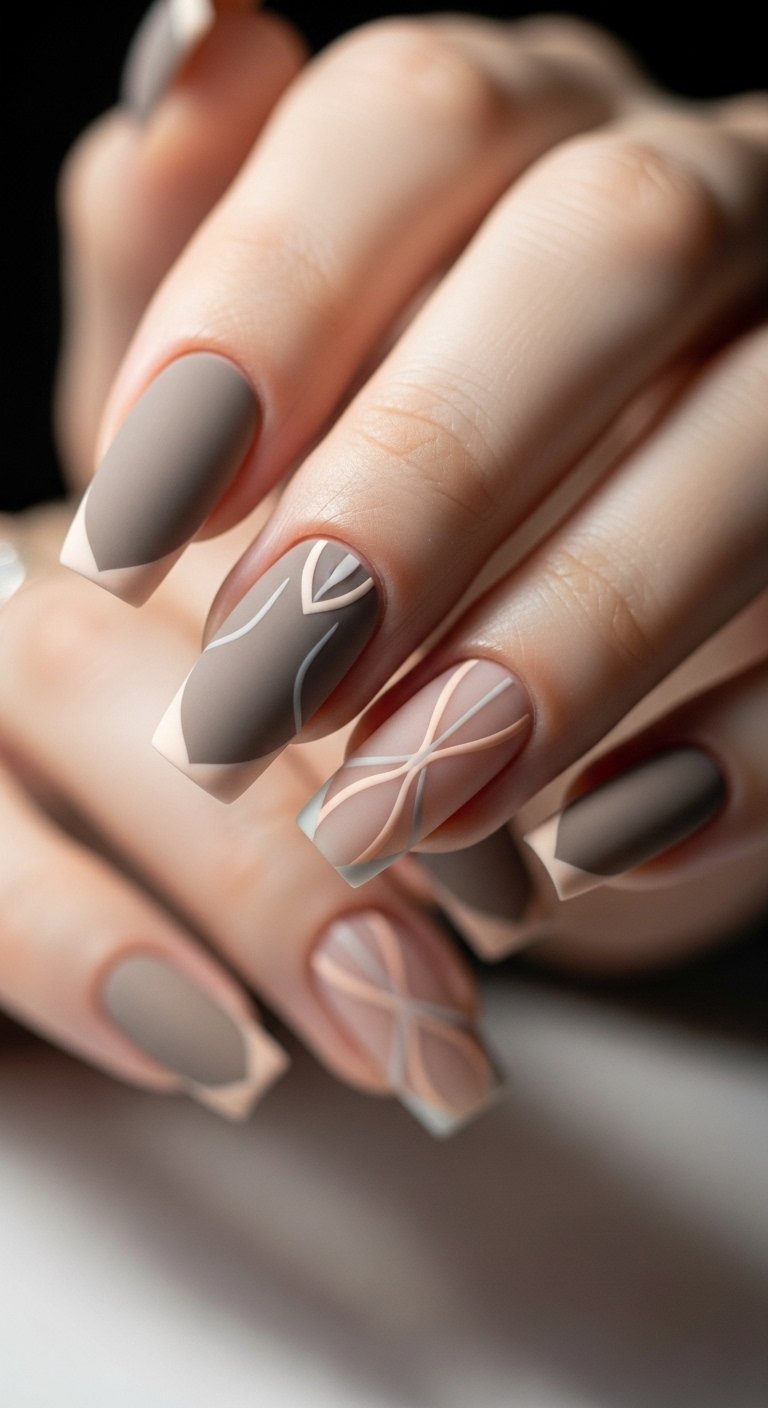
Abstract French Tips
Abstract tips throw the rulebook out the window. Instead of a perfect crescent, these tips might be wavy, slanted, or drip-like. This is the most forgiving style for DIYers because there is no “perfect” symmetry to achieve. Wavy lines that start at the side wall and curve randomly across the free edge create movement and organic flow.
On short nails, abstract lines that travel slightly down the side of the nail (the “side French”) can help elongate the nail bed. By breaking up the horizontal line of the free edge, you stop the eye from registering exactly where the nail ends. Use contrasting colors like teal and burnt orange for a retro 70s swirl effect.
Save this idea to your Pinterest.
Comparison: Traditional Curved vs. Geometric Tips
Tip Shape
Best For
Vibe
Difficulty Level
Deep Curve (Smile)
Round/Oval nails
Classic, Feminine
Hard (needs symmetry)
Straight Across
Square nails
Modern, Edgy
Medium
V-Shape (Chevron)
Short nails (elongating)
Sharp, Dynamic
Medium
Side-Slant
Very short nails
Artistic, Abstract
Easy (forgiving)
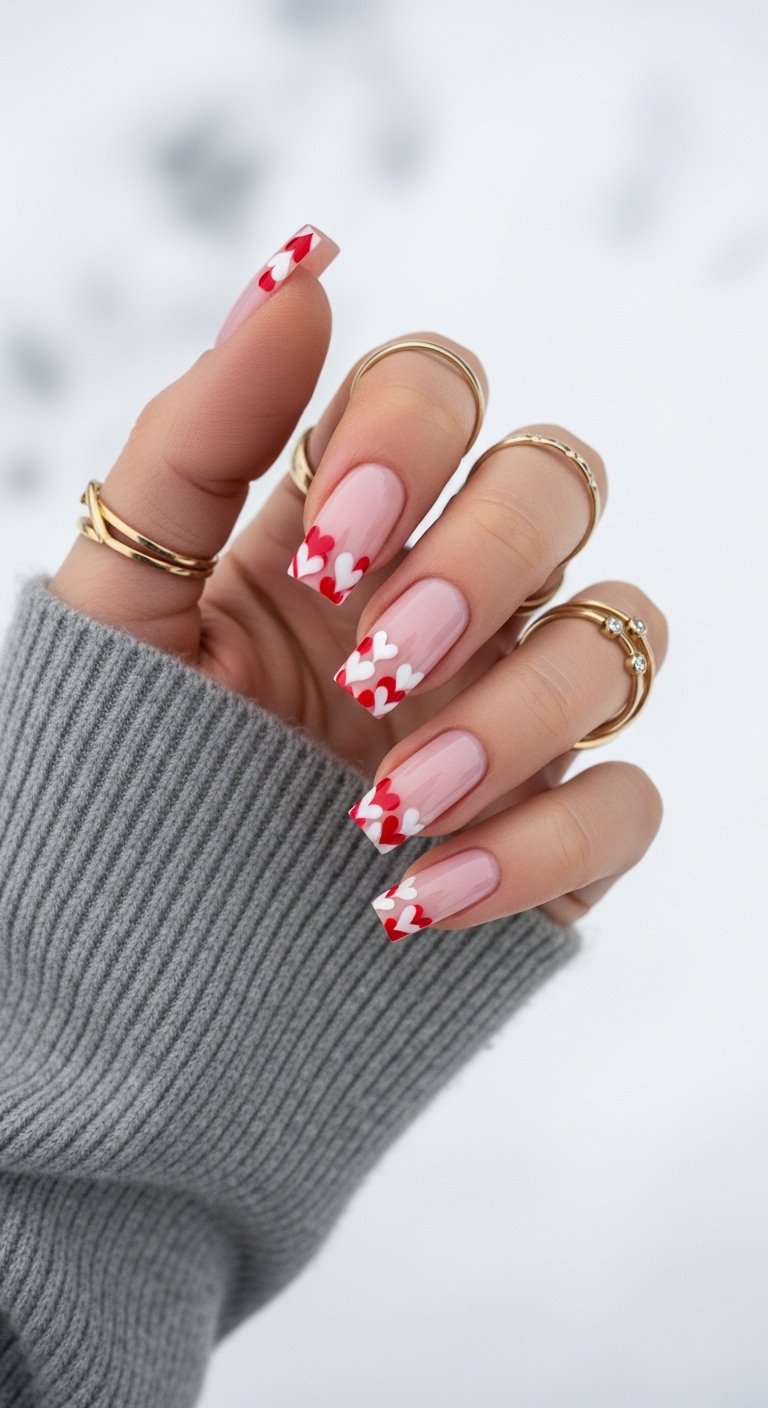
Heart French Tips
Perfect for Valentine’s Day or just a romantic touch, the heart tip uses the natural curve of the nail to form the top of a heart. The “cleavage” of the heart sits at the center of the free edge, and the rounded sides curve down toward the side walls. This turns the entire tip of the nail into a heart shape.
This design is surprisingly flattering on short almond or round nails. Red and pink are the obvious choices, but doing this in black or deep burgundy gives a “Comme des Garçons” fashion feel that isn’t overly sweet. It requires a bit of practice to get the symmetry right; marking the center point of your nail with a small dot before painting the arches helps immensely.
Pro Tip: Use a larger dotting tool to make the two tops of the heart, then use a brush to connect them to the sides.
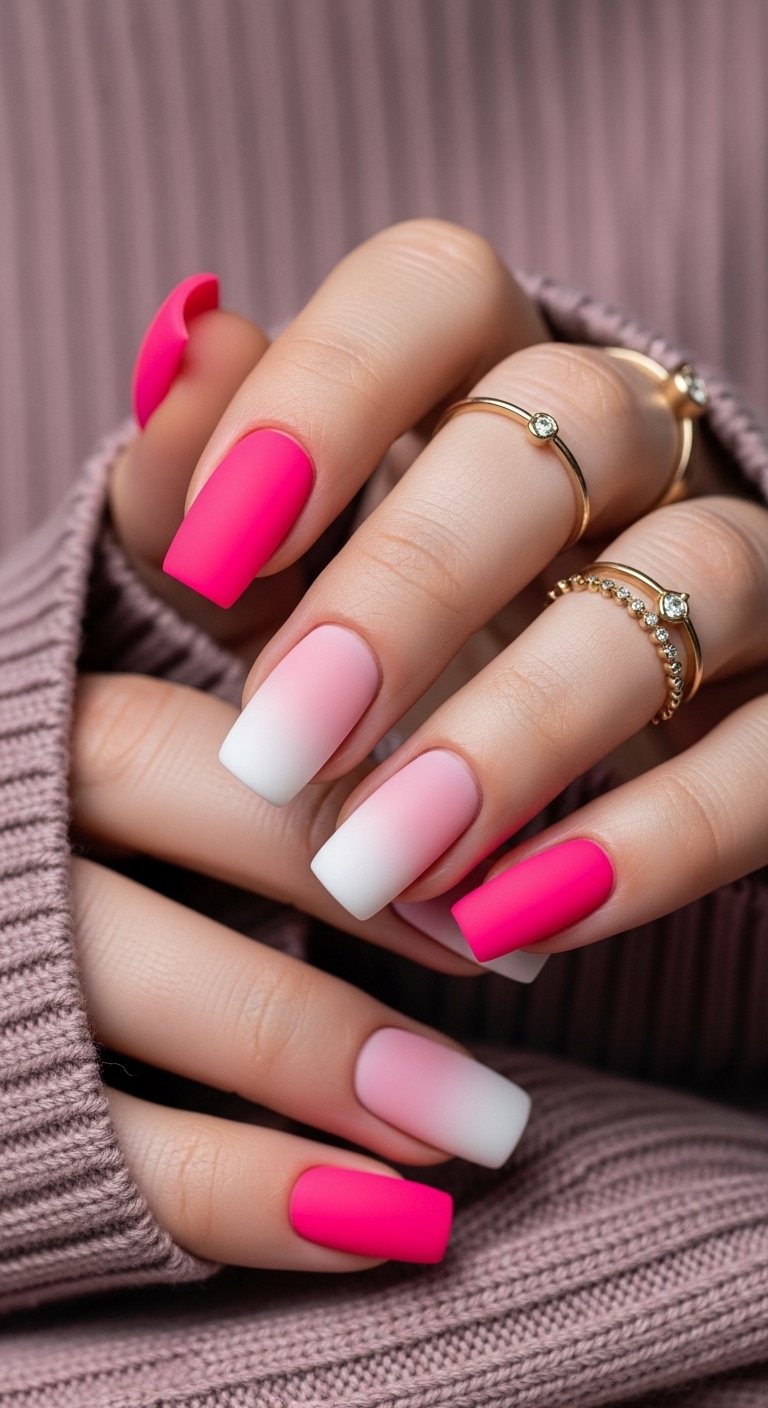
Ombre French Tips
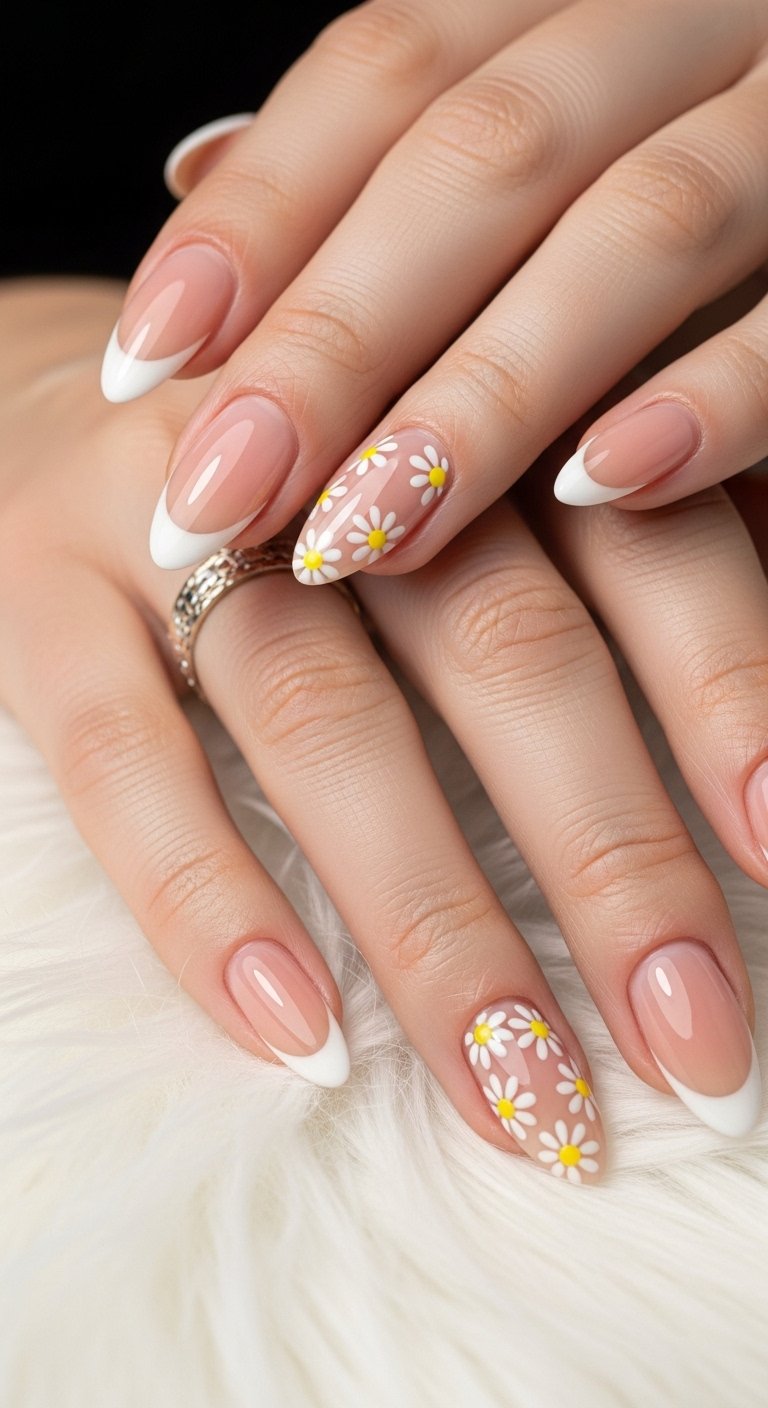
Also known as the “Baby Boomer” or “French Fade,” this style blurs the line between the pink base and the white tip. It eliminates the harsh demarcation line, creating a soft, misty gradient. For short nails, this is arguably the best design for elongation because there is no hard border stopping the eye. The white tip seamlessly melts into the nail bed.
To achieve this, you need a makeup sponge. Paint white on the tip of the sponge and pink below it, then dab repeatedly onto the nail. It can get messy on the skin, so use liquid latex around the cuticles or be prepared for cleanup. The result is sophisticated, timeless, and much softer than a crisp French.
Pro Tip: You may need to sponge 2-3 layers to get opacity at the very tip. Always finish with a top coat to smooth the texture left by the sponge.
Two-Toned French Tips
The two-toned tip features two different colors on the tip itself, usually split down the middle or layered as double lines. For example, a light pink line followed by a dark pink line. This adds complexity and detail without needing length. It turns the small canvas of a short nail into a detailed piece of jewelry.
A popular version is the “cuff” French, where you have a standard tip color, and a second, thinner line of a different color hugs the curve right underneath it. This requires a very steady hand but adds immense depth. High-contrast pairings like navy and white or pink and red work best to ensure the two tones don’t blend into a muddy mess from a distance.
Pro Tip: If doing the “cuff” style, paint the main tip first, let it dry, then add the secondary thin line.
Swirled French Tips
Swirls are a derivative of the abstract trend but specifically focus on curved, retro lines. Think 1960s Pucci prints. On short nails, swirls should flow vertically or diagonally rather than horizontally. A swirl that starts at the tip and curls down one side of the nail bed integrates the tip color with the rest of the nail, making the whole nail look like a cohesive art piece rather than just a colored edge.
You can do this with negative space (nude base) or over a colored base. White swirls on a nude base look bridal and airy. Brown and cream swirls give a cozy “latte art” vibe perfect for autumn. The organic nature of the swirls camouflages any asymmetry in your natural nail shape.
Pro Tip: Use a “liner gel” if possible; it has a higher viscosity than regular polish, allowing you to drag long swirls without the brush running out of paint.
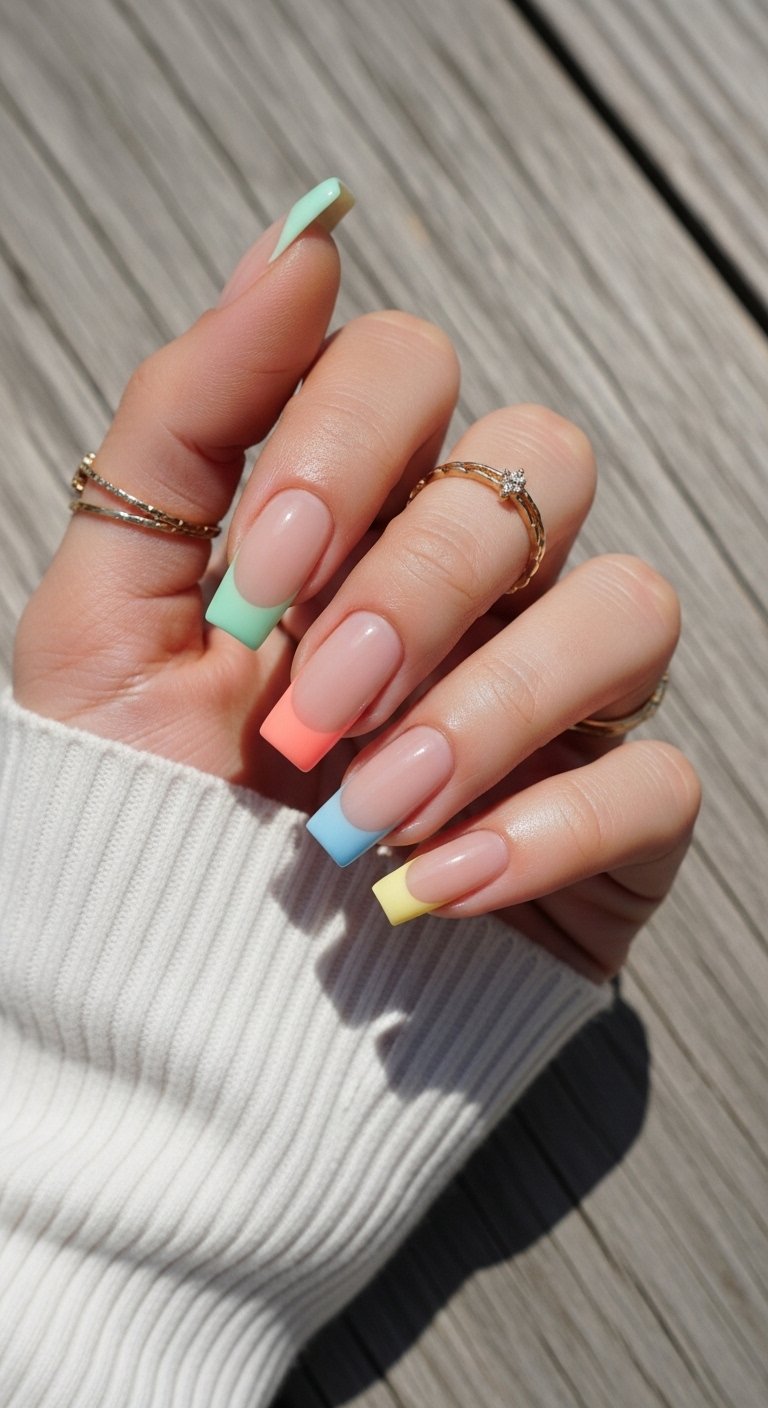
Pastel Colored French Tips
Soft, muted pastels—mint, lilac, butter yellow, sky blue—are the ultimate spring staple. Unlike neons, they don’t demand attention, making them office-appropriate. A pastel “rainbow” (a different pastel on each finger) is a sweet, playful look that feels cohesive because all the colors share the same white undertone.
Pastels can sometimes look chalky. To avoid this, choose pastels that have a slight shimmer or “jelly” finish. This translucency makes the finish look like stained glass or candy. Pastel tips look especially good on short, natural nails because they mimic the gentle colors found in nature, enhancing the hand’s natural beauty without overpowering it.
Pro Tip: Apply a matte top coat over pastel tips for a velvety, marshmallow-like finish that feels very modern.
“Get The Look” Color Palette
Mint Green: Fresh and cooling.
Periwinkle: A mix of blue and purple, very trendy.
Peach Fuzz: Warm and inviting.
Pale Lemon: Bright but soft.
Gold and Silver French Tips
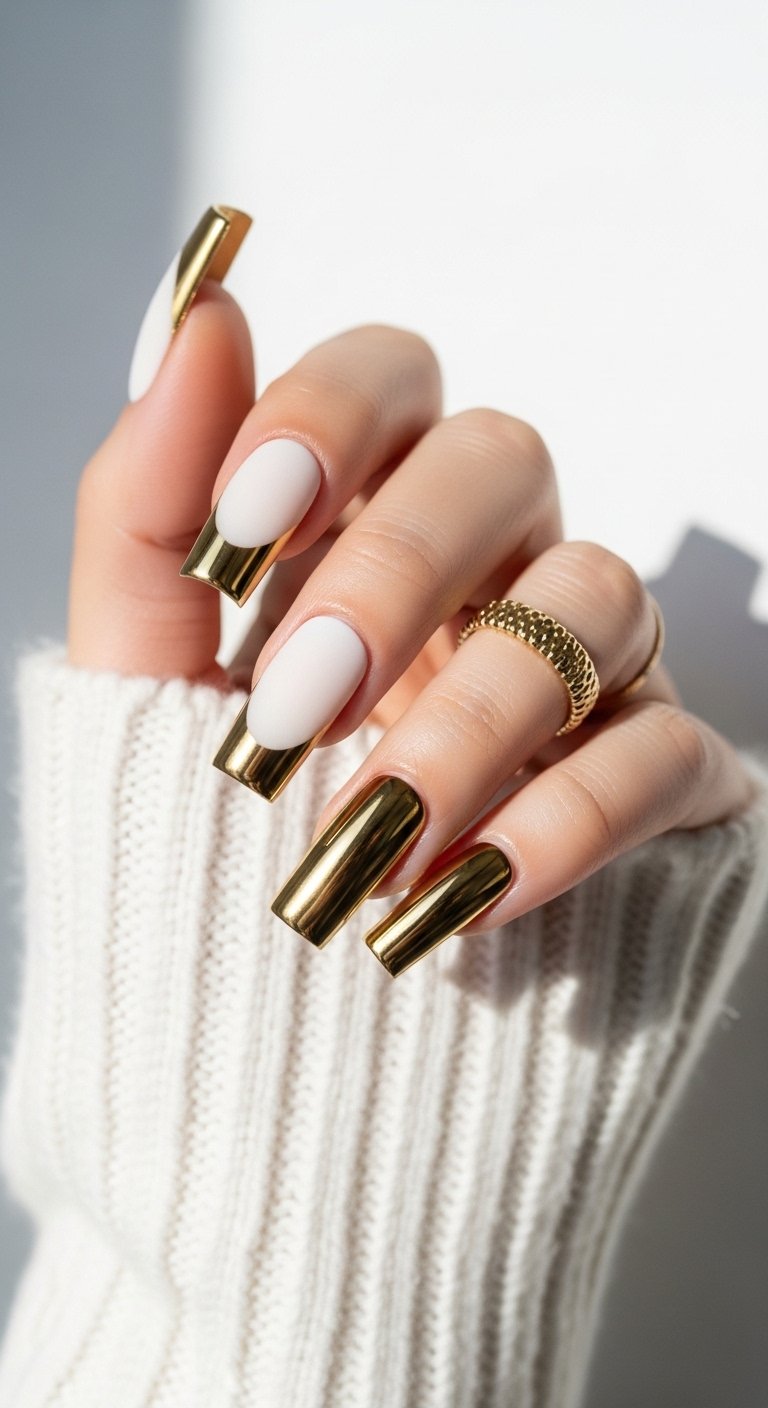
Metallics are neutrals in the nail world. A silver chrome tip looks futuristic and clean, acting like a mirror on the end of your fingers. Gold is warmer and richer. You can achieve this with metallic polish, but for the true “liquid metal” look, chrome powder is superior.
To do chrome tips on short nails: apply a matte top coat to the nude base, cure, then paint the tip with a no-wipe glossy top coat, cure, and rub the chrome powder only on the tip. The powder will stick to the glossy tip but slide right off the matte base. This creates the sharpest, most reflective French tip imaginable. It is dazzling, high-fashion, and surprisingly wearable for daily life.
Pro Tip: If using regular polish, look for “foil effect” polishes rather than shimmers for that solid metal look.
Chrome French Tips
Distinct from simple gold/silver, “Chrome French” often refers to the glazed donut effect or colored chromes (pink chrome, blue chrome). The “Hailey Bieber” effect—a sheer pearlescent chrome over the entire nail—can be modified into a French tip. A nude base with a white chrome tip offers a modern update to the classic wedding manicure.
Another variation is the “molten metal” tip, where the chrome is applied in a thick, 3D drip on the tip. This adds texture and catches light from every angle. It turns short nails into 3D accessories. While 3D art can snag, keeping it confined to the tip and smoothed out ensures it remains practical for daily wear.
Pro Tip: Ensure your chrome layer is sealed with a water-based top coat first if using regular polish, as standard top coats can dull the chrome effect.
Popular Asked Questions
Can you do French tips on very short nails?
Yes, absolutely. In fact, French tips can help very short nails look cleaner and more intentional. The key is the “micro-tip” technique. Instead of a thick white band (which makes nails look stubby), you paint a razor-thin line along the very edge. This defines the shape without covering up the pink nail bed, maximizing the visible length.
What is the best nail shape for short French tips?
For the most flattering look, Round or Squoval (soft square) shapes are best.
Round/Oval: These shapes mimic the natural curve of the fingertip, creating a seamless line that elongates the finger.
Square: This gives a modern, trendy look but can make wide fingers look wider.
Almond: Difficult to achieve on very short nails, as you need some length to file the tapered sides.
How do I make my short French tips look longer?
There are three tricks to creating an illusion of length:
Nude Base: Choose a base color that perfectly matches your skin tone or is slightly lighter. This blurs the line between your skin and the nail.
Thin Line: Keep the colored tip as thin as possible.
V-Shape: Instead of a curved smile line, paint a chevron (V-shape) tip. The point of the V draws the eye upward.
Can I do short French tips at home without steady hands?
Yes! The “Silicone Stamper Hack” is the easiest method.
Paint a line of polish on a soft silicone nail stamper.
Gently press the tip of your finger into the polish.
The stamper wraps around the nail edge, creating a perfect French tip.
Use a brush dipped in acetone to clean up any polish on your skin.
Conclusion
The era of believing French manicures are reserved for long acrylics is over. Short French tip nails are not only practical and low-maintenance, but they also offer a canvas for sophisticated, minimalist art. Whether you opt for the razor-thin “micro” white tip, a bold neon for summer, or a chic black-and-gold design for evening wear, these 22 styles prove that elegance isn’t defined by length.
Which of these short French tip styles will you try for your next manicure? Let us know in the comments below!
Follow us on Pinterest for more Short French Tip inspiration.
We use cookies to ensure that we provide you with the best possible experience on our website. If you continue to use this website, we assume that you agree to this.


Leave a Comment