
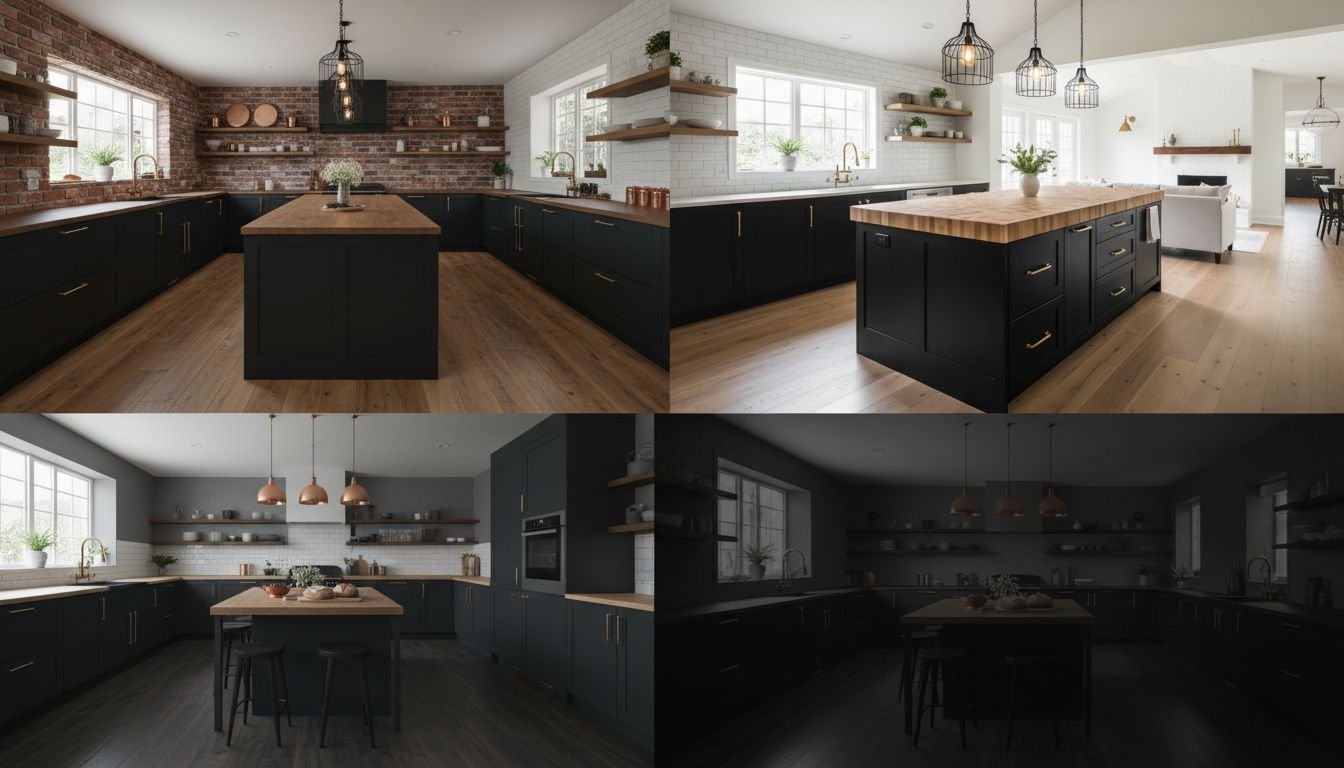
A dramatic shift is happening in interior design.**
Homeowners are trading safe, all-white spaces for the grounding power of rustic black kitchen ideas. You might worry that black feels too dark or enclosed. The opposite is true when done right. Deep charcoal and onyx tones create walls that recede, making spaces feel larger while contrasting beautifully with warm wood textures. This style solves the “sterile kitchen” problem instantly. It brings character, hides scuffs better than white cabinets, and anchors your home with a sophisticated edge.
Below, you will find a curated guide to mastering this look without making your kitchen feel like a cave.
Check out our related guide on Modern Farmhouse Living Rooms.
Key Takeaways
- Texture is King: Matte black finishes paired with rough-hewn timber prevent the space from feeling cold.
- Lighting Matters: Strategic layering of warm light sources is non-negotiable in darker palettes.
- Contrast Creates Depth: Use lighter countertops or backsplashes to break up visual heaviness.
- Metal Accents: Brass and copper hardware pop significantly more against black than any other color.
Table of Contents
- The Quintessence of Rustic Modernity
- A Study in Contrast and Harmony
- Where Warmth Meets Chic
- Classic Elegance with a Twist
- Farmhouse Flair with an Upscale Spin
- Comparison: Matte vs Glossy Finishes
- Sophistication in Simplicity
- A Toast to Traditions with a Modern Twist
- Inviting Comfort with Understated Elegance
- A Harmonious Blend of Tradition and Style
- Get The Look: Essential Elements
- A Nostalgic Twist on the Modern Kitchen
- The Timeless Allure of a Country Kitchen
- A Rustic Haven in the Modern World
- Popular Asked Questions
- Conclusion
The Quintessence of Rustic Modernity
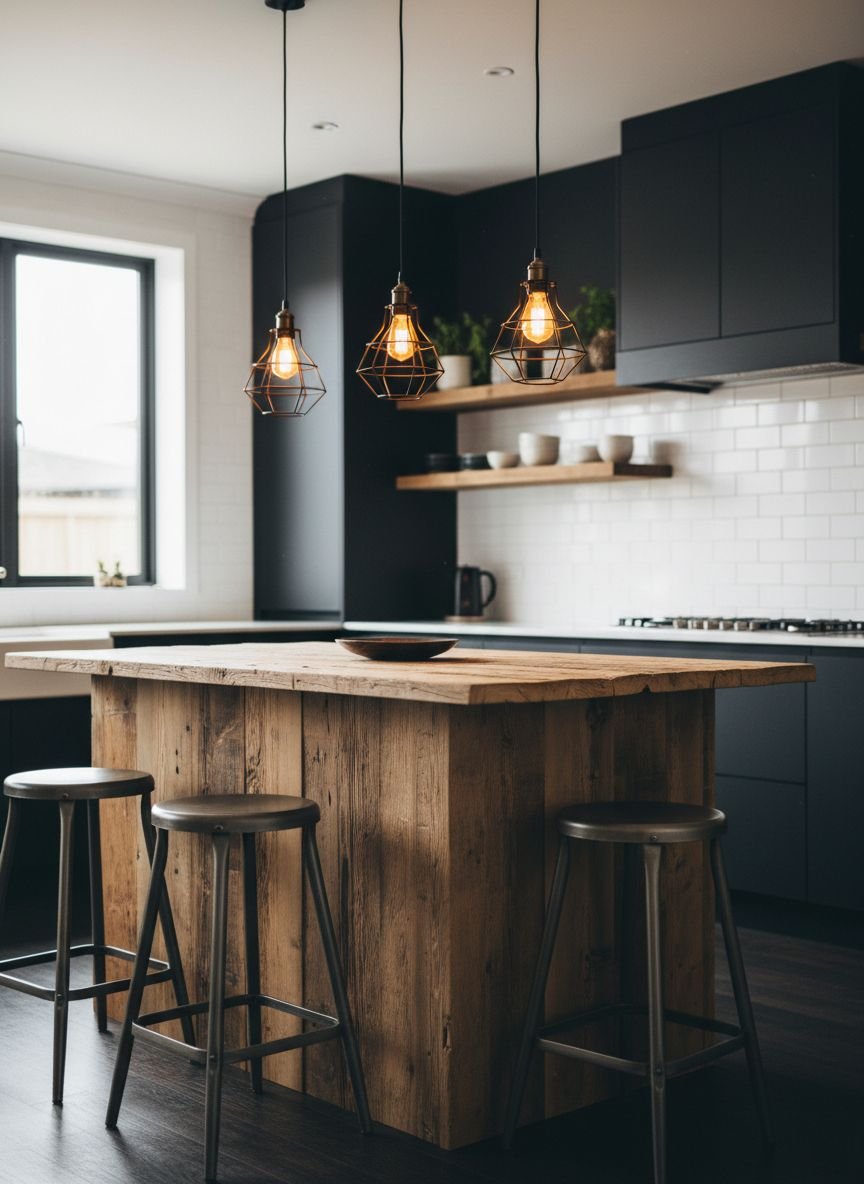
This design successfully bridges the gap between sleek contemporary lines and raw natural elements. You see flat-panel matte black cabinets sitting directly beneath reclaimed oak ceiling beams. The lack of hardware on the cabinetry emphasizes the vertical lines and keeps the focus on the wood grain texture above. Dark cabinetry absorbs light, so the inclusion of a large window or skylight is vital here to bounce natural light off the warmer timber tones.
Designers often call this “organic industrial.” It works because the deep black anchors the room, allowing the wood to float visually above it. To recreate this, avoid high-gloss paints. Stick to a finish like “Tricorn Black” or “Iron Ore” in a flat or eggshell sheen. This absorbs reflection and feels softer to the touch.
Pro Tip: Use a clear matte sealant on your exposed beams to prevent dust accumulation without adding artificial shine.
A Study in Contrast and Harmony
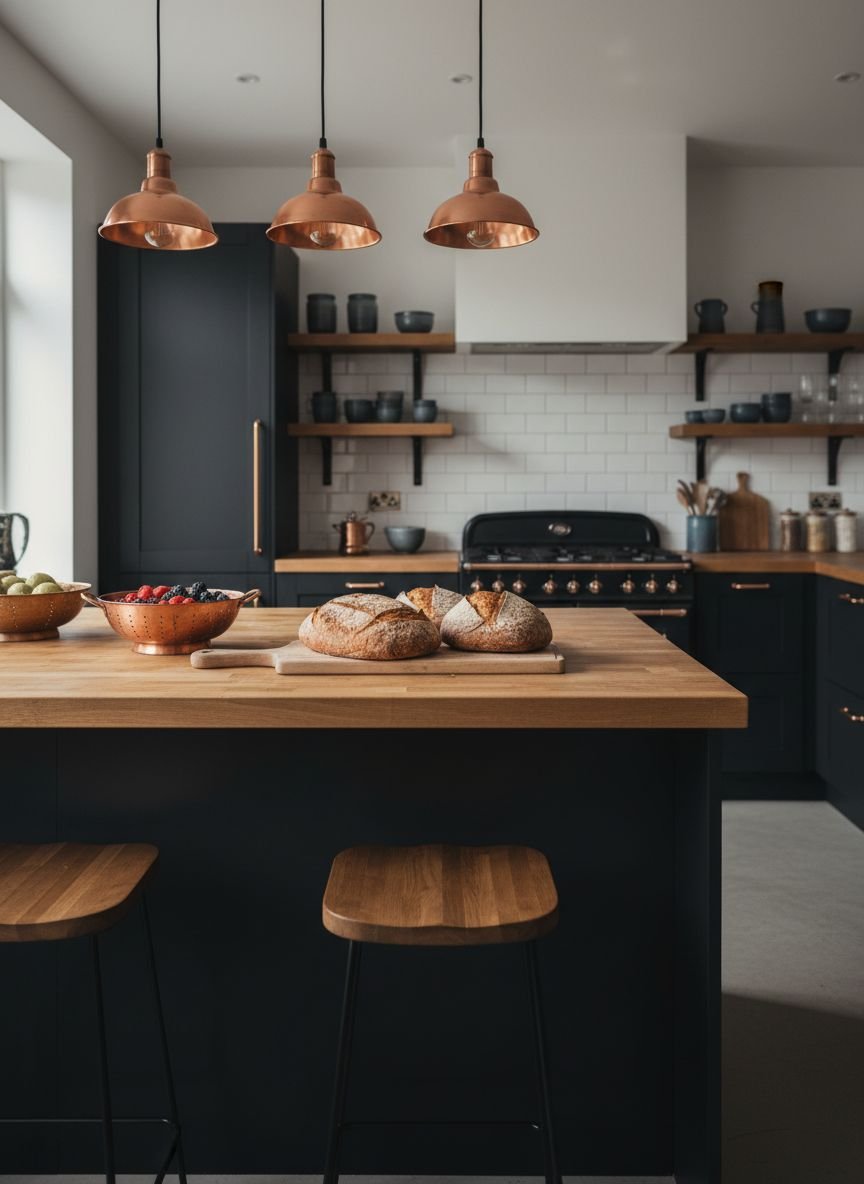
Visual weight management is the secret sauce in this layout. A wall of floor-to-ceiling black cabinetry could easily overwhelm a small footprint. This design counters that by utilizing a stark white marble island and matching backsplash. The heavy veining in the stone connects the black elements to the white, creating a cohesive loop for the eye to follow.
The interplay creates a tuxedo effect that feels timeless rather than trendy. You gain the drama of the dark cabinets without sacrificing the airy feeling of a bright kitchen. Concrete flooring pairs exceptionally well here, adding a third neutral texture that bridges the gap between the pristine marble and the moody joinery.
Pro Tip: If real marble is out of budget, look for “Calacatta Gold” quartz alternatives which offer better stain resistance and the same striking contrast.
Save this idea to your Pinterest.
Where Warmth Meets Chic
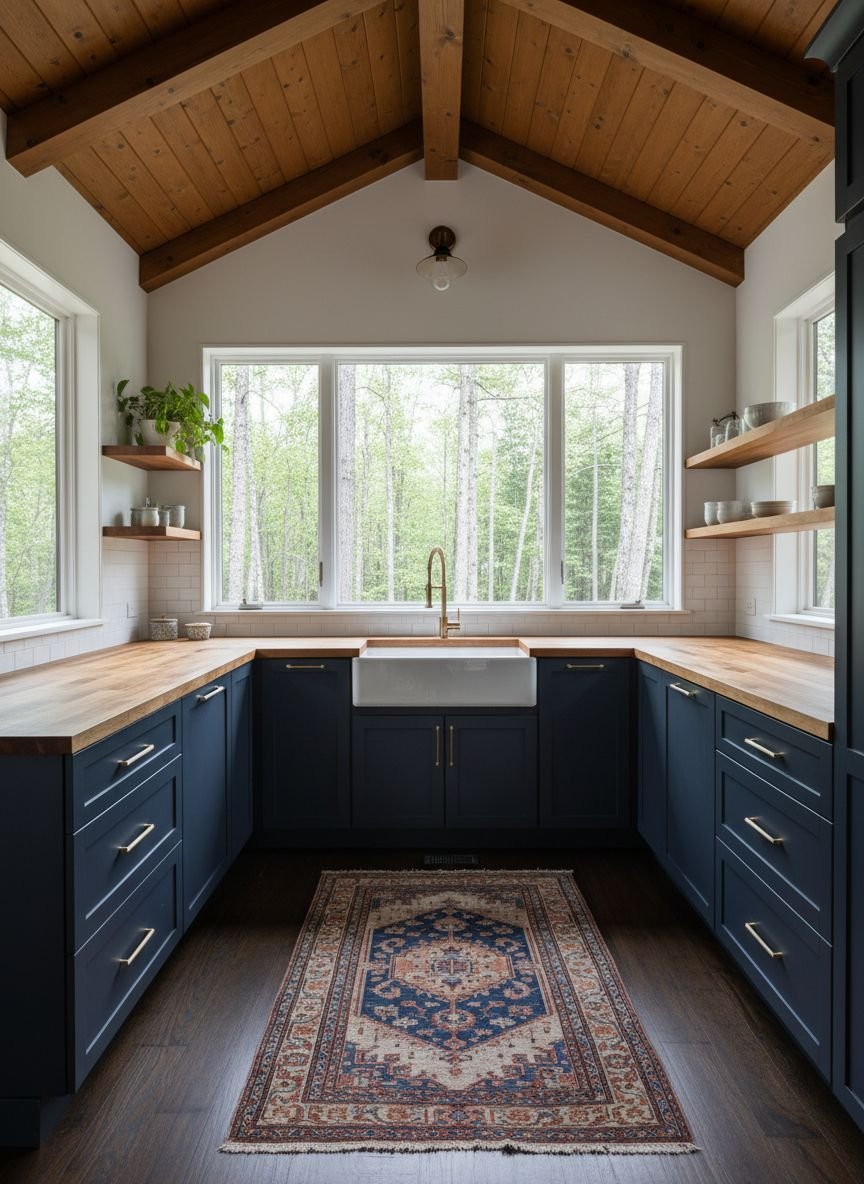
Black kitchens risk feeling cold if you stick strictly to cool metals like chrome or stainless steel. This space warms up the palette instantly by introducing unlacquered brass hardware and faucet fixtures. The gold tones shine brilliantly against the dark backdrop, acting like jewelry for the room.
The lighting choices here reinforce that warmth. Instead of cool white LEDs, the design features woven pendant lights or vintage Edison bulbs. The amber glow softens the sharp edges of black cabinetry. You can achieve this balance by swapping out standard silver knobs for antique brass pulls. It is the fastest high-impact update for a rental or budget renovation.
Pro Tip: Choose “living finishes” for your brass hardware. They will develop a patina over time, adding to the rustic authenticity.
Classic Elegance with a Twist
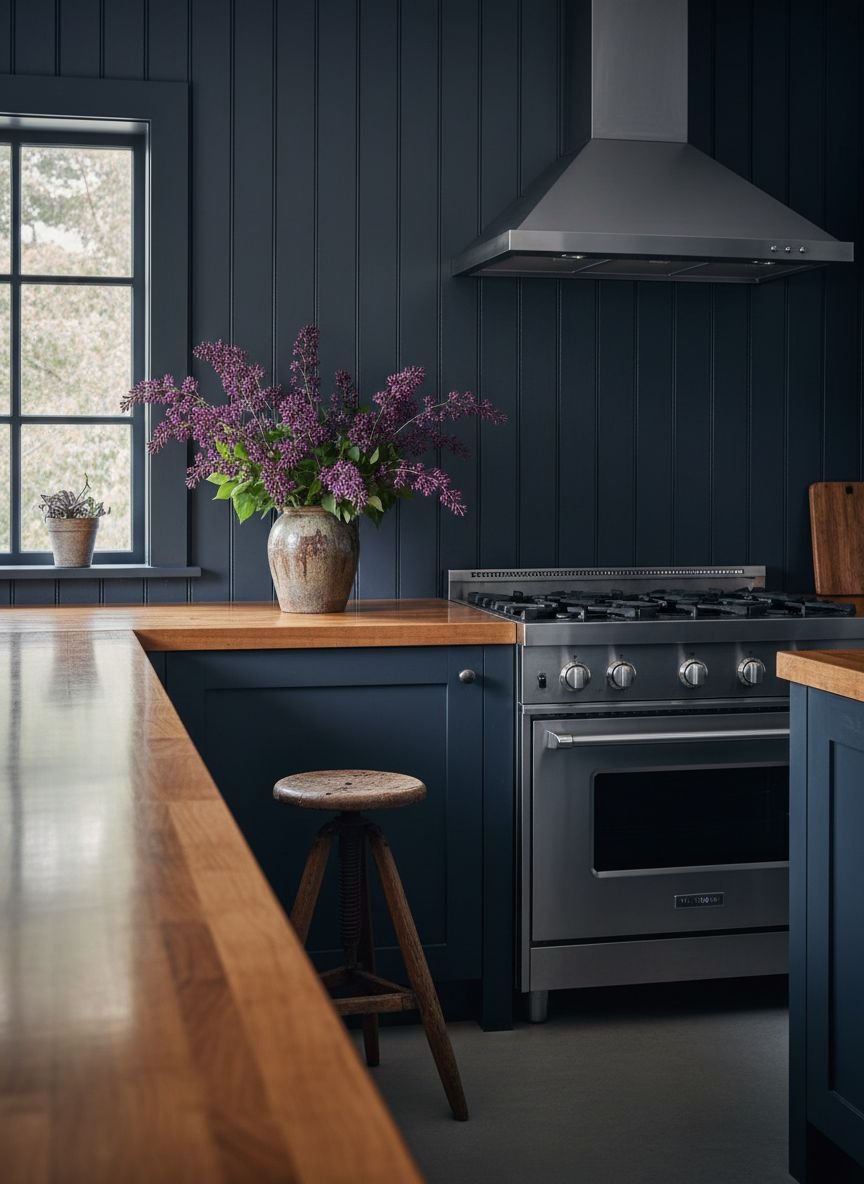
Shaker-style cabinets are a staple of traditional design, usually seen in white or sage green. Painting them black completely transforms their character. This kitchen proves that traditional profiles can look incredibly edgy. The recessed panels of the Shaker doors catch shadows differently than flat doors, adding subtle dimension to the black paint.
Grounding this look is a vintage runner rug in deep reds and oranges. The textile adds softness underfoot and breaks up the monotony of a dark floor. This is a perfect example of how soft furnishings can alter the “temperature” of a kitchen. The juxtaposition of a formal cabinet profile with a worn, casual rug creates a lived-in aesthetic that feels curated, not catalog-ordered.
Pro Tip: Use washable vintage-style rugs in the kitchen area to handle spills while maintaining the aesthetic.
Farmhouse Flair with an Upscale Spin
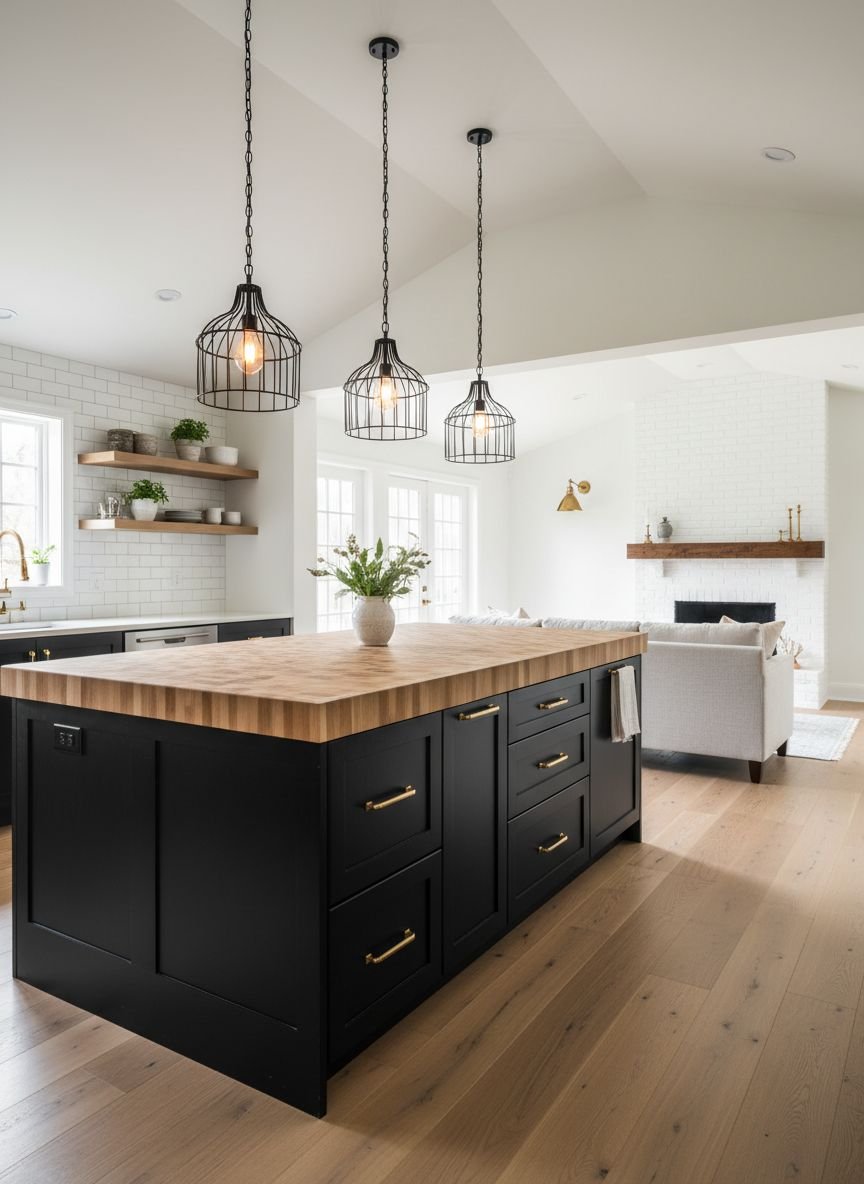
The farmhouse trend has evolved beyond white shiplap. Here, we see a massive farmhouse apron sink—perhaps in copper or fireclay—set against charcoal cabinetry. The sink becomes the focal point. Open shelving replaces upper cabinets, displaying white stoneware and clear glass jars. This prevents the black from closing in the upper half of the room.
Rustic touches appear in the details: a pot filler over the stove, a butcher block segment on the island, or a sliding barn door pantry. The black paint modernizes these country elements, stripping away the “kitsch” and leaving a sleek, functional space. It is sophisticated country living.
Pro Tip: Paint the back of your open shelves the same black as the cabinets to make your white dishes pop visually.
Comparison: Matte vs Glossy Finishes
| Feature | Matte Black Finish | Glossy Black Finish |
|---|---|---|
| Vibe | Rustic, understated, organic | Modern, high-glam, sleek |
| Maintenance | Hides fingerprints well | Shows smudges and prints easily |
| Light | Absorbs light (moody) | Reflects light (brightening) |
| Best For | Farmhouse, Industrial, Rustic | Art Deco, Ultra-Modern |
| Scratch Visibility | Can show burnishing/shiny spots | Hides micro-scratches better |
Sophistication in Simplicity
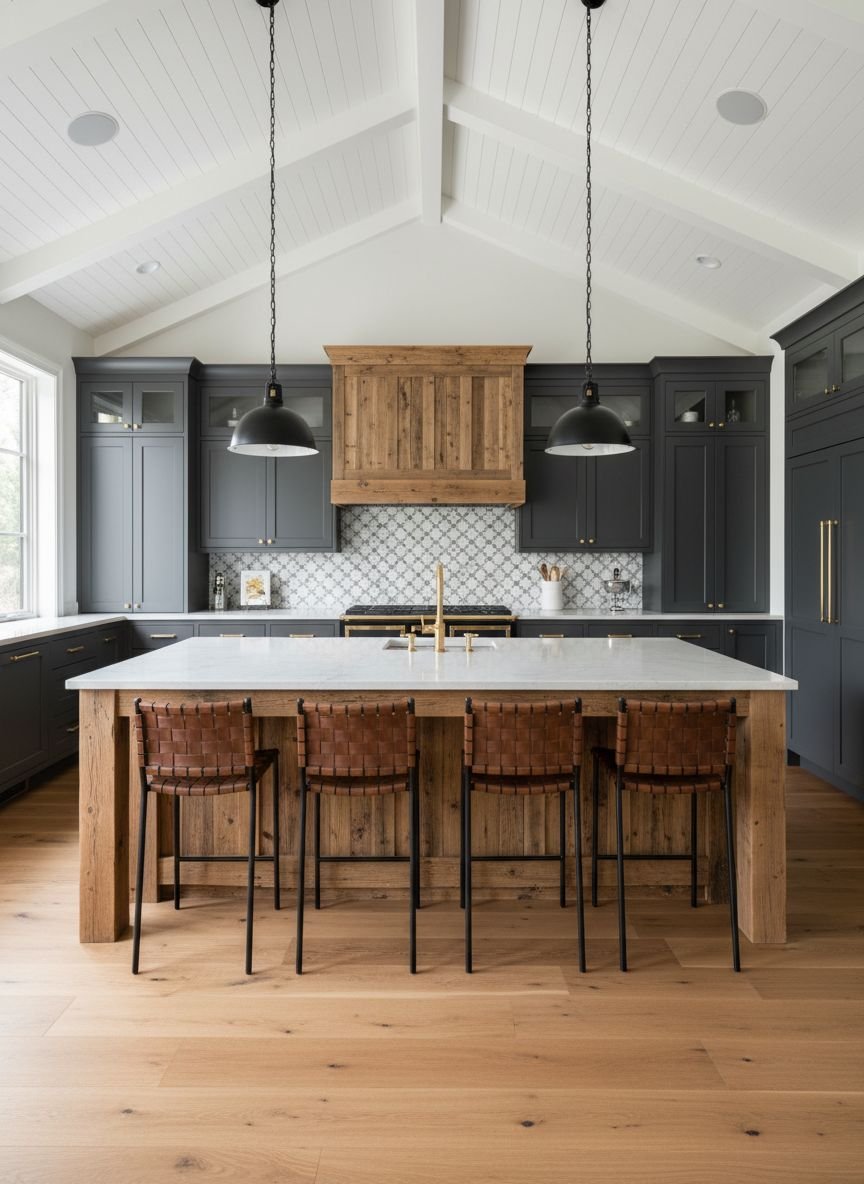
Minimalism does not mean empty. In this rustic black kitchen, clutter is hidden behind seamless panel-ready appliances. The refrigerator and dishwasher blend perfectly into the cabinetry run. The visual silence allows the eye to rest on the textures: the knotty pine floor or the rough stone backsplash.
This approach creates a calming atmosphere. By reducing visual noise (labels, buttons, handles), the bold choice of black feels peaceful rather than aggressive. Simplicity here relies on high-quality materials. When you remove decoration, the quality of the wood and paint finish becomes the decoration.
Pro Tip: Install push-to-open latches on cabinets to eliminate handles entirely for the ultimate sleek rustic look.
A Toast to Traditions with a Modern Twist
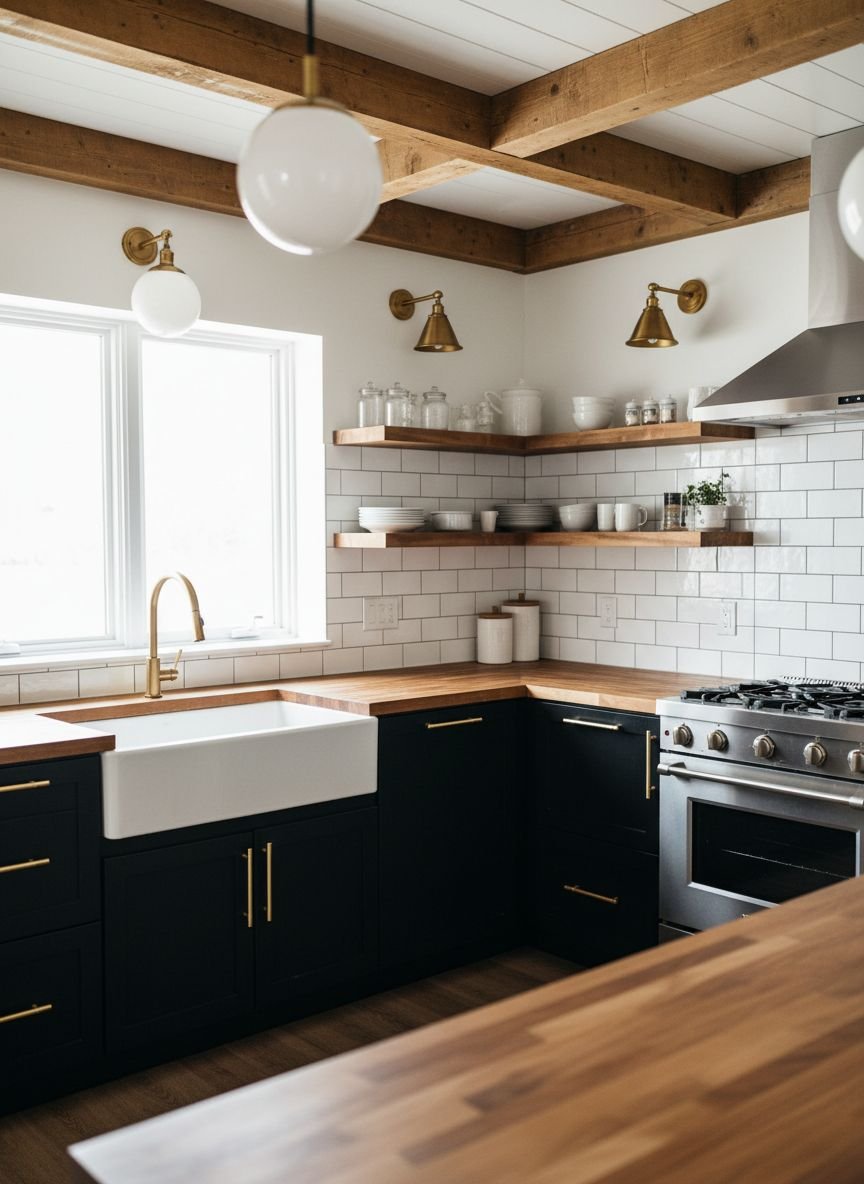
Exposed brick is the hero in this design. Whether red, whitewashed, or painted gray, brick walls add instant history to a room. Pairing the rough, uneven texture of brick with smooth black cabinetry creates a tactile feast. The industrial edge of the brick validates the choice of black, making the kitchen feel like a converted loft or a historic cottage.
If your home lacks original brick, high-quality brick veneer creates a convincing substitute. Focus on lighting the brick wall from above (wall washers) to exaggerate the texture and shadows. This interplay between the rugged wall and the dark joinery defines “rustic modern.”
Pro Tip: Use a matte sealer on brick backsplashes to prevent oil absorption while keeping the raw look.
Inviting Comfort with Understated Elegance
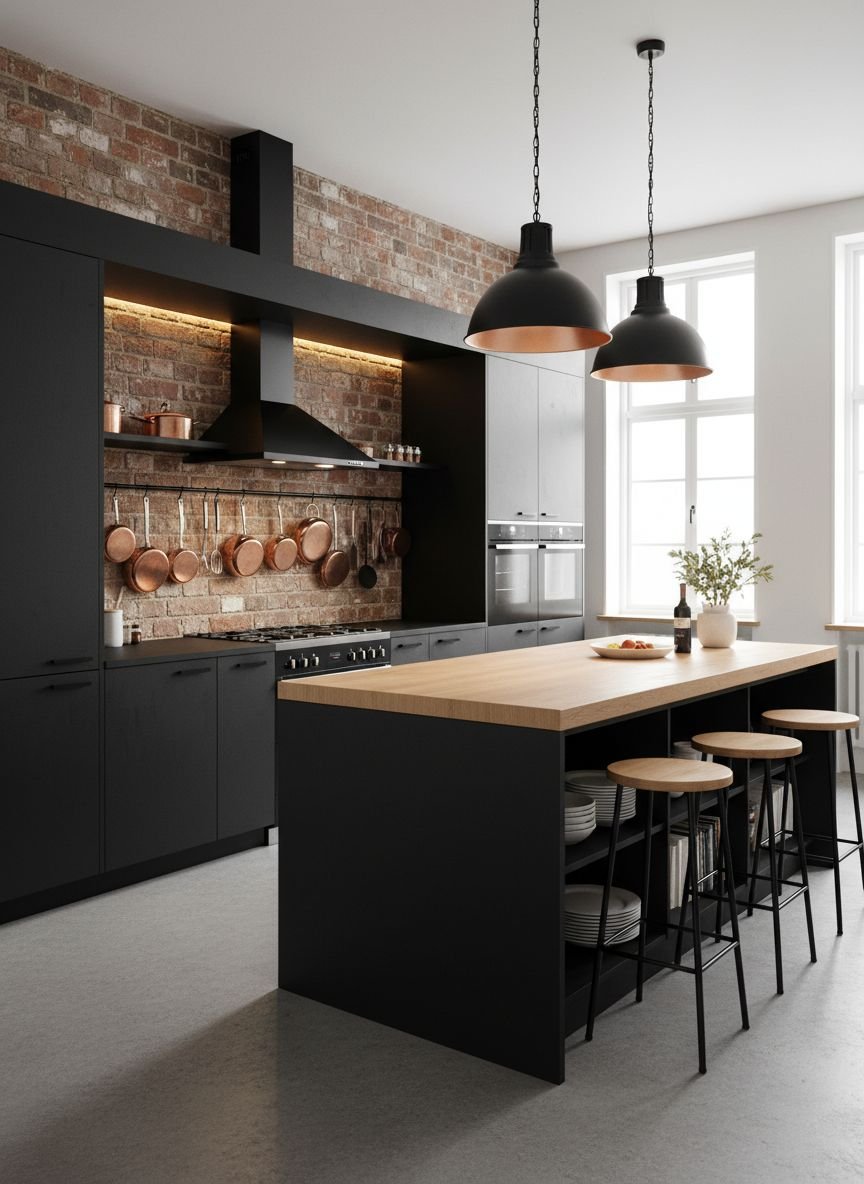
The kitchen is a gathering place, and seating plays a huge role in the vibe. This idea centers around a large island with comfortable, leather-upholstered bar stools. Cognac or caramel leather creates a stunning compliment to black cabinets. The warm brown tones of the leather pick up the wood notes in the flooring.
This setup prioritizes social interaction. The dark island creates a solid anchor, while the inviting seats encourage guests to linger. Textural contrast is key here—smooth leather against painted wood. It suggests a space that is meant to be used, not just looked at.
Pro Tip: Look for stools with backs for genuine comfort; aesthetic stools often get unused if they are uncomfortable.
A Harmonious Blend of Tradition and Style
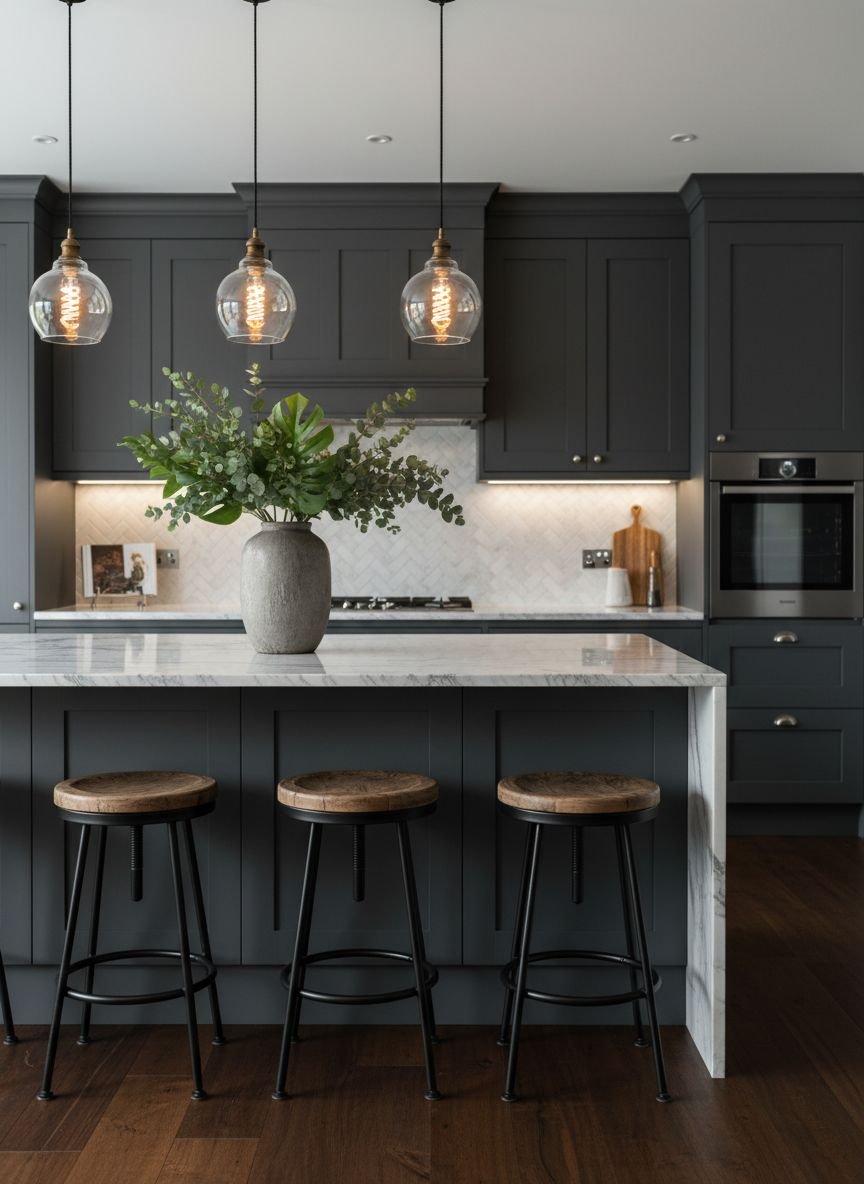
Flooring choice can make or break a dark kitchen. This concept uses terracotta tiles or wide-plank light oak to ground the space. The earthy reds of terracotta or the honey tones of oak prevent the room from feeling like a black box. It creates a “bottom-up” warmth.
The traditional flooring balances the bold modern choice of black walls or cabinets. It suggests a renovation that respects the bones of the house. You get the trendiness of the black kitchen without losing the soul of the home. Rugs are unnecessary here; the floor itself is the feature.
Pro Tip: If using terracotta, choose a dark grout to hide kitchen grime and coordinate with the cabinetry.
Save this idea to your Pinterest.
A Nostalgic Twist on the Modern Kitchen
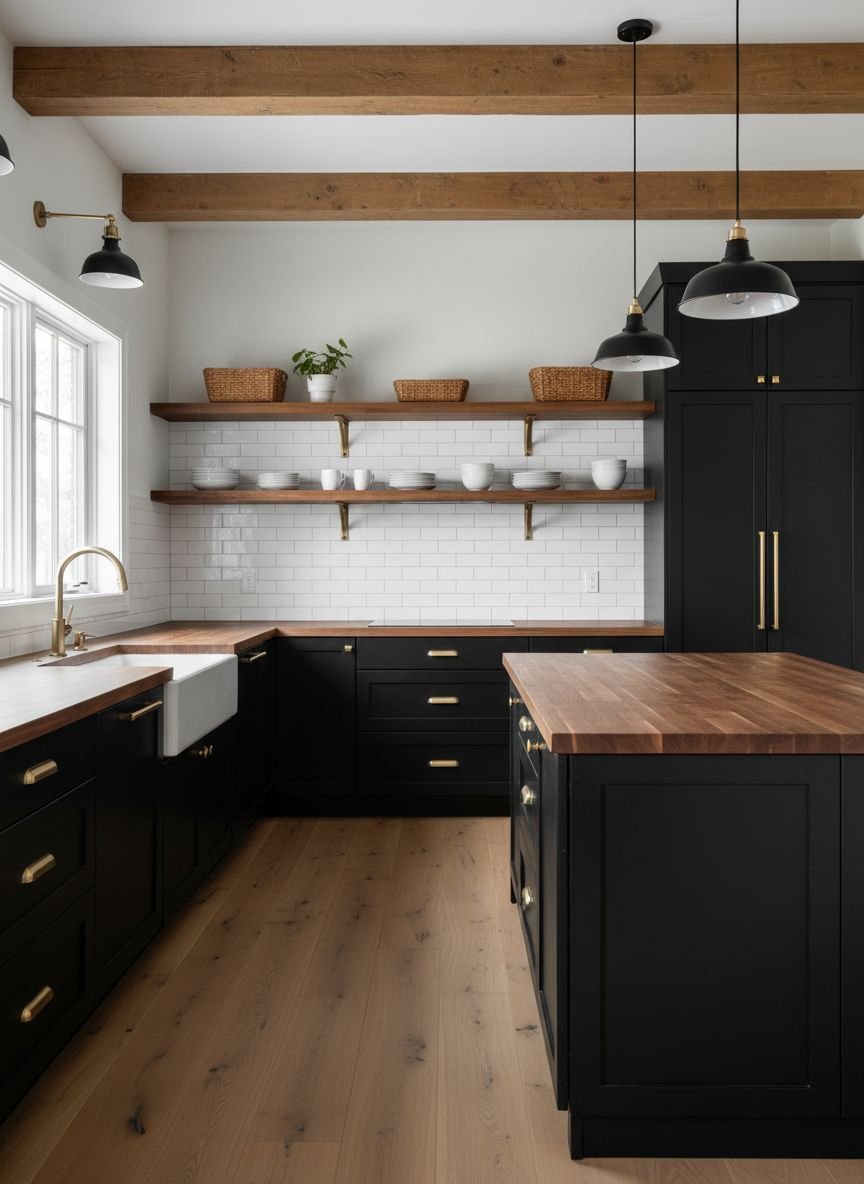
Retro appliances are making a massive comeback. Imagine a matte black Smeg fridge or a vintage-style Aga range cooker as the centerpiece. These appliances have soft, rounded curves that break up the rigid straight lines of standard cabinetry.
This style leans into nostalgia but keeps the color palette strictly monochrome to stay modern. It is playful yet serious. The hardware might be chrome to match the retro trim on the appliances. It fits perfectly in cottages or bungalows where a ultra-sleek kitchen might feel out of place.
Pro Tip: Ensure your retro appliances are energy-efficient models to get the look without the high utility bill.
Get The Look: Essential Elements
- Paint: Benjamin Moore “Onyx” or Sherwin Williams “Tricorn Black”.
- Wood Stain: “Special Walnut” or “Early American” (avoids orange tints).
- Countertops: Soapstone (natural gray/black) or Butcher Block (warmth).
- Accents: Woven baskets, wooden cutting boards, amber glass jars.
The Timeless Allure of a Country Kitchen
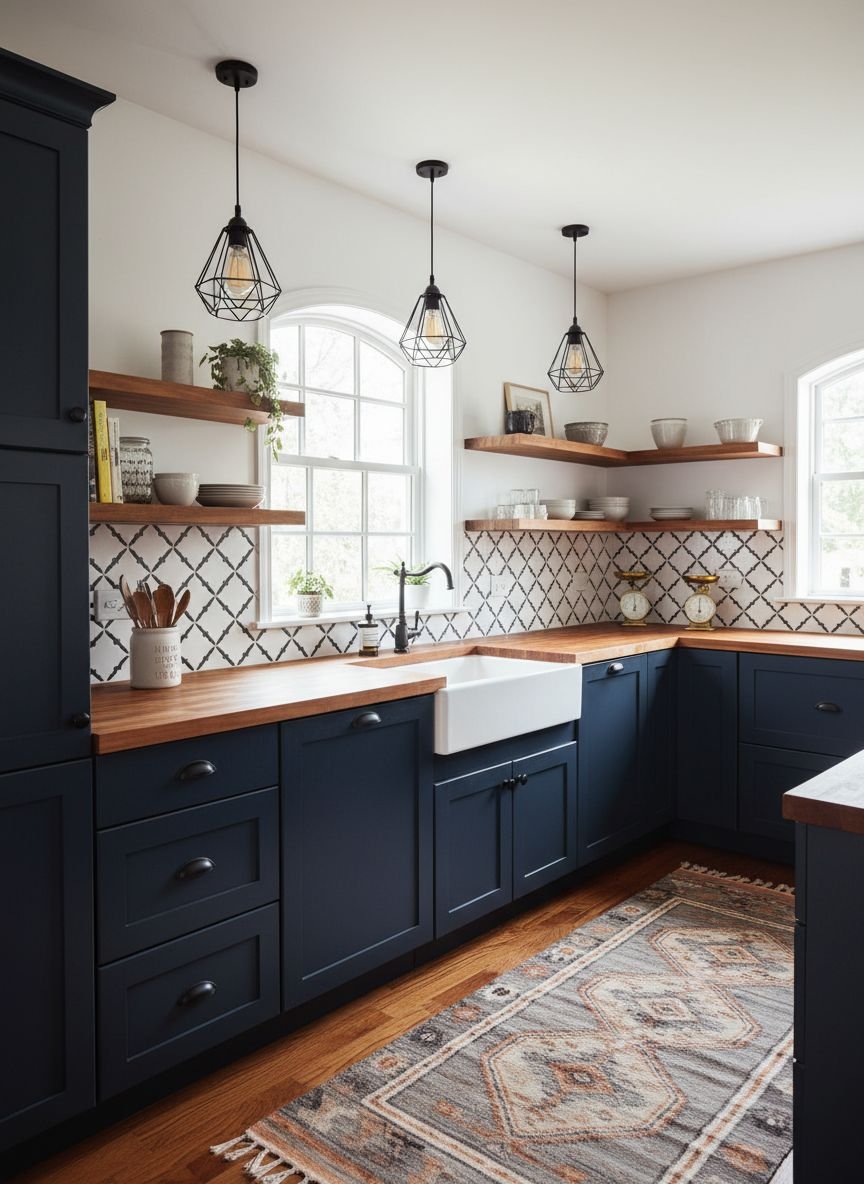
Vertical shiplap painted in black creates a backdrop that feels distinctly country yet totally fresh. Instead of upper cabinets, this look utilizes long wooden rails with S-hooks to hang copper pots and pans. It turns your cookware into decor.
The visible storage adds layers of life and activity to the kitchen. It is practical for the serious cook. The black background makes copper, steel, and cast iron pop. It effectively hides the shadows behind the pots, making the arrangement look neater than it would on a white wall.
Pro Tip: Only hang items you actually use. Dust on displayed cookware ruins the effect.
A Rustic Haven in the Modern World
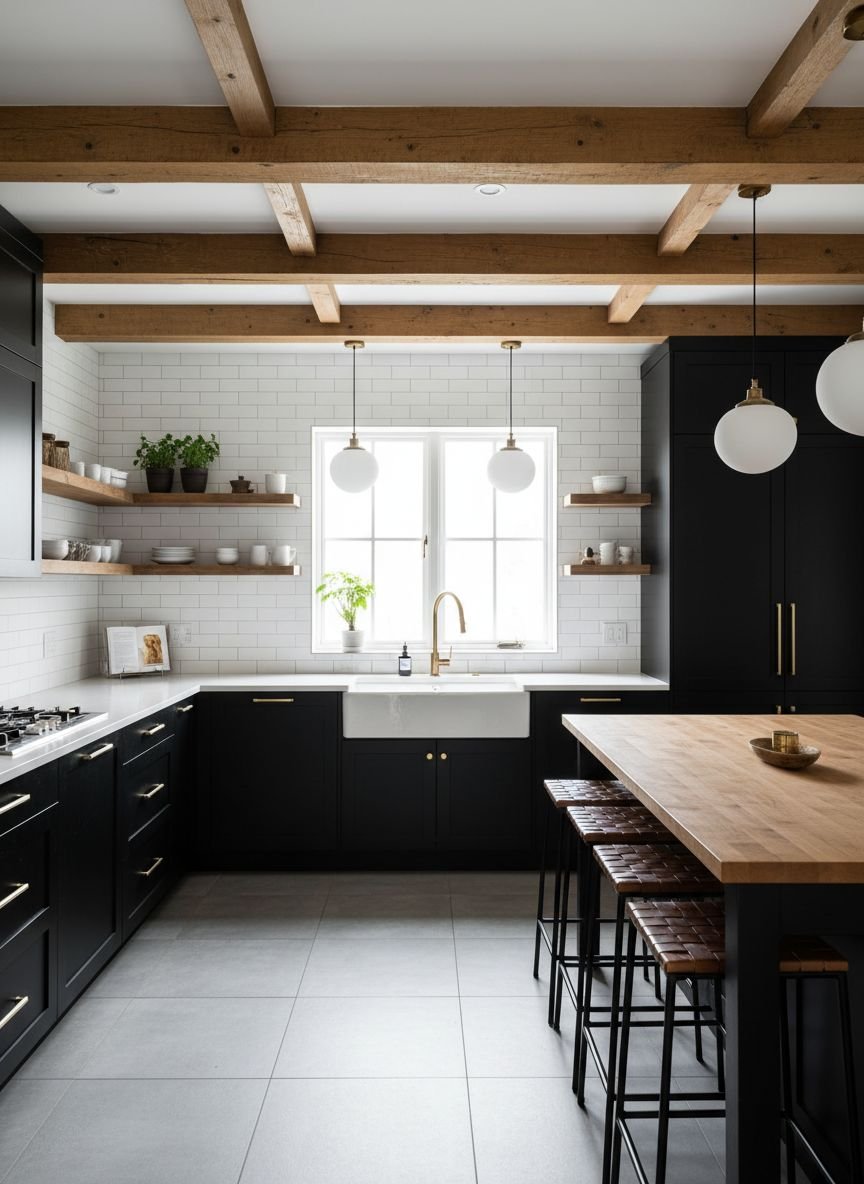
Biophilic design principles bring this kitchen to life. The deep black walls act as a canvas for vibrant greenery. Potted ferns, trailing ivy on top of cabinets, and fresh herbs on the windowsill look incredibly lush against a dark background. The green creates a vibration against the black that white walls simply cannot replicate.
This connection to nature softens the harshness of the dark architecture. It feels like a garden room. Combine this with natural rattan light fixtures and a jute rug to complete the organic sanctuary vibe.
Pro Tip: Snake plants and ZZ plants tolerate low light and look sculptural against black walls.
Popular Asked Questions
Are black kitchen cabinets hard to keep clean?
Yes and no. Matte black cabinets hide daily dust better than white cabinets, but they can show grease spots or oil smudges more easily. You will need to wipe them down with a microfiber cloth and a gentle degreaser regularly. Using hardware (handles and knobs) helps keep messy fingers off the paint surface.
Does a black kitchen make the room look smaller?
Not necessarily. While light colors reflect light, dark colors recede visually. This adds depth and blurs the boundaries of the room. The key is balance. If you have black cabinets, keep the ceiling white and ensure you have good lighting (both natural and artificial) to prevent a “cave-like” feeling.
What wood tone goes best with black cabinets?
Medium-tone woods like walnut, white oak, and warm pine look best. These tones provide enough contrast to stand out against the black but share a warmth that balances the coolness of the dark paint. Avoid very red woods (like cherry) as they can look dated against modern black finishes.
What flooring works with a rustic black kitchen?
Light to medium hardwood floors are the most popular choice because they add warmth and contrast. However, patterned tiles, concrete, or slate also work beautifully depending on the specific “rustic” vibe you want. A light floor helps bounce light back up into the room.
Conclusion
The era of the sterile, all-white kitchen is fading. Rustic black kitchen ideas offer a sophisticated alternative that feels grounded, cozy, and incredibly stylish. Whether you opt for a full remodel with charcoal cabinetry or start small with a black shiplap accent wall, this trend brings depth to the heart of your home. It proves that dark colors can be just as inviting as light ones when paired with the right textures and warm woods.
Which of these black rustic styles would you dare to try in your own home?
Follow us on Pinterest for more Rustic Kitchen inspiration.

Leave a Comment