
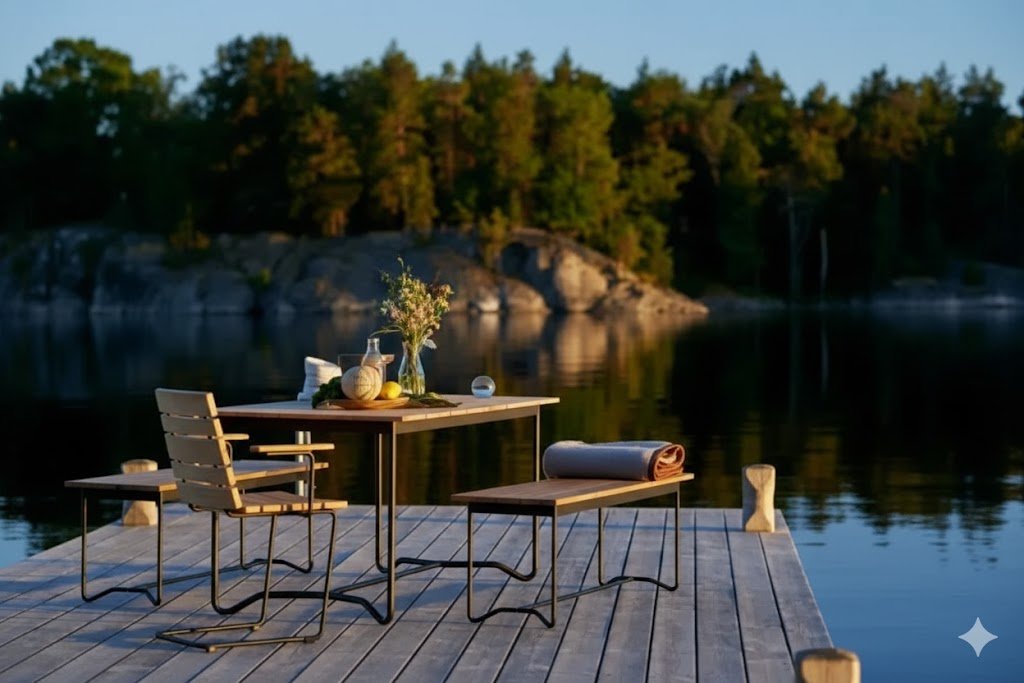
Getting Your Outdoor Space Ready When Weather Warms Up
Something happens to us when the temperature climbs past 65 degrees. We suddenly remember we have an outdoor space. That patio or deck that sat neglected all winter? Now it’s calling our name. We step outside, look around, and think, “This needs work.” And usually, it does.
Spring cleaning for outdoor areas hits different than indoor cleaning. Inside, you’re dusting and vacuuming. Outside, you’re sweeping away months of debris, wiping down surfaces that nature has claimed, and realizing that chair you left out all winter looks rough. Really rough. This is when most of us start thinking about upgrading our outdoor furniture.
I do this every year. Winter ends, I go outside with my coffee, and I assess the damage. Some years it’s not too bad. A little cleaning, some new cushions, and we’re back in business. Other years? I’m looking at furniture that clearly didn’t survive the season. Wood that’s cracked. Metal that’s rusted. Fabric that’s faded to the point where I can’t remember the original color.
Decorating an outdoor living area shares a lot with decorating indoor rooms. You’re thinking about color schemes. You’re considering how pieces work together. You’re trying to create a cohesive look. But outdoor decorating adds extra layers of complexity. Everything has to withstand weather. Sun, rain, wind, and in some places, snow and ice. Your choices need to be both attractive and tough.
Plants play a huge role in outdoor decorating. I’ve learned this through trial and error, mostly error. You can have the best furniture in the world, but if your space is surrounded by dead or struggling plants, it looks sad. Good plants soften the hard edges of furniture. They add color and life. They make the space feel intentional instead of random.
Lighting transforms outdoor spaces in ways I didn’t appreciate until I got it right. During the day, your patio looks one way. At night, it’s a completely different space. String lights, lanterns, path lights, and accent lighting all contribute to the ambiance. I’ve been to outdoor spaces that were okay during the day but magical at night, all thanks to good lighting choices.
Color is trickier outside than inside. What looks great in your living room might look wrong on your patio. The natural light is different. The background is different. You’re competing with or complementing the colors of your house, your plants, and your surrounding environment. I’ve bought cushions that looked perfect in the store, then brought them home and realized they clashed with everything.
But here’s the thing about outdoor decorating. The furniture is your foundation. It’s where you start. Everything else builds from there. You can have perfect plants, amazing lighting, and a great color scheme, but if your furniture is uncomfortable, falling apart, or just plain ugly, none of the other stuff matters. People will notice the bad furniture first.
The furniture market for outdoor spaces has exploded over the last decade. When I was growing up, outdoor furniture meant white plastic chairs and maybe a picnic table. Now? You can furnish your patio to look like a luxury resort if you’ve got the budget. The variety is overwhelming in both good and bad ways. Good, if you know what you want. Bad, if you’re starting from scratch and have no idea where to begin.
Styles range from ultra modern to rustic farmhouse to tropical resort to classic traditional. You can match your outdoor furniture to your indoor style, or you can go completely different. I’ve seen people with minimalist modern interiors who created lush, eclectic outdoor spaces. Both approaches work. It’s more about knowing yourself and what you’ll actually use.
Price ranges are all over the map too. You can spend $200 on a basic patio set, or you can drop $10,000 on designer pieces. Most of us land somewhere in the middle. We want quality that lasts, but we’re not trying to furnish an outdoor showroom. We just want a nice place to sit and eat or relax when the weather’s good.
The trick is matching your investment to your usage. If you live somewhere with nine months of good outdoor weather and you use your patio daily, spending more makes sense. You’re getting value from that furniture almost year round. If you’re in a climate where you get maybe three months of usable outdoor time, spending a fortune might not be smart. The furniture will sit unused most of the year.
I live in a place with about six solid months of outdoor weather. Spring through early fall, we’re outside a lot. Late fall through early spring, not so much. This means I’m willing to invest in decent furniture, but I’m not buying the absolute top of the line stuff. It needs to last, but it doesn’t need to be heirloom quality.
Your outdoor space can genuinely become an extension of your home. Not just a place you go occasionally, but a room you use regularly. This only happens when the space is properly furnished and comfortable. If your outdoor area is an afterthought with mismatched, uncomfortable furniture, you won’t use it. You’ll step outside, realize it’s not pleasant, and go back inside.
I’ve watched this evolution in my own home. Our first house had a tiny patio with cheap furniture. We barely used it. Our current house has a bigger deck, and we’ve invested in furniture that works. Now we’re outside constantly when weather permits. We eat meals out there. We have coffee out there in the morning. Friends come over and we hang out there. The space works, so we use it.
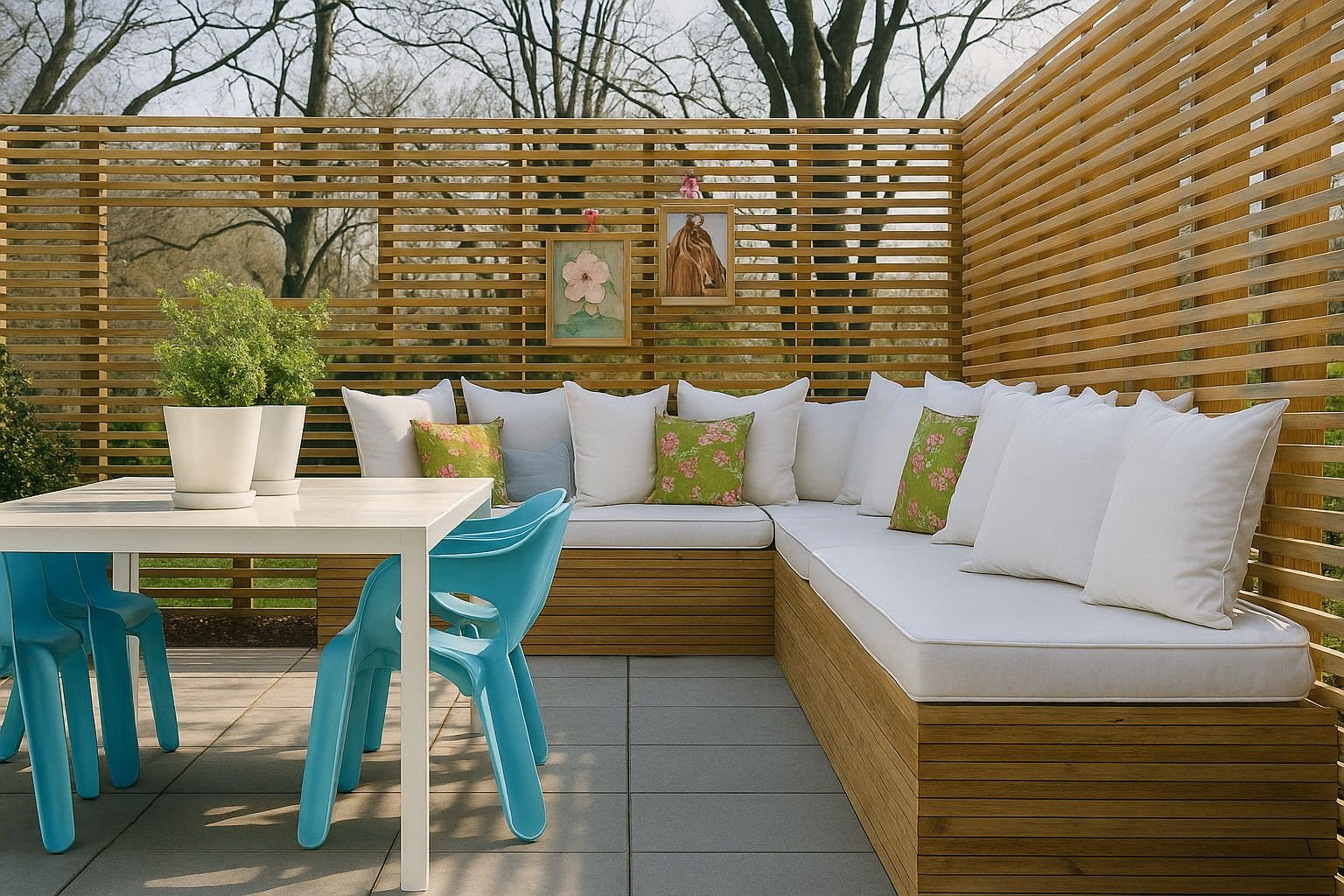
Getting ready for warm weather means more than just cleaning. It means evaluating what you have and being honest about whether it still works. That chair with the wobbly leg? It’s not going to fix itself. That table with the faded finish? It’s not going to magically look better. Sometimes you’ve got to admit that what you have isn’t cutting it anymore and it’s time for an upgrade.
Understanding Different Furniture Materials and What Works Best
Let’s talk about what outdoor furniture is actually made from. This matters way more than you might think. The material affects how the furniture looks, how long it lasts, how much maintenance it needs, and how much you’ll pay. Choosing the wrong material for your situation can mean replacing furniture way sooner than you should have to.
Metal furniture comes in several varieties, and they’re not all the same. Iron, steel, and aluminum all show up in outdoor furniture, but they behave differently. Let me break this down based on what I’ve learned, sometimes the hard way.
Iron furniture has a classic look. It’s heavy, substantial, and often comes in intricate designs. Wrought iron pieces can be gorgeous. But iron has a rust problem. Unless it’s properly treated and maintained, iron will rust. And once rust starts, it’s a pain to stop. I had an iron bench once. Beautiful piece. Within two years, it had rust spots I couldn’t get rid of. I tried painting over them. The rust just came back.
Steel furniture is stronger than iron but still has rust issues. Stainless steel does better, but it’s expensive. Regular steel needs powder coating or some kind of protective finish. Even then, if the finish gets scratched or chips, rust can start. I’m not saying don’t buy steel furniture. Just go in knowing you’ll need to maintain it.
Aluminum is my preferred metal for outdoor furniture. It doesn’t rust. It’s lightweight, which makes rearranging easy. It can be formed into lots of different styles. The downside is that it’s not as heavy as iron or steel, so cheaper aluminum pieces can feel flimsy. But quality aluminum furniture strikes a good balance between durability and weight.
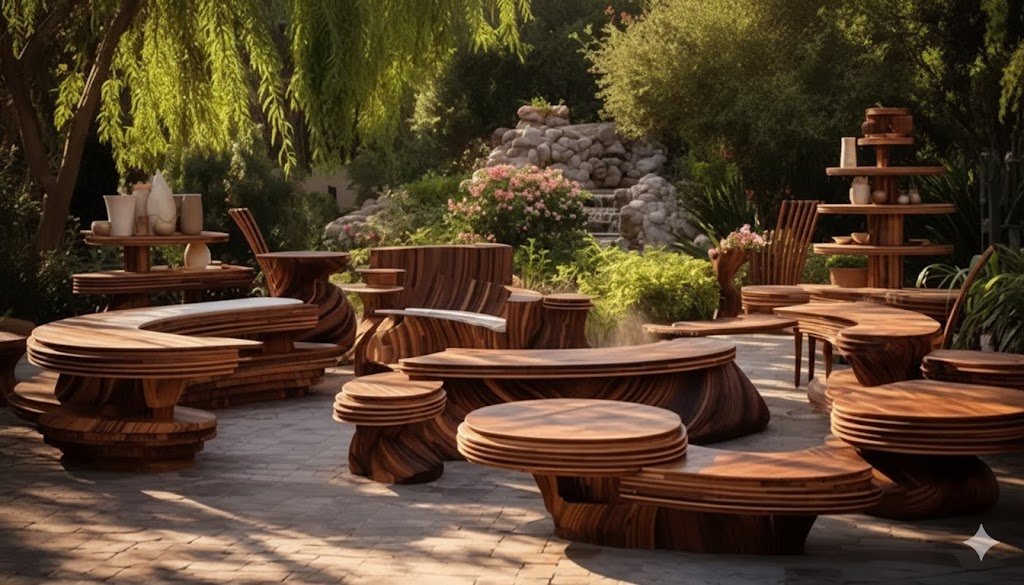
Wood furniture has an appeal that’s hard to beat. Natural materials just feel right in outdoor settings. Wood looks warm and inviting in ways that metal sometimes doesn’t. But not all wood is created equal for outdoor use.
Teak is the gold standard for outdoor wood furniture. It’s naturally resistant to rot, insects, and water damage. Teak furniture can last decades if you take care of it. The catch? It’s expensive. Really expensive. A teak dining set can cost several thousand dollars. If you’ve got the budget and you want furniture that’ll outlast you, teak is the move.
Oak is another option for outdoor furniture. It’s cheaper than teak but still durable. Oak has a beautiful grain that a lot of people love. But oak needs more maintenance than teak. You’ll need to seal it regularly to protect it from moisture. Skip the maintenance, and you’ll have problems.
I’ve owned both teak and oak furniture. The teak has held up beautifully with minimal effort. I wipe it down occasionally, and that’s about it. The oak looked great initially, but I fell behind on sealing it, and it started to show wear. Lesson learned. If you buy wood furniture, be honest with yourself about whether you’ll do the maintenance.
Pine and other softer woods show up in budget outdoor furniture. They’re cheap, which is tempting. But they don’t last. Water damage, rot, and insect issues happen fast with soft woods. If you’re buying wood furniture for outdoor use, spend more and get hardwood. It’s worth it.
Wicker furniture deserves its own discussion. Wicker isn’t a material. It’s a weaving technique. Traditional wicker uses natural materials like rattan or bamboo. This looks amazing but doesn’t handle weather well. Natural wicker outdoors will eventually fall apart from sun and moisture exposure.
Synthetic wicker changed the game. It’s usually made from resin or PVC, woven to look like natural wicker. Good synthetic wicker looks convincing and handles weather far better than natural materials. It won’t crack, fade, or rot like natural wicker. It’s lighter than most wood furniture. And it comes in tons of styles.
I was skeptical of synthetic wicker at first. It seemed like cheating, like fake wood paneling or something. But after seeing quality synthetic wicker up close, I changed my mind. Done well, it looks great. And the practical benefits for outdoor use are hard to argue with.
The durability question matters most for outdoor furniture. You can buy beautiful furniture that falls apart in two years, or you can buy less exciting furniture that lasts a decade. Most of us would rather have the decade.
Metal furniture generally lasts longer than wood, assuming rust isn’t an issue. Aluminum can last basically forever if you’re not in an extremely corrosive environment like right on the ocean. Wood’s lifespan depends on the type of wood and how well you maintain it. Synthetic wicker sits somewhere in between, lasting many years with minimal maintenance.
I’ve noticed that expensive furniture isn’t always more durable than mid-range stuff. You’re sometimes paying for design and brand name rather than actual quality. The sweet spot seems to be mid to upper mid range. Cheap furniture falls apart fast. Crazy expensive furniture is often overpriced. The middle is where you find good quality at fair prices.
Beauty is subjective, but some materials have inherent aesthetic advantages. Wood has that natural warmth. Metal can look sleek and modern or classic and ornate, depending on the design. Wicker has a casual, resort-like vibe. Think about the overall feel you want for your space, then choose materials that support that.
I mix materials in my outdoor space. My dining table is wood. My lounge chairs are synthetic wicker. My side tables are aluminum. This creates visual interest and lets me use the best material for each piece’s specific purpose. You don’t have to match everything. You just need to make sure things don’t clash.
Weather in your area should heavily influence material choice. If you live somewhere with intense sun, UV resistant materials matter. If you’re in a humid climate, rust resistant metals and rot resistant woods are key. If you deal with snow and ice, you need materials that can handle freeze-thaw cycles. Match your materials to your environment.
Maintenance requirements differ drastically by material. Aluminum needs occasional washing. That’s it. Teak needs yearly oiling if you want to maintain its color, though it’s fine structurally if you don’t. Oak needs regular sealing. Iron needs rust prevention. Synthetic wicker needs basic cleaning. Know what you’re signing up for before you buy.
Beyond Tables and Chairs: Expanding Your Outdoor Furniture Collection
Most people start with a table and chairs. That’s the obvious outdoor furniture purchase. You need somewhere to eat, so you buy a dining set. Makes sense. But there’s a whole world of outdoor furniture beyond the basic dining setup. Let me tell you what else is out there and what’s actually worth buying.
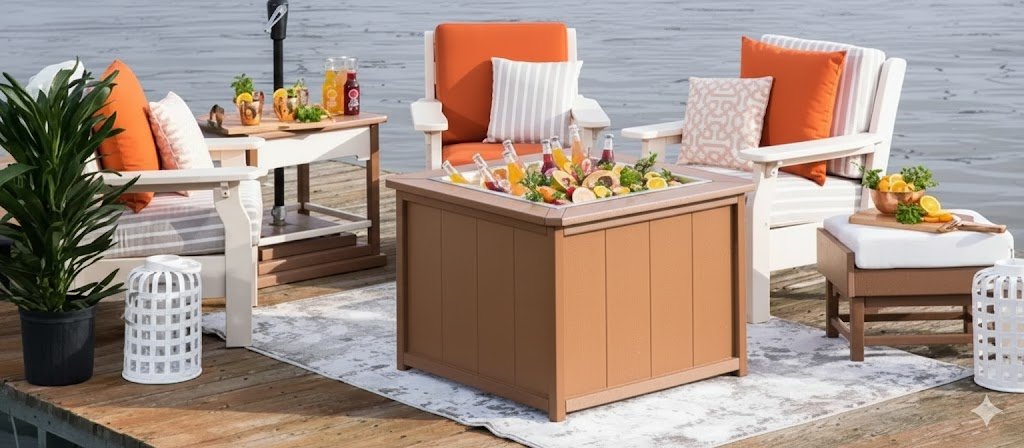
End tables seem minor until you don’t have them. You’re sitting outside with a drink, and there’s nowhere to put it. So you balance it on the arm of your chair, or you set it on the ground, or you just hold it the whole time. An end table solves this tiny but annoying problem. They’re relatively cheap, and they make outdoor lounging way more comfortable.
I resisted buying end tables for years. Seemed unnecessary. Then someone gave us a set as a gift, and suddenly I couldn’t imagine not having them. That’s how useful they are. You don’t realize the value until you have them.
Bars and bar carts have become popular for outdoor spaces. A bar setup changes the vibe of your patio. It turns your outdoor area into an entertaining space rather than just a place to sit. You can mix drinks out there, serve from there, and create a focal point that draws people.
I’ve got a small bar cart on my deck. Nothing fancy, just a two tier metal cart. But it’s surprising how much use it gets. When we have people over, I stock it with bottles and glasses, and people help themselves. It makes entertaining easier and more casual. Plus, it looks good even when we’re not using it.
Bar stools make sense if you have a bar or a high counter area. Regular chairs don’t work at bar height. You need the taller seating. But bar stools take up less space than regular chairs, which can be an advantage if your outdoor area is small. A bar with a few stools can serve as a dining area without the footprint of a full table and chairs setup.
Ottomans are underrated outdoor furniture pieces. They’re versatile. You can use them as footrests, as extra seating when you have more people than chairs, or as makeshift side tables. Outdoor ottomans usually have weatherproof cushions and durable frames. I’ve got two on my patio, and they’re constantly being moved around for different purposes.
The thing about ottomans is they need to be lightweight enough to move easily. Heavy ottomans defeat the purpose. You want something you can pick up and reposition without effort. This is where materials matter. A resin or aluminum frame works better than solid wood for ottomans.
Sofas for outdoor use used to be rare. Now they’re everywhere. Deep seating outdoor sofas create living room comfort outside. You can sprawl on them the same way you would on an indoor sofa. They come in sectionals, loveseats, and full three seater configurations. Some even have sleeper options, though who’s sleeping outside on a regular basis is beyond me.
Outdoor sofas make sense if you have the space and the budget. They’re not cheap. A good outdoor sectional can cost as much as an indoor one. But if you entertain frequently or you just like lounging outside, they transform your patio into a real living space.
I don’t have an outdoor sofa yet. My space isn’t quite big enough to make it work. But I’ve sat on them at friends’ houses, and I get the appeal. There’s something luxurious about sinking into a comfortable sofa outside. It’s that combination of indoor comfort and outdoor atmosphere.
Companion pieces are usually available when you buy a main furniture set. The manufacturer makes matching end tables, ottomans, and other accessories designed to work with their main pieces. This takes the guesswork out of coordinating. Everything matches. Everything’s scaled to work together.
The trade off is cost. Buying all the companion pieces adds up fast. A dining set might be $600. Add two end tables, an ottoman, and a serving cart, and suddenly you’re at $1,000 or more. Is it worth it? Depends on whether you’ll actually use all those pieces.
My approach has been to buy the main pieces I need first. Then I add companion pieces as I find I need them. I didn’t buy end tables with my dining set. I added them a year later when I realized we actually needed them. This spreads out the cost and makes sure I’m not buying stuff that’ll just sit there unused.
Not all companion pieces are equally useful. End tables? Very useful. Bar cart? Depends on your lifestyle. Matching ottomans? Nice to have. Decorative planters that match your furniture? Probably skip those. You can get planters anywhere for less money.
The look of your outdoor area improves when you have the right mix of furniture. A lone dining table looks sparse. Add some end tables and an ottoman, and suddenly the space feels furnished. Not overcrowded, just complete. There’s a balance to strike between too empty and too cluttered.
I see outdoor spaces that are overfurnished. Every square foot has furniture. There’s no negative space, no room to move around comfortably. This is worse than being underfurnished. You want your furniture to define areas and create function without making the space feel cramped.
The cost of companion pieces catches people off guard. You budget for a dining set, then you start adding pieces, and the total climbs. Set a realistic budget that includes these extras. Or buy the main pieces first and add later. Just don’t assume the dining set is the only cost you’ll have.
Where you find companion pieces matters. Some manufacturers sell them separately. Others only offer them as part of larger sets. Sometimes you can find generic pieces that work with your furniture even if they’re not specifically designed to match. Be flexible. An end table doesn’t have to be an exact match to be functional.
Quality varies in companion pieces just like main furniture. Some end tables are solid and well made. Others are flimsy and cheap. Just because something is small doesn’t mean it should be poorly made. I bought cheap outdoor side tables once. They lasted one season before falling apart. Now I spend a bit more and get pieces that last.
The right companion pieces make your outdoor space more functional and comfortable. They’re not just about aesthetics. They serve real purposes that improve how you use the area. But you don’t need every possible piece. Buy what’ll genuinely get used, and skip the rest. Your patio doesn’t need to be a furniture showroom.
Where to Actually Buy Outdoor Furniture Without Losing Your Mind
Shopping for outdoor furniture isn’t as straightforward as it should be. You’ve got a million options, and half of them seem designed to confuse you. Let me walk you through where to shop and what to expect at different types of stores.
Department stores stock outdoor furniture seasonally. Come spring, they fill their outdoor sections with patio sets, umbrellas, cushions, and accessories. The selection is usually decent. You’ve got multiple styles and price points. The quality ranges from budget to mid-range, with occasional higher end pieces.
I’ve bought furniture from department stores. The experience is hit or miss. Sometimes you find great deals on quality pieces. Other times, you buy something that looks good in the store but falls apart after one season. The trick is knowing how to judge quality, which I’ll be honest, I wasn’t great at initially.
Home improvement centers treat outdoor furniture as another product category alongside lumber and power tools. They stock a lot of furniture during peak season. The vibe is more utilitarian than department stores. You’re not getting design help. You’re browsing aisles and making your own decisions.
The advantage of home improvement stores is price. They’re often cheaper than department stores for similar quality. The disadvantage is limited selection. You might find five dining sets, not twenty. If you want something specific, you might not find it. If you’re flexible and just need functional furniture, they’re fine.
I bought my current dining set at a home improvement center. Found it on sale at the end of summer. It’s basic, sturdy, and has held up well. I didn’t need anything fancy. I needed a table and chairs that worked. Mission accomplished.
Supermarkets and drugstore chains carry outdoor furniture now. I’m talking about those massive stores that sell everything from groceries to clothes to furniture. Their outdoor furniture is almost always budget level. Cheap materials. Basic designs. Low prices.
Is this furniture good? Depends on your expectations. If you need something temporary or you’re working with a tiny budget, it’ll do. If you want furniture that lasts more than a couple of years, look elsewhere. I’ve never bought patio furniture from a supermarket, but I’ve seen plenty of it in people’s yards looking rough after one season.
Rock bottom prices tempt people. A five piece dining set for $150 sounds amazing until you sit in the chairs and realize why it’s so cheap. The chairs are uncomfortable. The table wobbles. The materials feel flimsy. You get what you pay for, and at rock bottom prices, you’re not getting much.
Online shopping has changed the outdoor furniture game. You can browse thousands of options from your couch. You can compare prices instantly. You can read reviews from people who actually bought and used the furniture. The selection online crushes what any physical store can offer.
The shipping problem is real, though. Outdoor furniture is bulky and heavy. Shipping a dining set across the country costs a fortune. Some online retailers offer free shipping, but they build that cost into the price. You’re paying for shipping one way or another. And when your furniture arrives and it’s damaged or wrong, dealing with returns is a nightmare.
I’ve bought small outdoor pieces online. End tables. Cushions. A bar cart. Stuff that ships relatively easily. But I’ve never bought a full dining set online. The shipping cost scares me off. Plus, I like to see and touch furniture before buying it. Photos lie. I want to sit in a chair and test it before committing.
The brick and mortar advantage is you can evaluate furniture in person. You can sit in chairs. You can check table stability. You can see true colors instead of relying on photos that might be color-corrected. You can talk to sales people who, if they’re good, can answer questions and offer advice.
I’m someone who needs to see stuff in person for big purchases. Online works for things I can easily visualize or where I don’t care about subtle differences. Furniture isn’t that. Comfort and quality differences that matter a lot in use don’t show up in photos. I need to physically interact with the furniture.
Price comparison is easier than ever. You can check prices at multiple stores in minutes online. You can look for coupon codes. You can wait for sales. Outdoor furniture goes on clearance at the end of summer. If you can wait, late August and September have the best deals. Of course, selection is limited by then. The best stuff sells out in May and June.
My strategy is to shop in person but check online prices. I find what I like at a physical store, then I check if it’s cheaper online. If the online price is significantly better, I buy online. If the prices are close, I buy from the store. Supporting local businesses matters, and avoiding shipping hassles is worth a small premium.
The overwhelming part of furniture shopping is too many choices. You think you want a simple dining set, then you’re confronted with a hundred options that all look vaguely similar. How do you choose? I narrow it down by material first. That eliminates a big chunk of options. Then I set a price range. That cuts out more. By the time I’m looking at actual furniture, I’ve got maybe ten options instead of a hundred.
Sales people can be helpful or annoying. Good ones know the product and can guide you based on your needs. Bad ones just want to make a sale and will tell you anything. I’ve dealt with both. The key is asking specific questions about materials, maintenance, and durability. If they can answer confidently, they probably know their stuff. If they deflect or give vague answers, be skeptical.
Return policies matter more than you think. Furniture looks different at home than in the store. Colors that seemed perfect under fluorescent lights might look wrong in natural sunlight. Chairs that seemed comfortable for a five minute test might hurt after an hour. Good return policies let you fix these mistakes. Bad ones leave you stuck with furniture you hate.
Making Smart Decisions About Budget, Weather, and Long Term Value
Let’s talk about money and weather, the two factors that’ll make or break your outdoor furniture decisions. Get these wrong, and you’ll be replacing furniture way sooner than you should. Get them right, and your furniture will last for years while staying comfortable and looking good.
Prices for outdoor furniture are all over the place. You can spend $100 on a basic set or $10,000 on designer pieces. Most of us are shopping somewhere in between. The question is figuring out where in that range makes sense for your situation.
Wood sets cost more upfront. A quality wood dining set starts around $500 and goes up from there. Teak sets can hit $2,000 or more. This seems expensive until you factor in longevity. Good wood furniture lasts a decade or longer. Spread that $500 over ten years, and you’re paying $50 per year. Cheap furniture might cost $200 but only last two years. That’s $100 per year. The expensive furniture is actually cheaper long term.
Metal sets have variable pricing. Basic steel sets can be cheap. Aluminum sets cost more. High end wrought iron designs can get expensive. You’re paying for material quality and design complexity. Plain aluminum table and four chairs might be $400. Ornate iron furniture with intricate patterns could be $1,500.
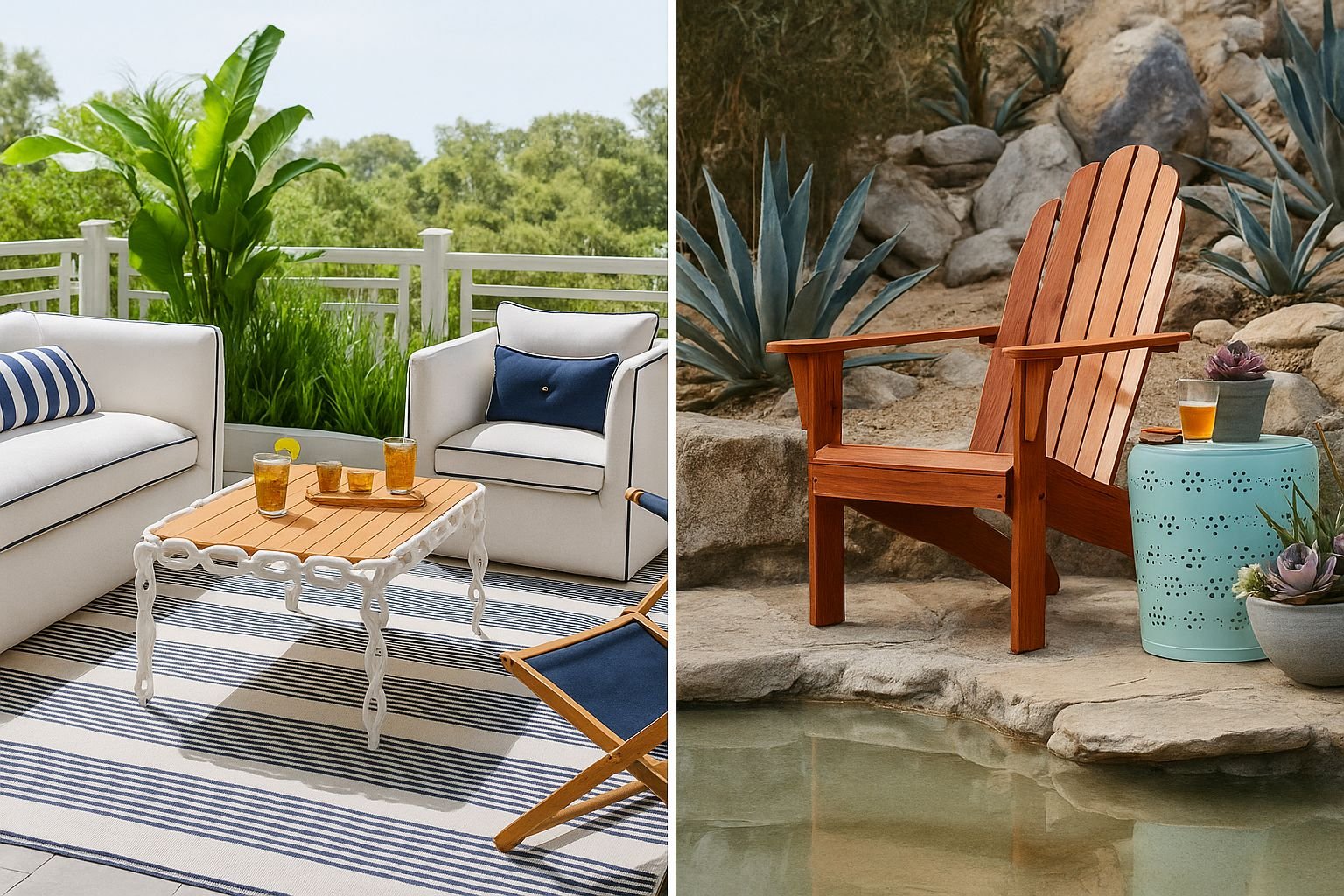
I’ve learned to think about cost per year of use rather than just upfront cost. This changes how I evaluate prices. That $800 furniture set that’ll last eight years is a better deal than the $300 set that’ll last two years. The math is simple, but we often don’t think this way. We see the lower price and grab it without thinking about replacement costs.
Material matters for weather resistance. If you’re in a humid climate, rust is your enemy. Aluminum, synthetic wicker, and teak are your friends. Steel and iron need serious maintenance or they’ll rust out fast. I learned this living in a coastal area. The salt air killed my iron furniture in three years.
Dry climates are easier on furniture. You don’t have rust issues. Wood won’t rot as easily. Your main concern is sun damage. UV rays fade fabrics and break down some plastics. Even in dry climates, you need UV resistant materials. Covers help, but they’re a pain to use consistently.
Cold weather climates need furniture that handles freeze and thaw cycles. Water gets into small cracks, freezes, expands, and breaks things. Wood is vulnerable to this. Metal less so. Resin wicker handles it well. If you’re somewhere with serious winters, you’re either storing furniture inside or buying stuff that can take the abuse.
Taking weather conditions into account before buying saves money and frustration. I didn’t do this with my first furniture purchase. Bought what looked good without thinking about how it would handle my local weather. Big mistake. The furniture deteriorated fast. Now I research whether materials work in my climate before buying.
Local weather dictates more than just material choice. It affects how much you’ll use your outdoor furniture, which should influence how much you spend. If you get eight months of usable outdoor weather, investing in quality makes sense. If you get three months, maybe spend less. You’re not getting as much use out of it.
I live somewhere with six solid months of outdoor weather. Spring and fall extend that a bit with good days here and there. This means I use my patio furniture regularly for half the year. That’s enough use to justify spending decent money on it. If I lived somewhere with year round outdoor weather, I’d spend even more. If I was in a place with short summers, I’d spend less.
Decorating your outdoor living space doesn’t have to drain your bank account. You can create a pleasant, functional outdoor area on a reasonable budget. The key is prioritizing. Spend more on pieces you’ll use most. A comfortable dining set matters if you eat outside regularly. If you rarely use a table, spend less there and more on lounge seating.
Buying outdoor furniture that fits your budget and needs is totally doable. It just requires some planning. Set a realistic budget before you start shopping. Know what you actually need versus what would be nice to have. Be willing to start with basics and add pieces later. You don’t need to furnish your entire patio in one shopping trip.
I furnished my patio over two years. First year, I bought a dining set and two chairs. That was enough to make the space usable. Second year, I added end tables and an ottoman. This spreading out of purchases made it financially manageable. If I’d tried to buy everything at once, I would have either blown my budget or bought cheaper stuff that wouldn’t last.
The right furniture and accessories transform your outdoor area. It goes from wasted space to an extension of your living area. A place where you actually want to spend time. A place you’re proud to show guests. This transformation doesn’t require unlimited money. It requires smart choices about what to buy and when to buy it.
Relaxing or entertaining outside becomes genuinely enjoyable when you have the right setup. Comfortable seating. Functional tables. Accessories that enhance rather than clutter. Everything working together to create an environment that serves your needs. This is what good outdoor furniture makes possible.
I spend way more time outside now than I did before I got decent furniture. The space invites use instead of discouraging it. Friends actually want to hang out on my patio because it’s comfortable. We have dinners out there that stretch for hours. This only happens when the furniture works. When you’re comfortable, you linger. When you’re not, you eat quickly and go inside.
Making your outdoor space an extension of your home is the ultimate goal. It should feel connected to your indoor living areas but take advantage of being outside. The furniture creates this bridge. Good outdoor furniture has the comfort and style of indoor pieces but the durability and weather resistance needed for exterior use.
Summer readiness means having your outdoor space dialed in before the weather gets consistently good. You don’t want to be shopping for furniture in June when everyone else is too. Prices are higher. Selection is picked over. You end up compromising. Shop early spring or late fall for the best deals and selection. Your future self will thank you.
Finding the Right Furniture for Your Lifestyle and Space
Shopping for outdoor furniture can feel overwhelming. I get it. There are too many options, too many materials, too many prices, too many opinions. But here’s what I’ve learned after years of buying, using, and sometimes regretting outdoor furniture purchases. You need to match what you buy to how you actually live, not how you imagine living.
Wicker furniture has become huge in the last decade. You see it everywhere. Patios, decks, restaurant outdoor seating, hotel pool areas. There’s a reason for this popularity. Good wicker looks great and holds up well. It works in lots of different design styles. You can go modern with sleek wicker pieces or traditional with more ornate designs.
The online wicker market is massive. Type “outdoor wicker furniture” into any search engine, and you’ll get thousands of results. Retailers, manufacturers, direct sellers, everyone’s got wicker. This is both good and bad. Good if you want selection. Bad if you’re easily overwhelmed by choices.
Brick and mortar stores carry wicker too, though their selection is smaller than what you’ll find online. The advantage of shopping in person is seeing quality differences. Online photos make everything look decent. In person, you can tell the difference between well made wicker and cheap stuff that’ll fall apart. The weave tightness, the frame sturdiness, the cushion quality, all of this is easier to judge when you can touch it.
I’ve bought wicker furniture both online and in stores. My experience is that mid to high end wicker is pretty consistent whether you buy online or in person. If you’re spending decent money with a reputable seller, you’ll probably get good furniture. Budget wicker is more variable. Some cheap wicker is surprisingly okay. Other cheap wicker is garbage. Hard to tell which without seeing it in person.
The color selection for wicker is crazy now. It used to be brown or maybe tan. Now you can get wicker in gray, black, white, blue, green, whatever. Some of these colors look better than others. I’m personally a fan of gray and black wicker. They feel modern without being trendy. Brown wicker feels dated to me now, though that’s purely personal preference.
Wicker cushions matter as much as the wicker itself. Uncomfortable cushions ruin otherwise good furniture. When you’re shopping, pay attention to cushion thickness and firmness. Thin, hard cushions are miserable to sit on for more than a few minutes. Thick, properly padded cushions make wicker furniture comfortable for extended use.
Cushion fabric quality varies wildly. Good outdoor cushion fabric resists fading, repels water, and stands up to sun exposure. Cheap fabric fades fast, absorbs water, and breaks down in sunlight. Spending more on quality cushions is worth it. I’ve replaced cheap cushions twice. Good cushions last for years.
Color choices under the rainbow is how one description put it, and that’s not far off. The variety in outdoor furniture now is incredible compared to twenty years ago. You’ve got options for every taste and budget. The challenge is narrowing down those options to find what actually works for you.
Your favorite search engine is actually useful for furniture shopping. Not just for finding stores, but for research. Looking up reviews of specific furniture lines. Checking whether materials hold up. Finding out if other people in your climate have had success with certain brands. I do this before any major furniture purchase now. Ten minutes of research can save you from expensive mistakes.
Selections increasing by orders of magnitude sounds like marketing hype, but it’s kind of true. The online marketplace has made furniture from manufacturers all over the world available to anyone with internet access. You’re not limited to what your local stores carry. This opens up possibilities but also makes decisions harder.
I’m someone who gets paralyzed by too many choices. Give me three good options, and I can decide. Give me three hundred options, and I shut down. If you’re like this, you need strategies for narrowing the field before you start serious shopping. Set your budget. Pick your material. Choose your style category. Suddenly those three hundred options become twenty, and twenty is manageable.
Department stores are reliable if you want to see furniture in person without dealing with furniture store salespeople. Department stores are less aggressive about sales. You can browse, sit on stuff, think about it, and come back later. I like this low pressure environment for big purchases. High pressure sales tactics make me walk away even if I was interested.
The search terms you use matter when shopping online. “Outdoor furniture” gets you everything. “Teak dining set” or “aluminum lounge chairs” or “synthetic wicker sectional” gets you closer to what you actually want. Be specific in your searches, and you’ll save time sorting through irrelevant results.
Brick and mortar stores are dying in many retail categories, but furniture is holding on. People still want to see and touch furniture before buying. This is especially true for outdoor furniture where comfort and quality are hard to judge from photos. I predict physical furniture stores will stick around even as other retail disappears.
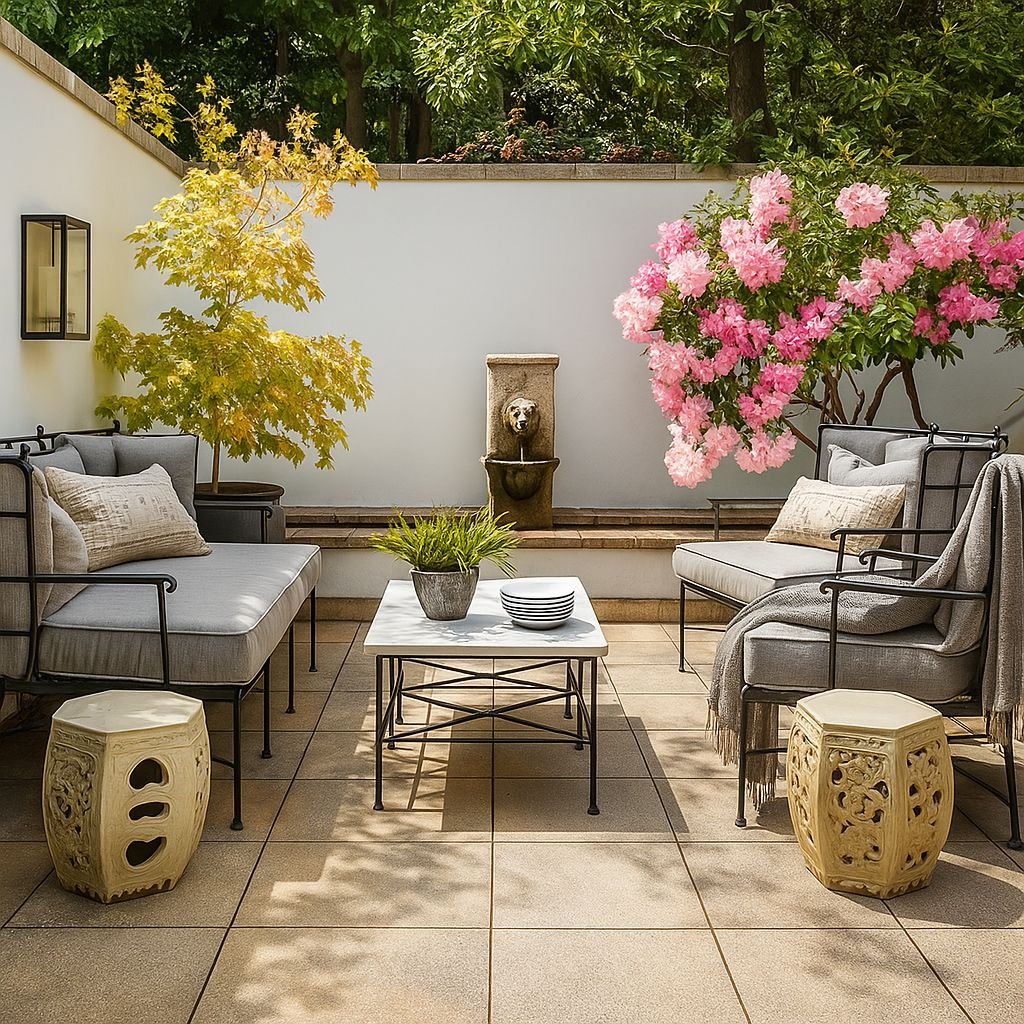
Types of furniture beyond counting really is the situation now. Dining sets, lounge sets, sectionals, daybeds, swing chairs, hanging chairs, rockers, gliders, benches, bar sets, fire pit sets, the list goes on. You can furnish your outdoor space for almost any activity or use case. The question is what you’ll actually do out there.
My outdoor furniture collection has grown over time. Started with basics, added pieces as I figured out how I used the space. This organic growth approach worked better than trying to buy everything at once. I learned what I needed through actual use, not through imagining how I’d use the space.
Summer is here, or it’s coming soon, and your outdoor space is calling. You need furniture that works for how you live. Not how Instagram influencers live. Not how your neighbors live. How you actually live. If you eat outside three times a week, invest in a good dining set. If you never eat outside but you love lounging with a book, skip the dining table and get comfortable lounge chairs.
Dinners outside only work when you have comfortable seating and a stable table. I’ve been to outdoor dinners where the chairs hurt and the table wobbled. Everyone ate quickly and migrated inside or away from the uncomfortable setup. Good furniture keeps people at the table. They linger. They have another glass of wine. They talk for hours. This is what outdoor dining should be.
Holidays mean gatherings, and gatherings mean you need adequate seating. If you host regularly, having extra outdoor seating makes sense. Stackable chairs work great for this. They’re there when you need them but don’t take up space when you don’t. I keep four stacking chairs in my garage. They come out for parties and disappear the rest of the time.
Fun times by the pool require specific furniture. Pool loungers are the obvious choice. But you need other pieces too. Side tables for drinks and sunscreen. Maybe an umbrella table for when people need a break from the sun. Towel storage somewhere nearby. Pool furniture takes more planning than patio furniture because wet people interact with it constantly.
Looking into outdoor patio furniture now makes sense if you don’t already have what you need. Waiting until you desperately need it means buying whatever’s available instead of what’s actually good. Shop early, shop thoughtfully, and you’ll end up with furniture you love instead of furniture you settled for.
The best time to start shopping is actually right now, whenever now is for you. Don’t wait for perfect weather. Don’t wait until you’re hosting an event and realize your furniture situation is sad. Be proactive. Your future self will appreciate having great outdoor furniture already in place when the moment comes to use it.
Many types of wicker patio furniture means you can find exactly what fits your needs. Small space? There’s compact wicker sets. Big patio? There’s large sectionals. Modern style? There’s sleek wicker designs. Traditional taste? There’s classic wicker patterns. Whatever you want exists somewhere in the wicker universe.
Online and in stores both work for furniture shopping. The key is knowing your preferences and doing your research regardless of where you shop. Good furniture is good furniture whether you buy it from a website or a showroom. Bad furniture is bad furniture no matter where it comes from. Focus on quality and fit for your needs, not on the shopping method.
More types than colors under the rainbow might be hyperbole, but it captures the overwhelming variety available now. This variety is ultimately good. It means you can find furniture that truly works for your space instead of making do with whatever was available. You just need patience to sort through options and clarity about what you actually need.
Search engines help you find exactly what you’re looking for if you know how to use them. Detailed search terms. Filtering by price, material, size. Reading multiple reviews before deciding. Comparing prices across sellers. The internet has made furniture shopping more efficient if you’re willing to do the work.
Your selections will be increased dramatically online compared to any physical store. This is both the blessing and curse of online shopping. Unlimited selection sounds great until you’re drowning in options. The solution is aggressive filtering. Narrow your choices ruthlessly based on your actual requirements. Don’t browse everything. Target your search to what you need.
The magnitude of choices available now would have seemed impossible twenty years ago. You took what your local furniture store had, and that was it. Now you can buy furniture made anywhere in the world and have it delivered to your door. This democratization of choice is powerful. You’re not limited by geography or by what local stores decide to stock.
The right outdoor furniture makes your home better. It expands your living space. It creates new possibilities for how you spend time. It makes warm weather something to look forward to instead of just endure. And it doesn’t require unlimited money or perfect taste. It just requires thoughtful choices about what works for your space, your climate, and your life.
I’ve made plenty of furniture mistakes over the years. Bought pretty things that weren’t comfortable. Bought cheap things that fell apart. Bought furniture that didn’t fit my space or my needs. Each mistake taught me something. Now I know what questions to ask, what factors matter, and what I can ignore. You’ll develop your own knowledge through experience.
The goal isn’t perfect furniture. Perfect doesn’t exist. The goal is furniture that serves you well for years. Furniture you actually use and enjoy. Furniture that makes your outdoor space a place you want to be instead of a place you avoid. This is achievable for anyone willing to think through their choices instead of just buying whatever’s on sale.
Your outdoor space has potential. Right now, it might be unrealized potential. A deck with bad furniture or no furniture. A patio that’s more storage area than living space. But it doesn’t have to stay that way. With the right furniture, chosen thoughtfully for your specific situation, your outdoor area can become one of the best parts of your home. And that transformation starts with understanding what you need and making smart choices about what you buy.

Leave a Comment