
When Your Home Needs That Special Something
There’s this moment that happens when someone walks through your front door for the first time. You watch their eyes scan the room, taking everything in, forming opinions they may or may not share out loud. As homeowners, we care about that moment more than we’d like to admit. I know I do. When my sister visited after we’d just moved in, I found myself holding my breath, waiting for her reaction. Pathetic? Maybe. Human? Absolutely.
We put so much work into our homes. Hours scrolling through Pinterest, weekends at furniture stores, debates over paint swatches that all look identical to everyone except us. All that effort builds toward something. We want people to walk in and feel impressed, comfortable, maybe even a little envious. There’s no shame in that. Your home is probably your biggest investment, both financially and emotionally. Of course you want it to look good.
The approval from guests hits different than any other kind of validation. When your best friend walks in and her jaw drops, when your in laws actually compliment something instead of suggesting “improvements,” when your neighbor asks for your designer’s contact info and you get to say you did it yourself, that’s the good stuff. Those moments make all the decision fatigue and budget stretching feel worth it. I still remember when our friends came over after we’d finished our living room redesign. They stood in the doorway for a solid five seconds just looking. Then came the questions. Where’d you get that? How’d you think of this? Can I take pictures? Pure satisfaction.
But here’s the thing about impressing people with your home. It’s not really about showing off, even though it can feel that way. It’s about creating a space that makes people feel something. When someone walks into your home and goes “wow,” they’re not just reacting to your taste. They’re responding to the atmosphere you’ve created, the care you’ve put into the space, the way everything comes together to create an experience. That’s what good home design does. It makes people feel welcome, relaxed, impressed, inspired, sometimes all at once.
Admiration from guests goes beyond the surface level compliments. When people respect your home, they treat it better. They take their shoes off without being asked. They’re careful with drinks. They want to spend time there. Your house becomes the default gathering spot, which sounds like more work but is actually pretty great. It means you’ve created something special, something that draws people in and makes them want to stay.
The challenge is making your home stand out without it feeling forced or like you’re trying too hard. We’ve all been in houses that feel like showrooms, beautiful but cold, everything so perfect you’re afraid to sit down. That’s not the goal. The goal is a space that’s both impressive and livable, that reflects your personality while making guests feel comfortable. It’s a tough balance to strike, and most of us get there through trial and error.
That’s where unique elements come into play. You can have a beautifully decorated home that still feels generic if everything came from the same three stores everyone shops at. The pieces that really make a home memorable are the unexpected ones, the things that make people stop and look closer. For our living room, that element turned out to be a wall fountain. I know, I know, it sounds extra. But hear me out.
Before we added the fountain, our living room was nice. Really nice, actually. We’d invested in good furniture, the paint color was perfect, the lighting worked. But something was missing. The room looked complete but didn’t feel complete. Friends would come over and compliment specific things, but nobody was blown away by the overall space. It was the difference between “cute couch” and “I love what you’ve done in here.” We needed that one thing that would pull everything together and give the room personality.
Wall fountains aren’t for everyone, and that’s fine. But if you’re looking for something that transforms a space from nice to unforgettable, they’re worth thinking about. The first time I saw one in someone’s home, I’ll admit I was skeptical. It seemed like a lot. But after spending an hour in that living room, relaxed and engaged in a way I couldn’t quite explain, I got it. The fountain wasn’t just decoration. It was an experience.
Your Living Room Is Doing More Work Than You Think
Let’s talk about the living room for a second. This room carries a lot of weight in your home. It’s where life happens, where you collapse after work, where kids do homework while you pretend to supervise, where you host everyone from your book club to your mom’s birthday party. The living room is expected to be all things to all people, and somehow it’s supposed to look good doing it.
When guests come over, the living room is their introduction to your entire house. They might see your kitchen or your backyard later, but the living room is where they form their first real impression. You get one shot at that initial impact, and then it’s set. I learned this when we had potential buyers touring our old house. We’d staged every room beautifully, but if the living room didn’t grab them in the first thirty seconds, you could see them mentally check out. Didn’t matter how nice the bedrooms were after that. First impressions really are everything.
The pressure we put on this one room is kind of ridiculous when you think about it. It needs to be comfortable enough for daily use but presentable enough for company. It needs to reflect your personal style while also being welcoming to people with completely different tastes. It needs to work for loud game nights and quiet reading afternoons. And somehow, it’s supposed to look effortlessly pulled together like you didn’t spend three weekends arranging and rearranging furniture to get it right.
Most of us start with the obvious stuff. A good couch is non negotiable. You need somewhere to sit that doesn’t make you or your guests uncomfortable after twenty minutes. Coffee table, check. Maybe some side tables. A media console if you’ve got a TV. These are the basics, the foundation pieces that define the room’s layout and function. And for a lot of people, that’s where the effort stops. Get the big stuff right, throw in some pillows, call it done.
But here’s what I’ve learned after years of trying to get our living room to feel right. The furniture is just the framework. It’s the supporting cast, not the star. You need good furniture, sure, but that’s table stakes. What makes a living room actually interesting, what makes people want to sit down and stay awhile, are all the layers that come after the furniture. The accessories, the art, the lighting, the unexpected elements that add personality and depth.
I used to think accessories meant throw pillows and maybe a decorative bowl. And yeah, those help. But real accessories are bigger than that. They’re the pieces that catch your eye and make you look around to see what else you might have missed. A unique lamp that provides ambient lighting and serves as sculpture. Plants that aren’t just green blobs but actual living things that change the air quality and the vibe. Art that means something beyond matching your color scheme. These are the elements that transform a furniture showroom into a space that feels lived in and loved.
The mistake I see people make, the one I definitely made, is thinking that getting the big pieces right means you’re done. We bought a couch we loved, found the perfect rug, hung some art, and then wondered why the room still felt flat. It was all correct, nothing was wrong, but nothing was exciting either. The room had no focal point, no conversation starter, no element that made you want to explore it with your eyes.
Decorating isn’t just about filling space. It’s about creating moments within the space, spots where your eye lands and finds something interesting. A well decorated living room has multiple points of interest, layers that reveal themselves as you spend time in the space. You notice the couch first, then the art, then you realize there’s this beautiful detail in the corner you didn’t see initially. That layered approach is what separates amateur hour from actual design.
When you’re pouring effort into your living room, and trust me, you should be, think beyond just making it look acceptable. Think about what you want people to feel when they walk in. Calm? Energized? Impressed? Comfortable? Your decorating choices should serve that feeling. If you want calm, maybe skip the bold accent wall and focus on soothing colors and soft textures. If you want impressive, you need at least one showstopper element that demands attention.
For us, figuring out what our living room was missing took time. We kept buying more stuff, thinking the next thing would be the thing that clicked everything into place. More pillows. Different curtains. New picture frames. We were treating symptoms instead of addressing the actual problem, which was that our room had no soul. It looked like a catalog page, pretty enough but generic. What we needed wasn’t more stuff. We needed the right stuff, the piece that would make everything else suddenly make sense.
Making Comfort and Style Actually Work Together
Here’s a truth bomb about living rooms. They need to be comfortable and beautiful at the same time, which sounds obvious but is weirdly hard to pull off. You can have the most gorgeous room in the world, but if your guests perch on the edge of your rock hard designer couch counting the minutes until they can leave, you’ve failed. On the flip side, if your living room is super comfy but looks like a college apartment, that’s also not ideal.
The comfort factor goes way beyond physical seating. Yeah, you need furniture that doesn’t torture people, that’s baseline. But true comfort in a living room is about the whole atmosphere. Can people relax there? Do they feel at ease? Can they have a real conversation without feeling like they’re in a museum? I’ve been in beautiful living rooms that felt so precious and staged that I was afraid to move. That’s not comfortable, no matter how expensive the couch is.
Making guests feel relaxed in your space is an art form. Some of it is about the physical space, sure. Good seating, proper lighting, comfortable temperature. But a lot of it is more subtle than that. It’s about creating an environment that tells people they’re welcome to settle in and be themselves. Music at the right volume, not too loud and not dead silent. Lighting that’s bright enough to see but not harsh. A space that looks put together but not so perfect that one moved pillow ruins everything.
I’ve noticed that the most inviting living rooms have something that engages multiple senses. They don’t just look good, they feel good in a more complete way. Maybe there’s a candle burning, or good natural light coming through the windows, or plants that make the air feel fresher. These little touches add up to create an atmosphere that your conscious brain might not register but your body definitely responds to. You walk into a space like that and your shoulders drop, your breathing slows, you sink into the couch instead of sitting on top of it.
Wall fountains hit this multi sensory sweet spot in a way that surprised me. I’d always thought of them as visual elements, something pretty to look at. And they are that, don’t get me wrong. But the real magic is in what they do for the entire feel of the room. The sound of water moving creates this baseline of calm that affects everyone in the space, even people who don’t consciously notice it. It’s white noise that actually sounds good, that covers up the annoying hum of appliances and outside traffic without being intrusive itself.
The first time we turned on our wall fountain and had people over, the difference was obvious. Our friends walked in and immediately seemed more relaxed. The usual small talk phase where everyone’s a little stiff and formal passed faster. People settled into their seats, tucked their feet under them, actually looked comfortable. When one friend commented that our living room felt like a spa, I knew we’d hit something right. That’s exactly what I wanted. A space that makes people feel pampered and calm without requiring any actual spa services.
Water has this universal appeal that crosses all design styles and personal preferences. You can hate modern furniture, be allergic to anything trendy, prefer traditional over contemporary, and you’ll still respond positively to the sound and sight of water. It’s hardwired into us somehow. Maybe it’s evolutionary, some deep brain thing about water meaning safety and resources. Maybe it’s just that water is inherently interesting to look at and listen to. Whatever the reason, adding a water element to your living room changes the game.
The visual component matters too, and I don’t mean in a “oh that’s pretty” way. I mean in a “I could stare at this for twenty minutes and not get bored” way. Water moving over different surfaces creates patterns that are never exactly the same twice. Light hits it differently throughout the day. It’s like having a piece of kinetic art that’s also a sound machine and also a humidity regulator. That’s a lot of function from one design element.
I work from home sometimes, and I’ve found myself deliberately working in the living room instead of my office just so I can hear the fountain. It helps me focus in a way that silence or music never quite achieved. There’s something about that consistent, natural sound that keeps my brain from wandering off into distraction territory. My productivity has genuinely improved, which wasn’t even on my list of reasons to get a fountain. It was a bonus I didn’t know I needed.
The relaxation benefits aren’t just in my head, either. We’ve had people fall asleep on our couch during movie nights, which never happened before. My stress levels drop noticeably when I come home and hear the water running. My partner, who’s generally skeptical of my decorating ideas, admitted after a week that the fountain was actually great and he didn’t want to live without it anymore. When the person who rolled their eyes at your purchase ends up defending it to visitors, you know you made the right choice.
Creating a relaxing living room isn’t about following a formula or buying specific items. It’s about understanding what makes people feel at ease and building that into your space. For some rooms, that might be through color and texture. For others, it’s lighting and layout. For our living room, the missing piece was sound and movement, something that brought the space to life and gave it an atmosphere you could feel the moment you walked in. The wall fountain delivered that in ways I couldn’t have predicted before we tried it.
Why Wall Fountains Are Worth the Hype
Wall fountains are having a moment, and it’s not just because they look good on social media. Though they do, let’s be real. I’ve posted exactly one photo of our fountain and gotten more questions about it than anything else in our house, including the kitchen renovation that nearly required a second mortgage. People are fascinated by the idea of bringing a water feature indoors, and they want to know if it’s actually as cool as it looks. Short answer? Yes. Longer answer? Let me break it down.
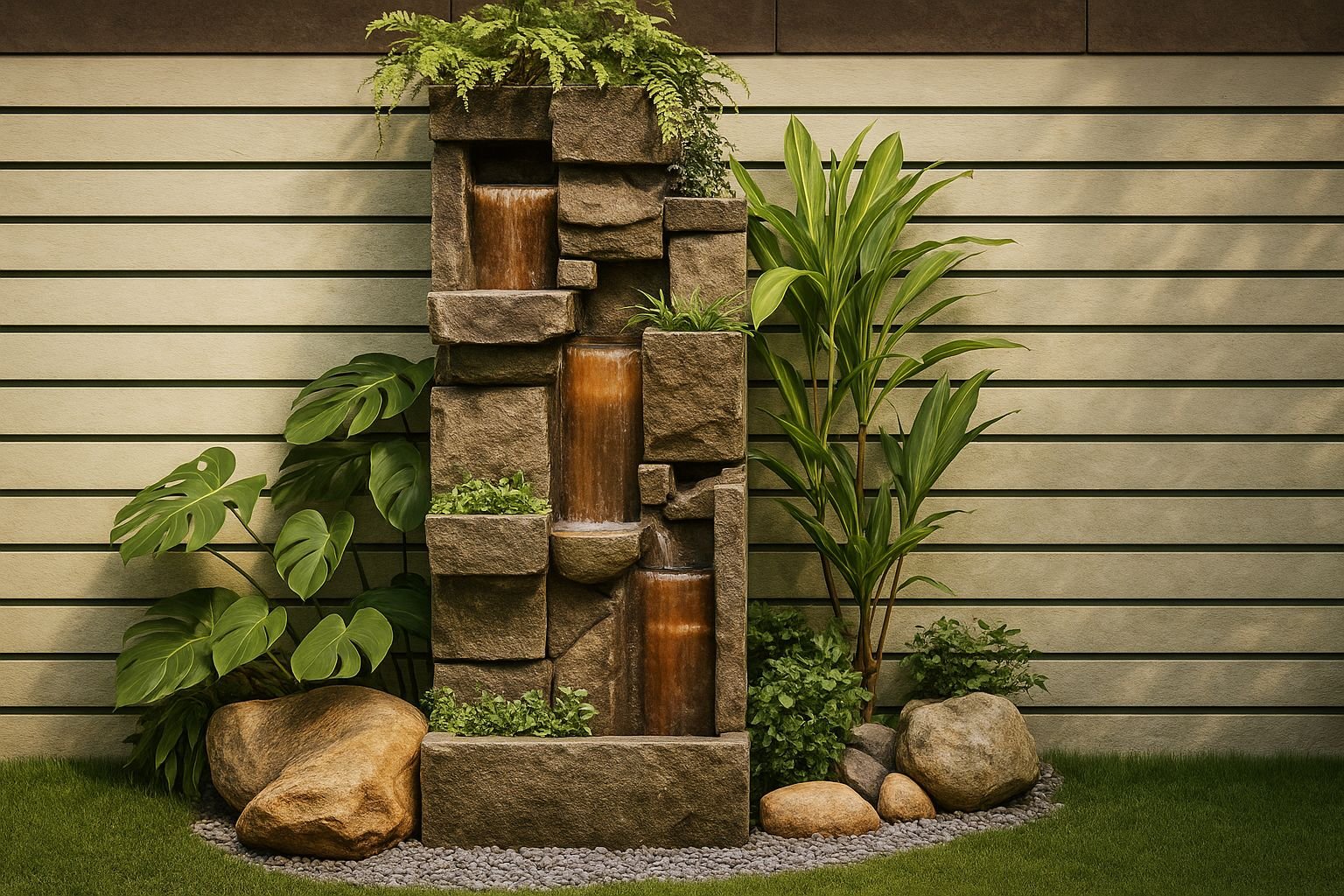
The visual appeal is the obvious starting point. Water cascading down slate or stone or copper creates this mesmerizing effect that’s part nature, part art installation. It mimics waterfalls in a way that brings a little bit of the outdoors inside without requiring you to maintain an actual garden. The way water sheets down a smooth surface or trickles over textured rock, catching light and creating shadows, it’s genuinely beautiful in a way that changes throughout the day. Morning light hits it one way, afternoon light completely differently.
What makes wall fountains particularly appealing is that they’re not static. Most home decor just sits there looking pretty, which is fine, but there’s something special about a decorative element that’s also alive and moving. It gives your eye something to follow, something to rest on without requiring any mental effort. I catch myself zoning out watching the water flow when I’m supposed to be doing other things. It’s meditative in a way that staring at a painting or a vase of flowers just isn’t.
The sound component deserves its own discussion because it’s honestly the thing that sold me completely. We’re surrounded by noise all day, most of it not pleasant. Traffic, neighbors, appliances, electronics, all creating this background drone we learn to tune out but that affects our stress levels anyway. Adding a natural sound into that mix, the sound of moving water, shifts the entire acoustic environment of your space. Your ears have something pleasant to focus on, and suddenly all that other noise bothers you less.
I used to run white noise machines to help me concentrate, and they worked okay but felt artificial and kind of depressing. Like admitting defeat against the modern world’s constant racket. The fountain provides a similar masking effect but in a way that’s actually pleasant to hear. It’s not just noise covering noise. It’s a sound you’d choose to listen to even if you didn’t need it for focus or relaxation. That’s a huge upgrade from the mechanical hum of a white noise machine.
Tabletop fountains exist too, which is great for testing the waters, pun intended. They’re smaller, cheaper, easier to move around, and require zero installation. I actually started with a tabletop fountain in our bedroom to see if I’d like the concept. Cost me maybe sixty bucks and took up about as much space as a table lamp. It was enough to prove that having water sounds in my living space was something I wanted more of. The tabletop version was nice, but it didn’t have the impact I was looking for in our main living area.
The beauty of both wall mounted and tabletop fountains is how they simulate natural water features like waterfalls or streams. They’re not trying to be literal representations, more like capturing the essence of those natural elements and bringing them into your home. When you’re in a room with a fountain running, there’s this subtle sense that you’re near nature, even though you’re sitting in a climate controlled space surrounded by furniture and electronics. Your nervous system responds to that water sound and movement in ways that are hard to describe but easy to feel.
The mesmerizing quality of watching water move is universal. Put a fountain in a room and people will stare at it. Not in an awkward way, more like they can’t help glancing at it every few minutes. It draws the eye without being demanding about it. Kids are especially fascinated. My nephew can watch our fountain for solid minutes without moving, which is saying something for a seven year old with the attention span of a goldfish in most situations. There’s something primally interesting about water in motion.
The benefits stack up in ways I didn’t anticipate. Better sound environment, check. Visual interest, check. Conversation starter, absolutely. But there are smaller benefits too. The fountain adds a little humidity to the air, which helps in winter when heating dries everything out. Some people claim negative ions or whatever, and I can’t speak to the science, but I can tell you our living room feels fresher since we added the fountain. Not fresher like we cleaned, fresher like the air quality improved. Might be psychological. Don’t really care. It feels better, and that’s what matters.
Providing relaxation for mind and body isn’t just marketing speak. I’ve watched it happen with actual people in real time. Tense friends who come over stressed from work visibly relax after being in our living room for a bit. They don’t always connect it to the fountain, but when you ask them what’s different about the space, they’ll mention feeling calm or peaceful or like they could take a nap. That’s the fountain working its magic. It’s not dramatic or obvious, but it’s real and it’s measurable in how people behave in the space.
Finding Your Perfect Fountain Without Losing Your Mind
Shopping for wall fountains should come with a warning label because it’s way too easy to fall down a rabbit hole of options. The selection available now compared to even five years ago is massive, which is great for choice but overwhelming when you’re trying to make a decision. I spent probably three solid weeks browsing options, reading reviews, measuring walls, and second guessing myself. Was it excessive? Probably. Do I regret the research? Not even a little bit.
Let’s start with the good news. There are wall fountains for basically every budget, style, and space constraint you can imagine. Small apartments with limited wall space? There are slim, compact options. Huge living rooms with empty walls begging for something dramatic? Go big, friend. Traditional home with classic furniture? There are fountains for that. Ultra modern minimalist space? Covered. The variety means you’re not trying to force a square peg into a round hole. You can find something that actually works for your specific situation.
Size options range from “cute accent piece” to “architectural installation that dominates the room.” I’ve seen wall fountains as small as two feet tall, barely bigger than a large picture frame. I’ve seen ones that stretch from floor to ceiling and span six feet wide. Most fall somewhere in the middle, in that three to five foot range that provides good impact without taking over your entire wall. The size you need depends on your wall space, your room dimensions, and how prominent you want the fountain to be.
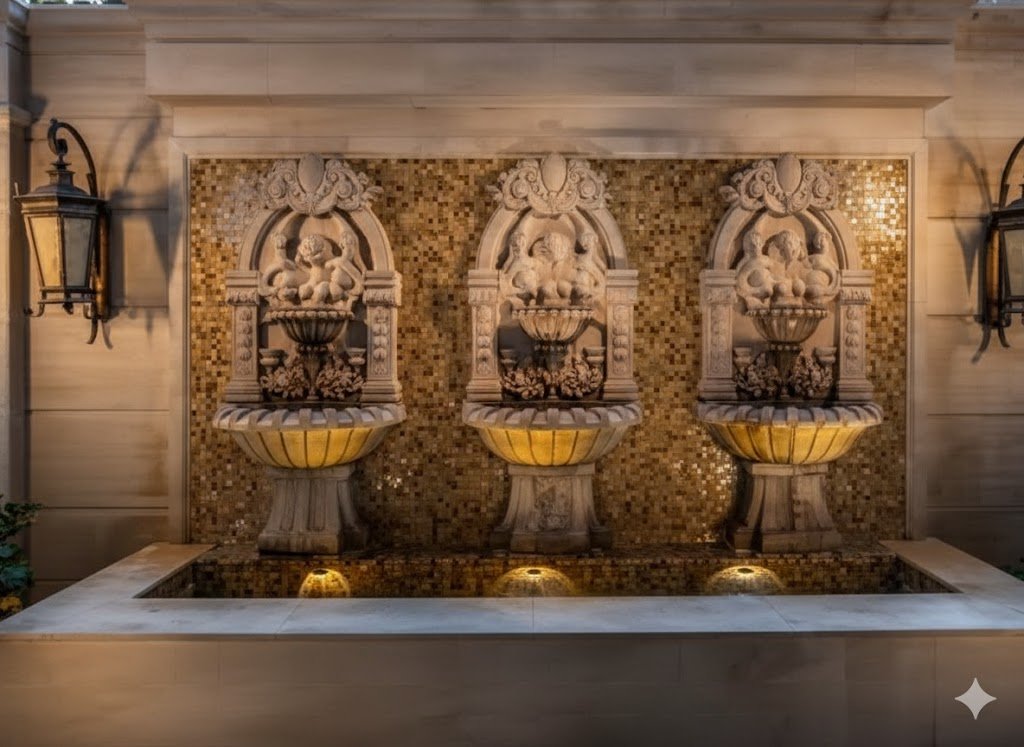
The designs and styles available will make your head spin in the best way. Natural stone fountains give you that rustic, earthy vibe. Copper fountains develop this gorgeous patina over time, perfect if you like the idea of your decor aging and changing. Glass panel fountains are sleek and modern, often with LED lighting for extra drama. There are fountains that look like traditional garden pieces, ones that look like contemporary art installations, ones that incorporate plants or river rocks or mirror finishes. Whatever aesthetic you’re working with, someone makes a fountain that fits.
My personal journey through fountain selection was chaotic. I started wanting something modern and minimal, then got seduced by rustic stone options, then circled back to contemporary metal designs. I made mood boards. I measured our wall approximately forty seven times. I used painter’s tape to mark out different sizes so I could visualize how they’d look. This probably sounds neurotic, and maybe it was, but getting the size and style right matters when you’re investing in a piece this significant.
One thing I wish I’d known earlier is that photos lie. Not intentionally, but fountains look different in pictures than they do running in person. The water flow, the sound quality, the way light interacts with the surface, none of that translates well to product photos. I ordered one fountain based purely on how it looked online, and when it arrived, the water flow was choppy and weird. There were dry spots where water wasn’t reaching. The sound was splashy instead of smooth. I returned it and found a local showroom where I could see fountains actually running before buying.
Tabletop fountains follow the same range of options but on a smaller scale. They’re great entry points if you’re not ready to commit to a wall installation. You can try the concept, see how you like having a fountain in your space, and upgrade later if it works for you. I keep a small tabletop fountain in my home office now, separate from our main wall fountain. It’s maybe twelve inches tall, cost under a hundred bucks, and provides just enough water sound to help me focus during work calls.
The different sizes aren’t just about fitting your space. They’re about the impact you want to create. A small fountain tucked into a corner provides ambiance without demanding attention. A large fountain becomes the focal point that everything else in the room relates to. There’s no right answer, just different approaches. We went medium large because we wanted the fountain to be noticeable but not the only thing people saw when they walked in. Other people might want their fountain to be the star of the show, and that’s cool too.
Material choices affect more than just appearance. They affect maintenance requirements, sound quality, and longevity. Stone and slate are durable and sound great but can show water spots if you’ve got hard water. Copper looks amazing but tarnishes over time, which is either a feature or a bug depending on your perspective. Glass is modern and clean but shows fingerprints and water marks more obviously. Resin can mimic other materials at lower cost but might not have the same quality feel. These trade offs are worth thinking through before you buy.
When you’re selecting a fountain, resist the urge to buy the first one that catches your eye. I know the impulse. You see something you like and you want to just click buy and be done with it. But this is a significant purchase that you’re going to see and hear every single day. Take the time to get it right. Read reviews from actual buyers, not just the marketing copy. Look for mentions of sound quality, ease of setup, and long term performance. A fountain that looks perfect but sounds like a toilet running is not worth any amount of money.
Getting Smart About What Actually Matters
Picking a fountain based purely on loving how it looks is a rookie mistake I absolutely made. That first fountain I bought? Gorgeous in photos. Total disaster in real life. The water flow was uneven, the pump was loud, and it looked out of scale with our furniture once I actually got it on the wall. I returned it, learned my lesson, and approached the second purchase with actual strategy instead of just heart eyes. This is why we have return policies.
Your personal preferences matter, obviously. You’re the one living with this fountain. If you hate the look of copper, don’t buy a copper fountain just because some design blog says it’s trending. If modern minimalist aesthetics make you feel cold and uncomfortable, skip the glass panel options no matter how sleek they are. But personal preferences need to exist within the reality of your space. A fountain you absolutely love that doesn’t work in your room is just expensive garage storage.
Let’s talk about floor space in practical terms. Wall fountains mount to the wall, sure, but they project out into your room. Some are nearly flush, maybe two inches deep. Others extend six or eight inches. A few really elaborate designs stick out even more. That depth affects everything. How close can your furniture sit to that wall? Is there enough clearance for people to walk past? Will the fountain stick out past your couch back when people lean against it? These are unsexy questions that prevent annoying problems.
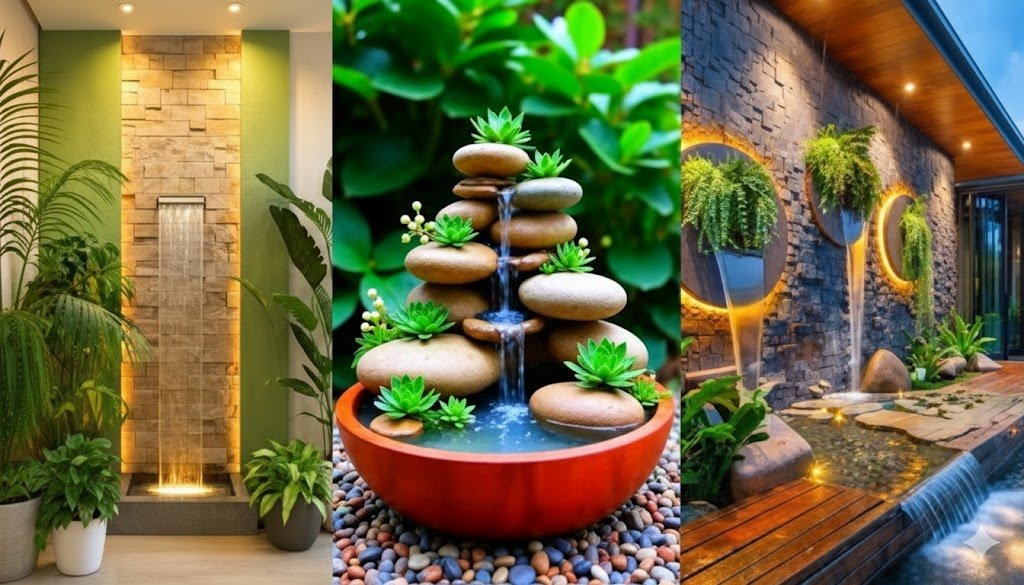
I learned this the hard way when I almost bought a fountain that would have stuck out seven inches from our wall. Sounds like nothing, right? But our couch sits about twenty inches from that wall, and when you account for people actually sitting on the couch and leaning back, we would have been left with maybe eight inches of walking space behind it. That’s tight. Too tight for anyone bigger than a child to comfortably navigate. I caught this problem by actually measuring with a tape measure instead of just eyeballing it, which saved me from a return and a lot of frustration.
Room size absolutely affects which fountains will work and which won’t. Not just in terms of physical fit, but in terms of visual proportion. A massive fountain in a small room feels overwhelming, like the walls are closing in. A tiny fountain on a huge wall looks lost and sad, like you ran out of money halfway through decorating. The goal is balance. The fountain should feel substantial enough to have presence but not so large it dominates everything else. This is where those painter’s tape mockups I mentioned earlier really help.
Your existing furniture and overall decor style need to play nice with your fountain choice. If your living room is full of antiques and traditional pieces, an ultra modern fountain with LED lights and chrome accents is going to clash. Not in an interesting eclectic way, in an awkward “these things are from different planets” way. The fountain doesn’t have to match everything exactly, but it should complement the overall vibe you’ve got going on. Think of it as adding another band member, not switching genres entirely.
The function you want from your fountain should guide your selection as much as style does. Are you going for maximum visual impact? Size and placement matter most. Want better sound masking for a home office? Focus on fountains known for good sound quality. Need something low maintenance? Skip elaborate designs with lots of nooks where algae can grow. Want it to work as a humidifier in dry winter months? Bigger basins and faster water flow will help. Being clear about your priorities makes the overwhelming number of options easier to narrow down.
Thinking about lighting is something most people skip and then regret. Natural light will hit your fountain differently throughout the day, which can be beautiful or problematic depending on your specific setup. Artificial lighting matters too. Some fountains look amazing when lit from above or behind. Others need softer, more diffused light to really shine. A few come with built in LED lighting, which ranges from tasteful accent lighting to Las Vegas tacky depending on the execution. Consider where your light sources are and how they’ll interact with the fountain.
Maintenance is the thing nobody thinks about until they’re dealing with it. Some fountains need attention every few days. Others can run for weeks with minimal intervention. You’ll need to top off water as it evaporates. You’ll need to clean the pump occasionally. Some materials show mineral buildup more than others. If you’re like me and kind of lazy about maintenance, choose a fountain that’s forgiving. If you don’t mind regular upkeep, you’ve got more options. But be honest with yourself about how much ongoing attention you’re willing to give this thing.
The ability to try before you buy is golden when possible. If there’s a store near you that displays fountains running, go visit. Bring your tape measure. Listen to the sounds they make at different settings. Ask questions about maintenance and warranties. Take photos and notes. Compare multiple options side by side. This hands on research beats looking at online photos any day of the week. If you must buy online, make sure the return policy is reasonable and plan for the possibility that your first choice won’t work out.
Complementing your existing furniture is about more than just matching wood tones or metal finishes. It’s about creating a cohesive feel where the fountain fits naturally into the room instead of sticking out like a sore thumb. Our fountain works with our furniture because the natural stone complements our wood pieces and earth tone color scheme. If we’d chosen a fountain with bright colors or super modern materials, it would have fought with everything else in the room. Integration beats contrast when it comes to big permanent pieces like fountains.
Bringing Everything Into Focus
So here’s where we land after all this fountain talk and home design philosophy. Wall water fountains aren’t just trendy Instagram bait that’ll look dated in three years. They’re legitimate design elements that can fundamentally change how your living room feels and functions. I’m not saying everyone needs one. But if you’re looking for that missing piece that pulls your whole space together, they’re absolutely worth thinking about seriously.
The finishing touch concept is more than just a tired design phrase. We’ve all experienced rooms that have everything they’re supposed to have but still feel incomplete somehow. Good furniture, nice colors, proper lighting, all the boxes checked, but something’s still off. That missing element is often something dynamic, something that adds life and movement to a space full of static objects. For a lot of living rooms, a fountain fills that exact gap.
Natural ability to create ambiance isn’t something you can fake with any amount of throw pillows or candles. A fountain brings an actual element of nature into your space in a way that transforms the entire atmosphere. It’s not about following design rules or trends. It’s about tapping into something humans respond to instinctively. We’re drawn to water. We relax around it. Adding that element to your most used room makes psychological sense even if it seems extra on the surface.
The calming effect is real and measurable in how people behave in the space. I’ve watched stressed friends visibly decompress in our living room. I’ve seen kids who can’t sit still anywhere else settle down and focus. I’ve felt my own stress levels drop when I walk in the door and hear the water running. That’s not placebo effect or wishful thinking. That’s a fountain doing exactly what it’s designed to do, creating an environment that tells your nervous system to chill out.
What makes fountains particularly effective is how they engage multiple senses at once. Your eyes have something interesting to watch. Your ears have pleasant sound to process. Even your sense of touch can detect the slight humidity change and temperature drop near the water. This multi sensory engagement creates a more immersive experience than something that only looks good or only sounds good. The combination is what creates that spa like feeling people always comment on.
The variety of forms available means there’s no excuse for not finding something that works. Small spaces, big spaces, traditional styles, modern aesthetics, tight budgets, unlimited funds, there are fountain options for all of it. The market has expanded enough that you’re choosing between good options, not trying to make a bad option work because it’s all that’s available. This wasn’t true ten years ago, but it’s definitely true now.
Size flexibility gives you control over how prominent you want the fountain to be in your space. Want it to be the star? Go big and bold. Want subtle ambiance without a focal point? Choose smaller and more understated. Both approaches work. The key is being intentional about what you’re trying to achieve rather than just buying whatever’s on sale. A well chosen fountain at any size beats a poorly chosen fountain at any size.
The range from large to small isn’t just about physical dimensions. It’s about impact and presence. A large fountain announces itself. A small fountain whispers. Neither is better or worse, just different tools for different goals. We went with a medium to large fountain because we wanted significant impact without total domination of the room. That decision was right for our space, but other spaces might need different approaches.
Keeping home requirements in mind sounds boring but saves you from mistakes. It’s fun to shop based on what you love, but practical considerations have to win sometimes. The most beautiful fountain in the world doesn’t work if it’s too big for your wall or too loud for your space or too high maintenance for your lifestyle. Balancing what you want with what actually works requires some discipline, but it’s worth it to end up with something you’ll still love months and years down the road.
At the end of the day, a wall fountain is an investment in your daily quality of life. It’s not just decoration. It’s not just keeping up with design trends. It’s choosing to make your living space more pleasant, more calming, more interesting every single day. That compounds over time. A few hundred or thousand dollars for something that improves your environment every day you’re home? That math works out pretty favorably when you think about it long term. Your home should make you happy. A fountain might be the thing that pushes yours from good enough to exactly right.

Leave a Comment