
From Necessity to Art – How Fountains Changed Everything
Think about the last time you saw a fountain. Maybe it was at the mall. Maybe in someone’s front yard. Did you stop to think about how weird it is that we dedicate space and money to making water flow for no practical reason? Our ancestors would be so confused. They built fountains because they needed water to live. We build them because they look cool and sound nice.
The whole story of fountains is basically the story of humans getting comfortable enough to care about beauty. Back in ancient times, fountains were survival tools. You walked to the fountain with your jug. You filled it up. You went home. That was it. Nobody was standing there admiring the craftsmanship or taking selfies. They were just trying not to die of thirst.
But something interesting happened over the centuries. Once cities figured out better ways to deliver water, fountains didn’t disappear. They stuck around. People kept building them. They just changed what they were for. Instead of “this keeps us alive,” it became “this makes our city look impressive.” That shift tells you everything about human nature. We can’t help ourselves. Once our basic needs are met, we start wanting things that make us feel good.
The Romans were probably the first to really get fancy with fountains. They had water everywhere thanks to those massive aqueducts. So they started adding statues. Carvings. Decorative elements. A fountain wasn’t just a water source anymore. It was a statement. It said, “Look at us. We have so much water we can waste it on art.” And you know what? It worked. People noticed. Other cities wanted fountains too.
Fast forward through history and you see this pattern repeat itself over and over. The Moors in Spain built fountains with intricate tile work. The French created these huge garden fountains with perfect symmetry. The Italians went absolutely wild during the Renaissance. Each culture took the basic idea of moving water and turned it into something that reflected their values and aesthetics.
What’s funny is that in making fountains more decorative, we actually made them more functional in a different way. A beautiful fountain in a public square becomes a meeting spot. A gathering place. It gives a city a heart. People know where to find each other. “Meet me at the fountain” means something. Try saying “meet me at the water pipe” and see how that goes.
Today we’ve got fountains in places that would blow the minds of ancient engineers. Indoor fountains. Fountains in office buildings. Fountains in shopping centers where there’s literally a Starbucks ten feet away if you need water. We’re not building these for hydration. We’re building them for the vibe. For the atmosphere. For that sound of trickling water that somehow makes everything feel more peaceful.
I walked through a city park last summer on the hottest day of the year. There was this fountain in the center, nothing special, just water shooting up and falling back down. Kids were running through it. Teenagers were sitting on the edge with their feet in the water. Older folks were just sitting nearby in the shade it created. That fountain wasn’t feeding anyone or providing drinking water. But it was definitely serving a purpose. It was giving people a reason to slow down and enjoy being outside instead of hiding in air conditioning.
The transformation of fountains mirrors our own evolution as a species. We went from hunters and gatherers to farmers to city builders to people who work in cubicles and stare at screens all day. At each stage, we needed different things. But we’ve always needed beauty. We’ve always needed moments of peace. Fountains adapted to provide that. They changed form while keeping the same core element that draws us in. Moving water just hits different, you know?
The interesting thing about modern fountains is they bring us full circle in some ways. We’re so disconnected from nature in our daily lives. We live in climate controlled boxes. We drive in climate controlled cars to climate controlled offices. A fountain brings a natural element back into these artificial spaces. It reminds us that we’re still animals who evolved near rivers and streams. That connection to water is hardwired into us, even if we don’t need it for survival anymore.
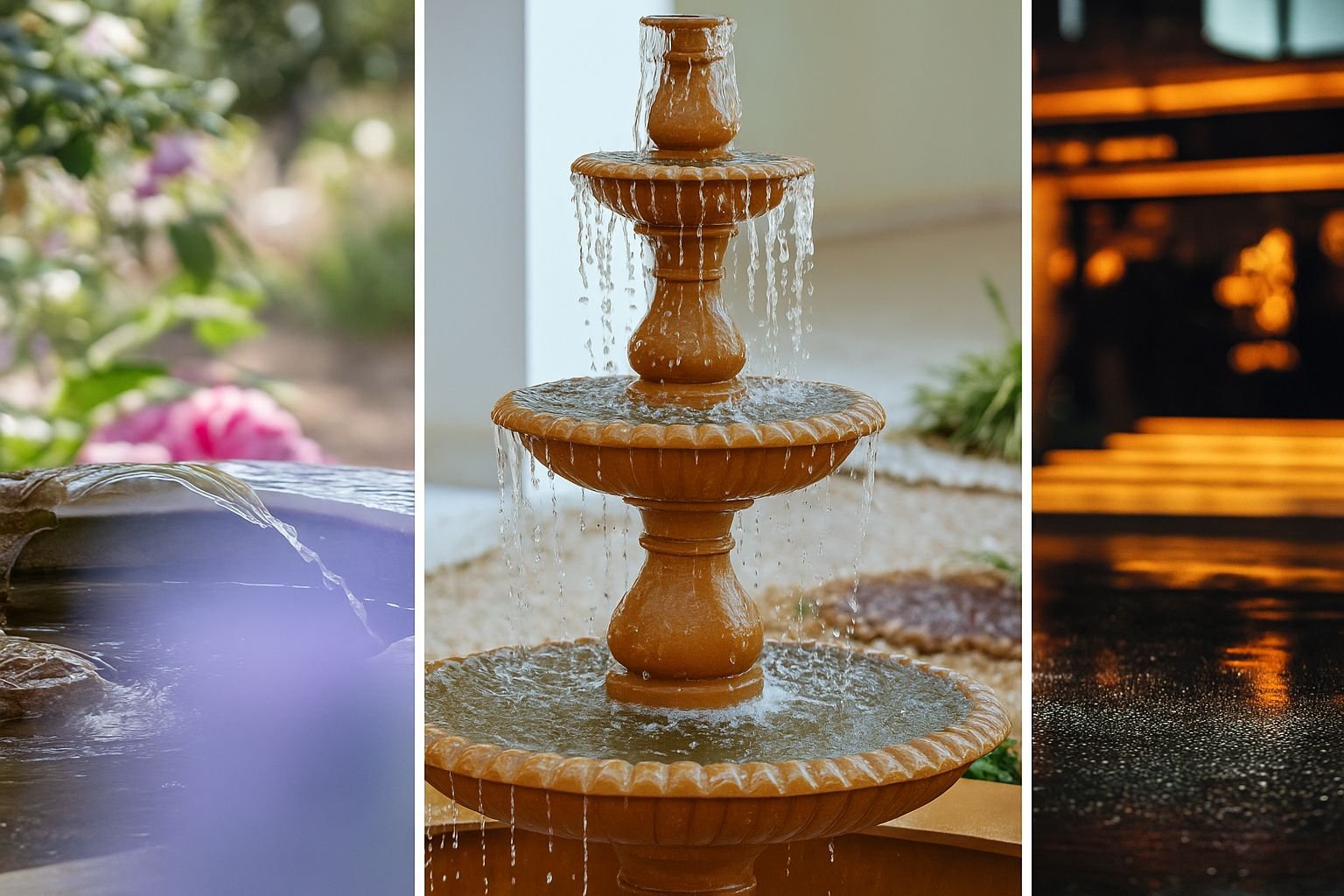
City planners have figured this out. That’s why every decent public space has some kind of water feature now. They’re not just decorating. They’re creating environments where people actually want to be. Where they’ll stick around. Where they’ll bring their families. A fountain transforms dead space into living space. It gives a place energy and movement without being chaotic or loud.
The shift from functional to decorative wasn’t a loss. It was an expansion. Fountains still serve a function. It’s just a different one. They cool the air on hot days. They mask traffic noise with their gentle splashing. They give our eyes something interesting to look at that isn’t a screen. They provide a focal point for public gatherings. These are different from delivering drinking water, sure. But they’re still valuable. Maybe even more valuable in a world where we can get water from a tap but struggle to find peace and quiet.
What really gets me is how universal this is. Every culture that’s ever had the resources has built decorative fountains. It’s not just a Western thing or an Eastern thing. It’s a human thing. We see water flowing and something in our brains lights up. We want to be near it. We want to look at it. We want to hear it. That hasn’t changed in thousands of years and probably never will.
So yeah, fountains transformed from survival tools to art pieces. But that transformation wasn’t random or frivolous. It happened because humans need more than just food and water to thrive. We need beauty. We need gathering places. We need moments of calm in our hectic lives. Fountains provide all of that. They just do it with the same element our ancestors used to stay alive. Different purpose, same magic.
That Moment When You See a Fountain and Think “I Want That”
You’re walking through a nice part of town. Maybe you’re on vacation. Maybe you’re just running errands. And you pass by this gorgeous fountain in someone’s courtyard or in the lobby of a fancy hotel. Water cascading down stone. Light catching the droplets. That peaceful sound filling the air. And a thought hits you out of nowhere. “Why don’t I have one of these at home?”
I had that exact moment about three years ago. I was at a friend’s office building for a meeting. Their lobby had this wall fountain made of dark slate. Water sheeting down the surface. The whole space just felt different. Calmer. More sophisticated. I sat there for maybe five minutes before my meeting started, just watching the water. And I thought, “My living room is so boring compared to this.”
That’s the thing about fountains. They make regular spaces feel special. You don’t really notice it until you experience it. Then you can’t stop noticing it. Every time you see a fountain somewhere nice, you start imagining how it would work in your own home. Would it fit in the entryway? Could I put one in the living room? What about the dining room?
The beauty of modern water fountains is they’re actually designed for homes now. You’re not trying to retrofit some public park feature into your house. Companies make fountains specifically for residential spaces. They understand that you don’t have a team of maintenance workers. You don’t have unlimited floor space. You need something that works with normal life.
Wall fountains changed the game for home use. Before them, if you wanted a fountain, you needed a yard. Now you just need a wall and an electrical outlet. That opened up fountains to apartment dwellers, townhouse owners, people with small yards, people with no yards. The market exploded when fountains went vertical instead of horizontal.
When you’re thinking about getting a fountain for your home, you’re not just thinking about decoration. You’re thinking about transformation. How do I make my space feel better? How do I create an atmosphere that makes me want to be home instead of always going out? A fountain does that. It changes the energy of a room in a way that furniture alone can’t.
I remember telling my partner I wanted to get a fountain for our living room. They looked at me like I’d suggested installing a swimming pool indoors. “A fountain? Like with water running inside the house?” They were skeptical, to put it mildly. But we went to a home decor store and saw some examples. Heard them running. Felt the difference they made in the space. The skepticism melted pretty fast.
The dramatic effect of a fountain is real. It’s not hype. Walk into a room with a fountain and then walk into an identical room without one. The difference is immediately noticeable. The fountain room feels more alive. More dynamic. More intentional. Like someone actually designed the space instead of just filling it with furniture.
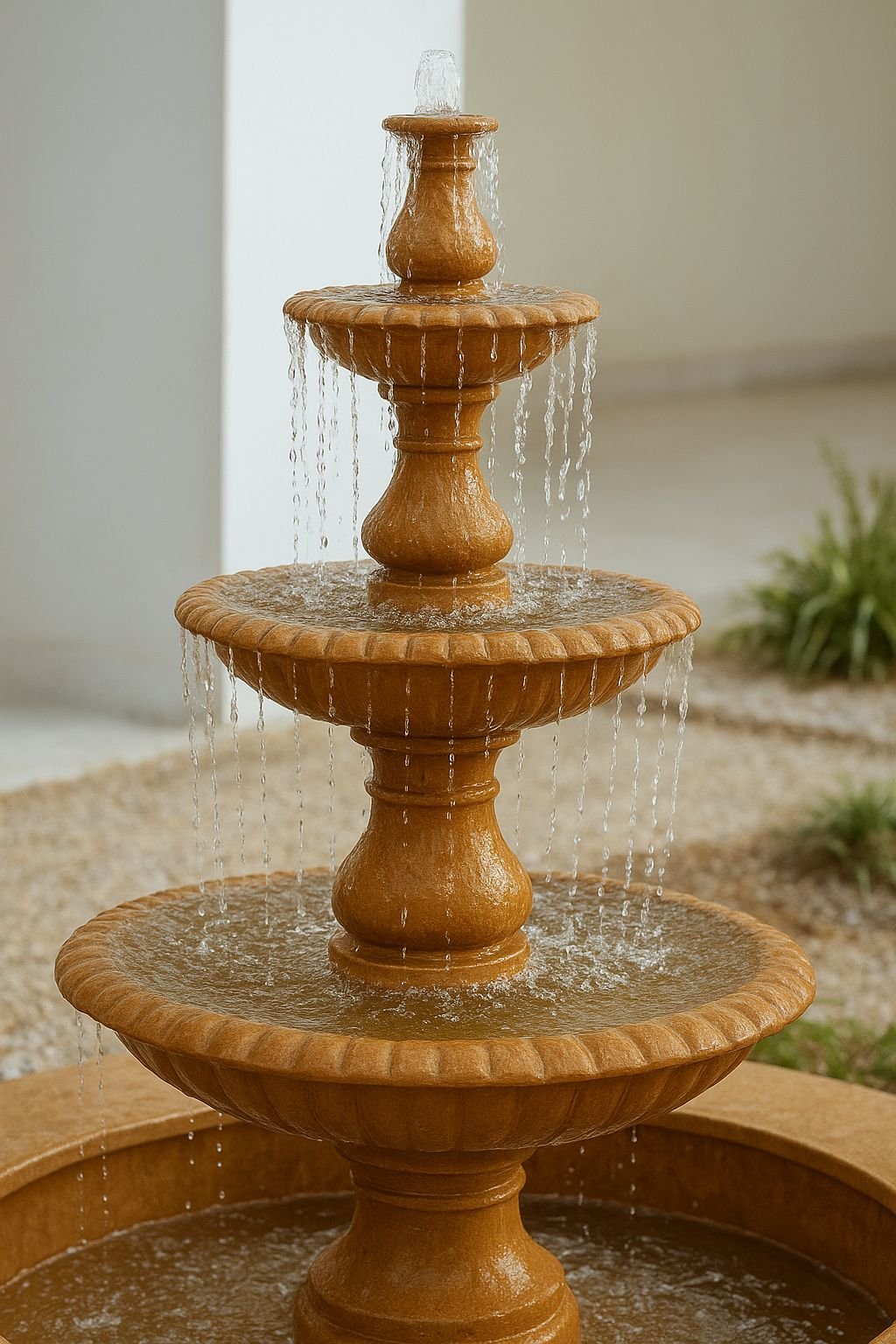
What I didn’t expect was how much the sound would matter. I thought it would be mostly visual. Pretty to look at, sure, but not a big functional difference. Wrong. That gentle water sound became my favorite thing about our fountain. It covers up the annoying background noises of modern life. The traffic outside. The neighbors’ dog. The constant hum of electronics. Instead, you hear water trickling. Your nervous system actually relaxes.
People who visit always comment on it. Not always right away. Sometimes they’ll be sitting there talking and then pause and say something like, “It’s so peaceful in here. What is that?” And they’ll realize it’s the fountain. It’s working on them without them even knowing it. That’s when you know you made the right choice.
The thing about bringing fountain aesthetics into your home is it raises everything else up too. Your regular furniture looks better next to a fountain. Your plants look lusher. Your art looks more intentional. The fountain becomes an anchor point that makes everything else make sense. It’s like when you finally find the right throw pillows for your couch and suddenly the whole room clicks.
You don’t need a mansion to pull this off. That’s the misconception people have. They think fountains are for rich people with grand entryways and formal gardens. Nope. I’ve seen fountains work beautifully in studio apartments. In mobile homes. In houses that cost less than a new car. The fountain doesn’t care about your square footage or your income bracket. It just does its thing.
The decision to get a fountain for your home is about deciding what kind of environment you want to live in. Do you want a space that’s just functional? Or do you want a space that actually feeds your soul a little bit? That sounds dramatic, but I’m serious. Coming home to a fountain after a terrible day at work hits different. You walk in. You hear the water. Something in you unclenches. You’re home. You’re safe. You can breathe.
Shopping for home fountains is actually fun once you start. There are so many options. So many styles. You can go modern and minimal. Rustic and natural. Elegant and traditional. Quirky and artistic. Whatever your taste is, someone’s made a fountain for it. And seeing all the possibilities gets your creative juices flowing. You start imagining your space in new ways.
The best part about getting inspiration from public fountains is you’re not trying to copy them. You’re adapting the concept to your scale and your life. That massive fountain in the hotel lobby might be fifteen feet tall and weigh a ton. But the feeling it creates? The sense of calm and luxury? You can capture that with something three feet tall that hangs on your wall. The magic scales down just fine.
I think what happens when you see a beautiful fountain somewhere is your brain does this quick calculation. It recognizes beauty. It feels the effect the fountain has. And it thinks, “I want to feel this way more often.” That’s not greedy or materialistic. That’s you recognizing something that improves your quality of life and wanting more of it. That’s actually pretty healthy.
Getting a fountain for your home is one of those decisions you think about for a while and then wonder why you waited so long. It’s not like buying a new couch where you’re replacing something worn out. It’s adding something completely new. Creating an element in your space that wasn’t there before. And once it’s there, once you’ve lived with it for a month or two, you can’t imagine your home without it. It becomes part of the identity of your space.
Turning Your Living Room Into the Room Everyone Wants to Be In
Your living room should live up to its name. It’s where life happens. Where you collapse after work. Where friends gather. Where lazy Sunday mornings turn into lazy Sunday afternoons. So why is it often the most boring room in the house? A couch. A TV. Maybe a coffee table. That’s it. We can do better.
A water fountain in your living room sounds extravagant until you actually see one in action. Then it just makes sense. Of course you should have moving water in the room where you spend the most time. Of course you should have that sound and that visual interest. Why didn’t you think of this sooner?
I’ve been in living rooms with fountains that cost thousands of dollars and ones that cost a couple hundred bucks. The price matters less than you’d think. What matters is placement. Scale. Whether it fits the vibe of the room. A fountain that works beautifully in one living room might look completely out of place in another. It’s not about expense. It’s about matching the fountain to your space.
The way water moves catches your eye without demanding attention. That’s a rare quality. Most things in a room either fade into the background or scream for notice. A fountain does neither. It’s present. It’s interesting. But it doesn’t dominate. You can have a conversation without competing with it. You can watch TV without it being a distraction. But when you’re just sitting there thinking or reading, it’s there doing its thing.
Living rooms often feel incomplete and people can’t figure out why. They keep buying new furniture. New curtains. New art. But something’s still off. The room doesn’t have energy. A fountain solves that problem. It adds movement to a static space. Your living room goes from being a collection of objects to being an environment. That’s a huge difference.
The sound piece cannot be overstated. I grew up in a house where the TV was always on for “background noise.” Even when nobody was watching it. Just constant chatter and commercial jingles filling the silence. I hated it but didn’t know there was an alternative. Now I know. The alternative is the sound of water. Natural. Rhythmic. Actually relaxing instead of just preventing silence.
Placement in the living room depends on your layout. If you’ve got a wall that’s currently just empty or has some forgettable art on it, that’s your spot. Put the fountain there and arrange your furniture so you can see it from the main seating area. Not directly in front of the TV unless you want people staring at the fountain instead of the screen. Off to the side works better. Visible but not competing.
Size matters more than you’d think. A fountain that’s too small gets lost. Nobody notices it. A fountain that’s too big overwhelms everything else. You want something substantial enough to register as a focal point but not so massive it makes the room feel crowded. For most living rooms, something in the three to five foot range works well. Big enough to matter. Small enough to fit.
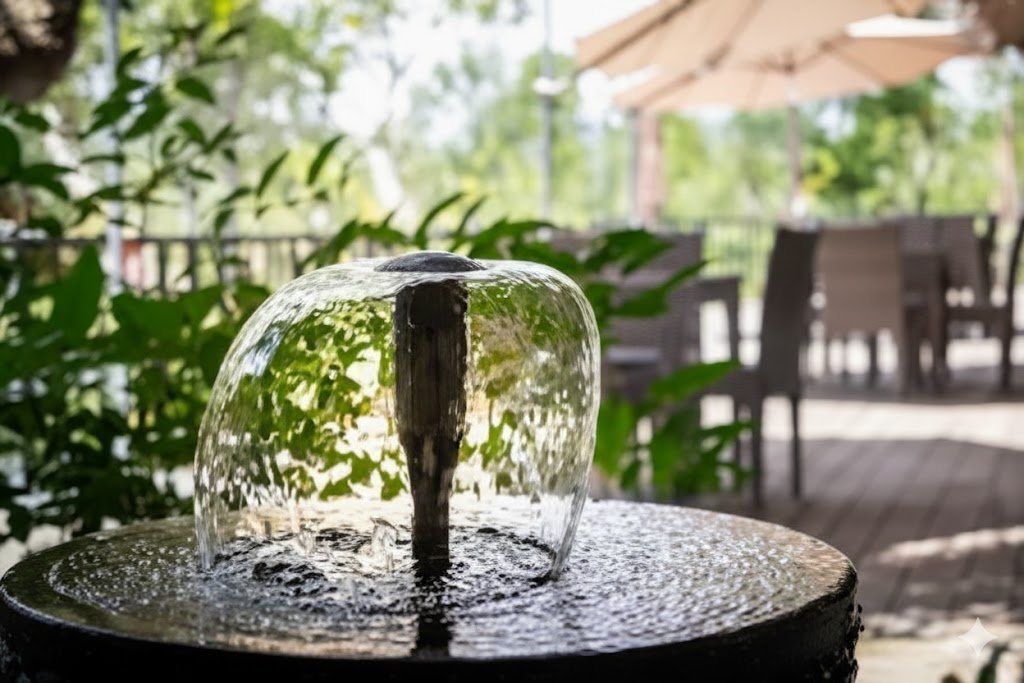
The style of your fountain should play off your existing decor, not match it exactly. If you’ve got a modern minimalist living room, a fountain made of natural rough stone adds contrast and interest. If your room is traditional and cozy, a sleek metal fountain keeps things from getting too matchy. A little bit of tension makes the design more dynamic.
Lighting changes how a fountain looks dramatically. Some fountains come with built in lights. Others need external lighting to really pop. Natural light works great if your fountain is near a window. The way sunlight catches water droplets is pure magic. At night, you might want a small spotlight or some track lighting aimed at the fountain. The reflections and shadows add depth to the whole room.
One thing people worry about is whether a fountain will work with kids and pets. I get it. Water plus chaos equals potential disaster, right? But modern fountains are pretty contained. The water recirculates. It’s not an open pool. Unless your kid or your dog is actively trying to make a mess, the fountain just sits there doing its thing. I know families with toddlers and dogs who have fountains with zero problems.
The maintenance factor scares people off sometimes. They imagine it being this huge hassle. In reality, it’s easier than most houseplants. You add water every week or so. You wipe down the surface when you’re cleaning the room. Maybe once a month you run some vinegar through it to prevent mineral buildup. That’s it. Ten minutes a month. Way less needy than a goldfish.
Guests notice the fountain immediately. Sometimes they mention it right away. Sometimes it takes them a few minutes to realize what’s different about the room. But they always notice. And they always ask about it. It becomes a conversation starter without you having to do anything. The fountain makes your living room memorable. People think of it as “the house with the fountain.” There are worse reputations.
The way a fountain transforms the feel of a living room is hard to explain until you experience it. The room feels more grown up somehow. More intentional. Like an actual adult designed this space instead of just accumulating furniture over time. It makes your living room feel like the “after” photo in a home makeover show, even if everything else stayed the same.
You can change the decor around your fountain seasonally if you’re into that sort of thing. Put some small pumpkins nearby in autumn. Add some evergreen branches in winter. Fresh flowers in spring. The fountain stays the same but the area around it shifts. It becomes part of your seasonal decorating without actually changing itself.
If you work from home and your living room doubles as an office, a fountain is even more valuable. That background noise helps you focus. It masks distracting sounds from outside. It creates an audio boundary between work space and living space. When the fountain’s running, you’re in work mode. Turn it off at the end of the day. It becomes part of your routine, a signal to your brain about what mode you’re in.
The truth is, most living rooms are underutilized. We spend money on them but don’t really make them special. We save “special” for other rooms or for going out. A fountain says, “No, this room matters. This is where I live my actual life.” It’s an investment in your daily experience, not just in resale value or impressing guests. You get to enjoy it every single day.
I can’t tell you how many times I’ve chosen to stay home instead of going out just because my living room is such a pleasant place to be now. That fountain played a big role in that. It tipped the balance from “home is where I sleep” to “home is where I want to be.” That shift is worth every penny the fountain cost and then some.
The Overwhelming World of Fountain Shopping Made Simple
Let’s be real. Shopping for a fountain can feel like trying to buy a car when you don’t know anything about cars. There are so many types. So many features. So much jargon. You start excited and end up confused and paralyzed. Let me help you cut through the noise so you can actually make a decision.
Floor fountains are the traditional option. They sit on the ground like a piece of furniture. They take up floor space but they’re substantial. They make a statement. If you’ve got the room and you want something that really anchors a space, a floor fountain works great. They’re usually bigger and hold more water, which means you refill them less often. The sound tends to be more prominent too.
Free standing fountains are similar to floor fountains but usually designed to be more portable. You can move them around easier. Put one in the living room for a while, then move it to the bedroom. Swap it to the patio in summer. The flexibility is nice if you like changing things up or if you’re not totally sure where you want your fountain long term.
Wall fountains are where things get interesting for modern homes. They mount on the wall like art. They don’t take up any floor space. They work in small rooms. They work in apartments. They work in weird spaces where a floor fountain wouldn’t fit. The variety in wall fountains is huge. From tiny ones that fit in a powder room to massive ones that cover an entire wall.
Tabletop fountains are the gateway drug of water features. They’re small. They’re cheap. They’re easy. Put one on your coffee table or dining room sideboard and see how you like living with a fountain. If you love it, upgrade to something bigger later. If you don’t love it, you’re out maybe fifty bucks instead of five hundred. Low risk entry point.
Materials make a bigger difference than you’d think. Stone and slate are classic. They look natural. They develop character over time as water minerals leave deposits. They’re heavy, which means stable but hard to move. The sound of water on stone is soft and gentle. Good for bedrooms and quiet spaces.
Metal fountains, usually copper or stainless steel, are more modern looking. They stay shiny if you want them to. Copper develops a patina if you let it, which some people love and others hate. Metal is easier to clean than stone. The sound is brighter. More energetic. Better for living spaces where you want more presence.
Glass and acrylic fountains are the contemporary option. They show every water droplet. You can see through them. They catch light in cool ways. They need more frequent cleaning to look their best. The sound can be sharper depending on the design. They work great in modern spaces with lots of natural light.
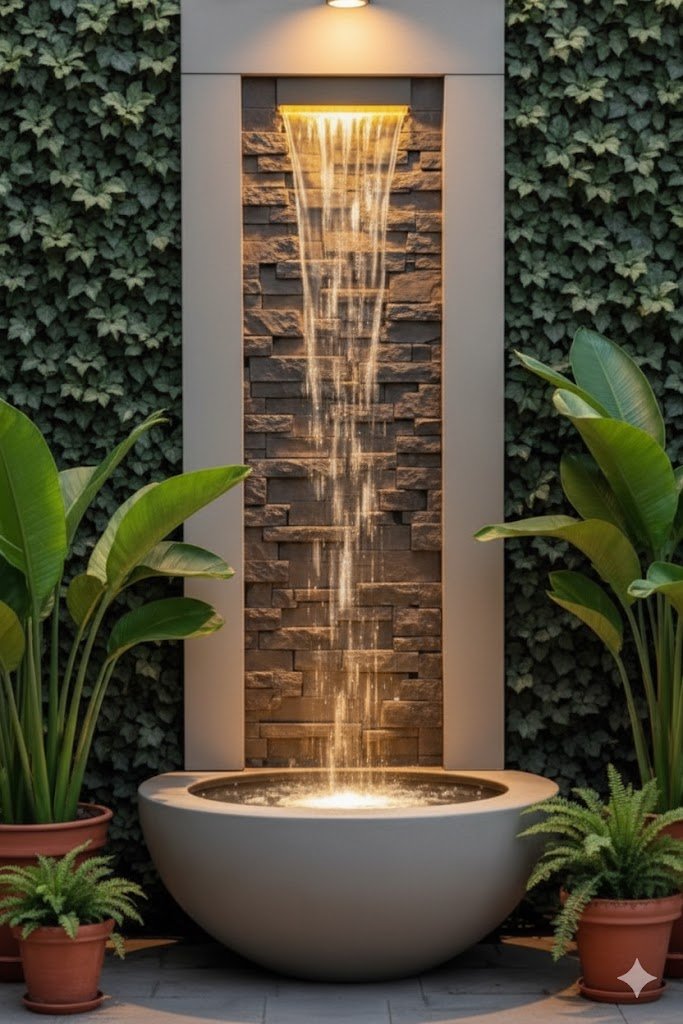
Size is where people mess up most often. They see a fountain online or in a store and think it’ll work. Then they get it home and it’s way too big or too small. Always measure. Measure your wall space or floor space. Measure the actual dimensions of the fountain. Visualize it. Use painter’s tape to mark out the size on your wall. Stand back and look at it. Does it feel right?
Design styles range from ultra traditional to completely abstract. You’ve got fountains that look like natural rock formations. Ones with Buddha statues. Sleek rectangles of glass. Copper sheets with geometric cutouts. Tiered designs like a wedding cake. Single panel walls of water. The style you choose should reflect your taste but also work with your space.
Some fountains come with bells and whistles. LED lights that change colors. Remote controls. Timers. Adjustable pump speeds. These features can be fun or they can be gimmicky depending on how you use them. Think about whether you’ll actually use the features or if they’re just adding cost and complexity.
Tabletop fountains are perfect for people who want to test the waters. Literally. They’re small enough to put anywhere. Coffee table. Kitchen counter. Bathroom vanity. Bedside table. Desk at work if your boss is cool. They give you the fountain experience in miniature. The sound is softer. The visual impact is smaller. But the basic benefits are all there.
The dining room is an underrated spot for a tabletop fountain. Think about it. You’re sitting there having dinner. Good food. Good company. And there’s this gentle water sound in the background. It elevates the whole experience. Makes a regular meal feel more special. Makes awkward silences less awkward. Creates ambiance without effort.
When you’re actually shopping, read the reviews carefully. Look for patterns. If multiple people say the pump is too loud or the fountain leaks, believe them. If everyone raves about the packaging and how easy it was to set up, that’s a good sign. Real user experiences tell you what the marketing copy won’t.
Don’t cheap out too much. A fountain that costs forty dollars and breaks in two months isn’t a deal. But you don’t need to spend thousands either unless you really want to. The sweet spot for most people is somewhere in the two hundred to six hundred dollar range. Good quality without the luxury brand markup.
Pay attention to where you’re buying from. Specialty stores that focus on water features usually know their stuff. They can answer questions. They understand the products. Big box stores are hit or miss. Online marketplaces can be great or sketchy. Check the return policy before you buy. You might need to exchange it if it doesn’t work in your space.
Power needs are usually simple. Most fountains just plug into a regular outlet. Check that you’ve got an outlet near where you want to put your fountain. Extension cords work but they’re not ideal. You don’t want cords running across walkways where people can trip.
Noise level varies a lot between fountains. Some are whisper quiet. Others sound like a babbling brook. Neither is better. It depends what you want. If possible, find videos of the fountain running. Some sellers post these online. Hearing it helps you decide if it’s the right sound for you.
Return policies are your safety net. Sometimes a fountain looks perfect in the store and completely wrong in your actual space. Being able to return or exchange it without jumping through hoops is worth seeking out. Read the fine print before you click buy.
The best advice I can give you is don’t overthink it. You’re picking a fountain, not a spouse. If you like how it looks and it fits your budget and your space, go for it. You can always change your mind later. The goal is to improve your space and your daily life. Start there and work forward.
Finding the Right Fountain Match for Your Actual Life
Here’s what nobody tells you about buying a fountain. The “perfect” fountain doesn’t exist. What exists is the fountain that works for your specific space, your lifestyle, your budget, and your taste. That’s going to be different for everyone. My perfect fountain would probably look ridiculous in your house and vice versa.
Start with your space. Actually walk around your home and look at it with fresh eyes. Where could a fountain fit? Not where do you wish you had space for a fountain. Where do you actually have space? Be honest. A huge floor fountain in a tiny studio apartment is going to make the space feel cramped no matter how beautiful it is. A tiny tabletop fountain in a vast open concept living room will get lost.
Your lifestyle matters more than design blogs will tell you. Got toddlers who touch everything? Maybe skip the delicate glass fountain for now. Have three cats who knock stuff over? A sturdy wall mounted fountain makes more sense than a tabletop one. Live in a rental where you can’t put holes in walls? Floor fountains and tabletops are your options. Work from home and need focus? Prioritize sound quality over visual flash.
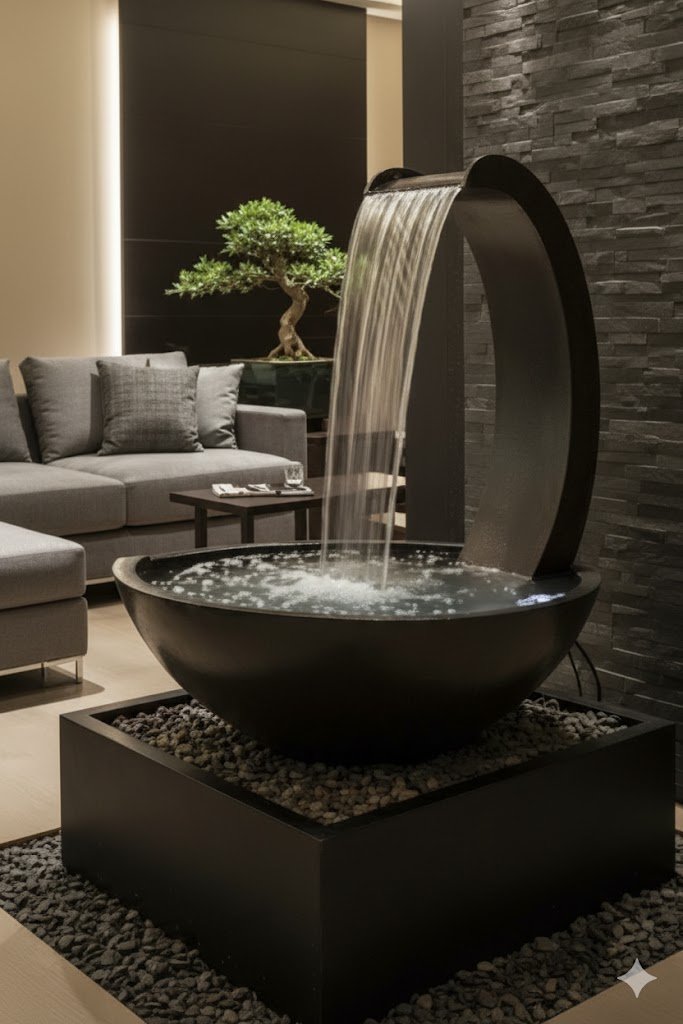
Budget is what it is. I’m not going to tell you to “invest in quality” or “save up for the right one.” Sometimes you’ve got two hundred bucks and that’s it. Good news is you can find decent fountains at basically any price point. The forty dollar ones probably won’t last long. The four thousand dollar ones are probably overpriced. Somewhere in between is your sweet spot.
Think about maintenance realistically. Are you someone who already forgets to water plants? A fountain that needs daily attention will drive you nuts. Most fountains need minimal maintenance, but some are fussier than others. Stone fountains need more cleaning than metal ones. Larger reservoirs need refilling less often. Match the maintenance level to your actual habits, not your aspirational ones.
The sound is maybe the most important factor that people underestimate. You’re going to hear this fountain every day. Multiple times a day. Make sure it’s a sound you actually like. Some fountains have a pleasant trickling sound. Others are more splashy. Some are super quiet. There’s no universal “best” sound. There’s only the sound that works for you.
Visual style should complement your existing decor without being too matchy. If everything in your house is modern and minimalist, a rustic stone fountain could be an interesting contrast or it could look completely out of place. You have to use your judgment. Bringing in a sample or looking at mockups helps. Some stores let you do returns if it doesn’t work out.
Location within the room affects everything. A fountain right next to your TV might be annoying. A fountain across the room creates ambiance without interference. Near a window, it’ll catch natural light beautifully. Near a door, it’ll be the first thing people see when they enter. Think about the traffic patterns in your room. You don’t want the fountain where people are constantly walking past it.
The size question trips everyone up. Too small and it doesn’t register. Too big and it dominates. For wall fountains, a good rule of thumb is to cover about a third of the wall space in that area. For floor fountains, think about scale relative to your furniture. It should be noticeable but not bigger than your couch.
Color and finish matter more than you’d expect. A dark fountain on a light wall creates contrast and pops. A light fountain on a light wall creates a more subtle, sophisticated look. Metallic finishes catch light and draw the eye. Matte finishes are more understated. Think about what you want the fountain to do in your space.
Some fountains come pre assembled. Others require some setup. If you’re not handy or you don’t want to deal with assembly, check before buying. Most fountains are pretty simple. Hang it or place it. Fill with water. Plug in. But some are more involved. Know what you’re signing up for.
The pump is the heart of your fountain. A good pump runs quietly and lasts for years. A cheap pump is loud and dies quickly. You often can’t tell from looking at a fountain what kind of pump it has. This is where reviews come in handy. If people complain about pump noise or pump failure, listen to them.
Water capacity affects how often you’ll need to refill. A fountain with a large reservoir might go two weeks between refills. A small one might need attention every few days. Neither is wrong. It’s about what fits your life. I’m lazy so I prefer large reservoirs. Some people don’t mind refilling often.
Indoor vs outdoor matters if you’re thinking about moving your fountain seasonally. Some fountains are designed for outdoor use. They can handle weather and temperature changes. Indoor only fountains should stay inside. They’re not built for the elements. Using an indoor fountain outside will just ruin it.
Adjustable features give you flexibility. Some fountains let you adjust the pump speed to control how fast the water flows. Slower flow is quieter and uses less water. Faster flow is more dramatic and louder. Being able to adjust this is nice. You might want different settings for different times of day or different moods.
Multiple small fountains vs one large one is a choice some people face. Do you want one statement piece or several smaller features scattered around? There’s no right answer. Some people love having a tabletop fountain in multiple rooms. Others prefer investing in one really nice wall fountain. Go with what appeals to you.
The commitment level is lower than you think. This isn’t a renovation. It’s buying something and plugging it in. If you hate it, you can return it or sell it. If you love it, great. If you get tired of it in a year, you can replace it with something different. Don’t treat this decision like it’s permanent and irreversible.
Your gut knows more than you think. When you see the right fountain, you’ll know. Something will click. You’ll be able to picture it in your space. You’ll want it. Trust that feeling. Don’t talk yourself out of it because it’s not the “most practical” option or whatever. If it speaks to you and fits your budget, go for it.
The goal is to end up with a fountain you actually enjoy living with. Not the fountain that looks best in photos. Not the one that cost the most or has the most features. The one that makes you smile when you hear it. The one that makes your space feel more like home. That’s the fountain worth finding.
Why Water Features Are More Than Just Pretty Decorations
Let’s cut through the marketing nonsense and talk about what fountains actually do. Yeah, they look nice. Yeah, they’re decorative. But reducing them to “decor” misses the point completely. A fountain is functional in ways that matter way more than aesthetics.
The sound of moving water affects your nervous system. This isn’t woo woo stuff. There’s actual science here. The frequency and rhythm of water sounds can lower your heart rate. Reduce stress hormones. Shift your brain waves toward relaxation. It’s why nature sounds are used in meditation apps and therapy offices. A fountain gives you that effect in your actual living space.
White noise masking is real. You know how you can’t hear your neighbor’s TV when you’re running the dishwasher? Same principle. The fountain creates a consistent background sound that masks irregular, annoying noises. Traffic. Sirens. The upstairs neighbor’s footsteps. Your brain stops picking up on those irritants because they’re hidden behind the water sound.
Humidity is something people don’t think about until they have problems with dry air. Bloody noses. Cracked lips. Static shocks. Scratchy throats. Dry air causes all of this. A fountain adds moisture to your space naturally. It’s not a replacement for a humidifier in extreme cases, but it helps. And unlike electric humidifiers, it’s silent and doesn’t need filter changes.
The visual interest is different from other decor. A painting is static. You look at it once and then you stop seeing it. Your brain files it away as “known.” A fountain is always moving. Always slightly different. Your eye catches it. Your brain registers something new. It stays interesting in a way that stationary objects don’t.
Creating a focal point matters more than people realize. Rooms without a clear focal point feel scattered. Your eye doesn’t know where to land. A fountain gives the room a center. An anchor. Everything else in the room can relate to it. The design becomes cohesive instead of random.
The meditative quality of watching water is ancient. Humans have been staring at rivers and streams for our entire existence. Something about it settles us. Grounds us. Brings us into the present moment. You can use your fountain as a meditation aid. Just sit and watch the water for five minutes. Try it. It works.
Air quality benefits come from the negative ions that moving water produces. These ions attach to dust particles and allergens and cause them to settle out of the air. This is why the air feels fresher near waterfalls and fountains. Your fountain won’t purify the air completely, but it helps. People with allergies sometimes notice they breathe easier with a fountain running.
The psychological impact of having something beautiful in your space is underestimated. You spend so much time at home. Making that space pleasant isn’t frivolous. It’s self care. It’s creating an environment that supports your mental health instead of draining it. A fountain is one tool for doing that.
Social benefits matter too. Having a nice space makes you more likely to invite people over. To host dinner. To have friends stay late talking instead of rushing off. A fountain contributes to that welcoming atmosphere. It makes your home a place people enjoy being.
The routine aspect becomes important over time. The fountain becomes part of your daily rhythm. You turn it on in the morning. The sound signals that the day is starting. You turn it off at night. That signals wind down time. These little rituals add structure and meaning to your days.
Stress reduction shows up in unexpected ways. You might not consciously notice the fountain during a stressful day. But when you do finally sit down and hear it, something releases. Your shoulders drop. Your jaw unclenches. You breathe deeper. The fountain doesn’t solve your problems, but it gives you a moment of relief from them.
Sleep improvements are common with bedroom fountains. That white noise effect we talked about? It blocks out sounds that might wake you up. It also gives your brain something neutral to focus on if you’re lying there with racing thoughts. The sound becomes an anchor that helps you drift off.
The connection to nature matters in our increasingly artificial world. We spend our days in boxes with artificial light and recycled air. A fountain brings a natural element indoors. It’s a reminder that we’re biological creatures, not robots. That connection helps us feel more balanced and less disconnected from the physical world.
Entertainment value is real but subtle. Guests are drawn to fountains. Kids watch them. Pets are fascinated by them. The fountain becomes a natural gathering point without you having to do anything. It facilitates interaction and conversation in an organic way.
The longevity of a quality fountain makes it different from trendy decor. Fashion changes. Color trends shift. But moving water has been appealing to humans for thousands of years and will continue to be appealing thousands of years from now. A good fountain won’t look dated in five years the way a lot of home decor does.
Customization keeps things interesting. You can change the water flow rate. Adjust the lighting. Add or remove decorative elements around it. Move it to different rooms. The fountain itself stays the same but the way you use it can evolve with your needs and preferences.
The investment makes sense when you add up all these benefits. Better air quality. Humidity control. Noise masking. Stress reduction. Visual interest. Social enhancement. A more pleasant living environment. That’s a lot of value from one item. Compare that to most purchases that only serve one purpose.
Maintenance being minimal is key to long term satisfaction. If your fountain required hours of work each week, you’d grow to resent it. But ten minutes a month? That’s nothing. The return on that small time investment is enjoying the fountain every single day.
The subtle prestige factor exists whether we want to admit it or not. Having a fountain signals that you care about your space. That you’ve put thought into creating a pleasant environment. That you value beauty and tranquility. These aren’t bad things to communicate about yourself.
Seasonal appreciation changes how you experience your fountain. In summer, it provides cooling relief. The sight and sound of water feels refreshing when it’s hot. In winter, it becomes a cozy element. The sound is comforting when it’s cold and dark outside. The fountain adapts to your needs throughout the year.
Children learn from fountains in interesting ways. They see how water flows. How gravity works. How pumps move water upward. It’s science education happening passively in your living room. Plus it gives them something to focus on that isn’t a screen. That’s valuable in itself.
The conversation topic aspect never gets old. Years after installing your fountain, people who haven’t been to your house before will comment on it. It’s an easy icebreaker. A shared experience. Something tangible to discuss that isn’t weather or traffic.
Resale value might increase if you ever sell your home. A built in water feature can be a selling point. Even a quality fountain that’s not built in suggests that the homeowner cared about the space and invested in it. That perception matters to buyers.
The creative expression angle appeals to some people more than others. Choosing a fountain is a design decision that reflects your taste and personality. It’s a way to make your space uniquely yours. Not everyone cares about that, but for those who do, it’s meaningful.
Therapeutic value for specific conditions is worth noting. People with tinnitus sometimes find that fountain sounds help mask the ringing in their ears. People with anxiety use them as grounding tools. People with insomnia use them as sleep aids. These aren’t guaranteed fixes, but they help more often than you’d think.
The ritual of maintenance becomes meditative for some people. That weekly moment of adding water and wiping down the fountain becomes a small pause in a busy life. A moment of caring for something. There’s value in that even beyond keeping the fountain running.
Technology integration is improving. Smart fountains that connect to your phone. Ones that sync with your smart home system. Programmable lighting sequences. These features aren’t necessary but they’re becoming more common. If you’re into home automation, there are fountains that fit that lifestyle.
The environmental impact is minimal. Fountains use very little electricity. The water recirculates so you’re not wasting it. If you’re concerned about your ecological footprint, a fountain is a fairly green way to improve your space. Way better than running an AC unit just for white noise.
Community building happens around shared appreciation for beauty. When you have a fountain, you connect with other fountain owners. You swap tips. Recommend models. Share maintenance tricks. It’s a small community but a friendly one.
The anchor effect in interior design is real. A fountain becomes the piece that everything else relates to. When you’re redecorating or adding new elements, you think about how they’ll work with the fountain. It gives your design decisions a reference point. That makes the whole process easier.
The joy factor is simple and pure. Having something beautiful in your space that you enjoy looking at and listening to every day is worth it. We overcomplicate this. Sometimes it’s okay to want something just because it makes you happy. The fountain does that. It makes your daily life a little bit better. That’s the whole point.
So yeah, fountains are more than decorative. They’re functional in ways that matter for modern life. They address real problems we face every day. Noise. Stress. Dry air. Boring spaces. Lack of connection to nature. They do it quietly and consistently without demanding much in return. That’s why they’ve stuck around for thousands of years. That’s why they’ll keep sticking around. They work.

Leave a Comment