
Why Your Bedroom Deserves a Modern Platform Bed Makeover
Let me tell you something about bedrooms. We spend roughly a third of our lives in them, yet most of us treat them like an afterthought. You know what I’m talking about. That mismatched furniture from three different decades. The headboard you inherited from your aunt. The box spring that squeaks every time you roll over at 2 AM.
I remember when I first walked into my friend Sarah’s bedroom after she renovated it. The centerpiece was this stunning modern platform bed, and I swear the entire room felt different. Not just looked different. Felt different. Like someone had taken a cramped, cluttered space and given it room to breathe. That’s when it hit me. Sometimes you don’t need a complete design overhaul. Sometimes you just need the right piece of furniture to anchor everything else.
Modern platform beds have this way of making a statement without screaming for attention. They sit low to the ground, clean lines extending from headboard to foot. No frills. No unnecessary embellishments. Just pure, functional beauty. And here’s the thing about beauty in furniture. When it serves a purpose beyond just looking good, that’s when magic happens.
Think about your current bed for a second. Really think about it. Does it make you feel something when you walk into your room? Does it create a sense of calm? Or is it just there, taking up space, doing its job in the most mediocre way possible? I’m not trying to make you feel bad about your furniture choices. We’ve all been there. Life gets busy. You move into a place and throw together whatever works. Before you know it, five years have passed and you’re still sleeping on that bed frame you bought in college.
The beauty of a platform bed lies in its simplicity. Where traditional beds rely on multiple components working together, a platform bed strips everything down to what matters. A solid frame. A comfortable sleeping surface. Nothing more, nothing less. It’s like the difference between a cluttered desk and a minimalist workspace. Both can get the job done, but one does it with style and intention.
Here’s what really sold me on the idea. Space. We’re all fighting for it, right? Whether you live in a studio apartment in the city or a suburban home that somehow still feels cramped, every square foot counts. Modern bedroom furniture, particularly platform beds, understands this struggle. These designs don’t demand extra room for box springs. They don’t require clearance for complicated support structures. They just exist, elegantly and efficiently, in whatever space you give them.
My cousin Jake lives in a 400 square foot apartment in Brooklyn. When he switched to a platform bed, he swears he gained an entire corner of usable space. Now, I’m not saying a bed frame can defy physics. But when you remove unnecessary bulk, you’d be surprised how much breathing room you create. It’s like Marie Kondo came through, but for your bed.
The style factor can’t be ignored either. When you bring modern bedroom furniture into your space, you’re not just buying a place to sleep. You’re making a choice about how you want to live. Clean lines communicate clarity. Minimalist design suggests intentionality. And when someone walks into your bedroom, they pick up on these subtle cues, even if they can’t articulate why your space feels so put together.
I’ve seen people transform entire bedrooms around a single platform bed. Start with that foundation, and suddenly everything else falls into place. The nightstands make sense. The lighting works better. Even that random piece of art you bought at a street fair five years ago somehow looks intentional. It’s not magic. It’s just good design doing what good design does best. Creating harmony from chaos.
But let’s be real for a second. Change is scary. Walking into a furniture store or scrolling through endless online options can feel overwhelming. You see all these different styles, materials, and price points. Your brain starts doing that thing where it convinces you that your current bed is actually fine. Not great, but fine. And fine is good enough, right?
Wrong. Fine is the enemy of great. Fine is what keeps you settling for mediocre sleep, mediocre style, and a bedroom that doesn’t inspire you. A modern platform bed isn’t about following trends or trying to impress anyone. It’s about creating a space that feels like yours. A space that works with your life instead of against it.
The sleeping quarters, as our grandparents might call them, deserve more respect than we give them. This is where you start your day. Where you end it. Where you retreat when the world gets too loud. Shouldn’t that space feel special? Shouldn’t it reflect who you are and how you want to live?
When you invest in a platform bed, you’re not just buying furniture. You’re buying into a philosophy. One that values simplicity over complexity. Function over flash. Quality over quantity. And in a world that constantly tells us we need more, bigger, louder, there’s something deeply satisfying about choosing less.
So whether you’re moving into a new place, finally ready to ditch that college furniture, or just feeling the itch for change, consider what a modern platform bed could do for your space. Not just aesthetically, though that’s part of it. But functionally. Emotionally. Practically. Sometimes the smallest changes create the biggest impacts. And sometimes, a bed is more than just a bed.

The Asian Influence That Changed Everything About Bedroom Design
You want to know when I first encountered true minimalist furniture? It was during a trip to Kyoto about six years ago. I stayed in this traditional ryokan, and my room had almost nothing in it. A low platform bed. A small table. A single piece of art on the wall. And somehow, it felt more complete than my cluttered apartment back home.
That’s the genius of Asian design philosophy. It doesn’t add until there’s no room left. It subtracts until only the necessary remains. And what’s left? Pure elegance. The kind that doesn’t shout or demand attention. The kind that just is.
Asian style furniture has been influencing Western design for decades, but we’re finally catching up to what they’ve known all along. Less really can be more. When you strip away the unnecessary, what remains carries more weight. More meaning. More impact. A platform bed inspired by Asian design principles doesn’t need ornate carvings or elaborate headboards. Its beauty comes from proportion, balance, and the quality of materials.
I’ll never forget helping my sister choose furniture for her new apartment. She kept gravitating toward these elaborate bed frames with tons of detail. “They’re interesting,” she’d say. And she wasn’t wrong. They were interesting. But interesting and livable are two different things. Interesting can become exhausting. You know what never gets old? Simplicity. Clean lines. A design that complements rather than competes.
The popularity of Asian platform beds isn’t a fluke or a passing trend. We’re talking about design principles refined over centuries. When Japanese craftsmen created furniture, they thought about harmony with the space. They considered how a piece would age. They valued the grain of the wood as much as the shape of the frame. This kind of thoughtfulness shows in the final product.
Contemporary furniture design has absorbed these lessons like a sponge. Walk into any modern furniture showroom and you’ll see it everywhere. Low profiles. Natural materials. Minimal ornamentation. The influence is so pervasive that most people don’t even recognize it as Asian anymore. It’s just become what good design looks like.
My neighbor Tom recently renovated his bedroom. He’s a software engineer, analytical to his core, and he spent weeks researching bed frames. When he finally made his choice, it was a platform bed with clear Asian design influences. “The math just works,” he told me, which is the most Tom thing ever. But he was right. The proportions, the spacing, the way the bed sits in the room. It all adds up to something that feels right on an almost mathematical level.
What makes these designs so universally appealing? Part of it is cultural. We live in an age of information overload. Our phones buzz constantly. Our calendars overflow. Our homes, by default, become cluttered with stuff. Walking into a bedroom with Asian inspired furniture is like taking a deep breath after holding it too long. The space itself becomes restful.
The elegance of these pieces comes from restraint. Any furniture maker can add more. More details. More embellishments. More features. It takes real skill to decide what to leave out. To look at a design and say, “This is enough.” That’s the mark of a master craftsman. That’s what separates forgettable furniture from pieces that last.
I’ve watched this influence spread through the furniture industry over the past decade. What started as a niche market for people specifically seeking Asian style furniture has become mainstream. Why? People got tired of complicated. They got tired of furniture that dominated rooms instead of enhancing them. They wanted pieces that made their lives simpler, not more complex.
The simplicity isn’t about being boring. That’s a misconception people have about minimalist design. They think minimal means bland. But there’s a world of difference between minimal and boring. A well designed platform bed with Asian influences has character. It has presence. It just achieves this through subtlety rather than volume.
Think about a traditional Western bed frame. Multiple components. Box spring. Foundation. Headboard. Footboard. Each piece drawing the eye in different directions. Now picture a platform bed. One cohesive unit. Your eye travels smoothly from one end to the other. There’s nowhere for visual clutter to hide. Everything is intentional.
My friend Rachel is an interior designer, and she talks about this concept of “visual weight.” Every object in a room has it. Some furniture pieces carry so much visual weight they exhaust you. Others have just enough to ground the space without overwhelming it. Asian inspired platform beds nail this balance. They anchor your bedroom without dominating it.
The influence extends beyond just beds too. Once you start noticing it, you see it everywhere. Nightstands with clean lines. Dressers with simple hardware. Lighting fixtures that illuminate without drawing attention to themselves. The entire modern bedroom furniture aesthetic has shifted toward this philosophy of elegant simplicity.
What’s fascinating is how this works across different spaces. A platform bed with Asian design influences looks at home in a downtown loft. It also works beautifully in a suburban ranch house. Or a beach cottage. Or a mountain cabin. Good design transcends specific settings. It adapts. It complements. It doesn’t demand that you build your entire life around it.
I think that’s why these designs have become so popular. We’re all living different lives in different spaces with different needs. But we all want the same basic things from our furniture. We want it to work well. Look good. Last long. Not require a PhD to assemble. Asian influenced platform beds deliver on all these fronts without making you sacrifice style for function or vice versa.
The trend shows no signs of slowing down either. If anything, it’s accelerating. As more people discover the benefits of minimalist bedroom furniture, the demand grows. And as the demand grows, manufacturers invest in better designs, better materials, better construction. It’s a positive feedback loop that benefits everyone who values thoughtful design.
So when you’re considering a platform bed, remember that you’re not just buying into a trend. You’re connecting with a design philosophy that has centuries of wisdom behind it. You’re choosing simplicity over complexity. Elegance over excess. And in doing so, you’re creating a bedroom that serves as a true retreat from the chaos of modern life.
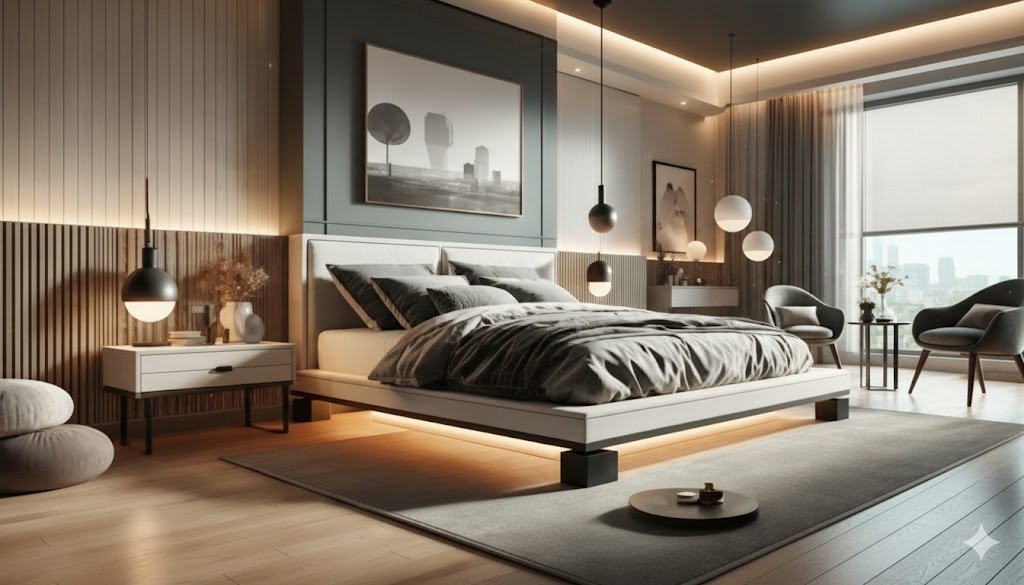
When Space Becomes Your Most Valuable Asset
Let me paint you a picture. My first apartment after college was 425 square feet. Total. Bedroom, living room, kitchen, and bathroom all squeezed into a space smaller than most people’s garages. Every piece of furniture had to earn its keep. If something took up space without pulling its weight, it had to go.
That’s when I learned the true value of smart furniture design. Not just stuff that looks good in a showroom. Furniture that works in real life. In real spaces where every inch matters. And modern bedroom furniture, particularly pieces designed with minimalism in mind, changed how I thought about living in small spaces.
The emphasis on minimalism in contemporary furniture design isn’t some arbitrary aesthetic choice. It’s a response to how we actually live now. Cities keep growing denser. Housing costs keep climbing. Square footage becomes more expensive. We need furniture that gives us more by using less.
I remember visiting my friend Marcus in San Francisco. He pays an ungodly amount for a studio apartment the size of a shoebox. But his bedroom area, carved out with a room divider, feels spacious. How? His platform bed takes up maybe two thirds the space of a traditional bed with a box spring. That extra space lets him fit a small desk and chair. Suddenly he has a bedroom and a home office in an area that would normally barely accommodate just sleeping.
This is where modern bedroom furniture really shines. Designers have figured out how to strip away everything that doesn’t serve a purpose. A traditional bed frame includes so many components that exist just to support other components. You need a box spring to support the mattress. You need a foundation to support the box spring. You need a frame to support all of it. Each layer adds height. Adds bulk. Adds space consumption.
Platform beds say no to this entire system. The frame supports the mattress directly. No intermediaries needed. The result? A bed that sits lower to the ground, takes up less visual and physical space, and still provides everything you need for a good night’s sleep. It’s elegant problem solving at its finest.
My sister lives in a renovated loft in Chicago. High ceilings, open concept, beautiful space. But even with all that room, she chose modern minimalist furniture. Why? She realized that just because you have space doesn’t mean you should fill it. Empty space has value. It lets the eye rest. It creates flow. It makes a room feel calm instead of chaotic.
The designs of modern bedroom furniture understand this instinctively. They create negative space intentionally. Where older furniture styles tried to fill every gap, contemporary designs embrace openness. A platform bed with a simple frame and no footboard lets visual space flow around and through it. The bedroom feels larger not because the bed is smaller, but because the design doesn’t block sightlines or create visual clutter.
Here’s something most people don’t consider until they’re moving furniture up three flights of stairs. Weight and size matter. A lot. Traditional beds with their multiple components can be a nightmare to move. I’ve helped enough friends relocate to know this firsthand. Box springs don’t fit around corners. Bed frames disassemble into a million pieces with tiny screws that inevitably get lost. It’s a whole production.
Modern platform beds tend to be more manageable. Simpler construction means fewer components. Fewer components means easier assembly and disassembly. When you’re living in a place where space is a premium commodity, you need furniture that adapts to your life. That moves when you move. That doesn’t require a team of professional movers and a geometry degree to navigate through doorways.
I watched this play out with my cousin who moves every couple years for work. She switched to all modern, minimalist furniture after one particularly nightmarish move involving a bed frame that required four people and a lot of creative problem solving. Now? She can break down her platform bed in about twenty minutes. Move it herself. Set it up again in her new place without calling in favors from friends. That’s the practical side of good design that showrooms never emphasize.
The space saving goes beyond just physical dimensions too. Mental space matters. A cluttered bedroom creates mental clutter. When you’re surrounded by bulky furniture that dominates the room, your brain has to process all that visual information. It’s exhausting in ways you don’t even notice until you experience the alternative.
My therapist’s office has this amazing platform bed that she uses as a couch for sessions. Simple wooden frame, clean lines, neutral cushions. The room feels calm. Peaceful. I asked her once why she chose that particular piece, and she said something that stuck with me. “People need space to think. If the furniture is too loud, there’s no room for thoughts.”
That hit different. Your bedroom should be that kind of space. Where the furniture doesn’t compete for your attention. Where you can just exist without your environment demanding anything from you. Modern bedroom furniture creates this possibility through intentional design choices that prioritize space, both physical and psychological.
The translation to a boon for homeowners living where space is expensive isn’t just marketing speak. It’s real. When you can fit a comfortable bed, storage, and maybe a reading chair in a room where previously just the bed felt cramped, that changes your quality of life. You’re not just saving space. You’re gaining functionality. Gaining options. Gaining the freedom to use your bedroom the way you want to use it.
I think about my friend Yuki who turned her bedroom into a multipurpose space. Sleeping area, yoga studio, and reading nook all in one room that’s maybe 120 square feet. She could only do this with furniture that doesn’t waste space. Her low profile platform bed hugs the floor, leaving plenty of clearance for morning sun salutations. Her floating shelves store books without protruding into the room. Every piece serves multiple purposes or takes up minimal space.
This is the reality for so many people now. We can’t all live in sprawling homes with dedicated rooms for every activity. We need our spaces to work harder. To be more flexible. To adapt to our changing needs throughout the day and throughout our lives. Modern bedroom furniture, designed with space consciousness built into its DNA, makes this possible.
The furniture itself consumes less space than traditional designs. This isn’t a magic trick. It’s thoughtful engineering and design. Removing unnecessary components. Optimizing proportions. Using materials efficiently. The result is furniture that does its job without demanding more room than necessary. And in a world where space increasingly comes at a premium, that’s not just nice to have. It’s a game changer for how we can live.
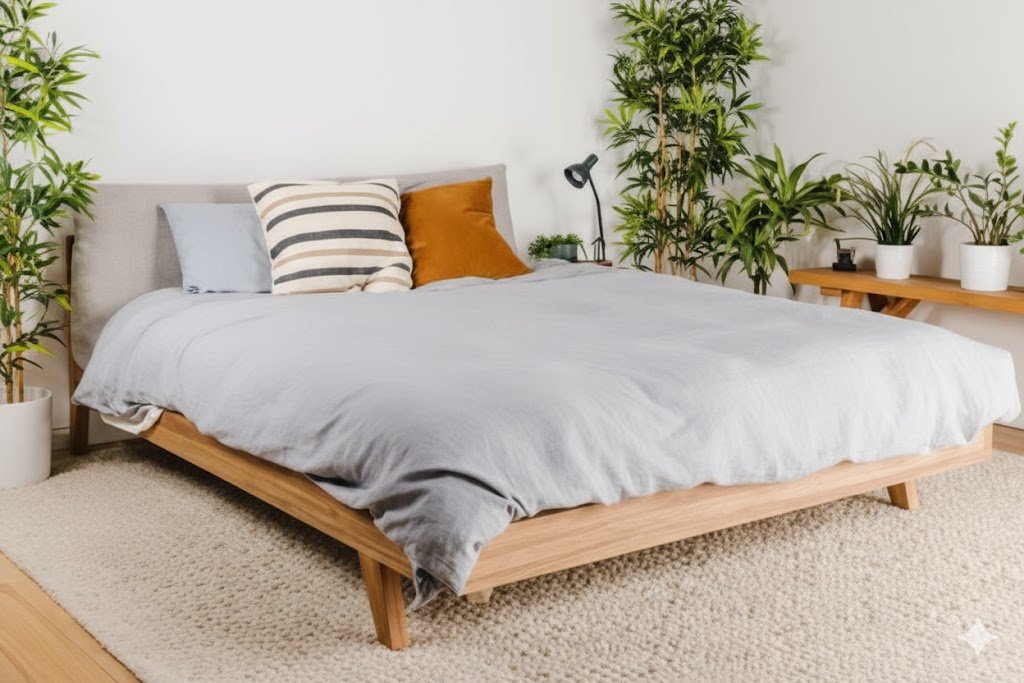
The Support System Revolution You Can Actually Feel
I need to tell you about the worst night’s sleep I ever had. My girlfriend and I were visiting her parents, and they put us in the guest room. The bed looked fine. Decent mattress. Normal looking frame. But about two hours in, I woke up with my back screaming. The culprit? Those thin metal cross supports that traditional bed frames use. You know the ones. They flex and bend under weight. They create pressure points. They turn what should be a comfortable mattress into a medieval torture device.
Most beds rely on bulky box springs for mattress support. And box springs, in theory, make sense. Springs absorb impact. They distribute weight. They’ve been around forever so they must work, right? Except here’s what nobody tells you. Box springs only work as well as what’s supporting them. And most traditional bed frames use inadequate support structures that undermine the entire system.
I learned this the hard way over years of progressively worse sleep. You don’t notice it at first. The gradual decline in sleep quality. The occasional morning backache. But it builds up. Eventually you wake up feeling more tired than when you went to bed. You blame stress. Work. Age. Everything except the obvious culprit literally beneath you.
Contemporary beds with platform designs take a completely different approach. They eliminate the middleman. No box springs required. The frame itself provides support through slat systems or solid panel foundations. And here’s the beautiful part. These systems actually work better than what they replace.
When my brother upgraded to a platform bed, I was skeptical. He raved about the support. The comfort. I figured he was just excited about his new purchase. You know how people get with new stuff. Everything’s amazing for the first week. Then reality sets in. But I crashed at his place a few months later and experienced it myself. The difference was undeniable.
Slat supports distribute weight evenly across the entire mattress. No sagging in the middle. No pressure points where metal bars dig into your back through layers of foam and springs. Just consistent, reliable support from edge to edge. It’s the kind of thing you don’t appreciate until you’ve spent years dealing with inferior alternatives.
Solid panel foundations take this even further. Imagine a completely flat, solid surface supporting your mattress. The mattress does what it’s designed to do without fighting against an inadequate foundation. It’s like the difference between building a house on bedrock versus building on sand. Sure, both can work. But one is clearly superior.
The result is that you can place a mattress directly on the frame without consequence or loss of comfort. This seems simple. Maybe even obvious. But it represents a fundamental shift in bed design philosophy. Why add components if they don’t improve the outcome? Why complicate a system if simplification works better?
I think about my neighbor’s guest bedroom. Beautiful sleigh bed. Gorgeous carved wood. Probably cost a fortune. But sleeping there feels like camping on uneven ground. The box spring has started to sag in places. The frame’s support bars have bent over time. The mattress, which is actually pretty nice, can’t overcome the foundation’s failures. All that money spent on aesthetics, and the functional part doesn’t work.
Compare that to a quality platform bed. The support structure is built into the design from the ground up. Engineers calculate weight distribution. They test different slat spacing. They optimize material thickness. It’s not an afterthought or a cost cutting measure. It’s the core of how the bed functions.
My friend Kate is a physical therapist. She sees patients all day dealing with back problems. Sleep quality comes up constantly in her consultations. She’s started recommending platform beds to people struggling with morning pain. Not as a cure all, but as one piece of the puzzle. Proper spinal support during sleep matters more than most people realize.
The superior support isn’t just about comfort either. It’s about mattress longevity. When a mattress sits on inadequate support, it wears unevenly. That divot in the middle of your bed? That’s not just the mattress failing. That’s the support system allowing the mattress to fail. Platform beds prevent this by maintaining consistent support across the entire sleeping surface.
I replaced my old bed frame two years ago. My mattress was six years old at the time. I figured I’d need a new one soon. But switching to a platform bed with proper slat support gave that mattress new life. It’s been two more years and it still feels great. Same mattress. Different support system. Better sleep. It’s not magic. It’s just engineering done right.
The way platform beds are designed makes this level of support possible. Traditional frames treat support as a separate problem to solve after designing the aesthetic parts. Platform beds integrate support into the core design. The frame is the support system. There’s no separation. No weak links in the chain. Just a cohesive unit designed to do one job really well.
Think about sitting on a bench. A solid wooden bench supports you completely. Now think about sitting on a bench made of thin metal bars with gaps between them. Uncomfortable, right? That’s essentially the difference between platform bed support and traditional bed frame support. One is purpose built for the task. The other is doing the minimum to get by.
My uncle swears his platform bed cured his insomnia. I’m not sure it works that way, but I understand what he means. When you’re not fighting your bed all night, when your body isn’t subconsciously trying to find a comfortable position on inadequate support, you sleep deeper. Wake less. Rest better. The bed stops being a problem and becomes what it should be. A non issue. A given.
The comfort you get from unparalleled support isn’t a luxury feature. It’s the baseline. It’s what every bed should provide but most don’t. Platform beds deliver this through thoughtful design, quality materials, and an understanding that the foundation matters just as much as what sits on top of it.
I’ve lost count of how many friends I’ve convinced to try platform beds. Almost all of them report better sleep within the first week. Some notice it immediately. That first night on proper support after years of inadequate foundations. It’s like finally putting on glasses after years of squinting. You didn’t realize how bad things were until you experienced the alternative.
The beauty of a good support system is that you forget it exists. You stop thinking about your bed frame. Stop adjusting your position constantly. Stop waking up with that nagging discomfort you’ve come to accept as normal. You just sleep. And when you wake up, you feel rested. That’s what proper support delivers. That’s what platform beds make possible.
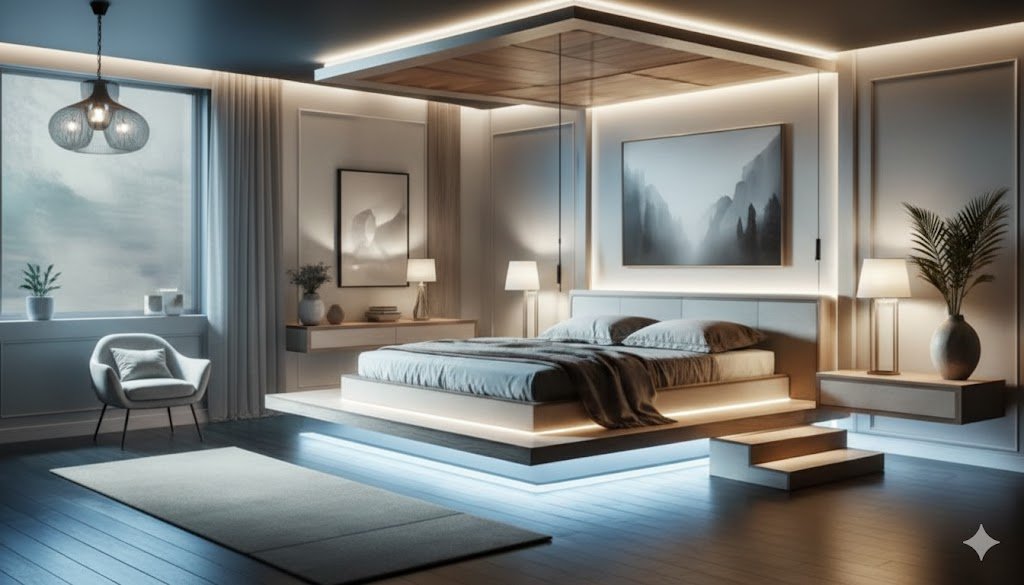
Why Platform Beds Are Actually the Smarter Investment
Let me start with a confession. I used to think spending money on a nice bed frame was wasteful. Why pay more when the cheap option does the same basic job? Then I actually did the math. Not just the upfront costs, but the total cost over time. And wow, was I wrong.
Due to the way platform beds are designed, you save money while getting better comfort. That sounds like marketing nonsense, right? One of those “too good to be true” claims furniture salespeople make. Except in this case, the numbers back it up. Let me break down why.
Traditional bed frames are costly affairs. You buy the frame itself. Then you buy a box spring, which often costs as much as the frame. Then you need a foundation or support system. Maybe a headboard sold separately. Before you know it, you’re $800 deep and you haven’t even bought a mattress yet. Each component carries its own price tag. Each one is a separate purchase decision. A separate thing to research, compare, and haul home.
I watched my roommate go through this last year. She started with a $200 budget for a bed frame. Seemed reasonable. But then she found out the frame she liked required a box spring. Add $150. The box spring needed a foundation. Add $100. She wanted a headboard. Add another $200. By the end, she’d spent $650 and still didn’t love the final result. All those separate pieces never quite felt cohesive.
A platform bed frame makes use of a foundation that removes the need for these individual components. You buy one piece. It arrives. You set it up. You put your mattress on it. Done. No hunting for compatible box springs. No wondering if you need additional support. No piecing together a Frankenstein bed from four different manufacturers.
The investment piece really hit home when I helped my parents downsize. They’d been sleeping on the same traditional bed frame for thirty years. Sounds great, right? Quality furniture that lasts? Except they’d replaced the box spring three times. Bought new support rails twice. The headboard attachment broke and got fixed with wood glue and hope. When you added up all those repairs and replacements over three decades, they’d spent more maintaining that bed than a quality platform bed would have cost.
Platform designs can be a great investment not just for your wallet, but for your sanity. One purchase. One decision. One delivery. One setup. In our world of decision fatigue and endless options, that simplicity has real value. You’re not just buying a bed. You’re buying peace of mind.
My friend David is an accountant. He thinks about value differently than most people. When he was shopping for a bed, he created a spreadsheet. Initial cost. Estimated lifespan. Replacement parts needed. Maintenance costs. Resale value. The whole nine yards. His conclusion? Platform beds win on almost every metric. Lower upfront cost when you factor in not needing box springs. Longer lifespan due to simpler construction with fewer failure points. Minimal maintenance. Better resale value because they’re trendy and well made.
Here’s something else nobody talks about. Moving costs. Traditional beds are a pain to move. Multiple components mean multiple trips. Higher risk of damage. More time spent disassembling and reassembling. Platform beds, being more integrated units, typically move easier. You might not think about this now, but you will the next time you relocate. Trust me.
The savings extend to mattresses too. When your bed provides proper support, your mattress lasts longer. I mentioned this earlier, but it bears repeating because it’s such a significant factor. A good mattress costs $500 to $2000 or more. If a platform bed extends your mattress life by even two years, that’s substantial savings. You’re not replacing a sagging, unsupported mattress every five years. You’re getting eight or ten years out of it.
I think about my friend Christina who bought a cheap bed frame in her twenties. It lasted three years before the support bars bent and the frame started squeaking. She replaced it with another cheap frame. Same story. Three years later, she needed another one. By her fourth replacement in twelve years, she’d spent more than a quality platform bed costs. And she’d spent dozens of hours shopping, assembling, and disposing of failed furniture.
The cost savings isn’t just financial either. Time has value. Energy has value. The mental load of dealing with furniture that doesn’t work right has value. When you invest in a platform bed that solves these problems upfront, you’re buying back time and peace of mind you’d otherwise spend on furniture drama.
Quality platform beds also hold their value better. Check out any secondhand furniture marketplace. Nice platform beds sell quickly at good prices. People recognize quality when they see it. Meanwhile, that cheap traditional frame someone’s trying to sell? It sits there for months before they finally give it away for free just to get it out of their garage.
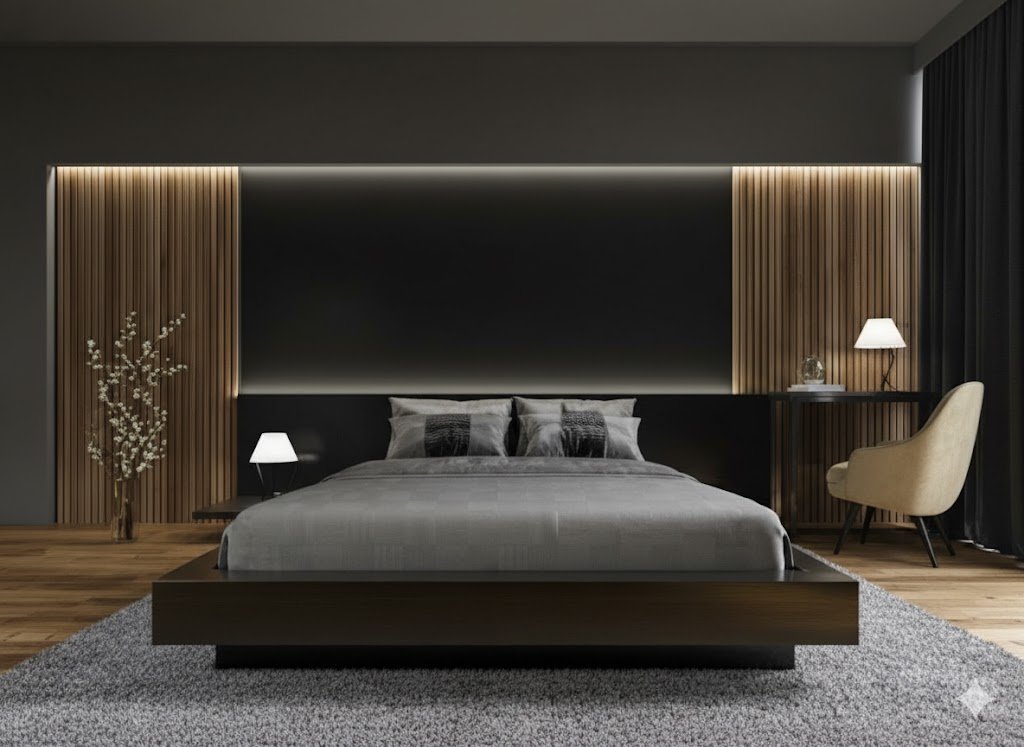
My sister sold her platform bed when she moved across country. Five years old. Still in great shape. She got 60% of what she paid for it. Try getting that return on a particle board bed frame held together with those cam lock things that strip if you look at them wrong. You’ll be lucky if someone takes it for free.
The durability factor can’t be overstated. Platform beds typically use solid wood or quality engineered wood for the support structure. They’re built to last because they have to be. The entire design depends on that foundation being rock solid. Traditional frames can skimp on the support structure because the box spring is supposedly doing the heavy lifting. Spoiler alert: It’s not.
I’ve seen platform beds that are twenty years old still going strong. Same bed. Same support. Same comfort. Meanwhile, I’ve seen traditional bed frames fall apart in three years. The difference comes down to design philosophy. Are you building something meant to last or something meant to barely survive until the return window closes?
When you factor in all these elements, the total cost of ownership for a platform bed ends up significantly lower than a traditional bed frame setup. Lower upfront costs when you skip the box spring. Lower maintenance costs. Lower replacement costs for both the bed and the mattress. Lower moving costs. Higher resale value. It’s not even close.
But here’s the thing. The financial argument, while compelling, isn’t even the best reason to choose a platform bed. The best reason is that you get a better product that works better and makes your life easier. The money stuff is just a bonus. You’d choose the platform bed even if it cost the same as a traditional setup, just based on the superior functionality and design.
I remember when I bought my current platform bed. I’d done all the research. Knew exactly what I wanted. My dad asked why I was spending so much on a bed frame. I showed him the math. The comfort benefits. The space savings. The design appeal. By the end of our conversation, he was pricing out platform beds for his own bedroom.
That’s the thing about good investments. Once you understand the value, the price stops being an obstacle and starts being an opportunity. You’re not spending money. You’re investing in better sleep, better design, and a bedroom that works the way you want it to work. And when you frame it that way, platform beds aren’t expensive. They’re one of the smartest furniture purchases you can make.

Leave a Comment