
The Evolution of Bathroom Spaces and Contemporary Vanity Design
I still remember my grandmother’s bathroom from the 1980s. It had this chunky beige vanity that looked like it could survive a nuclear blast but couldn’t survive good taste. The thing was purely functional, nothing more. Fast forward to today, and we’re living in a completely different world when it comes to bathroom design.
We’ve watched bathrooms transform from strictly utilitarian rooms into personal sanctuaries. It’s wild how much has changed in just a few decades. People used to rush through their morning routines in cramped, boring spaces. Now? We’re designing bathrooms that rival living rooms in terms of comfort and style. This shift didn’t happen overnight, and it tells us something interesting about how we view our homes and ourselves.
Think about it. When was the last time you walked into a truly modern bathroom and didn’t feel at least a little impressed? There’s something about a well-designed bath space that just hits different. Maybe it’s the clean lines, or perhaps it’s the way contemporary fixtures catch the light. Whatever it is, we’ve collectively decided that bathrooms deserve the same design attention we give to any other room in our homes.
The vanity sits at the heart of this transformation. We’re not talking about those sad little cabinets your parents installed in 1975. Modern vanities have become statement pieces. They’re furniture, not just fixtures. This distinction matters more than you might think. When you treat a vanity like furniture, you open up a whole new world of design possibilities.
Here’s what I find fascinating. The push toward contemporary bathroom design isn’t just about keeping up with the Joneses. It’s about creating spaces that actually serve our lives better. We spend a decent chunk of our day in the bathroom, whether we’re getting ready for work, unwinding after a long day, or just stealing a few moments of peace away from the kids. Shouldn’t that space feel good?
Homeowners get this now. They’re investing in their bathrooms in ways previous generations never considered. We’re seeing people gut perfectly functional bathrooms just to update the look and feel. That might seem excessive, but when you consider how much a well-designed space can improve your daily life, it starts to make sense.
The vanity serves as the anchor point for the entire bathroom aesthetic. Pick the right one, and everything else falls into place. Pick the wrong one, and you’ll be fighting an uphill battle trying to make the rest of the room work. I’ve seen people spend thousands on tile and fixtures, only to cheap out on the vanity. Big mistake. The vanity is where your eye naturally goes when you walk into a bathroom.
Modern design philosophy emphasizes both form and function. We want things that look incredible but also work incredibly well. This dual requirement has pushed manufacturers to get creative. They can’t just make pretty cabinets anymore. Those cabinets need to hold all our stuff, resist moisture, and look good doing it. The challenge has led to some genuinely innovative designs.
What strikes me most about contemporary vanities is how they’ve borrowed from other furniture traditions. You’ll see vanities that look like they could fit in a bedroom or dining room. This crossover makes bathrooms feel more integrated with the rest of the home. We’re moving away from that institutional bathroom look and toward something warmer and more personal.
The materials have evolved too. We’re not limited to particle board with a wood veneer anymore. Modern vanities come in materials that would’ve seemed bizarre just twenty years ago. Glass, metal, concrete, natural stone… the options keep expanding. Each material brings its own character to the space. A glass vanity creates a light, airy feeling. A concrete vanity makes a bold, industrial statement.
Size matters in modern bathroom design. Vanities have gotten bigger, bolder, and more ambitious. We’re seeing double vanities in master bathrooms become standard rather than luxury items. Some vanities now stretch six, seven, eight feet across. They dominate the room in the best possible way. This supersizing reflects our changing relationship with bathroom spaces. We want them to feel substantial and important.
The philosophy driving contemporary vanity design is simple. Your bathroom should be a place you want to spend time, not a place you rush through out of necessity. When you invest in a quality vanity, you’re really investing in your daily experience. You’re choosing to start and end your day in a space that feels intentional and well-designed. That’s not frivolous. That’s smart living.
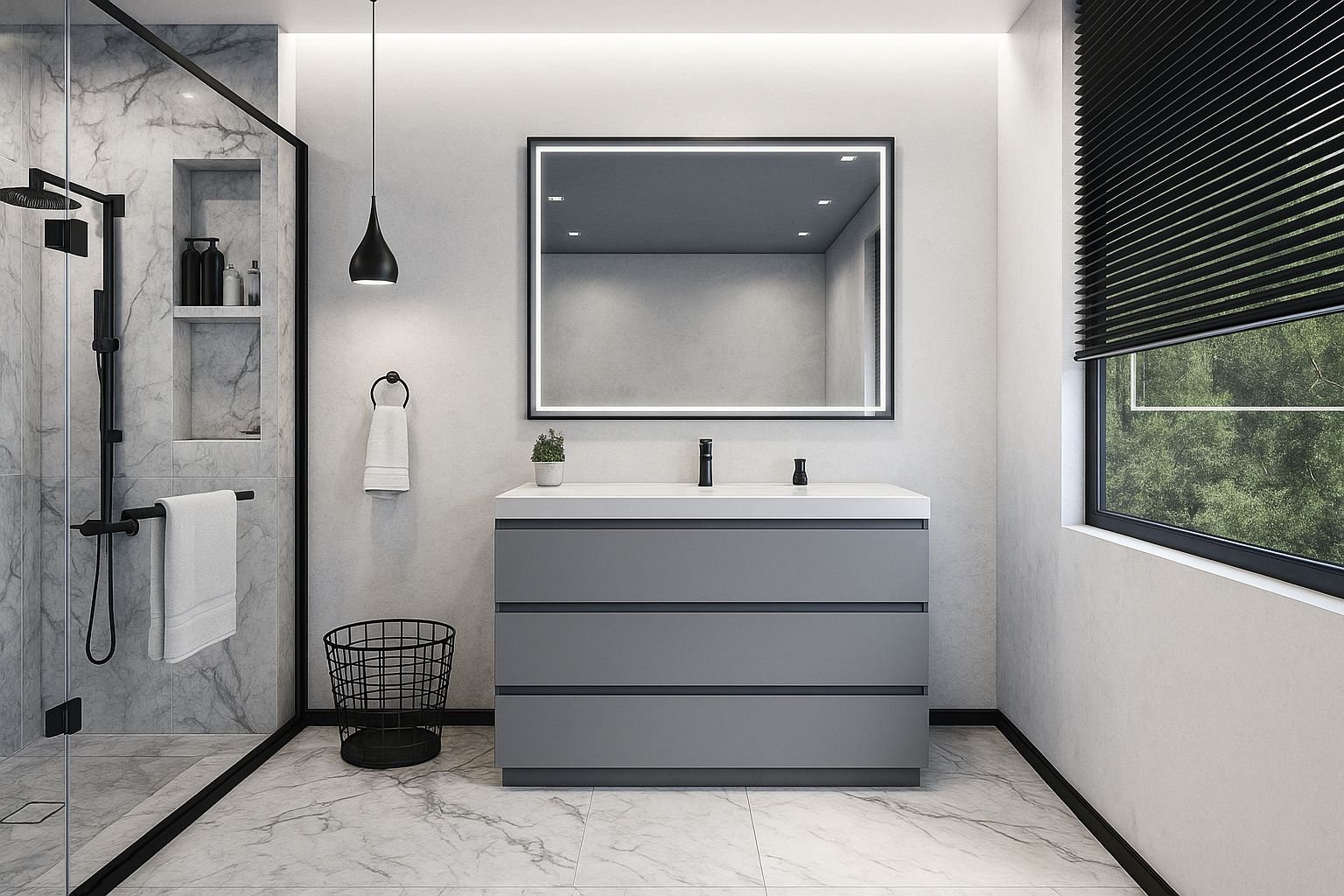
Innovative Materials Reshaping Modern Vanity Construction
Wood dominated vanity construction for decades. Makes sense, right? Wood was cheap, easy to work with, and familiar to manufacturers. But wood has some serious drawbacks in wet environments. It warps, it swells, it can rot if you’re not careful. We accepted these limitations because we didn’t know better. Now we do.
The material revolution in vanity design has been nothing short of remarkable. Manufacturers started asking a simple question. What if we used materials that actually like moisture? What if we stopped fighting against the bathroom environment and worked with it instead? This shift in thinking opened up possibilities nobody had considered before.
Metal vanities have carved out a serious niche in modern design. I’m talking about stainless steel, brushed nickel, even copper in some high-end installations. These materials bring an edge that wood never could. They’re sleek, modern, and inherently resistant to water damage. You can splash them all day long and they won’t care. Try that with a traditional wooden vanity and watch what happens.
The aesthetic of metal vanities appeals to people who want something different. They make a statement. Walk into a bathroom with a brushed steel vanity and you immediately know this isn’t your typical suburban powder room. Metal reads as sophisticated and urban. It has an industrial quality that works beautifully in modern and contemporary spaces.
But metal isn’t just about looks. The practical benefits are huge. Metal doesn’t harbor bacteria the way porous materials can. You can clean it with serious disinfectants without worrying about damage. For people with allergies or sensitivities, this matters. The bathroom can be a breeding ground for microorganisms if you’re not careful. Non-porous materials help keep things hygienic.
Glass vanities blew my mind when I first saw them. I thought, there’s no way that’s practical. Turns out I was completely wrong. Tempered glass makes for surprisingly durable vanities. The glass they use isn’t like your drinking glasses. It’s thick, treated, and tough. You’d have a hard time breaking one even if you tried.
Glass brings light into the bathroom in ways other materials can’t. A glass vanity top seems to float. It creates visual space even in smaller bathrooms. This trick works wonders if you’re dealing with a cramped powder room. The transparency keeps things from feeling cluttered. You get all the function of a traditional vanity without the visual weight.
Maintenance on glass vanities is easier than you’d think. Yeah, you’ll see water spots if you’re not wiping things down. But a quick squeegee after use keeps them looking pristine. Compare that to wood veneer that can delaminate over time, or laminate that can chip and peel. Glass just needs a wipe. That’s it. The simplicity appeals to people who want beautiful things but don’t want to spend their weekends on maintenance.
Natural stone has entered the vanity market in a big way. We’re seeing marble, granite, quartz, and even more exotic stones being used. Stone vanities cost more upfront, no question. But they last forever and they look incredible. A marble vanity top catches light in ways synthetic materials never will. The veining and natural patterns mean every piece is unique. You’ll never walk into someone else’s house and see the exact same vanity.
Stone shares metal’s water resistance. Sealed properly, stone vanities shrug off moisture. They don’t swell, warp, or deteriorate. A good stone vanity will outlast your house. That longevity justifies the initial investment. You’re not buying something you’ll replace in ten years. You’re buying something that might outlive you.
The weight of stone is both a feature and a consideration. Stone vanities are heavy. Really heavy. You need proper support and installation. But that weight also conveys permanence and quality. A stone vanity isn’t going anywhere. It sits in your bathroom like it’s been there forever and will remain there forever. There’s something reassuring about that solidity.
Engineered materials have gotten remarkably good. Quartz countertops, for instance, combine natural stone with resins to create something that’s nearly indestructible. These engineered products offer the look of natural stone with enhanced performance characteristics. They’re less porous than natural materials, which means even better moisture and bacteria resistance. The technology keeps improving too. What’s available today blows away what we had just five years ago.
The shift away from wood hasn’t been total. Plenty of people still love wood vanities. But even in that space, we’re seeing changes. Manufacturers now use better sealants and treatments. They’re combining wood with other materials to enhance performance. A wood frame with a stone top, for instance, gives you the warmth of wood where it makes sense and the durability of stone where you need it most.
What excites me about these material innovations is how they’ve democratized good design. You used to need a massive budget to get a truly water-resistant, durable vanity. Now you have options at multiple price points. A stainless steel vanity from a mid-range manufacturer can look and perform just as well as high-end options. The materials themselves have become more affordable as manufacturing processes improve.
The environmental angle matters too. Many of these new materials are more sustainable than traditional wood vanities. Metal and glass are recyclable. Stone is natural. Engineered materials often incorporate recycled content. If you care about your environmental footprint, modern vanity materials give you choices that align with those values. You don’t have to sacrifice style or performance to be environmentally conscious.
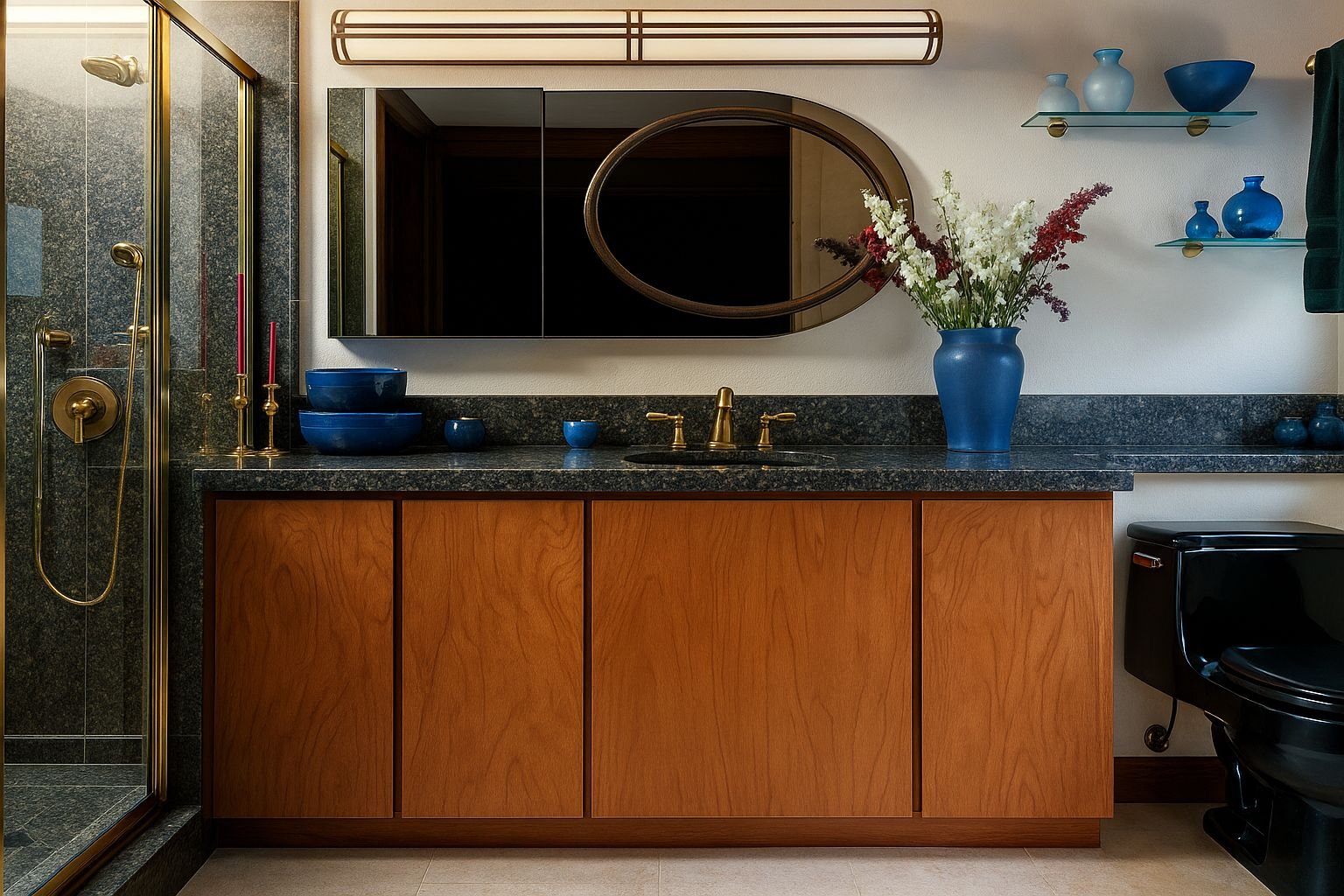
Color Theory and Strategic Design Choices for Bath Vanities
Color transforms spaces in ways nothing else can. I’ve watched people completely change the feel of their bathrooms just by swapping out a brown vanity for a navy one. The room’s layout didn’t change. The fixtures stayed the same. But the whole space felt different. That’s the power of color, and we’re not using it nearly as much as we should.
We’ve been timid with bathroom color for too long. White, beige, gray… these neutrals dominate bathroom design. They’re safe. They’re easy to match. They won’t offend anyone. But you know what? They’re also boring. Your bathroom is in your home. You’re the one who has to look at it every single day. Why play it safe when you could have something that actually makes you smile?
The vanity is the perfect place to inject color into your bathroom. It’s a single element, so you’re not committing to painting all the walls or retiling. If you decide you hate the color in a few years, you can swap out the vanity. This flexibility should free you up to take chances. Yet most people still default to wood tones or white. I don’t get it.
Let me tell you about complementary colors. These are colors that sit opposite each other on the color wheel. Red and green, blue and orange, yellow and purple. When you put complementary colors next to each other, they both look more vibrant. The contrast creates energy. A bright yellow vanity against navy walls? That’s striking. It wakes up the space. You’re not going to zone out in that bathroom.
Now, complementary schemes aren’t for everyone. They’re bold. They demand attention. If you want a calm, spa-like bathroom, you might want to look at analogous colors instead. These are colors that sit next to each other on the wheel. Blues and greens, oranges and reds, purples and blues. Analogous schemes feel harmonious. They’re easier on the eye. A teal vanity with sage green walls creates a soothing, nature-inspired feeling.
Monochromatic schemes work too. This is where you stick with one color but vary the shade and saturation. A pale blue vanity with medium blue walls and dark blue accents. The repetition of a single hue creates cohesion. Everything feels intentional and pulled together. Monochromatic bathrooms read as sophisticated. They show restraint, which is its own kind of luxury.
The psychological effects of color are real. Blue calms us down. Red energizes us. Yellow lifts our mood. Green refreshes us. Think about how you want to feel in your bathroom. Do you need energy in the morning? Maybe a vanity in a warm, energizing color makes sense. Do you want to relax during evening baths? Cool, soothing colors might serve you better. Match your color choices to your needs.
Dark vanities have made a huge comeback. We went through a phase where everything had to be light and bright. Now people are embracing depth and drama. A charcoal or black vanity grounds a space. It adds weight and sophistication. Pair it with light walls and you get beautiful contrast. The dark vanity becomes a focal point without overwhelming the room. This approach works especially well in larger bathrooms where you have space to balance the visual weight.
White vanities never really go out of style, but the way we’re using them has changed. We’re pairing them with unexpected colors elsewhere. A white vanity with emerald green walls. A white vanity with terracotta tile. The white becomes a neutral canvas that lets other colors shine. This flexibility makes white vanities a smart choice if you like to change your decor often. You can repaint the walls or swap out accessories without replacing the vanity.
Wood tones count as colors too. We often forget this. A honey oak vanity creates a warm, traditional feeling. A dark walnut vanity feels rich and formal. Light blonde wood brings Scandinavian simplicity. Weathered or reclaimed wood adds rustic charm. The grain patterns and natural variations in wood give you texture and interest that solid colors can’t match. You get movement and life.
Colored glass vanities are pushing boundaries. I’ve seen vanities with blue glass tops, amber glass sides, even red glass accents. These pieces are art as much as they are furniture. Colored glass plays with light in beautiful ways. Sunlight or artificial light passes through and creates glowing effects. The bathroom takes on an almost ethereal quality. You need confidence to pull off a colored glass vanity, but the results can be stunning.
The finish matters as much as the color itself. Matte finishes feel modern and understated. They hide fingerprints and water spots better than glossy finishes. Glossy finishes reflect light and create a sense of spaciousness. They make colors appear more vibrant and saturated. Satin finishes split the difference, giving you a subtle sheen without the high maintenance of full gloss. Think about how much time you want to spend wiping down your vanity when choosing a finish.
Two-tone vanities have gained popularity. The cabinet might be one color while the top is another. Or you might have contrasting colors on the drawers and doors versus the frame. This approach adds visual interest without being overwhelming. A white cabinet with a black countertop is classic. A gray cabinet with a wood top brings warmth and contrast. Two-tone designs let you incorporate multiple colors you love without committing fully to either one.
Metallic finishes count as colors in their own right. A vanity with brass hardware and accents reads as warm and glamorous. Chrome or polished nickel feels clean and modern. Matte black metal has an industrial edge. Oil-rubbed bronze brings old-world charm. These metallic touches can tie your vanity into other fixtures in the bathroom. Matching your faucet finish to your vanity hardware creates cohesion.
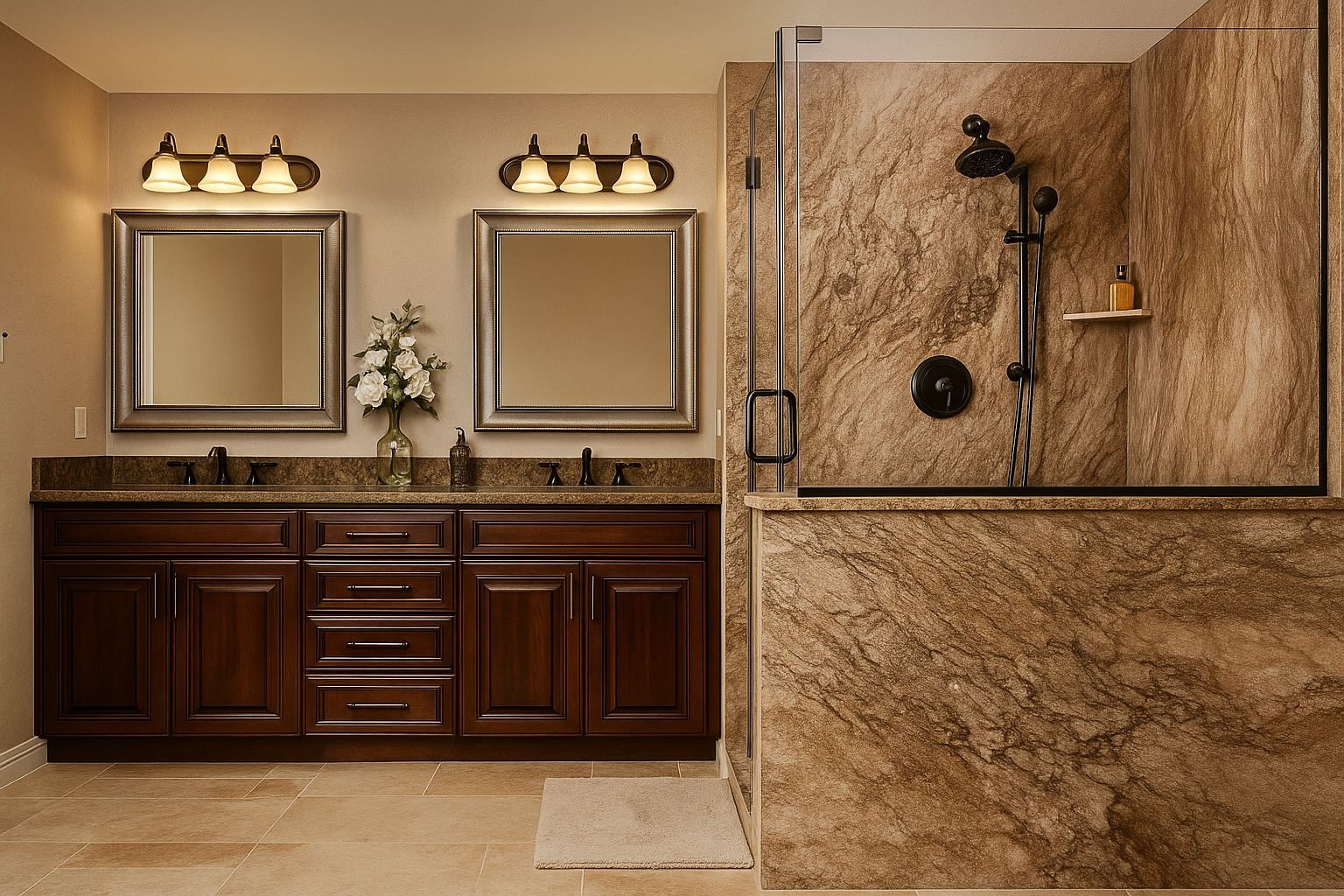
Maximizing Space with Oversized Contemporary Vanity Designs
Bathrooms have been growing for years now. The average master bathroom today is nearly twice the size it was in the 1980s. We’re building bigger houses with bigger bathrooms. This expansion has changed what’s possible with vanity design. You can’t just scale up a small vanity and call it a day. Larger spaces need pieces that can hold their own.
Freestanding vanities have changed the game. These pieces sit away from the wall like regular furniture. They have finished backs and sides. You can see around and under them. This visibility makes bathrooms feel less cramped and more open. A freestanding vanity doesn’t close off the space the way a built-in cabinet does. You maintain sightlines and create the illusion of even more space.
The shift toward furniture-style vanities makes sense when you think about it. We spend money and time making our living rooms and bedrooms look good. Why should bathrooms be any different? A beautiful freestanding vanity commands attention the same way a nice dining table or dresser does. It becomes a design element, not just a utilitarian necessity. This elevation of the vanity’s status has pushed manufacturers to create more ambitious designs.
Double vanities have moved from luxury to standard in many new homes. If you share a bathroom with a partner, you know why. Fighting over sink space in the morning is nobody’s idea of a good time. Double vanities solve this problem definitively. Each person gets their own zone. You can have your toothbrush and face wash on your side without them migrating to the other side. Small thing, but it reduces daily friction.
The dimensions of modern double vanities are impressive. We’re talking six, seven, eight feet of continuous cabinetry. These pieces dominate the bathroom in the best possible way. They provide massive amounts of storage, which anybody with a bathroom knows is never a bad thing. All those products, towels, and random items you accumulate need to go somewhere. A large vanity gives you the space to keep things organized and hidden.
Customization has become more accessible. You used to need serious money to get a vanity built specifically for your space. Now, many manufacturers offer semi-custom options. You pick the configuration, size, and finish you want. They build it to your specifications. The price is higher than off-the-shelf options but not astronomical. This middle ground has opened up possibilities for people who want something special without breaking the bank.
Large vanities let you incorporate more features. We’re seeing vanities with built-in makeup stations, complete with extra lighting and mirrors. Some have outlets built right into the drawers for hair dryers and electric razors. Others include pull-out hampers, tilt-out trays for sponges, or divided drawer organizers. When you have the space, you can add these conveniences without sacrificing storage elsewhere.
The integrated sink design has become popular with larger vanities. Instead of a separate sink that sits on top of the counter, the sink is molded as part of the countertop. This seamless integration looks clean and modern. It’s easier to clean because there’s no gap where gunk can accumulate. The continuous surface makes the vanity feel more substantial. You get one unified piece instead of separate components.
Vertical storage within vanities has improved dramatically. Drawers have replaced cabinet doors in many designs. Drawers give you better access to what’s stored in back. You don’t have to get on your knees and dig around in a dark cabinet. Pull out a drawer and everything is visible. This accessibility makes large vanities more functional. All that storage space is actually usable, not just theoretical.
The height of vanities has increased too. The old standard was around 30 inches. Now we’re seeing 36-inch heights become common. This matches standard kitchen counter height. The change makes sense when you think about it. People are taller than they were 50 years ago. Bending over a 30-inch vanity all the time is hard on your back. The extra height puts the sink at a more comfortable level for most adults.
Floating vanities take up less visual space while still providing ample storage. These pieces mount to the wall and appear to hover above the floor. You can see underneath them, which makes the bathroom feel more spacious. They’re great for smaller bathrooms where a large floor-mounted vanity might feel overwhelming. But they also work in larger spaces where you want to maintain an airy, open feeling. The floating design feels contemporary and light.
Open shelving has been incorporated into some larger vanity designs. You might have closed cabinets on bottom with open shelves on top. Or open cubbies on the sides with closed storage in the middle. This mix of open and closed storage lets you display nice items like rolled towels or decorative containers while hiding less attractive necessities. It breaks up the solid mass of a large vanity and adds visual interest.
The materials used in large vanities need to be solid. You can’t get away with cheap construction when you’re building an eight-foot vanity. The weight and stress require quality materials and proper engineering. This requirement has pushed up the average quality of large vanities. You’re getting better construction, sturdier hardware, and more durable finishes. These pieces are built to last.
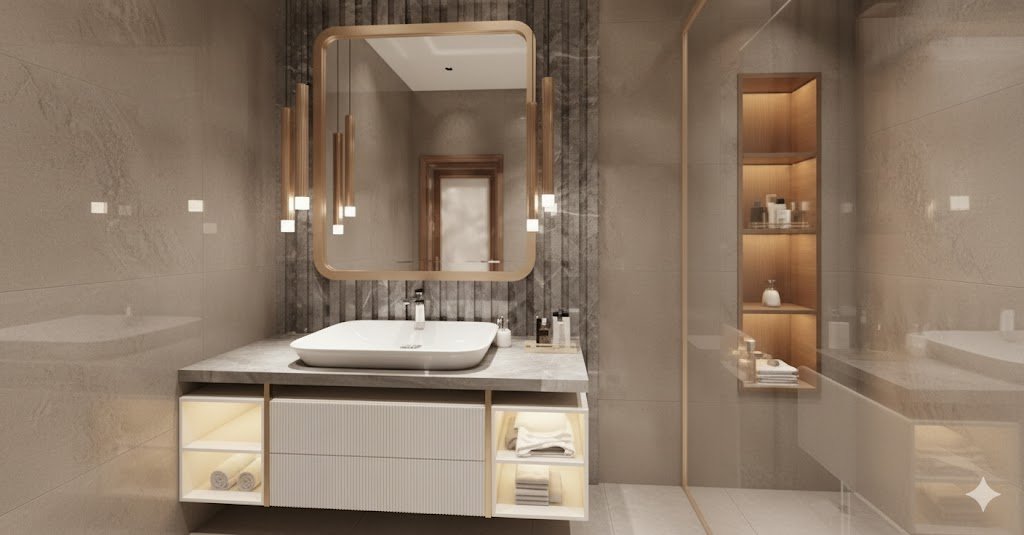
Blending Vintage Elements with Modern Bathroom Aesthetics
There’s something magnetic about mixing old and new. A completely modern bathroom can feel cold and sterile. A completely vintage bathroom can feel dated and stuck in time. But blend them together carefully, and you create something that feels both timeless and fresh. This balance is harder to achieve than it looks, but when you nail it, the results are magic.
Vintage pieces bring character that new items often lack. An antique dresser converted into a vanity has history. It has imperfections and quirks that tell a story. The wood might have variations in color. The hardware might show wear. These “flaws” are actually features. They add depth and interest. Compare that to a brand new mass-produced vanity that looks like ten thousand others. There’s no contest in terms of character.
The trick is keeping the overall space feeling contemporary. If you go too hard on vintage elements, you end up with a bathroom that looks like it belongs in a different era. Not in a good way. The goal is to suggest the past, not recreate it. You want people to feel the vintage influence without thinking they’ve stepped into a time machine. This requires restraint and careful selection of which vintage pieces to include.
A vintage vanity can anchor the whole design. Let’s say you find a beautiful mid-century dresser with clean lines and tapered legs. You convert it to a vanity by cutting holes for plumbing and adding a sink. Keep everything else in the bathroom modern. Contemporary lighting, simple mirrors, current tile choices. The vintage vanity stands out as the special piece. It becomes a conversation starter. People notice and appreciate the mix of old and new.
Vintage mirrors work beautifully in modern bathrooms. An ornate gilded mirror from the 1920s over a sleek contemporary vanity? That contrast is striking. The mirror adds warmth and detail that balances the clean simplicity of modern fixtures. You get the best of both worlds. The space feels current but not cold. The vintage mirror softens the hard edges of contemporary design.
Lighting is another area where vintage pieces shine. An old chandelier or vintage sconces can transform a bathroom. These pieces often have details and craftsmanship you don’t find in modern lighting. The glass might be hand-blown. The metalwork might be hammered by hand. These details catch the light differently than machine-made fixtures. They create shadows and highlights that add drama to the space.
The scale of vintage pieces matters when mixing with modern elements. A massive Victorian dresser-turned-vanity might overwhelm a small bathroom fitted with contemporary fixtures. You need to balance the visual weight. If your vintage piece is large and ornate, keep other elements simple and understated. If your vintage piece is small and delicate, you can be bolder with modern elements elsewhere. Think about how the eye moves through the space.
Color helps bridge vintage and modern. If your vintage vanity is a warm wood tone, pick up that warmth in other elements. Maybe you use brass fixtures instead of chrome. Or you add warm-toned towels and accessories. These echoes create cohesion. The vintage piece doesn’t feel random or out of place. It feels intentional and integrated into the overall design. This threading of similar tones throughout the space is what separates good mixing from failed mixing.
Patina adds authenticity to vintage pieces. Don’t refinish everything to look brand new. Some wear and aging is desirable. It proves the piece is genuinely old. Scratches, dings, faded areas… these marks tell the story of the piece. They give it soul. In a bathroom full of pristine modern fixtures, that soul becomes even more valuable. The patina provides texture and depth that you can’t buy or fake convincingly.
Hardware can tie vintage and modern together. If you have a vintage vanity with old brass pulls, consider using brass fixtures elsewhere. Your faucet, towel bars, and light fixtures in brass create a through-line. The metal finish becomes a unifying element. It suggests that the vintage and modern pieces belong together. They’re part of the same design scheme, not random items thrown together.
Art Deco pieces work particularly well in modern bathrooms. The Art Deco era from the 1920s and 30s was all about geometric forms and clean lines. These qualities align well with contemporary design sensibilities. An Art Deco vanity doesn’t feel frilly or overly ornate. It has that vintage character we want but in a form that feels compatible with modern aesthetics. The geometric patterns and streamlined forms bridge the decades.
Industrial vintage pieces are another natural fit. An old factory cart converted into a vanity base brings that weathered industrial look. Pair it with concrete or metal countertops and you have a cohesive modern-industrial vibe. The vintage industrial aesthetic already shares DNA with contemporary design. Both emphasize function, honest materials, and minimal ornamentation. The mixing feels natural rather than forced.
Repurposing vintage furniture as vanities has become an art form. People are converting old sewing tables, writing desks, sideboard cabinets, and all sorts of other pieces. The process requires some skill. You need to waterproof the furniture, cut holes for plumbing, and ensure proper ventilation. But the payoff is a truly unique vanity that nobody else has. You can’t walk into a store and buy what you’ve created. That exclusivity has value in our mass-produced world.
The key to successful vintage-modern mixing is confidence. You can’t second-guess your choices constantly. Pick pieces you genuinely love. Place them intentionally. Stand behind your design decisions. People can sense when you’re uncertain about a design choice. The space feels tentative and unresolved. But when you commit to the mix of vintage and modern, when you act like it’s the most natural thing in the world to put that antique dresser in your contemporary bathroom, others accept it too. Confidence sells the concept.
Achieving Lasting Value Through Quality Modern Vanity Investment
We need to talk about quality. The vanity market is flooded with options at every price point. You can buy a vanity for a few hundred dollars or a few thousand dollars. The expensive ones aren’t just pricier because of brand names. Real differences in materials, construction, and longevity separate cheap vanities from quality ones. Understanding these differences helps you make smart buying decisions.
Quality construction starts with how the piece is built. Cheap vanities use particle board or MDF held together with staples and glue. These pieces might look fine in the store. But particle board swells when it gets wet. And guess what? Bathrooms get wet. Over time, cheap vanities deteriorate. Doors stop closing properly. Drawers stick. The whole thing starts to feel shabby. You saved money upfront but you’ll be replacing it in five years.
Better vanities use solid wood or high-quality plywood for the cabinet boxes. The joints are doweled or dovetailed, not just stapled. The drawer glides are metal, not plastic. These construction details matter. They determine whether your vanity lasts five years or twenty-five years. The difference in cost is often less dramatic than you’d think. You might pay 50% more for quality construction but get five times the lifespan.
The finish on a vanity tells you a lot about its quality. Cheap vanities often have thin finishes that wear through quickly. You’ll see the substrate showing through in high-wear areas. Quality vanities have multiple coats of finish properly cured. The surface resists scratches and moisture penetration. It looks good for years with minimal maintenance. This durability matters in a bathroom where humidity and temperature changes stress finishes constantly.
Hardware quality separates good vanities from great ones. Cheap drawer glides bind and wear out. Quality glides use ball bearings and close with that satisfying soft-close motion. Door hinges on cheap vanities loosen and sag over time. Quality hinges are adjustable and stay tight. Handles and knobs on cheap vanities feel flimsy. Quality hardware has weight and substance. These details affect your daily experience every single time you use the vanity.
Stone or solid surface countertops add significant cost but provide real value. Laminate countertops are fine for budget builds. They get the job done. But they can chip, peel, and show wear. A stone or quartz countertop looks better and lasts longer. The initial investment pays off over time. You’re not worried about damage or wear. The surface stays beautiful for decades. This peace of mind has value that’s hard to quantify but easy to appreciate.
The sink integration matters too. Cheap vanities often have drop-in sinks that sit in a cutout. These work but create a ledge where water and gunk accumulate. Better options include undermount sinks that install below the countertop. The cleanest option is an integrated sink where the bowl and counter are one continuous piece. No seams, no gaps, no places for mold to grow. The upgrade cost is moderate but the functionality improvement is significant.
Water resistance should be a primary consideration. Bathrooms are harsh environments for furniture. Steam from showers, splashes from sinks, humidity swings… all of this stresses materials. Quality vanities are built to handle it. They use moisture-resistant materials. They have proper sealing at all joints. They won’t warp, swell, or deteriorate from water exposure. Cheap vanities fight a losing battle against moisture from day one.
The warranty tells you about the manufacturer’s confidence in their product. A one-year warranty suggests they expect problems. A ten-year warranty suggests they’ve built something durable. Read the warranty terms. What’s covered? What’s excluded? A good warranty covers defects in materials and workmanship. It doesn’t make you jump through hoops to file a claim. This protection matters when you’re spending serious money.
Resale value is another consideration. If you might sell your home within ten years, think about what buyers will value. A quality vanity in good condition is a selling point. A cheap vanity that’s already showing wear is a negative. Buyers notice bathrooms. They imagine themselves getting ready in that space. A beautiful, well-maintained vanity makes that imagination easier and more pleasant. The investment in quality can return to you when you sell.
The availability of replacement parts matters more than you’d think. Handles break. Hinges wear out. Drawer glides eventually need replacing. Can you get parts for your vanity in five or ten years? Cheap vanities from fly-by-night manufacturers make this impossible. You’re out of luck when something breaks. Quality manufacturers stock parts for years. They support their products long-term. This ongoing support extends the useful life of your vanity significantly.
Installation quality affects longevity as much as product quality. Even the best vanity will fail if installed poorly. Make sure it’s level. Secure it properly to wall studs. Seal all plumbing connections correctly. Use appropriate techniques for your wall type. Poor installation voids warranties and leads to premature failure. If you’re not confident in your DIY skills, hire a professional. The installation cost is a small fraction of the vanity cost but makes a huge difference in performance.
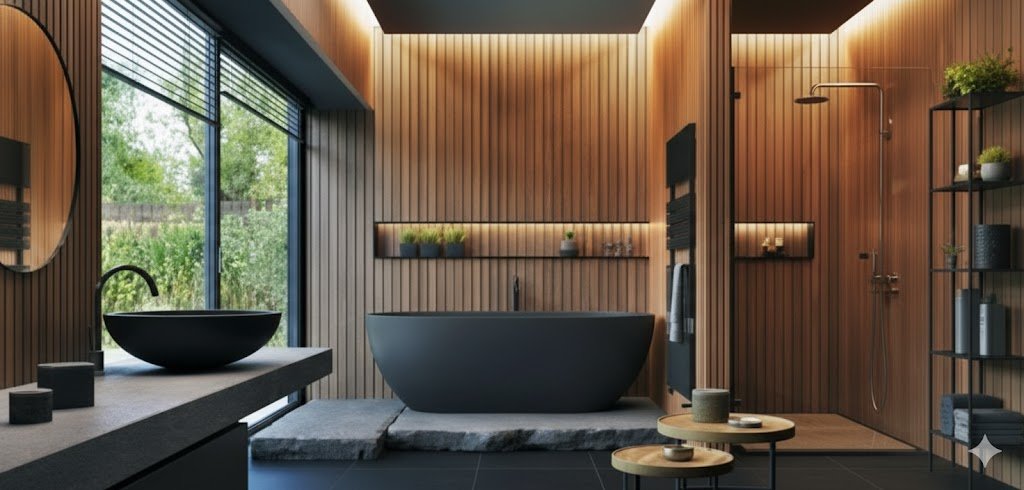
The environmental impact of your purchase matters to many people. Quality vanities made from sustainable materials and finished with low-VOC coatings are better for the planet and your health. They don’t off-gas harmful chemicals into your home. They’re built to last, which means less waste in landfills. Cheap vanities that need replacing every few years create more environmental impact over time than one quality piece that lasts decades.
Think about cost per year of use rather than just upfront cost. A $500 vanity that lasts 5 years costs you $100 per year. A $1500 vanity that lasts 20 years costs you $75 per year. The more expensive option actually costs less over time. This perspective changes how you evaluate price. You’re not looking for the cheapest option. You’re looking for the best value. That calculation includes longevity, functionality, and satisfaction with your choice.

Leave a Comment