
Why Your Baby’s Mattress Matters More Than You Think
When I first started shopping for my baby’s nursery, I’ll admit something embarrassing. I spent weeks agonizing over the perfect crib design, scrolling through countless paint swatches for the walls, and debating whether those cute woodland creature decals were too much. But the mattress? I almost treated it like an afterthought. Just grab whatever fits the crib, right?
Wrong. So very wrong.
Here’s what nobody tells you until you’re knee-deep in parenting forums at 2 AM. That seemingly simple rectangle of foam and fabric becomes one of the most used items in your entire house. We’re talking about something your little one will spend more time on than anywhere else during their first years. Think about it. Newborns sleep around 14 to 17 hours each day. Even as they grow into toddlers, they’re still clocking 10 to 15 hours of sleep daily. That’s more time than most adults spend in their own beds.
Your baby isn’t just sleeping on that mattress either. They’re growing on it. Their tiny bones are developing, their spine is forming its natural curves, and their bodies are doing this incredible thing where they basically triple in size during the first year. The surface they rest on during all those hours plays a real role in how their body develops. A poor-quality mattress doesn’t just mean bad sleep. It can mean improper support during the most rapid growth phase of their entire life.
But here’s where it gets even more interesting. Babies don’t move around like we do. When you or I get uncomfortable at night, we shift positions without even waking up. We roll over, adjust our pillow, kick off a blanket. Newborns can’t do any of that. They’re stuck in whatever position you place them. If that mattress is too soft, too hard, or made with materials that trap heat, they can’t fix the situation themselves. They’re completely at the mercy of the sleeping surface you’ve chosen for them.
And can we talk about the breathing thing for a second? Babies have these tiny, developing respiratory systems. They’re breathing in whatever is in their immediate environment for hours and hours every single day. If that mattress is off-gassing chemicals, harboring dust mites, or made with materials that aren’t exactly baby-friendly, well, your little one is getting an up-close-and-personal experience with all of it. Their faces are literally pressed against this thing for a huge portion of their day.
The crib itself might be the centerpiece of the nursery. It’s what everyone sees when they walk in, what shows up in all the photos, what you carefully assemble while eight months pregnant and questioning your life choices. But strip away the aesthetic appeal and you’re left with what really matters. The box is just a box. The mattress is where the magic (or the disaster) happens.
I learned this lesson the expensive way. We initially bought a cheap mattress from a big-box store. It seemed fine. It fit the crib, it was white, it existed. What else did we need to know? About three weeks in, my daughter started having trouble sleeping. She’d wake up fussy, her sheets were always damp with sweat, and she just seemed uncomfortable. We tried everything. Different room temperatures, different pajamas, different blankets. Nothing worked.
Then a friend who’s a pediatric nurse came over and literally poked our mattress. She wrinkled her nose and asked how much we’d paid for it. When I told her, she just shook her head. Turns out, we’d bought something that was basically trapping heat, not providing proper support, and probably full of materials that weren’t doing our daughter any favors. We upgraded to a better quality mattress and the difference was immediate. She slept longer, seemed more comfortable, and those sweaty sheets became a thing of the past.
The nursery doesn’t need to be Instagram-perfect with matching curtains and a $500 rocking chair. But that mattress? That’s where you want to invest your money and your research time. Your baby won’t care if their room is painted in the trendiest shade of sage green. They will absolutely care if they’re spending 15 hours a day on something uncomfortable, unsafe, or unhealthy.
So before you click “add to cart” on that adorable crib mobile or splurge on the designer diaper bag, let’s talk about what really matters. The foundation of good sleep, healthy development, and peace of mind for you both. Trust me, your future self (the one who’s desperate for the baby to sleep just a few more minutes) will thank you for getting this part right from the start.
The Best Choice: What Makes a Baby Mattress Actually Safe and Comfortable
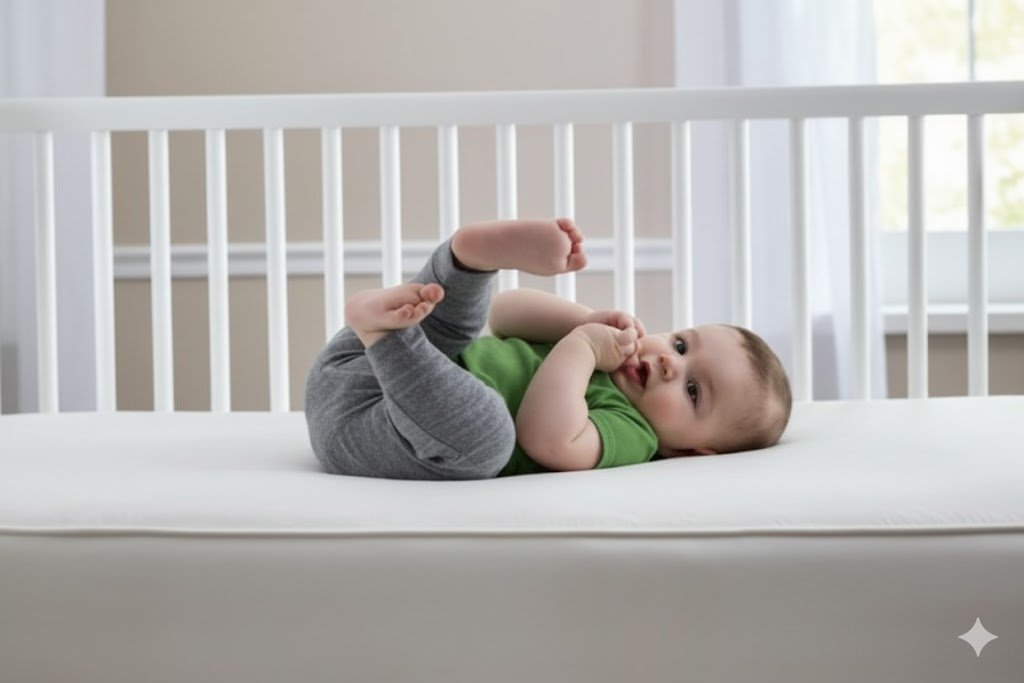
Now we get into the good stuff. The part where I help you avoid the mistakes I made and countless other parents make every single day. Choosing the right baby mattress isn’t rocket science, but it does require knowing what to look for. Let me break this down in a way that actually makes sense.
Materials Matter More Than You’d Think
Can we start with something that sounds paranoid but really isn’t? The materials in your baby’s mattress can potentially off-gas chemicals that your little one breathes in every single night. I’m not trying to scare you, but I am trying to make you aware. Conventional mattresses often contain polyurethane foam, which can release volatile organic compounds. Some use flame retardants that meet safety standards but still make me uncomfortable when I think about my baby’s face being inches away from them for hours on end.
When I started researching this, I went down a rabbit hole that nearly gave me a panic attack. There are so many different chemicals and materials and certifications and claims. But here’s what I learned after talking to pediatricians, reading way too many studies, and joining more parenting groups than any person should. You want to look for mattresses made with materials that are genuinely non-toxic and preferably organic.
Organic cotton covers are your friend. Natural latex (not synthetic) is another good option. Some companies make mattresses with coconut coir or organic wool. These materials don’t off-gas the same way petroleum-based foams do. They’re breathable, they’re sustainable, and they don’t come with that “new mattress smell” that’s actually just chemicals evaporating into your baby’s airspace.
I know what you’re thinking. “Great, so I need to spend $500 on an organic mattress now?” Not necessarily. Yes, fully organic mattresses can be pricey. But even choosing a mattress that’s certified by organizations like Greenguard Gold or CertiPUR-US means you’re getting something that’s been tested for harmful emissions. These certifications aren’t just marketing fluff. They actually mean the product has been independently tested and meets strict standards for low chemical emissions.
The smell test is real. When you open a new mattress, it shouldn’t smell like a chemical factory. A slight new product smell is normal and usually fades in a day or two. But if you’re opening up that mattress and your eyes start watering or you can smell it from across the room, that’s a red flag. That smell is literally chemicals evaporating into the air. Do you want your baby breathing that in?
Some parents will tell you to let a new mattress air out for a few days before putting the baby on it. That’s not bad advice, but I’d rather start with a mattress that doesn’t need to be aired out in the first place. Your nursery shouldn’t smell like a science lab. It should smell like baby lotion and that weird clean smell that baby clothes have.
Firmness Isn’t About Comfort (For Babies, Anyway)
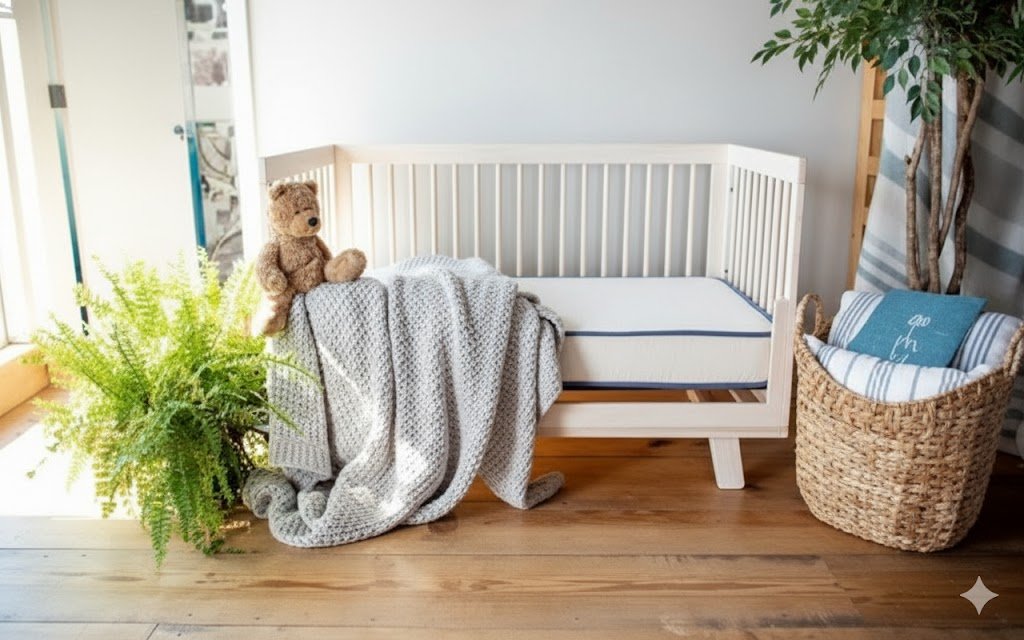
Here’s where baby mattresses get counterintuitive. We adults love our plush, soft mattresses. We sink into them at the end of a long day and feel like we’re sleeping on a cloud. That’s exactly what you DON’T want for your baby. I mean it. That firm mattress that feels like you’re touching a piece of plywood? That’s the good stuff.
Babies need firm sleeping surfaces for two big reasons. First, their bones are still developing. They’re soft, they’re forming, and they need proper support. A soft mattress that lets their body sink in doesn’t provide the support their growing skeleton needs. Think of it like building a house. You wouldn’t construct a frame on quicksand. You need solid, stable ground. Same principle applies to your baby’s developing body.
Second, and this is the one that kept me up at night when my kids were tiny, soft mattresses pose a suffocation risk. If a baby somehow ends up face-down on a soft surface, they can sink in and potentially block their airway. Firm mattresses significantly reduce this risk. The American Academy of Pediatrics is really clear on this. Firm sleeping surfaces are part of safe sleep practices.
But here’s the tricky part. Firm doesn’t mean rock-hard. There’s a sweet spot between “sleeping on concrete” and “sleeping on marshmallows.” When you press down on a good baby mattress, it should resist. It shouldn’t immediately spring back like memory foam does for adults, but it shouldn’t feel like you’re pushing on a brick either. Your hand should make a slight impression that disappears fairly quickly when you lift it.
I’ve seen parents stress about this and stick their babies on mattresses that seem genuinely uncomfortable. Your baby should be supported, not miserable. If you press on the mattress and it feels like it has no give whatsoever, that’s probably too firm. If you press on it and your hand sinks in a couple inches, that’s too soft. You’re looking for something in the middle that provides support while still having a bit of surface comfort.
The good news is that most mattresses specifically made for babies hit this sweet spot. They’re designed with the right firmness level. Where parents get into trouble is when they try to use something not designed for babies, like a regular twin mattress cut down to size or some kind of foam pad. Don’t do that. Just don’t.
Your baby might not thank you for the firm mattress now. They can’t. They can’t talk. But their developing spine and bones are definitely thanking you. And when they’re older and don’t have weird back problems or developmental issues, well, that’ll be thanks enough.
Temperature Regulation Is a Big Deal
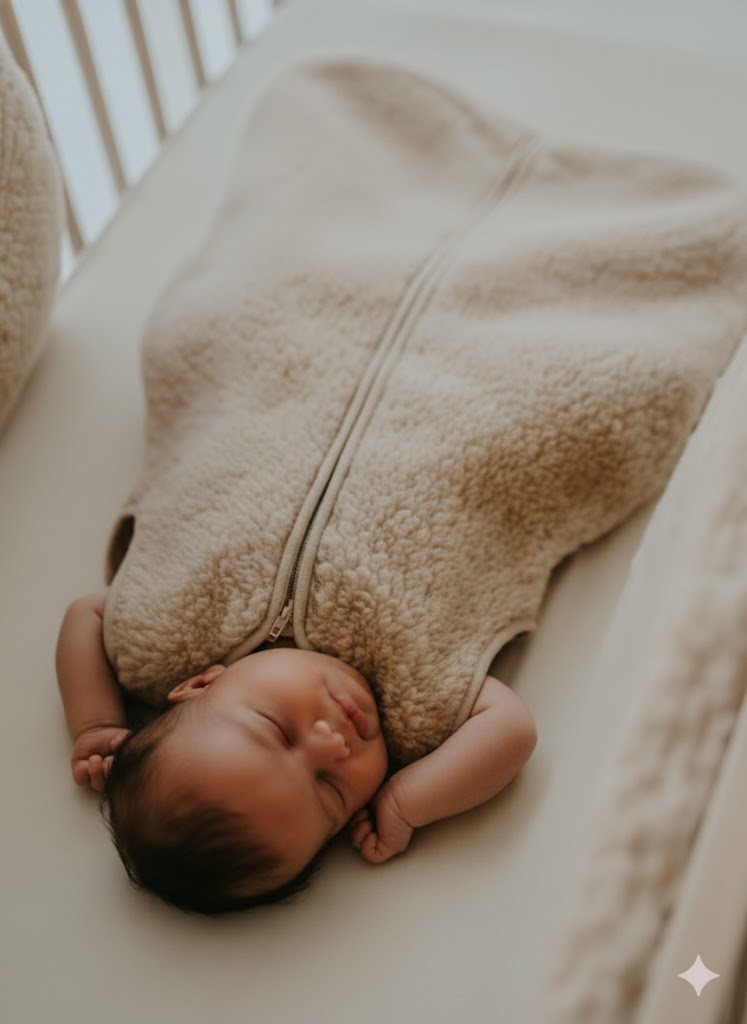
Let me tell you about the night I learned that babies are basically tiny furnaces. My son was about six weeks old, and I went to check on him during one of those paranoid new-parent middle-of-the-night wellness checks. The room temperature was fine. He was dressed appropriately. But he was absolutely drenched in sweat. His hair was wet, his clothes were damp, and the sheet under him felt like someone had spilled water on it.
I panicked. Called the pediatrician’s after-hours line. Spent twenty minutes convinced something was horribly wrong. Turns out, babies just run hot. They can’t regulate their body temperature as well as adults can. And if their mattress isn’t helping with heat dissipation, they’re going to overheat. Which is uncomfortable at best and potentially dangerous at worst.
This is where mattress materials become really practical. Some materials trap heat like nobody’s business. Cheap foam mattresses are notorious for this. They create this sauna effect where the baby’s body heat gets trapped between them and the mattress with nowhere to go. Natural materials like cotton, wool, and latex are much better at allowing air to flow through.
Breathability isn’t just a marketing buzzword. It actually refers to how well air can move through the mattress. Good airflow means heat doesn’t get trapped. Your baby stays at a more comfortable temperature. They sweat less. They sleep better. You sleep better because you’re not waking up to a soggy, unhappy infant.
Some mattresses come with covers designed specifically for temperature regulation. These might include moisture-wicking fabrics or materials that actively help disperse heat. I’m not saying you need space-age technology in your baby’s crib, but if you live somewhere warm or your baby tends to run hot, these features are worth considering.
Waterproof covers can be tricky here. Yes, you absolutely need something waterproof protecting that mattress from the inevitable diaper leaks and spit-up incidents. But some waterproof covers are basically plastic sheets that trap heat like crazy. Look for waterproof covers that are still breathable. They exist. They might cost a bit more, but they’re worth every penny when your baby isn’t waking up in a puddle of their own sweat.
One trick I learned is to feel the mattress after your baby has been sleeping on it. If it feels warm to the touch, like noticeably warmer than the surrounding air, that mattress isn’t doing a good job of heat dissipation. A good mattress should feel relatively neutral, maybe just slightly warm. It shouldn’t feel like you’re touching a heating pad.
Allergies and Dust Mites Are Real Concerns
I never thought much about dust mites until I had kids. Then suddenly I became an expert on these microscopic creatures that feast on dead skin cells and live in soft surfaces. Sounds gross? That’s because it is. Dust mites are one of the most common allergen triggers for babies and young children. And guess where they love to live? Mattresses.
Your baby is shedding skin cells constantly. That’s just how bodies work. Those skin cells settle into the mattress, and dust mites think they’ve found an all-you-can-eat buffet. The problem isn’t really the mites themselves. It’s their waste products that trigger allergic reactions. We’re talking about respiratory issues, skin irritation, and general discomfort.
Anti-mite treatments on mattresses actually work. Some mattresses come with covers that are tightly woven enough that dust mites can’t penetrate them. Others use natural materials like wool, which is naturally resistant to dust mites. Some have been treated with safe, non-toxic substances that repel these little pests.
My daughter developed some mild allergic symptoms when she was about four months old. Sniffly nose, watery eyes, nothing serious but enough to be concerning. We couldn’t figure out what was causing it until our pediatrician suggested we look at her sleeping environment. We switched to a mattress with better dust mite protection and added a high-quality, allergen-proof mattress cover. The symptoms cleared up within a week.
If allergies run in your family, this becomes even more significant. Babies with parents or siblings who have allergies are more likely to develop them too. Starting with a hypoallergenic sleeping environment from day one can help reduce their exposure to common triggers during those early, vulnerable months.
Natural materials tend to be better for allergy-prone babies anyway. Synthetic materials can sometimes trigger sensitivities even without dust mites in the picture. Organic cotton, natural latex, and wool all have properties that make them less likely to cause allergic reactions. They’re also easier to keep clean and don’t harbor mold or mildew the way some synthetic materials can.
Speaking of keeping things clean, you want a mattress that can actually be cleaned. Some have removable, washable covers. This is clutch when you’re dealing with diaper explosions or reflux incidents. Being able to throw that cover in the wash and know you’re actually cleaning the surface your baby sleeps on is a game changer. Some mattresses have surfaces that can be wiped down with a damp cloth and mild soap. That works too.
Size and Fit Actually Matter for Safety
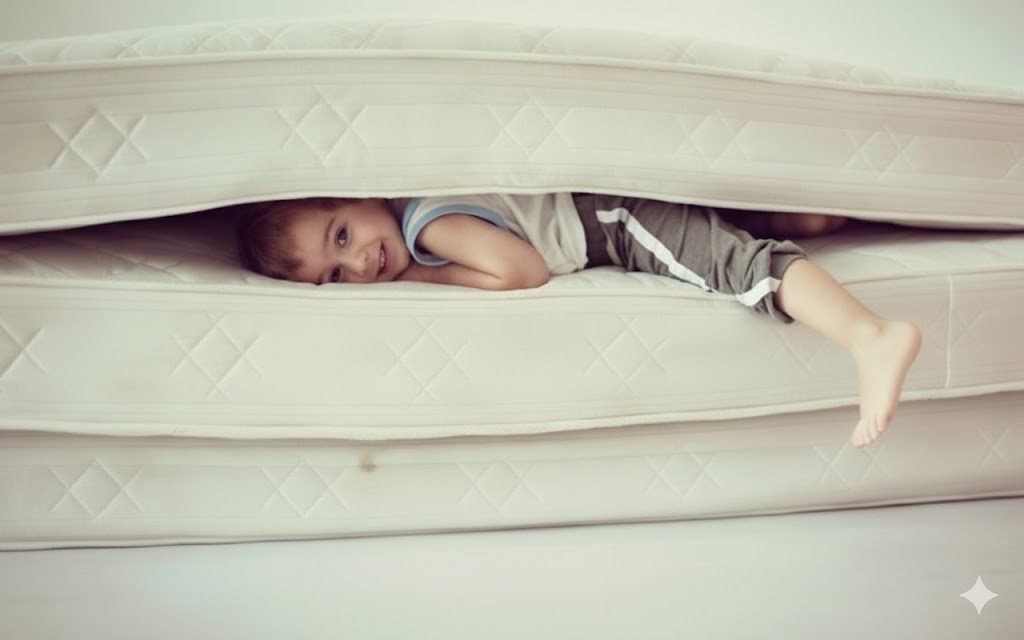
This seems obvious until you’re standing in a baby store or scrolling through online options and realize there are actually variations in crib mattress sizes. Most standard crib mattresses are 52 inches long by 28 inches wide. But there’s some wiggle room in those measurements. And that wiggle room can be dangerous.
The gap between the mattress and the crib frame should be no more than two fingers wide. That’s the standard safety guideline. If you can fit more than two fingers in the gap, the mattress is too small for that crib. Why does this matter? Babies can get wedged in gaps. Arms, legs, and in worst-case scenarios, heads can get stuck in spaces that seem impossibly small.
When my nephew was born, my sister bought a beautiful expensive crib and then tried to save money with a cheaper mattress. The mattress was technically the right size according to the label. But when she put it in the crib, there was a noticeable gap on one side. I convinced her to return it and get a better-fitting mattress. She wasn’t happy about the extra expense until her son started rolling over at four months. He immediately tried to wedge himself into every corner of that crib. With the properly fitted mattress, there was nowhere for him to get stuck.
Mini cribs and portable cribs have their own mattress sizes. Don’t try to use a standard crib mattress in these. Don’t try to cut down a regular mattress to fit. Don’t try to make do with something close enough. The mattress needs to be specifically designed for whatever sleep surface you’re using.
Measure your crib. Measure the mattress. Do it yourself even if the packaging says it’s the right size. I’ve seen mattresses labeled as standard that were actually a bit small. Quality control isn’t always perfect. Taking five minutes to measure can prevent a serious safety issue down the line.
The mattress should fit snugly enough that it doesn’t shift around when you change sheets or move the baby. If you can easily slide the mattress around inside the crib frame, it’s too small. It should take a bit of effort to get the mattress in and out of the crib. That snug fit is a safety feature, not an inconvenience.
Quality Over Price (But Smart Shopping Still Applies)
I’m going to say something that might be controversial in parenting circles. You don’t need to spend $800 on a baby mattress. You just don’t. But you also shouldn’t be shopping in the bargain bin looking for the cheapest option available. There’s a middle ground where quality meets affordability.
A good baby mattress is going to cost somewhere between $150 and $400 in most cases. Yes, you can spend more. Luxury organic mattresses can run $600 or higher. Are they nice? Absolutely. Are they necessary? Not really. You can get a safe, comfortable, high-quality mattress for a reasonable price if you know what to look for.
Here’s what you’re paying for with a quality mattress. Better materials that will last through multiple kids if needed. Better construction that won’t develop lumps or sags after a few months of use. Safety certifications that cost money for manufacturers to obtain. Customer service and warranties that actually mean something.
Cheap mattresses fall apart. I’ve seen it happen. They start out fine, but six months in, there’s a permanent dent where the baby sleeps. Or the edges start to crumble. Or the cover rips. Or they develop a weird smell that no amount of airing out will fix. Then you’re spending money on a replacement anyway, and your baby has been sleeping on a subpar surface in the meantime.
That said, expensive doesn’t always mean better. Some brands charge premium prices for fancy marketing and pretty packaging. Do your research. Read reviews from actual parents, not just the five-star reviews on the company website. Look for mentions of durability, comfort, and whether the company stands behind their product.
Warranties are telling. A company that offers a solid warranty (at least 5 to 10 years) believes in their product. They’re not expecting it to fall apart in a year. Cheap mattresses often have minimal warranties or none at all. That should tell you something about the expected lifespan.
Think of this as an investment in your child’s health and development. You’re not just buying a place for them to sleep. You’re buying proper support during rapid growth. You’re buying a safer sleep environment. You’re buying materials that won’t harm them. You’re buying peace of mind. That’s worth more than saving fifty bucks on a subpar option.
If money is tight (and when isn’t it with a new baby), this is the place to ask for help. Put a quality mattress on your baby registry. Ask relatives to chip in for it instead of buying cute outfits your baby will wear twice. Save money on the decorative stuff and put it toward the functional stuff. Your baby will be just fine without matching artwork and a designer mobile. They need a good mattress.
And here’s a final thought on this topic. A good night’s sleep for your baby means a better night’s sleep for you. That’s not just about everyone being happier (though it is about that). It’s about your ability to function, to be a good parent, to enjoy this time instead of just surviving it. The difference between a baby who sleeps well and one who doesn’t can be the difference between postpartum depression and feeling like you can handle this parenting thing. Sometimes it comes down to basics like a proper mattress. That’s not something to cheap out on.

Leave a Comment