
Introduction to Home Renovation Reality Check
Let me tell you something about home renovations that nobody warns you about upfront. We’ve all seen those glossy magazine spreads and Pinterest boards showing stunning before-and-after transformations. What they don’t show you is the homeowner hiding in their car at 2 AM, crying into a cold cup of coffee because the contractor just discovered asbestos in the walls.
I’m not trying to scare you off. Really, I’m not. But after watching friends and family members dive headfirst into renovation projects with stars in their eyes and credit cards in their hands, I’ve learned that preparation isn’t just helpful – it’s your lifeline when everything goes sideways.
Home renovation represents one of the most demanding challenges any homeowner will face. Think about it this way. You’re basically inviting strangers into your personal space to tear apart the structure that keeps you safe and dry. You’re gambling with your savings account, your sanity, and your marriage all at once. Sounds fun, right?
The thing is, we often approach renovations with the same mindset we’d use for planning a vacation. We get caught up in the excitement of choosing paint colors and browsing through tile samples. But renovation isn’t a vacation. It’s more like preparing for war, and your enemy is Murphy’s Law.
Every veteran renovator I know has war stories. There’s always that moment when they thought they were just updating a bathroom and ended up needing to replumb half the house. Or the time they planned a simple kitchen refresh and discovered the previous owner had been using duct tape and prayers to hold up a load-bearing beam.
Mental preparation might sound like psychobabble, but trust me on this one. You need to steel yourself for the fact that your project will take longer than expected. It will cost more than you budgeted. Something will go wrong that nobody could have predicted. Your contractor will disappear for three days without explanation. These aren’t worst-case scenarios – they’re Tuesday.
Financial readiness goes beyond just having enough money saved up. You need that money, plus another 30% on top, sitting in an account you’re not touching for anything else. Not for that weekend trip to the mountains. Not for your daughter’s dance recital costume. That money exists solely to handle the inevitable surprises that come with opening up walls in a house that’s been settling for decades.
Quality renovations don’t happen by accident. They result from careful planning, realistic expectations, and working with people who know what they’re doing. But here’s the kicker – even with the best planning in the world, you still need to be ready to roll with the punches.
I’ve seen homeowners who did everything right still end up living without a functioning kitchen for three months because the custom cabinets arrived with the wrong measurements. Life happens. Supply chains break down. People make mistakes. Your job is to be ready for all of it.
The quiz we’re about to dive into isn’t designed to discourage you. It’s designed to give you a realistic picture of what you’re signing up for. Think of it as your pre-flight safety briefing. We’re going to cover the most common pitfalls, the biggest expenses, and the smartest strategies for keeping your project on track.
Some questions might seem obvious, but I guarantee you know someone who learned these lessons the hard way. Maybe they’re the friend who started their basement renovation in January and finally moved back upstairs in September. Or the neighbor who spent their entire retirement fund on a kitchen that still isn’t quite right.
Your final score on this quiz will help you figure out whether you’re truly ready to tackle a major renovation project. More than that, it’ll help you identify the areas where you need to do more homework before you start swinging hammers.
We’ve included an answer key at the end, but don’t cheat. The only person you’d be fooling is yourself, and trust me, renovation projects have a way of exposing every gap in your preparation. Better to discover those gaps now, when you can still do something about them, than when you’re standing in a half-demolished room wondering how everything went so wrong so fast.
Which Room In The House Is Often The Costliest To Renovate?
When people ask me about renovation costs, I always start with the same question – which room are you planning to tackle? Their answer tells me everything I need to know about whether they’ve done their homework or whether they’re about to get a very expensive education.
Some rooms will fool you into thinking they’re simple projects. Take a living room, for instance. How hard could it be, right? Maybe some new paint, updated lighting, fresh flooring. You might get away with spending a few thousand dollars and calling it done. Your biggest decisions involve choosing between eggshell and satin finish.
But then there are rooms that seem determined to drain your bank account one expensive component at a time. These are the spaces where every single element costs more than you expect, and where cutting corners today means dealing with bigger problems tomorrow.
Let’s talk about kitchens first, because they’re the undisputed heavyweight champions of renovation costs. I learned this lesson the hard way when my sister decided to give her kitchen a “simple refresh.” Six months and forty thousand dollars later, she had a beautiful new space and a much clearer understanding of what “simple” means in renovation terms.
The thing about kitchen renovations is that everything connects to everything else. You can’t just replace the countertops without considering the cabinets underneath them. You can’t update the cabinets without thinking about the appliances they need to accommodate. You can’t move appliances without dealing with plumbing and electrical work. It’s like trying to change one domino in the middle of an elaborate setup.
Kitchen appliances alone can blow through your budget faster than you can say “stainless steel.” A decent refrigerator starts around two thousand dollars and can easily climb past eight thousand if you’re looking at anything with smart features or custom panels. Ranges follow the same pattern. I know people who’ve spent more on a single cooktop than I paid for my first car.
Then there are the countertops. Quartz and granite look gorgeous in showrooms, but they come with price tags that’ll make you reconsider your life choices. We’re talking anywhere from sixty to two hundred dollars per square foot, installed. Multiply that by the square footage of counter space in an average kitchen, and you’re looking at several thousand dollars for what amounts to fancy rocks cut into rectangular shapes.
Cabinetry represents another major expense category. Custom cabinets can easily run thirty thousand dollars or more for a typical kitchen. Even semi-custom options will set you back fifteen to twenty thousand. And don’t get me started on the hardware – those little handles and knobs can cost more per piece than a nice dinner out.
Bathrooms deserve their own conversation because they’re deceptively expensive in completely different ways. The spaces are smaller, so you might think costs would be proportionally lower. You’d be wrong. Bathrooms pack an incredible amount of complexity into a small footprint.
Plumbing work in bathrooms gets expensive quickly because everything needs to be precisely positioned and properly sealed. Move a toilet six inches to the left, and you’re looking at substantial plumbing modifications. Want a fancy rain shower head? Get ready to upgrade your water pressure system. Thinking about heated floors? That means electrical work and careful coordination with your tile installer.
Tile work in bathrooms costs more per square foot than almost any other type of flooring because of the detailed work involved. All those cuts around fixtures, the waterproofing requirements, the precise grout lines – it adds up. I’ve seen bathroom renovations where the tile installation cost more than some people spend on entire room makeovers.
Bathroom fixtures live in a world where form meets function at premium price points. A quality vanity can easily cost three to five thousand dollars. Faucets that look like they belong in a spa run several hundred dollars each. And don’t even think about a soaking tub unless you’re prepared to spend serious money on both the tub itself and the structural modifications needed to support it.
Attics present their own unique challenges, but they’re usually more about labor and structural work than expensive fixtures and finishes. Converting an attic into livable space means dealing with insulation, ventilation, electrical upgrades, and sometimes structural modifications. The costs add up, but they’re spread across different categories rather than concentrated in big-ticket items.
The correct answer to our quiz question is A – Kitchen. Kitchens consistently rank as the most expensive rooms to renovate because they combine high-end appliances, extensive cabinetry, premium countertops, and complex systems integration all in one space. Every element needs to work together perfectly, and quality components in each category come with substantial price tags.
When you’re planning your renovation budget, start with the kitchen costs and work backward. If the kitchen alone would max out your available funds, you might need to reconsider your timeline or your scope. Better to plan for a phased approach than to run out of money halfway through your project.
Before Building An Extension, What Is The Most Important Thing To Consider?
Building an extension might seem like the perfect solution to your space problems, but let me share a story that’ll help put things in perspective. My neighbor decided last spring that they needed more room for their growing family. They had dreams of a beautiful sunroom where they could drink morning coffee and watch the kids play in the backyard.
Fast forward eight months, and they’re still living with a partially completed addition, a backyard that looks like a construction zone, and a bank account that’s been drained dry. What went wrong? They jumped into the project without properly considering all the moving pieces that need to align for a successful extension.
Extension projects represent some of the most complex renovation challenges you can take on. You’re not just updating existing space – you’re creating entirely new space that needs to integrate seamlessly with your existing home. That integration touches on structural, mechanical, electrical, and aesthetic considerations that can quickly spiral out of control.
Budget considerations for extensions go far beyond the obvious construction costs. Sure, you need to account for materials, labor, and permits. But have you thought about the cost of upgrading your HVAC system to handle the additional square footage? What about the electrical panel upgrades that might be needed to support new circuits? How about the landscaping restoration after heavy equipment has spent months churning up your yard?
I learned about hidden extension costs when my brother-in-law decided to add a master bedroom suite over their garage. The project seemed straightforward enough – build up instead of out, use the existing foundation, connect to existing utilities. What could go wrong?
Turns out, quite a bit. The existing electrical system couldn’t handle the additional load without major upgrades. The HVAC system needed extensive modifications to properly heat and cool the new space. The roof required structural reinforcement to support the additional weight. Each discovery came with its own price tag and timeline implications.
Smart budgeting for extensions means planning for the unexpected. Industry professionals recommend adding at least 25-30% to your initial cost estimates to handle surprises. That might seem excessive until you’re standing in your half-built addition wondering how you’re going to afford the foundation work that nobody mentioned during the planning phase.
Finding the right building company can make or break your extension project. This isn’t a decision you want to base solely on who gives you the lowest bid. The cheapest contractor often turns into the most expensive mistake you’ll ever make.
Quality building companies bring more than just construction skills to your project. They understand local building codes, they have established relationships with suppliers and subcontractors, and they know how to navigate the permit process efficiently. They also carry proper insurance and warranties that protect you if something goes wrong.
When I was researching contractors for my own extension project, I learned to ask specific questions that separate the professionals from the pretenders. How many similar projects have they completed in the last two years? Can they provide references from recent clients? Are they licensed and insured? Do they pull their own permits or expect you to handle that paperwork?
The interview process with potential contractors should feel like a two-way conversation. Good contractors will ask detailed questions about your expectations, timeline, and budget. They’ll point out potential challenges and suggest solutions. They’ll provide detailed written estimates that break down costs by category. If someone shows up, takes a few measurements, and gives you a rough number scribbled on a napkin, keep looking.
Planning permission represents another layer of complexity that many homeowners underestimate. Building codes and zoning restrictions vary significantly by location, and what’s allowed in one neighborhood might be prohibited in another. Some extensions require simple permits that can be approved in a few weeks. Others trigger more complex review processes that can drag on for months.
I’ve seen extension projects grind to a halt because homeowners assumed their plans would be automatically approved. They started demolition work before getting proper permits, only to discover that their proposed addition violated setback requirements or exceeded allowable square footage limits. Fixing these problems after construction has started costs exponentially more than addressing them during the planning phase.
Working with local building departments early in your planning process can save you tremendous headaches down the road. Most jurisdictions offer pre-application meetings where you can discuss your project with planning staff before submitting formal applications. These conversations help you understand what’s possible within local regulations and what modifications might be needed to get approval.
The permit process itself requires patience and attention to detail. Applications need to include detailed architectural drawings, structural calculations, and site plans. Missing information or errors in documentation will delay approval and potentially require expensive revisions to your plans.
Professional architects and contractors understand the permit process and can guide you through it efficiently. They know what information needs to be included in applications, they understand local code requirements, and they have working relationships with building department staff. Trying to navigate this process yourself might save money upfront, but it often leads to costly delays and revisions.
The correct answer to our quiz question is D – All of the above. Successful extension projects require adequate budgeting, qualified contractors, and proper permits. Neglecting any one of these elements can derail your entire project. The most beautiful extension in the world won’t help you if you can’t afford to complete it, if it’s poorly constructed, or if you have to tear it down because it violates local building codes.
Which Renovation Work Can Be Carried Out With Relatively Little Experience And At Low Cost?
The DIY renovation question always makes me chuckle because I remember my own overconfident early days as a homeowner. I was convinced that YouTube University had prepared me to tackle any project around the house. That confidence lasted right up until I tried to install what I thought was a simple ceiling fan and ended up calling an electrician to fix my mistakes.
But here’s the thing – there really are renovation tasks that handy homeowners can tackle without years of training or specialized equipment. The trick is knowing where to draw the line between ambitious and reckless. Some jobs are perfect for weekend warriors. Others are perfect for creating expensive disasters that require professional cleanup.
Let’s start with the dangerous stuff, because knowing what not to touch might be the most valuable information I can share. Electrical work tops my list of “leave it to the pros” tasks. I don’t care how many online tutorials you’ve watched or how confident you feel about basic wiring. Electrical mistakes can kill you, burn down your house, or both.
I learned this lesson secondhand through a friend who decided to rewire his basement workshop himself. He studied electrical codes, bought the right tools, and felt confident about his approach. Six months later, his insurance company was asking very pointed questions about why his house fire started in an area with unpermitted electrical work.
Modern electrical codes exist for good reasons, and they’re complex enough that professional electricians spend years learning how to interpret and apply them correctly. Voltage calculations, load balancing, proper grounding, code-compliant installation techniques – these aren’t skills you pick up over a weekend.
The same logic applies to major plumbing work. Sure, you might be able to replace a faucet or unclog a drain without calling in professionals. But moving water lines, installing new fixtures, or modifying drain systems requires knowledge that goes far beyond what you’ll find in basic DIY guides.
Water damage from plumbing mistakes can be catastrophically expensive. I know someone who tried to relocate a bathroom sink themselves and ended up with water running inside their walls for three days before they noticed the problem. The repair costs for that mistake far exceeded what they would have spent hiring a qualified plumber from the start.
Structural work represents another category where DIY enthusiasm can lead to serious problems. Removing walls might look straightforward, but determining which walls are load-bearing requires engineering knowledge that most homeowners don’t possess. Guess wrong, and you could compromise the structural integrity of your entire house.
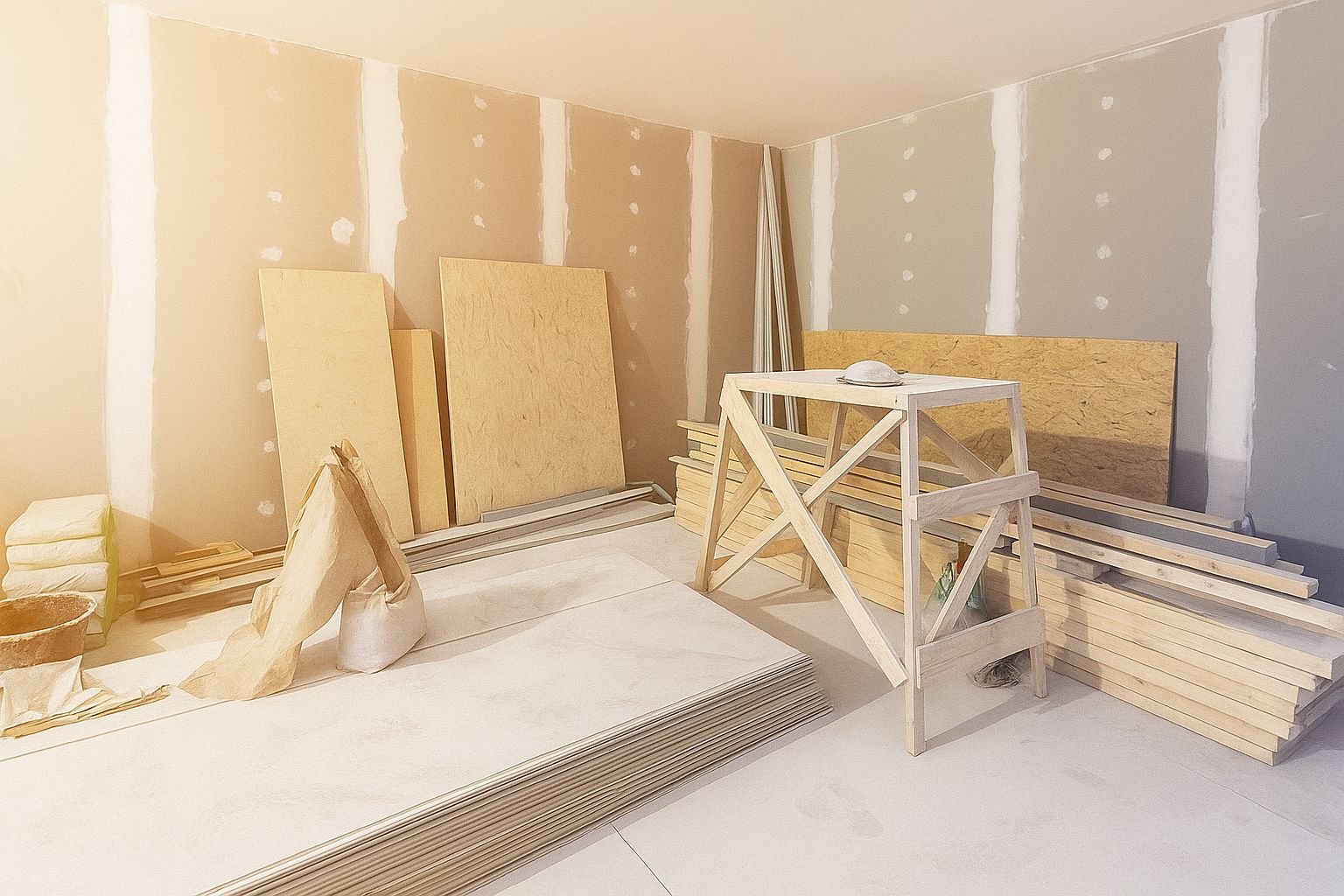
So what can you tackle yourself? Finishing work offers the best opportunities for DIY success. These are the tasks that require more time and patience than specialized knowledge or dangerous tools. They’re also the jobs where labor costs often exceed material costs, so doing the work yourself can generate real savings.
Painting represents the most accessible DIY renovation task. Almost anyone can learn to paint rooms properly with a little practice and the right techniques. The tools are inexpensive, the materials are readily available, and mistakes are usually fixable without major drama.
But even painting has more complexity than most people realize. Surface preparation makes the difference between a professional-looking result and something that screams “amateur hour.” I’ve seen DIY paint jobs that looked great on day one but started peeling and chipping within months because proper prep work was skipped.
Good painting starts with cleaning surfaces, filling holes and cracks, sanding rough areas, and applying appropriate primers. These steps aren’t glamorous, but they determine how long your paint job will last and how good it will look. Rush through prep work, and you’ll be repainting sooner than you planned.
Trim work and molding installation fall into the DIY-friendly category for homeowners who enjoy detail work and have basic carpentry skills. Crown molding, baseboards, and window trim can transform the look of a room without requiring major structural modifications or dangerous tools.
The key to successful trim work is precise measuring, careful cutting, and patient fitting. You’ll need a miter saw for clean angle cuts, a nail gun or hammer for installation, and wood filler for finishing touches. Take your time with measurements, and don’t be afraid to test-fit pieces before making final cuts.
Flooring installation varies by material type. Luxury vinyl plank flooring is designed for DIY installation and can be laid over existing floors in many cases. Laminate flooring follows similar installation principles and comes with detailed instructions that most handy homeowners can follow successfully.
Hardwood flooring installation requires more skill and specialized tools, but it’s still within reach for ambitious DIYers who are willing to invest time in learning proper techniques. The key is starting with a small, less visible area to practice your skills before tackling main living spaces.
Tiling represents a middle ground between DIY-friendly and professional-only tasks. Simple tile projects like backsplashes or small bathroom areas can be good DIY projects for detail-oriented homeowners. Large areas or complex layouts benefit from professional installation.
The correct answer to our quiz question is C – Finishing work. These tasks typically require more labor than specialized knowledge, making them perfect for homeowners who want to save money by contributing their own time and effort. Projects like painting, trim installation, and basic flooring can be completed successfully by motivated DIYers who take time to learn proper techniques and use quality materials.
Just remember that DIY success requires honest self-assessment. If you’re not comfortable with a particular task, or if you’re working under tight time constraints, hiring professionals might be the smarter choice. The money you save doing work yourself isn’t worth it if you create problems that cost more to fix than the original professional installation would have cost.
Which Job Can Be Carried Out By A Homeowner During A Renovation?
When it comes to managing renovation projects, most homeowners think they only have two options – hire a general contractor to handle everything, or try to do all the work themselves. But there’s actually a third path that can save you significant money while keeping your project properly managed. You can take on the role of contractor yourself.
Now, before you panic about the complexity, let me explain what this actually means. Acting as your own contractor doesn’t mean you’re swinging hammers and installing plumbing. It means you’re coordinating the project, hiring individual tradespeople, and managing the overall timeline and budget. Think of yourself as the project manager rather than the labor force.
I learned about this approach when my cousin renovated their kitchen a few years ago. They got quotes from general contractors that ranged from forty to sixty thousand dollars for their project. Then they discovered they could hire the same subcontractors directly for about thirty thousand dollars. The difference was the general contractor’s markup and project management fee.
Taking on the contractor role isn’t right for everyone, but it can work well for homeowners who have good organizational skills, flexible schedules, and the patience to coordinate multiple moving pieces. You’ll need to be comfortable making decisions, solving problems, and communicating with various trades throughout your project.
The first step in self-contracting involves developing a detailed project plan. You need to understand the sequence of work, the dependencies between different trades, and the materials required for each phase. This planning stage separates successful DIY contractors from homeowners who end up with expensive messes.
I recommend starting with a written scope of work that breaks your project down into specific tasks. For a bathroom renovation, this might include demolition, plumbing rough-in, electrical work, insulation, drywall, tiling, fixture installation, and finish work. Each phase needs to be completed before the next one can begin properly.
Material procurement becomes your responsibility when you act as the contractor. This means researching products, comparing prices, and coordinating deliveries. You’ll need to understand lead times for special-order items and plan accordingly. Running out of tile halfway through installation can shut down your project for days or weeks.
The biggest advantage of self-contracting is cost savings. General contractors typically add 15-25% markup to cover their overhead and profit. On a thirty thousand dollar renovation, that markup could represent four to seven thousand dollars in potential savings. Those savings can fund upgrades to higher-quality materials or fixtures.
Control represents another significant benefit. When you’re managing the project directly, you make all the decisions about materials, timeline, and quality standards. You don’t have to worry about contractors cutting corners to protect their margins or making choices that don’t align with your vision.
But self-contracting also comes with substantial responsibilities and risks. You’re responsible for pulling permits, scheduling inspections, and coordinating the work sequence. Mistakes in timing can lead to expensive delays. Poor coordination can result in trades working against each other or creating problems for subsequent phases.
Quality control falls entirely on your shoulders when you’re the contractor. You need to understand what good work looks like in each trade and be comfortable addressing problems when they arise. This means being present during key phases of work and asking questions when something doesn’t look right.
Finding and vetting individual tradespeople requires more effort than hiring a general contractor who brings their own team. You need to research potential subcontractors, check references, verify licenses and insurance, and coordinate schedules across multiple trades. This process can be time-consuming, but it gives you control over who works in your home.
Communication becomes more complex when you’re dealing with multiple trades directly. You need to keep everyone informed about schedule changes, material deliveries, and modifications to the original plan. Poor communication can lead to costly mistakes and delays.
Insurance and liability considerations are more complex when you’re acting as the contractor. You need to verify that all your subcontractors carry appropriate insurance and understand who’s responsible for different types of problems. Some insurance policies have different coverage when homeowners act as their own contractors.
The permit process becomes your responsibility, which means understanding local building codes and requirements. You’ll need to schedule inspections at appropriate points in the project and address any issues that arise during those inspections.
Timeline management requires balancing the availability of different trades with the logical sequence of work. Plumbers need to complete rough-in work before drywall installation. Electricians need access before insulation goes in. Coordinating these schedules while keeping your project moving forward requires active management.
Budget tracking becomes more detailed when you’re hiring individual trades. You’ll receive separate invoices from each subcontractor, need to track material costs separately, and manage cash flow to ensure you can pay for each phase as it’s completed.
The architect role involves designing the project and creating the plans needed for permits and construction. This requires technical knowledge about structural requirements, building codes, and design principles. Most homeowners need to hire professionals for this work.
Foreman positions require on-site supervision and coordination of daily work activities. This role demands extensive construction experience and the ability to solve technical problems as they arise. Few homeowners have the background needed to effectively supervise skilled trades.
The correct answer to our quiz question is A – Contractor. Homeowners can successfully take on the contractor role by managing project coordination, hiring individual trades, and overseeing the overall renovation process. This approach can generate significant cost savings while maintaining control over quality and timeline.
Self-contracting works best for homeowners who have flexible schedules, good organizational skills, and the patience to coordinate complex projects. It’s not the right choice for everyone, but it can be an effective middle ground between hiring expensive general contractors and attempting to do all the work yourself.
Answer Key and Final Thoughts
Well, here we are at the end of our renovation readiness journey. If you’ve made it this far without running away screaming, you’re already ahead of about half the people who dive into major home projects without proper preparation. Let’s review the answers and talk about what your performance on this quiz might mean for your renovation dreams.
Question 1 asked about the costliest room to renovate, and the answer is A – Kitchen. If you got this one right, you understand that kitchens combine expensive appliances, custom cabinetry, premium surfaces, and complex systems integration all in one space. Every component needs to work perfectly with every other component, and quality elements in each category come with substantial price tags.
I hope the detailed breakdown helped you understand why kitchen renovations consistently blow budgets. Those gorgeous countertops and professional-grade appliances you see in magazines don’t just look expensive – they are expensive. Factor in the complexity of coordinating plumbing, electrical, and HVAC modifications, and you’re looking at projects that can easily reach six-figure territory.
If you answered bathroom or attic, you’re not completely wrong. Both can be expensive in their own ways. But kitchens take the crown because they pack the most high-cost elements into a single space. Understanding this upfront helps you set realistic expectations and budget accordingly.
Question 2 covered extension planning, and the correct answer is D – All of the above. Budget, qualified contractors, and proper permits all play essential roles in successful extension projects. Miss any one of these elements, and your dream addition can turn into an expensive nightmare.
Getting this question right suggests you understand that extension projects involve multiple complex systems that need to work together seamlessly. You can’t just focus on one aspect and hope the others work themselves out. Comprehensive planning from the start prevents costly surprises and delays down the road.
Extensions represent some of the most challenging renovation projects because you’re not just updating existing space – you’re creating entirely new space that needs to integrate with your existing home. That integration touches on structural, mechanical, electrical, and regulatory considerations that require professional expertise and careful coordination.
Question 3 asked about DIY-friendly renovation work, and the answer is C – Finishing work. These tasks typically require more time and patience than specialized knowledge or dangerous tools. They’re also areas where labor costs often exceed material costs, making DIY work a source of real savings.
If you chose rewiring or wall removal, I’m worried about your safety. These are precisely the types of jobs that look deceptively simple but can create serious problems when handled improperly. Electrical mistakes can be deadly. Structural mistakes can compromise your home’s integrity. Leave these jobs to licensed professionals.
Finishing work like painting, trim installation, and basic flooring offers the best balance of DIY accessibility and meaningful cost savings. These tasks don’t require dangerous tools or specialized licensing, but they do require patience and attention to detail. Take shortcuts on prep work or technique, and your results will show it.
Question 4 explored roles homeowners can take during renovations, and the answer is A – Contractor. Acting as your own general contractor can save significant money while maintaining control over your project quality and timeline. But it requires good organizational skills, flexible scheduling, and the patience to coordinate multiple trades.
Self-contracting isn’t right for everyone. If you’re working full-time, traveling frequently, or uncomfortable making decisions about construction details, hiring a general contractor might be worth the additional cost. But for homeowners with the time and inclination to manage projects actively, self-contracting can be an effective way to control costs.
The architect and foreman roles require specialized knowledge that most homeowners don’t possess. Architects need to understand structural requirements, building codes, and design principles. Foremen need extensive construction experience and the ability to supervise skilled trades effectively.
Now, let’s talk about what your overall performance might mean for your renovation readiness. If you got all four questions correct, you have a solid foundation of knowledge about renovation challenges and opportunities. You understand where the big costs hide, what requires professional expertise, and where you can contribute your own efforts effectively.
Getting three out of four questions right suggests you’re on the right track but might benefit from additional research in specific areas. Focus on the questions you missed and make sure you understand the underlying concepts before moving forward with major projects.
If you only got one or two questions correct, don’t panic. This quiz covers advanced renovation concepts that many homeowners learn through expensive trial and error. The fact that you’re taking the time to educate yourself before starting your project puts you ahead of people who jump in without preparation.
Scoring zero doesn’t mean you should give up on your renovation dreams. It means you need to invest more time in education and planning before breaking ground. Read books, watch reputable online tutorials, talk to friends who’ve completed similar projects, and consider consulting with professionals about your specific situation.
Remember that renovation knowledge comes from multiple sources. This quiz covers some fundamental concepts, but every project has unique challenges and opportunities. Local building codes vary by jurisdiction. Material costs fluctuate by region and season. Contractor availability and quality differ significantly between markets.
The most successful renovations combine proper planning, realistic budgeting, quality professionals, and homeowners who understand their own limitations. You don’t need to become an expert in every aspect of construction, but you do need to understand enough to make informed decisions and communicate effectively with your project team.
Your renovation journey starts with honest self-assessment. What skills do you bring to the project? What aspects make you nervous? How much time can you realistically dedicate to project management? What’s your true budget, including contingency funds for unexpected problems?
Take the lessons from this quiz and use them as starting points for deeper research into your specific project. Every question we covered deserves additional study if it relates to your renovation plans. The time you invest in education upfront will pay dividends when you’re standing in your completed space, admiring work that came in on time and on budget.
Thanks for taking this renovation readiness journey with me. Whether you’re planning a simple refresh or a major overhaul, I hope this guide helps you approach your project with realistic expectations and solid preparation. Your future self will thank you for doing the homework now instead of learning these lessons the expensive way later.

Leave a Comment