
Let me tell you something I learned the hard way after three bathroom renovations: your vanity isn’t just furniture. It’s the hardest working piece in your entire bathroom. I used to think vanities were just pretty cabinets that held soap and toothbrushes. Boy, was I wrong.
When we moved into our current house, the master bathroom had this tiny pedestal sink that looked cute but stored absolutely nothing. My wife and I were constantly fighting over counter space. Her skincare routine alone required more real estate than a small country. That’s when I discovered the magic of modern vanity designs, and trust me, they changed everything.
Modern vanities do double duty in ways that’ll make your head spin. They organize your chaos while making your bathroom look like it belongs in a magazine. I’m talking about smart storage solutions that hide everything from hair dryers to cleaning supplies. These aren’t your grandmother’s vanities with their single drawer and crossed fingers approach to organization.
The beauty of contemporary vanity design lies in how designers blend function with serious style. We’re seeing floating vanities that make small bathrooms feel massive. Double sink configurations that end marital disputes over morning routines. Built-in lighting that makes you look amazing even at 6 AM. Some vanities now include electrical outlets hidden inside drawers. Others feature soft-close mechanisms that prevent those jarring slams when someone’s running late for work.
Color plays a huge role in modern vanity appeal, and we’re way past basic white and wood tones. I’ve seen vanities in deep forest greens that make bathrooms feel like luxury spas. Moody blacks that create drama without being overwhelming. Even bold reds that turn powder rooms into conversation starters. The key is picking colors that complement your existing fixtures while expressing your personality.
Texture combinations are where modern vanities really shine. Mixing smooth marble tops with textured wood bases creates visual interest that keeps your eye engaged. Adding metal accents through hardware or trim brings contemporary edge to traditional materials. Glass elements can lighten heavy designs while stone surfaces add grounding weight to airy spaces.
Planning your vanity installation requires thinking beyond just size and style. You need to consider plumbing locations, electrical requirements, and daily usage patterns. I made the mistake of choosing a gorgeous vanity that blocked our bathroom window. Beautiful? Yes. Functional? Not so much. Learn from my errors and measure everything twice.
Smart Design Principles That Actually Work in Real Bathrooms
Here’s what nobody tells you about bathroom design: the pretty pictures you see online often ignore real life. I’ve visited plenty of “showroom perfect” bathrooms that fall apart the moment actual humans try to use them. Smart vanity design means balancing Instagram appeal with Monday morning reality.
Color coordination can make or break your bathroom vibe, but it doesn’t have to be complicated. Monochromatic schemes create calm, spa-like feelings that work beautifully for master bathrooms. These single-color palettes might sound boring, but they’re anything but. Think different shades of gray flowing from light countertops to darker vanity bases. Or warm whites that shift from cream to pearl to alabaster across different surfaces.
Contrasting color schemes pack more visual punch and work great in powder rooms where you want drama. A white vanity topped with black granite creates classic tension that never goes out of style. Navy blue cabinets paired with brass fixtures and white marble feel both timeless and contemporary. The trick is picking one dominant color and using the second as accent rather than splitting things 50/50.
Pattern mixing is where bathroom design gets really fun, but it requires a steady hand. Small patterns work better than large ones in most bathroom spaces. A subtle geometric tile backsplash can complement solid vanity colors without competing for attention. Veined marble tops add natural pattern that plays well with clean-lined cabinet doors. Wood grain brings organic texture that softens harder materials like metal and stone.
Storage planning separates amateur vanity installations from professional results. We need spaces for daily items like toothbrushes and face wash, but also occasional use products like hair styling tools and makeup collections. Deep drawers work better than shelves for most bathroom items because everything stays organized and accessible. Shallow drawers near the top are perfect for frequently used small items.
Lighting deserves serious consideration during vanity planning because it affects everything from applying makeup to shaving safely. Built-in vanity lighting eliminates harsh shadows that overhead fixtures create. Side lighting provides even illumination across your face. Under-cabinet lighting adds ambient glow that makes evening bathroom visits less jarring.
Budget considerations don’t mean sacrificing style, but they do require smart choices. High-end materials like natural stone and solid wood cost more upfront but last decades longer than cheaper alternatives. Quality hardware might seem expensive per piece, but it’s what you touch every day and cheap hinges or drawer slides fail quickly. Sometimes spending extra on one great piece beats buying multiple mediocre ones.
Ten Vanity Styles That Transform Any Bathroom Space
Let me walk you through some vanity styles that work in real bathrooms with real budgets and real families. I’ve seen these approaches succeed in everything from tiny powder rooms to massive master suites. Each brings something different to the table, so you can find options that match your space and personality.
White dresser-style vanities bring vintage charm without feeling outdated. These pieces look like actual furniture that happens to live in your bathroom. The traditional dresser profile with its raised panels and decorative hardware creates warmth that pure modern designs sometimes lack. Topping white cabinets with darker countertops like black granite or rich wood creates beautiful contrast. These vanities work particularly well in farmhouse or transitional bathroom designs where you want sophistication without stuffiness.
What I love about dresser vanities is their flexibility in different spaces. A single dresser vanity fits perfectly in smaller bathrooms while double versions work great for shared spaces. The furniture-like appearance helps bathrooms feel less clinical and more like actual rooms you want to spend time in. Many manufacturers now make these in various sizes, so you can get the look even in compact spaces.
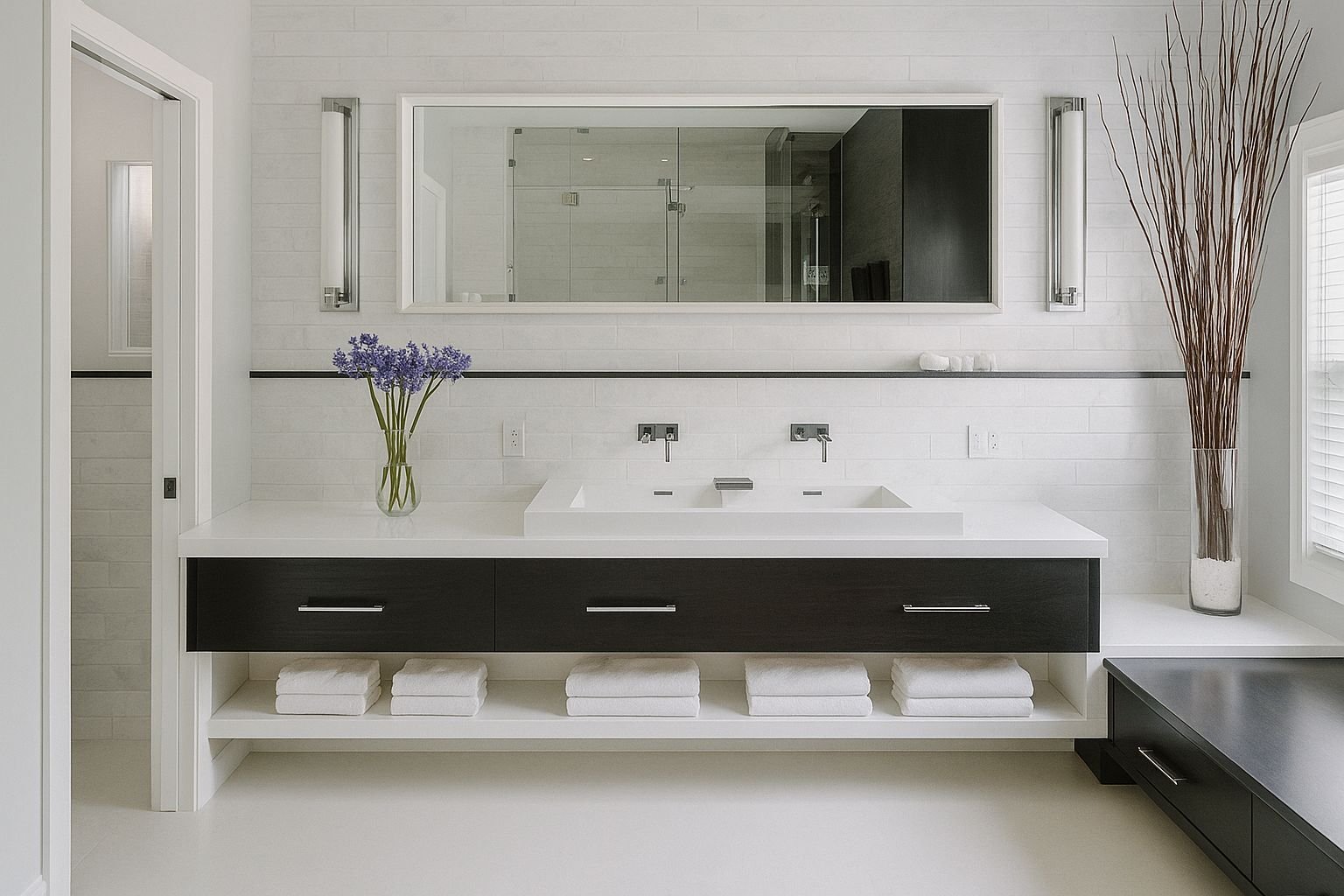
Traditional deep black vanities create dramatic focal points that anchor bathroom designs beautifully. Black might sound overwhelming, but it actually works in more situations than you’d expect. Dark finishes hide water spots and daily wear better than lighter colors. They provide rich backdrops that make colorful towels and artwork pop. Paired with lighter walls and bright lighting, black vanities feel sophisticated rather than cave-like.
The key to successful black vanity installation lies in balancing the darkness with plenty of light and contrasting elements. White or light gray countertops prevent the vanity from disappearing into dark tile or paint colors. Metallic hardware in gold or brushed nickel adds sparkle that keeps everything from feeling flat. Natural wood accents or live plants bring organic warmth to what could otherwise feel cold.
Beige cabinet systems offer neutral foundations that adapt to changing decor tastes over time. These aren’t the builder-grade oak cabinets from the 1990s we’re talking about. Modern beige vanities come in sophisticated tones like greige, mushroom, and warm taupe that feel current and timeless. Floor-to-ceiling installations maximize storage in smaller bathrooms while creating custom built-in appearances.
Beige vanities pair beautifully with both warm and cool color schemes, making them safe choices for homeowners who like changing accessories seasonally. They work with traditional brass fixtures and contemporary chrome equally well. Natural stone tops in granite or quartz complement the neutral base while adding pattern and visual interest.
Wooden double vanities bring natural warmth that makes large bathrooms feel cozy and inviting. Rich wood tones like walnut or cherry create luxurious feelings without requiring expensive stone or tile work. These vanities age beautifully, developing character over time rather than looking tired. Double configurations solve storage and counter space issues in shared bathrooms while maintaining unified design aesthetics.
Wood vanities require proper sealing and ventilation to prevent moisture damage, but modern finishes handle bathroom humidity much better than older treatments. Combining wood vanities with complementary materials like stone tops and metal fixtures creates balanced designs that feel both natural and refined. The organic patterns in wood grain add visual texture that keeps solid-color bathrooms from feeling boring.
Purple vanities make bold statements that transform ordinary bathrooms into memorable spaces. This might sound scary, but purple works in more situations than most people think. Deep eggplant or plum shades feel sophisticated and spa-like. Lighter lavender tones create calming, feminine environments. Purple pairs beautifully with gray, white, and even warm wood tones for unexpected combinations.
The trick to purple vanity success lies in treating it as a neutral base rather than the room’s main color show. White or light gray walls let the vanity shine without competing. Simple hardware and clean lines prevent the design from feeling too busy or themed. Quality materials make bold colors feel intentional rather than gimmicky.
Colorful patterned vanities bring personality and fun to powder rooms and guest bathrooms. These statement pieces work best in smaller spaces where they create wow factor without overwhelming daily users. Floral patterns, geometric designs, or abstract prints can transform basic vanity boxes into art pieces that guests remember. The key is choosing patterns that coordinate with your overall design scheme rather than fighting it.
Patterned vanities require careful balance with surrounding elements. Solid color walls, simple mirrors, and minimal accessories let the vanity pattern be the star. Quality installation and materials make decorative choices feel intentional rather than amateur. These vanities work particularly well in eclectic or maximalist design schemes where more is definitely more.
Green vanities connect bathrooms to nature in refreshing ways that feel both calming and energizing. Sage greens create spa-like atmospheres that promote relaxation. Deeper forest greens feel rich and sophisticated. Mint or seafoam shades work beautifully in coastal or cottage-style bathrooms. Green pairs naturally with white, cream, and warm wood tones for balanced color schemes.
Natural materials like stone and wood complement green vanities perfectly, reinforcing the connection to outdoor spaces. Plants and natural light make green vanities feel integrated rather than imposed. These colors work particularly well in bathrooms with garden views or natural light sources.
Mixed pattern vanity combinations let you create custom looks that reflect personal style perfectly. Combining solid doors with patterned drawer fronts creates visual interest without chaos. Mixing wood grains, paint colors, or hardware finishes adds complexity that keeps designs from feeling boring. The key is maintaining one unifying element that ties everything together.
Successful pattern mixing requires understanding scale, color, and proportion relationships. Small patterns work better with large ones than similar-sized patterns competing for attention. Limiting color palettes helps disparate patterns feel connected. Professional installation makes mixed-element designs look intentional rather than confused.
Red vanities energize spaces with warmth and drama that transforms mundane morning routines. Deep burgundy or wine shades feel sophisticated and timeless. Brighter cherry or apple reds create cheerful, energetic atmospheres. Red works beautifully with white, gray, and natural wood for balanced color schemes that feel both bold and livable.
Red vanities require confident design choices and quality materials to avoid looking cheap or garish. Clean lines and simple hardware let the color be the star. Natural materials like stone tops and wood accents ground bright colors in familiar textures. Proper lighting makes red vanities glow rather than glare.
Six Additional Design Ideas That Complete Your Modern Bathroom Vision
Sometimes the vanity is just the starting point for creating bathrooms that feel truly special. These additional design concepts work beautifully with modern vanity installations to create cohesive spaces that feel thoughtfully designed rather than randomly assembled. I’ve used variations of all these approaches in different bathroom projects, and each brings something unique to the final result.
Wallpaper combined with mirrored walls creates elegant sophistication that feels both traditional and contemporary. Modern wallpaper designs go way beyond the busy florals your grandmother might have chosen. We’re talking about subtle geometric patterns, textured grasscloths, or sophisticated damasks that add visual interest without overwhelming small spaces. The key is choosing papers with colors that complement your vanity choice rather than competing with it.
Mirrored walls multiply light and space in ways that benefit every bathroom, but they work particularly well with statement wallpapers. The mirrors reflect the pattern while breaking it up, preventing busy designs from feeling overwhelming. This combination works beautifully in powder rooms where guests spend limited time but you want maximum impact. Large mirrors also make small spaces feel significantly larger, which helps when you’ve chosen a substantial vanity that might otherwise dominate the room.
The quality of both wallpaper and mirror installation makes or breaks this look. Cheap peel-and-stick papers rarely hold up in humid bathroom environments. Professional wallpaper designed for bathrooms costs more initially but looks better and lasts much longer. Similarly, large mirrors require proper mounting to prevent accidents and ensure they stay securely in place over time.
Contemporary black bathrooms with red accents create masculine, sophisticated spaces that feel both modern and timeless. This color combination works particularly well in bathrooms used primarily by men or in industrial-style homes where darker palettes feel appropriate. Black ceramic tile, matte black fixtures, and dark vanities create cohesive backdrops that let red accents really pop.
Red accents can include anything from towels and artwork to decorative tiles or even plumbing fixtures in bold colors. The key is using red sparingly as punctuation rather than trying to balance it equally with the black. Small red elements create drama and visual interest without overwhelming the space. This approach works beautifully with modern vanity designs in dark finishes.
Lighting becomes particularly important in darker color schemes like this. Natural light from windows helps prevent black bathrooms from feeling cave-like. Bright artificial lighting makes daily grooming tasks easier and safer. Under-vanity lighting or backlit mirrors add ambient illumination that makes the space feel welcoming rather than stark.
Creative tiling concepts let you create custom looks that reflect personal style while complementing your vanity choice. Modern tile comes in incredible varieties of size, shape, texture, and color that open up design possibilities previous generations never had. Mixing different tile sizes in the same color family creates visual interest without chaos. Combining matte and glossy finishes adds textural variety that keeps spaces from feeling flat.
Geometric tile patterns work beautifully with clean-lined modern vanities, reinforcing contemporary design themes throughout the space. Natural stone tiles bring organic textures that soften harder vanity materials like painted wood or laminate. Large format tiles make small bathrooms feel bigger while reducing grout lines that require maintenance over time.
The key to successful tile design lies in understanding how different materials and patterns interact with your vanity and other bathroom elements. Busy tile patterns require simpler vanity designs to avoid visual competition. Simple tile choices give you more freedom to choose statement vanities with interesting colors or patterns. Professional installation becomes particularly important with creative tiling since mistakes are difficult and expensive to correct.
Spa-like modern bathrooms focus on creating calm, relaxing environments that help you unwind from daily stress. This approach works beautifully with minimalist vanity designs in natural materials like wood or stone. Monochromatic color schemes in warm grays, soft beiges, or muted blues create peaceful backdrops that promote relaxation. Simple lines and uncluttered surfaces help maintain the serene atmosphere.
Natural materials play important roles in spa-inspired bathroom design. Wood vanities bring warmth and organic texture. Stone countertops and tile floors connect interior spaces to natural environments. Live plants add life and help purify air naturally. Natural light sources or lighting that mimics daylight makes these materials look their best while supporting circadian rhythms.
Luxury touches don’t have to break budgets but they do require careful selection. Heated floors feel amazing on cold mornings but require planning during construction or major renovations. High-quality towels and bathrobes enhance the spa experience without requiring permanent installations. Essential oil diffusers or candles add aromatherapy elements that transform ordinary routines into self-care rituals.
Black furnishing schemes create sophisticated, modern bathrooms that feel both dramatic and timeless. This approach works particularly well with contemporary vanity designs featuring clean lines and minimal ornamentation. Black toilet seats, faucets, light fixtures, and accessories create cohesive looks that feel intentionally designed rather than randomly assembled.
The success of black furnishing schemes depends heavily on balance with lighter elements. White or light gray walls prevent black fixtures from creating cave-like feelings. Bright lighting becomes even more important when working with darker color palettes. Natural materials like wood or stone add warmth that keeps black fixtures from feeling cold or institutional.
Quality becomes particularly visible with black fixtures since they show water spots, fingerprints, and wear more readily than lighter colors. Investing in high-quality pieces with durable finishes pays off over time in both appearance and functionality. Matte black finishes hide water spots better than glossy ones but may show fingerprints more easily.
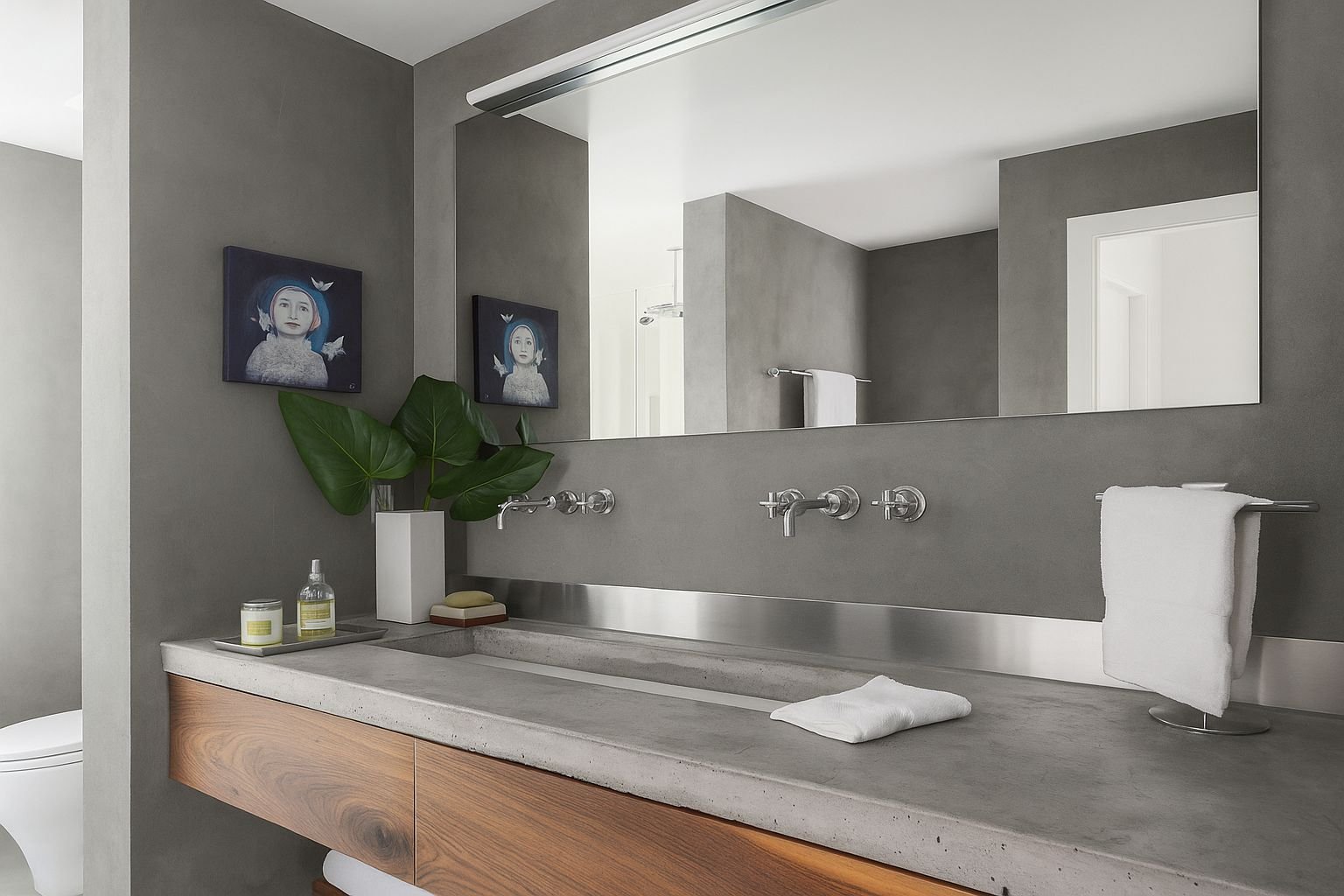
Wall art and decorative elements bring personality to small bathroom spaces that might otherwise feel purely functional. This approach works beautifully in powder rooms where guests spend limited time but you want to create memorable impressions. Choosing artwork that complements your vanity color and style creates cohesive design themes throughout the space.
Proper mounting becomes important in humid bathroom environments where standard picture hanging methods may fail over time. Sealed frames protect artwork from moisture damage. LED picture lights or strategic placement near existing light sources helps artwork look its best while serving functional lighting purposes.
Scale matters tremendously when selecting bathroom artwork. Large pieces can overwhelm small spaces while tiny pieces disappear on large walls. Grouping smaller pieces creates visual impact while allowing flexibility in arrangement. Choosing pieces that echo your vanity’s color palette or design style helps create cohesive looks rather than random collections.
Floral mosaic wall designs add natural beauty and artistic interest to bathroom spaces while complementing organic vanity materials like wood or stone. Modern mosaic techniques allow for incredibly detailed and realistic floral patterns that bring garden beauty indoors year-round. These installations work particularly well as accent walls behind vanities or in shower areas where they create focal points.
The complexity of mosaic installation requires professional expertise to achieve professional results. Hand-cut tiles allow for more detailed and realistic patterns than manufactured mosaics but require skilled artisans for proper installation. Proper sealing becomes particularly important in bathroom applications where moisture exposure is constant.
Color coordination between mosaic designs and vanity finishes creates harmonious looks that feel intentionally designed. Subtle color echoes work better than exact matches, which can feel too coordinated. Natural variation in both mosaic tiles and wood or stone vanity materials creates visual interest while maintaining overall harmony.

Leave a Comment